25,643  PAGES BROWSED TODAY PAGES TODAY 69  ANTIQUES UPLOADED TODAY NEW ARRIVALS
ID #SA1217770
FOR SALE
£485
Email
Save
Early 17th Century Oak Joined Stool
Havard and Havard
for sale €567     $616
£485
Havard and Havard

Havard and Havard

Sellingantiques Verified Since Dec 2021
View Dealers Stock Page
  • About Us
    Specialists in welsh country furniture
Id #SA1217770
PDF SHARE
SAVE

Early 17th Century Oak Joined Stool

17th century
Description

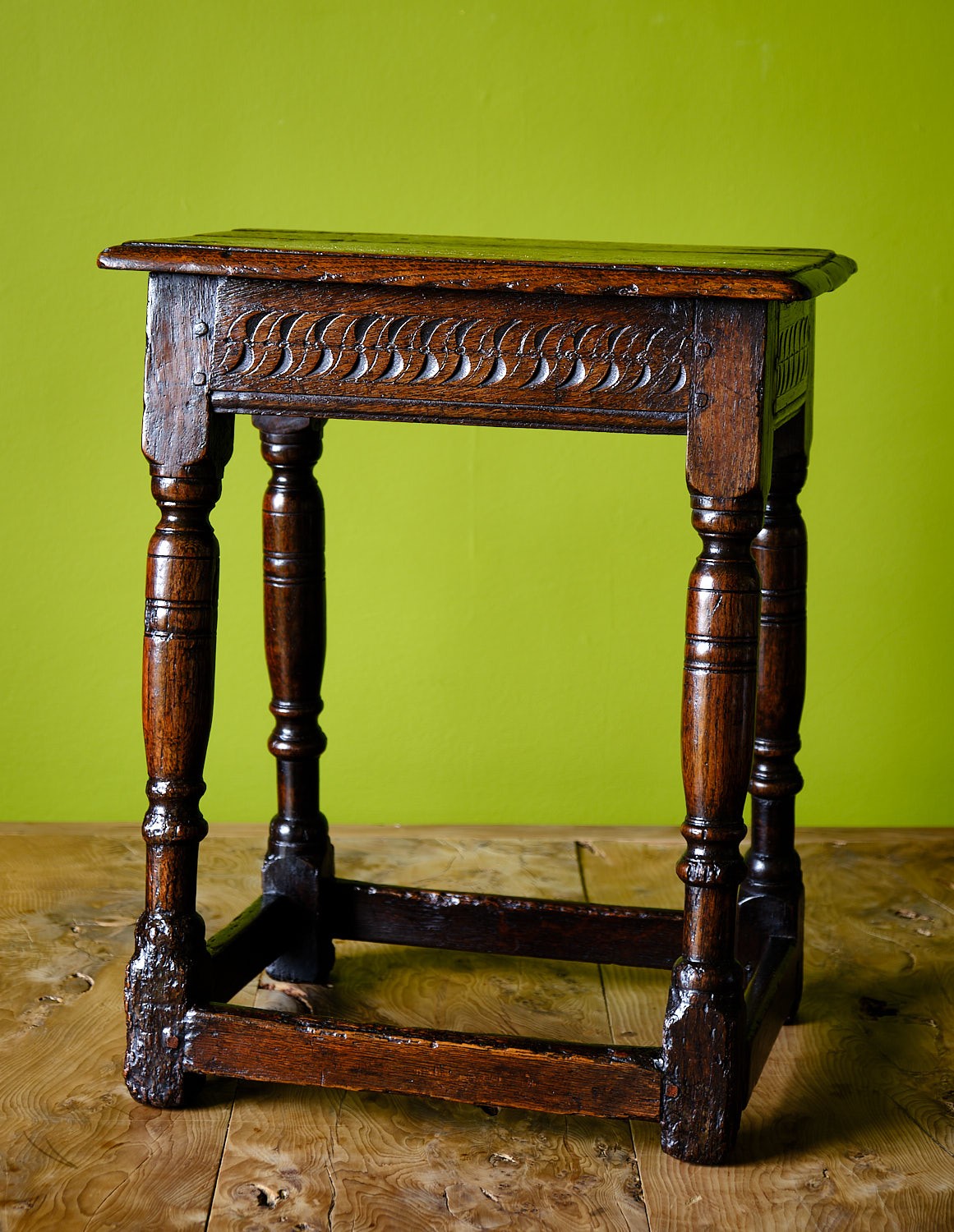
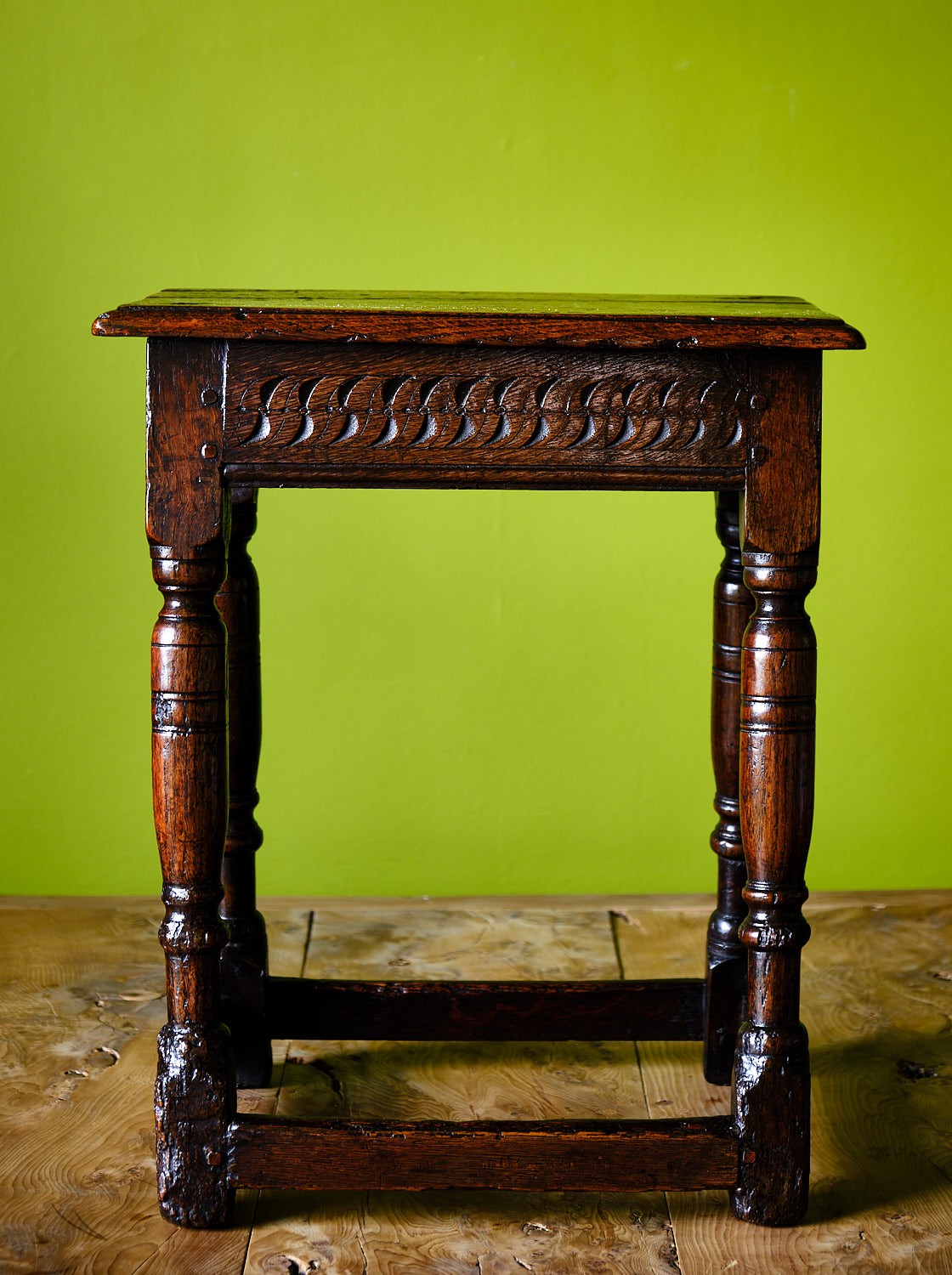
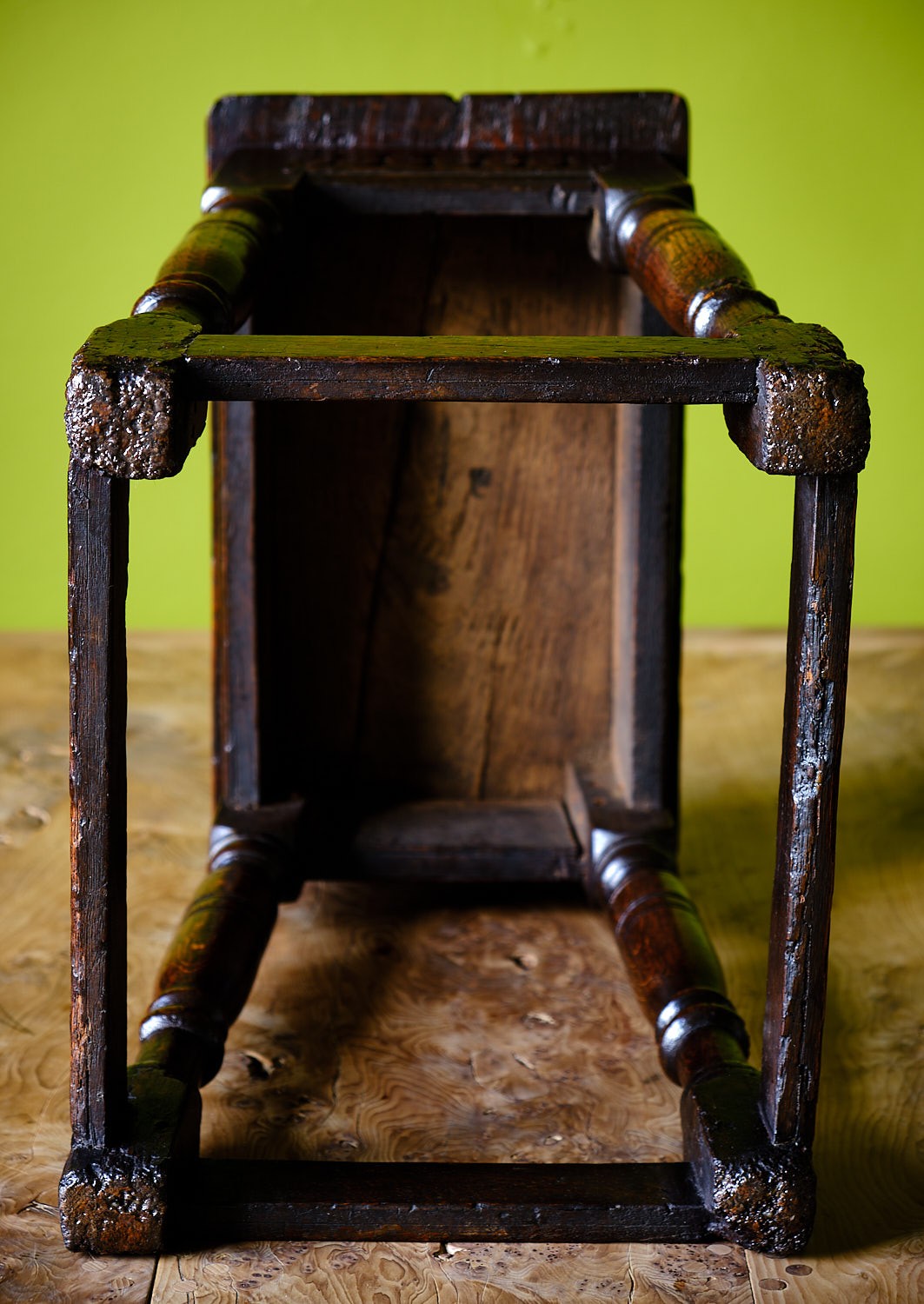
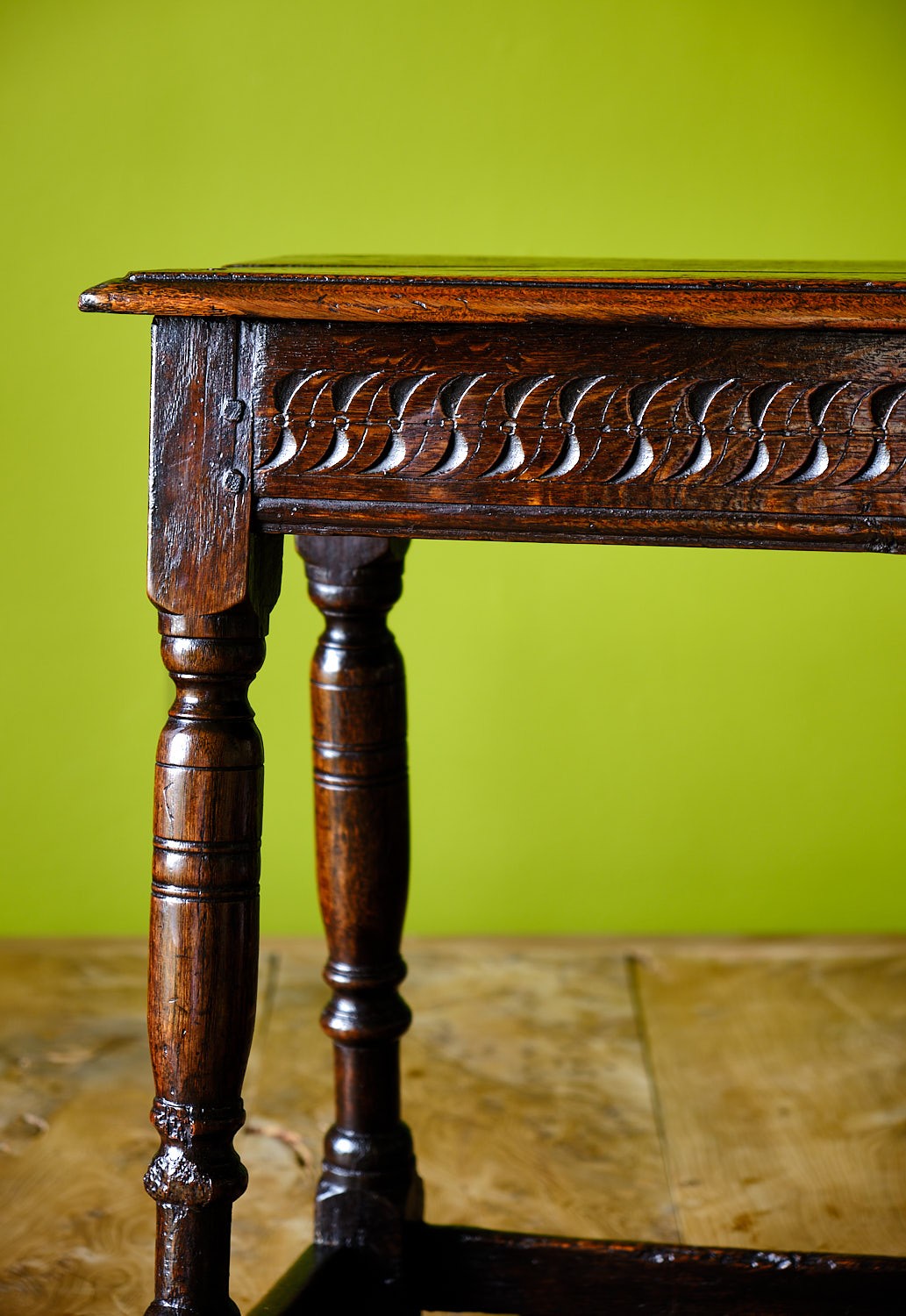
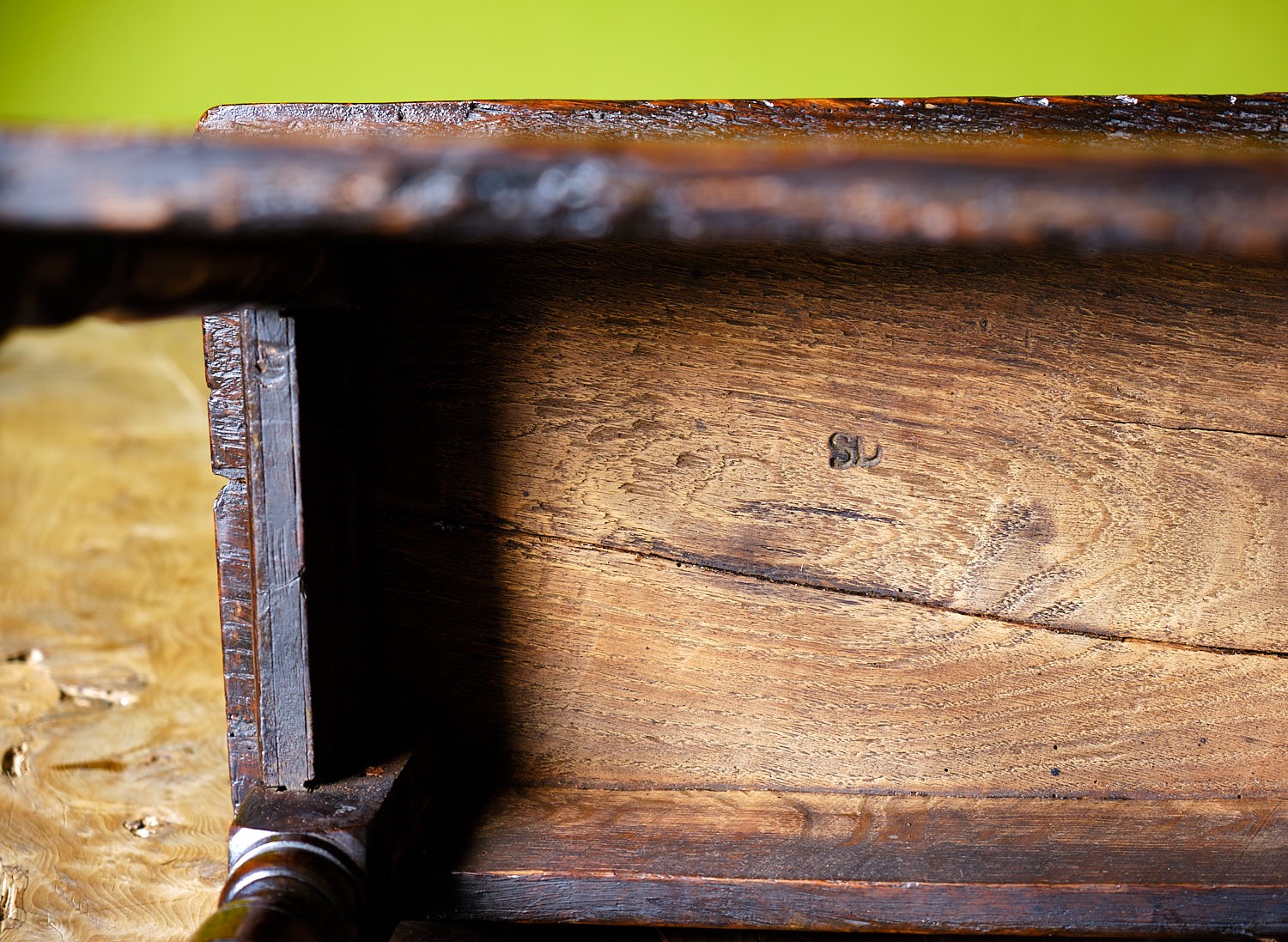
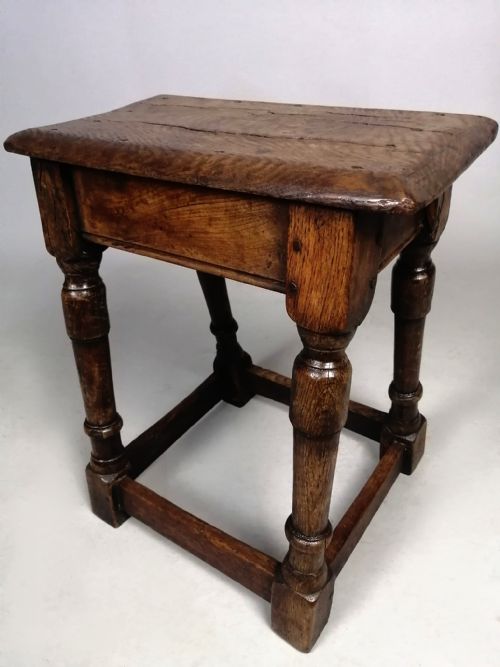
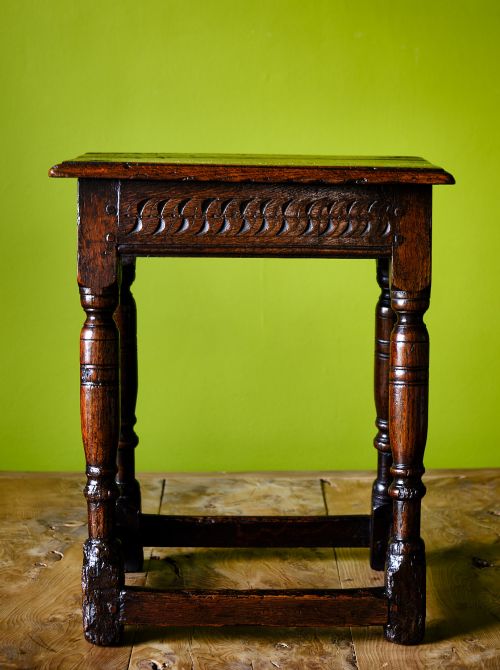
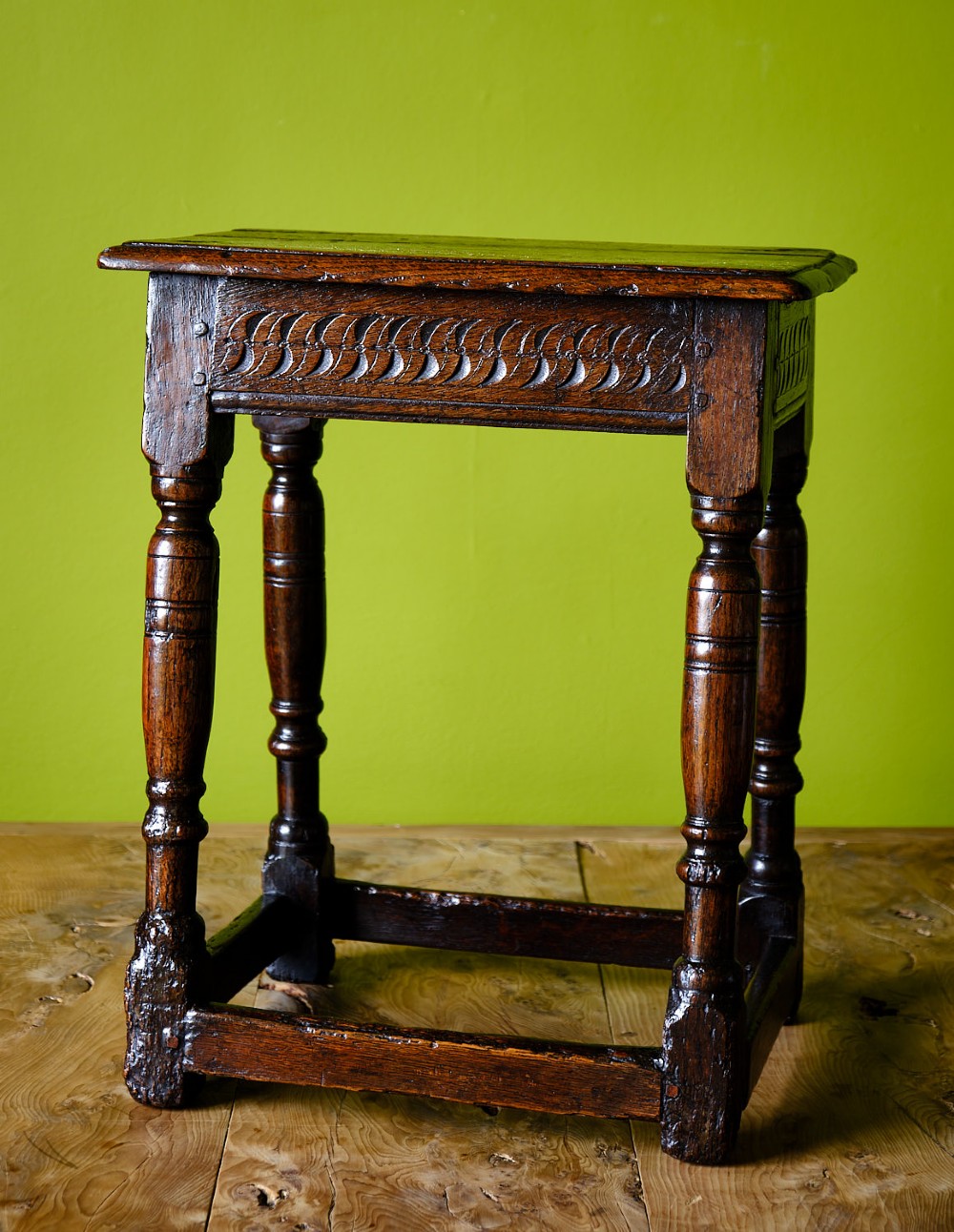
An early 17th century oak joined stool, the top with a thumb-moulded edge above a moulded edge frieze, carved on all four sides with a simple, running device, on splayed, ring-turned, columnar legs with a lower, cotton reel turning, joined by plain stretchers. The underside of the top branded with the initials SD.

Historic split to the top and with extensive, historic worm damage, especially to the lower legs. Old repair to the outer face of one foot and a few small areas of filler to the corners of the top. However, the feet appear stable and all the stretchers appear to be original, retaining good height and with greyish brown colour.

West Country, probably Salisbury, circa 1620-1650.

Literature:

See Oak Furniture, The British Tradition, by Victor Chinnery, figs 4:71 and 4:78 which both have similar carved friezes, and figs 4:62 and fig ixa, page 568, which have similar, turned legs. All these, Chinnery ascribes to early 17th century Salisbury.

See also Early British Chairs and Seats, 1500 -1700 by Tobias Jellinek, plates 287, 299 and 307, which show stools with similar turning to the legs, 307 described as “ sausage and cotton reel” turnings.

Physical Dimensions
Height
55cm (21.65")
Width
28cm (11.02")
Depth
46cm (18.11")
Declaration

Havard and Havard has dated this 17th Century Oak Joined Stool to the 17th Century.

Reference Numbers
Sellingantiques Reference
SA1217770
Description
An early 17th century oak joined stool, the top with a thumb-moulded edge above a moulded edge frieze, carved on all four sides with a simple, running device, on splayed, ring-turned, columnar legs with a lower, cotton reel turning, joined by plain stretchers. The underside of the top branded with the initials SD.

Historic split to the top and with extensive, historic worm damage, especially to the lower legs. Old repair to the outer face of one foot and a few small areas of filler to the corners of the top.
However, the feet appear stable and all the stretchers appear to be original, retaining good height and with greyish brown colour.
Havard and Havard
fig 1. A dark oak seventeenth-century joined stool with a rectangular top, carved apron frieze, turned legs, and low box stretchers.
fig 1. Early 17th Century Oak Joined Stool

West Country, probably Salisbury, circa 1620-1650.

Literature:

See Oak Furniture, The British Tradition, by Victor Chinnery, figs 4:71 and 4:78 which both have similar carved friezes, and figs 4:62 and fig ixa, page 568, which have similar, turned legs. All these, Chinnery ascribes to early 17th century Salisbury.
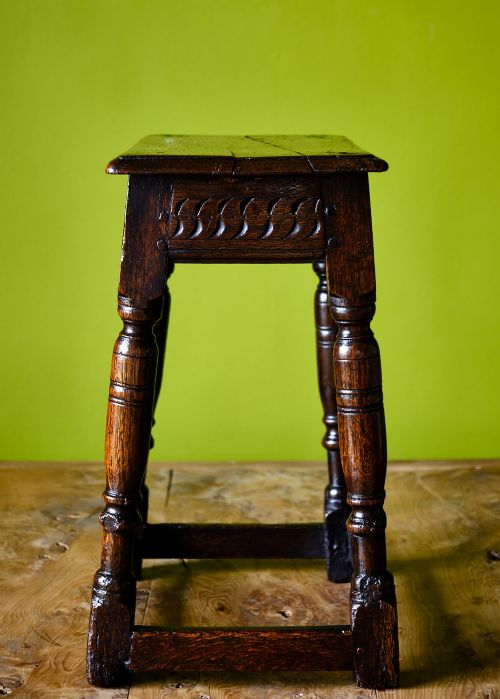
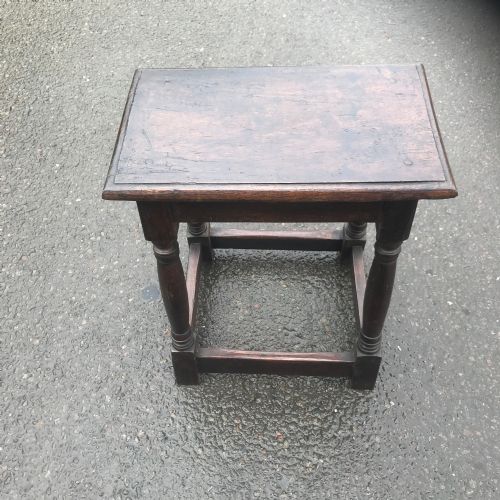
fig 2. A dark oak seventeenth-century joined stool with a rectangular top, carved apron frieze, turned legs, and low box stretchers.
fig 2. Early 17th Century Oak Joined Stool

See also Early British Chairs and Seats, 1500 -1700 by Tobias Jellinek, plates 287, 299 and 307, which show stools with similar turning to the legs, 307 described as “ sausage and cotton reel” turnings.

Height
55cm (21.65")
Width
28cm (11.02")
Depth
46cm (18.11")
Date of Manufacture

Havard and Havard has dated this 17th Century Oak Joined Stool to the 17th Century.

Reference Numbers
Sellingantiques Ref
SA1217770
Havard and Havard
Havard and Havard
Sellingantiques verified Since Dec 2021

Specialists in welsh country furniture

Dealer Profile

You can view the stock and full dealer information on the Havard and Havard Profile Page
PDF SHARE
SAVE
A dark oak seventeenth-century joined stool with a rectangular top, carved apron frieze, turned legs, and low box stretchers.
1 / 7
Archive I A dark oak seventeenth-century joined stool with a rectangular top, carved apron frieze, turned legs, and low box stretchers.

Early 17th Century Oak Joined Stool
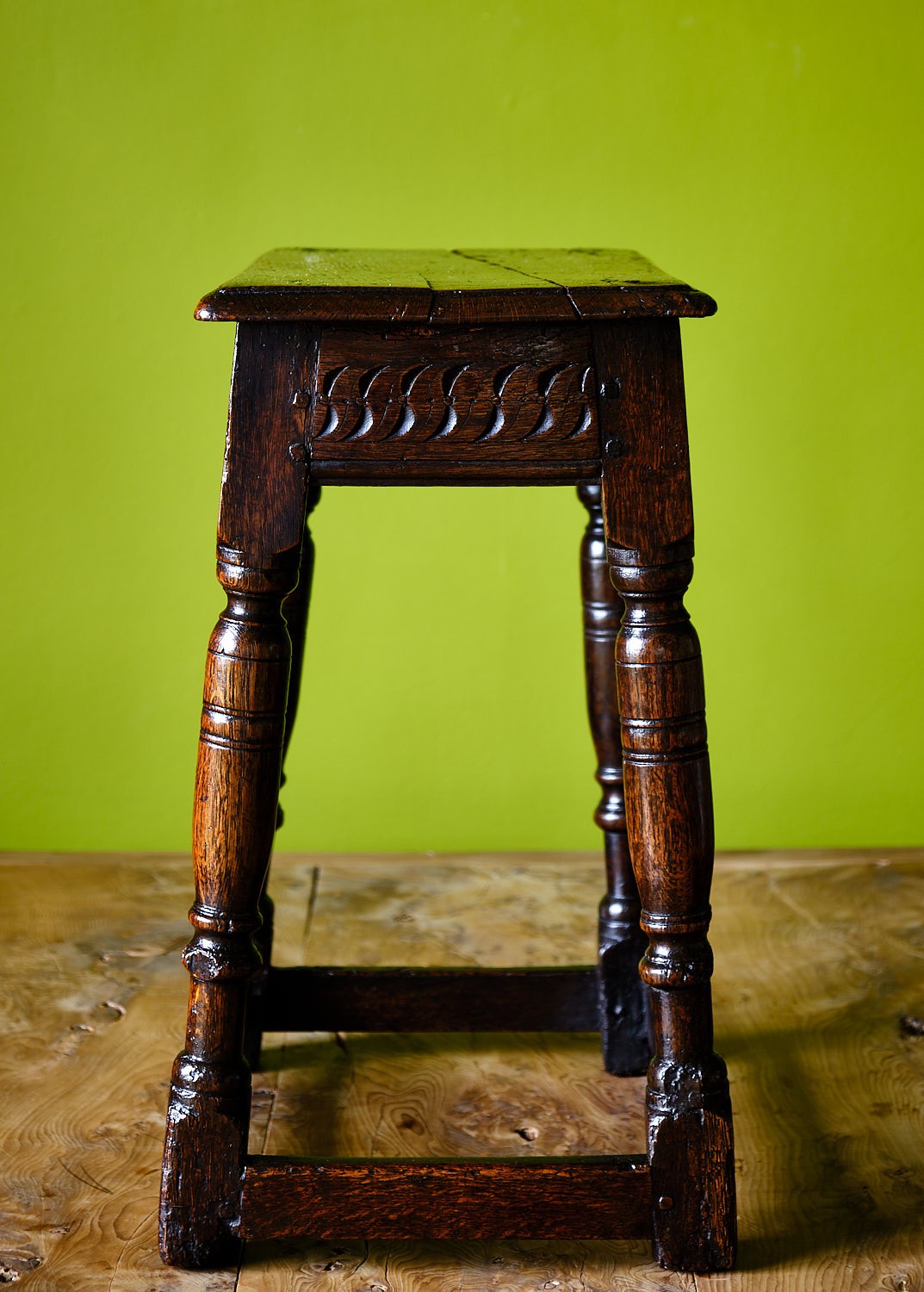
Archive II A dark oak seventeenth-century joined stool with a rectangular top, carved apron frieze, turned legs, and low box stretchers. View II
Archive III A dark oak seventeenth-century joined stool with a rectangular top, carved apron frieze, turned legs, and low box stretchers. View III
Archive IV A dark oak seventeenth-century joined stool with a rectangular top, carved apron frieze, turned legs, and low box stretchers. View IV
Archive V A dark oak seventeenth-century joined stool with a rectangular top, carved apron frieze, turned legs, and low box stretchers. View V
Archive VI A dark oak seventeenth-century joined stool with a rectangular top, carved apron frieze, turned legs, and low box stretchers. View VI
Archive VII A dark oak seventeenth-century joined stool with a rectangular top, carved apron frieze, turned legs, and low box stretchers. View VII
FURTHER BROWSING

Visitors also looked at these ⇣

Enlarged Archival View
Telephone 07711 006399
Location
Penarth
Vale of Glamorgan
United Kingdom

By appointment only.
Verified Since Dec 2021
Items For Sale 42
Items Sold 141
Havard and Havard
Havard and Havard
Verified Since Dec 2021
View Dealer Info
Location: Penarth, Vale of Glamorgan, United Kingdom, , By appointment only.
Verified
Dec 2021
For Sale
42
Sold
141
A dark oak seventeenth-century joined stool with a rectangular top, carved apron frieze, turned legs, and low box stretchers.
Early 17th Century Oak Joined Stool
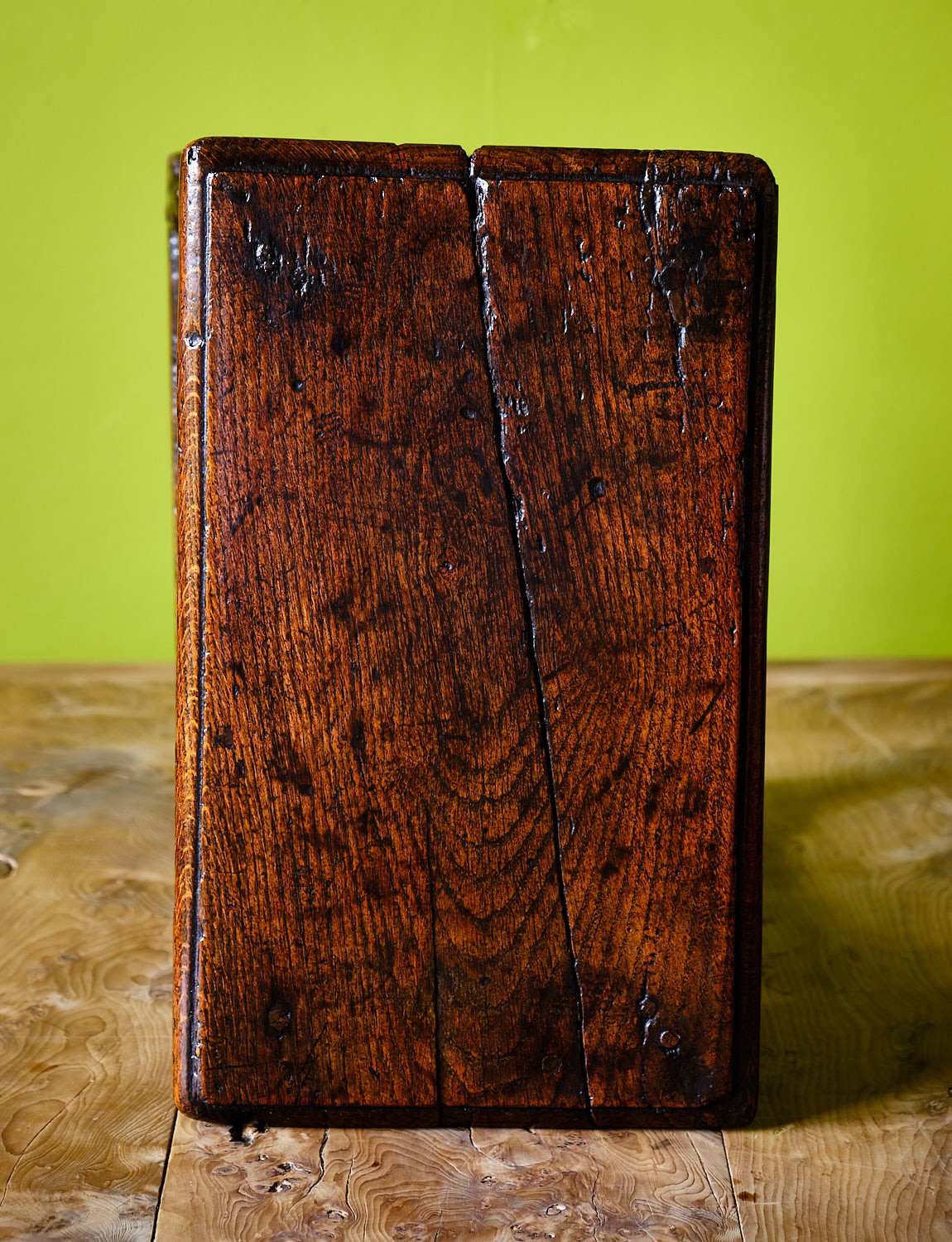
Ref: SA1217770
A dark oak seventeenth-century joined stool with a rectangular top, carved apron frieze, turned legs, and low box stretchers.
Detail View 1
Detail View 2
Detail View 3
Detail View 4
Detail View 5
Detail View 6
Archival Detail
Every single antique dealer on our platform is individually approved by our internal team. We verify their professional trade history, ethical standards, and photographic quality to ensure a secure, high-standard buying environment. Upon joining, every dealer agrees to a strict 9-point code of conduct. While issues can occasionally arise, our dealers typically resolve them swiftly and directly with the buyer. In fact, since our founding in 2002, Sellingantiques has only had to step in to help resolve an issue on roughly five occasions—a true testament to the quality of our dealers and their dedication to your happiness.
Our dealers are highly experienced in packing and shipping fragile, high-value antiques. Because you are in direct contact with the dealer, you will be able to easily go through all available shipping and insurance options together to ensure your item arrives safely.
Antiques are the ultimate green purchase. By choosing historical pieces over newly manufactured goods, you completely eliminate the carbon footprint of modern mass production while preserving exceptional, timeless craftsmanship.

A joined stool, often historically referred to as a joint stool, is a form of seating made by a joiner using mortise and tenon joints held together with wooden pegs. Popular in England during the sixteenth and seventeenth centuries, these sturdy timber pieces served as primary household seating before chairs became widely accessible.

Traditional joined stools were predominantly constructed from solid native oak. The components were joined using mortise and tenon timber framing secured with wooden dowels or draw-pegs, featuring turned legs, stretchers near the base for stability, and hand-carved friezes along the upper aprons.

Authentic seventeenth-century pieces display signs of hand-planed timber, irregular pegged joints that have shifted over time, and natural shrinkage across the grain. Look for uneven wear on the lower foot stretchers where feet rested, historic oxidation around joinery, and patination in areas subject to frequent handling.

An antique joined stool works well as an occasional side table beside a modern sofa or armchair to hold drinks and books. It can also function as an accent piece in a hallway, a plant stand, or a bed-end perch, adding historical texture to contemporary spaces.

Maintain the original finish by dusting regularly with a soft, dry cloth and applying a beeswax polish once or twice a year. Keep the piece away from direct heat sources such as radiators and avoid placing wet objects directly on the wood surface.
items
Add keywords to the filter
Price
£100
£250000
Era
Movements
Material
Origin
Stock Location
Freshness
Online Payments
Categories