A Fine and Exceptionally Rare Blue and White ''Shoulao and Crane'' Deep Saucer-Dish (Mukozuke)
Late Ming Dynasty, Tianqi Period, Circa 1625.
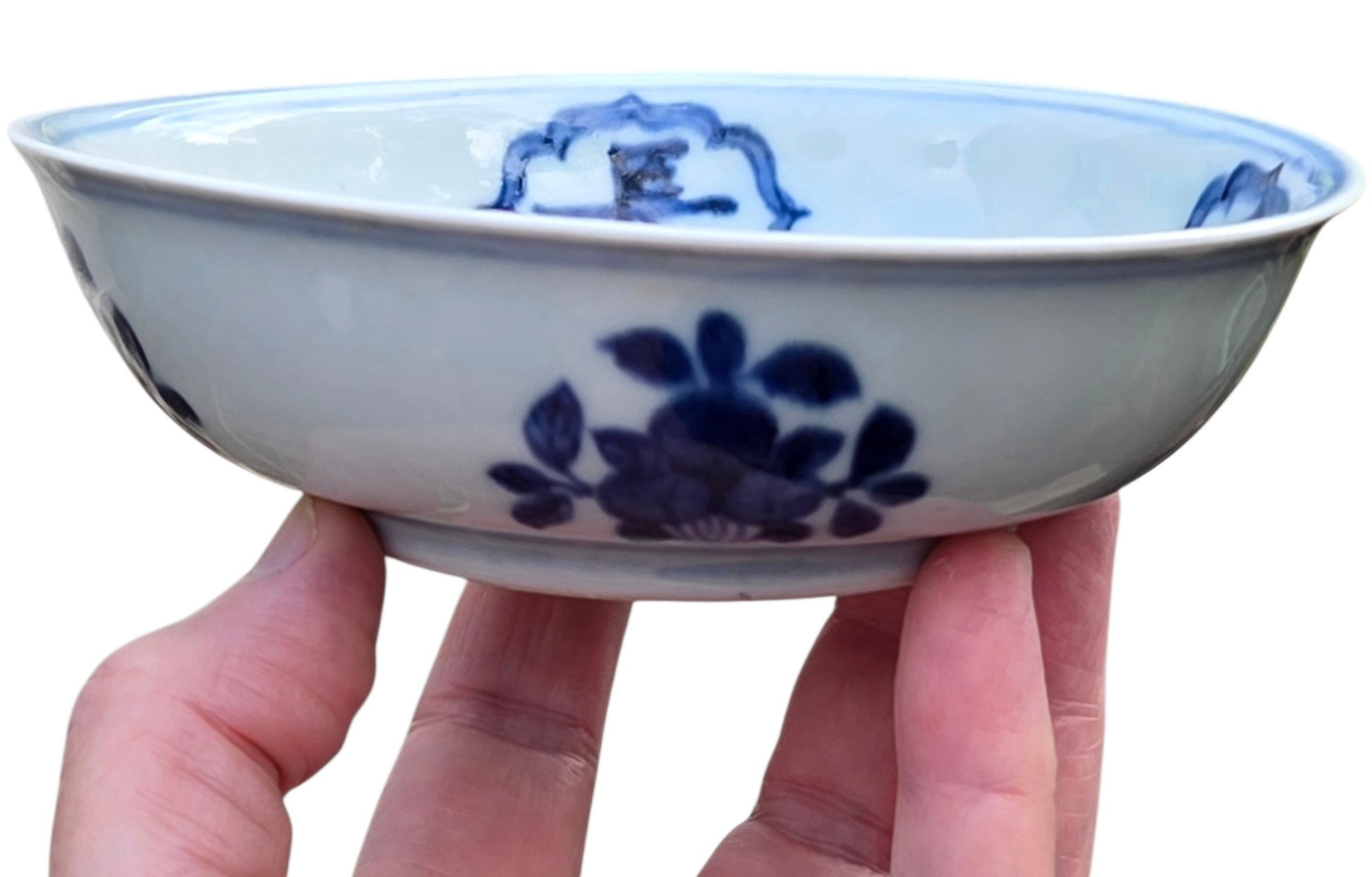
Diameter: 13 cm
Height: 5.5 cm
Weight: 163.7 grams
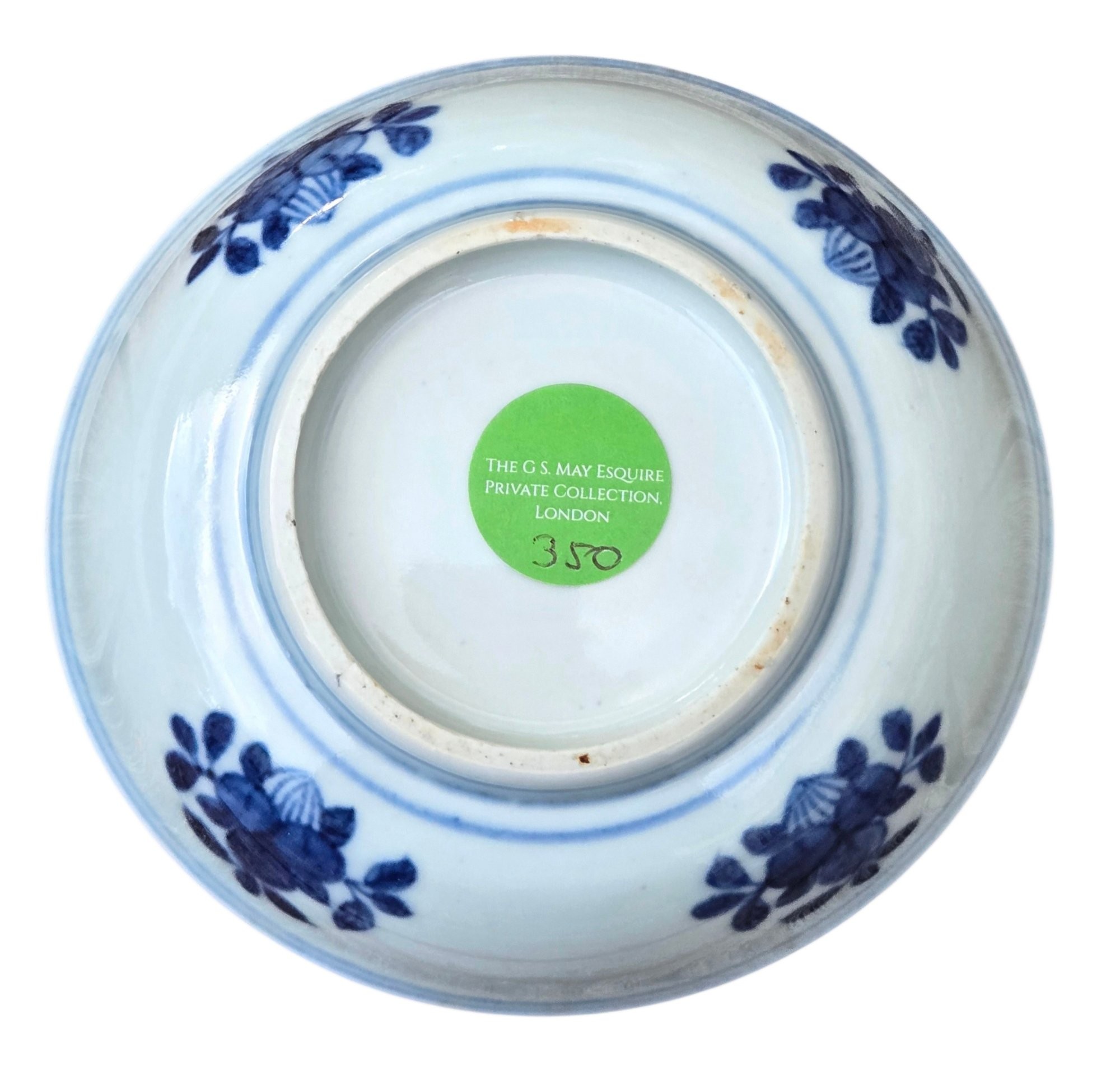
Provenance: Seghers & Pang Fine Arts, Brussels (Acquired July 2022).
The G S. May Esquire Private Collection, London
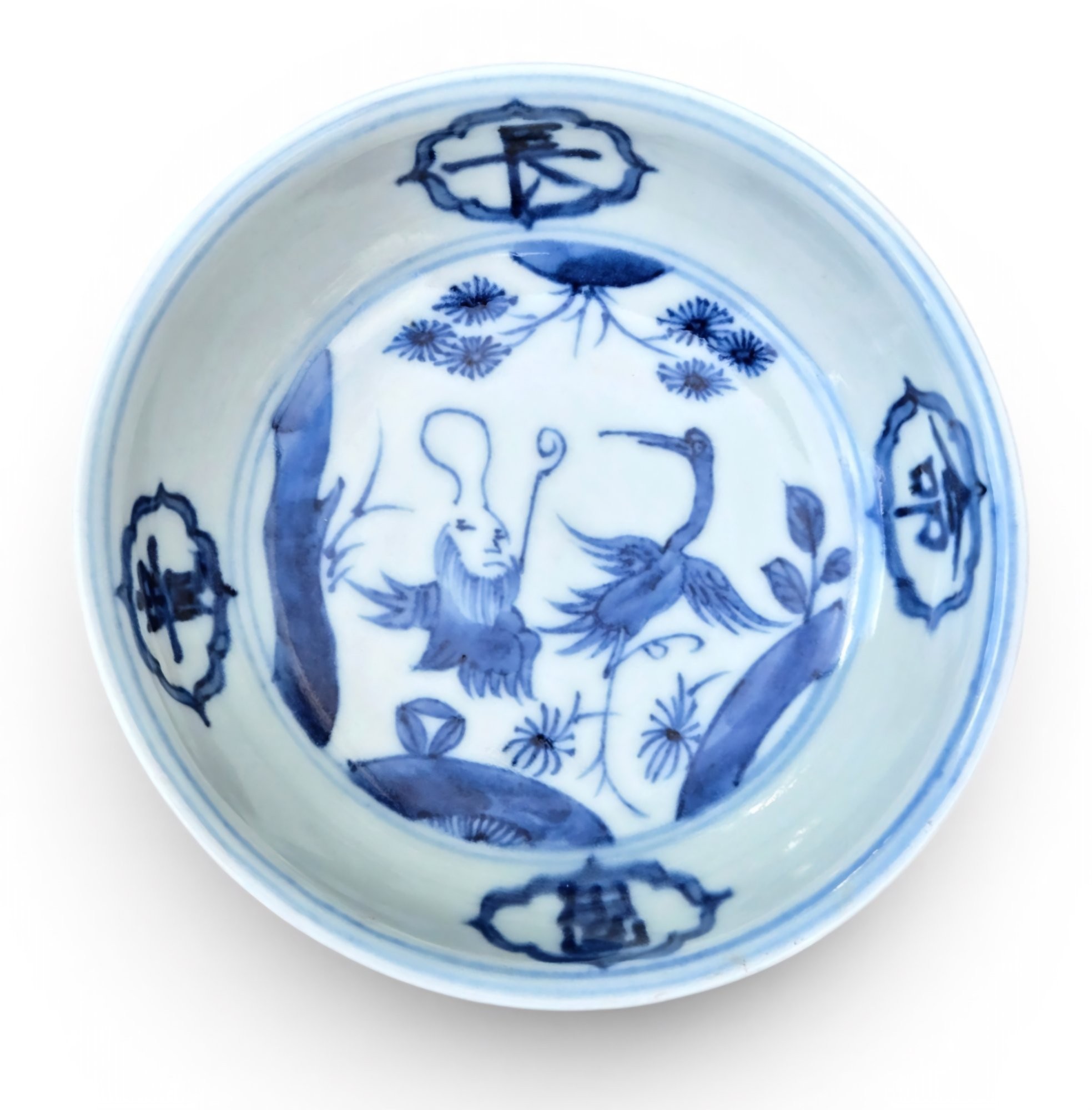
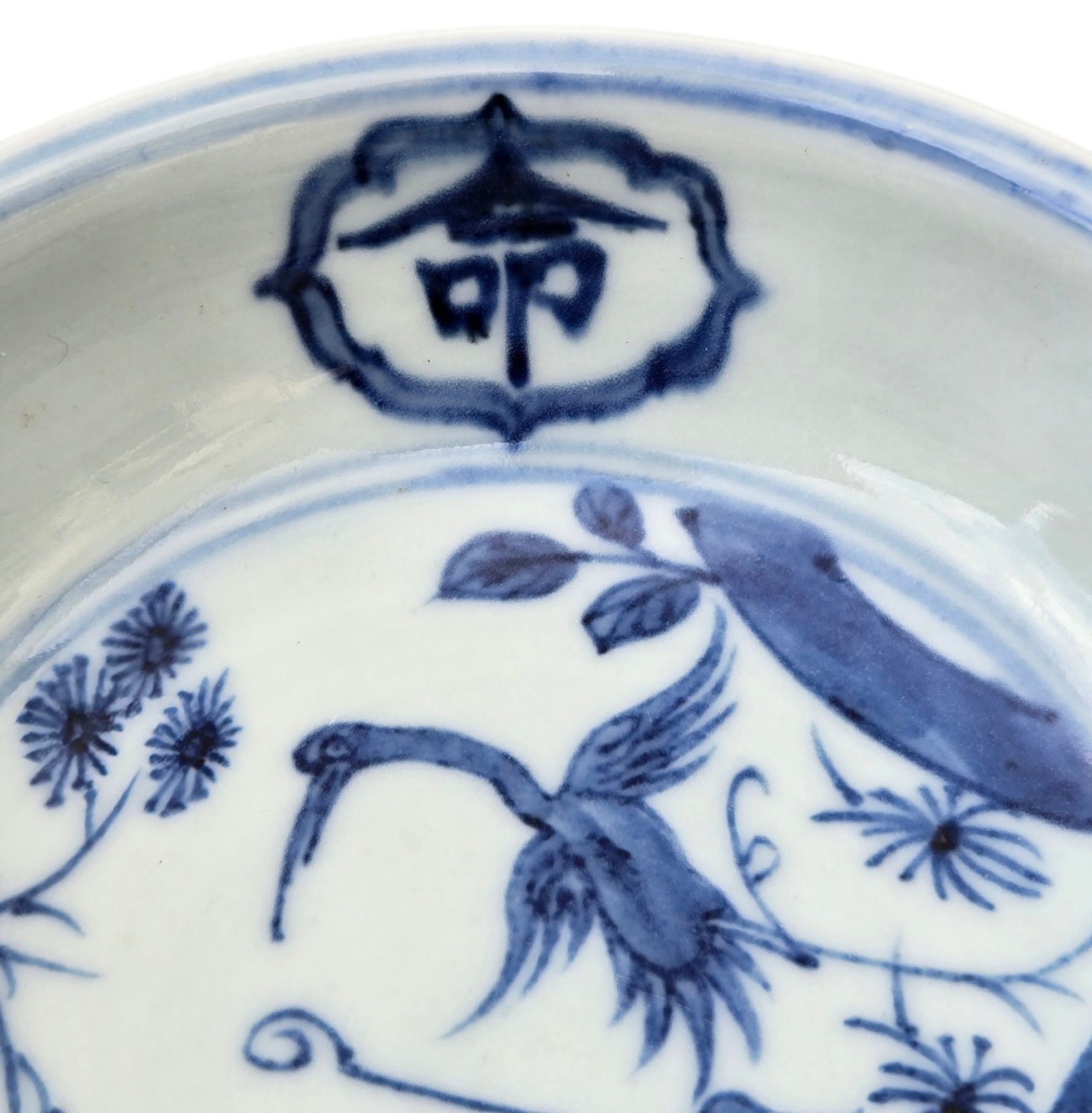
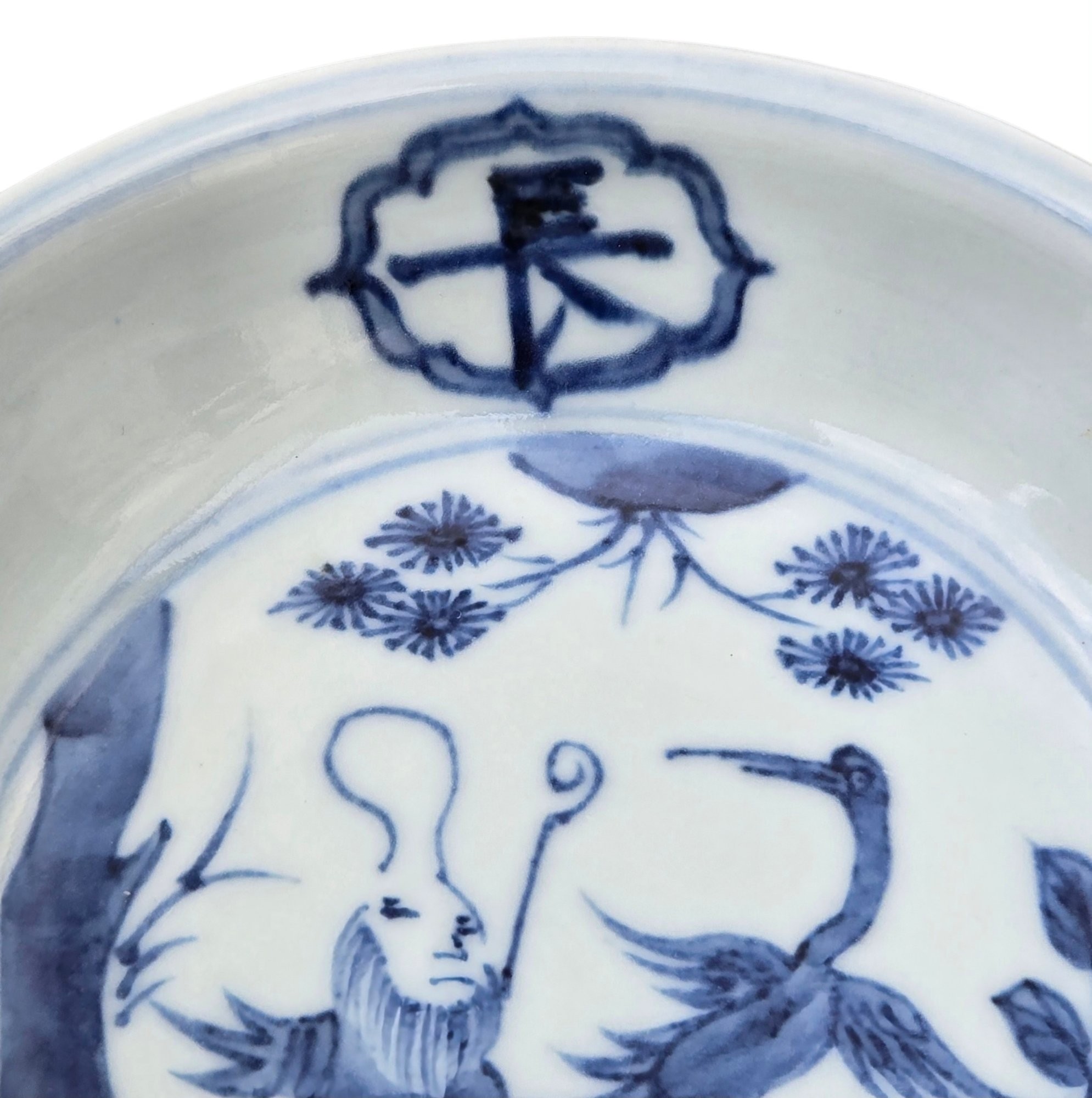
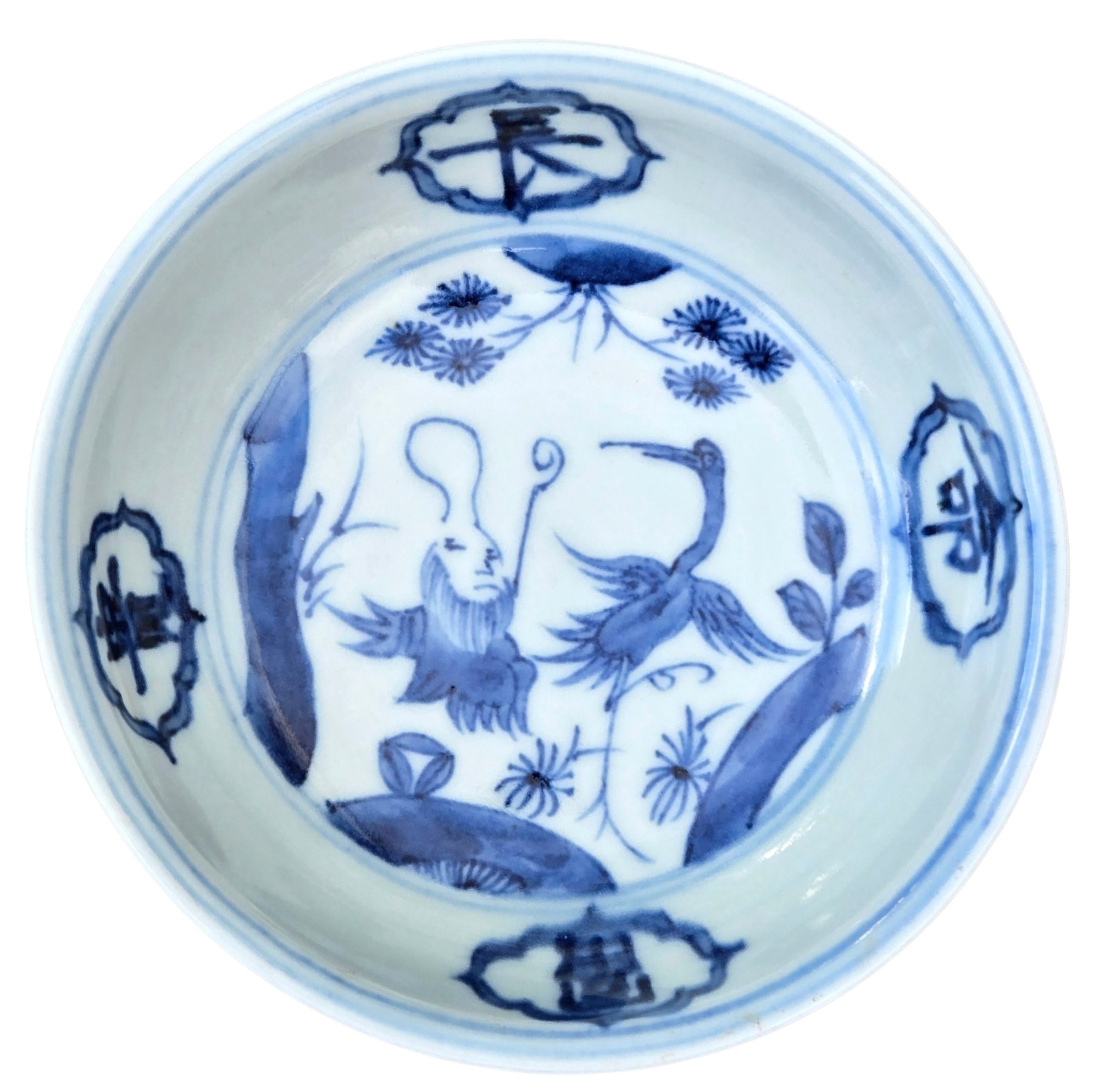
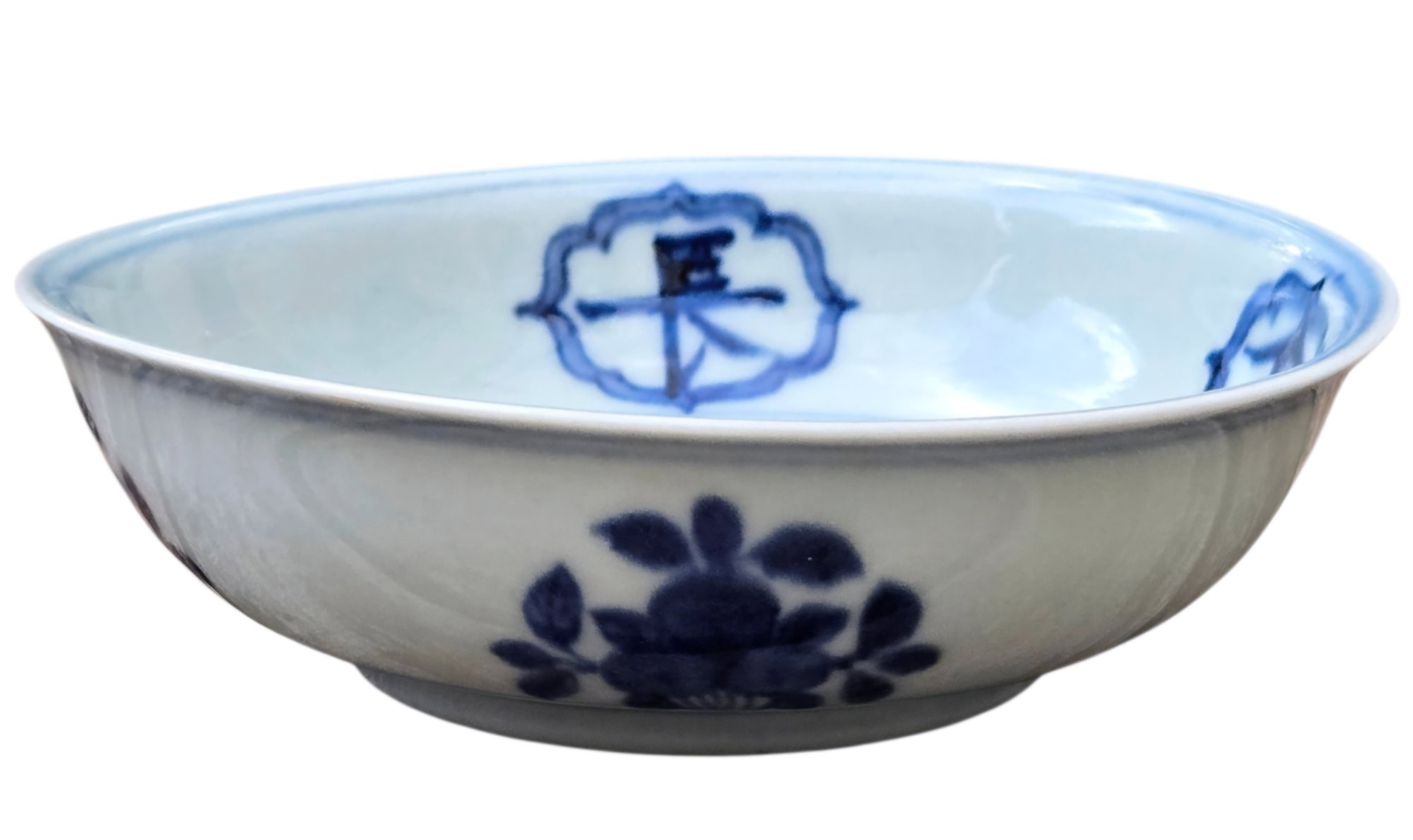
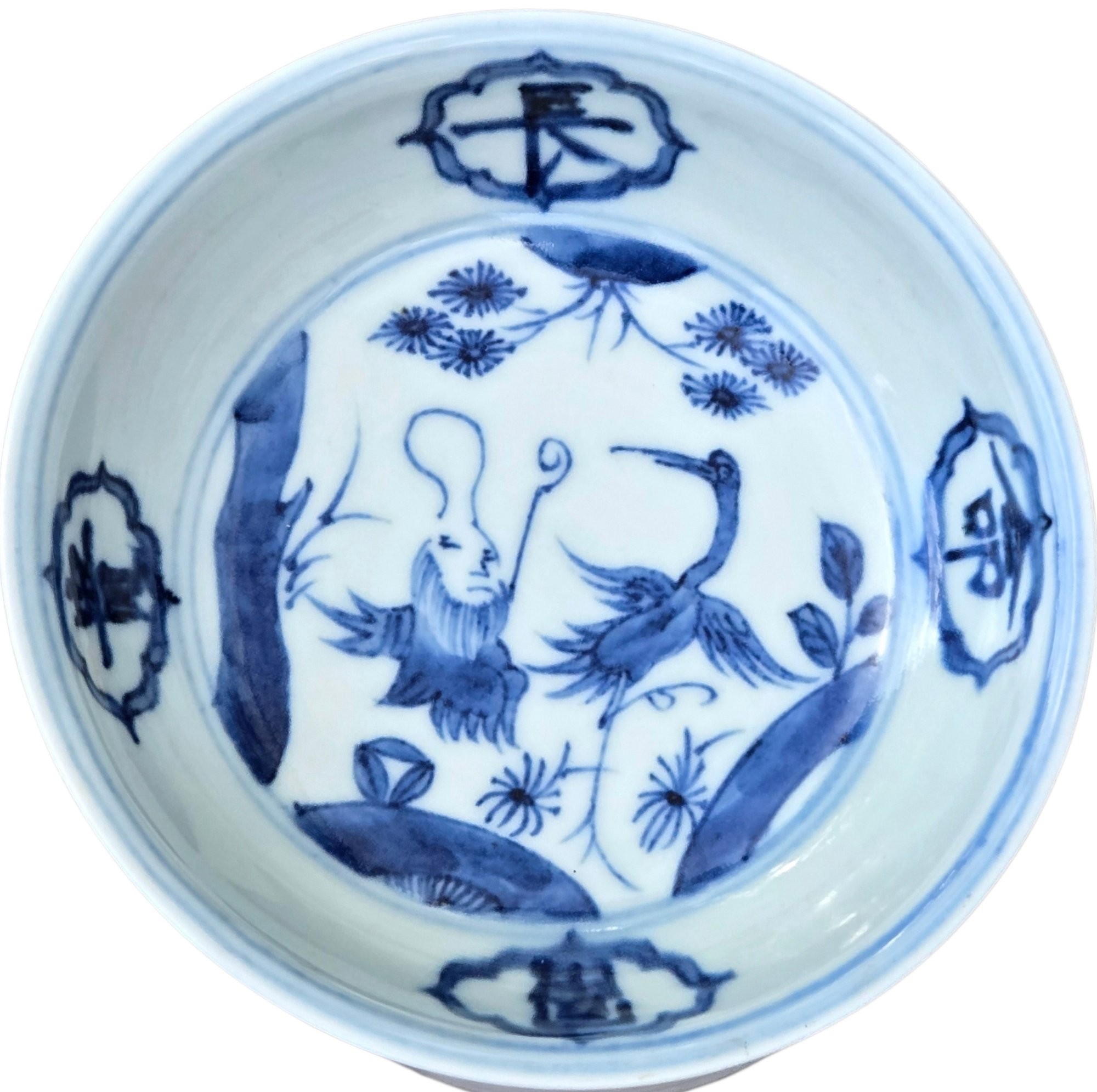
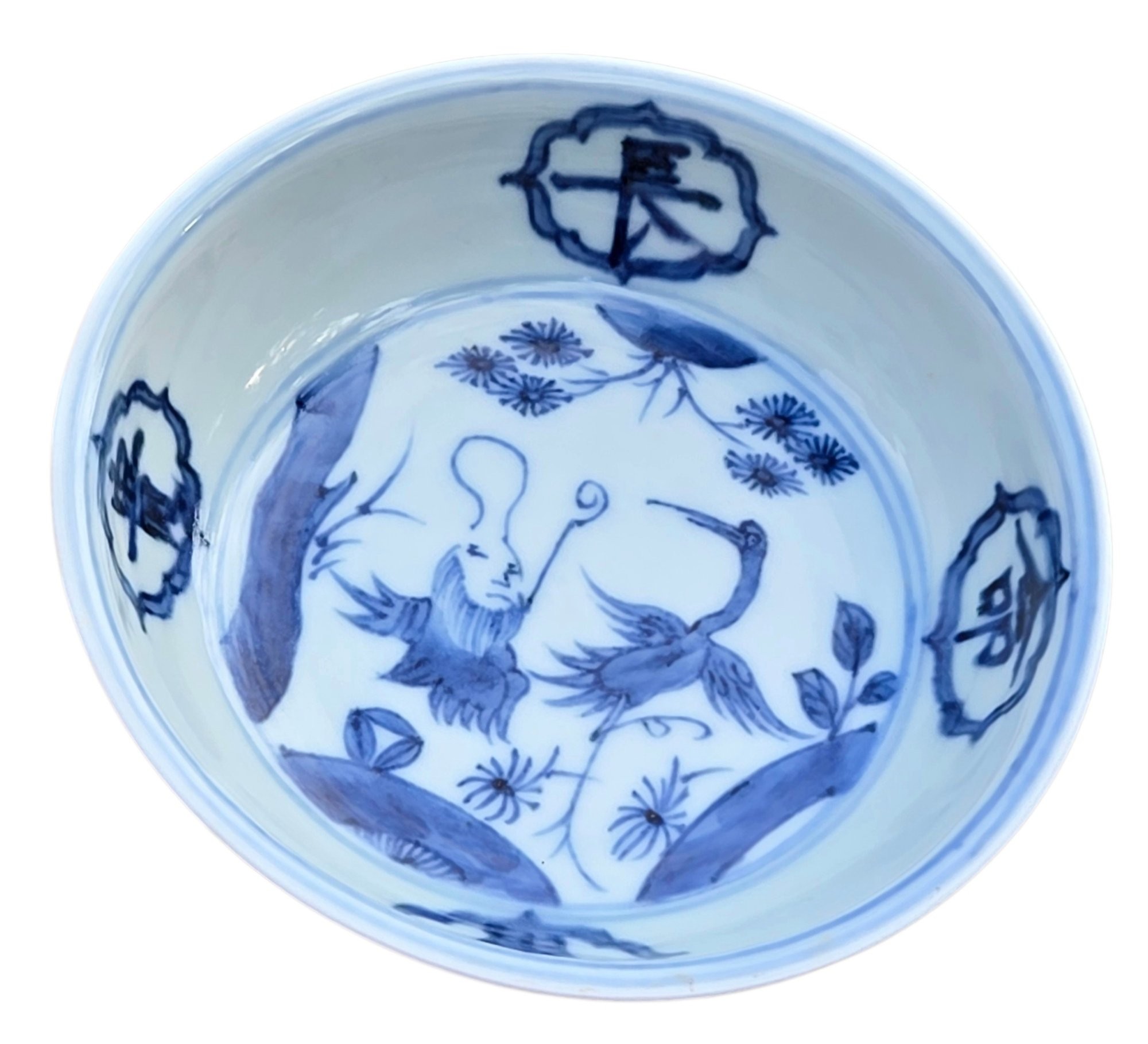
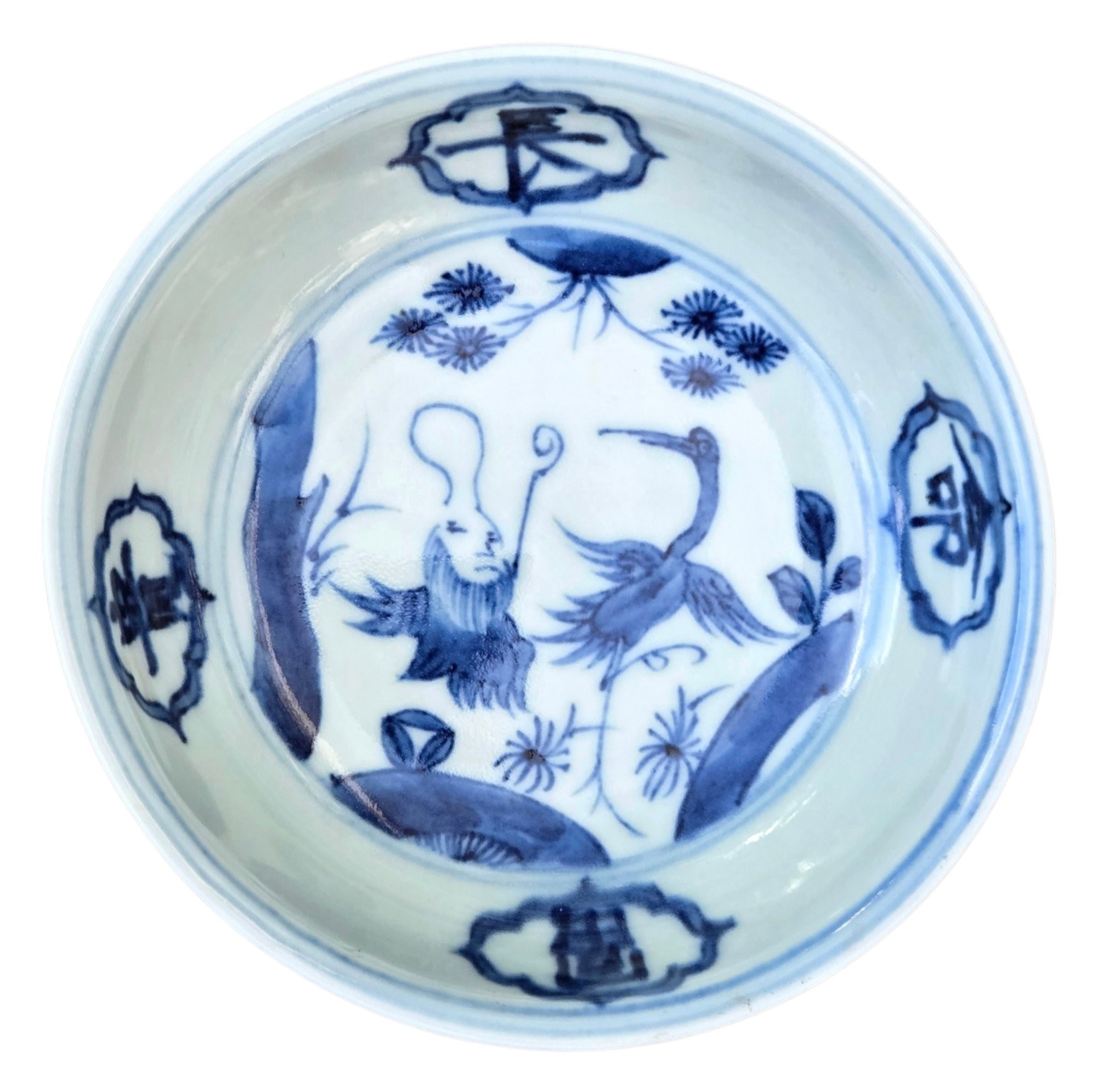
Exquisitely potted with deep, elegantly rounded walls rising from a neatly trimmed, wedge-shaped foot rim, this rare saucer-dish represents a masterclass in 17th-century scholar-taste porcelain. The interior is vibrantly painted in tones of underglaze cobalt blue with a spirited, narrative scene depicting Shoulao, the Daoist God of Longevity. Instantly recognizable by his dramatically elongated cranium and rustic staff, the deity is shown alongside his symbolic companion, a crane looking back in mid-stride. They are set within a landscape framed by calligraphic, structural rockwork and dynamic, stylized pine trees rendered in rapid, textbook ''V''-shaped needle
...clusters.
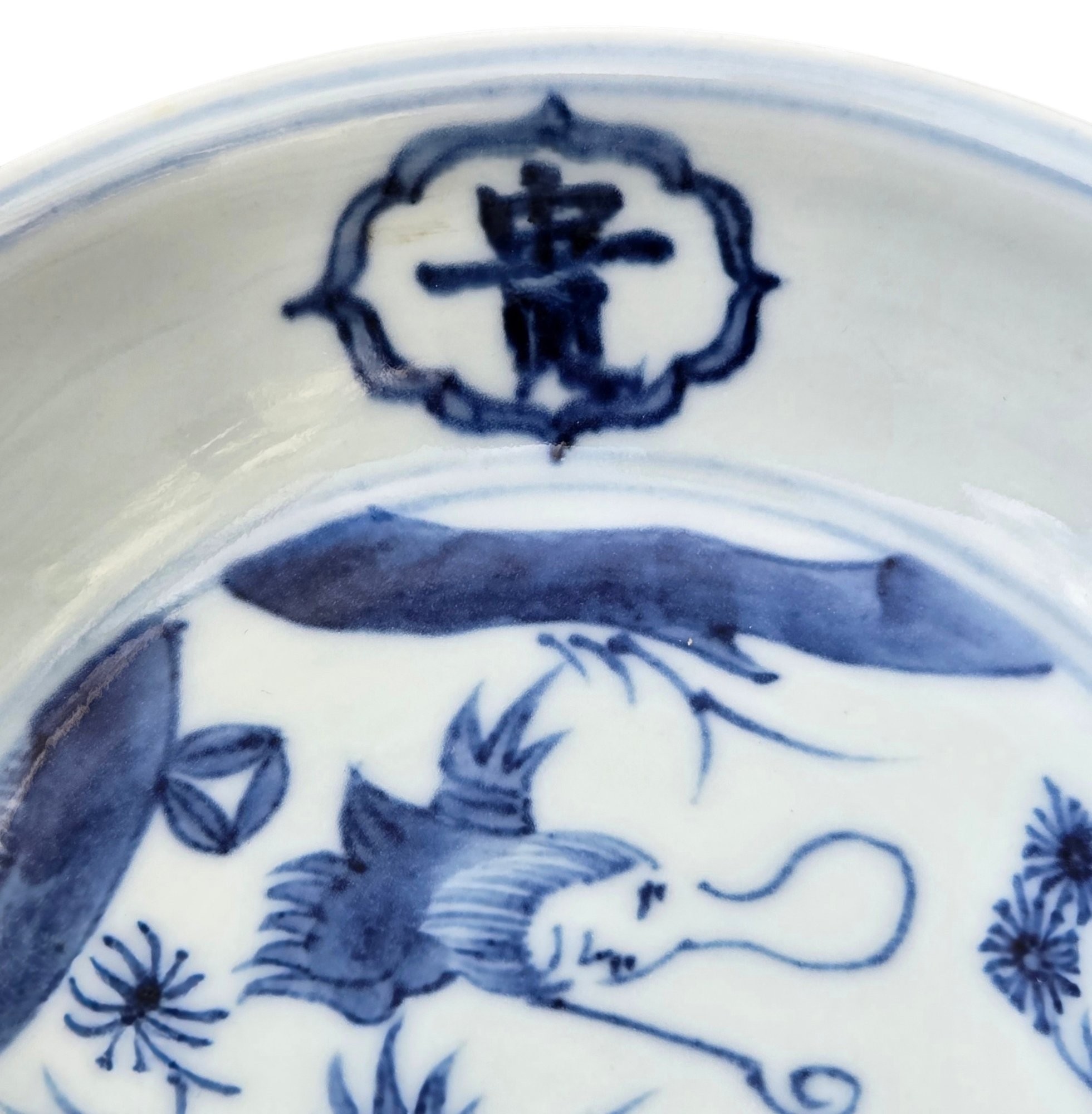
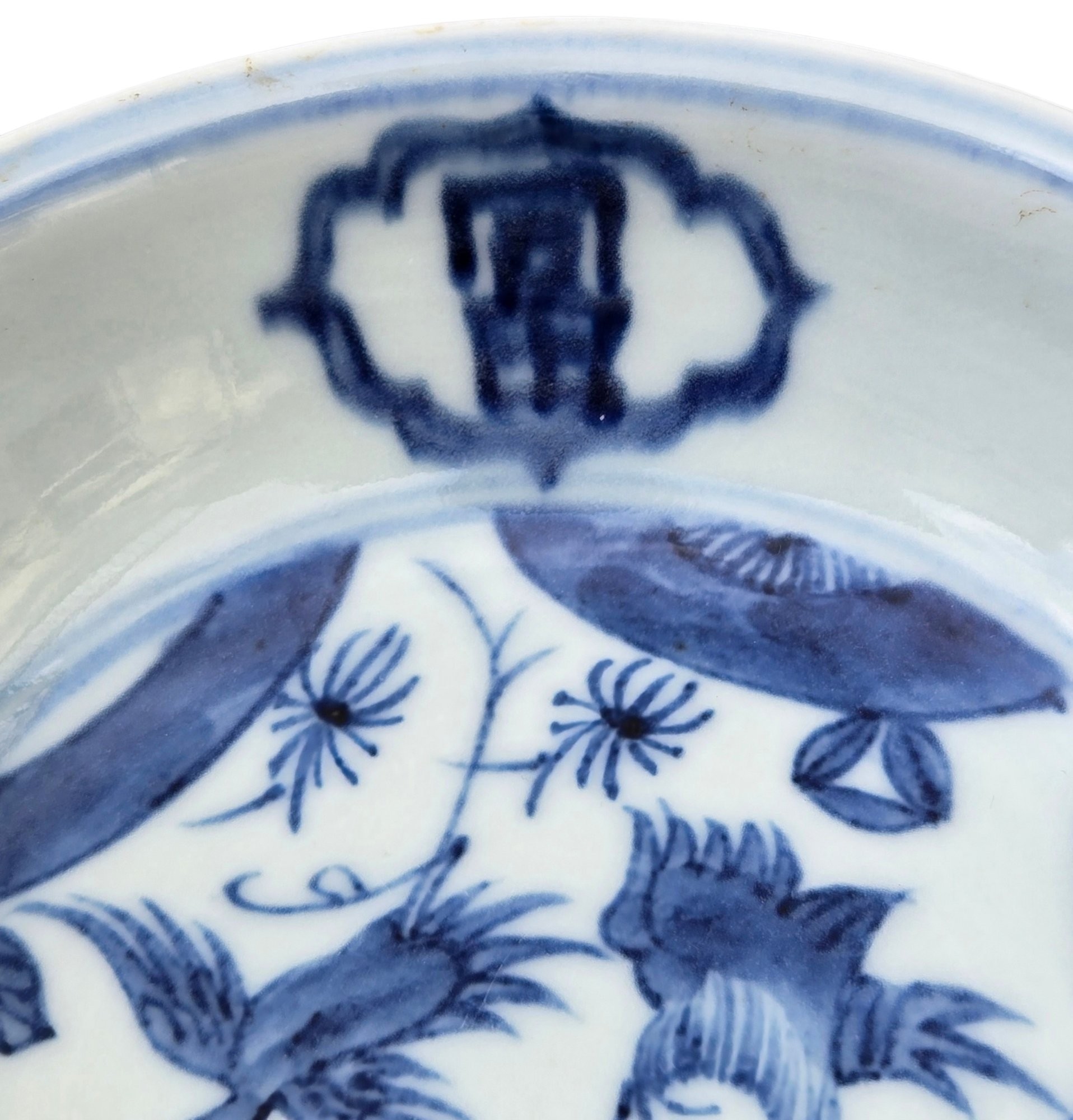
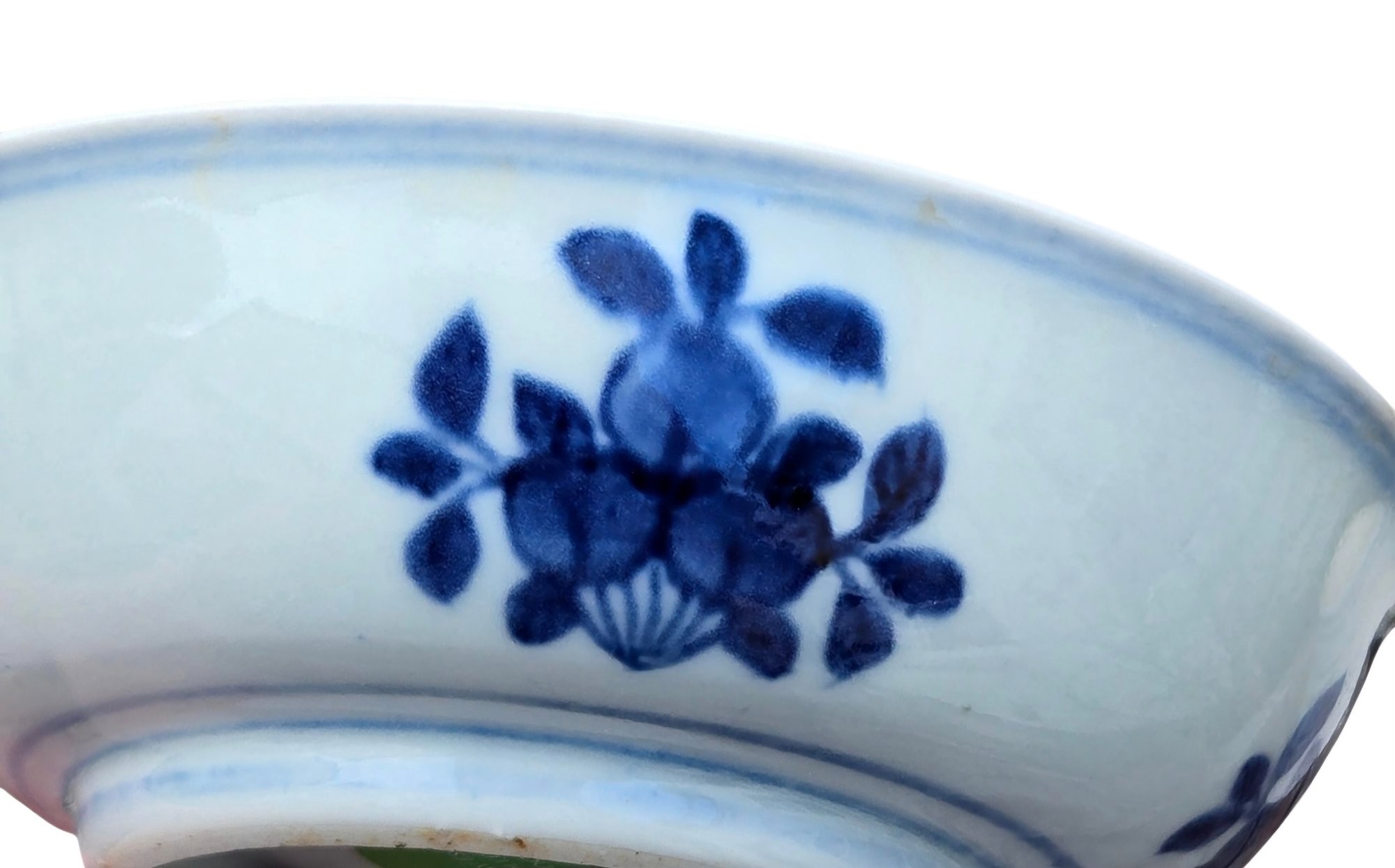
The flared inner rim features four ruyi-shaped cloud cartouches, each enclosing a crisply written character. Read clockwise from the top, they form the highly auspicious four-character idiom Cháng Mìng Fù Guì, translating to a profound blessing of ''Long Life, Wealth, and Honour.'' The exterior walls are decorated with beautifully spaced, understated floral sprays beneath a luminous, oily glaze. The unglazed base is beautifully clean, showing minor iron-spotting and firing grit characteristic of elite 17th-century private kiln firings.
Catalogue Note
The mid-1620s marked a historic apex of artistic freedom at Jingdezhen. Following the collapse of imperial funding, master potters re-oriented their finest work toward the highly sophisticated Japanese tea ceremony market, producing custom wares known as Ko-Sometsuke.
This deep dish is a definitive, investment-grade example of a Mukozuke—a vessel designed for the formal Kaiseki meal accompanying the tea ritual. While standard export wares relied on repetitive geometric patterns, this piece treats the porcelain surface as a fine painting scroll, embracing the asymmetric, whimsical wabi-sabi aesthetic highly coveted by elite tea masters. At a remarkably delicate 163.7 grams, the dish offers a superb tactile experience in the hand. Backed by impeccable, academic European gallery provenance, this is a rare survival celebrating an enduring theme of classical Chinese iconography.
Antique ID Number (AIDN): SA1216604
Dateline of this antique is 17th Century




Thank you.
Your comment has been sent to Sellingantiques.