Sandbanks Antiques has dated this Ming Porcelain Saucer Dish to the 17th Century.
Late Ming Dynasty, Tianqi Period, Circa 1625.
Diameter: 13 cm
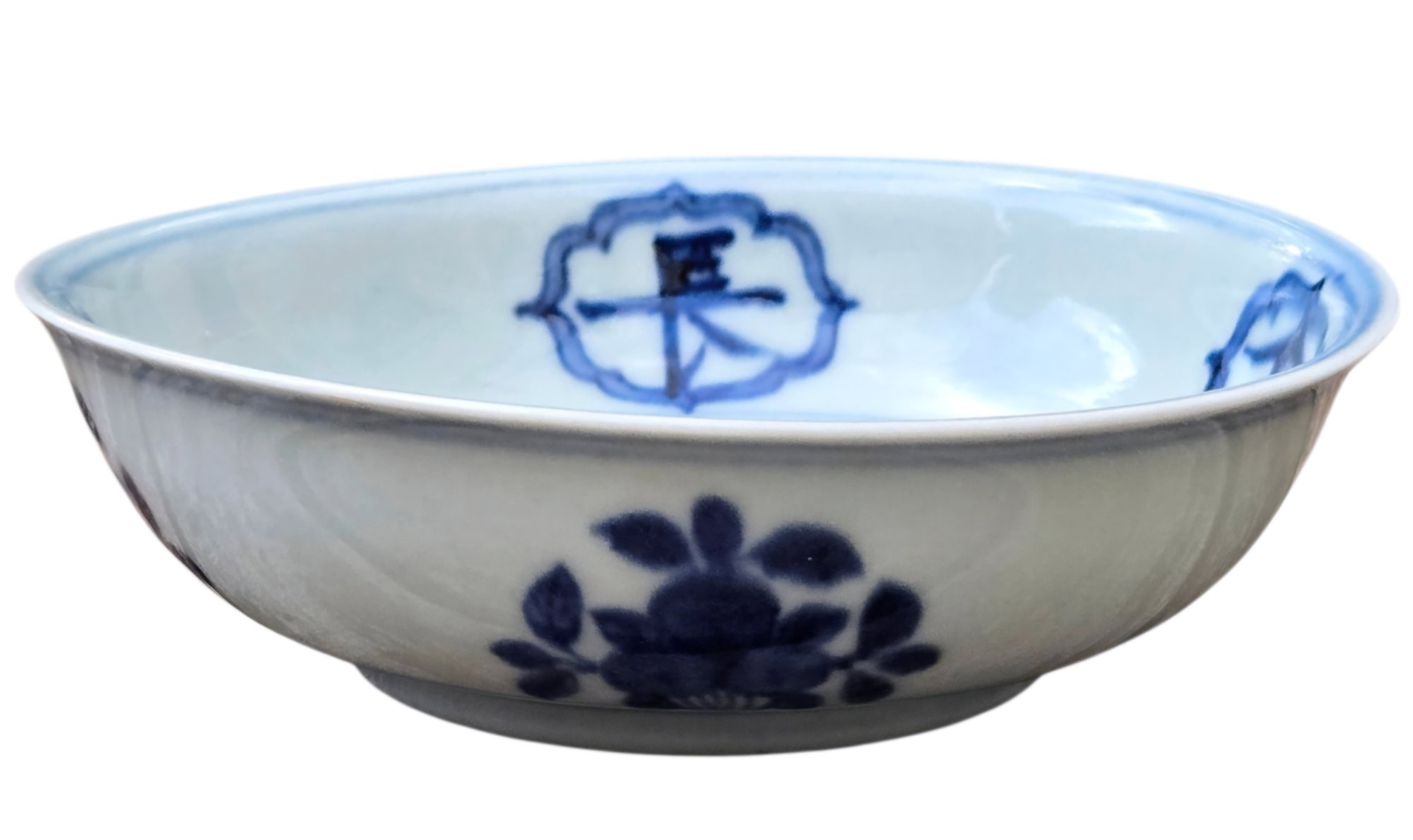
Height: 5.5 cm
Weight: 163.7 grams
Provenance: Seghers & Pang Fine Arts, Brussels (Acquired July 2022).
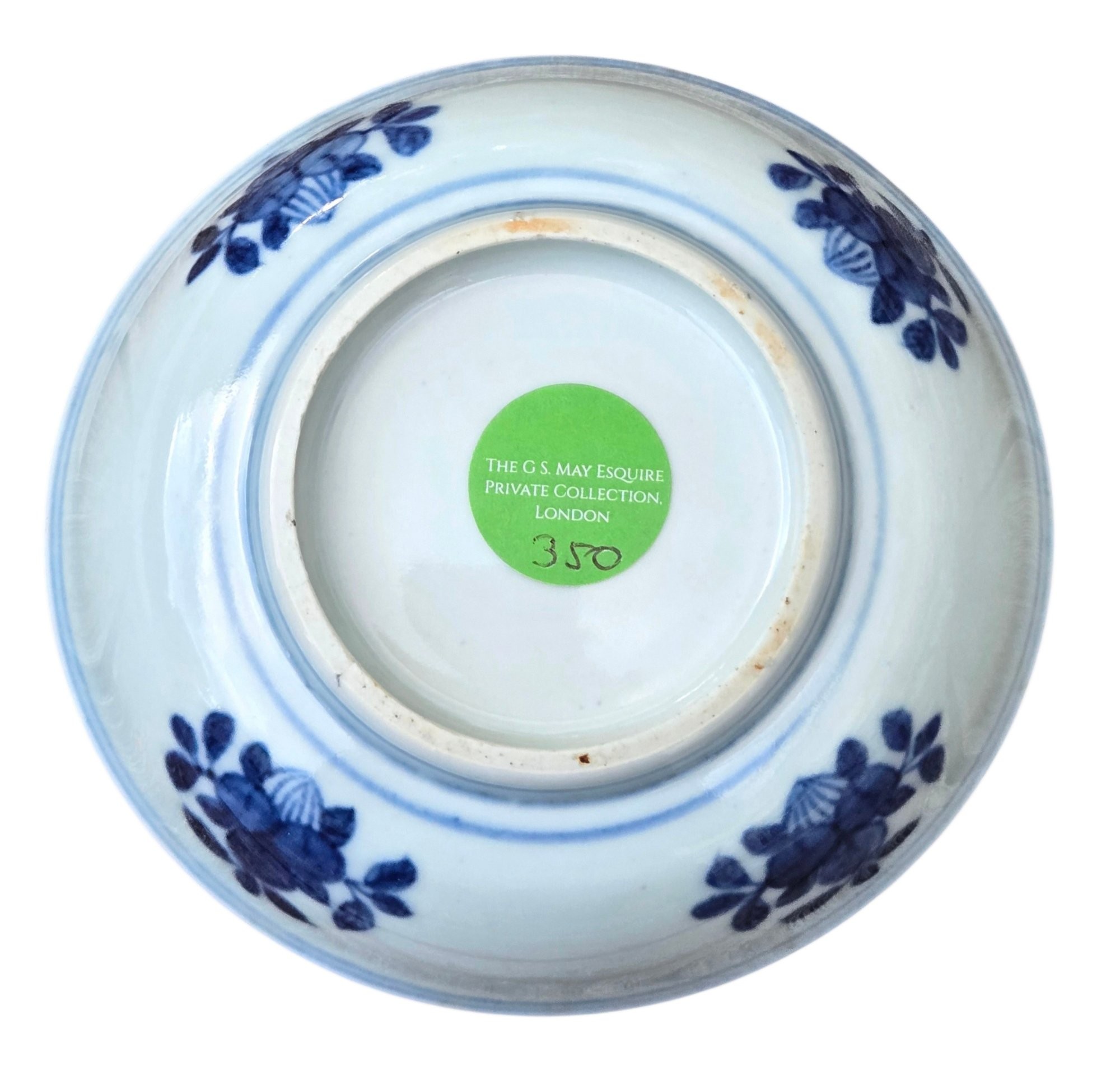
The G S. May Esquire Private Collection, London
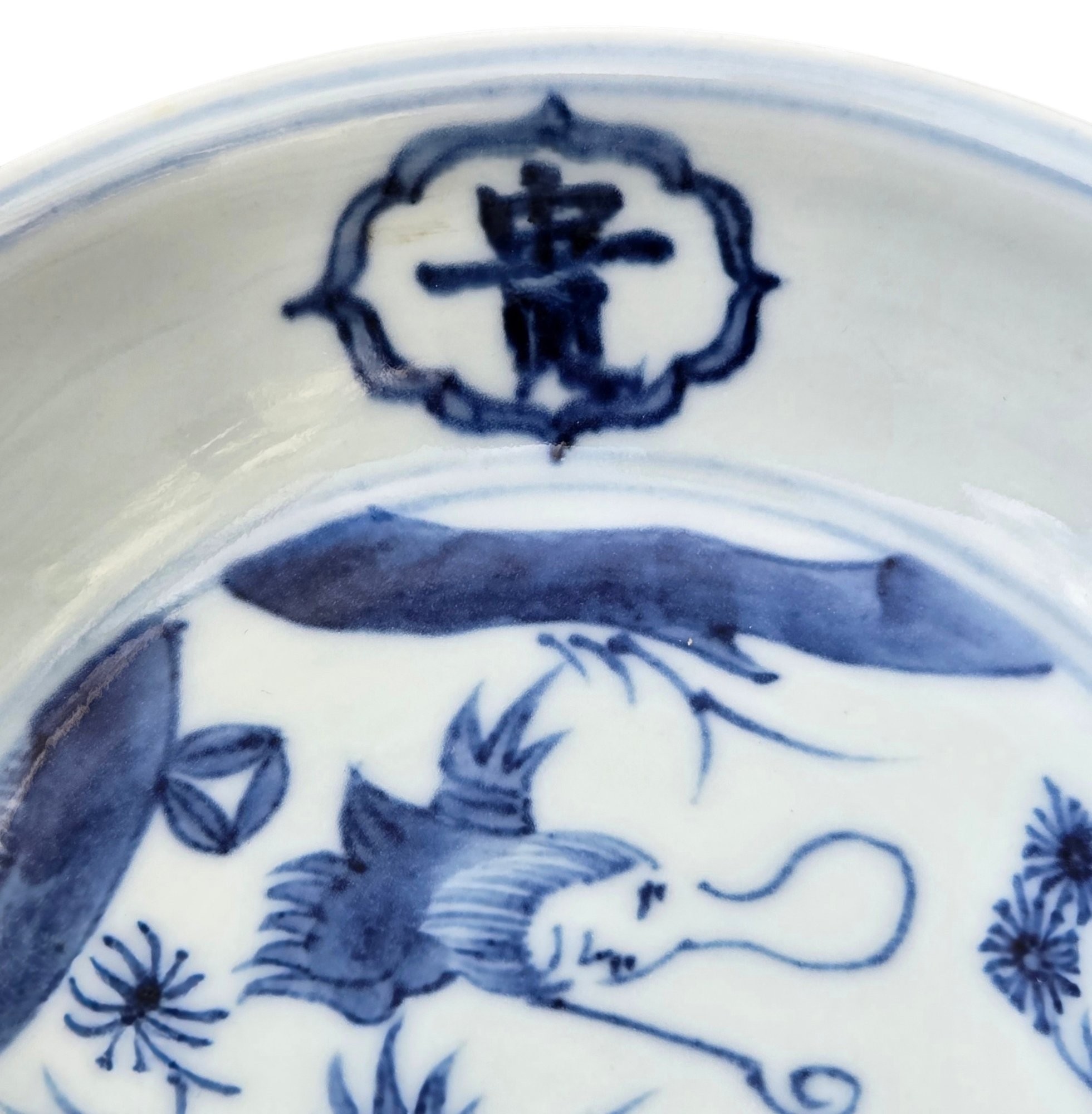
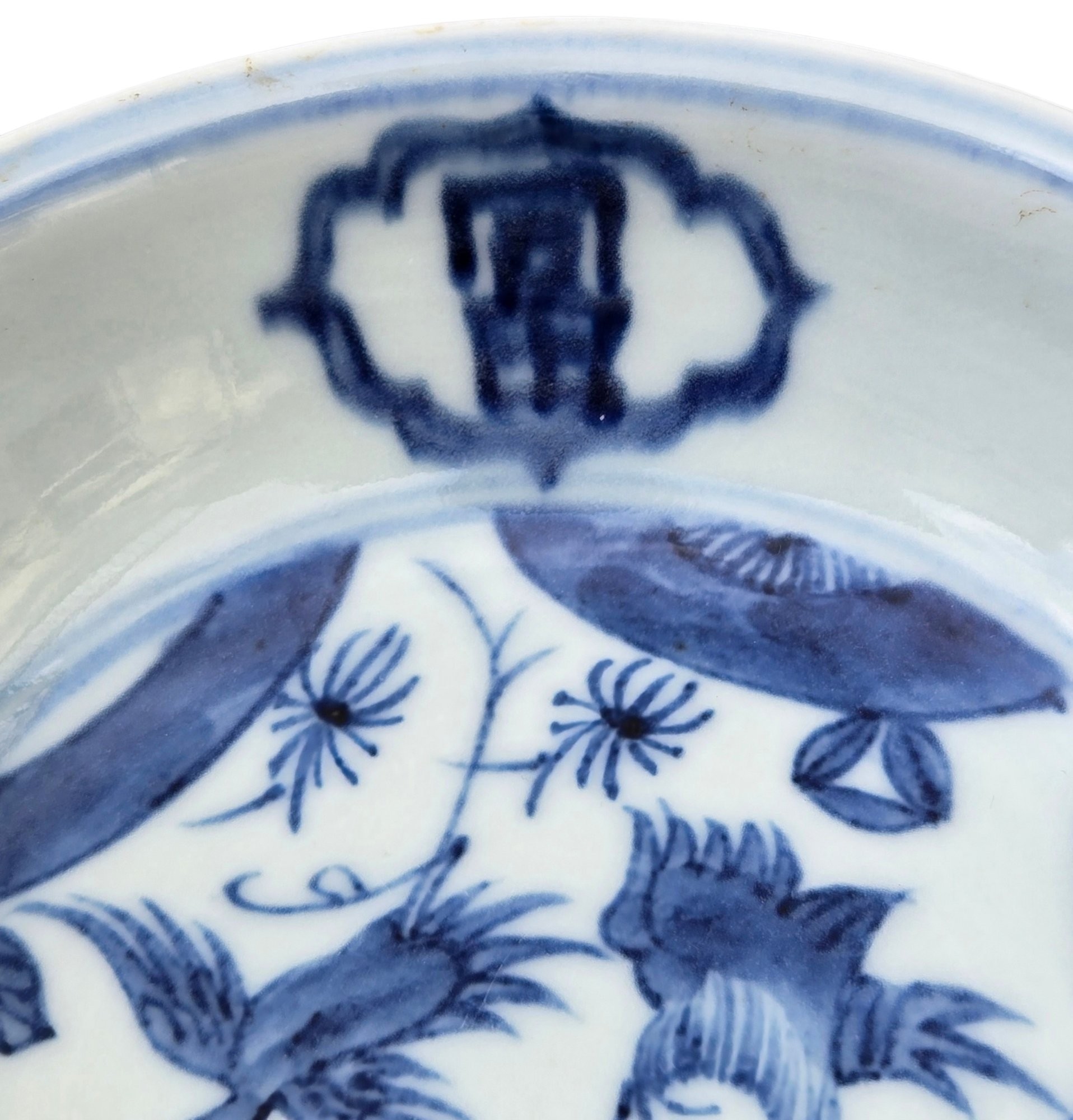
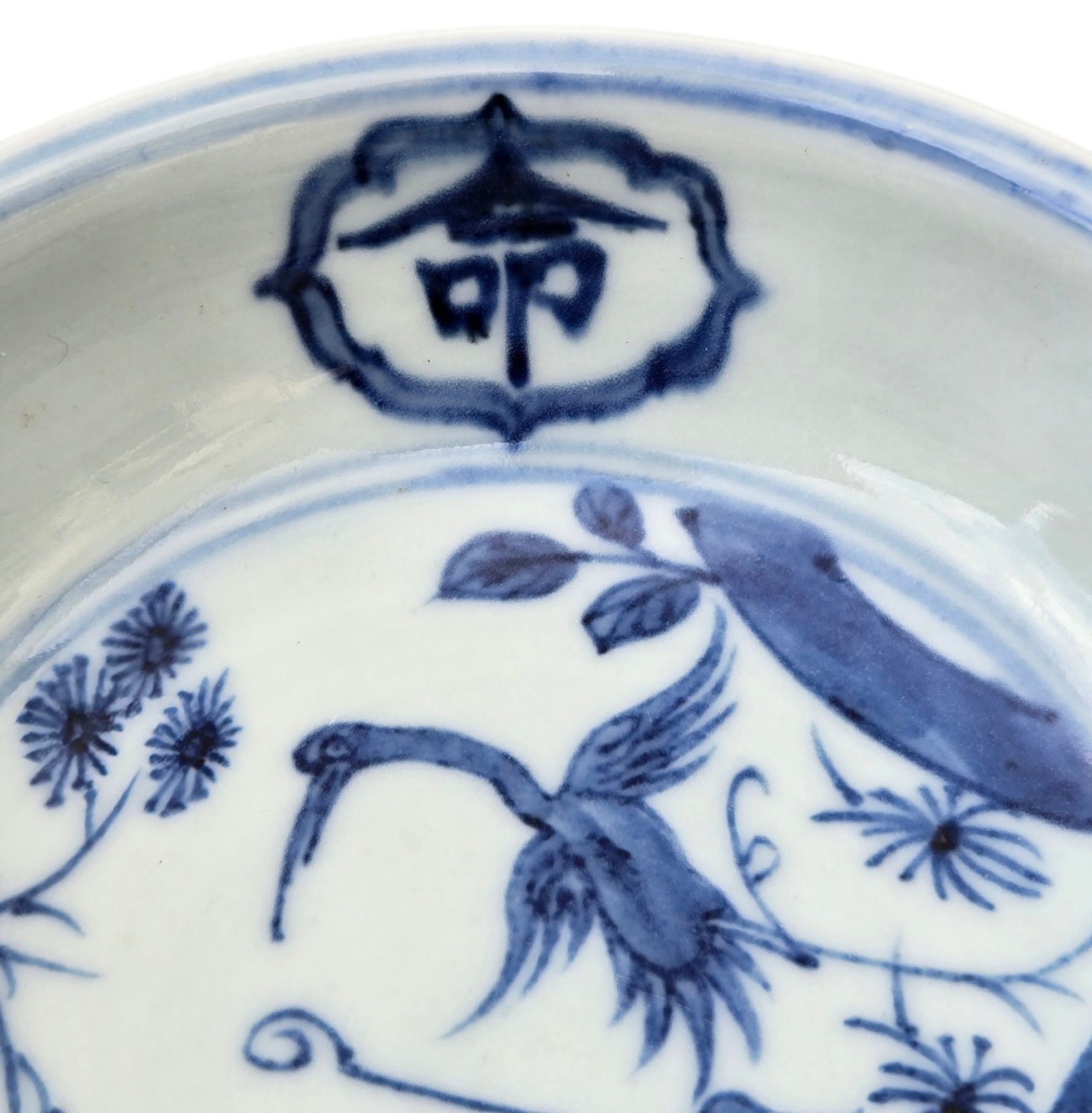
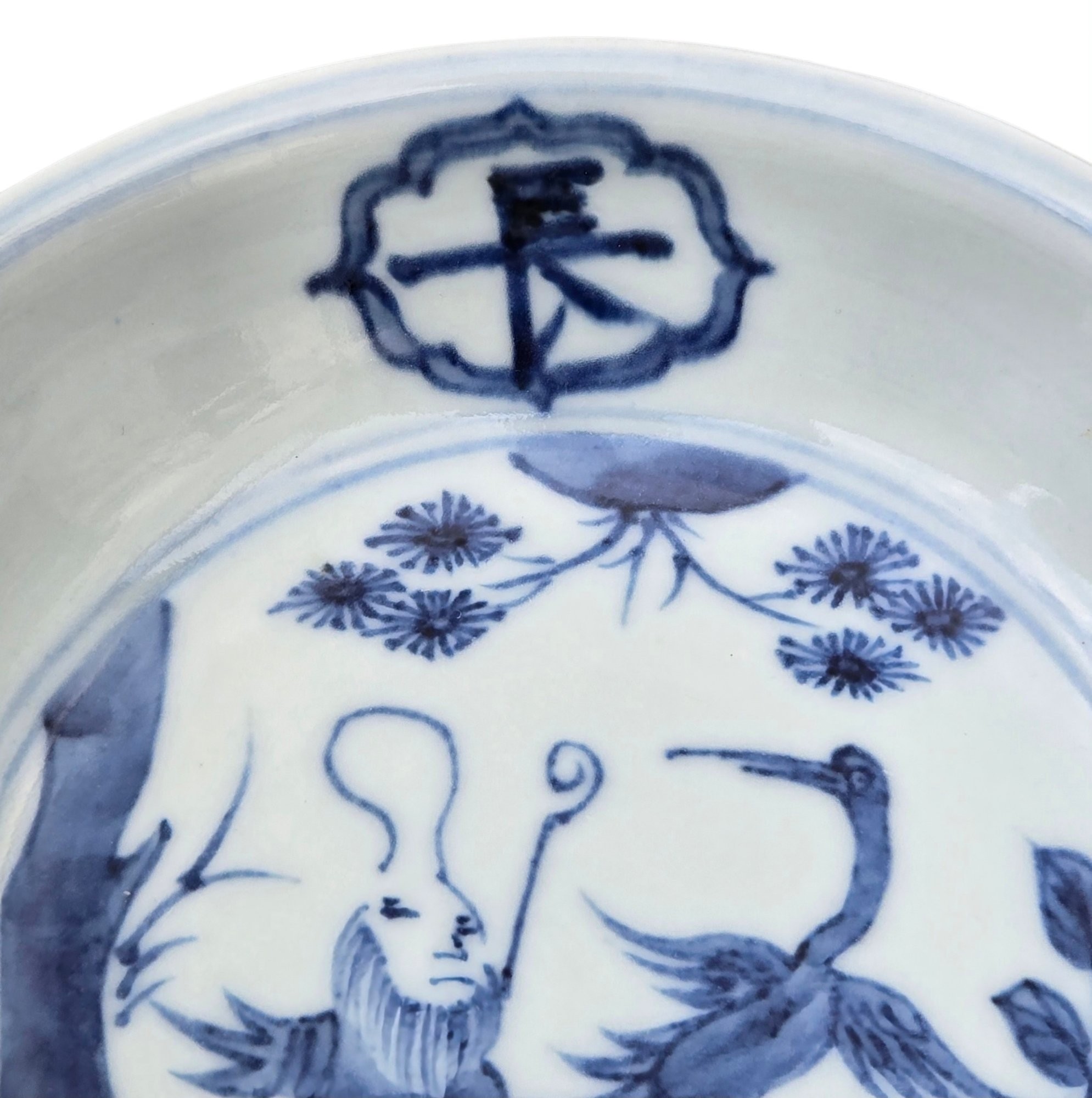
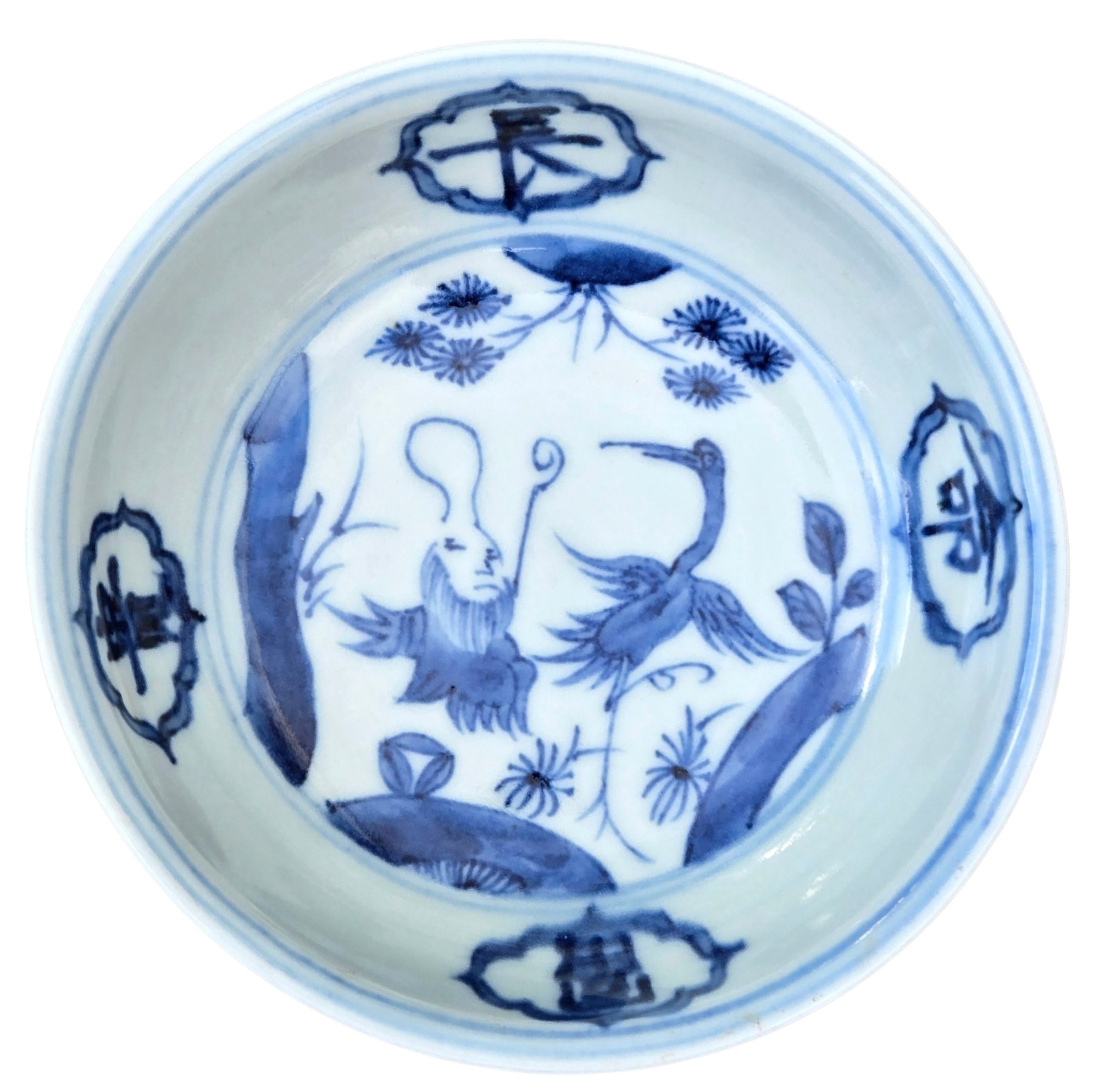
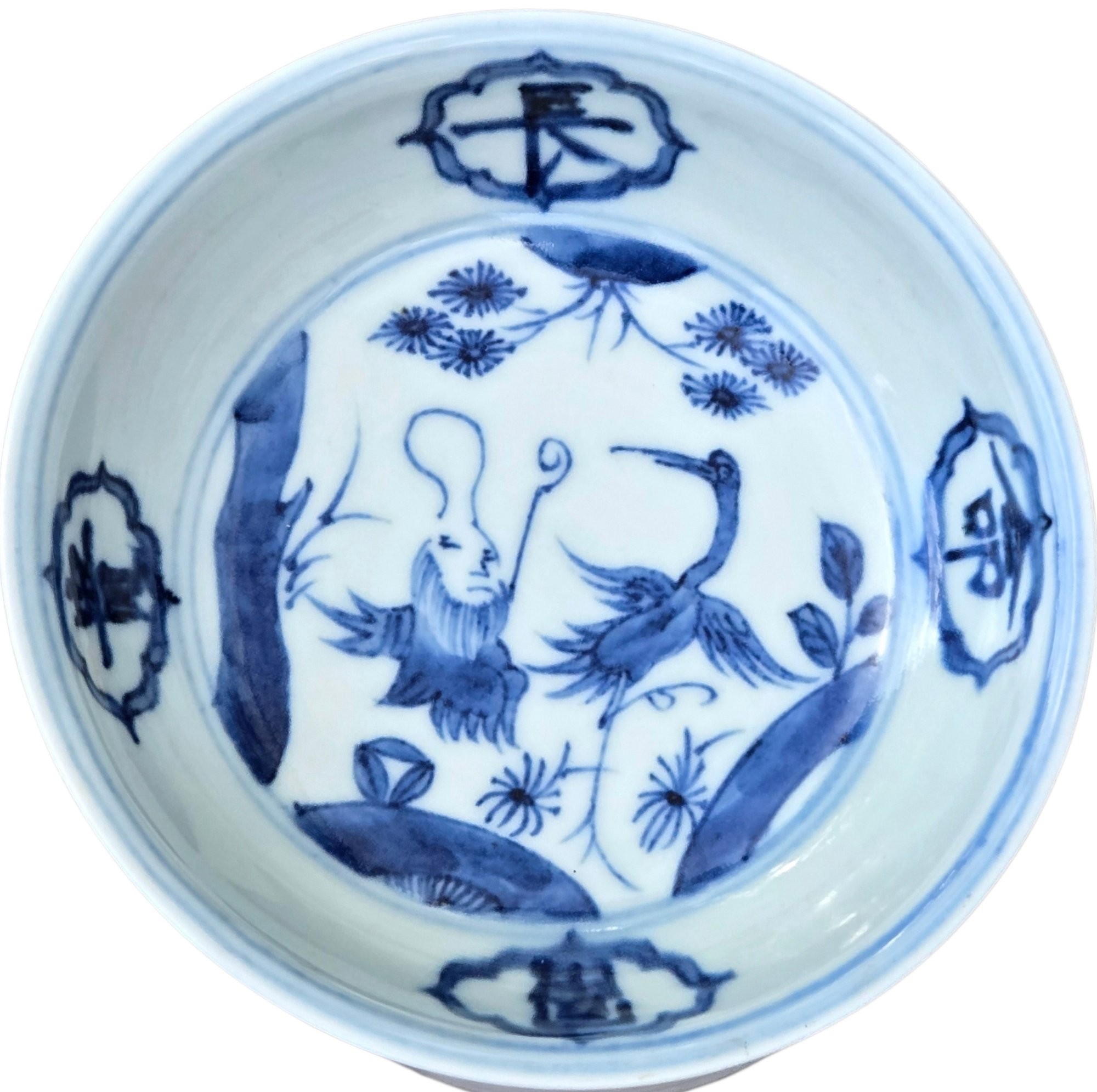
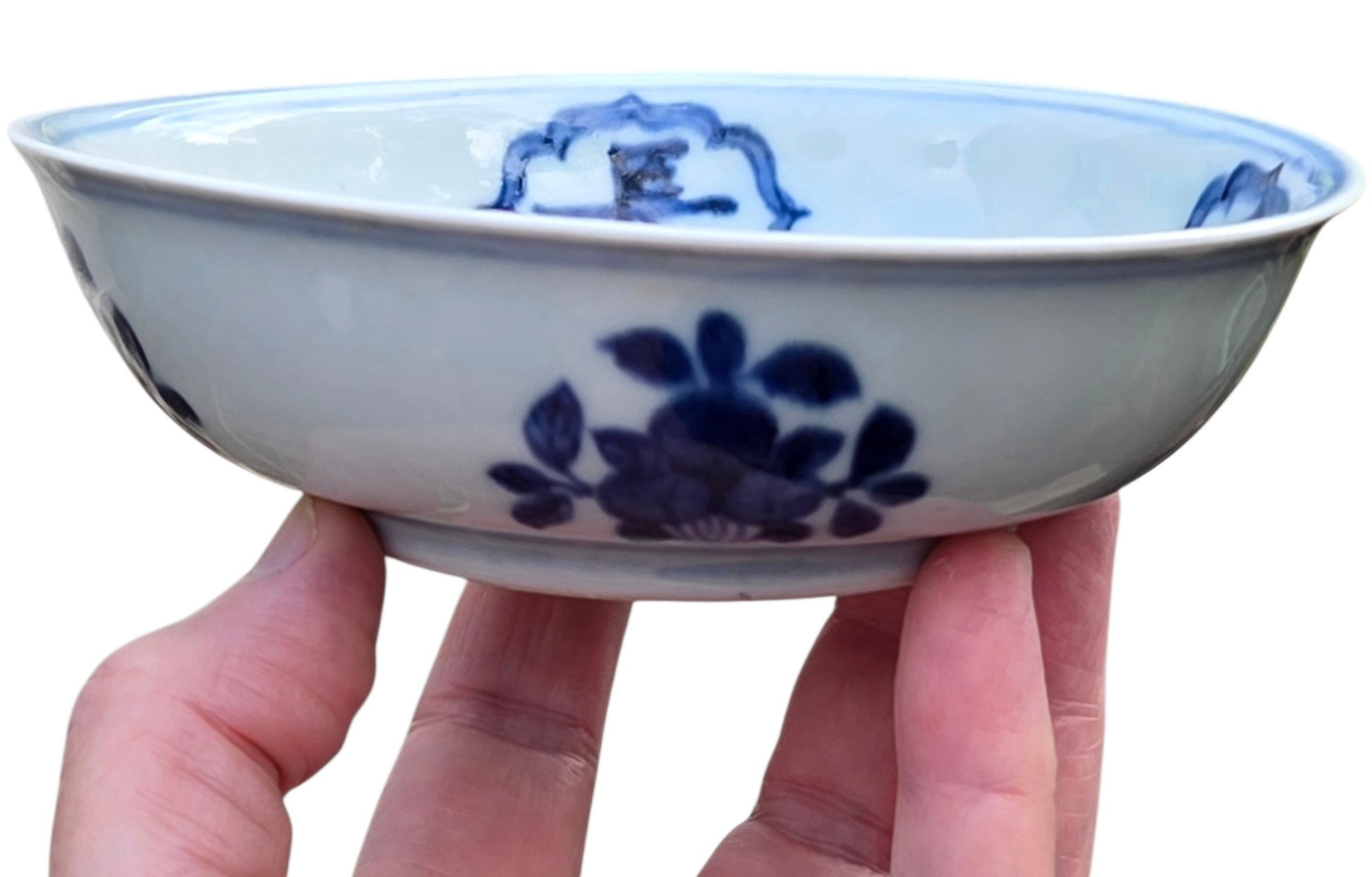
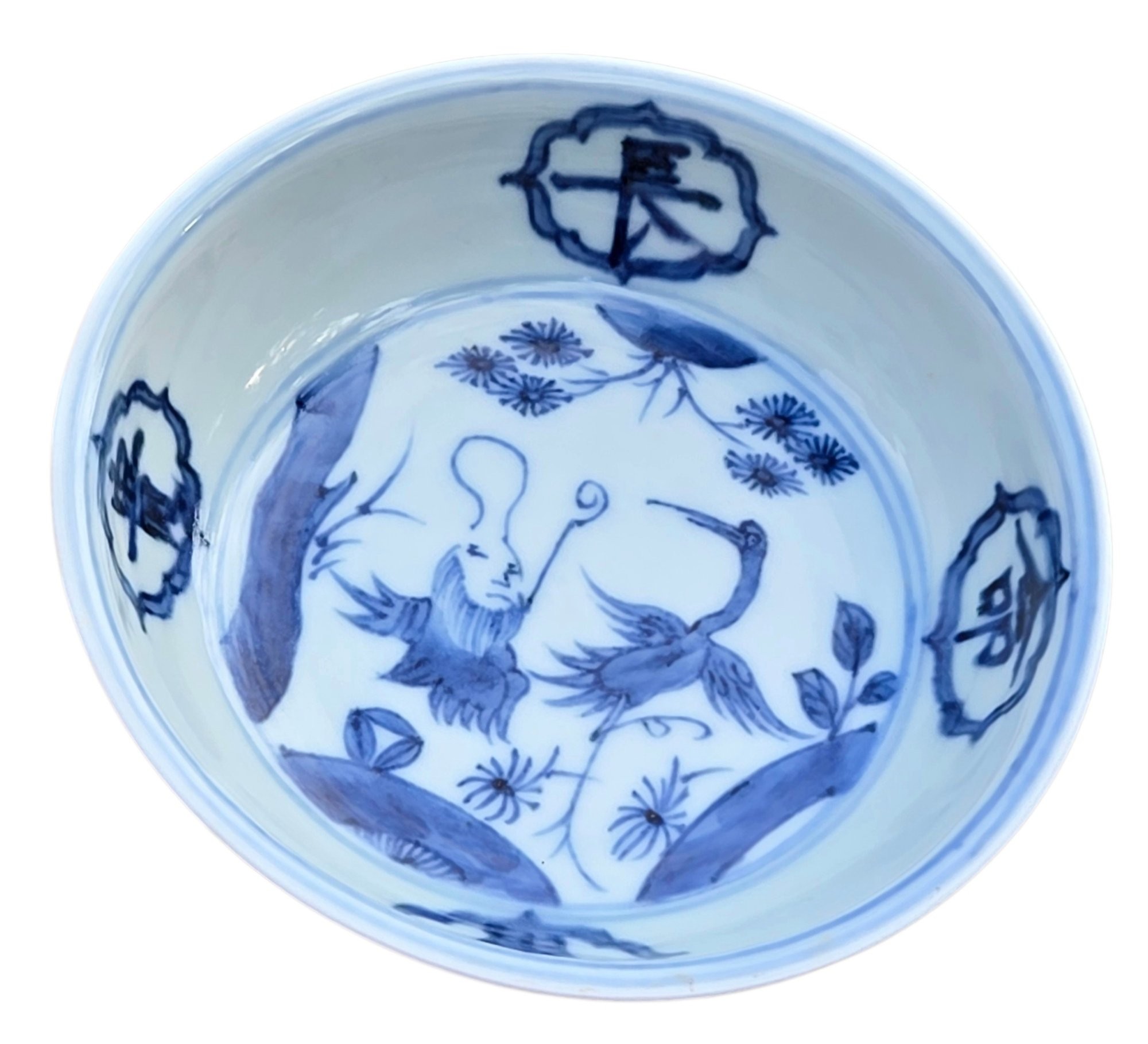
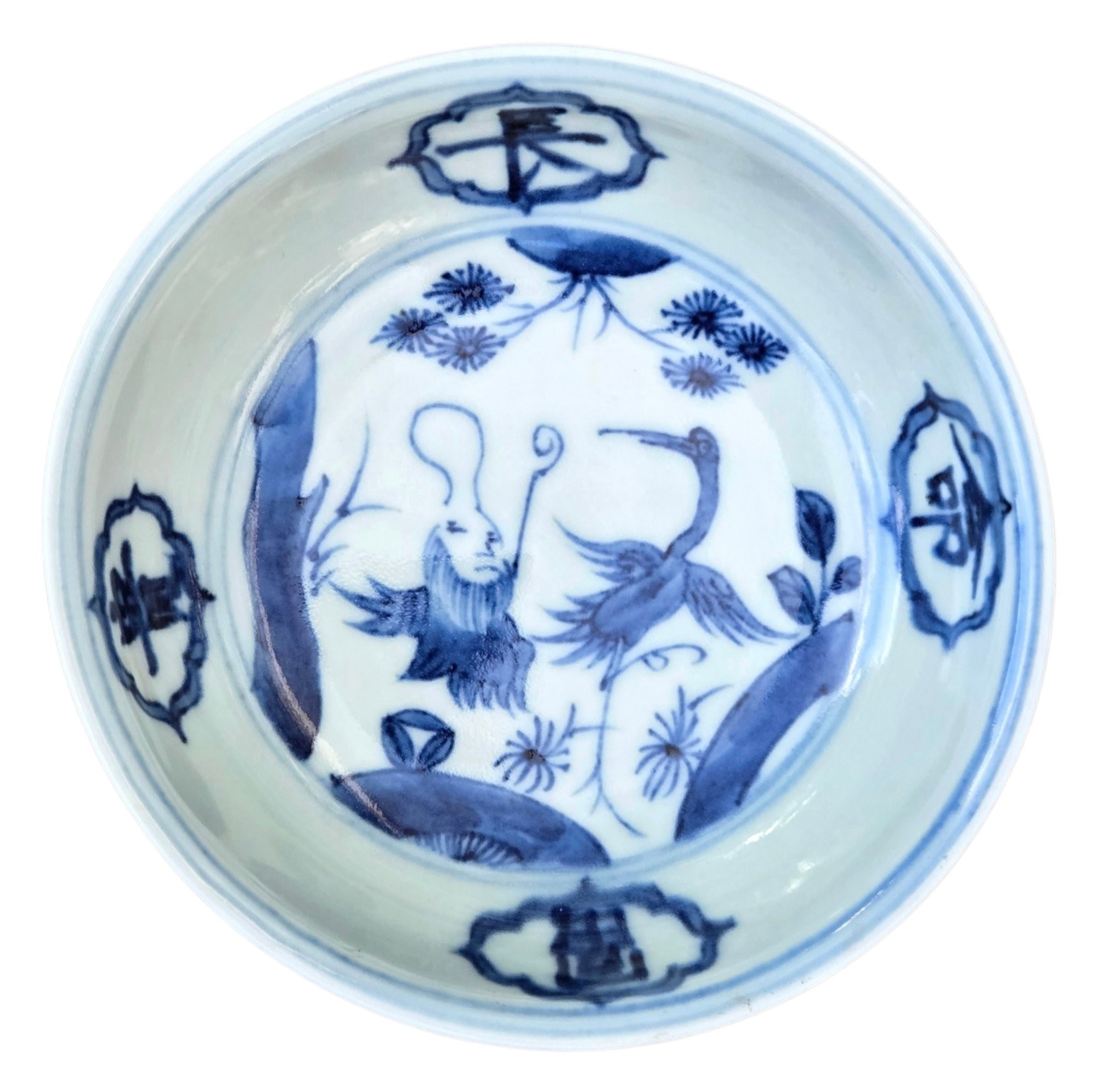
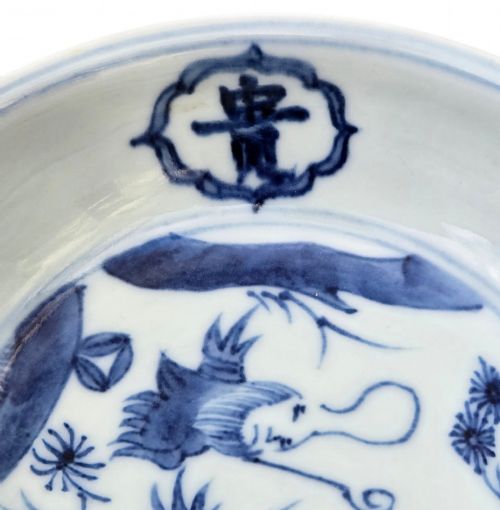
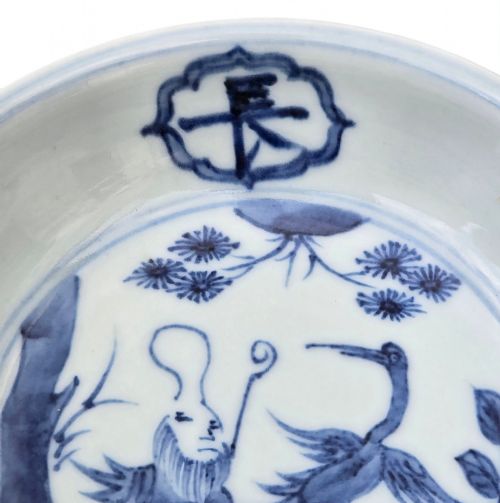
The interior is vibrantly painted in tones of underglaze cobalt blue with a spirited, narrative scene depicting Shoulao, the Daoist God of Longevity. Instantly recognizable by his dramatically elongated cranium and rustic staff, the deity is shown alongside his symbolic companion, a crane looking back in mid-stride. They are set within a landscape framed by calligraphic, structural rockwork and dynamic, stylized pine trees rendered in rapid, textbook "V"-shaped needle clusters.
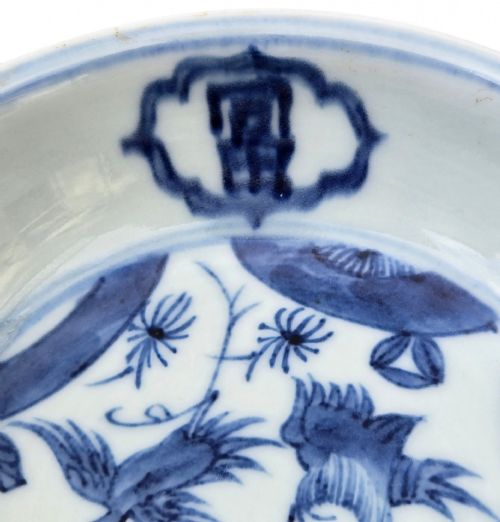
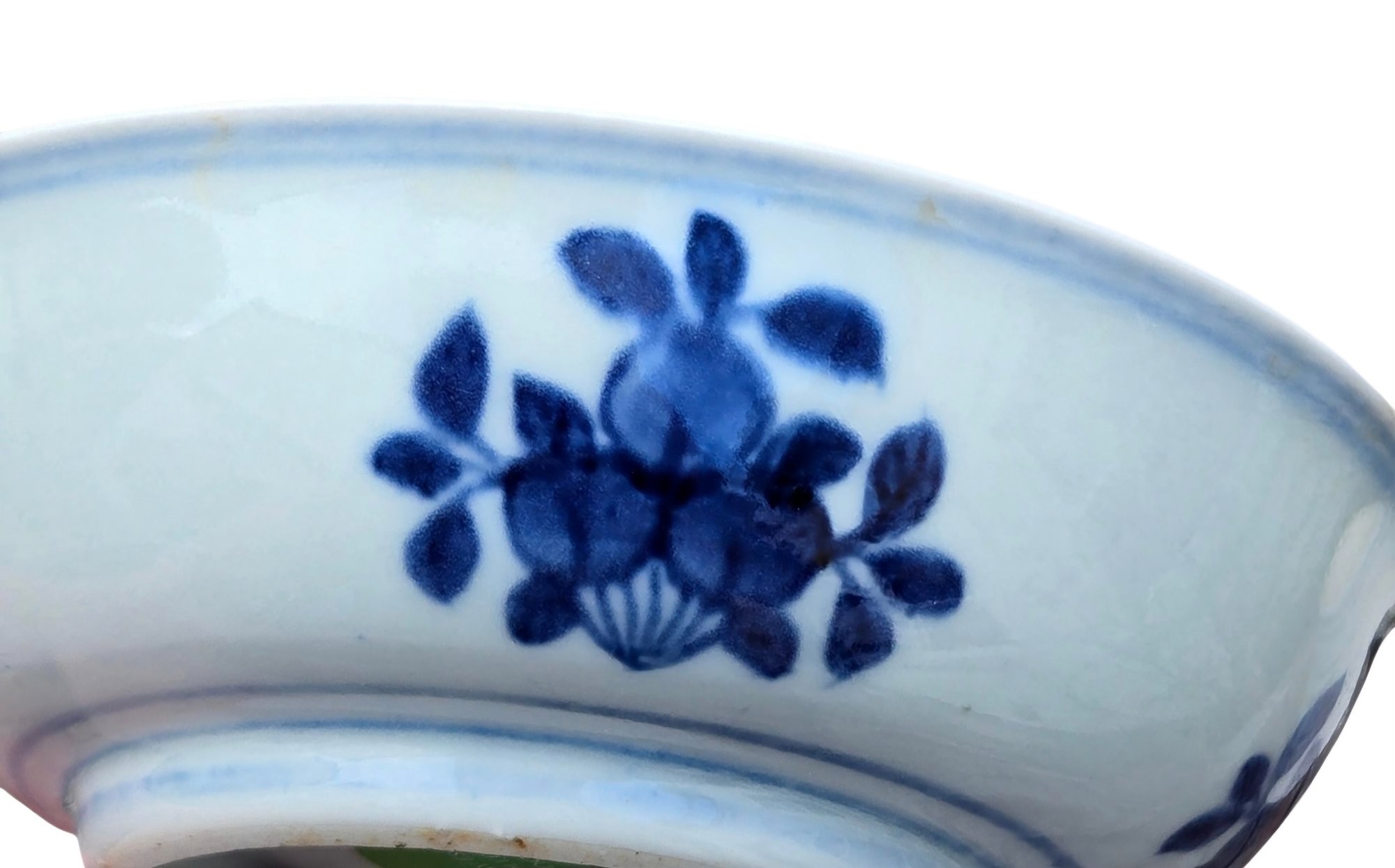
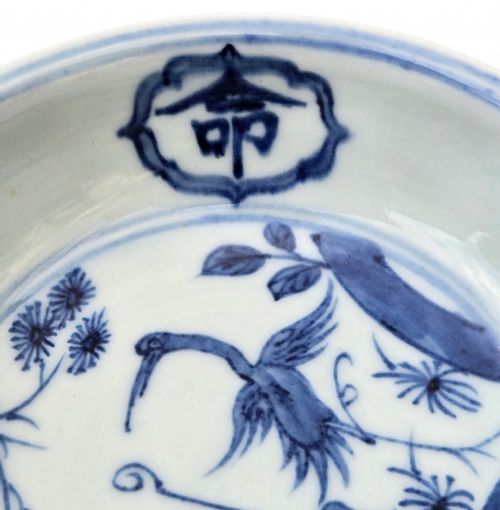
The flared inner rim features four ruyi-shaped cloud cartouches, each enclosing a crisply written character. Read clockwise from the top, they form the highly auspicious four-character idiom Cháng Mìng Fù Guì, translating to a profound blessing of "Long Life, Wealth, and Honour." The exterior walls are decorated with beautifully spaced, understated floral sprays beneath a luminous, oily glaze. The unglazed base is beautifully clean, showing minor iron-spotting and firing grit characteristic of elite 17th-century private kiln firings.
Catalogue Note
The mid-1620s marked a historic apex of artistic freedom at Jingdezhen. Following the collapse of imperial funding, master potters re-oriented their finest work toward the highly sophisticated Japanese tea ceremony market, producing custom wares known as Ko-Sometsuke.
This deep dish is a definitive, investment-grade example of a Mukozuke—a vessel designed for the formal Kaiseki meal accompanying the tea ritual. While standard export wares relied on repetitive geometric patterns, this piece treats the porcelain surface as a fine painting scroll, embracing the asymmetric, whimsical wabi-sabi aesthetic highly coveted by elite tea masters. At a remarkably delicate 163.7 grams, the dish offers a superb tactile experience in the hand. Backed by impeccable, academic European gallery provenance, this is a rare survival celebrating an enduring theme of classical Chinese iconography.
Sandbanks Antiques has dated this Ming Porcelain Saucer Dish to the 17th Century.
Specialising in antique silver, gold boxes, gold coins and objects de vertu. Rare fine-quality imperial chinese porcelain, jades, cloisonné
You can view the stock and full dealer information on the Sandbanks Antiques Profile Page
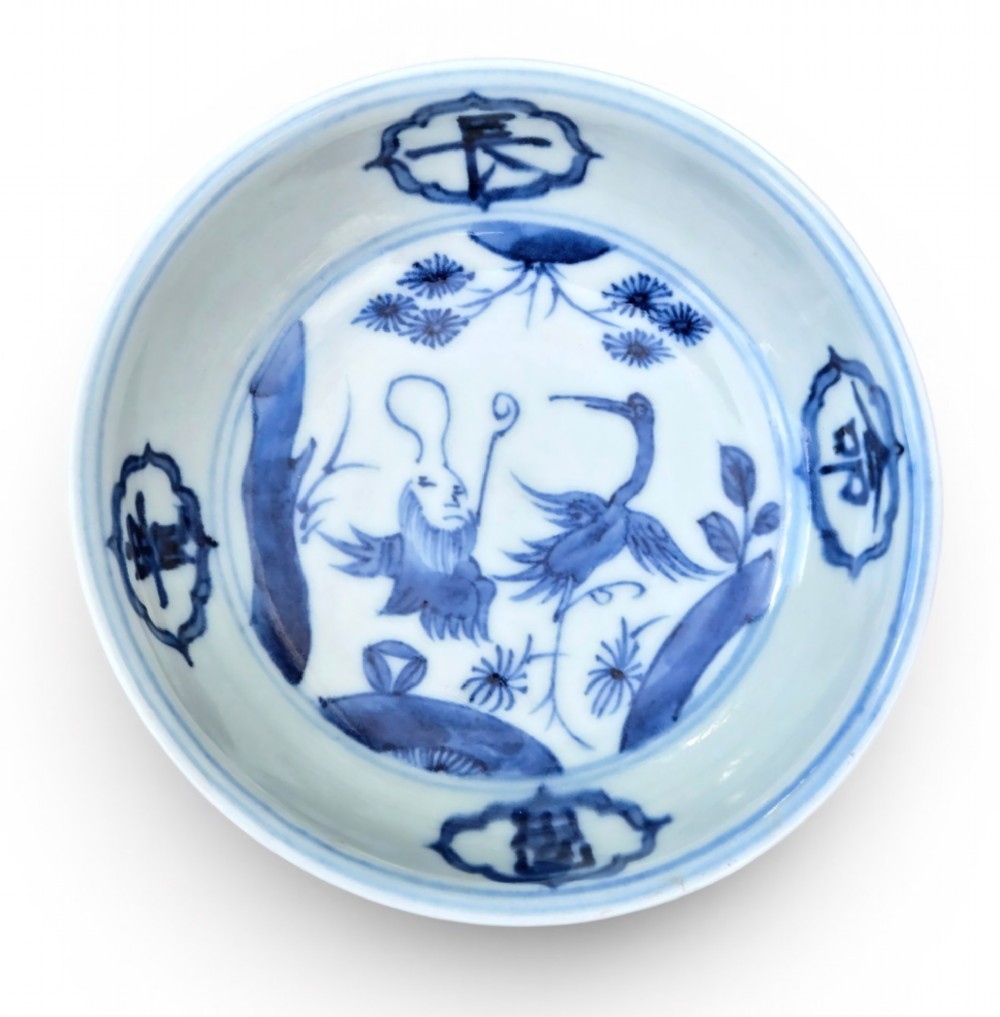
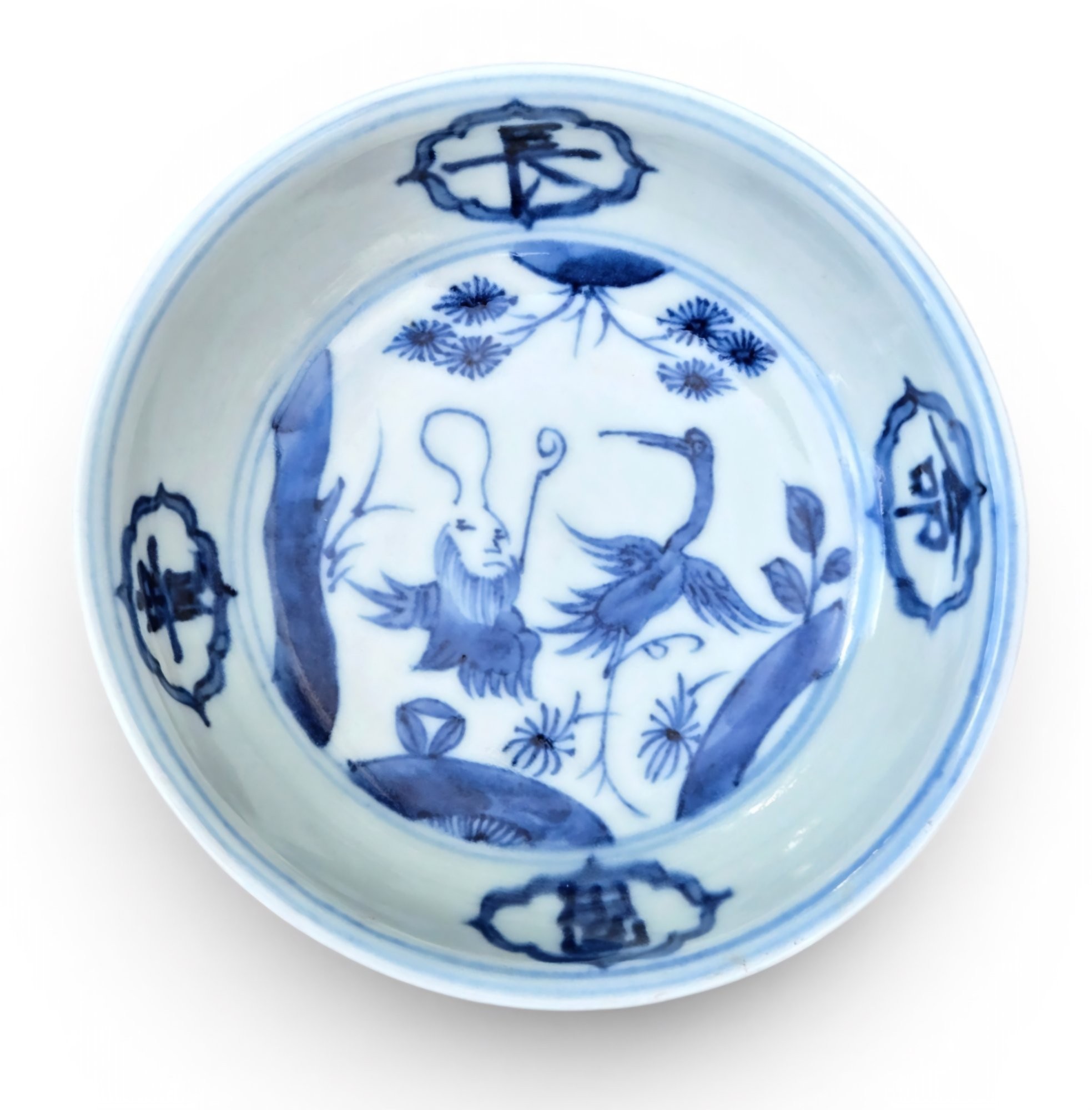
A Fine and Exceptionally Rare Ming Dynasty Blue and White 'Shoulao and Crane' Deep Saucer-dish (Mukozuke)