10,932  PAGES BROWSED TODAY PAGES TODAY 36  ANTIQUES UPLOADED TODAY NEW ARRIVALS
ID #SA1216409
FOR SALE
£8,750
Email
Save
George III 18th Century Period Secretaire Cabinet
Freshfords Fine Antiques
for sale €10,238     $11,113
£8,750
Freshfords Fine Antiques

Freshfords Fine Antiques

Sellingantiques Verified Since Nov 2020
View Dealers Stock Page
  • Trade Associations
    Freshfords Fine Antiques is a registered member of BADA 
Id #SA1216409
PDF SHARE
SAVE

George III 18th Century Period Secretaire Cabinet

18th century
Description

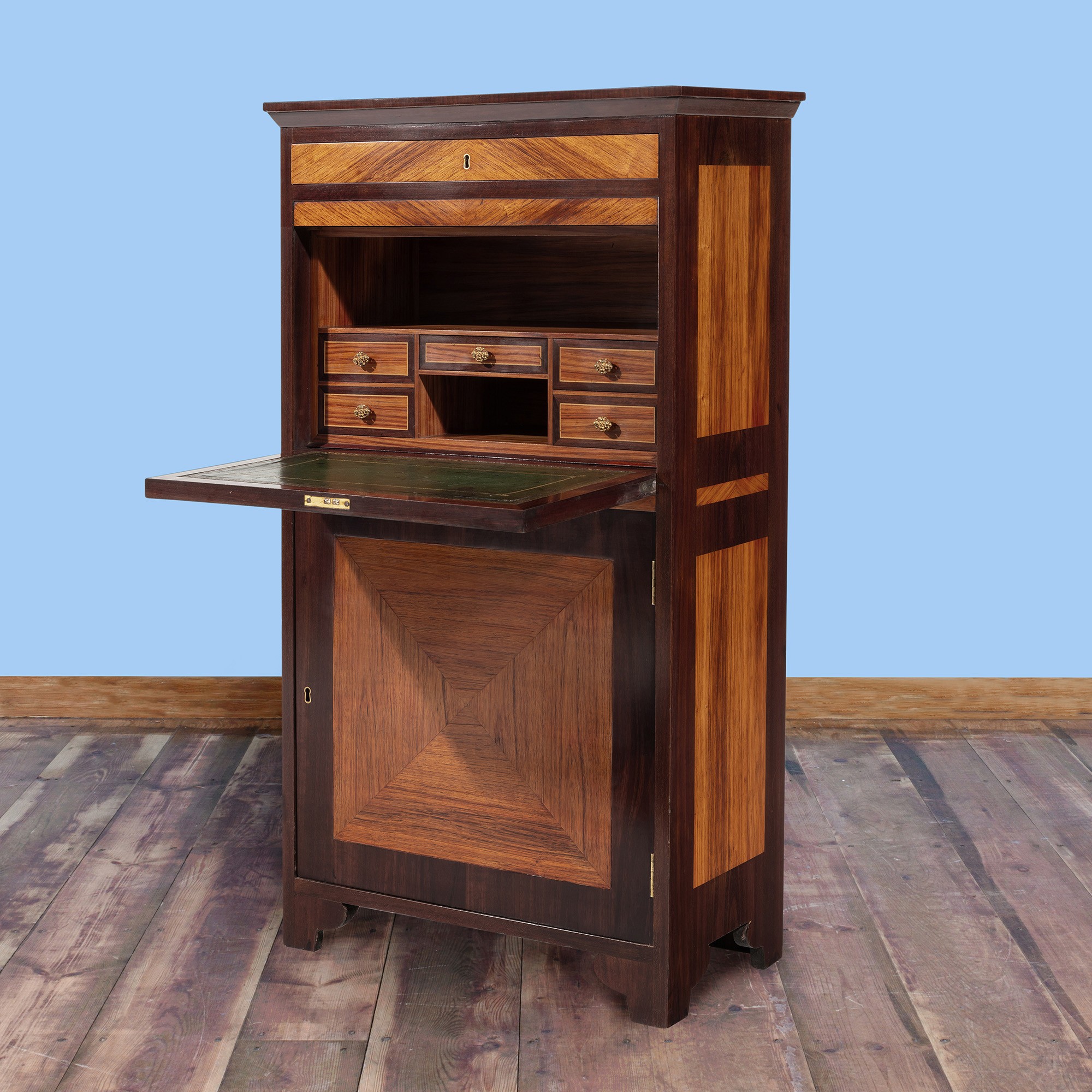
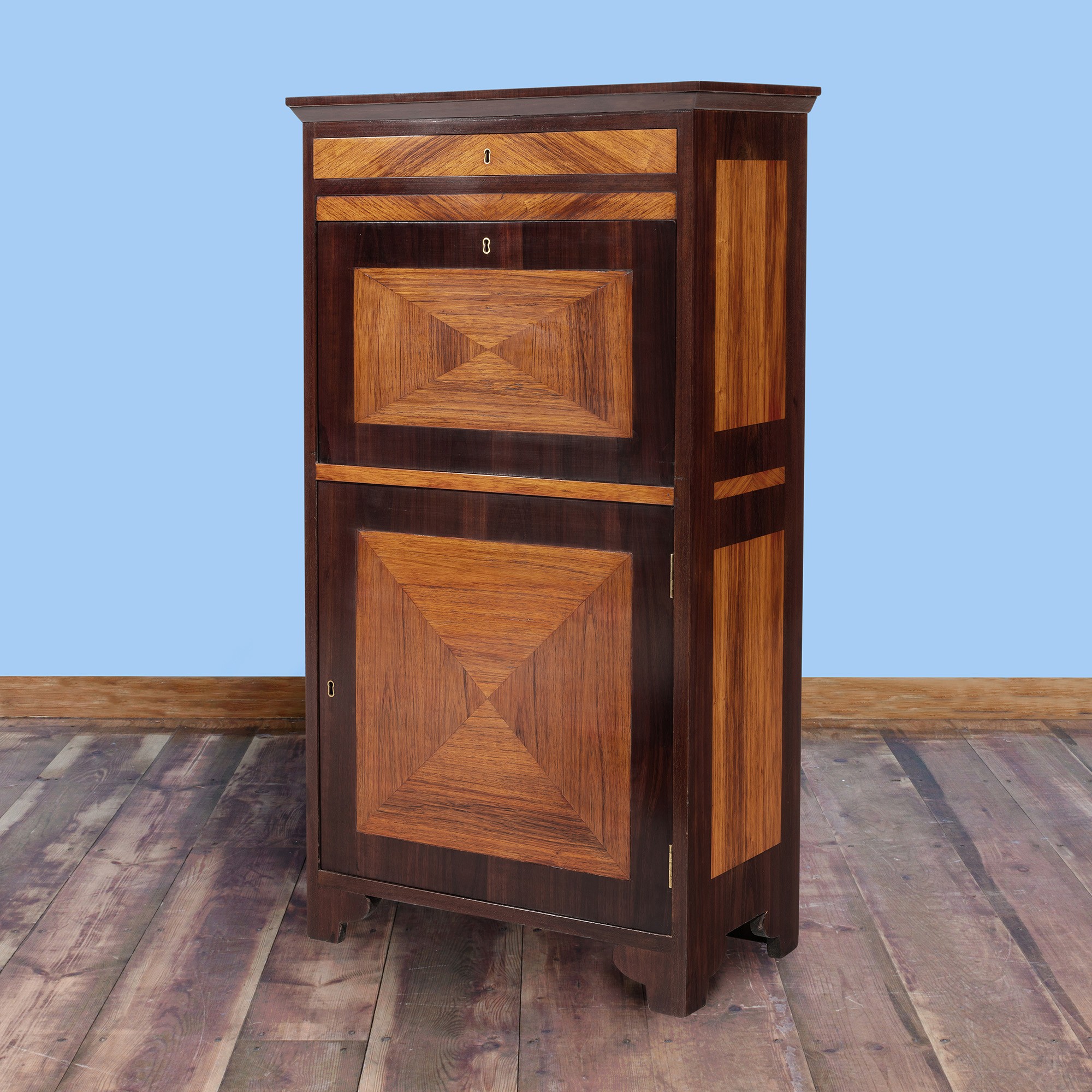
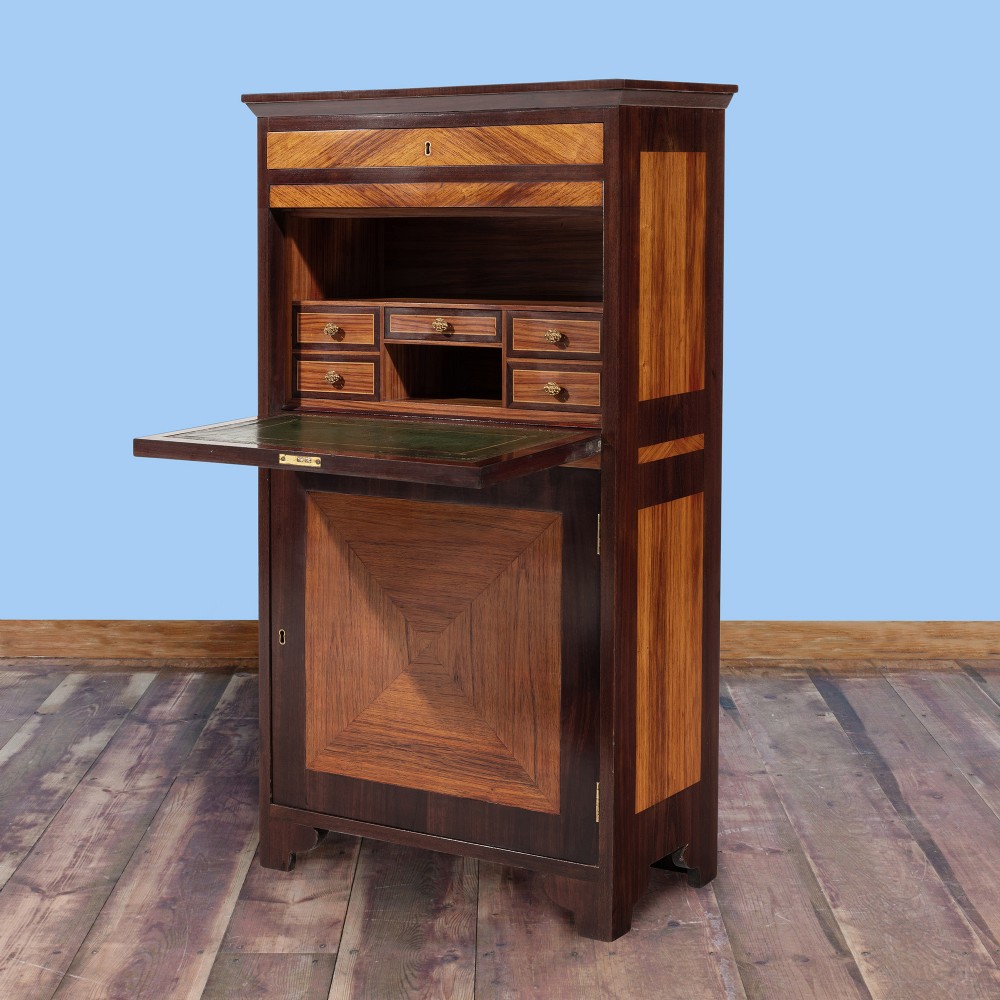
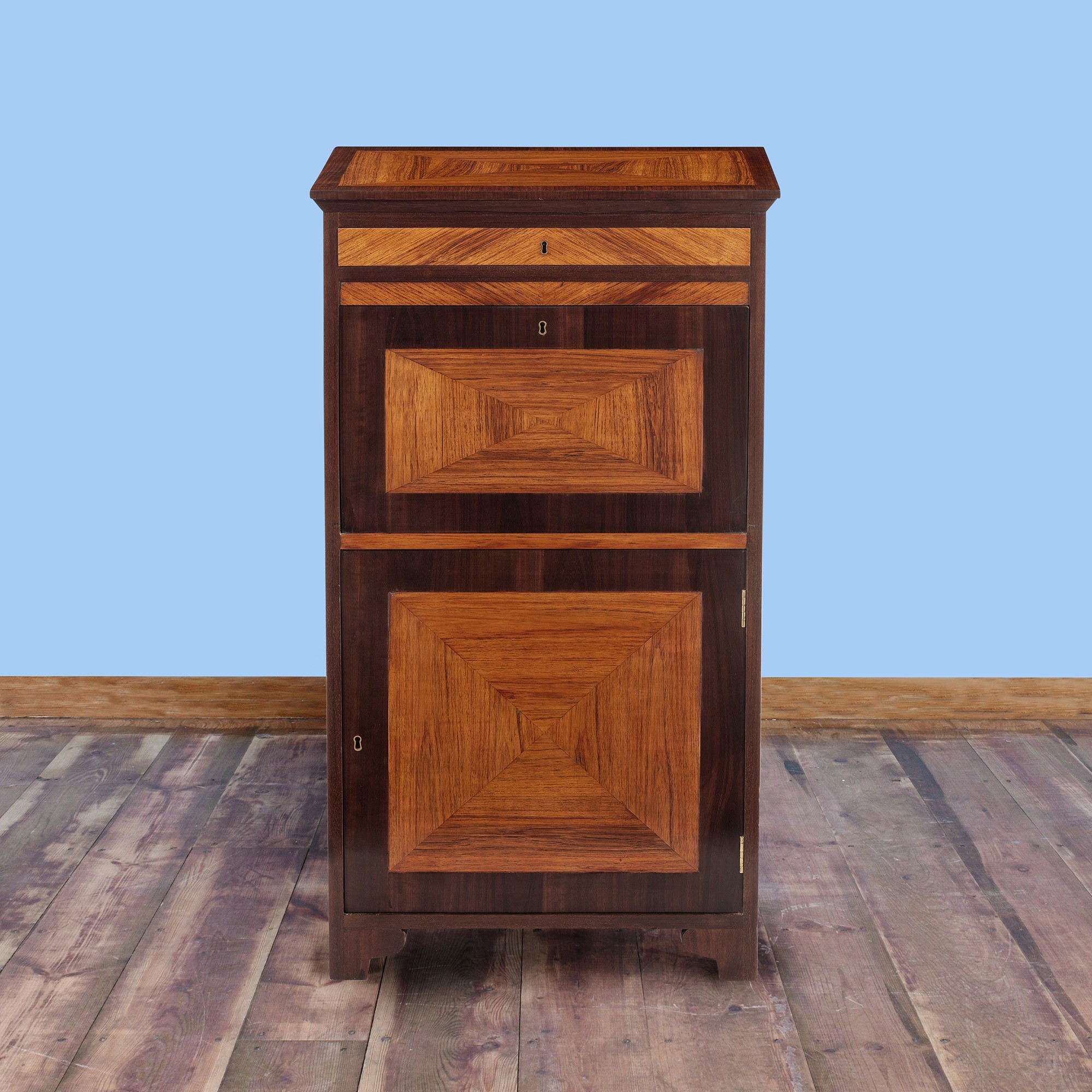
Late George III 18th century period tulipwood and purpleheart 'secrétaire à abattant' of small proportions.

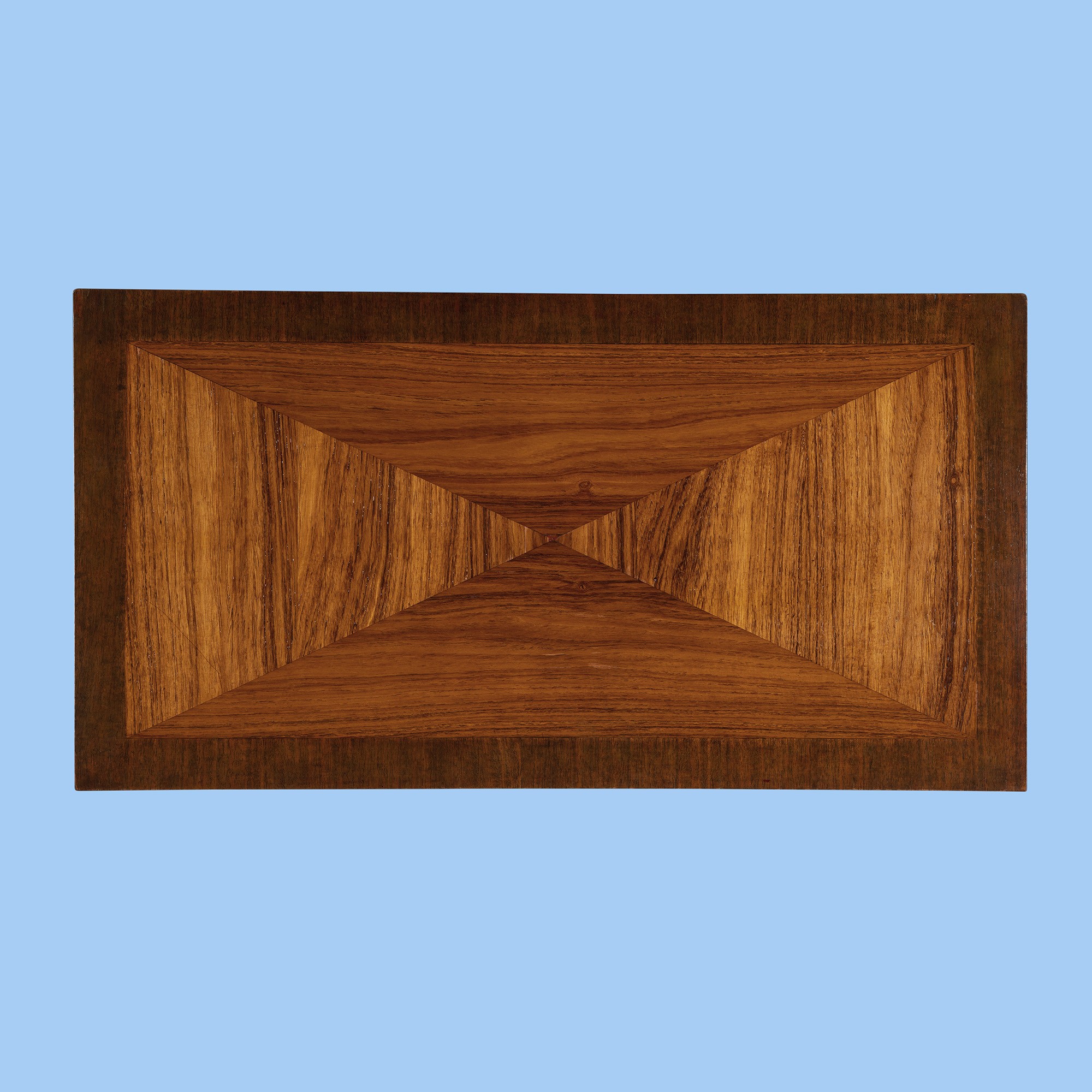
A fine and rare Sheraton period secretaire desk. The purpleheart crossbanding is followed throughout with large tulipwood parquetry panels to complement the overall style.
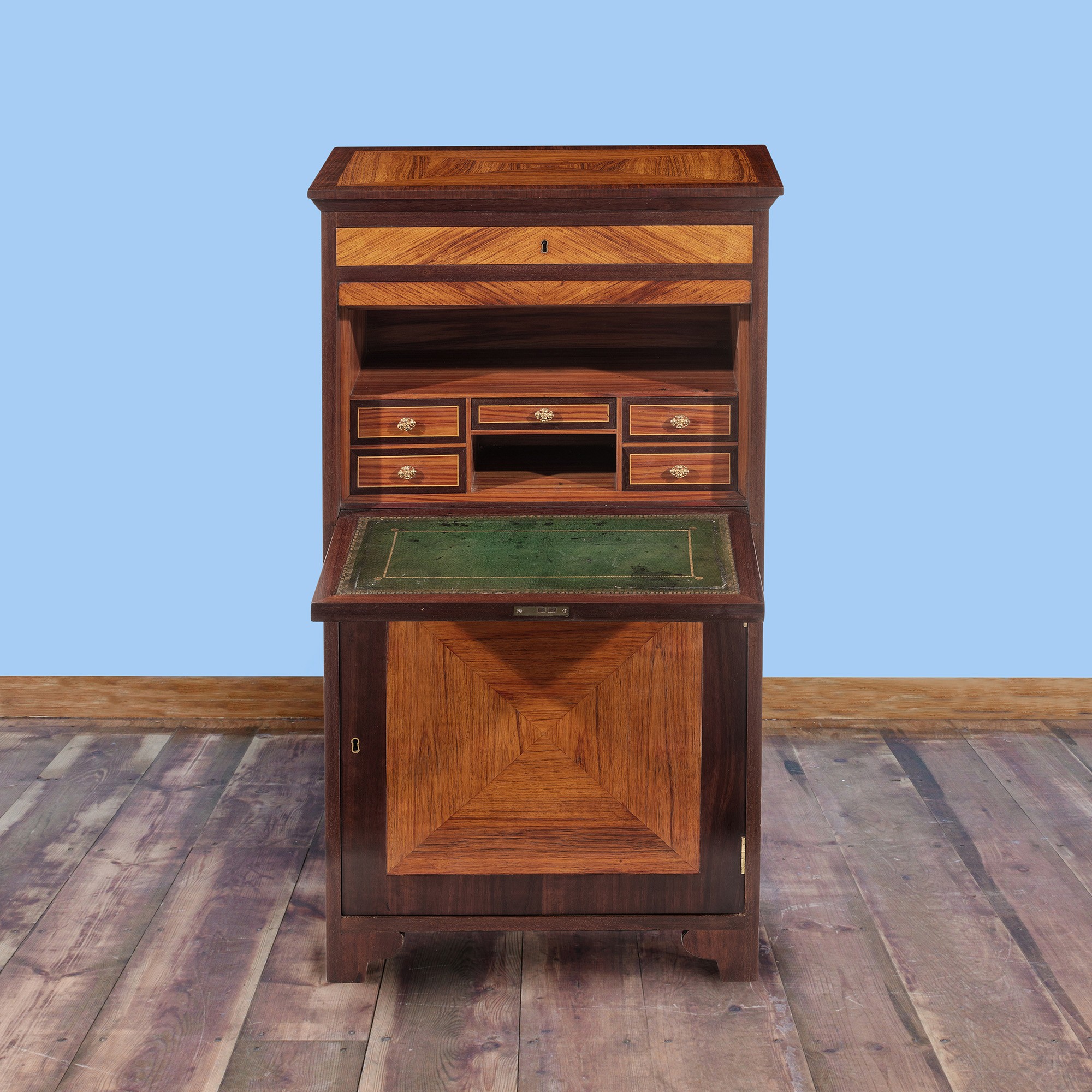
The drawer to the top frieze is above a fall-front desk which is fitted with banks of drawers. The secretaire drawers retain the original colours of the base woods as well as the original gilt brass handles.
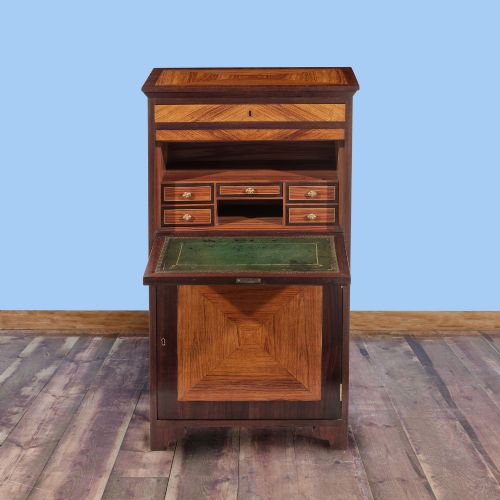
The leather lined surface could be from the time of manufacture and sits above a cupboard door that opens to reveal a single shelf.

The Sheraton abattant stands on bracket feet with quarter inlays to the sides and top.
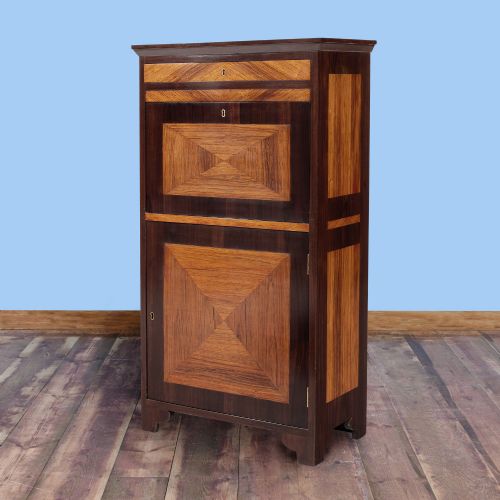
The fall-front secretaire, or desk, has as many names as it does forms. Often called a ‘secretaire’, or ‘secretary’ in America, it can also simply be a ‘writing cabinet’, and the French term ‘secrétaire à abattant’, which translates as a ‘drop-leaf desk’, is regularly used by antique dealers and auction rooms. All describe an upright cabinet with drawers or doors in the base, below a flap-down writing platform disguising pigeonholes and small drawers for hiding treasures.
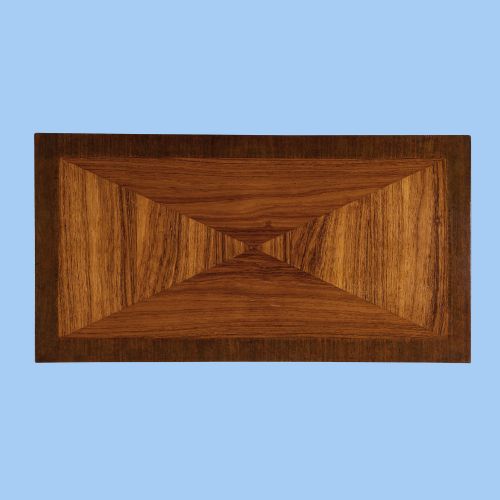
The fall-front secretaire has its origins in the desk, or bureau, and is derived from the Renaissance writing cabinet. The fall-front style was originally realised as a cabinet placed on an open stand or table. Those which incorporated a chest of drawers to the base became fashionable during the 18th century, being in production from around 1675 in England.

Secretaires in the Louis XV style were shapely cabinets, often topped by marble, incorporating fashionable woods, such as amaranth and kingwood, and sometimes with painted japanned panels. Dutch secretaires tended to employ ornate floral marquetry or oval inlaid reserves, while French Empire or Directoire examples favoured more masculine shapes, plain mahogany veneers and simple gilt bronze mounts. In Britain, 18th-century secretaires, or escritoires, followed the trends of these given periods too, with delicate inlaid borders or moulded detail being favoured over lavish decoration.

During the 19th century, the secretaire came to the forefront of middle-class interiors, especially within European countries where the ‘Biedermeier style’ developed. While Empire style was formal, impressive, gold accented and highly ornamented, Biedermeier designers embraced a more natural, relaxed look. Common features of the style are curves, playful geometric shapes and an emphasis on the grain of the wood, as opposed to any kind of applied ornamentation. The secretaire epitomised the period, being economical in space, perfectly suited to intellectual activities and with numerous drawers for collectors’ items, documents or diaries. The decoration was pared back, to focus on the natural beauty of the wood grain.

Variations on the style were also adopted by 20th-century designers, and examples span the turn of the century to the 1960s and 70s. Charles Rennie Mackintosh designed a pale-painted fall-front desk on a blocked stand, with pigeonholes to the interior, for The Hill House in Helensburgh just outside Glasgow.

The continued popularity of the fall-front desk is due in part to its clever use of space and its versatility. Although letter writing is no longer fashionable, contemporary examples prove the secretaire still has a place in current design and, with good storage in the base, a fold-away surface that is perfect for a laptop, and miniature drawers in which to house any number of items, the secretaire still lends itself to 21st-century living.

Physical Dimensions
Height
108cm (42.52")
Width
59cm (23.23")
Depth
31cm (12.20")
Declaration

Freshfords Fine Antiques has dated this George III Secretaire Cabinet to the 18th Century.

Reference Numbers
Sellingantiques Reference
SA1216409
Dealers Internal Reference
11470
Dealers Notes

Established Antique Dealers Since 1987

Description
Late George III 18th century period tulipwood and purpleheart 'secrétaire à abattant' of small proportions.

A fine and rare Sheraton period secretaire desk.

The purpleheart crossbanding is followed throughout with large tulipwood parquetry panels to complement the overall style.
Freshfords Fine Antiques
fig 1. An 18th-century George III mahogany secretaire cabinet shown with the fall-front flap lowered to display fitted drawers and a green leather writing skiver.
fig 1. George III 18th Century Period Secretaire Cabinet

The drawer to the top frieze is above a fall-front desk which is fitted with banks of drawers. The secretaire drawers retain the original colours of the base woods as well as the original gilt brass handles.

fig 2. An 18th-century George III mahogany secretaire cabinet shown with the fall-front flap lowered to display fitted drawers and a green leather writing skiver.
fig 2. George III 18th Century Period Secretaire Cabinet

The leather lined surface could be from the time of manufacture and sits above a cupboard door that opens to reveal a single shelf.

The Sheraton abattant stands on bracket feet with quarter inlays to the sides and top.

fig 3. An 18th-century George III mahogany secretaire cabinet shown with the fall-front flap lowered to display fitted drawers and a green leather writing skiver.
fig 3. George III 18th Century Period Secretaire Cabinet

The fall-front secretaire, or desk, has as many names as it does forms. Often called a ‘secretaire’, or ‘secretary’ in America, it can also simply be a ‘writing cabinet’, and the French term ‘secrétaire à abattant’, which translates as a ‘drop-leaf desk’, is regularly used by antique dealers and auction rooms. All describe an upright cabinet with drawers or doors in the base, below a flap-down writing platform disguising pigeonholes and small drawers for hiding treasures.

fig 4. An 18th-century George III mahogany secretaire cabinet shown with the fall-front flap lowered to display fitted drawers and a green leather writing skiver.
fig 4. George III 18th Century Period Secretaire Cabinet

The fall-front secretaire has its origins in the desk, or bureau, and is derived from the Renaissance writing cabinet. The fall-front style was originally realised as a cabinet placed on an open stand or table. Those which incorporated a chest of drawers to the base became fashionable during the 18th century, being in production from around 1675 in England.

Secretaires in the Louis XV style were shapely cabinets, often topped by marble, incorporating fashionable woods, such as amaranth and kingwood, and sometimes with painted japanned panels. Dutch secretaires tended to employ ornate floral marquetry or oval inlaid reserves, while French Empire or Directoire examples favoured more masculine shapes, plain mahogany veneers and simple gilt bronze mounts. In Britain, 18th-century secretaires, or escritoires, followed the trends of these given periods too, with delicate inlaid borders or moulded detail being favoured over lavish decoration.

During the 19th century, the secretaire came to the forefront of middle-class interiors, especially within European countries where the ‘Biedermeier style’ developed. While Empire style was formal, impressive, gold accented and highly ornamented, Biedermeier designers embraced a more natural, relaxed look. Common features of the style are curves, playful geometric shapes and an emphasis on the grain of the wood, as opposed to any kind of applied ornamentation. The secretaire epitomised the period, being economical in space, perfectly suited to intellectual activities and with numerous drawers for collectors’ items, documents or diaries. The decoration was pared back, to focus on the natural beauty of the wood grain.

Variations on the style were also adopted by 20th-century designers, and examples span the turn of the century to the 1960s and 70s. Charles Rennie Mackintosh designed a pale-painted fall-front desk on a blocked stand, with pigeonholes to the interior, for The Hill House in Helensburgh just outside Glasgow.

The continued popularity of the fall-front desk is due in part to its clever use of space and its versatility. Although letter writing is no longer fashionable, contemporary examples prove the secretaire still has a place in current design and, with good storage in the base, a fold-away surface that is perfect for a laptop, and miniature drawers in which to house any number of items, the secretaire still lends itself to 21st-century living.

Height
108cm (42.52")
Width
59cm (23.23")
Depth
31cm (12.20")
Date of Manufacture

Freshfords Fine Antiques has dated this George III Secretaire Cabinet to the 18th Century.

Reference Numbers
Sellingantiques Ref
SA1216409
Dealers Internal Ref
11470
Freshfords Fine Antiques
Sellingantiques verified Since Nov 2020
Dealer Profile

You can view the stock and full dealer information on the Freshfords Fine Antiques Profile Page

Trade Associations

Freshfords Fine Antiques is a registered member of BADA 
PDF SHARE
SAVE
An 18th-century George III mahogany secretaire cabinet shown with the fall-front flap lowered to display fitted drawers and a green leather writing skiver.
1 / 5
Archive I An 18th-century George III mahogany secretaire cabinet shown with the fall-front flap lowered to display fitted drawers and a green leather writing skiver.

George III 18th Century Period Secretaire Cabinet
Archive II An 18th-century George III mahogany secretaire cabinet shown with the fall-front flap lowered to display fitted drawers and a green leather writing skiver. View II
Archive III An 18th-century George III mahogany secretaire cabinet shown with the fall-front flap lowered to display fitted drawers and a green leather writing skiver. View III
Archive IV An 18th-century George III mahogany secretaire cabinet shown with the fall-front flap lowered to display fitted drawers and a green leather writing skiver. View IV
Archive V An 18th-century George III mahogany secretaire cabinet shown with the fall-front flap lowered to display fitted drawers and a green leather writing skiver. View V
Enlarged Archival View
Telephone 07720 838877
Location
Bath
Somerset
United Kingdom
Verified Since Nov 2020
Items For Sale 29
Items Sold 1
Freshfords Fine Antiques
Verified Since Nov 2020
View Dealer Info
Location: Bath, Somerset, United Kingdom
Verified
Nov 2020
For Sale
29
Sold
1
An 18th-century George III mahogany secretaire cabinet shown with the fall-front flap lowered to display fitted drawers and a green leather writing skiver.
George III 18th Century Period Secretaire Cabinet
Ref: SA1216409
An 18th-century George III mahogany secretaire cabinet shown with the fall-front flap lowered to display fitted drawers and a green leather writing skiver.
Detail View 1
Detail View 2
Detail View 3
Detail View 4
Archival Detail
Every single antique dealer on our platform is individually approved by our internal team. We verify their professional trade history, ethical standards, and photographic quality to ensure a secure, high-standard buying environment. Upon joining, every dealer agrees to a strict 9-point code of conduct. While issues can occasionally arise, our dealers typically resolve them swiftly and directly with the buyer. In fact, since our founding in 2002, Sellingantiques has only had to step in to help resolve an issue on roughly five occasions—a true testament to the quality of our dealers and their dedication to your happiness.
Our dealers are highly experienced in packing and shipping fragile, high-value antiques. Because you are in direct contact with the dealer, you will be able to easily go through all available shipping and insurance options together to ensure your item arrives safely.
Antiques are the ultimate green purchase. By choosing historical pieces over newly manufactured goods, you completely eliminate the carbon footprint of modern mass production while preserving exceptional, timeless craftsmanship.

A George III secretaire cabinet is an 18th-century piece of case furniture featuring a fall-front desk section that opens to reveal an fitted interior writing space above a lower storage cabinet.

These cabinets were constructed using solid and veneered timbers such as mahogany, rosewood, and satinwood, frequently accented with parquetry inlays, brass hardware, and leather writing surfaces.

Authentic pieces typically feature hand-cut dovetail drawer joints, hand-planed backing boards, original brass fittings displaying natural oxidisation, and timber displaying age-related shrinkage lines.

A secretaire cabinet can be integrated into a study or living room as a functional workstation, paired with contemporary lighting and neutral wall paint to accentuate the historic wood grain.

Position the item away from direct heat sources and sunlight, clear dust regularly using a dry microfibre cloth, and apply a light coating of natural beeswax polish annually.
items
Add keywords to the filter
Price
£100
£250000
Era
Movements
Material
Origin
Stock Location
Freshness
Online Payments
Categories