22,149  PAGES BROWSED TODAY PAGES TODAY 36  ANTIQUES UPLOADED TODAY NEW ARRIVALS
ID #SA1215065
FOR SALE
£350
Email
Save
Japanese Imari Porcelain Sugar Bowl with Samurai, Fukagawa Mark, Circa 1870–1880
Ritas Bazaar
for sale €410     $445
£350

Ritas Bazaar

Sellingantiques Verified Since Nov 2025
View Dealers Stock Page
Id #SA1215065
PDF SHARE
SAVE

Japanese Imari Porcelain Sugar Bowl with Samurai, Fukagawa Mark, Circa 1870–1880

19th century
For Sale by Ritas Bazaar
Description

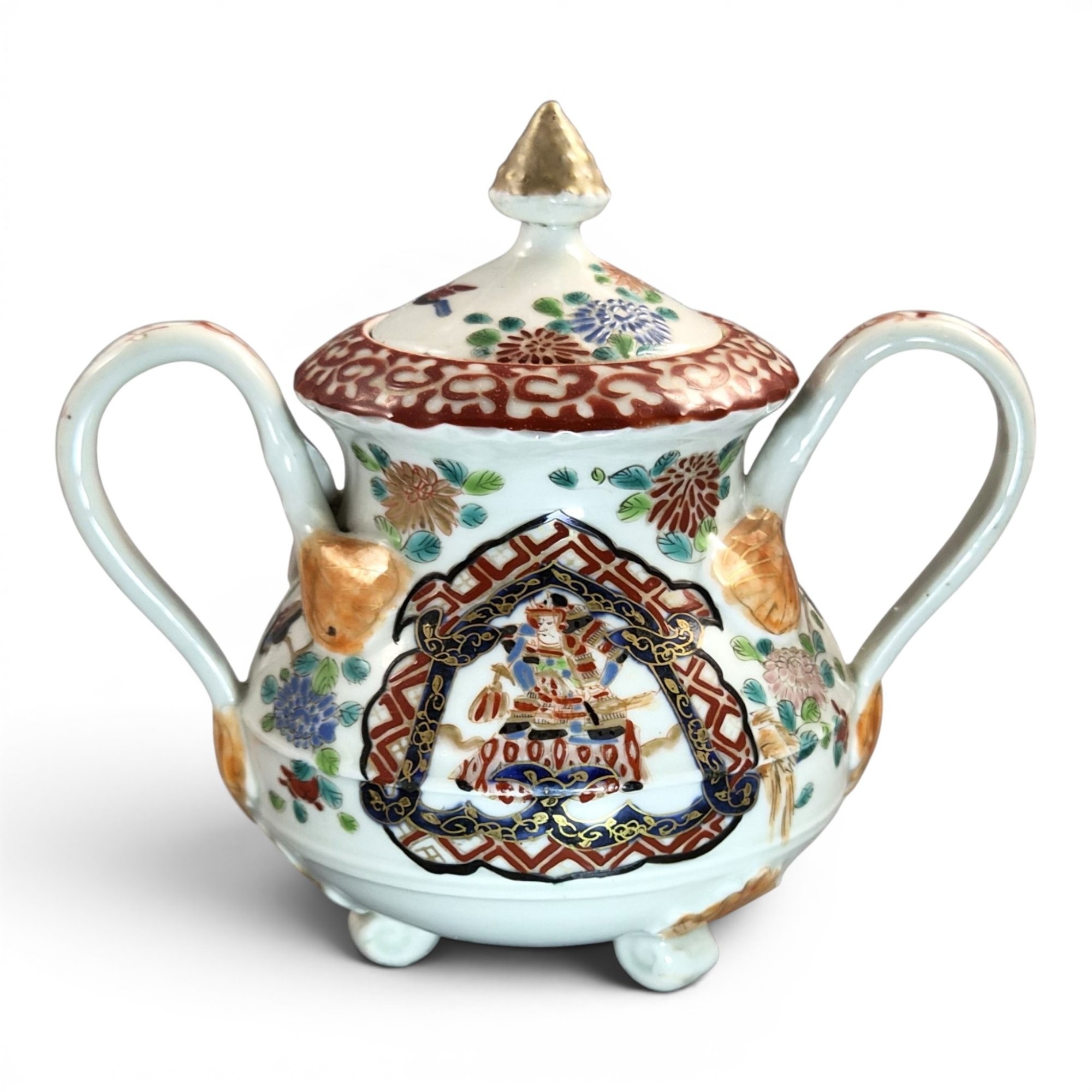
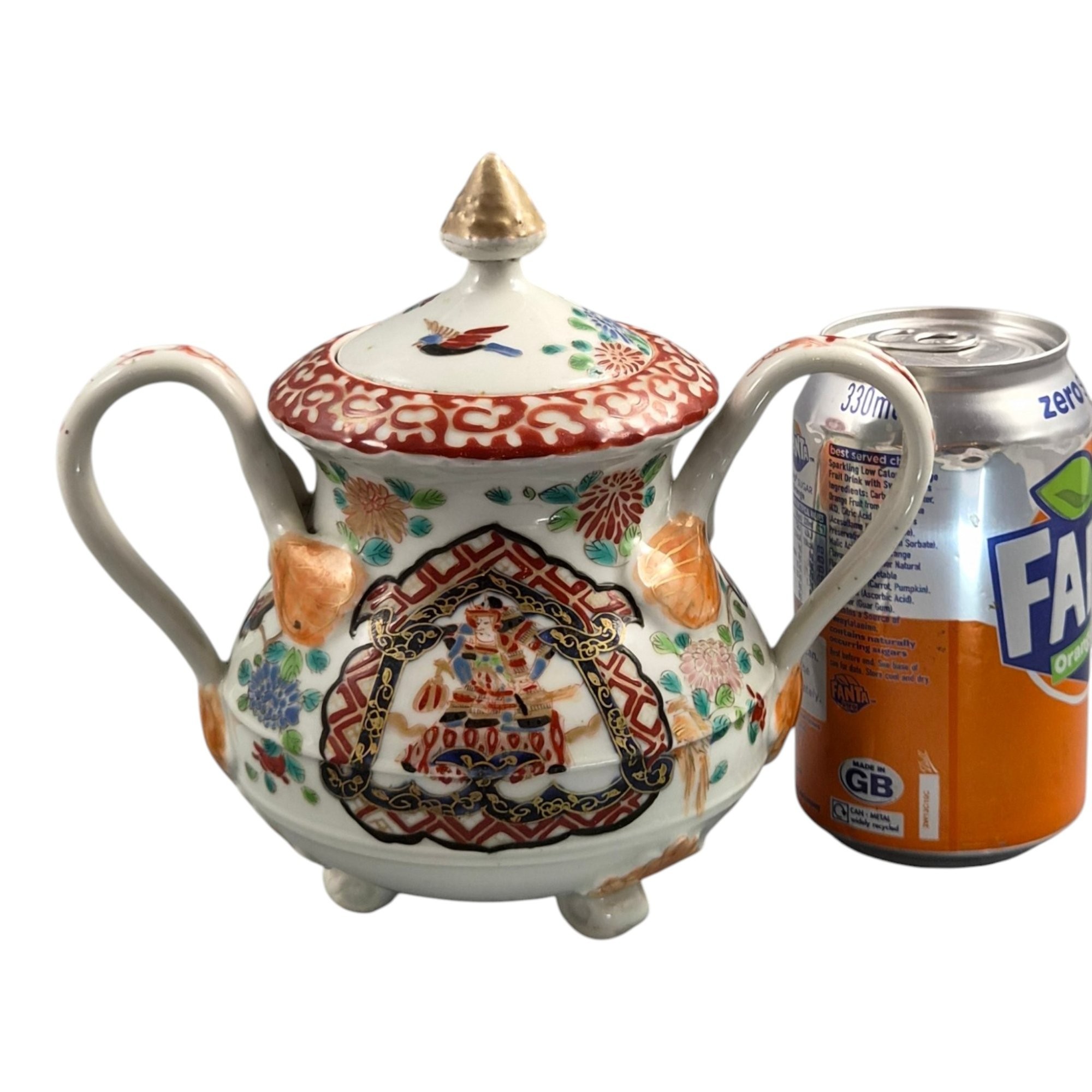
A rare Japanese Imari porcelain sugar bowl and cover produced in Arita during the early Meiji period, circa 1870–1880. The piece belongs to the Hichozan Fukagawa group associated with the workshop of Eizaemon Fukagawa, one of the most important early exporters of Japanese porcelain to Western markets.

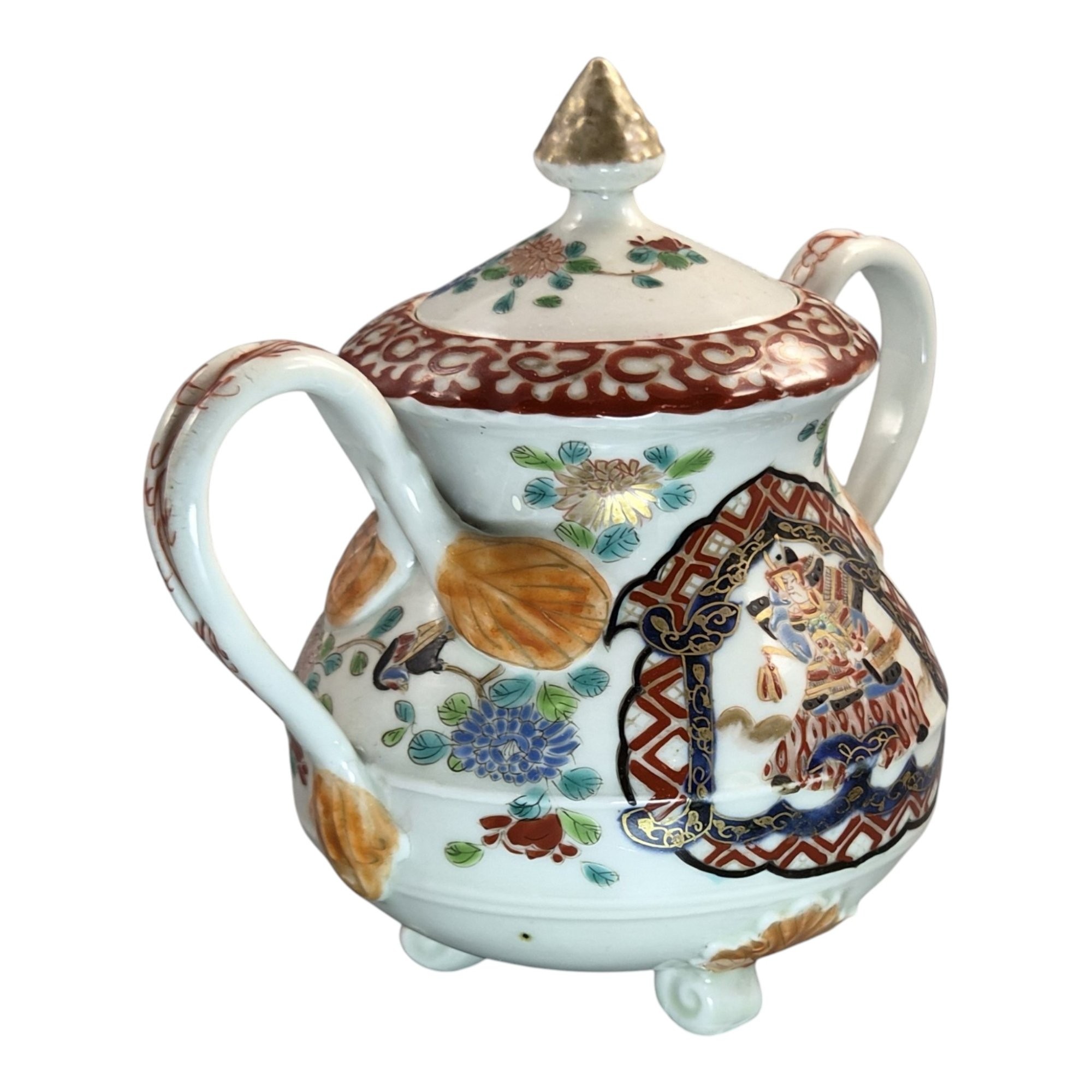
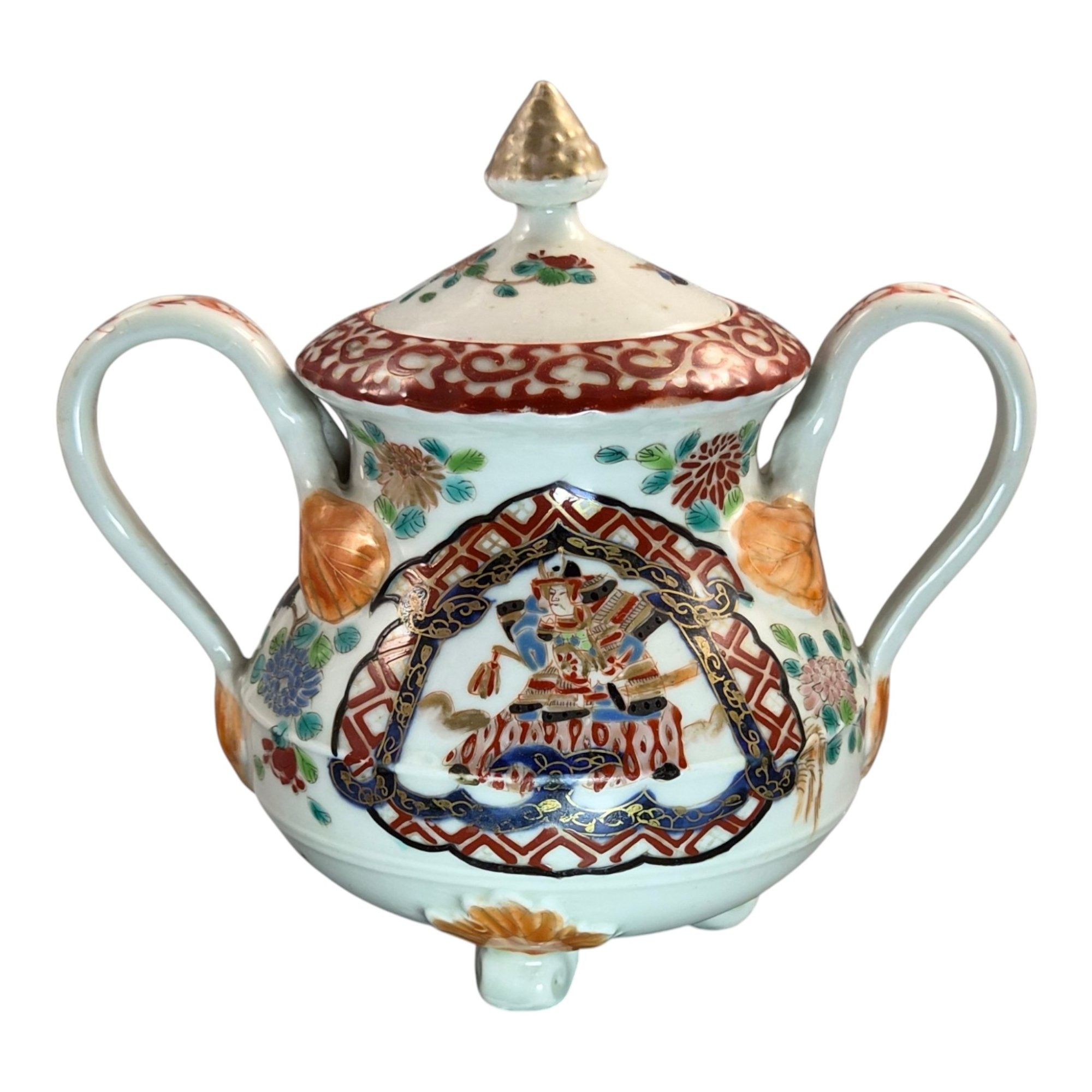
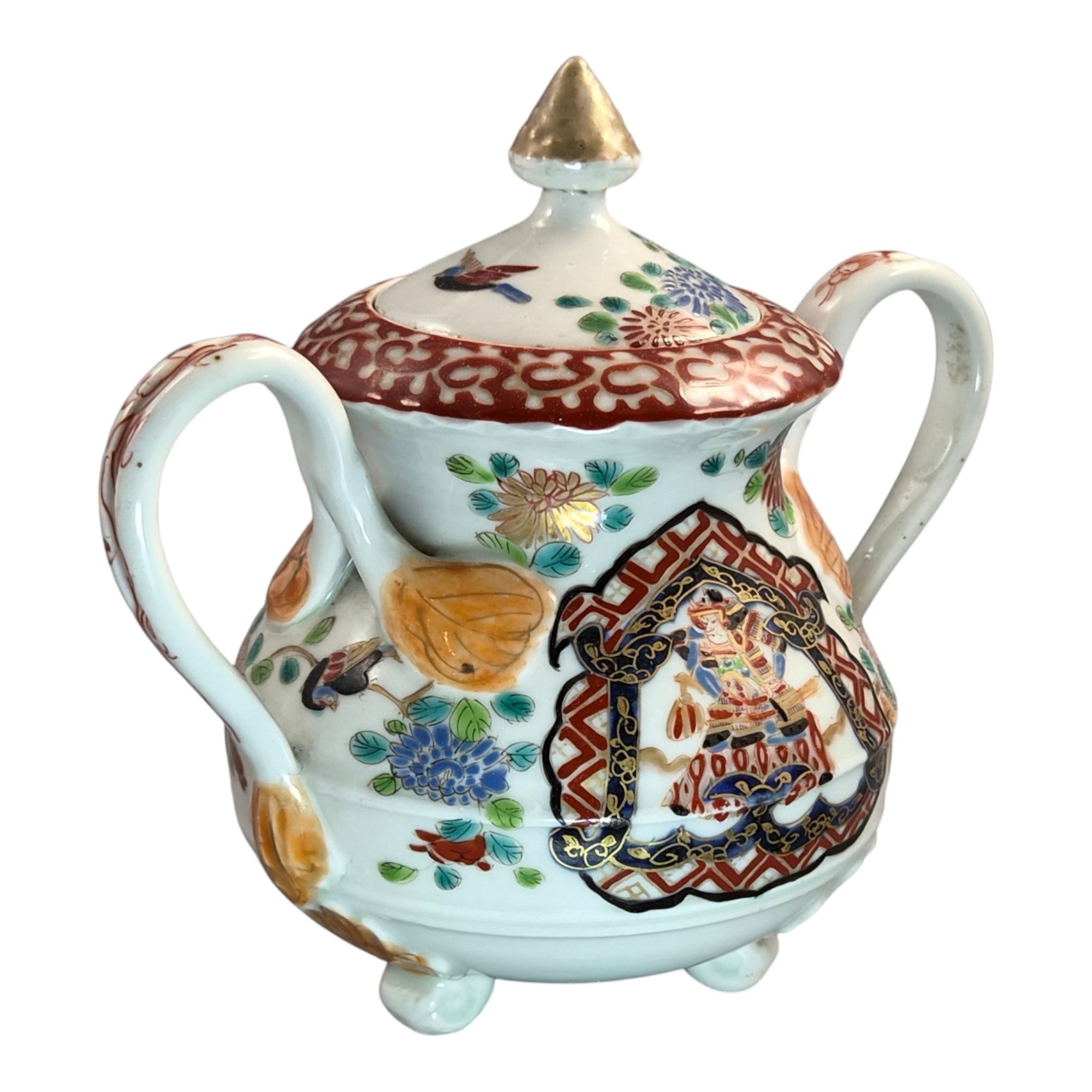
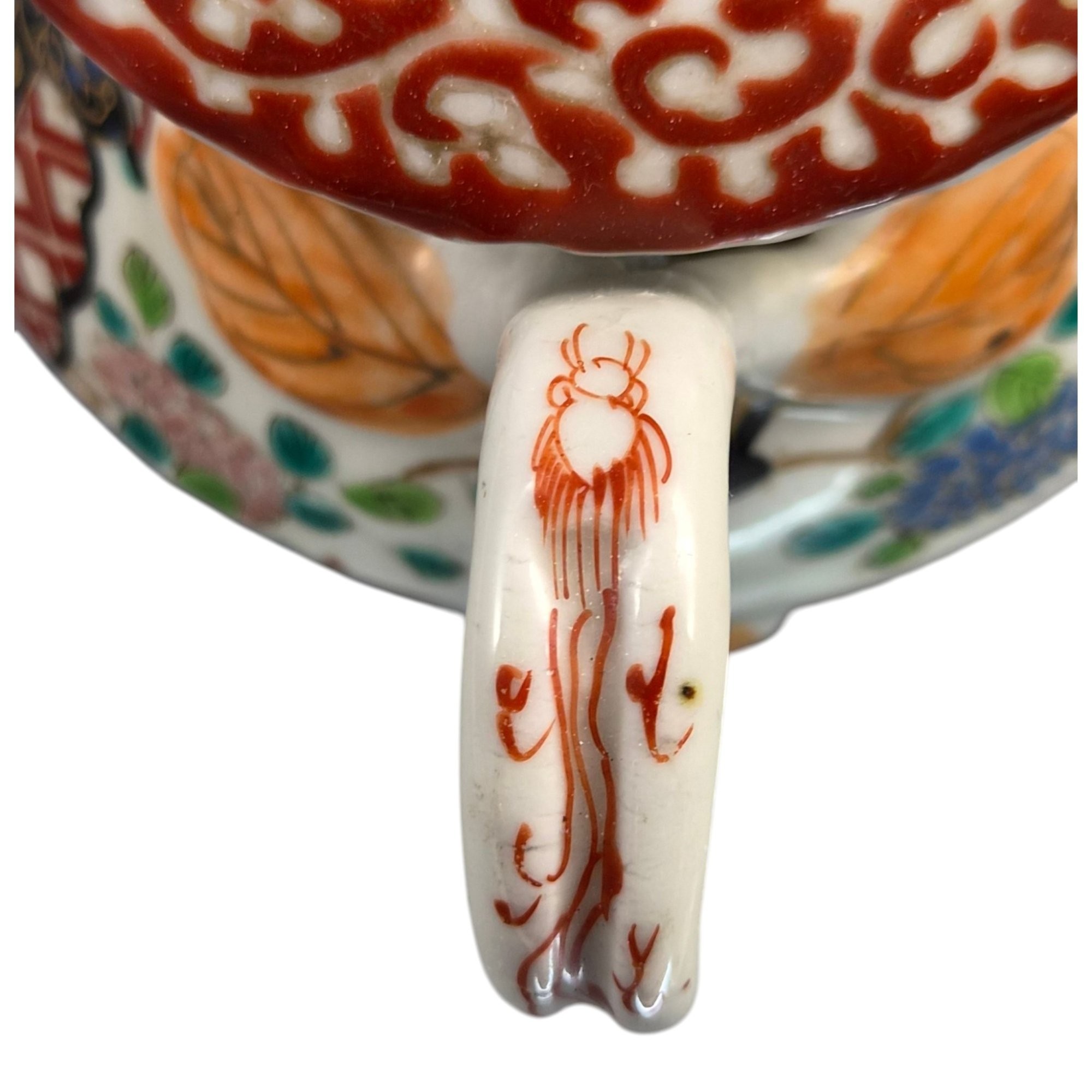
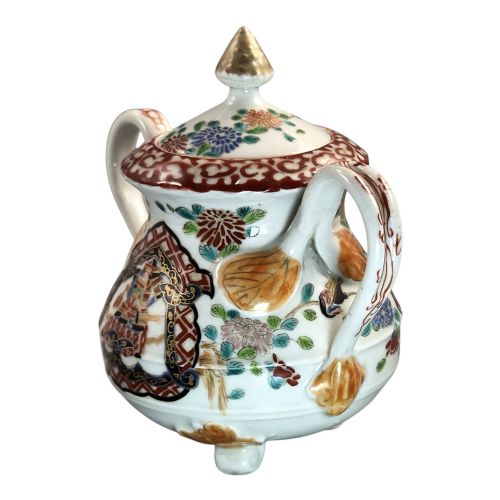
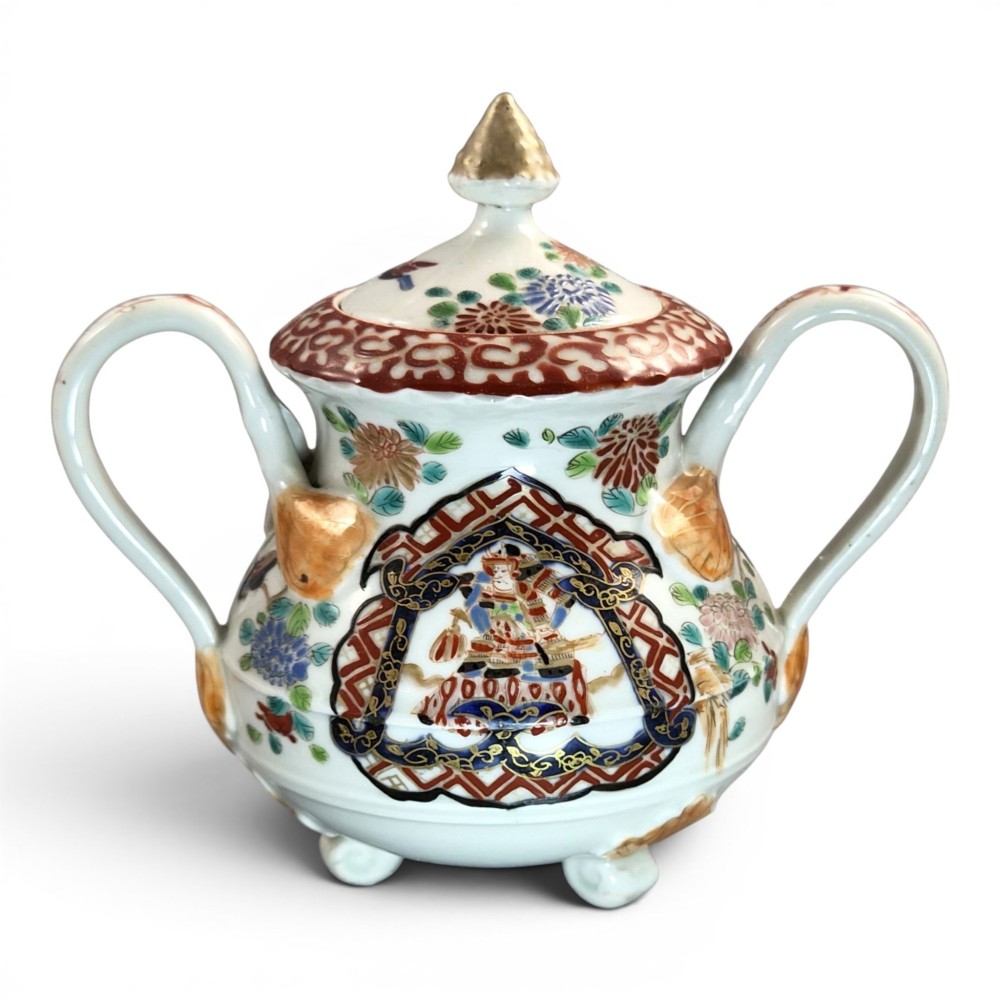
The form reflects European tea-drinking customs, with three feet, large scroll handles and a domed cover. The decoration combines cobalt blue, iron-red enamels, green highlights and gilding in the traditional Ko-Imari export palette. Applied gilt leaves around the handles and the pointed gilded finial create a rich sculptural effect.

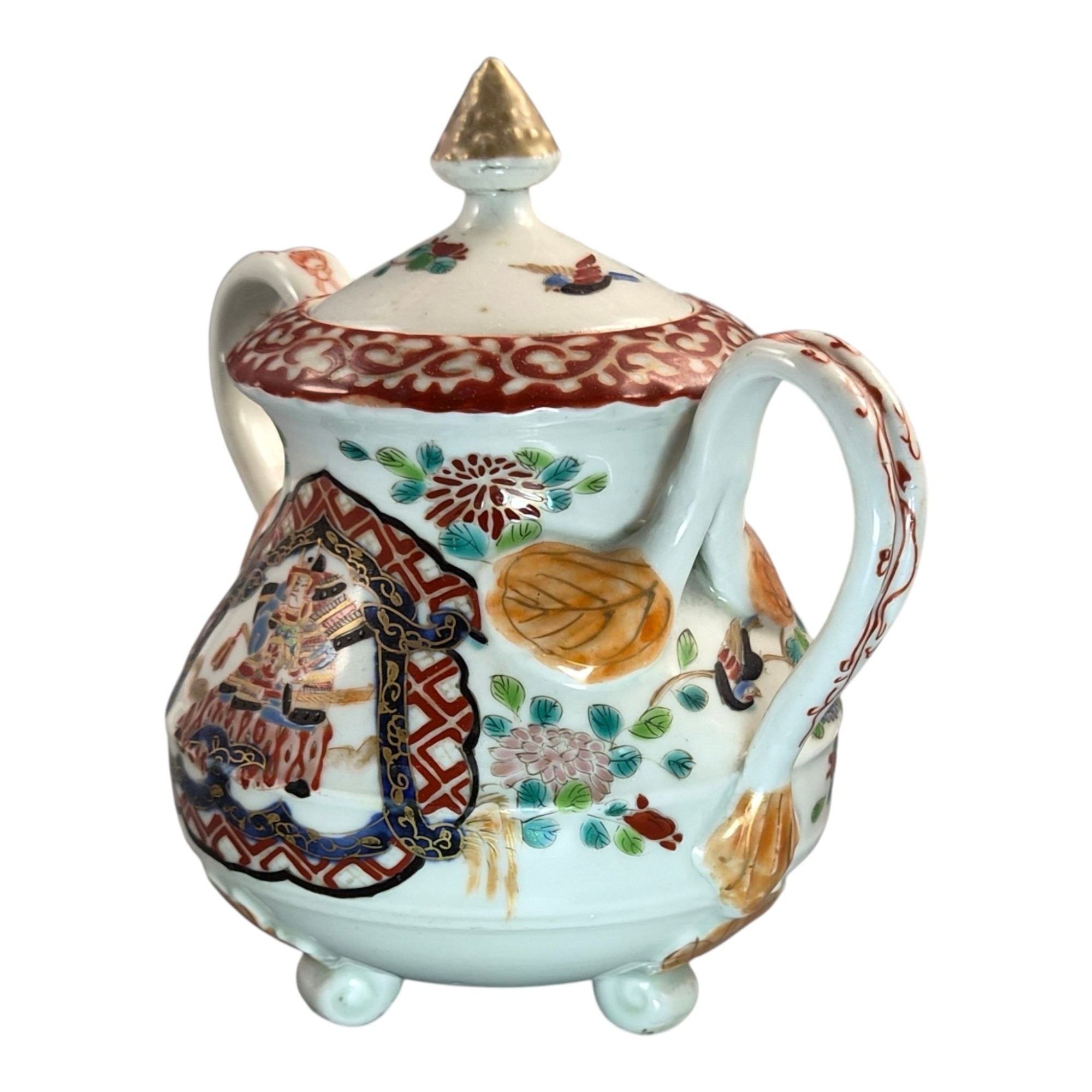
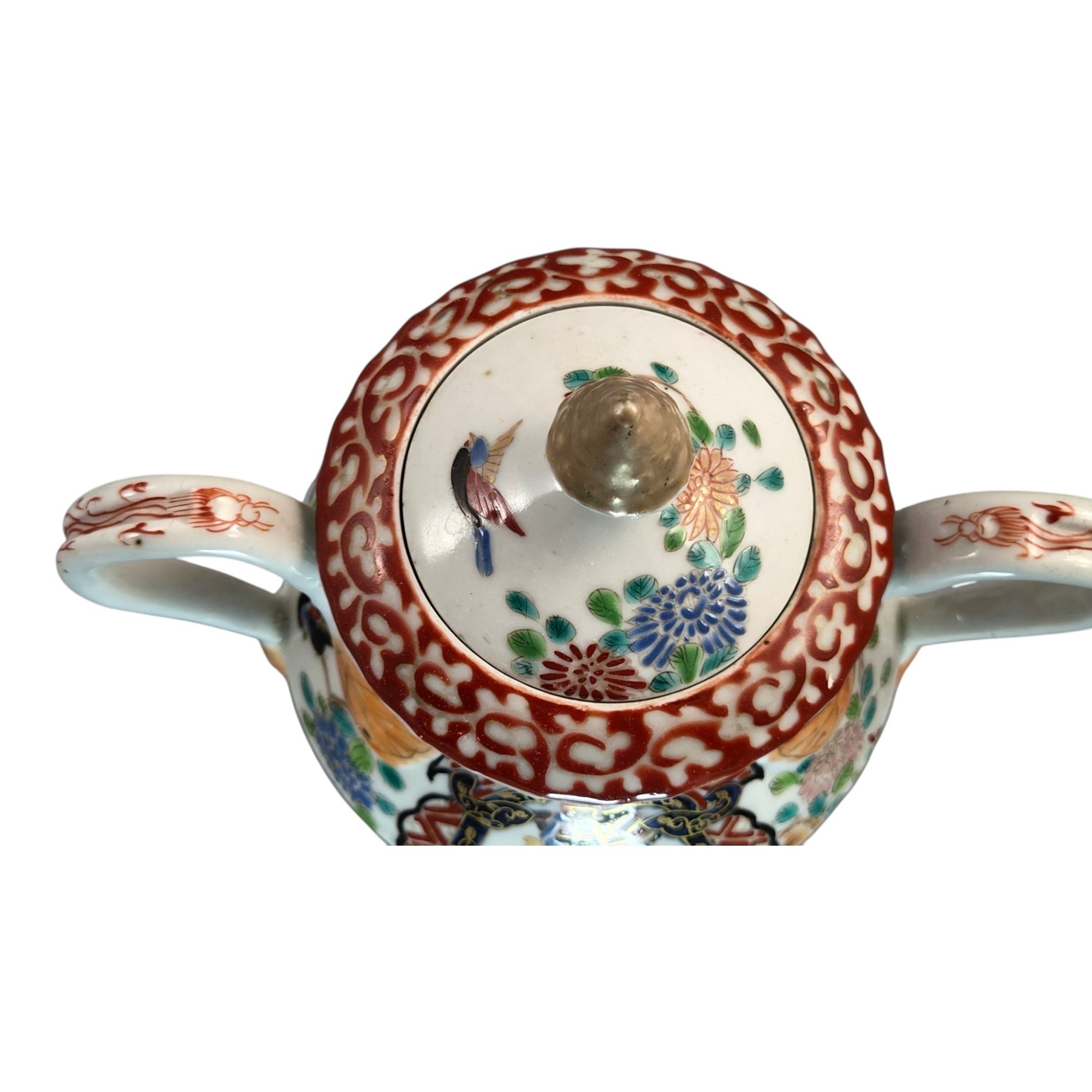
A finely painted samurai warrior appears within the central shield-shaped reserve, surrounded by geometric ornament and floral scrollwork. Chrysanthemums and peonies symbolise nobility and longevity. A small asymmetrical bird painted on the cover adds an elegant Japanese decorative detail.

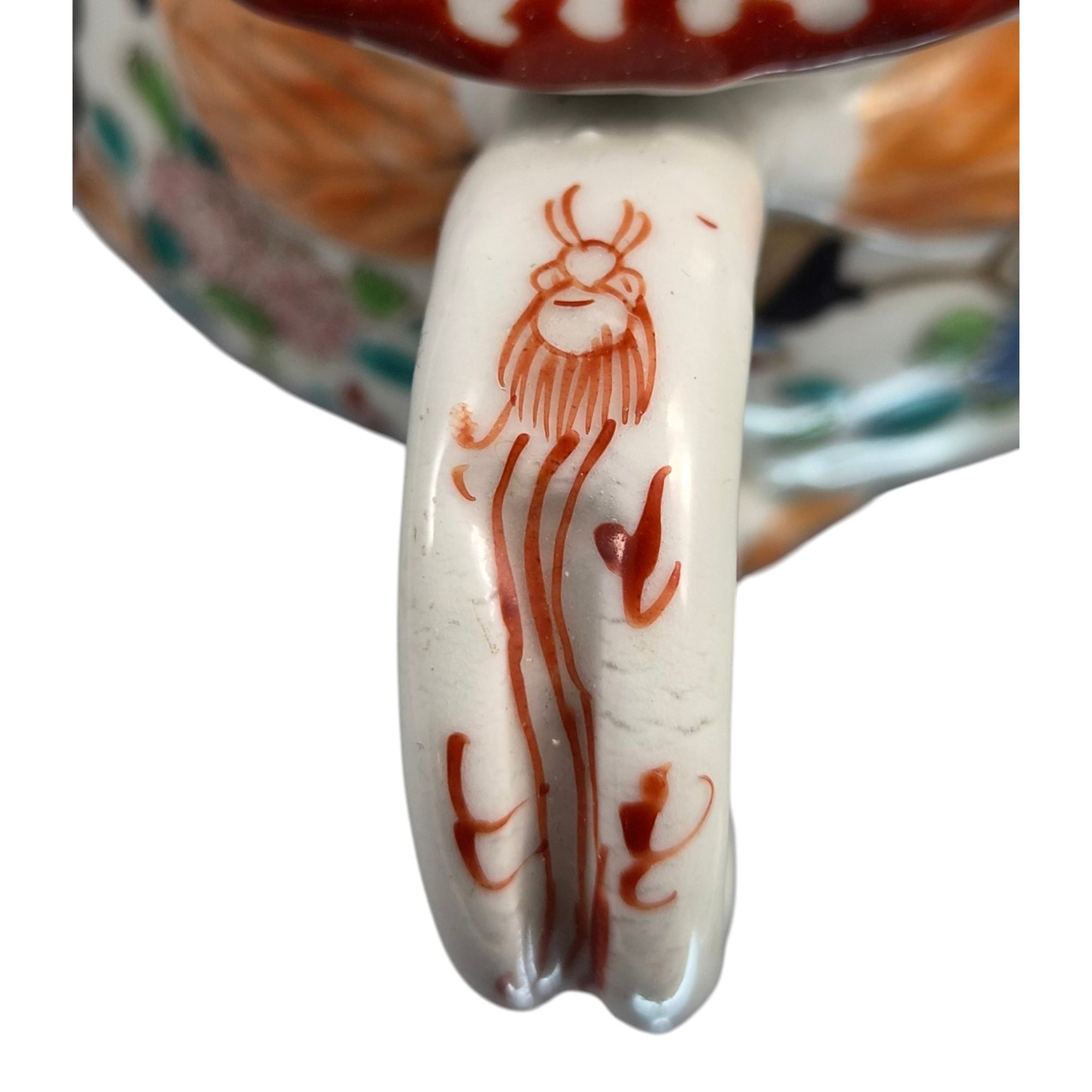
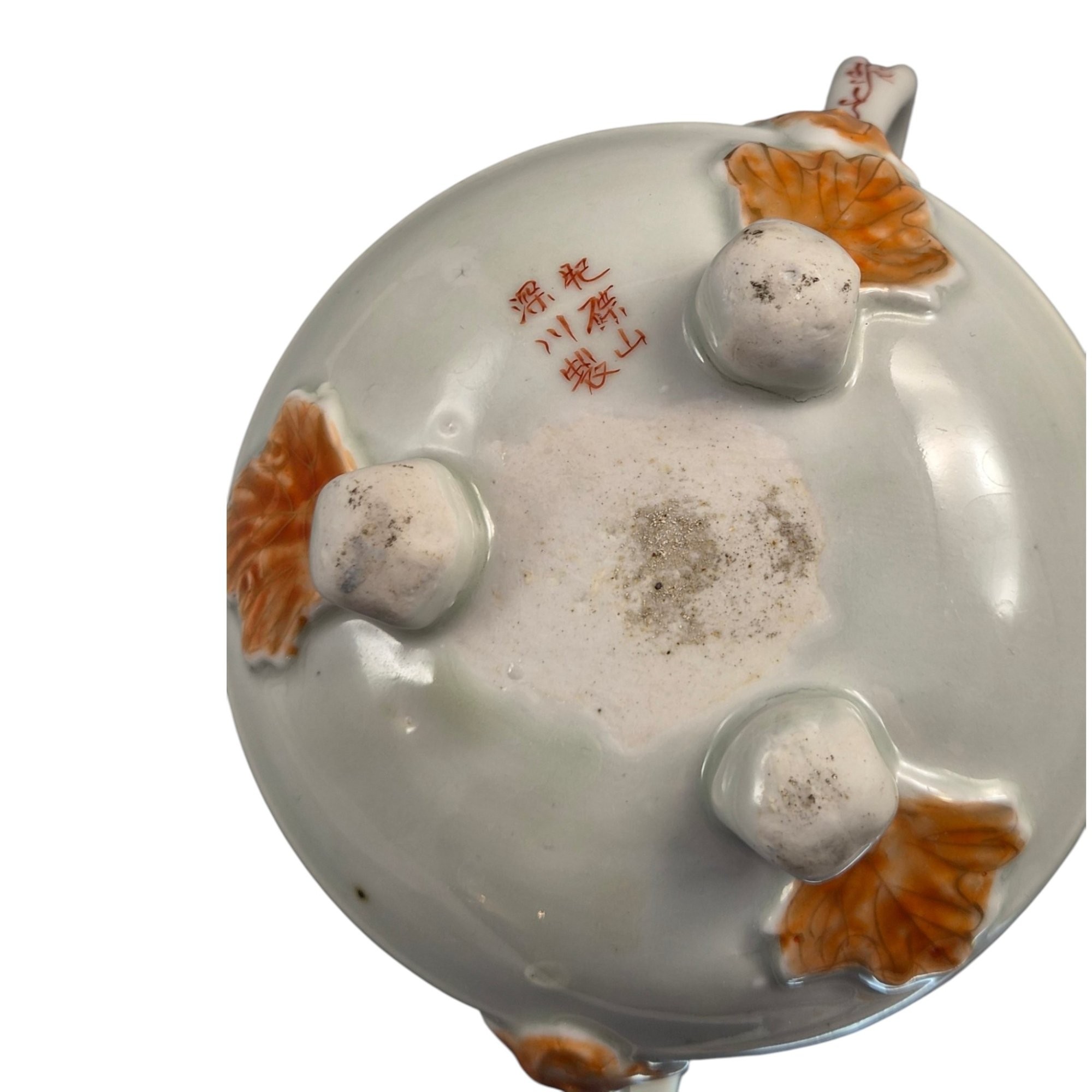
The underside bears the rare iron-red mark “Hichozan Fukagawa sei”, associated with early Fukagawa export porcelain before the establishment of Fukagawa Seiji in 1894. Koransha, founded by Eizaemon Fukagawa in 1875, later achieved international success at the Philadelphia Centennial Exhibition and the Paris Exposition Universelle.

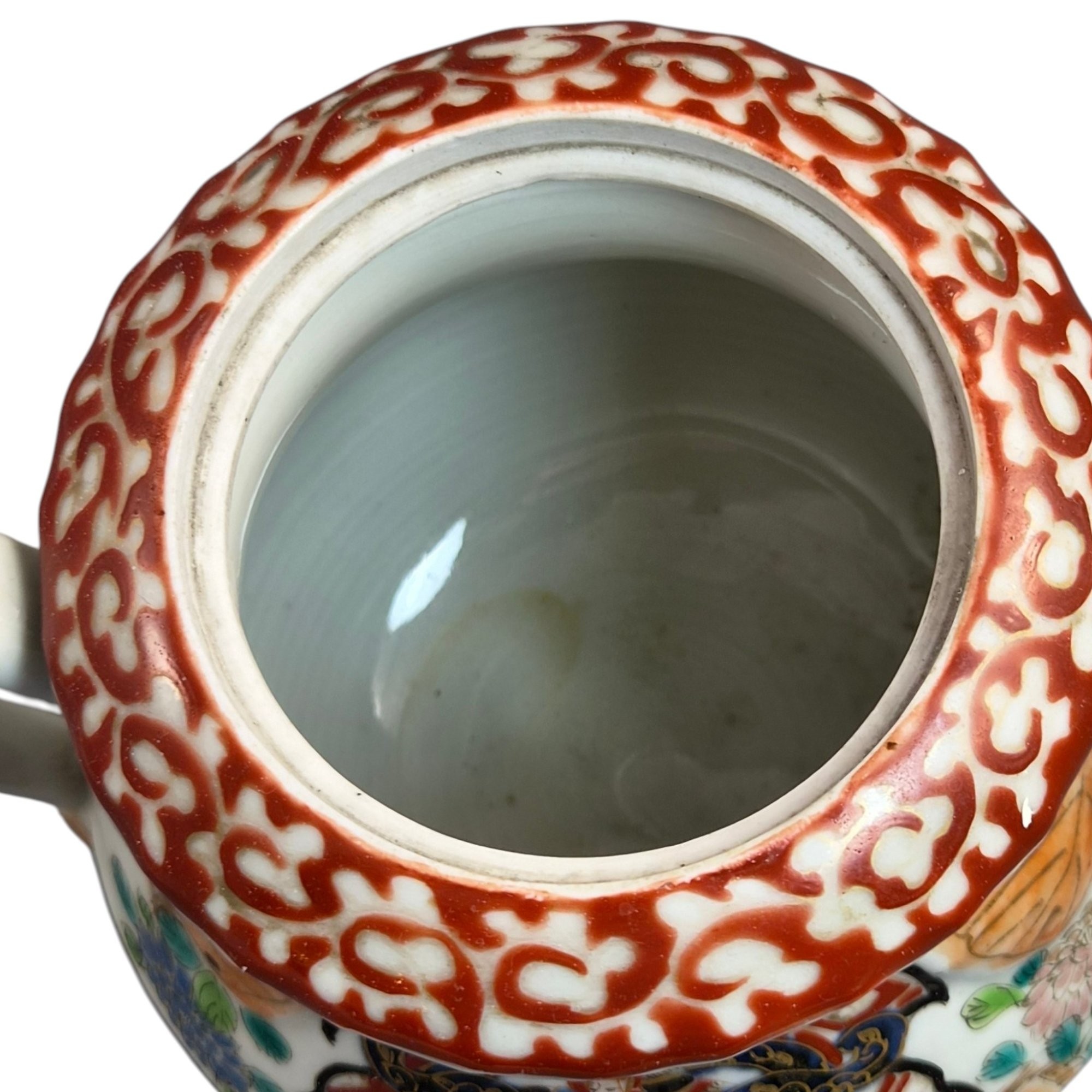
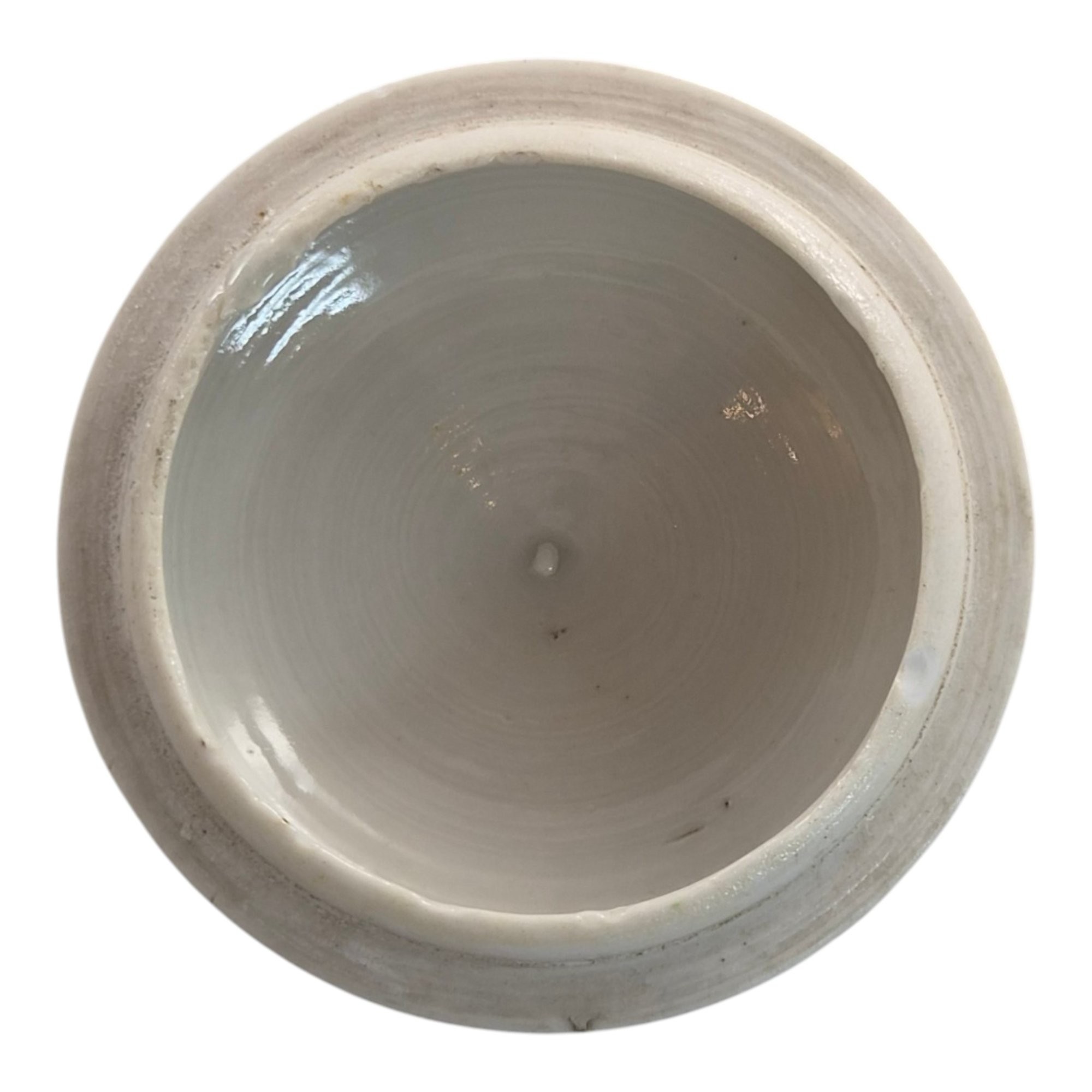
Visible faint horizontal lines on the body are original manufacturing and wheel-finishing marks from sectional hand construction and should not be mistaken for damage.

Dimensions:

Height: 18 cm

Width: 18.5 cm

Depth: 13 cm

Weight: 546 g

Condition:

Excellent antique condition with no cracks, chips, repairs or paint losses.

Please study the accompanying photographs carefully as they form an integral part of this description. If you have any questions, we will be happy to answer them. The item will be shipped with full tracking and insurance.

Physical Dimensions
Height
18cm (7.09")
Width
18.5cm (7.28")
Depth
13cm (5.12")
Declaration

Ritas Bazaar has dated this Japanese Imari Sugar Bowl to the 19th Century.
Reference Numbers
Sellingantiques Reference
SA1215065
Dealers Internal Reference
B1739
Description
A rare Japanese Imari porcelain sugar bowl and cover produced in Arita during the early Meiji period, circa 1870–1880.
The piece belongs to the Hichozan Fukagawa group associated with the workshop of Eizaemon Fukagawa, one of the most important early exporters of Japanese porcelain to Western markets.
Ritas Bazaar
fig 1. A covered Japanese Imari porcelain sugar bowl featuring double side handles, a pointed gilded finial, and hand-painted samurai and floral motifs in red, blue, green, and gold enamels.
fig 1. Japanese Imari Porcelain Sugar Bowl with Samurai, Fukagawa Mark, Circa 1870–1880

The form reflects European tea-drinking customs, with three feet, large scroll handles and a domed cover. The decoration combines cobalt blue, iron-red enamels, green highlights and gilding in the traditional Ko-Imari export palette. Applied gilt leaves around the handles and the pointed gilded finial create a rich sculptural effect.
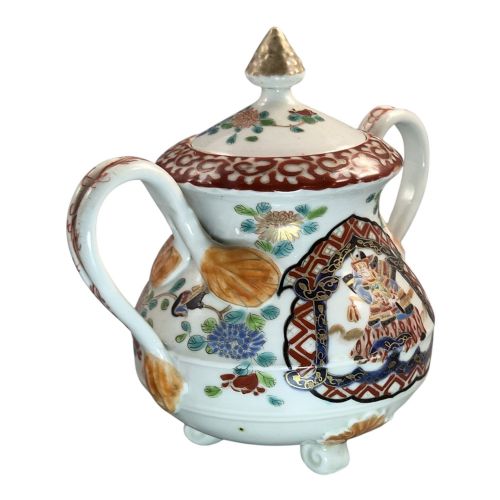
fig 2. A covered Japanese Imari porcelain sugar bowl featuring double side handles, a pointed gilded finial, and hand-painted samurai and floral motifs in red, blue, green, and gold enamels.
fig 2. Japanese Imari Porcelain Sugar Bowl with Samurai, Fukagawa Mark, Circa 1870–1880

A finely painted samurai warrior appears within the central shield-shaped reserve, surrounded by geometric ornament and floral scrollwork. Chrysanthemums and peonies symbolise nobility and longevity. A small asymmetrical bird painted on the cover adds an elegant Japanese decorative detail.
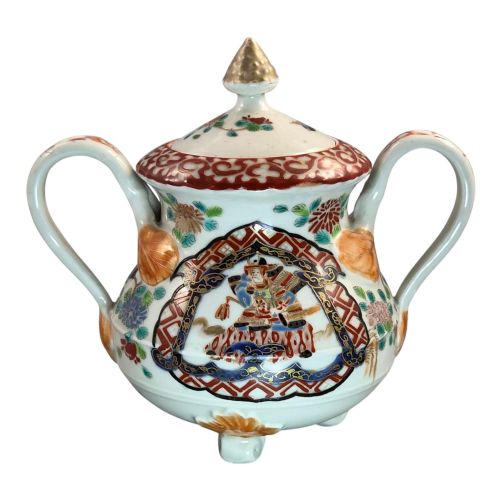
fig 3. A covered Japanese Imari porcelain sugar bowl featuring double side handles, a pointed gilded finial, and hand-painted samurai and floral motifs in red, blue, green, and gold enamels.
fig 3. Japanese Imari Porcelain Sugar Bowl with Samurai, Fukagawa Mark, Circa 1870–1880

The underside bears the rare iron-red mark “Hichozan Fukagawa sei”, associated with early Fukagawa export porcelain before the establishment of Fukagawa Seiji in 1894. Koransha, founded by Eizaemon Fukagawa in 1875, later achieved international success at the Philadelphia Centennial Exhibition and the Paris Exposition Universelle.
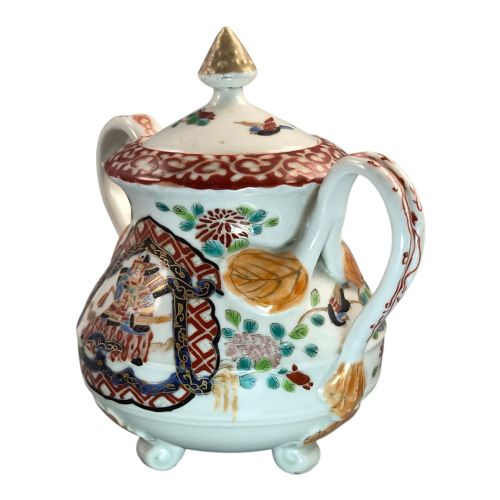
fig 4. A covered Japanese Imari porcelain sugar bowl featuring double side handles, a pointed gilded finial, and hand-painted samurai and floral motifs in red, blue, green, and gold enamels.
fig 4. Japanese Imari Porcelain Sugar Bowl with Samurai, Fukagawa Mark, Circa 1870–1880

Visible faint horizontal lines on the body are original manufacturing and wheel-finishing marks from sectional hand construction and should not be mistaken for damage.

Dimensions:

Height: 18 cm

Width: 18.5 cm
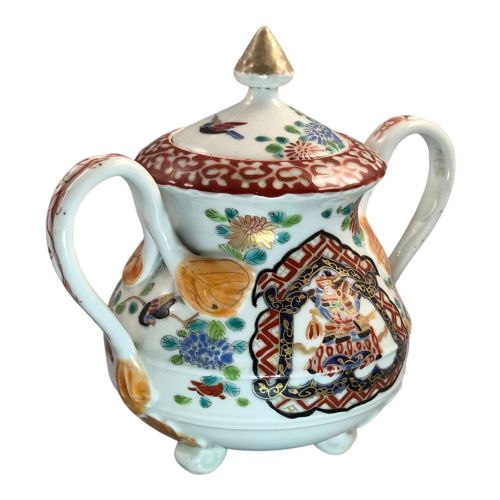
fig 5. A covered Japanese Imari porcelain sugar bowl featuring double side handles, a pointed gilded finial, and hand-painted samurai and floral motifs in red, blue, green, and gold enamels.
fig 5. Japanese Imari Porcelain Sugar Bowl with Samurai, Fukagawa Mark, Circa 1870–1880

Depth: 13 cm

Weight: 546 g

Condition:

Excellent antique condition with no cracks, chips, repairs or paint losses.

Please study the accompanying photographs carefully as they form an integral part of this description. If you have any questions, we will be happy to answer them. The item will be shipped with full tracking and insurance.

Height
18cm (7.09")
Width
18.5cm (7.28")
Depth
13cm (5.12")
Date of Manufacture

Ritas Bazaar has dated this Japanese Imari Sugar Bowl to the 19th Century.

Reference Numbers
Sellingantiques Ref
SA1215065
Dealers Internal Ref
B1739
Ritas Bazaar
Sellingantiques verified Since Nov 2025
Dealer Profile

You can view the stock and full dealer information on the Ritas Bazaar Profile Page
PDF SHARE
SAVE
A covered Japanese Imari porcelain sugar bowl featuring double side handles, a pointed gilded finial, and hand-painted samurai and floral motifs in red, blue, green, and gold enamels.
1 / 13
Archive I A covered Japanese Imari porcelain sugar bowl featuring double side handles, a pointed gilded finial, and hand-painted samurai and floral motifs in red, blue, green, and gold enamels.

Japanese Imari Porcelain Sugar Bowl with Samurai, Fukagawa Mark, Circa 1870–1880
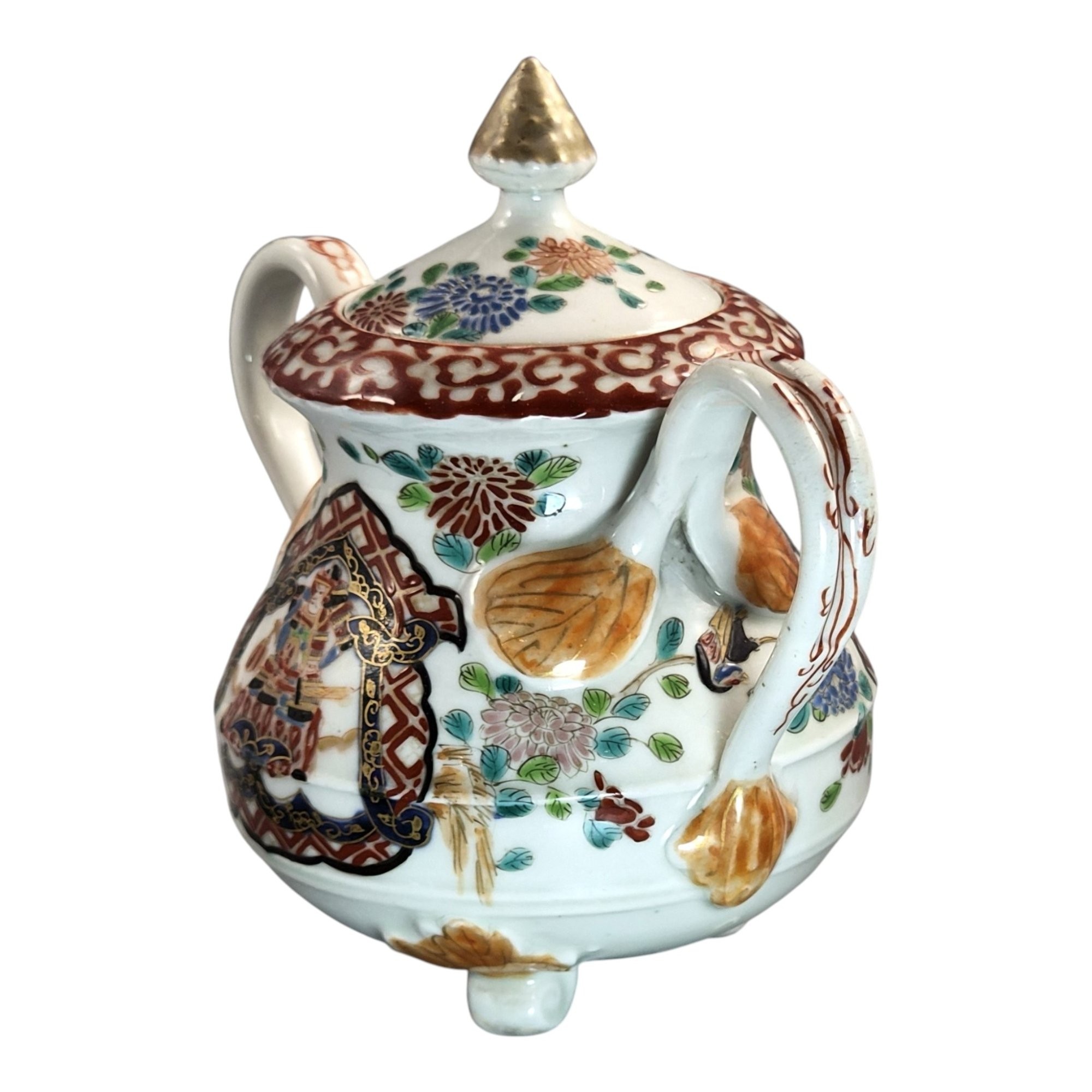
Archive II A covered Japanese Imari porcelain sugar bowl featuring double side handles, a pointed gilded finial, and hand-painted samurai and floral motifs in red, blue, green, and gold enamels. View II
Archive III A covered Japanese Imari porcelain sugar bowl featuring double side handles, a pointed gilded finial, and hand-painted samurai and floral motifs in red, blue, green, and gold enamels. View III
Archive IV A covered Japanese Imari porcelain sugar bowl featuring double side handles, a pointed gilded finial, and hand-painted samurai and floral motifs in red, blue, green, and gold enamels. View IV
Archive V A covered Japanese Imari porcelain sugar bowl featuring double side handles, a pointed gilded finial, and hand-painted samurai and floral motifs in red, blue, green, and gold enamels. View V
Archive VI A covered Japanese Imari porcelain sugar bowl featuring double side handles, a pointed gilded finial, and hand-painted samurai and floral motifs in red, blue, green, and gold enamels. View VI
Archive VII A covered Japanese Imari porcelain sugar bowl featuring double side handles, a pointed gilded finial, and hand-painted samurai and floral motifs in red, blue, green, and gold enamels. View VII
Archive VIII A covered Japanese Imari porcelain sugar bowl featuring double side handles, a pointed gilded finial, and hand-painted samurai and floral motifs in red, blue, green, and gold enamels. View VIII
Archive IX A covered Japanese Imari porcelain sugar bowl featuring double side handles, a pointed gilded finial, and hand-painted samurai and floral motifs in red, blue, green, and gold enamels. View IX
Archive X A covered Japanese Imari porcelain sugar bowl featuring double side handles, a pointed gilded finial, and hand-painted samurai and floral motifs in red, blue, green, and gold enamels. View X
Archive XI A covered Japanese Imari porcelain sugar bowl featuring double side handles, a pointed gilded finial, and hand-painted samurai and floral motifs in red, blue, green, and gold enamels. View XI
Archive XII A covered Japanese Imari porcelain sugar bowl featuring double side handles, a pointed gilded finial, and hand-painted samurai and floral motifs in red, blue, green, and gold enamels. View XII
Archive XIII A covered Japanese Imari porcelain sugar bowl featuring double side handles, a pointed gilded finial, and hand-painted samurai and floral motifs in red, blue, green, and gold enamels. View XIII
Enlarged Archival View
Telephone 07434 626011
Location
Hertfordshire
United Kingdom
Verified Since Nov 2025
Items For Sale 223
Items Sold 37
Ritas Bazaar
Verified Since Nov 2025
View Dealer Info
Location: Hertfordshire, United Kingdom
Verified
Nov 2025
For Sale
223
Sold
37
A covered Japanese Imari porcelain sugar bowl featuring double side handles, a pointed gilded finial, and hand-painted samurai and floral motifs in red, blue, green, and gold enamels.
Japanese Imari Porcelain Sugar Bowl with Samurai, Fukagawa Mark, circa 1870–1880
Ref: SA1215065
A covered Japanese Imari porcelain sugar bowl featuring double side handles, a pointed gilded finial, and hand-painted samurai and floral motifs in red, blue, green, and gold enamels.
Detail View 1
Detail View 2
Detail View 3
Detail View 4
Detail View 5
Detail View 6
Detail View 7
Detail View 8
Detail View 9
Detail View 10
Detail View 11
Detail View 12
Archival Detail
Every single antique dealer on our platform is individually approved by our internal team. We verify their professional trade history, ethical standards, and photographic quality to ensure a secure, high-standard buying environment. Upon joining, every dealer agrees to a strict 9-point code of conduct. While issues can occasionally arise, our dealers typically resolve them swiftly and directly with the buyer. In fact, since our founding in 2002, Sellingantiques has only had to step in to help resolve an issue on roughly five occasions—a true testament to the quality of our dealers and their dedication to your happiness.
Our dealers are highly experienced in packing and shipping fragile, high-value antiques. Because you are in direct contact with the dealer, you will be able to easily go through all available shipping and insurance options together to ensure your item arrives safely.
Antiques are the ultimate green purchase. By choosing historical pieces over newly manufactured goods, you completely eliminate the carbon footprint of modern mass production while preserving exceptional, timeless craftsmanship.

Imari porcelain originates from the Arita region in Japan and was produced for domestic and export markets. Characterised by underglaze cobalt blue and overglaze iron-red and gilded enamels, pieces from the late nineteenth century often incorporate detailed figurative panels, floral scrollwork, and crests.

These vessels were formed using fine kaolin porcelain clay, shaped on a wheel or press-moulded with hand-applied handles and finials. They underwent an initial high-temperature firing for the body and underglaze blue, followed by secondary low-temperature kiln firings for the polychrome enamels and gold leaf detailing.

Authentic pieces feature crisp, hand-painted polychrome decoration with slightly raised enamel texture and fine gilt application. Makers marks, such as the Fukagawa mountain and stream symbol or written signatures painted in blue or red underglaze on the base, help verify origin.

Small decorative ceramic vessels can be placed as focal points on a sideboard top, curated shelf, or mantlepiece. Pairing the porcelain against dark timber or neutral stone surfaces highlights the contrasting polychrome enamels and gilded highlights.

Dust gently with a soft microfibre cloth to prevent rubbing off overglaze enamels and gilding. Avoid using abrasive pads, chemical cleaners, or immersion in dishwashers, washing by hand with tepid water and mild liquid soap only when necessary.
items
Add keywords to the filter
Price
£100
£250000
Era
Movements
Material
Origin
Stock Location
Freshness
Online Payments
Categories