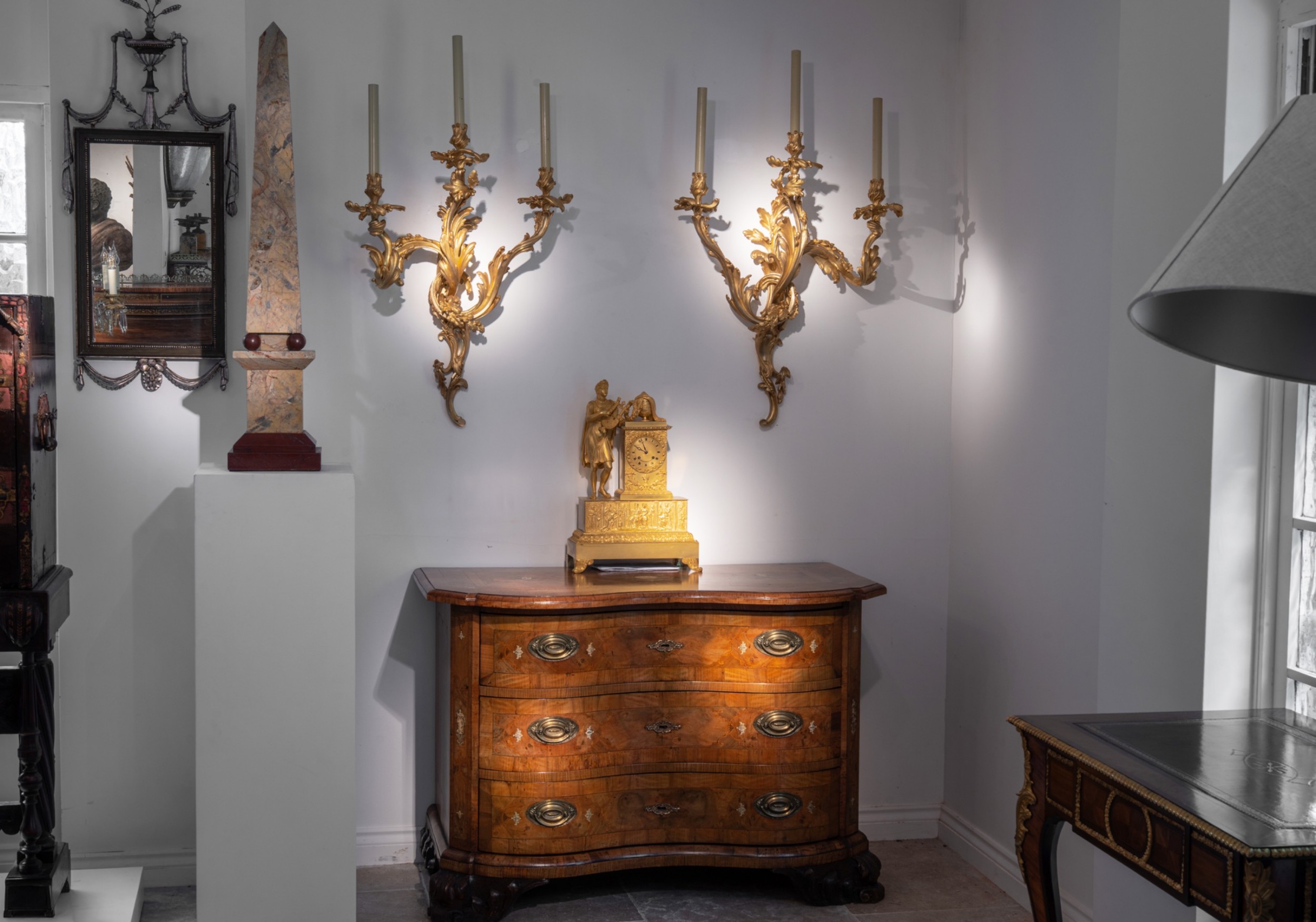
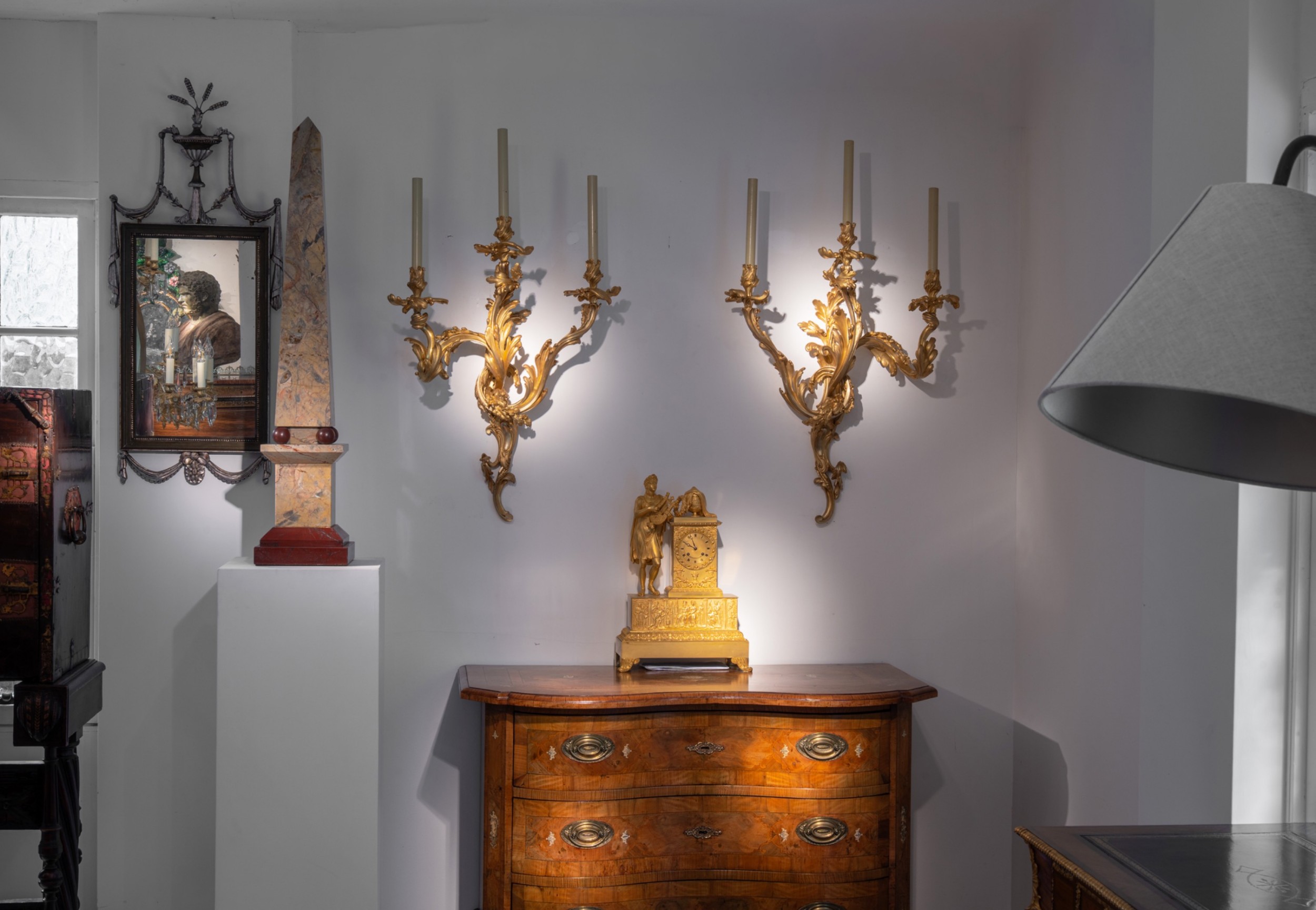
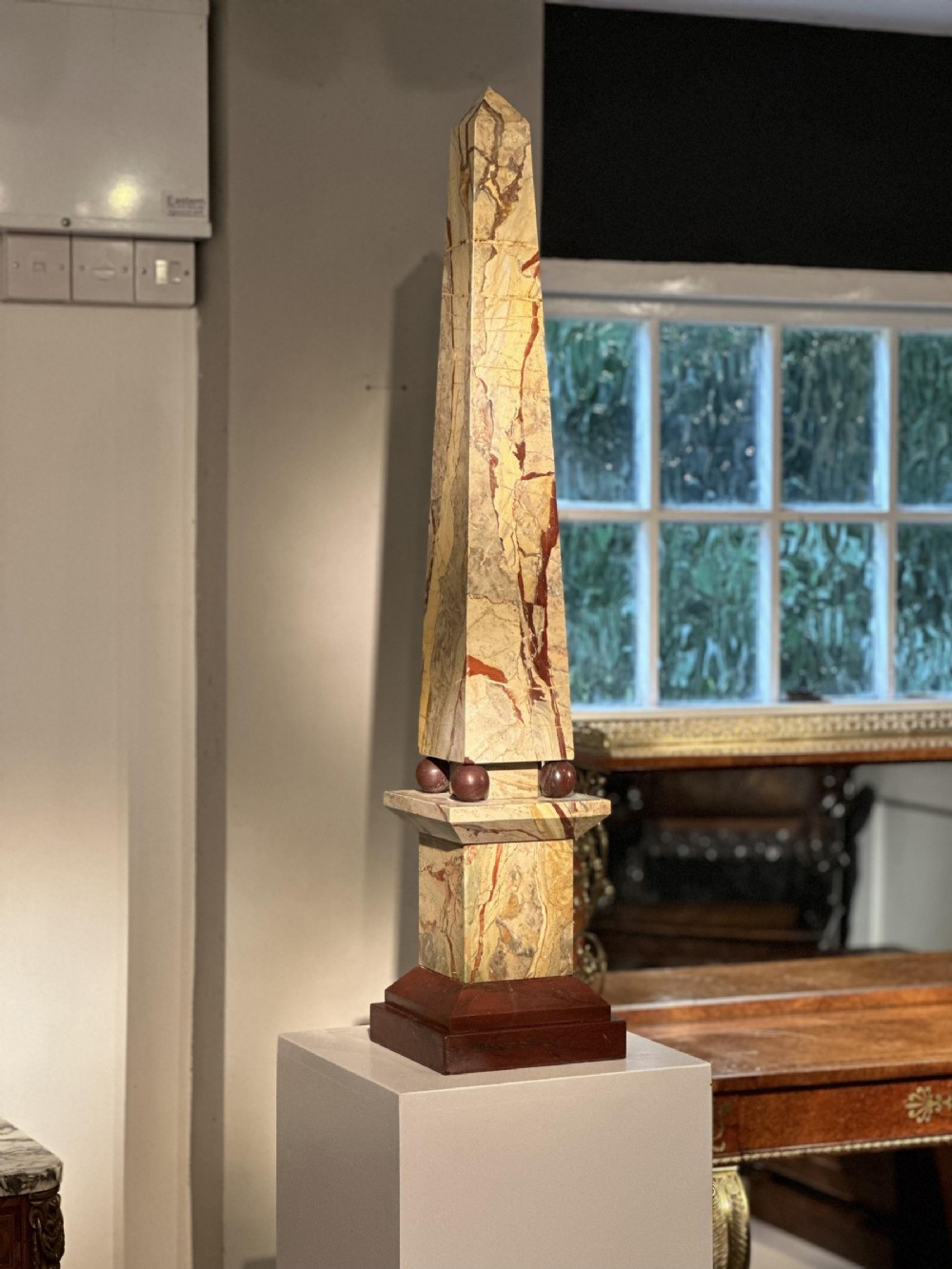
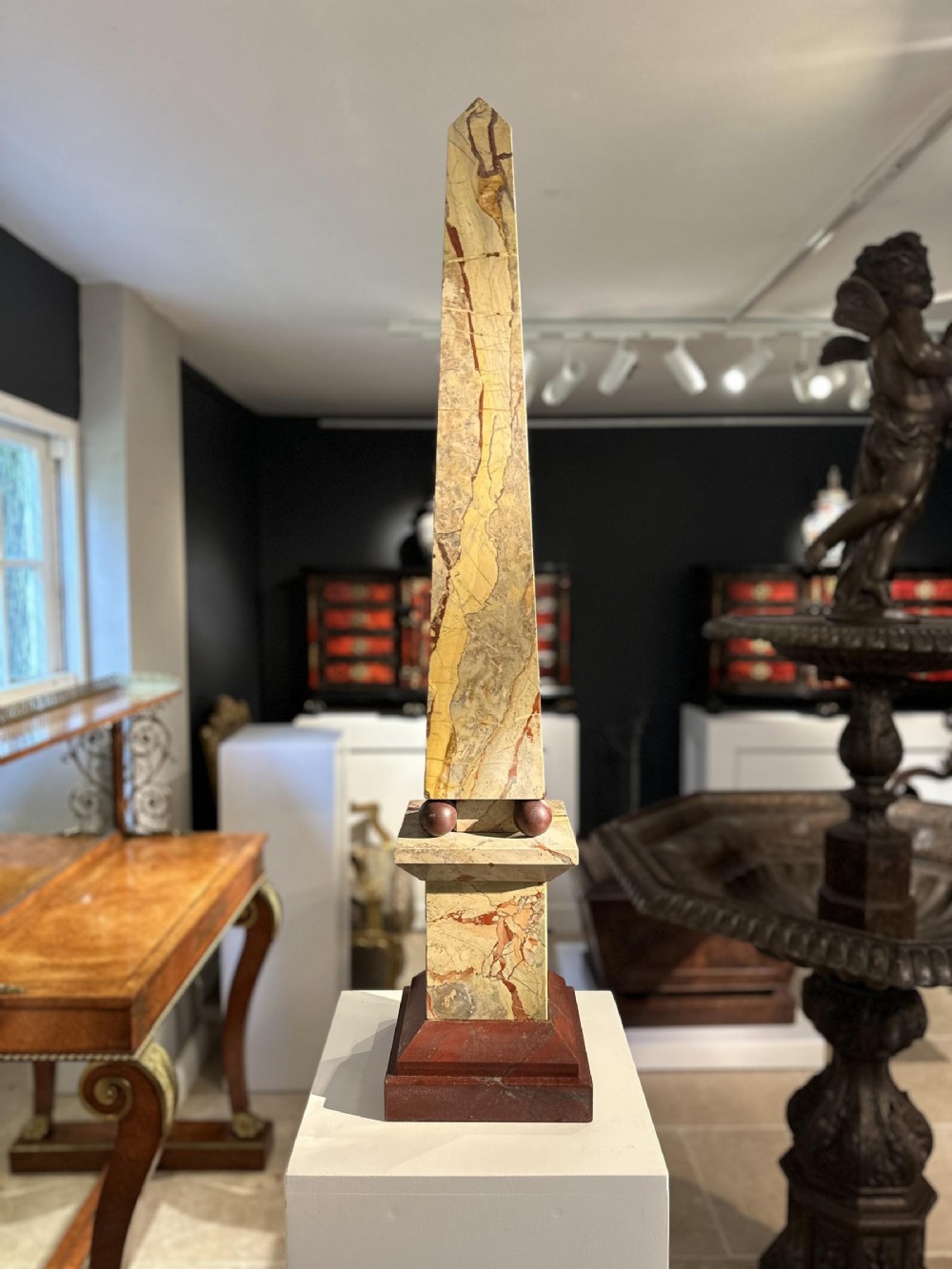
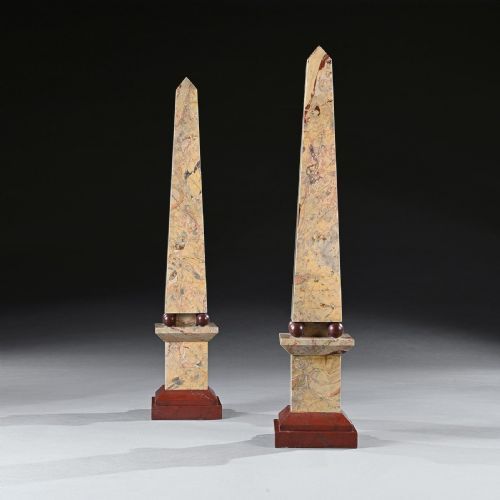
Loveday Antiques has dated this Pair of Marble Obelisks to the 1910s.
Italy circa 1910.
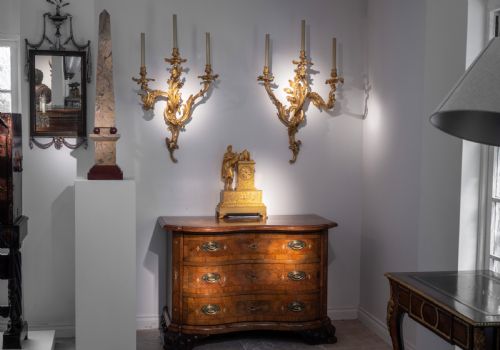
Originally utilised in ancient Egypt, obelisks were later adopted by the Romans and during the height of the Grand Tour in the 19th century, some twelve different obelisks remained in Rome itself. Any grand tourist would have been proud to have brought back a pair of marble obelisks as part of their souvenirs of their experience and the workshops that produced these pieces continued to operate in to the 20th century.
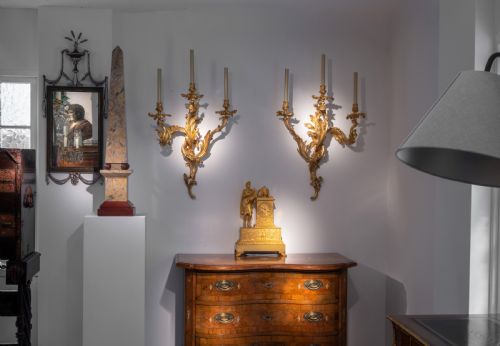
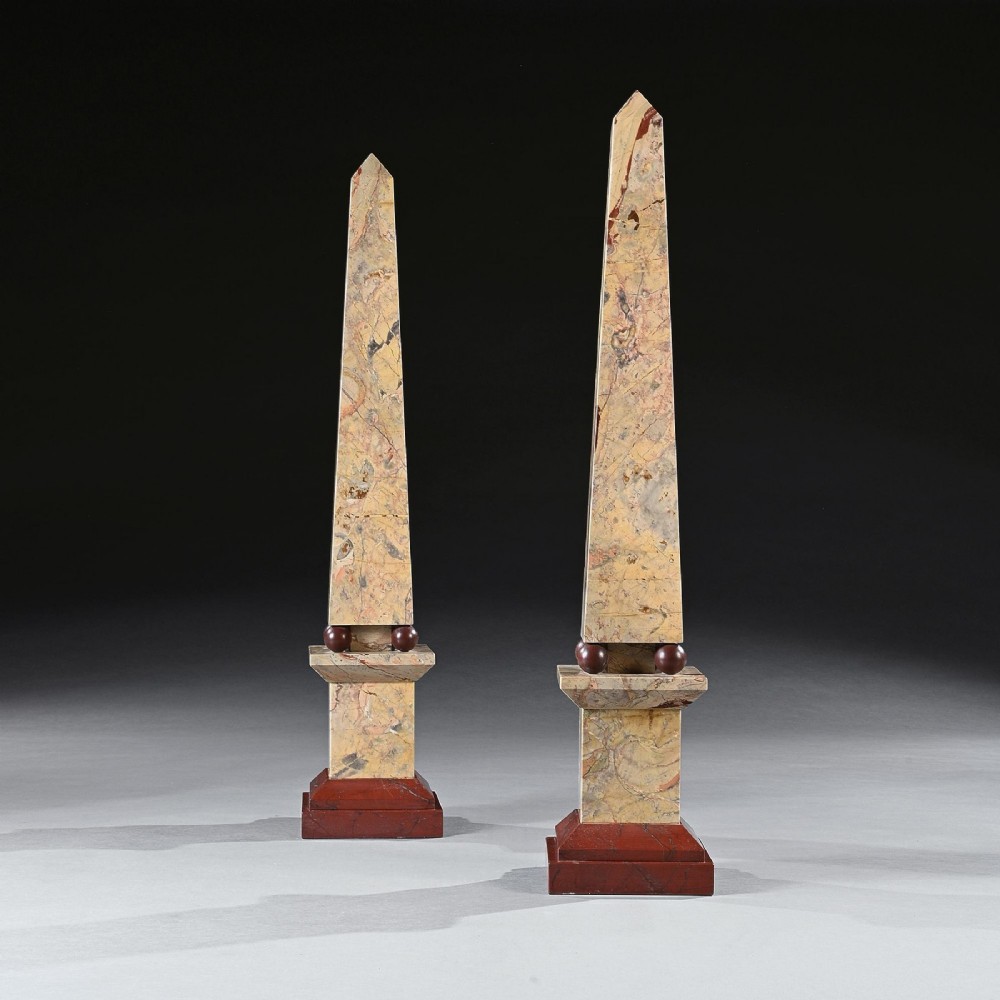
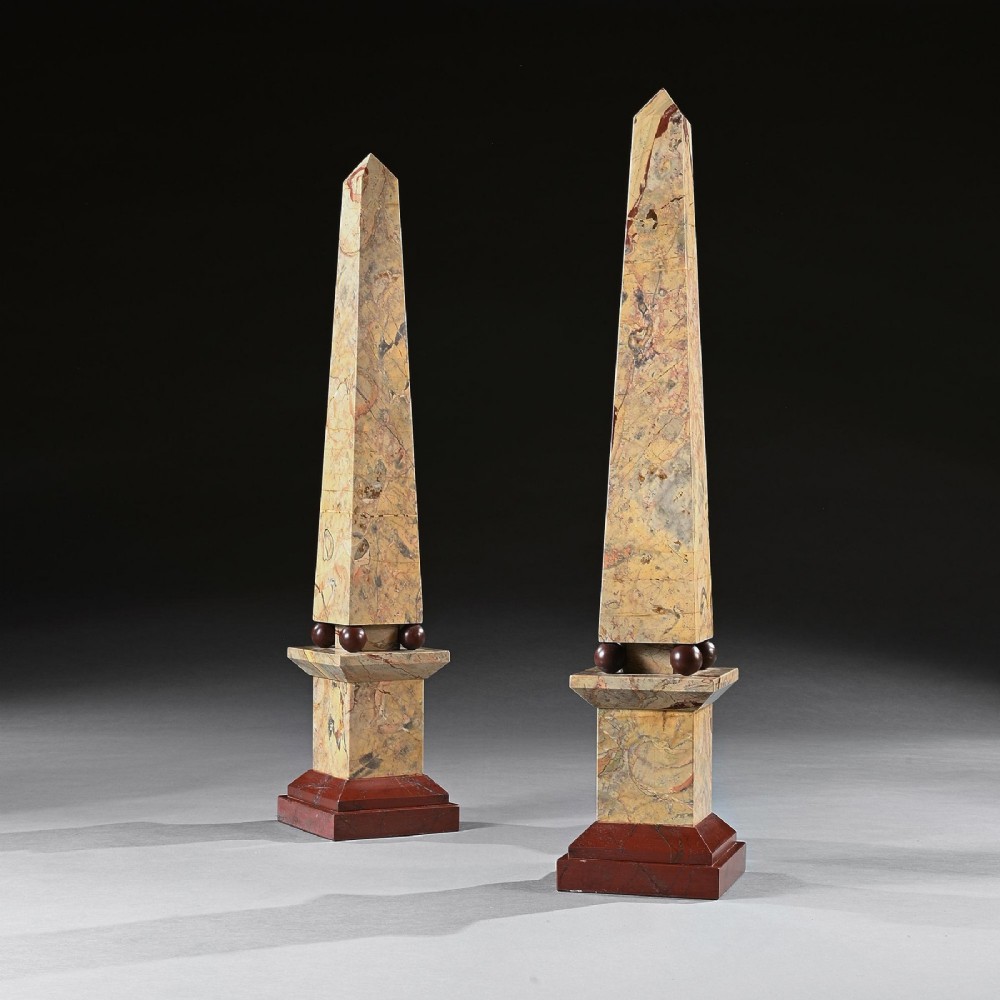
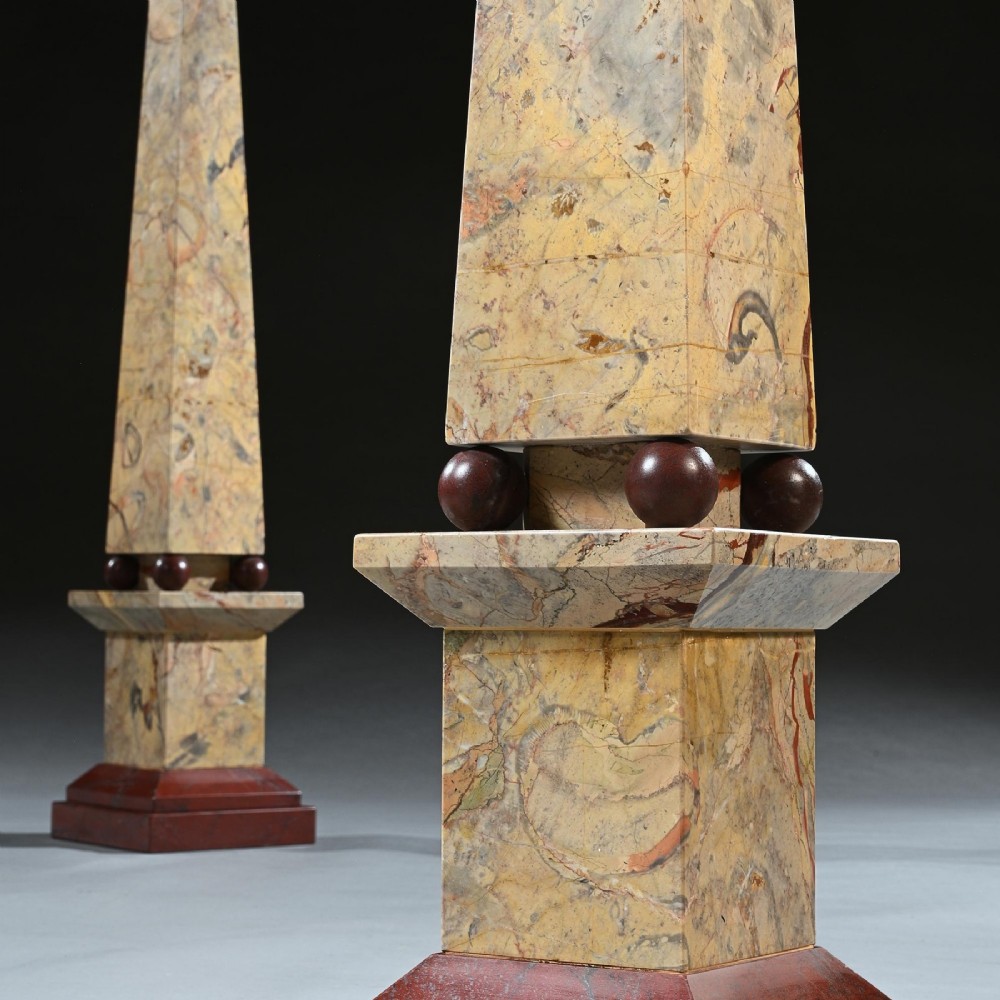
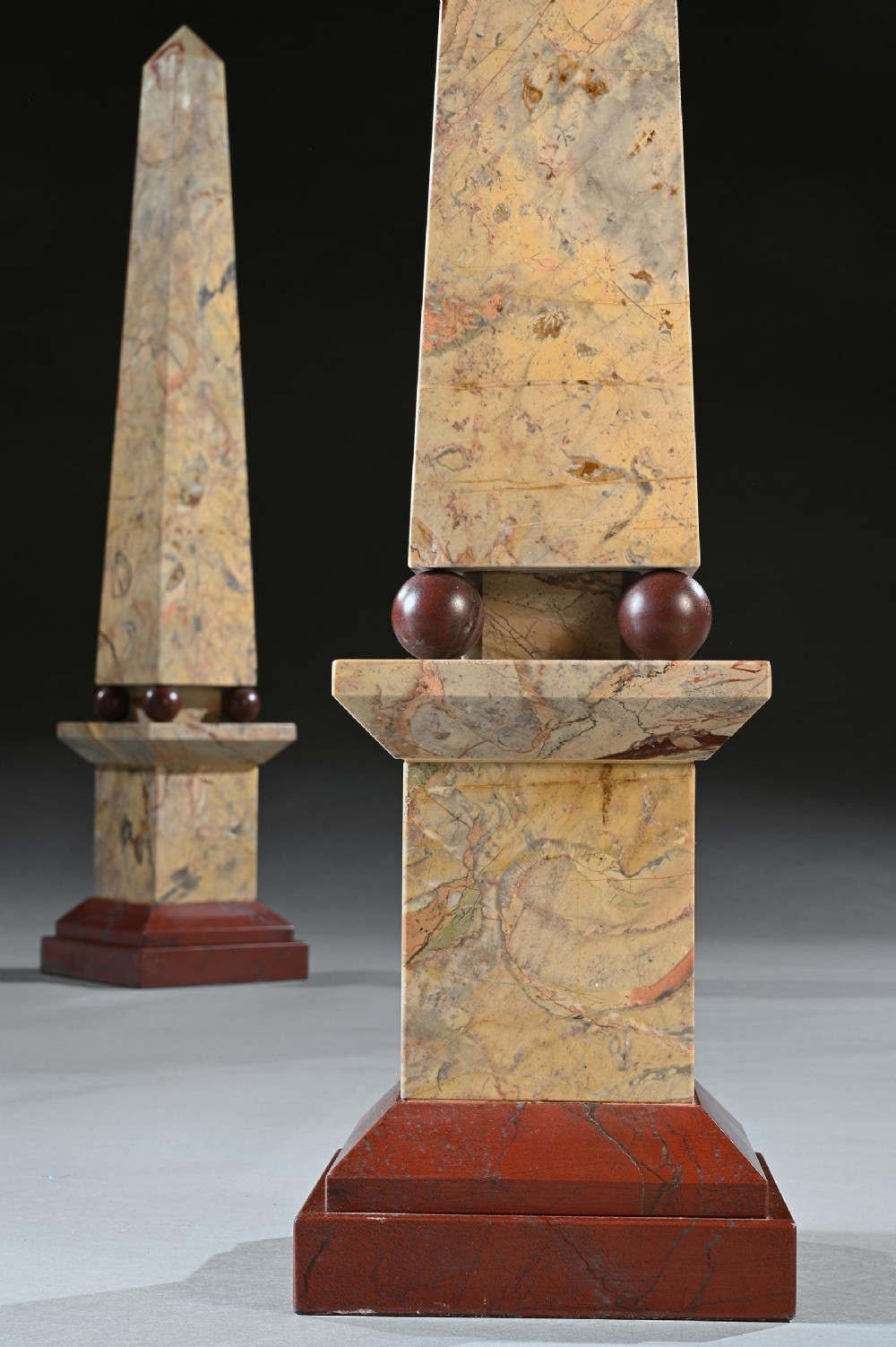
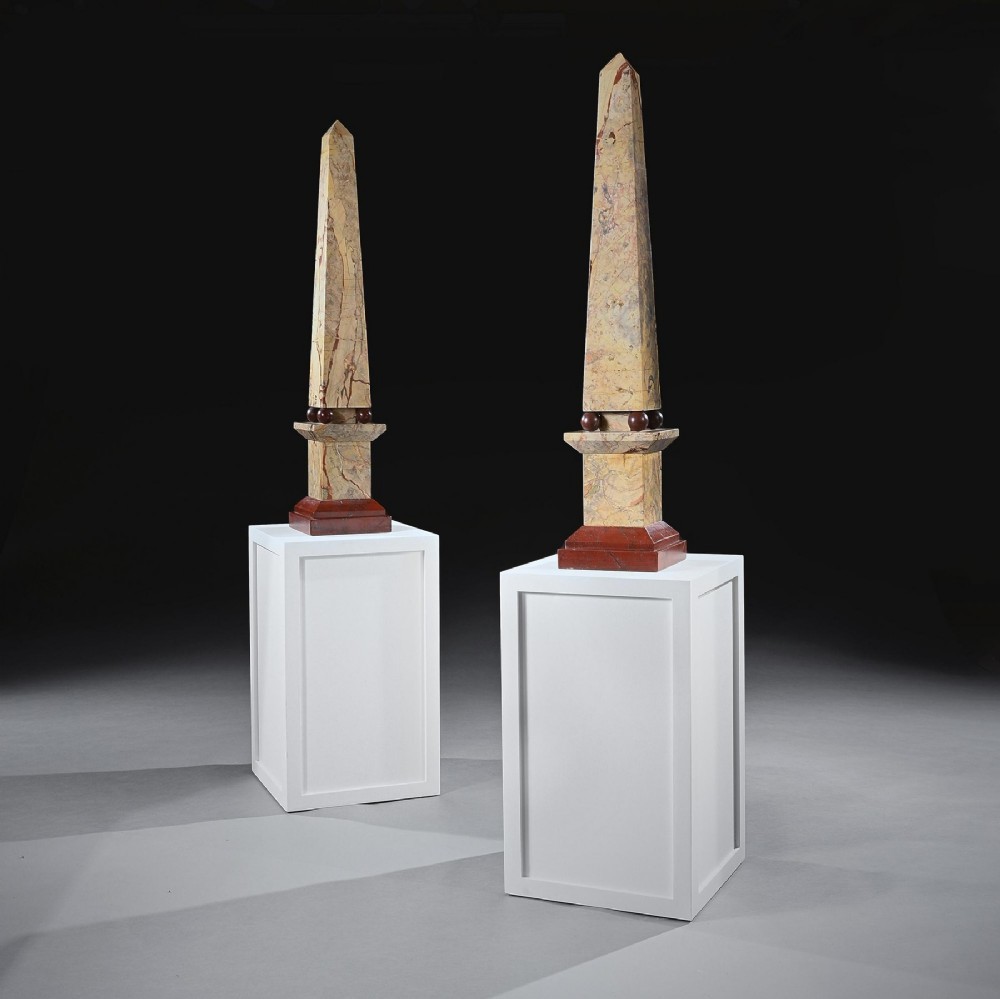
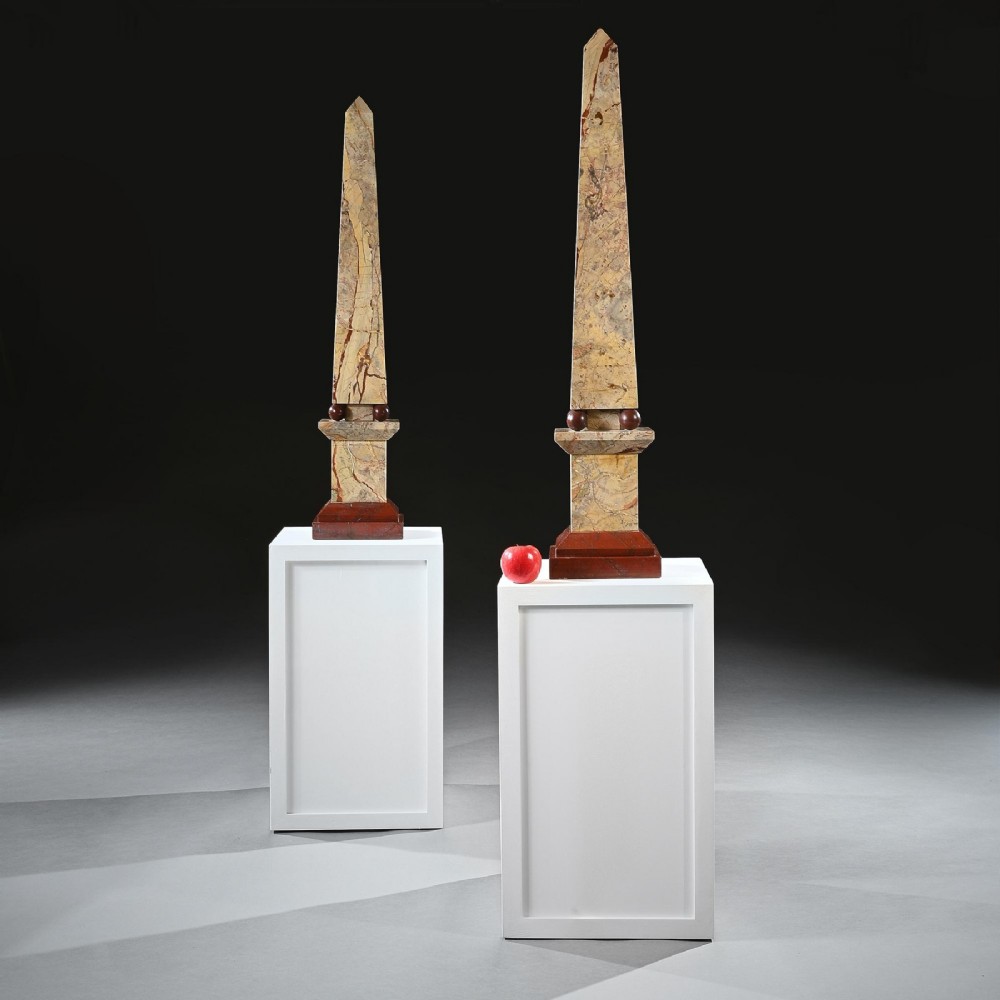
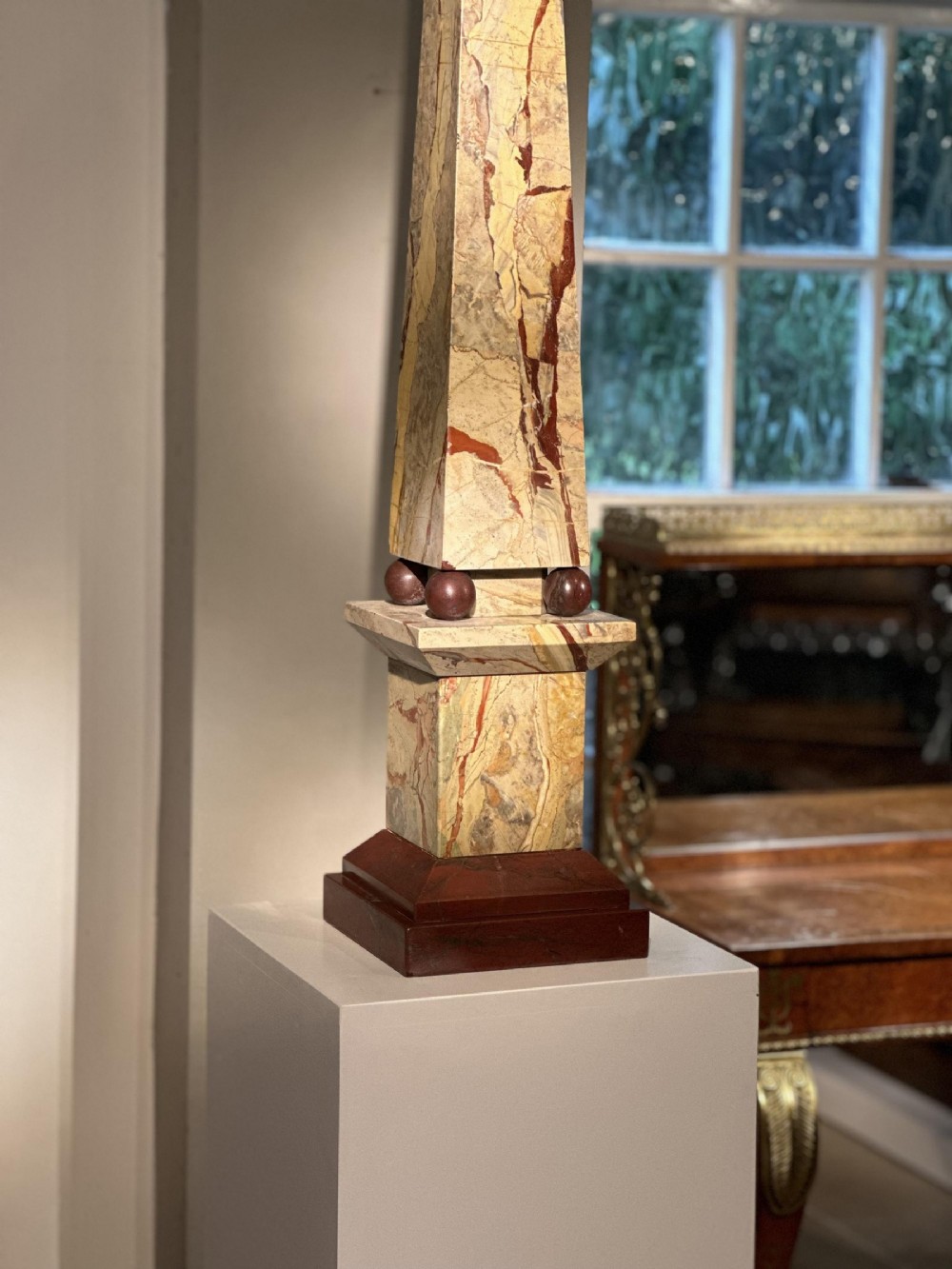
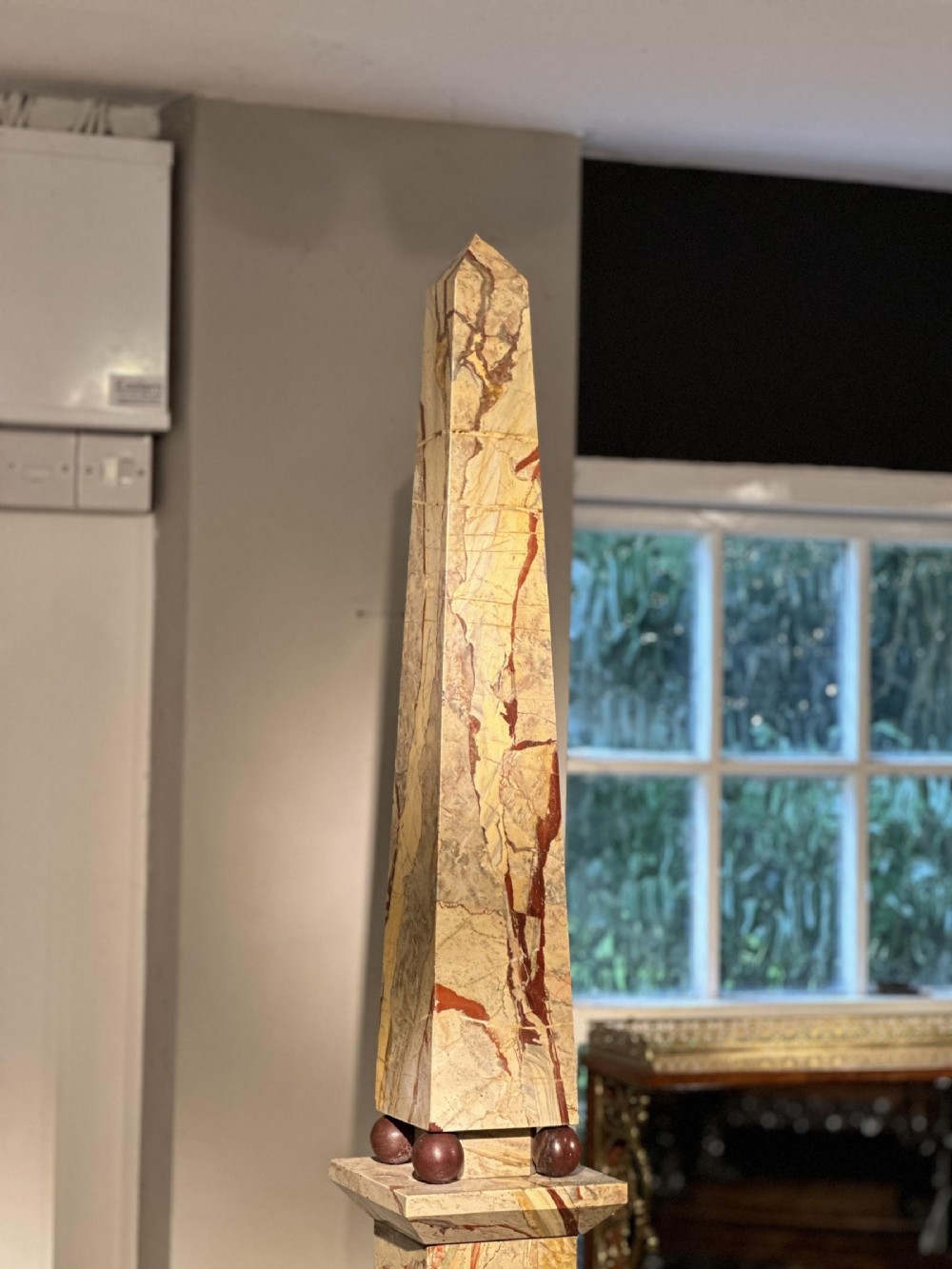
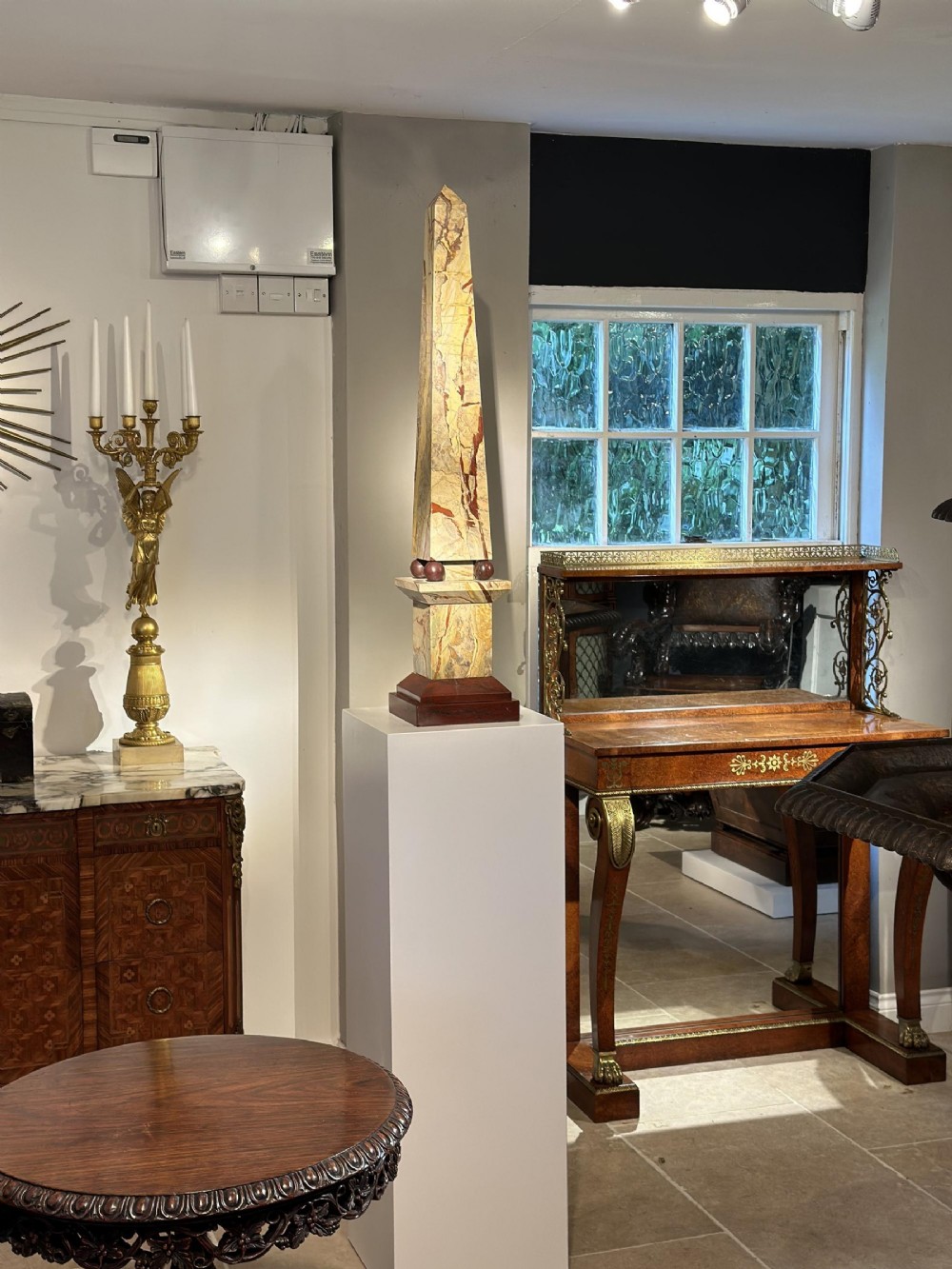
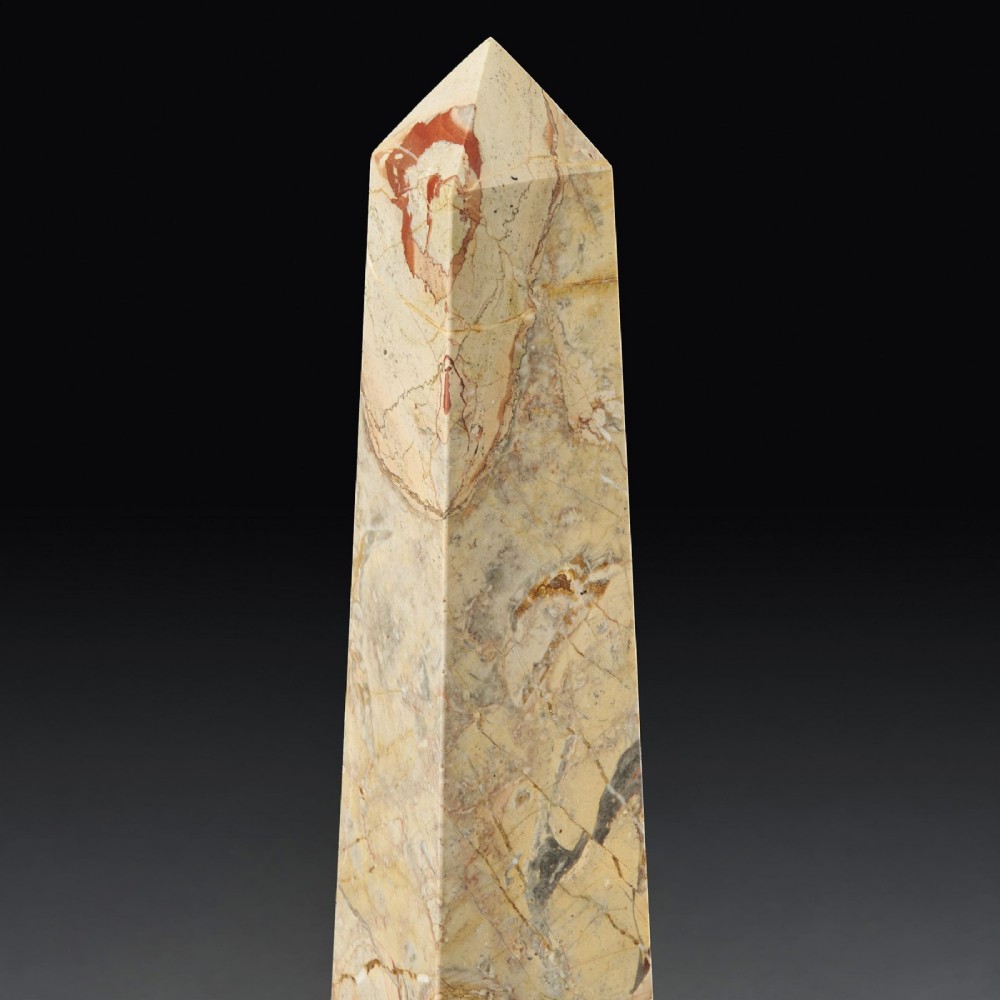
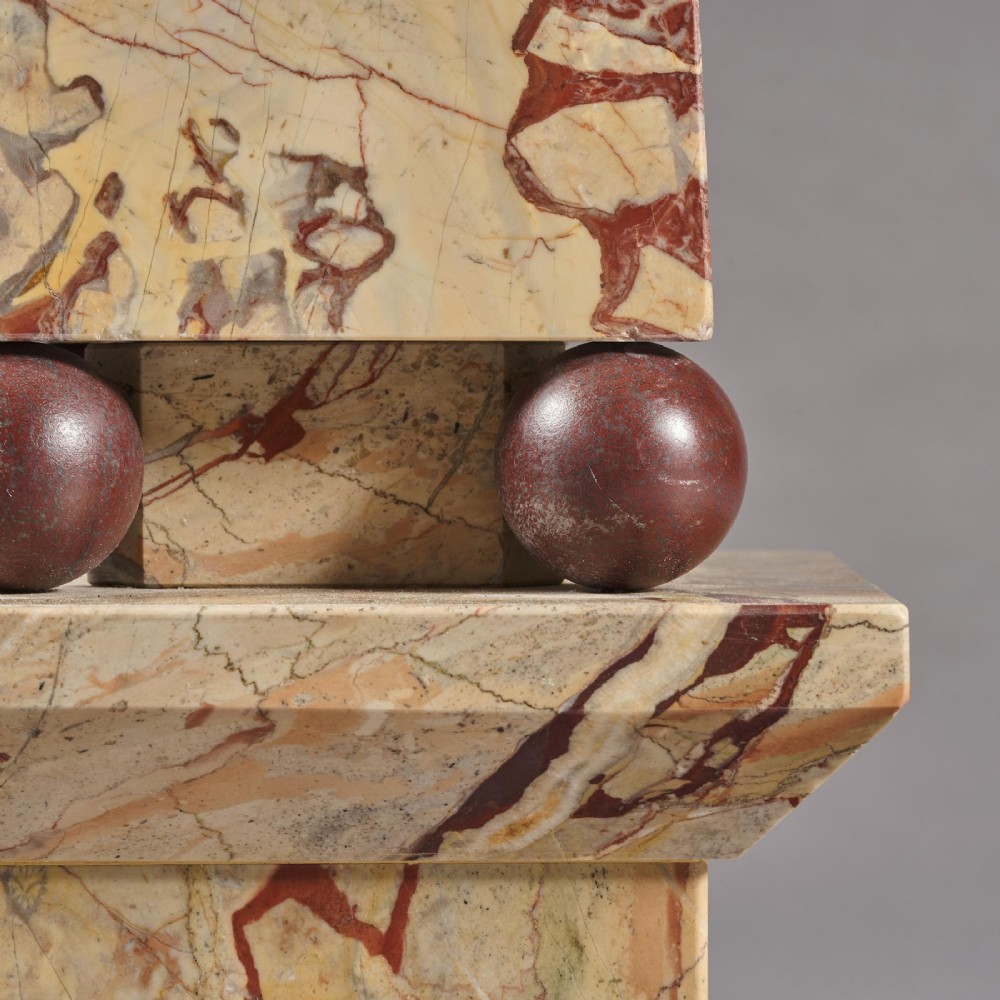
Although these pieces, and modern reproductions of them, are reasonably common, it is extremely rare to find pieces of this size and quality. The mouldings are crisply carved, the marble chosen is very well figured and the contrasting sections of Portasanta and Rosso Antico provide much more visual interest than is usually encountered in the lesser pieces that one encounters.
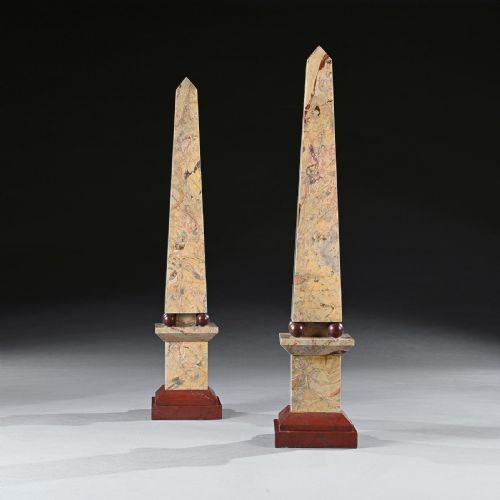
Sure to provide a talking point in any interior, these obelisks are a decorator's dream and could provide the focal point of the scheme for a room due to their monumental size.
Portasanta is the name given by the scalpellini, the stonecutters of Rome, to the marble that forms the jambs of the Holy Door at St Peter's Basilica in the Vatican City. It is also used for door jambs in other basilicas of Rome times, after the island Chios that it comes from, it medieval Italian name alludes to the door’s of St Peter’s church in Rome, whose doors are made of this marble.
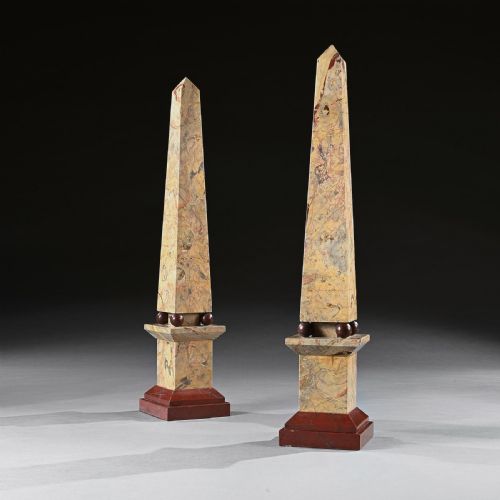
Rosso antico was widely used throughout the Roman empire basically for opera sectilia, slabs, but also in rare cases for sculptures and sculptural decoration.
Width: 8 inches - 20.5cm
Height: 40 inches - 102cm
Depth: 8 inches - 20.5cm
Loveday Antiques has dated this Pair of Marble Obelisks to the 1910s.
Specialist furniture dealers 18th-20th century
You can view the stock and full dealer information on the Loveday Antiques Profile Page
Loveday Antiques is a registered member of LAPADA BADA CINOA
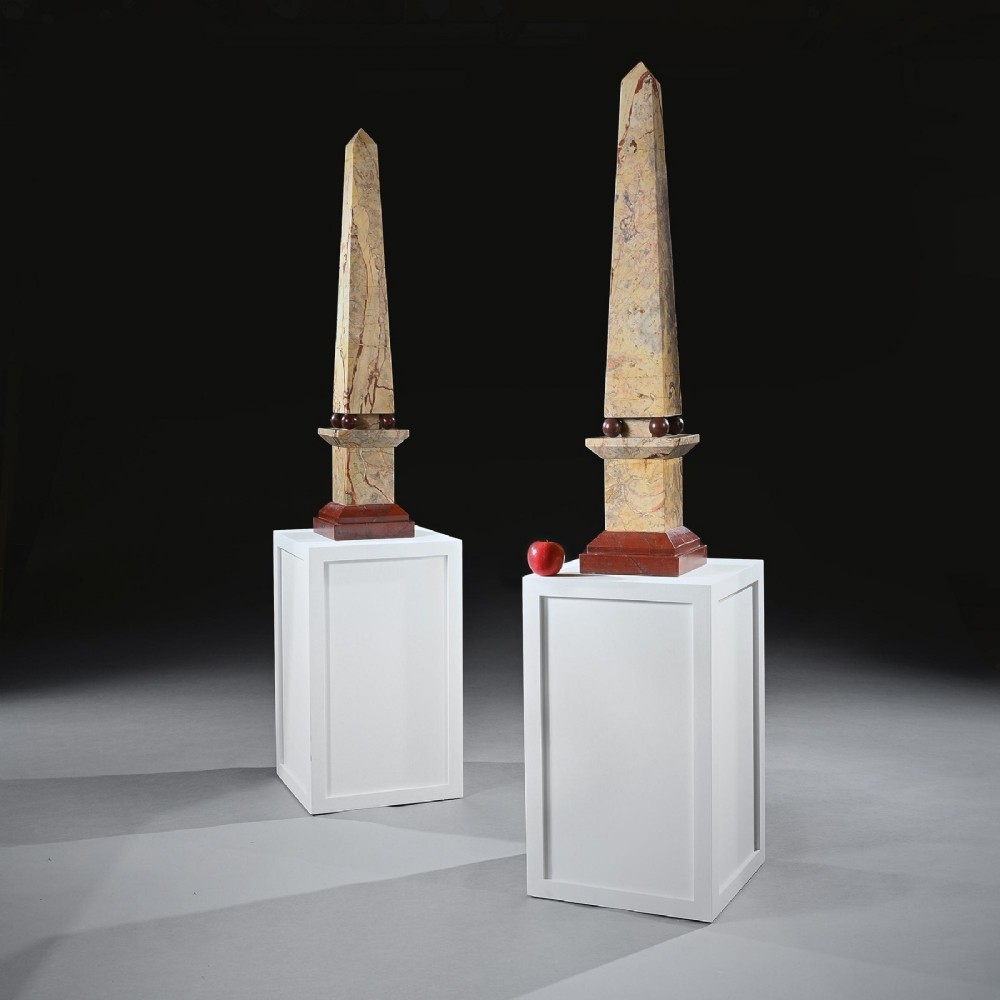
Monumental Pair of Portasanta and Rosso Antico Marble Obelisks, Italian early 20th Century