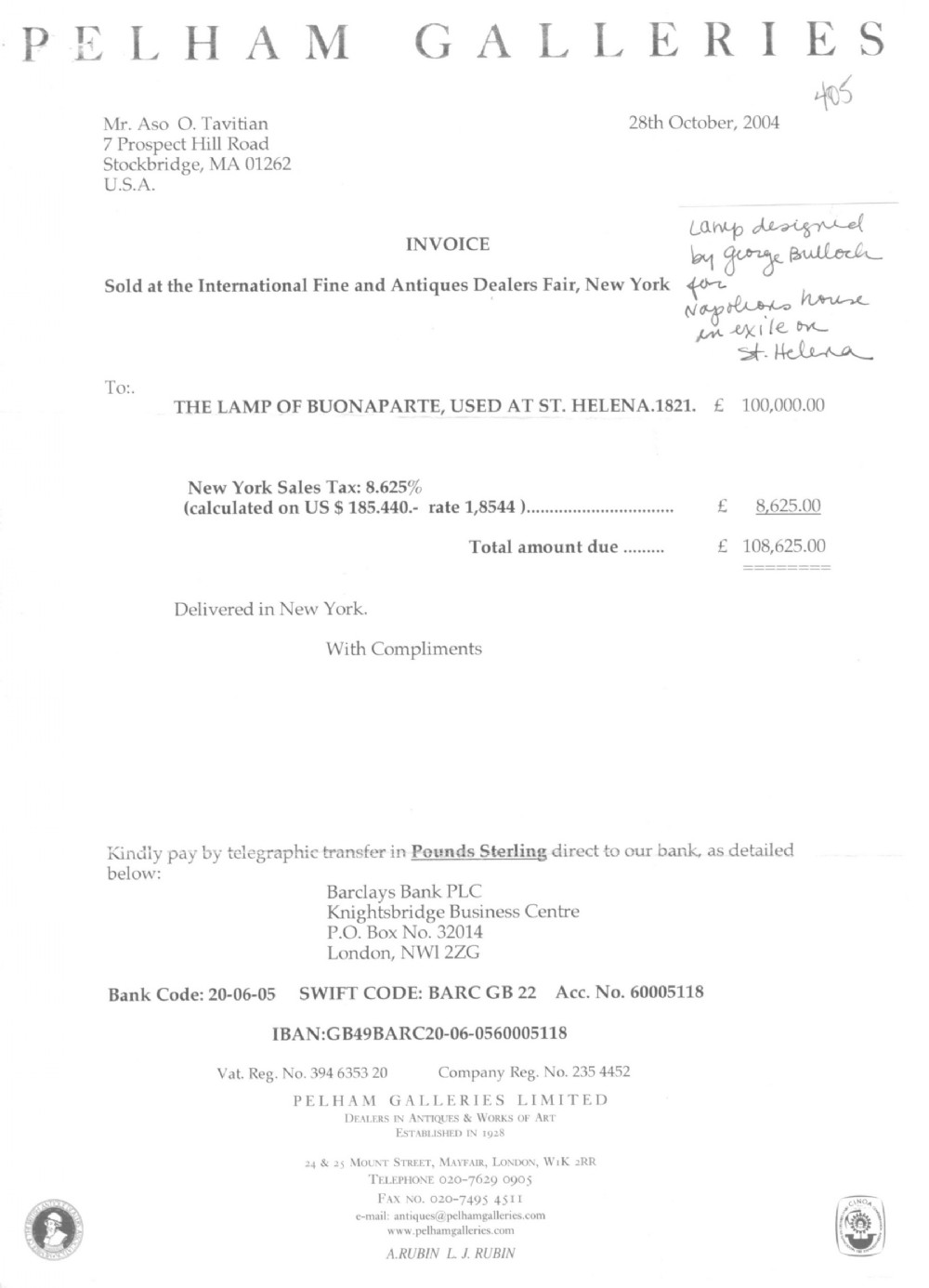
Loveday Antiques has dated this Regency Gilt Brass Lantern to the 19th Century.
Provenance
Auction Catalogue of Effects at Longwood belonging to the late Emperor Napoleon, St Helena, April-August 1822, lot 72, acquired by Thomas Greentree;
Pelham Galleries, London;
Acquired by Aso O. Tavitian at the International Fine Art & Antique Dealers Show, Park Avenue Armory, New York, 28 October 2004. ( copy of invoice attached ) The exchange at the time Aso would have paid almost 200k USD for this with tax.
Literature
Martin Levy, 'Napoleon in Exile. The Houses and Furniture supplied by the British Government for the Emperor and his Entourage on St Helena', Furniture History XXXIV (1998), fig.59 p.75 and Appendix I, no.34
Martin Levy, 'Lamps, Lanterns and Lustres: Lighting Designed by George Bullock (d.1818)', Furniture History, Vol. 56, pp.177-188
Jonathan Bourne and Vanessa Brett, Lighting in the Domestic Interior: Renaissance to Art Nouveau, London 1991, p.166, fig.609
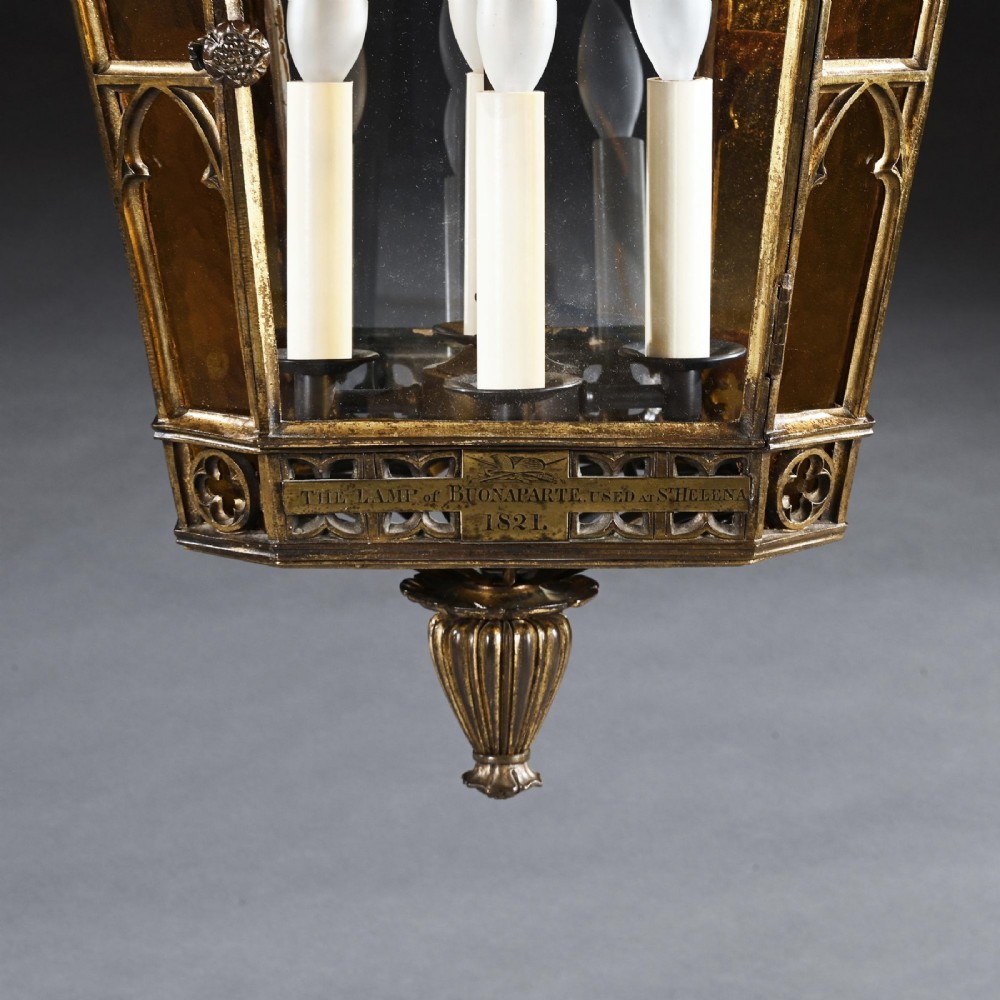
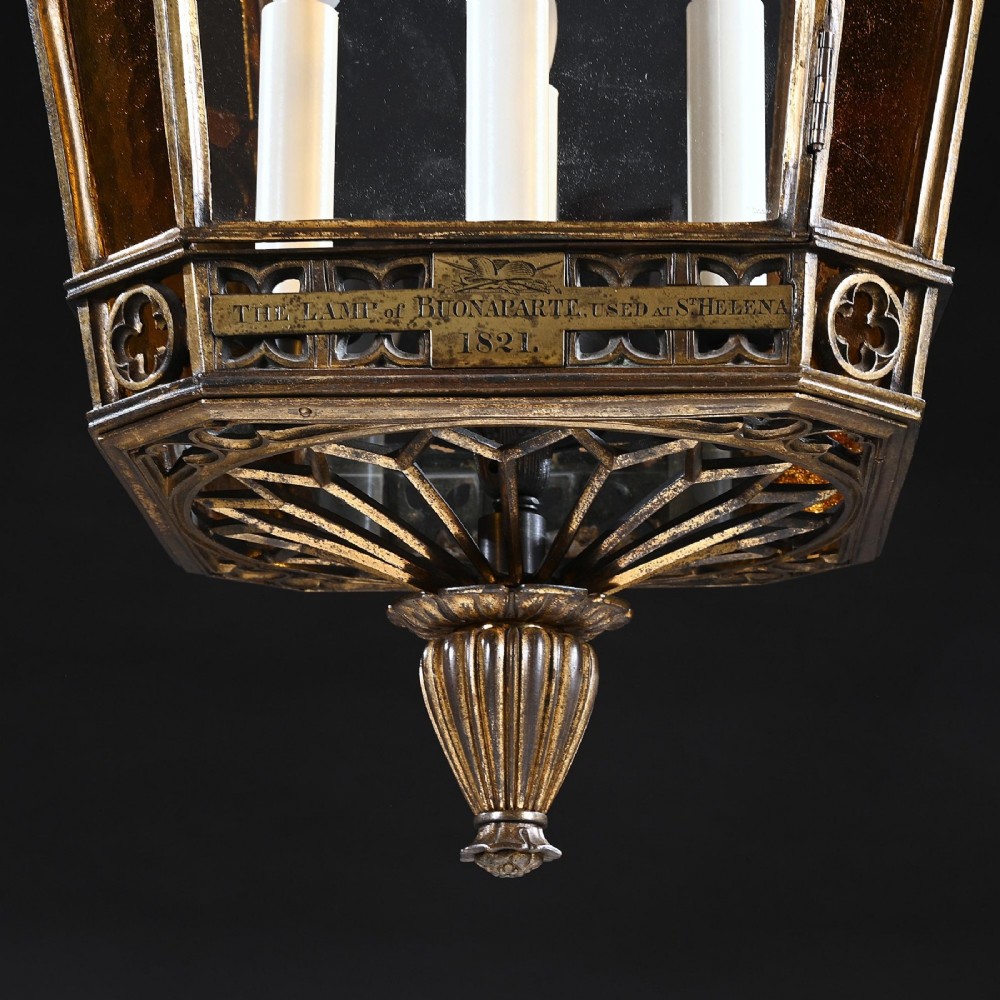
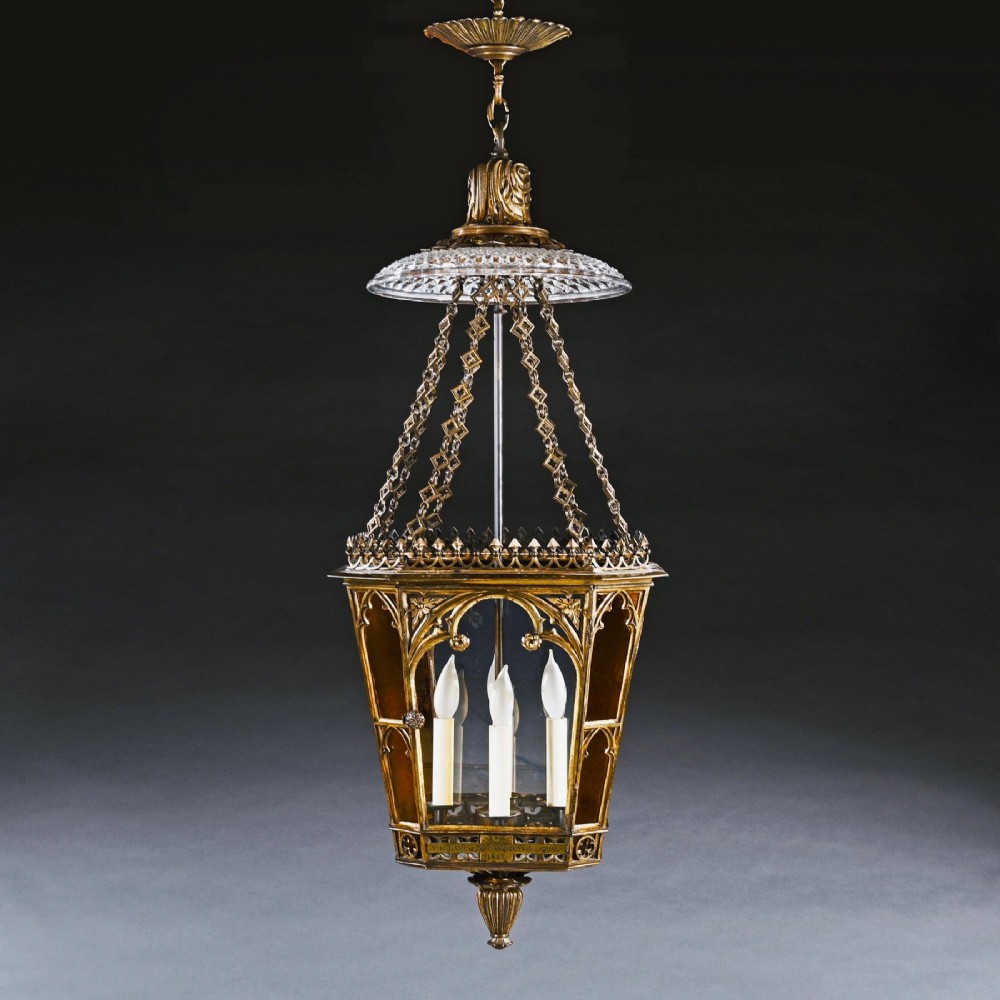
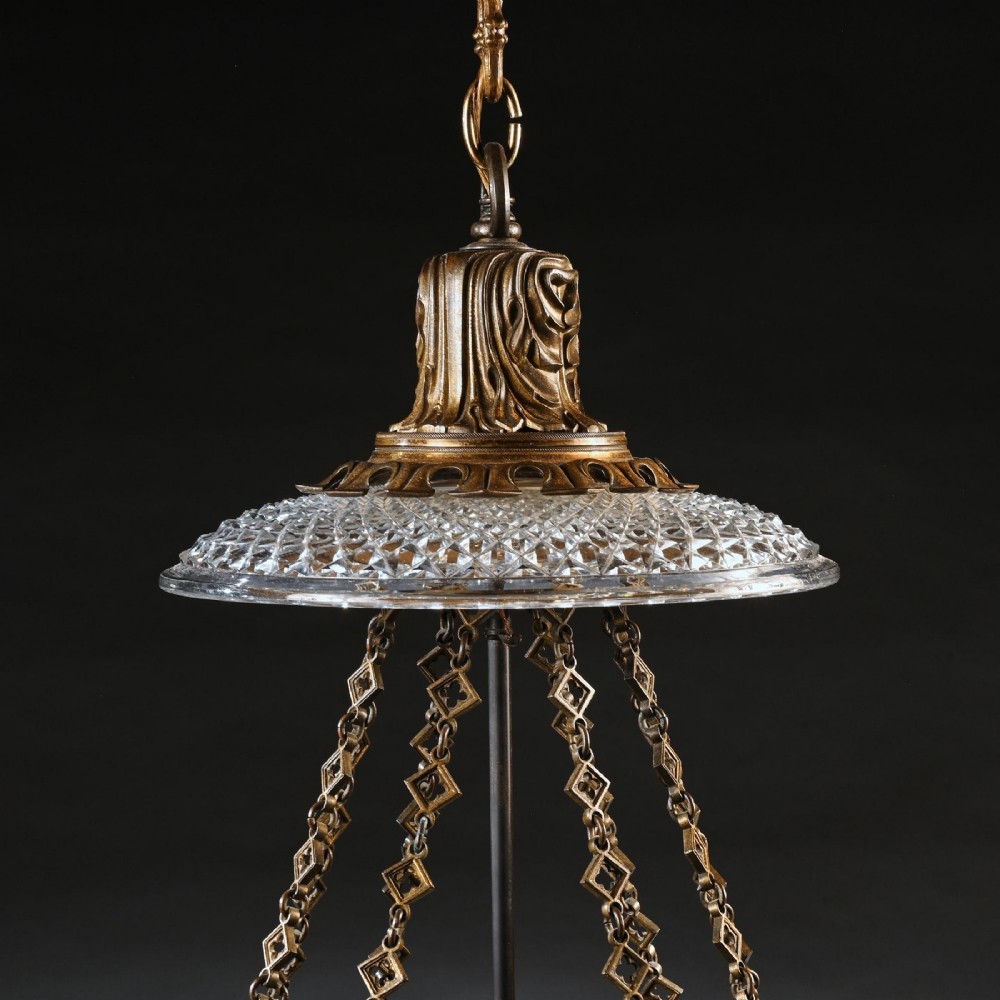
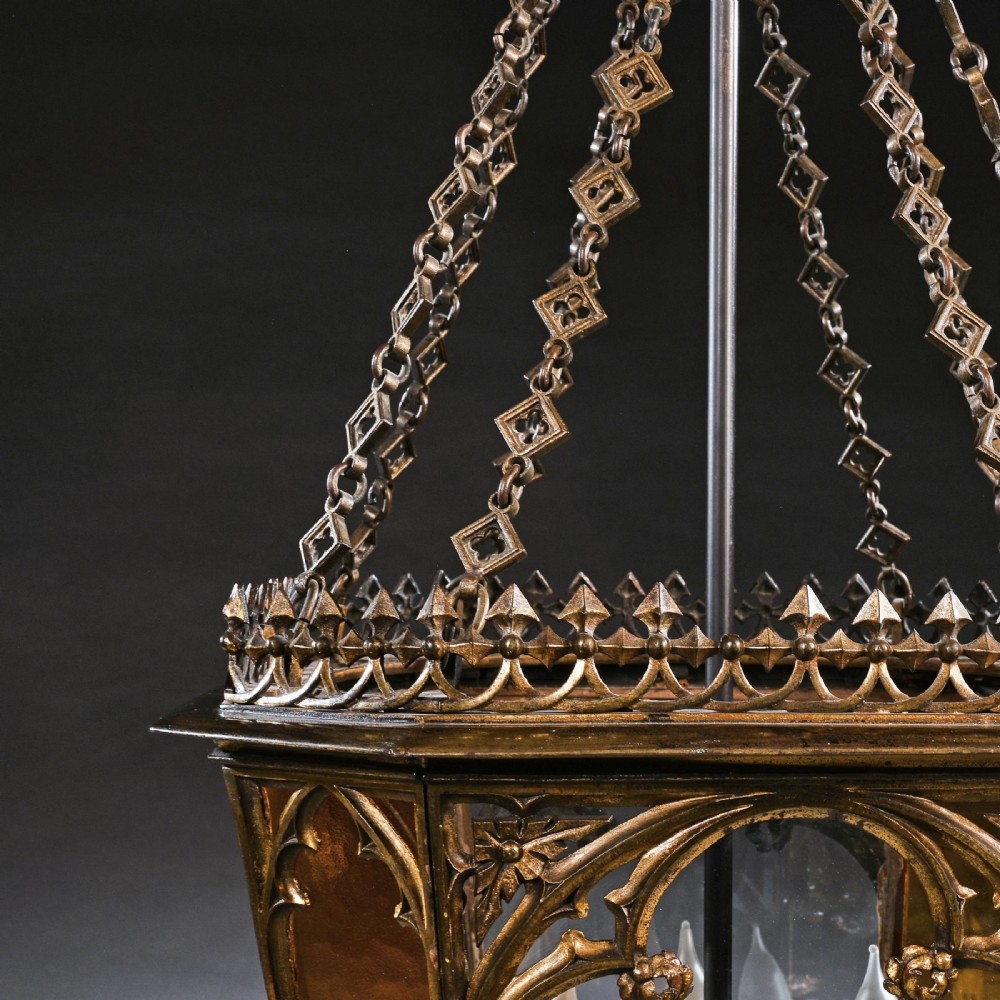
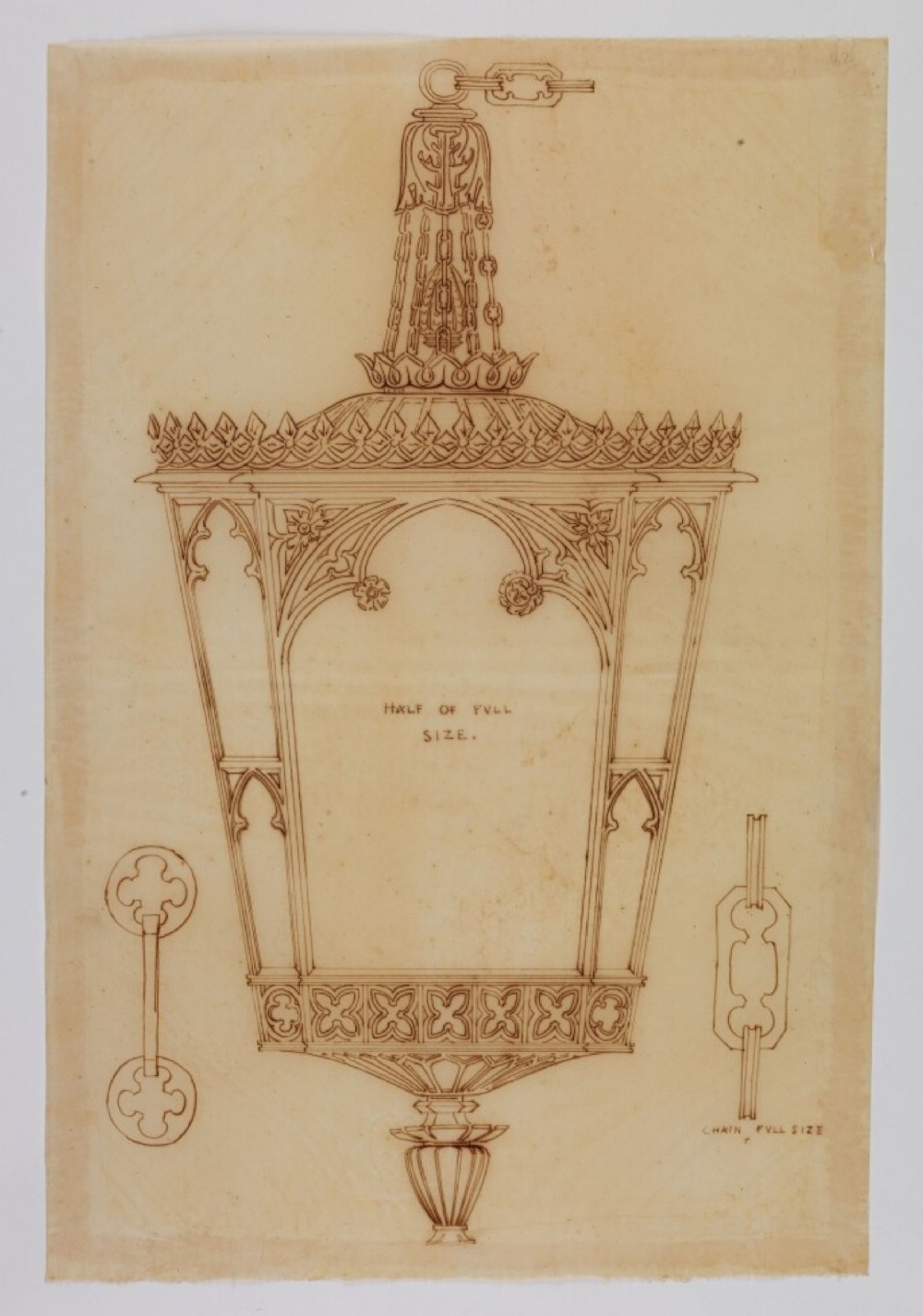
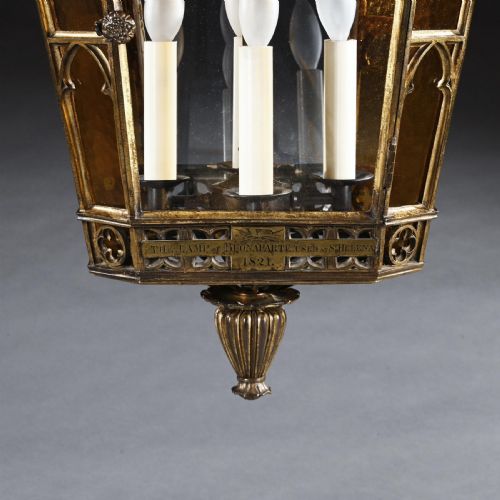
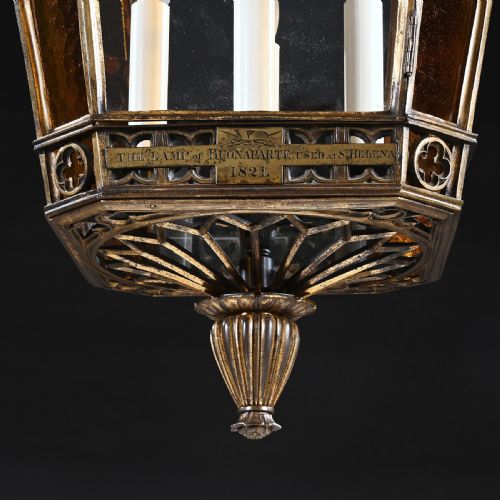
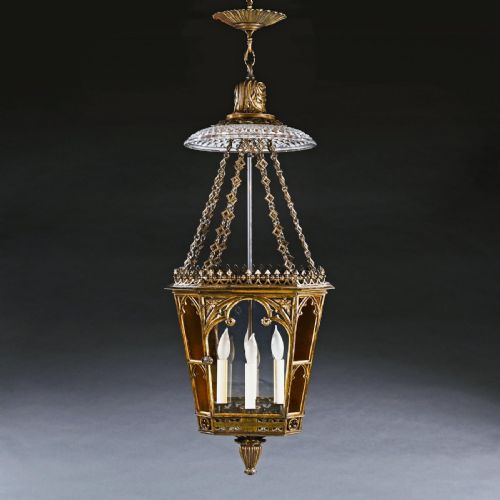
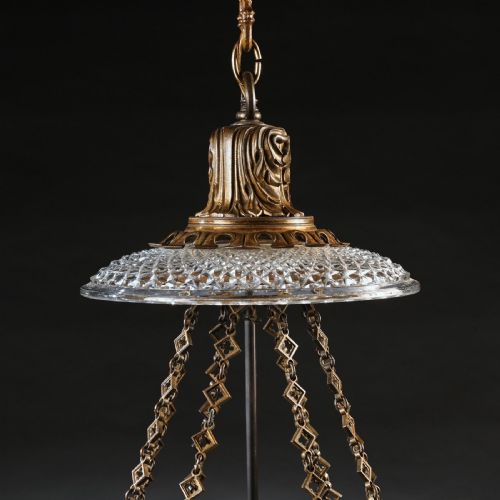
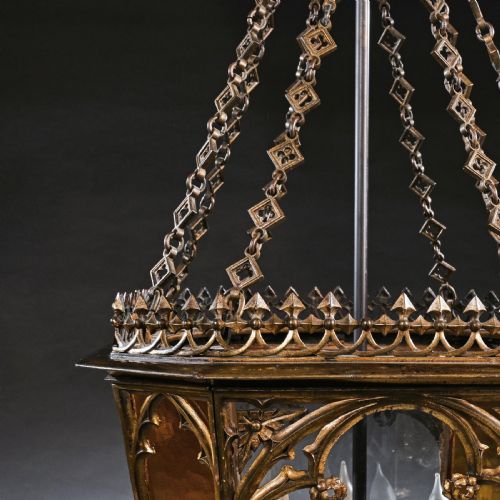
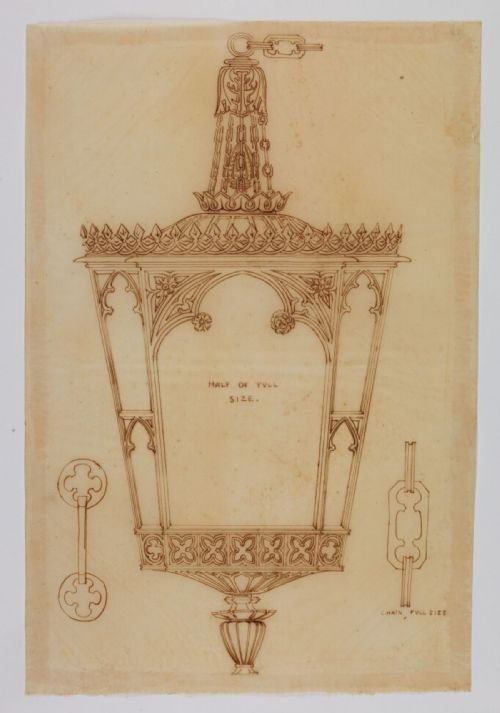
Of remarkable neo-gothic form, this fine hall lantern retains its original hanging chain with a cut glass corona intended to stop smoke billowing throughout the hallway when lit with candles. The lantern has fine amber glass panels surrounded by gilt brass tracery. There are panels of finely fretted metalwork to the top and lower aprons and a hanging finial of naturalistic form. The lantern has been electrified with a series of candle bulbs attached to the central fitting. This lantern, one of the most important examples of its kind, has extraordinary provenance having been supplied to Napoleon in exile at the expense of the British government. This is recorded on a brass plaque attached to the piece which reads:
THE LAMP of BUONAPARTE USED AT ST. HELENA / 1821
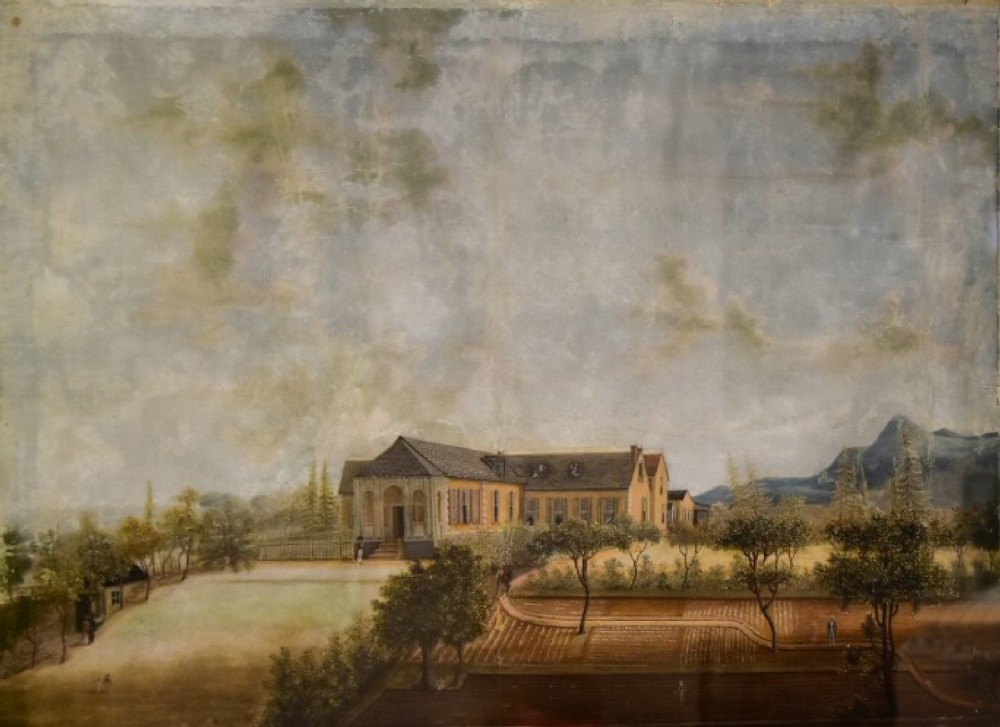
This fine hall lantern was part of the commission from George Bullock that was paid for by the British government and used to furnish the Emperor Napoleon's home in St Helena where he was forced to live out the remainder of his life in exile. Napoleon's residence on the island, Longwood House, was furnished to the highest possible standard with furnishings being sourced from leading London makers. George Bullock supplied the furniture, Wedgwood the ceramic items, Rundell Bridge and Rundell the silver and Parker and Perry the glass and glass lighting. Martin Levy has studied Bullock and his work in great detail and an entire Furniture History Society journal, edited by him, was dedicated to the Longwood House commission. The present piece is illustrated in that journal on p.75, fig. 59, and its known history is recorded in the appendices. Supplied by Bullock in 1816, it is likely that it was made by the London firm of W & S Summers, suspected by Levy to have been the source of much of Bullock's lighting. In his article titled 'Lamps, Lanterns and Lustres: Lighting Designed by George Bullock (d.1818)', Levy discusses the sale of Bullock's stock in trade, stating:
'Lot 39: ‘Three small brass brackets to support lamps, 4 double brass candle branches, two small ditto, and one double branch on serpents; 15 brass and bronze nozzels, and two 2-light branches’ (sold for £4 14s 6d to, perhaps significantly, Summers [see below]).
Lot 40: ‘Four double brass candle branches, sundry bra [sic] nozzels, &c. and a paper of cotton wicks’ (sold for 2 guineas to Walker).
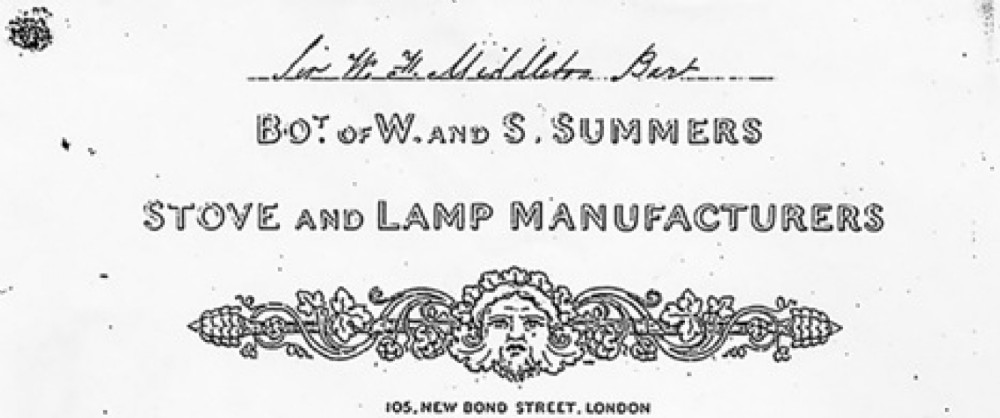
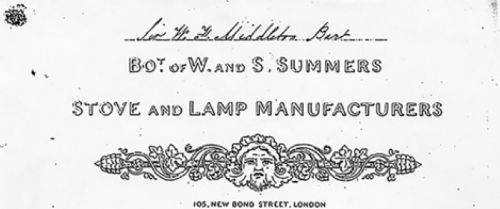
Despite the lack of firm documentation, there are circumstantial clues that indicate who might have collaborated with Bullock in the manufacture of lighting. Most likely is the firm of W. and S. Summers, ‘Stove and Lamp Manufacturers’, whose
billhead incorporates a Bullock-l
Loveday Antiques has dated this Regency Gilt Brass Lantern to the 19th Century.
Specialist furniture dealers 18th-20th century
You can view the stock and full dealer information on the Loveday Antiques Profile Page
Loveday Antiques is a registered member of LAPADA BADA CINOA
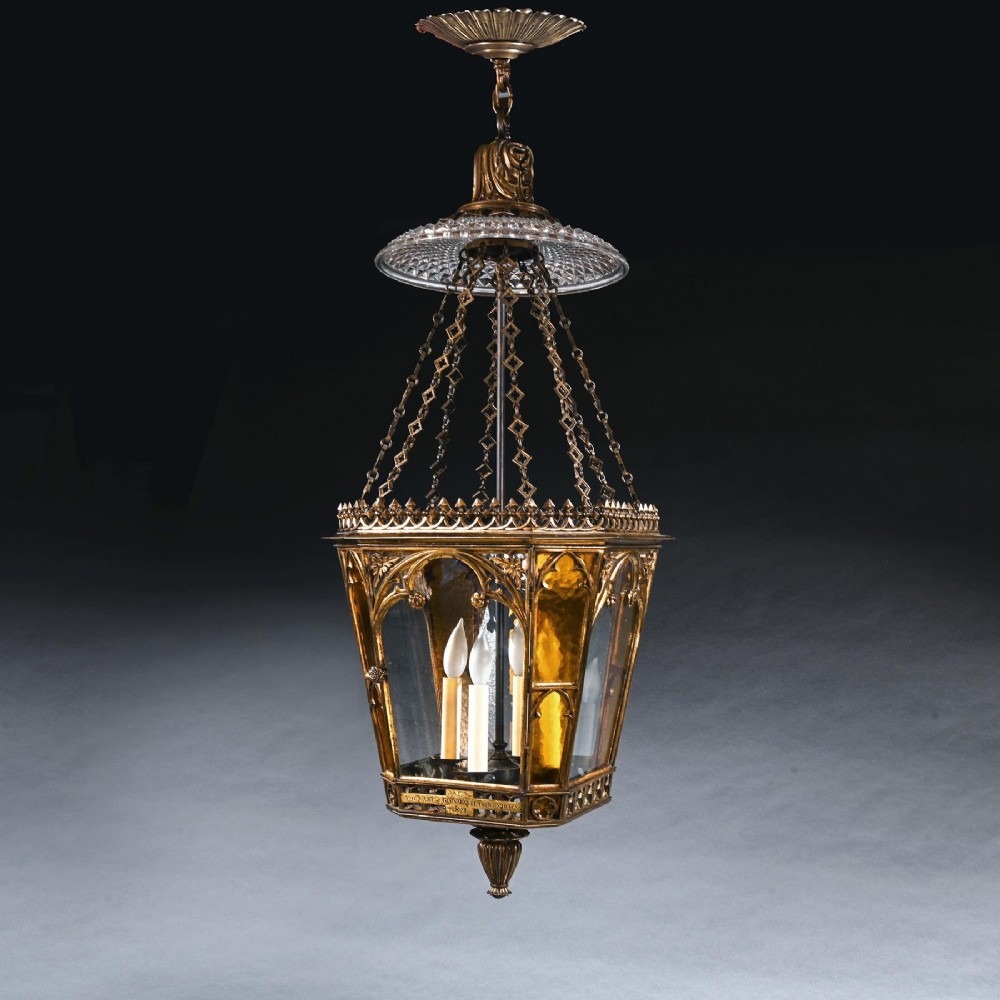
Napoleon Buonapartes Regency Gilt Brass Hall Lantern Supplied by George Bullock for Use at St Helena