16,937  PAGES BROWSED TODAY PAGES TODAY 25  ANTIQUES UPLOADED TODAY NEW ARRIVALS
ID #SA1212572
FOR SALE
£1,200
Email
Save
Jacobean Welsh Oak Great chair c. 1620
Webberley Antiques
for sale €1,404     $1,524
£1,200
Webberley Antiques

Webberley Antiques

Sellingantiques Verified Since Nov 2008
View Dealers Stock Page
  • About Us
    Specialists in 18th century and earlier furniture for more than 45 years
Id #SA1212572
PDF SHARE
SAVE

Jacobean Welsh Oak Great chair c. 1620

17th century
Description

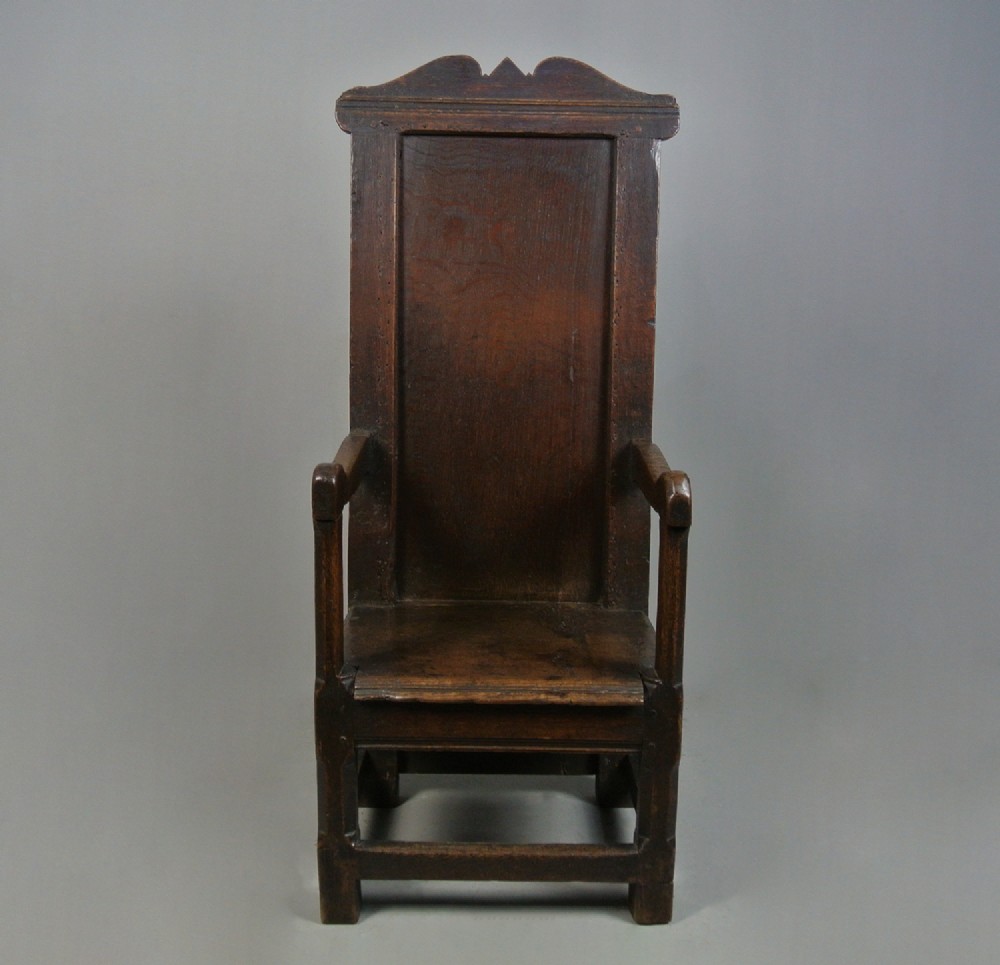
An early and extremely rare original oak Great chair (Wales c. 1620) made for the child of a very wealthy household.

In the early 17th century, Great chairs were used by the master of a house whilst other members of the family, friends and guests would almost invariably be seated on stools. Regardless of the status of your guest, prince or pauper, they would expect to be seated on a stool whilst the master would sit in a Great chair placed centrally at a table or raised on a dias. The tall backs, often with a high crowning shaped crest rail and extended ears, were intended to give additional stature, girth and gravitas to the sitter. Painted and with exuberant carving sometimes added in order to draw everyone’s gaze and attention to the sitter.
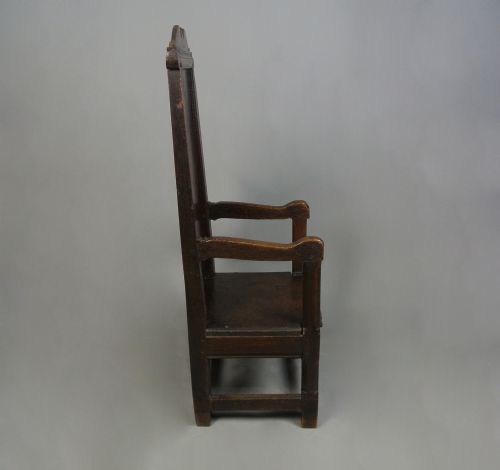
Great chairs were expensive high status items, treasured and kept within families for generations. Only a few wainscot chairs were made for children and they are rare. Rarer still is a child’s Great chair with the exaggerated high back and extended crowning crest rail. This chair may have been made as a smaller and unadorned version of the Master’s chair. Examples of early children’s wainscot chairs are well documented and most reside in museums and private collections. Children’s chairs had a seat height of around 13 inches and here the seat height is 13.5 inches.
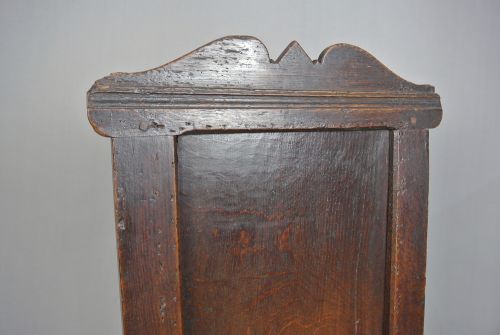
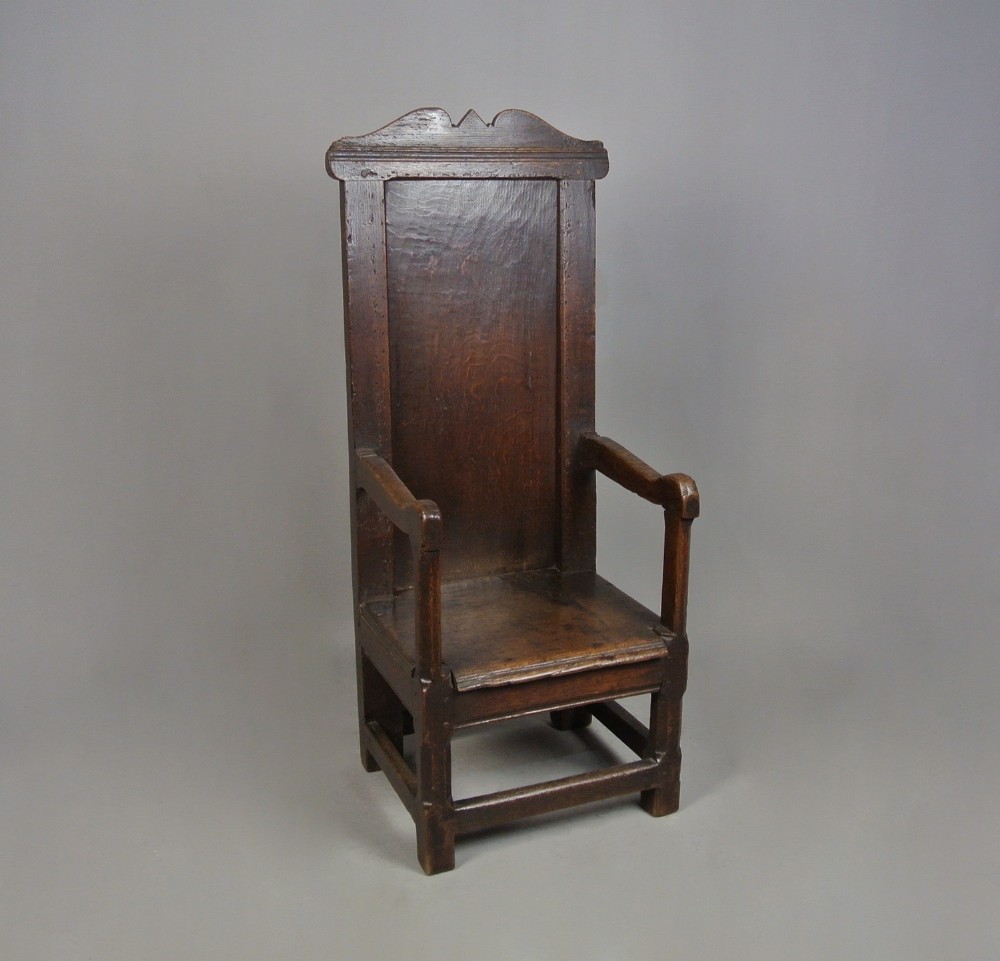
Peg jointed throughout, the arm supports and front legs are square sectioned with quarter chamfered faces in the late 16th Century Elizabethan manner.

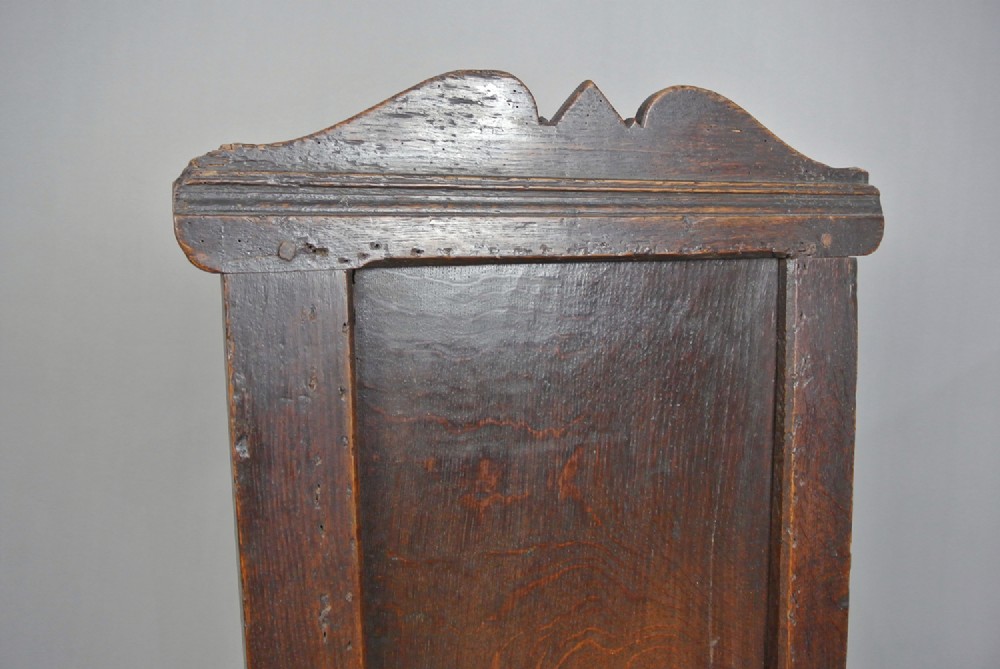
Solid oak original timbers with a single board forming the fielded back panel and another board forming the seat. The front edge of the seat with ogee detail and natural wear and deep patina from generations of use. The top of the back rail and base of the backboard and base of arms each also with ogee carved detailing.
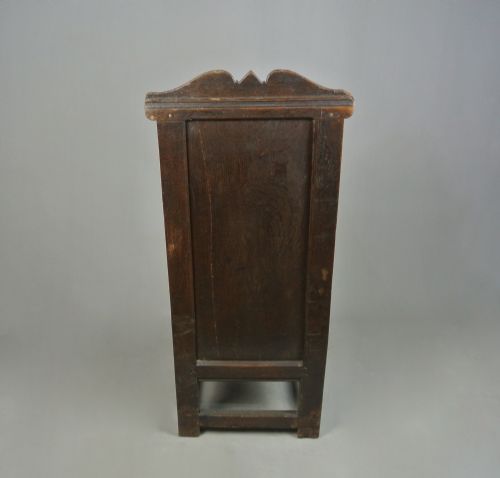
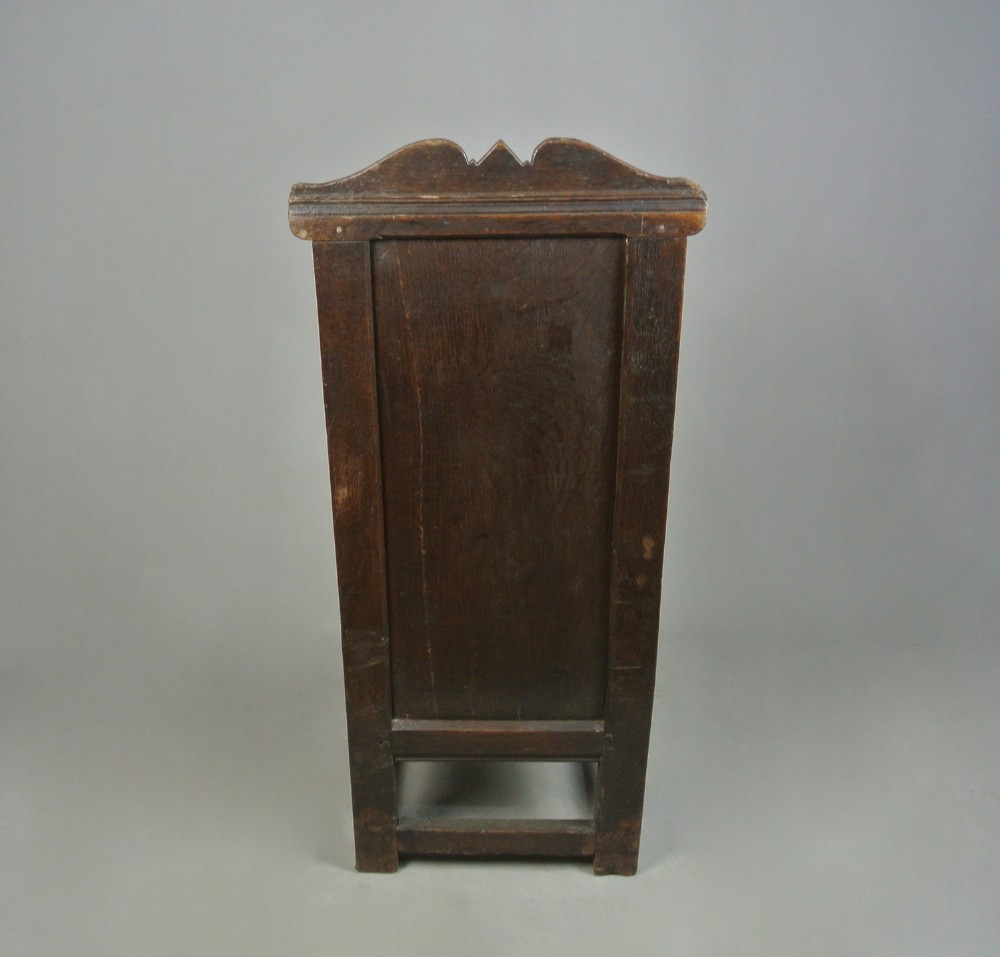
Some evidence of early nailing around the back panel where the chair once had a padded back – probably tooled leather – long ago removed. There is a spliced in section of oak part way across the rear back leg at low level and visible only from the back (a professional repair). All four feet re-tipped in oak again a long time ago. Some old worm, long dead and not affecting structure or appearance.
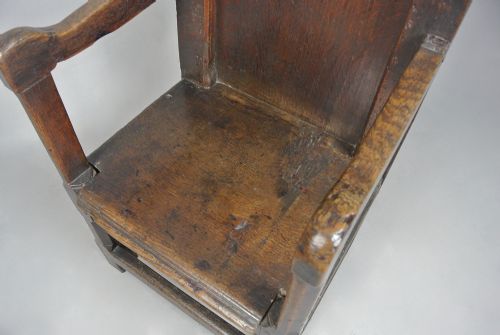
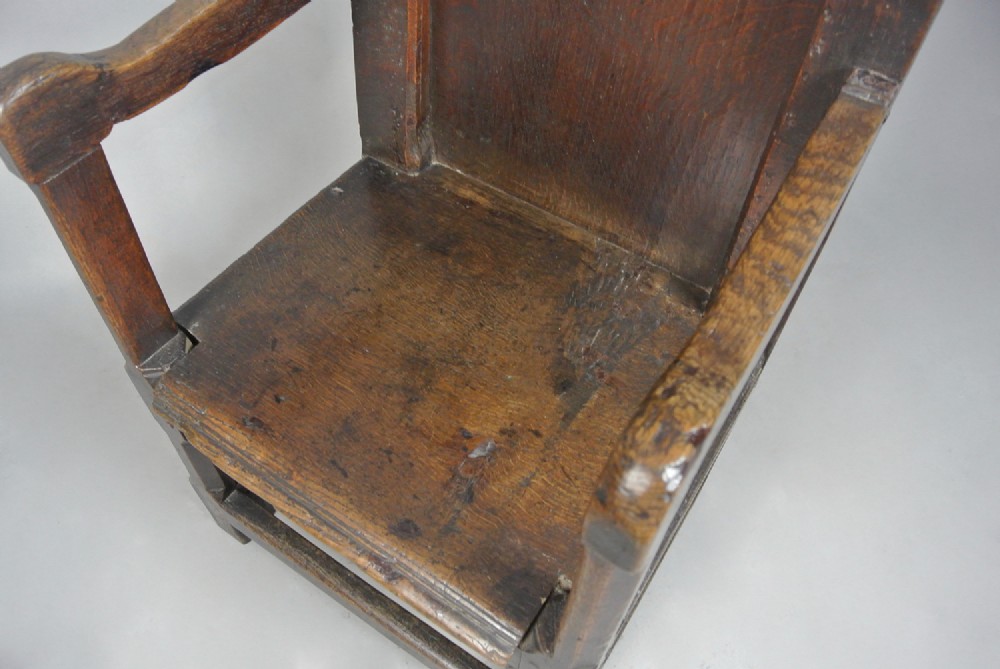
The chair has the glorious colour which is characteristic of early Welsh oak and a naturally formed rich deep patina – particularly to the seat and arms.

This is a very heavy chair for its size and the oak is dense and well grained with strong medullary rays. There are some light ripples from the hand held adze evident on the rear of the back panel, legs, stretchers and beneath the seat board – something that is always good to see.
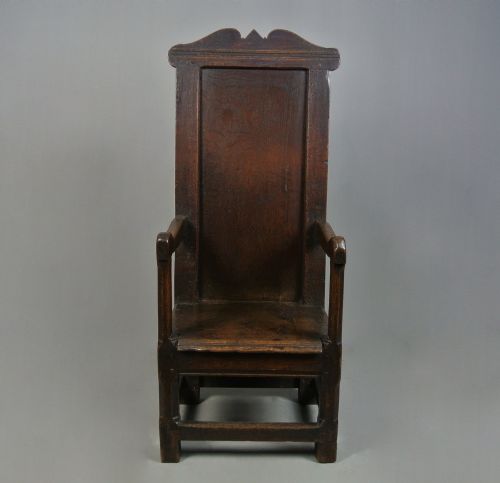
Of small and slim proportions, made for a child of standing and importance in c. 1620 this is an amazing survivor.

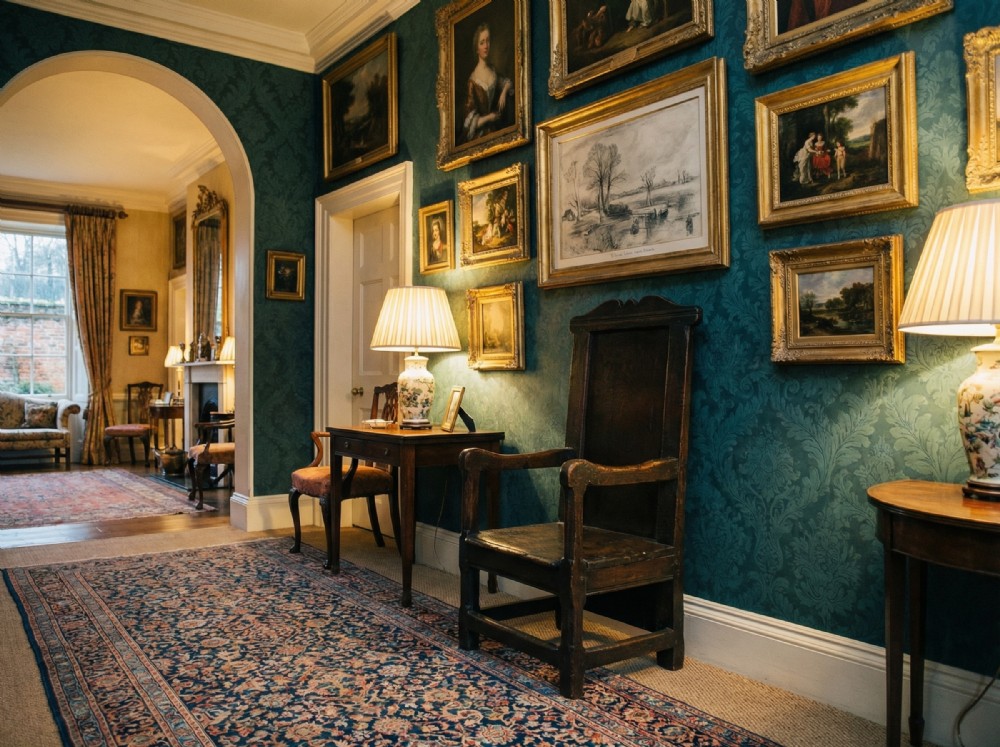
A beautiful early Great chair which will give focus, charm and character to any room.

Dimensions are:
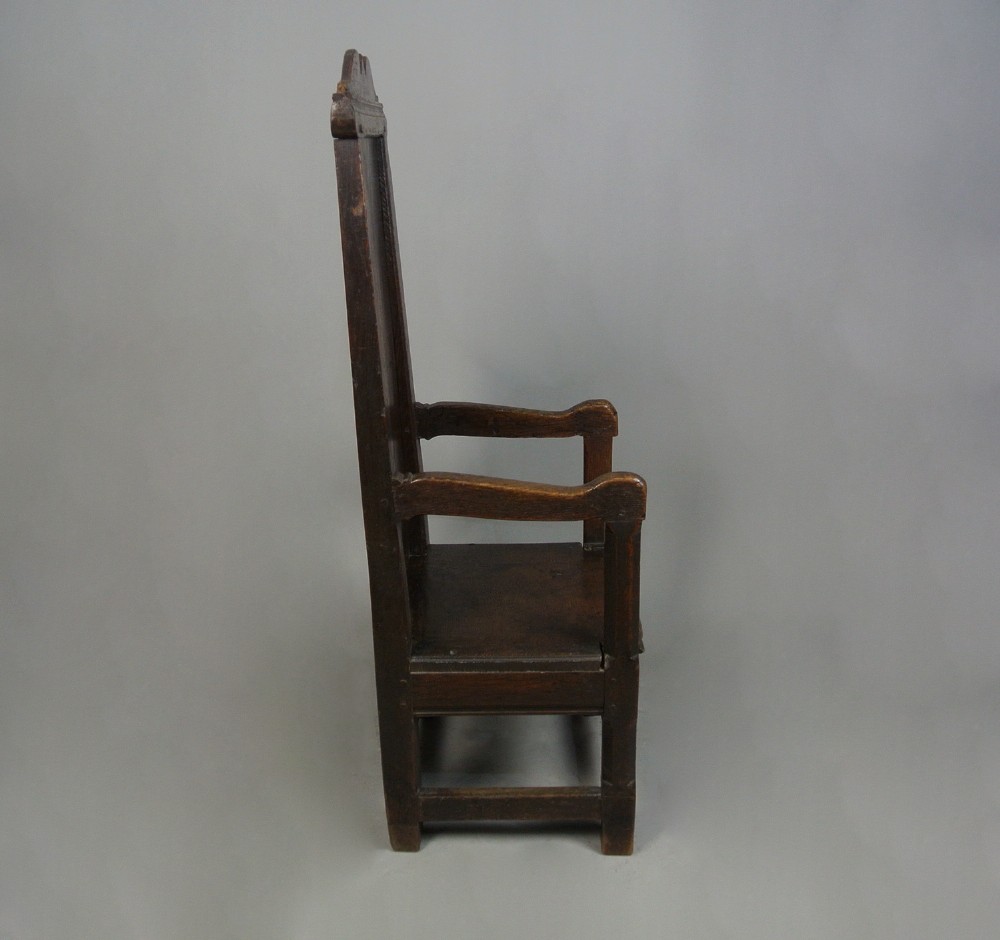
18.5 inches wide, 17.5 inches deep and 46 inches high.

Width between the arms is 15.75 inches

Floor to seat is 13.5 inches. The seat itself is 16 inches wide and 15.5 inches deep.

Height from floor to top of arms is 24 inches

Declaration

Webberley Antiques has dated this Jacobean Oak Wainscot Chair to the 17th Century.

Reference Numbers
Sellingantiques Reference
SA1212572
Dealers Notes

I describe and photograph my pieces accurately and with the aim that on arrival each will exceed your expectations.

I operate a full refund guarantee and am always happy to give free, honest and friendly advice.

Description
An early and extremely rare original oak Great chair (Wales c. 1620) made for the child of a very wealthy household.
In the early 17th century, Great chairs were used by the master of a house whilst other members of the family, friends and guests would almost invariably be seated on stools.
Webberley Antiques

Regardless of the status of your guest, prince or pauper, they would expect to be seated on a stool whilst the master would sit in a Great chair placed centrally at a table or raised on a dias. The tall backs, often with a high crowning shaped crest rail and extended ears, were intended to give additional stature, girth and gravitas to the sitter. Painted and with exuberant carving sometimes added in order to draw everyone’s gaze and attention to the sitter.

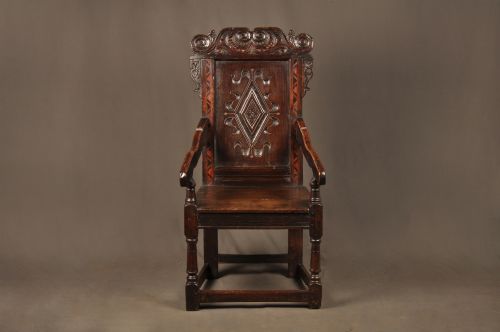
fig 1. A 17th-century Jacobean dark oak wainscot armchair featuring a high panelled back, straight arms, and heavy square legs joined by stretchers.
fig 1. Jacobean Welsh Oak Great chair c. 1620

Great chairs were expensive high status items, treasured and kept within families for generations. Only a few wainscot chairs were made for children and they are rare. Rarer still is a child’s Great chair with the exaggerated high back and extended crowning crest rail. This chair may have been made as a smaller and unadorned version of the Master’s chair. Examples of early children’s wainscot chairs are well documented and most reside in museums and private collections. Children’s chairs had a seat height of around 13 inches and here the seat height is 13.5 inches.

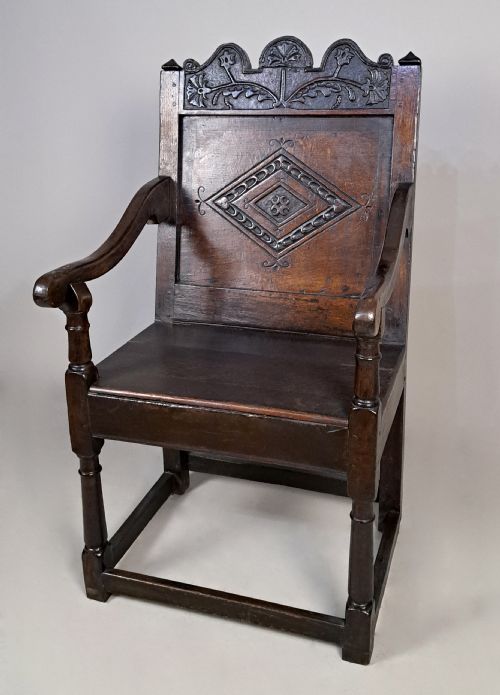
fig 2. A 17th-century Jacobean dark oak wainscot armchair featuring a high panelled back, straight arms, and heavy square legs joined by stretchers.
fig 2. Jacobean Welsh Oak Great chair c. 1620

Peg jointed throughout, the arm supports and front legs are square sectioned with quarter chamfered faces in the late 16th Century Elizabethan manner.

Solid oak original timbers with a single board forming the fielded back panel and another board forming the seat. The front edge of the seat with ogee detail and natural wear and deep patina from generations of use. The top of the back rail and base of the backboard and base of arms each also with ogee carved detailing.

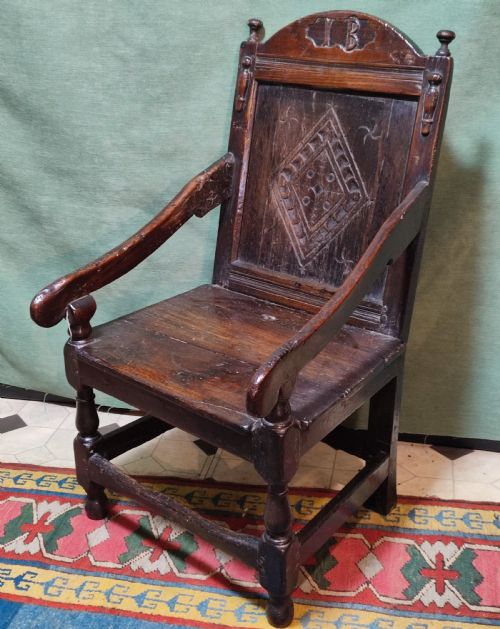
fig 3. A 17th-century Jacobean dark oak wainscot armchair featuring a high panelled back, straight arms, and heavy square legs joined by stretchers.
fig 3. Jacobean Welsh Oak Great chair c. 1620

Some evidence of early nailing around the back panel where the chair once had a padded back – probably tooled leather – long ago removed. There is a spliced in section of oak part way across the rear back leg at low level and visible only from the back (a professional repair). All four feet re-tipped in oak again a long time ago. Some old worm, long dead and not affecting structure or appearance.

fig 4. A 17th-century Jacobean dark oak wainscot armchair featuring a high panelled back, straight arms, and heavy square legs joined by stretchers.
fig 4. Jacobean Welsh Oak Great chair c. 1620

The chair has the glorious colour which is characteristic of early Welsh oak and a naturally formed rich deep patina – particularly to the seat and arms.

This is a very heavy chair for its size and the oak is dense and well grained with strong medullary rays. There are some light ripples from the hand held adze evident on the rear of the back panel, legs, stretchers and beneath the seat board – something that is always good to see.

fig 5. A 17th-century Jacobean dark oak wainscot armchair featuring a high panelled back, straight arms, and heavy square legs joined by stretchers.
fig 5. Jacobean Welsh Oak Great chair c. 1620

Of small and slim proportions, made for a child of standing and importance in c. 1620 this is an amazing survivor.

A beautiful early Great chair which will give focus, charm and character to any room.

Dimensions are:

fig 6. A 17th-century Jacobean dark oak wainscot armchair featuring a high panelled back, straight arms, and heavy square legs joined by stretchers.
fig 6. Jacobean Welsh Oak Great chair c. 1620

18.5 inches wide, 17.5 inches deep and 46 inches high.

Width between the arms is 15.75 inches

Floor to seat is 13.5 inches. The seat itself is 16 inches wide and 15.5 inches deep.

Height from floor to top of arms is 24 inches

Date of Manufacture

Webberley Antiques has dated this Jacobean Oak Wainscot Chair to the 17th Century.

Reference Numbers
Sellingantiques Ref
SA1212572
Webberley Antiques
Webberley Antiques
Sellingantiques verified Since Nov 2008

Specialists in 18th century and earlier furniture for more than 45 years

Dealer Profile

You can view the stock and full dealer information on the Webberley Antiques Profile Page
PDF SHARE
SAVE
A 17th-century Jacobean dark oak wainscot armchair featuring a high panelled back, straight arms, and heavy square legs joined by stretchers.
1 / 7
Archive I A 17th-century Jacobean dark oak wainscot armchair featuring a high panelled back, straight arms, and heavy square legs joined by stretchers.

Jacobean Welsh Oak Great Chair c. 1620
Archive II A 17th-century Jacobean dark oak wainscot armchair featuring a high panelled back, straight arms, and heavy square legs joined by stretchers. View II
Archive III A 17th-century Jacobean dark oak wainscot armchair featuring a high panelled back, straight arms, and heavy square legs joined by stretchers. View III
Archive IV A 17th-century Jacobean dark oak wainscot armchair featuring a high panelled back, straight arms, and heavy square legs joined by stretchers. View IV
Archive V A 17th-century Jacobean dark oak wainscot armchair featuring a high panelled back, straight arms, and heavy square legs joined by stretchers. View V
Archive VI A 17th-century Jacobean dark oak wainscot armchair featuring a high panelled back, straight arms, and heavy square legs joined by stretchers. View VI
Archive VII A 17th-century Jacobean dark oak wainscot armchair featuring a high panelled back, straight arms, and heavy square legs joined by stretchers. View VII
FURTHER BROWSING

Visitors also looked at these ⇣

Enlarged Archival View
Telephone 07765 233266
Location
East Sussex
United Kingdom

By appointment only.
Verified Since Nov 2008
Items For Sale 75
Items Sold 415
Webberley Antiques
Webberley Antiques
Verified Since Nov 2008
View Dealer Info
Location: East Sussex, United Kingdom, , By appointment only.
Verified
Nov 2008
For Sale
75
Sold
415
A 17th-century Jacobean dark oak wainscot armchair featuring a high panelled back, straight arms, and heavy square legs joined by stretchers.
Jacobean Welsh Oak Great Chair c. 1620
Ref: SA1212572
A 17th-century Jacobean dark oak wainscot armchair featuring a high panelled back, straight arms, and heavy square legs joined by stretchers.
Detail View 1
Detail View 2
Detail View 3
Detail View 4
Detail View 5
Detail View 6
Archival Detail
Every single antique dealer on our platform is individually approved by our internal team. We verify their professional trade history, ethical standards, and photographic quality to ensure a secure, high-standard buying environment. Upon joining, every dealer agrees to a strict 9-point code of conduct. While issues can occasionally arise, our dealers typically resolve them swiftly and directly with the buyer. In fact, since our founding in 2002, Sellingantiques has only had to step in to help resolve an issue on roughly five occasions—a true testament to the quality of our dealers and their dedication to your happiness.
Our dealers are highly experienced in packing and shipping fragile, high-value antiques. Because you are in direct contact with the dealer, you will be able to easily go through all available shipping and insurance options together to ensure your item arrives safely.
Antiques are the ultimate green purchase. By choosing historical pieces over newly manufactured goods, you completely eliminate the carbon footprint of modern mass production while preserving exceptional, timeless craftsmanship.

Jacobean furniture originates from early 17th-century Britain, characterized by heavy construction, primary reliance on native oak, geometric panel moulding, and sturdy architectural proportions.

These chairs were crafted using joined joinery techniques, featuring mortise and tenon joints secured with wood pegs, flat panel back construction, and heavy perimeter stretchers near the floor.

Authentic pieces feature signs of age including hand-planed timber marks, irregular shrinkage around wooden pegs, dark oxidised patina in crevices, and uneven wear along lower stretchers.

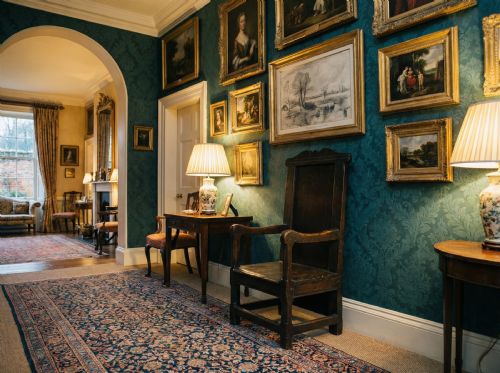
Place the chair as a standalone sculptural feature in a hallway, library, or living area, allowing its dark wood tone and geometric silhouette to contrast against neutral modern backdrop walls.

Maintain the finish by dusting with a dry microfibre cloth and applying a high-grade beeswax polish annually while keeping the piece away from direct heat sources and severe humidity fluctuations.
items
Add keywords to the filter
Price
£100
£250000
Era
Movements
Material
Origin
Stock Location
Freshness
Online Payments
Categories