It was listed by Exhibit Antiques. Sold pieces stay on Sellingantiques as a record of what has passed through, and the next one is rarely far away.
Exhibit Antiques has dated this piece to the Georgian era.
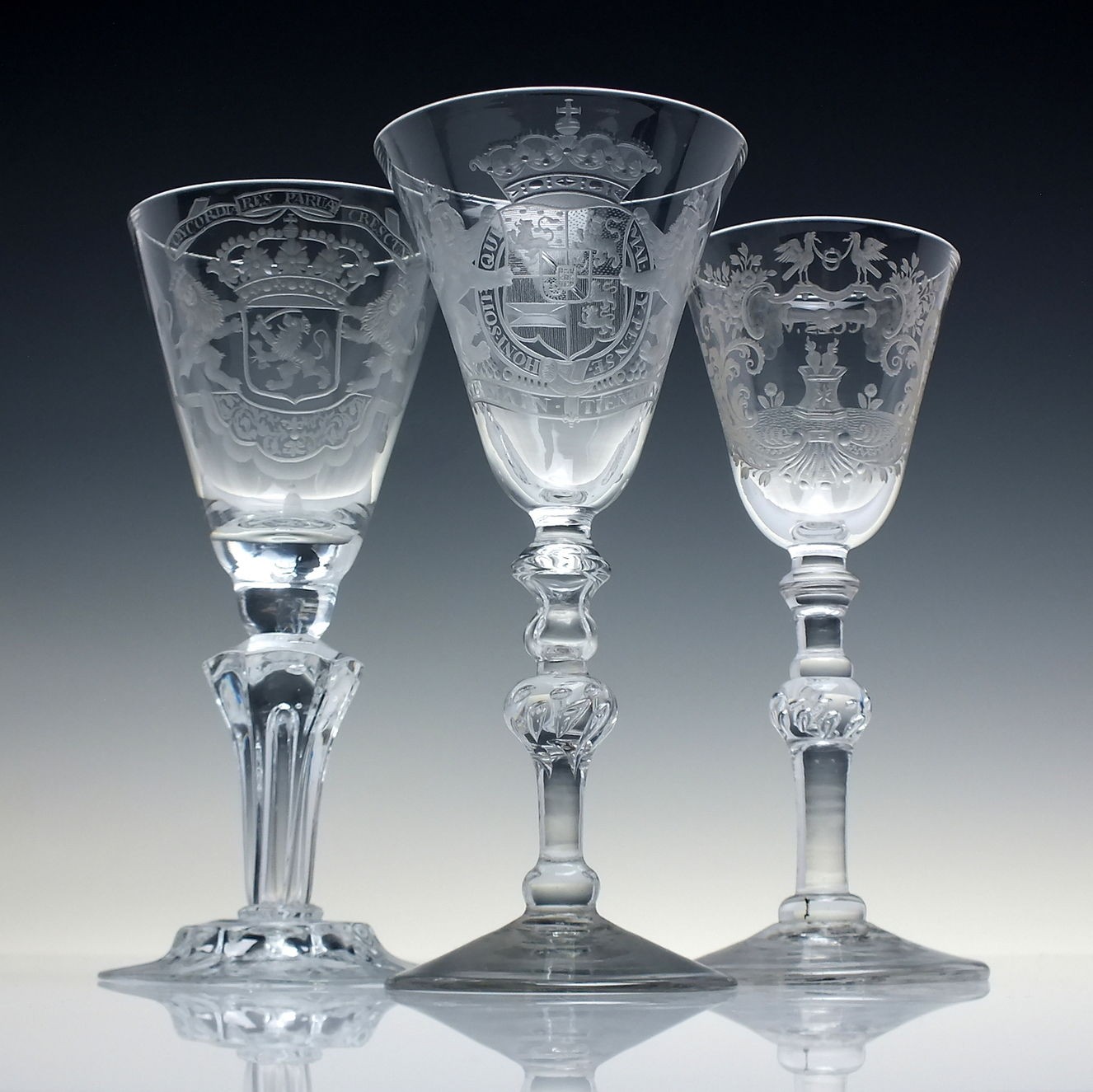
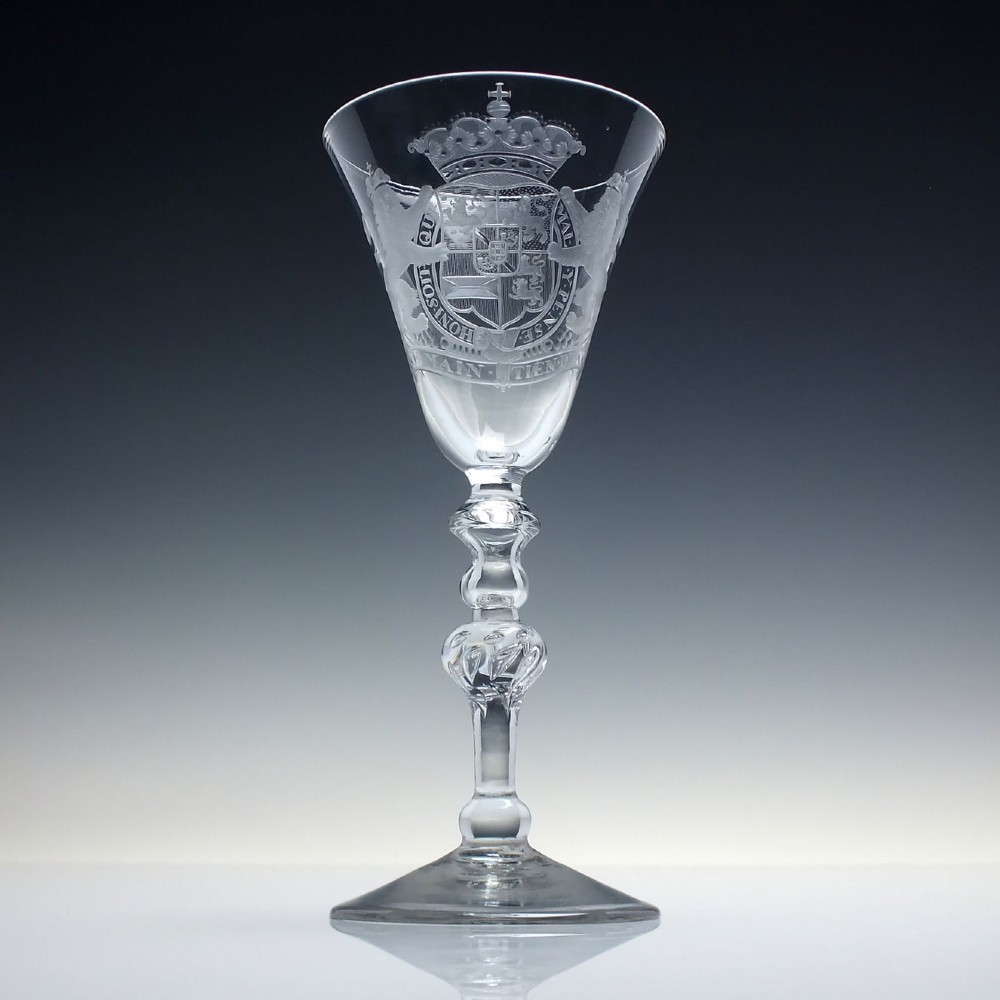
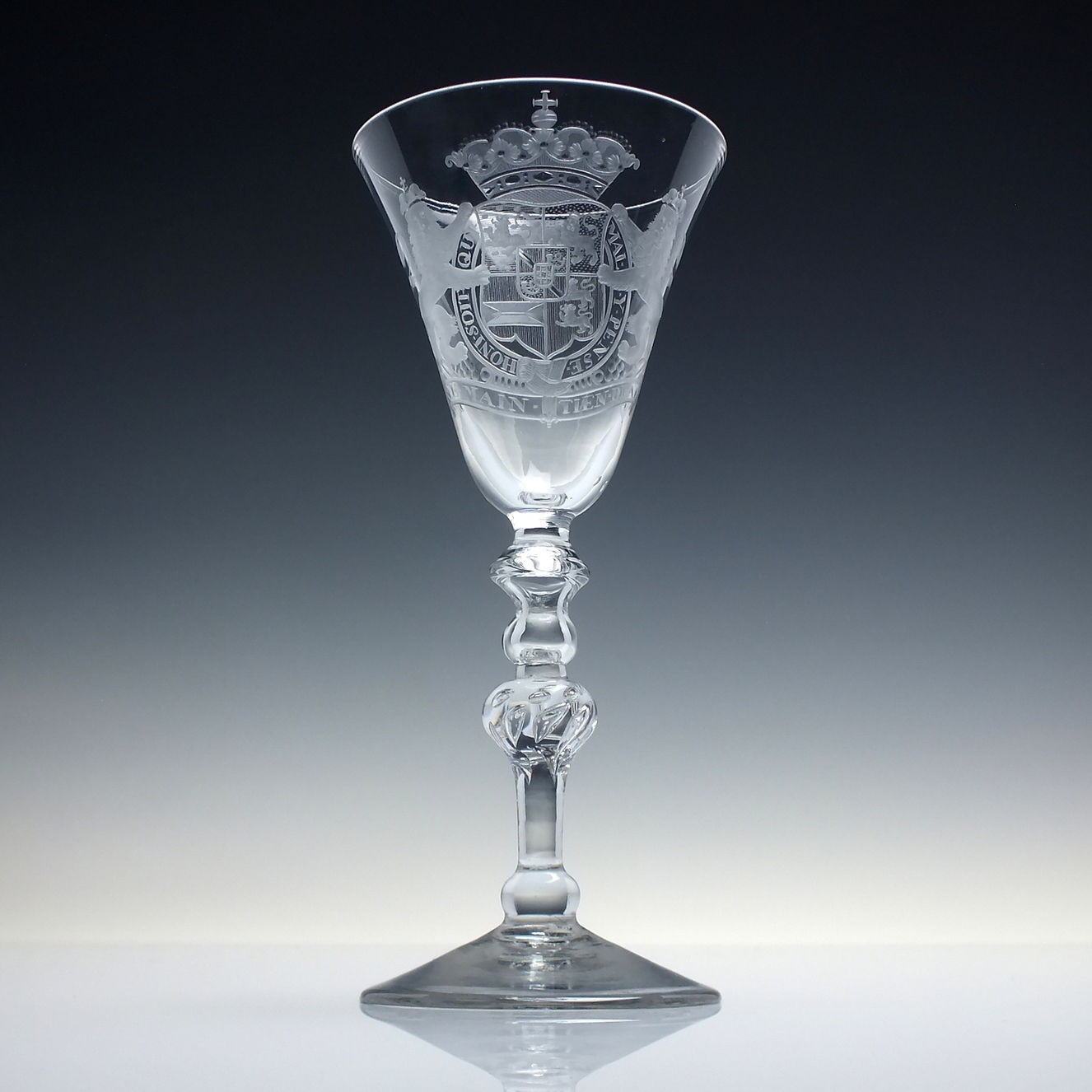
An impressive 'Newcastle' light baluster wine goblet produced in England circa 1755.
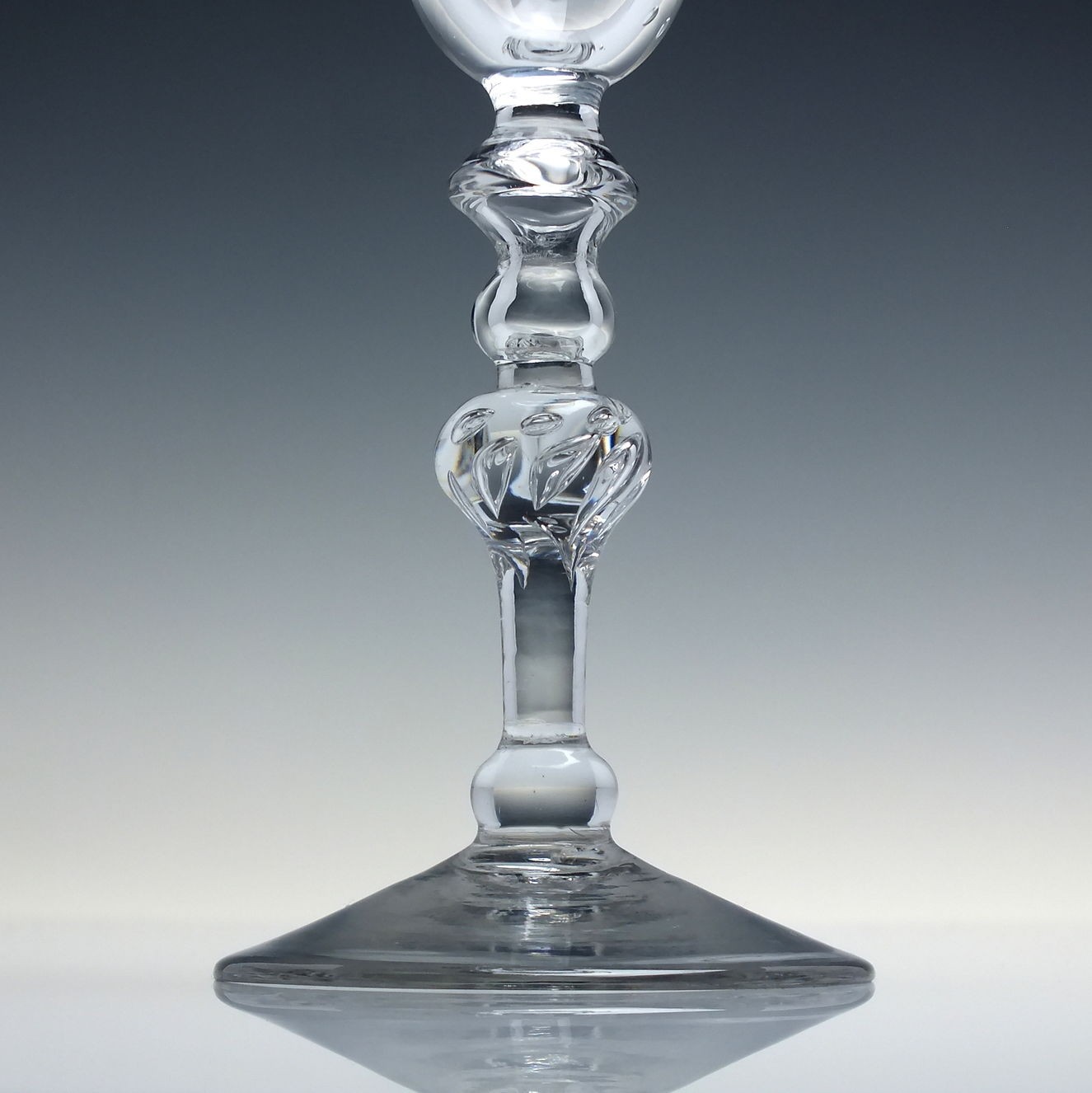
The stem exhibits a complex multi-knop stem consisting of a rare hollow conjoined angular and true shoulder knops, a large air-beaded inverted baluster knop, and an adjoining basal knop. Conical foot with a rough snapped pontil.
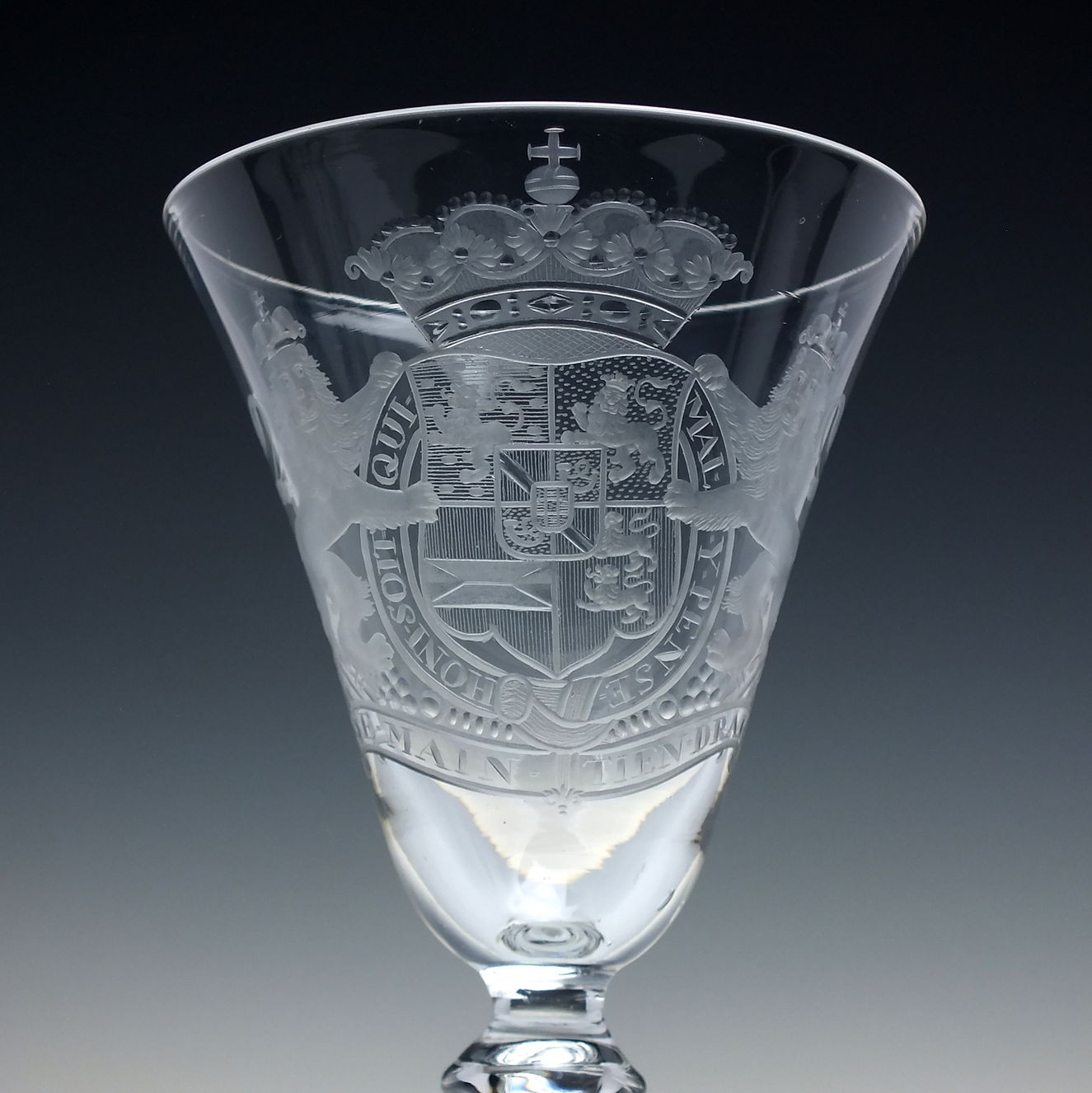
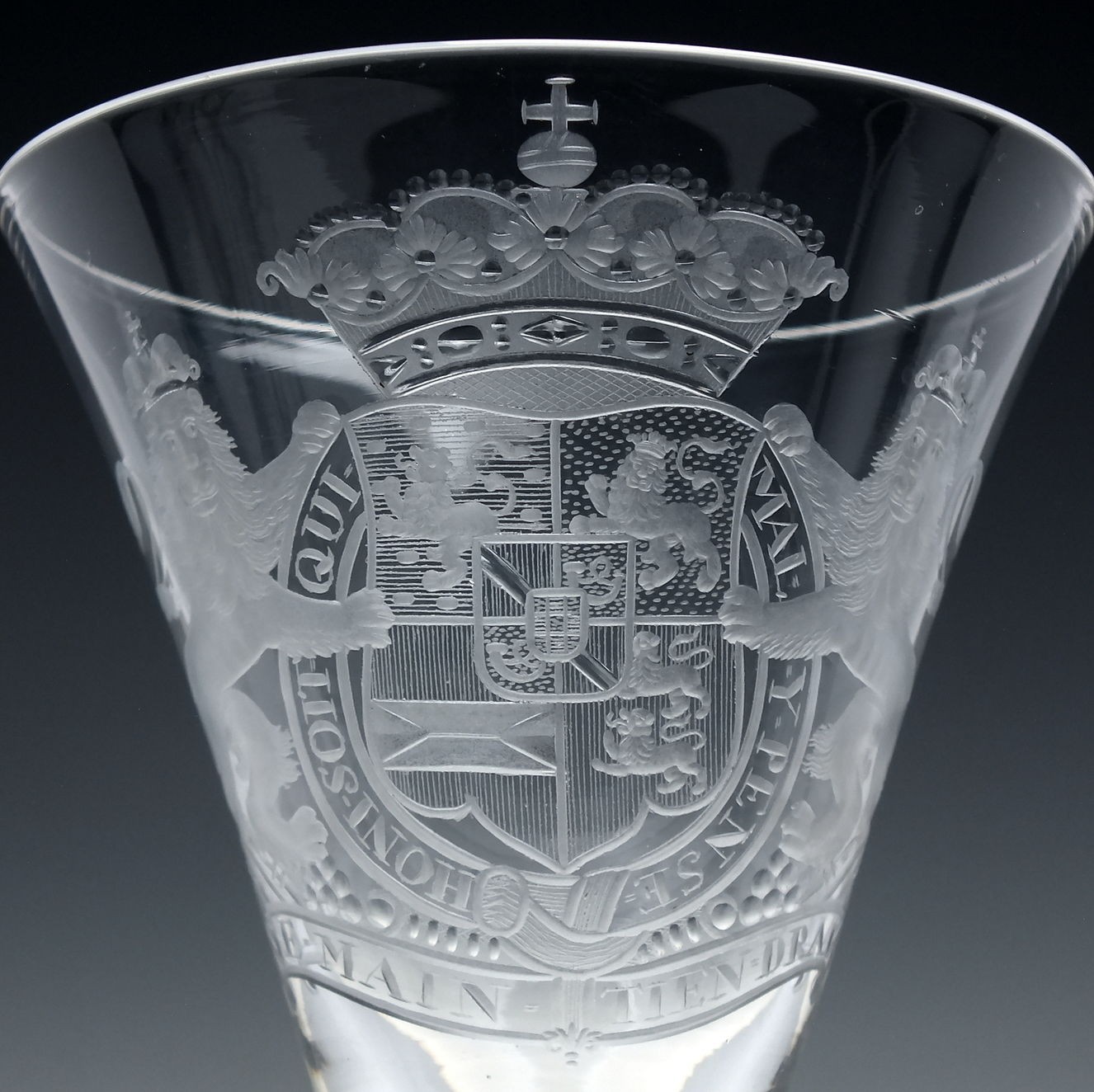
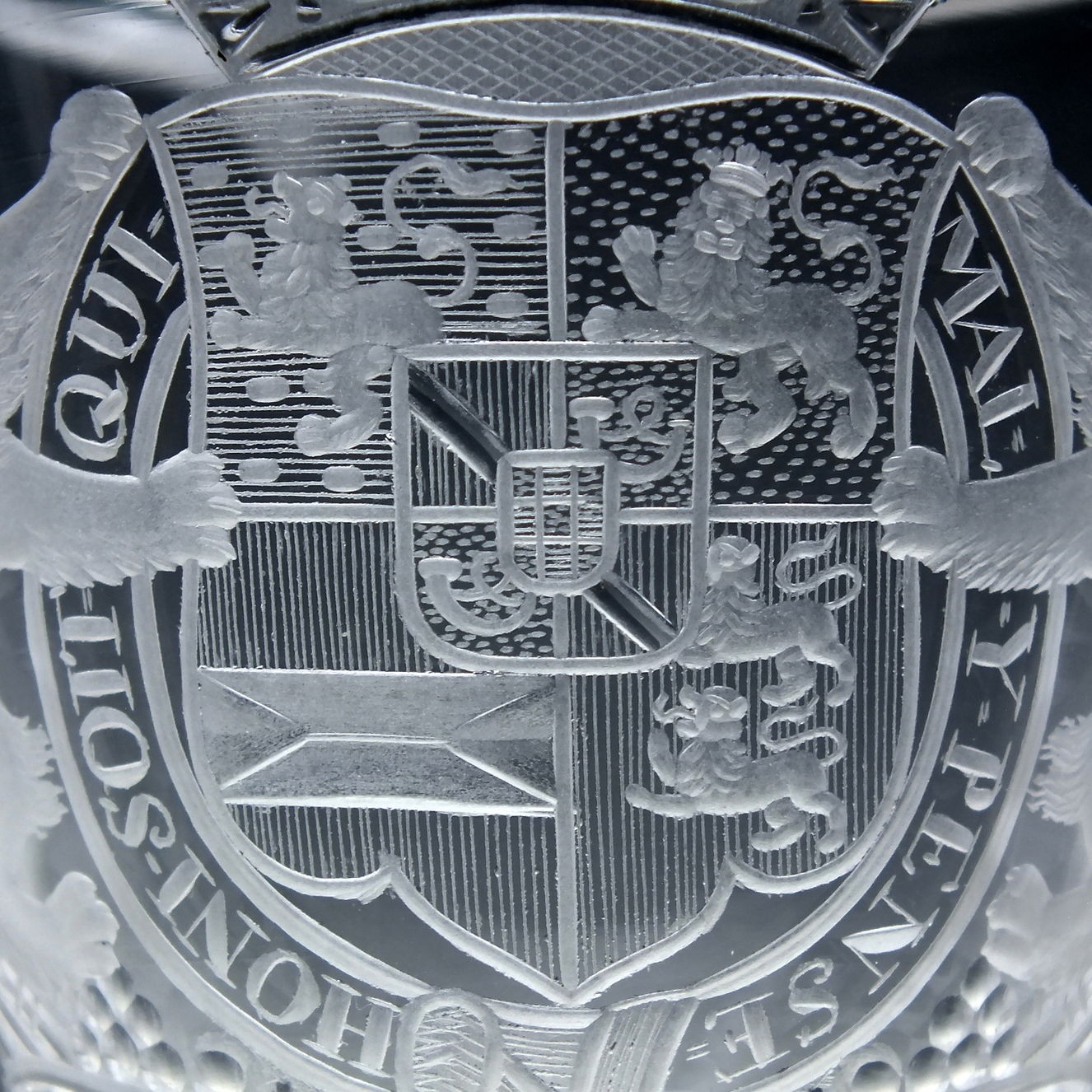
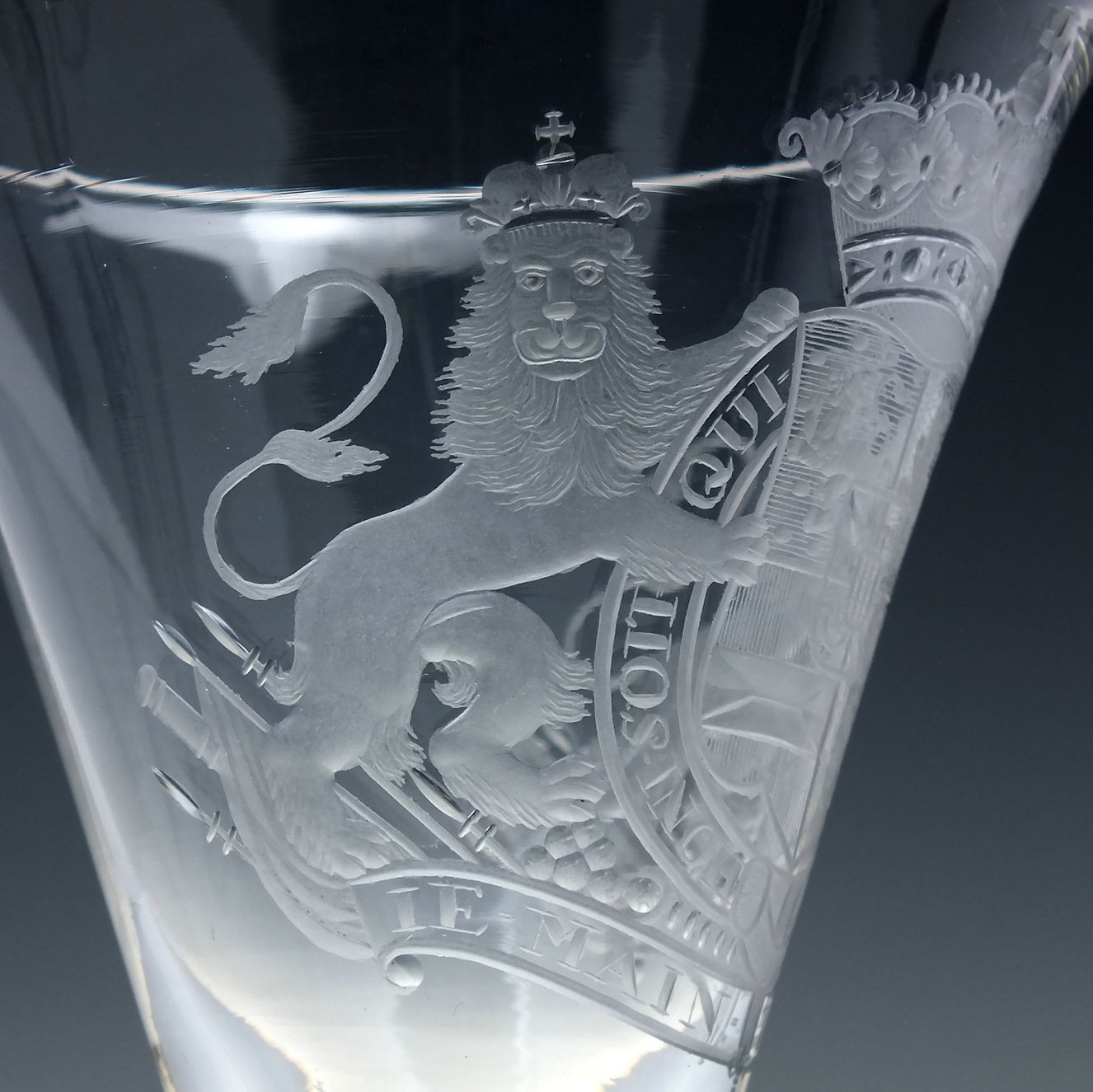
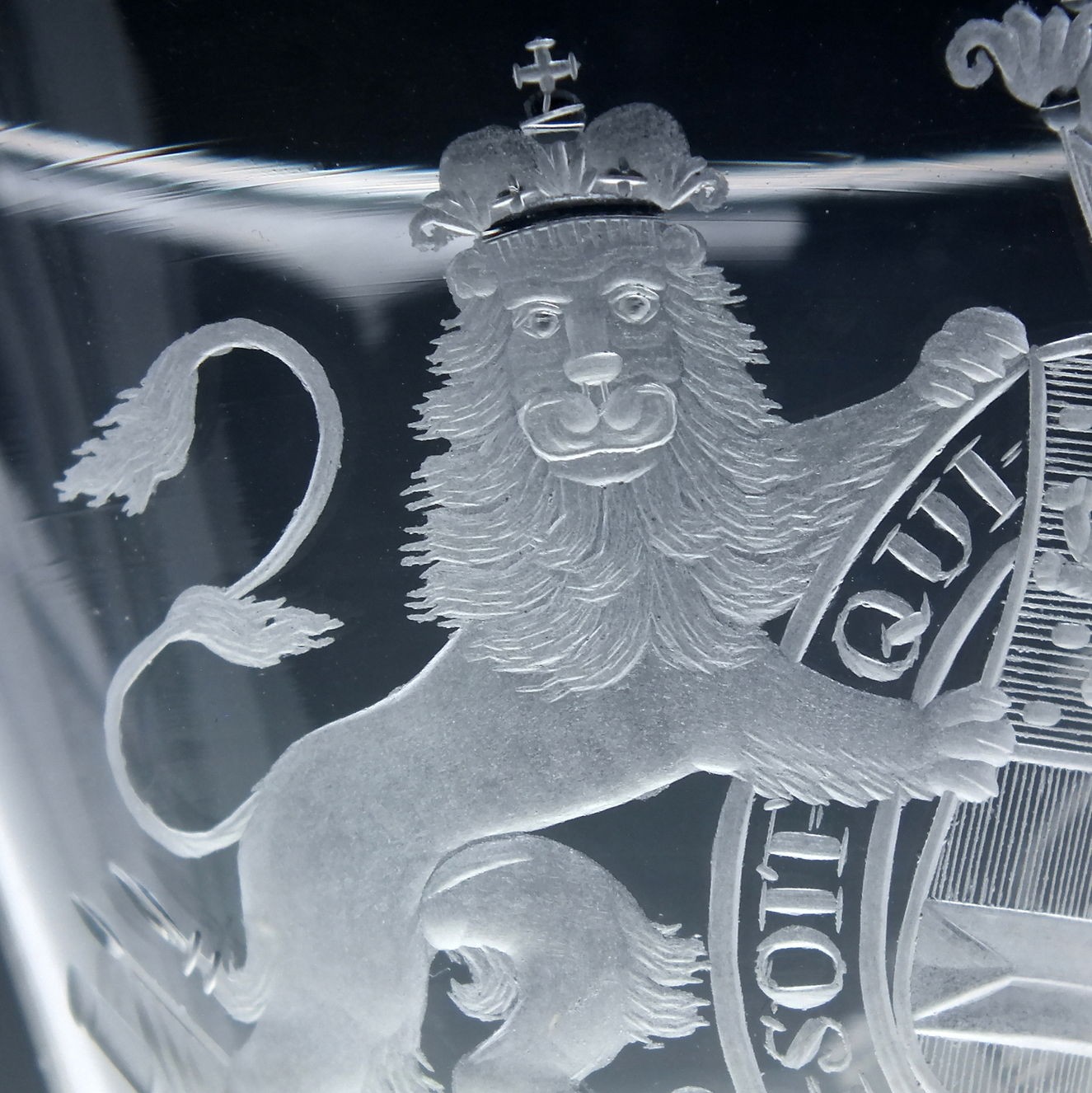
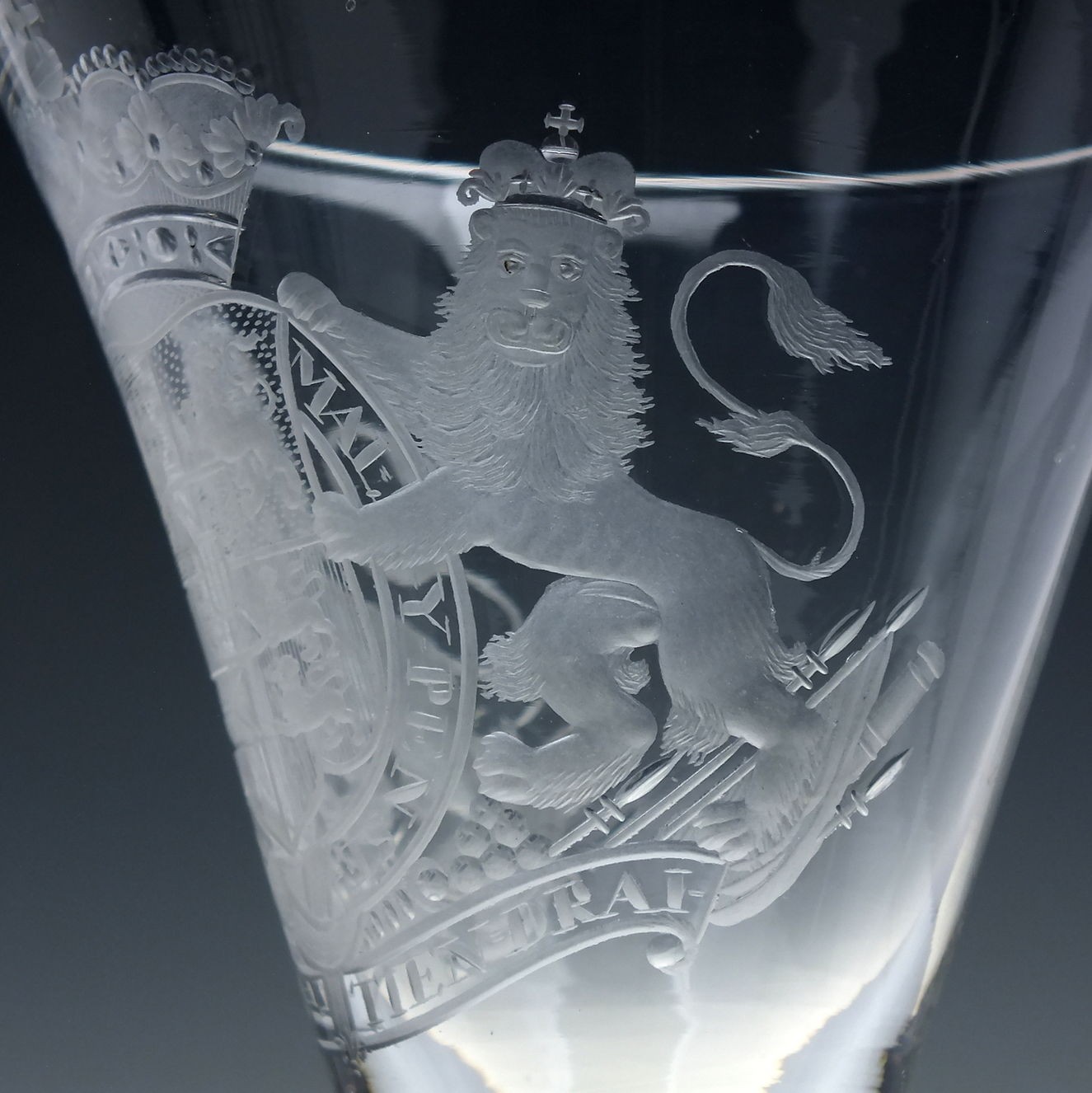
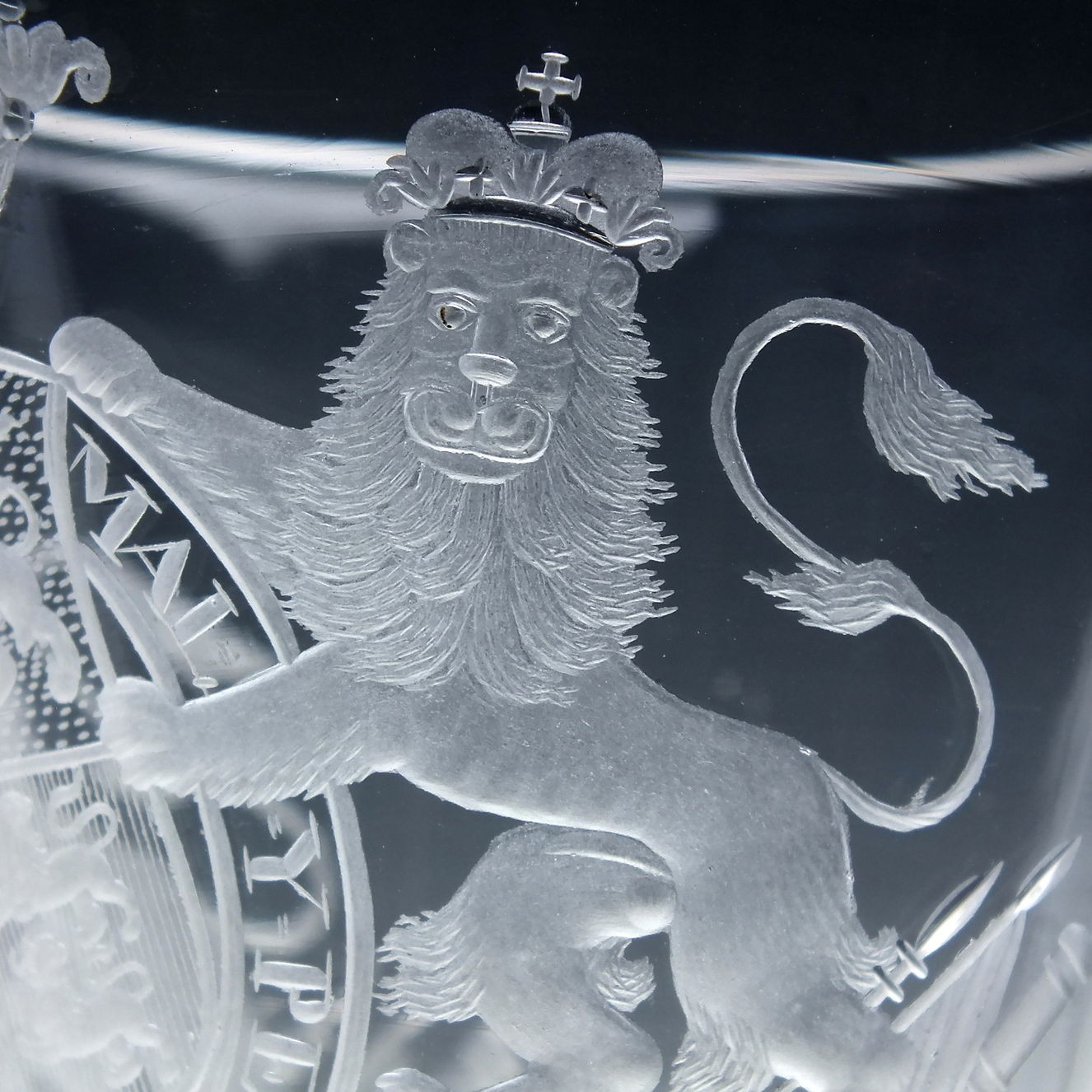
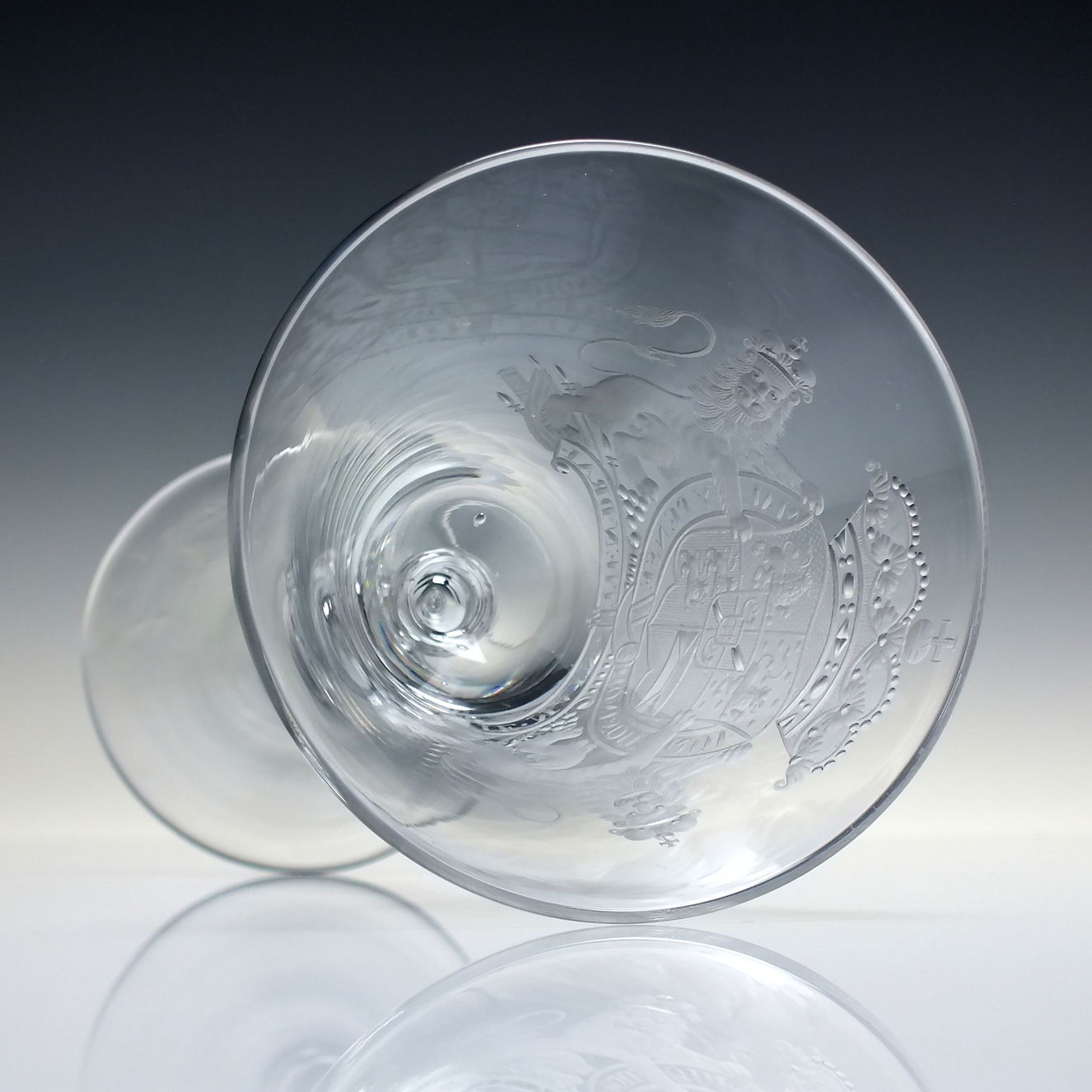
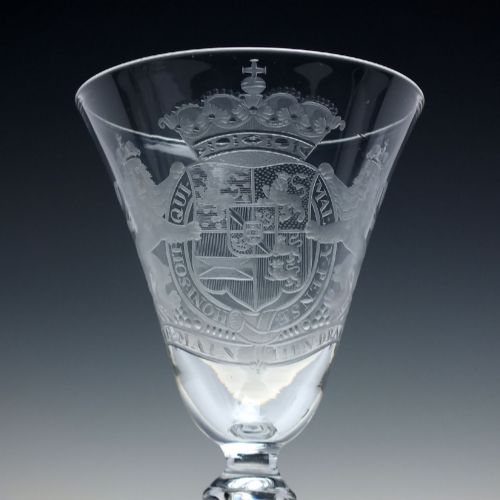
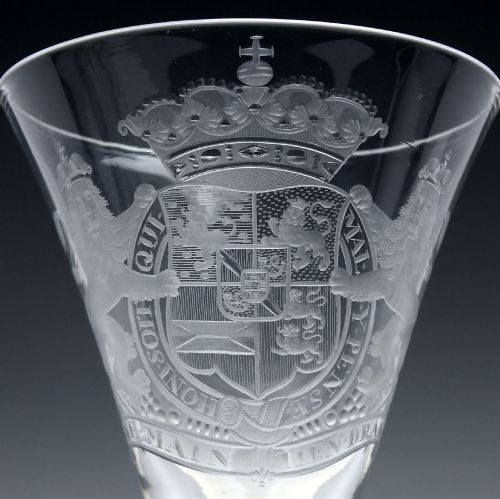
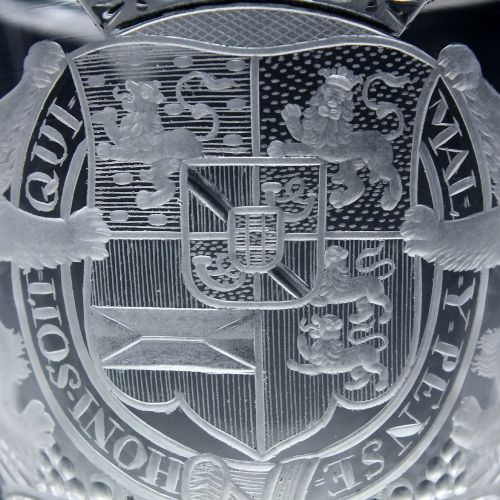
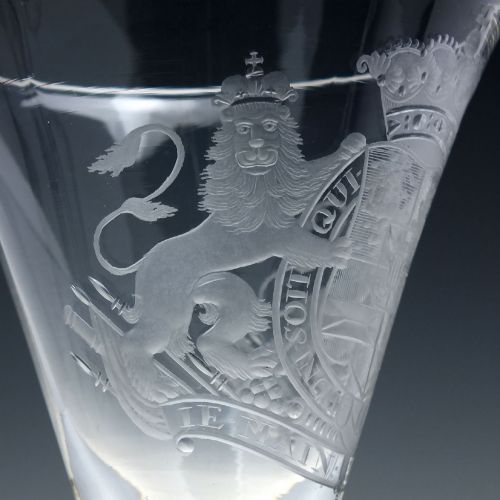
The Engraving: An exceedingly fine wheel engraving of the coat of arms of William V, Prince of Orange-Nassau (1748–1806). It is a complex shield representing his vast hereditary territories; the four main quarters feature Nassau, Moers, Sarrewerden, and Saarbrücken, with a central escutcheon (small shield) of Lahr and Mahlberg. Topped with a crown symbolising his position as Stadtholder (Provincial Governor). The shield is housed within the garter circlet of The Most Noble Order of the Garter, an order of chivalry founded by King Edward III in 1348, with their engraved motto: “HONI SOIT QUI MAL Y PENSE” translated: "evil be to him who thinks of evil". Below, contained within a banner, is the motto “IE MAIN TIEN DRAI”, translated “I shall uphold”, adopted by William of Orange before it became the national motto of the Netherlands.
Elegance, combined with exceedingly fine engraving and a rare hollow knop, marks this glass as a superb example of mid-18th century workmanship.
Date & Origin
England, c1755. Period of King George II.
Condition
Excellent. No chips, cracks or restoration.
Dimensions
Height: 19.4cm
Rim diameter: 8.6cm
Foot diameter: 8cm
Provenance
The Dr Rigby Collection
If you wish to see more from the Dr Rigby Collection, comprising over 100 fine 18th-century wine glasses, please use the link.
Historical Context
This goblet is more than a vessel; it is an 18th-century political statement in lead glass. Produced around 1755, it captures a pivotal moment in the shared history of the British and Dutch elites, specifically honouring William V, Prince of Orange, who was appointed Stadtholder in 1747 while still a child.
The Power of the Garter: The presence of the Order of the Garter circlet (Honi Soit Qui Mal Y Pense) is particularly significant. This is the oldest and most senior order of knighthood in Britain. William V was invested as a Knight of the Garter in 1752; this glass likely celebrates his ascension and the unbreakable dynastic link between the House of Orange and the British Royal Family (his mother was Anne, Princess Royal, the eldest daughter of King George II).
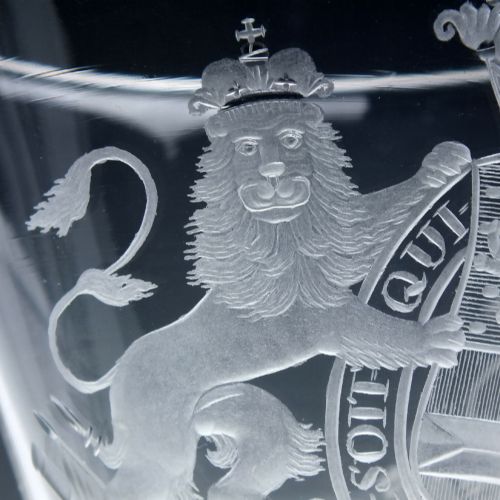
The "Dutch Newcastle" Phenomenon: Like its romantic counterparts, this glass was blown in England but engraved in the Netherlands. During the mid-18th century, English glass was so superior in quality that it was considered the only suitable material for "Armorial" engraving—the most difficult and prestigious form of glass art. To own a glass featuring such a complex, high-status coat of arms was a sign of unwavering loyalty to the Orangist cause during a period of intense political friction in the Dutch Republic.
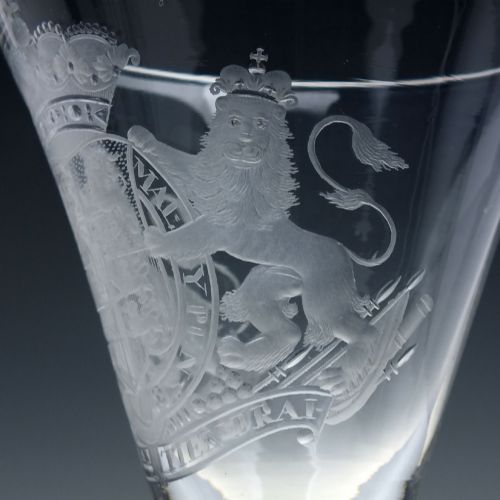
A Masterpiece of Engineering: Beyond the engraving, the stem of this goblet is a collector's dream. The rare hollow conjoined knops represent the absolute height of the glassmaker's skill. Creating a "light baluster" with multiple, intricate air-beaded and hollow sections required a level of heat control and dexterity that only the finest English glasshouses—likely in Newcastle—could achieve.
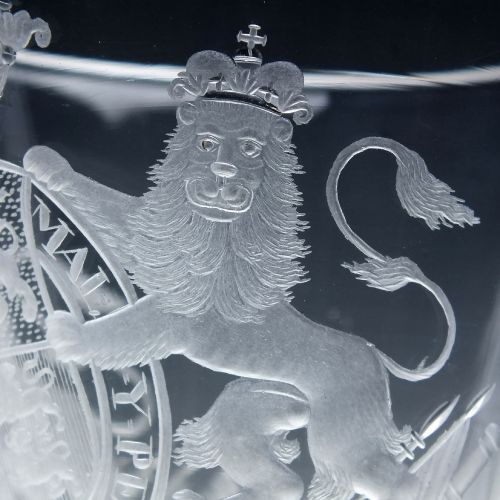
"I Shall Uphold": The motto “Je Maintiendrai” at the base of the shield isn't just a family slogan; it was a rallying cry. In 1755, with the Seven Years' War looming, this glass would have been used for toasts that reaffirmed the military and political alliance between the United Provinces and Great Britain.
Exhibit Antiques has dated this piece to the Georgian era.
Specialists in 18th & 19th century antique glass
You can view the stock and full dealer information on the Exhibit Antiques Profile Page
Rare 18th Century Heraldic Armorial Light Baluster Wine Goblet C1755