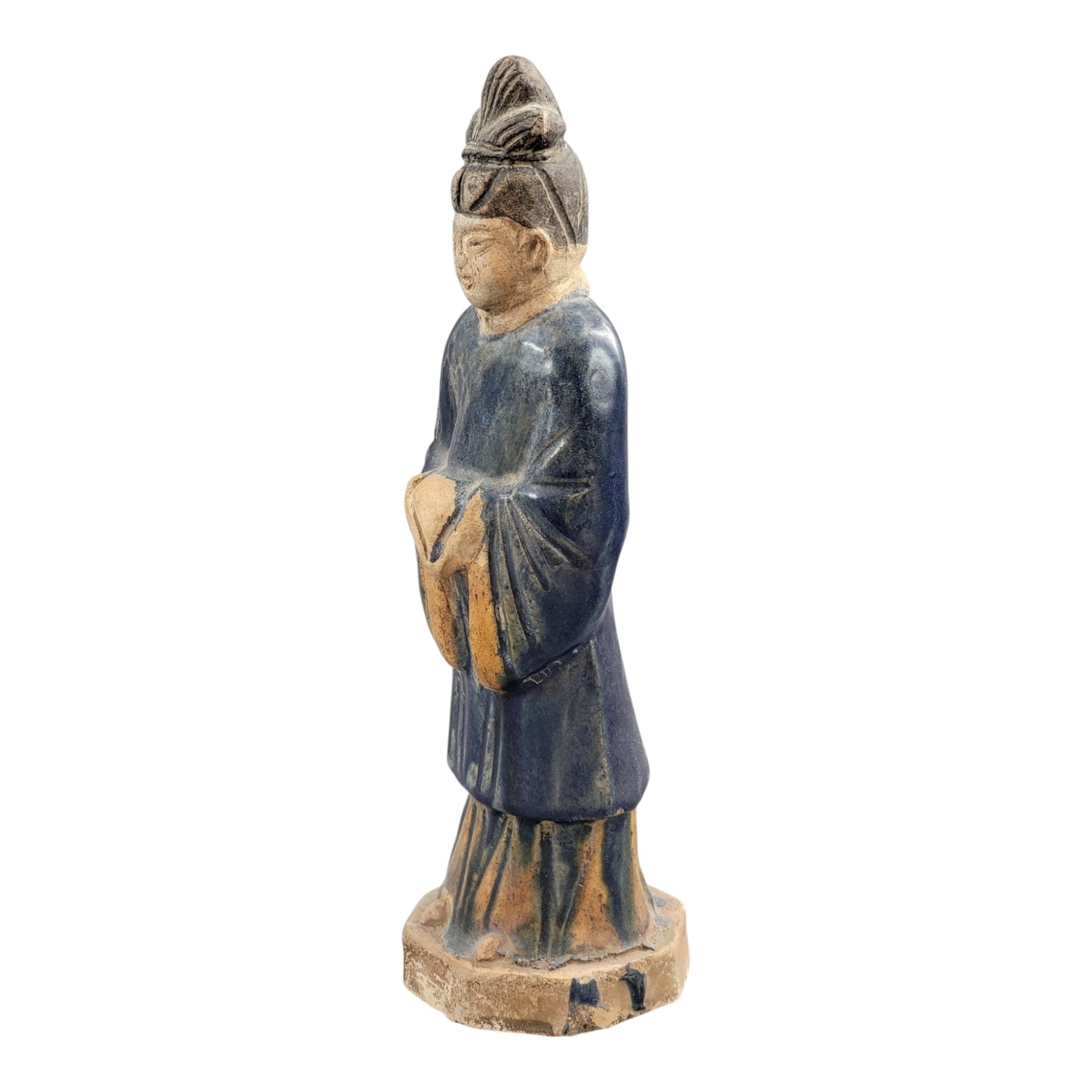
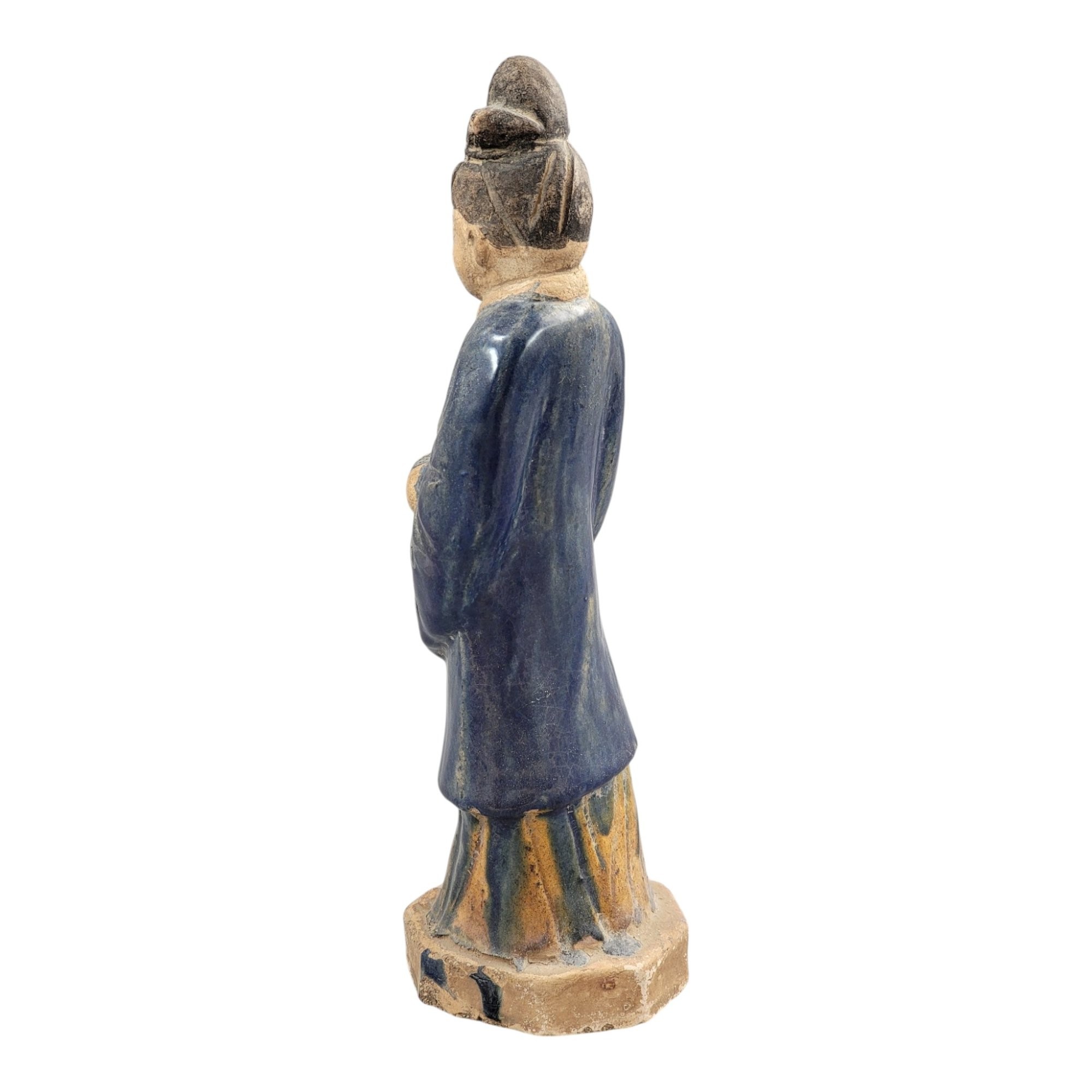
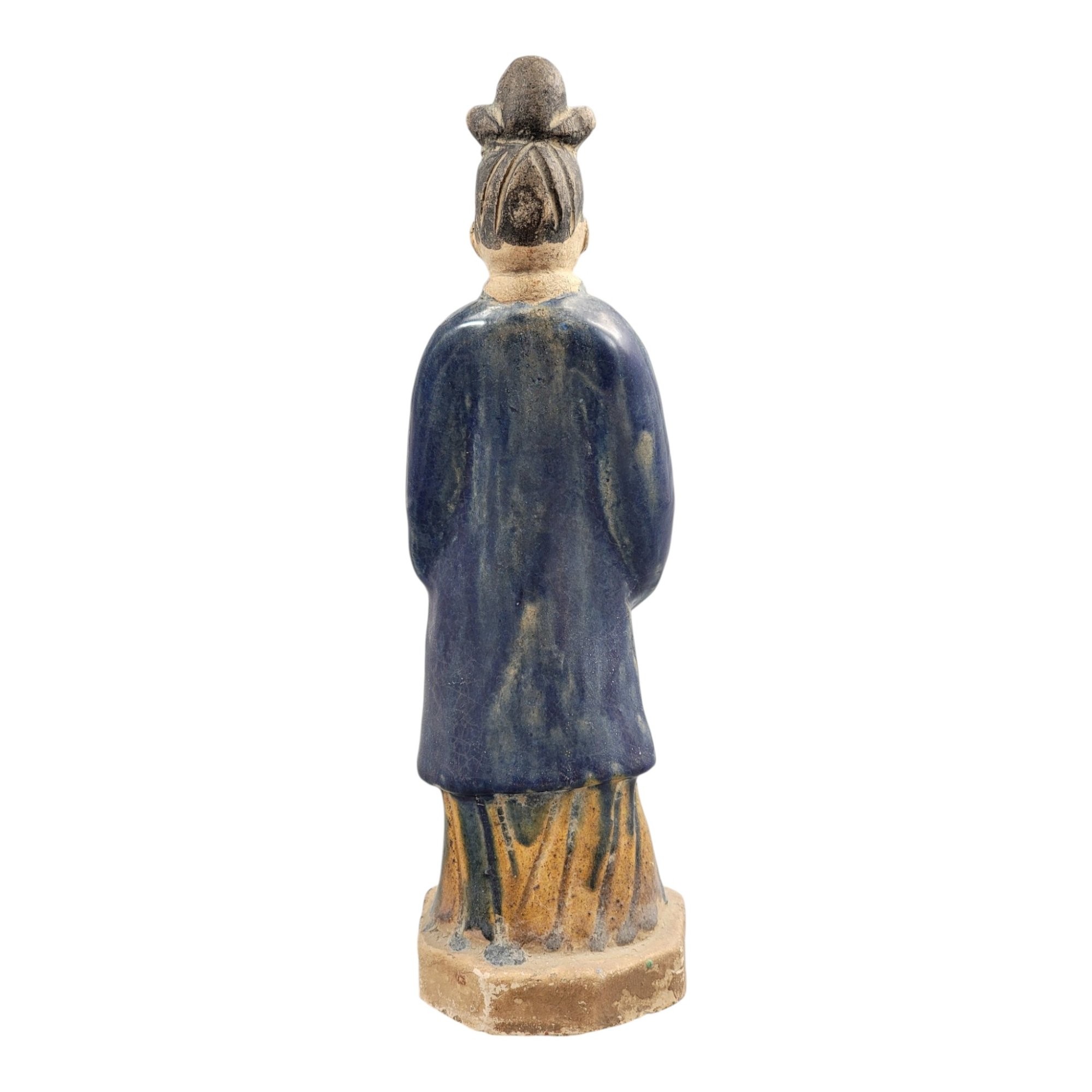
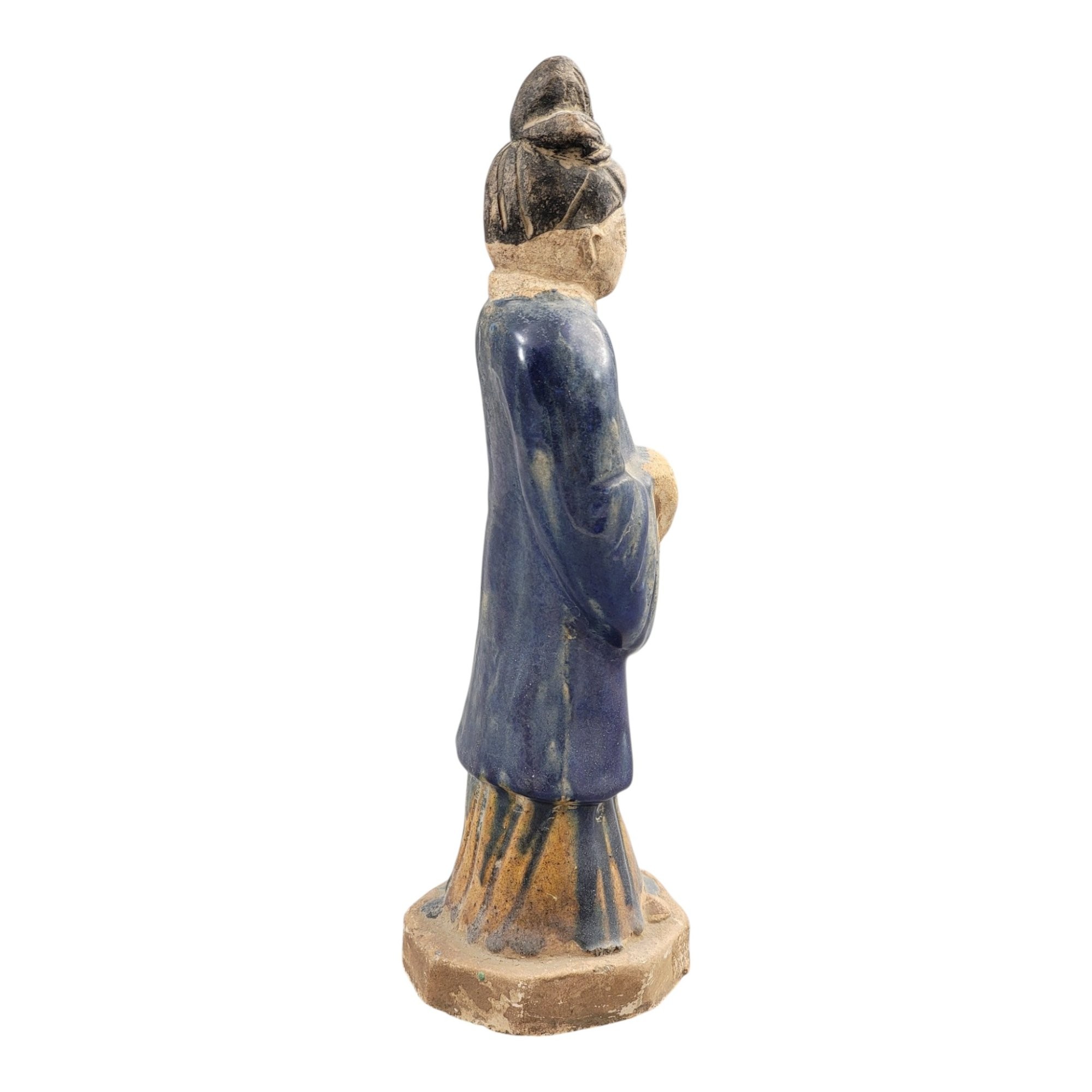
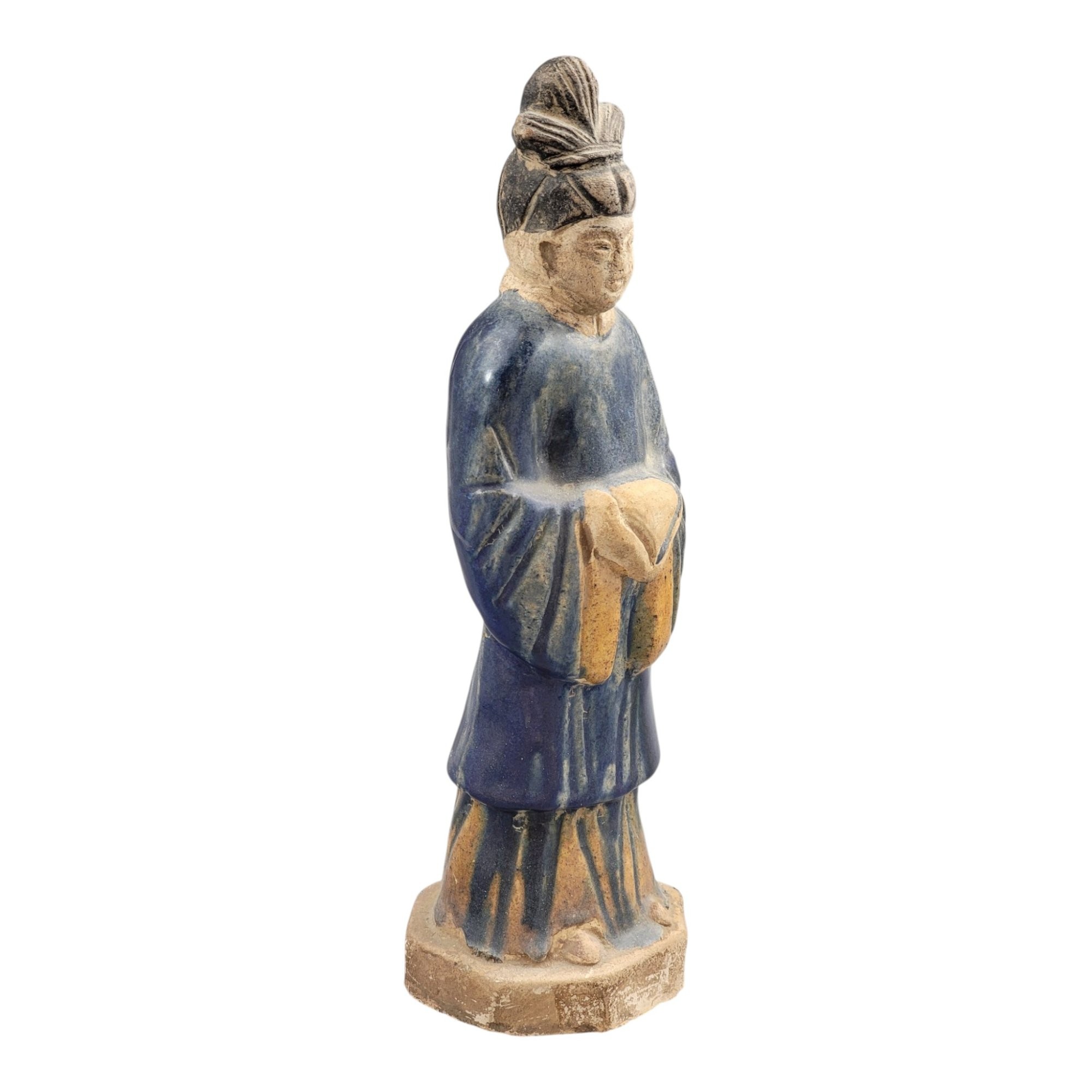
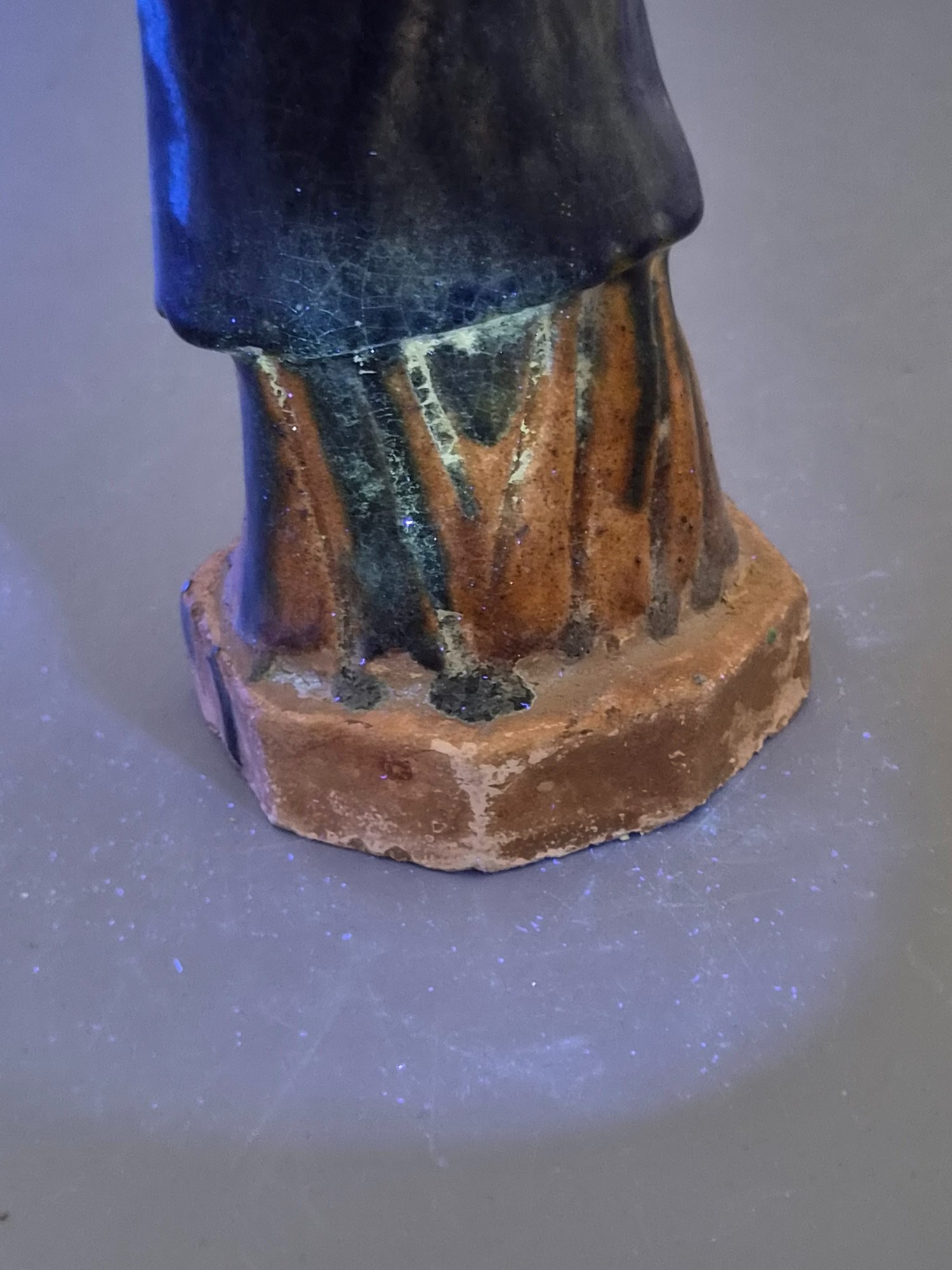
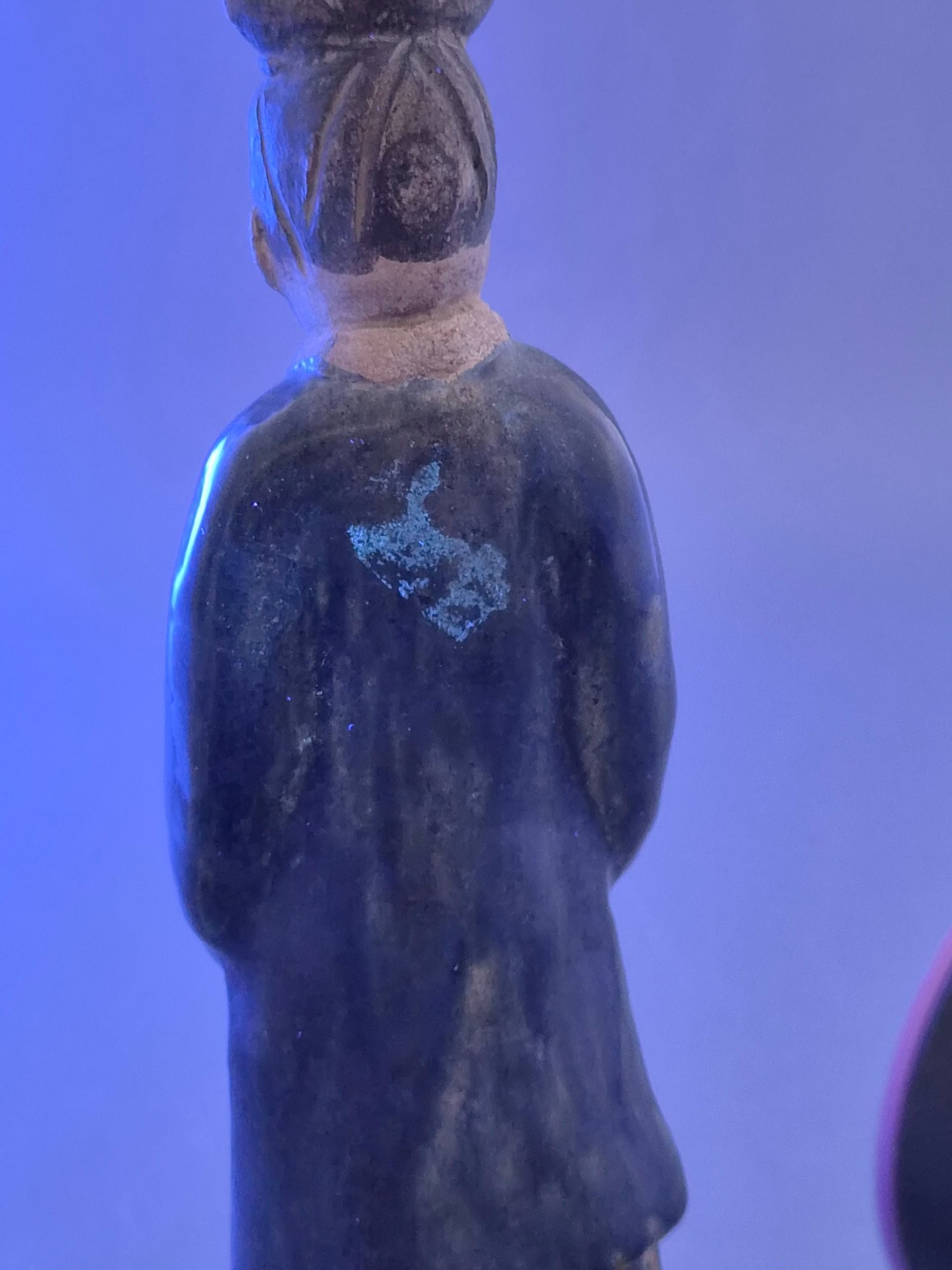
Ritas Bazaar has dated this Tang Sancai Court Attendant to a period before the 16th Century.
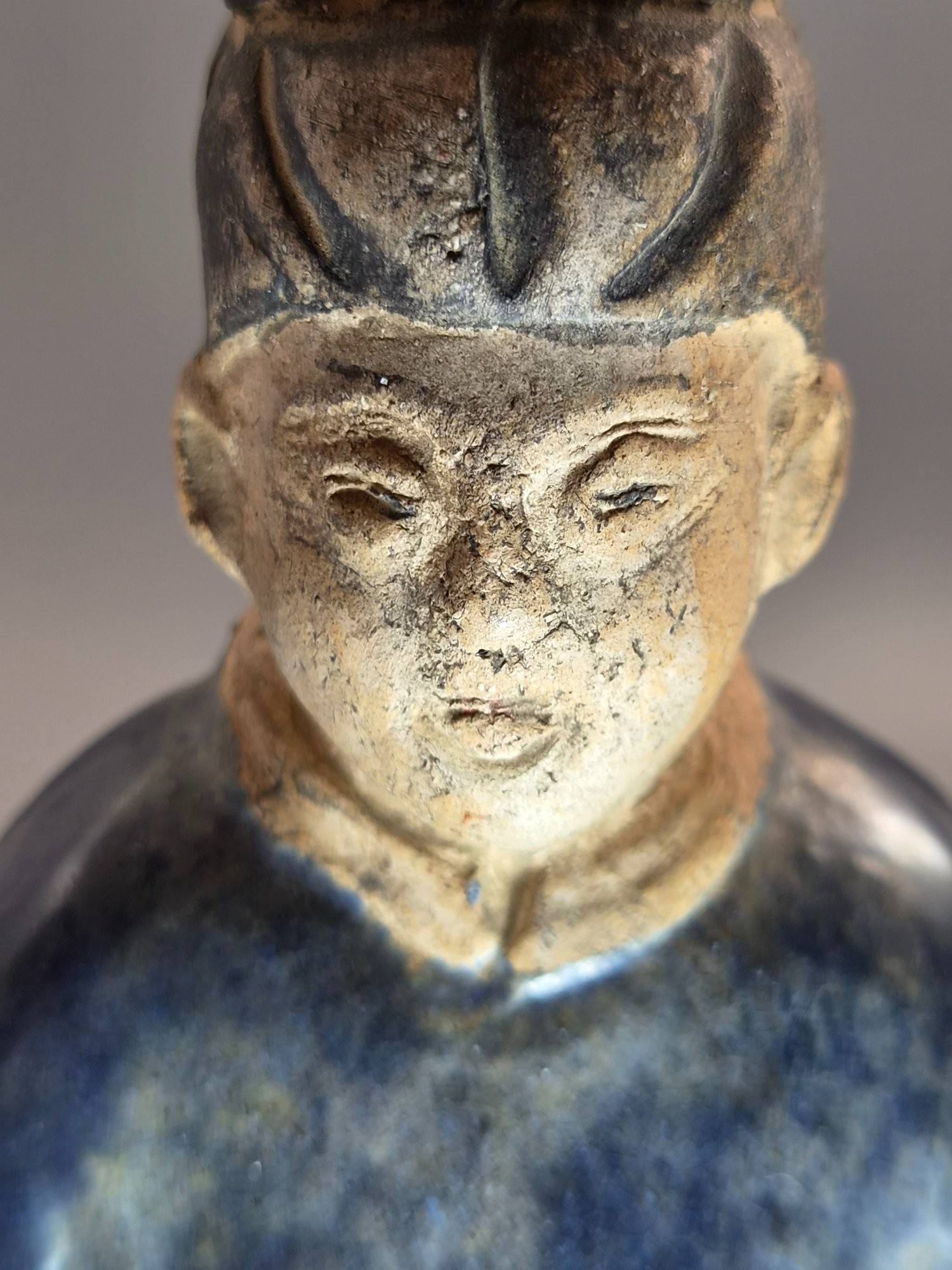
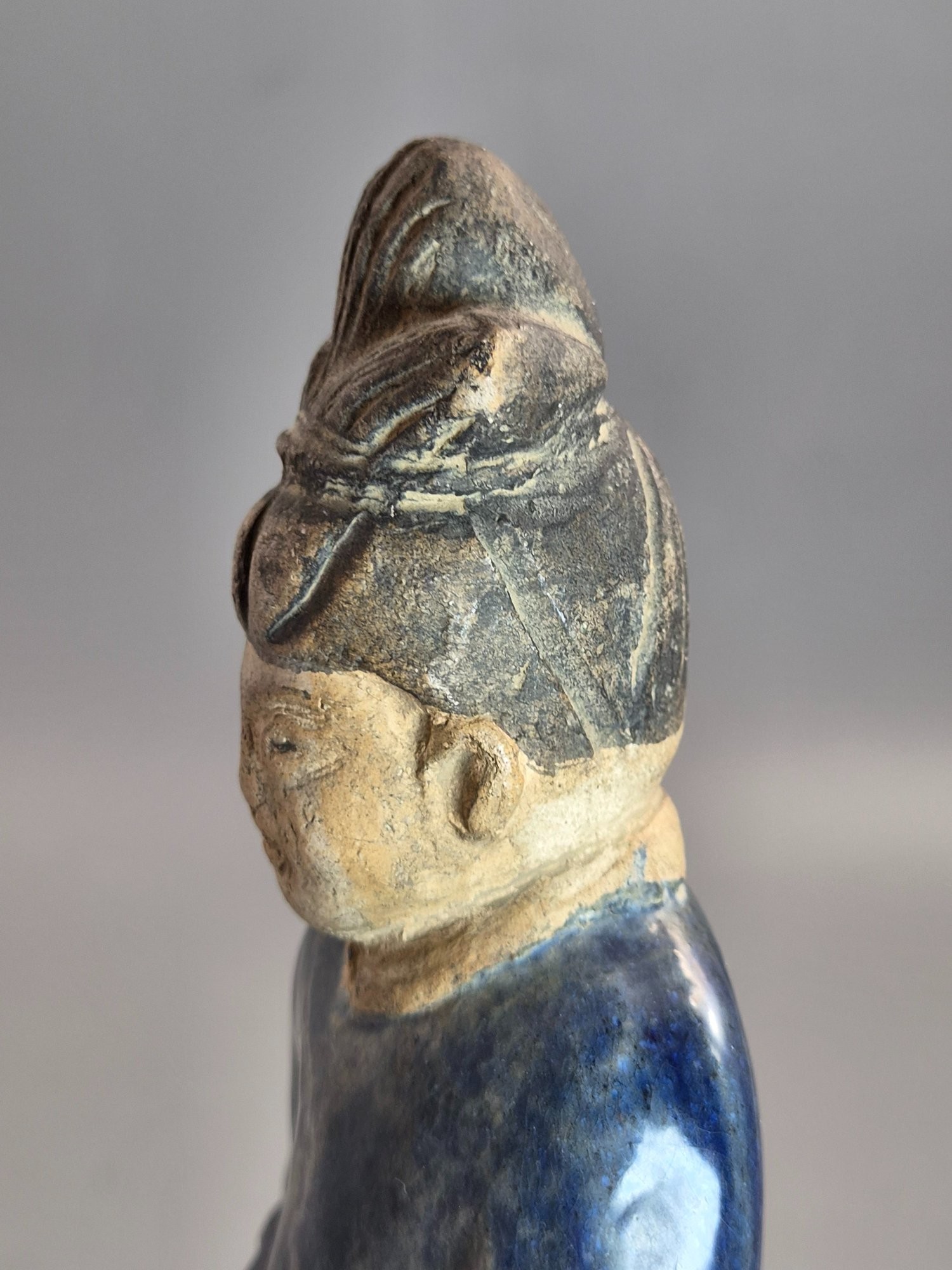
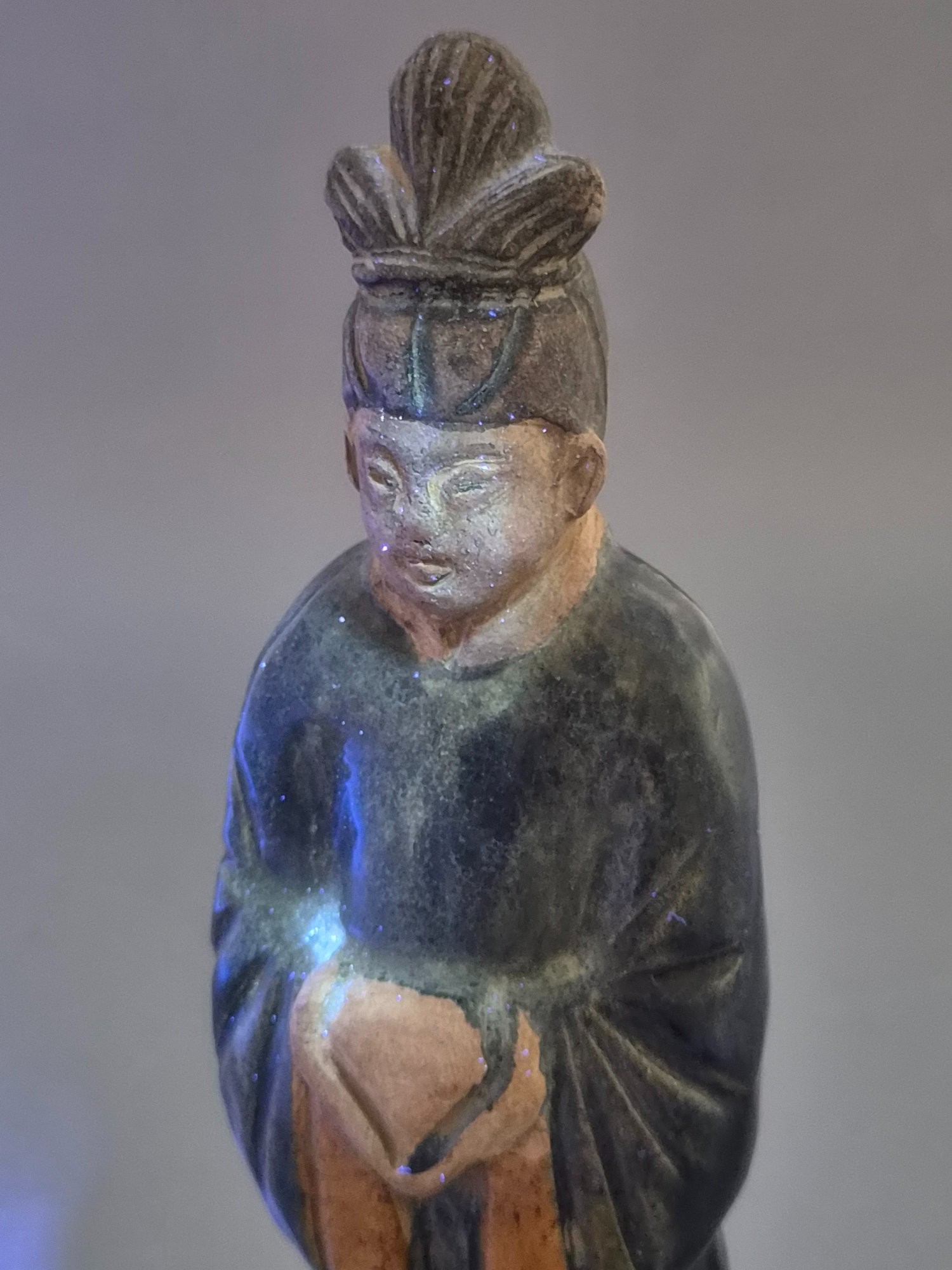
The surface is covered with a lead-based glaze in the Tang sancai tradition, presented here in a less common blue-dominant variant.
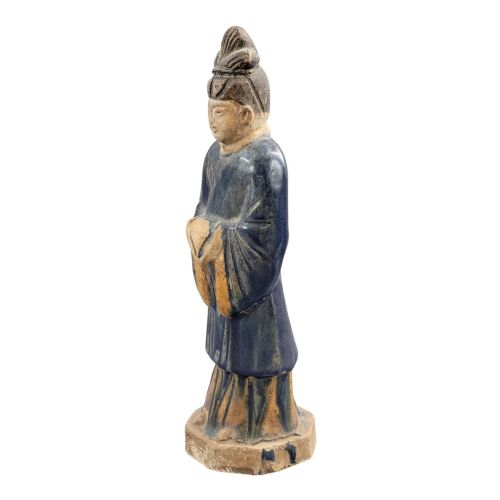
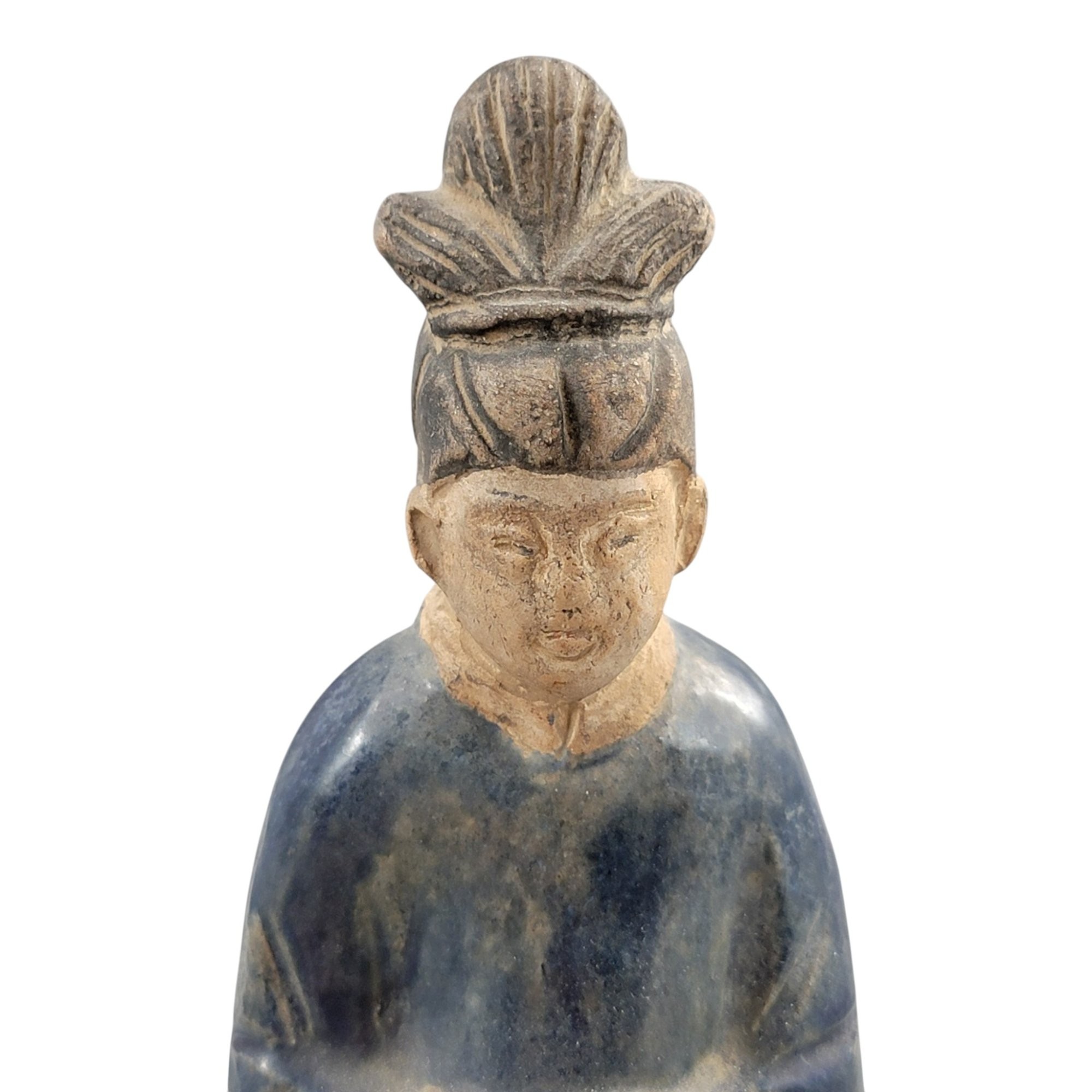
The glaze is characteristic of the Tang sancai technique, in which lead glazes enriched with copper, iron and cobalt oxides were used to produce a range of colours. In this example, the cobalt-enriched blue glaze flows naturally across the surface, gathering in the folds and creating a varied, uneven finish typical of early kiln-fired production — a quality specifically associated with authentic Tang manufacture rather than later reproduction.
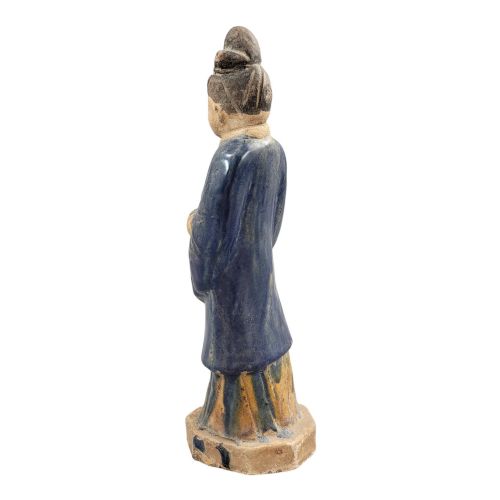
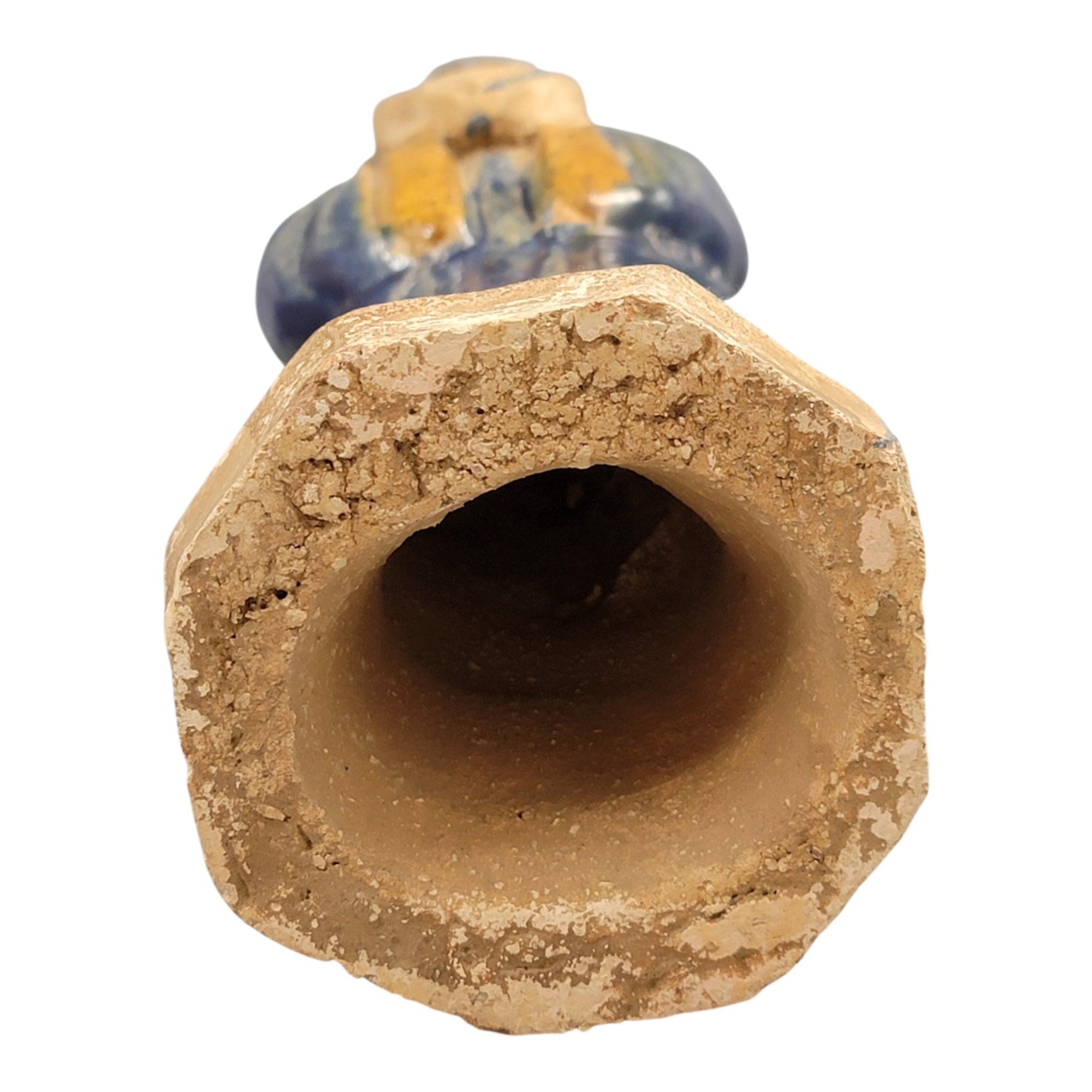
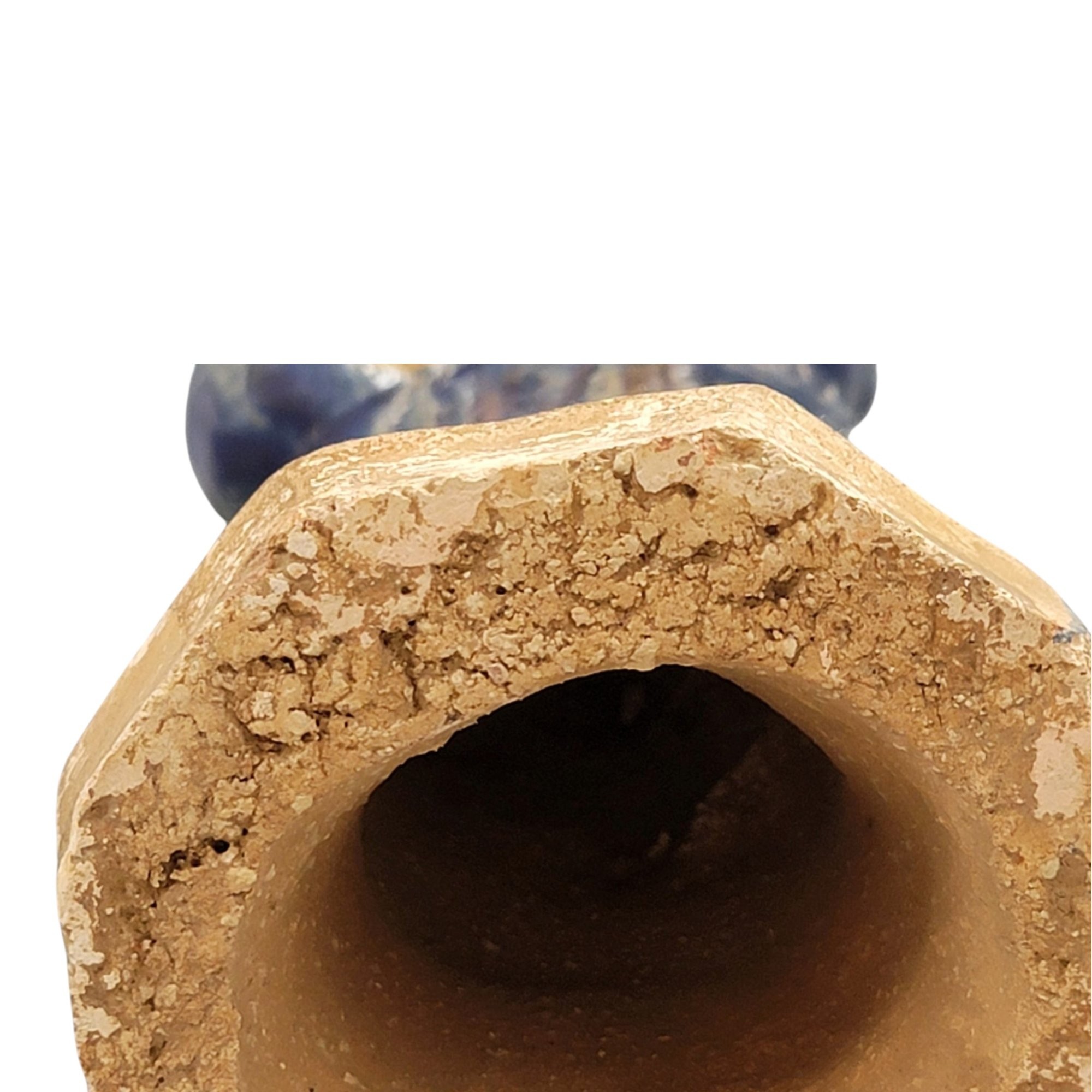
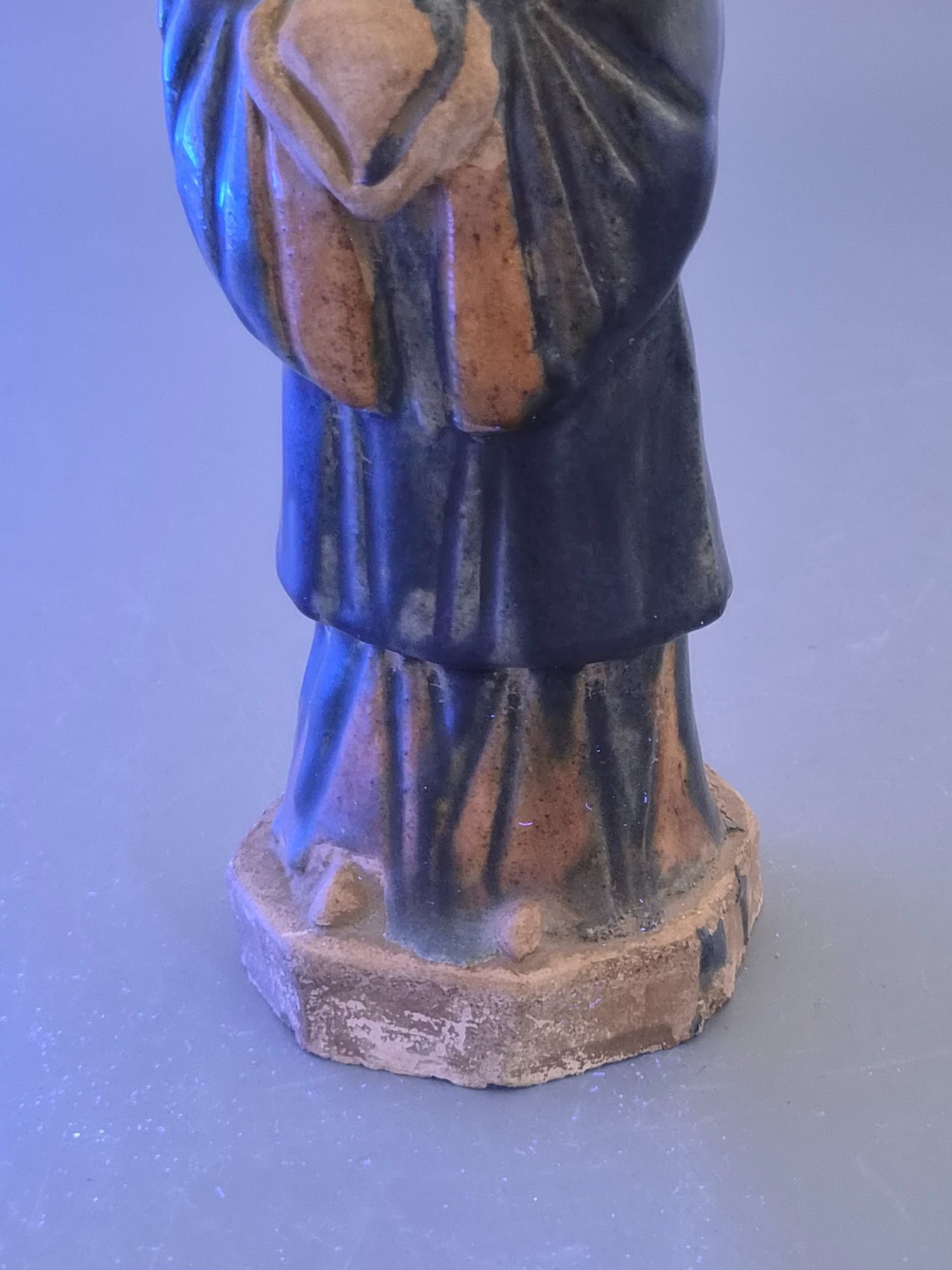
AI Visual Analysis. In the absence of thermoluminescence testing, the accompanying photographs — including macro images and UV illumination — were submitted for systematic visual analysis using an AI system. The analysis identified the following indicators consistent with Tang dynasty attribution: (1) iconographic correspondence with established Tang funerary typology — frontal stance, hands within sleeves, high-knot hairstyle; (2) naturally flowing cobalt-blue lead glaze with irregular pooling, consistent with authentic sancai production; (3) hollow hand-cut base with irregular edge, typical of Tang manufacture; (4) coarse reddish-brown earthenware body consistent with Tang period ceramics produced near Xi'an; (5) fine irregular craquelure network with embedded mineral inclusions, indicative of genuine long-term ageing; (6) under UV illumination, absence of bright fluorescence associated with modern restoration or later-applied glazes; (7) natural calcium mineral surface deposits consistent with extended burial. The AI assessment concludes that the totality of visual evidence is consistent with Tang dynasty origin, circa 7th–8th century AD. No thermoluminescence certificate is held at this time. The buyer is invited to form their own conclusion. Should the attribution prove correct, current market values for blue-glazed Tang sancai figures of comparable type and quality — based on Christie's, Bonhams and Sotheby's auction records — range from £8,000 to £15,000 or above.
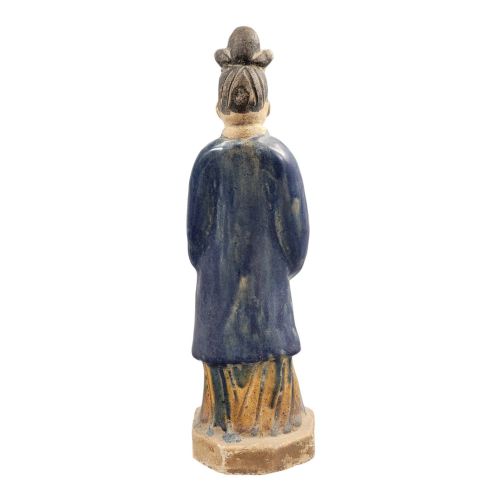
Comparable figures of attendants and officials from the Tang period are preserved in major museum collections, including the Metropolitan Museum of Art and the British Museum.
Dimensions: Height 25.2 cm · Width 7.5 cm · Depth 8 cm · Weight 620 g
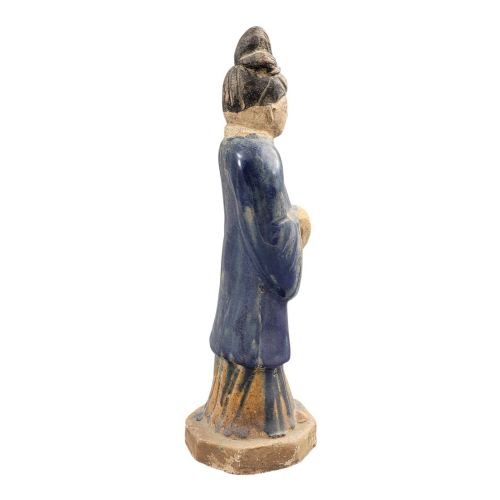
Condition: Excellent preservation of the glaze, with expected ancient burial wear, surface accretions and rubbing to exposed areas.
Please study the accompanying photographs carefully as they form an integral part of this description. If you have any questions, we will be happy to answer them. The item will be shipped with full tracking and insurance. Shipping costs include labour, packaging and postage.
Ritas Bazaar has dated this Tang Sancai Court Attendant to a period before the 16th Century.
You can view the stock and full dealer information on the Ritas Bazaar Profile Page
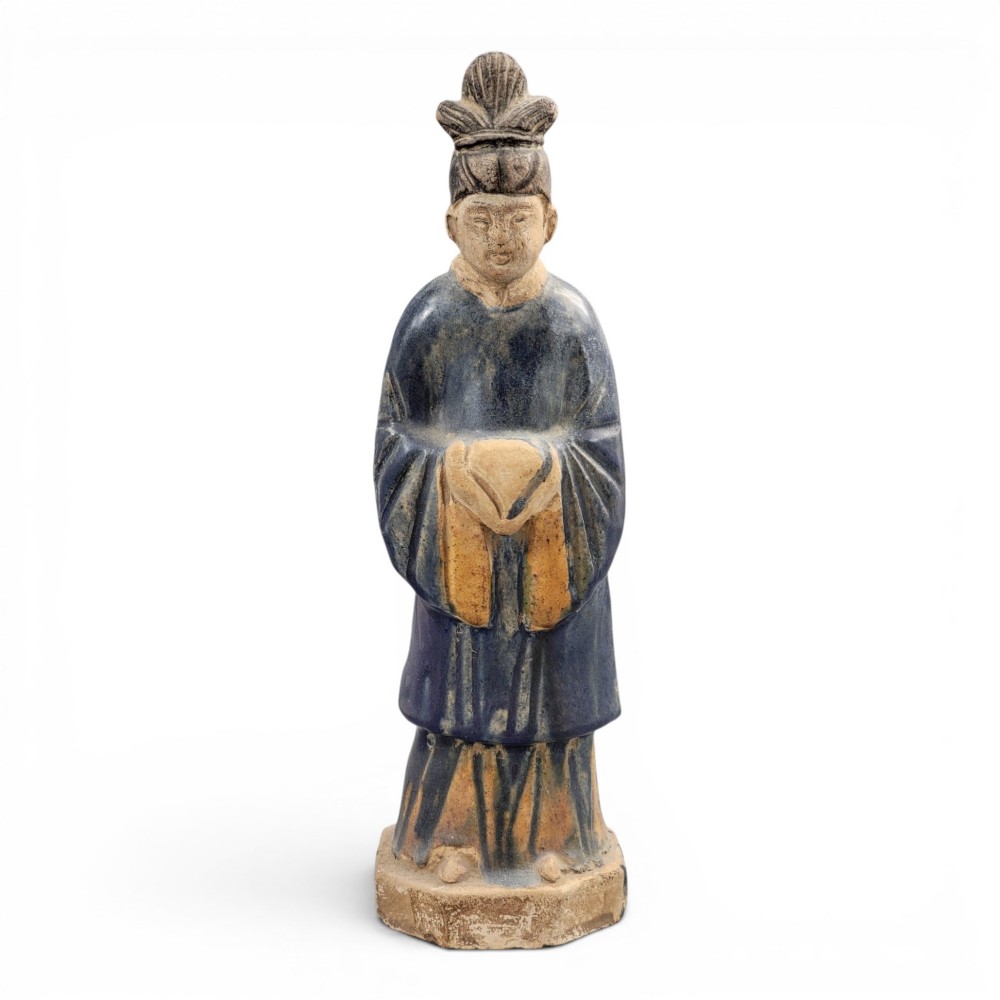
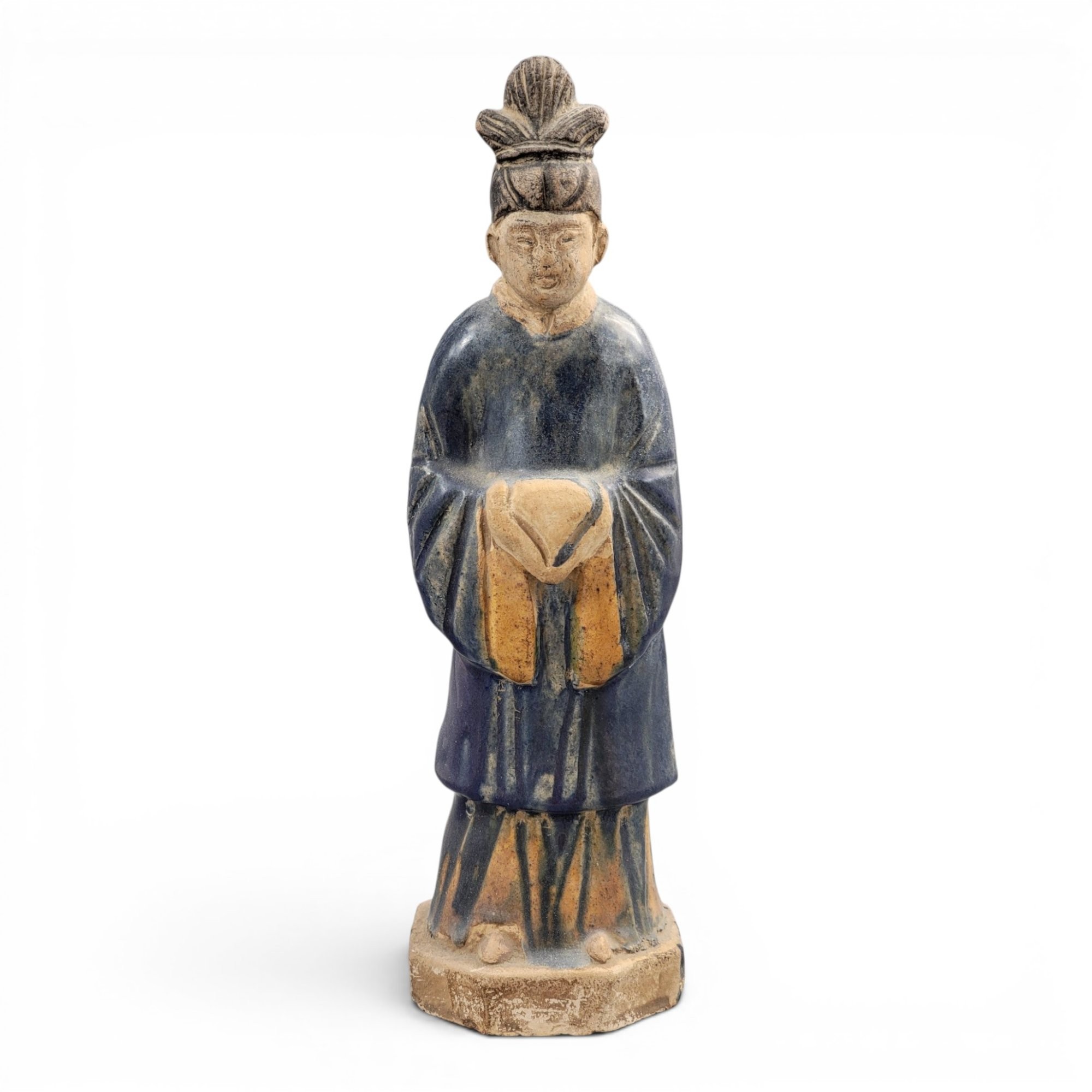
Chinese Tang Sancai Glazed Funerary Figure, Court Attendant, C. 7th–8th