16,760  PAGES BROWSED TODAY PAGES TODAY 36  ANTIQUES UPLOADED TODAY NEW ARRIVALS
ID #SA1210435
FOR SALE
£720
Email
Save
Mezzotint Portrait of Oliver Cromwell (1599-1648) - By John Bowles After Sir Peter Lely, After Samuel Cooper
The Mezzotint Man
for sale €842     $914
£720
The Mezzotint Man

The Mezzotint Man

Sellingantiques Verified Since Mar 2026
View Dealers Stock Page
  • About Us
    Dealers in fine antiquarian portrait prints
Id #SA1210435
PDF SHARE
SAVE

Mezzotint Portrait of Oliver Cromwell (1599-1648) - By John Bowles After Sir Peter Lely, After Samuel Cooper

17th century
Description

OLIVER CROMWELL (1599-1648) - BY JOHN BOWLES AFTER SIR PETER LELY, AFTER SAMUEL COOPER

OLIVER CROMWELL (1599-1648) - BY JOHN BOWLES AFTER SIR PETER LELY, AFTER SAMUEL COOPER

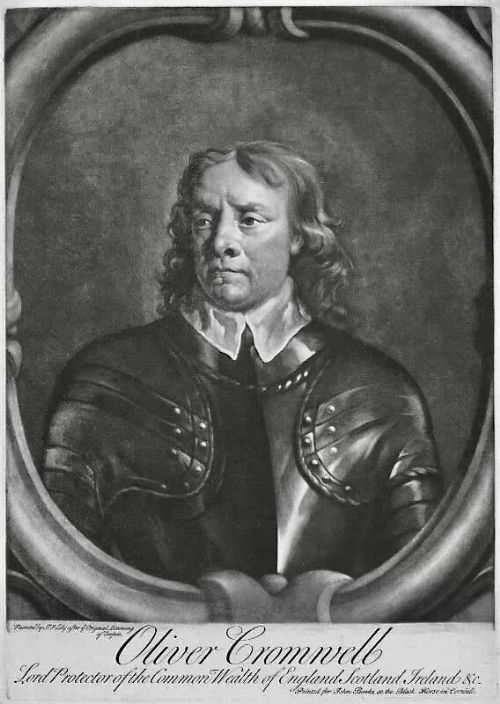
Fine and comparatively rare mezzotint portrait of Oliver Cromwell (1599-1648) by John Bowles after Sir Peter Lely, after Samuel Cooper. Oliver Cromwell, the English statesman, politician and soldier, widely regarded as one of the most important figures in the history of the British Isles. One of three mezzotints of the sitter that we are currently offering, and each depicts the sitter bust length in armour.
Oliver Cromwell is one of the most famous figures in British history. For some he provokes strong emotions, even more than 350 years after his death. He is known throughout the world, and was voted one of the ten most important figures in British history in 2001.
There are a number of reasons why Cromwell is significant and is worthy of focus today:

Cromwell was from a relatively humble background, born and brought up in relative obscurity from a ‘middling sort’ family in Huntingdon. He rose to become the first commoner to become Head of State in British history.
Cromwell divides opinions: partly this is down to those after the Restoration who wanted blacken his name, partly because some of his actions, such as his Irish campaign, were controversial even during his lifetime and continue to cause discussion and debate even today. Some love him; others loathe him – either way he is impossible to ignore.

He was one of the key figures in the Civil Wars that tore the country apart in the 1640s, and one of the main architects of Parliament’s victory in this bloody conflict.

The modern British army was founded from the New Modelled Army that Cromwell helped found and led so effectively. The red coat still worn as the dress uniform by regiments today was derived from that of Cromwell’s regiments.

Cromwell was a key figure in the trial and execution of King Charles I. This was the first time that a monarch had been deposed and put on trial by his own people, as opposed to being simply deposed by a rival royal. It has been argued that this helped establish a legal precedent that heads of state were answerable to the law and their people – an important principle that led to the existence of the International Criminal Court and War Crimes Tribunals today.

The Protectorate over which Cromwell presided was the first government in British history to have a written constitution - indeed the first such document in a modern nation state - a document that set out the rules for how the country should be governed, and enshrined the principle of freedom of religious conscience. For a time in the 1650s there was the greatest period of religious toleration there had yet been in England, or would be again for over a century.

Cromwell as a person is contradictory, paradoxical, fascinating and often misunderstood. The popular image of him is as a dour, humourless individual, dressed in black. His portraits show him actually in fine clothes; he seems to have been a devoted husband and father, enjoyed music, dancing and horse racing and had a good sense of humour. He could be a commanding and energetic figure, but also battled with depression and periods of melancholy. He is often quoted; from “warts and all” to “keeping your powder dry”.

The period that Cromwell lived through led to the foundation of our modern parliamentary democracy; people then raised questions about the nature of freedom, government, religion and equality that we still wrestle with today. ( The Cromwell Museum)

This mezzotint is in a fine state of conservation and is housed in a quality ebonised frame with museum quality mount.

Provenance: The historic Heydon Grange in Norfolk

Framed Dimensions: 49cm x 39cm

Price: £720

All prices include UK mainland delivery

Physical Dimensions
Height
49cm (19.29")
Width
39cm (15.35")
Depth
2cm (0.79")
Declaration

The Mezzotint Man has dated this Framed Oliver Cromwell Mezzotint to the 17th Century.

Reference Numbers
Sellingantiques Reference
SA1210435
Description
OLIVER CROMWELL (1599-1648) - BY JOHN BOWLES AFTER SIR PETER LELY, AFTER SAMUEL COOPER

OLIVER CROMWELL (1599-1648) - BY JOHN BOWLES AFTER SIR PETER LELY, AFTER SAMUEL COOPER

Fine and comparatively rare mezzotint portrait of Oliver Cromwell (1599-1648) by John Bowles after Sir Peter Lely, after Samuel Cooper.
The Mezzotint Man

Oliver Cromwell, the English statesman, politician and soldier, widely regarded as one of the most important figures in the history of the British Isles. One of three mezzotints of the sitter that we are currently offering, and each depicts the sitter bust length in armour.

fig 1. A framed monochrome mezzotint print depicting a bust-length portrait of Oliver Cromwell in armour set within an oval border.
fig 1. Mezzotint Portrait of Oliver Cromwell (1599-1648) - By John Bowles After Sir Peter Lely, After Samuel Cooper

Oliver Cromwell is one of the most famous figures in British history. For some he provokes strong emotions, even more than 350 years after his death. He is known throughout the world, and was voted one of the ten most important figures in British history in 2001.

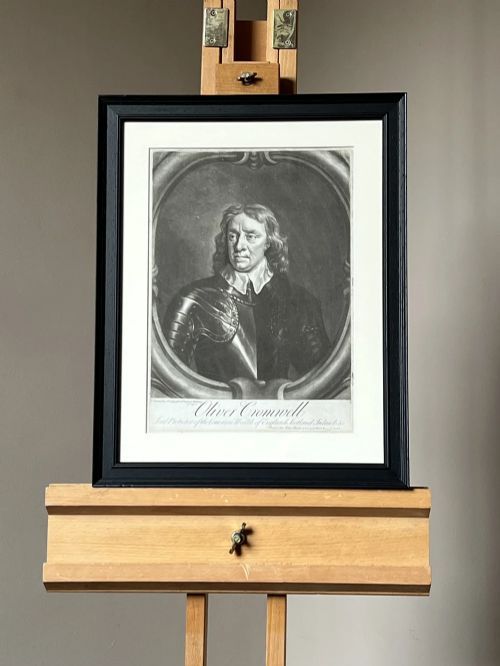
fig 2. A framed monochrome mezzotint print depicting a bust-length portrait of Oliver Cromwell in armour set within an oval border.
fig 2. Mezzotint Portrait of Oliver Cromwell (1599-1648) - By John Bowles After Sir Peter Lely, After Samuel Cooper

There are a number of reasons why Cromwell is significant and is worthy of focus today:

Cromwell was from a relatively humble background, born and brought up in relative obscurity from a ‘middling sort’ family in Huntingdon. He rose to become the first commoner to become Head of State in British history.

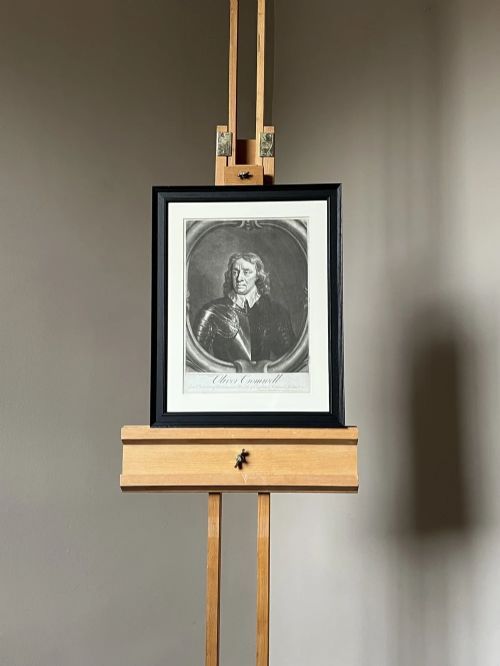
fig 3. A framed monochrome mezzotint print depicting a bust-length portrait of Oliver Cromwell in armour set within an oval border.
fig 3. Mezzotint Portrait of Oliver Cromwell (1599-1648) - By John Bowles After Sir Peter Lely, After Samuel Cooper

Cromwell divides opinions: partly this is down to those after the Restoration who wanted blacken his name, partly because some of his actions, such as his Irish campaign, were controversial even during his lifetime and continue to cause discussion and debate even today. Some love him; others loathe him – either way he is impossible to ignore.

He was one of the key figures in the Civil Wars that tore the country apart in the 1640s, and one of the main architects of Parliament’s victory in this bloody conflict.

The modern British army was founded from the New Modelled Army that Cromwell helped found and led so effectively. The red coat still worn as the dress uniform by regiments today was derived from that of Cromwell’s regiments.

Cromwell was a key figure in the trial and execution of King Charles I. This was the first time that a monarch had been deposed and put on trial by his own people, as opposed to being simply deposed by a rival royal. It has been argued that this helped establish a legal precedent that heads of state were answerable to the law and their people – an important principle that led to the existence of the International Criminal Court and War Crimes Tribunals today.

The Protectorate over which Cromwell presided was the first government in British history to have a written constitution - indeed the first such document in a modern nation state - a document that set out the rules for how the country should be governed, and enshrined the principle of freedom of religious conscience. For a time in the 1650s there was the greatest period of religious toleration there had yet been in England, or would be again for over a century.

Cromwell as a person is contradictory, paradoxical, fascinating and often misunderstood. The popular image of him is as a dour, humourless individual, dressed in black. His portraits show him actually in fine clothes; he seems to have been a devoted husband and father, enjoyed music, dancing and horse racing and had a good sense of humour. He could be a commanding and energetic figure, but also battled with depression and periods of melancholy. He is often quoted; from “warts and all” to “keeping your powder dry”.

The period that Cromwell lived through led to the foundation of our modern parliamentary democracy; people then raised questions about the nature of freedom, government, religion and equality that we still wrestle with today. ( The Cromwell Museum)

This mezzotint is in a fine state of conservation and is housed in a quality ebonised frame with museum quality mount.

Provenance: The historic Heydon Grange in Norfolk

Framed Dimensions: 49cm x 39cm

Price: £720

All prices include UK mainland delivery

Height
49cm (19.29")
Width
39cm (15.35")
Depth
2cm (0.79")
Date of Manufacture

The Mezzotint Man has dated this Framed Oliver Cromwell Mezzotint to the 17th Century.

Reference Numbers
Sellingantiques Ref
SA1210435
The Mezzotint Man
The Mezzotint Man
Sellingantiques verified Since Mar 2026

Dealers in fine antiquarian portrait prints

Dealer Profile

You can view the stock and full dealer information on the The Mezzotint Man Profile Page

PDF SHARE
SAVE
A framed monochrome mezzotint print depicting a bust-length portrait of Oliver Cromwell in armour set within an oval border.
1 / 4
Archive I A framed monochrome mezzotint print depicting a bust-length portrait of Oliver Cromwell in armour set within an oval border.

Mezzotint Portrait of Oliver Cromwell (1599-1648) - By John Bowles After Sir Peter Lely, After Samuel Cooper

Archive II A framed monochrome mezzotint print depicting a bust-length portrait of Oliver Cromwell in armour set within an oval border. View II
Archive III A framed monochrome mezzotint print depicting a bust-length portrait of Oliver Cromwell in armour set within an oval border. View III
Archive IV A framed monochrome mezzotint print depicting a bust-length portrait of Oliver Cromwell in armour set within an oval border. View IV
Enlarged Archival View
Telephone 07889 859729
Location
North Yorkshire
United Kingdom
Verified Since Mar 2026
Items For Sale 33
Items Sold 9
The Mezzotint Man
The Mezzotint Man
Verified Since Mar 2026
View Dealer Info
Location: North Yorkshire, United Kingdom
Verified
Mar 2026
For Sale
33
Sold
9
A framed monochrome mezzotint print depicting a bust-length portrait of Oliver Cromwell in armour set within an oval border.
MEZZOTINT PORTRAIT OF OLIVER CROMWELL (1599-1648) - BY JOHN BOWLES AFTER SIR PETER LELY, AFTER SAMUEL COOPER
Ref: SA1210435
A framed monochrome mezzotint print depicting a bust-length portrait of Oliver Cromwell in armour set within an oval border.
Detail View 1
Detail View 2
Detail View 3
Archival Detail
Every single antique dealer on our platform is individually approved by our internal team. We verify their professional trade history, ethical standards, and photographic quality to ensure a secure, high-standard buying environment. Upon joining, every dealer agrees to a strict 9-point code of conduct. While issues can occasionally arise, our dealers typically resolve them swiftly and directly with the buyer. In fact, since our founding in 2002, Sellingantiques has only had to step in to help resolve an issue on roughly five occasions—a true testament to the quality of our dealers and their dedication to your happiness.
Our dealers are highly experienced in packing and shipping fragile, high-value antiques. Because you are in direct contact with the dealer, you will be able to easily go through all available shipping and insurance options together to ensure your item arrives safely.
Antiques are the ultimate green purchase. By choosing historical pieces over newly manufactured goods, you completely eliminate the carbon footprint of modern mass production while preserving exceptional, timeless craftsmanship.

Mezzotint is an intaglio printmaking technique developed in the seventeenth century that creates tonal depth and soft gradations without traditional line hatching. It became the dominant method for reproducing oil painted portraits during the eighteenth century.

Mezzotints were printed using oil-based ink pressed from a hand-worked copper plate onto handmade rag paper. Modern framing for these items generally includes a protective wooden frame and glass casing.

Authentic period prints typically feature a clear indented plate mark around the image edge, evidence of hand-pulled printing techniques, and visible chain lines or ageing on the paper substrate.

A framed monochrome portrait works well as a central focal point above a sideboard, within a dedicated reading room, or as part of a curated gallery wall in a traditional corridor.

Keep paper prints away from direct sunlight and fluctuating humidity levels to prevent discoloration or foxing. Ensure the artwork is mounted using acid-free board and sealed behind UV-protective glass.
items
Add keywords to the filter
Price
£100
£250000
Era
Movements
Material
Origin
Stock Location
Freshness
Online Payments
Categories