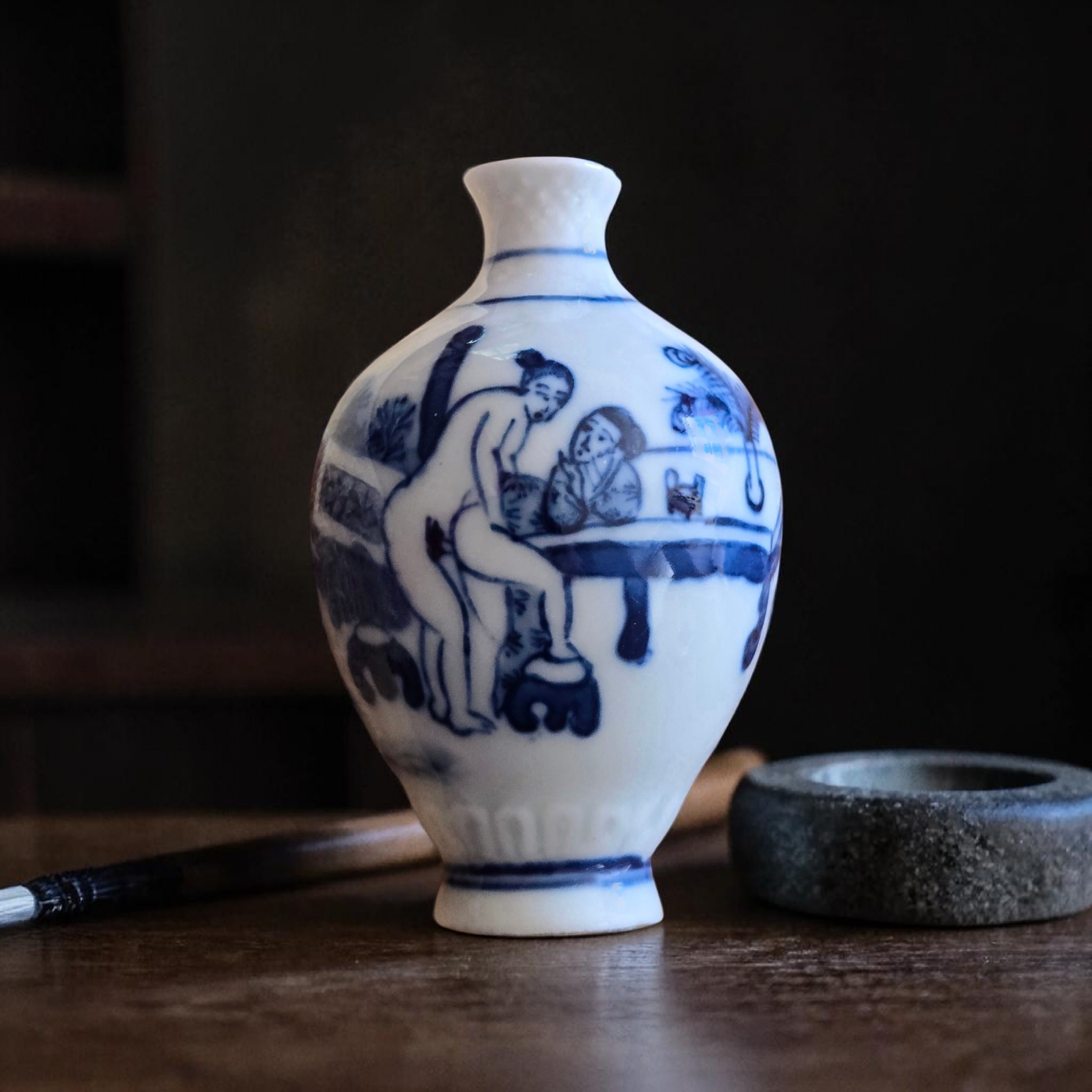
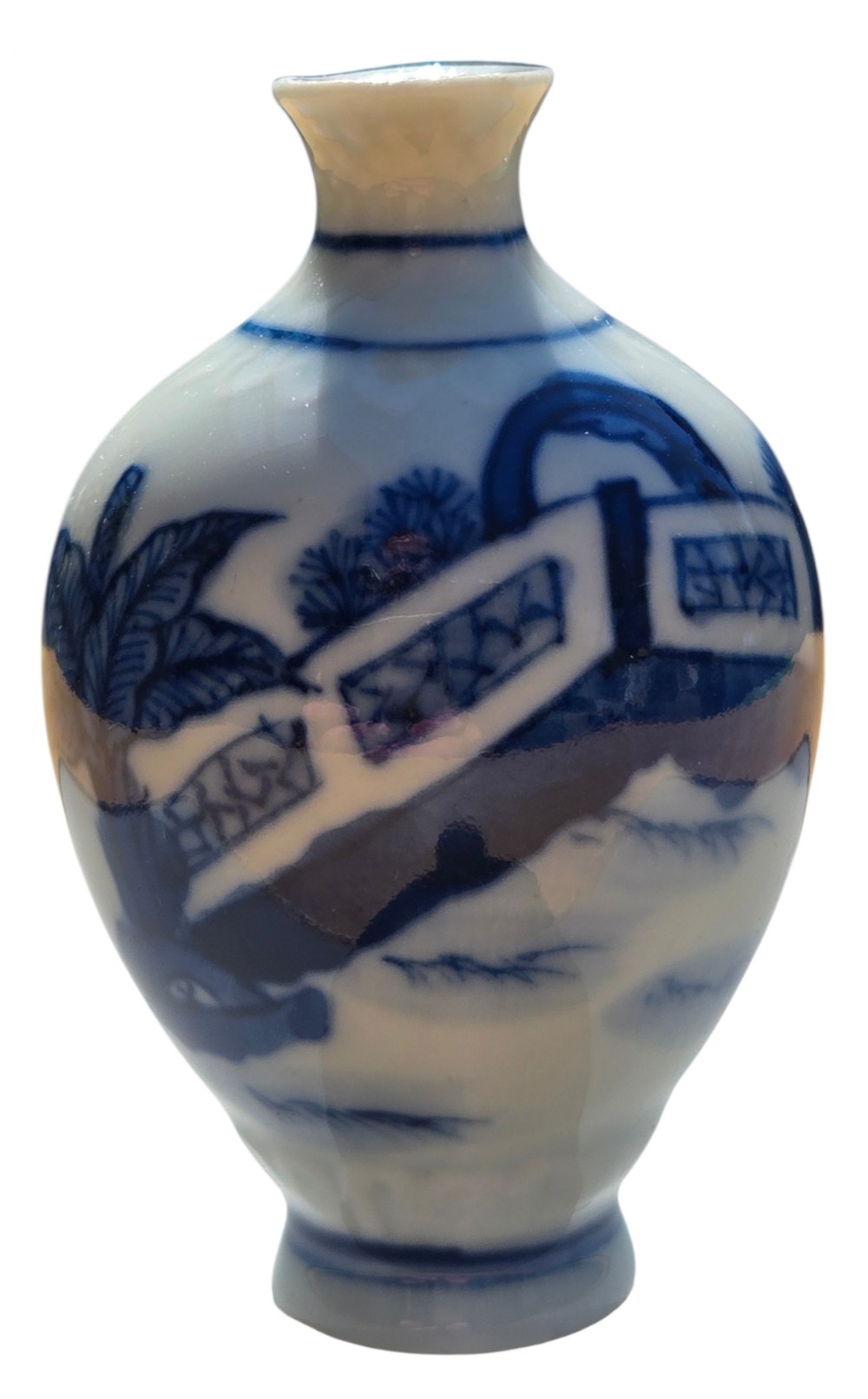
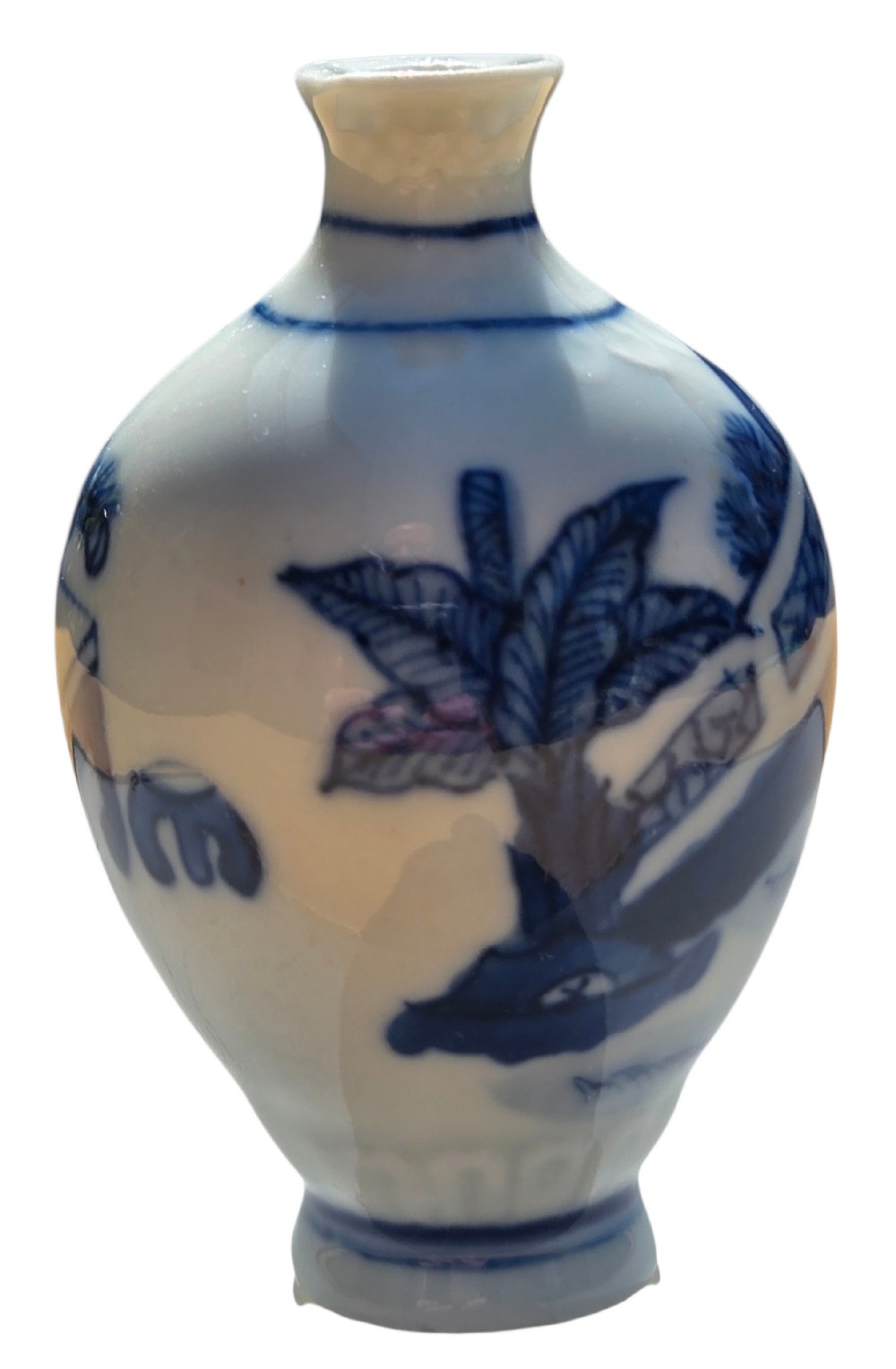
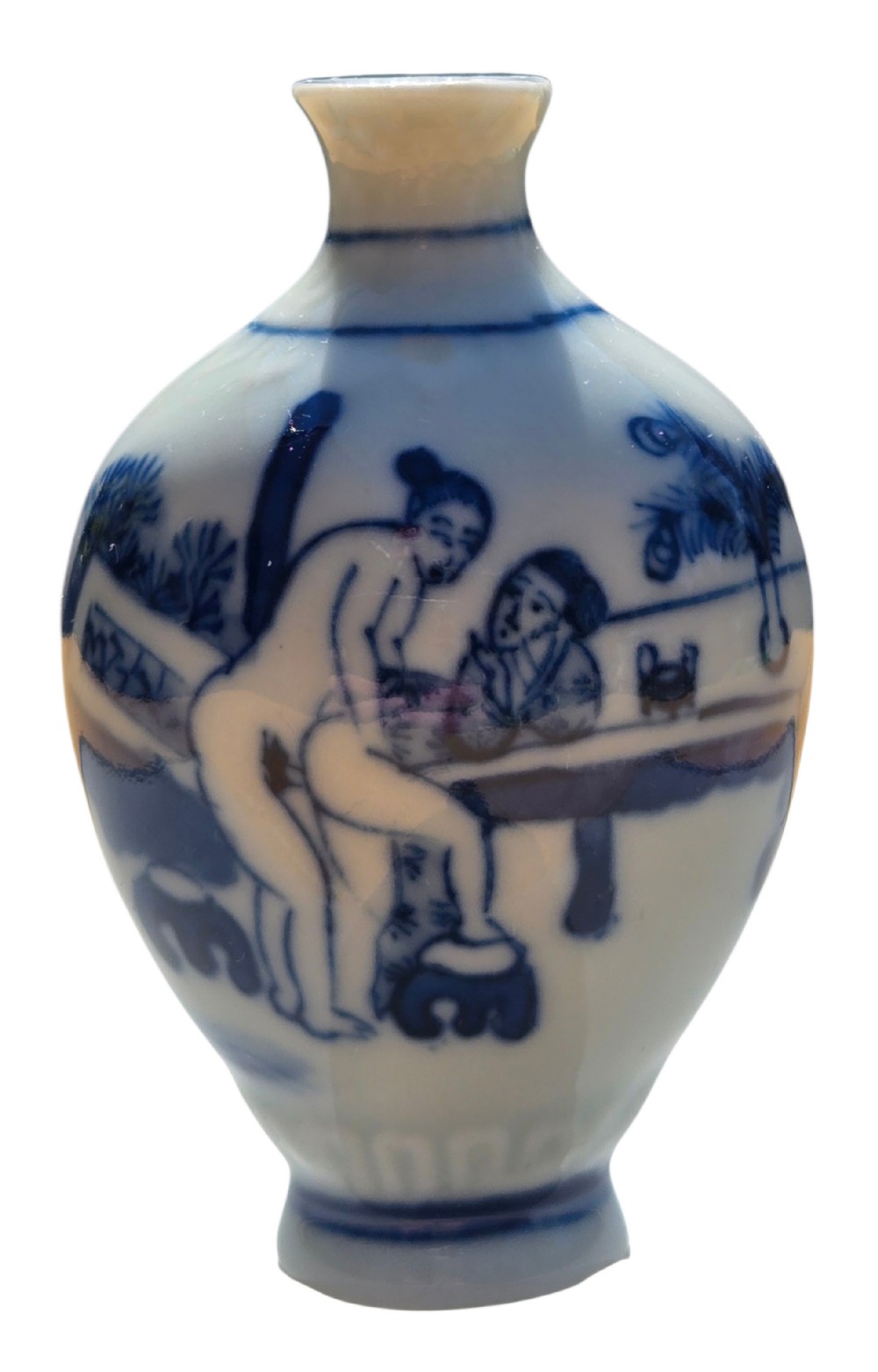
Sandbanks Antiques has dated this Chinese Porcelain Snuff Bottle to the 19th Century.
Featuring Moulded Relief Ornamentation – Daoguang Period (c. 1840)
Dimensions: 7.1 cm (Height) | 64.5 g (Mass)
Region: Imperial-quality Civilian Kilns, Jingdezhen
This is a remarkable survival of mid-19th-century Chinese "hidden" art.

The Rarity of the Subject
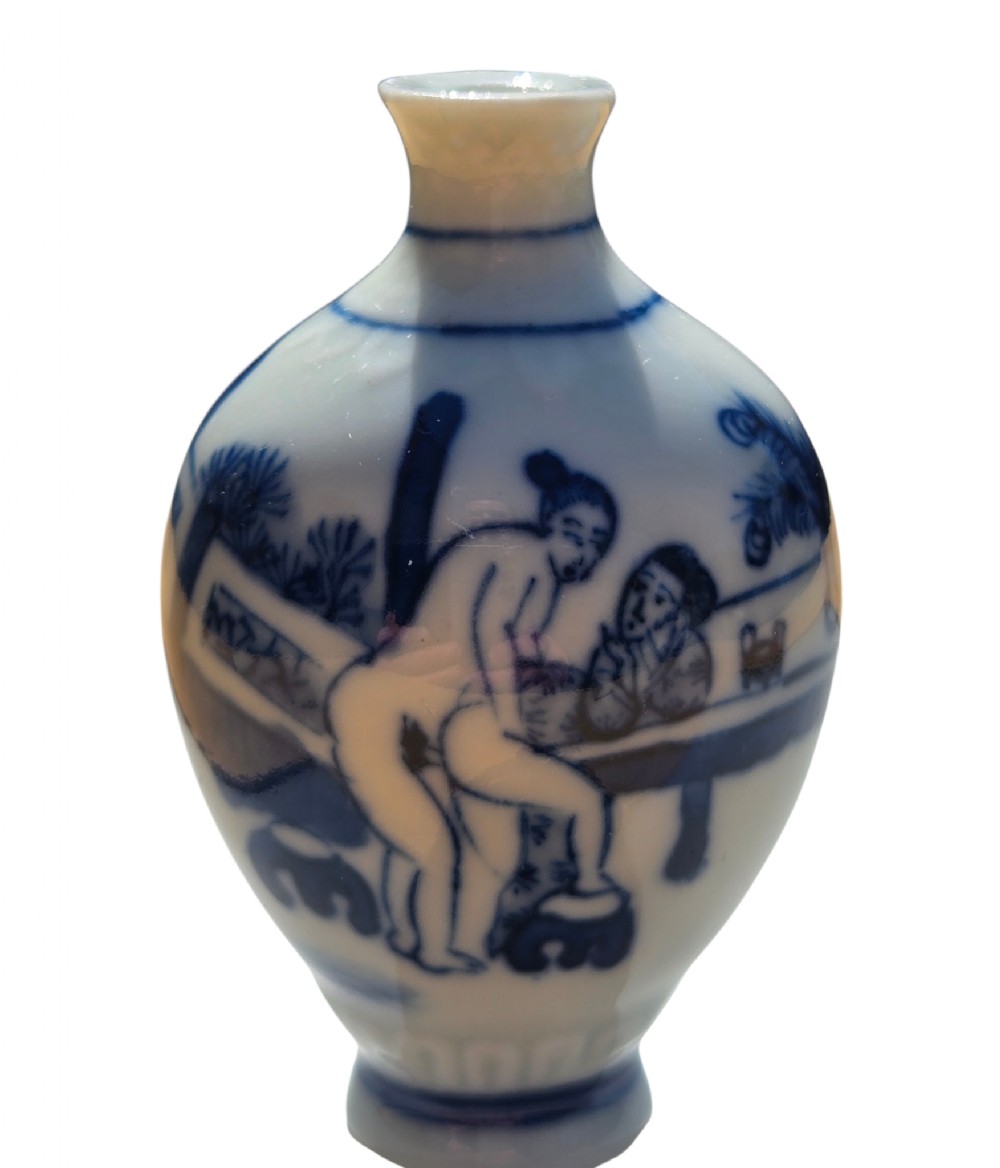
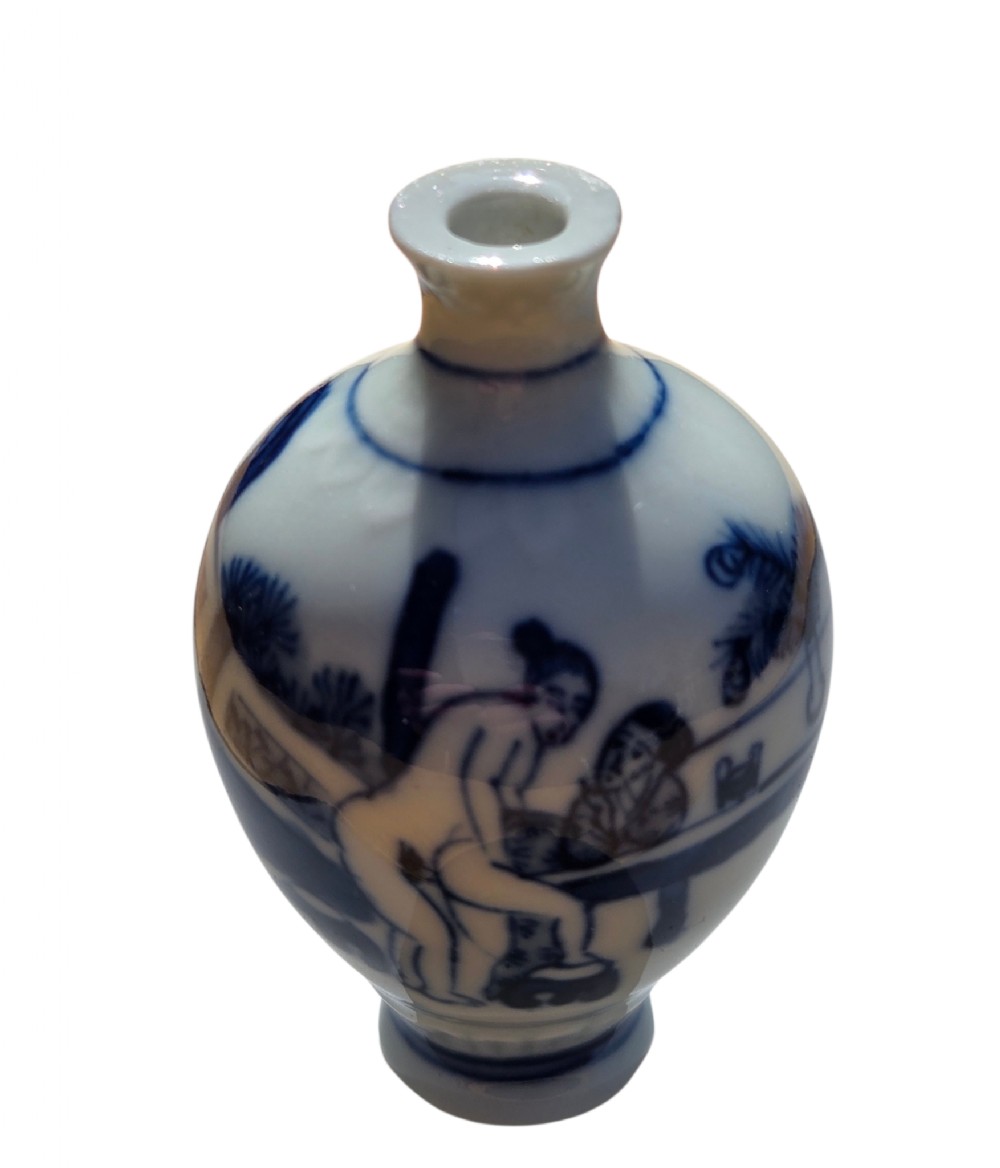
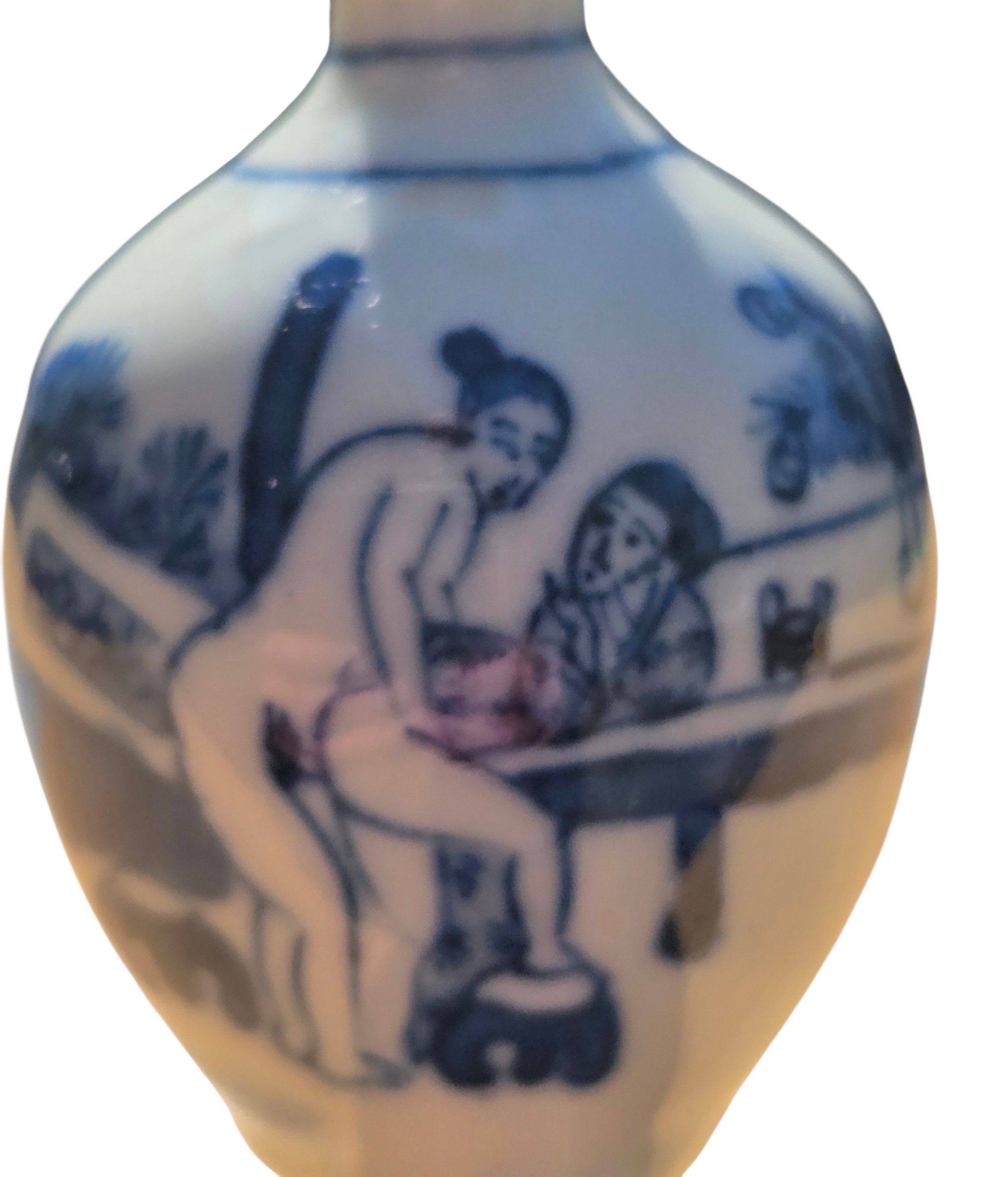
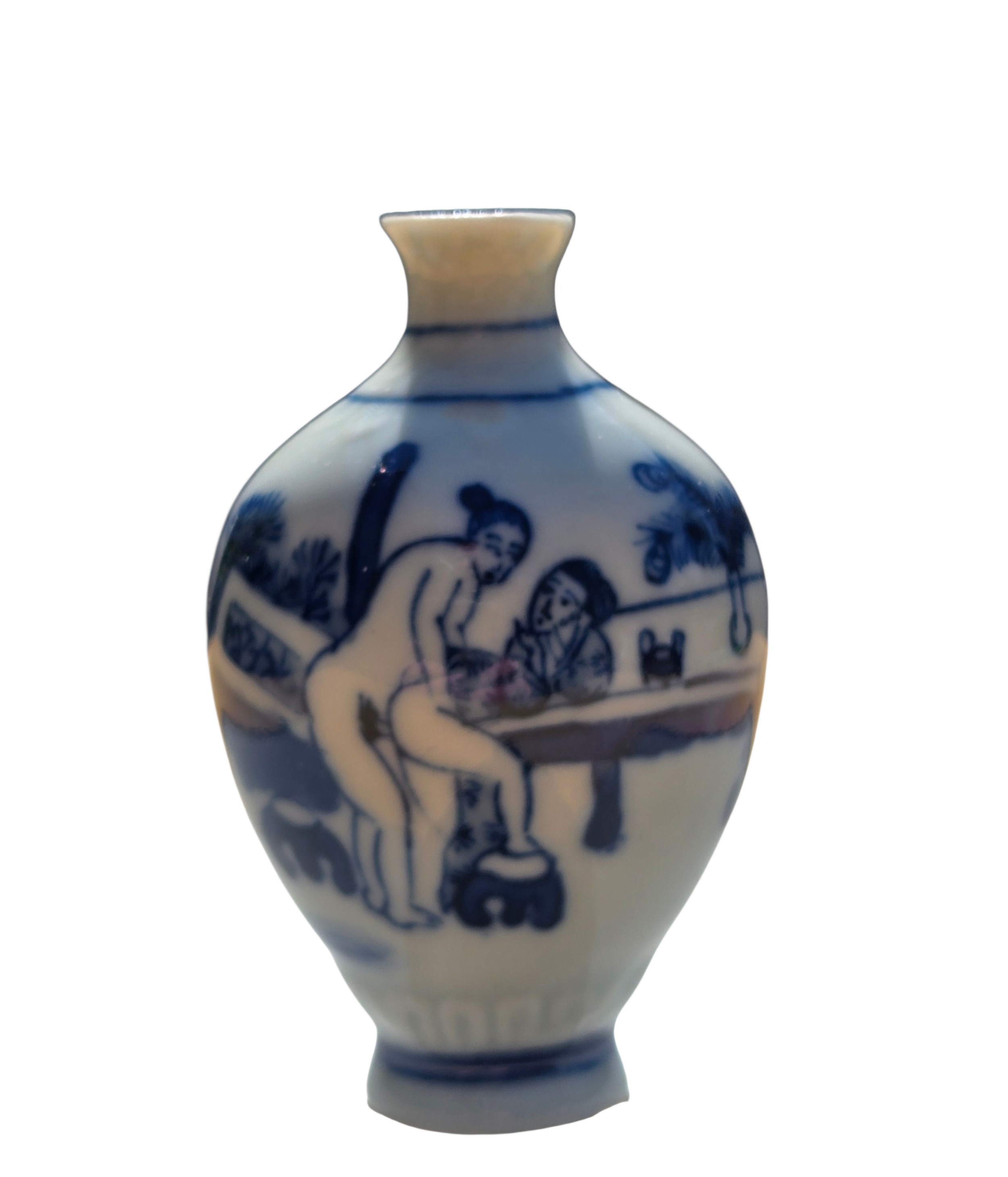
The "Mating" Scene: The bottle features a candid and masterfully hand-painted erotic encounter. In the 1840s, such subject matter was considered "underground." Owning a piece that combines this explicit narrative with complex moulded relief is incredibly rare; usually, one would sacrifice texture for the painting, but this bottle offers both.

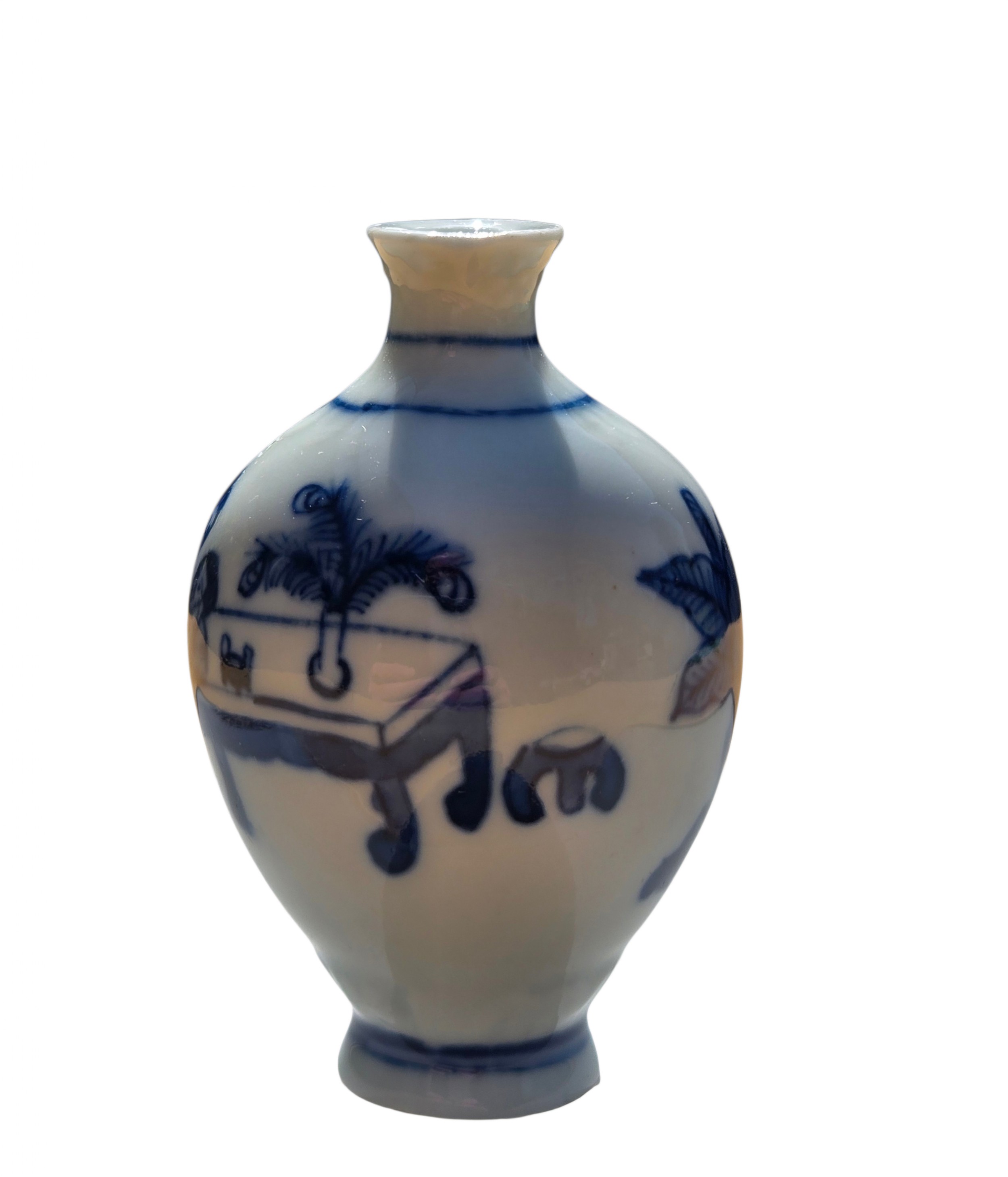
Artistic Detail: Unlike later "tourist" reproductions, the figures here possess distinct facial expressions and anatomical "life." The use of the double-line technique on the faces and the layered cobalt wash on the garden furniture elevates this from a mere novelty to a genuine piece of fine art.

Advanced Sculptural Features
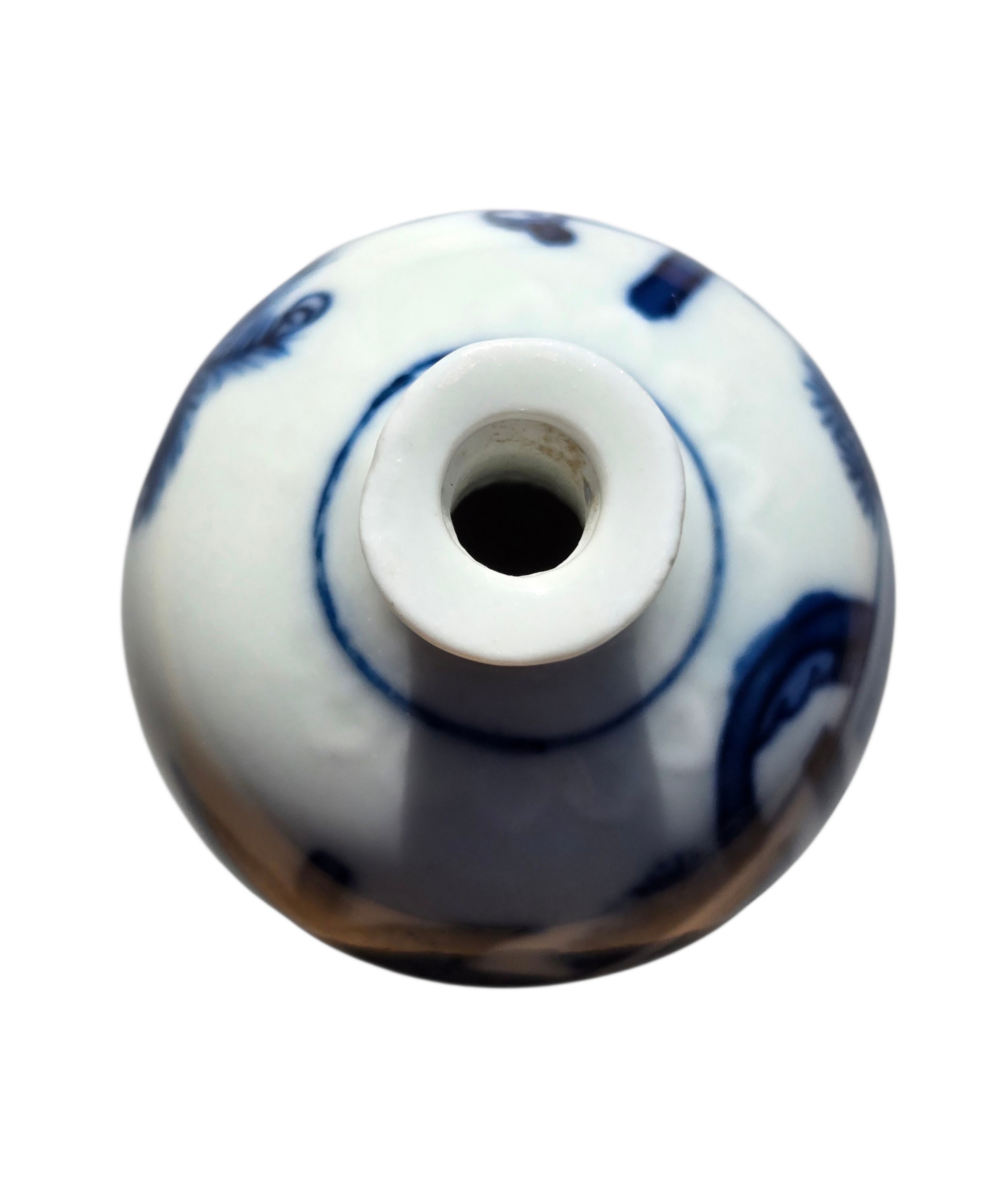
Moulded Basketweave (Honeycomb) Neck: A tactile triumph designed for the palm of the hand. This relief work was performed while the clay was "leather-hard," requiring a master’s touch to avoid collapsing the thin neck.

Ruyi-Head Foot Band: The base is encircled by a deep-relief moulded band of Ruyi heads. This juxtaposition of a "pious" symbol of good fortune with the "provocative" scene on the body is a classic example of Qing Dynasty irony and wit.

Authentication & Physical Presence
Exceptional Heft: Weighing a substantial 64.5 grams, the bottle has a dense, stone-like feel that immediately distinguishes it from later, thinner porcelain. This weight is the "gold standard" for authentic Daoguang-era kaolin paste.

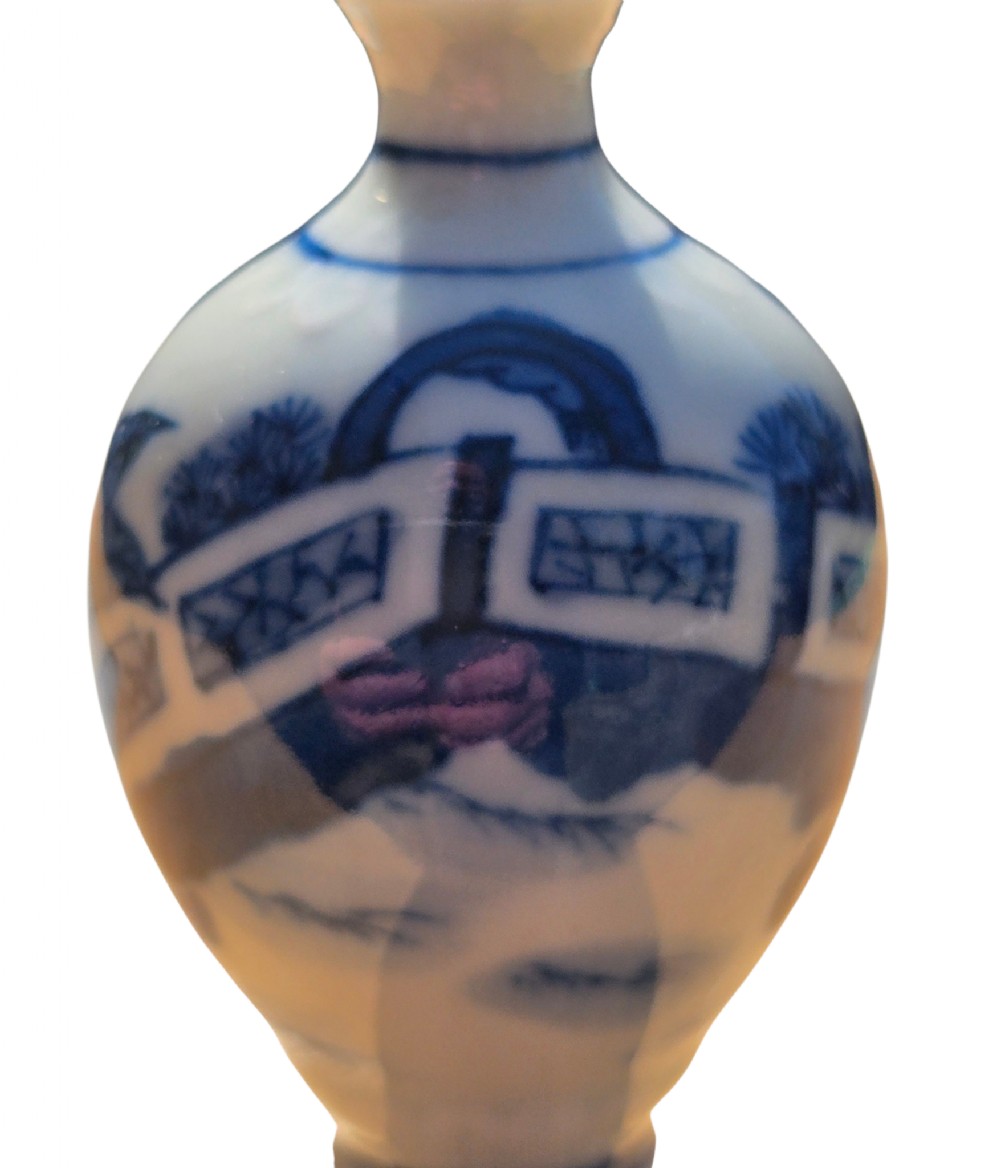
The "Cloaking" Landscape: The reverse side features a beautifully executed, scholarly landscape. This served as a "social mask," allowing the owner to carry the bottle discreetly in public while keeping the erotic scene hidden against the palm.

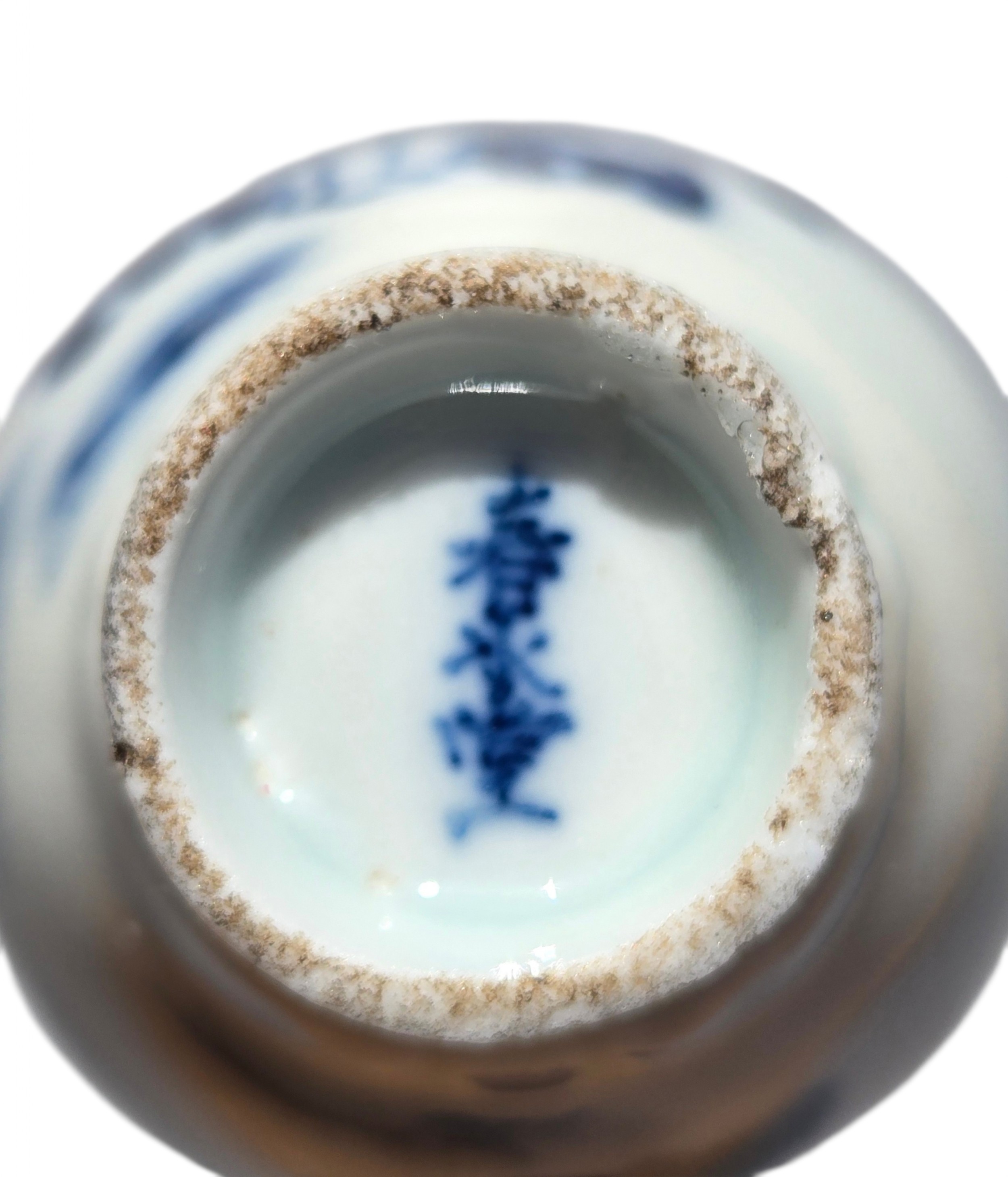
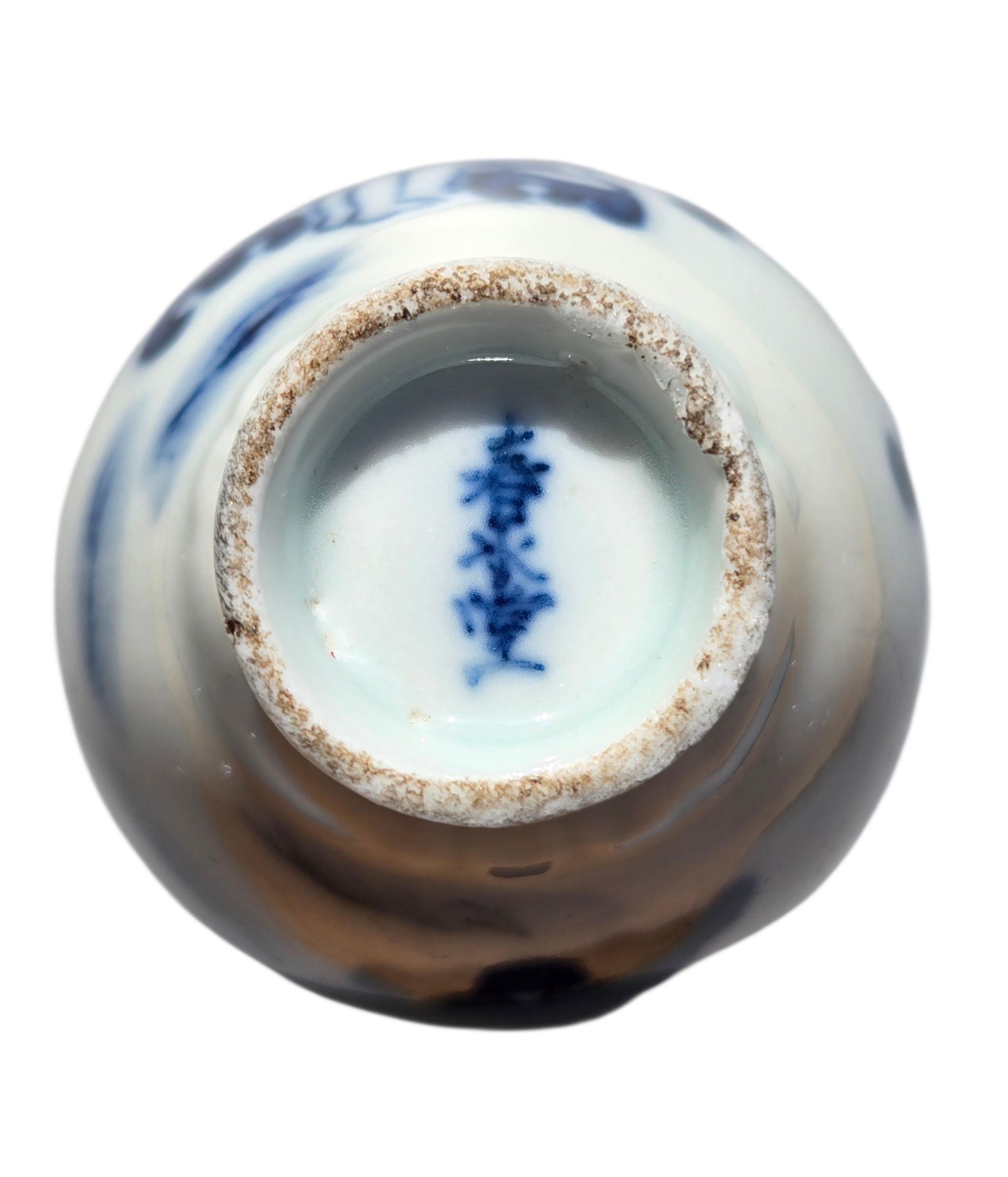
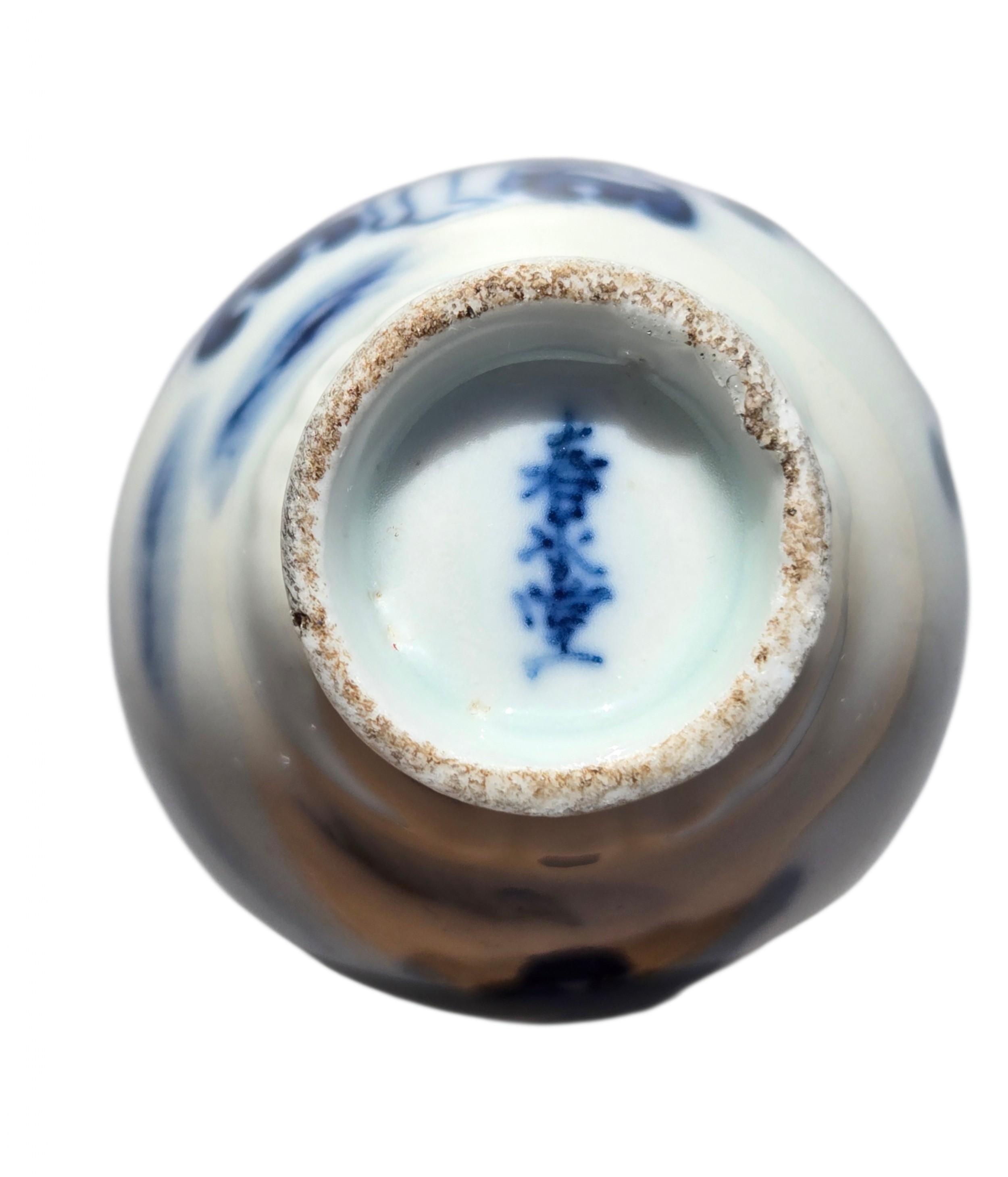
Foot Rim & Mark: The unglazed foot shows the expected iron-rust firing spots and grit associated with 19th-century wood-fired kilns. The base bears a hand-painted apocryphal Qianlong mark, typical for high-status pieces of the mid-1800s.
Sandbanks Antiques has dated this Chinese Porcelain Snuff Bottle to the 19th Century.
Specialising in antique silver, gold boxes, gold coins and objects de vertu. Rare fine-quality imperial chinese porcelain, jades, cloisonné
You can view the stock and full dealer information on the Sandbanks Antiques Profile Page

AN EXCEPTIONAL & HIGHLY RARE EROTIC 'SPRING PALACE' SNUFF BOTTLE Daoguang Period (c. 1840)