18,450  PAGES BROWSED TODAY PAGES TODAY 36  ANTIQUES UPLOADED TODAY NEW ARRIVALS
ID #SA1208817
FOR SALE
£95,000
Email
Save
George II Carved Mahogany Display Cabinet in the Manner of William Kent
Reindeer Antiques
for sale €111,150     $120,650
£95,000
Reindeer Antiques

Reindeer Antiques

Sellingantiques Verified Since May 2019
View Dealers Stock Page
  • About Us
    Specialists in english antique furniture from the early seventeenth century to the early nineteenth century. Based on kensington church st.
Id #SA1208817
PDF SHARE
SAVE

George II Carved Mahogany Display Cabinet in the Manner of William Kent

18th century
Description

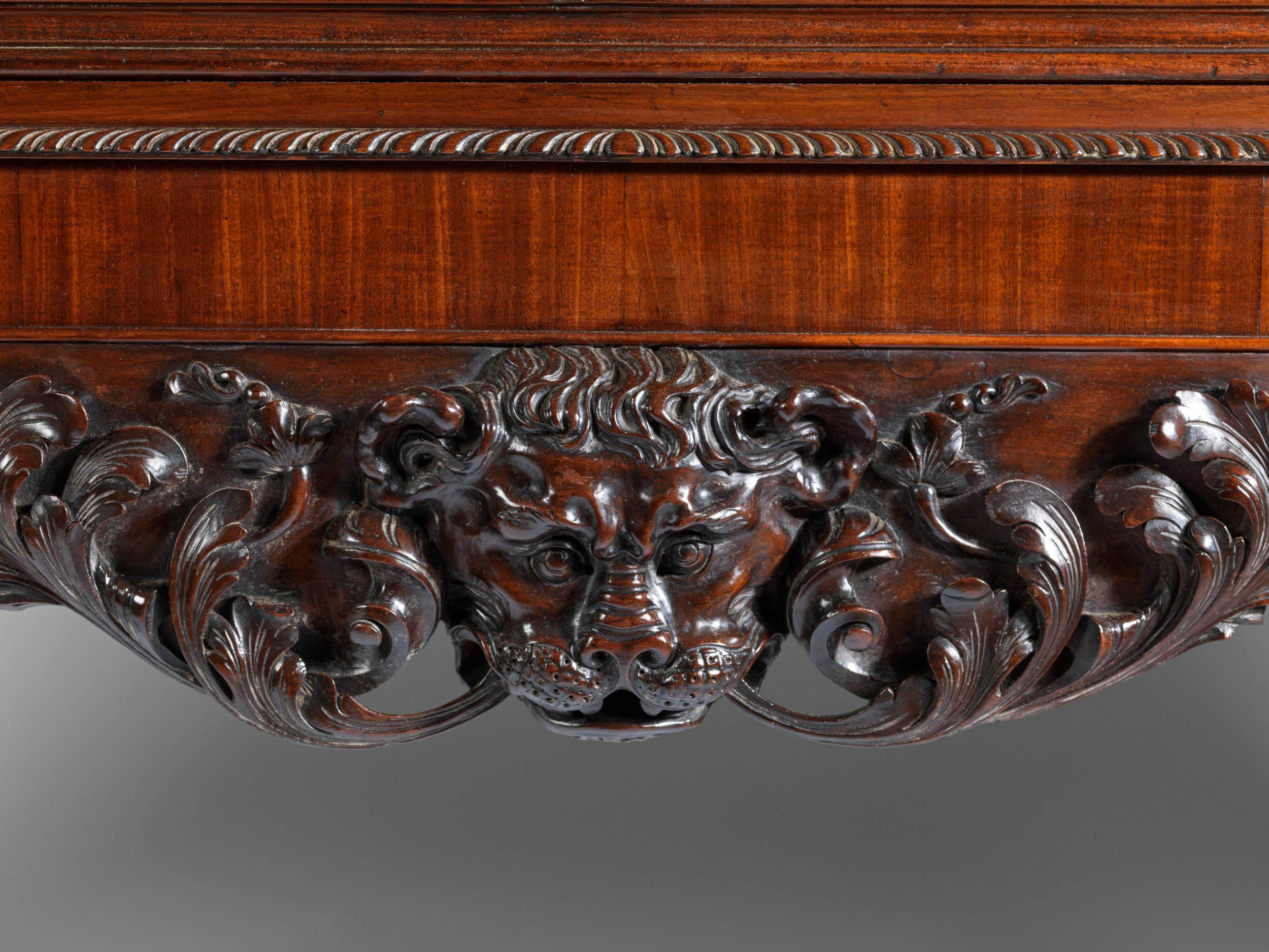
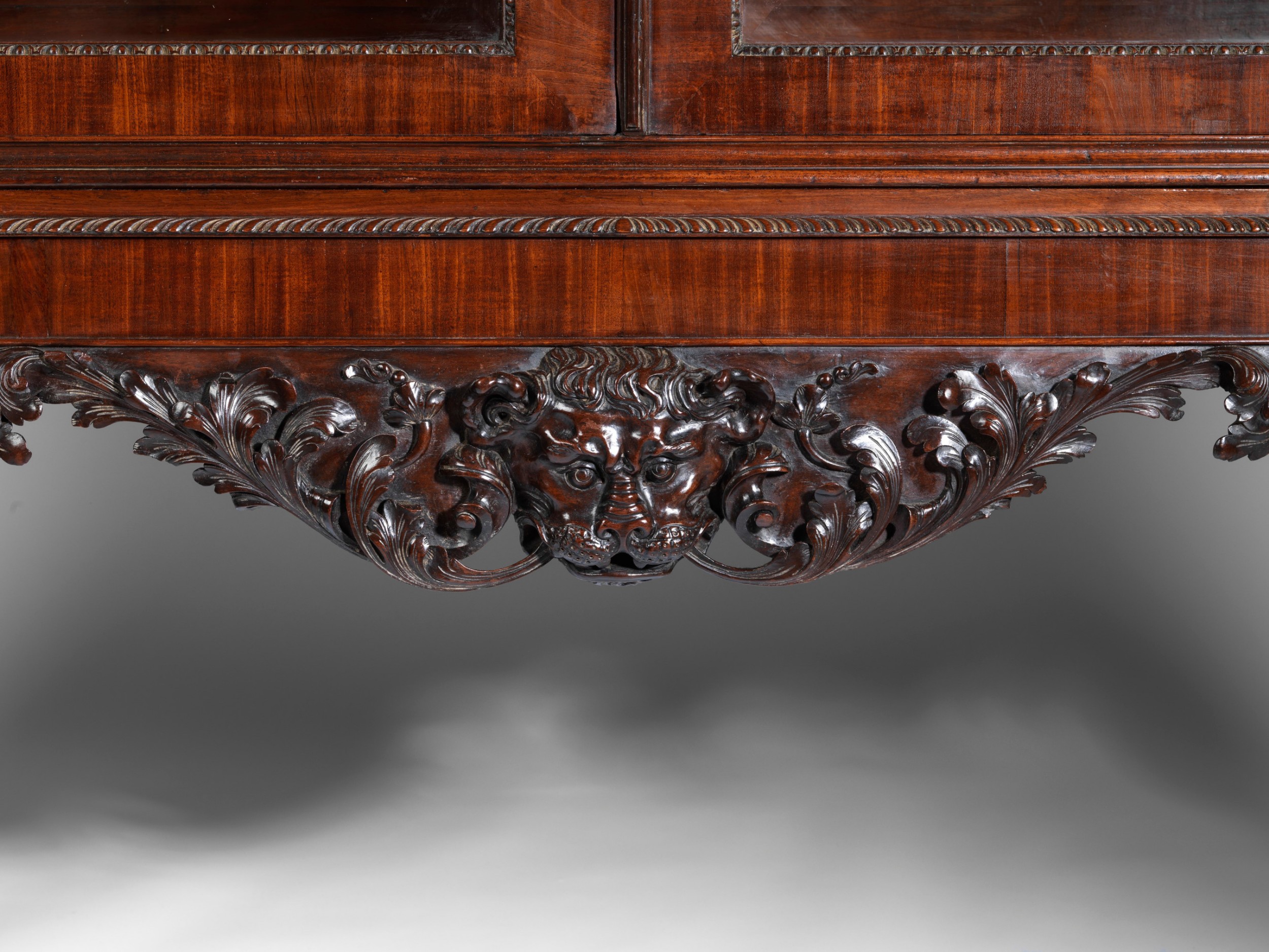
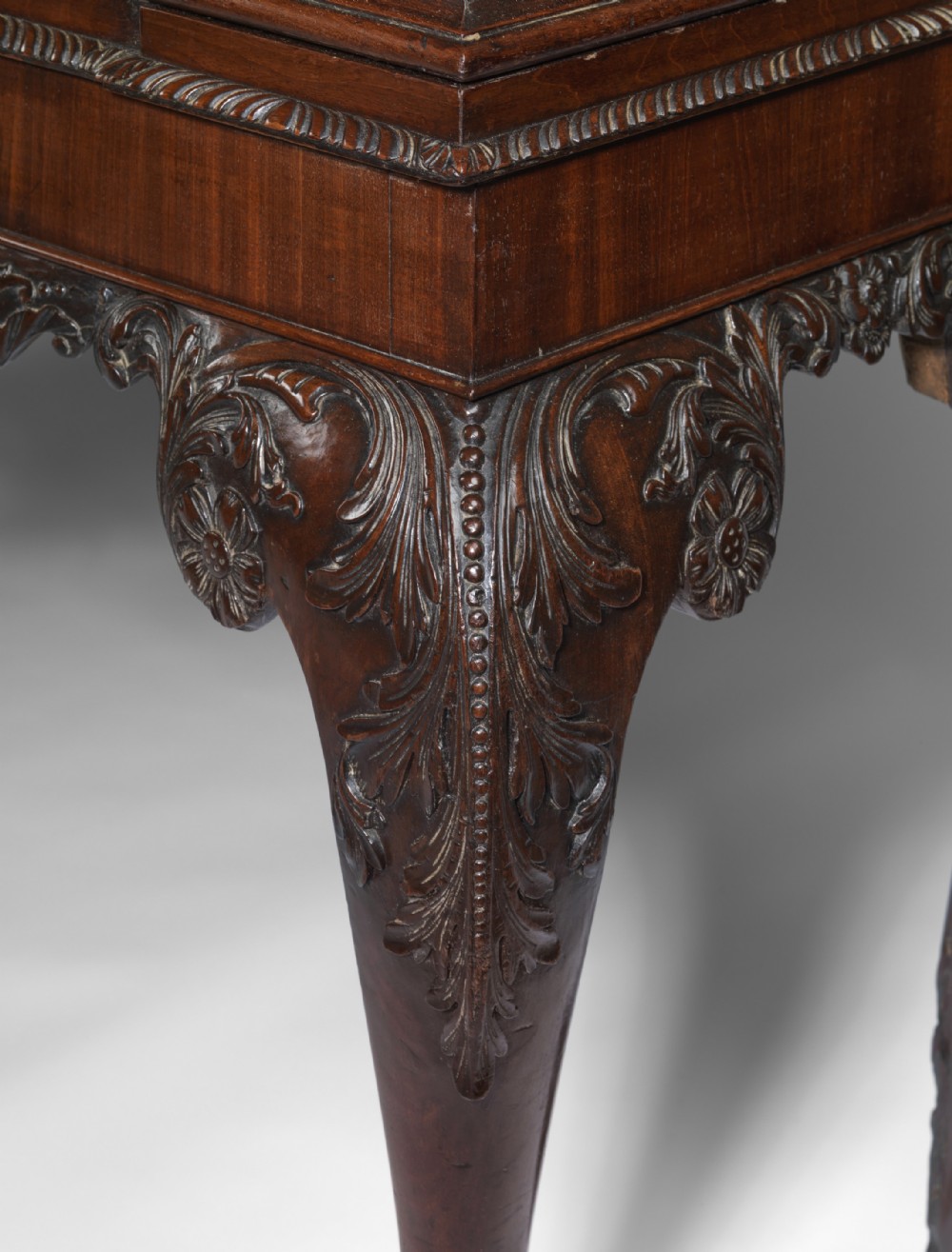
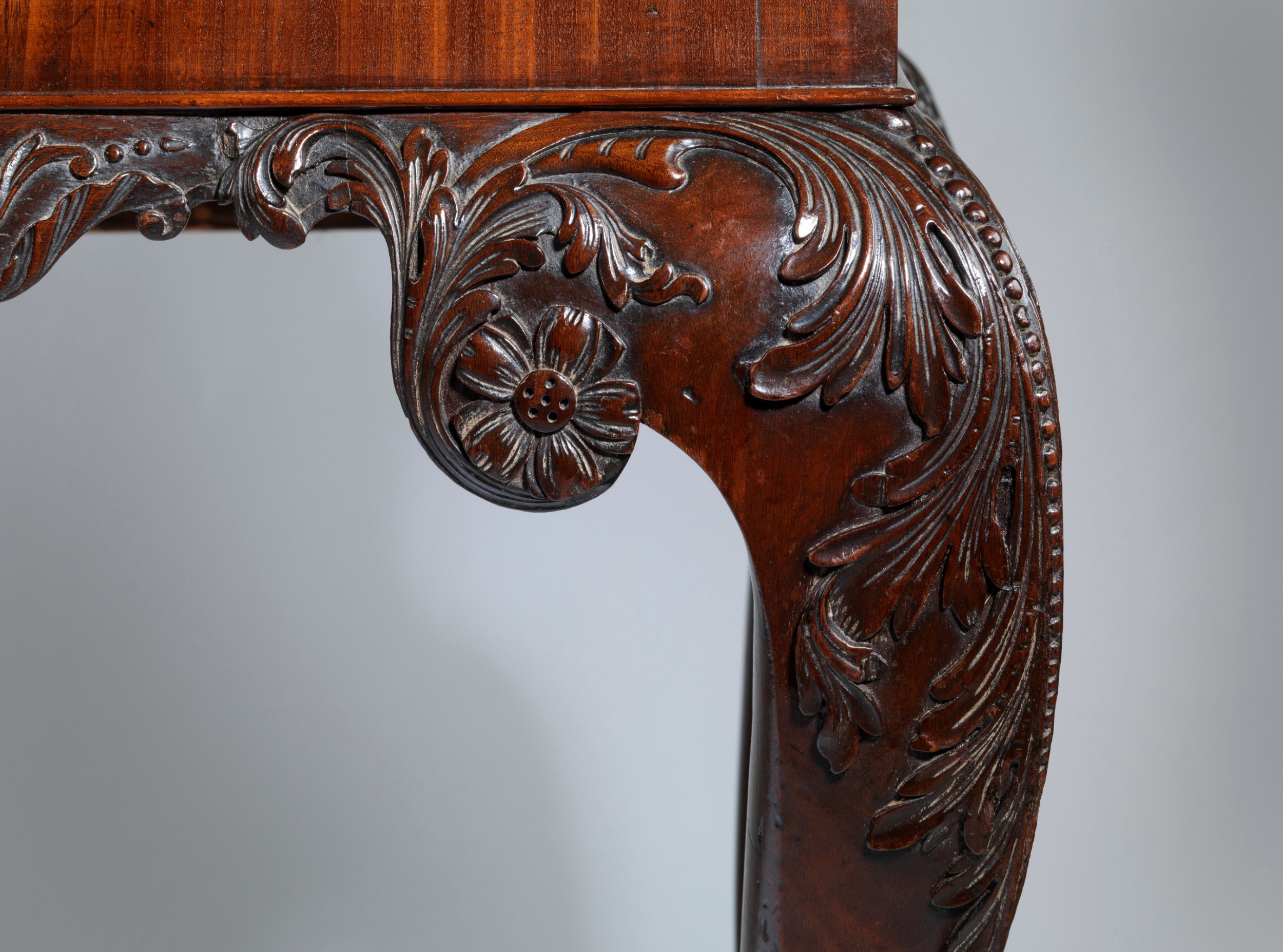
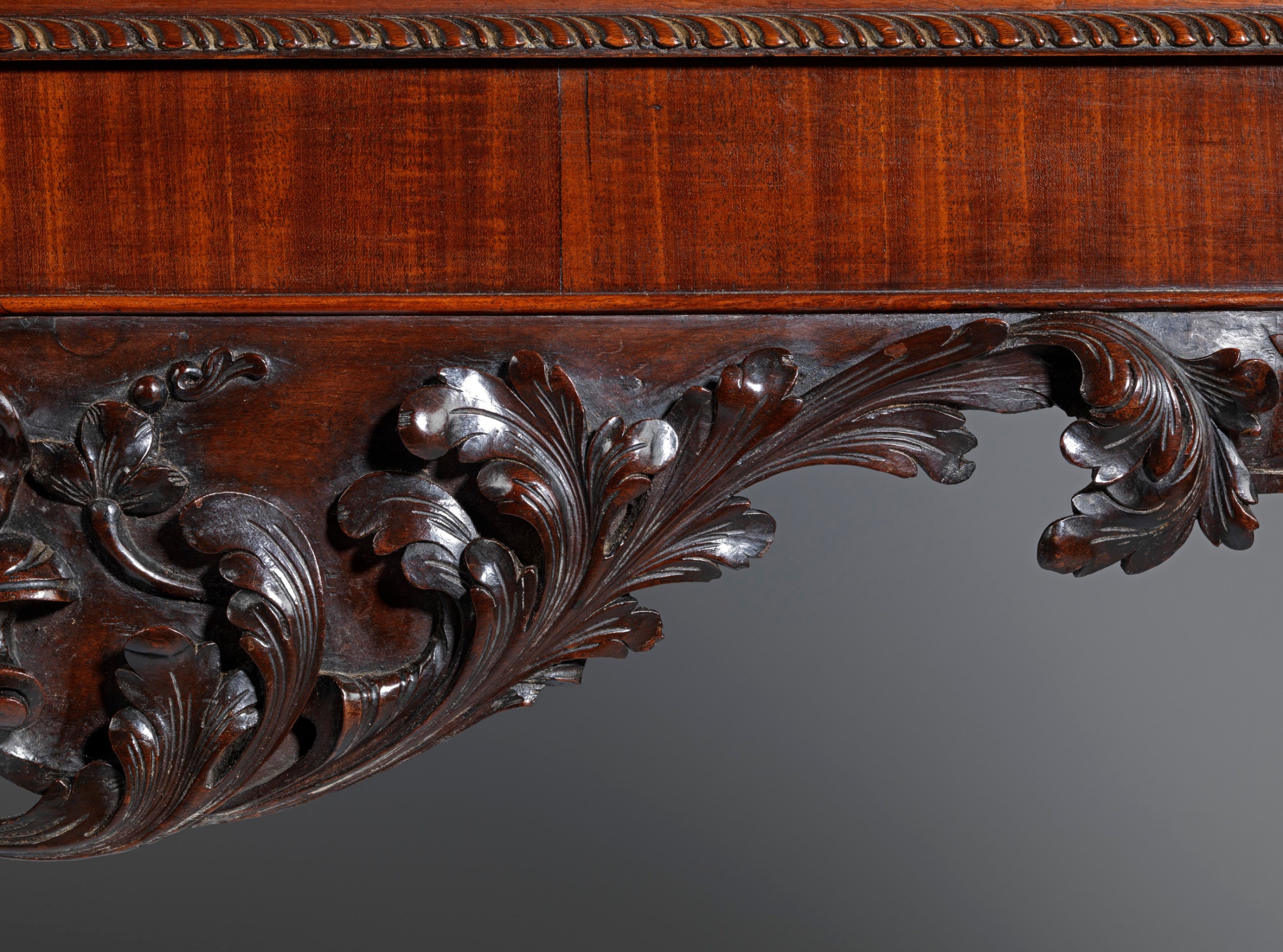
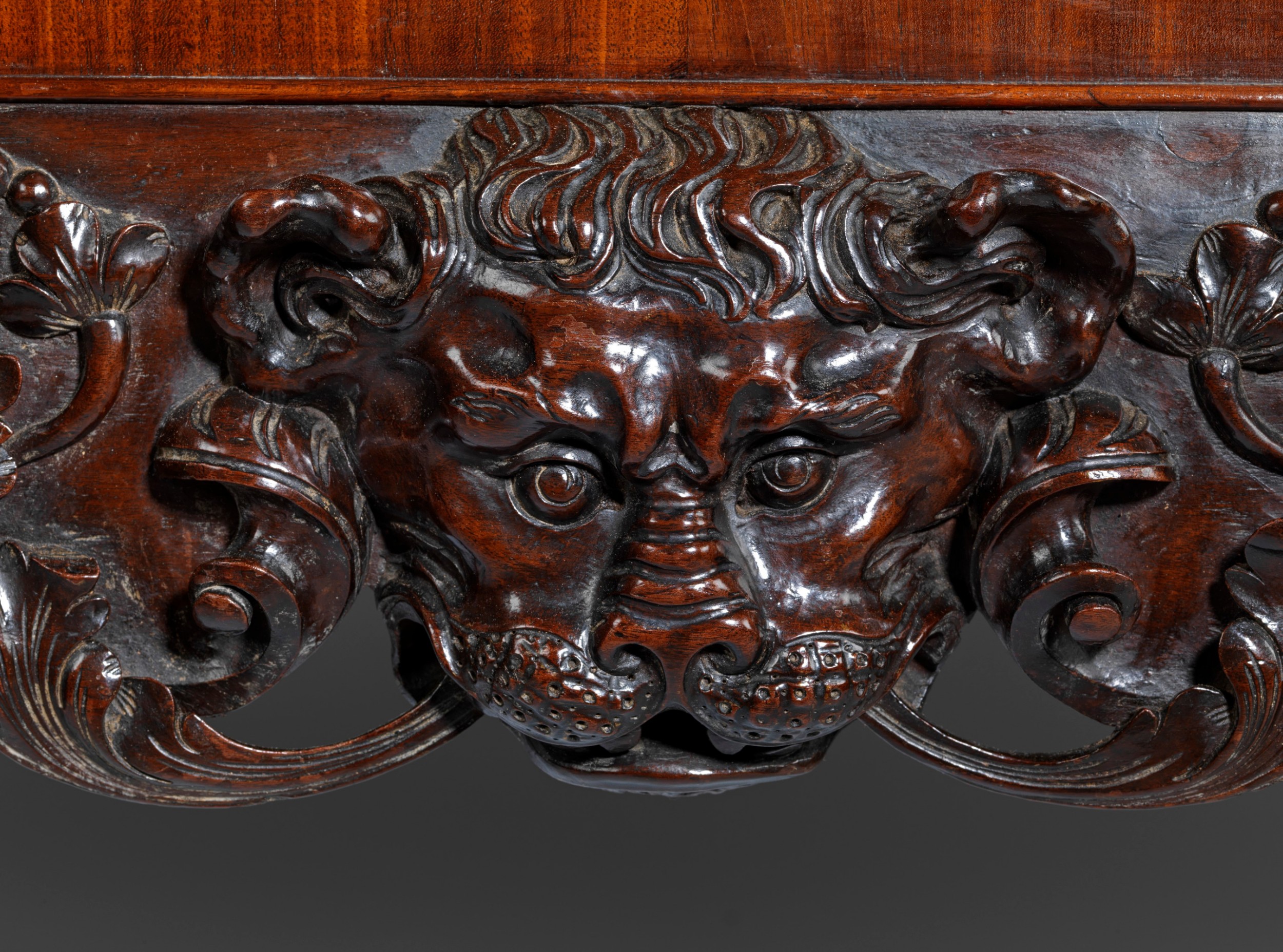
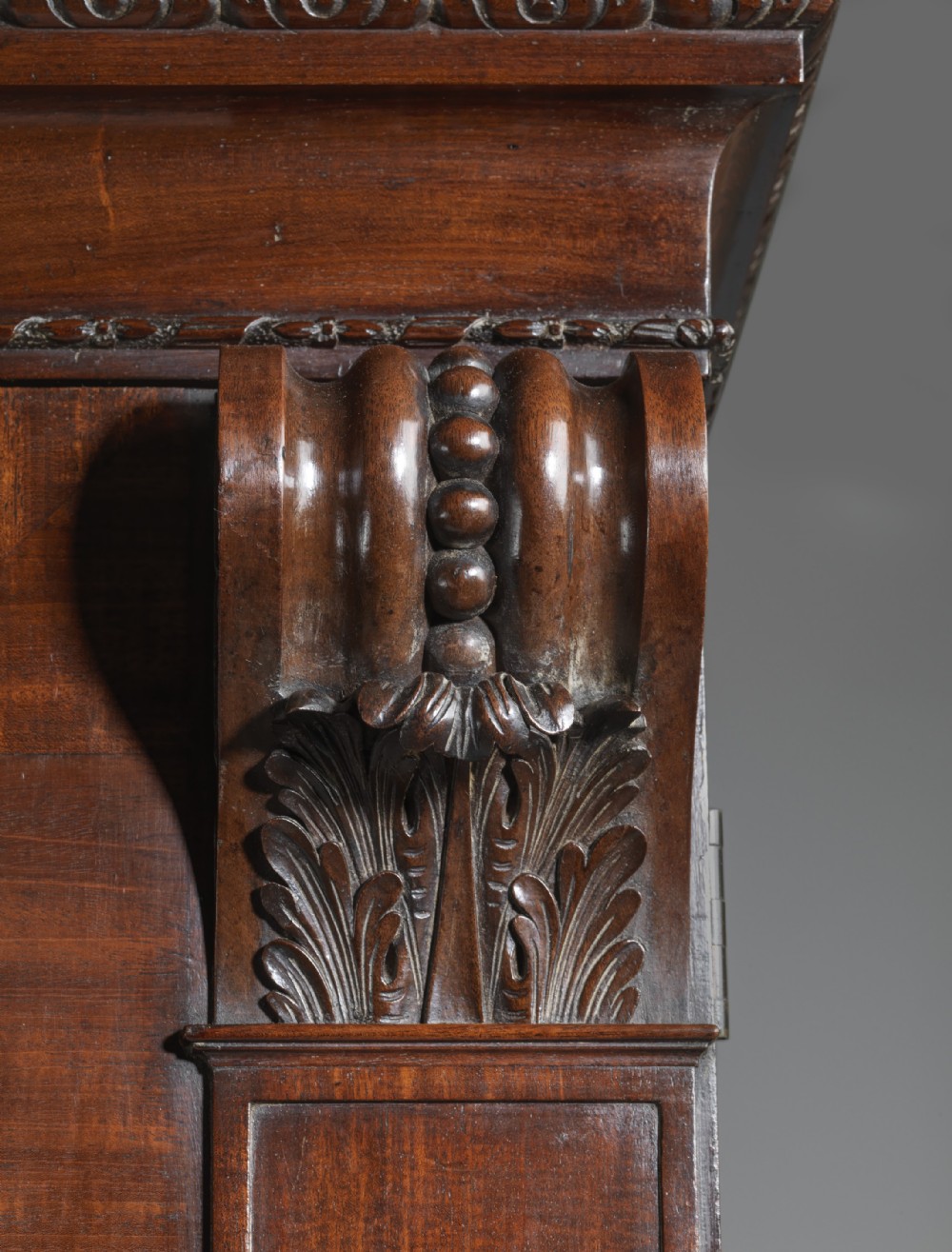
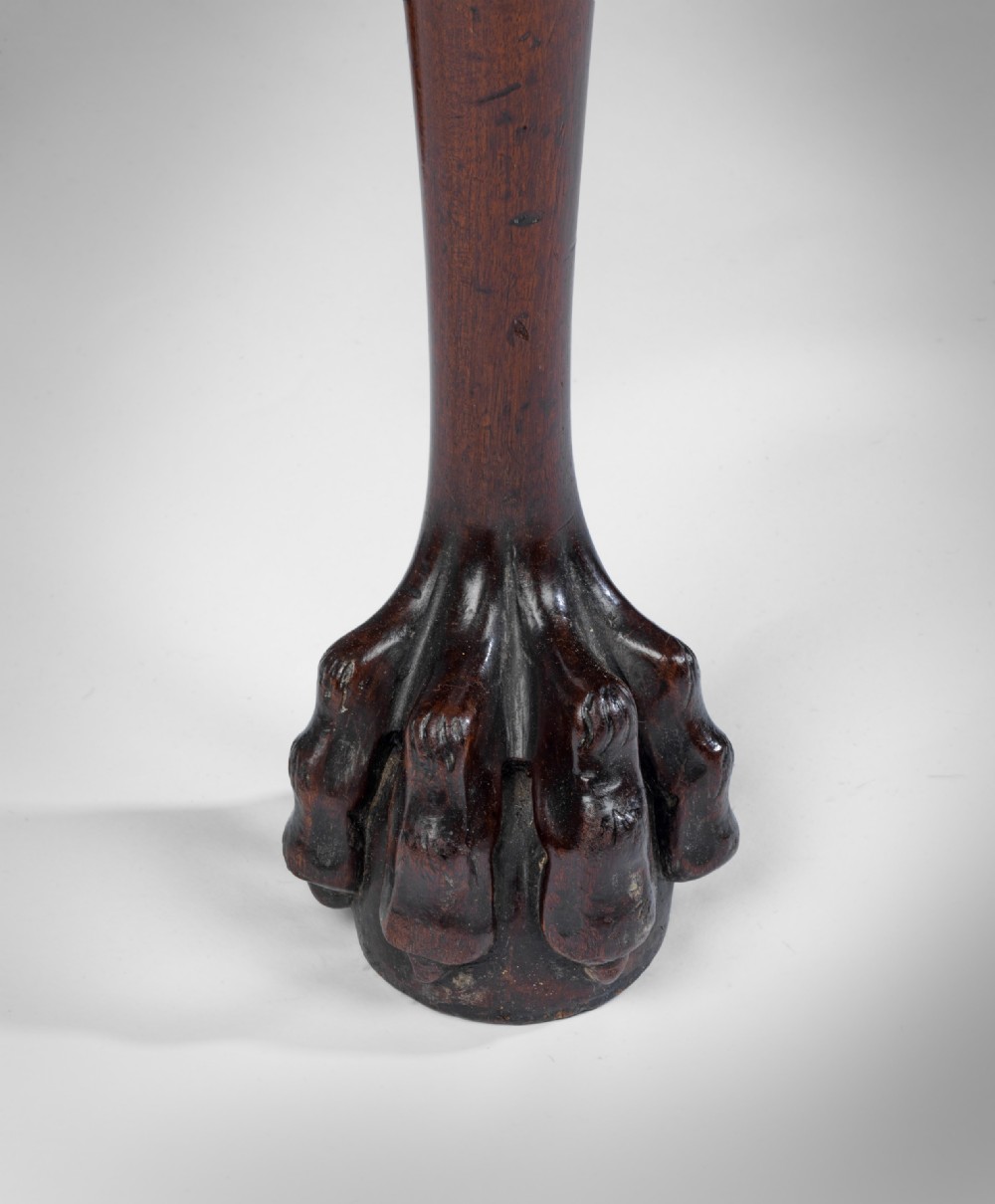
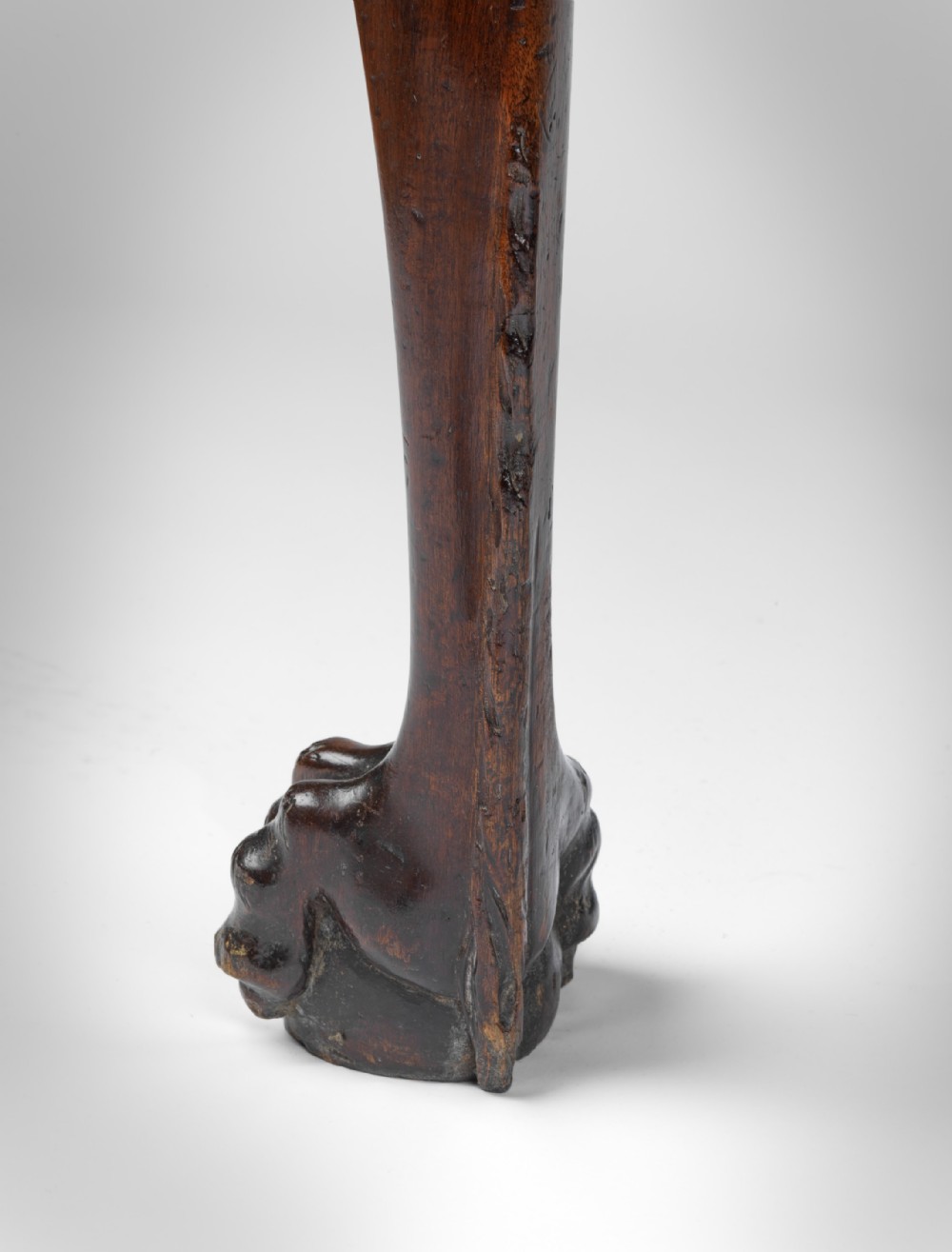
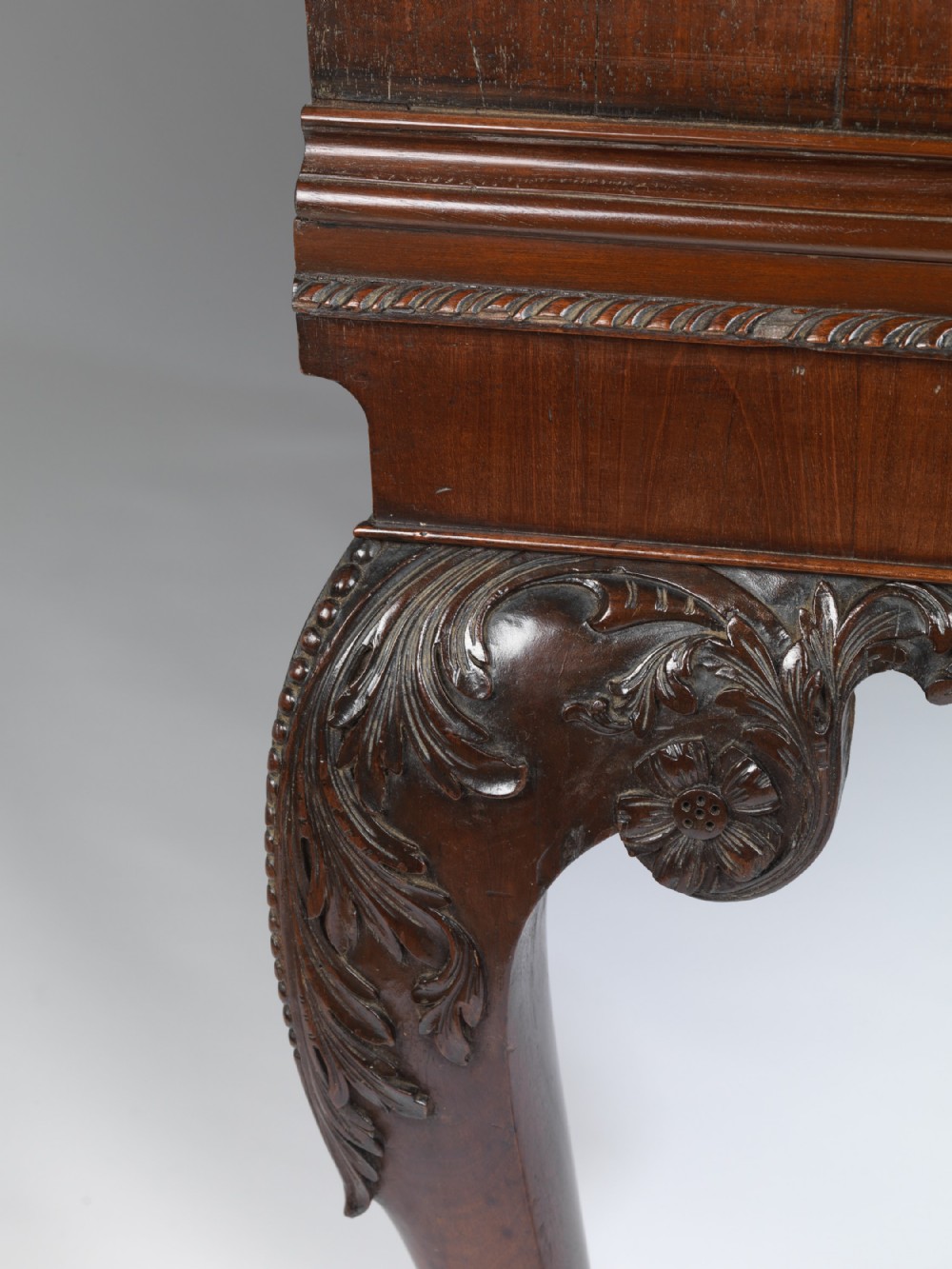
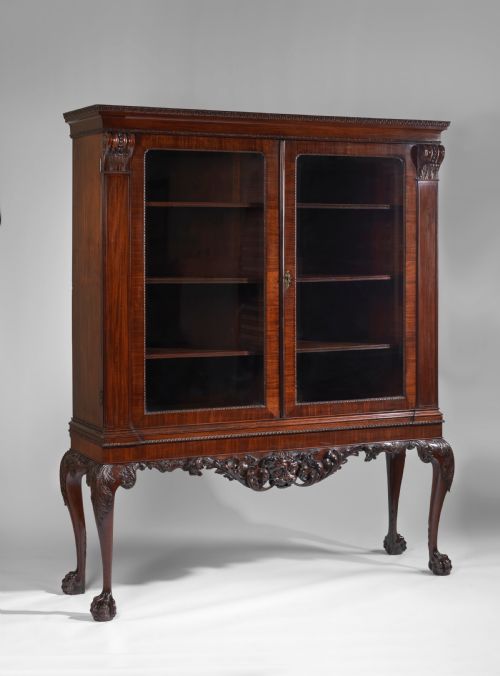
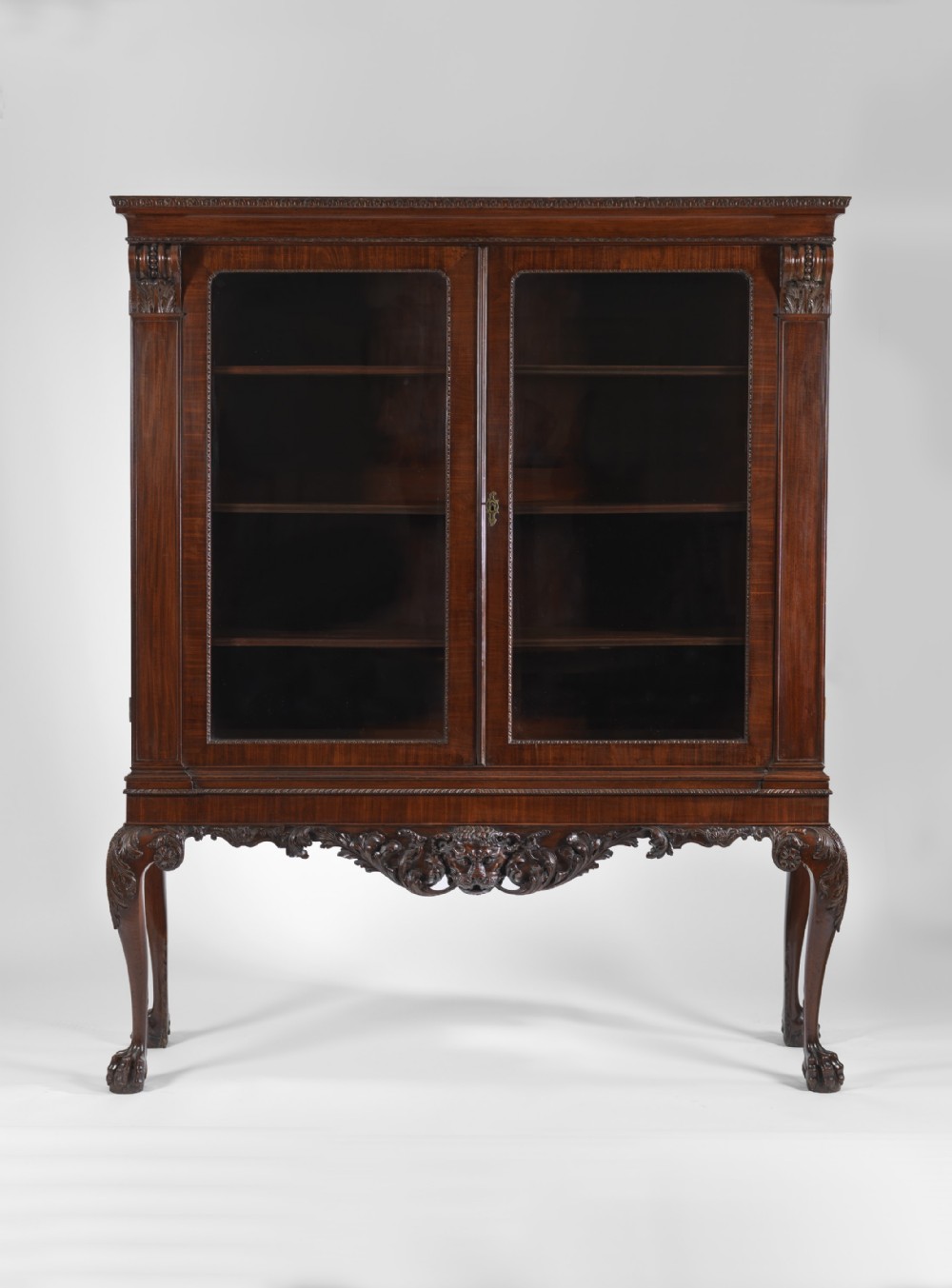
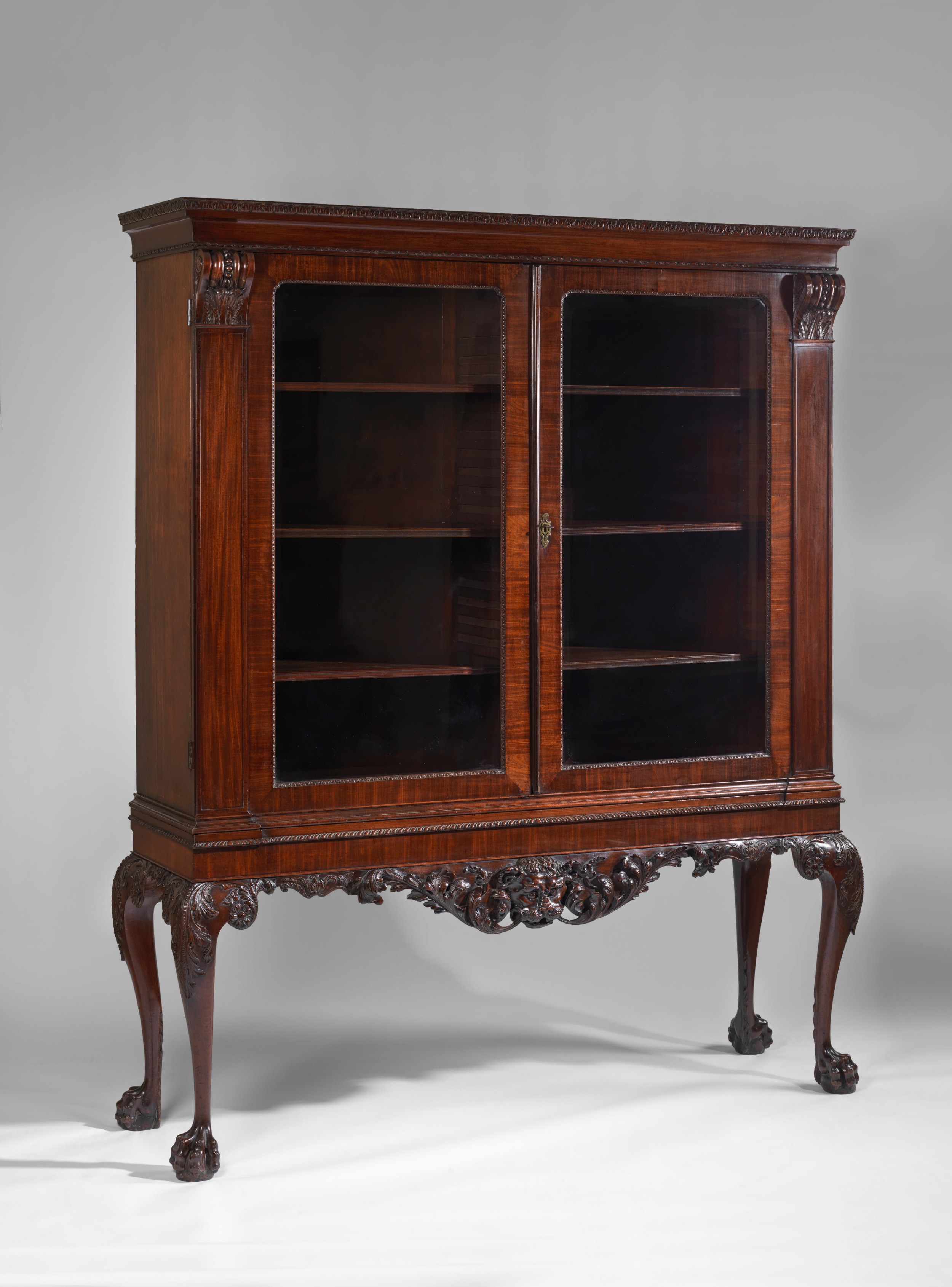
An exceptional George II mahogany display cabinet in the manner of William Kent; the cornice carved with running leaf and bead and reel mouldings above a pair of glazed doors which are crossbanded in mahogany and carved with egg and dart mouldings and are flanked by boldly carved corbels with projecting acanthus leaves. The base is exuberantly carved to the frieze with a central lion mask flanked by acanthus leaves and is raised on powerful cabriole legs which are boldly carved to the knee with acanthus and terminate in generous lion paw feet. The cabinet is constructed from the finest Cuban mahogany and retains a lovely untouched colour and patination.

This superb early Georgian display cabinet exemplifies not only the incredible skill of the cabinet-maker but the fascination among wealthy patrons with a 'Roman' style inspired by the classicism of the antique and the drama of the Baroque. The cabinet is a great example of this period with the austere classicism of the upper cabinet contrasting with the boldness and quality of the carving to the stand with its powerful cabriole legs and the wonderful lion mask to the centre of the frieze.

The taste for 'Roman' style furniture was popularised by Inigo Jones (1685-1748) and then William Kent (1685-1748). Both Jones and Kent were architect designers who spent time on the Grand Tour and a collection of their designs was published by John Vardy as Some Designs of Mr Inigo Jones and Mr Wm Kent in 1744. The cabinet borrows a series of motifs from these designs but most strikingly Kent's design for a table commissioned by Robert Walpole for Houghton Hall, plate 41, can clearly be seen as inspiration for the cabinet's base.

A group of cabinet-makers in Early Georgian London could be ascribed as authors of this cabinet among them Vile, Bradshaw and Goodison but the most likely is William Hallett (d.1781). Hallett established his business at Great Newport Street, Long Acre in 1730 and became the pre-eminent cabinet-maker in London. A hallmark of Hallett's furniture is the exquisite quality of the carved ornamentation and the use of crisply carved borders to outline a piece's general form: as seen on the running leaf moulding to the cornice, the egg and dart detailing to the doors and the gadrooning to the stand.

Tantalisingly the known provenance of the cabinet fits with a wonderful collection of furniture supplied to Langley Park, Norfolk. Langley Park was designed in the Kentian style by Matthew Brettingham (d. 1769) for George Proctor (d. 1744) and then his nephew Sir William Beauchamp-Proctor (1722-1773). Sir William commissioned furniture from Hallett, Vile, Bradshaw and Chippendale to furnish his home and there are several similarities to this published furniture and the cabinet. A suit of library bookcases created for the house by Hallett utilise identical carved motifs and the tables supplied by William Bradshaw have similar powerful legs with generous paw feet and identically hairy fetlocks. Frustratingly there is mention in the literature of two cabinets but unfortunately neither has been published.

Literature:

Peter Ward-Jackson (1958) English Furniture Designs of the Eighteenth Century pl. 18

Oliver Bracket (31 March, 1928) Country Life: 'The Furniture at Langley Park, II'

Ralph Edwards, Ed. (1954) Fig. 46 pg. 290

Christies London (6 July, 1995) Important English Furniture Lot 100

Christies New York (15 April, 2011) 500 Years: Decorative Arts Europe Lot 480

Physical Dimensions
Height
209cm (82.28")
Width
172.8cm (68.03")
Depth
49cm (19.29")
Declaration

Reindeer Antiques has dated this Carved Mahogany Display Cabinet to the 18th Century.
Reference Numbers
Sellingantiques Reference
SA1208817
Dealers Internal Reference
BA1110
Description
An exceptional George II mahogany display cabinet in the manner of William Kent; the cornice carved with running leaf and bead and reel mouldings above a pair of glazed doors which are crossbanded in mahogany and carved with egg and dart mouldings and are flanked by boldly carved corbels with projecting acanthus leaves. The base is exuberantly carved to the frieze with a central lion mask flanked by acanthus leaves and is raised on powerful cabriole legs which are boldly carved to the knee with acanthus and terminate in generous lion paw feet.
The cabinet is constructed from the finest Cuban mahogany and retains a lovely untouched colour and patination.
Reindeer Antiques
fig 1. A dark mahogany George II style display cabinet on stand featuring glazed double doors, a carved apron with central mask detail, and cabriole legs with claw and ball feet.
fig 1. George II Carved Mahogany Display Cabinet in the Manner of William Kent

This superb early Georgian display cabinet exemplifies not only the incredible skill of the cabinet-maker but the fascination among wealthy patrons with a 'Roman' style inspired by the classicism of the antique and the drama of the Baroque. The cabinet is a great example of this period with the austere classicism of the upper cabinet contrasting with the boldness and quality of the carving to the stand with its powerful cabriole legs and the wonderful lion mask to the centre of the frieze.
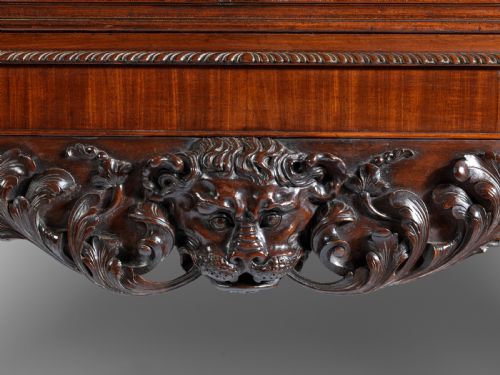
fig 2. A dark mahogany George II style display cabinet on stand featuring glazed double doors, a carved apron with central mask detail, and cabriole legs with claw and ball feet.
fig 2. George II Carved Mahogany Display Cabinet in the Manner of William Kent

The taste for 'Roman' style furniture was popularised by Inigo Jones (1685-1748) and then William Kent (1685-1748). Both Jones and Kent were architect designers who spent time on the Grand Tour and a collection of their designs was published by John Vardy as Some Designs of Mr Inigo Jones and Mr Wm Kent in 1744. The cabinet borrows a series of motifs from these designs but most strikingly Kent's design for a table commissioned by Robert Walpole for Houghton Hall, plate 41, can clearly be seen as inspiration for the cabinet's base.
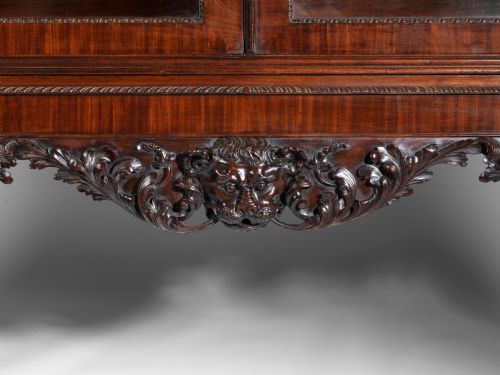
fig 3. A dark mahogany George II style display cabinet on stand featuring glazed double doors, a carved apron with central mask detail, and cabriole legs with claw and ball feet.
fig 3. George II Carved Mahogany Display Cabinet in the Manner of William Kent

A group of cabinet-makers in Early Georgian London could be ascribed as authors of this cabinet among them Vile, Bradshaw and Goodison but the most likely is William Hallett (d.1781). Hallett established his business at Great Newport Street, Long Acre in 1730 and became the pre-eminent cabinet-maker in London. A hallmark of Hallett's furniture is the exquisite quality of the carved ornamentation and the use of crisply carved borders to outline a piece's general form: as seen on the running leaf moulding to the cornice, the egg and dart detailing to the doors and the gadrooning to the stand.
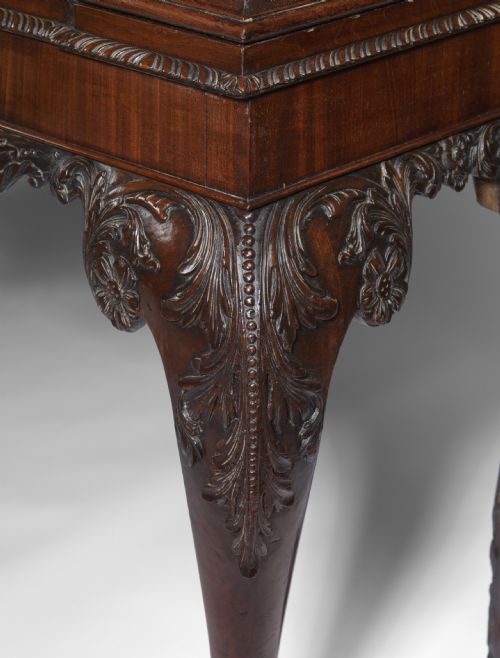
fig 4. A dark mahogany George II style display cabinet on stand featuring glazed double doors, a carved apron with central mask detail, and cabriole legs with claw and ball feet.
fig 4. George II Carved Mahogany Display Cabinet in the Manner of William Kent

Tantalisingly the known provenance of the cabinet fits with a wonderful collection of furniture supplied to Langley Park, Norfolk. Langley Park was designed in the Kentian style by Matthew Brettingham (d. 1769) for George Proctor (d. 1744) and then his nephew Sir William Beauchamp-Proctor (1722-1773). Sir William commissioned furniture from Hallett, Vile, Bradshaw and Chippendale to furnish his home and there are several similarities to this published furniture and the cabinet. A suit of library bookcases created for the house by Hallett utilise identical carved motifs and the tables supplied by William Bradshaw have similar powerful legs with generous paw feet and identically hairy fetlocks. Frustratingly there is mention in the literature of two cabinets but unfortunately neither has been published.
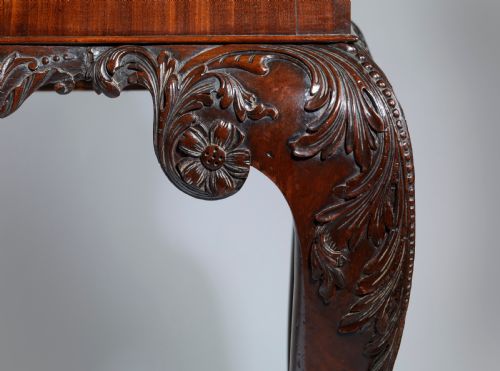
fig 5. A dark mahogany George II style display cabinet on stand featuring glazed double doors, a carved apron with central mask detail, and cabriole legs with claw and ball feet.
fig 5. George II Carved Mahogany Display Cabinet in the Manner of William Kent

Literature:

Peter Ward-Jackson (1958) English Furniture Designs of the Eighteenth Century pl. 18

Oliver Bracket (31 March, 1928) Country Life: 'The Furniture at Langley Park, II'

Ralph Edwards, Ed. (1954) Fig. 46 pg. 290

Christies London (6 July, 1995) Important English Furniture Lot 100

Christies New York (15 April, 2011) 500 Years: Decorative Arts Europe Lot 480

Height
209cm (82.28")
Width
172.8cm (68.03")
Depth
49cm (19.29")
Date of Manufacture

Reindeer Antiques has dated this Carved Mahogany Display Cabinet to the 18th Century.

Reference Numbers
Sellingantiques Ref
SA1208817
Dealers Internal Ref
BA1110
Reindeer Antiques
Reindeer Antiques
Sellingantiques verified Since May 2019

Specialists in english antique furniture from the early seventeenth century to the early nineteenth century. Based on kensington church st.

Dealer Profile

You can view the stock and full dealer information on the Reindeer Antiques Profile Page
PDF SHARE
SAVE
A dark mahogany George II style display cabinet on stand featuring glazed double doors, a carved apron with central mask detail, and cabriole legs with claw and ball feet.
1 / 12
Archive I A dark mahogany George II style display cabinet on stand featuring glazed double doors, a carved apron with central mask detail, and cabriole legs with claw and ball feet.

George II Carved Mahogany Display Cabinet in the Manner of William Kent
Archive II A dark mahogany George II style display cabinet on stand featuring glazed double doors, a carved apron with central mask detail, and cabriole legs with claw and ball feet. View II
Archive III A dark mahogany George II style display cabinet on stand featuring glazed double doors, a carved apron with central mask detail, and cabriole legs with claw and ball feet. View III
Archive IV A dark mahogany George II style display cabinet on stand featuring glazed double doors, a carved apron with central mask detail, and cabriole legs with claw and ball feet. View IV
Archive V A dark mahogany George II style display cabinet on stand featuring glazed double doors, a carved apron with central mask detail, and cabriole legs with claw and ball feet. View V
Archive VI A dark mahogany George II style display cabinet on stand featuring glazed double doors, a carved apron with central mask detail, and cabriole legs with claw and ball feet. View VI
Archive VII A dark mahogany George II style display cabinet on stand featuring glazed double doors, a carved apron with central mask detail, and cabriole legs with claw and ball feet. View VII
Archive VIII A dark mahogany George II style display cabinet on stand featuring glazed double doors, a carved apron with central mask detail, and cabriole legs with claw and ball feet. View VIII
Archive IX A dark mahogany George II style display cabinet on stand featuring glazed double doors, a carved apron with central mask detail, and cabriole legs with claw and ball feet. View IX
Archive X A dark mahogany George II style display cabinet on stand featuring glazed double doors, a carved apron with central mask detail, and cabriole legs with claw and ball feet. View X
Archive XI A dark mahogany George II style display cabinet on stand featuring glazed double doors, a carved apron with central mask detail, and cabriole legs with claw and ball feet. View XI
Archive XII A dark mahogany George II style display cabinet on stand featuring glazed double doors, a carved apron with central mask detail, and cabriole legs with claw and ball feet. View XII
Enlarged Archival View
Telephone 020 7937 3754
Location
81 Kensington Church Street
London
W8 4BG
United Kingdom
Verified Since May 2019
Items For Sale 84
Items Sold 244
Reindeer Antiques
Reindeer Antiques
Verified Since May 2019
View Dealer Info
Location: 81 Kensington Church Street, London, W8 4BG, United Kingdom
Verified
May 2019
For Sale
84
Sold
244
A dark mahogany George II style display cabinet on stand featuring glazed double doors, a carved apron with central mask detail, and cabriole legs with claw and ball feet.
George II carved mahogany display cabinet in the manner of William Kent
Ref: SA1208817
A dark mahogany George II style display cabinet on stand featuring glazed double doors, a carved apron with central mask detail, and cabriole legs with claw and ball feet.
Detail View 1
Detail View 2
Detail View 3
Detail View 4
Detail View 5
Detail View 6
Detail View 7
Detail View 8
Detail View 9
Detail View 10
Detail View 11
Archival Detail
Every single antique dealer on our platform is individually approved by our internal team. We verify their professional trade history, ethical standards, and photographic quality to ensure a secure, high-standard buying environment. Upon joining, every dealer agrees to a strict 9-point code of conduct. While issues can occasionally arise, our dealers typically resolve them swiftly and directly with the buyer. In fact, since our founding in 2002, Sellingantiques has only had to step in to help resolve an issue on roughly five occasions—a true testament to the quality of our dealers and their dedication to your happiness.
Our dealers are highly experienced in packing and shipping fragile, high-value antiques. Because you are in direct contact with the dealer, you will be able to easily go through all available shipping and insurance options together to ensure your item arrives safely.
Antiques are the ultimate green purchase. By choosing historical pieces over newly manufactured goods, you completely eliminate the carbon footprint of modern mass production while preserving exceptional, timeless craftsmanship.

Furniture from the George II era, particularly pieces influenced by architect William Kent, incorporates classical Palladian architectural elements. Design hallmarks include heavy carved architectural moulding, pediments, pilasters, grotesque or lion masks, acanthus leaf carvings, and substantial cabriole legs terminating in claw and ball feet.

Primary construction utilised dense, imported Cuban mahogany for its rich grain, stability, and carving properties. Secondary woods like pine or oak formed the drawer linings and backboards, while original hand-blown glass and brass keyhole escutcheons completed the construction.

Authentic period cabinets demonstrate hand-sawn timber marks, hand-cut dovetail joints with irregular spacing, original cast brass hardware, and thick, hand-drawn glass panels with subtle imperfections or air bubbles. The underside and backboards will show uneven hand-planed surfaces and natural oxidisation.

A substantial carved cabinet functions as a focal architectural anchor in a formal dining room, wide hallway, or home library. Modern interior styling pairs dark mahogany with neutral wall tones to highlight the carved details while using the glazed interior to curate ceramics, books, or glassware.

Position the piece away from direct sunlight, radiators, and active heat sources to prevent timber cracking and finish degradation. Dust regularly with a dry microfibre cloth and apply a high-grade beeswax polish once or twice a year, buffing in the direction of the wood grain.
items
Add keywords to the filter
Price
£100
£250000
Era
Movements
Material
Origin
Stock Location
Freshness
Online Payments
Categories