Technical Description
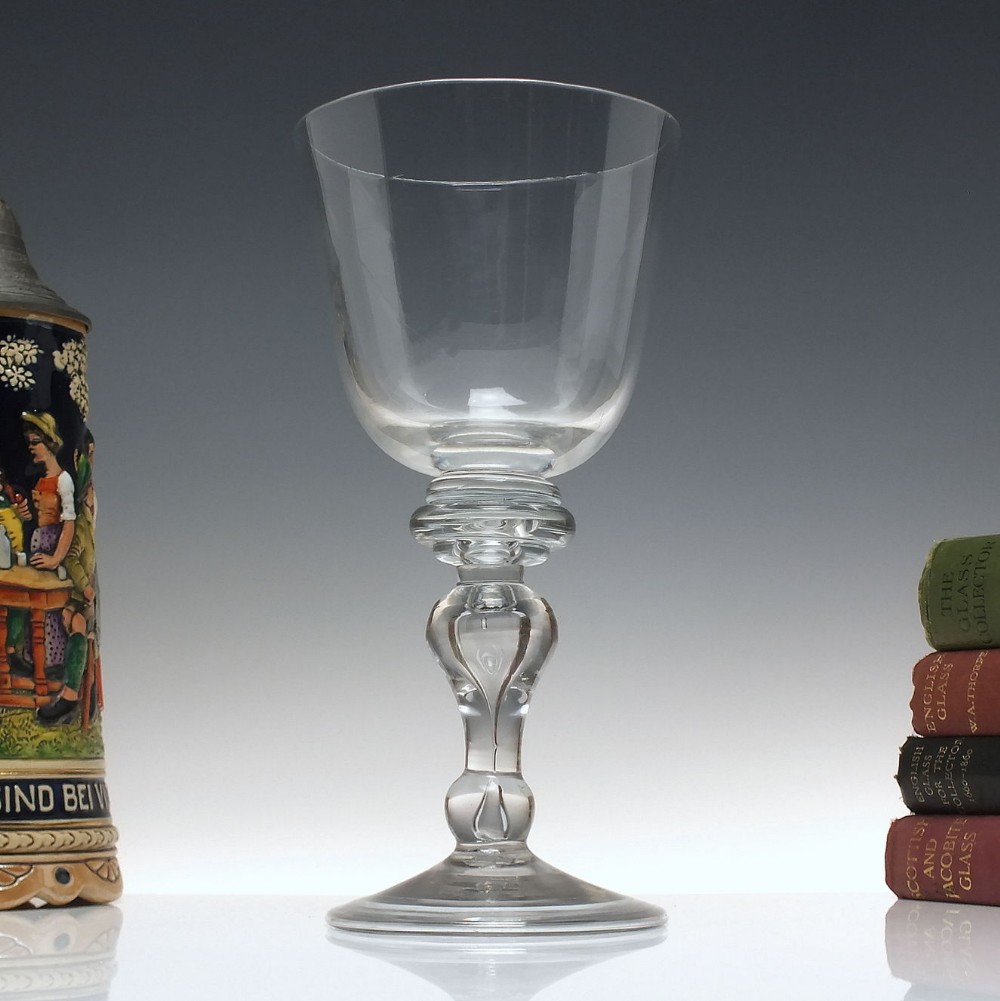
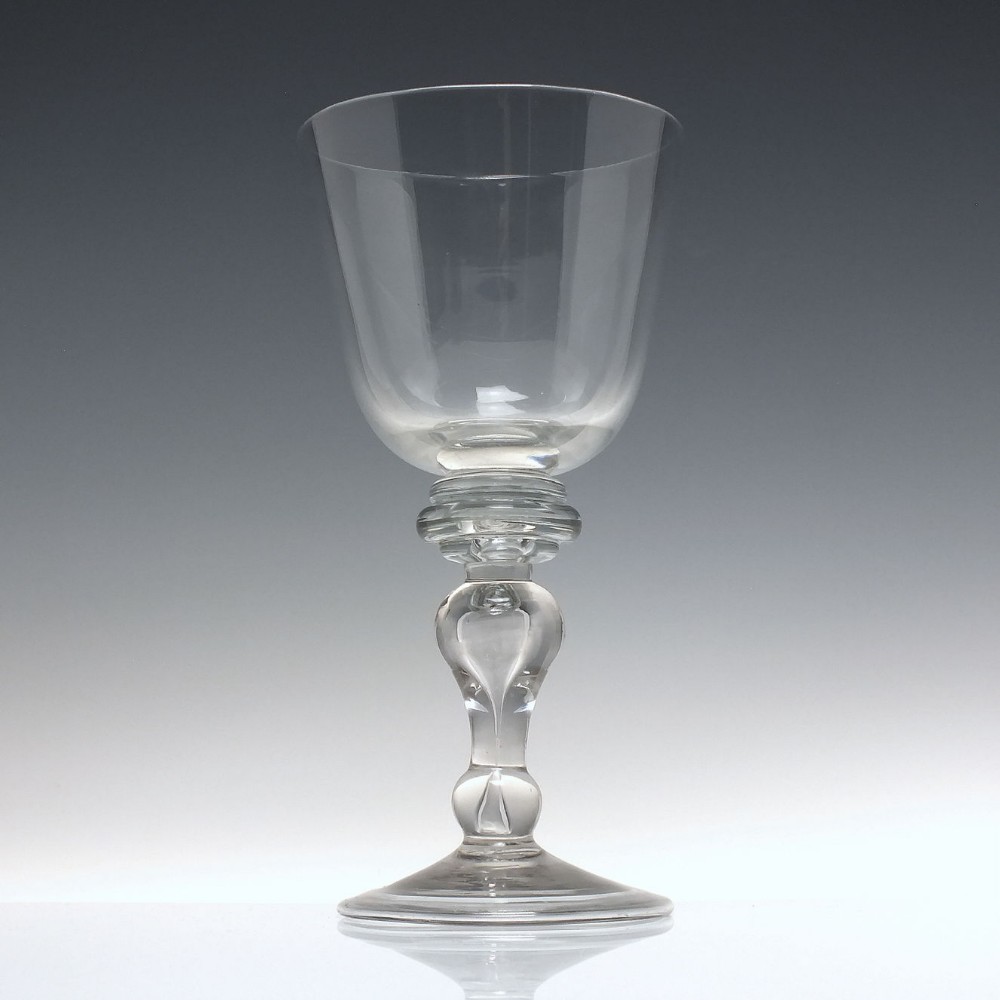
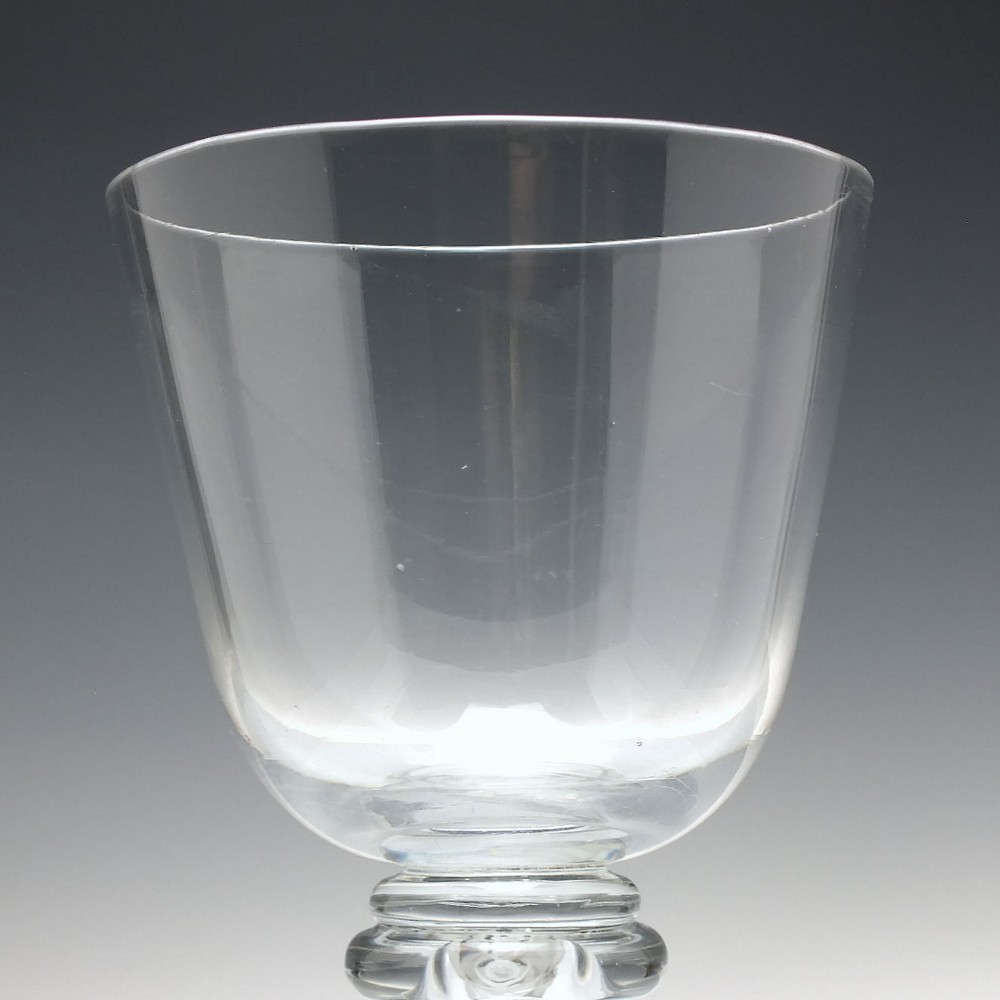
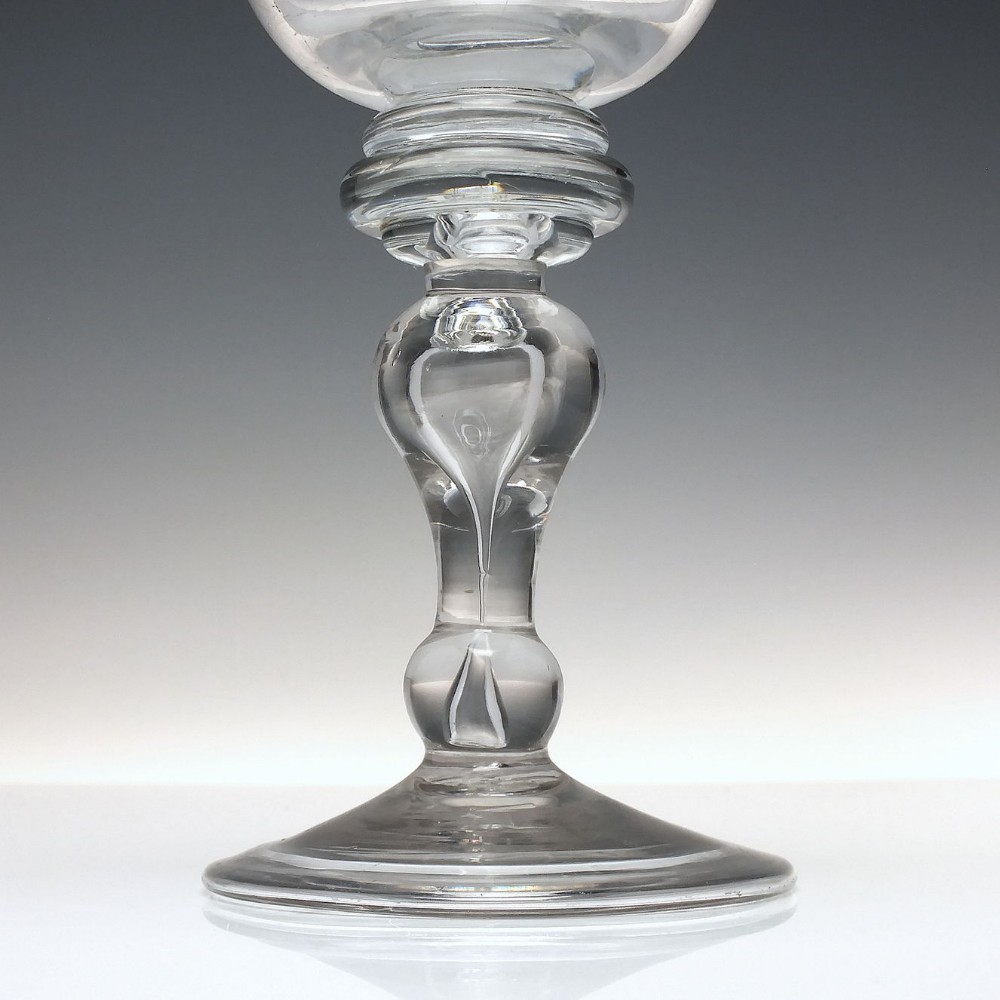
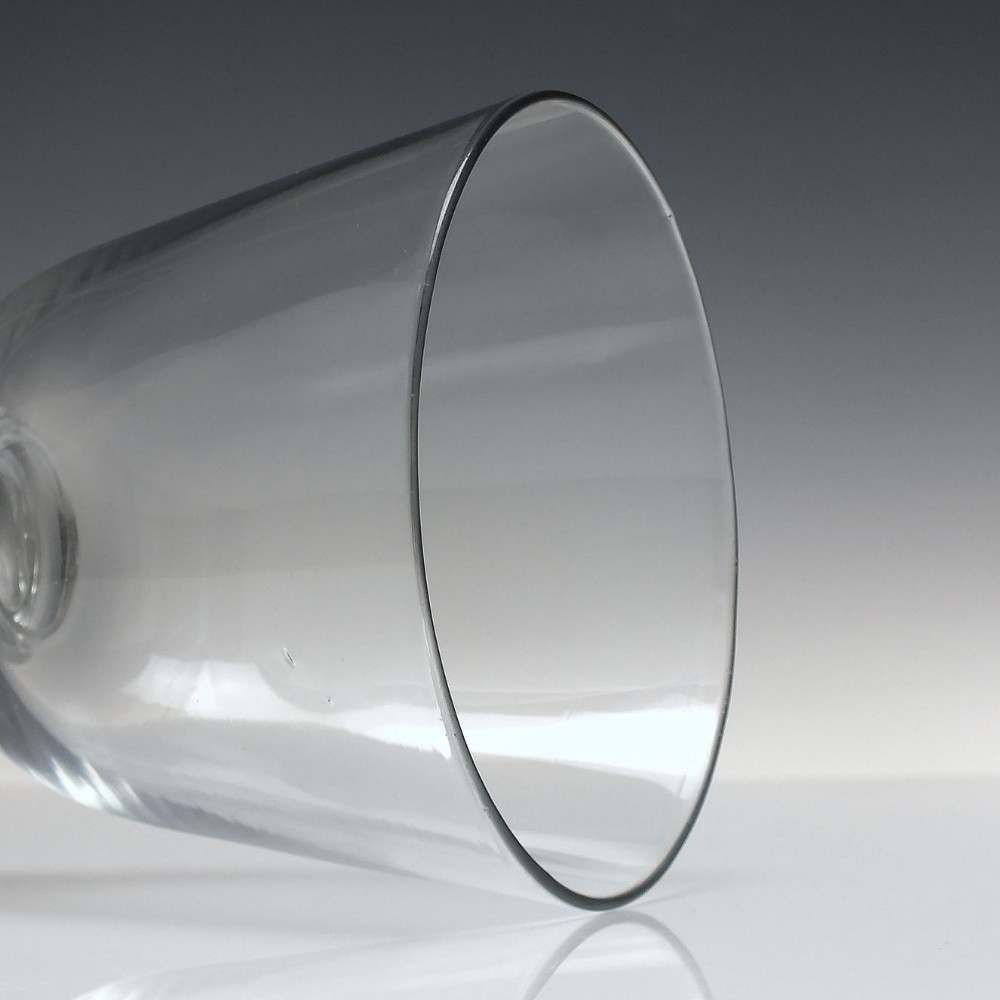
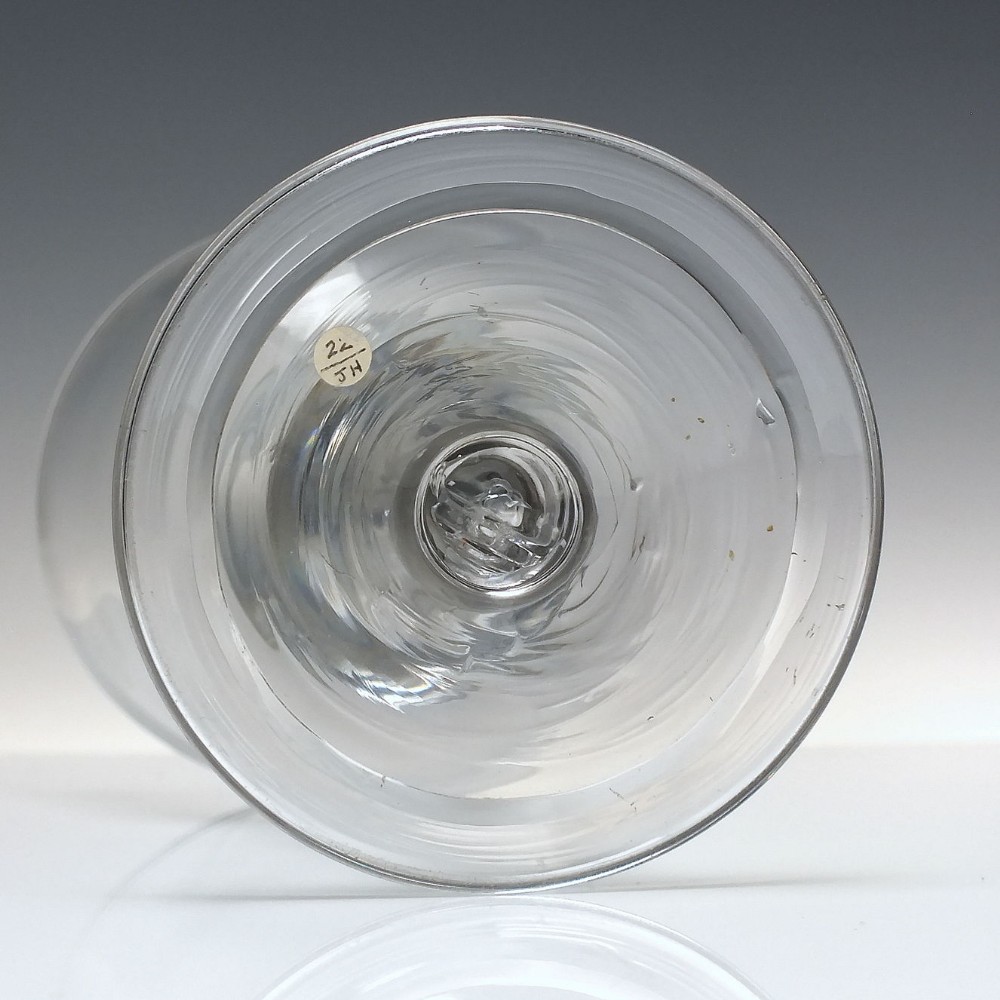
A superb example of an 18th Century Heavy Baluster goblet dating to c1720-30. It has a very large round funnel bowl above a large triple annulated shoulder knop, a teared inverted baluster knop, and a teared basal knop. Large conical folded foot.
At almost 25cm tall, this is a magnificent 300 year goblet.
Historical Context
Early 18th-century heavy baluster glasses, dating roughly from 1690 to 1730, are among the earliest forms of English drinking glass. They are characterised by large bowls and thick stems composed of a series of knops, giving them a strong, architectural appearance.
Goblets in particular were used in the early 18th century because they suited the drinking habits of the time, allowing for larger servings of wine, ale, and other beverages. They were practical, durable and stable forms, making them ideal for everyday use before the shift towards smaller, lighter, and more refined glasses later in the century.
Date & Origin
En
...gland, c1720-30. Period of King George I.
Condition
Excellent. No chips, cracks or restoration.
Dimensions
Height: 24.5cm
Rim diameter: 12cm
Foot diameter: 10.2cm
Weight: 741 grams
Collectors Notes
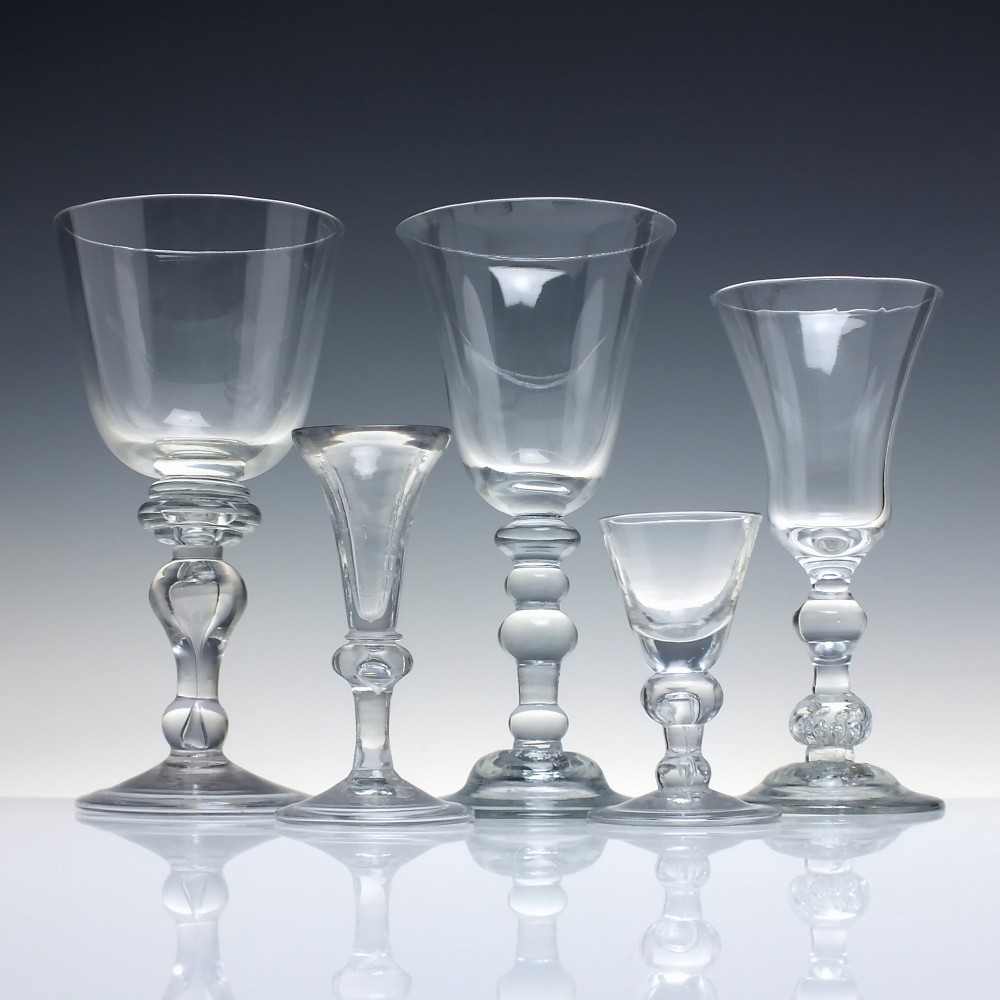
As a general rule, 18th-century wine glasses tend to have a foot that is equal to or larger than the diameter of the bowl. However, this principle does not always apply to larger goblets or flared trumpet forms, where the foot is often smaller in proportion, even on folded foot examples.
In the case of drawn trumpet forms, this is largely for aesthetic reasons, maintaining elegance and visual balance. For large goblets, however, their greater weight, broader proportions, and earlier design influences provide sufficient stability without the need for an oversized foot.
Internal Reference: 2026031701
Antique ID Number (AIDN): SA1208812
Dateline of this antique is 18th Century
Height is 24.5cm (9.6inches)Width is 0cm (0.0inches)Depth is 0cm (0.0inches)




Thank you.
Your comment has been sent to Sellingantiques.