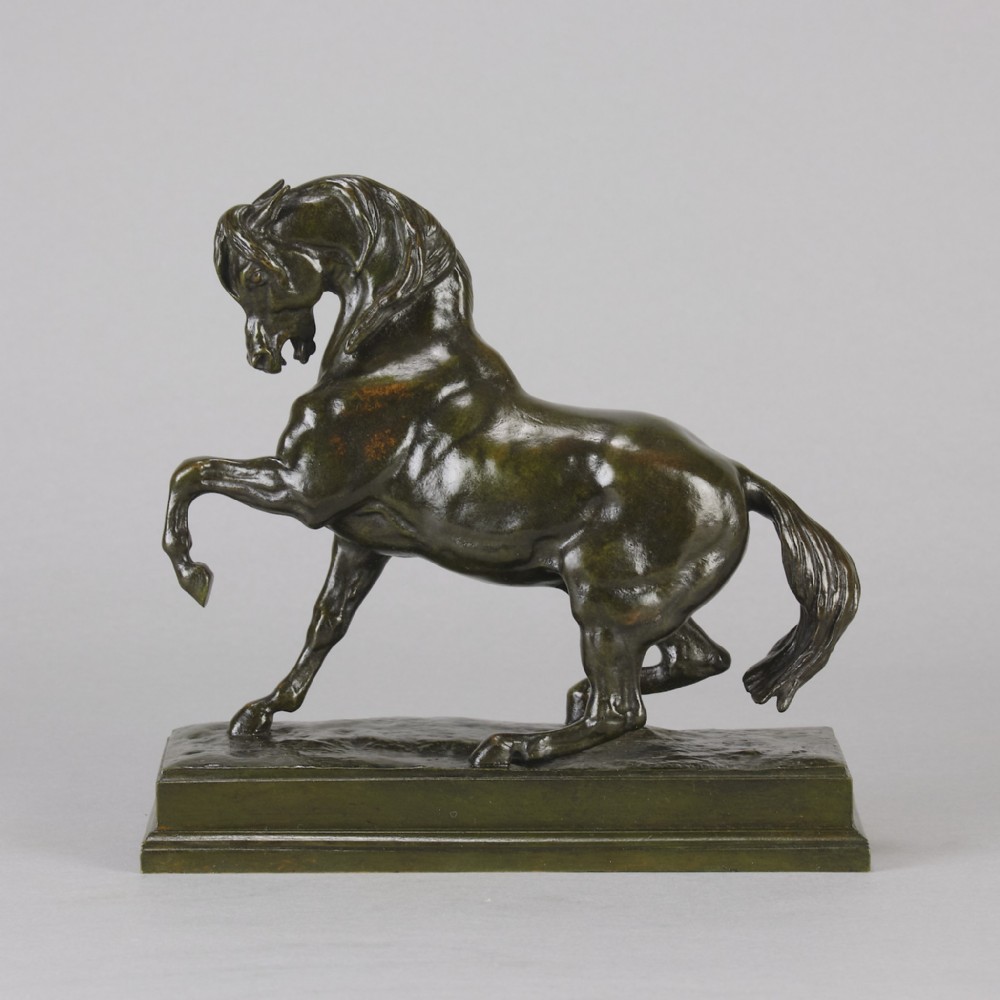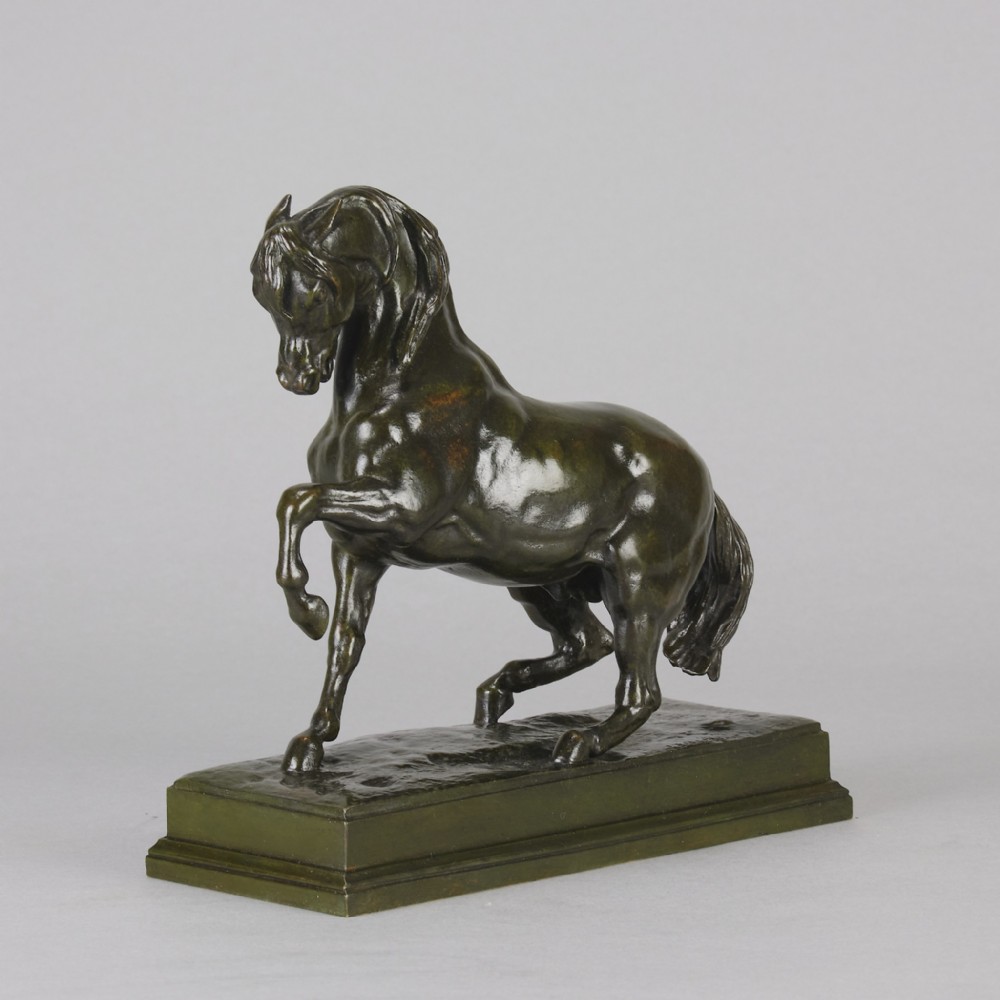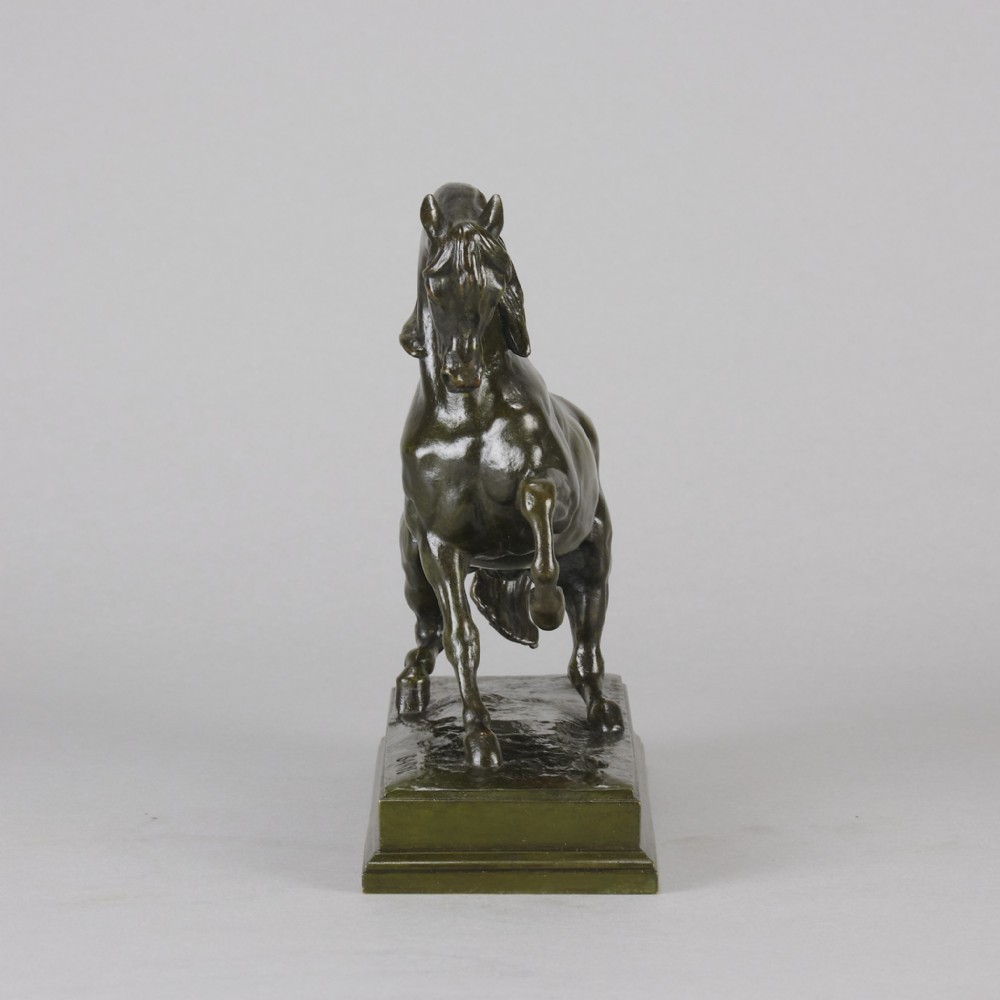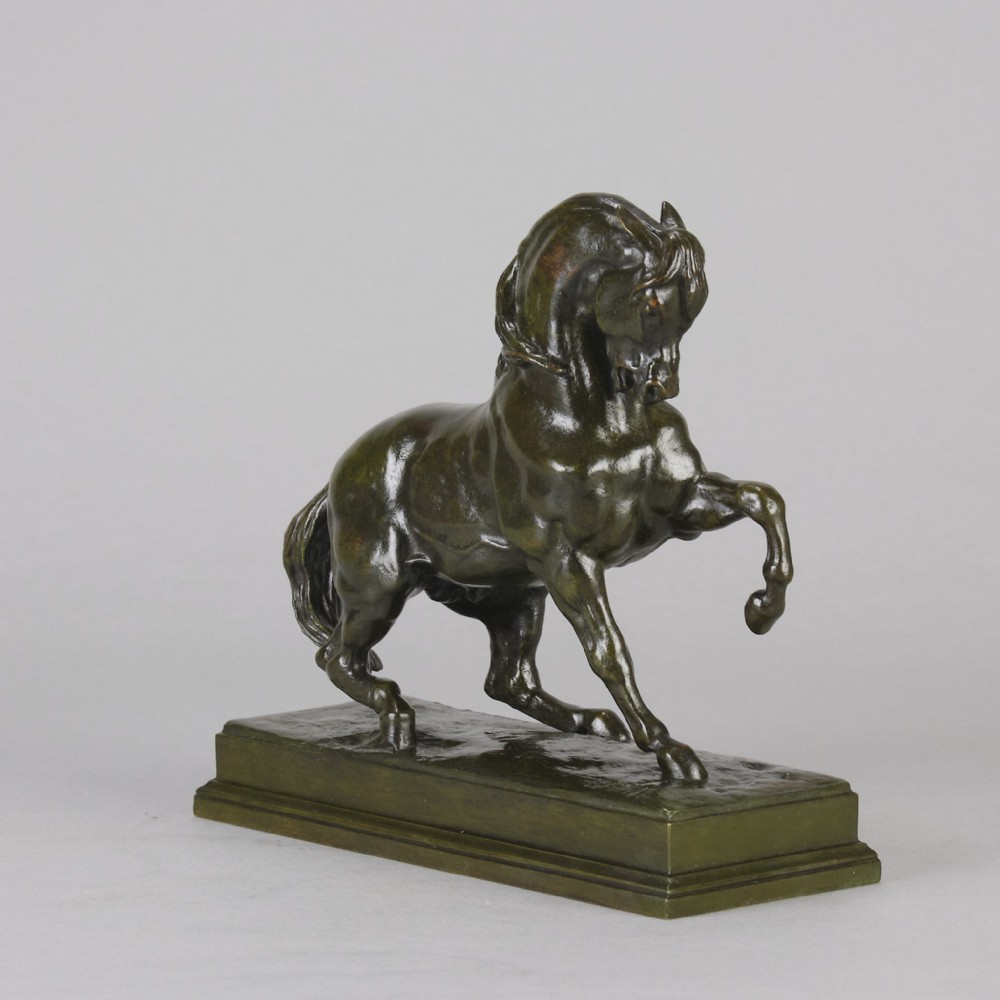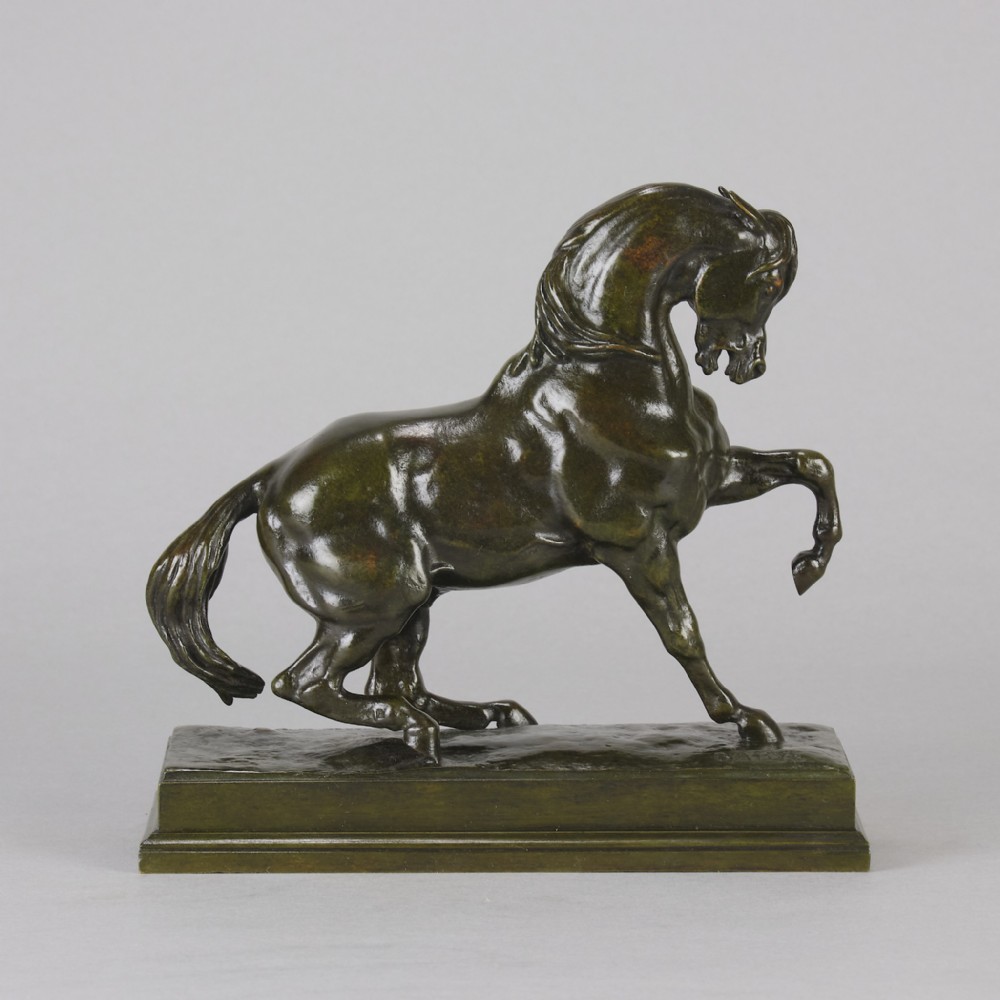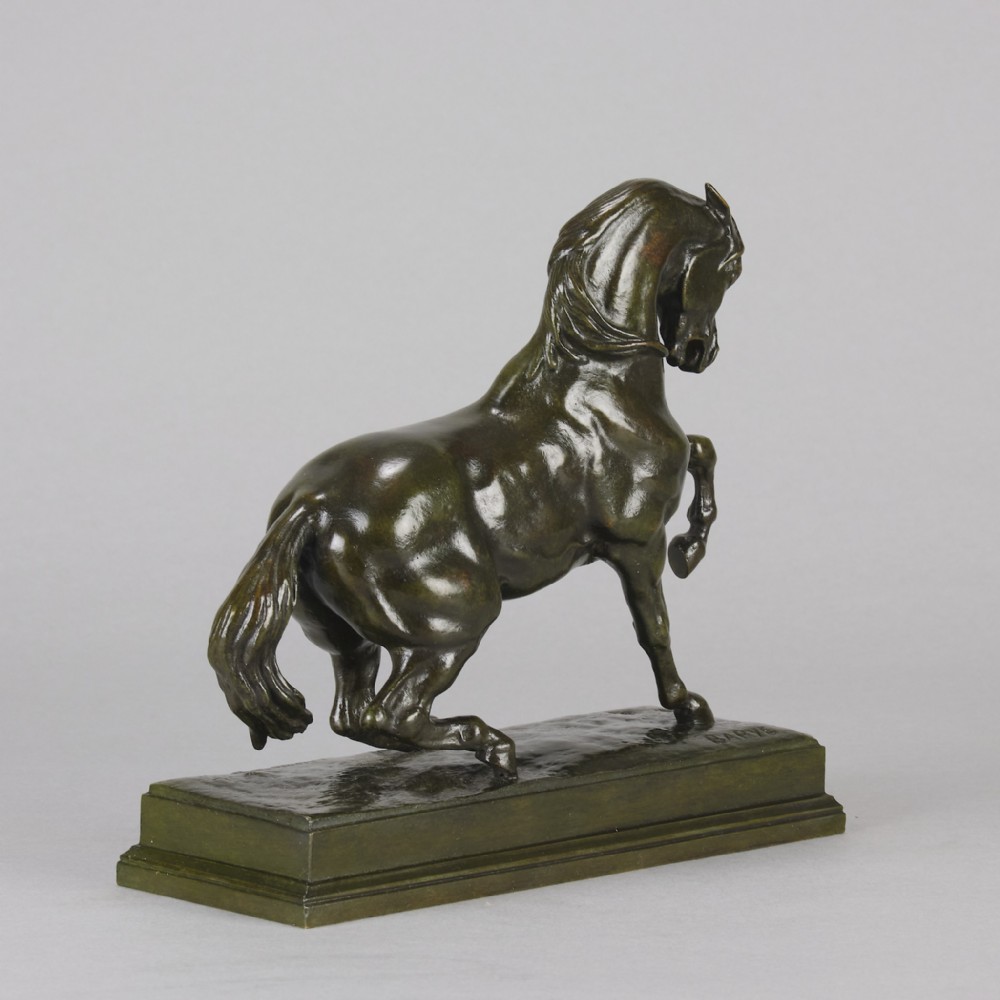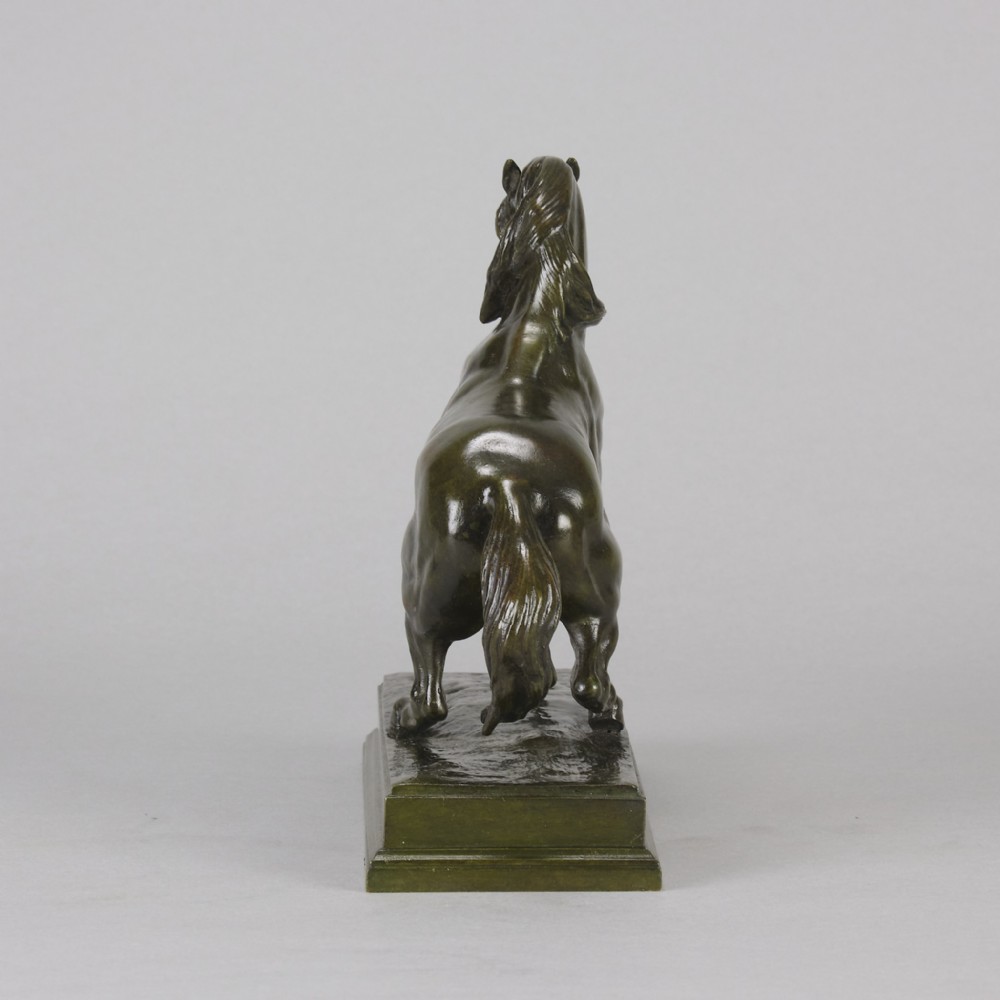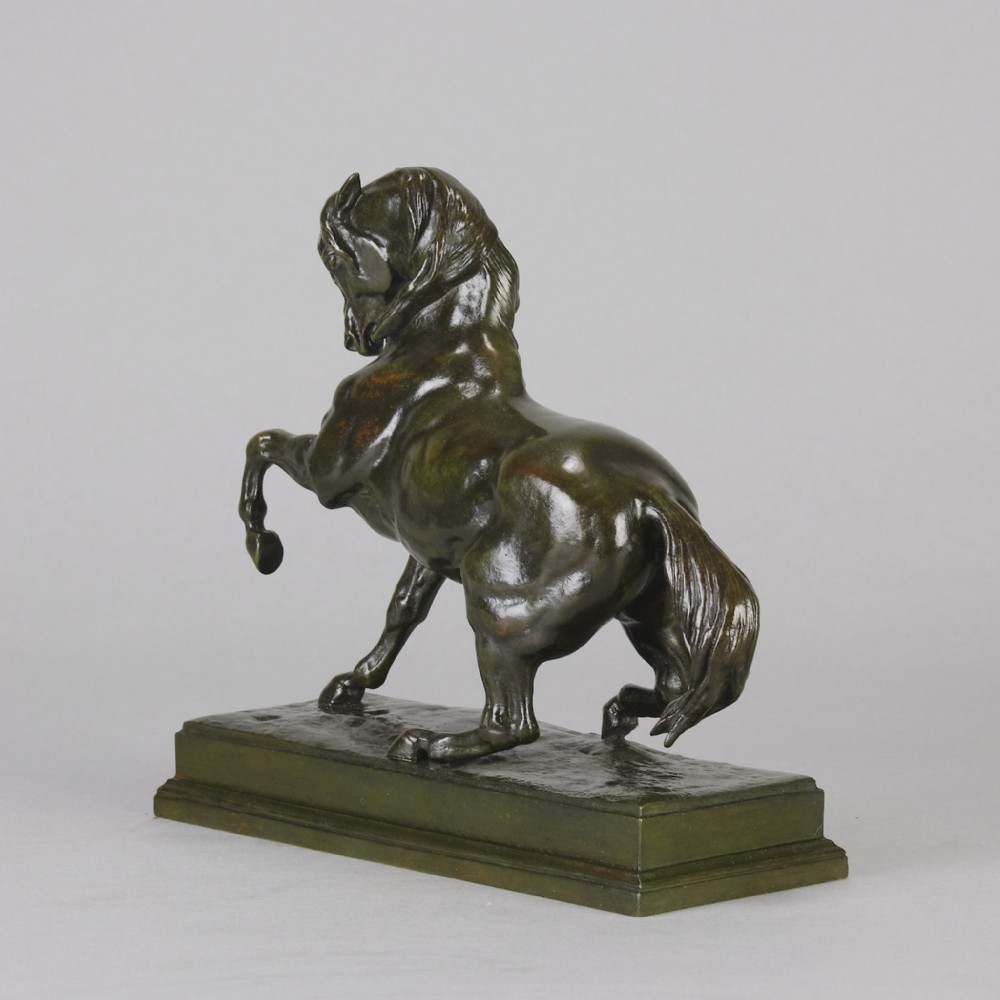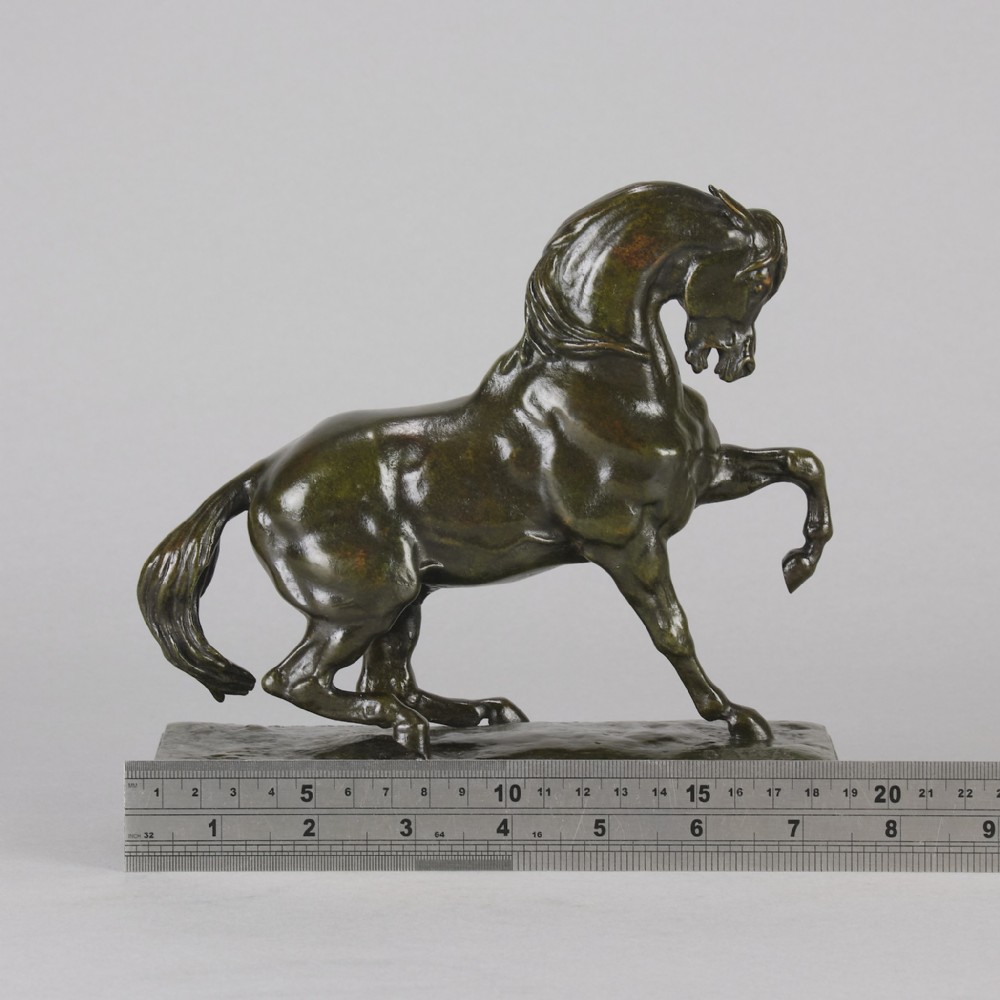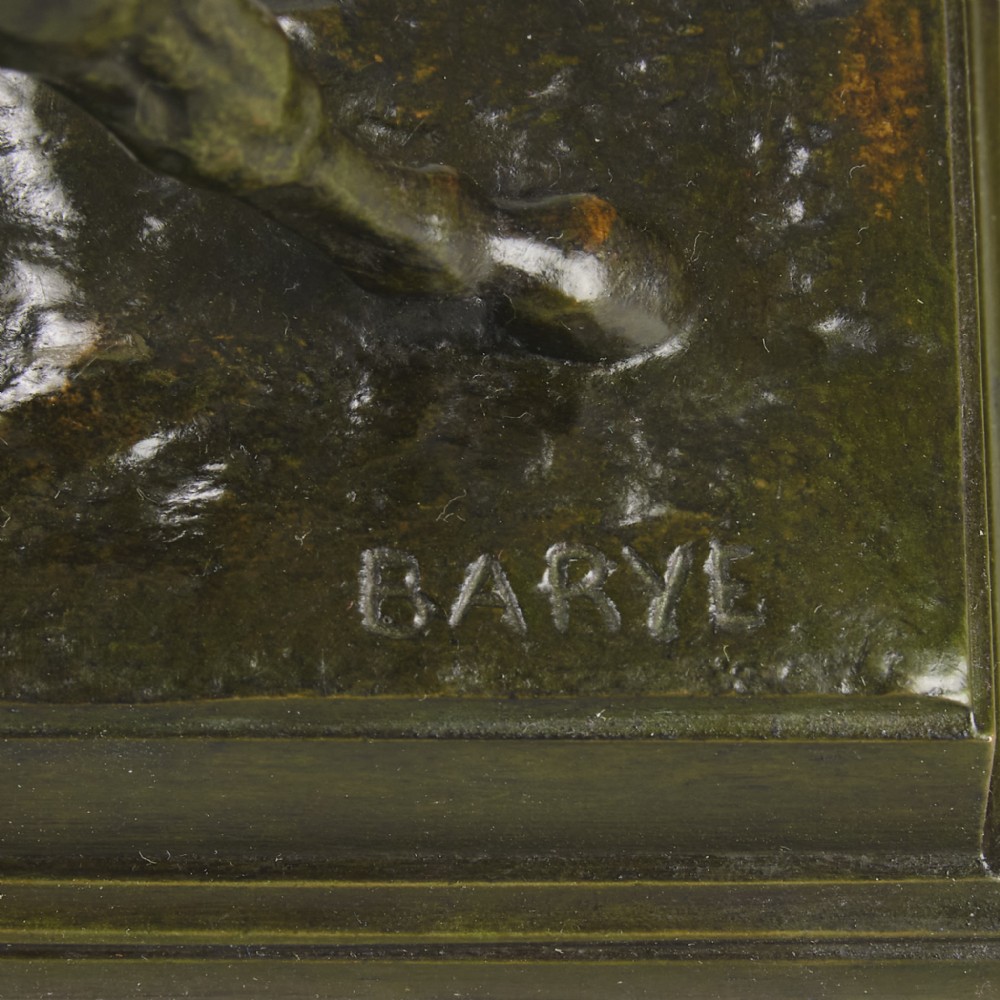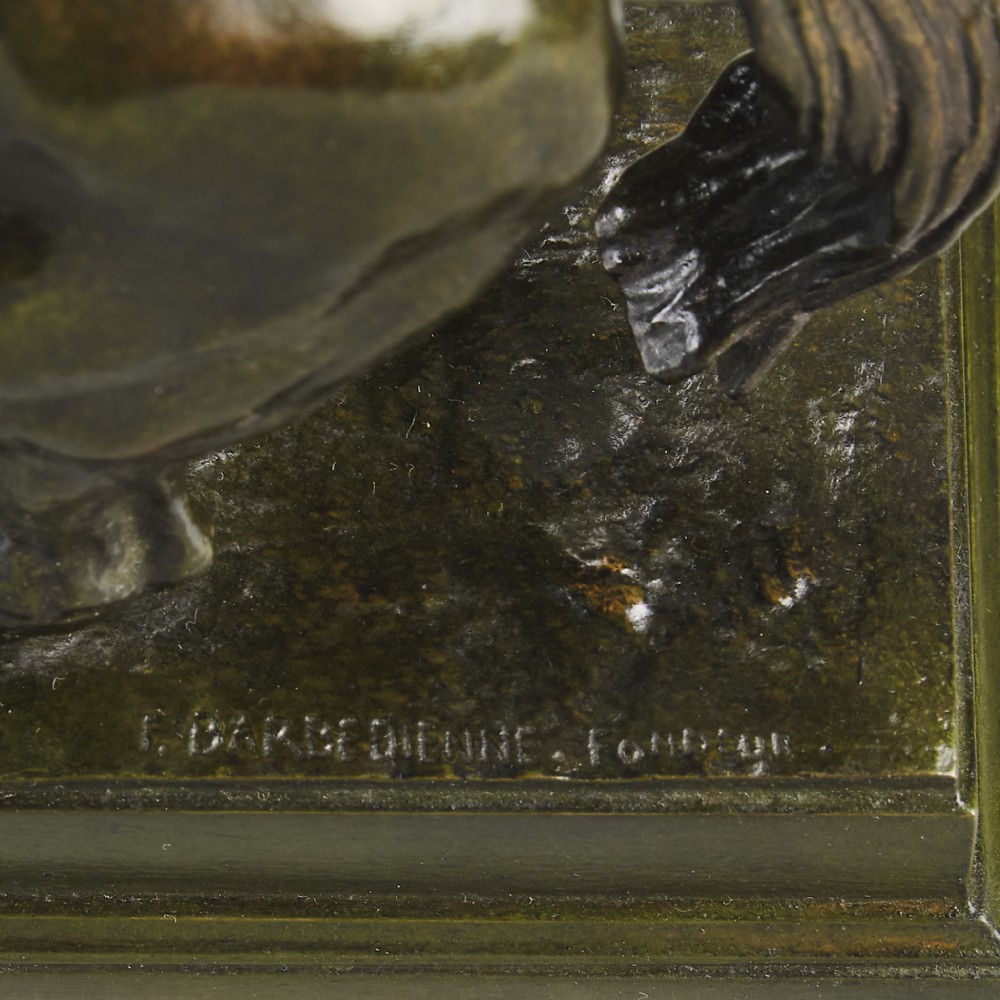
Hickmet Fine Arts has dated this piece to the 1870s.
ADDITIONAL INFORMATION
Height: 18 cm
Width: 19 cm
Depth: 7 cm
Condition: Excellent Original Condition
Circa: 1870
Materials: Bronze
Foundry: F Barbedienne Paris
Book Ref BARYE Catalogue by Alain Richarme
Page no. 182
SKU: 9589
ABOUT
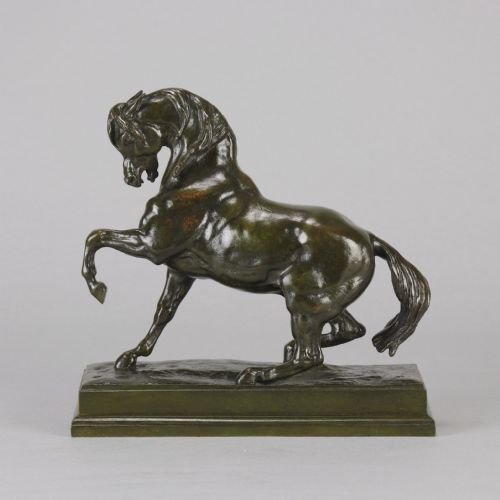
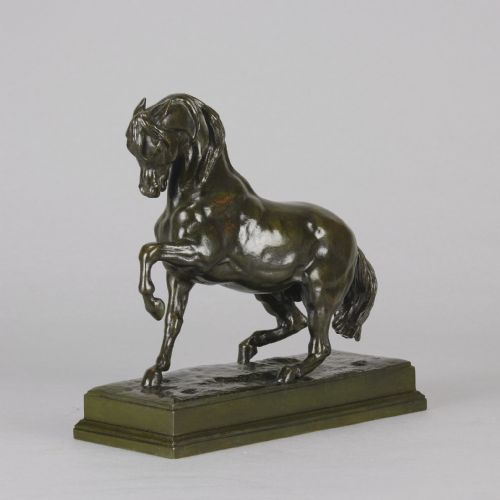
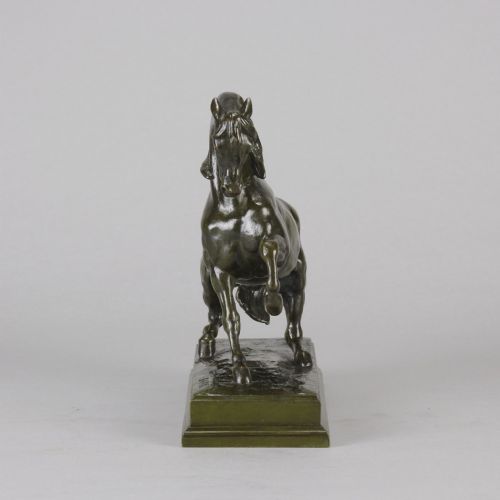
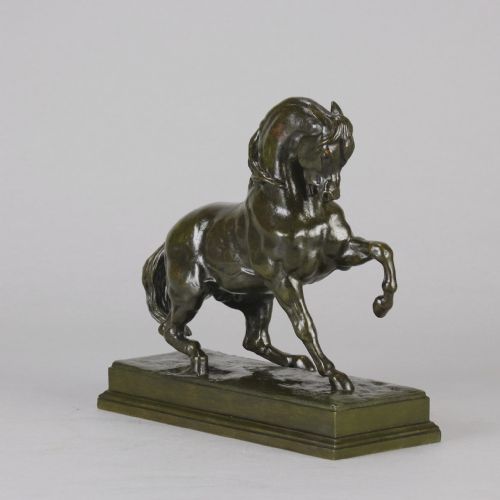
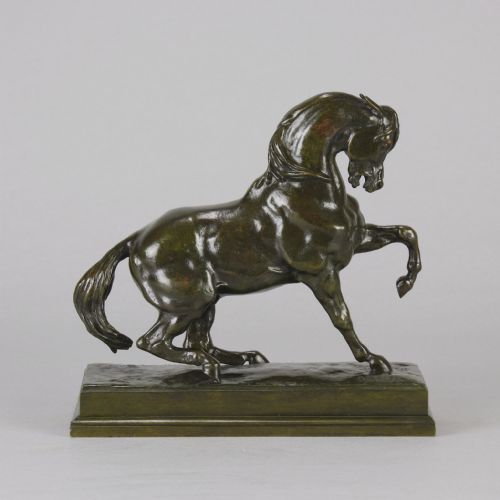
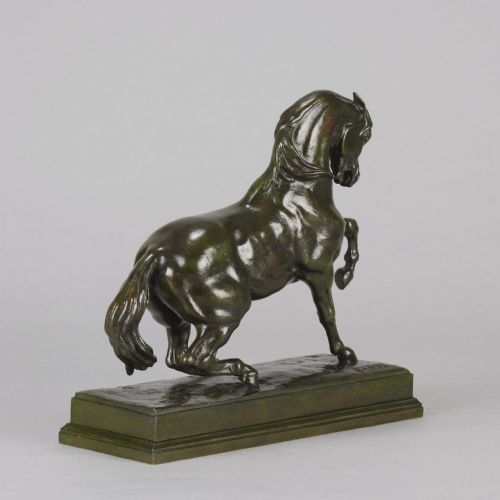
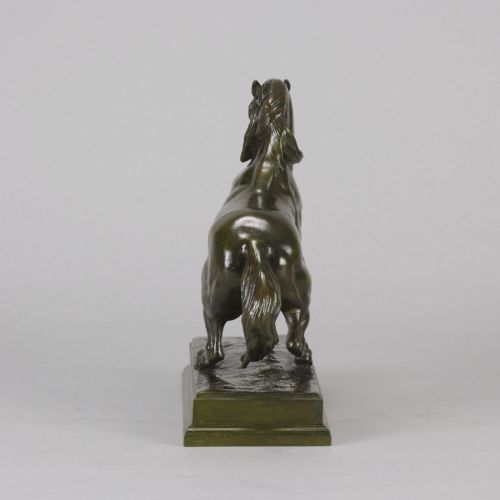
Cheval Turc
Known primarily for his naturalistic studies, Barye imbued this subject with energy and anatomical precision, depicting a spirited horse with measured power and grace. The composition balances movement and control, characteristic of his finest work and the subject is considered to be the finest equine bronze sculpture of the 19th Century. Casts were produced in Barye's own workshop and also cast on agreed licence by the renowned Parisien foundry of Ferdinand Barbedienne, ensuring the highest quality. Today, the model remains sought after for its elegance, sculptural strength, and importance within the animalier tradition.
Antoine Louis Barye
“The Michelangelo of the Menagerie”
These are the words of Théophile Gautier in praise of Barye’s genius. Throughout his life Barye endeavoured to capture the fundamental nature of the animal kingdom in all its diversity, wild or tame, exotic or familiar, cruel or gentle, bringing to life the roaring, trembling, living beasts.
The son of a goldsmith, apprenticed to a steel engraver at a young age, Barye found himself making moulds for ornaments, acquiring knowledge that he would later build on to produce his exquisitely chased bronzes. When he was called up at seventeen, he joined the army’s topographic brigade where he used clay to model raised relief maps. When the empire fell, Barye briefly studied with the sculptor François-Joseph Bosio, then moved to the studio of painter Antoine-Jean Gros. There he encountered a burgeoning Romanticism that seemed closer to his own aspirations and penchant for drawing, something that would become a major part of his life’s work.
Barye began working for the goldsmith Jacques Henri Faucnnier in 1820 and became a regular visitor at ‘Le Zoo du Jardin des Plantes‘ the National Museum of Natural History and its menagerie in Paris, where he studied the wild animals under the watchful eye of the lion keeper Mr Rousseau. As well as studying live animals, he practised dissection with Eugène Delacroix and noted his observations on his drawings. This gave Barye the impetus to move away from the neoclassical and Renaissance styles where animal subjects were treated as ‘additions’ or ‘supplements’ to art and regarded as inferior, allowing him to single handedly turn the study of ‘Animaliers‘ into one of the most important art forms of the 19th Century.
Barye received his first official acclaim at the 1831 Paris Salon. This recognition encouraged him to open his own studio or ‘atelier’, where he produced an Elephant that would become the Duc d’Orleans family’s first major acquisition. At the 1833 Salon Barye unveiled his emblematic Lion et Serpent, which the French State purchased and had cast as a mo
Hickmet Fine Arts has dated this piece to the 1870s.
Established in 1936, hickmet fine arts is an international family run antiques business
You can view the stock and full dealer information on the Hickmet Fine Arts Profile Page
Hickmet Fine Arts is a registered member of LAPADA BADA CINOA
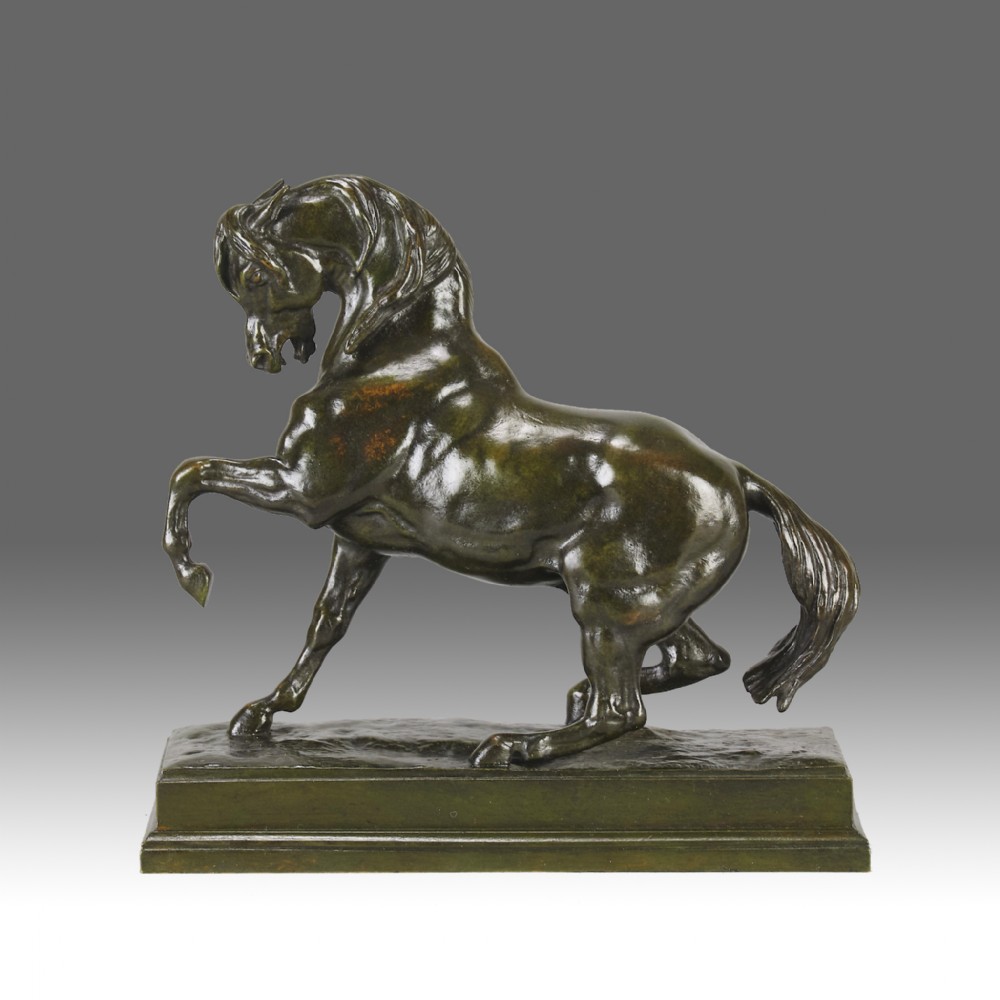
Mid 19th Century Animalier Bronze "Cheval Turc" by Antoine Louis Barye