11,274  PAGES BROWSED TODAY PAGES TODAY 36  ANTIQUES UPLOADED TODAY NEW ARRIVALS
ID #SA1207771
FOR SALE
£2,650
Email
Save
Early 20th Century Art Nouveau "Silvered Phänomen Vase" by Loetz Witwe
Hickmet Fine Arts
for sale €3,101     $3,366
£2,650
Hickmet Fine Arts

Hickmet Fine Arts

Sellingantiques Verified Since Apr 2012
View Dealers Stock Page
  • About Us
    Established in 1936, hickmet fine arts is an international family run antiques business
  • Trade Associations
    Hickmet Fine Arts is a registered member of LAPADA  BADA  CINOA
Id #SA1207771
PDF SHARE
SAVE

Early 20th Century Art Nouveau "Silvered Phänomen Vase" by Loetz Witwe

1900 - 1920
Description

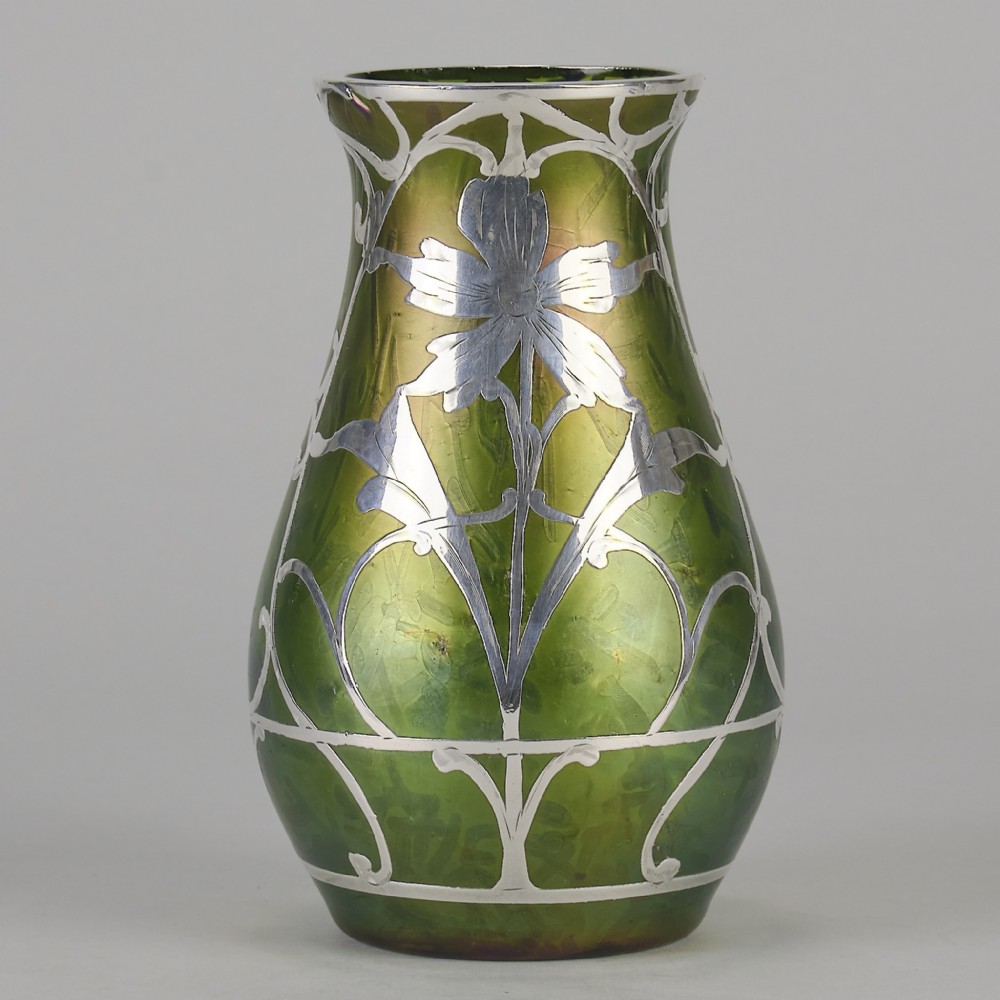
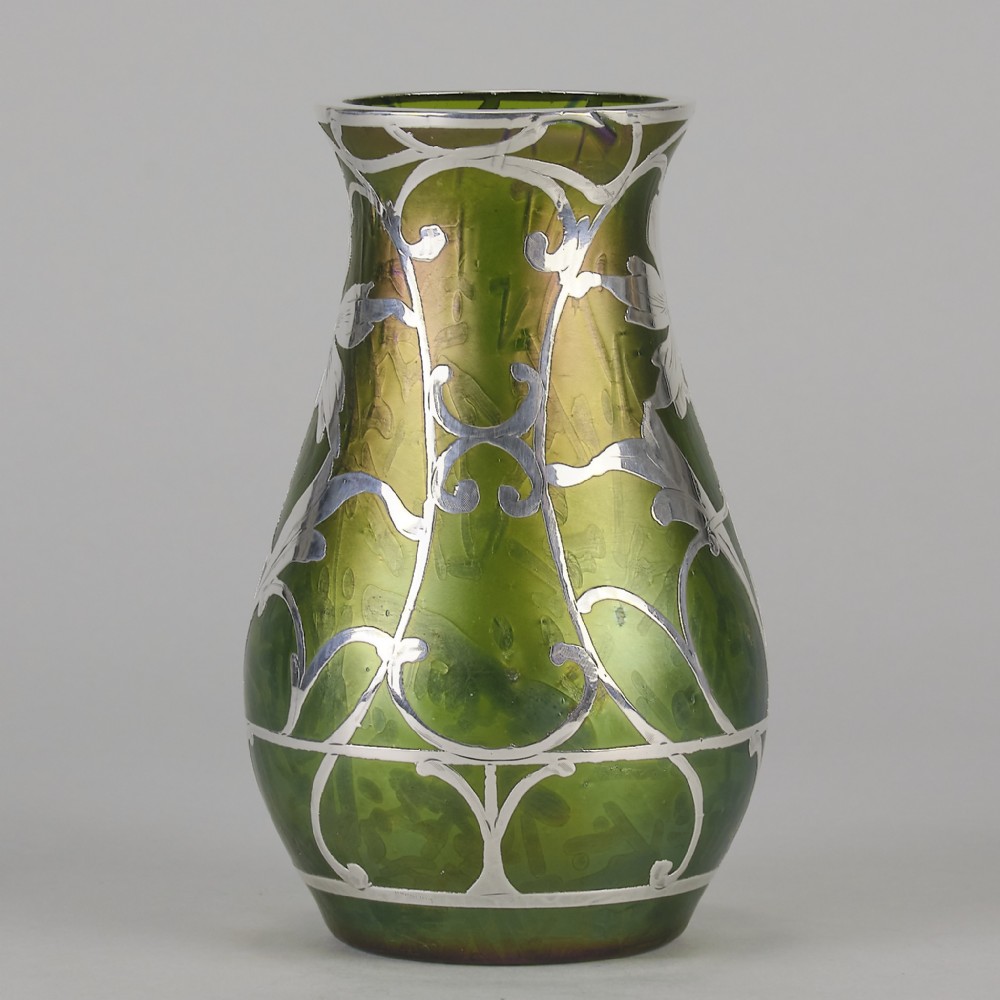
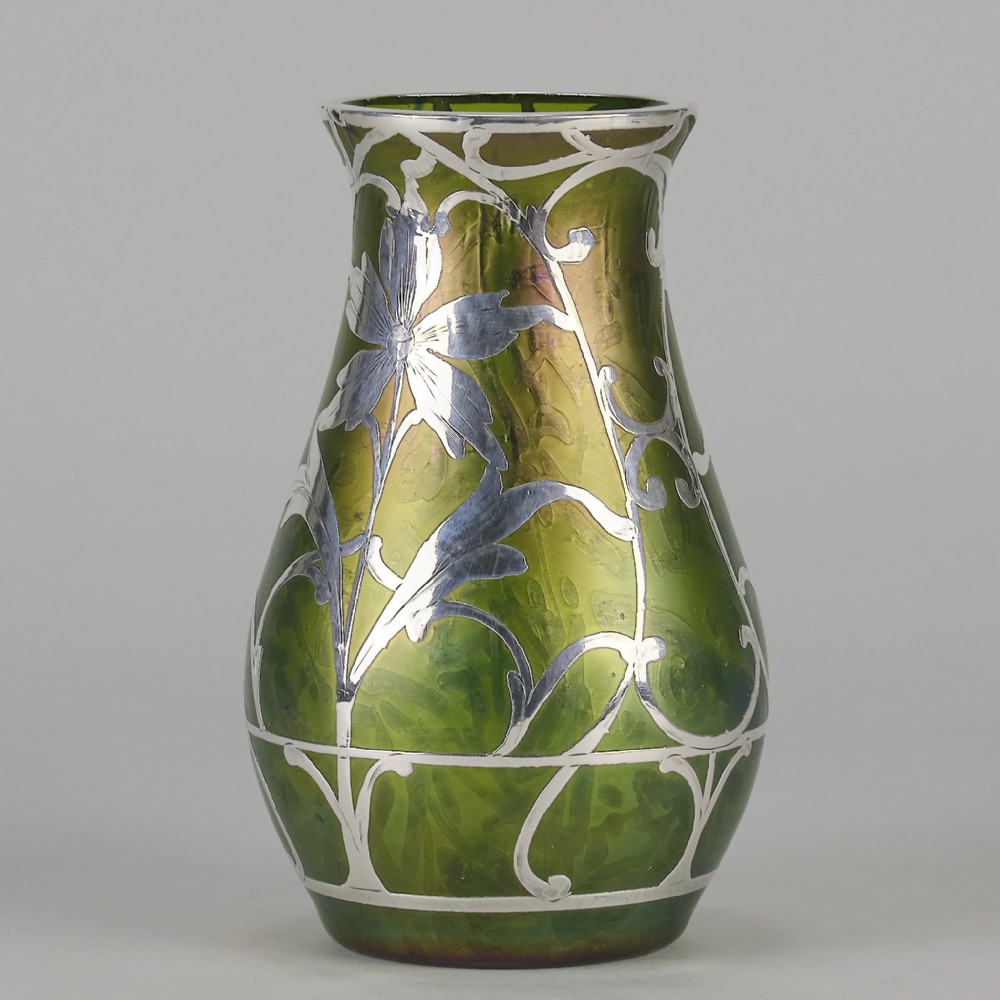
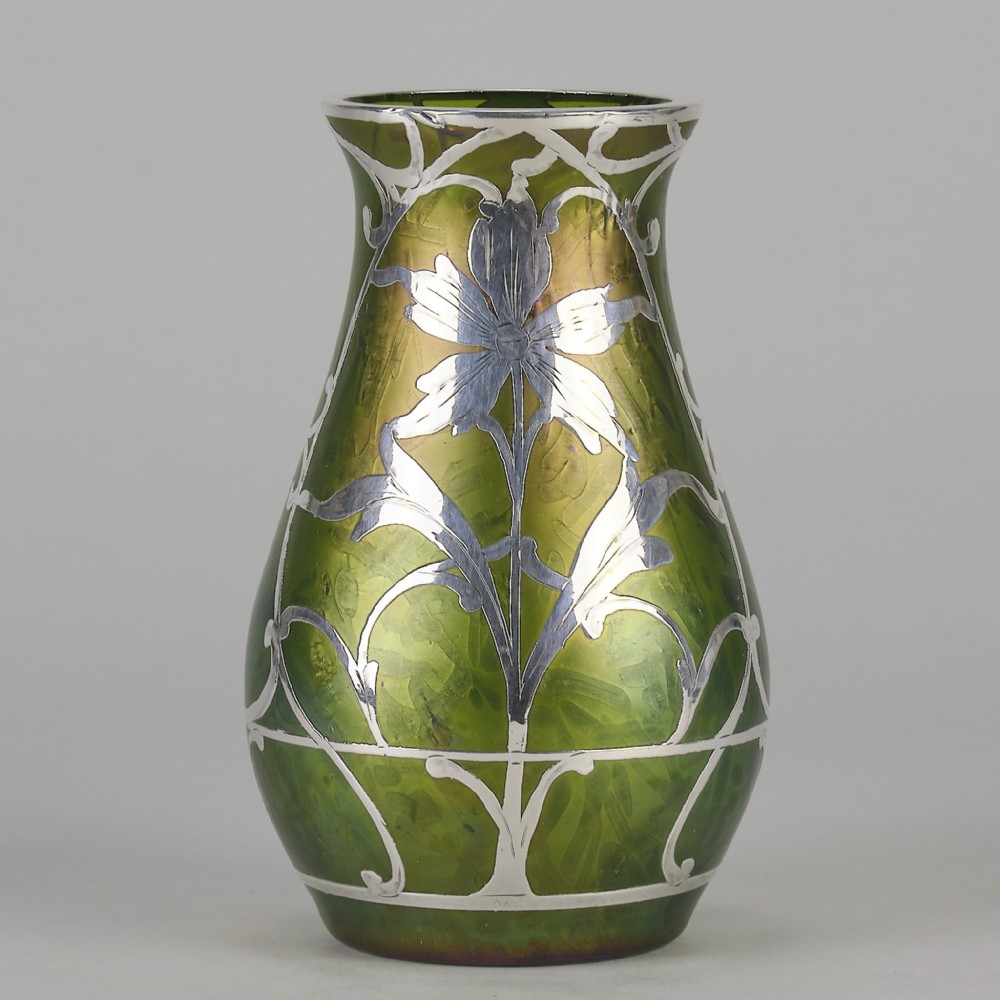
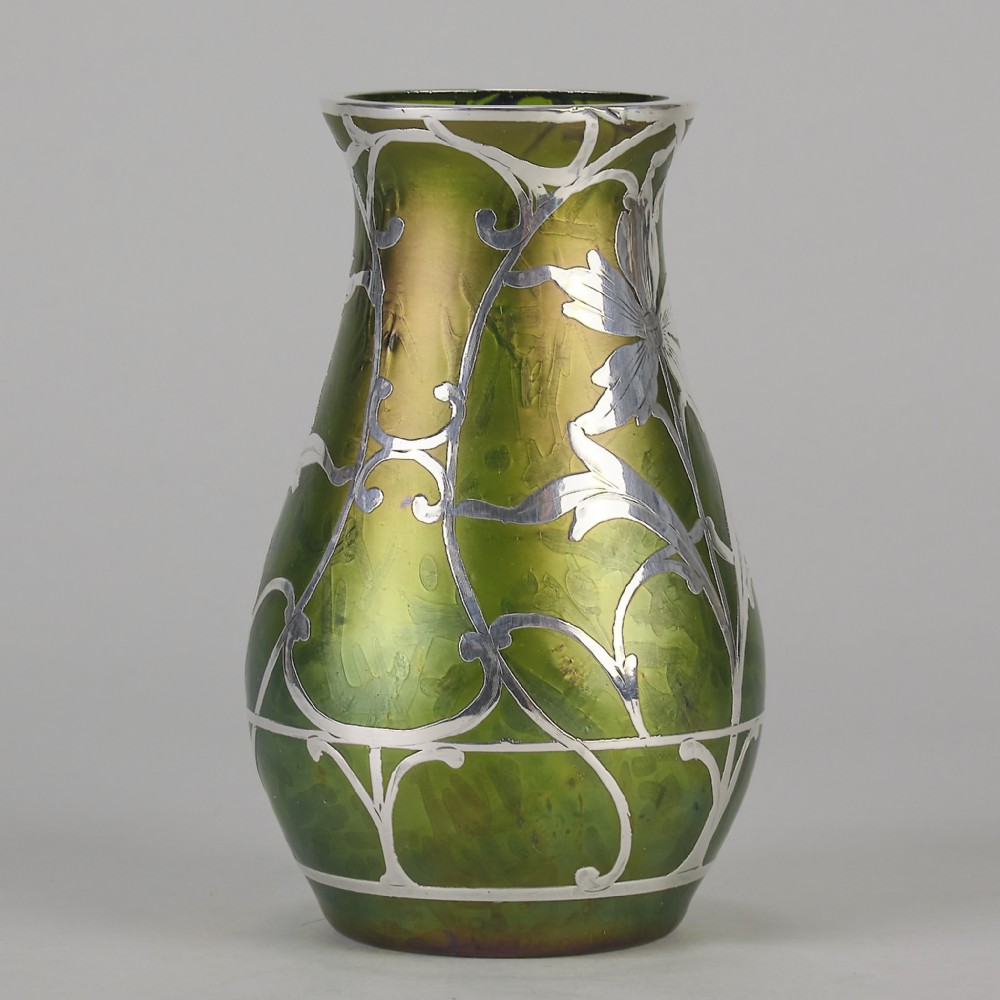
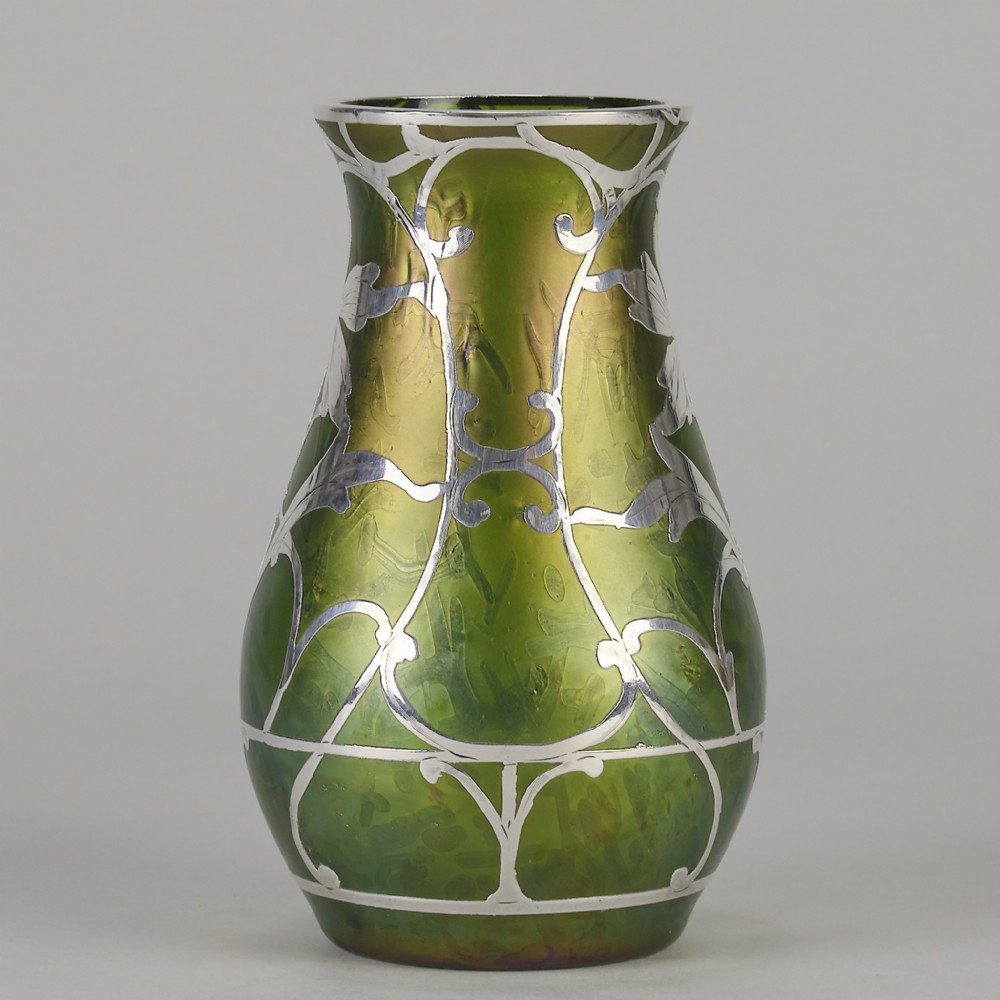
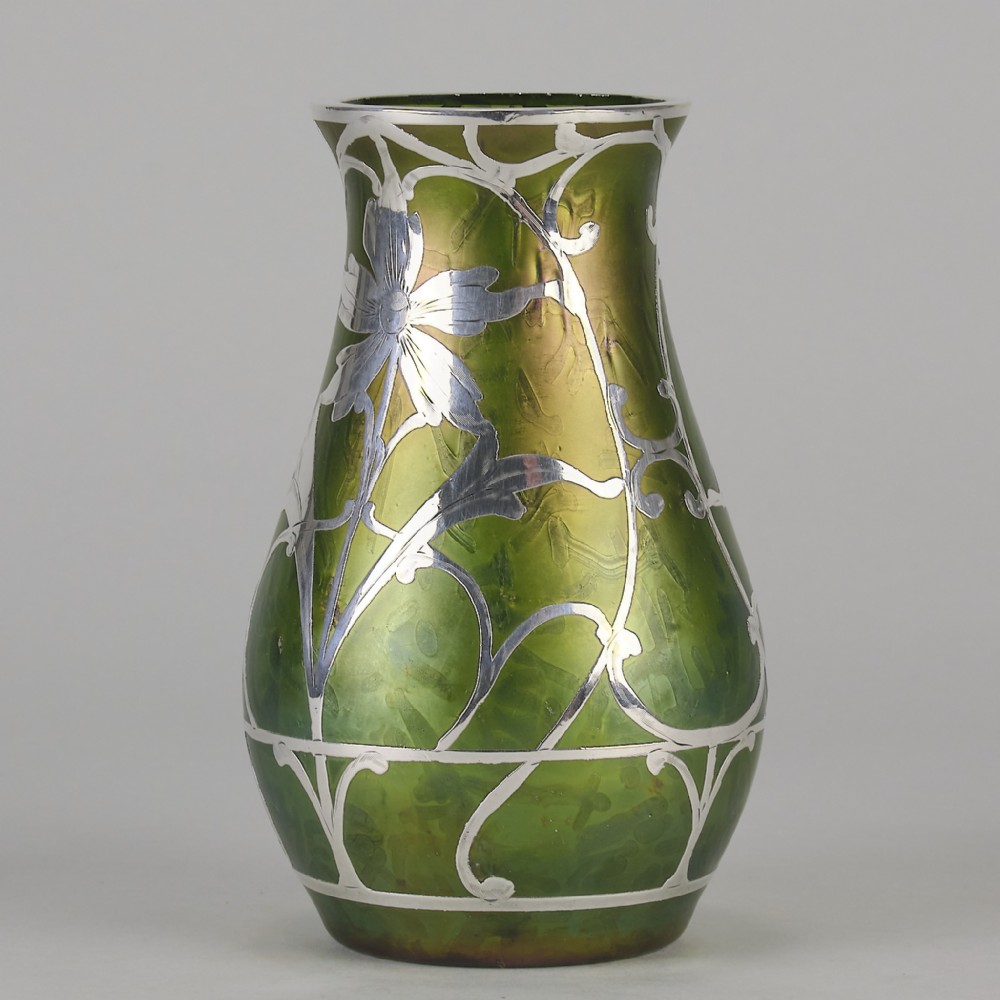
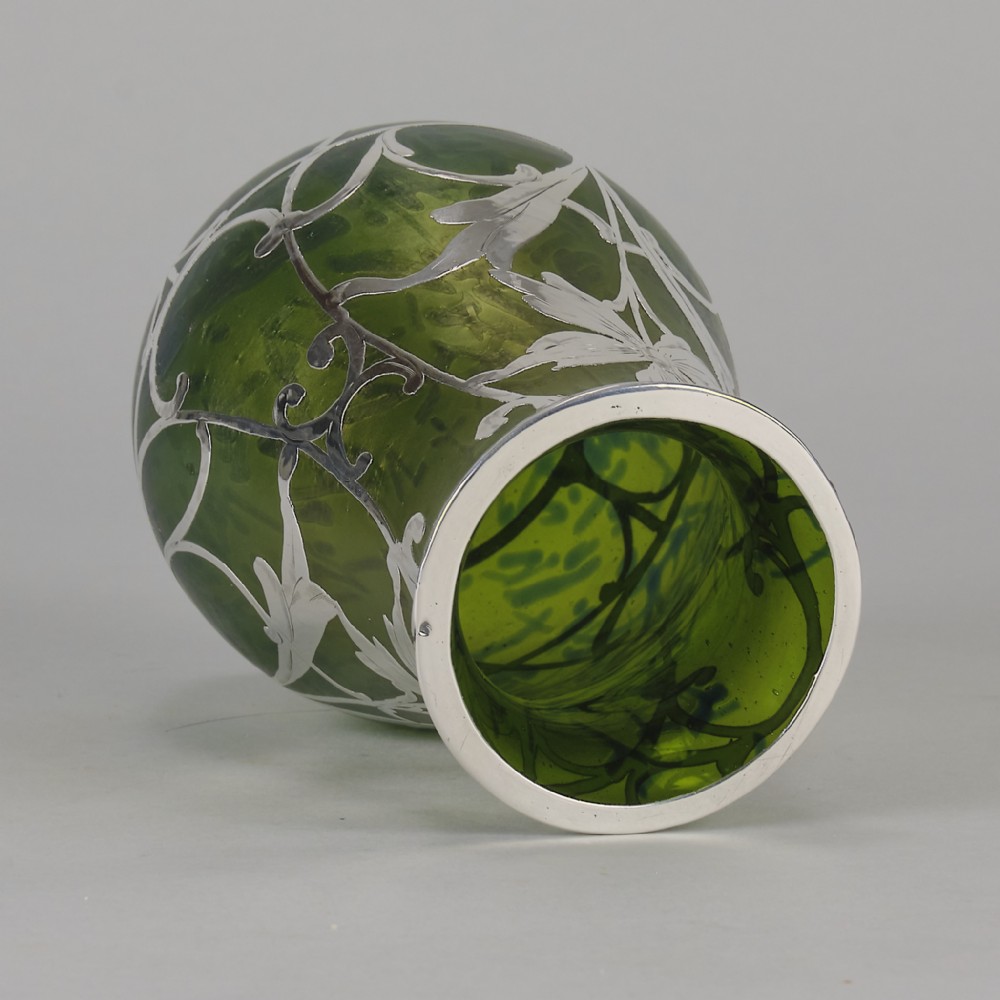
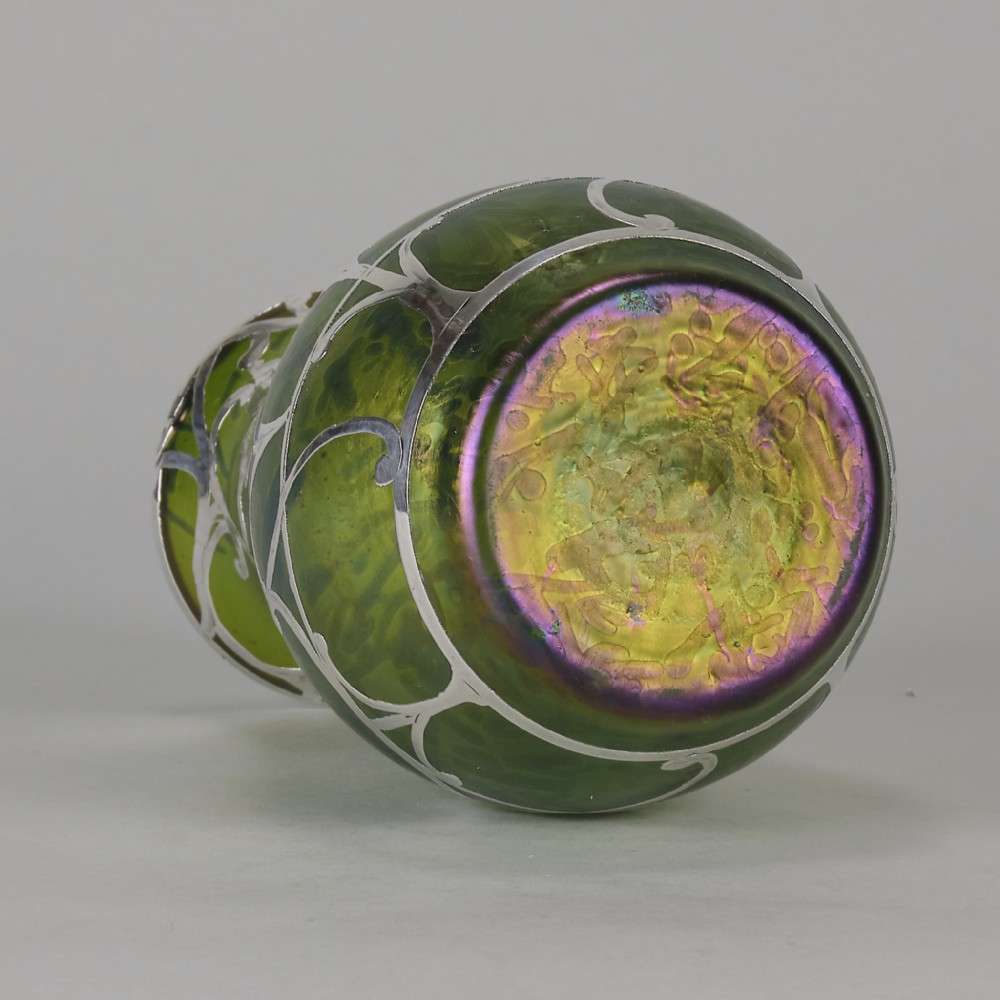
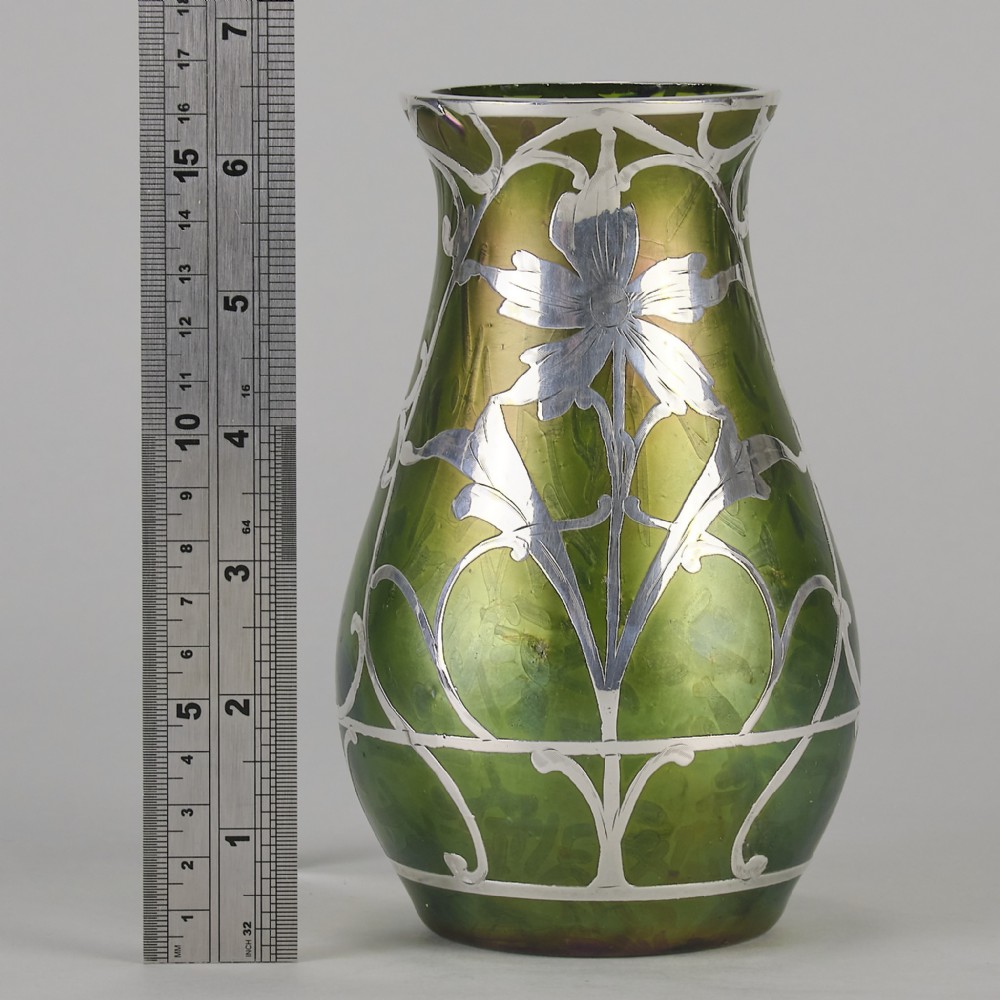
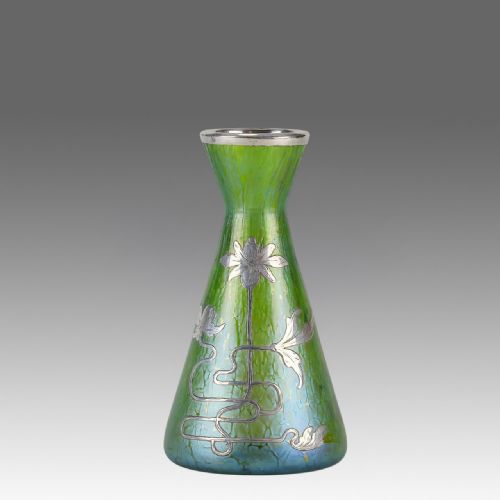
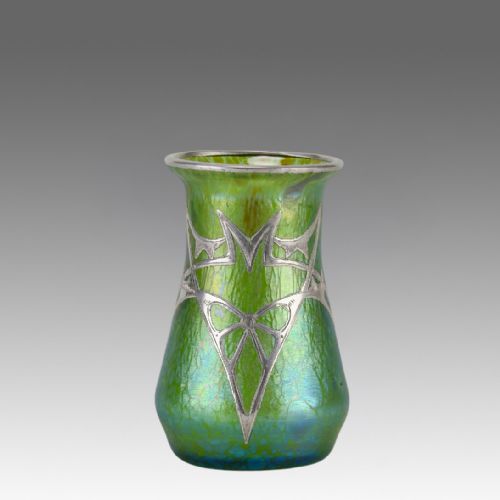
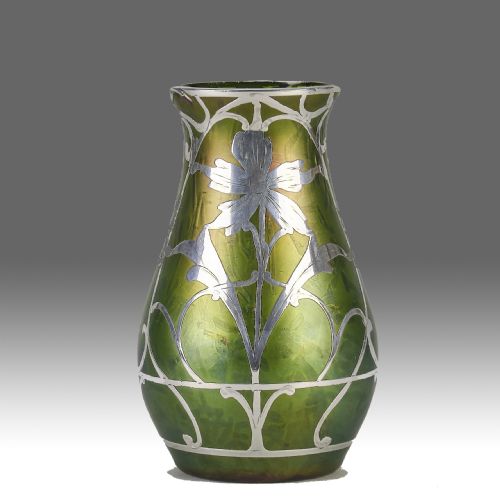
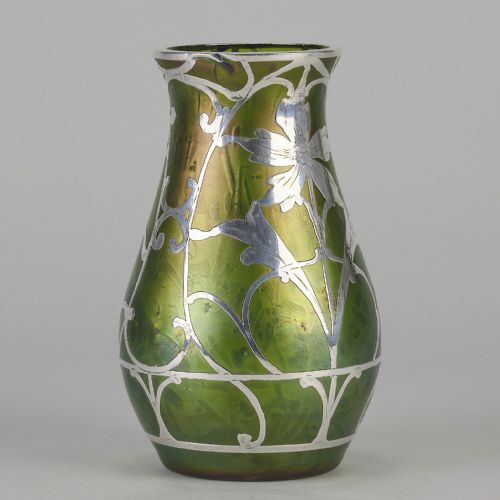
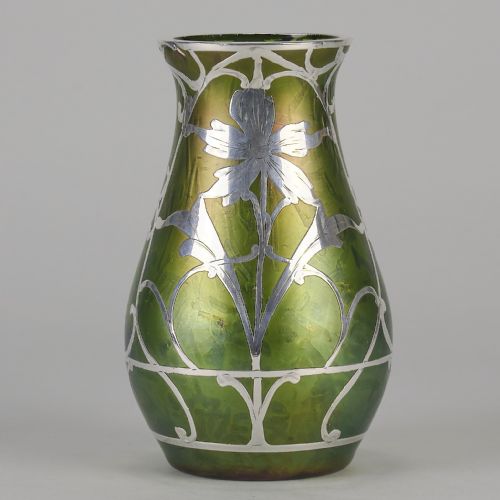
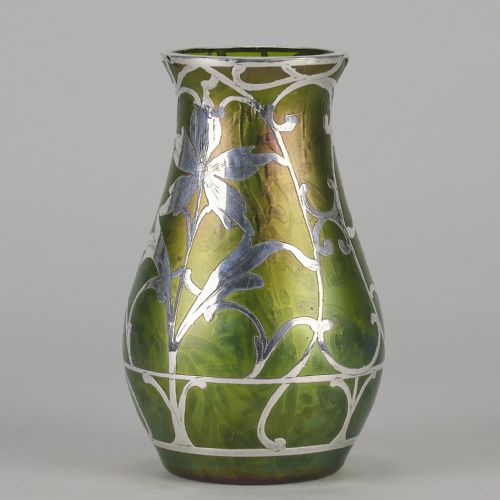
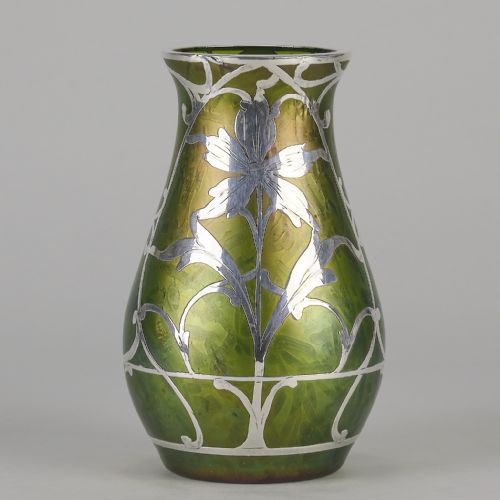
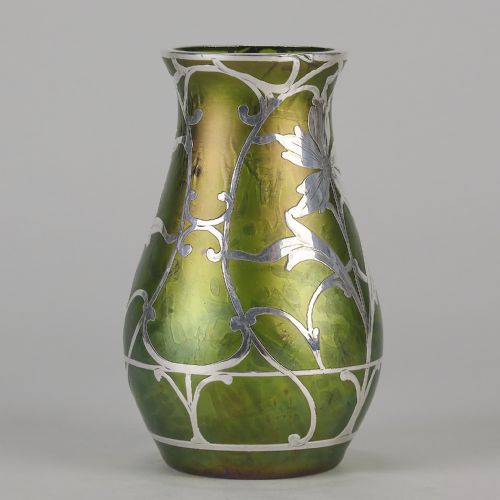
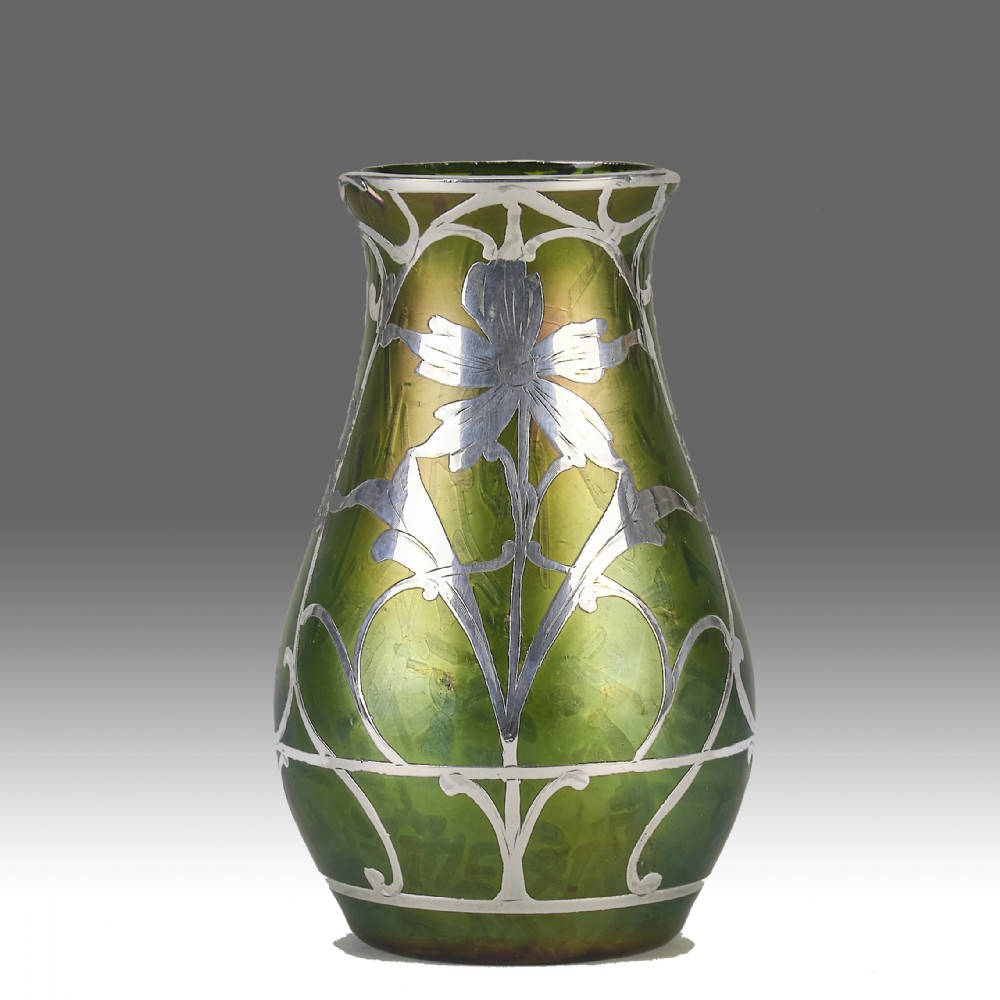
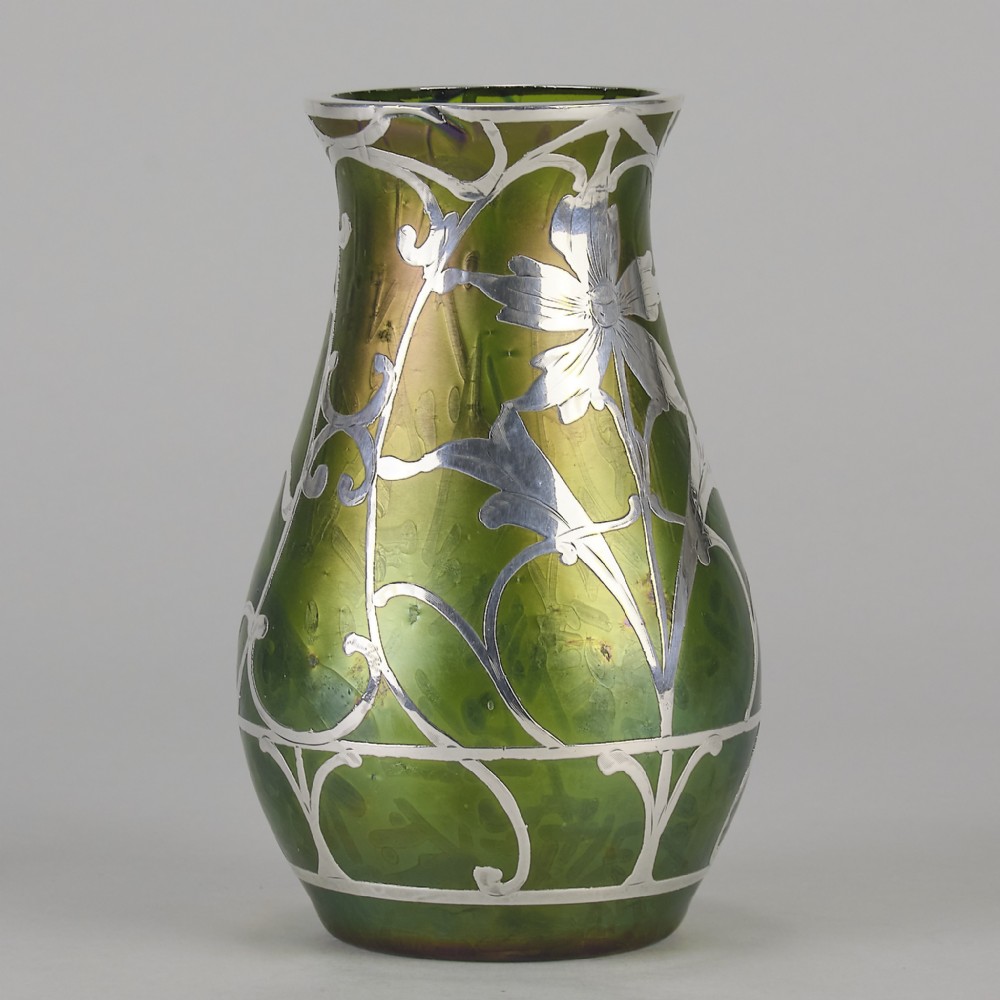
This attractive Johann Loetz glass vase displays a classic baluster form with a gently flared rim, enriched by a vibrant iridescent surface in olive green and golden tones. The glass exhibits a subtle, crackled Phänomen-type finish, giving depth and movement to the ground. Overlaid in silver is a refined Art Nouveau design featuring a stylised flowering stem, with sinuous leaves and curving tendrils extending symmetrically across the body. The decoration is both bold and elegant, complementing the organic character of the glass. The polished silver rim provides a crisp finish, enhancing the overall harmony and decorative appeal of the piece.
ADDITIONAL INFORMATION

Height: 16 cm

Diameter: 10 cm

Condition: Excellent Condition

Circa: 1905
Materials: Glass and Silver

SKU: 6858

ABOUT

Loetz glass was the premier Bohemian art glass manufacturer during the Art Nouveau period from roughly 1890 to 1920. Founded in 1840 by Johann Loetz in what is now the Czech Republic. The company became known for its innovative techniques, organic forms, and bold use of colour.
By 1889, Loetz was one of the region’s leading glassmakers. That year, the company took first prize at the Paris Exhibition for its classic vase forms, some of which were hand-worked and deformed into swirling, organic-looking shapes like seashells, flowers, and tree trunks. Decorative vases, cups, and pitchers were other popular forms in the Loetz lexicon, and many of the pieces practically glowed thanks to their iridescent sheen from the firing and reduction techniques that were popular at the time. For its contributions to the field, Loetz was awarded the grand prize at the Paris World Exhibition in 1900.
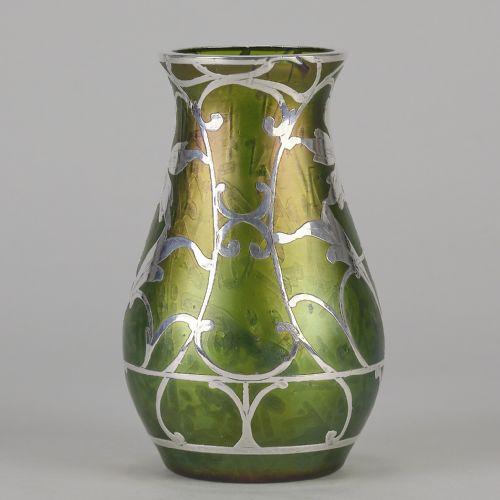
One of the most beautiful and collectible Loetz series from this period is called Phänomen, whose chief characteristic is the rippled or feather like designs on the object’s surface. Loetz glass artisans achieved this unique effect by wrapping hot glass threads around an equally hot molten base. The threads were then pulled on the object’s surface to make waves and other designs while the materials were still malleable.
The company patented the Phänomen technique in 1898 and used it in combination with techniques pioneered by L.C. Tiffany in the United States—in particular, Tiffany’s iridescent Favrile work. Combined, the two techniques provided plenty of inspiration for Loetz designers and artisans, including E. Prochaska, Franz Hofstötter, and Koloman Moser.
The use of patterns is also a hallmark of antique Loetz art glass. Then after 1905, when interest in the florals waned, Loetz pushed its surface treatments further than ever while relying on shapes that had been with the company for decades. For example, the roiling surfaces of the Titania pieces pre-date Abstract Expressionism by three decades, at least. At the other end of the aesthetic spectrum, the Perlglas pieces were translucent, giving more weight to the forms as sculpture rather than distracting the viewer with dazzling surfaces.
The last significant period for Loetz glass occurred between the wars. In the first part of the 1920s, Loetz participated in the popular revival of late 19th-century cameo glass, which had been pioneered by Émile Gallé and others.

Physical Dimensions
Height
16cm (6.30")
Width
10cm (3.94")
Depth
10cm (3.94")
Declaration

Hickmet Fine Arts has dated this Loetz Silver Overlay Vase to the 1900s.

Reference Numbers
Sellingantiques Reference
SA1207771
Dealers Internal Reference
6858
Dealers Notes

Please contact us for a shipping quotes.

Viewing can be arranged at our gallery and everything sold by Hickmet Fine Arts comes with a full certificate of Authenticity and Valuation.

If you have enjoyed seeing this item and wish to see more quality pieces please visit our website www.hickmet.com

Description
This attractive Johann Loetz glass vase displays a classic baluster form with a gently flared rim, enriched by a vibrant iridescent surface in olive green and golden tones. The glass exhibits a subtle, crackled Phänomen-type finish, giving depth and movement to the ground.
Overlaid in silver is a refined Art Nouveau design featuring a stylised flowering stem, with sinuous leaves and curving tendrils extending symmetrically across the body.
Hickmet Fine Arts

The decoration is both bold and elegant, complementing the organic character of the glass. The polished silver rim provides a crisp finish, enhancing the overall harmony and decorative appeal of the piece.

fig 1. A green iridescent glass vase featuring stylized silver overlay in an organic Art Nouveau floral pattern.
fig 1. Early 20th Century Art Nouveau "Silvered Phänomen Vase" by Loetz Witwe

ADDITIONAL INFORMATION

Height: 16 cm

Diameter: 10 cm

Condition: Excellent Condition

Circa: 1905

fig 2. A green iridescent glass vase featuring stylized silver overlay in an organic Art Nouveau floral pattern.
fig 2. Early 20th Century Art Nouveau "Silvered Phänomen Vase" by Loetz Witwe

Materials: Glass and Silver

SKU: 6858

ABOUT

Loetz glass was the premier Bohemian art glass manufacturer during the Art Nouveau period from roughly 1890 to 1920. Founded in 1840 by Johann Loetz in what is now the Czech Republic. The company became known for its innovative techniques, organic forms, and bold use of colour.

fig 3. A green iridescent glass vase featuring stylized silver overlay in an organic Art Nouveau floral pattern.
fig 3. Early 20th Century Art Nouveau "Silvered Phänomen Vase" by Loetz Witwe

By 1889, Loetz was one of the region’s leading glassmakers. That year, the company took first prize at the Paris Exhibition for its classic vase forms, some of which were hand-worked and deformed into swirling, organic-looking shapes like seashells, flowers, and tree trunks. Decorative vases, cups, and pitchers were other popular forms in the Loetz lexicon, and many of the pieces practically glowed thanks to their iridescent sheen from the firing and reduction techniques that were popular at the time. For its contributions to the field, Loetz was awarded the grand prize at the Paris World Exhibition in 1900.

fig 4. A green iridescent glass vase featuring stylized silver overlay in an organic Art Nouveau floral pattern.
fig 4. Early 20th Century Art Nouveau "Silvered Phänomen Vase" by Loetz Witwe

One of the most beautiful and collectible Loetz series from this period is called Phänomen, whose chief characteristic is the rippled or feather like designs on the object’s surface. Loetz glass artisans achieved this unique effect by wrapping hot glass threads around an equally hot molten base. The threads were then pulled on the object’s surface to make waves and other designs while the materials were still malleable.

fig 5. A green iridescent glass vase featuring stylized silver overlay in an organic Art Nouveau floral pattern.
fig 5. Early 20th Century Art Nouveau "Silvered Phänomen Vase" by Loetz Witwe

The company patented the Phänomen technique in 1898 and used it in combination with techniques pioneered by L.C. Tiffany in the United States—in particular, Tiffany’s iridescent Favrile work. Combined, the two techniques provided plenty of inspiration for Loetz designers and artisans, including E. Prochaska, Franz Hofstötter, and Koloman Moser.

fig 6. A green iridescent glass vase featuring stylized silver overlay in an organic Art Nouveau floral pattern.
fig 6. Early 20th Century Art Nouveau "Silvered Phänomen Vase" by Loetz Witwe

The use of patterns is also a hallmark of antique Loetz art glass. Then after 1905, when interest in the florals waned, Loetz pushed its surface treatments further than ever while relying on shapes that had been with the company for decades. For example, the roiling surfaces of the Titania pieces pre-date Abstract Expressionism by three decades, at least. At the other end of the aesthetic spectrum, the Perlglas pieces were translucent, giving more weight to the forms as sculpture rather than distracting the viewer with dazzling surfaces.

fig 7. A green iridescent glass vase featuring stylized silver overlay in an organic Art Nouveau floral pattern.
fig 7. Early 20th Century Art Nouveau "Silvered Phänomen Vase" by Loetz Witwe

The last significant period for Loetz glass occurred between the wars. In the first part of the 1920s, Loetz participated in the popular revival of late 19th-century cameo glass, which had been pioneered by Émile Gallé and others.

Height
16cm (6.30")
Width
10cm (3.94")
Depth
10cm (3.94")
Date of Manufacture

Hickmet Fine Arts has dated this Loetz Silver Overlay Vase to the 1900s.

Reference Numbers
Sellingantiques Ref
SA1207771
Dealers Internal Ref
6858
Hickmet Fine Arts
Hickmet Fine Arts
Sellingantiques verified Since Apr 2012

Established in 1936, hickmet fine arts is an international family run antiques business

Dealer Profile

You can view the stock and full dealer information on the Hickmet Fine Arts Profile Page

Trade Associations

Hickmet Fine Arts is a registered member of LAPADA  BADA  CINOA
PDF SHARE
SAVE
A green iridescent glass vase featuring stylized silver overlay in an organic Art Nouveau floral pattern.
1 / 13
Archive I A green iridescent glass vase featuring stylized silver overlay in an organic Art Nouveau floral pattern.

Early 20th Century Art Nouveau "Silvered Phänomen Vase" by Loetz Witwe
Archive II A green iridescent glass vase featuring stylized silver overlay in an organic Art Nouveau floral pattern. View II
Archive III A green iridescent glass vase featuring stylized silver overlay in an organic Art Nouveau floral pattern. View III
Archive IV A green iridescent glass vase featuring stylized silver overlay in an organic Art Nouveau floral pattern. View IV
Archive V A green iridescent glass vase featuring stylized silver overlay in an organic Art Nouveau floral pattern. View V
Archive VI A green iridescent glass vase featuring stylized silver overlay in an organic Art Nouveau floral pattern. View VI
Archive VII A green iridescent glass vase featuring stylized silver overlay in an organic Art Nouveau floral pattern. View VII
Archive VIII A green iridescent glass vase featuring stylized silver overlay in an organic Art Nouveau floral pattern. View VIII
Archive IX A green iridescent glass vase featuring stylized silver overlay in an organic Art Nouveau floral pattern. View IX
Archive X A green iridescent glass vase featuring stylized silver overlay in an organic Art Nouveau floral pattern. View X
Archive XI A green iridescent glass vase featuring stylized silver overlay in an organic Art Nouveau floral pattern. View XI
Archive XII A green iridescent glass vase featuring stylized silver overlay in an organic Art Nouveau floral pattern. View XII
Archive XIII A green iridescent glass vase featuring stylized silver overlay in an organic Art Nouveau floral pattern. View XIII
FURTHER BROWSING

Visitors also looked at these ⇣

Enlarged Archival View
Telephone 07971 850405
Location
Gallery Eighty Five
85 Portobello Road
London
W11 2QB
United Kingdom
Verified Since Apr 2012
Items For Sale 112
Items Sold 6
Hickmet Fine Arts
Hickmet Fine Arts
Verified Since Apr 2012
View Dealer Info
Location: Gallery Eighty Five, 85 Portobello Road, London, W11 2QB, United Kingdom
Verified
Apr 2012
For Sale
112
Sold
6
A green iridescent glass vase featuring stylized silver overlay in an organic Art Nouveau floral pattern.
Early 20th Century Art Nouveau "Silvered Phänomen Vase" by Loetz Witwe
Ref: SA1207771
A green iridescent glass vase featuring stylized silver overlay in an organic Art Nouveau floral pattern.
Detail View 1
Detail View 2
Detail View 3
Detail View 4
Detail View 5
Detail View 6
Detail View 7
Detail View 8
Detail View 9
Detail View 10
Detail View 11
Detail View 12
Archival Detail
Every single antique dealer on our platform is individually approved by our internal team. We verify their professional trade history, ethical standards, and photographic quality to ensure a secure, high-standard buying environment. Upon joining, every dealer agrees to a strict 9-point code of conduct. While issues can occasionally arise, our dealers typically resolve them swiftly and directly with the buyer. In fact, since our founding in 2002, Sellingantiques has only had to step in to help resolve an issue on roughly five occasions—a true testament to the quality of our dealers and their dedication to your happiness.
Our dealers are highly experienced in packing and shipping fragile, high-value antiques. Because you are in direct contact with the dealer, you will be able to easily go through all available shipping and insurance options together to ensure your item arrives safely.
Antiques are the ultimate green purchase. By choosing historical pieces over newly manufactured goods, you completely eliminate the carbon footprint of modern mass production while preserving exceptional, timeless craftsmanship.

Art Nouveau glass design, prominent from the late 19th to early 20th century, emphasises organic forms, sinuous whipcrack lines, and naturalistic motifs such as flowers and stylized foliage.

Silver overlay was created through an electro-deposition process where pure silver was electroplated onto glass pre-treated with a conductive flux, forming detailed metallic patterns on the vessel.

Authentic pieces feature electroplated silver integrated seamlessly onto hand-blown glass, often displaying pontil marks, hallmarks, and characteristic iridescent or textured surfaces.

Positioning an iridescent glass vessel on a minimalist sideboard or mantelpiece creates a striking visual contrast, allowing natural light to highlight the metallic sheen and surface detail.

Clean the glass gently with a soft, dry microfibre cloth, and use a specialised, non-abrasive silver polishing cloth strictly on the metal overlay to prevent oxidisation without damaging the surrounding glass.
items
Add keywords to the filter
Price
£100
£250000
Era
Movements
Material
Origin
Stock Location
Freshness
Online Payments
Categories