6,858  PAGES BROWSED TODAY PAGES TODAY 0  ANTIQUES UPLOADED TODAY NEW ARRIVALS
ID #SA1205079
FOR SALE
£825
Email
Save
Antique Asprey Sterling Silver Miniature Playing Card Box Casket 1912
Regent Antiques
for sale €965     $1,048
£825
Regent Antiques

Regent Antiques

Sellingantiques Verified Since Sep 2016
View Dealers Stock Page
  • About Us
    We specialise in english and continental furniture, silver, porcelain and decorative items.
  • Trade Associations
    Regent Antiques is a registered member of LAPADA  CINOA
Id #SA1205079
PDF SHARE
SAVE

Antique Asprey Sterling Silver Miniature Playing Card Box Casket 1912

1900 - 1920
For Sale by Regent Antiques
Description

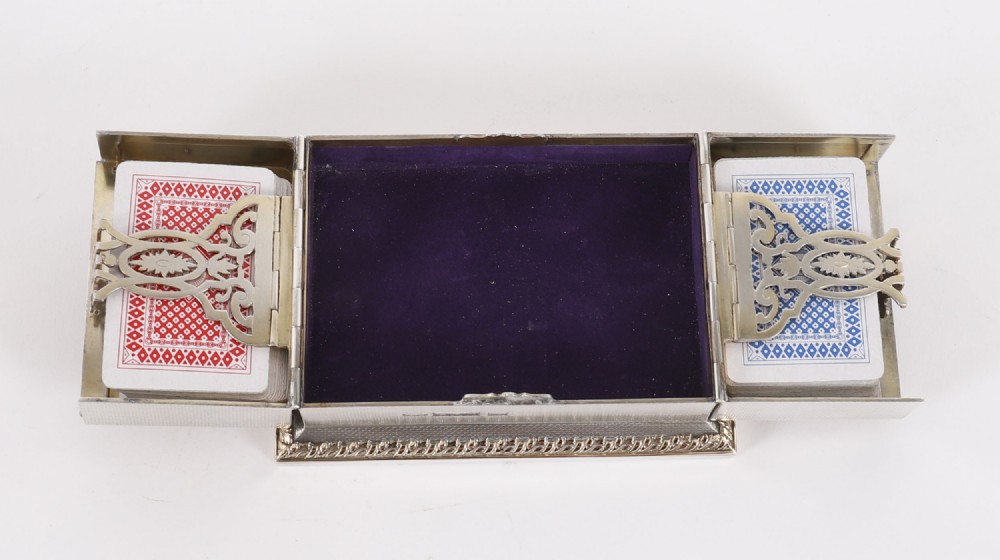
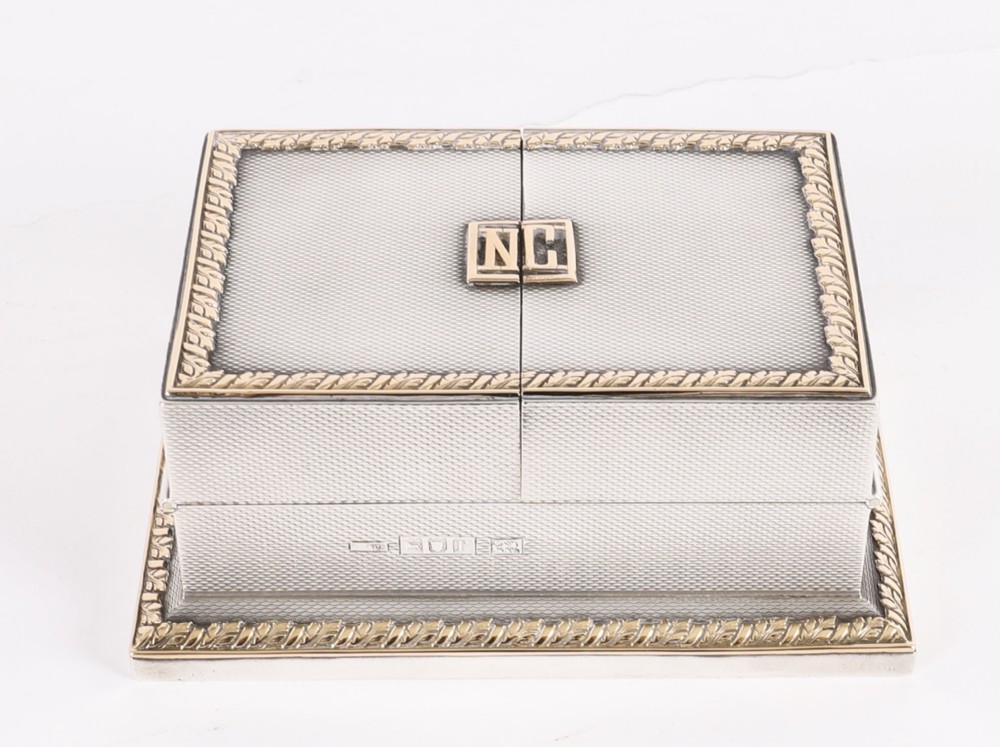
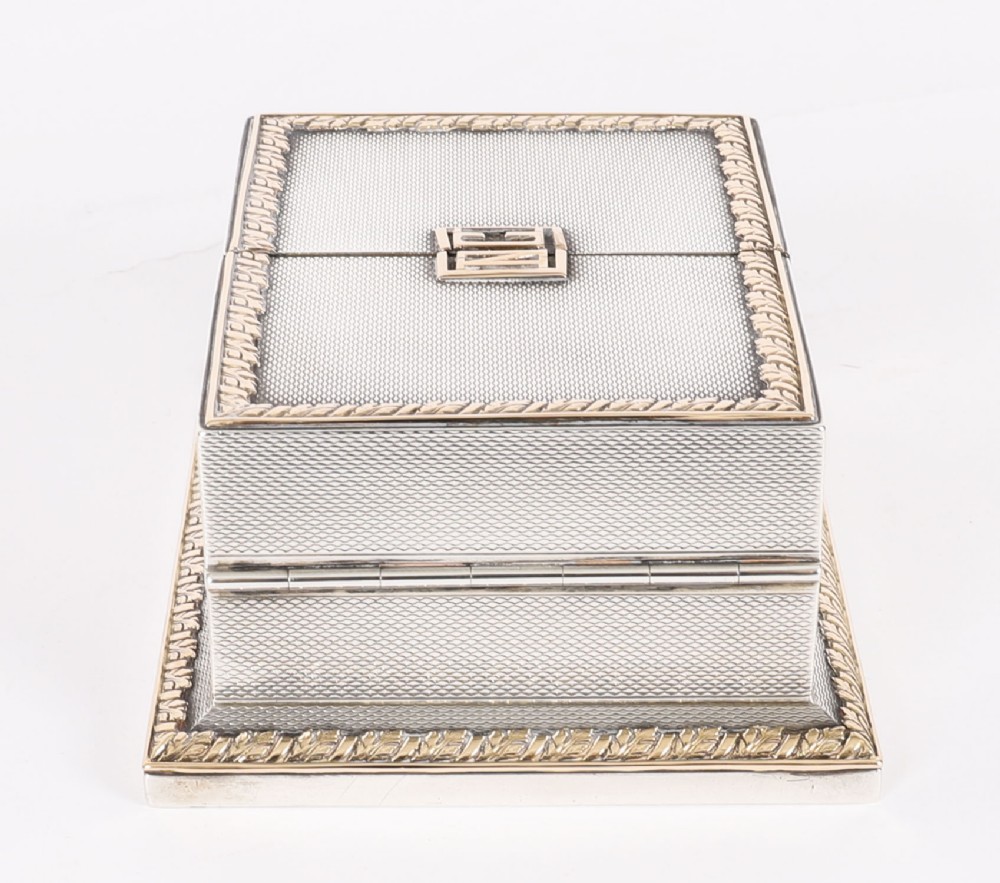
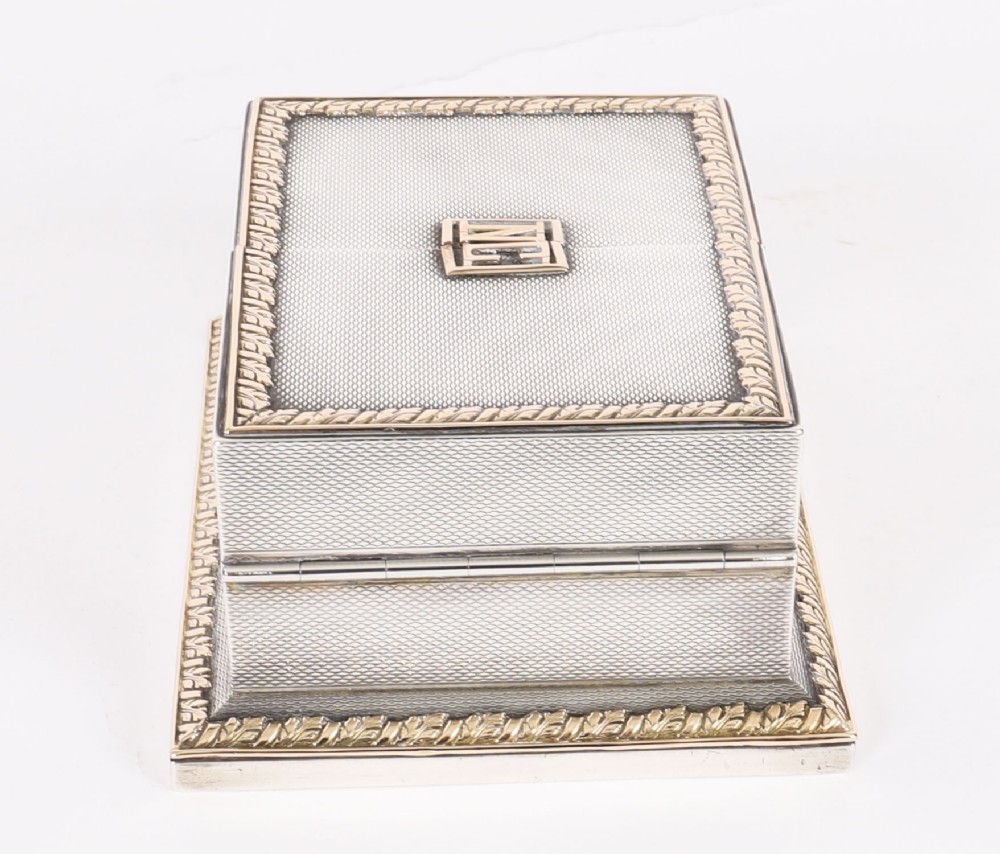
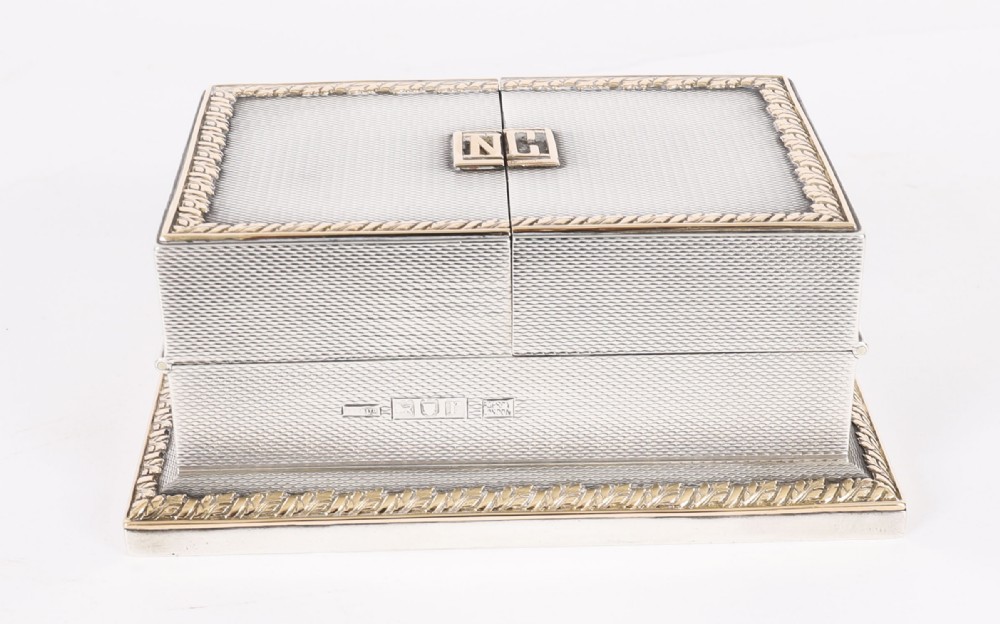
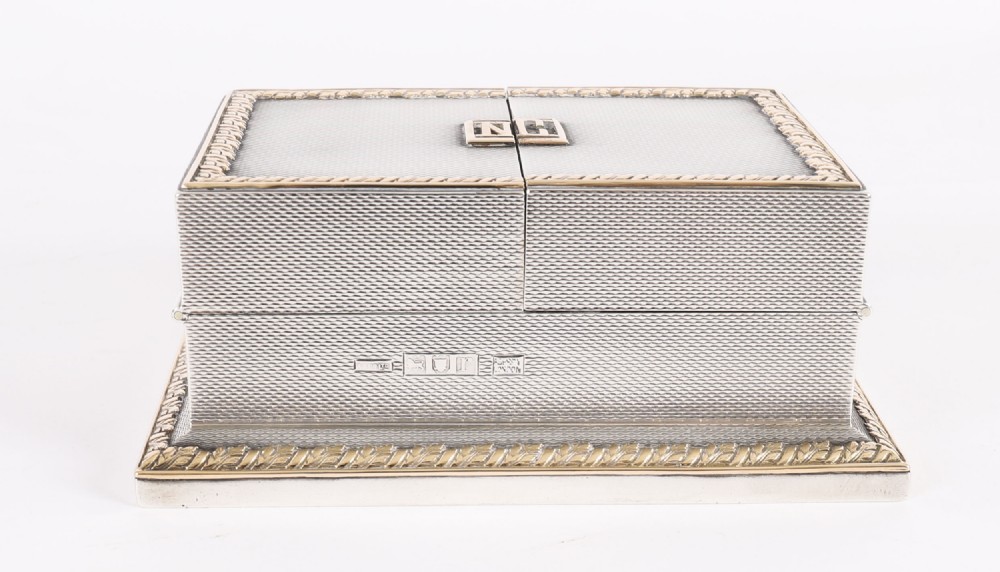
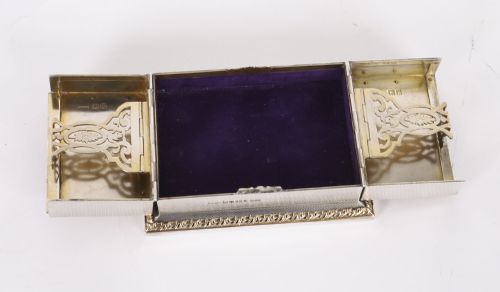
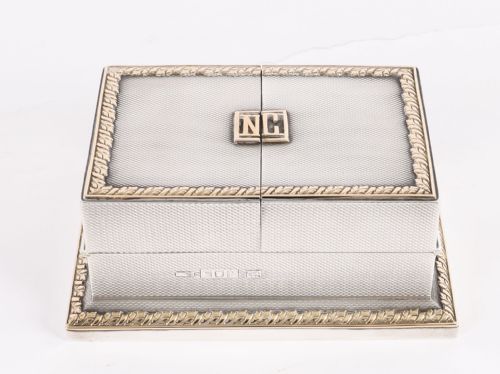
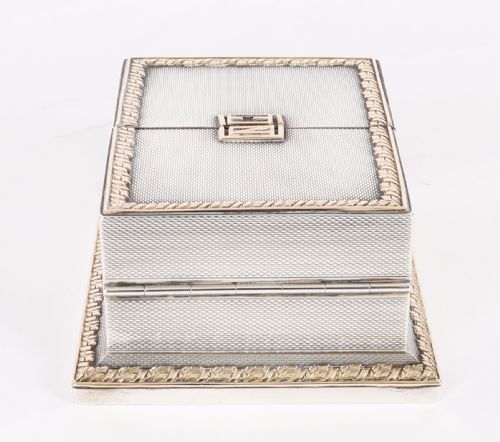
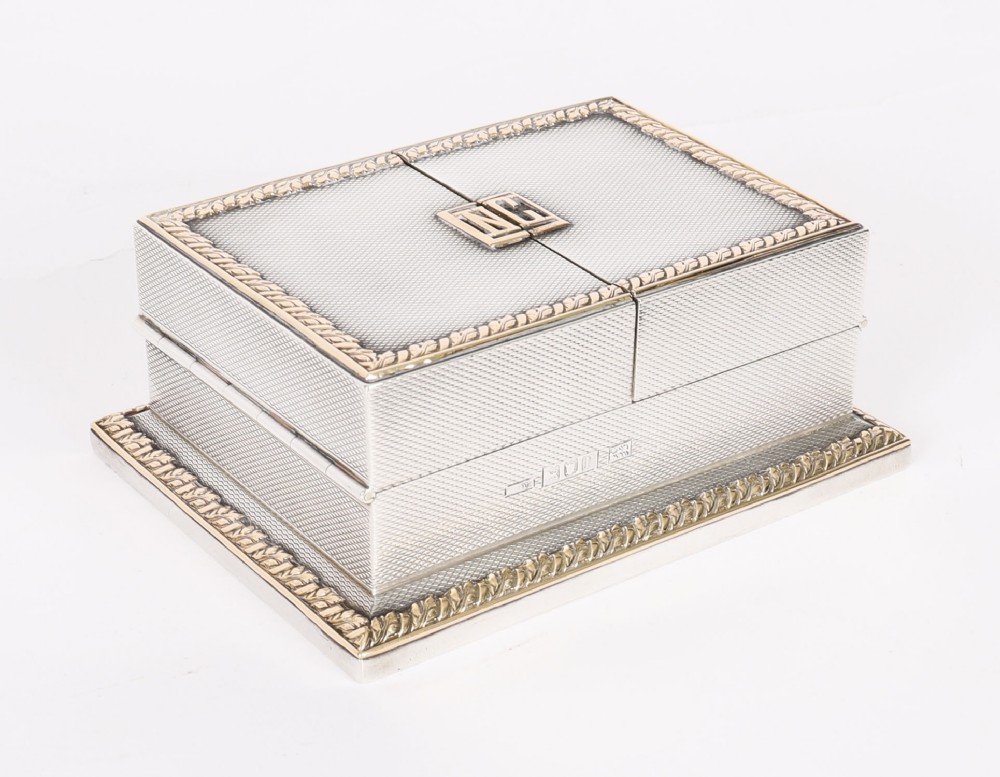
This is a fabulous early George V sterling silver casket with wonderful engine turned decoration and gold foliate borders, by the renowned London retailer and manufacturer Asprey.

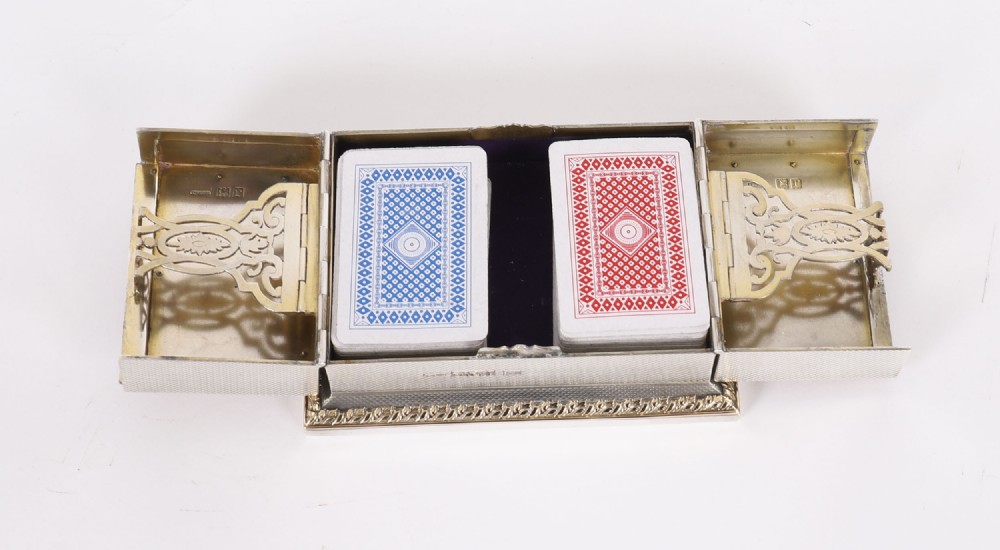
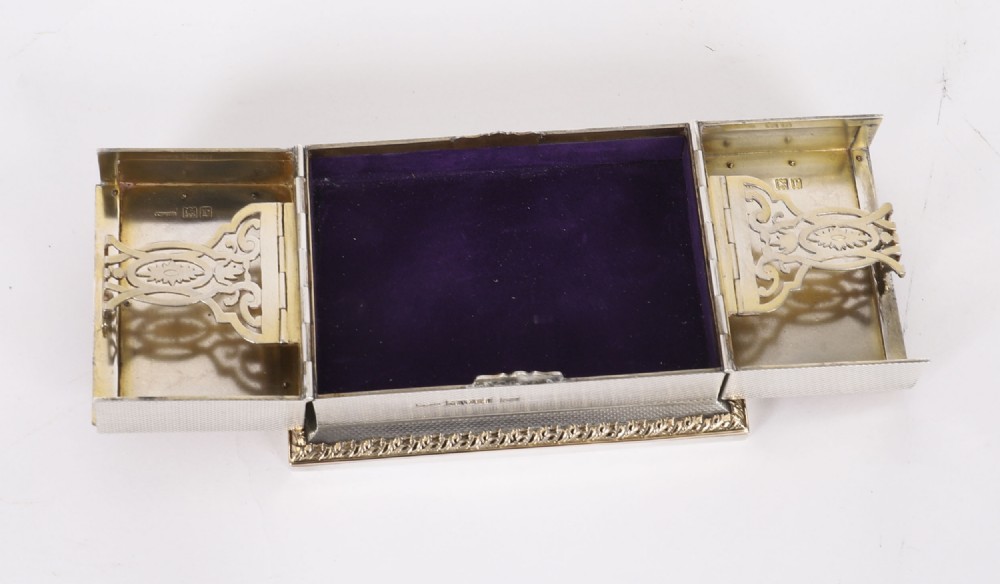
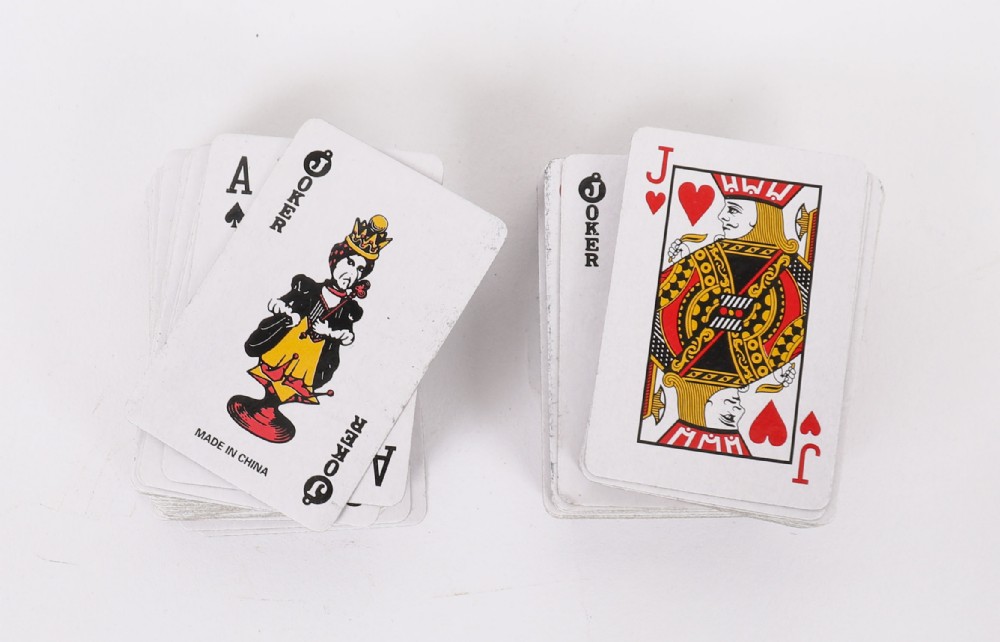
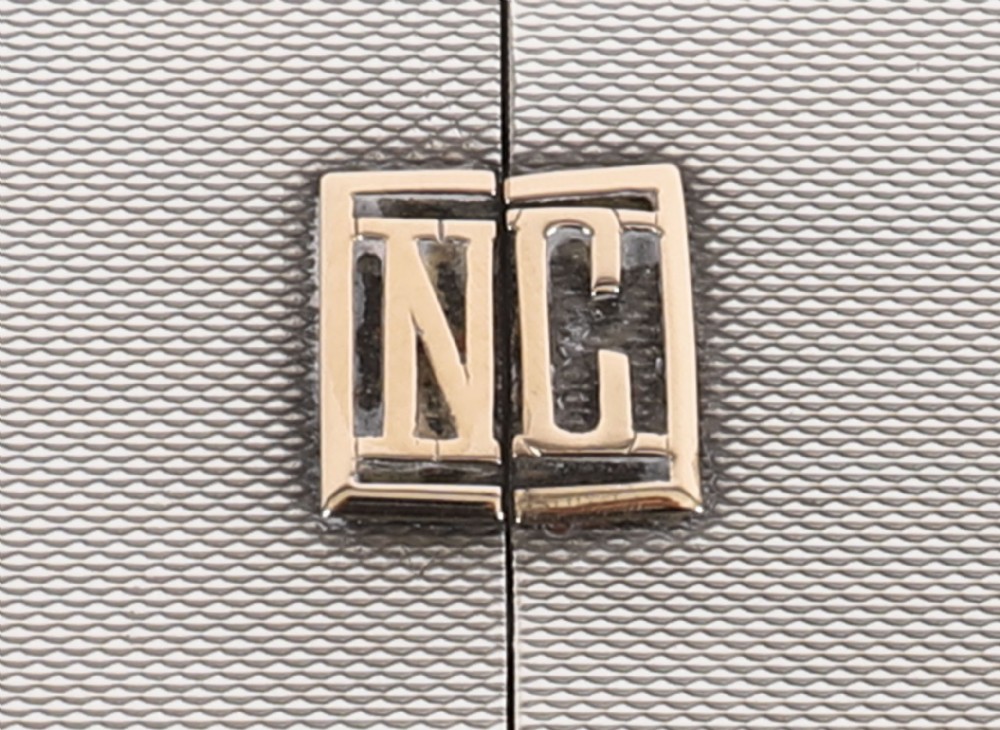
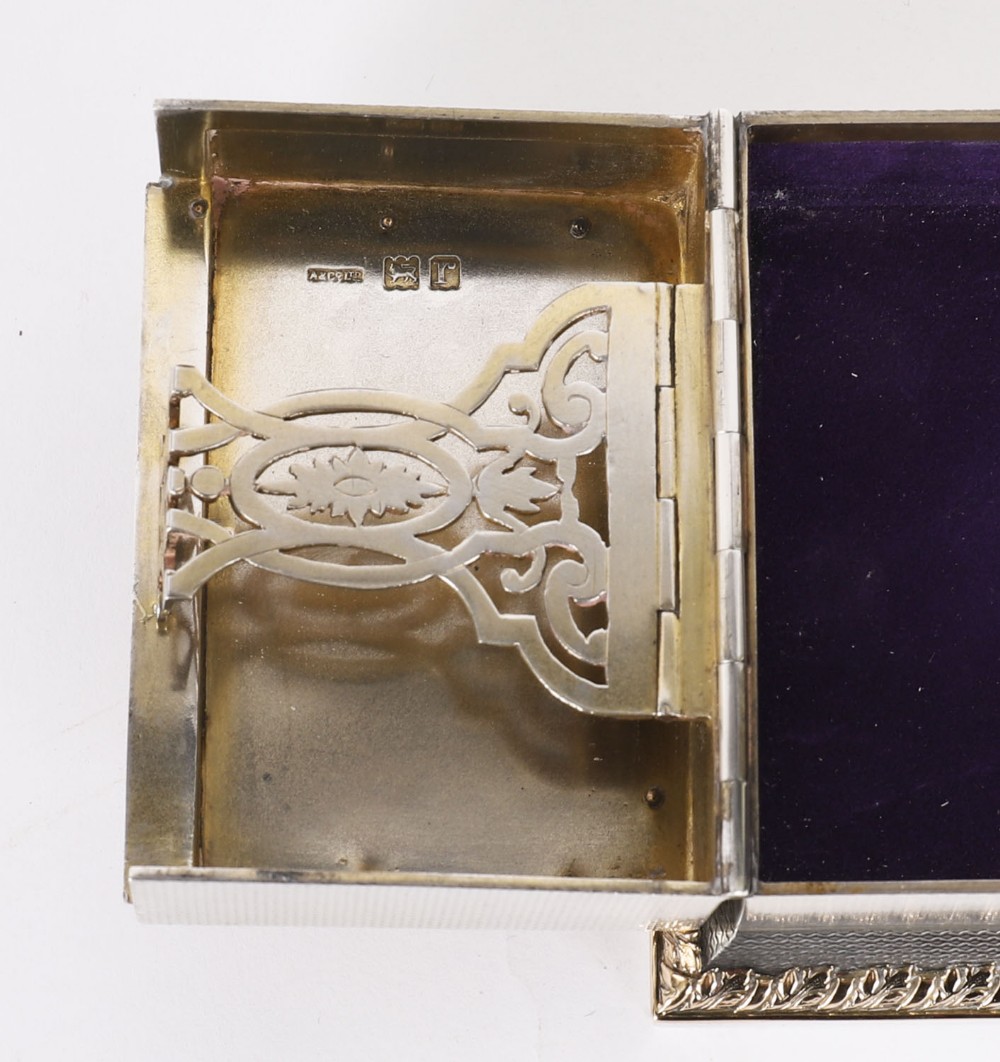
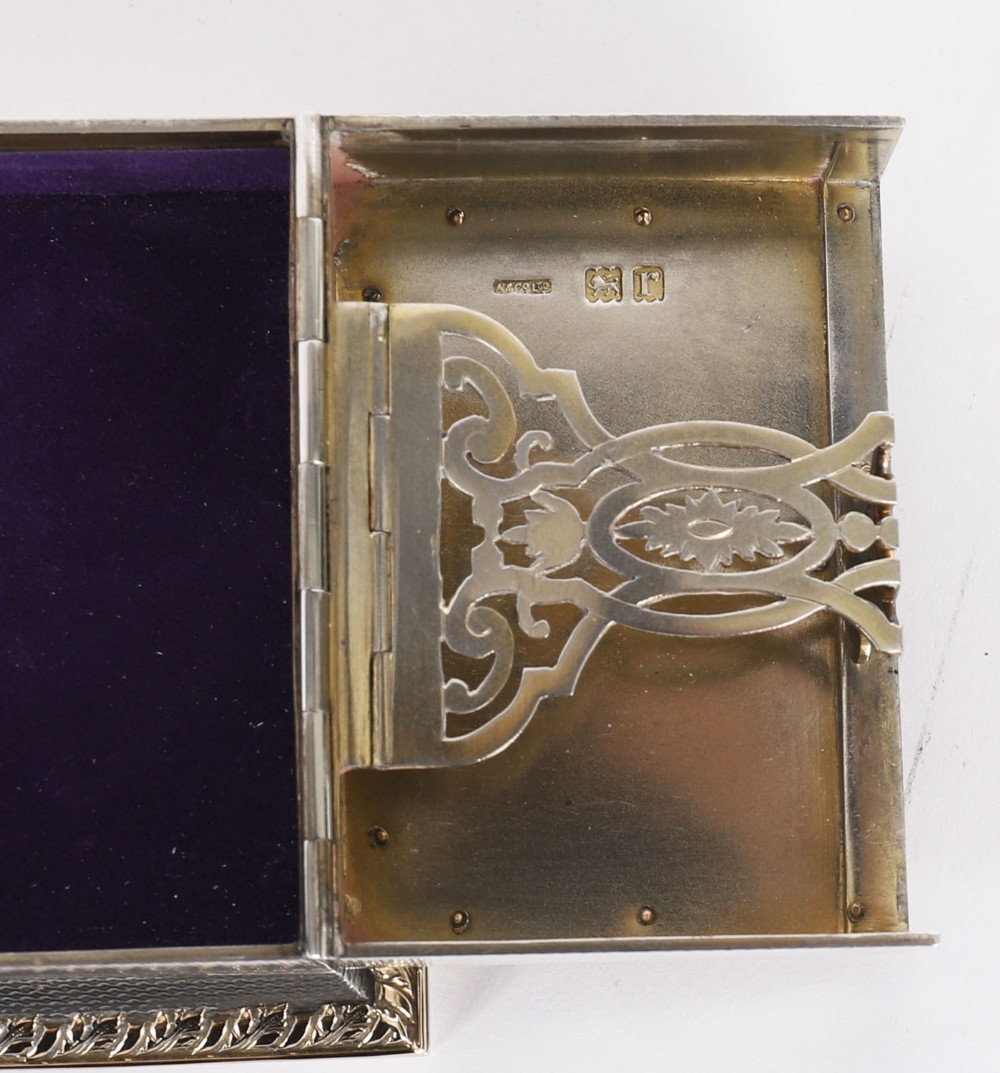
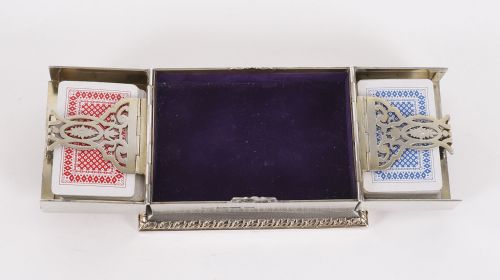
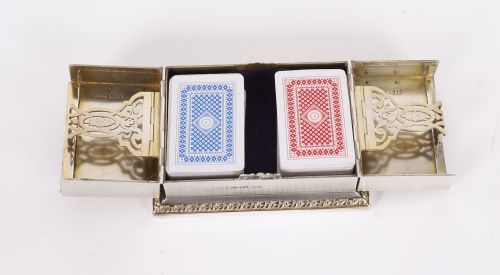
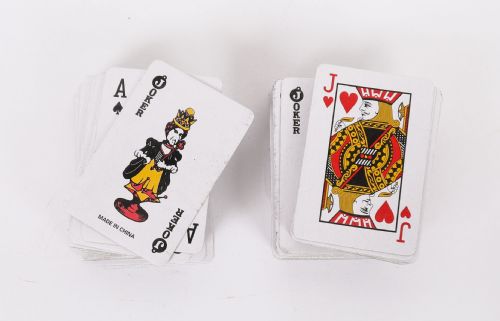
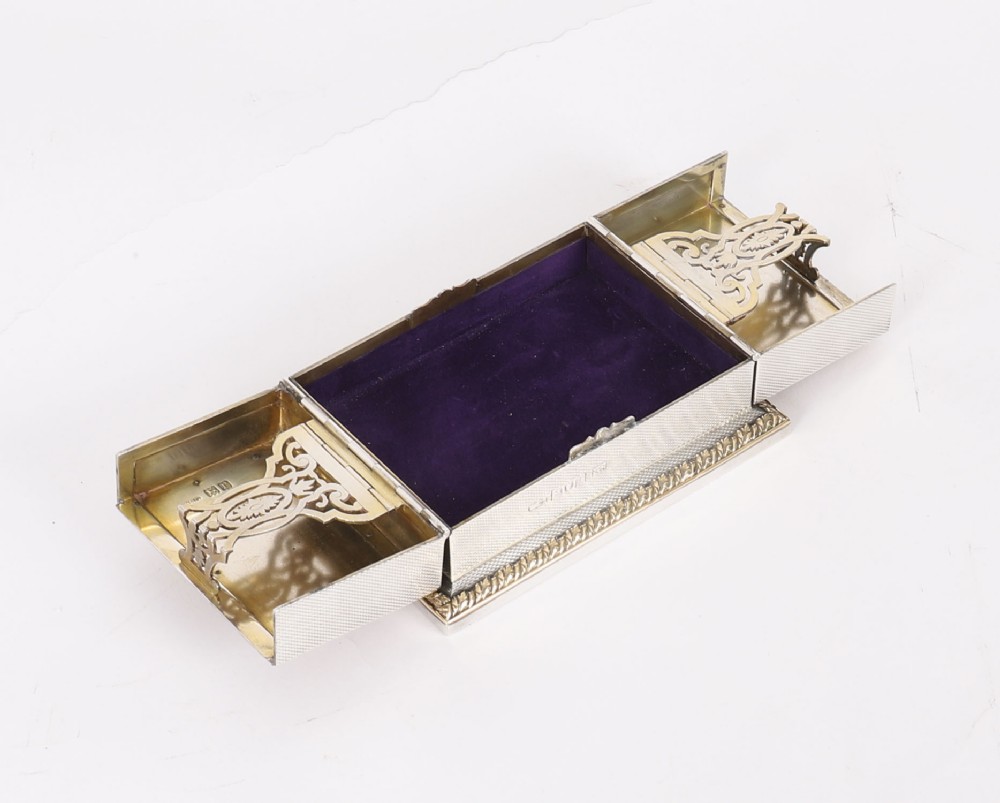
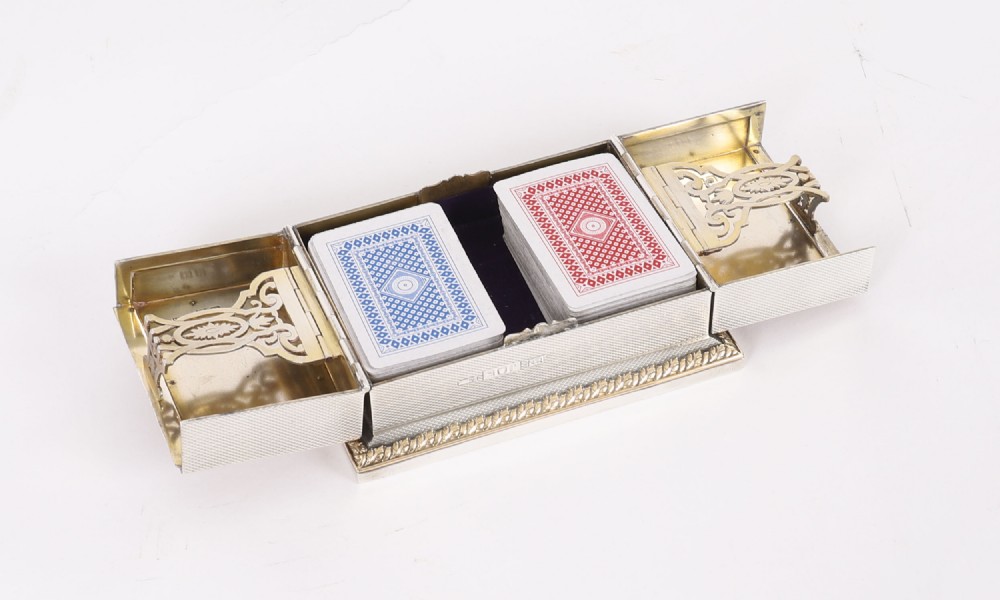
It can be used for decks  of miniature playing cards or  as a jewellery casket and has a hinged double cover with applied gold initials. It opens to reveal a silver gilt and velvet lined interior with ornate pierced silver gilt retaining clips, one of the clips is loose.
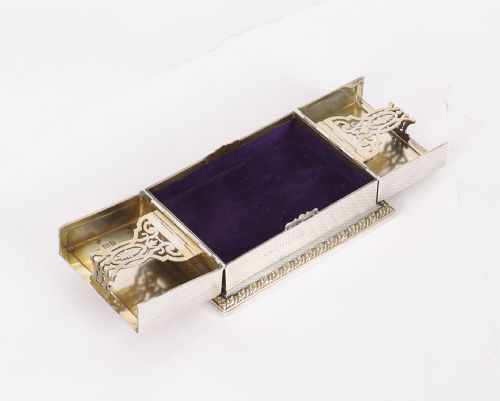
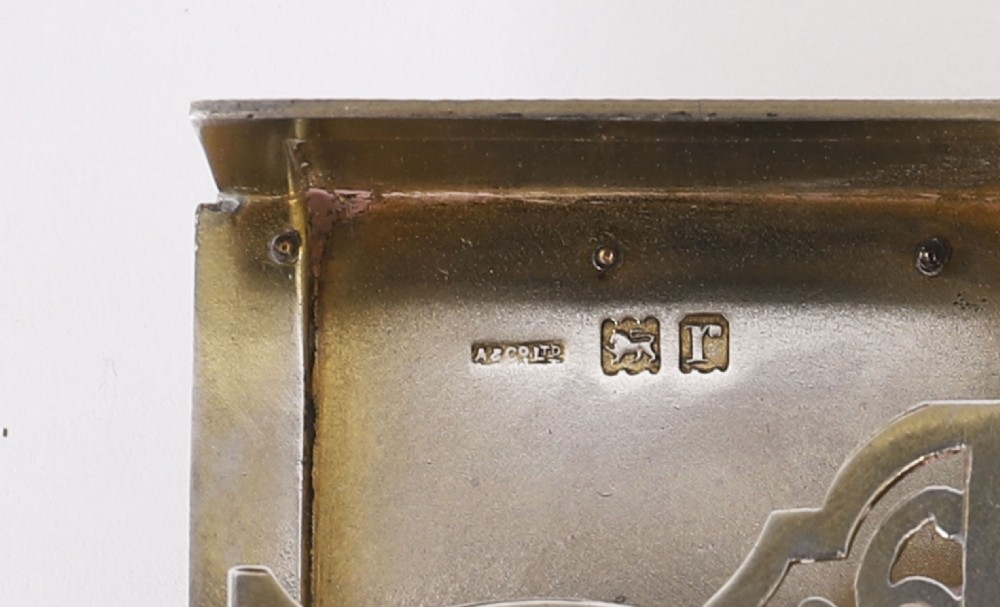
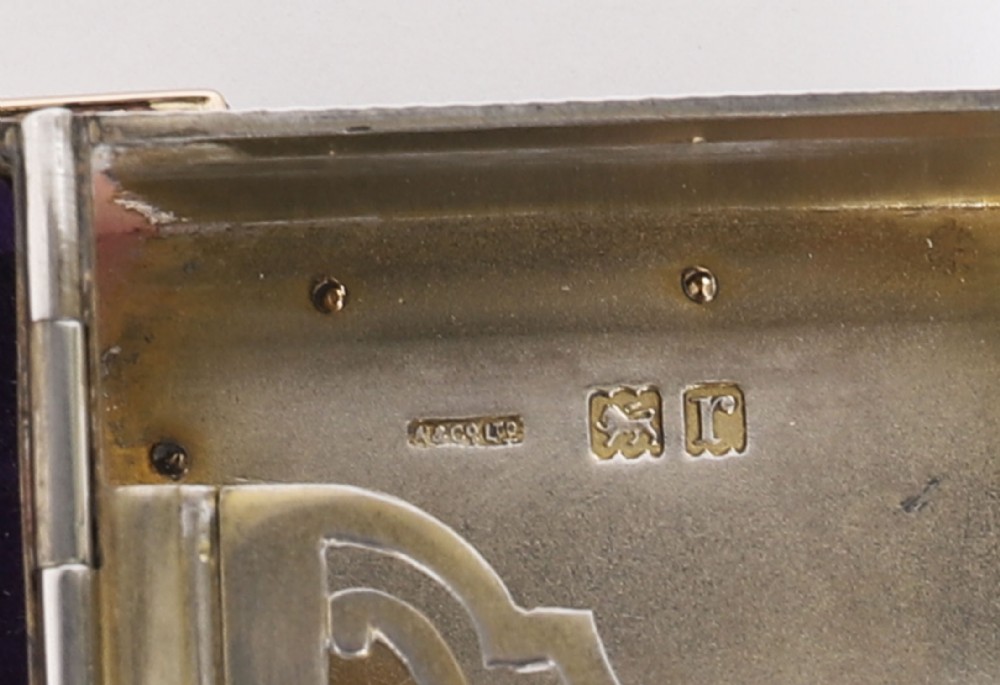
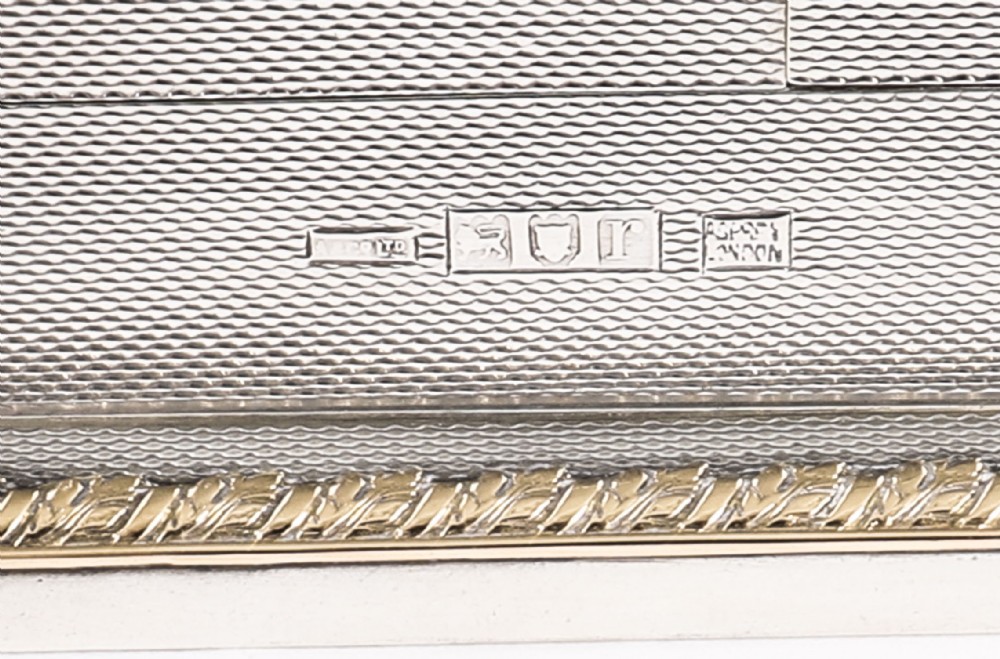
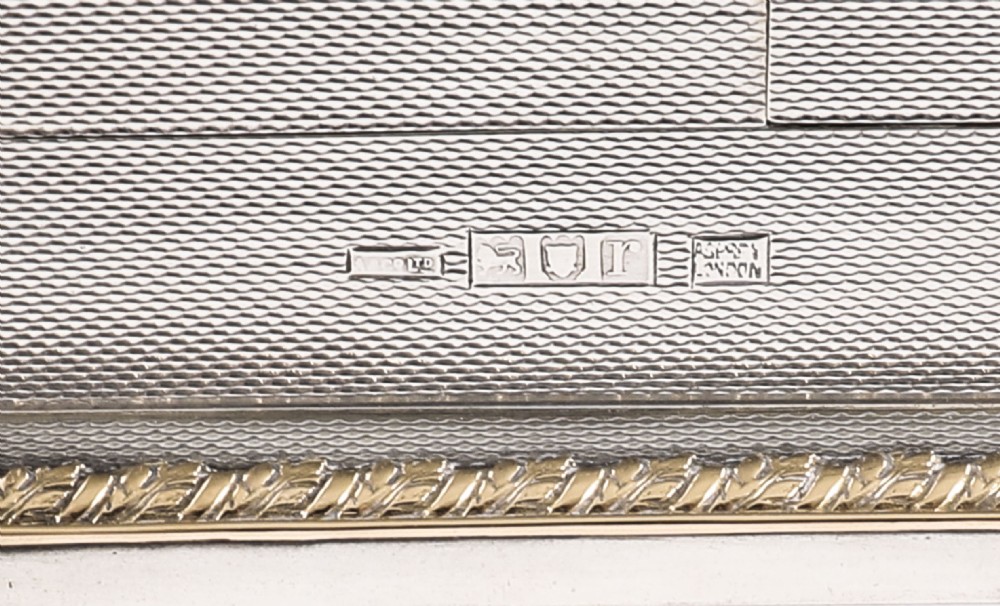
It has hallmarks for London 1912 and bears the makers mark for Asprey & Co Ltd.

Condition:

In excellent condition with  no dings, dents or signs of repair. Please see photos for confirmation.

Dimensions in cm:
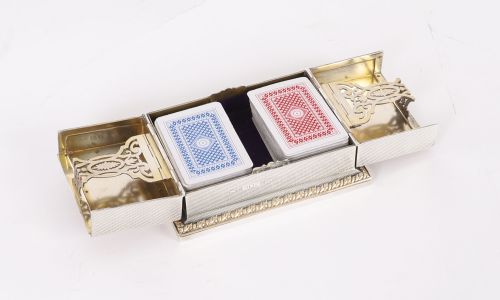
Height 5 cm x Width 11.5 cm x Depth 9 cm

Weight 2.86 kg

Dimensions in inches:

Height 2 inches x Width 4 inches x Depth 3 inches

Weight 92 troy oz

Asprey was established in England in  1781 and founded as a silk printing business by William Asprey, it soon became a luxury emporium. In 1841, William Asprey's elder son Charles went into partnership with a stationer located on London's Bond Street. In 1847 the family broke with this partner and moved into 167 New Bond Street, the premises Asprey occupies today.
From its central London location Asprey advertised 'articles of exclusive design and high quality, whether for personal adornment or personal accompaniment and to endow with richness and beauty the table and homes of people of refinement and discernment.' An early speciality was dressing cases. Asprey crafted traditional cases and designs, mostly in leather, suitable for the new style of travel ushered in by railways. The main competitors at the time were H.J. Cave & Sons. Asprey was recognised for its expertise when it won a gold medal for its dressing cases at the International Exhibition of 1862 but lost out to its rivals, H.J. Cave & Sons in 1867.
The company consolidated its position through acquisitions. In 1859 Asprey absorbed Edwards, an award winning maker of dressing cases and holder of a Royal Warrant. The company also purchased the Alfred Club at 22 Albemarle Street, which backed on to the New Bond Street store and meant that Asprey now had entrances on two of London's most fashionable streets.
In 1862, Asprey was granted a Royal Warrant by Queen Victoria. The Prince of Wales, later to be crowned Edward VII, granted another Royal Warrant. In 1953, for the coronation of Elizabeth II, Asprey paid homage with the Asprey Coronation Year Gold Collection, which featured a dessert, coffee and liqueur service in 18-carat gold and weighed almost 27 pounds. In April 1953, it went on show in the New Bond Street store and subsequently toured the United States.
As the business grew, the company acquired manufacturing facilities and hired silversmiths, goldsmiths, jewellers and watchmakers including Ernest Betjeman, the father of the distinguished poet John Betjeman, one of the most highly regarded craftsman and designers of his day.
In the twenties, commissions poured in from around the world, from American millionaire J. Pierpont Morgan to potentates such as the Maharaja of Patiala, who commissioned a huge teak travelling trunk for each of his wives in which each trunk was fitted with solid silver washing and bathing utensils with waterspouts of ornate tiger head and lined with blue velvet. Asprey cigarette cases became collectable amongst young sophisticates who delighted in its other modern products, including travel clocks, safety razors and automatic pencil sharpeners.
Asprey Jewellery    

Asprey has a tradition of producing jewellery inspired by the blooms found in English gardens. Over the decades jewelled interpretations of flowers have evolved to include the Crown Daisy, Rose, Calla Lily and Lily Pad collections. The master diamond cutter Gabi Tolkowsky created the Asprey cut. The cushion cut gave Tolkowsky options for i

Physical Dimensions
Height
5cm (1.97")
Width
11.5cm (4.53")
Depth
9cm (3.54")
Declaration

Regent Antiques has dated this Sterling Silver Card Box to the 1910s.

Reference Numbers
Sellingantiques Reference
SA1205079
Dealers Internal Reference
08735
Description
This is a fabulous early George V sterling silver casket with wonderful engine turned decoration and gold foliate borders, by the renowned London retailer and manufacturer Asprey.
It can be used for decks  of miniature playing cards or  as a jewellery casket and has a hinged double cover with applied gold initials.
Regent Antiques

It opens to reveal a silver gilt and velvet lined interior with ornate pierced silver gilt retaining clips, one of the clips is loose.

fig 1. An Edwardian sterling silver rectangular playing card casket featuring engine-turned texturing, foliate borders, and a double-hinged lid.
fig 1. Antique Asprey Sterling Silver Miniature Playing Card Box Casket 1912

It has hallmarks for London 1912 and bears the makers mark for Asprey & Co Ltd.

Condition:

In excellent condition with  no dings, dents or signs of repair. Please see photos for confirmation.

Dimensions in cm:

fig 2. An Edwardian sterling silver rectangular playing card casket featuring engine-turned texturing, foliate borders, and a double-hinged lid.
fig 2. Antique Asprey Sterling Silver Miniature Playing Card Box Casket 1912

Height 5 cm x Width 11.5 cm x Depth 9 cm

Weight 2.86 kg

Dimensions in inches:

Height 2 inches x Width 4 inches x Depth 3 inches

Weight 92 troy oz

Asprey was established in England in  1781 and founded as a silk printing business by William Asprey, it soon became a luxury emporium. In 1841, William Asprey's elder son Charles went into partnership with a stationer located on London's Bond Street. In 1847 the family broke with this partner and moved into 167 New Bond Street, the premises Asprey occupies today.

fig 3. An Edwardian sterling silver rectangular playing card casket featuring engine-turned texturing, foliate borders, and a double-hinged lid.
fig 3. Antique Asprey Sterling Silver Miniature Playing Card Box Casket 1912

From its central London location Asprey advertised 'articles of exclusive design and high quality, whether for personal adornment or personal accompaniment and to endow with richness and beauty the table and homes of people of refinement and discernment.' An early speciality was dressing cases. Asprey crafted traditional cases and designs, mostly in leather, suitable for the new style of travel ushered in by railways. The main competitors at the time were H.J. Cave & Sons. Asprey was recognised for its expertise when it won a gold medal for its dressing cases at the International Exhibition of 1862 but lost out to its rivals, H.J. Cave & Sons in 1867.

fig 4. An Edwardian sterling silver rectangular playing card casket featuring engine-turned texturing, foliate borders, and a double-hinged lid.
fig 4. Antique Asprey Sterling Silver Miniature Playing Card Box Casket 1912

The company consolidated its position through acquisitions. In 1859 Asprey absorbed Edwards, an award winning maker of dressing cases and holder of a Royal Warrant. The company also purchased the Alfred Club at 22 Albemarle Street, which backed on to the New Bond Street store and meant that Asprey now had entrances on two of London's most fashionable streets.

fig 5. An Edwardian sterling silver rectangular playing card casket featuring engine-turned texturing, foliate borders, and a double-hinged lid.
fig 5. Antique Asprey Sterling Silver Miniature Playing Card Box Casket 1912

In 1862, Asprey was granted a Royal Warrant by Queen Victoria. The Prince of Wales, later to be crowned Edward VII, granted another Royal Warrant. In 1953, for the coronation of Elizabeth II, Asprey paid homage with the Asprey Coronation Year Gold Collection, which featured a dessert, coffee and liqueur service in 18-carat gold and weighed almost 27 pounds. In April 1953, it went on show in the New Bond Street store and subsequently toured the United States.

fig 6. An Edwardian sterling silver rectangular playing card casket featuring engine-turned texturing, foliate borders, and a double-hinged lid.
fig 6. Antique Asprey Sterling Silver Miniature Playing Card Box Casket 1912

As the business grew, the company acquired manufacturing facilities and hired silversmiths, goldsmiths, jewellers and watchmakers including Ernest Betjeman, the father of the distinguished poet John Betjeman, one of the most highly regarded craftsman and designers of his day.

fig 7. An Edwardian sterling silver rectangular playing card casket featuring engine-turned texturing, foliate borders, and a double-hinged lid.
fig 7. Antique Asprey Sterling Silver Miniature Playing Card Box Casket 1912

In the twenties, commissions poured in from around the world, from American millionaire J. Pierpont Morgan to potentates such as the Maharaja of Patiala, who commissioned a huge teak travelling trunk for each of his wives in which each trunk was fitted with solid silver washing and bathing utensils with waterspouts of ornate tiger head and lined with blue velvet. Asprey cigarette cases became collectable amongst young sophisticates who delighted in its other modern products, including travel clocks, safety razors and automatic pencil sharpeners.

fig 8. An Edwardian sterling silver rectangular playing card casket featuring engine-turned texturing, foliate borders, and a double-hinged lid.
fig 8. Antique Asprey Sterling Silver Miniature Playing Card Box Casket 1912

Asprey Jewellery    

Asprey has a tradition of producing jewellery inspired by the blooms found in English gardens. Over the decades jewelled interpretations of flowers have evolved to include the Crown Daisy, Rose, Calla Lily and Lily Pad collections. The master diamond cutter Gabi Tolkowsky created the Asprey cut. The cushion cut gave Tolkowsky options for i

Height
5cm (1.97")
Width
11.5cm (4.53")
Depth
9cm (3.54")
Date of Manufacture

Regent Antiques has dated this Sterling Silver Card Box to the 1910s.

Reference Numbers
Sellingantiques Ref
SA1205079
Dealers Internal Ref
08735
Regent Antiques
Regent Antiques
Sellingantiques verified Since Sep 2016

We specialise in english and continental furniture, silver, porcelain and decorative items.

Dealer Profile

You can view the stock and full dealer information on the Regent Antiques Profile Page

Trade Associations

Regent Antiques is a registered member of LAPADA  CINOA
PDF SHARE
SAVE
An Edwardian sterling silver rectangular playing card casket featuring engine-turned texturing, foliate borders, and a double-hinged lid.
1 / 19
Archive I An Edwardian sterling silver rectangular playing card casket featuring engine-turned texturing, foliate borders, and a double-hinged lid.

Antique Asprey Sterling Silver Miniature Playing Card Box Casket 1912
Archive II An Edwardian sterling silver rectangular playing card casket featuring engine-turned texturing, foliate borders, and a double-hinged lid. View II
Archive III An Edwardian sterling silver rectangular playing card casket featuring engine-turned texturing, foliate borders, and a double-hinged lid. View III
Archive IV An Edwardian sterling silver rectangular playing card casket featuring engine-turned texturing, foliate borders, and a double-hinged lid. View IV
Archive V An Edwardian sterling silver rectangular playing card casket featuring engine-turned texturing, foliate borders, and a double-hinged lid. View V
Archive VI An Edwardian sterling silver rectangular playing card casket featuring engine-turned texturing, foliate borders, and a double-hinged lid. View VI
Archive VII An Edwardian sterling silver rectangular playing card casket featuring engine-turned texturing, foliate borders, and a double-hinged lid. View VII
Archive VIII An Edwardian sterling silver rectangular playing card casket featuring engine-turned texturing, foliate borders, and a double-hinged lid. View VIII
Archive IX An Edwardian sterling silver rectangular playing card casket featuring engine-turned texturing, foliate borders, and a double-hinged lid. View IX
Archive X An Edwardian sterling silver rectangular playing card casket featuring engine-turned texturing, foliate borders, and a double-hinged lid. View X
Archive XI An Edwardian sterling silver rectangular playing card casket featuring engine-turned texturing, foliate borders, and a double-hinged lid. View XI
Archive XII An Edwardian sterling silver rectangular playing card casket featuring engine-turned texturing, foliate borders, and a double-hinged lid. View XII
Archive XIII An Edwardian sterling silver rectangular playing card casket featuring engine-turned texturing, foliate borders, and a double-hinged lid. View XIII
Archive XIV An Edwardian sterling silver rectangular playing card casket featuring engine-turned texturing, foliate borders, and a double-hinged lid. View XIV
Archive XV An Edwardian sterling silver rectangular playing card casket featuring engine-turned texturing, foliate borders, and a double-hinged lid. View XV
Archive XVI An Edwardian sterling silver rectangular playing card casket featuring engine-turned texturing, foliate borders, and a double-hinged lid. View XVI
Archive XVII An Edwardian sterling silver rectangular playing card casket featuring engine-turned texturing, foliate borders, and a double-hinged lid. View XVII
Archive XVIII An Edwardian sterling silver rectangular playing card casket featuring engine-turned texturing, foliate borders, and a double-hinged lid. View XVIII
Archive XIX An Edwardian sterling silver rectangular playing card casket featuring engine-turned texturing, foliate borders, and a double-hinged lid. View XIX
Enlarged Archival View
Location
Manor Warehouse
318 Green Lanes
London
N4 1BX
United Kingdom
Verified Since Sep 2016
Items For Sale 659
Items Sold 2,608
Regent Antiques
Regent Antiques
Verified Since Sep 2016
View Dealer Info
Location: Manor Warehouse, 318 Green Lanes, London, N4 1BX, United Kingdom
Verified
Sep 2016
For Sale
659
Sold
2,608
An Edwardian sterling silver rectangular playing card casket featuring engine-turned texturing, foliate borders, and a double-hinged lid.
Antique Asprey Sterling Silver Miniature Playing Card Box Casket 1912
Ref: SA1205079
An Edwardian sterling silver rectangular playing card casket featuring engine-turned texturing, foliate borders, and a double-hinged lid.
Detail View 1
Detail View 2
Detail View 3
Detail View 4
Detail View 5
Detail View 6
Detail View 7
Detail View 8
Detail View 9
Detail View 10
Detail View 11
Detail View 12
Detail View 13
Detail View 14
Detail View 15
Detail View 16
Detail View 17
Detail View 18
Archival Detail
Every single antique dealer on our platform is individually approved by our internal team. We verify their professional trade history, ethical standards, and photographic quality to ensure a secure, high-standard buying environment. Upon joining, every dealer agrees to a strict 9-point code of conduct. While issues can occasionally arise, our dealers typically resolve them swiftly and directly with the buyer. In fact, since our founding in 2002, Sellingantiques has only had to step in to help resolve an issue on roughly five occasions—a true testament to the quality of our dealers and their dedication to your happiness.
Our dealers are highly experienced in packing and shipping fragile, high-value antiques. Because you are in direct contact with the dealer, you will be able to easily go through all available shipping and insurance options together to ensure your item arrives safely.
Antiques are the ultimate green purchase. By choosing historical pieces over newly manufactured goods, you completely eliminate the carbon footprint of modern mass production while preserving exceptional, timeless craftsmanship.

During the Edwardian period (19011910) and the years immediately following, parlor games such as bridge grew significantly in popularity among the British upper classes. Specialist silversmiths designed decorative table boxes and caskets specifically engineered to store card decks, serving both as functional gaming accoutrements and signs of domestic refinement.

These boxes were constructed from high-purity sterling silver (925 parts per thousand). The surfaces often feature engine-turninga precise mechanical engraving process creating fine geometric patternsalongside cast or chased foliate borders and double-hinged lid mechanisms.

Authentic British pieces bear official assay office hallmarks stamped into the silver. Look for the lion passant confirming sterling purity, a city mark (such as the leopards head for London), a specific date letter denoting the year of manufacture, and a registered makers mark.

A silver casket functions effectively as a decorative desk accessory in a home office, a storage container for small items on a coffee table tray, or a accent piece displayed within a bookshelf or vitrine.

Silver should be dusted regularly with a soft lint-free cloth and polished occasionally using a specialist silver polishing cloth or mild silver foam. Abrasive cleaners and chemical dips should be avoided to preserve the crispness of engine-turned details and chased borders.
items
Add keywords to the filter
Price
£100
£250000
Era
Movements
Material
Origin
Stock Location
Freshness
Online Payments
Categories