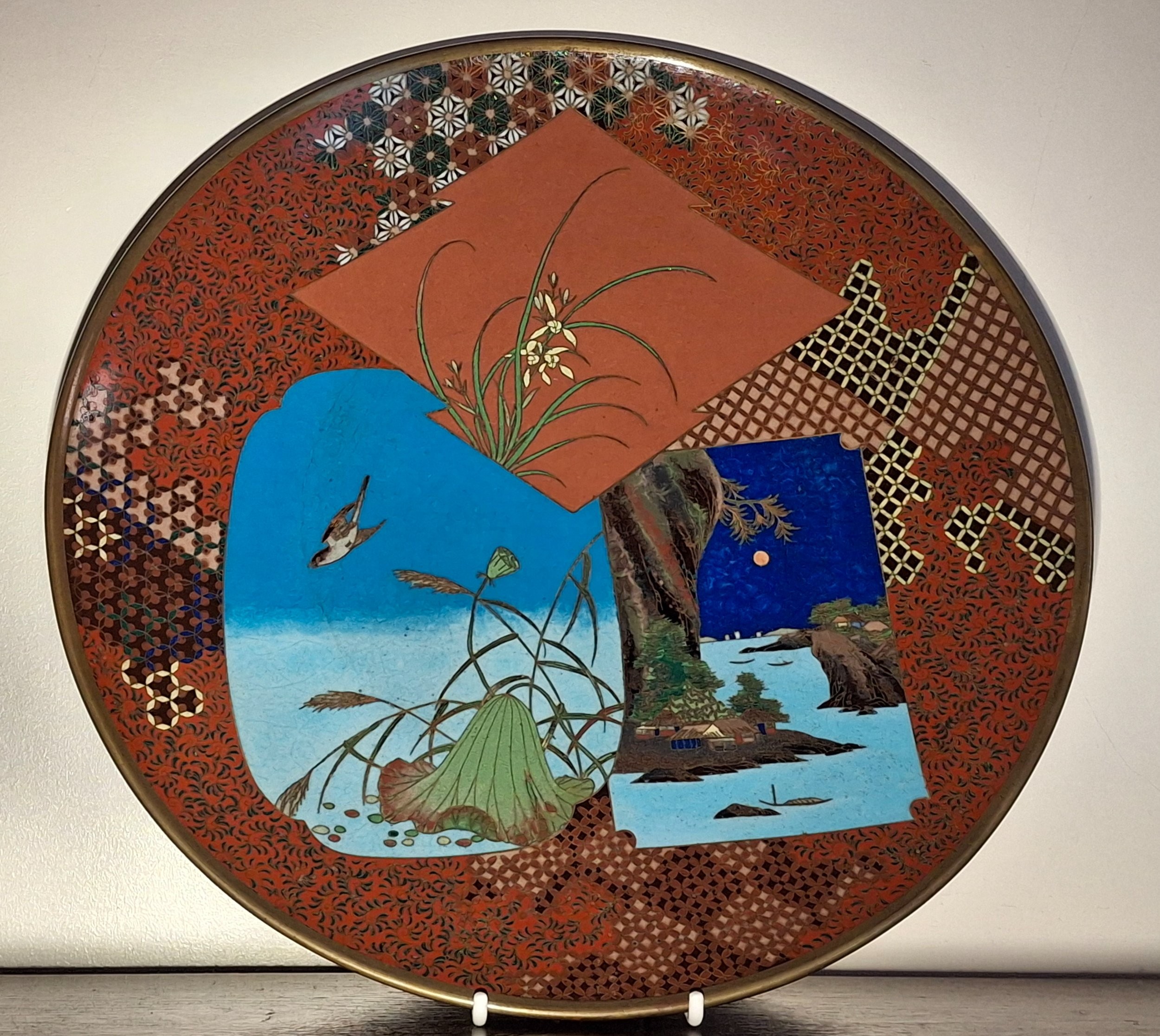
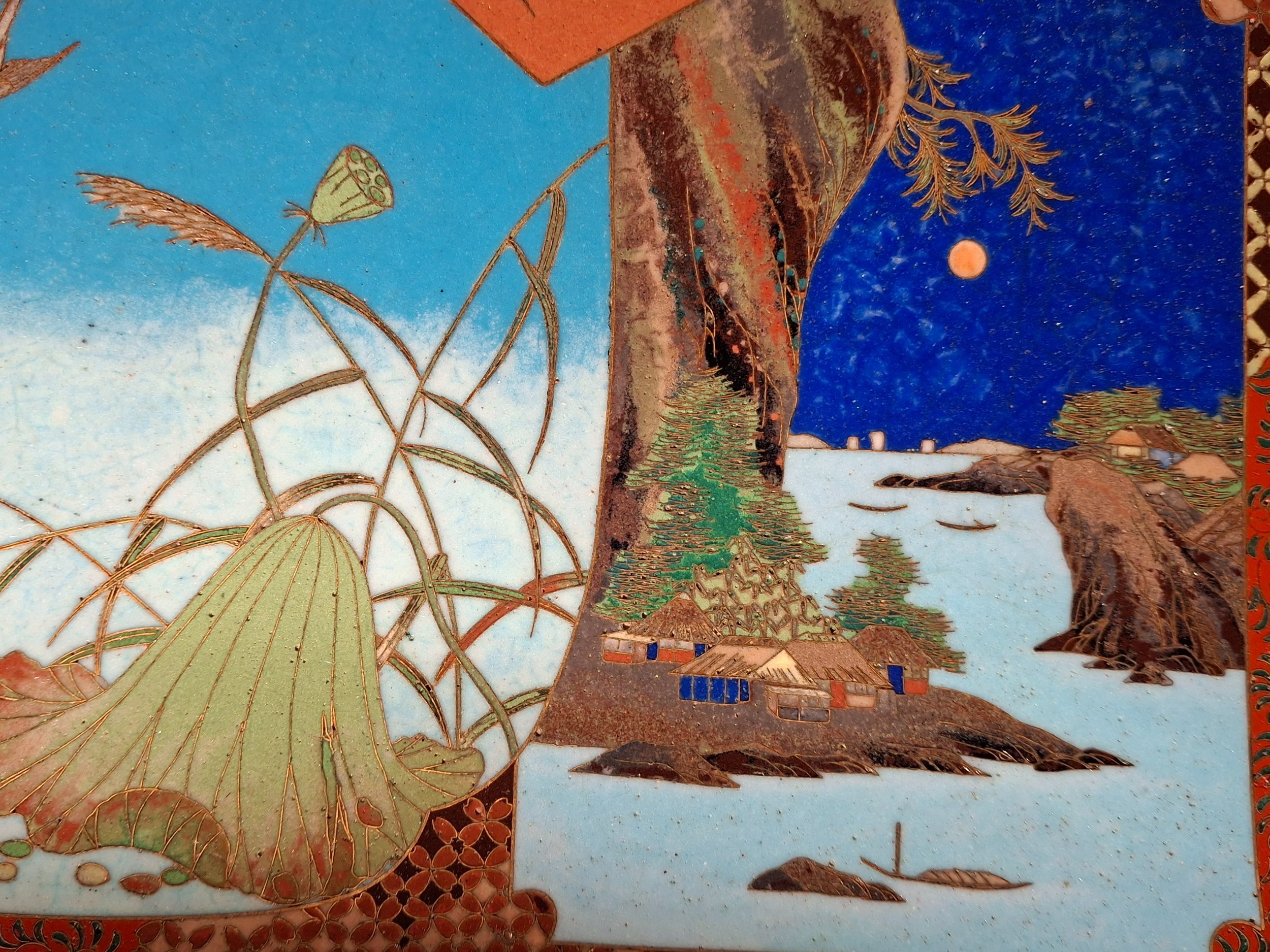
Rare Japanese Cloisonne Medium Plate - Landscape. Nagoya. Circa 1900.
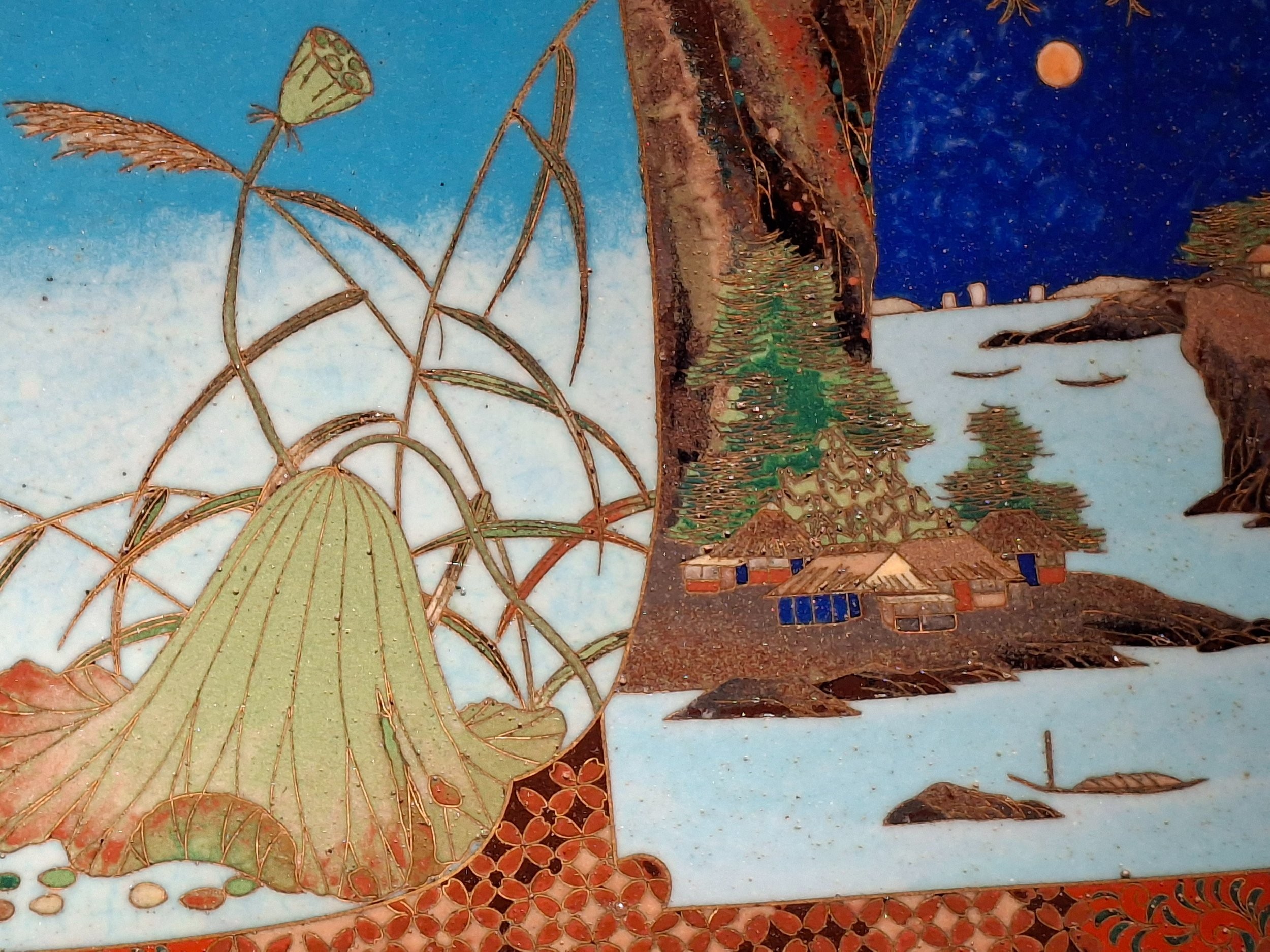
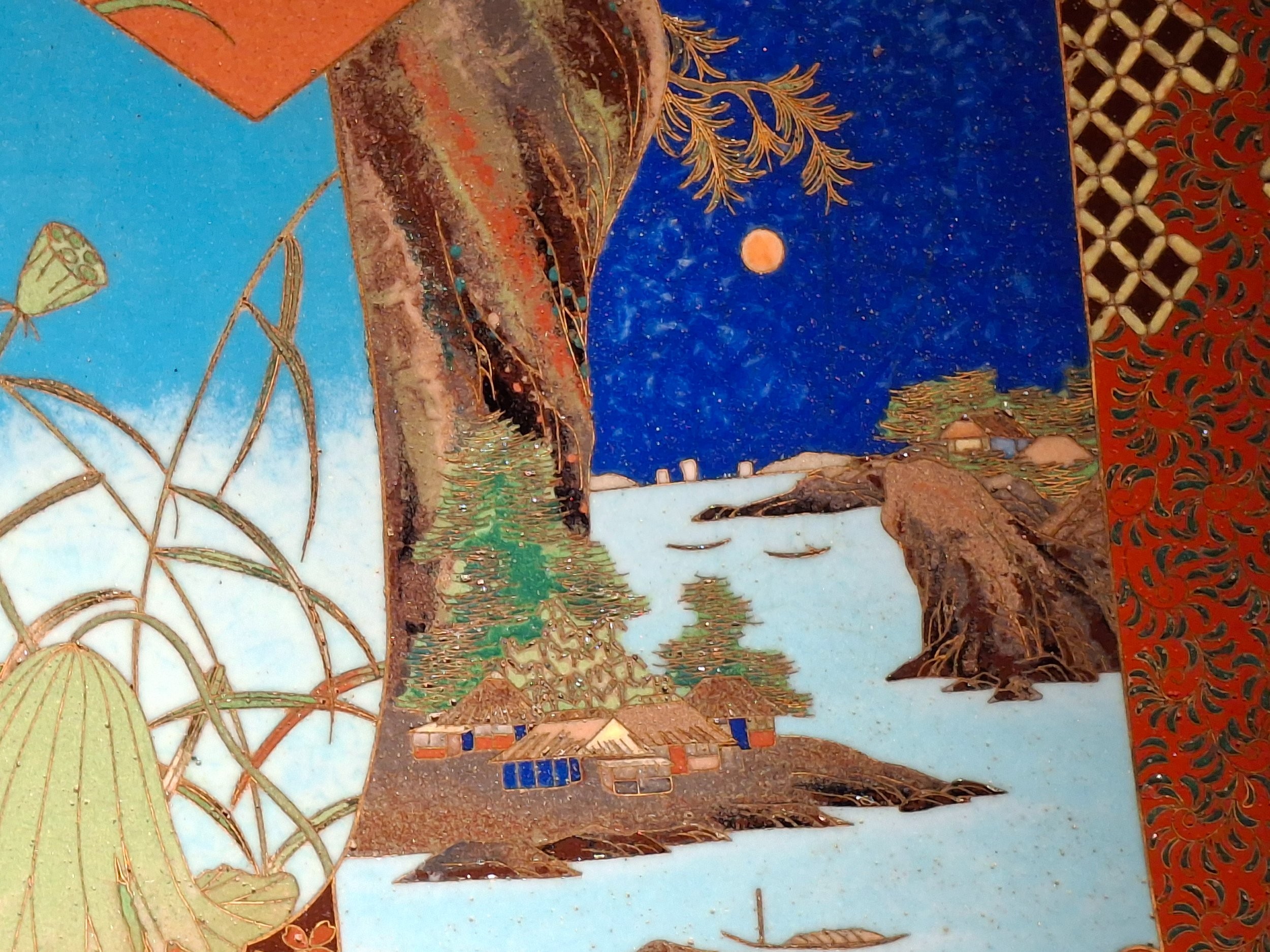
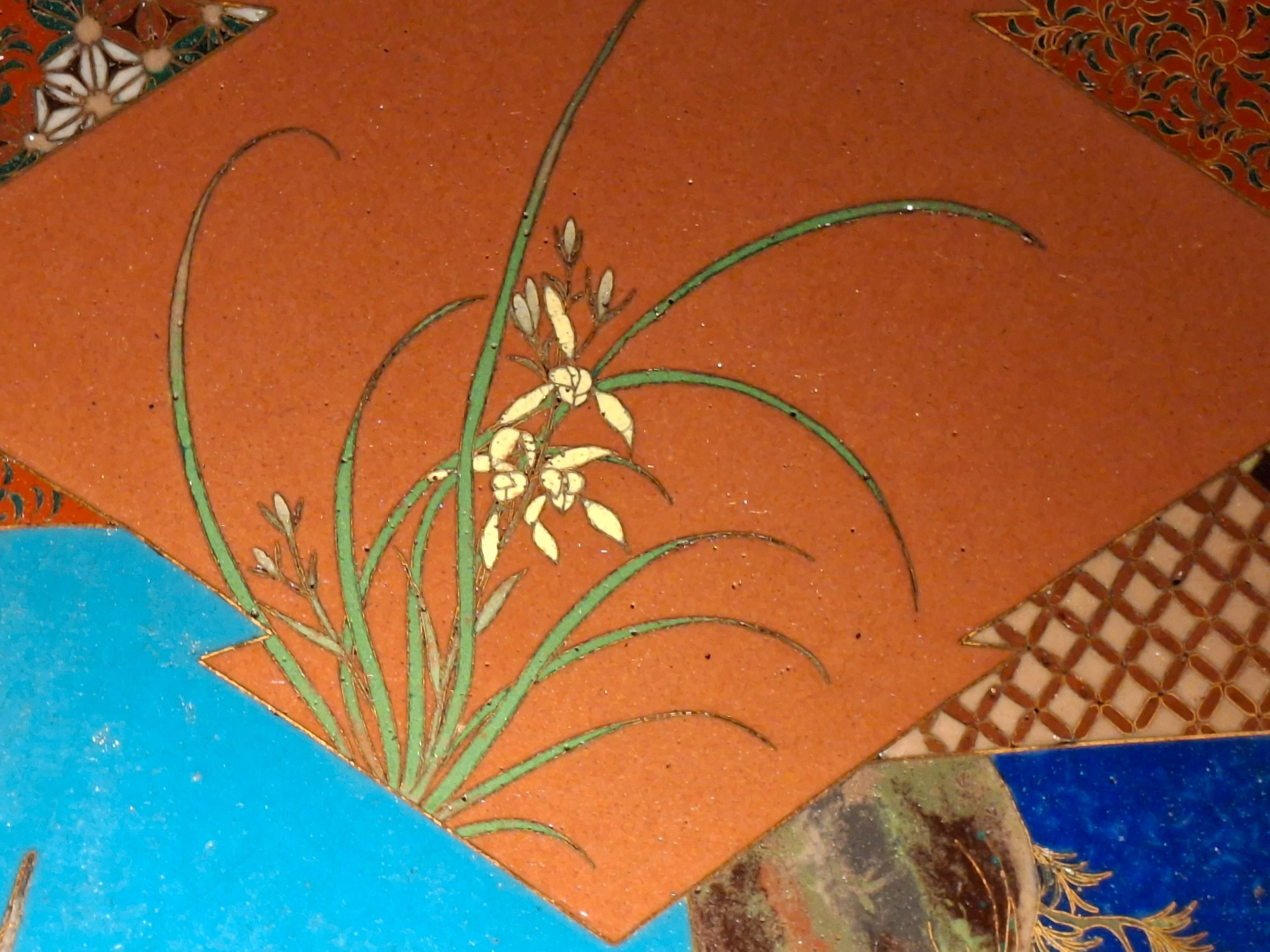
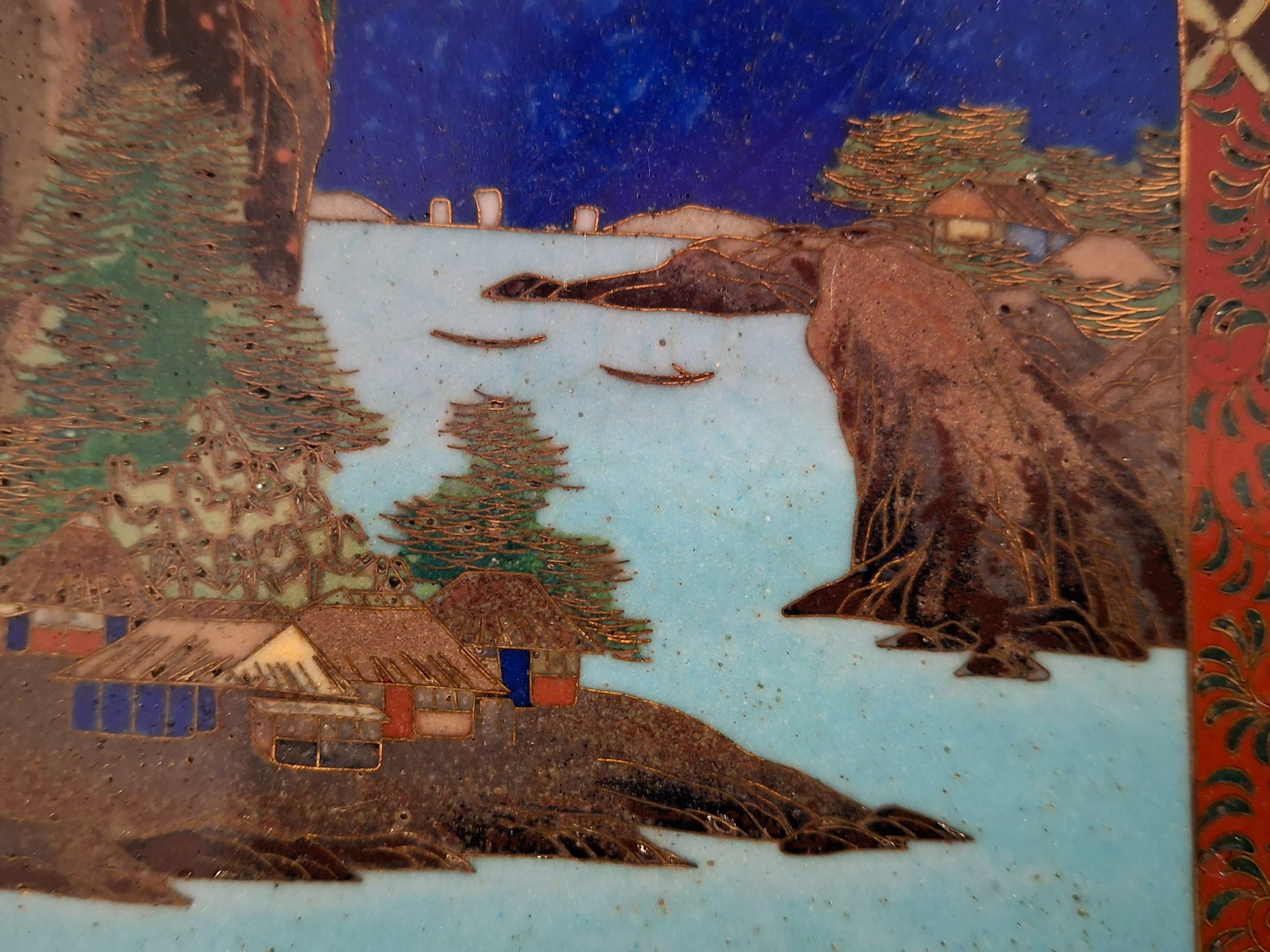
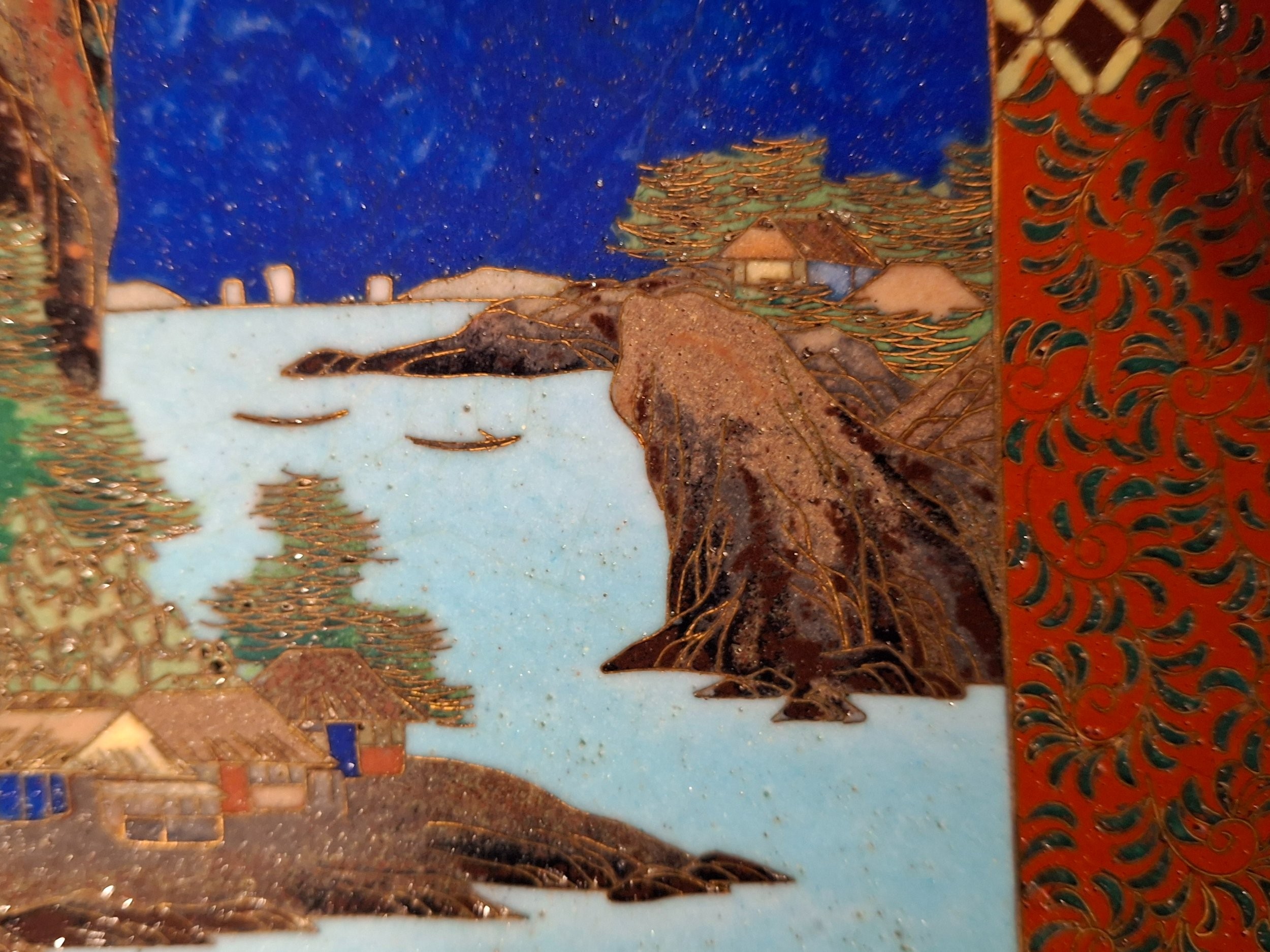
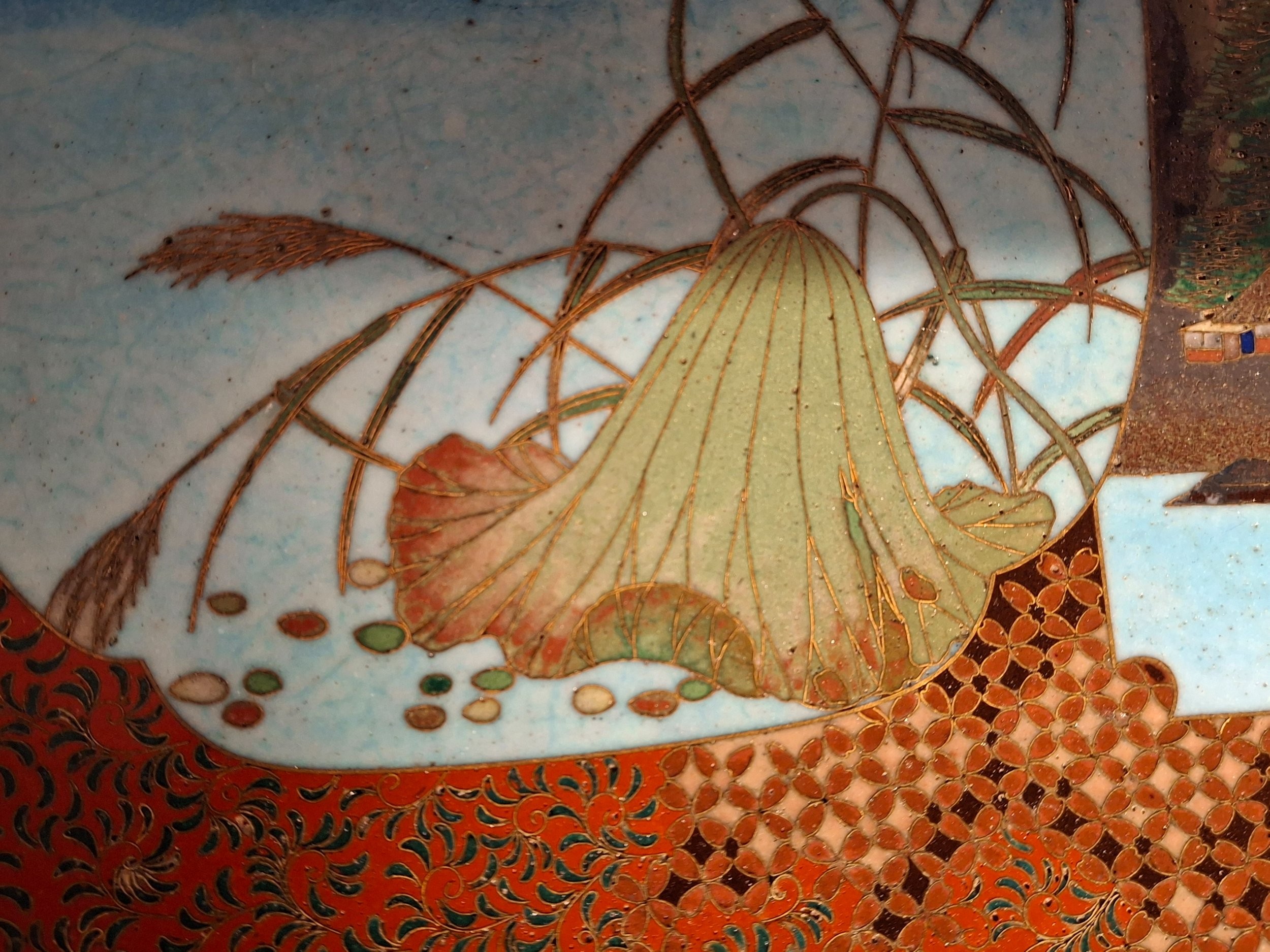
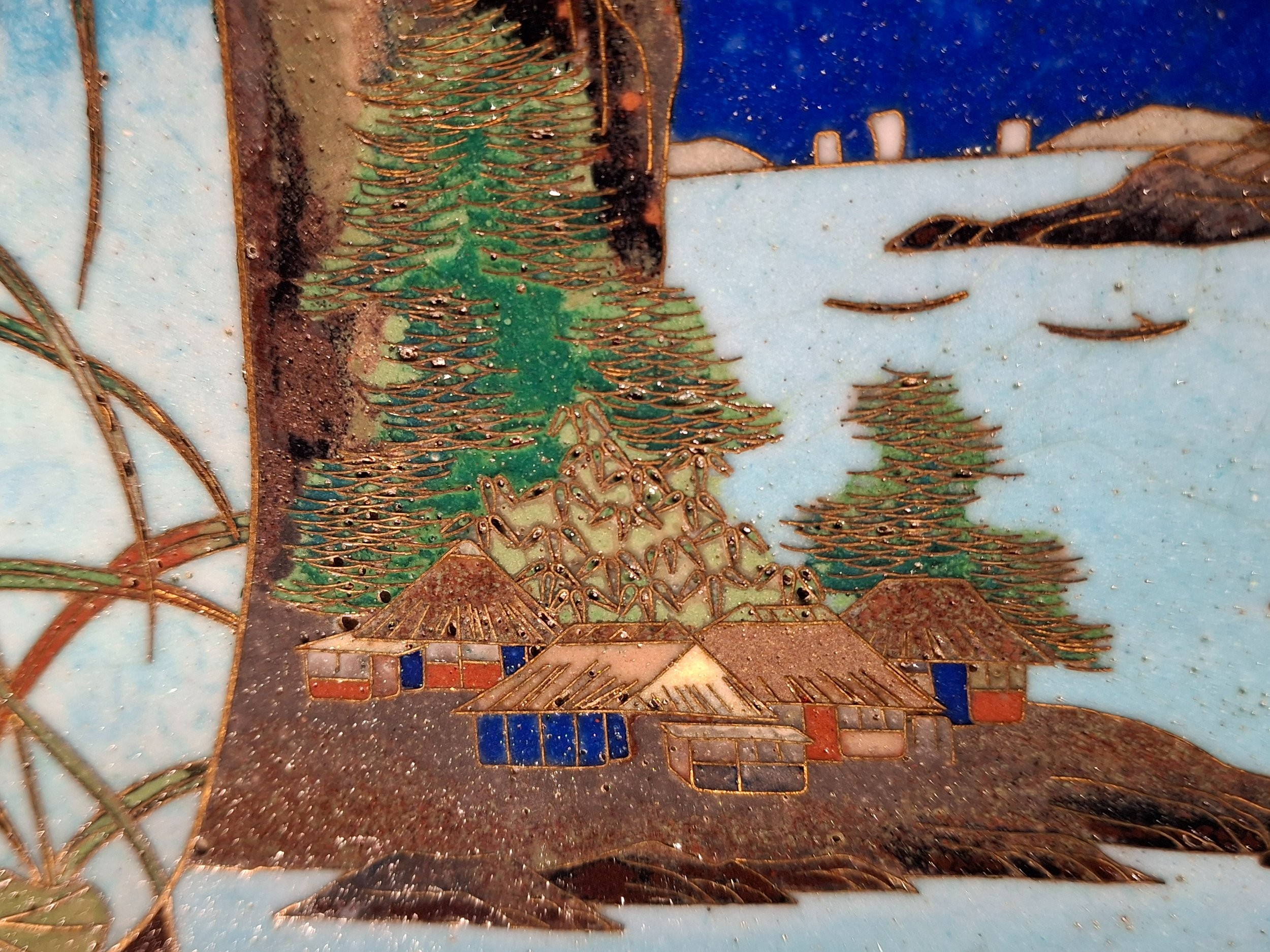
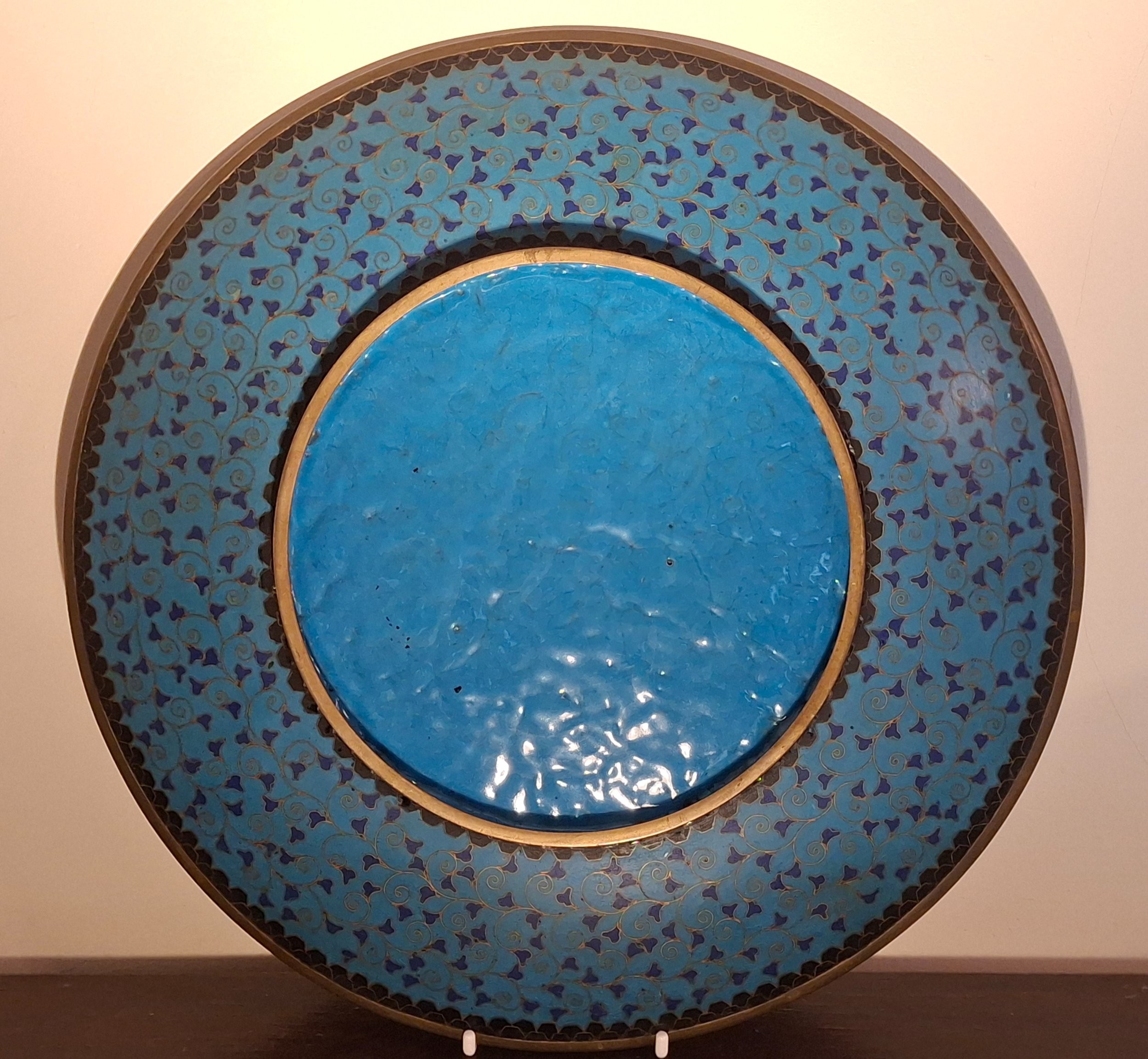
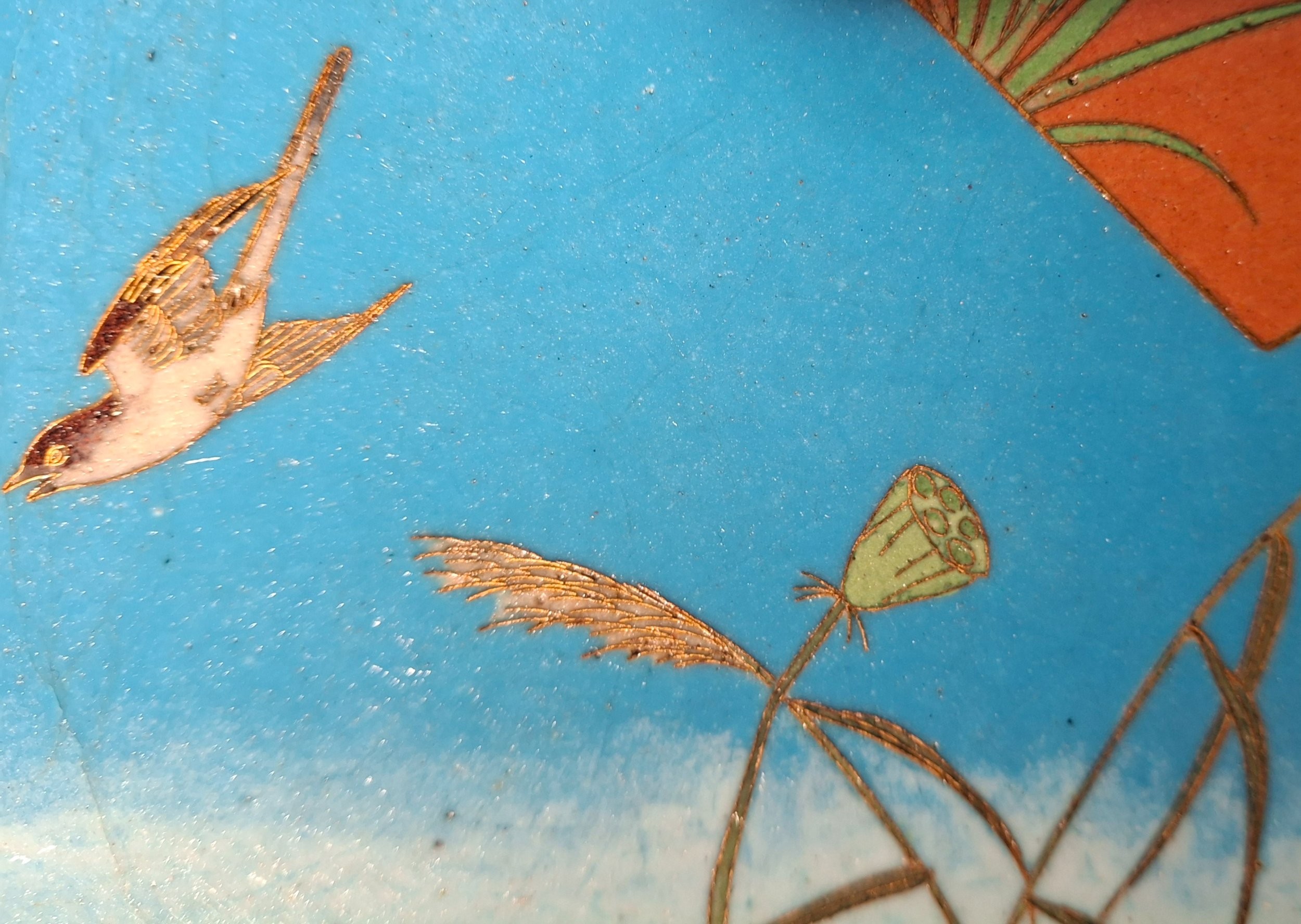
Fine execution of cloisonne wiring techniques, with realistic depiction of Japanese life, nature and culture. The execution of detail is exquisite with rendition of villages within an overall landscape with the sun setting. Adorned with foliage, flowers and a bird, and the natural withering of a plant. The wirework simulating natural form, with a multitude of cloisonne enamel colours. Bordered with mosaics of geometrical shapes, flowers, simulated blossom and grasses. Superb wirework and enamelling techniques.
Most likely made by the Nagoya Cloisonné Company. Highly skilled artistry. Unsigned. In the style and craftsmanship of Namikawa Yasuyuki workshop (Nagoya).*
Condition: Excellent condition with minor hairlines (see photos).
There are two distinct qualities or types expressed in Japanese art: one suggesting endless patience in the execution of minute detail, the other denoting a momentary conception o
...f some fleeting idea carried out with boldness and freedom of expression in form and line – profuse complexity and extreme simplicity… the work on Japanese cloisonné ware generally exhibits the quality suggestive of unwearying labour and patience.
Dimensions:
Diameter = 30.5 cm
Depth = 3.5 cm
*Hayashi Kodenji (1831–1915), a craftsman who became one of the most influential cloisonne makers of his time. Hayashi set up an independent cloisonne workshop in Nagoya in 1862 and, like his teacher, began to train other craftsmen. He remained at the forefront of cloisonné manufacturing in the Nagoya region throughout his career. In 1871 the Nagoya Cloisonné Company was established at Toshima, just outside Nagoya, by Muramatsu Hikoshichi and Tsukamoto Jine’mon, the elder brother of Tsukamoto Kaisuke.
The technological advances they made resulted in the company winning a first prize at the Vienna Exhibition of 1873. Many cloisonne-manufacturing companies sprang up in and around Toshima and the area rapidly became Japan’s main centre of cloisonné production and became known as Shippo-cho (Cloisonné town). It has been estimated that at their peak the cloisonné manufactories of Toshima were producing ‘no less than seventy percent of the total cloisonné enamels produced in Japan.
With the introduction of more advanced enamelling techniques from Europe, notably those introduced by Gottfried Wagener, the previous reliance on background wires to retain the enamels was removed and the way was open for the possibility of using larger areas of clear bright enamels. These innovations took time to perfect, and the use of decorative wires remained integral to the cloisonné enamels of artists such as Namikawa Yasuyuki (1845-1927).
Internal Reference: D:007990
Antique ID Number (AIDN): SA1204890
Dateline of this antique is 1900
Height is 30.5cm (12.0inches)Width is 30.5cm (12.0inches)Depth is 3.5cm (1.4inches)








Thank you.
Your comment has been sent to Sellingantiques.