17,191  PAGES BROWSED TODAY PAGES TODAY 25  ANTIQUES UPLOADED TODAY NEW ARRIVALS
ID #SA1203983
FOR SALE
£9,800
Email
Save
A Fine 17th Century Rearing Horse
Spitalfields House
for sale €11,466     $12,446
£9,800
Spitalfields House

Spitalfields House

Sellingantiques Verified Since Jan 2022
View Dealers Stock Page
  • About Us
    Fine period furnishings, objects and design - inspired by the houses of eighteenth century spitalfields.
Id #SA1203983
PDF SHARE
SAVE

A Fine 17th Century Rearing Horse

17th century
Description

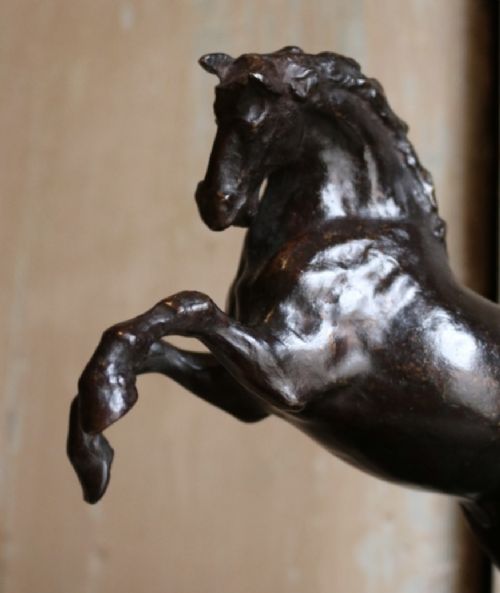
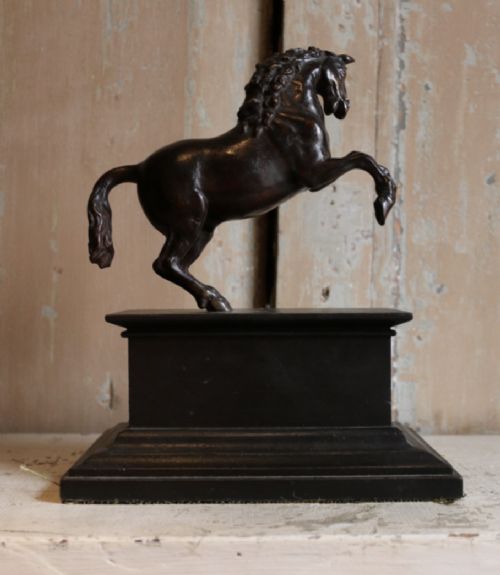
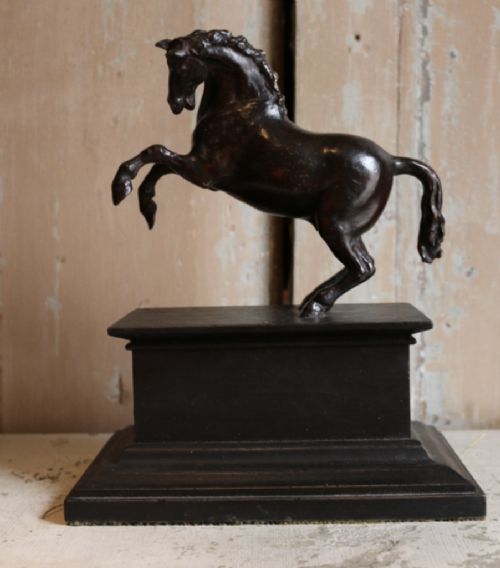
A fine 17th century rearing horse. Attributed to the workshop of Francesco Fanelli 1577/1590 – after 1653/1657. Born in Florence, he worked in Genoa and later in London where he became Charles I’s favoured sculptor. This fine cast shows the energy and “brio” associated with the best of Fanelli’s models. The spontaneity of the mane and the expressive muzzle are particularly pleasing.
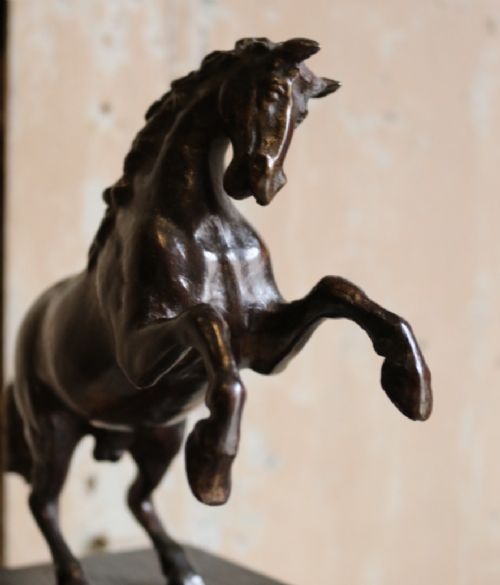
Bronze alloy with a good patina.

Examples of Fanelli horses can be found in the Burghley House collections, V&A, Herzog Anton Ulrich Museum, the Metropolitan museum of Art and the Fitzwilliam Museum.

John Pope-Hennessy (former director of the V&A) writes of Fanelli’s enduring influence beyond sculpture too. That “Fanelli, whose statuettes are some of the earliest Baroque sculptures in circulation in this country, will prove to have been instrumental in establishing in England the vogue of Baroque portraiture”. (J. Pope-Hennessy, Some Bronze Statuettes by Francesco Fanelli, Essays on Italian Sculpture, London and New York, 1968, pp.171).

Physical Dimensions
Height
27cm (10.63")
Width
20cm (7.87")
Depth
14cm (5.51")
Declaration

Spitalfields House has dated this Bronze Rearing Horse Sculpture to the 17th Century.

Reference Numbers
Sellingantiques Reference
SA1203983
Description
A fine 17th century rearing horse. Attributed to the workshop of Francesco Fanelli 1577/1590 – after 1653/1657.
Born in Florence, he worked in Genoa and later in London where he became Charles I’s favoured sculptor.
Spitalfields House

This fine cast shows the energy and “brio” associated with the best of Fanelli’s models. The spontaneity of the mane and the expressive muzzle are particularly pleasing.

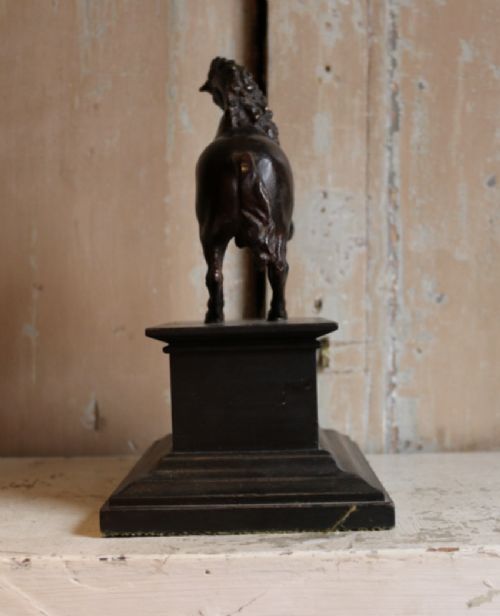
fig 1. A dark patinated bronze sculpture depicting a rearing horse positioned atop a tiered rectangular wooden pedestal base.
fig 1. A Fine 17th Century Rearing Horse

Bronze alloy with a good patina.

Examples of Fanelli horses can be found in the Burghley House collections, V&A, Herzog Anton Ulrich Museum, the Metropolitan museum of Art and the Fitzwilliam Museum.

John Pope-Hennessy (former director of the V&A) writes of Fanelli’s enduring influence beyond sculpture too. That “Fanelli, whose statuettes are some of the earliest Baroque sculptures in circulation in this country, will prove to have been instrumental in establishing in England the vogue of Baroque portraiture”. (J. Pope-Hennessy, Some Bronze Statuettes by Francesco Fanelli, Essays on Italian Sculpture, London and New York, 1968, pp.171).

Height
27cm (10.63")
Width
20cm (7.87")
Depth
14cm (5.51")
Date of Manufacture

Spitalfields House has dated this Bronze Rearing Horse Sculpture to the 17th Century.

Reference Numbers
Sellingantiques Ref
SA1203983
Spitalfields House
Spitalfields House
Sellingantiques verified Since Jan 2022

Fine period furnishings, objects and design - inspired by the houses of eighteenth century spitalfields.

Dealer Profile

You can view the stock and full dealer information on the Spitalfields House Profile Page
PDF SHARE
SAVE
A dark patinated bronze sculpture depicting a rearing horse positioned atop a tiered rectangular wooden pedestal base.
1 / 5
Archive I A dark patinated bronze sculpture depicting a rearing horse positioned atop a tiered rectangular wooden pedestal base.

A fine 17th century rearing horse
Archive II A dark patinated bronze sculpture depicting a rearing horse positioned atop a tiered rectangular wooden pedestal base. View II
Archive III A dark patinated bronze sculpture depicting a rearing horse positioned atop a tiered rectangular wooden pedestal base. View III
Archive IV A dark patinated bronze sculpture depicting a rearing horse positioned atop a tiered rectangular wooden pedestal base. View IV
Archive V A dark patinated bronze sculpture depicting a rearing horse positioned atop a tiered rectangular wooden pedestal base. View V
FURTHER BROWSING

Visitors also looked at these ⇣

Enlarged Archival View
Telephone 07766 834925
Location
Spitalfields
London
United Kingdom
Verified Since Jan 2022
Items For Sale 49
Items Sold 37
Spitalfields House
Spitalfields House
Verified Since Jan 2022
View Dealer Info
Location: Spitalfields, London, United Kingdom
Verified
Jan 2022
For Sale
49
Sold
37
A dark patinated bronze sculpture depicting a rearing horse positioned atop a tiered rectangular wooden pedestal base.
A fine 17th century rearing horse
Ref: SA1203983
A dark patinated bronze sculpture depicting a rearing horse positioned atop a tiered rectangular wooden pedestal base.
Detail View 1
Detail View 2
Detail View 3
Detail View 4
Archival Detail
Every single antique dealer on our platform is individually approved by our internal team. We verify their professional trade history, ethical standards, and photographic quality to ensure a secure, high-standard buying environment. Upon joining, every dealer agrees to a strict 9-point code of conduct. While issues can occasionally arise, our dealers typically resolve them swiftly and directly with the buyer. In fact, since our founding in 2002, Sellingantiques has only had to step in to help resolve an issue on roughly five occasions—a true testament to the quality of our dealers and their dedication to your happiness.
Our dealers are highly experienced in packing and shipping fragile, high-value antiques. Because you are in direct contact with the dealer, you will be able to easily go through all available shipping and insurance options together to ensure your item arrives safely.
Antiques are the ultimate green purchase. By choosing historical pieces over newly manufactured goods, you completely eliminate the carbon footprint of modern mass production while preserving exceptional, timeless craftsmanship.

17th-century bronze equestrian figures were popular during the Baroque period, often inspired by classical antiquity and Renaissance masters such as Giambologna. They served as symbols of power, status, and artistic mastery within private cabinets of curiosities across Europe.

These sculptures were primarily produced using the lost-wax casting technique (cire perdue), which allowed fine detail in muscular anatomy and dynamic poses. Following casting, the surface was hand-chased and finished with a rich chemical patina or protective dark lacquer.

Authentic period bronzes usually display evidence of hand-tooling, intricate chasing in the mane and tail, and minor historic casting irregularities. Furthermore, the patina develops naturally over centuries, presenting nuanced depth and colour variation rather than a uniform modern paint finish.

A dark bronze sculpture serves as a focal point on a mantelpiece, executive desk, or wooden bookshelf. Pairing the dark metal tone with pale stone surfaces or contemporary minimalist furniture creates a sophisticated contrast that highlights the historic silhouette.

Dust the sculpture regularly using a dry, soft lint-free cloth or a natural camel-hair brush. Avoid chemical cleaners or abrasive polishes that strip historic patination; a light application of microcrystalline wax can be applied periodically to preserve the surface.
items
Add keywords to the filter
Price
£100
£250000
Era
Movements
Material
Origin
Stock Location
Freshness
Online Payments
Categories