Loveday Antiques has dated this piece to the 19th Century.
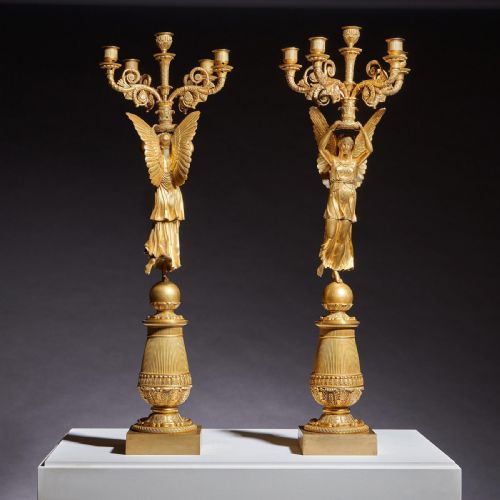
French Paris c.1820
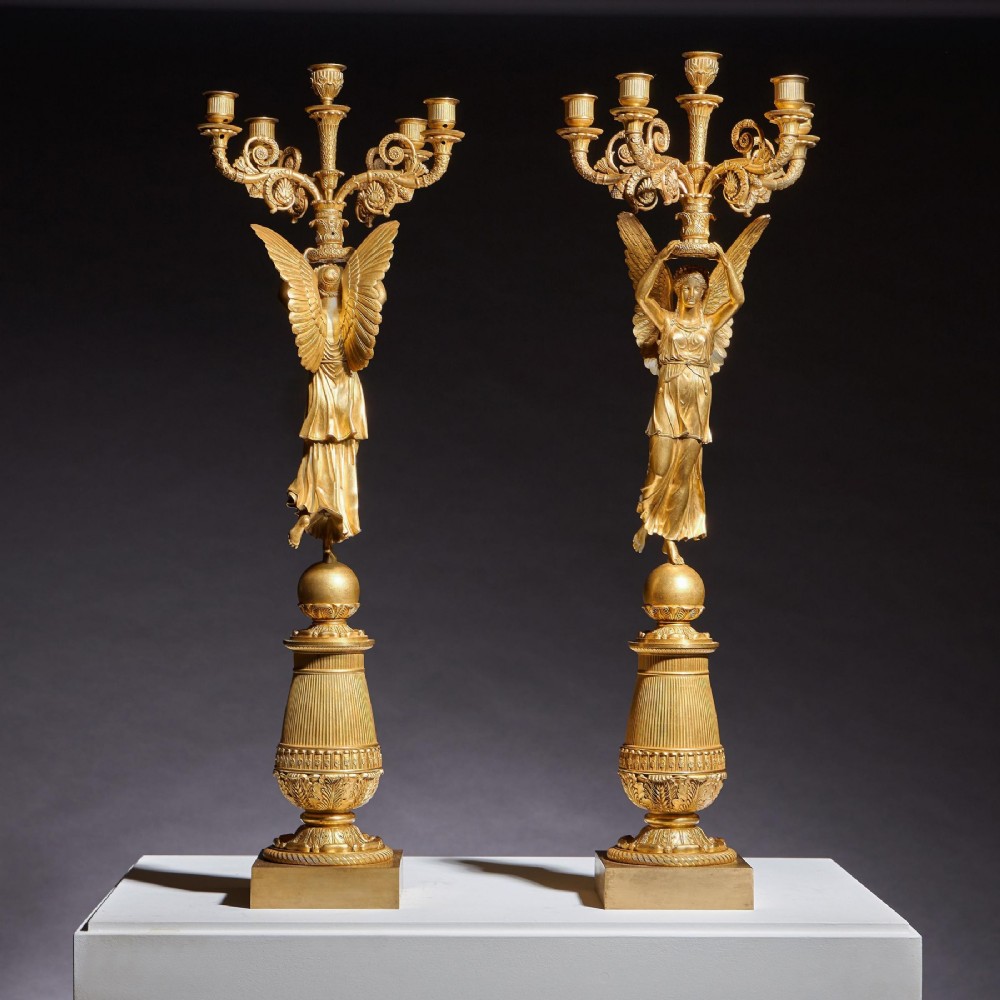
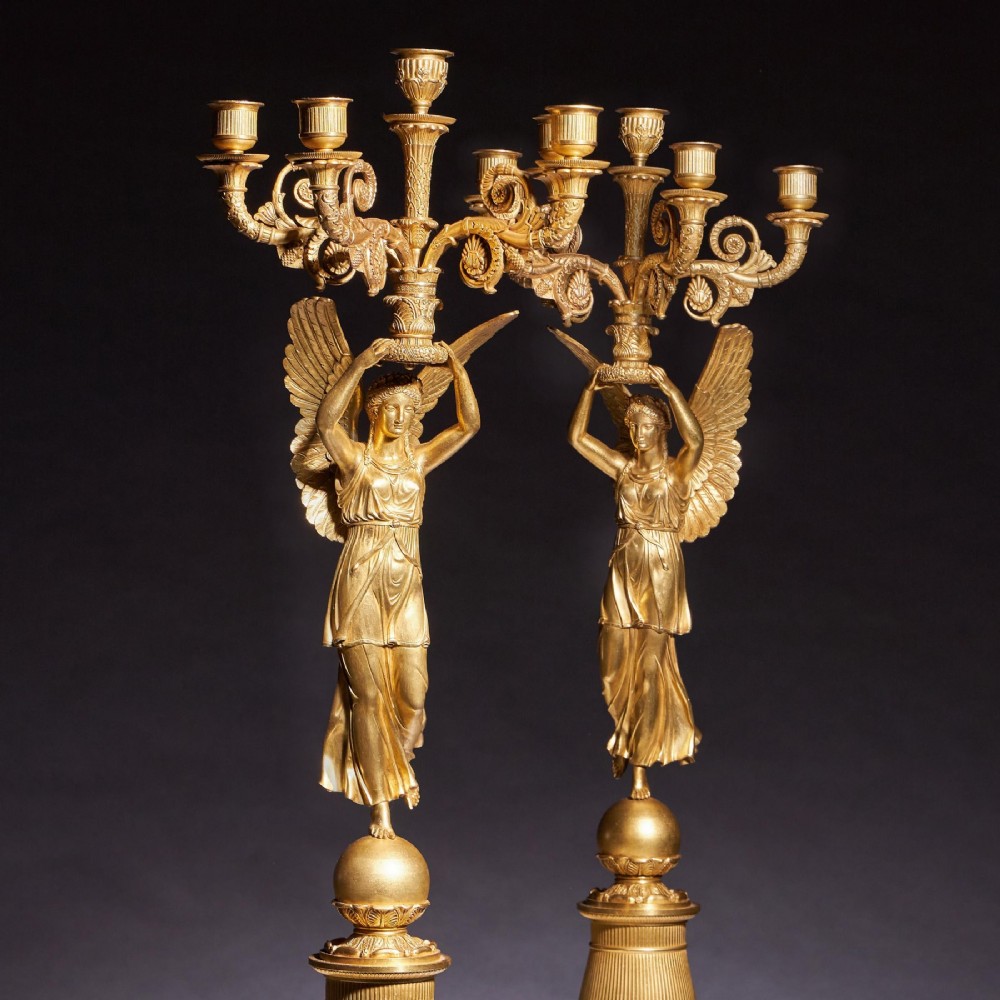
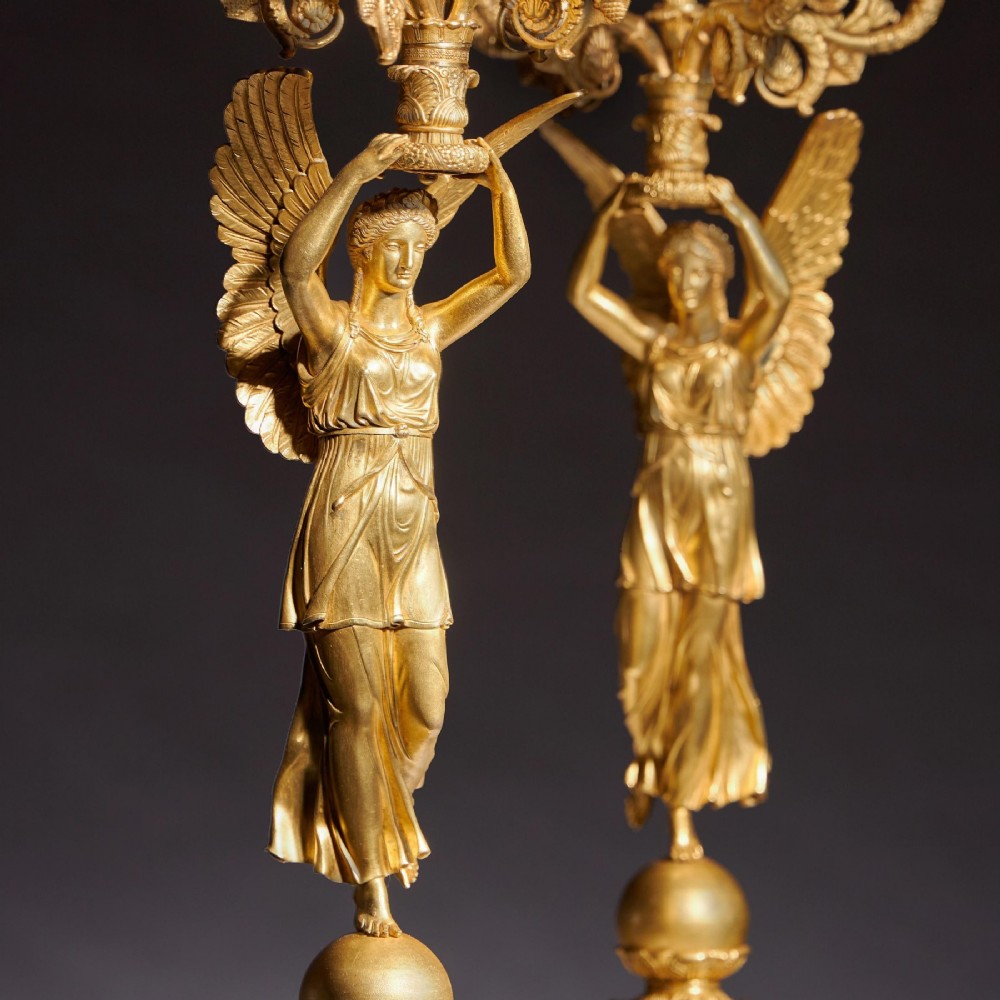
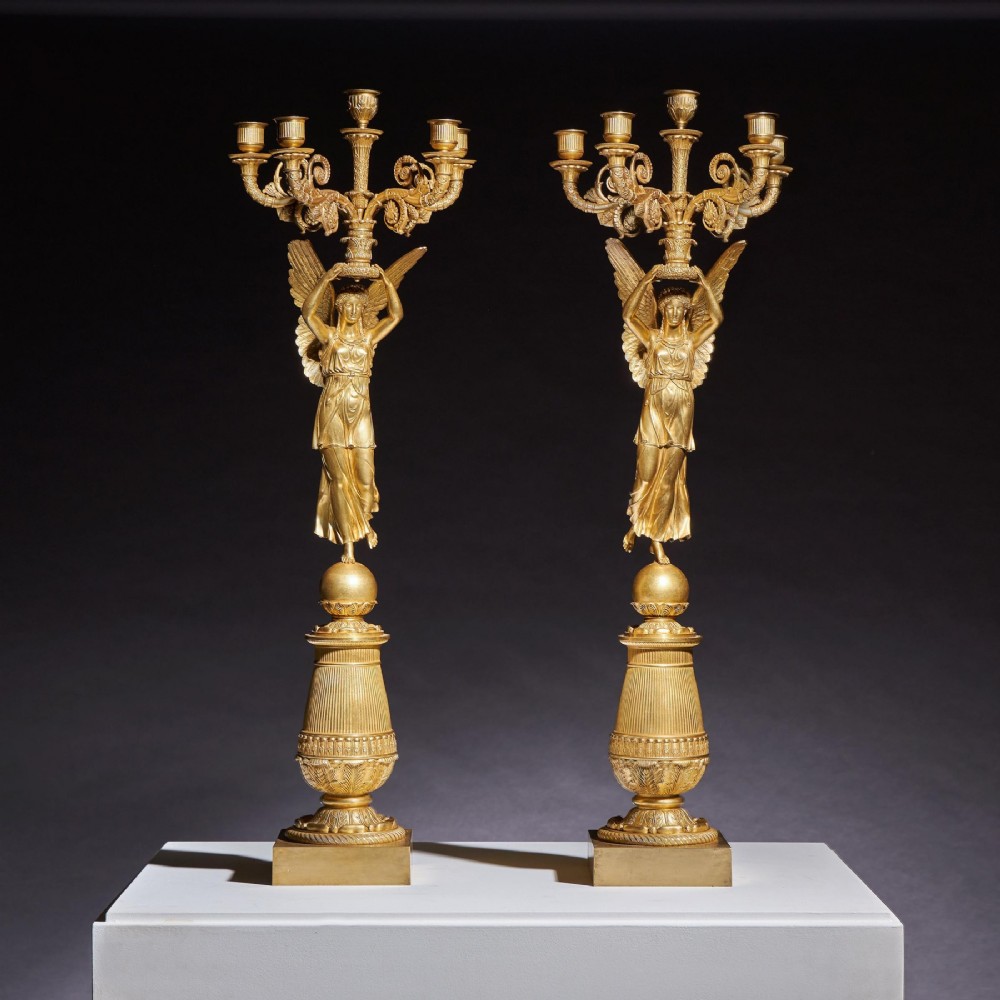
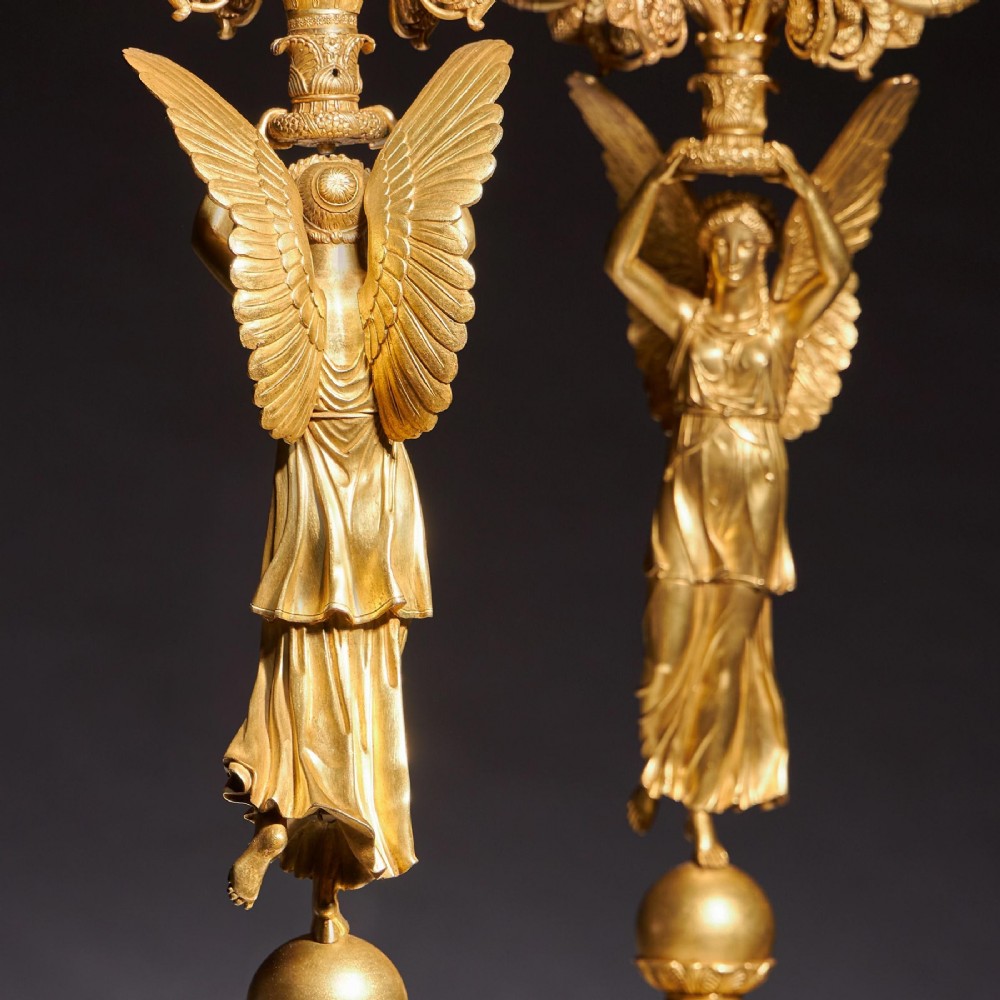
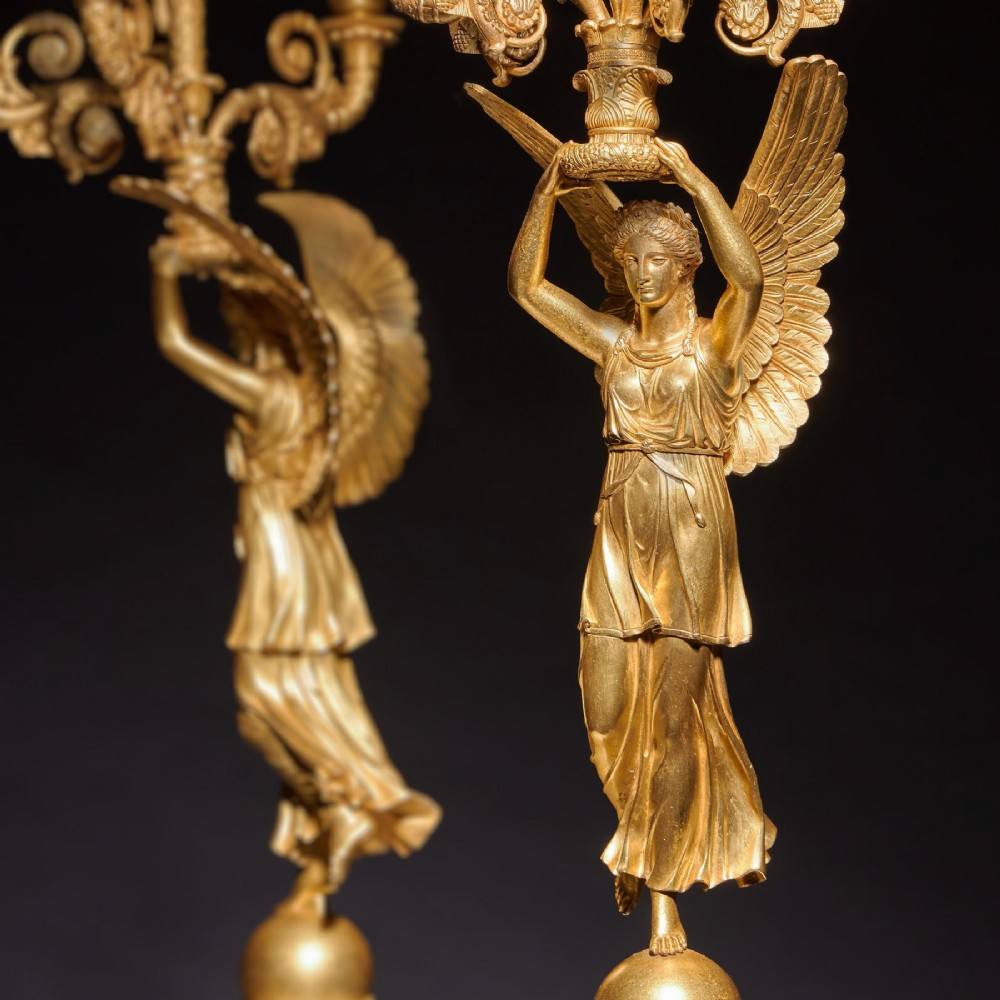
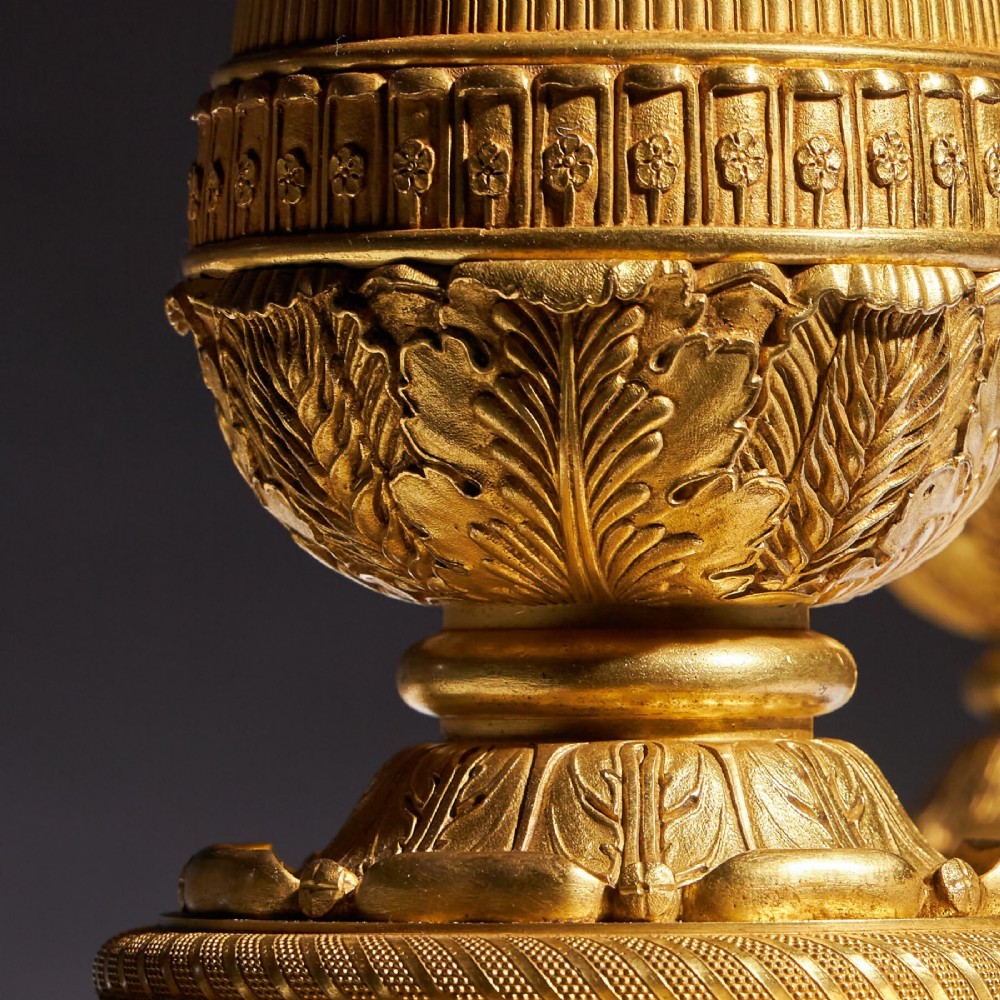
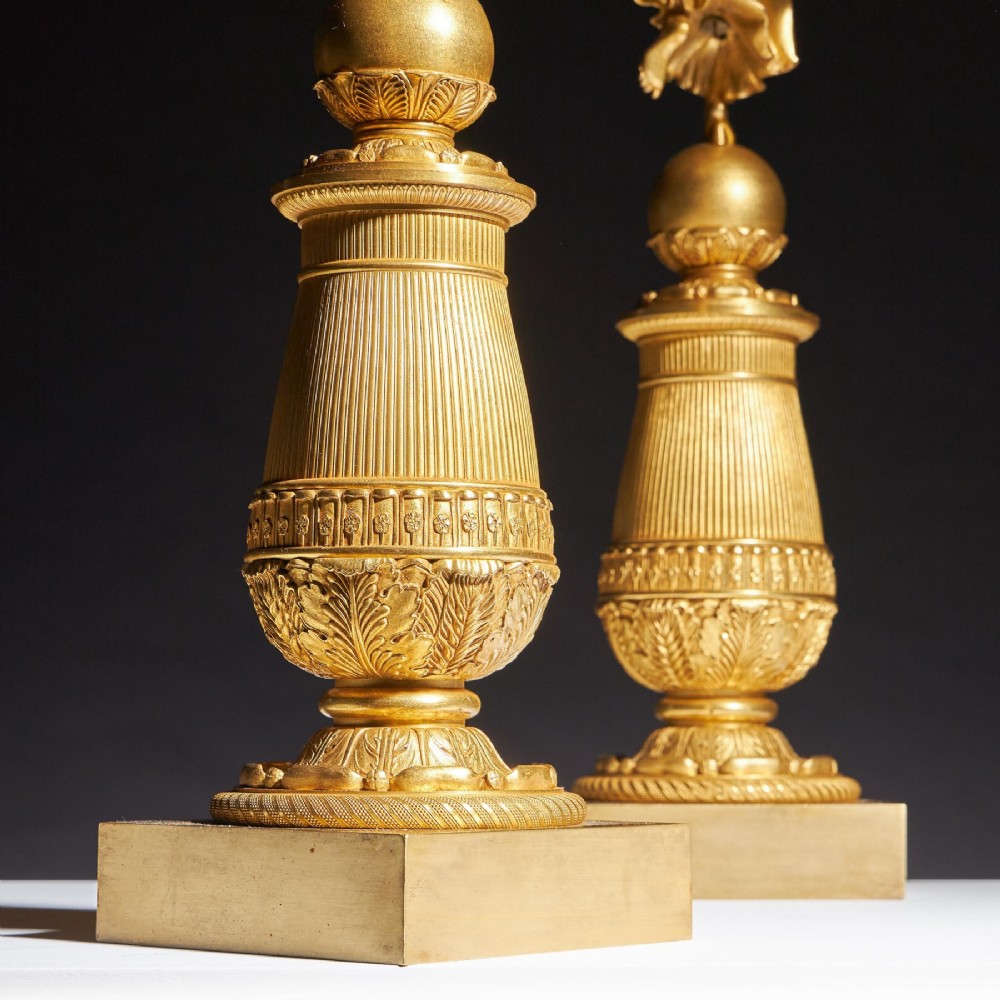
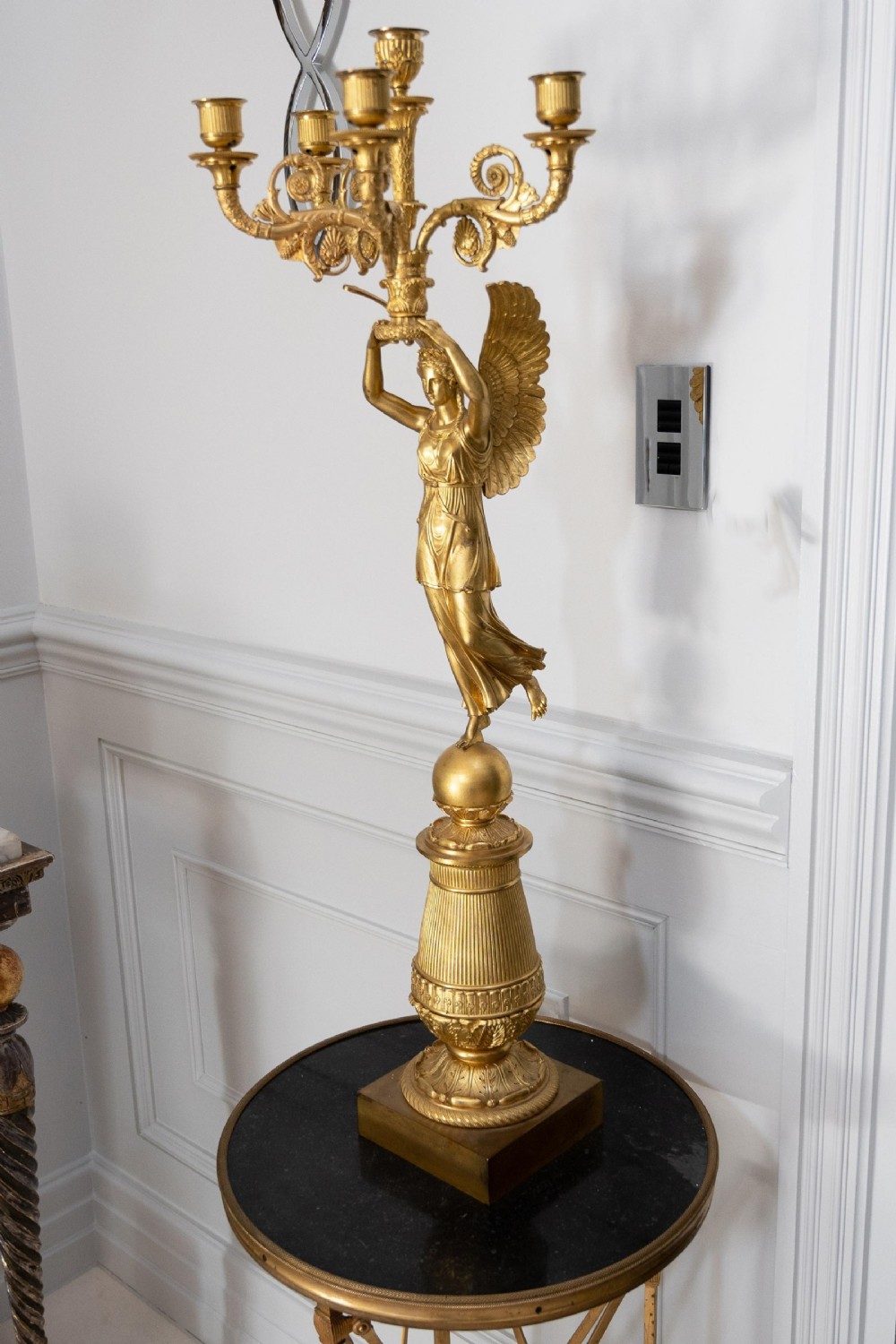
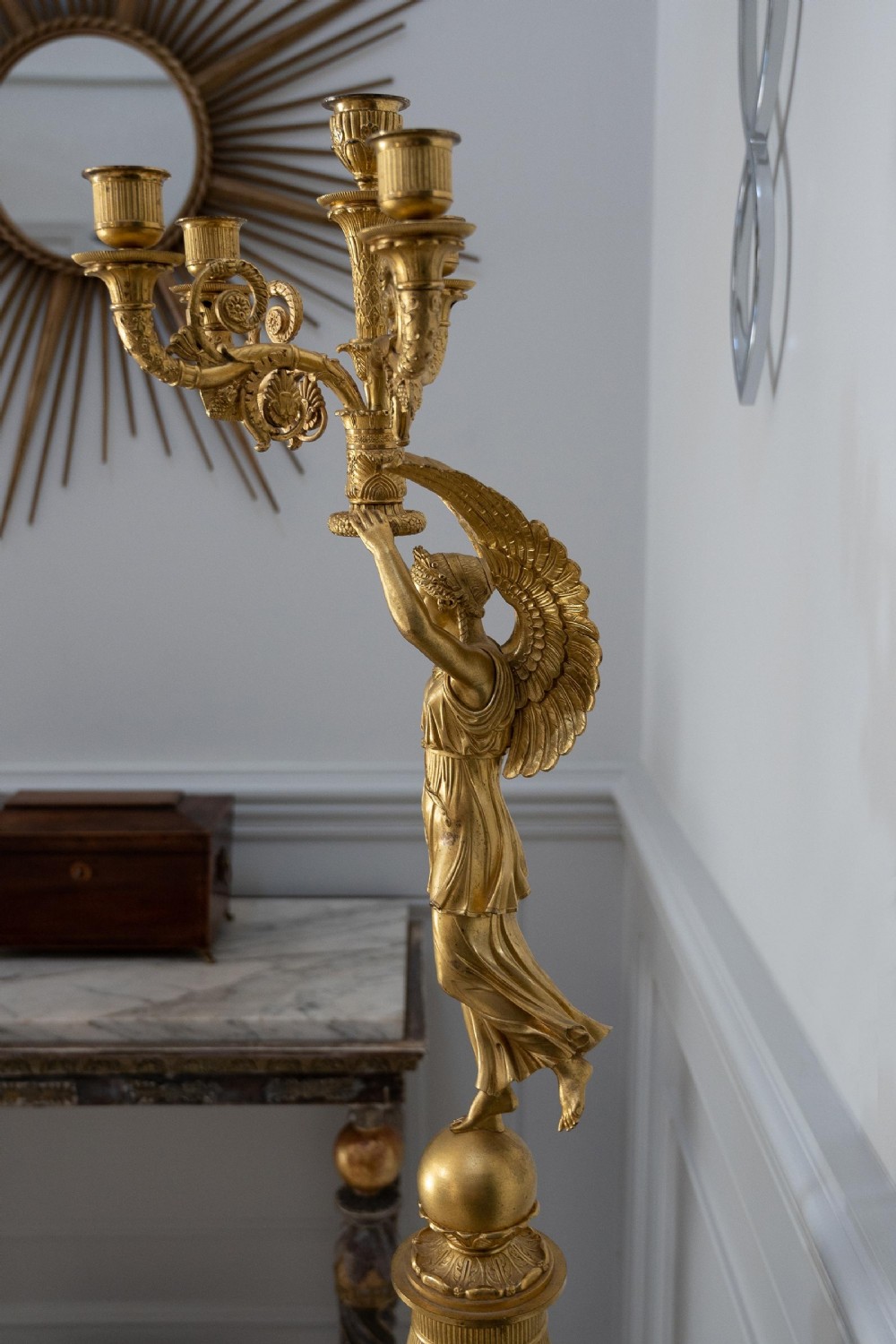
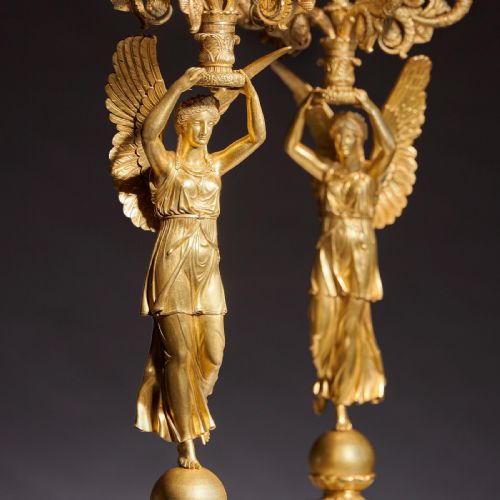
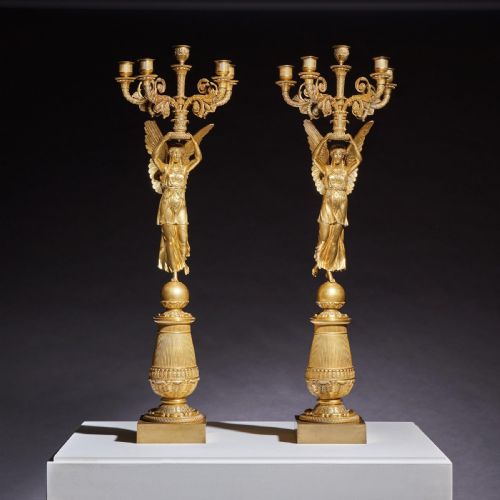
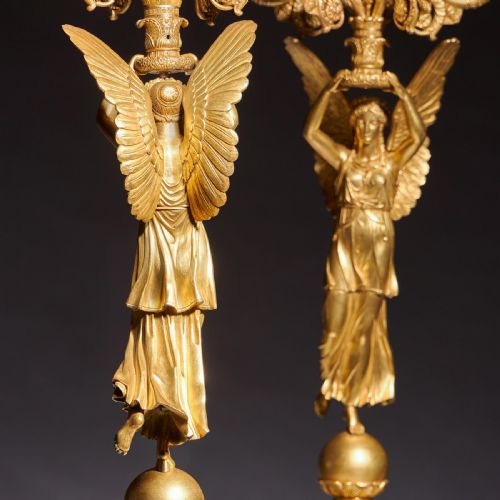
Superbly cast, in the Neo-Classical style, the five scrolling foliate candle branches enclosing central sconces issuing from a circular wreath supported by the winged figure of Victory (Nike), wearing diaphanous robes gathered by a sash above a long underskirt splaying out from above her ankles, with beautifully feathered wings flowing behind her as she looks straight ahead.
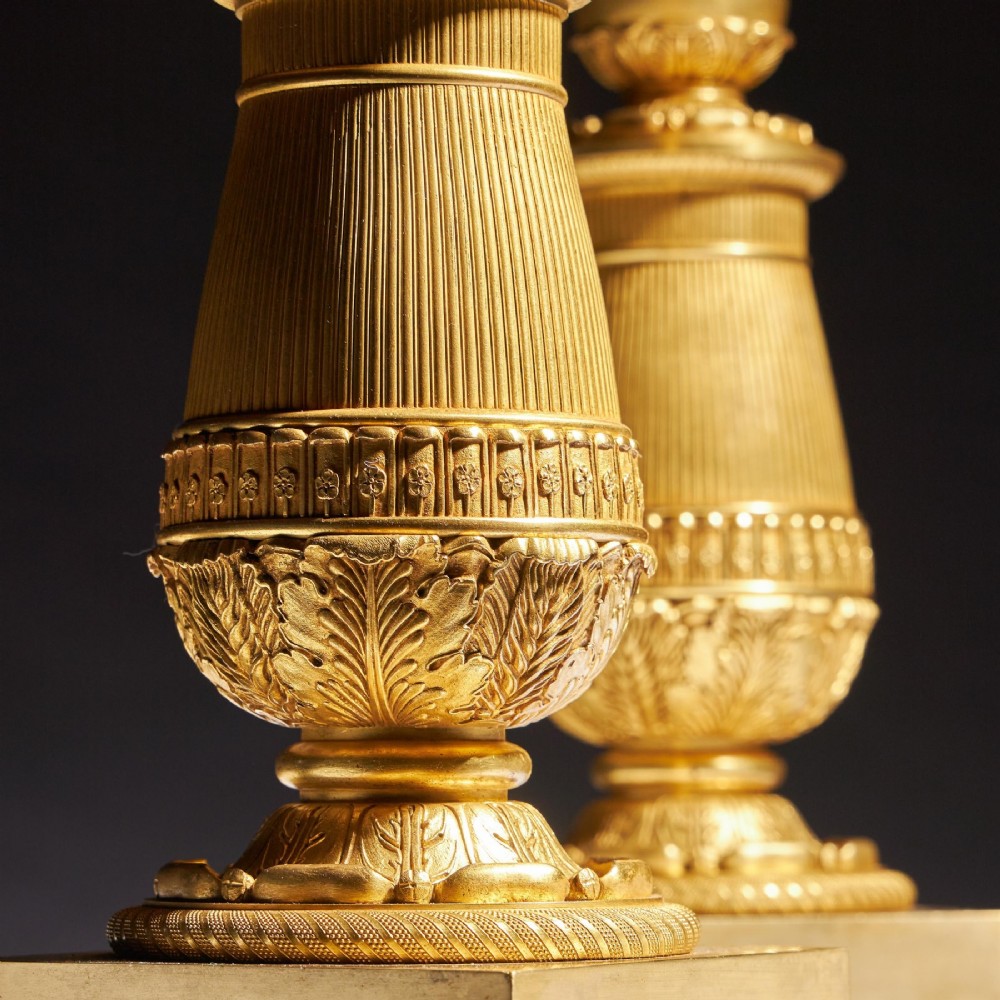
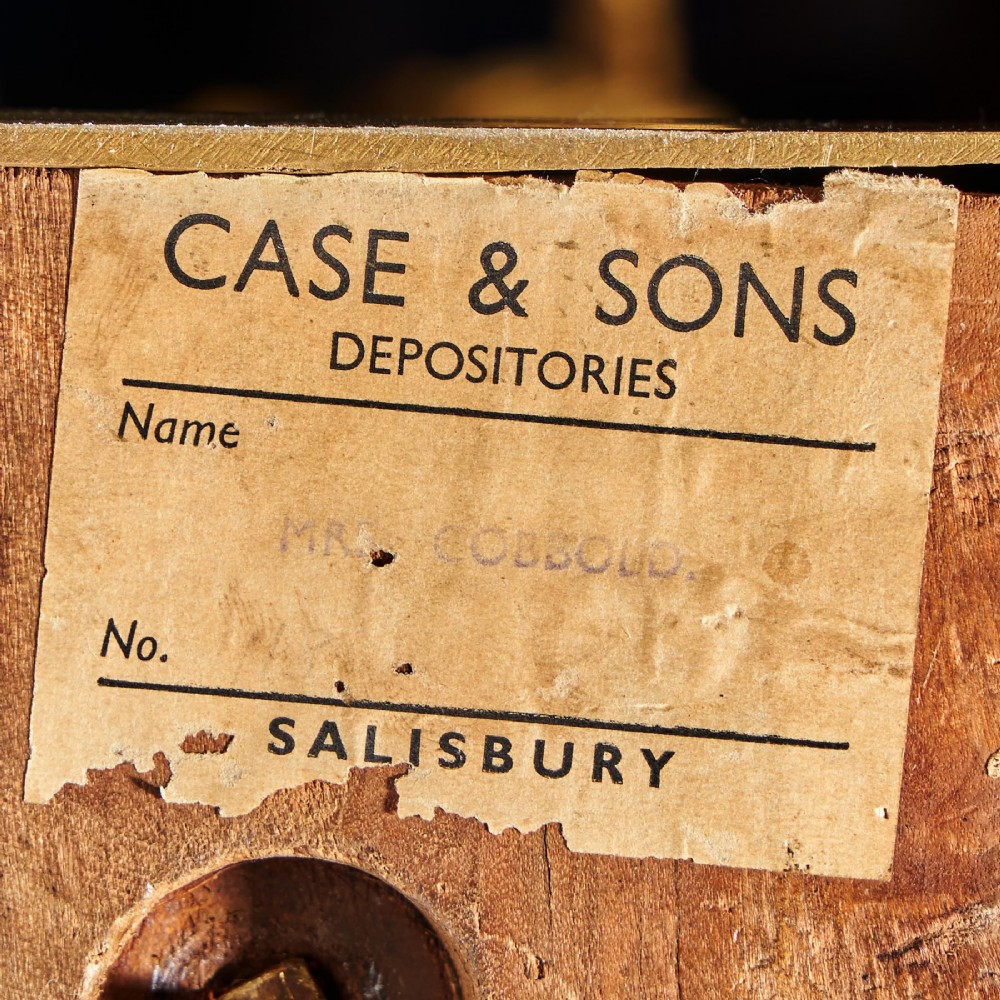
Wonderful colour and patina, pierced for electricity, old inventory label to the underside.
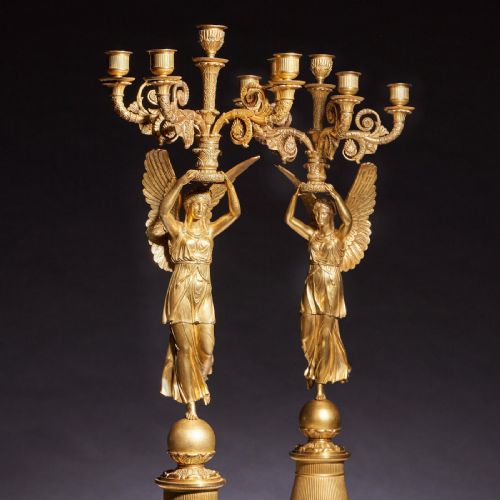
We are delighted to have been able to acquire these important candelabra as rarely does one get the opportunity to purchase items by P P Thomire, who was the leading Parisian gilt metal manufacturer and gilder of the early 19th century. As noted below candelabra of this caliber are often found in museums and important private & Royal collections.
Provenance
It is certain that the candelabra came from a private Swiss collection and had been in the family for sometime. Their earlier provenance is partially revealed by an old depository label attached to the base of one of the pieces. The label is for the firm of Case and Sons of Salisbury, a very old and important removal firm established in 1884
https://www.salisburyjournal.co.uk/news/17365152.case-sons-removal-delivery-service-established-fisherton-street-1884/
The label also gives the name of Case's client at the time-a "Mr Cobbold". Our research in to the various Cobbold families in the Wiltshire area has revealed one name of particular interest, Mr Ralph Hamilton Cobbold. Born in 1906 in Compton House near Calne in Wiltshire, Cobbold was a very keen amateur cricketer and a director of the world famous London wine merchants Justerini and Brooks. He was married three times, his first marriage being to Norah Veronica Christie-Miller of the even more impressive Clarendon Park on the edge of Salisbury. The two were married in 1933 and Cobbold came to live in his wife's home. However he divorced and remarried in 1945 and eventually moved away to Suffolk. Given the sorts of funds that would have been necessary to have purchased these remarkable pieces, they can only have belonged to a very wealthy and important family and R. H. Cobbold certainly fits that mould perfectly. Although we have not been able to find documentary evidence so this can only be supposition, it is quite likely that the candelabra were taken by Cobbold to his new home following his first divorce and then sold. If this is the case then the pieces could either have been purchased on the art market or inherited through either the Cobbold or Christie-Miller family lines.
https://family-tree.cobboldfht.com/people/view/454
Literature
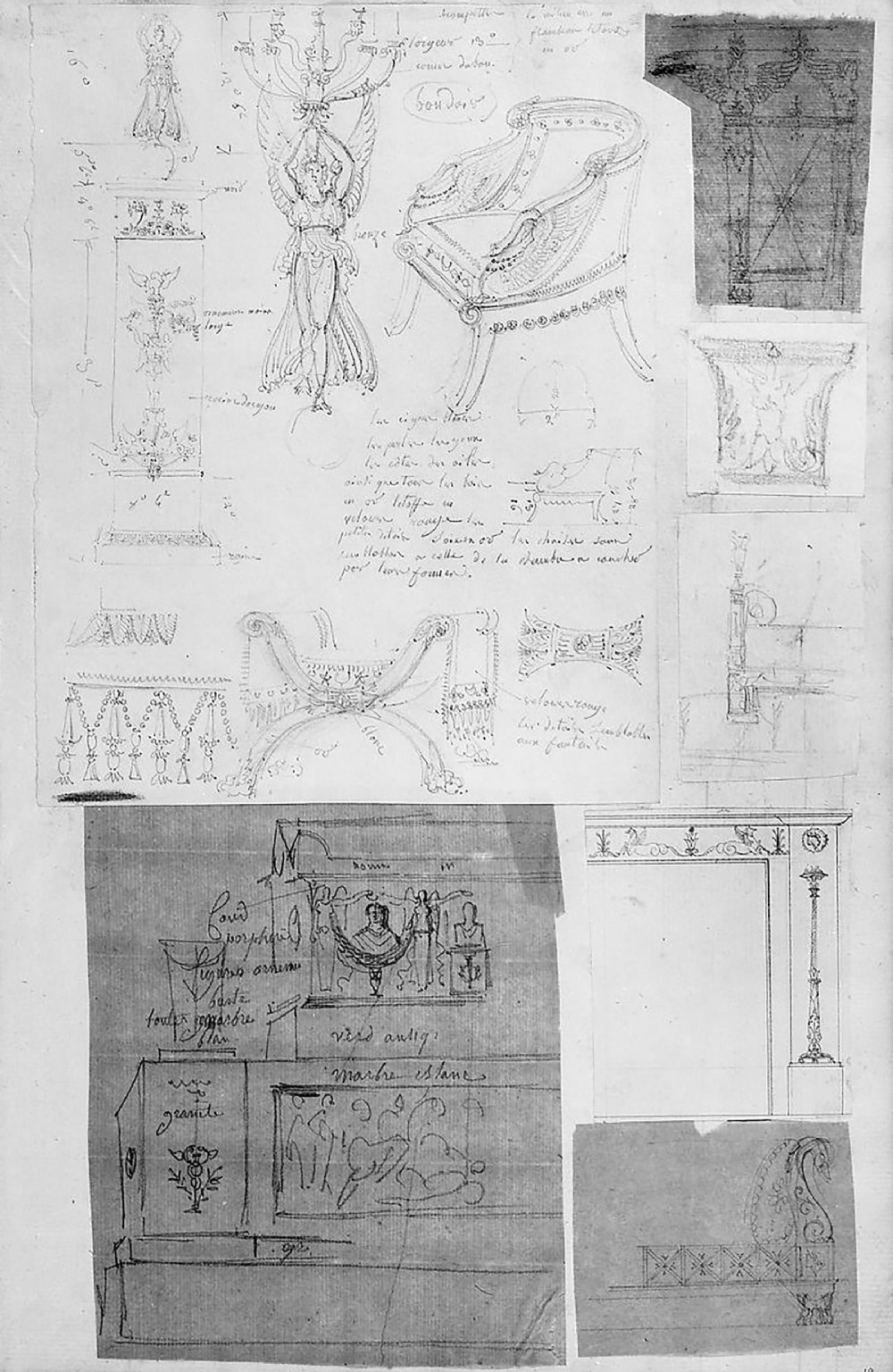
The present candelabra were certainly made after, or at least inspired by, designs by the architects Charles Percier (1764–1838) and Pierre-François-Léonard Fontaine (1762–1853) who were the two most influential figures in the field of Empire decoration and furnishing. Official architects to the court of Napoleon, their main responsibility was the renovation of the various royal residences. Their Recueil des décorations intérieures (1812) was an essential handbook of the Empire style. The personification of Victory as a winged figure became an integral element within Empire design as a symbol of military triumph through the intervention of Percier and Fontaine. The design for the present pair of candelabra is believed to have derived from a design by Charles Percier’s workshop in his drawings for Empress
Loveday Antiques has dated this piece to the 19th Century.
Specialist furniture dealers 18th-20th century
You can view the stock and full dealer information on the Loveday Antiques Profile Page
Loveday Antiques is a registered member of LAPADA BADA CINOA
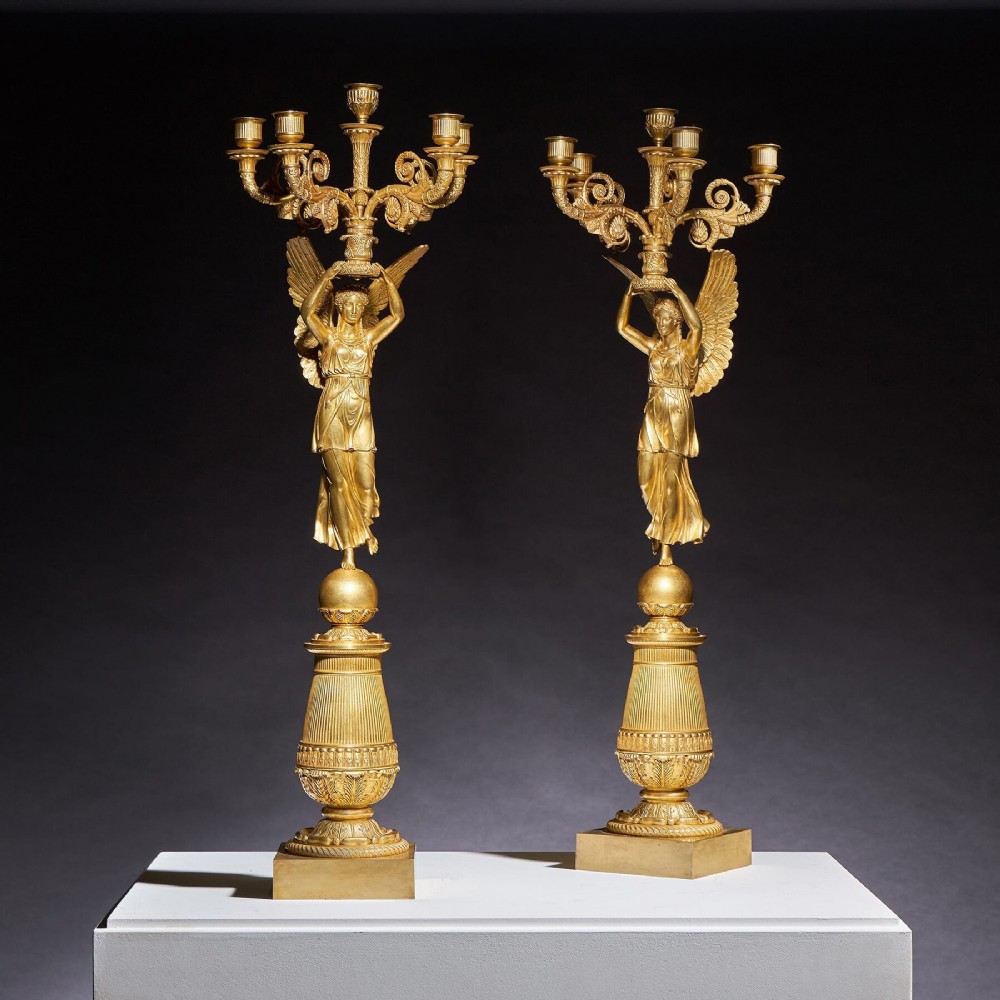
Exceptional Pair of French Late Empire Gilt Bronze Candelabra Attributed To Pierre Philippe Thomire