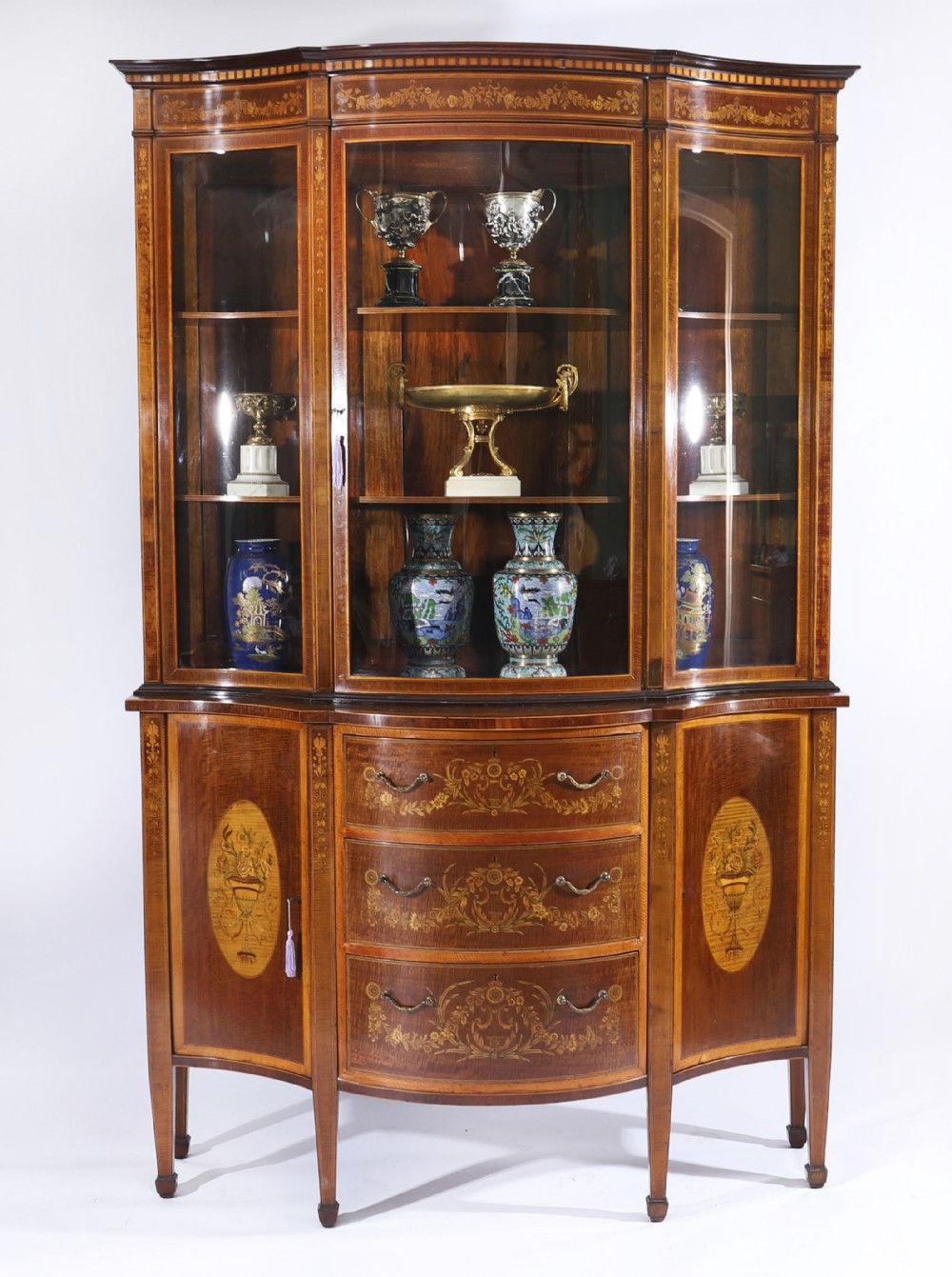
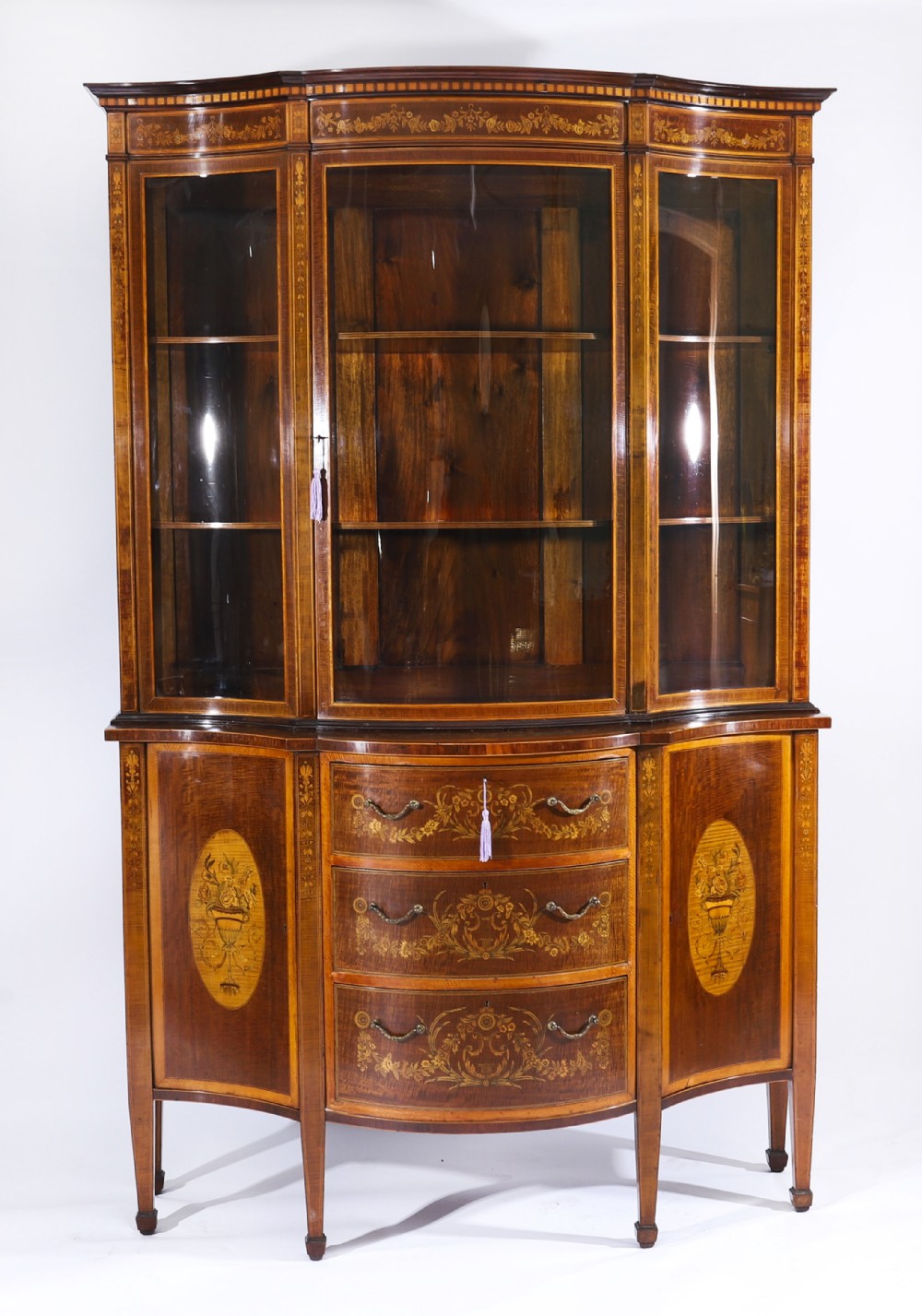
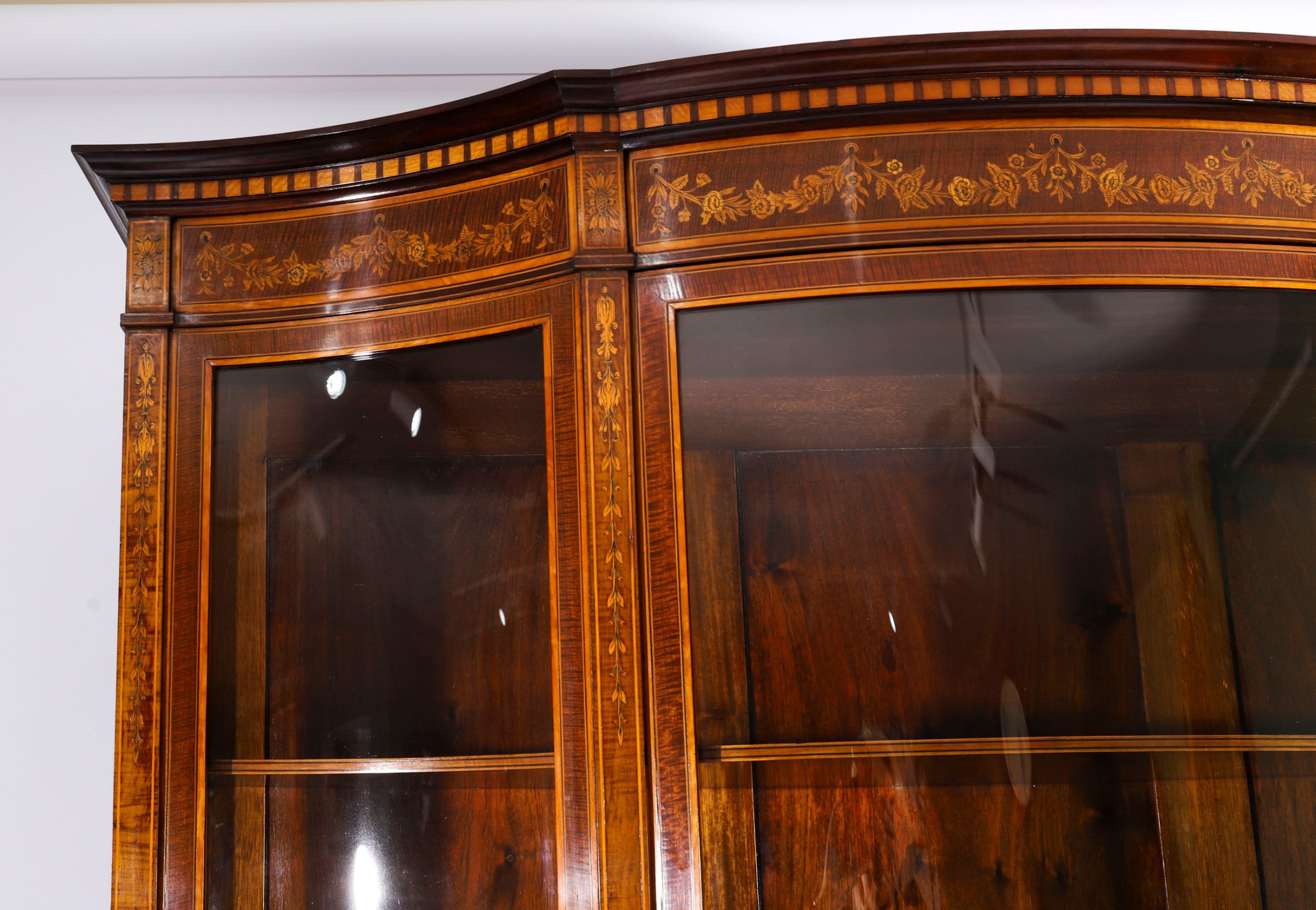
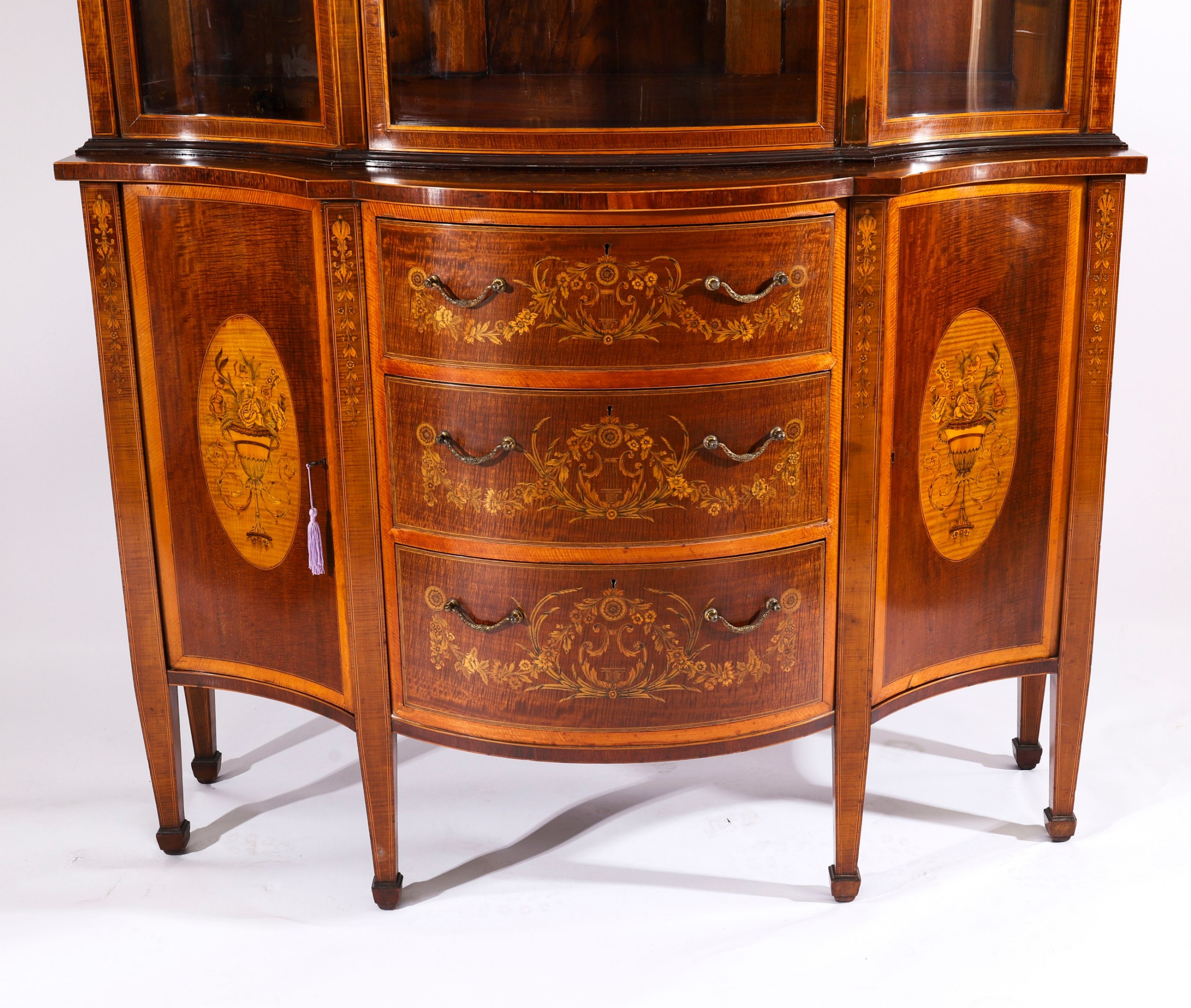
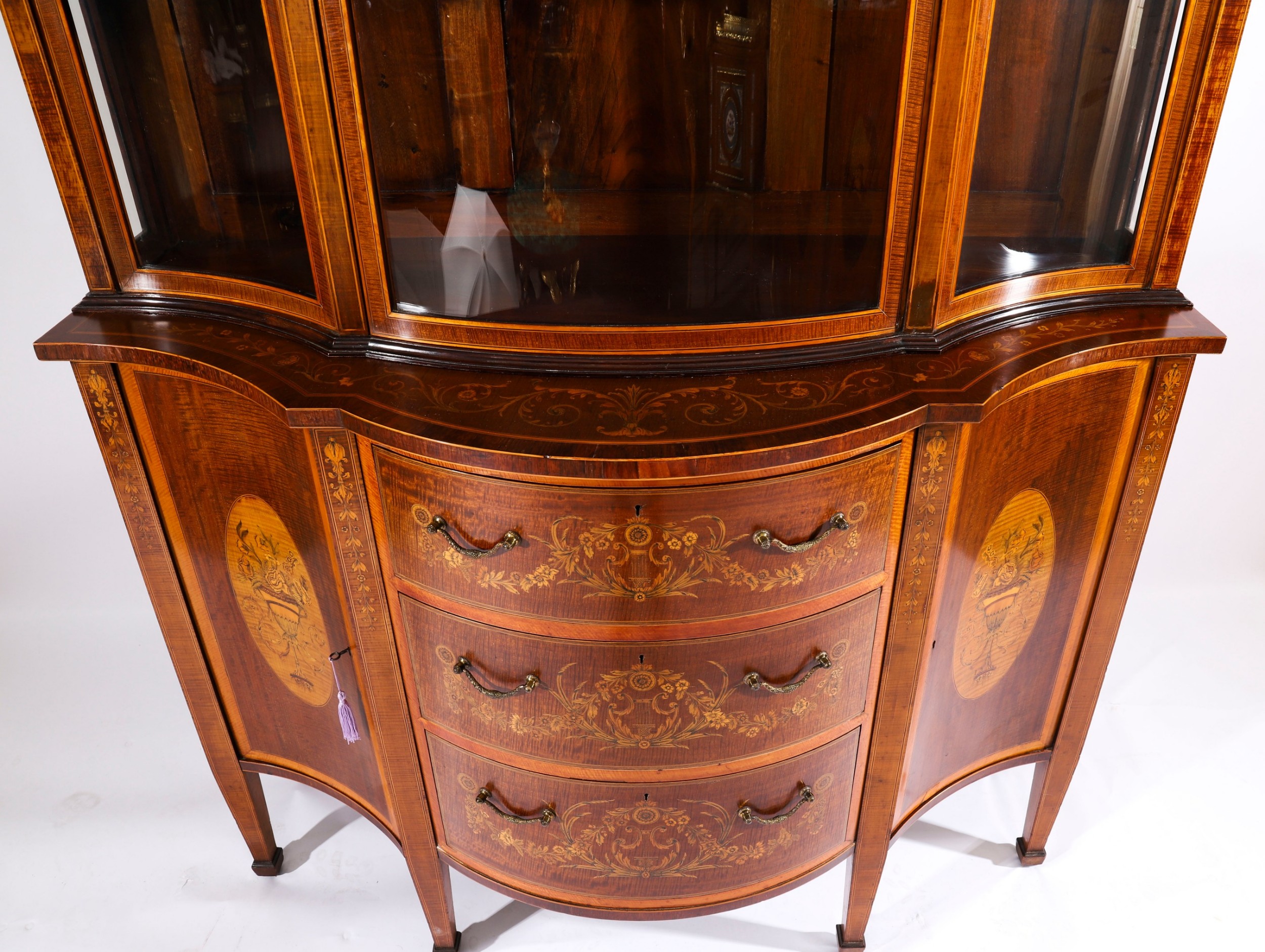
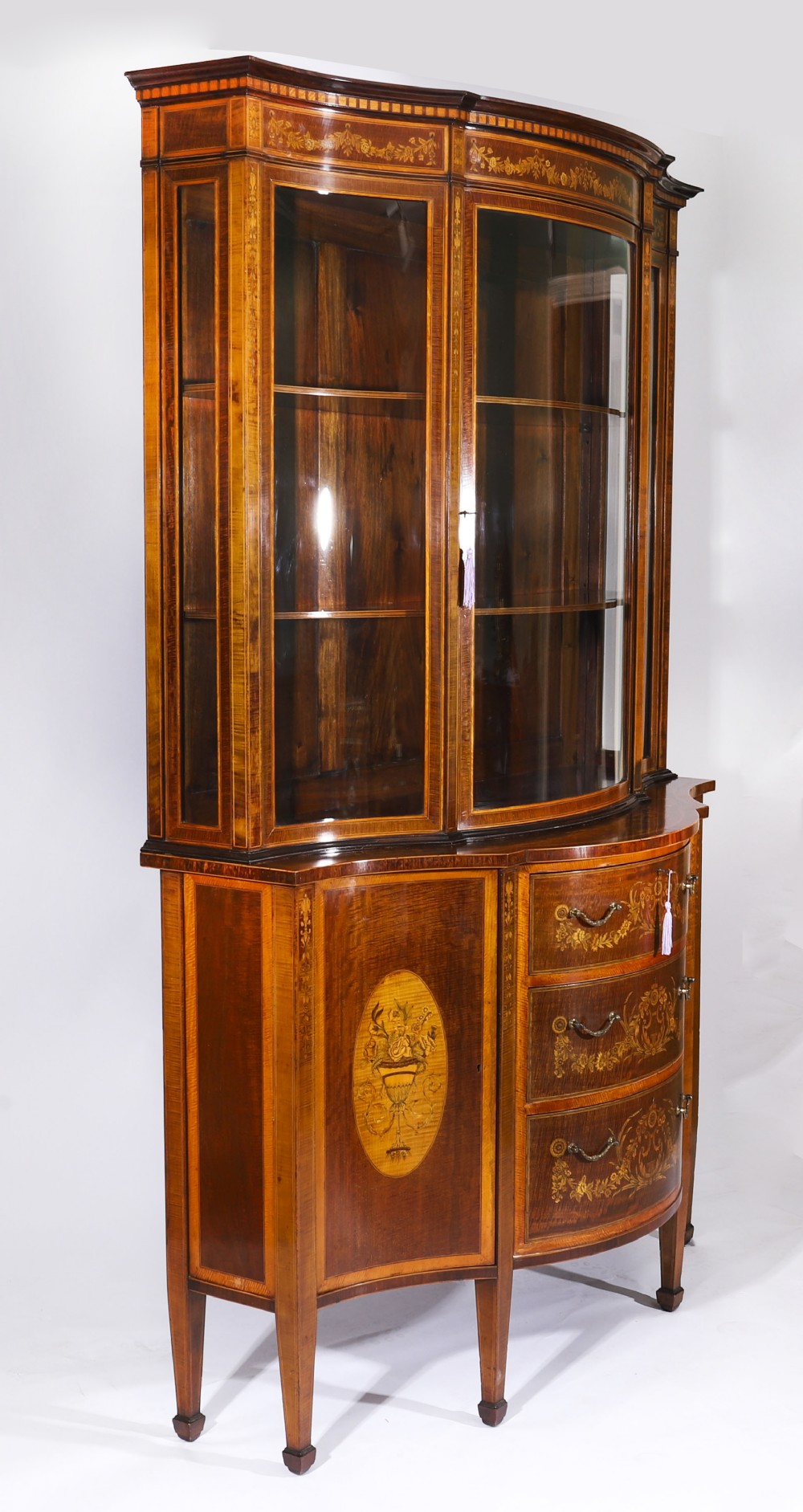
This is a beautiful antique late Victorian top quality serpentine display cabinet, bookcase, masterfully crafted in rich flame mahogany, satin wood with marquetry decoration, in the manner of Thomas Sheraton, made by the renowned cabinet makers and retailers Edwards & Roberts, Circa 1880 in date.
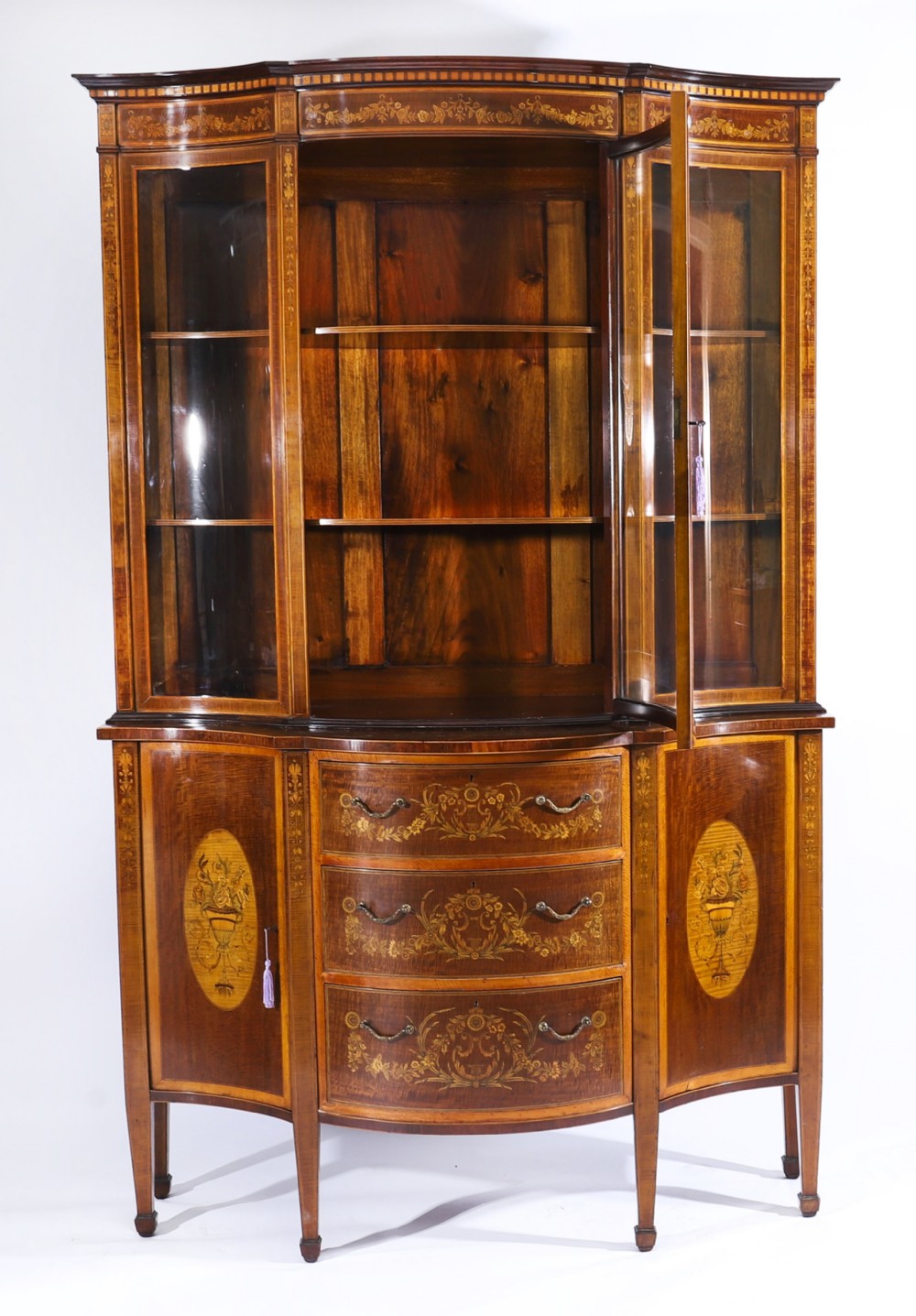
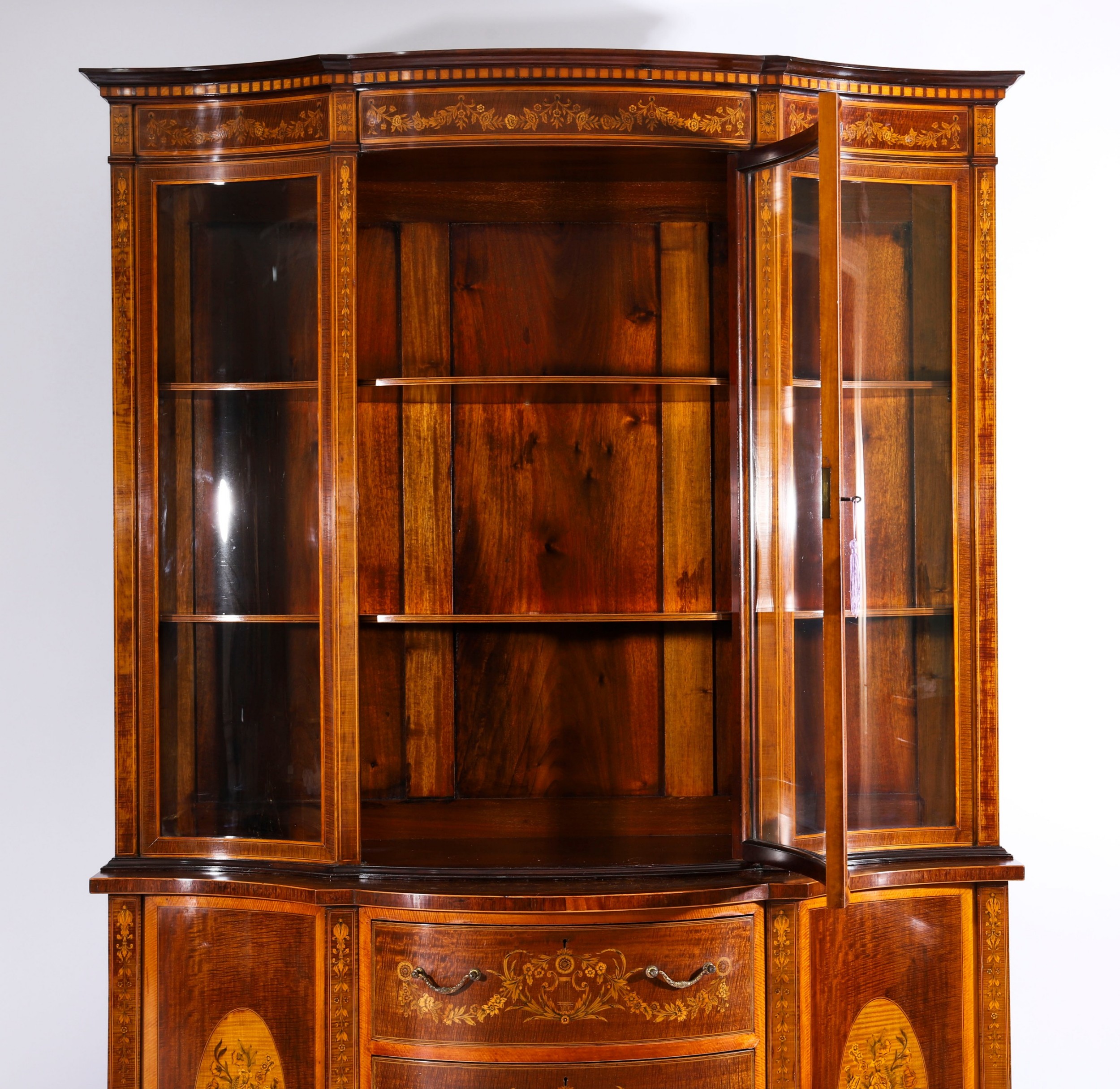
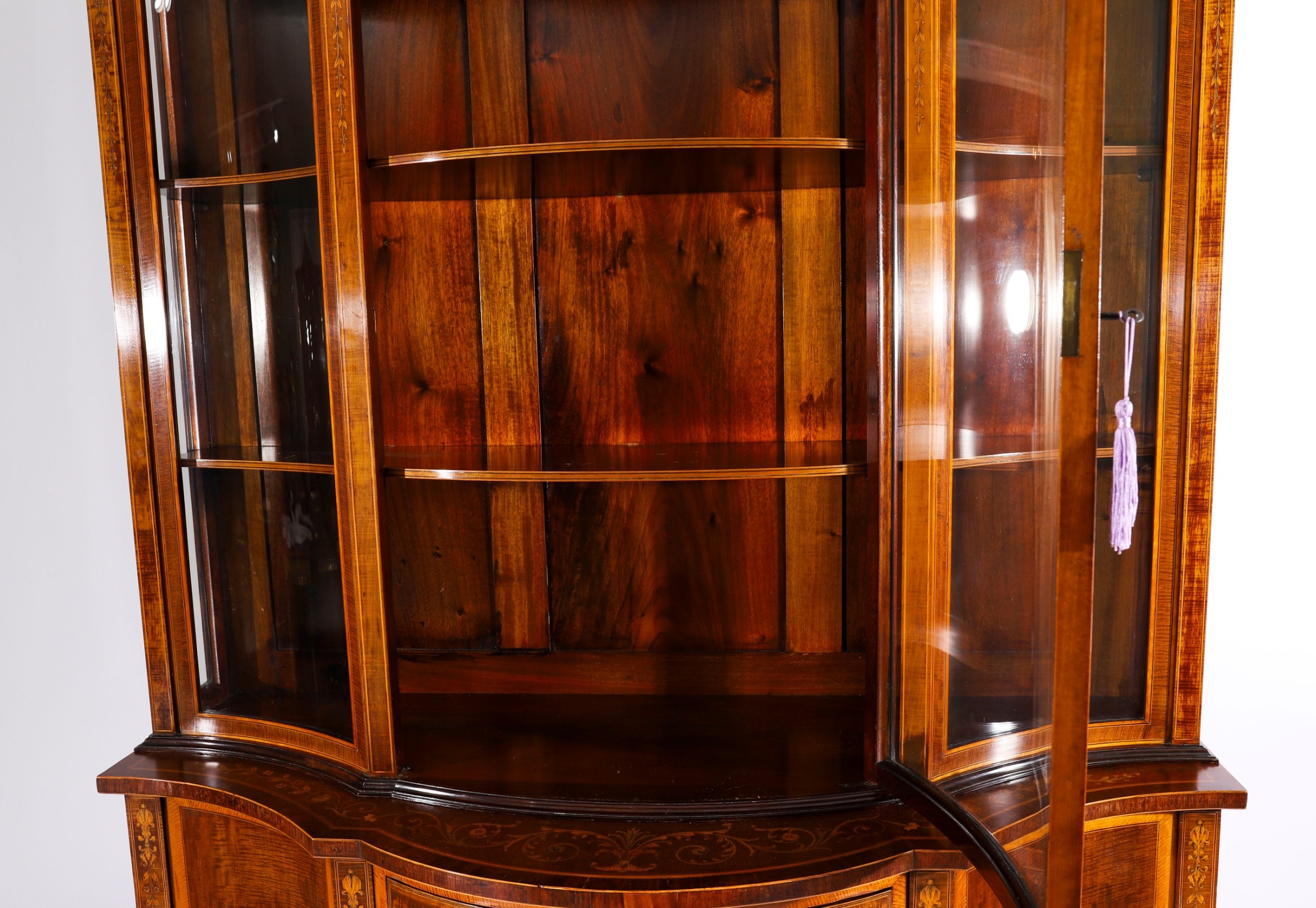
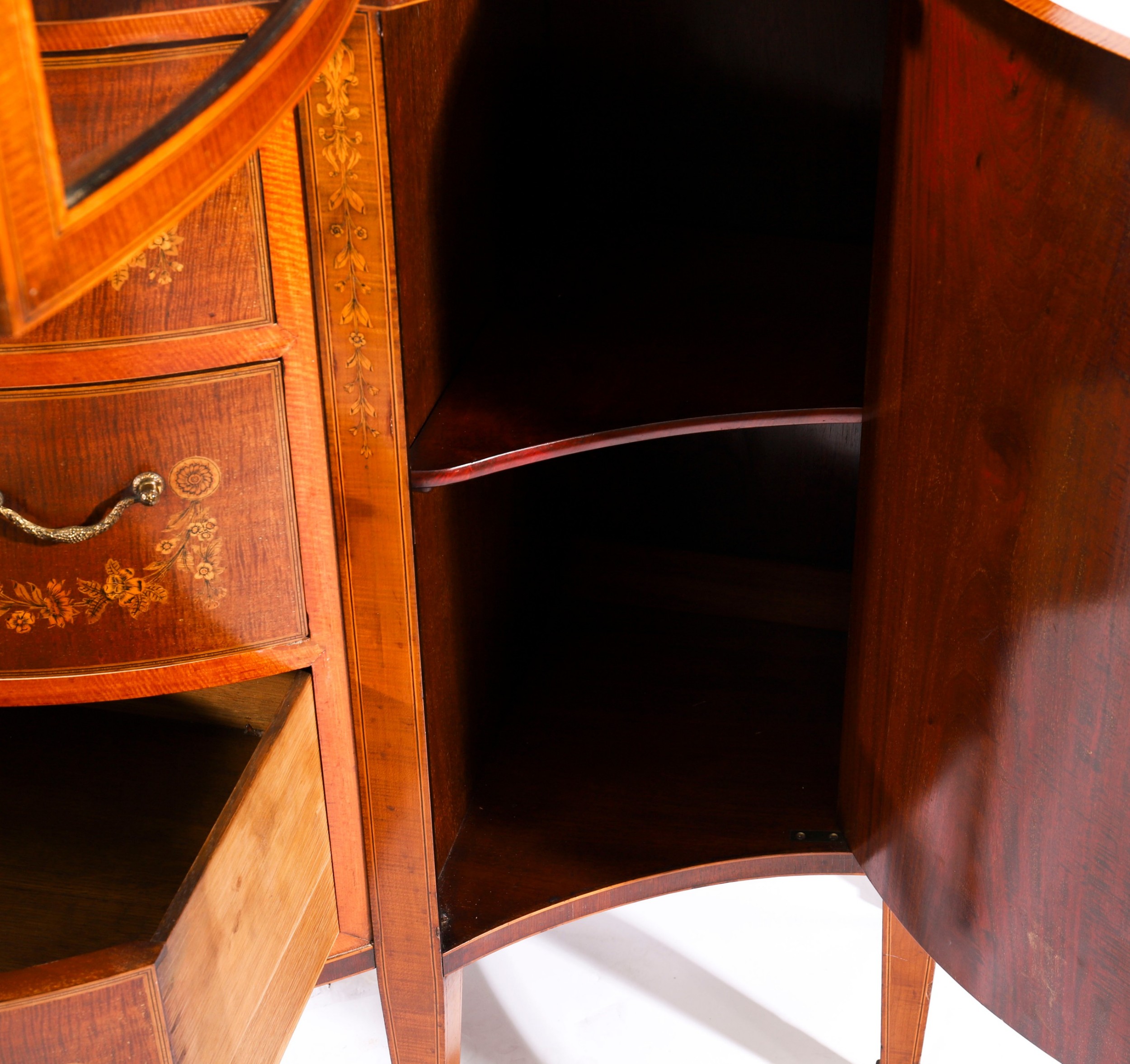
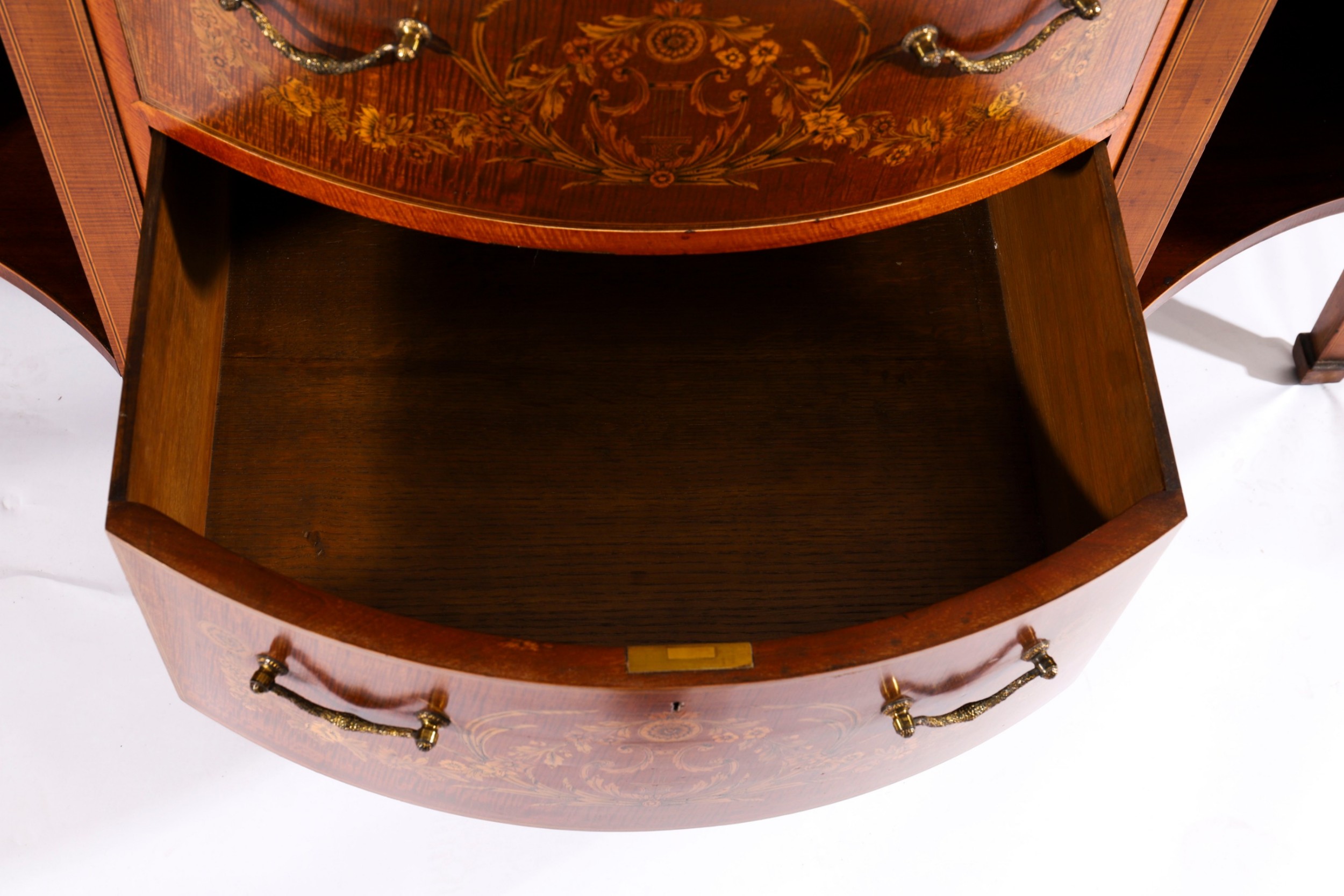
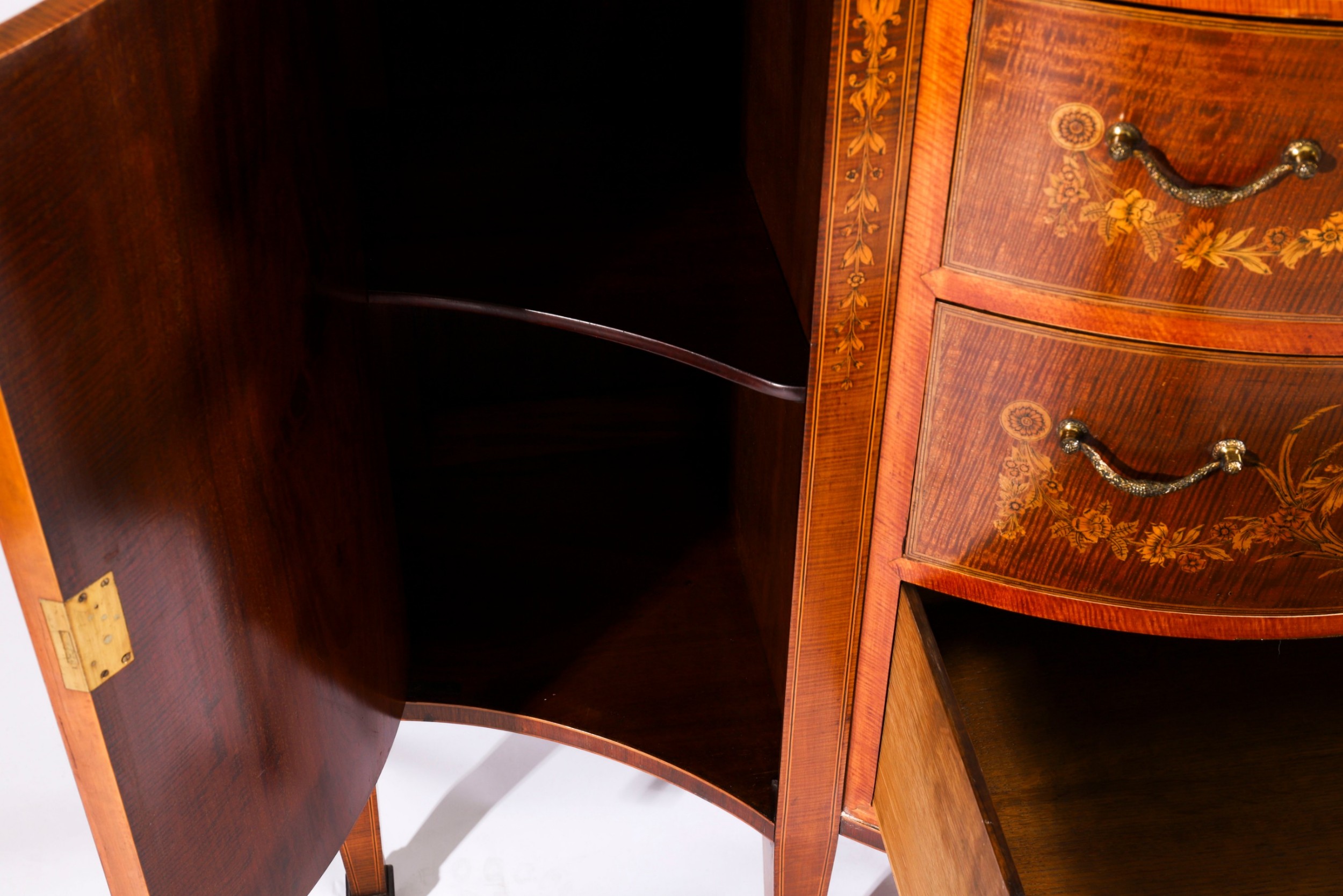
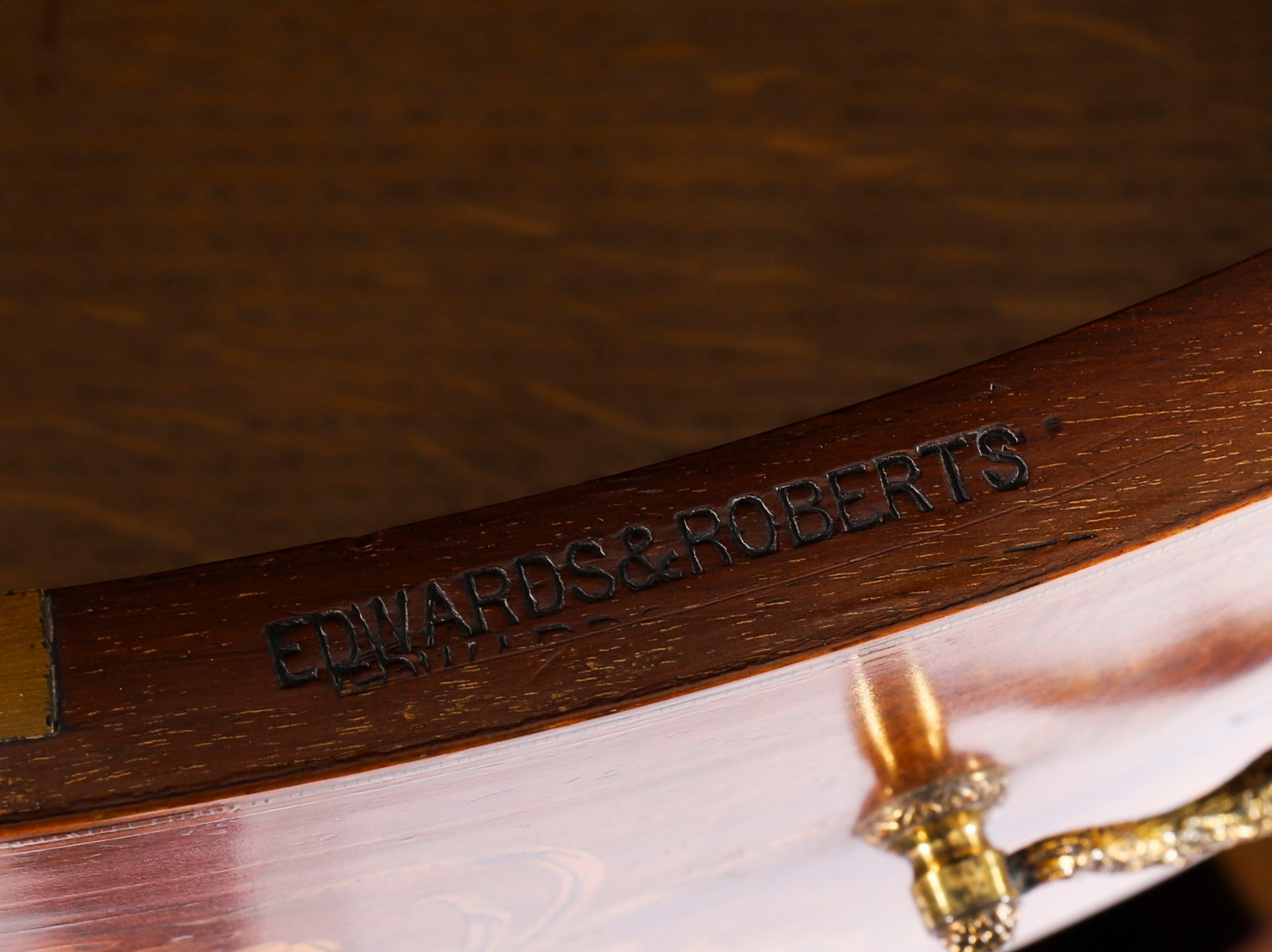
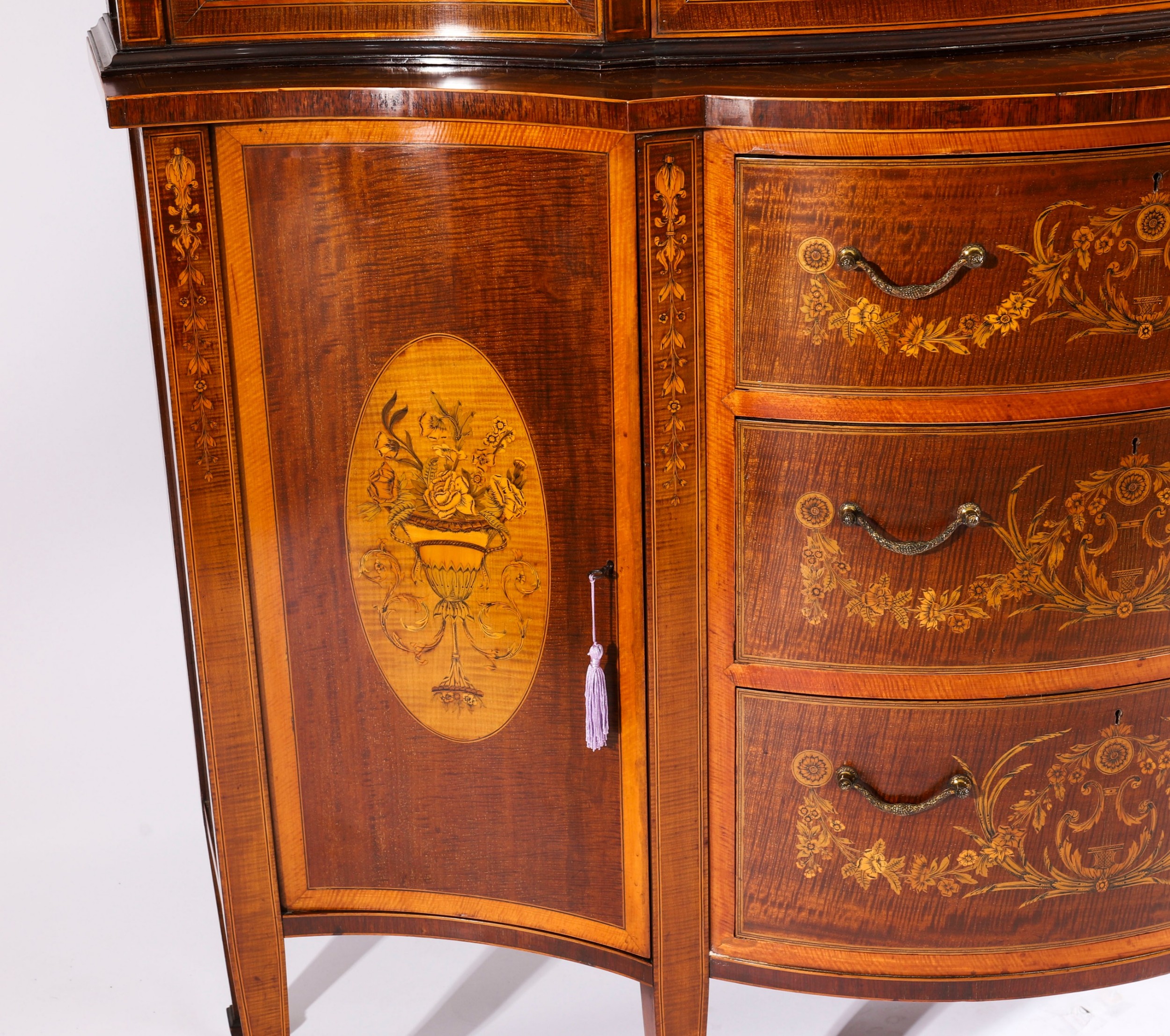
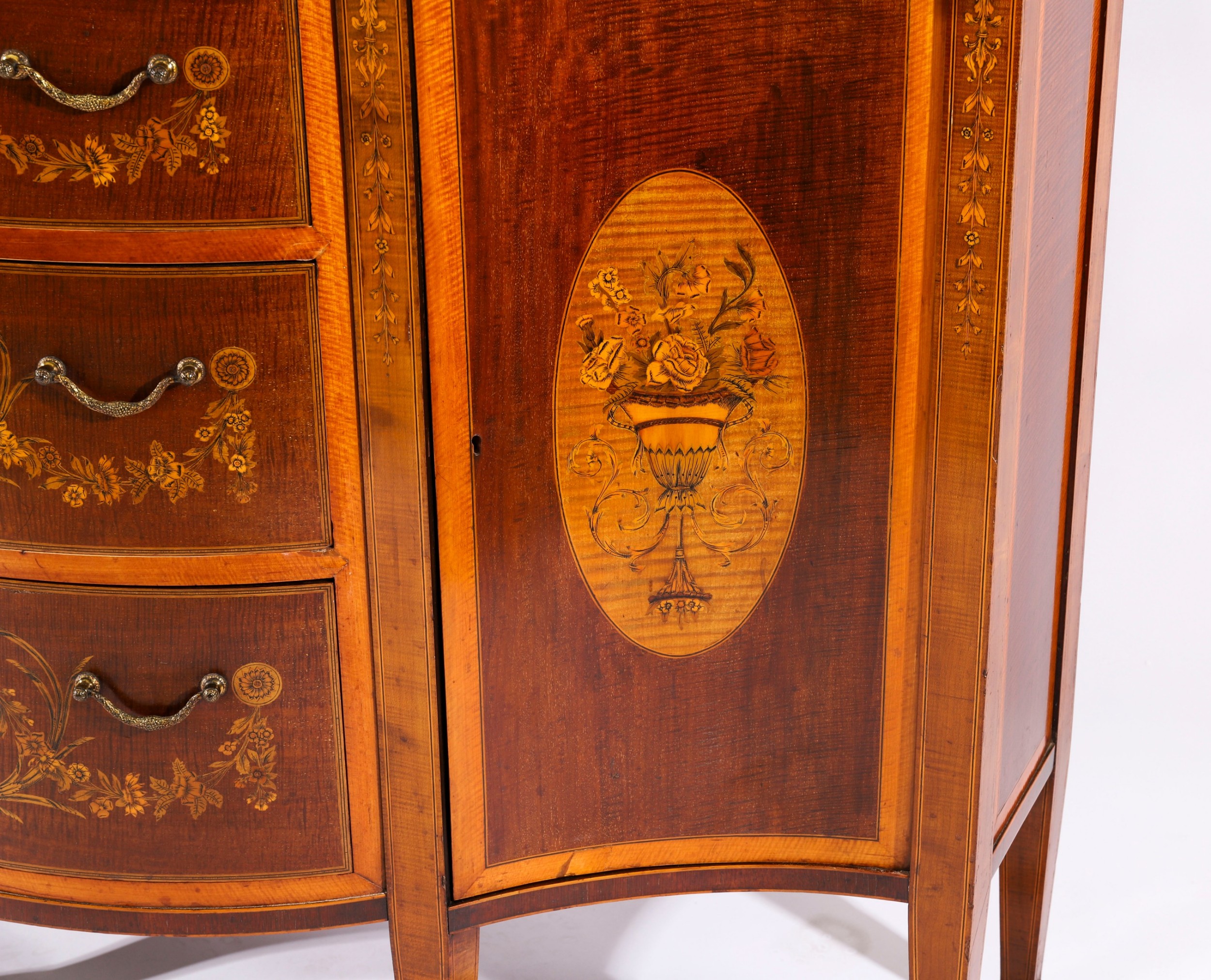
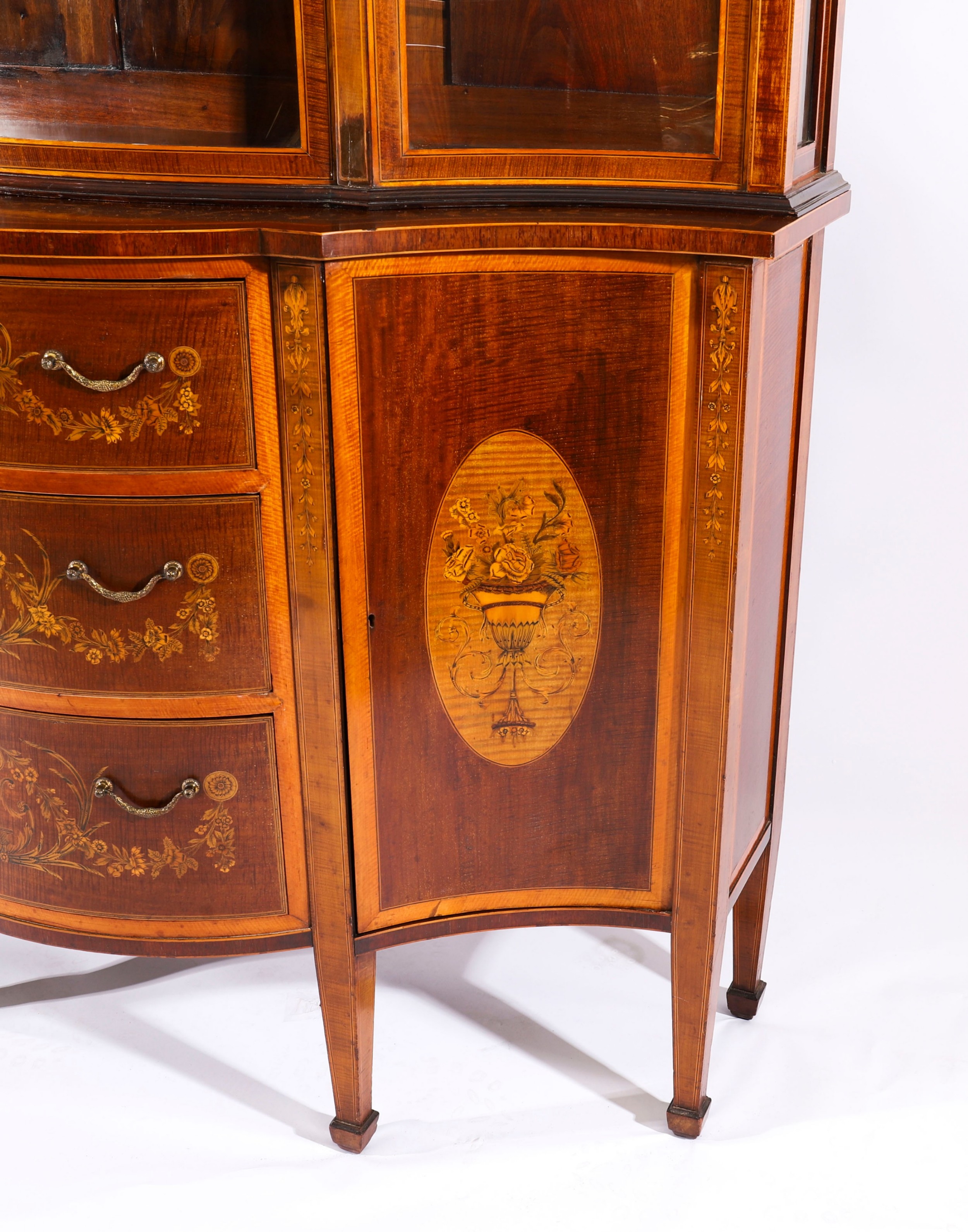
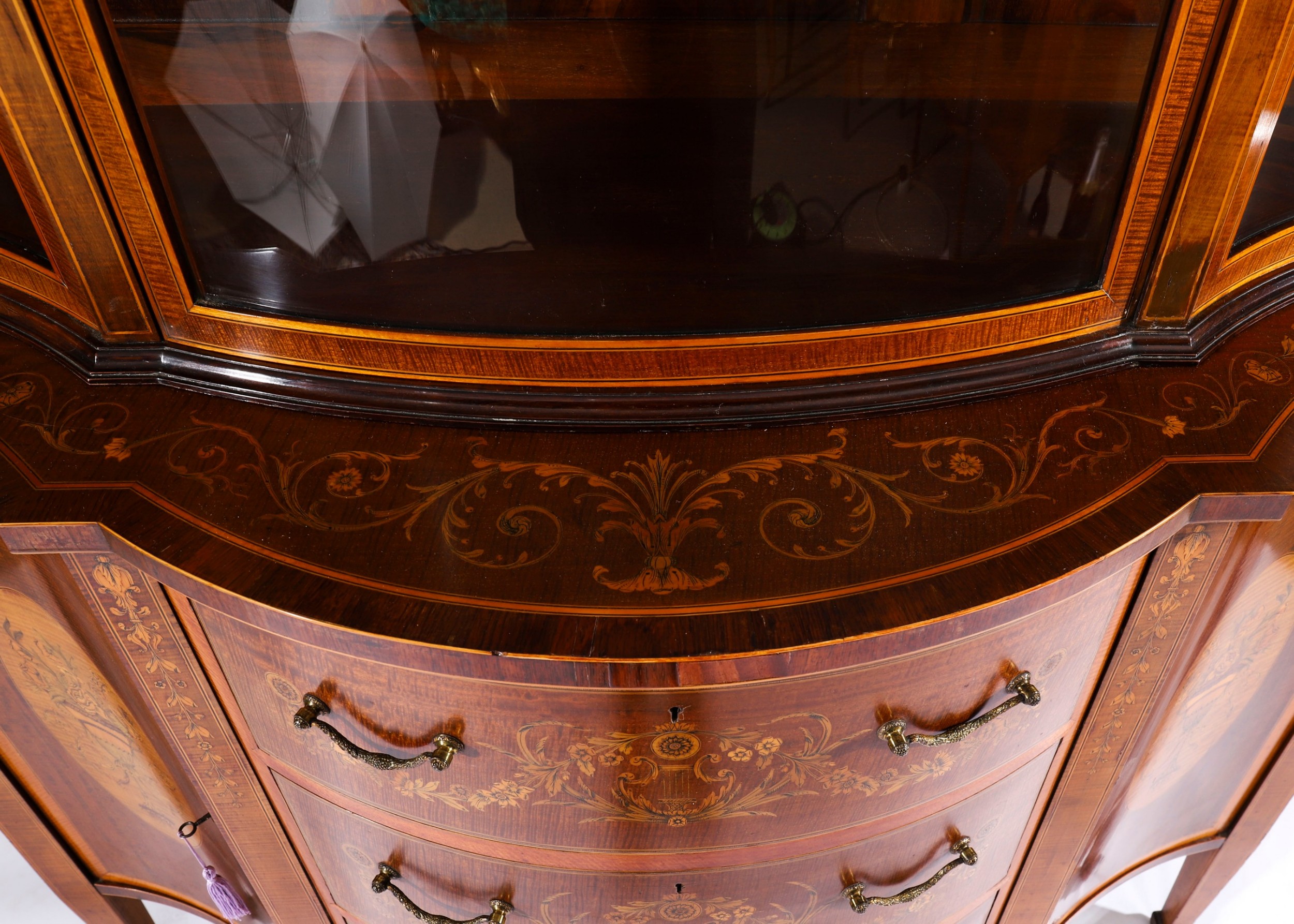
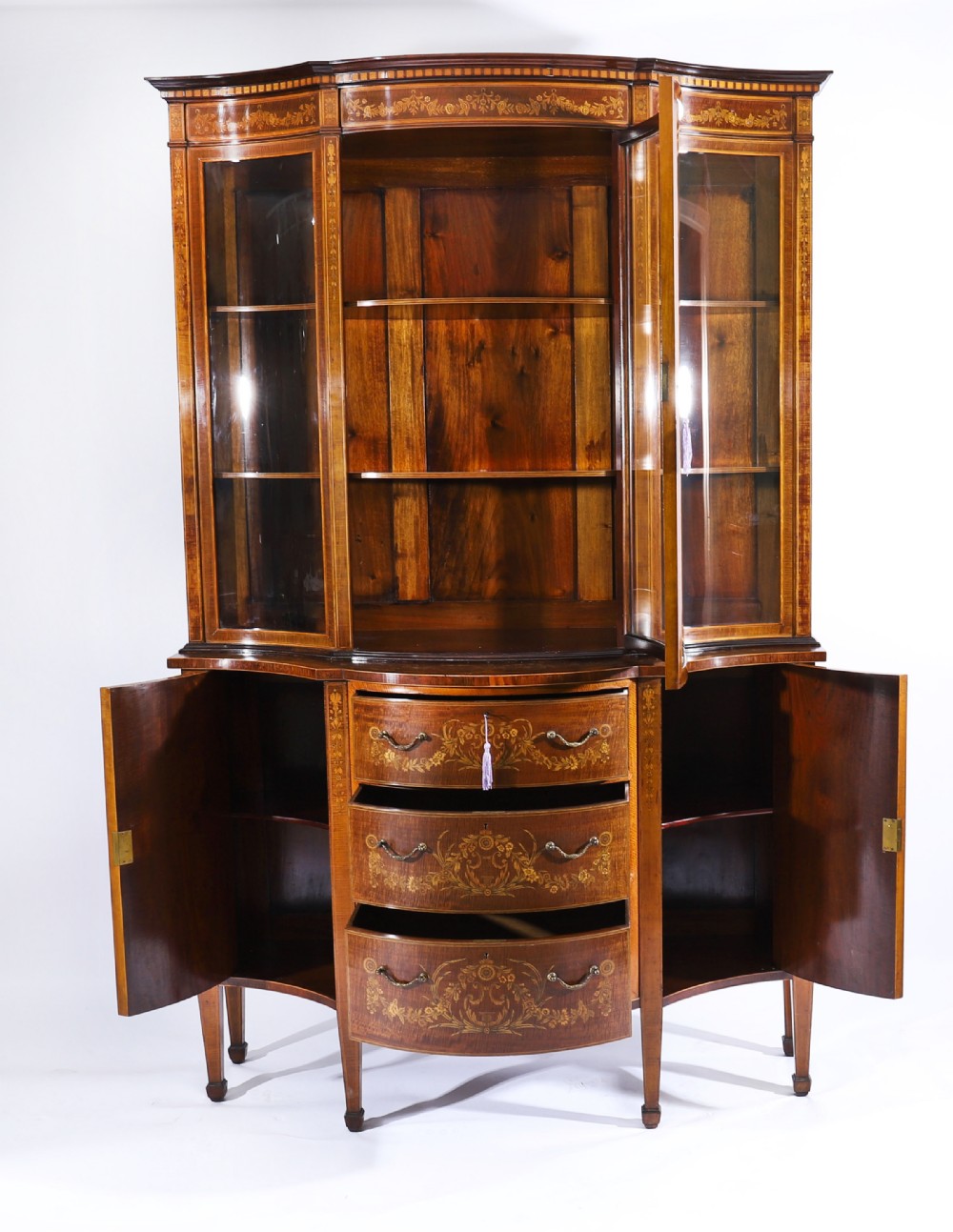
The top part is surmounted with a pediment cornice and has a large central door with convex glazing flanked by shaped serpentine glass on each side. The interior has two shelves that will display your collectables perfectly. The lower section has three drawers (the first one signed Edward & Roberts) with two side doors, each opening to a cupboard with central shelf.
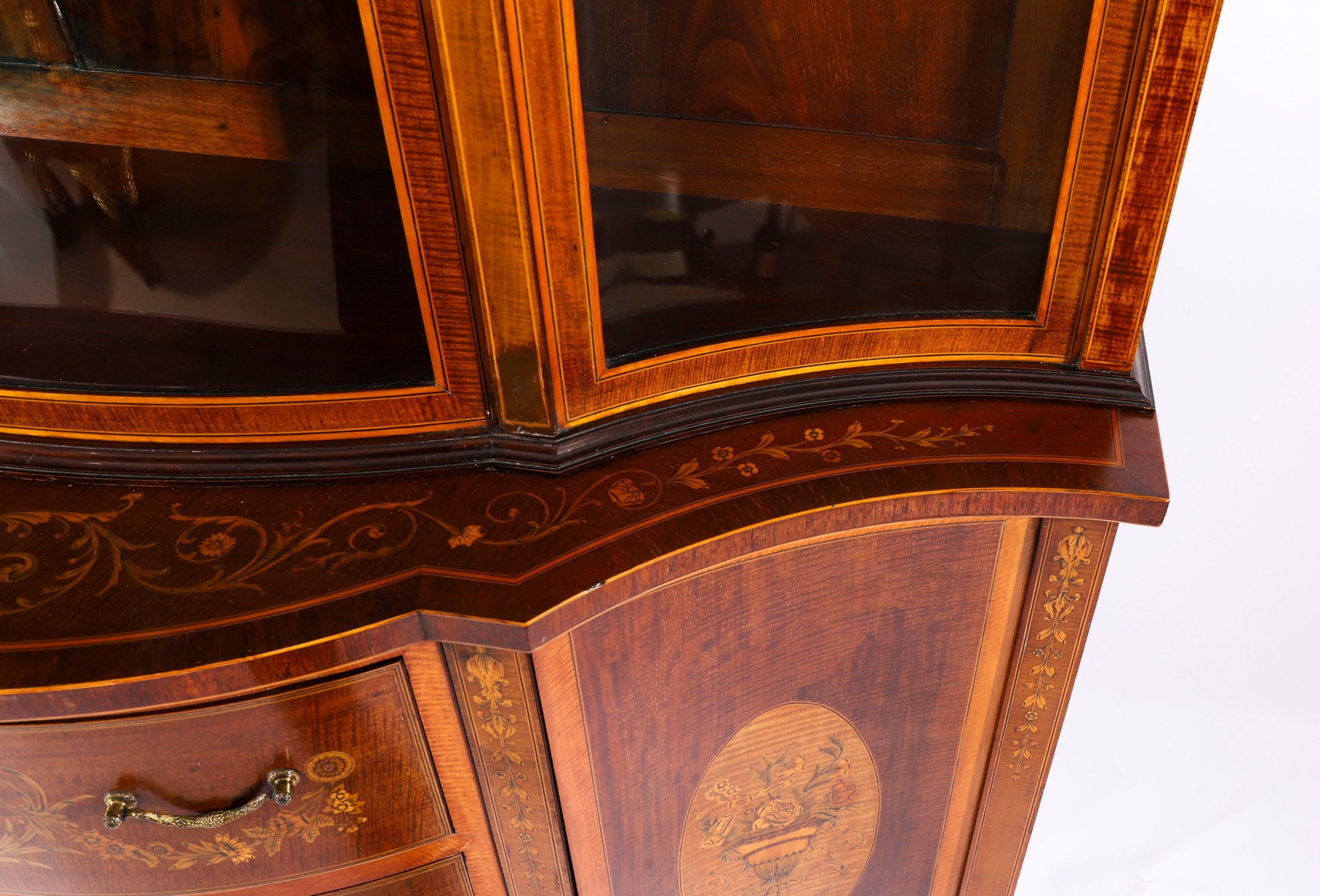
Beautifully decorated throughout with the finest marquetry decoration the cabinet is raised on four square tapering legs that terminate in spade feet.
There is no mistaking its superb quality and very grand design, which is certain to make it a talking point in your home and stand proud in whichever room you choose to disp
...lay it.
Complete with working locks and key.
Condition:
In excellent condition having only been beautifully cleaned polished and waxed in our workshops, please see photos for confirmation.
Dimensions in cm:
Height 205 cm x Width 130 cm x Depth 50 cm
Dimensions in inches:
Height 6 foot, 9 inches x Width 4 foot, 3 inches x Depth 1 foot, 8 inches
Edwards & Roberts
The firm Edwards & Roberts was one of the best English antique furniture cabinet makers of the second half of the nineteenth century. The company was founded in 1845 and by 1854 was trading as ‘Edwards & Roberts’, 21 Wardour Street, Antique and Modern Cabinet Makers and Importers of Ancient Furniture’. By 1892 they occupied more than a dozen buildings in Wardour Street, where they continued to trade until the end of the century.
They became one of the leading London cabinet makers and retailers producing high quality furniture and working in a variety of styles, both modern and revivalist. Their business also involved retailing, adapting and restoring the finest antique furniture and there are many examples of their earlier furniture with later embellishments bearing their stamp. The quality of timber used was always the best quality with fine burr walnuts, finely figured mahogany and lighter toned satinwood as they specialised in marquetry, inlay and ormolu.
Satin wood
is a hard and durable wood with a satinlike sheen, much used in cabinetmaking, especially in marquetry. It comes from two tropical trees of the family Rutaceae (rue family). East Indian or Ceylon satin wood is the yellowish or dark-brown heartwood of Chloroxylon swietenia.
The lustrous, fine-grained, usually figured wood is used for furniture, cabinetwork, veneers, and backs of brushes. West Indian satin wood, sometimes called yellow wood, is considered superior. It is the golden yellow, lustrous, even-grained wood found in the Florida Keys and the West Indies.
It has long been valued for furniture. It is also used for musical instruments, veneers, and other purposes. Satin wood is classified in the division Magnoliophyta, class Magnoliopsida, order Sapindales, family Rutaceae.
Flame Mahogany
Thomas Sheraton - 18th century furniture designer, once characterized mahogany as ''best suited to furniture where strength is demanded as well as a wood that works up easily, has a beautiful figure and polishes so well that it is an ornament to any room in which it may be placed.'' Matching his words to his work, Sheraton designed much mahogany furniture. The qualities that impressed Sheraton are particularly evident in a distinctive pattern of wood called ''flame mahogany.''
The flame figure in the wood is revealed by slicing through the face of the branch at the point where it joins another element of the tree.
Marquetry
is decorative artistry where pieces of material of different colours
Internal Reference: A4856
Antique ID Number (AIDN): SA1203361
Dateline of this antique is 1880
Height is 205cm (80.7inches)Width is 130cm (51.2inches)Depth is 50cm (19.7inches)




Thank you.
Your comment has been sent to Sellingantiques.