21,084  PAGES BROWSED TODAY PAGES TODAY 71  ANTIQUES UPLOADED TODAY NEW ARRIVALS
ID #SA1203355
FOR SALE
£1,350
Email
Save
Antique French Empire "Fauteuil Du Bureau" Desk Chair 19th C
Regent Antiques
for sale €1,580     $1,715
£1,350
Regent Antiques

Regent Antiques

Sellingantiques Verified Since Sep 2016
View Dealers Stock Page
  • About Us
    We specialise in english and continental furniture, silver, porcelain and decorative items.
  • Trade Associations
    Regent Antiques is a registered member of LAPADA  CINOA
Id #SA1203355
PDF SHARE
SAVE

Antique French Empire "Fauteuil Du Bureau" Desk Chair 19th C

19th century
For Sale by Regent Antiques
Description

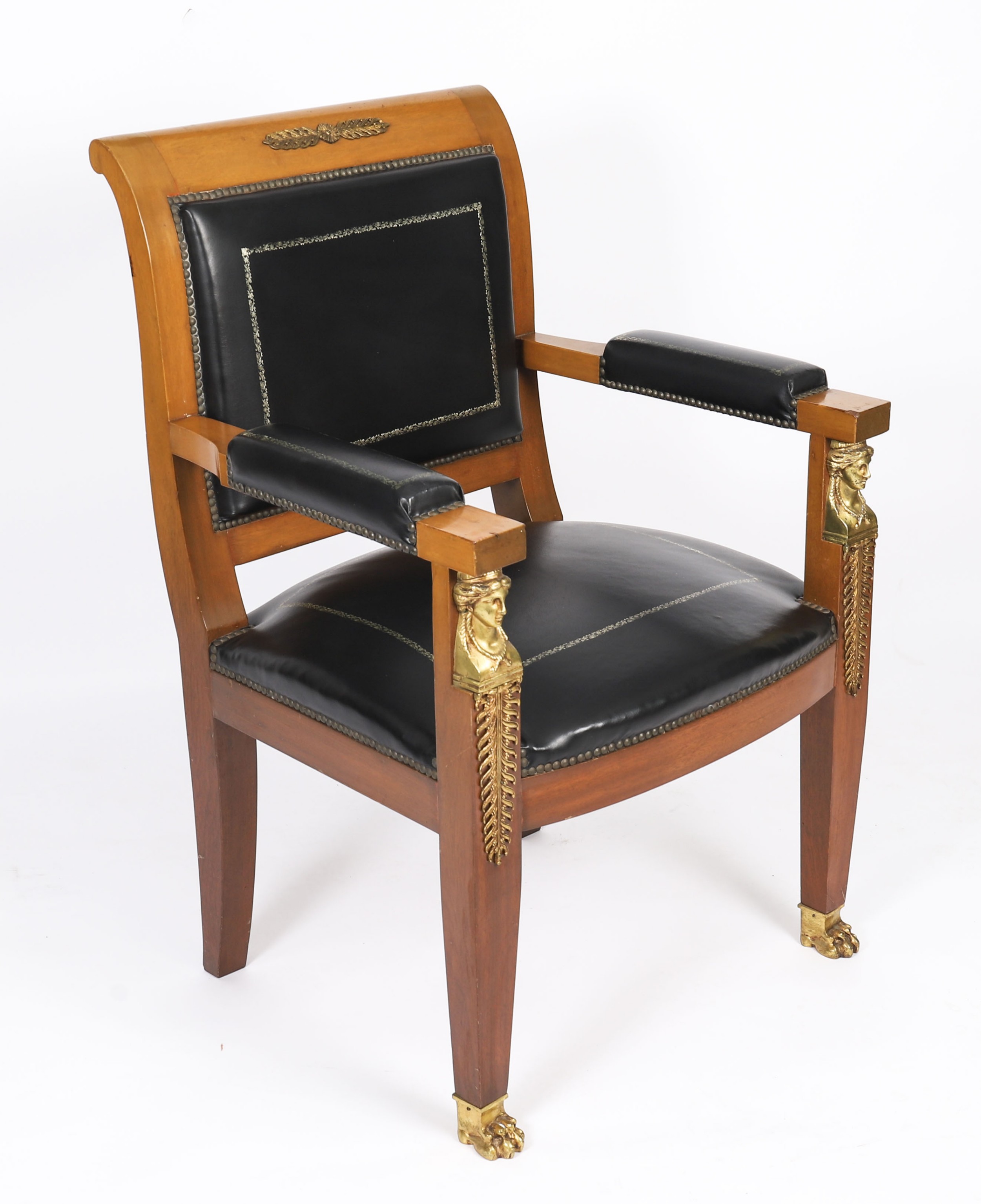
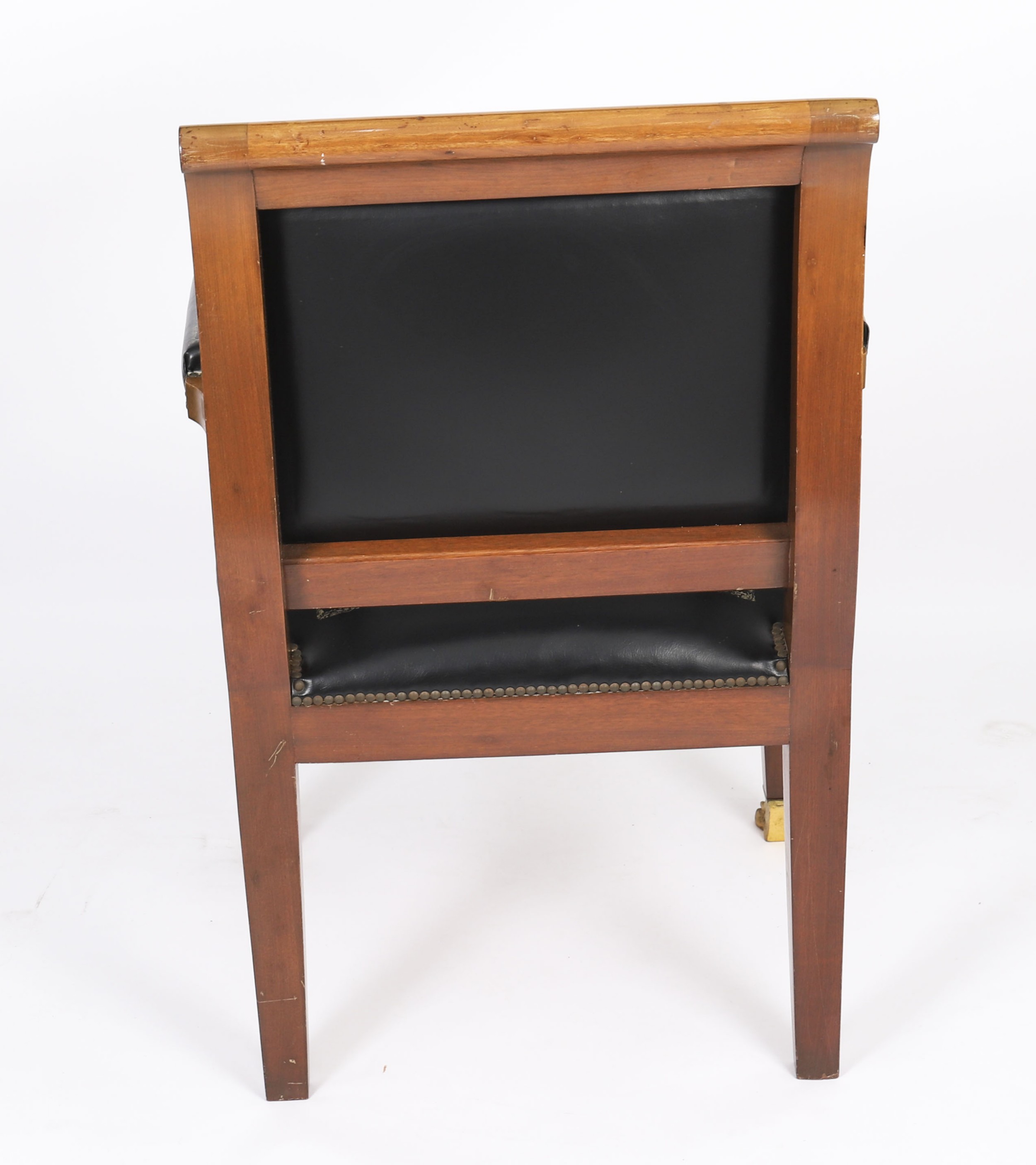
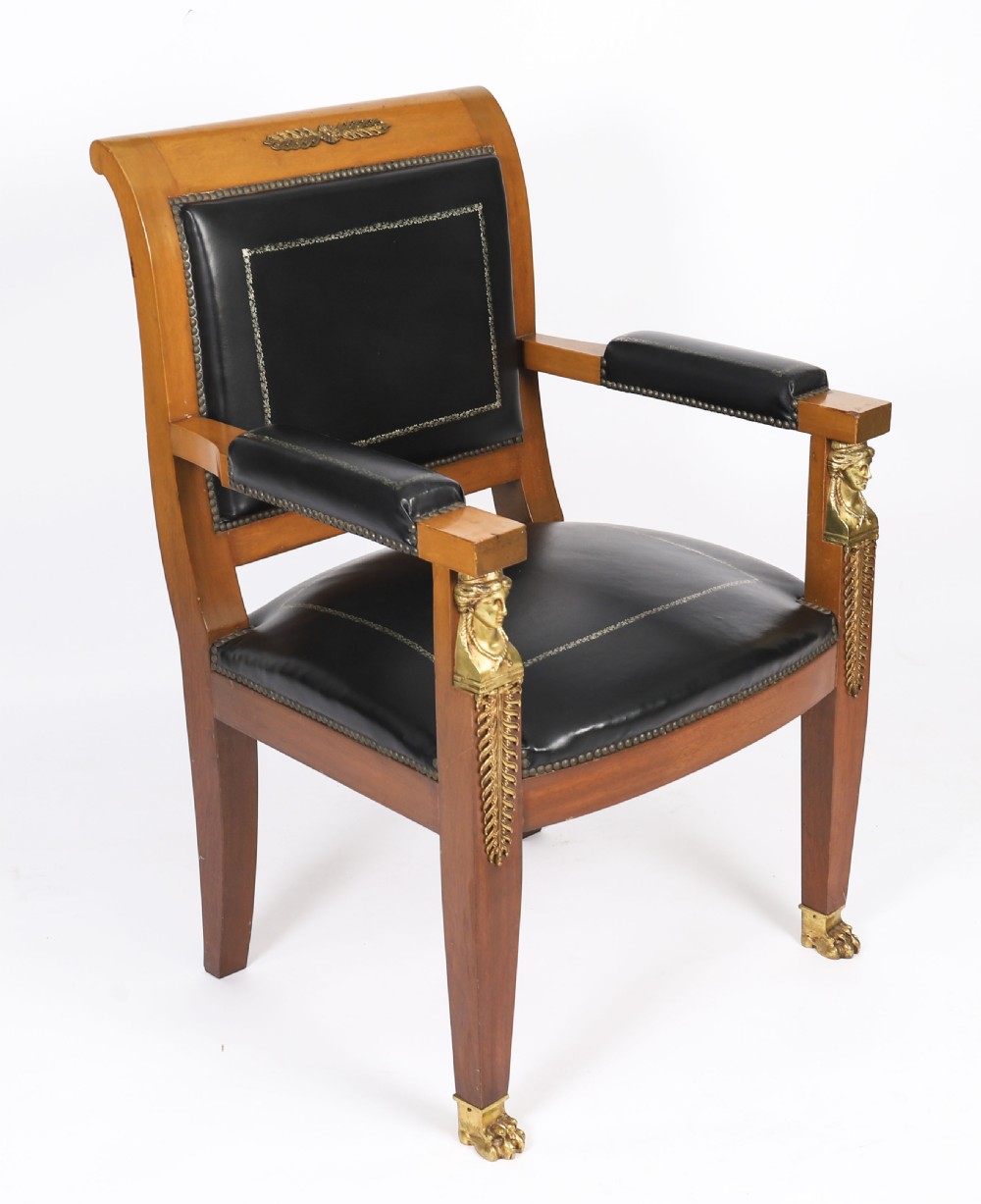
This is a beautiful antique French Empire Revival "fauteuil du bureau", desk chair, Circa 1880 in date.


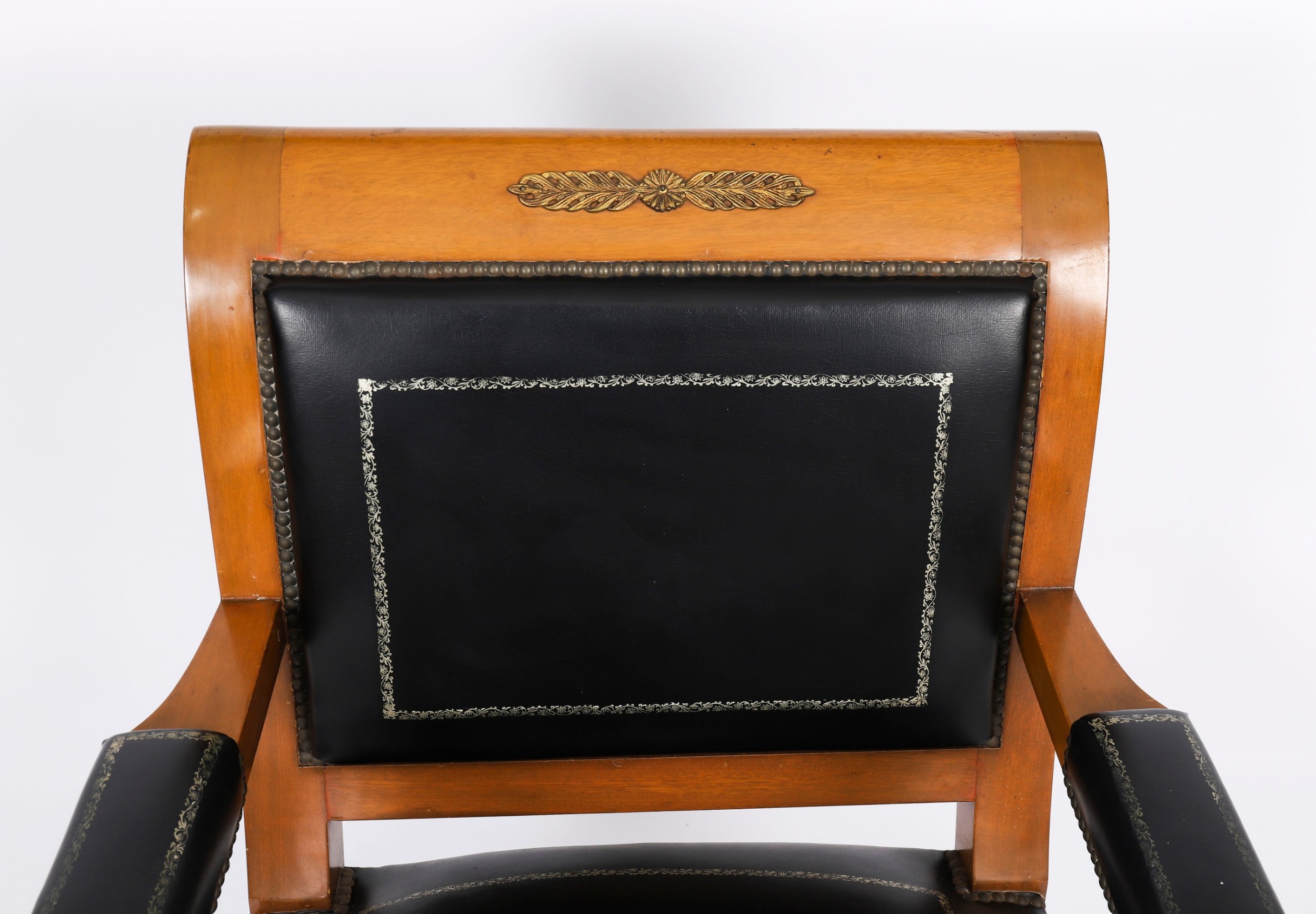
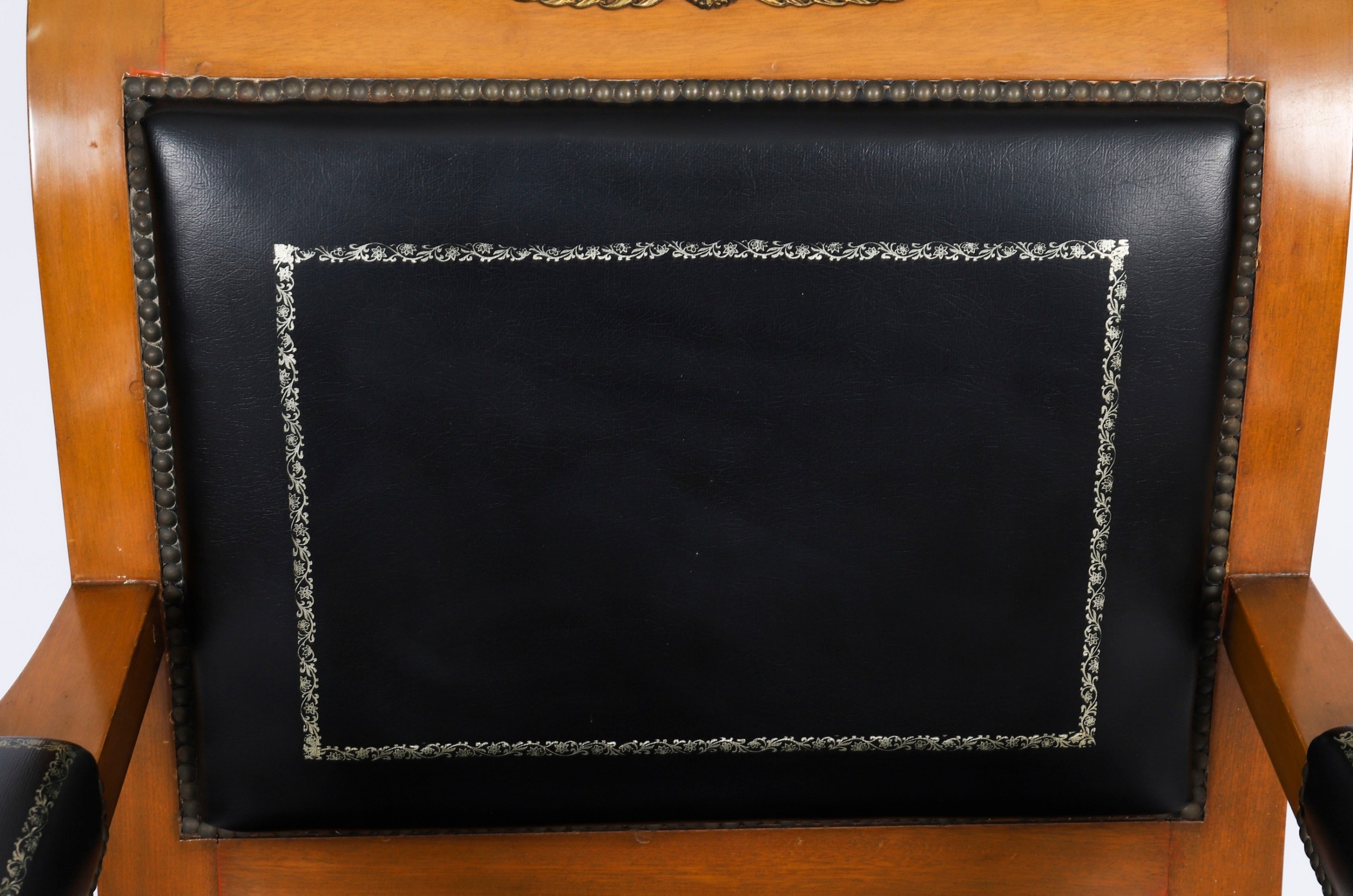
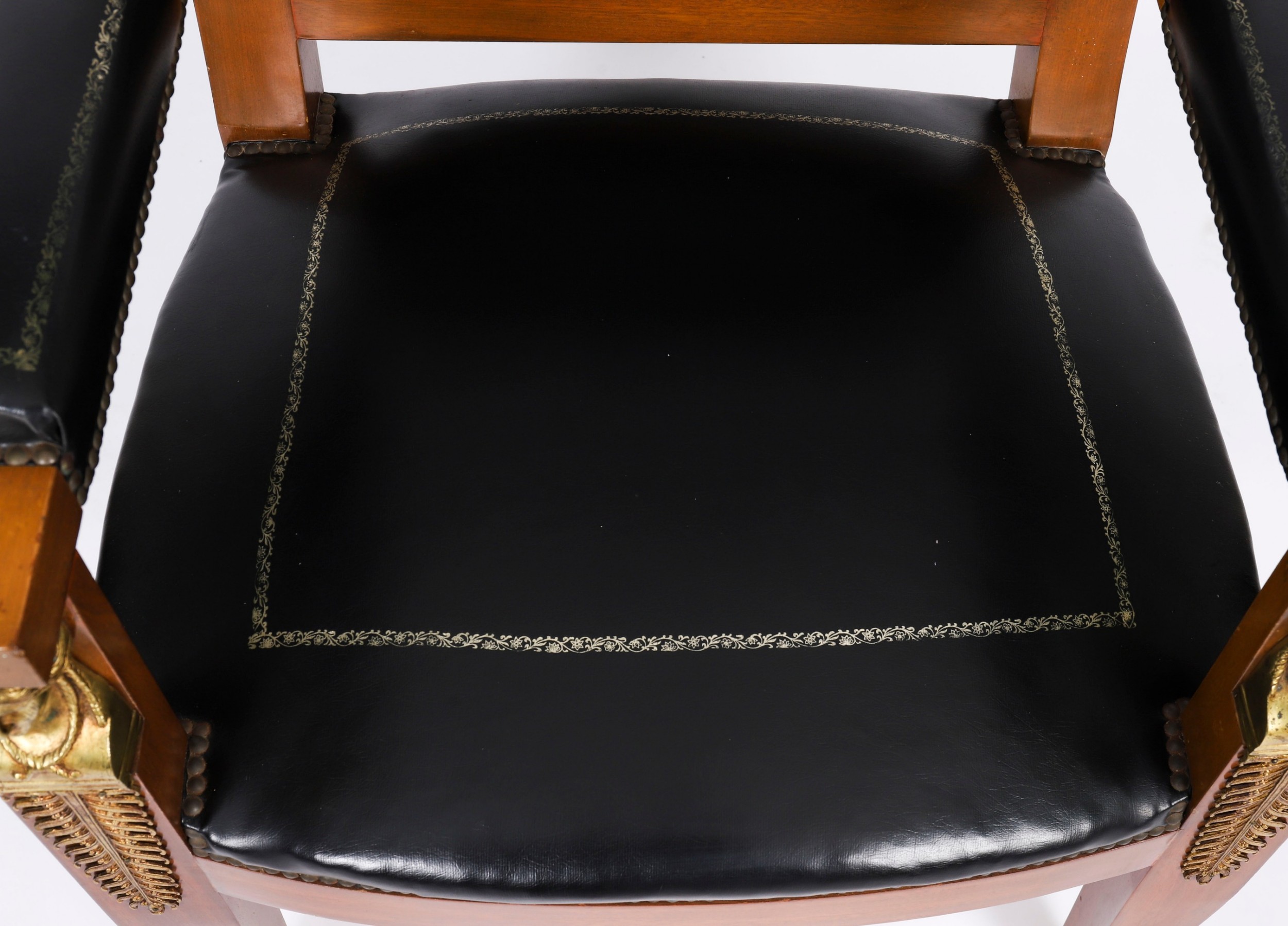
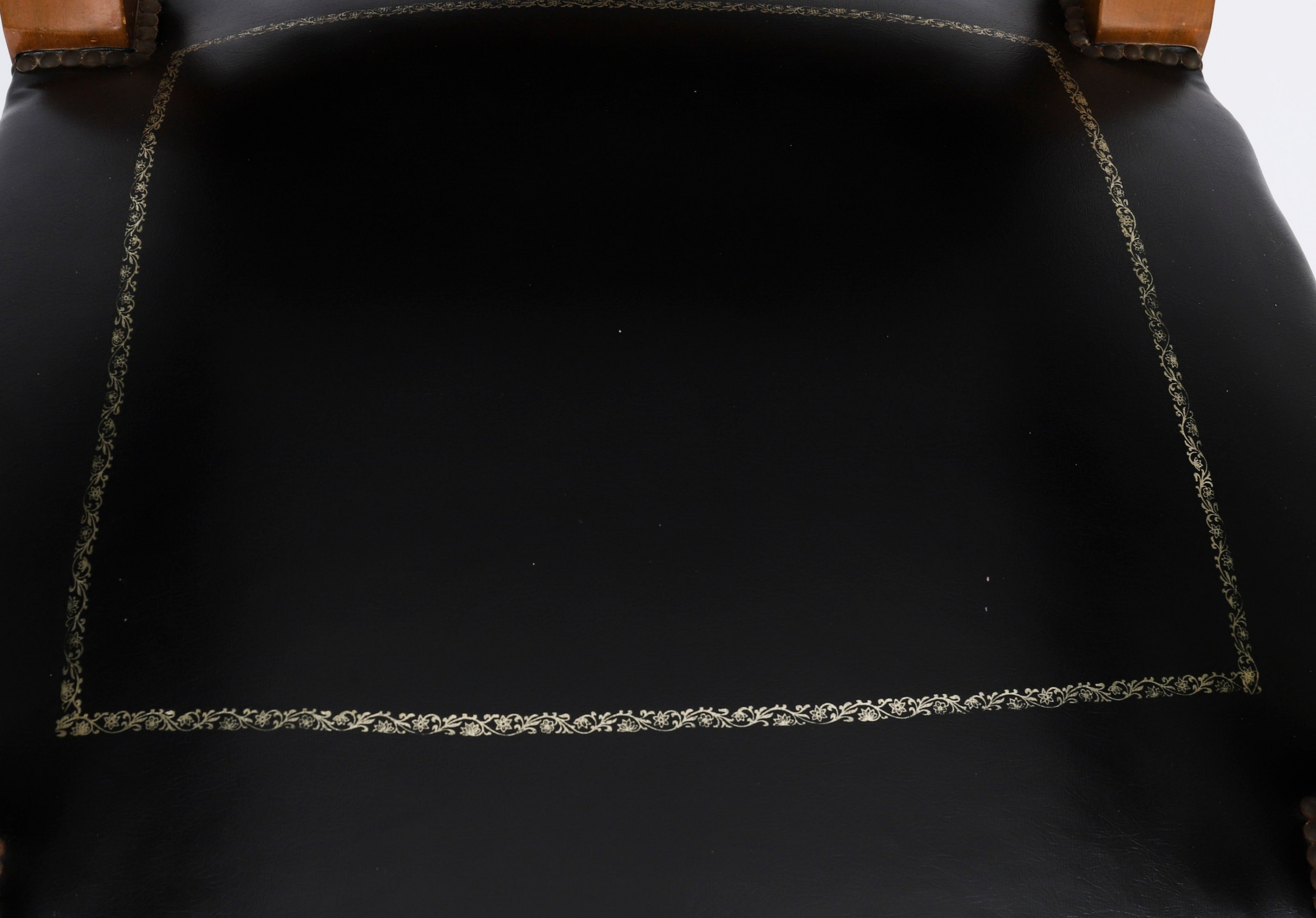
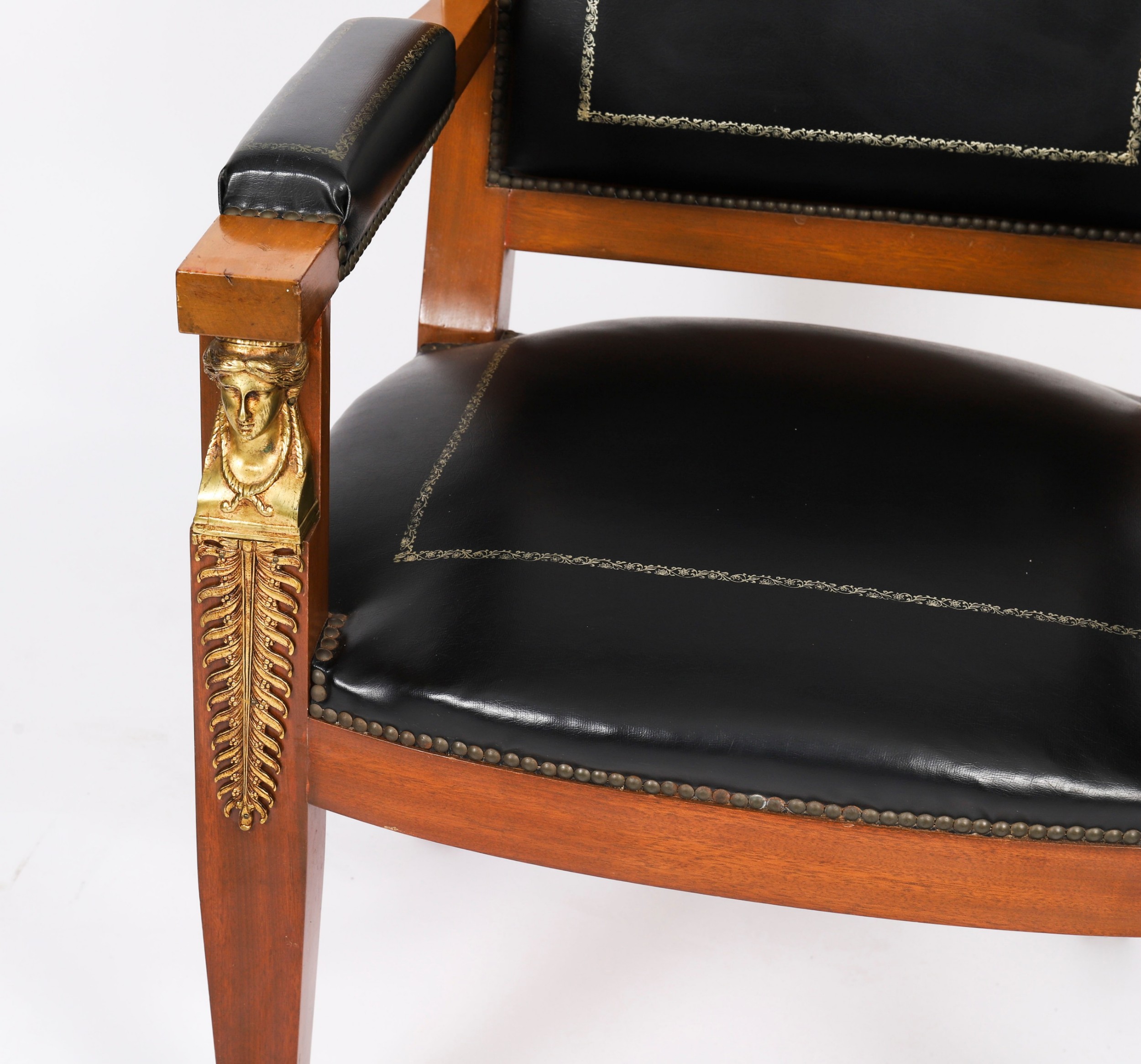
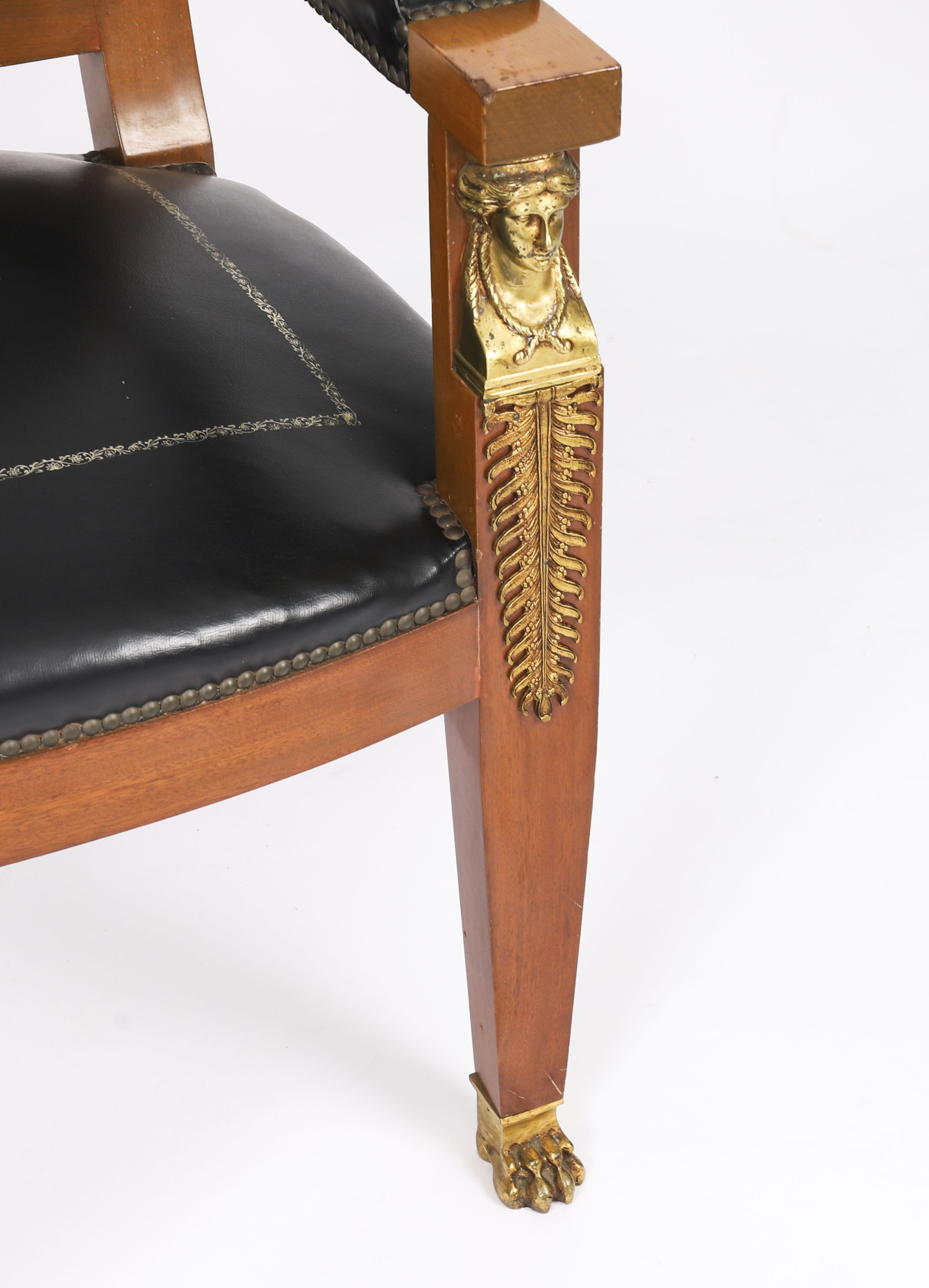
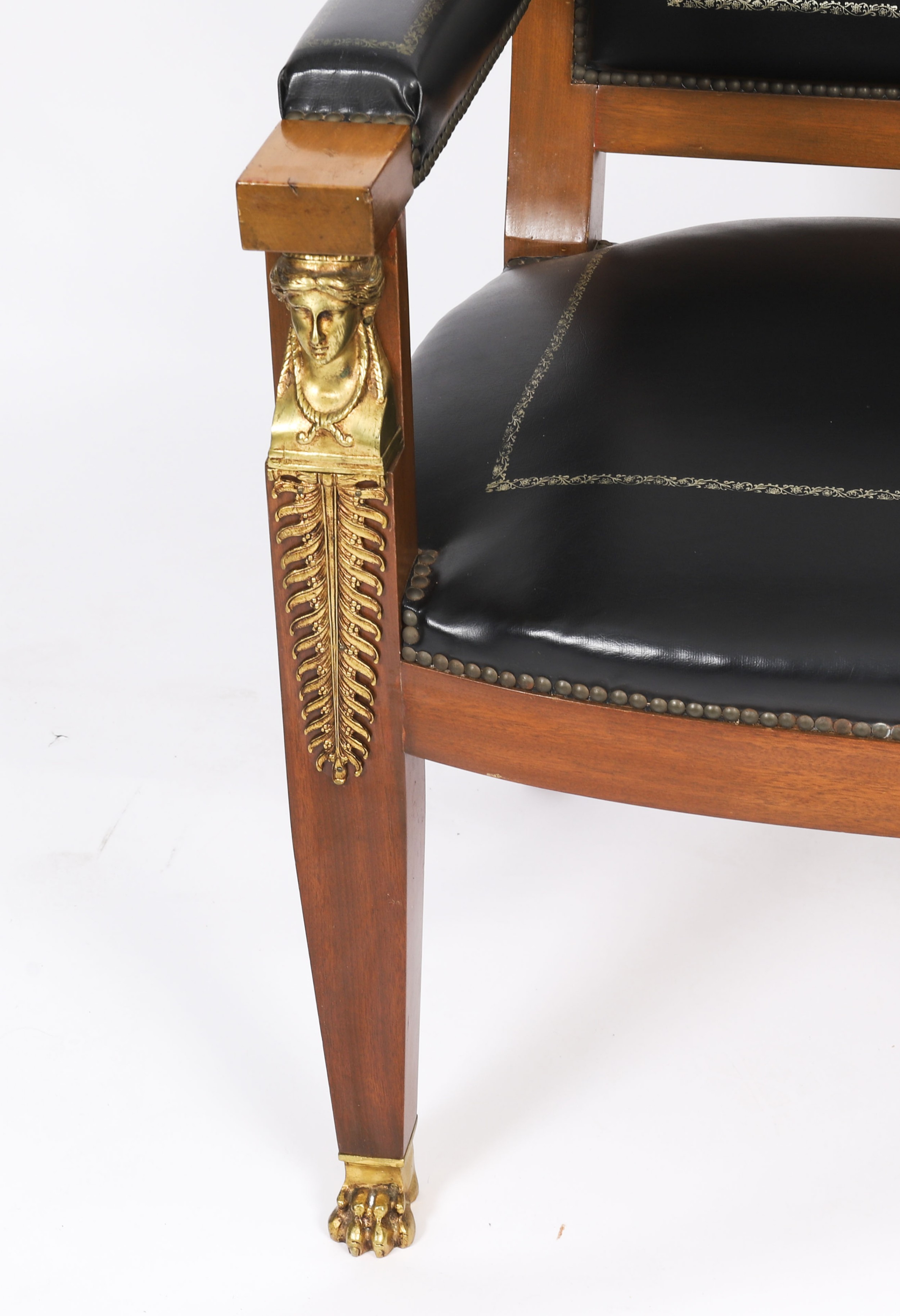
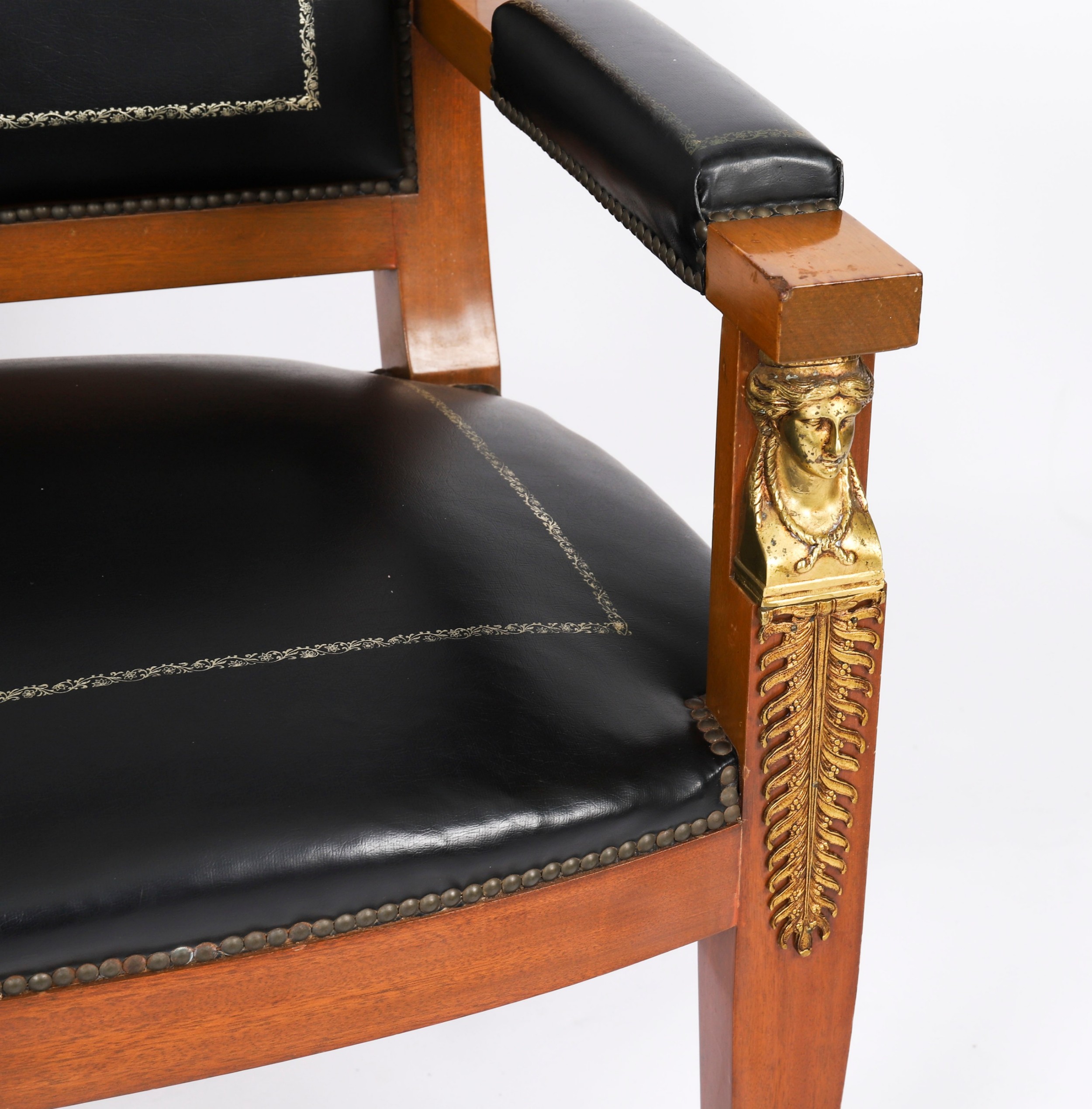
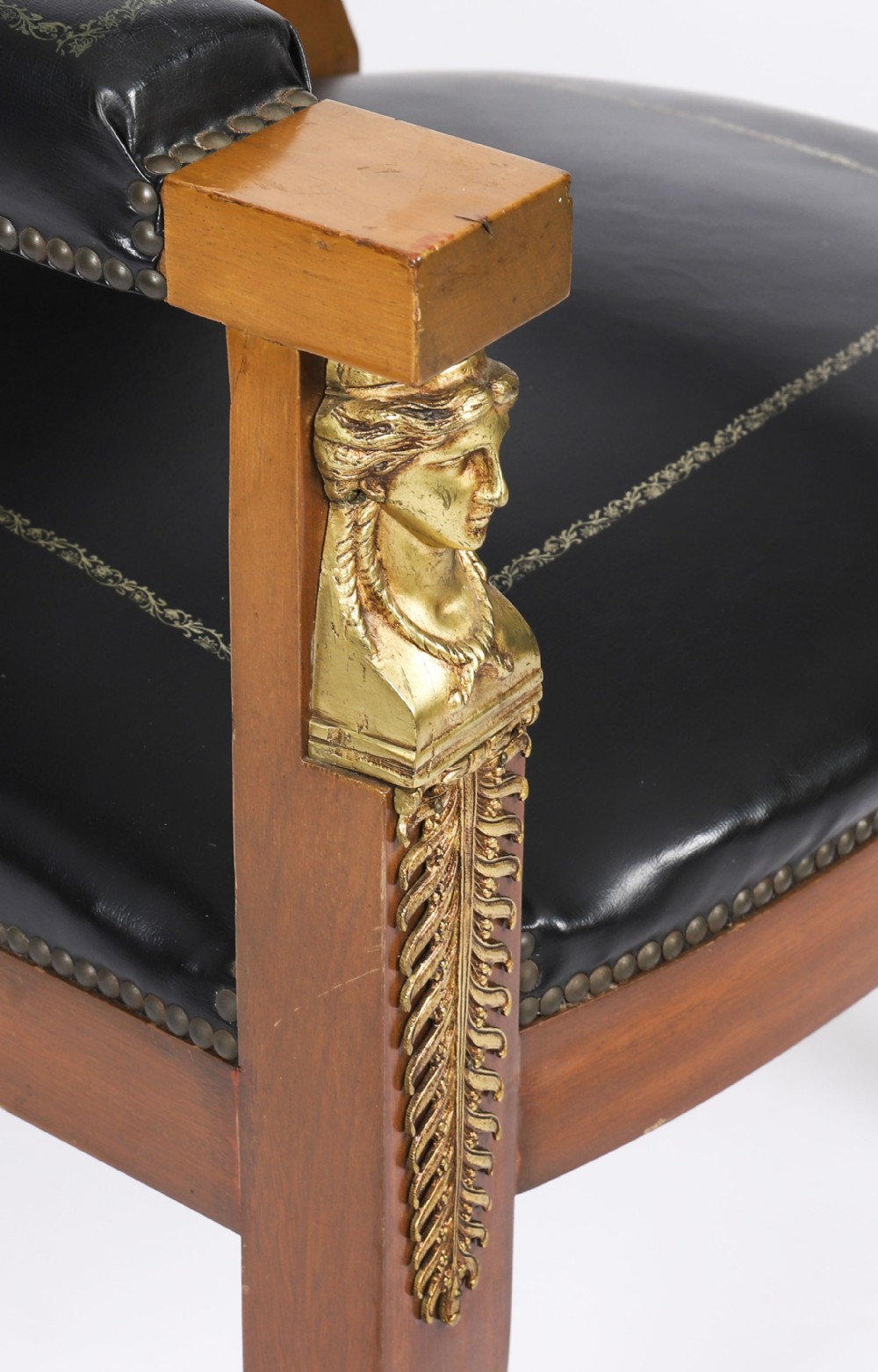
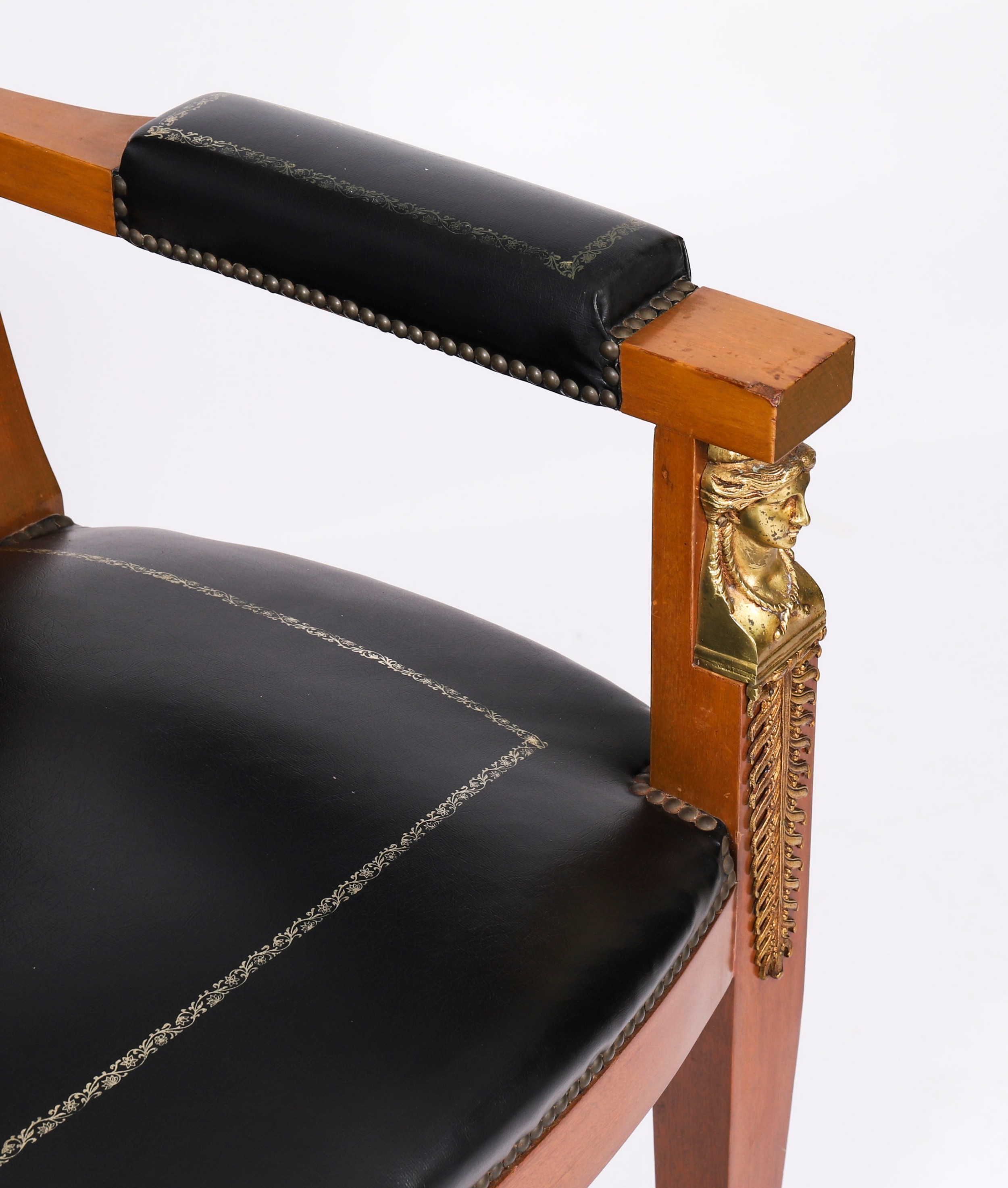
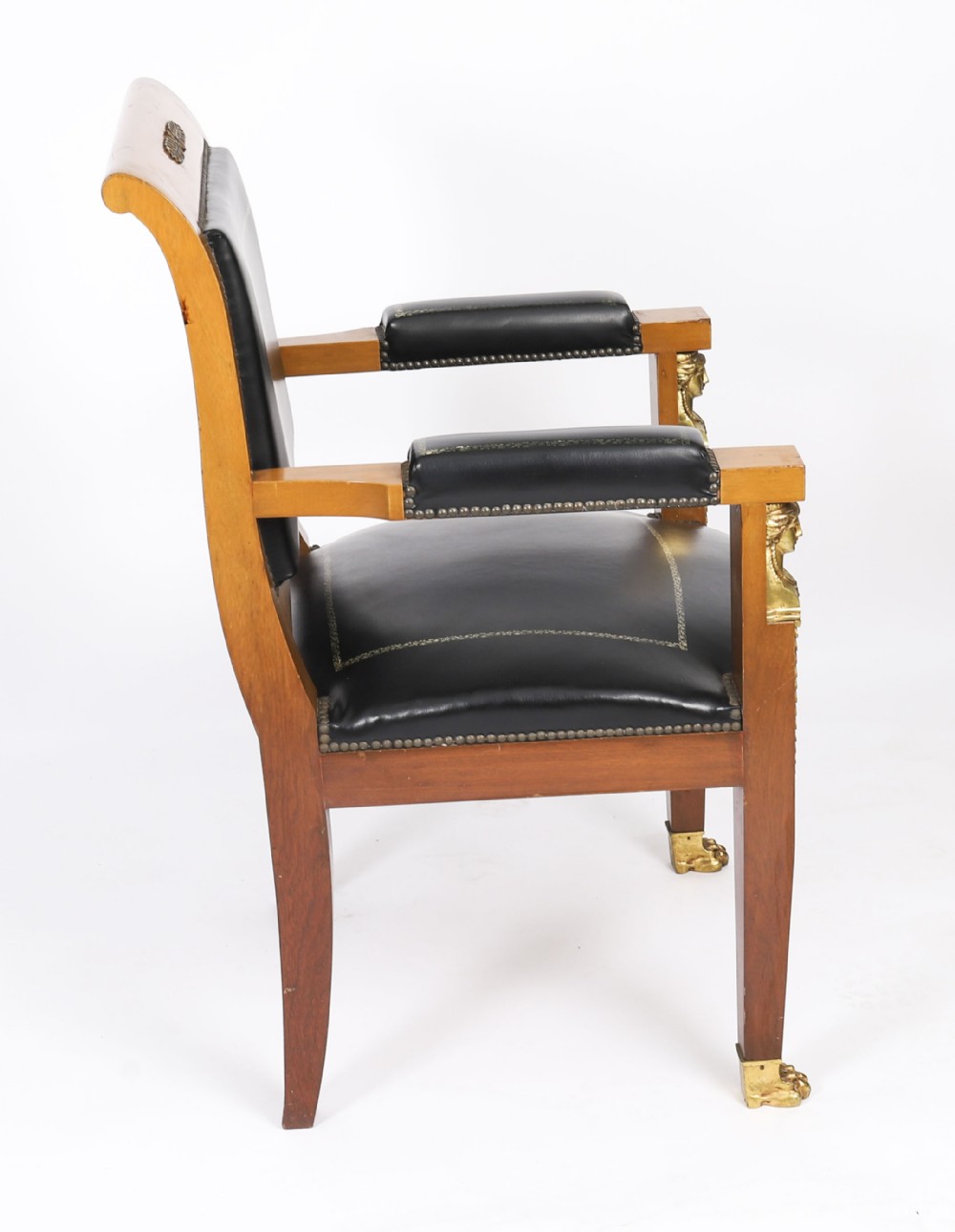
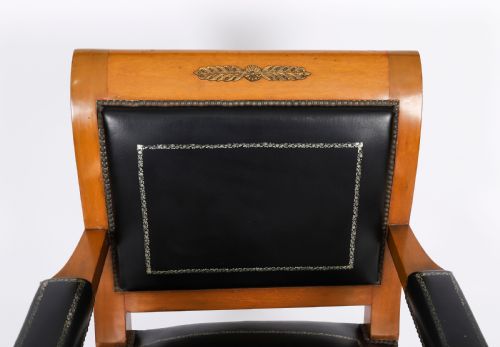
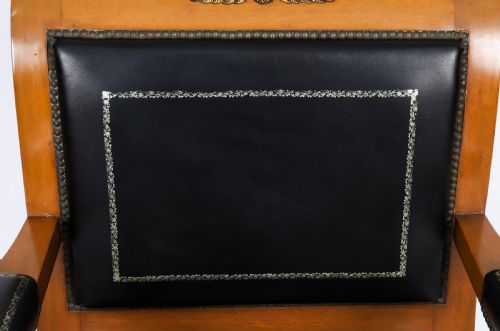
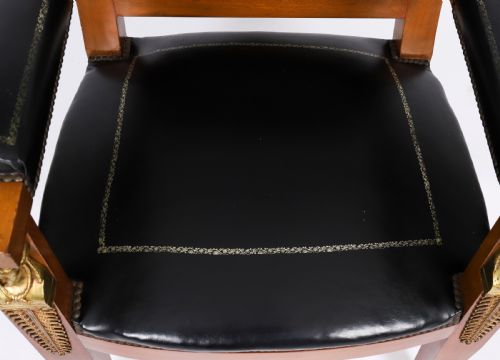
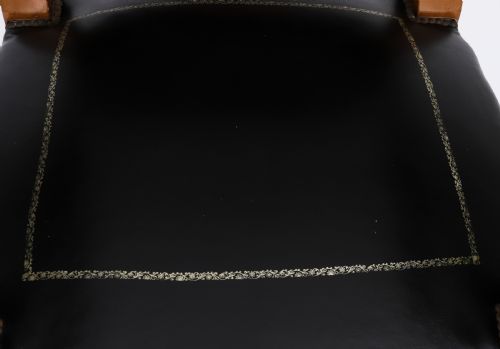
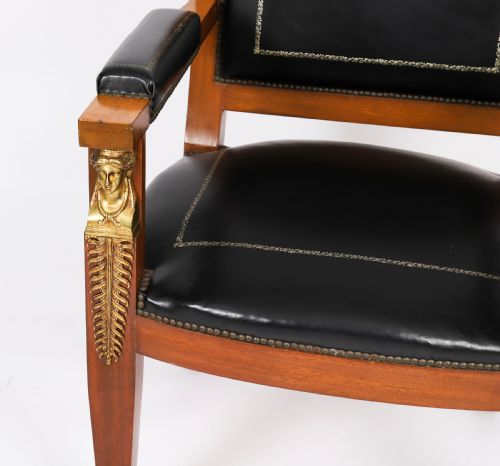
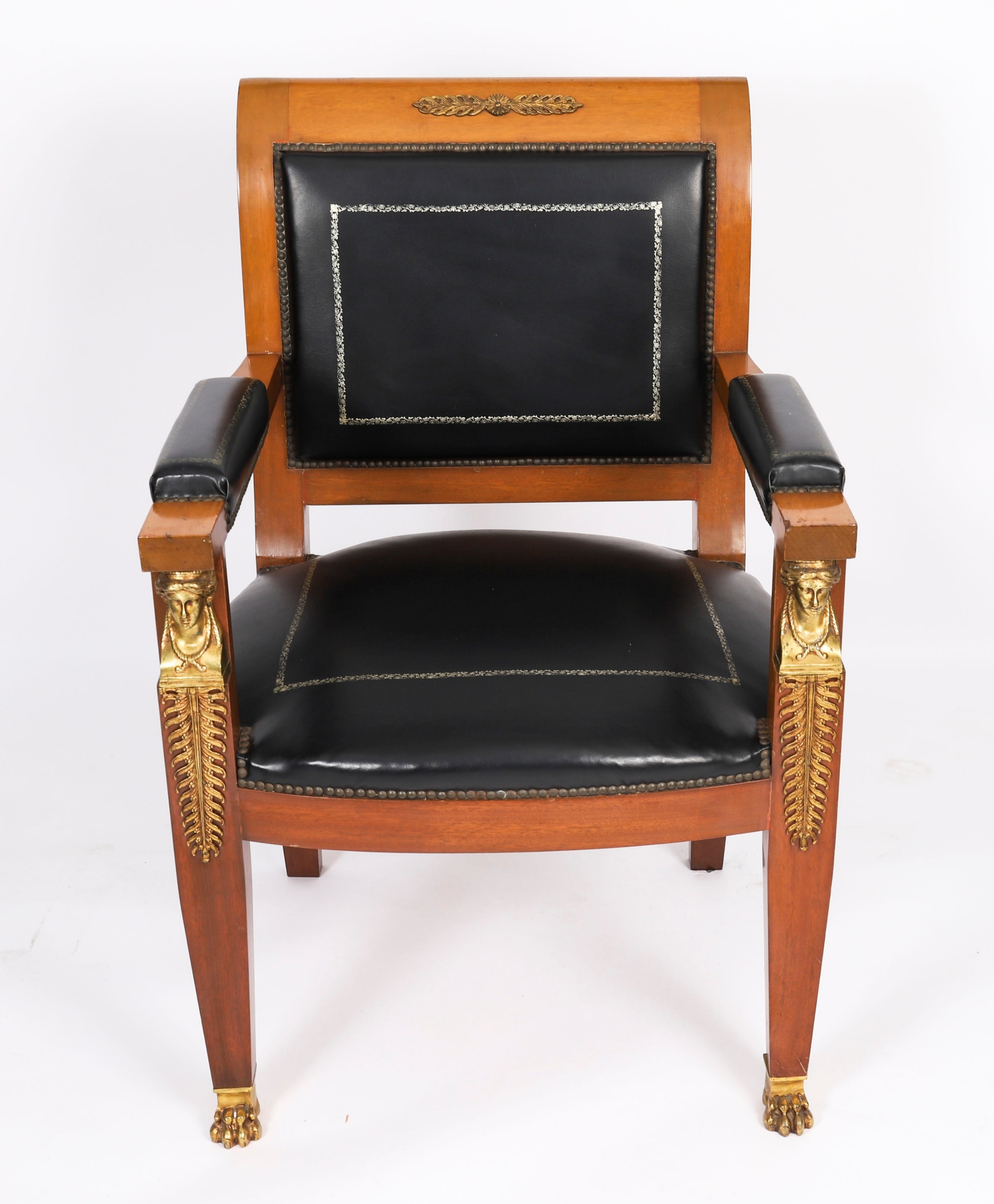
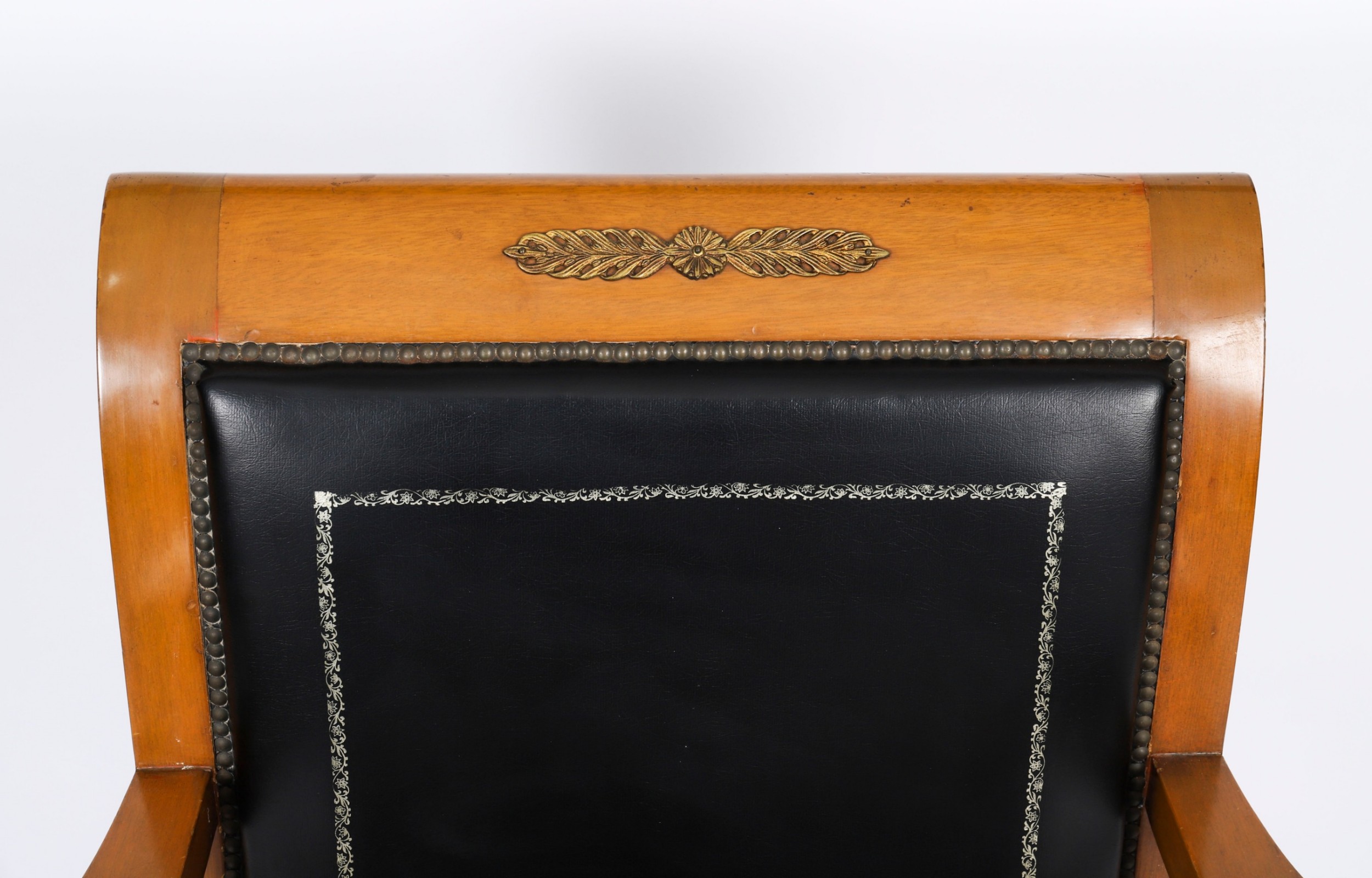
The square back and seat has been upholstered in an elegant in black leather with gold tooled details. The mahogany is beautiful in colour and has been embellished with striking ormolu anthemion plaques. The armchair features ormolu Pharaonic herms, maiden masks and is raised on elegant tapering legs headed with ormolu rosettes and terminating in decorative ormolu paw feet.
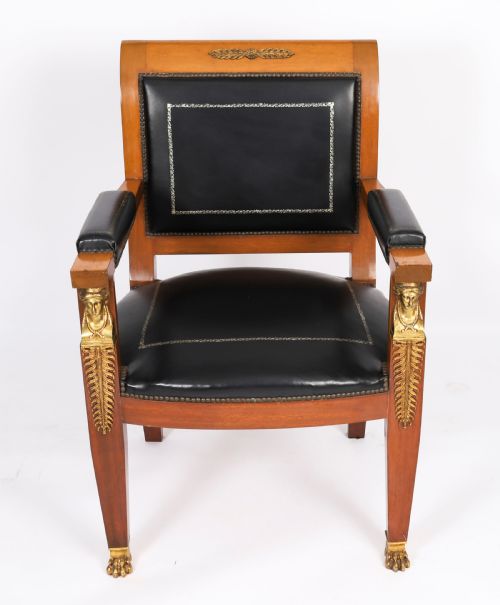
 

This chair would be ideal for use with an Empire desk or writing table.


Condition:

In really excellent condition, please see photos for confirmation.

Dimensions in cm:

Height 95 cm x Width 63 cm x Depth 64.5 cm
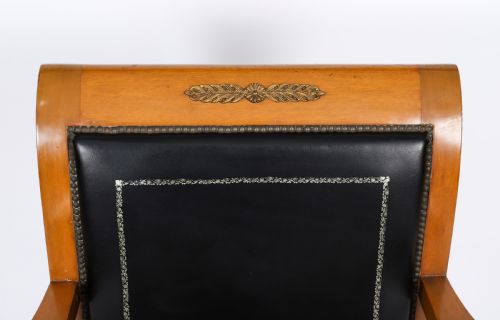
Height 47.5 cm  - Seat height

Dimensions in inches:

Height 3 feet, 1 inch x Width 2 feet, 1 inch x Depth 2 feet, 1 inch

Height 1 foot, 7 inches - Seat height

Mahogany 

is probably one of the largest ‘families’ of hardwood, having many different varieties within its own species.
Mahogany has been used for centuries in ship building, house building, furniture making etc and is the core structure of just about every 19th century vanity box, dressing case or jewellery box. It became more of a Victorian trend to dress Mahogany with these decorative veneers, such as Rosewood, Kingwood, Burr Walnut and Coromandel, so that the actual Mahogany was almost hidden from view.
Mahogany itself is a rich reddish brown wood that can range from being plain in appearance to something that is so vibrant, figured and almost three dimensional in effect. 

Although Mahogany was most often used in its solid form, it also provided some beautifully figured varieties of veneer like ‘Flame’ Mahogany and ‘Fiddleback’ Mahogany (named after its preferred use in the manufacture of fine musical instruments).
Cuban Mahogany was so sought after, that by the late 1850's, this particular variety became all but extinct.

Empire style

is an early-19th-century design movement in architecture, furniture, other decorative arts, and the visual arts followed in Europe and America until around 1830.
The style originated in and takes its name from the rule of Napoleon I in the First French Empire, where it was intended to idealize Napoleon's leadership and the French state. The style corresponds to the Biedermeier style in the German-speaking lands, Federal style in the United States and to the Regency style in Britain. The previous style was called Louis XVI style, in France.
The Empire style was based on aspects of the Roman Empire. It is the second phase of neoclassicism which is also called "Directoire", after a goverment system.

Furniture typically had symbols and ornaments borrowed from the glorious ancient Greek and Roman empires.
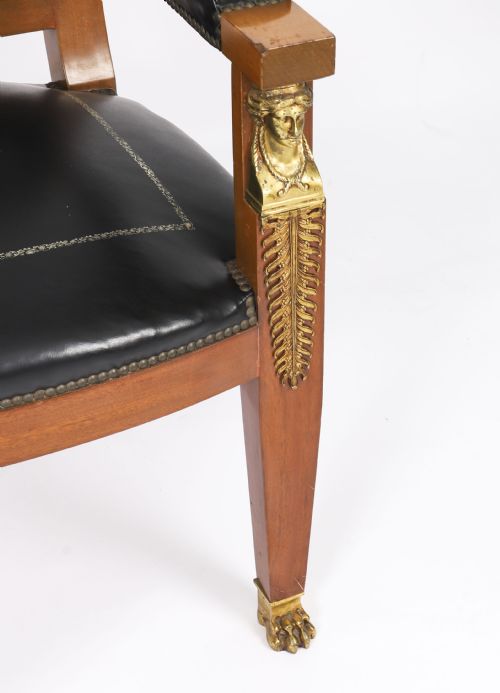
The furniture was made from heavy woods such as mahogany and ebony, imported from the colonies, with dark finishes often with decorative bronze mounts. Marble tops were popular as were Egyptian motifs like sphinxes, griffins, urns and eagles and the Napoleonic symbols, the eagle, the bee, the initials "I" and a large "N." 
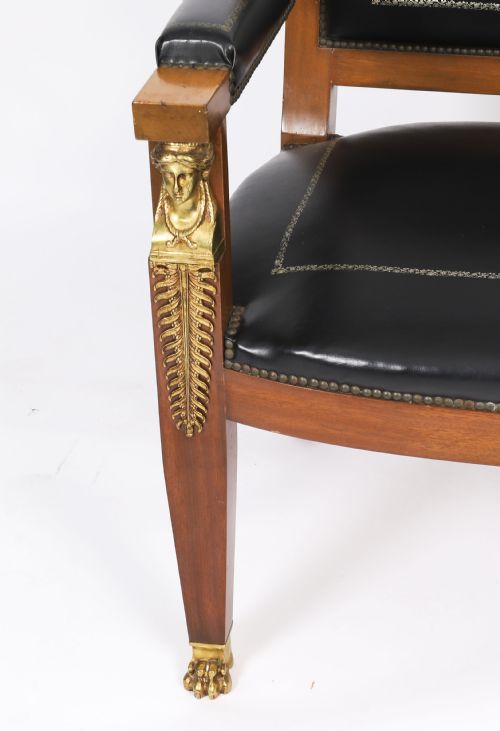
Gilded bronze (ormolu) details displayed a high level of craftsmanship.

Ormolu

(from French 'or moulu', signifying ground or pounded gold) is an 18th-century English term for applying finely ground, high-carat gold in a mercury amalgam to an object of bronze.The mercury is driven off in a kiln leaving behind a gold-coloured veneer known as 'gilt bronze'.
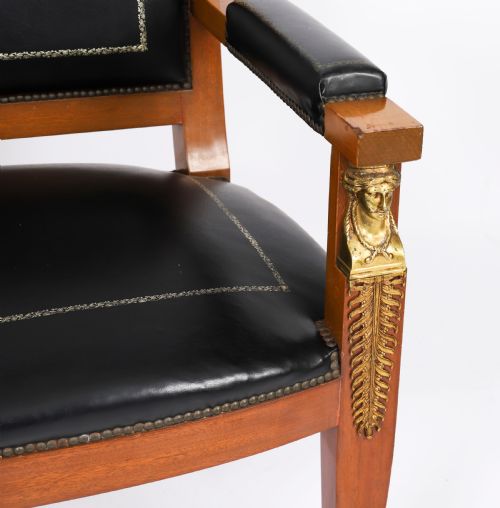
The manufacture of true ormolu employs a process known as mercury-gilding or fire-gilding, in which a solution of nitrate of mercury is applied to a piece of copper, brass, or bronze, followed by the application of an amalgam of gold and mercury. The item was then exposed to extreme heat until the mercury burned off and the gold remained, adhered to the metal object.

Our reference: A5167

Physical Dimensions
Height
95cm (37.40")
Width
63cm (24.80")
Depth
64.5cm (25.39")
Declaration

Regent Antiques has dated this French Empire Desk Chair to the 1880s.

Reference Numbers
Sellingantiques Reference
SA1203355
Dealers Internal Reference
A5167
Description
This is a beautiful antique French Empire Revival "fauteuil du bureau", desk chair, Circa 1880 in date.


The square back and seat has been upholstered in an elegant in black leather with gold tooled details.
Regent Antiques

The mahogany is beautiful in colour and has been embellished with striking ormolu anthemion plaques. The armchair features ormolu Pharaonic herms, maiden masks and is raised on elegant tapering legs headed with ormolu rosettes and terminating in decorative ormolu paw feet.

fig 1. A nineteenth-century French Empire desk chair with black leather upholstery, mahogany frame, and gilt-bronze caryatid mounts.
fig 1. Antique French Empire "Fauteuil Du Bureau" Desk Chair 19th C


This chair would be ideal for use with an Empire desk or writing table.


Condition:

In really excellent condition, please see photos for confirmation.

Dimensions in cm:

Height 95 cm x Width 63 cm x Depth 64.5 cm

fig 2. A nineteenth-century French Empire desk chair with black leather upholstery, mahogany frame, and gilt-bronze caryatid mounts.
fig 2. Antique French Empire "Fauteuil Du Bureau" Desk Chair 19th C

Height 47.5 cm  - Seat height

Dimensions in inches:

Height 3 feet, 1 inch x Width 2 feet, 1 inch x Depth 2 feet, 1 inch

Height 1 foot, 7 inches - Seat height

Mahogany 

is probably one of the largest ‘families’ of hardwood, having many different varieties within its own species.

fig 3. A nineteenth-century French Empire desk chair with black leather upholstery, mahogany frame, and gilt-bronze caryatid mounts.
fig 3. Antique French Empire "Fauteuil Du Bureau" Desk Chair 19th C

Mahogany has been used for centuries in ship building, house building, furniture making etc and is the core structure of just about every 19th century vanity box, dressing case or jewellery box. It became more of a Victorian trend to dress Mahogany with these decorative veneers, such as Rosewood, Kingwood, Burr Walnut and Coromandel, so that the actual Mahogany was almost hidden from view.

fig 4. A nineteenth-century French Empire desk chair with black leather upholstery, mahogany frame, and gilt-bronze caryatid mounts.
fig 4. Antique French Empire "Fauteuil Du Bureau" Desk Chair 19th C

Mahogany itself is a rich reddish brown wood that can range from being plain in appearance to something that is so vibrant, figured and almost three dimensional in effect. 

Although Mahogany was most often used in its solid form, it also provided some beautifully figured varieties of veneer like ‘Flame’ Mahogany and ‘Fiddleback’ Mahogany (named after its preferred use in the manufacture of fine musical instruments).

fig 5. A nineteenth-century French Empire desk chair with black leather upholstery, mahogany frame, and gilt-bronze caryatid mounts.
fig 5. Antique French Empire "Fauteuil Du Bureau" Desk Chair 19th C

Cuban Mahogany was so sought after, that by the late 1850's, this particular variety became all but extinct.

Empire style

is an early-19th-century design movement in architecture, furniture, other decorative arts, and the visual arts followed in Europe and America until around 1830.

fig 6. A nineteenth-century French Empire desk chair with black leather upholstery, mahogany frame, and gilt-bronze caryatid mounts.
fig 6. Antique French Empire "Fauteuil Du Bureau" Desk Chair 19th C

The style originated in and takes its name from the rule of Napoleon I in the First French Empire, where it was intended to idealize Napoleon's leadership and the French state. The style corresponds to the Biedermeier style in the German-speaking lands, Federal style in the United States and to the Regency style in Britain. The previous style was called Louis XVI style, in France.

fig 7. A nineteenth-century French Empire desk chair with black leather upholstery, mahogany frame, and gilt-bronze caryatid mounts.
fig 7. Antique French Empire "Fauteuil Du Bureau" Desk Chair 19th C

The Empire style was based on aspects of the Roman Empire. It is the second phase of neoclassicism which is also called "Directoire", after a goverment system.

Furniture typically had symbols and ornaments borrowed from the glorious ancient Greek and Roman empires.

fig 8. A nineteenth-century French Empire desk chair with black leather upholstery, mahogany frame, and gilt-bronze caryatid mounts.
fig 8. Antique French Empire "Fauteuil Du Bureau" Desk Chair 19th C

The furniture was made from heavy woods such as mahogany and ebony, imported from the colonies, with dark finishes often with decorative bronze mounts. Marble tops were popular as were Egyptian motifs like sphinxes, griffins, urns and eagles and the Napoleonic symbols, the eagle, the bee, the initials "I" and a large "N." 

fig 9. A nineteenth-century French Empire desk chair with black leather upholstery, mahogany frame, and gilt-bronze caryatid mounts.
fig 9. Antique French Empire "Fauteuil Du Bureau" Desk Chair 19th C

Gilded bronze (ormolu) details displayed a high level of craftsmanship.

Ormolu

(from French 'or moulu', signifying ground or pounded gold) is an 18th-century English term for applying finely ground, high-carat gold in a mercury amalgam to an object of bronze.The mercury is driven off in a kiln leaving behind a gold-coloured veneer known as 'gilt bronze'.

fig 10. A nineteenth-century French Empire desk chair with black leather upholstery, mahogany frame, and gilt-bronze caryatid mounts.
fig 10. Antique French Empire "Fauteuil Du Bureau" Desk Chair 19th C

The manufacture of true ormolu employs a process known as mercury-gilding or fire-gilding, in which a solution of nitrate of mercury is applied to a piece of copper, brass, or bronze, followed by the application of an amalgam of gold and mercury. The item was then exposed to extreme heat until the mercury burned off and the gold remained, adhered to the metal object.

Our reference: A5167

Height
95cm (37.40")
Width
63cm (24.80")
Depth
64.5cm (25.39")
Date of Manufacture

Regent Antiques has dated this French Empire Desk Chair to the 1880s.

Reference Numbers
Sellingantiques Ref
SA1203355
Dealers Internal Ref
A5167
Regent Antiques
Regent Antiques
Sellingantiques verified Since Sep 2016

We specialise in english and continental furniture, silver, porcelain and decorative items.

Dealer Profile

You can view the stock and full dealer information on the Regent Antiques Profile Page

Trade Associations

Regent Antiques is a registered member of LAPADA  CINOA
PDF SHARE
SAVE
A nineteenth-century French Empire desk chair with black leather upholstery, mahogany frame, and gilt-bronze caryatid mounts.
1 / 15
Archive I A nineteenth-century French Empire desk chair with black leather upholstery, mahogany frame, and gilt-bronze caryatid mounts.

Antique French Empire "fauteuil du bureau" Desk Chair 19th C
Archive II A nineteenth-century French Empire desk chair with black leather upholstery, mahogany frame, and gilt-bronze caryatid mounts. View II
Archive III A nineteenth-century French Empire desk chair with black leather upholstery, mahogany frame, and gilt-bronze caryatid mounts. View III
Archive IV A nineteenth-century French Empire desk chair with black leather upholstery, mahogany frame, and gilt-bronze caryatid mounts. View IV
Archive V A nineteenth-century French Empire desk chair with black leather upholstery, mahogany frame, and gilt-bronze caryatid mounts. View V
Archive VI A nineteenth-century French Empire desk chair with black leather upholstery, mahogany frame, and gilt-bronze caryatid mounts. View VI
Archive VII A nineteenth-century French Empire desk chair with black leather upholstery, mahogany frame, and gilt-bronze caryatid mounts. View VII
Archive VIII A nineteenth-century French Empire desk chair with black leather upholstery, mahogany frame, and gilt-bronze caryatid mounts. View VIII
Archive IX A nineteenth-century French Empire desk chair with black leather upholstery, mahogany frame, and gilt-bronze caryatid mounts. View IX
Archive X A nineteenth-century French Empire desk chair with black leather upholstery, mahogany frame, and gilt-bronze caryatid mounts. View X
Archive XI A nineteenth-century French Empire desk chair with black leather upholstery, mahogany frame, and gilt-bronze caryatid mounts. View XI
Archive XII A nineteenth-century French Empire desk chair with black leather upholstery, mahogany frame, and gilt-bronze caryatid mounts. View XII
Archive XIII A nineteenth-century French Empire desk chair with black leather upholstery, mahogany frame, and gilt-bronze caryatid mounts. View XIII
Archive XIV A nineteenth-century French Empire desk chair with black leather upholstery, mahogany frame, and gilt-bronze caryatid mounts. View XIV
Archive XV A nineteenth-century French Empire desk chair with black leather upholstery, mahogany frame, and gilt-bronze caryatid mounts. View XV
Enlarged Archival View
Location
Manor Warehouse
318 Green Lanes
London
N4 1BX
United Kingdom
Verified Since Sep 2016
Items For Sale 659
Items Sold 2,603
Regent Antiques
Regent Antiques
Verified Since Sep 2016
View Dealer Info
Location: Manor Warehouse, 318 Green Lanes, London, N4 1BX, United Kingdom
Verified
Sep 2016
For Sale
659
Sold
2,603
A nineteenth-century French Empire desk chair with black leather upholstery, mahogany frame, and gilt-bronze caryatid mounts.
Antique French Empire "fauteuil du bureau" Desk Chair 19th C
Ref: SA1203355
A nineteenth-century French Empire desk chair with black leather upholstery, mahogany frame, and gilt-bronze caryatid mounts.
Detail View 1
Detail View 2
Detail View 3
Detail View 4
Detail View 5
Detail View 6
Detail View 7
Detail View 8
Detail View 9
Detail View 10
Detail View 11
Detail View 12
Detail View 13
Detail View 14
Archival Detail
Every single antique dealer on our platform is individually approved by our internal team. We verify their professional trade history, ethical standards, and photographic quality to ensure a secure, high-standard buying environment. Upon joining, every dealer agrees to a strict 9-point code of conduct. While issues can occasionally arise, our dealers typically resolve them swiftly and directly with the buyer. In fact, since our founding in 2002, Sellingantiques has only had to step in to help resolve an issue on roughly five occasions—a true testament to the quality of our dealers and their dedication to your happiness.
Our dealers are highly experienced in packing and shipping fragile, high-value antiques. Because you are in direct contact with the dealer, you will be able to easily go through all available shipping and insurance options together to ensure your item arrives safely.
Antiques are the ultimate green purchase. By choosing historical pieces over newly manufactured goods, you completely eliminate the carbon footprint of modern mass production while preserving exceptional, timeless craftsmanship.

Emerging in the early nineteenth century under Napoleon I, French Empire seating incorporates Neoclassical symmetry, bold architectural lines, and classical motifs such as bronze caryatids, laurel wreaths, and claw feet.

These pieces typically feature rich timbers such as mahogany or fruitwood, paired with genuine leather or silk upholstery, accented by finely cast chased ormolu or gilt-bronze mounts.

Authentic period examples display hand-cut joinery, original patinated bronze mounts with fine detail, hand-tacked upholstery, and timber showing natural age-related shrinkage around fixed joints.

Position the armchair alongside a minimalist desk or within a contemporary study to create visual interest through the contrast of classical bronze detailing and clean architectural lines.

Keep the piece away from direct heat sources and sunlight, clean the leather with a soft cloth followed by specialist leather conditioner, and gently dust metal mounts without applying abrasive chemicals.
items
Add keywords to the filter
Price
£100
£250000
Era
Movements
Material
Origin
Stock Location
Freshness
Online Payments
Categories