Gillers Antiques Ltd has dated these Meiji Seto Porcelain Vases to the 19th Century.
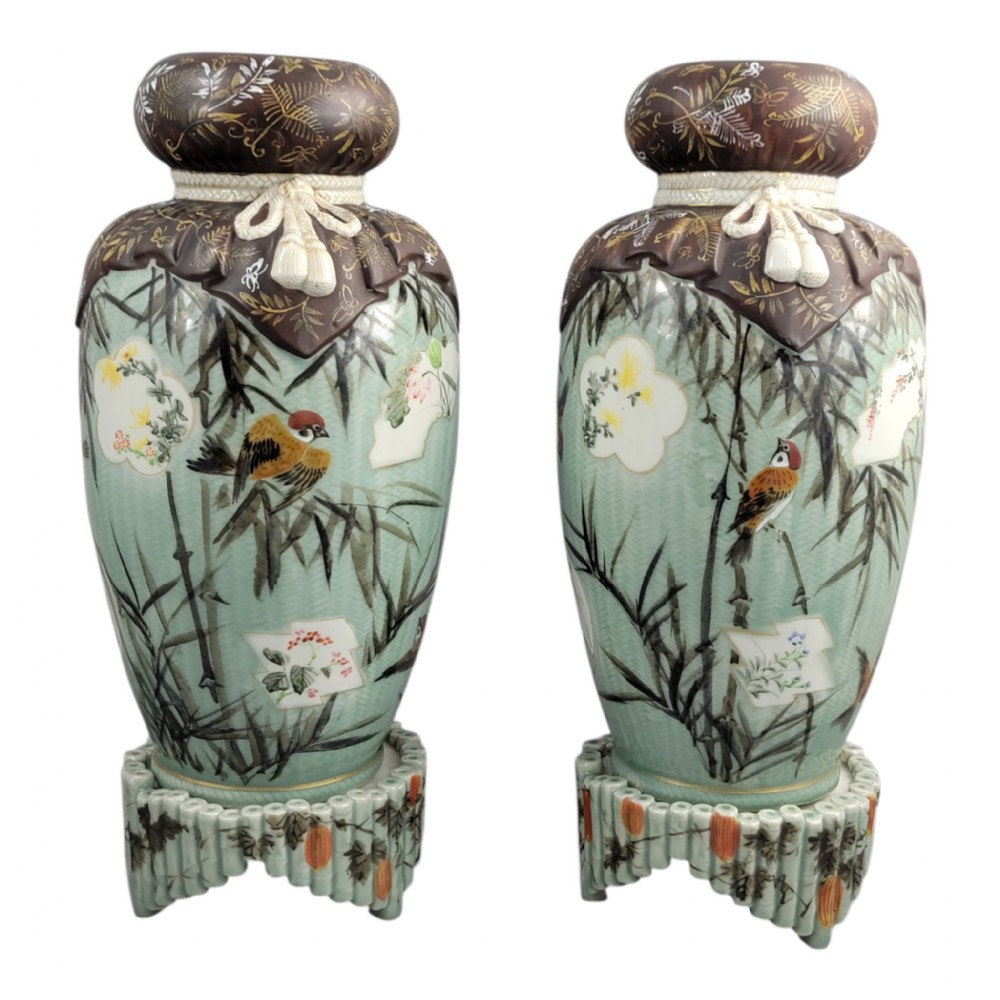
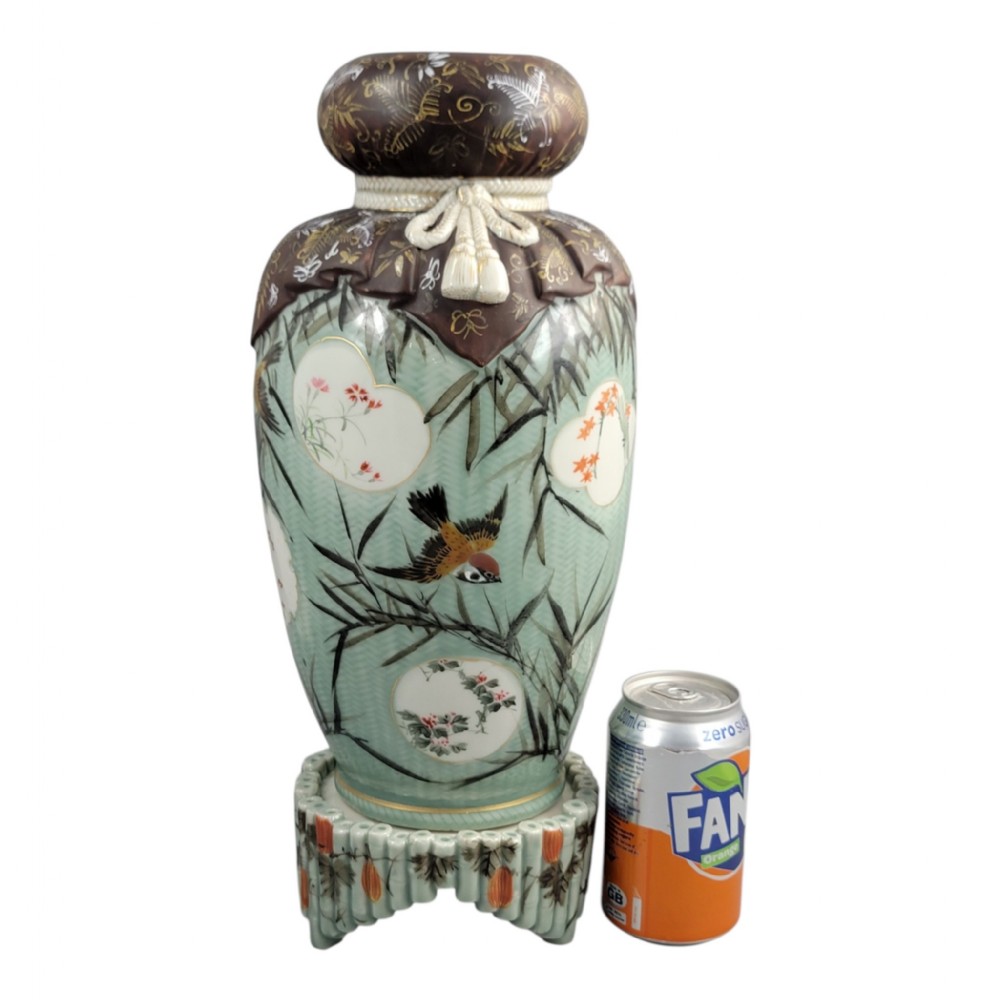
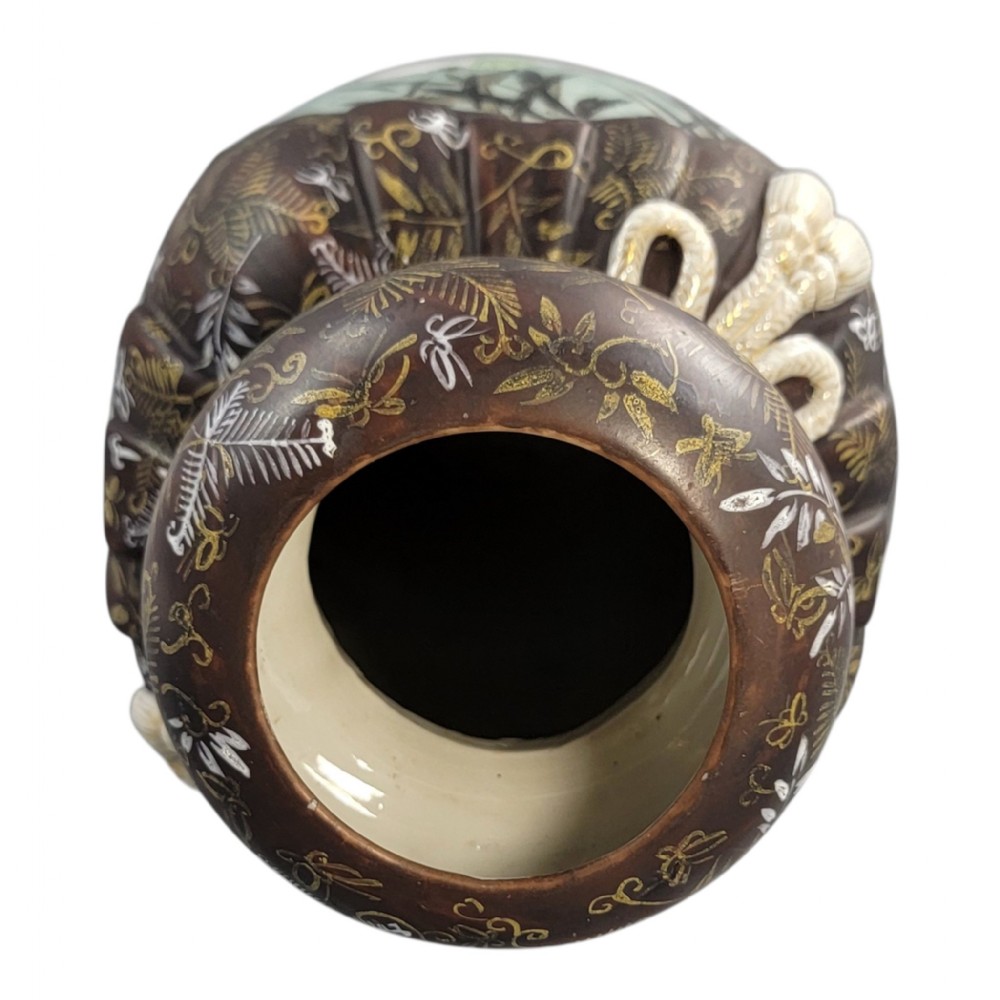
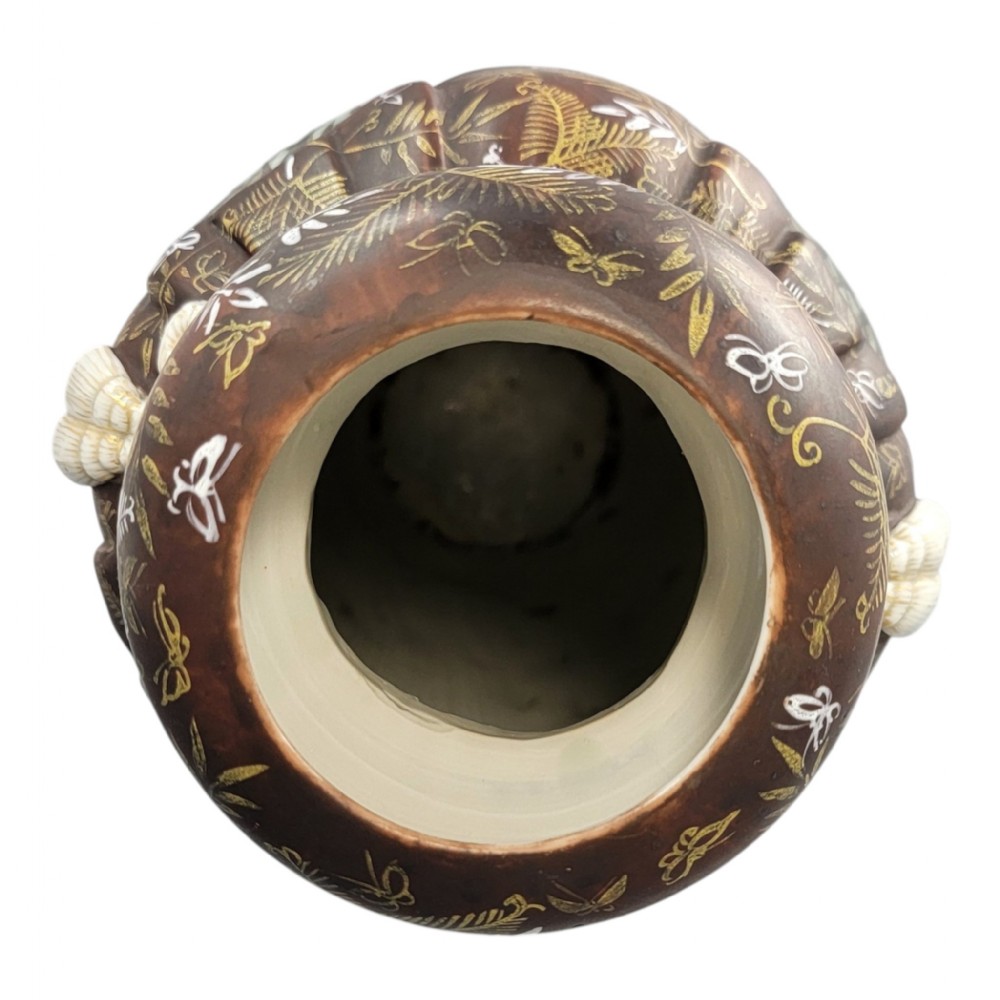
In Japanese culture, this fukuro shape is deeply symbolic, representing Hotei’s bag of treasures and serving as a profound emblem of abundance, wealth, and overflowing prosperity. To achieve such a convoluted, organic form in high-fired porcelain is a feat of immense difficulty, as the risk of warping or collapsing in the kiln is extreme.
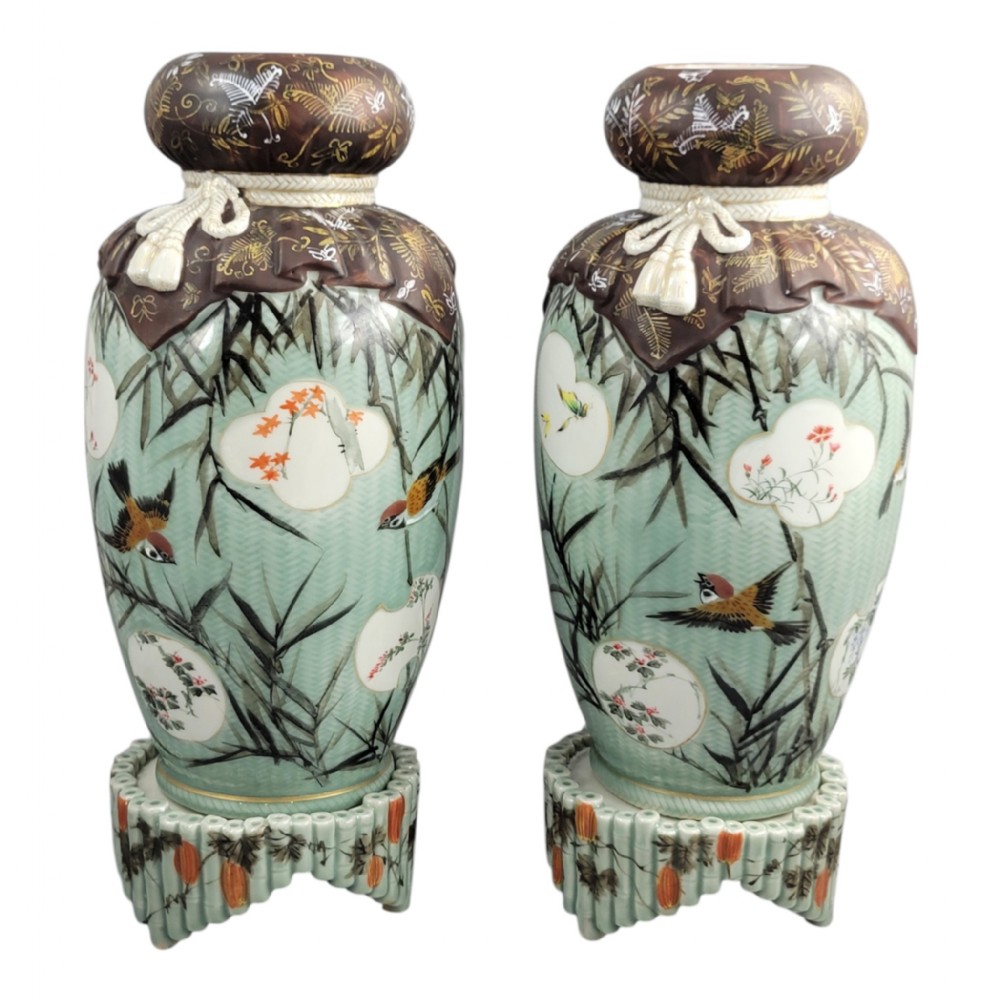
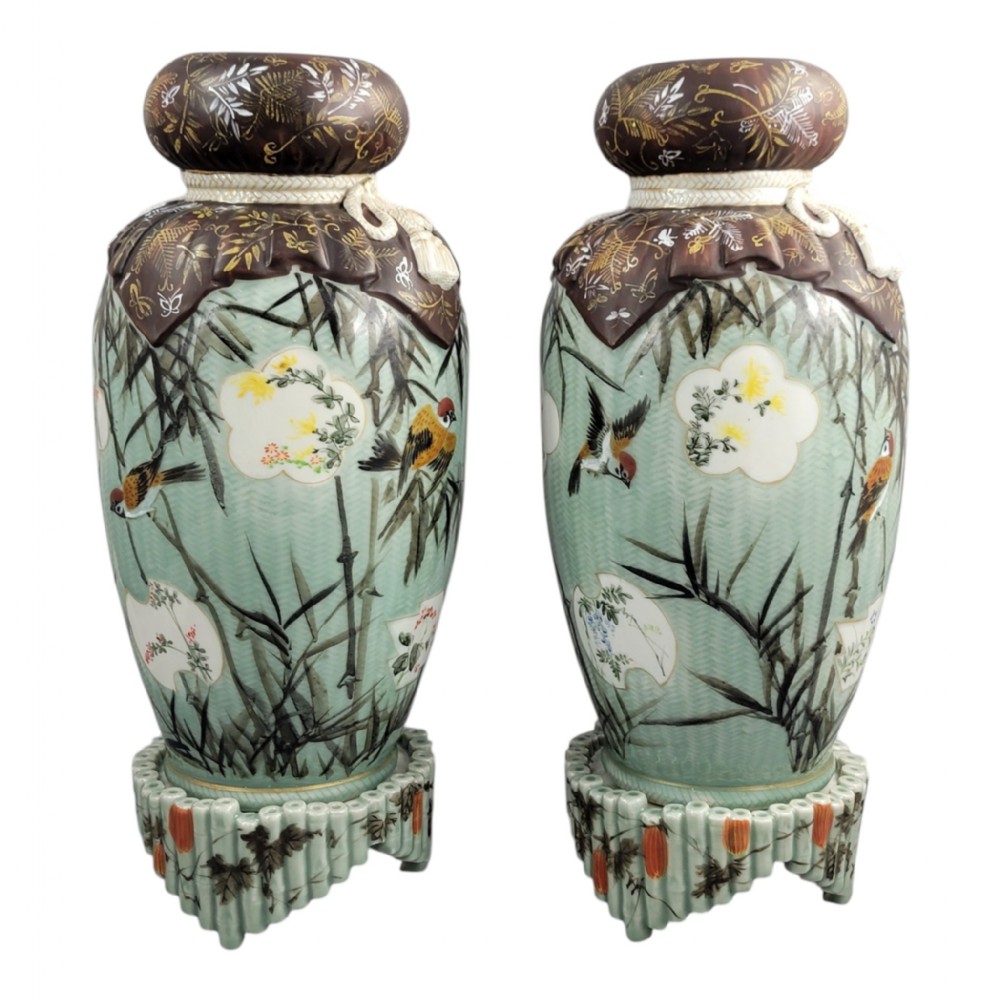
The entire body of each vase is meticulously hand-textured with a Seigaiha (blue sea wave) pattern. This motif is not merely painted but physically carved into the clay, creating a tactile, rhythmic surface that catches the light through a translucent celadon-tinted glaze. Over this sophisticated ground, the master has applied delicate polychrome enamels depicting sparrows (suzume) in flight and resting amidst bamboo and seasonal flora. In Japanese art, the sparrow signifies loyalty and the spirit of the common people, adding a layer of poetic narrative to the physical beauty of the pieces.
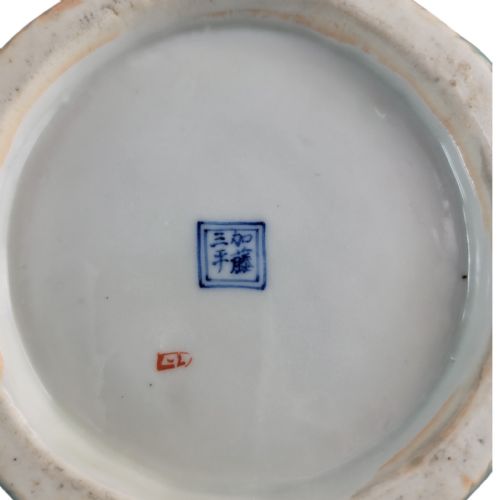
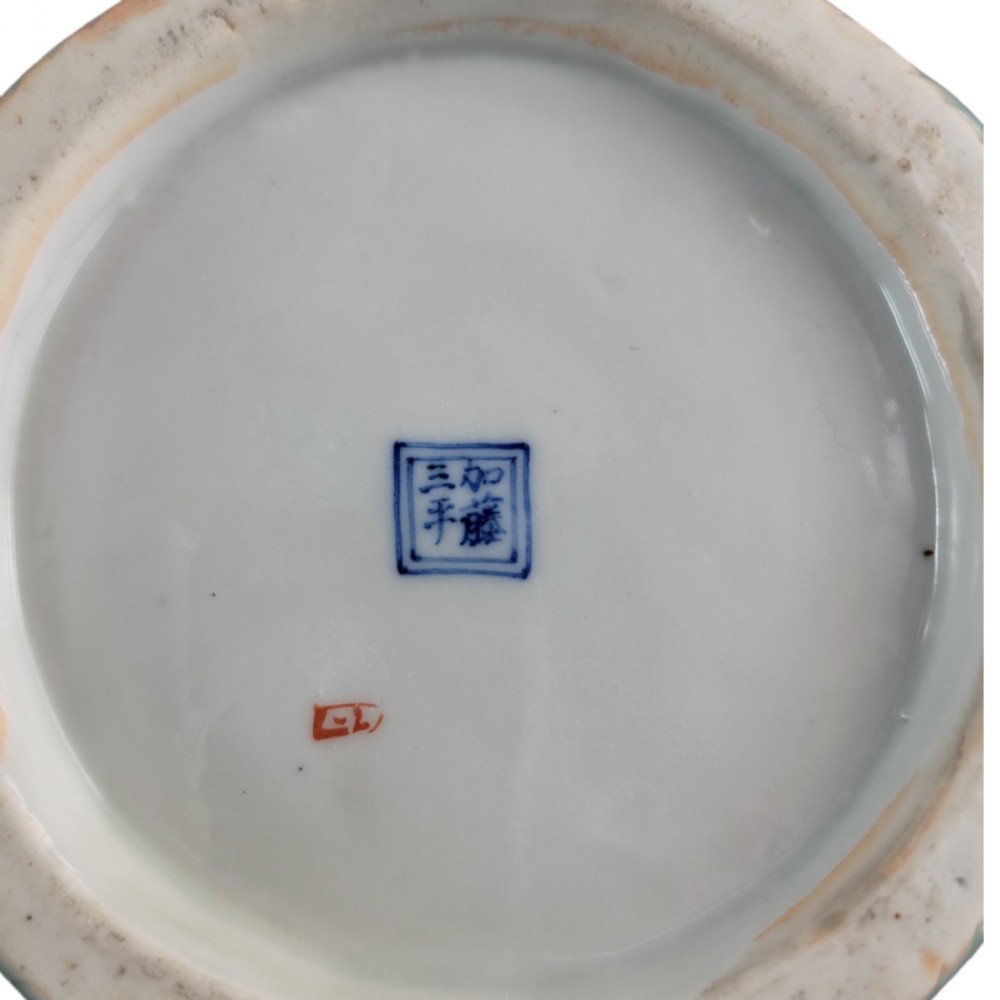
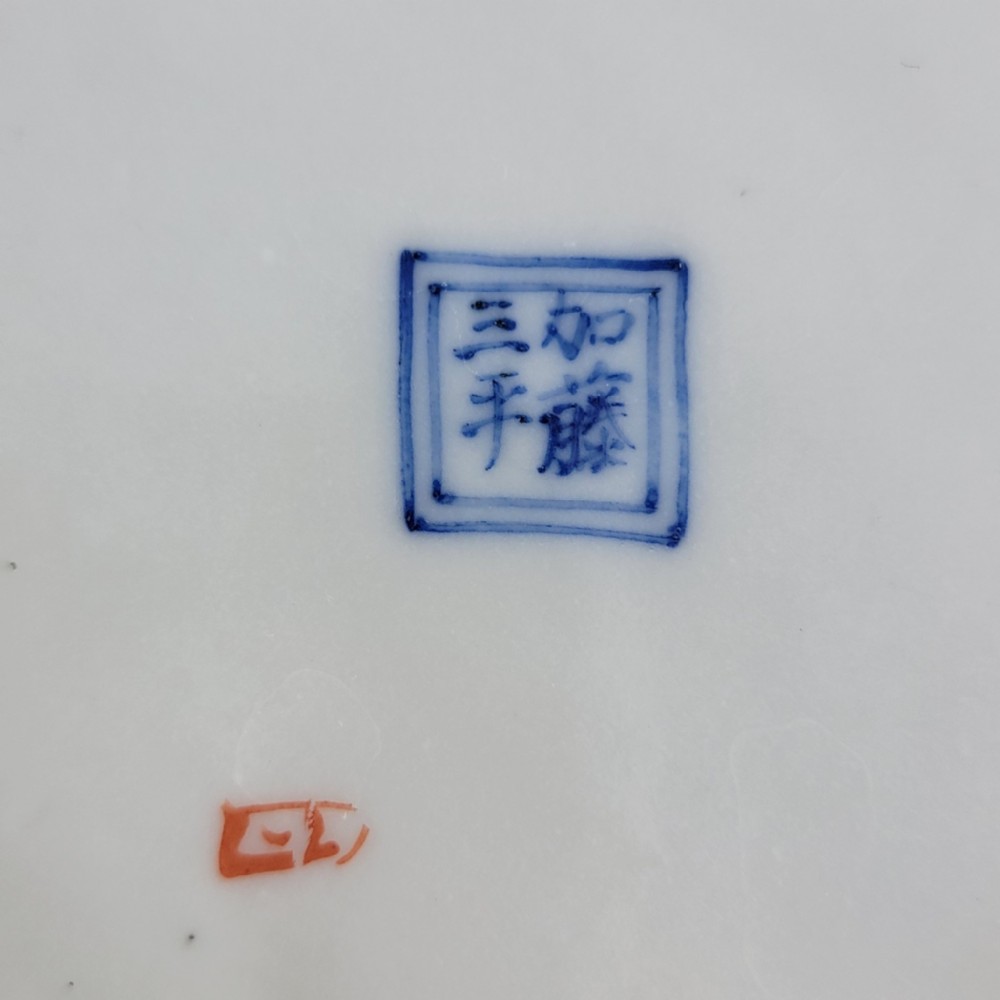
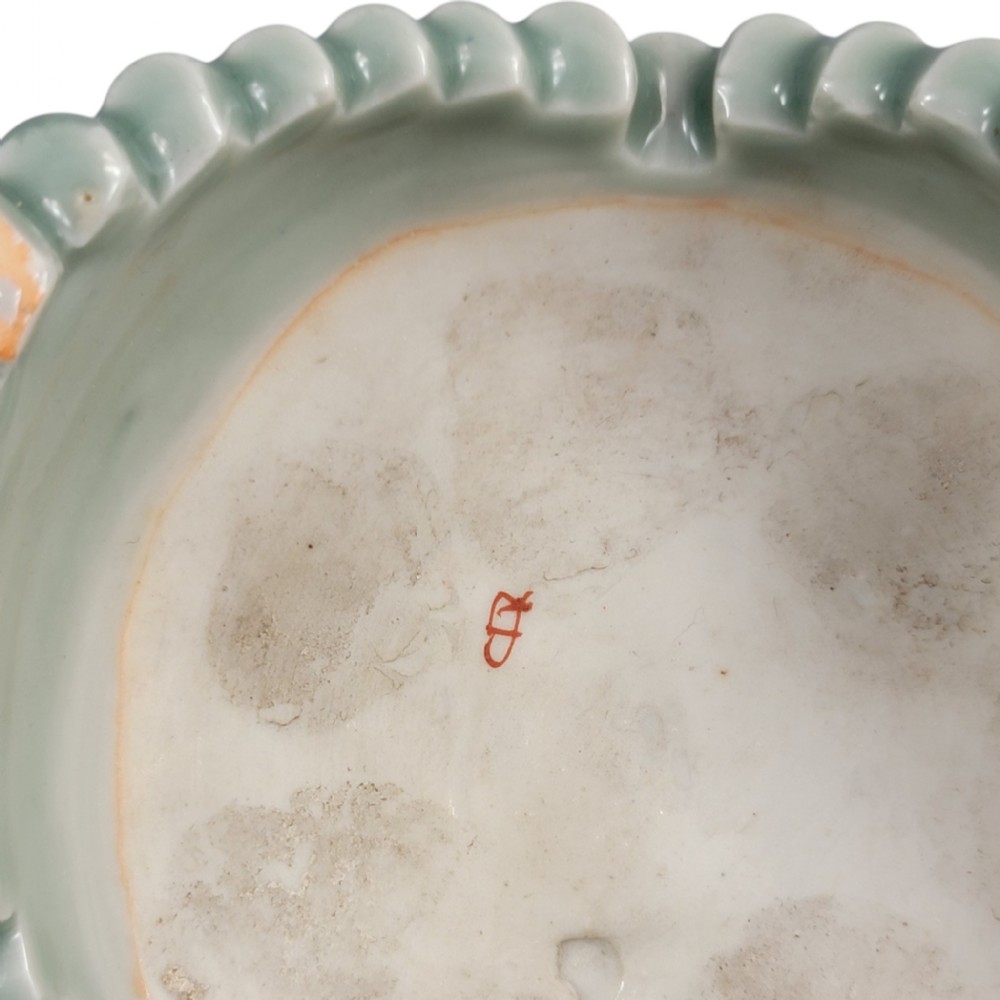
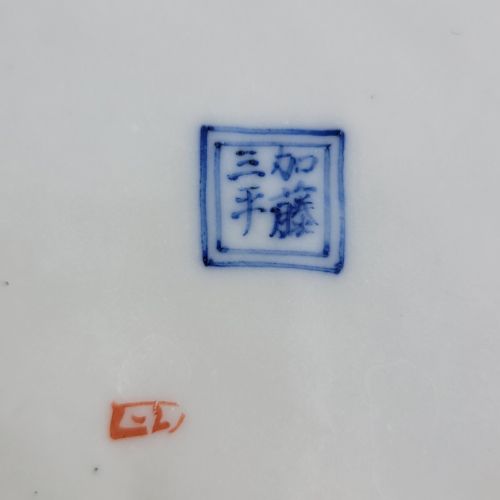
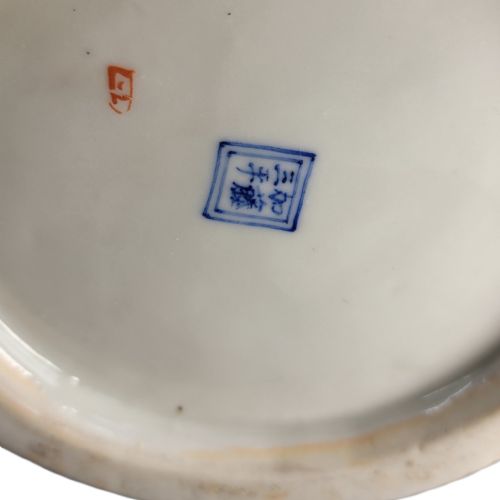
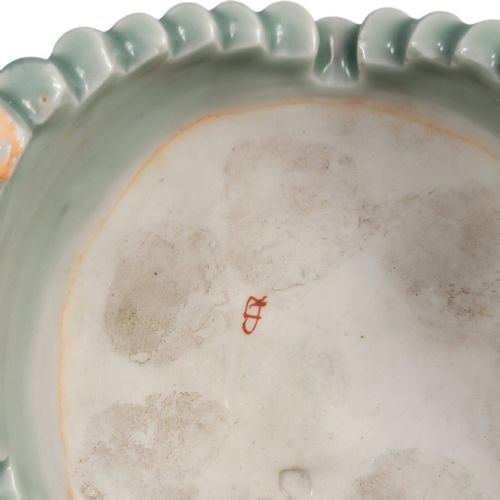
What elevates this pair to a status of absolute museum-level rarity is the presence of their original, matching porcelain stands (dai). It is crucial to note that these are not the common wooden bases often found with export wares, but integral ceramic components created specifically for these vases in the same kiln firing. The stands mirror the Seigaiha wave texture and the enamel palette of the main vessels, and they bear the same authoritative signature of Kato Sanhei. To find a complete, matched set of four porcelain elements (two vases and two stands) that have remained together and undamaged for over a century is an occurrence of exceptional rarity.
The level of craftsmanship displayed here—combining sculptural molding, hand-carving, celadon glazing, and fine enamel painting—is so high that analogues are difficult to find even in major museum collections such as the Victoria and Albert Museum or the British Museum. Most surviving works by Sanhei are single vases of standard form; this sack configuration on matching porcelain bases represents a special commission of the highest order.

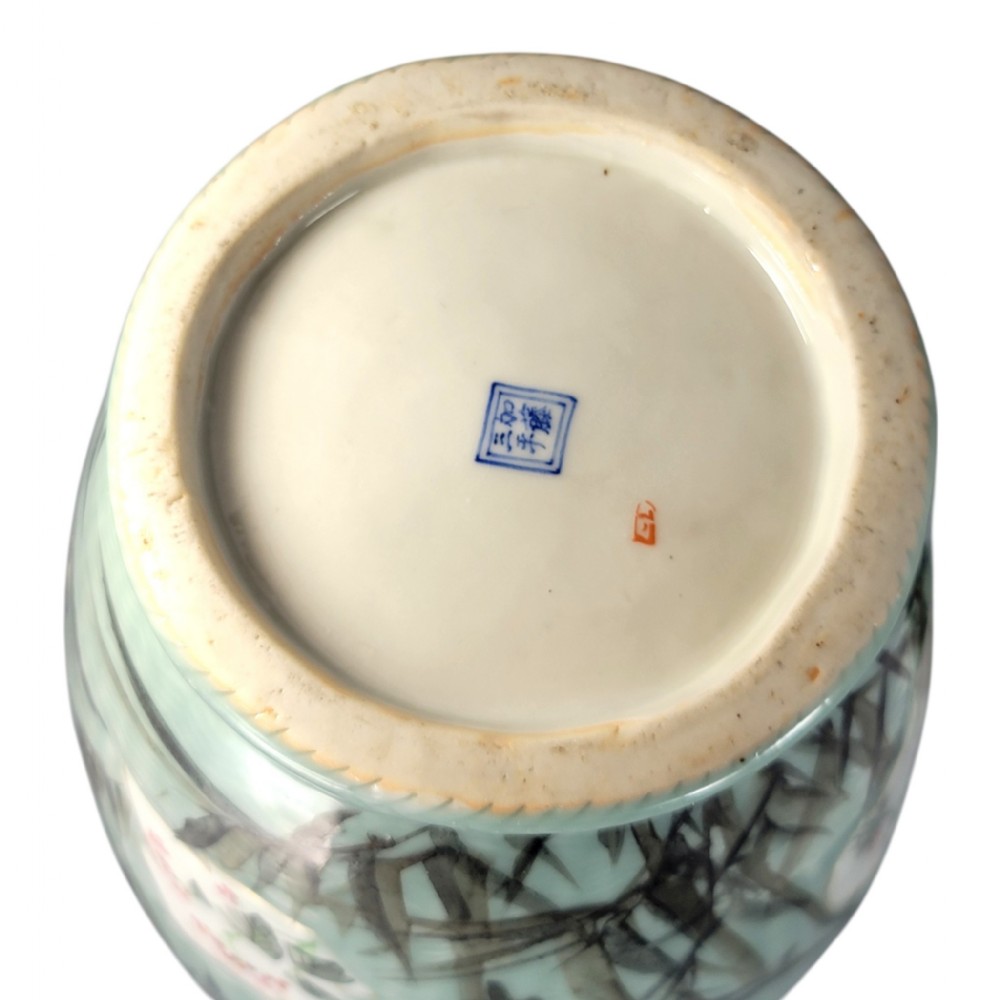
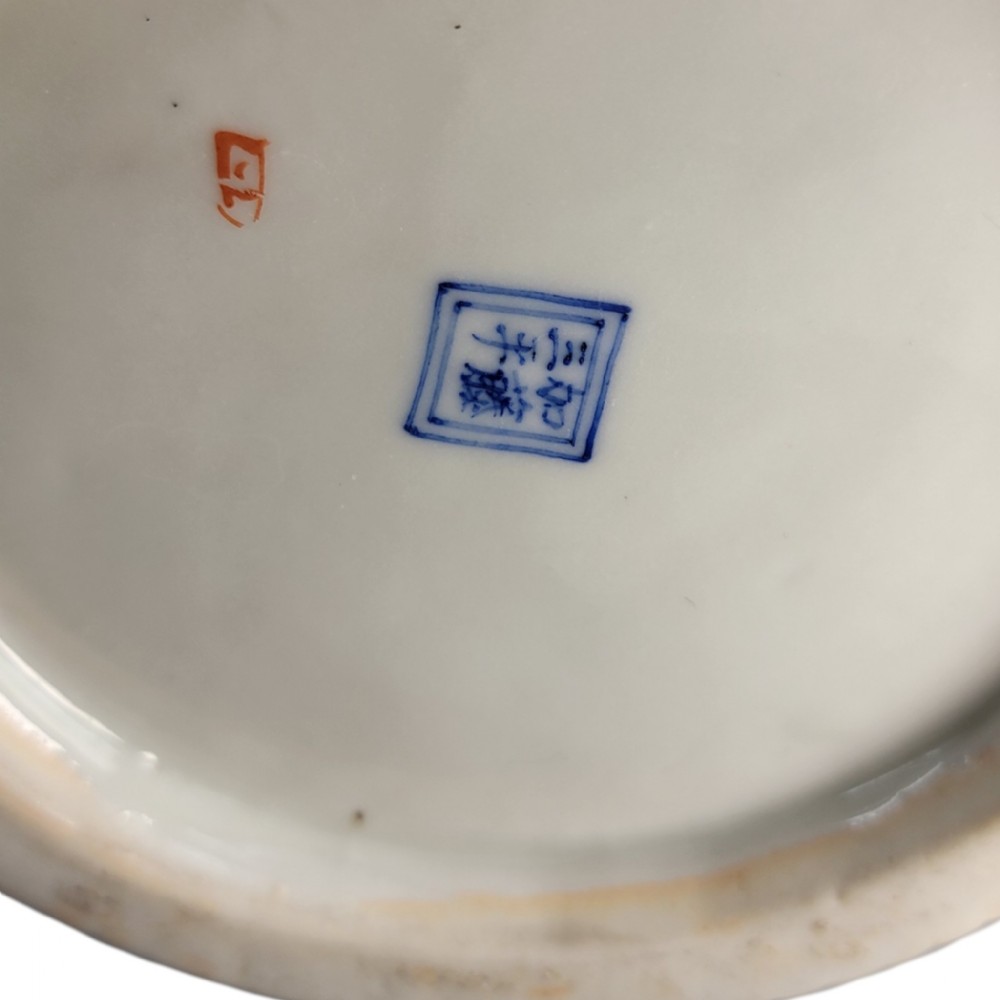
Master: Kato Sanhei (Signed with a four-character underglaze blue mark).
Period: Meiji (late 19th century).
Technique: High-fired Seto porcelain, hand-carved Seigaiha ground, celadon glaze, polychrome overglaze enamels.
Dimensions
Total height on stands 39.5 cm
Vase height 33.5 cm
Vase diameter 18 cm
Stand height 7 cm
Stand diameter 16.5 cm
Total weight 6.32 kg
Condition
Excellent antique condition. No restorations cracks or hairlines. Minor wear to gilding and enamels.
Provenance
Private Collection United Kingdom
Please study the accompanying photographs carefully as they form an integral part of this description. If you have any questions, we will be happy to answer them. The item will be shipped with full tracking and insurance. Shipping costs include labour packaging and postage.
Gillers Antiques Ltd has dated these Meiji Seto Porcelain Vases to the 19th Century.

You can view the stock and full dealer information on the Gillers Antiques Ltd Profile Page
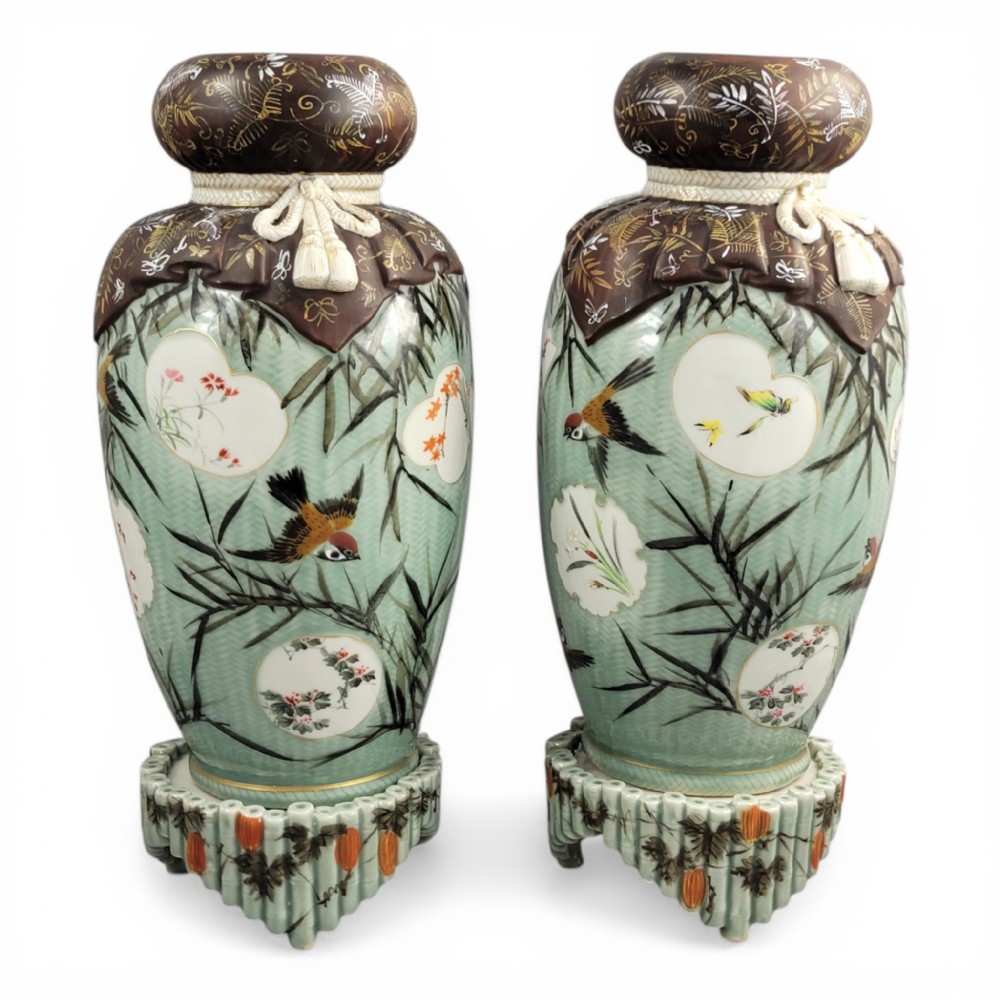
A Monumental and Unique Pair of Meiji Period Seto Porcelain Vases by Kato Sanhei on Matching Original Porcelain Stands