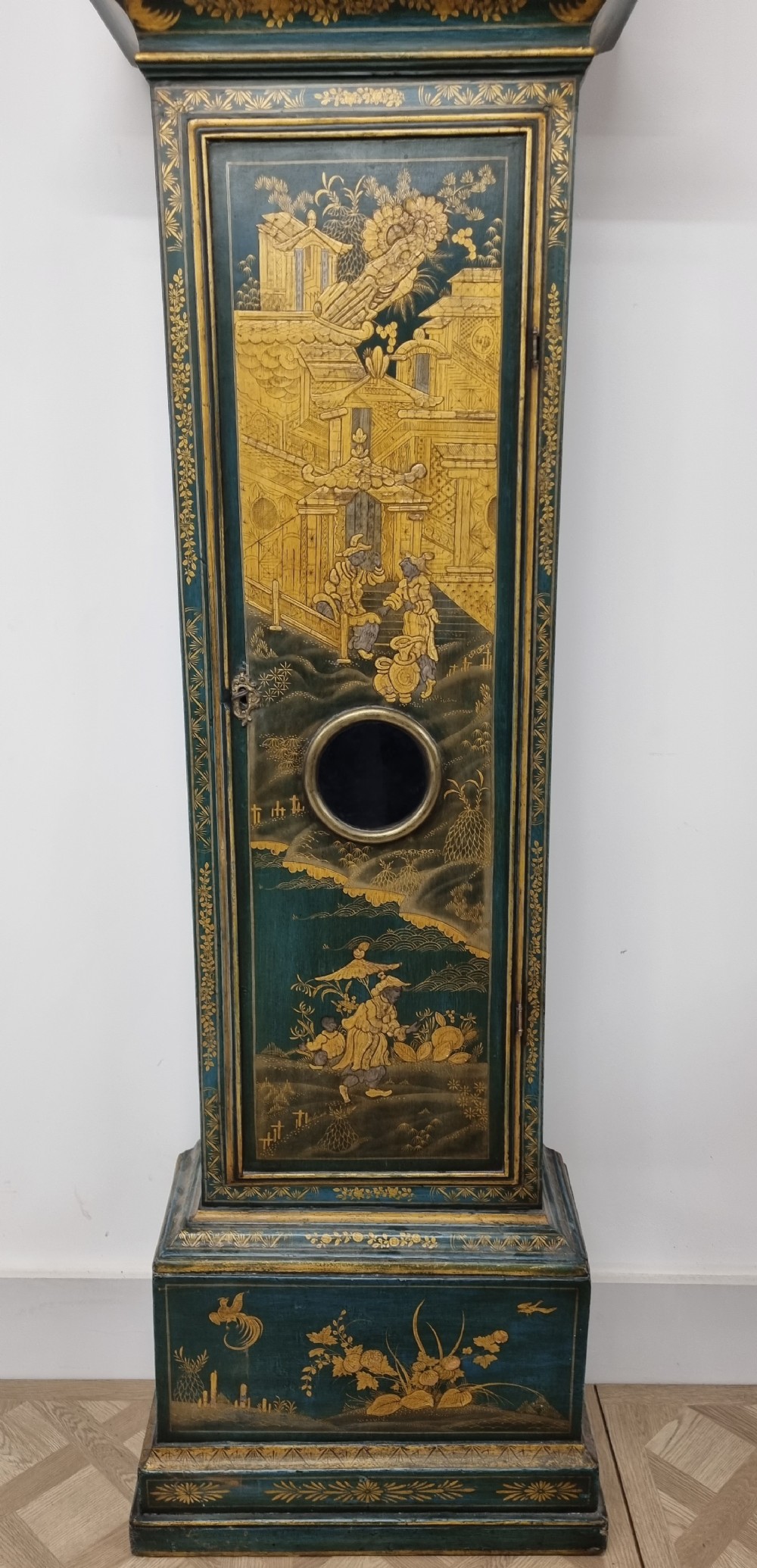
School House Antiques has dated this Green Japanned Longcase Clock to the 18th Century.
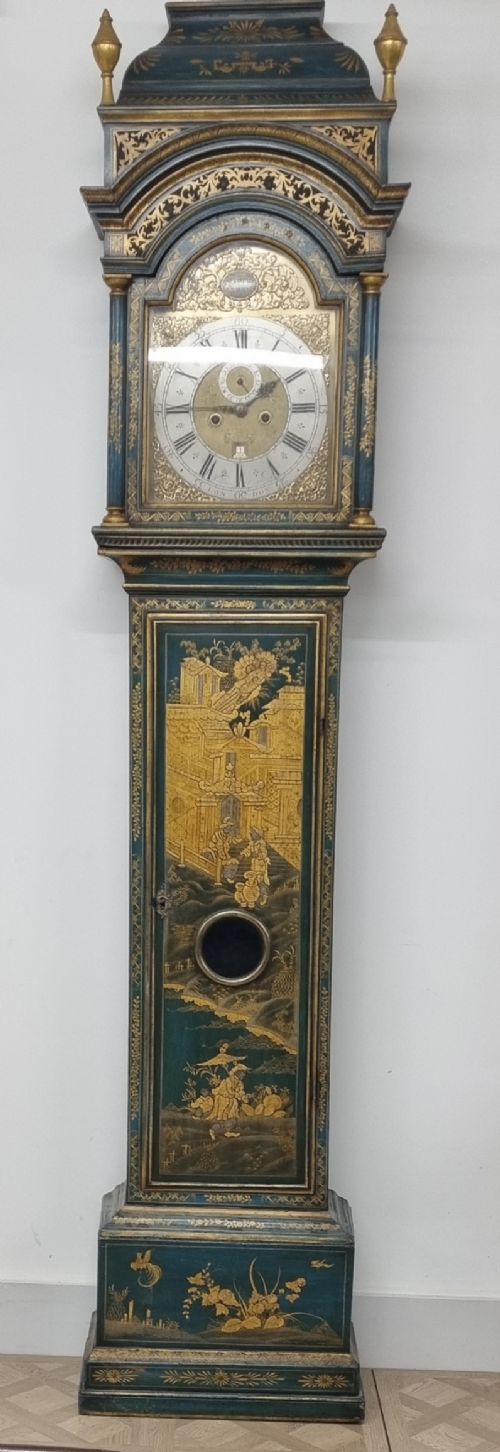
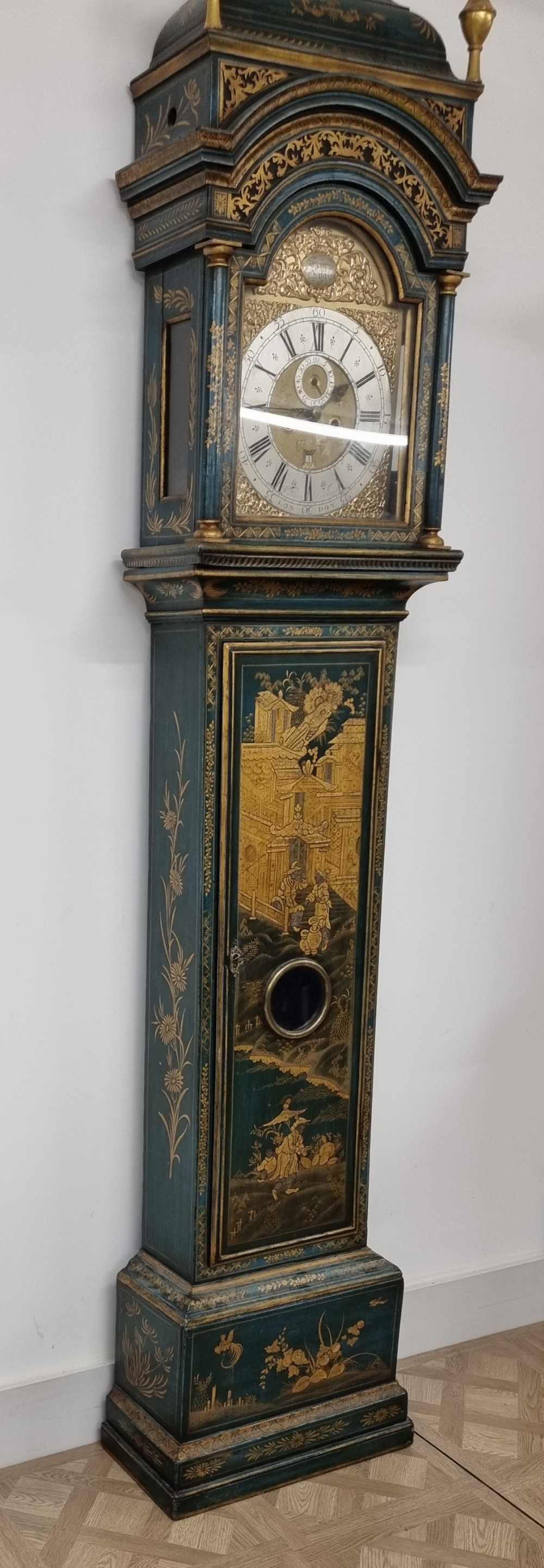
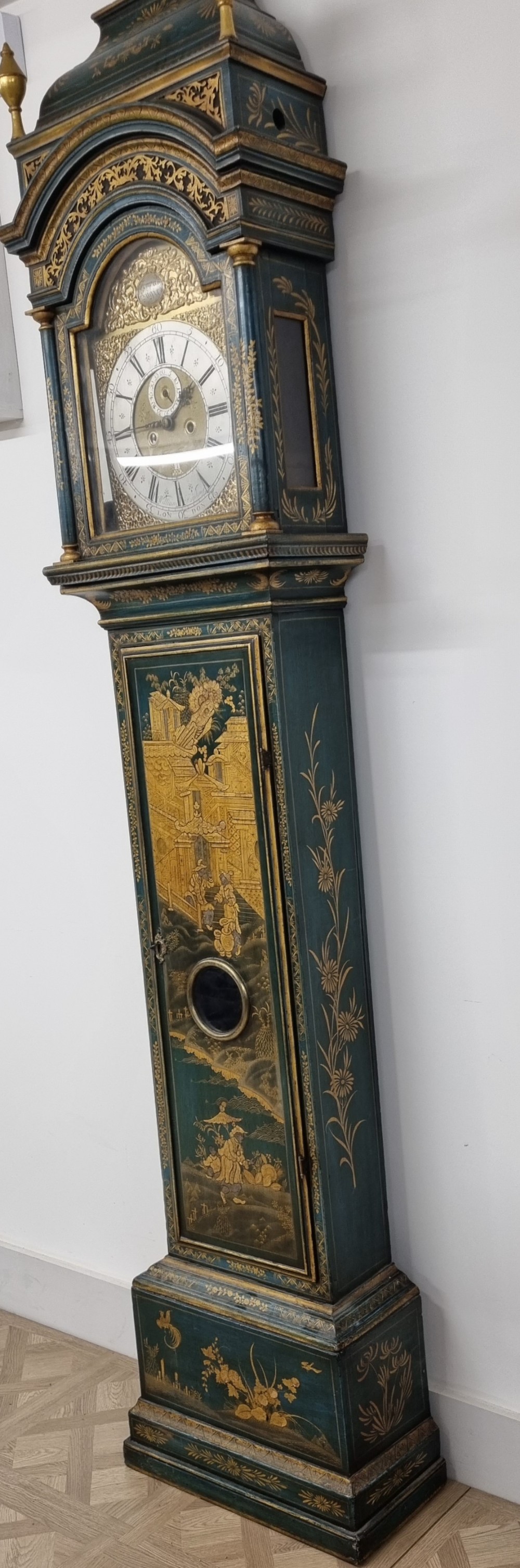
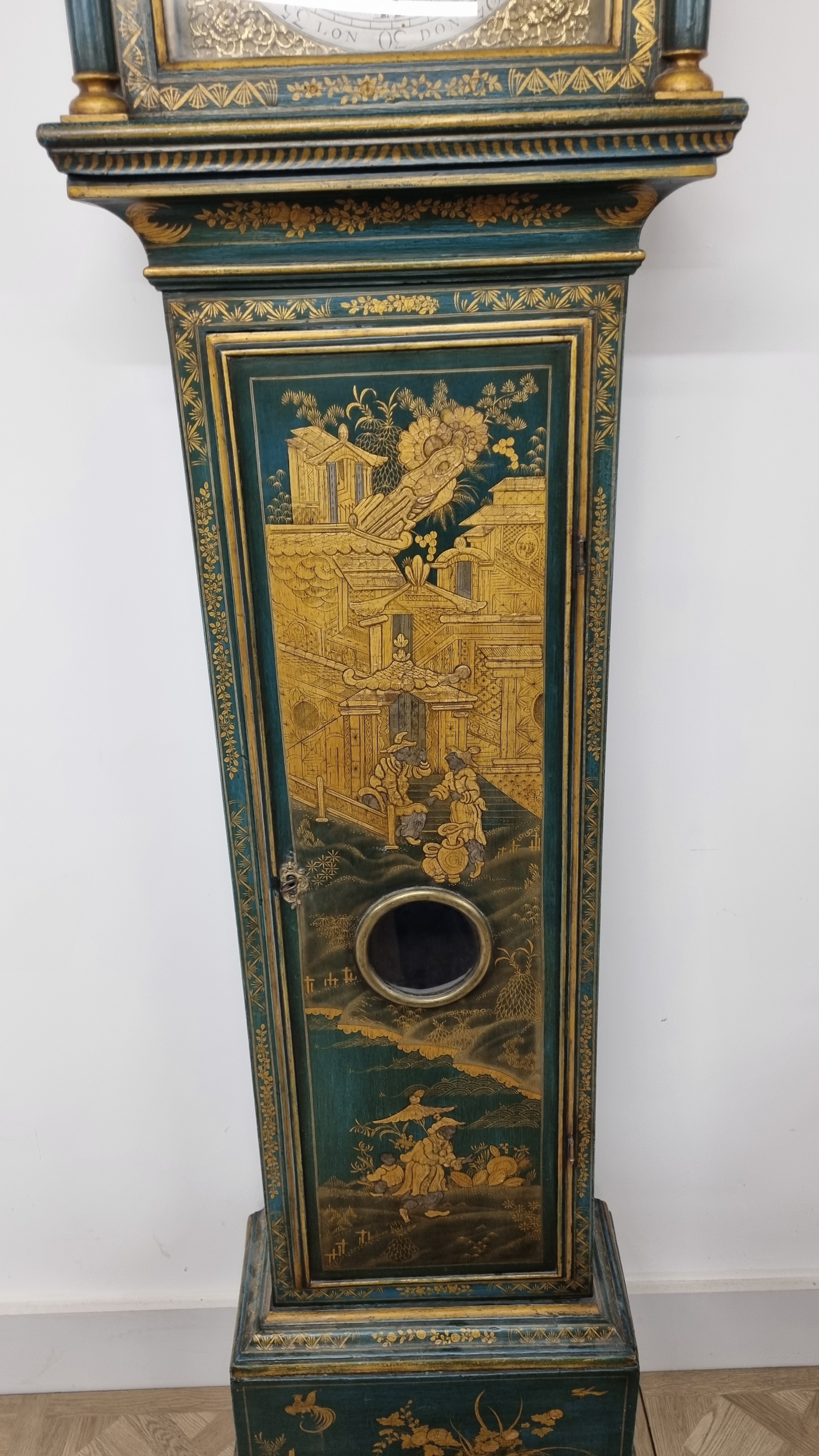
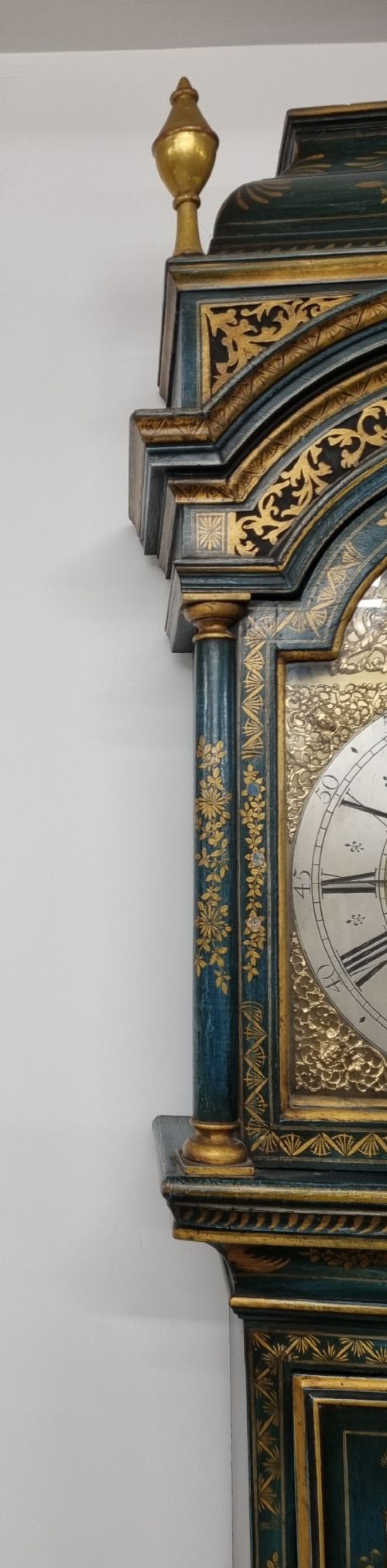
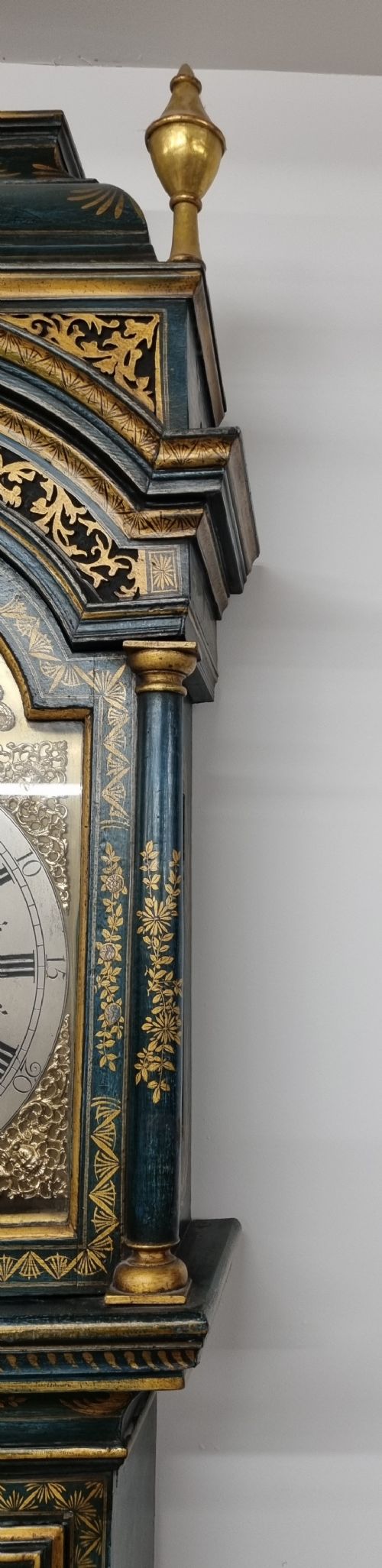
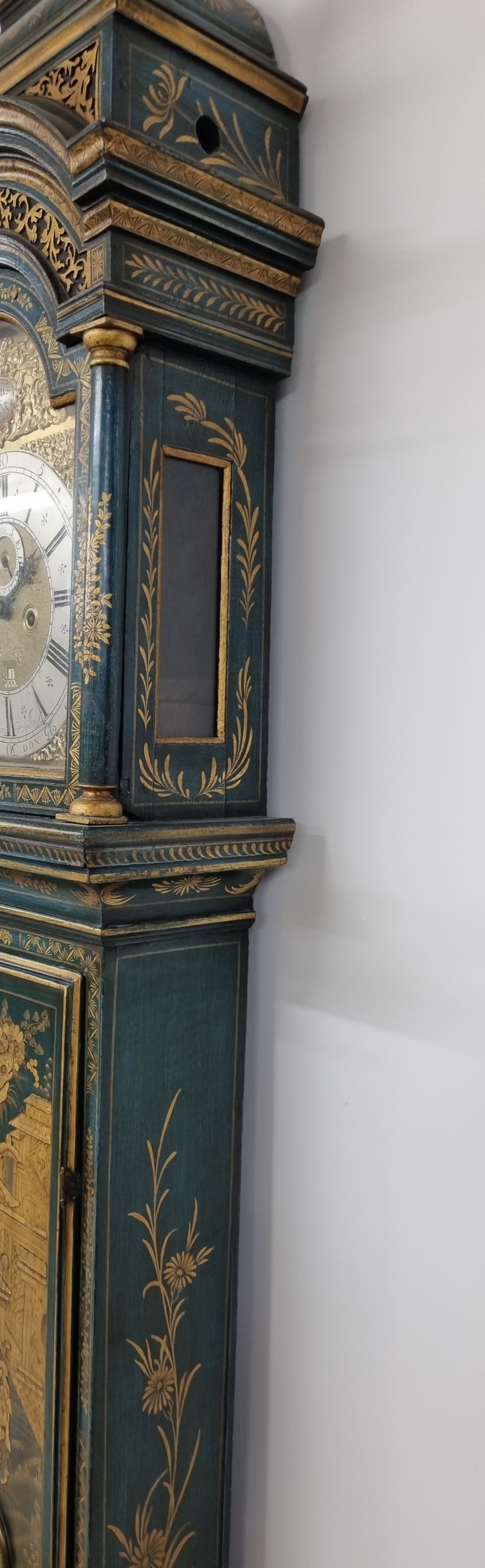
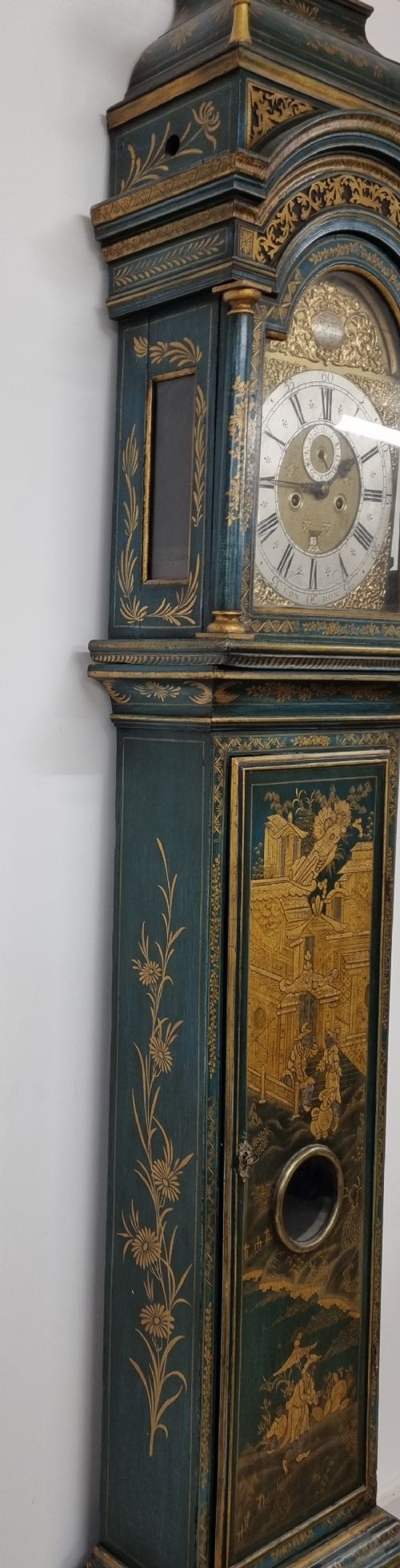
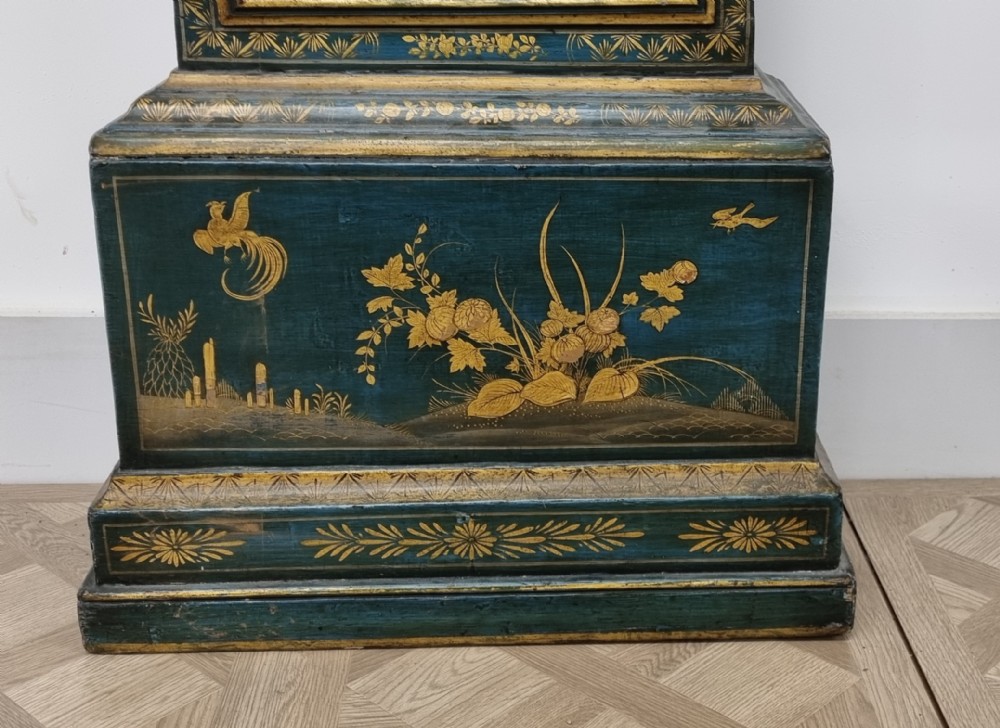
An early-18th century turquoise blue and gilt-lacquer longcase clock
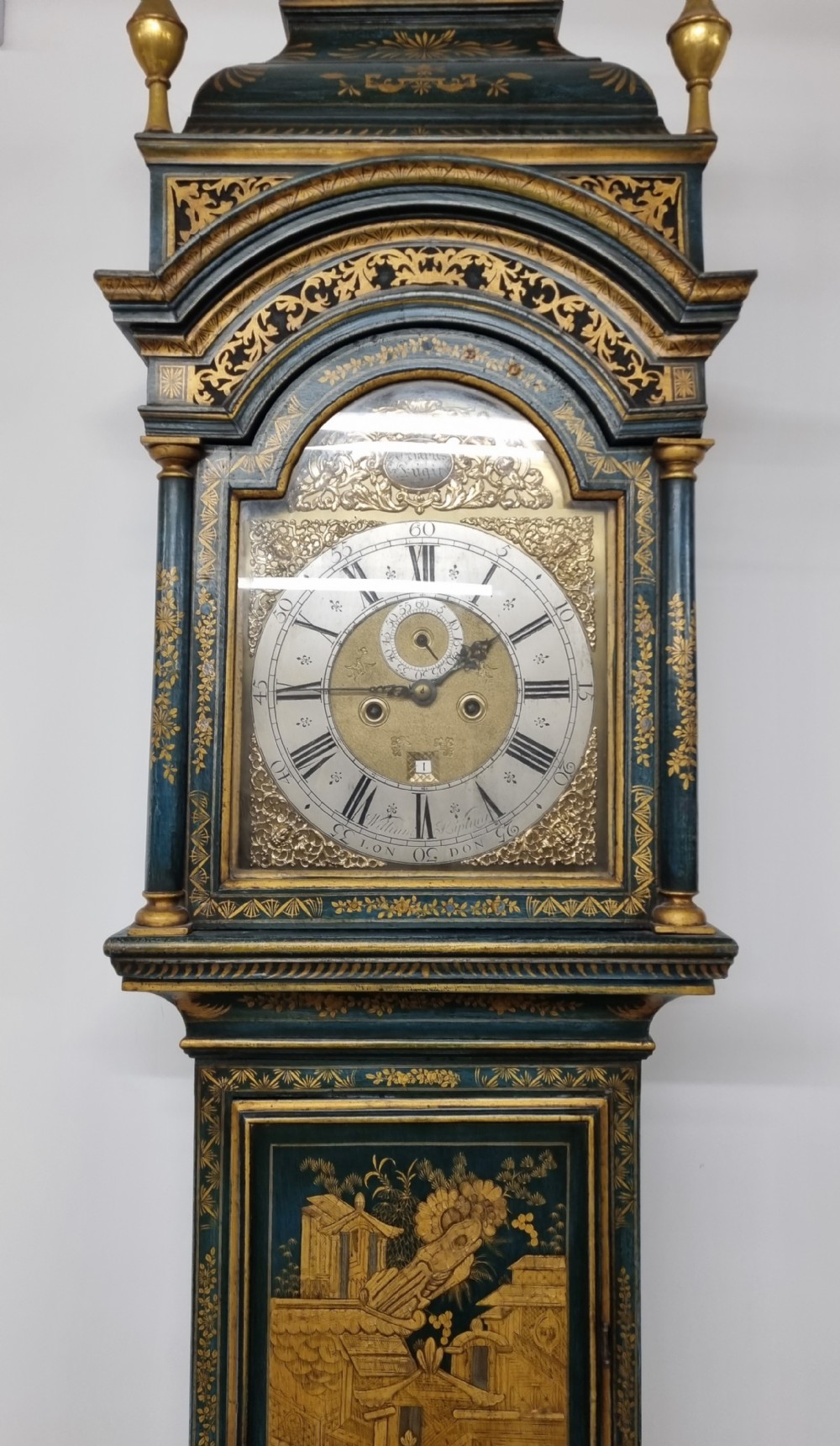
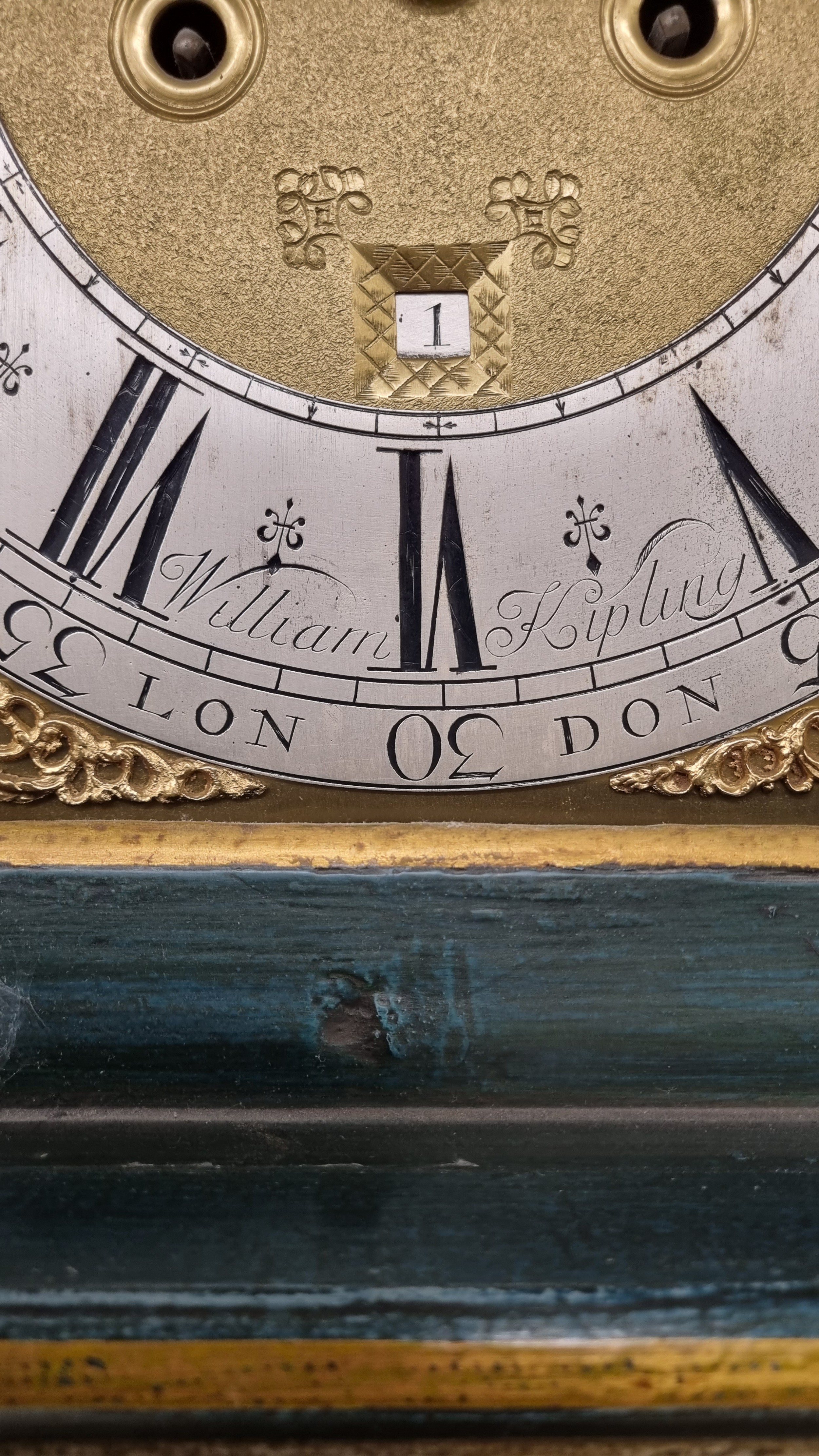
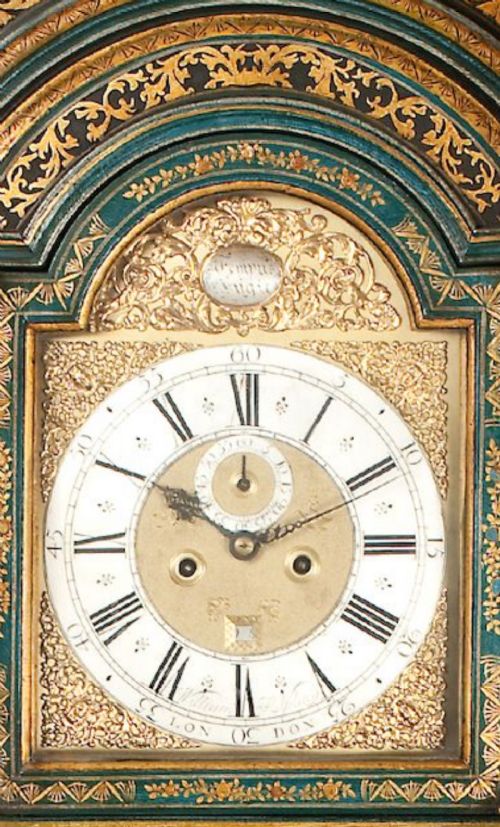
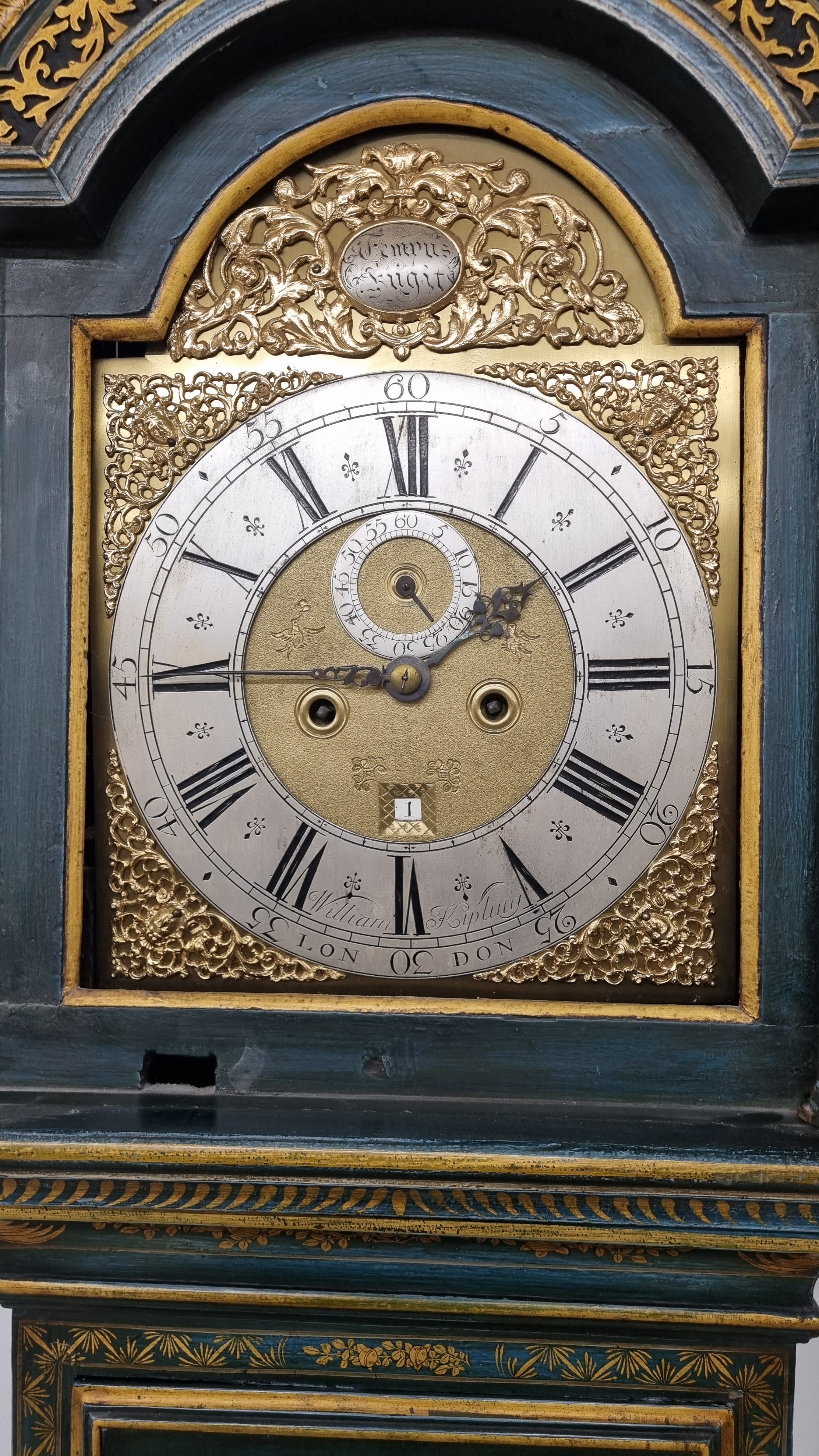
The dial inscribed William Kipling, London.
William Kipling is recorded as working in London during the early 18th century.
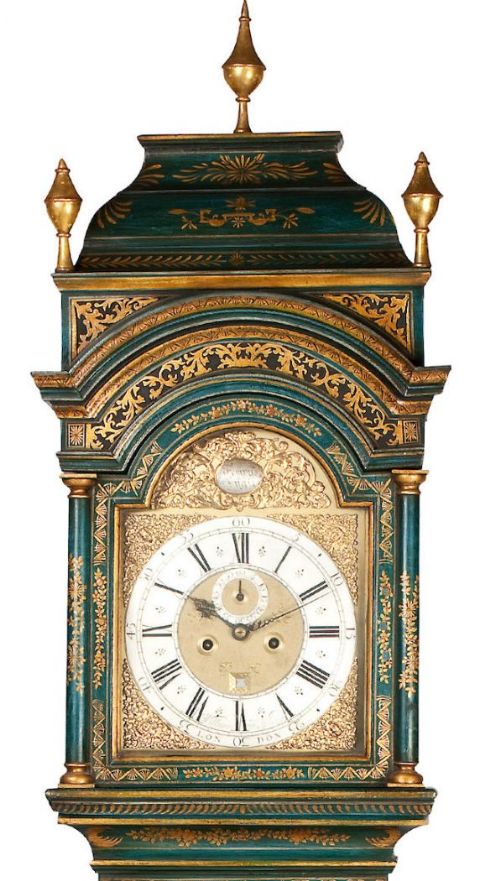
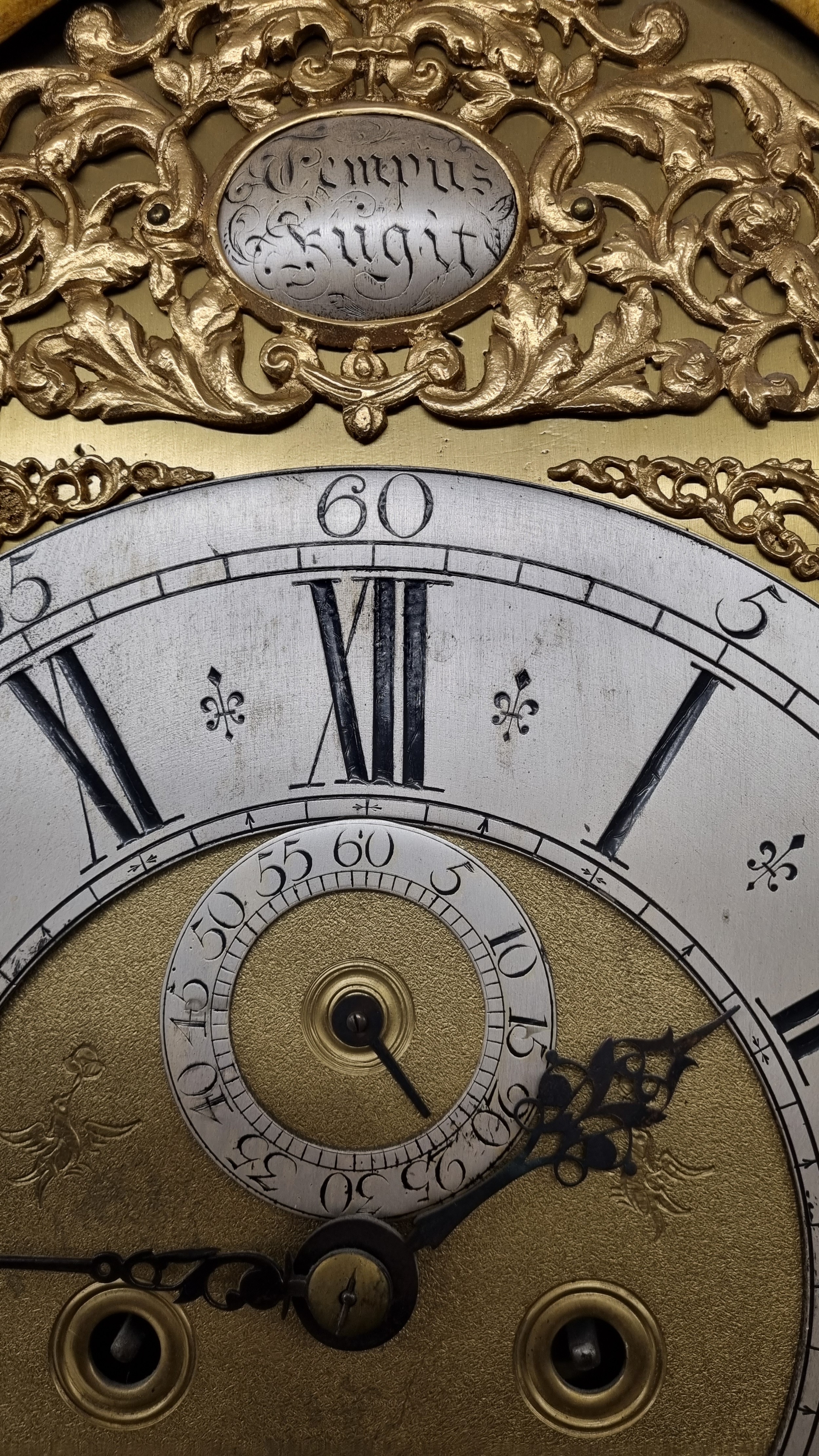
The 12 inch arched brass dial with silvered Roman and Arabic chapter ring, matted dial centre, subsidiary seconds and date aperture, pierced brass spandrels and arch with silvered plaque engraved 'Tempis Fugit', the twin train five pillar movement striking a bell, contained within a pagoda hood with three angular finials, above a trunk door with glazed pendulum viewing aperture, raised on a box base with moulded plinth, 49cm wide, 25cm deep, 249cm, (19in wide, 9 1/2 in deep, 98in high).
William Kipling. Born in England in 1680 or 1681, he was apprenticed to clockmaker Thomas Johnson, London in 1695.
From 1705 he was self-employed as a clockmaker until, circa 1742. His workshop was located at Broad Street, Ratcliffe Cross, London.
There are watches/clocks by him in the British Museum, Science Museum, Liverpool Museum and Clockmaker's Company Museum.
School House Antiques has dated this Green Japanned Longcase Clock to the 18th Century.

You can view the stock and full dealer information on the School House Antiques Profile Page

18th Century gilt -lacquer Longcase Clock by William Kipling London Circa 1720