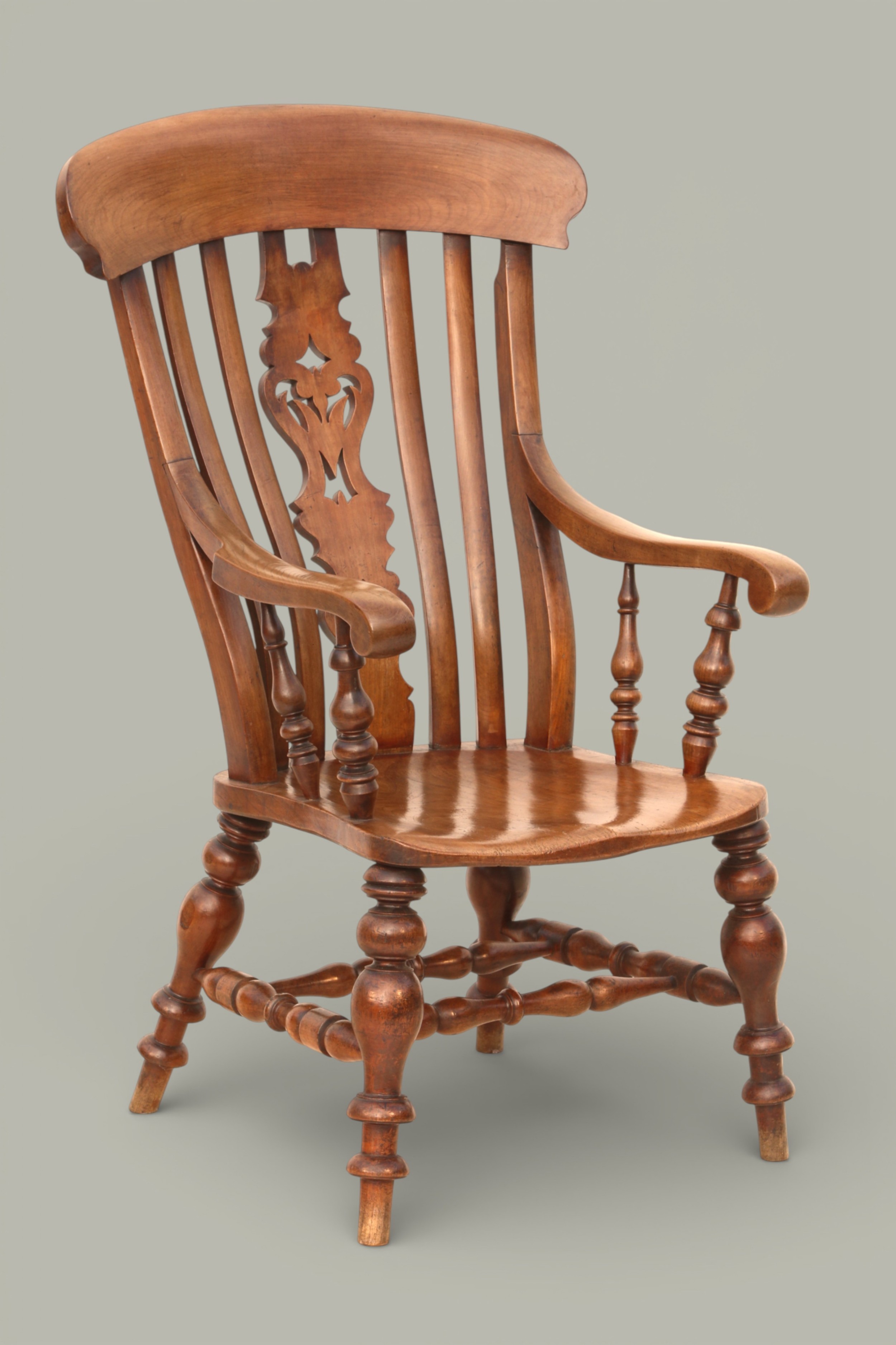
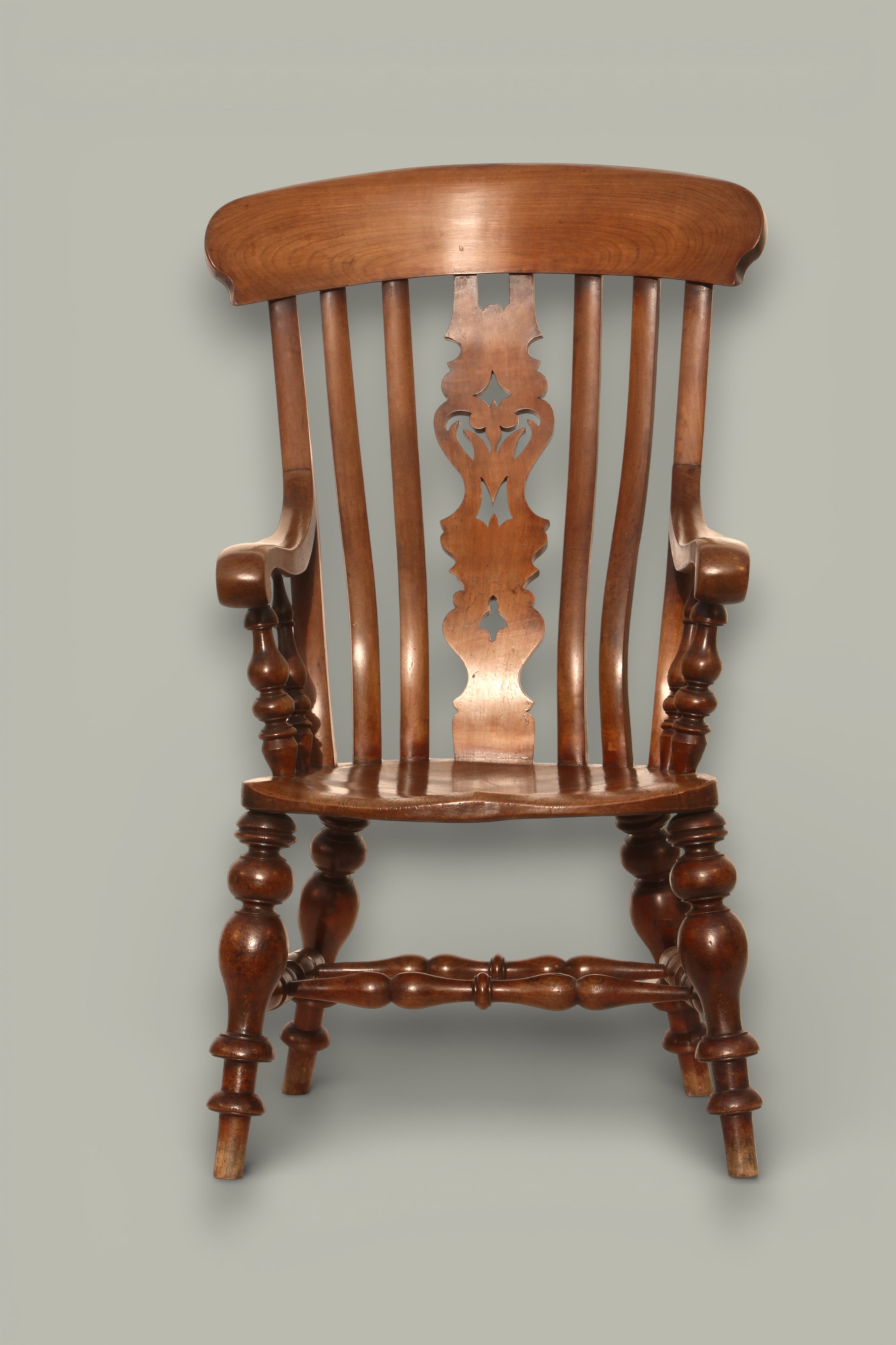
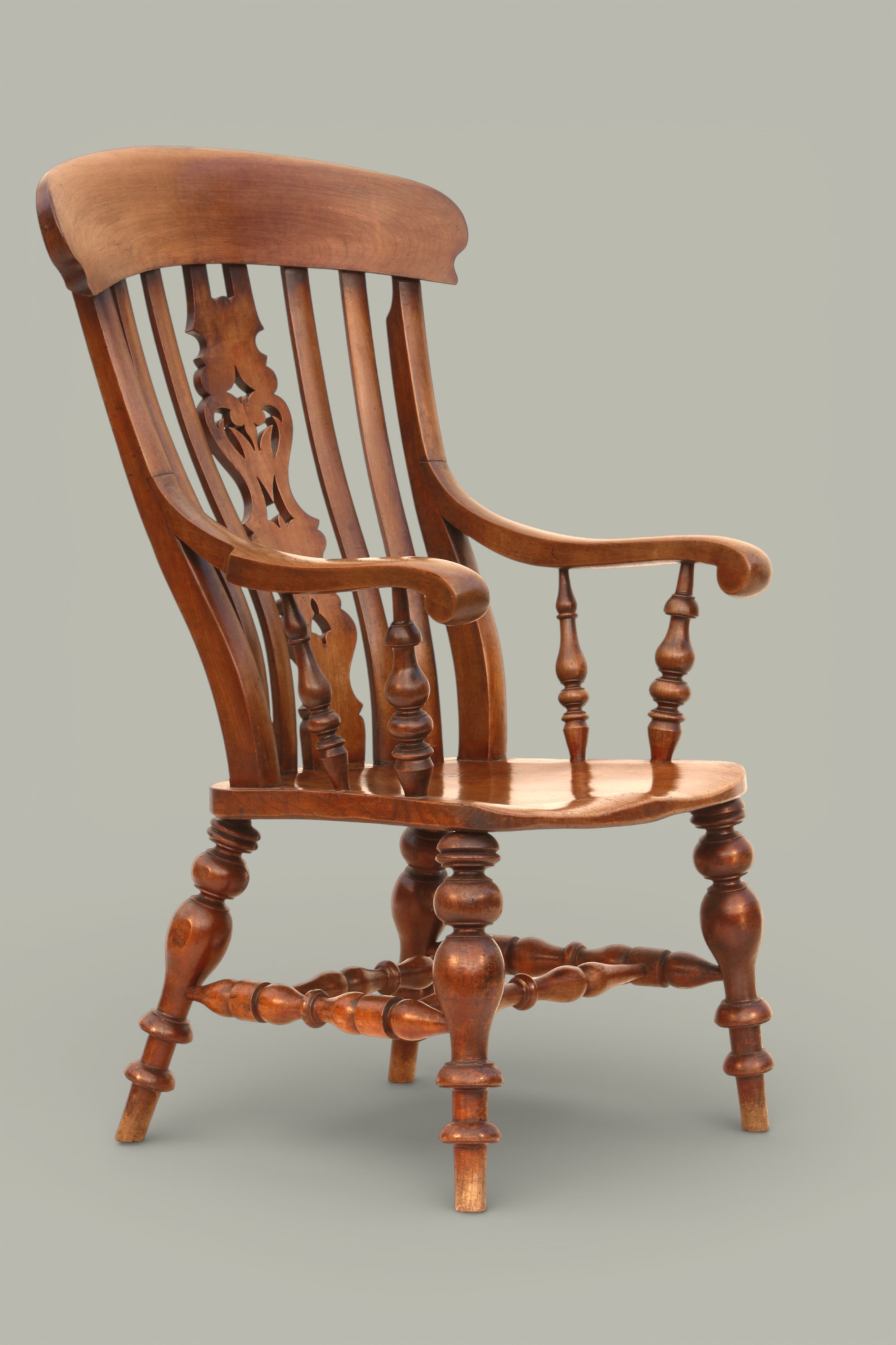
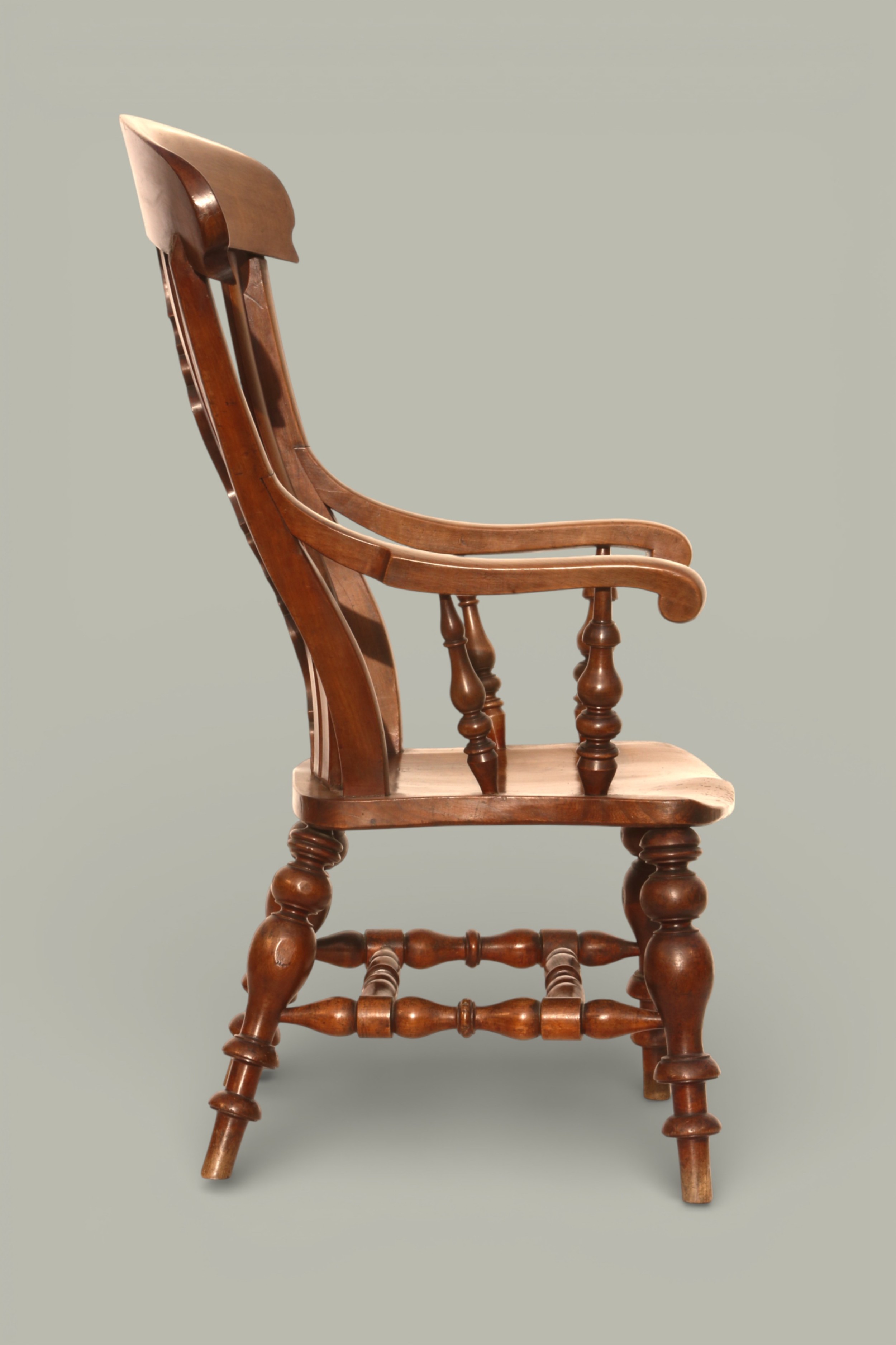
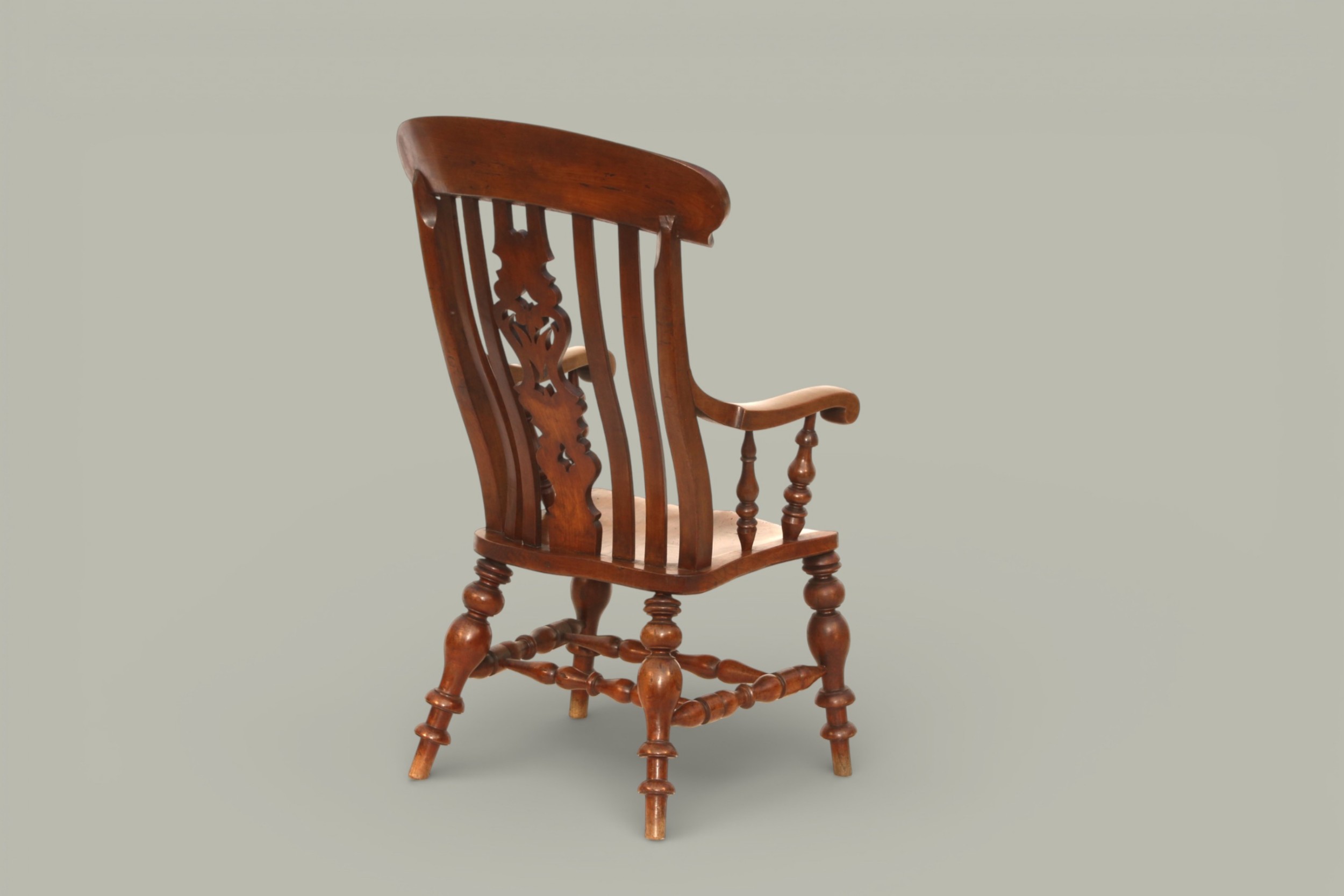
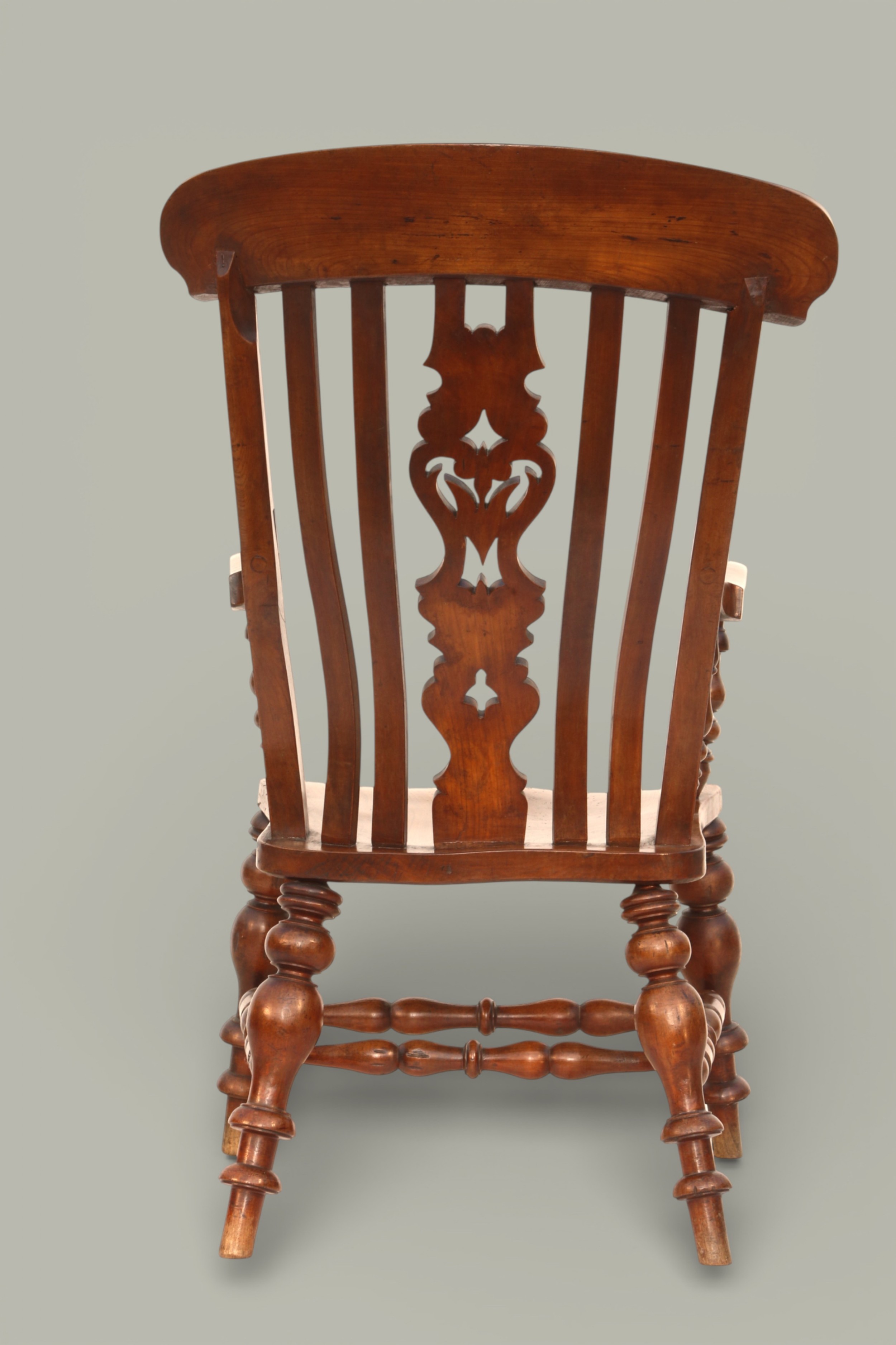
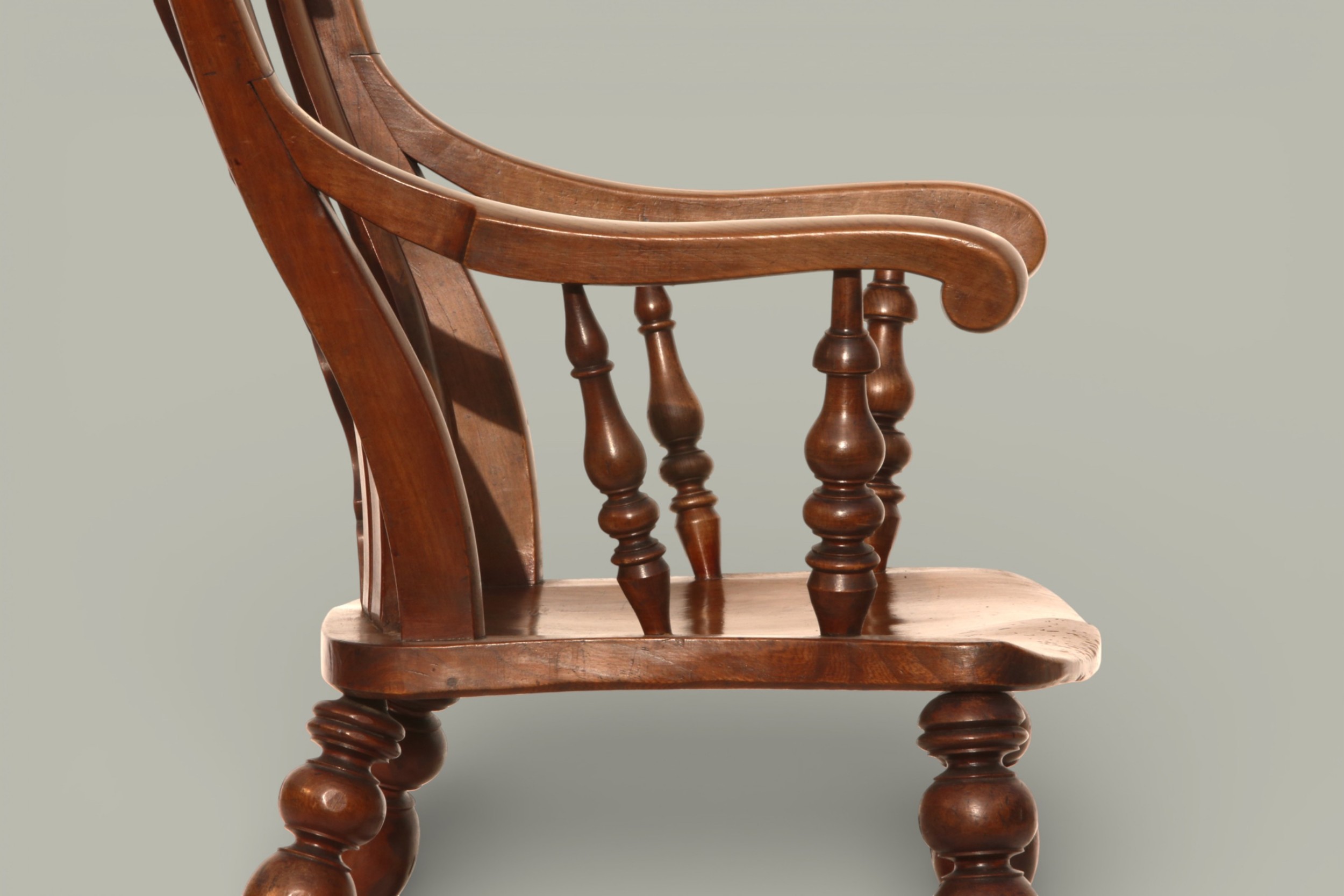
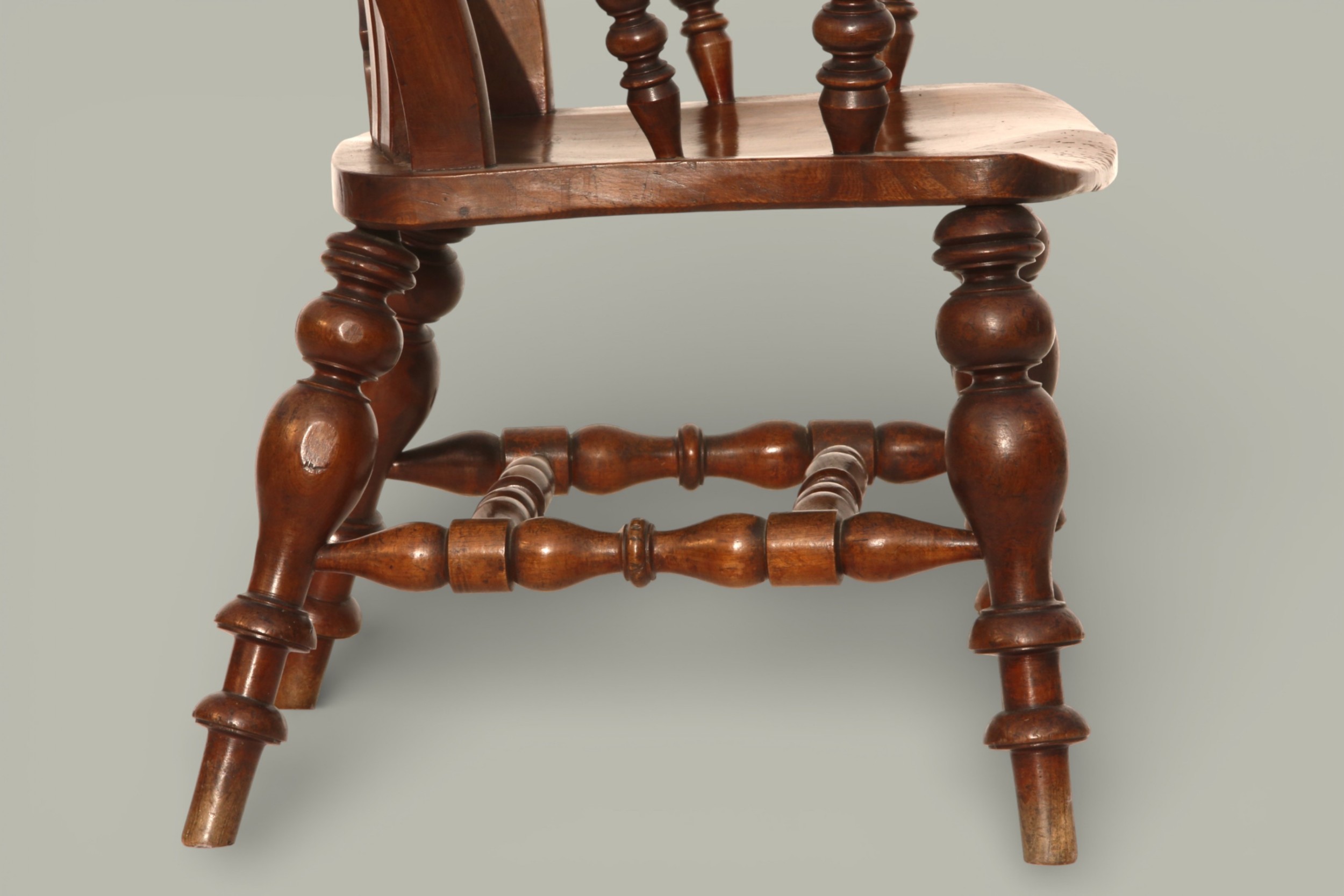
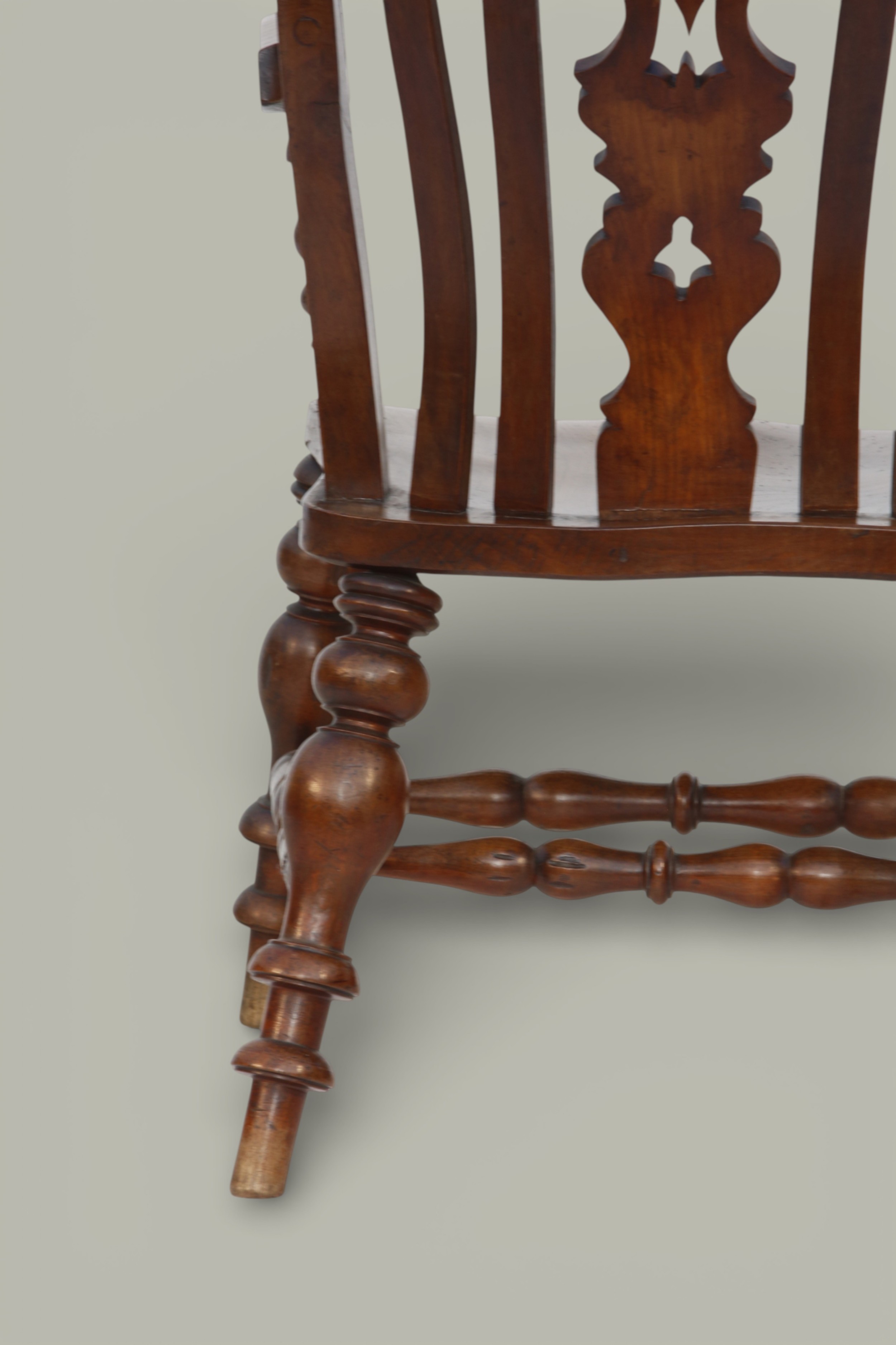
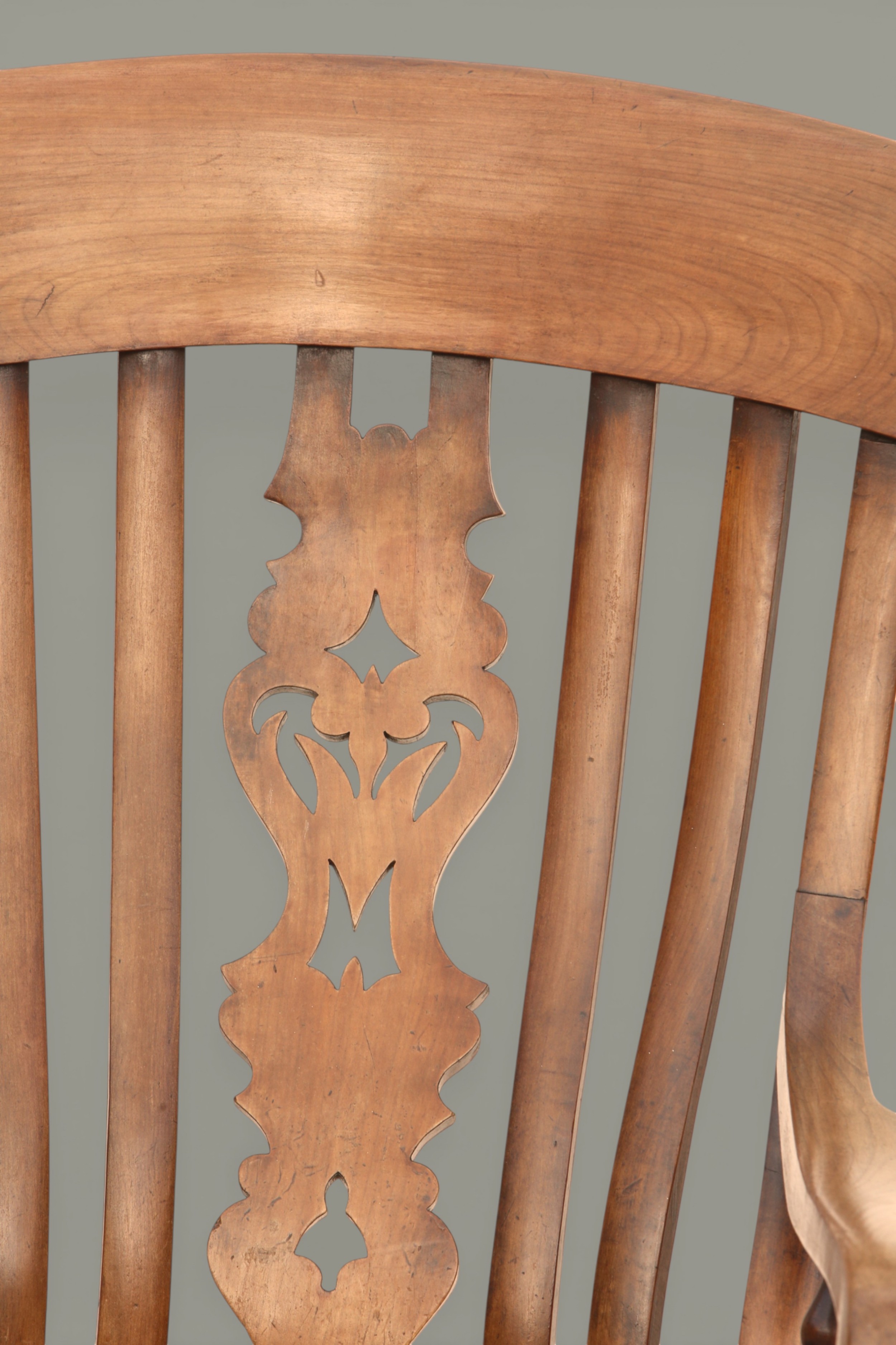
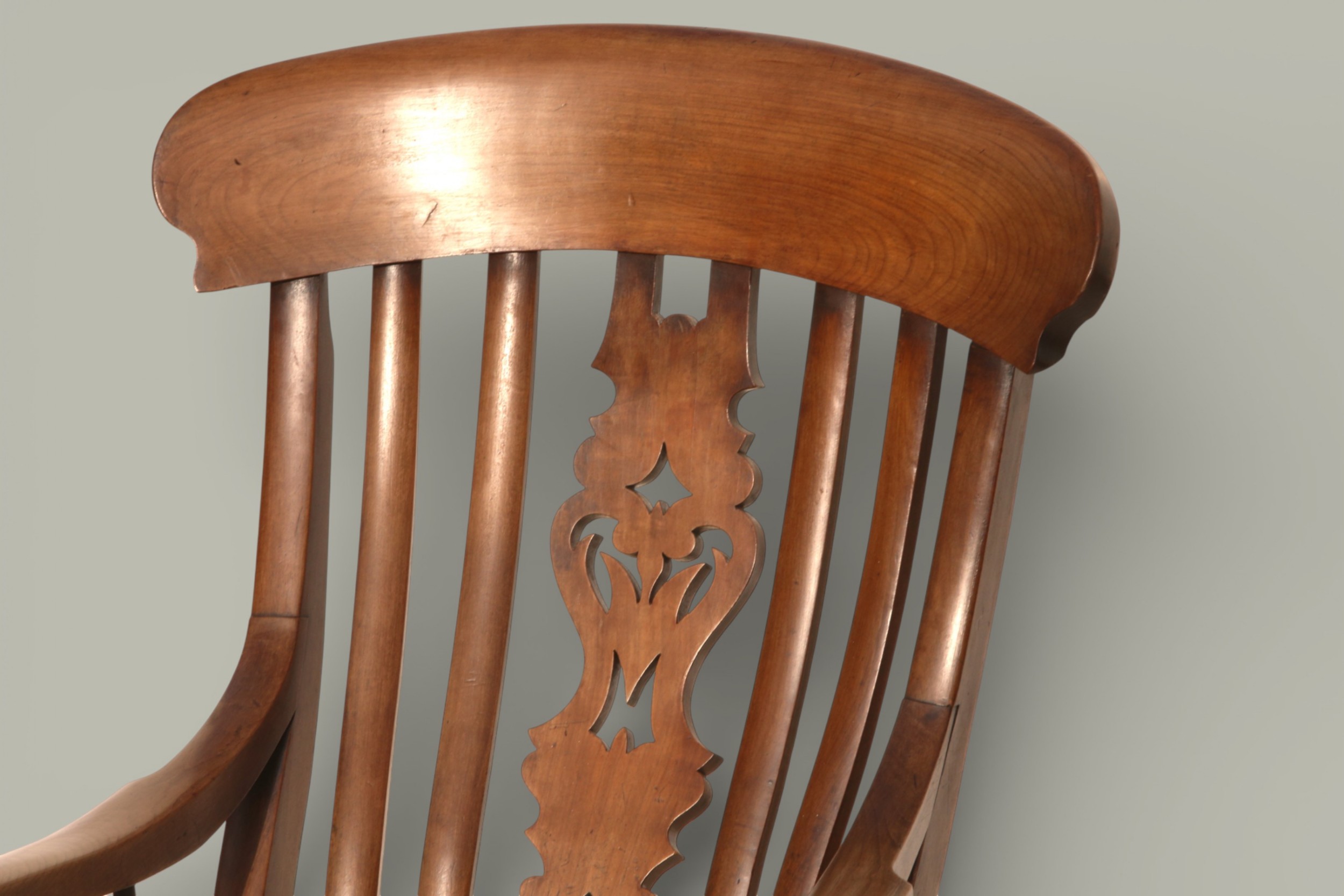
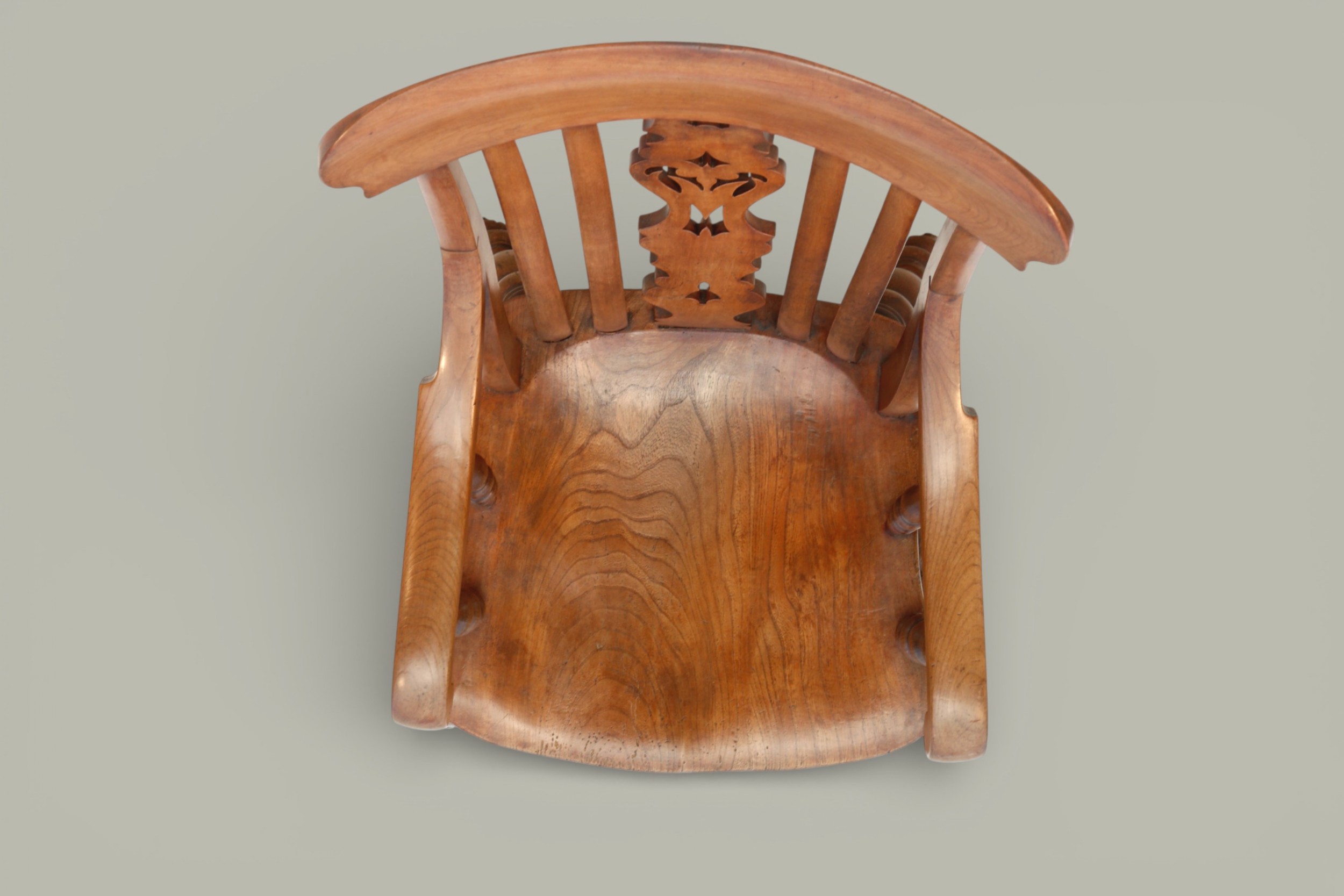
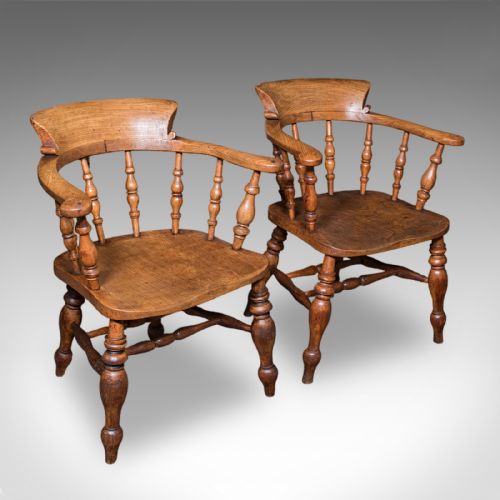
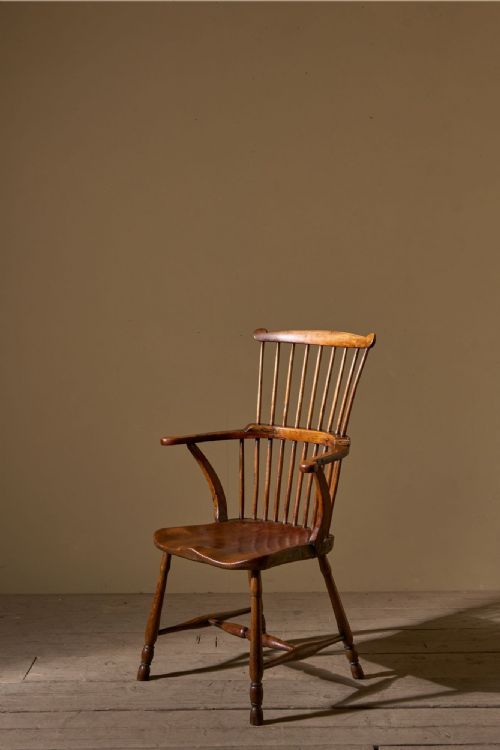
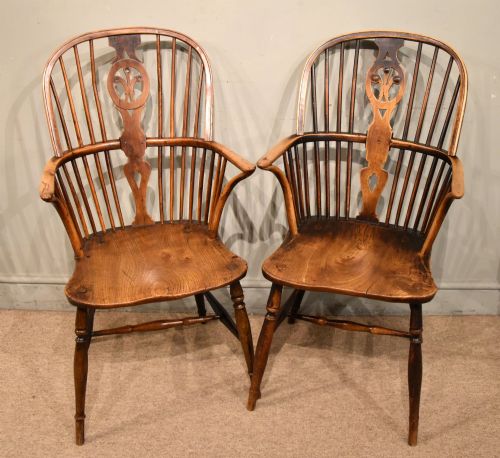
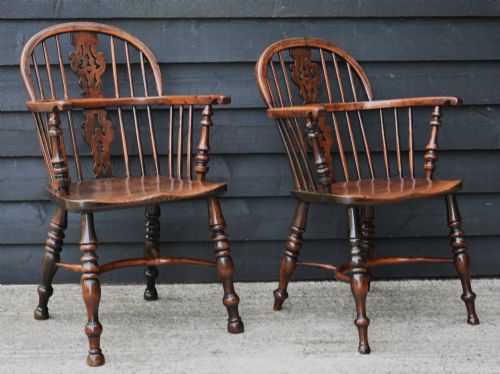
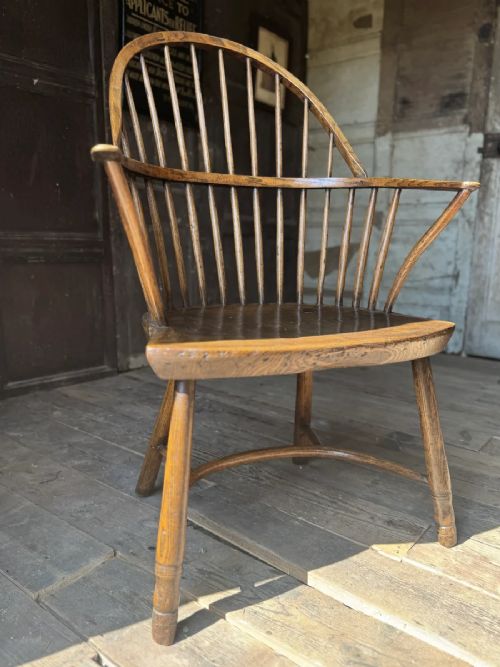
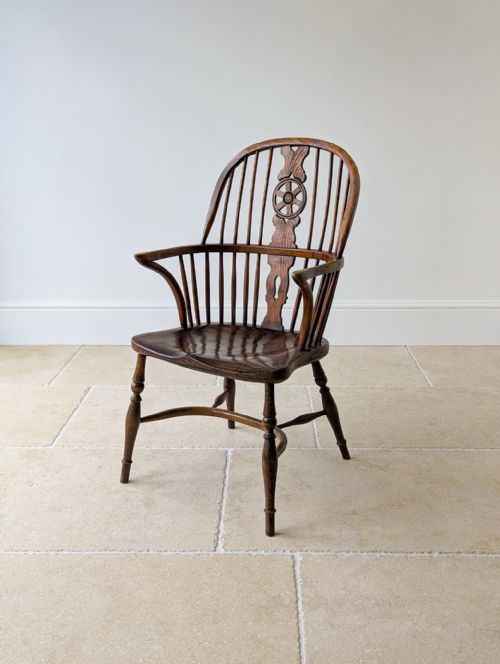
The Real Wood Furniture Company has dated this Antique Windsor Elm Armchair to the 19th Century.
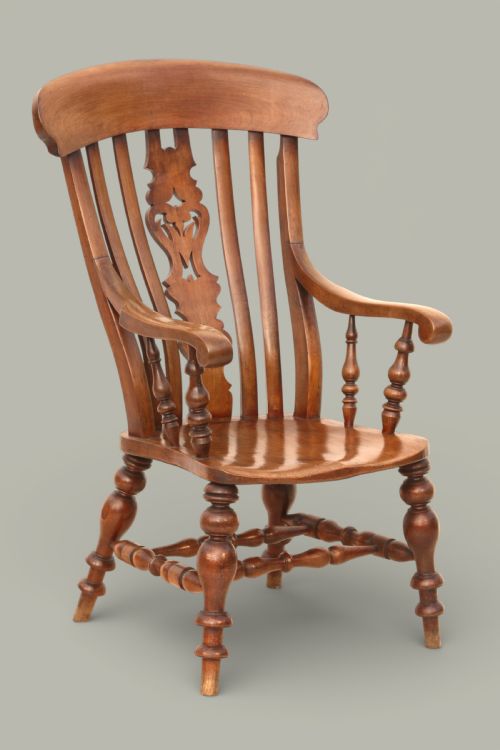
width at top comb : 72 cms (28.25”)
width at armbow : 61 cms (24”)
height : 120 cms (47”)
depth (from back of top hoop to front of legs) : 70 cms (27.5”)
seat height: 44 cms (17.25”)
between front arm supports: 44 cms (17.25”)
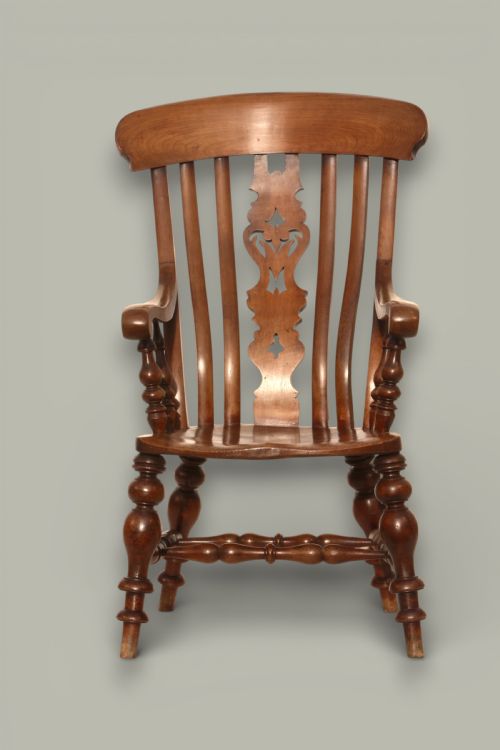
seat depth (from bottom of splat to front edge of seat) 48cms (19”)
Why do I call this style of chair a ‘Windsor chair’ ? I wrote a paper in support of my exhibition of Thames Valley Windsor chairs in 1998 in which I identified that the term 'Windsor chair' had evolved in its use, to describe wooden chairs whose axis of construction is the seat, ie where the legs are jointed up into the underside of the seat board and the superstucture is jointed into the top surface of the seat board.
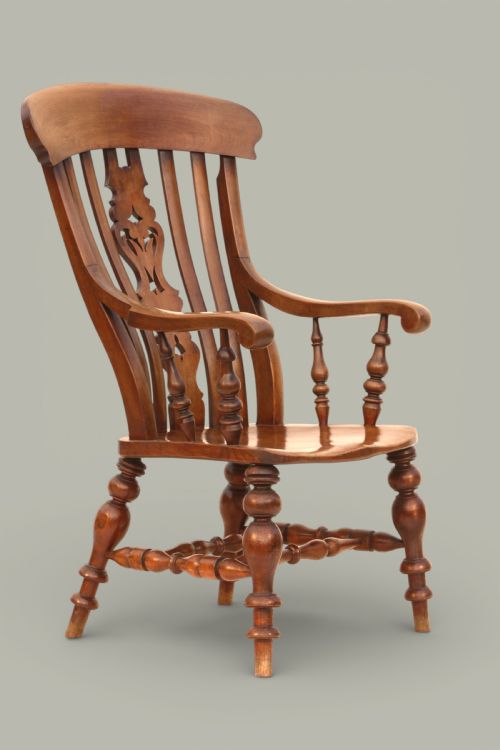
When I first started buying chairs in 1979, the term ‘Windsor chair’ was used within the antiques trade, to describe exclusively, hoop back and comb back armchairs and side chairs. 19th century chairs such as ‘Oxford’ style chairs and ‘slat and splat back chairs’ with a deep top comb rail at the top, with their sawn and shaped outer supports were typically described as ‘kitchen chairs’. As time passed by, these slightly more ‘humble’ chairs, made in greater quantities, became known as ‘Kitchen Windsor’ chairs and then eventually the ’Kitchen’ disappeared from common usage, possibly as ‘the trade’ tried to elevate their status.
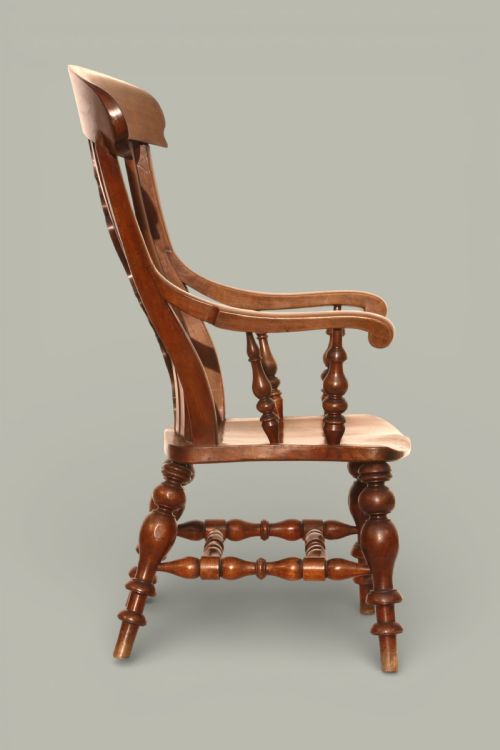
Whatever the reasoning, an evolution in the accepted meaning / use of the term ‘Windsor chair’ had occurred, but not without reason, as the method of construction remains key, as above, in contrast to ‘frame chairs’ where the back upright extends from top to bottom, with
seat rails / seat jointed into the back upright and into the front legs.
The Real Wood Furniture Company has dated this Antique Windsor Elm Armchair to the 19th Century.
The real wood furniture company (chris baylis) sells windsor chairs, decorative furniture and objects from large showrooms in the cotswolds
You can view the stock and full dealer information on the The Real Wood Furniture Company Profile Page
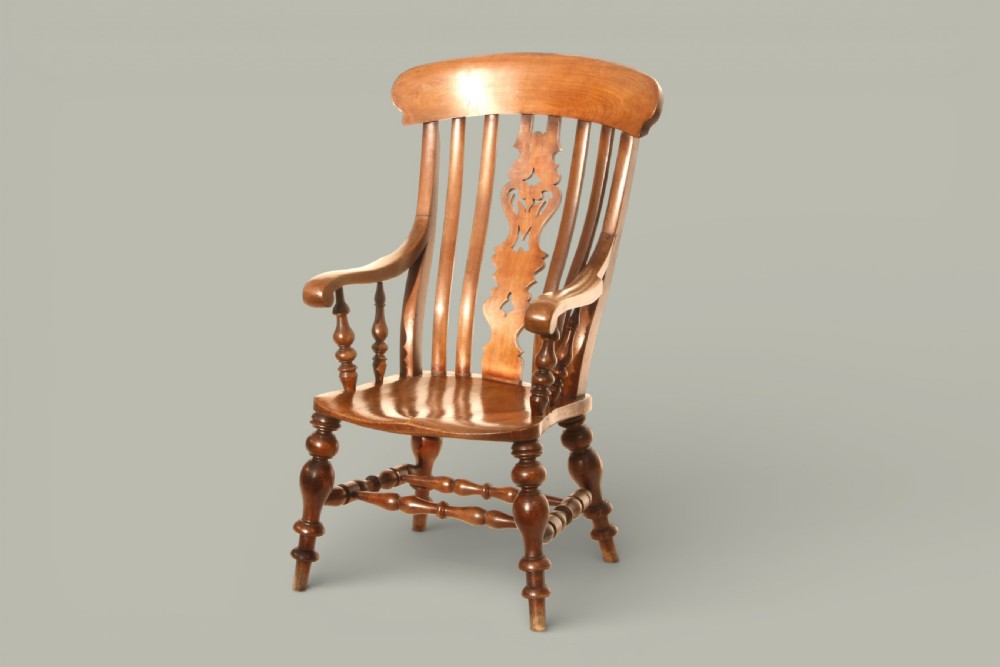
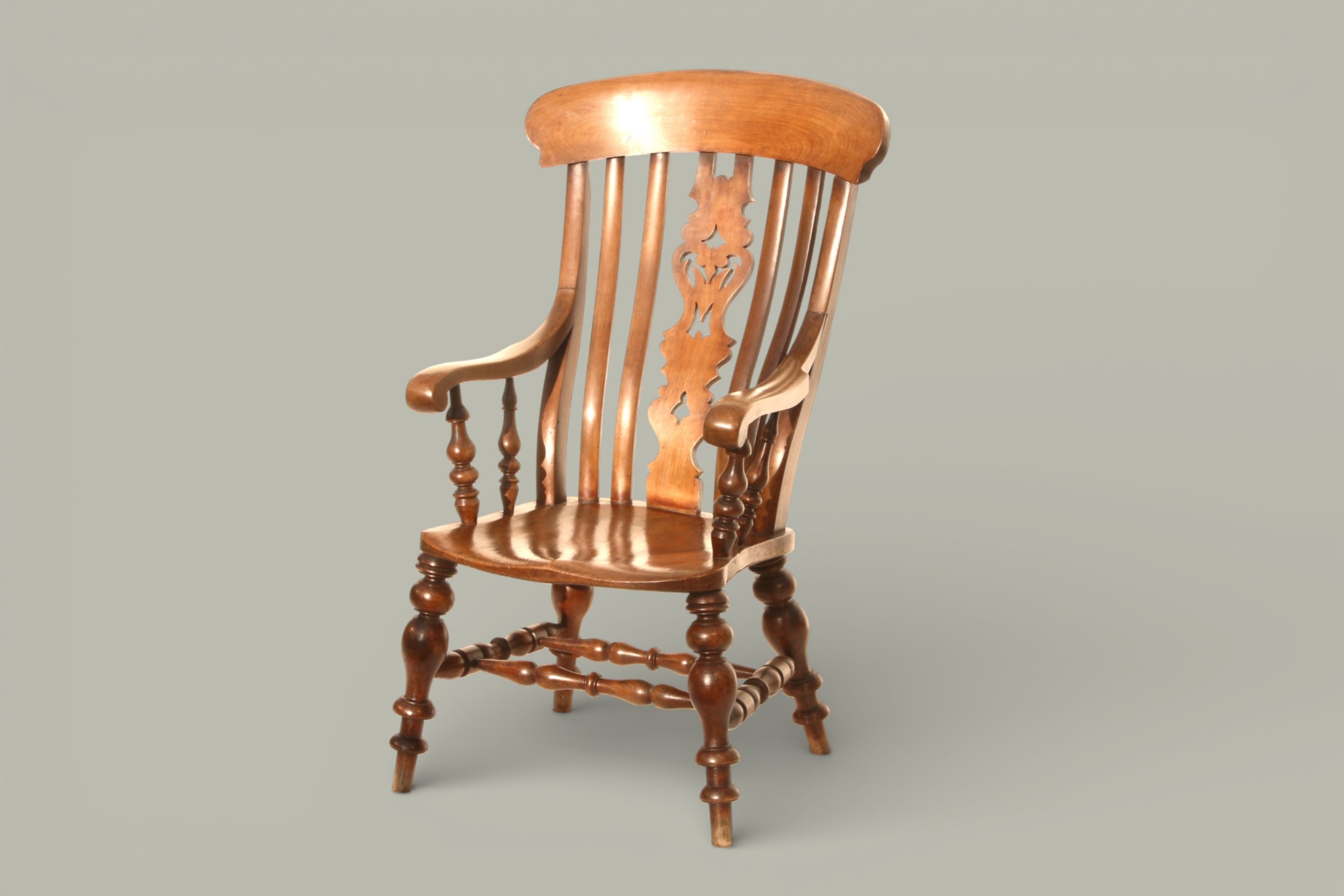
Windsor Extra Large Farmhouse Armchair in Fruitwood & Elm, C1890