18,356  PAGES BROWSED TODAY PAGES TODAY 36  ANTIQUES UPLOADED TODAY NEW ARRIVALS
ID #SA1199042
FOR SALE
£1,325
Email
Save
Antique Burr Elm Biedermeier Revival Coffee Occasional Table 20th Century
Regent Antiques
for sale €1,550     $1,683
£1,325
Regent Antiques

Regent Antiques

Sellingantiques Verified Since Sep 2016
View Dealers Stock Page
  • About Us
    We specialise in english and continental furniture, silver, porcelain and decorative items.
  • Trade Associations
    Regent Antiques is a registered member of LAPADA  CINOA
Id #SA1199042
PDF SHARE
SAVE

Antique Burr Elm Biedermeier Revival Coffee Occasional Table 20th Century

1900 - 1920
For Sale by Regent Antiques
Description

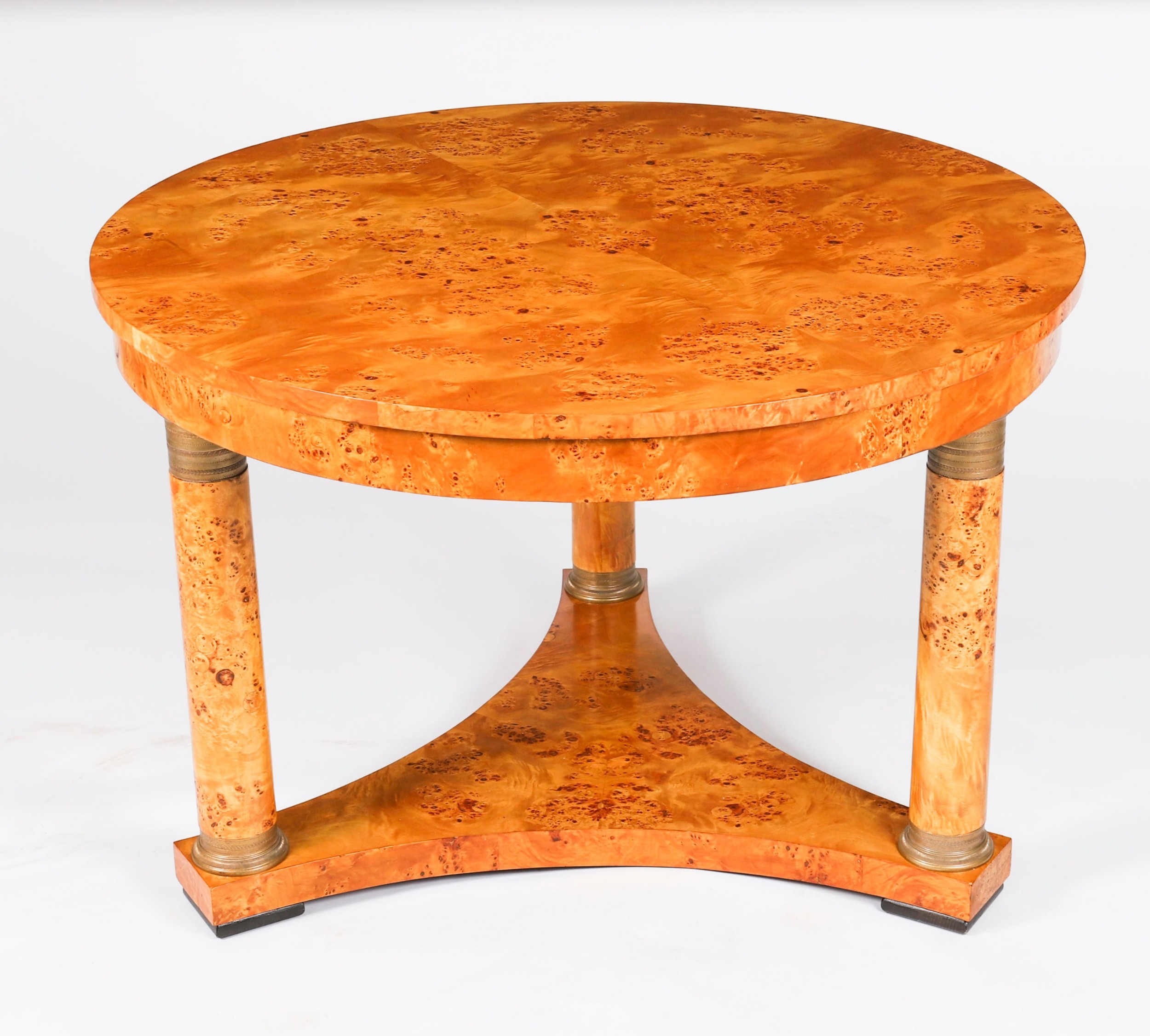
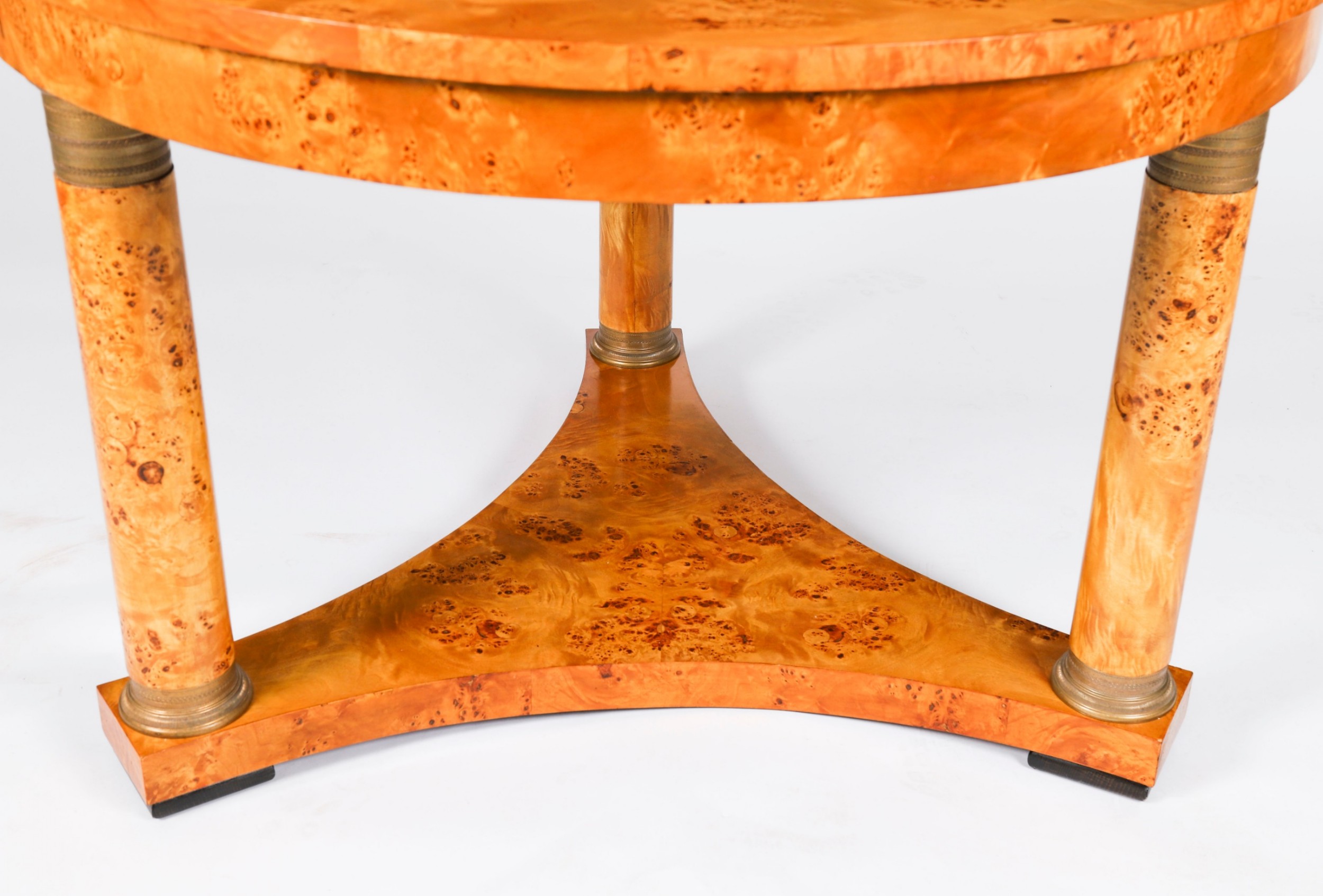
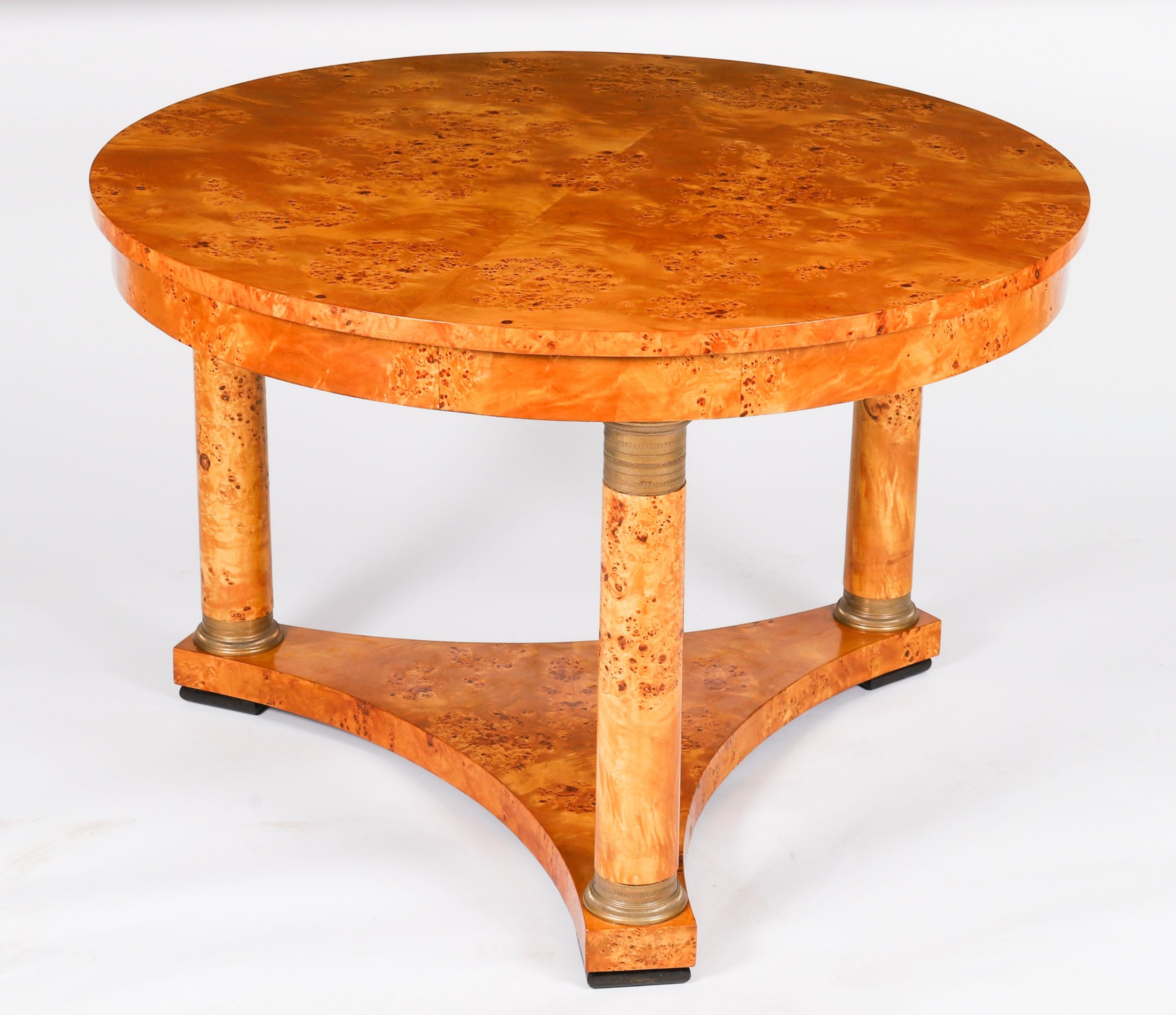
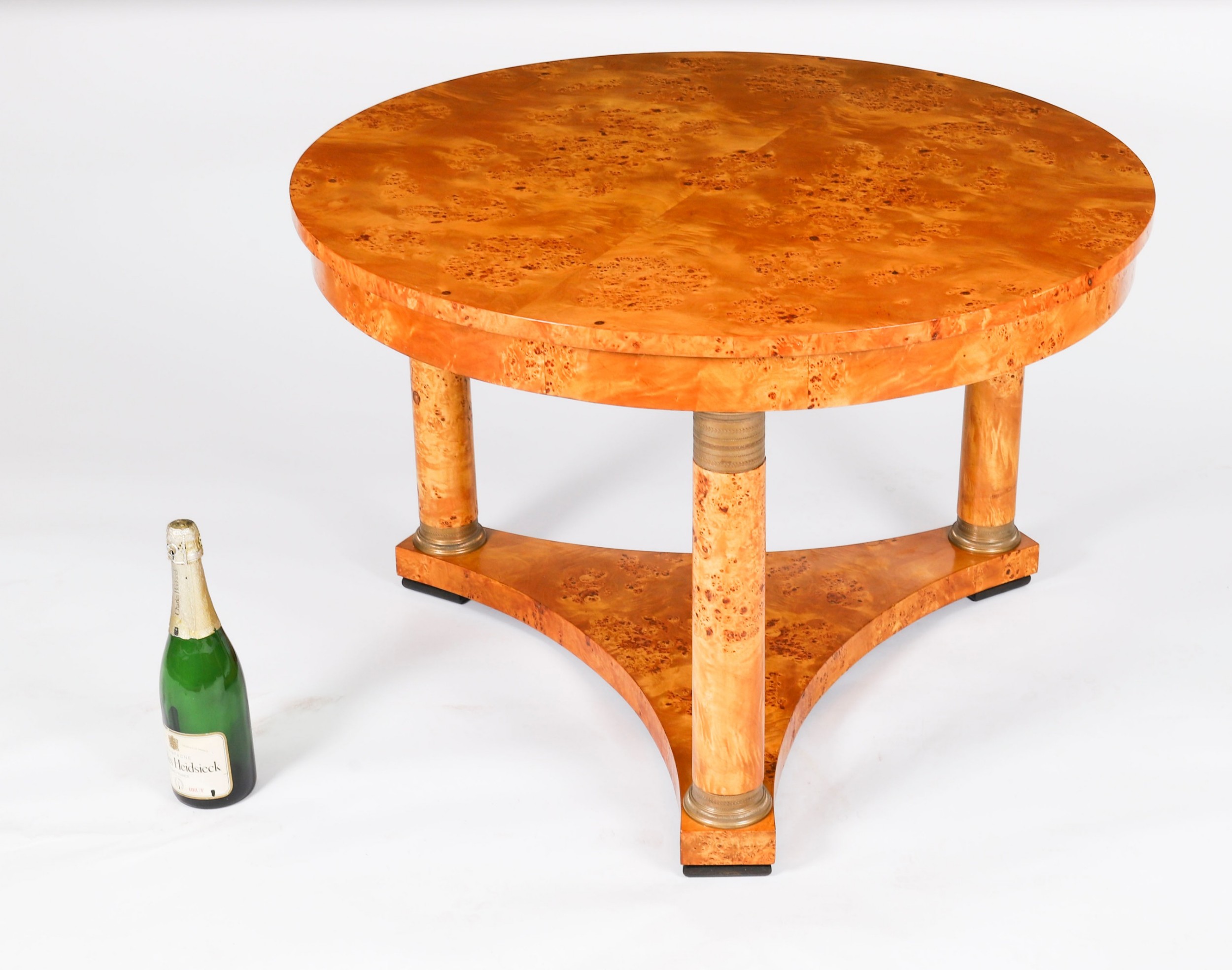
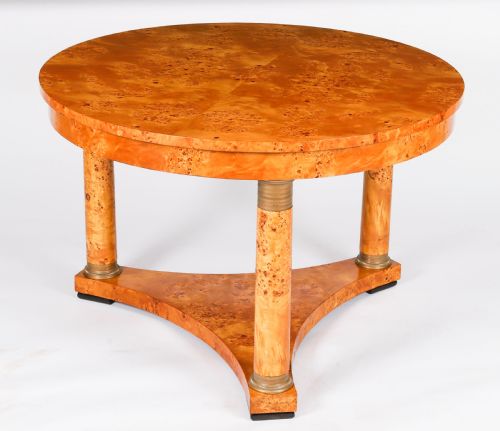
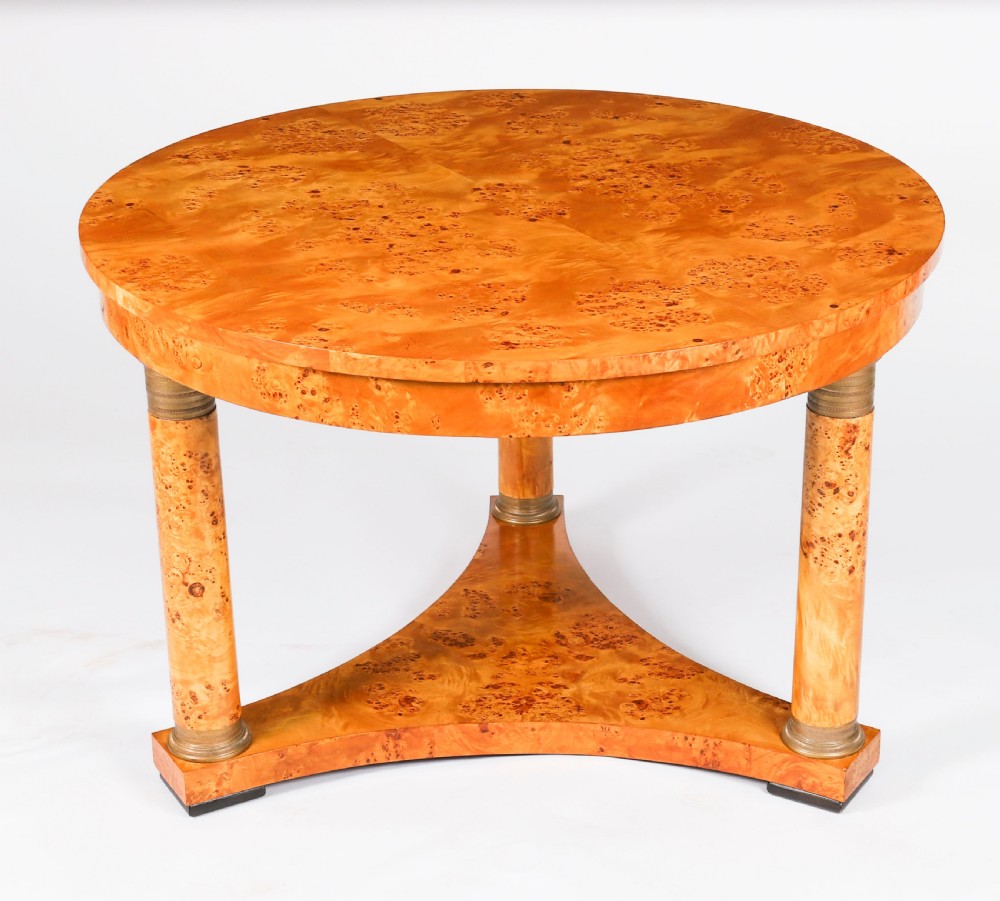
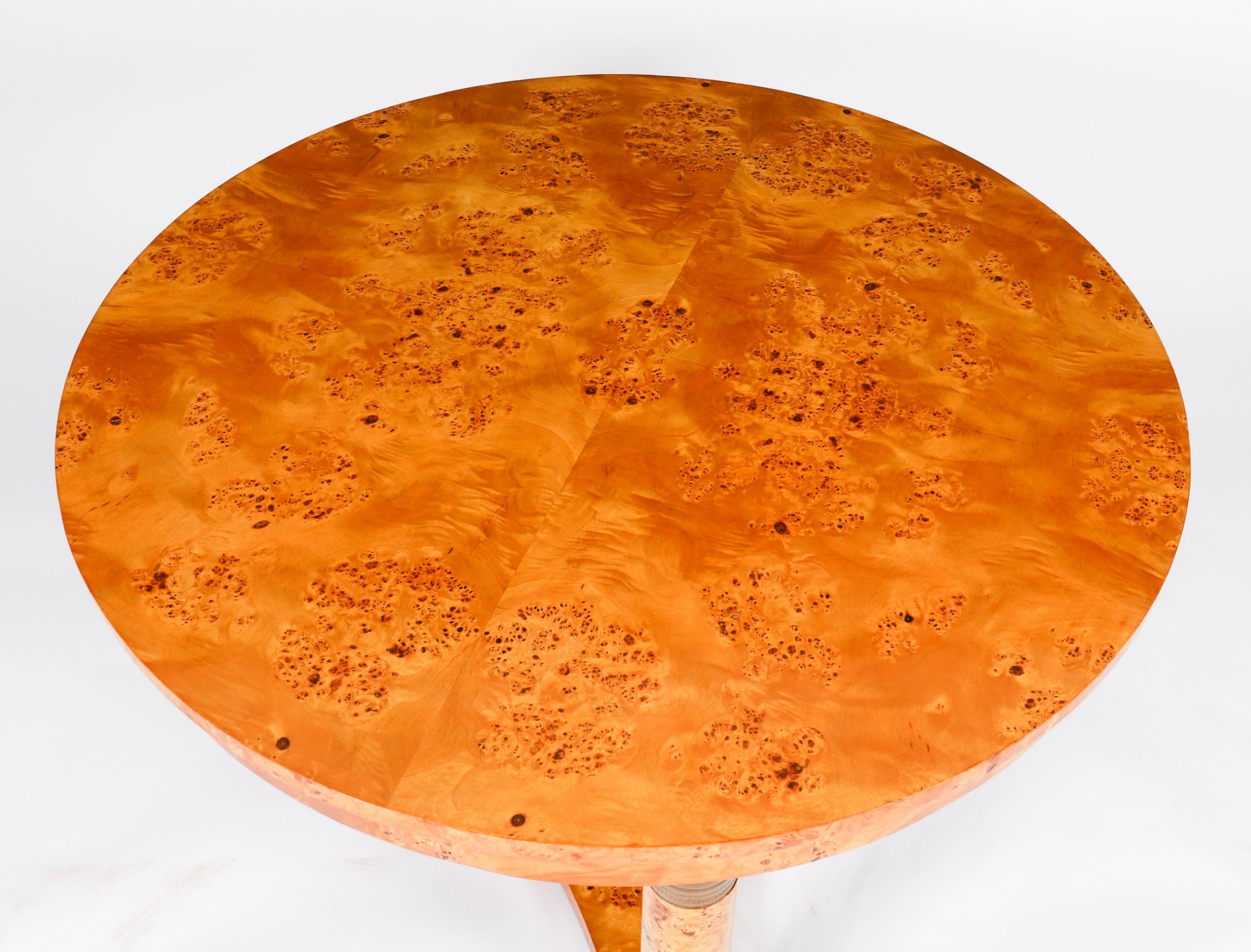
This is a striking antique Swedish Burr Elm and ormolu mounted Biedermeier occasional/coffee table, dating from the early 20th Century.


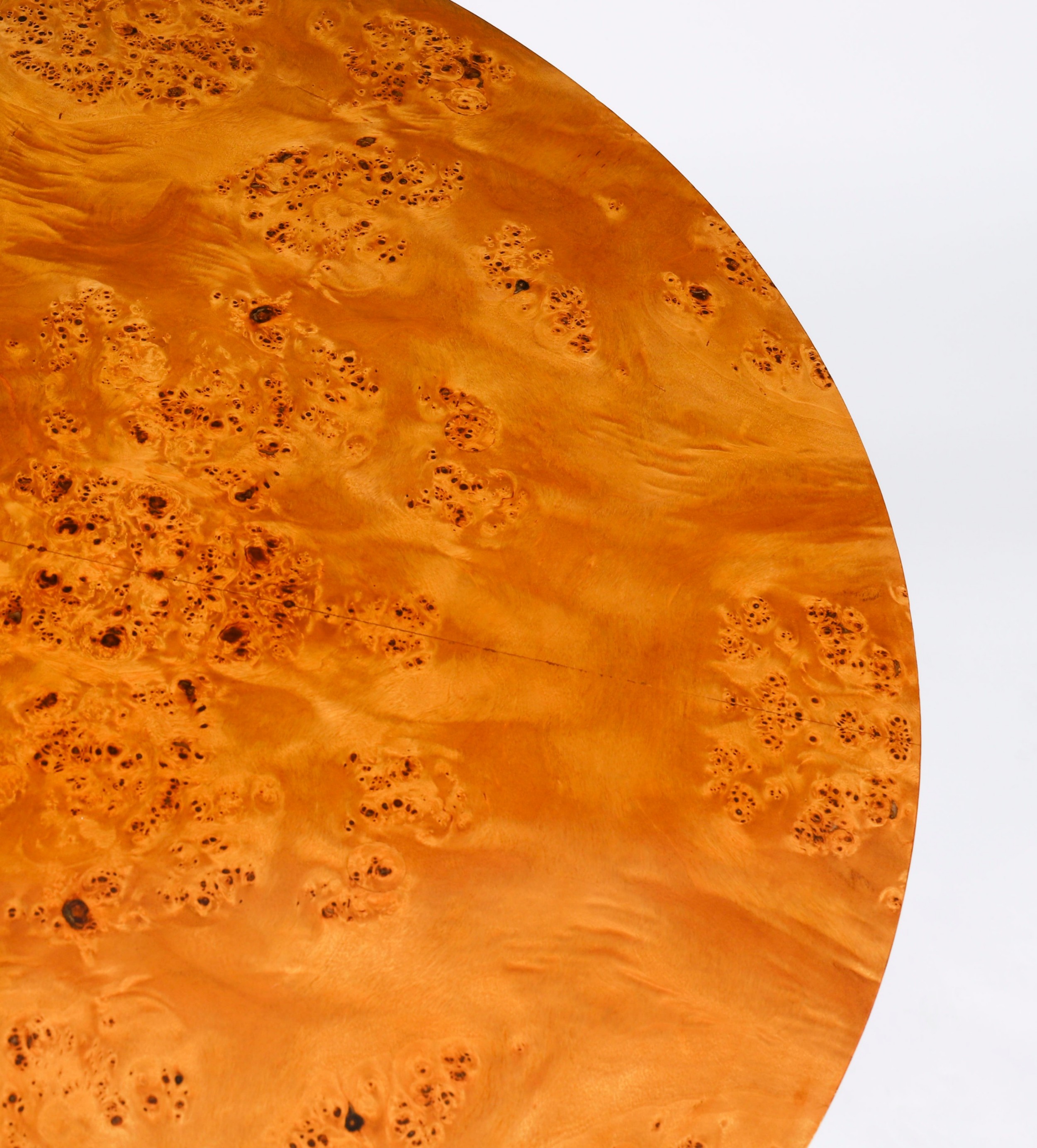
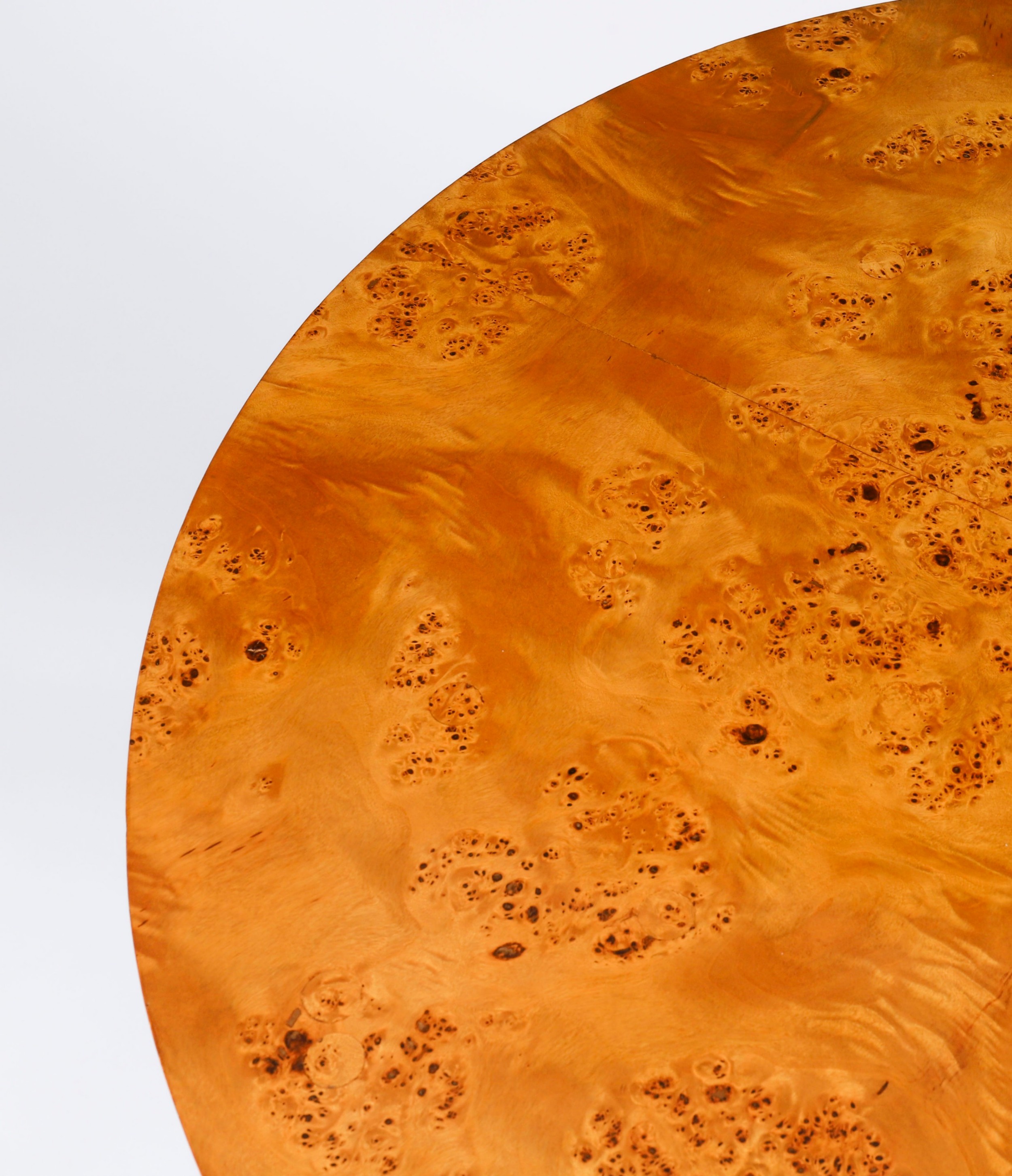
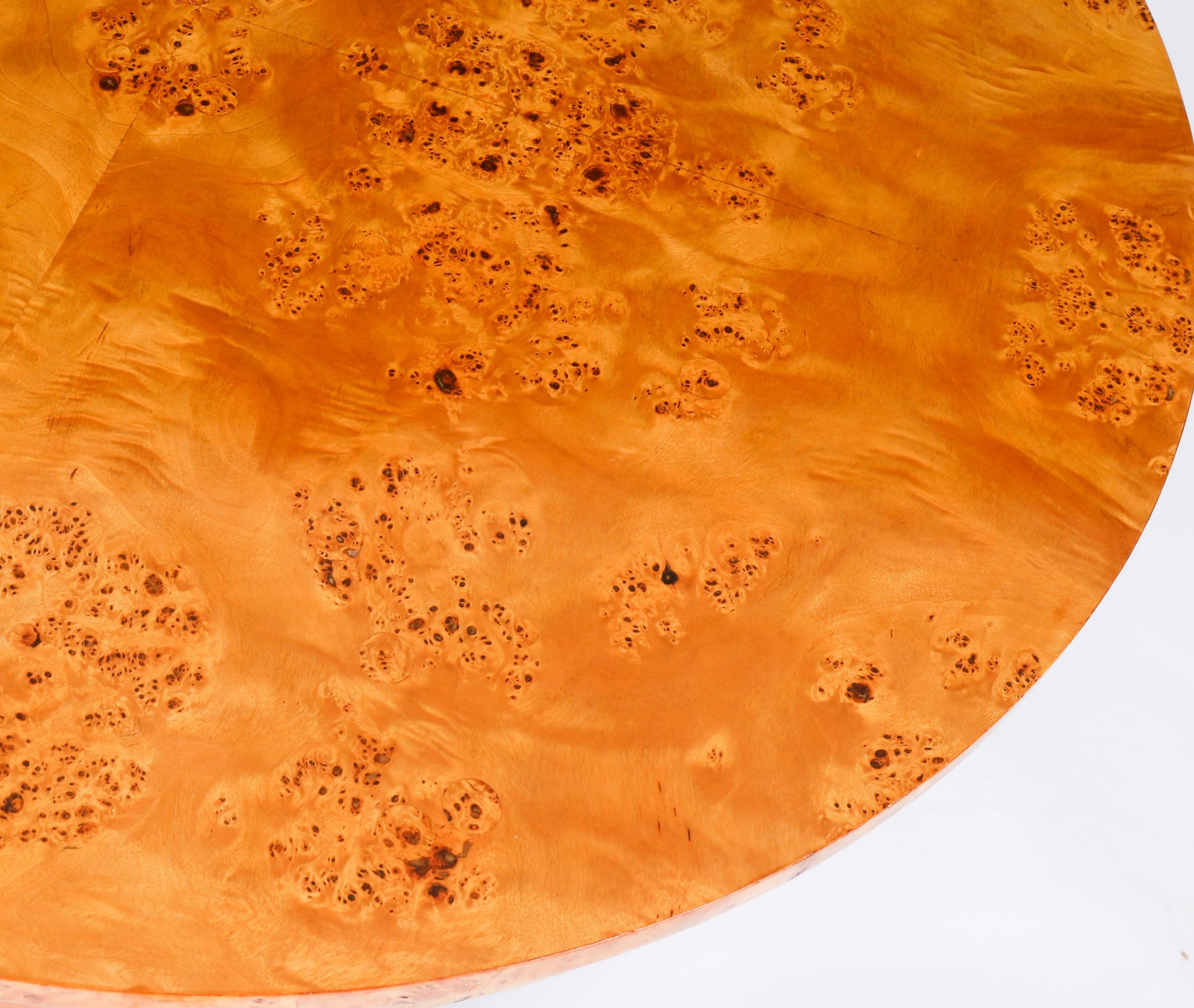
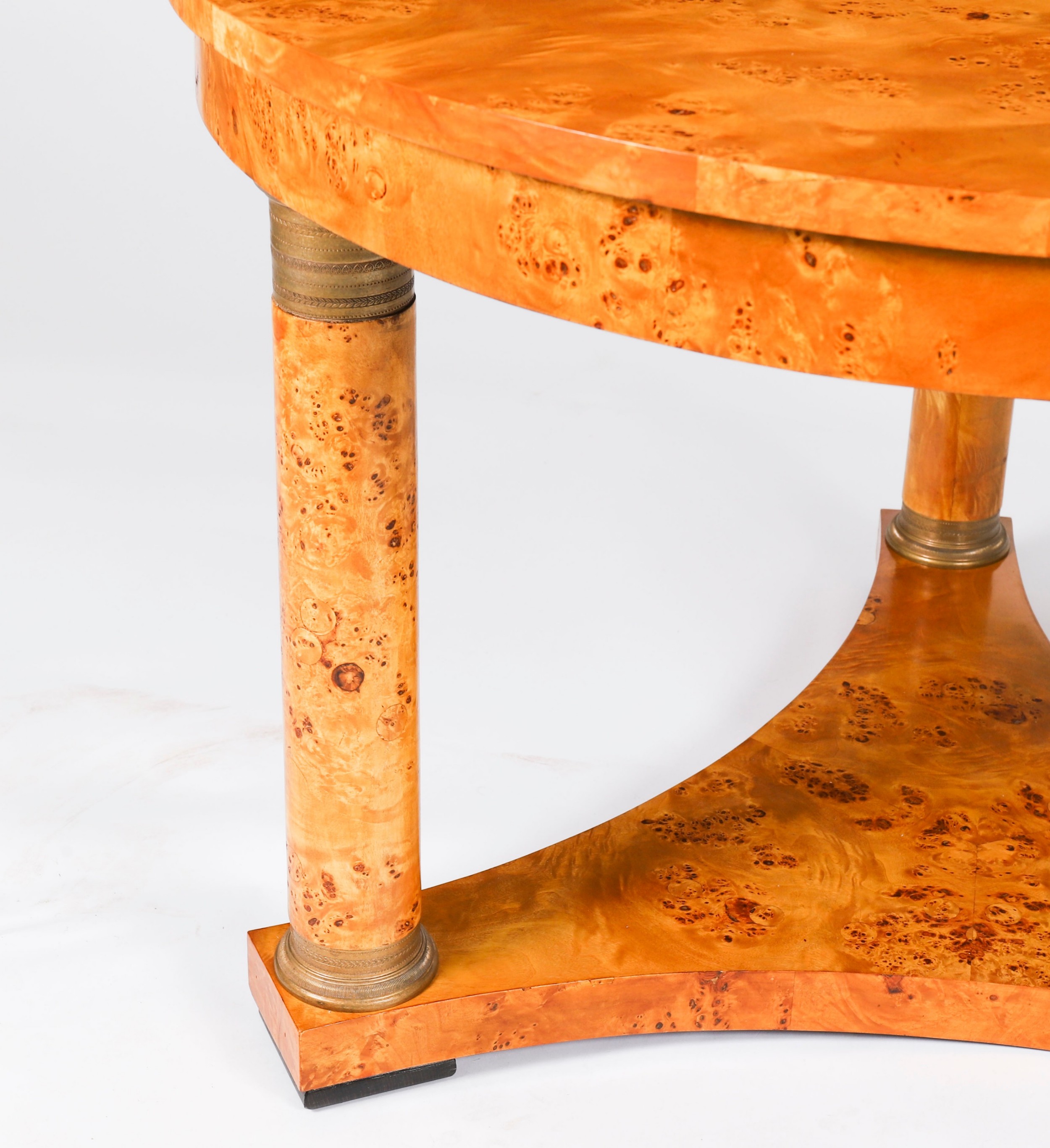
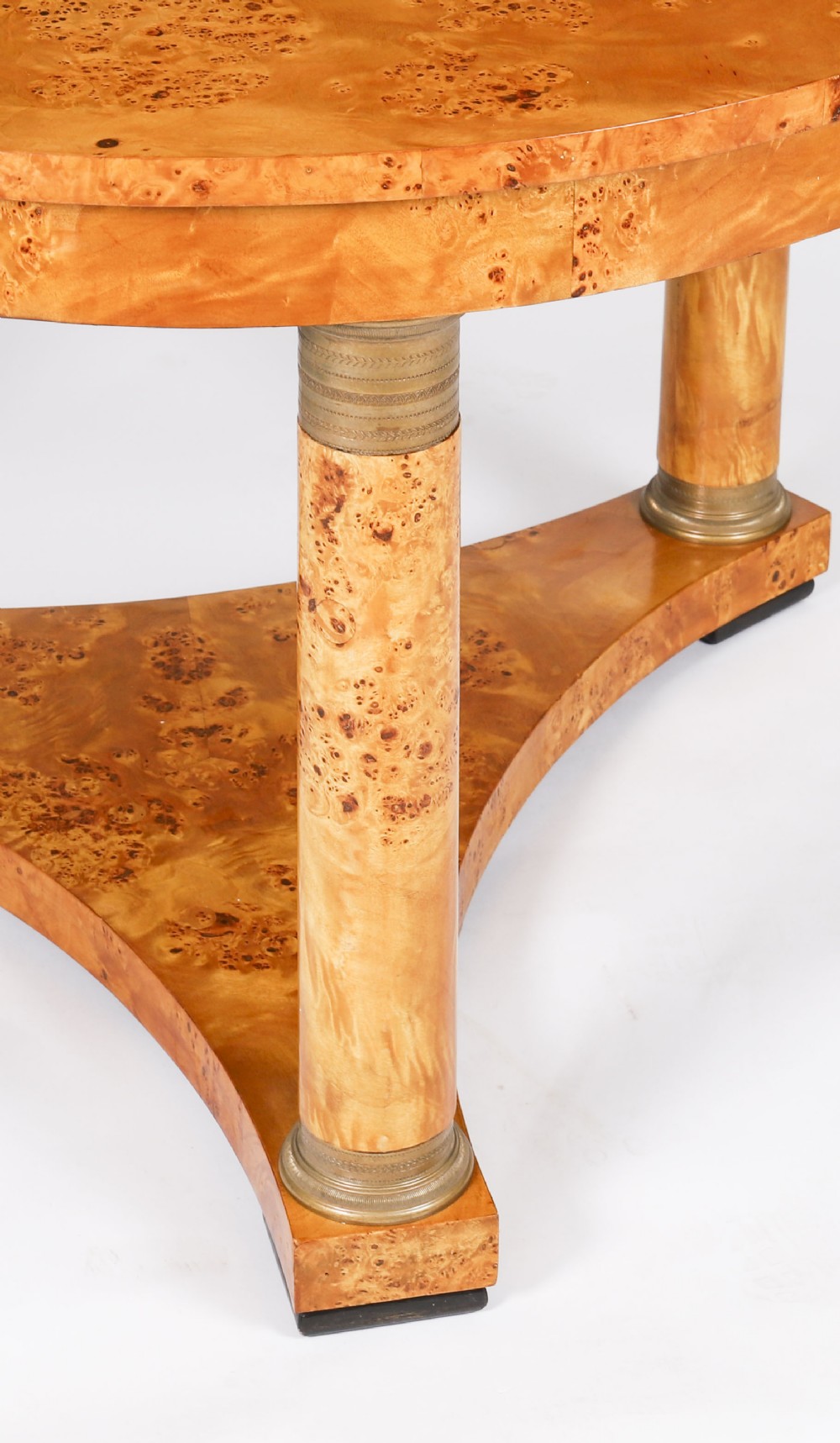
The round table features a mirrored burr elm top on three Neo-classical columns with a tripod 'S' shaped base and decorative ormolu mountings.


Add some Biedermeier style to your home with this lovely coffee table - side table.


Condition:

In really excellent condition having only been beautifully cleaned and waxed in our workshops, please see photos for confirmation.

Dimensions in cm:

Height 61 cm x Width 91 cm x Depth 91 cm

Dimensions in inches:

Height 2 foot x Width 3 feet x Depth 3 feet

Biedermeier period,

refers to an era in Central Europe during which arts appealed to common sensibilities in the historical period between 1815, the year of the Congress of Vienna at the end of the Napoleonic Wars, and 1848, the year of the European revolutions.

Although the term itself is a historical reference, it is predominantly used to denote the artistic styles that flourished in the fields of literature, music, the visual arts and interior design.

Biedermeier was an influential style of furniture design from Germany during the years 1815–1848, based on utilitarian principles. The period extended into Austria and Scandinavia.

Throughout the period, emphasis was kept upon clean lines and minimal ornamentation. As the period progressed, however, the style moved from the early rebellion against Romantic-era fussiness to increasingly ornate commissions by a rising middle class, eager to show their newfound wealth.

The idea of clean lines and utilitarian postures would resurface in the 20th century, continuing into the present day. The Biedermeier style was a simplified interpretation of the influential French Empire Style of Napoleon I, which introduced the romance of ancient Roman Empire styles, adapting these to modern early 19th century households. Biedermeier furniture used locally available materials such as cherry, ash and oak woods.

Biedermeier furniture and lifestyle was a focus on exhibitions at the Vienna applied arts museum in 1896. The many visitors to this exhibition were so influenced by this fantasy style and its elegance that a new resurgence or revival period became popular amongst European cabinetmakers.

This revival period lasted up until the Art Deco style was taken up. Biedermeier also influenced the various Bauhaus styles through their truth in material philosophy.

Ormolu - Gilt Bronze (from French 'or moulu', signifying ground or pounded gold) is an 18th-century English term for applying finely ground, high-carat gold in a mercury amalgam to an object of bronze.The mercury is driven off in a kiln leaving behind a gold-coloured veneer known as 'gilt bronze'.

The manufacture of true ormolu employs a process known as mercury-gilding or fire-gilding, in which a solution of nitrate of mercury is applied to a piece of copper, brass, or bronze, followed by the application of an amalgam of gold and mercury. The item was then exposed to extreme heat until the mercury burned off and the gold remained, adhered to the metal object.

After around 1830 because legislation had outlawed the use of mercury other techniques were used instead. Electroplating is the most common modern technique. Ormolu techniques are essentially the same as those used on silver, to produce silver-gilt..

Our reference: A5094

Physical Dimensions
Height
61cm (24.02")
Width
91cm (35.83")
Depth
91cm (35.83")
Declaration

Regent Antiques has dated this Burr Elm Coffee Table to the 1920s.
Reference Numbers
Sellingantiques Reference
SA1199042
Dealers Internal Reference
A5094
Description
This is a striking antique Swedish Burr Elm and ormolu mounted Biedermeier occasional/coffee table, dating from the early 20th Century.


The round table features a mirrored burr elm top on three Neo-classical columns with a tripod 'S' shaped base and decorative ormolu mountings.
Regent Antiques
fig 1. A circular 20th-century Biedermeier revival coffee table made from burr elm with three column legs set on a triform plinth base.
fig 1. Antique Burr Elm Biedermeier Revival Coffee Occasional Table 20th Century


Add some Biedermeier style to your home with this lovely coffee table - side table.


Condition:

In really excellent condition having only been beautifully cleaned and waxed in our workshops, please see photos for confirmation.
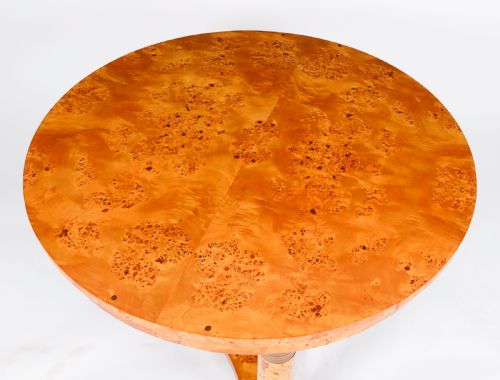
fig 2. A circular 20th-century Biedermeier revival coffee table made from burr elm with three column legs set on a triform plinth base.
fig 2. Antique Burr Elm Biedermeier Revival Coffee Occasional Table 20th Century

Dimensions in cm:

Height 61 cm x Width 91 cm x Depth 91 cm

Dimensions in inches:

Height 2 foot x Width 3 feet x Depth 3 feet

Biedermeier period,

refers to an era in Central Europe during which arts appealed to common sensibilities in the historical period between 1815, the year of the Congress of Vienna at the end of the Napoleonic Wars, and 1848, the year of the European revolutions.
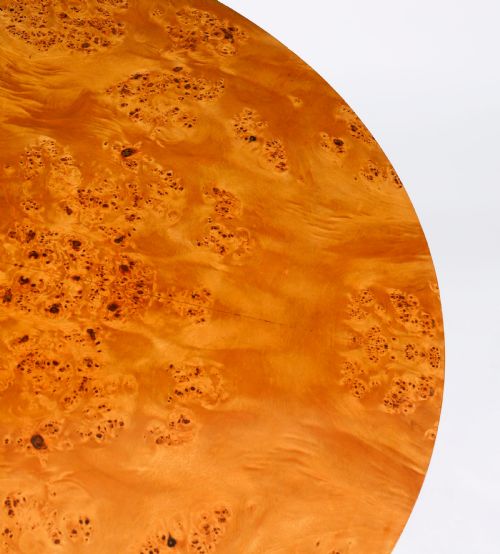
fig 3. A circular 20th-century Biedermeier revival coffee table made from burr elm with three column legs set on a triform plinth base.
fig 3. Antique Burr Elm Biedermeier Revival Coffee Occasional Table 20th Century

Although the term itself is a historical reference, it is predominantly used to denote the artistic styles that flourished in the fields of literature, music, the visual arts and interior design.

Biedermeier was an influential style of furniture design from Germany during the years 1815–1848, based on utilitarian principles. The period extended into Austria and Scandinavia.
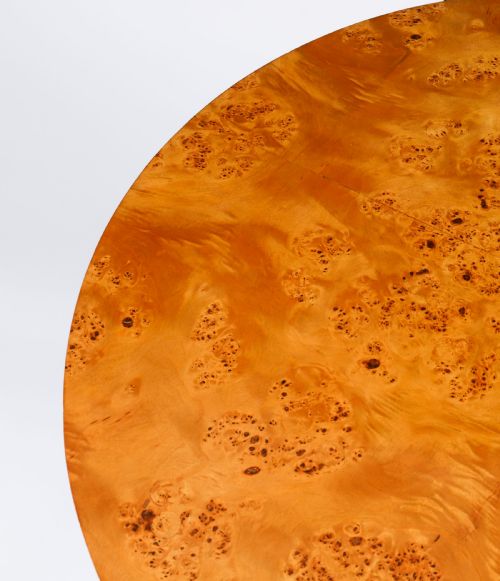
fig 4. A circular 20th-century Biedermeier revival coffee table made from burr elm with three column legs set on a triform plinth base.
fig 4. Antique Burr Elm Biedermeier Revival Coffee Occasional Table 20th Century

Throughout the period, emphasis was kept upon clean lines and minimal ornamentation. As the period progressed, however, the style moved from the early rebellion against Romantic-era fussiness to increasingly ornate commissions by a rising middle class, eager to show their newfound wealth.
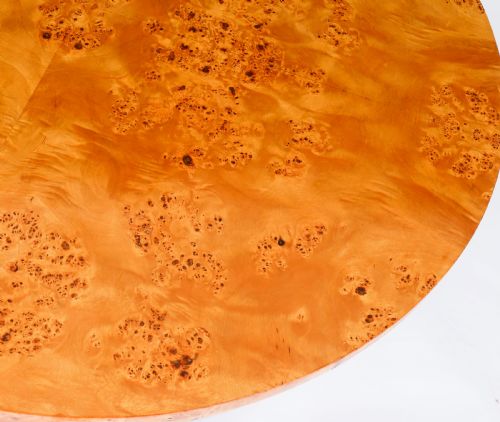
fig 5. A circular 20th-century Biedermeier revival coffee table made from burr elm with three column legs set on a triform plinth base.
fig 5. Antique Burr Elm Biedermeier Revival Coffee Occasional Table 20th Century

The idea of clean lines and utilitarian postures would resurface in the 20th century, continuing into the present day. The Biedermeier style was a simplified interpretation of the influential French Empire Style of Napoleon I, which introduced the romance of ancient Roman Empire styles, adapting these to modern early 19th century households. Biedermeier furniture used locally available materials such as cherry, ash and oak woods.
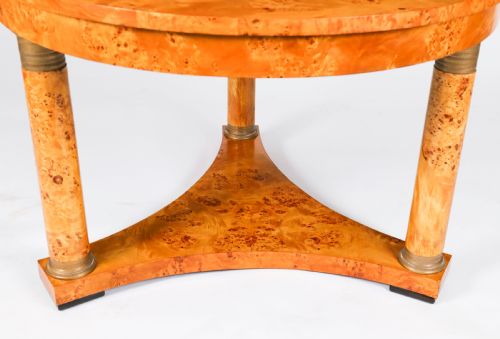
fig 6. A circular 20th-century Biedermeier revival coffee table made from burr elm with three column legs set on a triform plinth base.
fig 6. Antique Burr Elm Biedermeier Revival Coffee Occasional Table 20th Century

Biedermeier furniture and lifestyle was a focus on exhibitions at the Vienna applied arts museum in 1896. The many visitors to this exhibition were so influenced by this fantasy style and its elegance that a new resurgence or revival period became popular amongst European cabinetmakers.
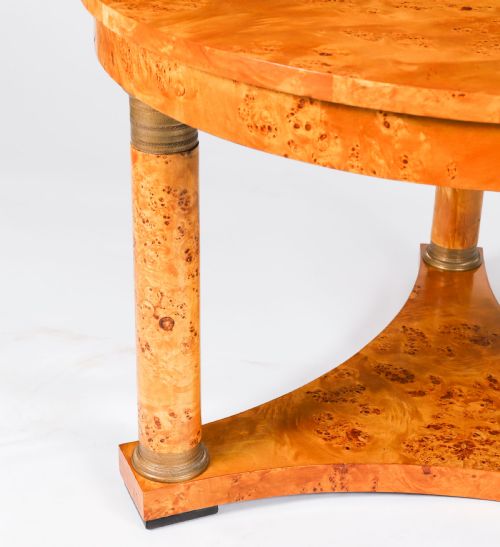
fig 7. A circular 20th-century Biedermeier revival coffee table made from burr elm with three column legs set on a triform plinth base.
fig 7. Antique Burr Elm Biedermeier Revival Coffee Occasional Table 20th Century

This revival period lasted up until the Art Deco style was taken up. Biedermeier also influenced the various Bauhaus styles through their truth in material philosophy.

Ormolu - Gilt Bronze (from French 'or moulu', signifying ground or pounded gold) is an 18th-century English term for applying finely ground, high-carat gold in a mercury amalgam to an object of bronze.The mercury is driven off in a kiln leaving behind a gold-coloured veneer known as 'gilt bronze'.
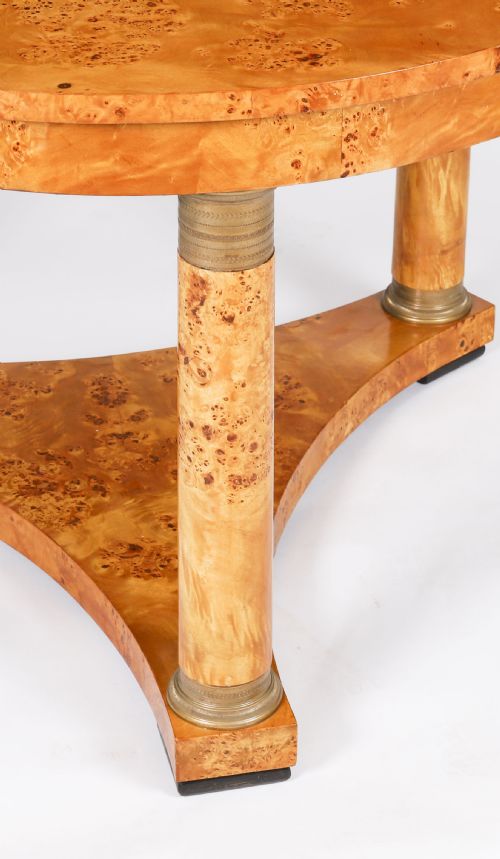
fig 8. A circular 20th-century Biedermeier revival coffee table made from burr elm with three column legs set on a triform plinth base.
fig 8. Antique Burr Elm Biedermeier Revival Coffee Occasional Table 20th Century

The manufacture of true ormolu employs a process known as mercury-gilding or fire-gilding, in which a solution of nitrate of mercury is applied to a piece of copper, brass, or bronze, followed by the application of an amalgam of gold and mercury. The item was then exposed to extreme heat until the mercury burned off and the gold remained, adhered to the metal object.
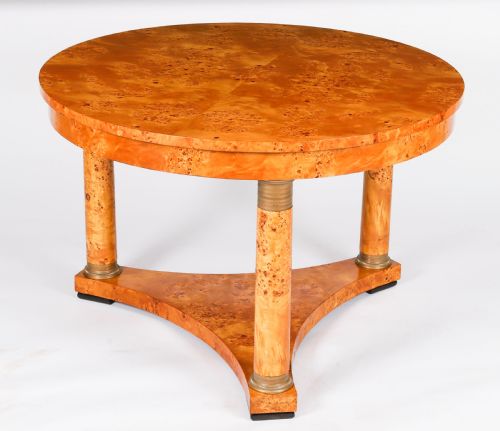
fig 9. A circular 20th-century Biedermeier revival coffee table made from burr elm with three column legs set on a triform plinth base.
fig 9. Antique Burr Elm Biedermeier Revival Coffee Occasional Table 20th Century

After around 1830 because legislation had outlawed the use of mercury other techniques were used instead. Electroplating is the most common modern technique. Ormolu techniques are essentially the same as those used on silver, to produce silver-gilt..

Our reference: A5094

Height
61cm (24.02")
Width
91cm (35.83")
Depth
91cm (35.83")
Date of Manufacture

Regent Antiques has dated this Burr Elm Coffee Table to the 1920s.

Reference Numbers
Sellingantiques Ref
SA1199042
Dealers Internal Ref
A5094
Regent Antiques
Regent Antiques
Sellingantiques verified Since Sep 2016

We specialise in english and continental furniture, silver, porcelain and decorative items.

Dealer Profile

You can view the stock and full dealer information on the Regent Antiques Profile Page

Trade Associations

Regent Antiques is a registered member of LAPADA  CINOA
PDF SHARE
SAVE
A circular 20th-century Biedermeier revival coffee table made from burr elm with three column legs set on a triform plinth base.
1 / 11
Archive I A circular 20th-century Biedermeier revival coffee table made from burr elm with three column legs set on a triform plinth base.

Antique Burr Elm Biedermeier Revival Coffee Occasional Table 20th Century
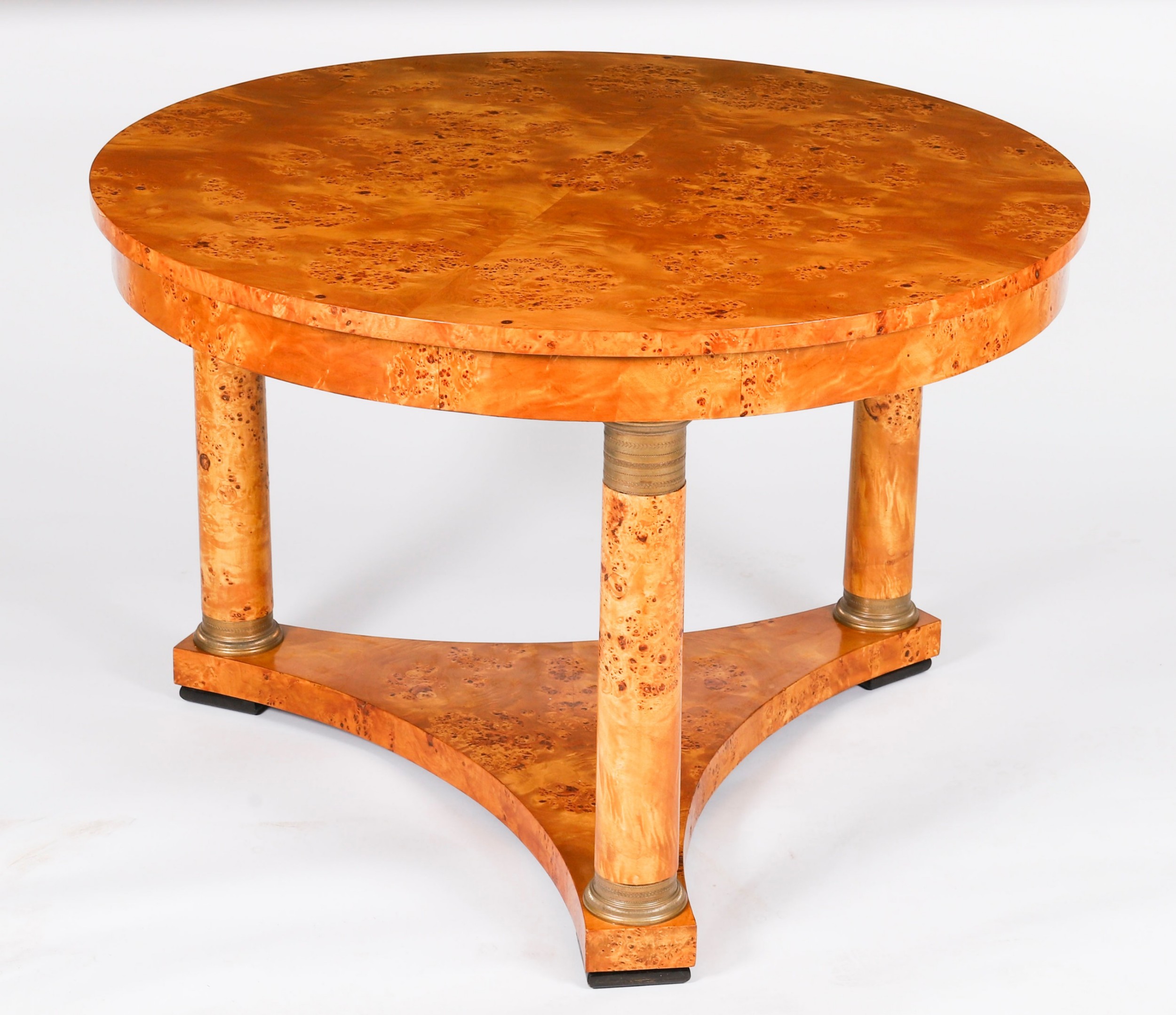
Archive II A circular 20th-century Biedermeier revival coffee table made from burr elm with three column legs set on a triform plinth base. View II
Archive III A circular 20th-century Biedermeier revival coffee table made from burr elm with three column legs set on a triform plinth base. View III
Archive IV A circular 20th-century Biedermeier revival coffee table made from burr elm with three column legs set on a triform plinth base. View IV
Archive V A circular 20th-century Biedermeier revival coffee table made from burr elm with three column legs set on a triform plinth base. View V
Archive VI A circular 20th-century Biedermeier revival coffee table made from burr elm with three column legs set on a triform plinth base. View VI
Archive VII A circular 20th-century Biedermeier revival coffee table made from burr elm with three column legs set on a triform plinth base. View VII
Archive VIII A circular 20th-century Biedermeier revival coffee table made from burr elm with three column legs set on a triform plinth base. View VIII
Archive IX A circular 20th-century Biedermeier revival coffee table made from burr elm with three column legs set on a triform plinth base. View IX
Archive X A circular 20th-century Biedermeier revival coffee table made from burr elm with three column legs set on a triform plinth base. View X
Archive XI A circular 20th-century Biedermeier revival coffee table made from burr elm with three column legs set on a triform plinth base. View XI
Enlarged Archival View
Location
Manor Warehouse
318 Green Lanes
London
N4 1BX
United Kingdom
Verified Since Sep 2016
Items For Sale 659
Items Sold 2,608
Regent Antiques
Regent Antiques
Verified Since Sep 2016
View Dealer Info
Location: Manor Warehouse, 318 Green Lanes, London, N4 1BX, United Kingdom
Verified
Sep 2016
For Sale
659
Sold
2,608
A circular 20th-century Biedermeier revival coffee table made from burr elm with three column legs set on a triform plinth base.
Antique Burr Elm Biedermeier Revival Coffee Occasional Table 20th Century
Ref: SA1199042
A circular 20th-century Biedermeier revival coffee table made from burr elm with three column legs set on a triform plinth base.
Detail View 1
Detail View 2
Detail View 3
Detail View 4
Detail View 5
Detail View 6
Detail View 7
Detail View 8
Detail View 9
Detail View 10
Archival Detail
Every single antique dealer on our platform is individually approved by our internal team. We verify their professional trade history, ethical standards, and photographic quality to ensure a secure, high-standard buying environment. Upon joining, every dealer agrees to a strict 9-point code of conduct. While issues can occasionally arise, our dealers typically resolve them swiftly and directly with the buyer. In fact, since our founding in 2002, Sellingantiques has only had to step in to help resolve an issue on roughly five occasions—a true testament to the quality of our dealers and their dedication to your happiness.
Our dealers are highly experienced in packing and shipping fragile, high-value antiques. Because you are in direct contact with the dealer, you will be able to easily go through all available shipping and insurance options together to ensure your item arrives safely.
Antiques are the ultimate green purchase. By choosing historical pieces over newly manufactured goods, you completely eliminate the carbon footprint of modern mass production while preserving exceptional, timeless craftsmanship.

Biedermeier Revival style emerged in the late 19th and early 20th centuries, reinterpreting Central European designs from the early 1800s. It prioritises geometric forms, highly figured wood veneers such as burr elm or birch, and restrained Classical architectural influences.

These tables traditionally feature rich, figure-patterned wood veneers like burr elm, fruitwood, or birch applied over solid timber. Decorative accents often incorporate turned brass collars, columned supports, and shaped triform plinth bases.

Authentic pieces display distinct book-matched or radial veneer patterns, structural column supports, and thick plinth bases. Examining construction methods, natural age-related wear on the underside, and hand-fitted brass hardware helps determine authenticity.

The clean architectural lines and warm timber tones integrate easily alongside modern minimalist upholstery or classic leather seating. Positioned in a central living space, the natural grain of the burr veneer serves as a visual focal point.

Keep timber furniture away from direct sunlight and heat sources to prevent veneer lifting or discoloration. Dust regularly with a soft dry cloth and periodically apply a high-quality beeswax polish to protect the finish.
items
Add keywords to the filter
Price
£100
£250000
Era
Movements
Material
Origin
Stock Location
Freshness
Online Payments
Categories