8,310  PAGES BROWSED TODAY PAGES TODAY 36  ANTIQUES UPLOADED TODAY NEW ARRIVALS
ID #SA1197550
FOR SALE
£1,350
Email
Save
Antique French Napoleon III Ebonized Boulle Pier Cabinet C.1860 19th C
Regent Antiques
for sale €1,580     $1,715
£1,350
Regent Antiques

Regent Antiques

Sellingantiques Verified Since Sep 2016
View Dealers Stock Page
  • About Us
    We specialise in english and continental furniture, silver, porcelain and decorative items.
  • Trade Associations
    Regent Antiques is a registered member of LAPADA  CINOA
Id #SA1197550
PDF SHARE
SAVE

Antique French Napoleon III Ebonized Boulle Pier Cabinet C.1860 19th C

19th century
For Sale by Regent Antiques
Description

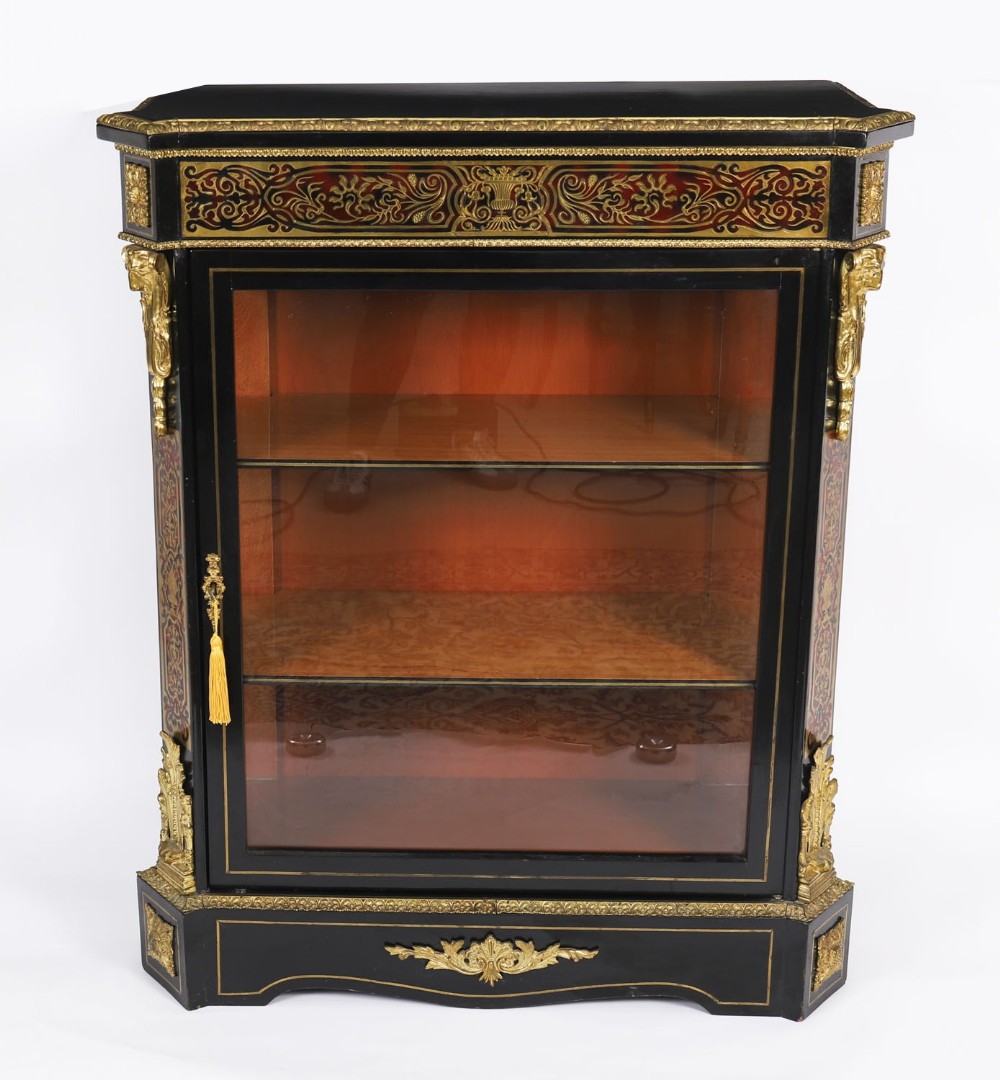
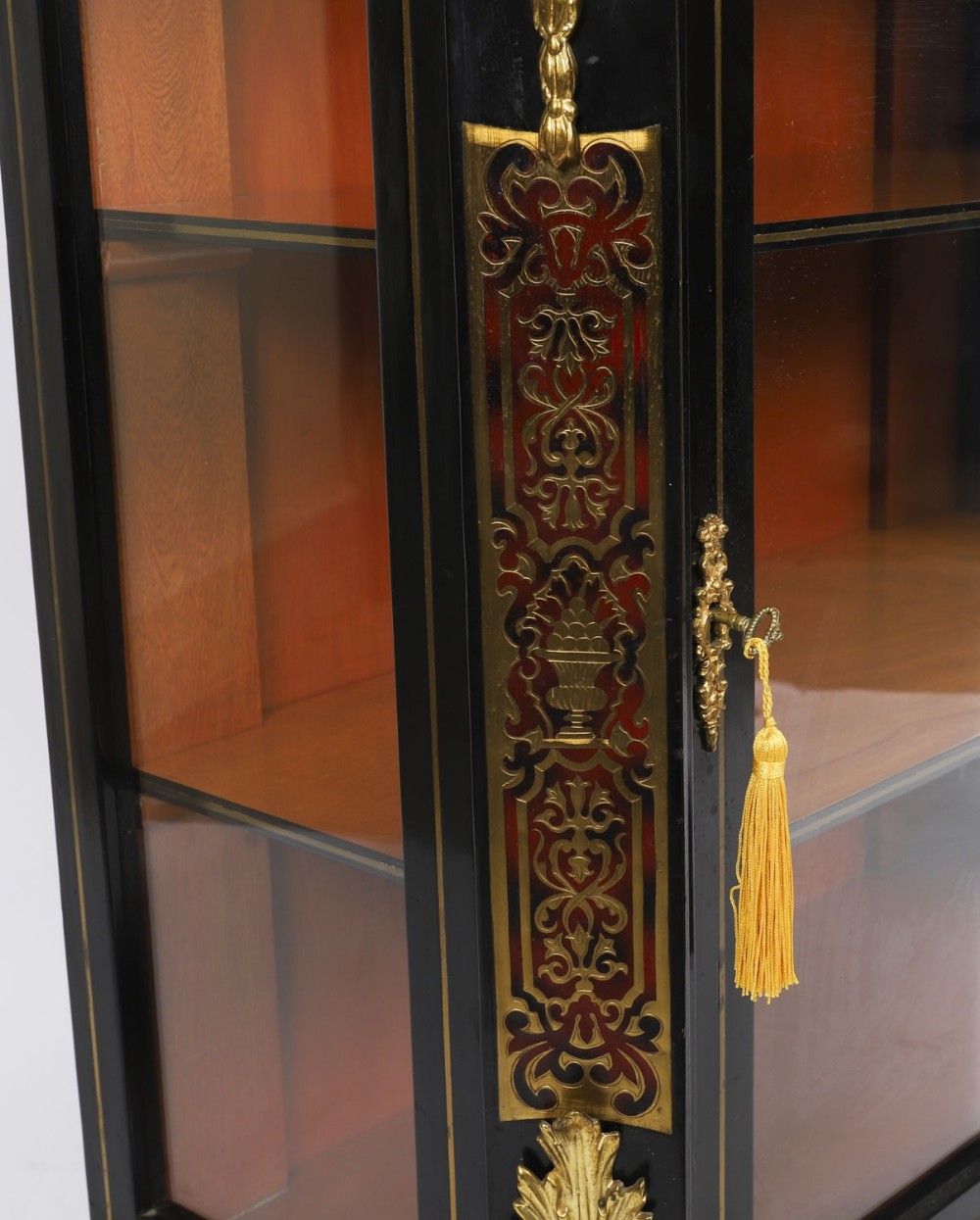
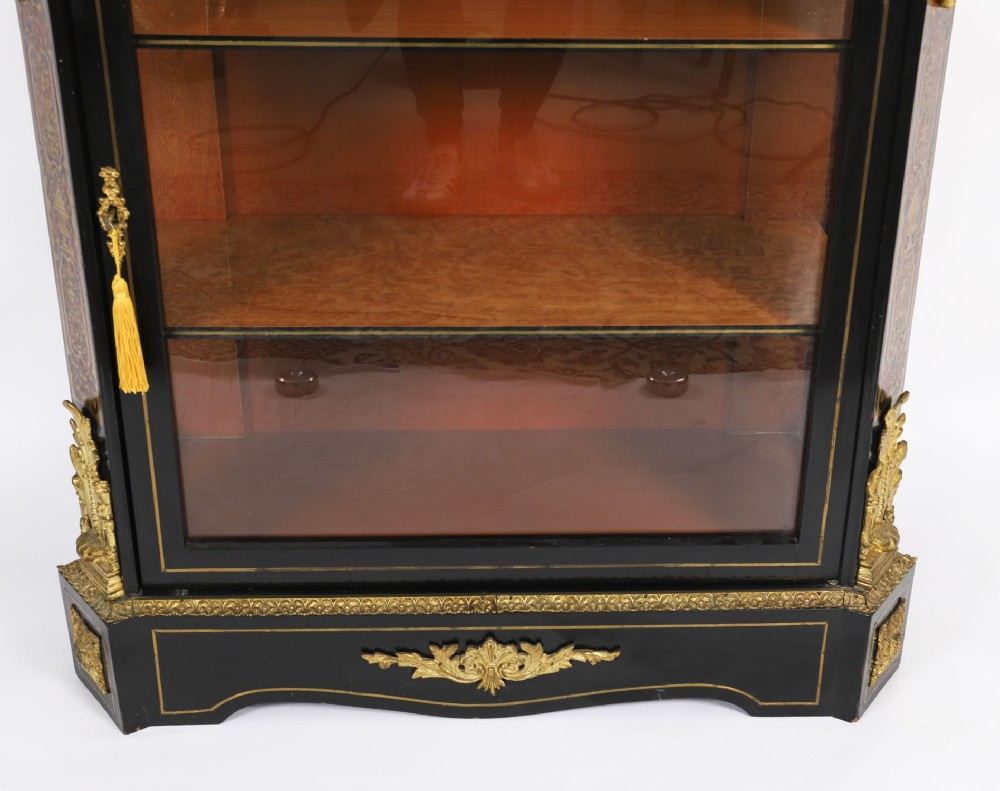
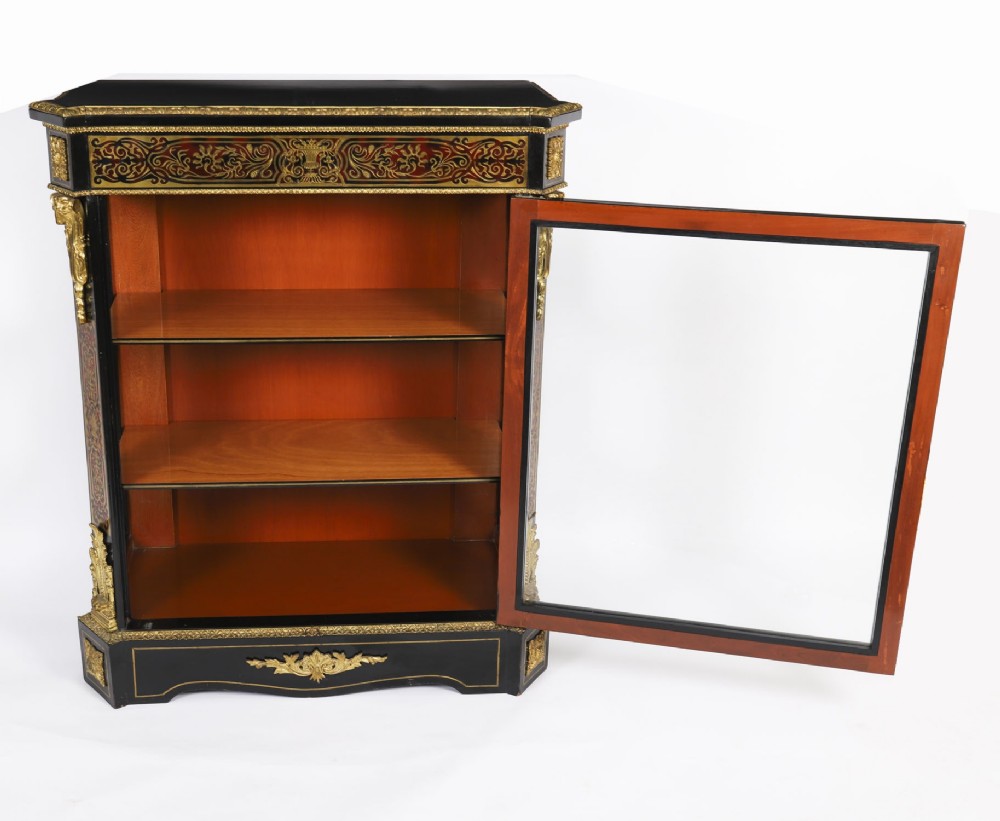
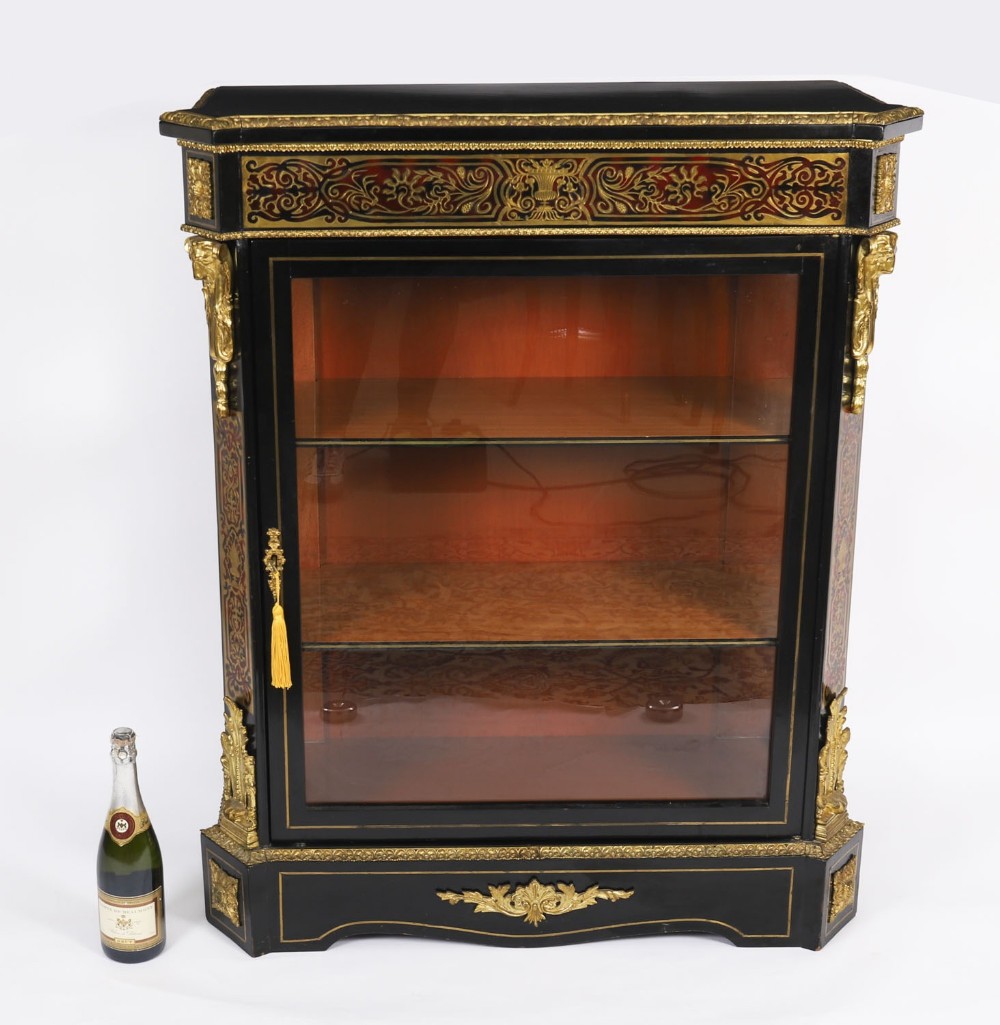
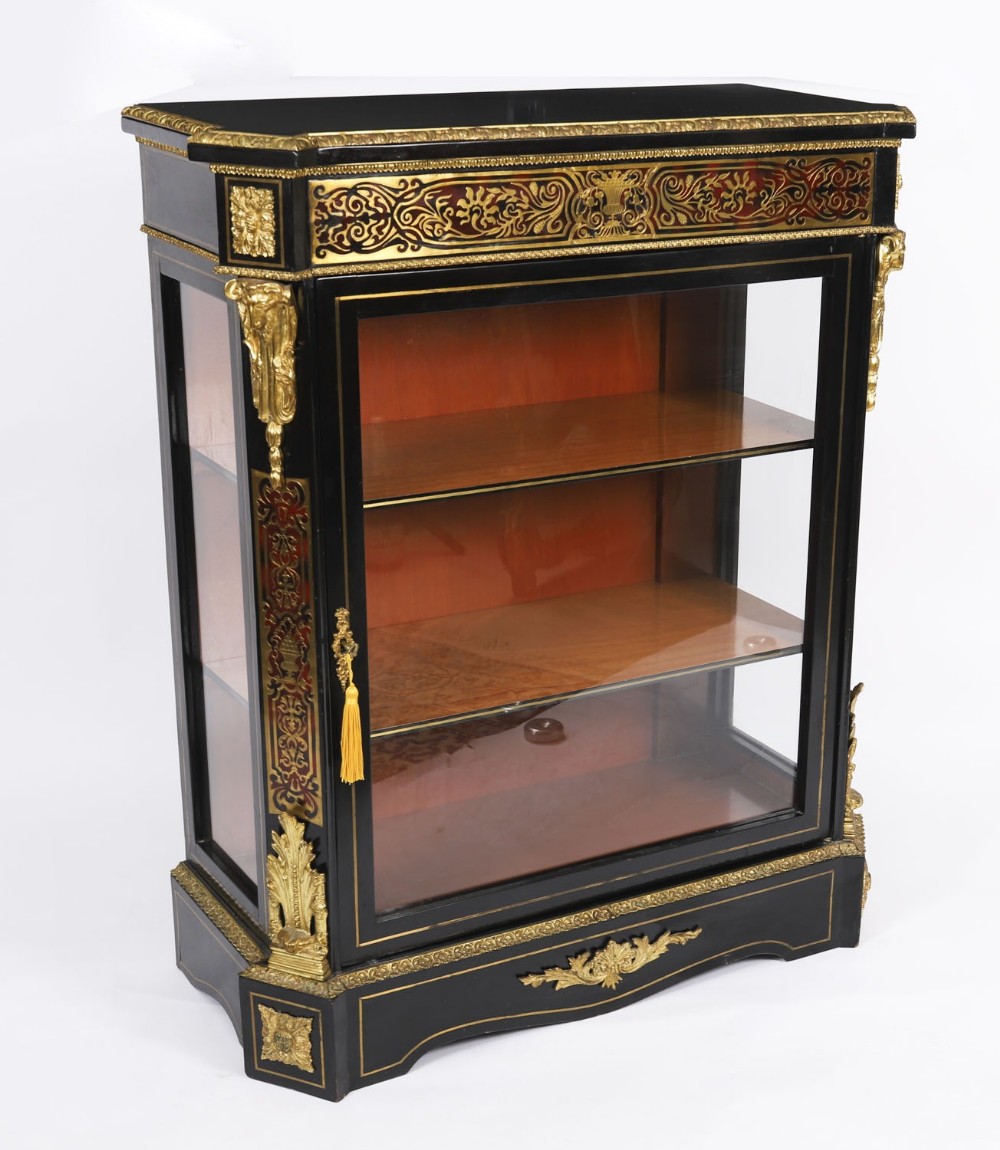
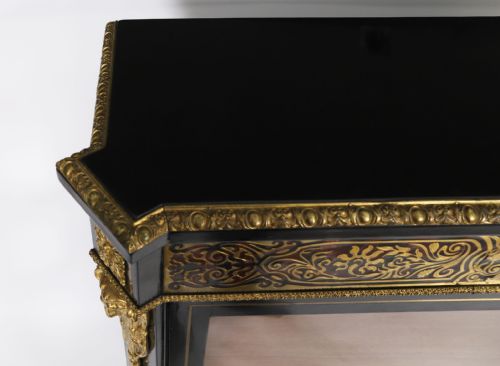
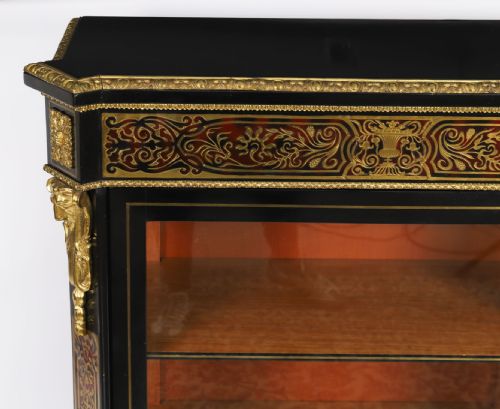
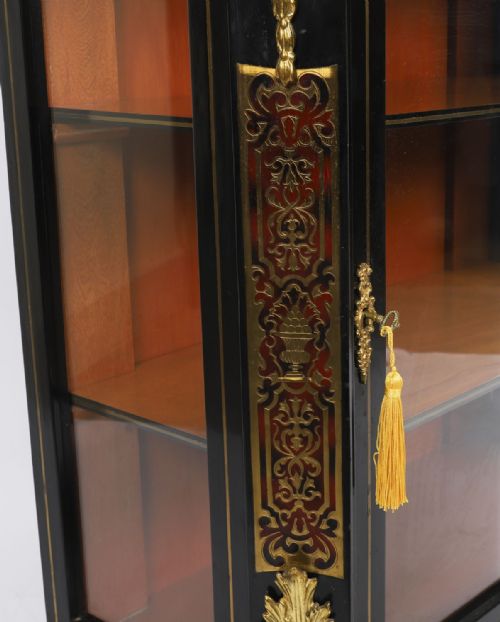
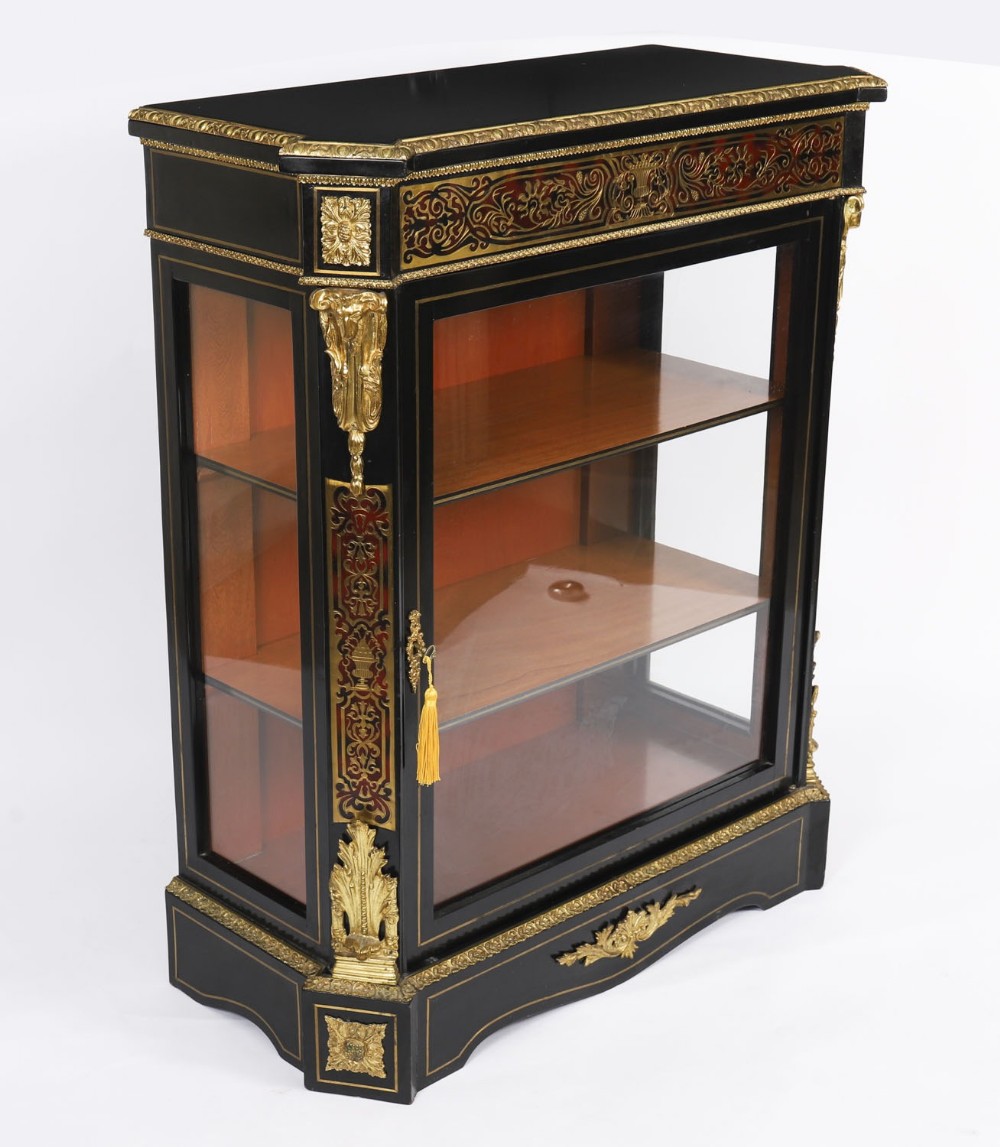
This is a beautiful antique French Napoleon III ebonized and cut brass marquetry red Boulle pier cabinet, circa 1860 in date.

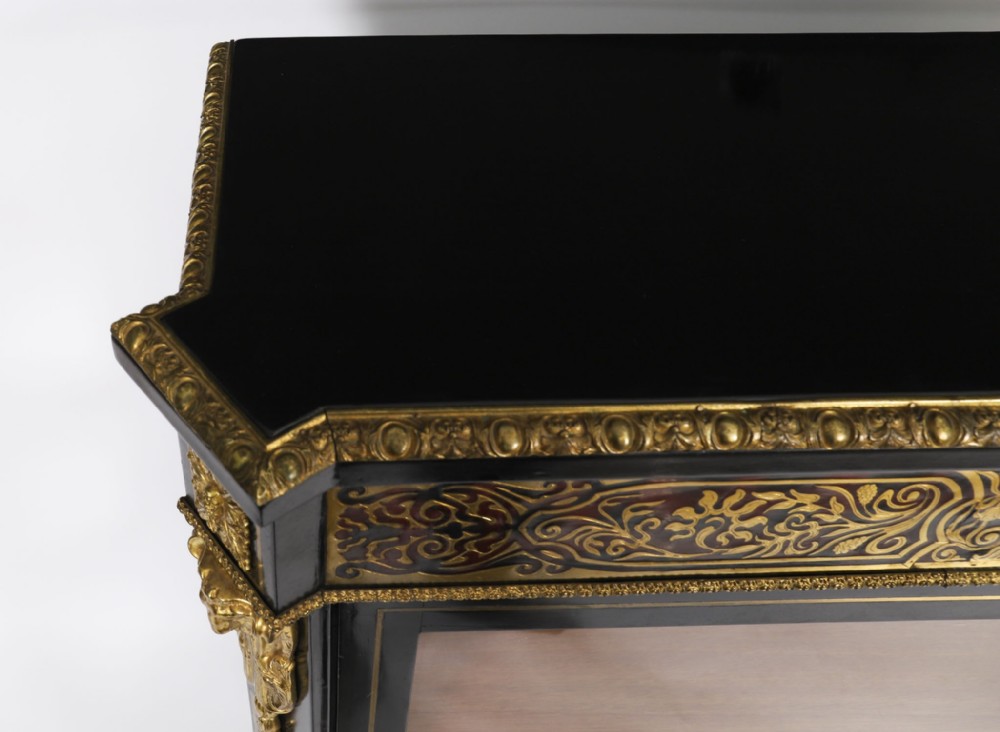
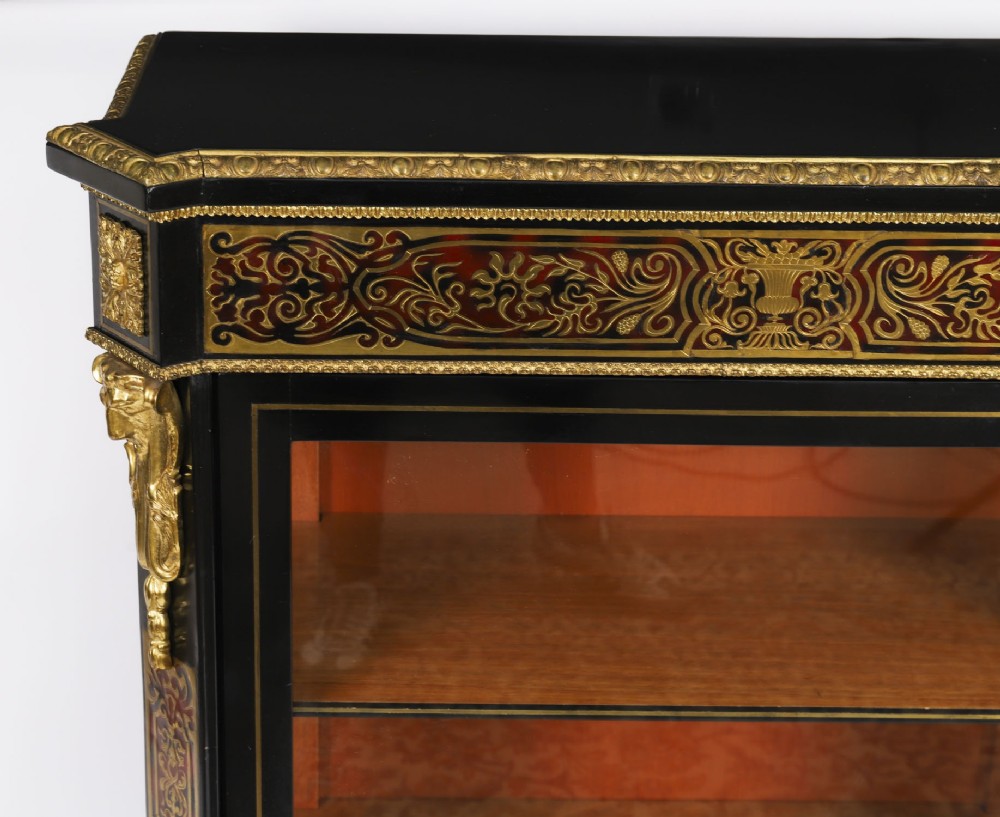
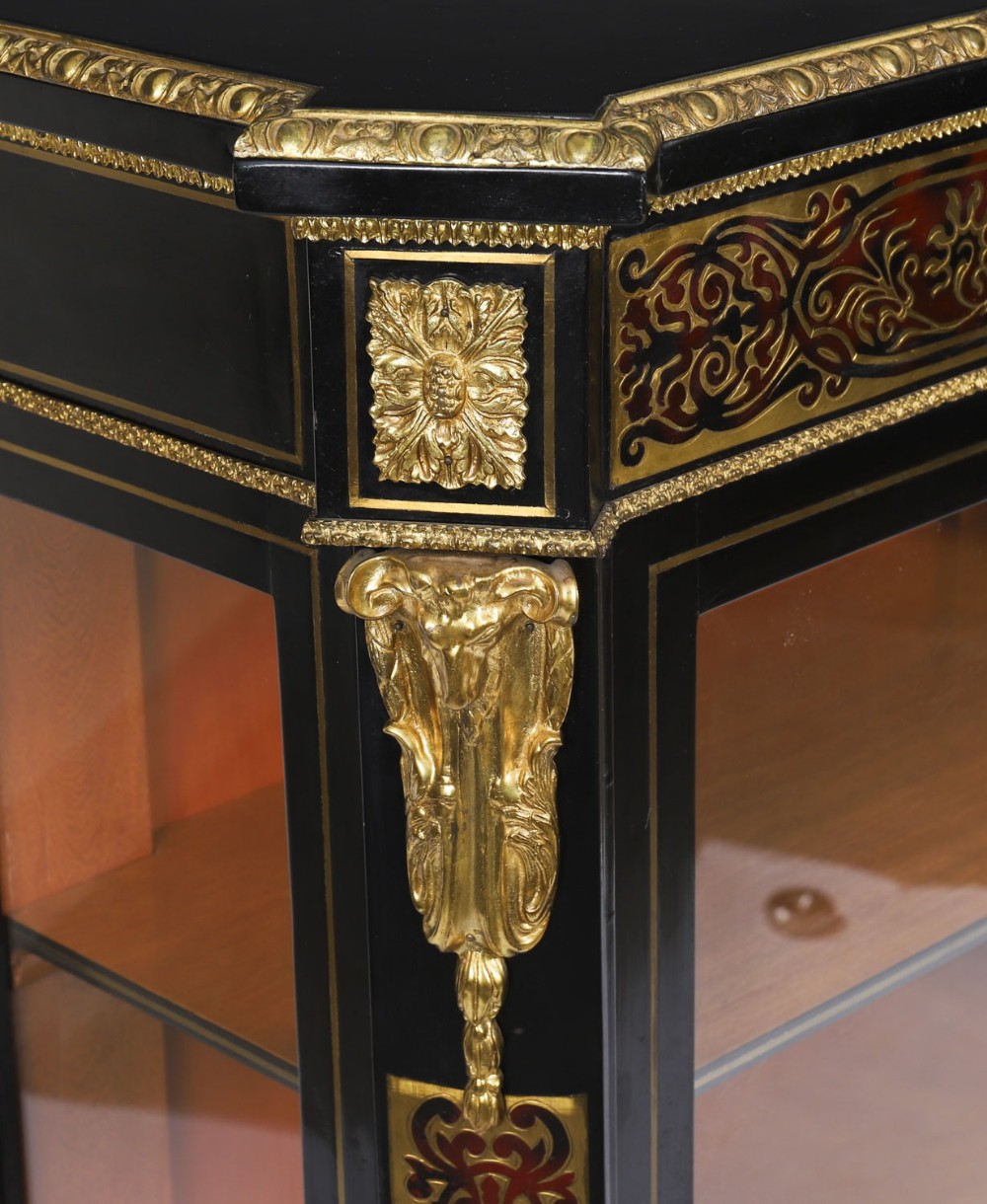
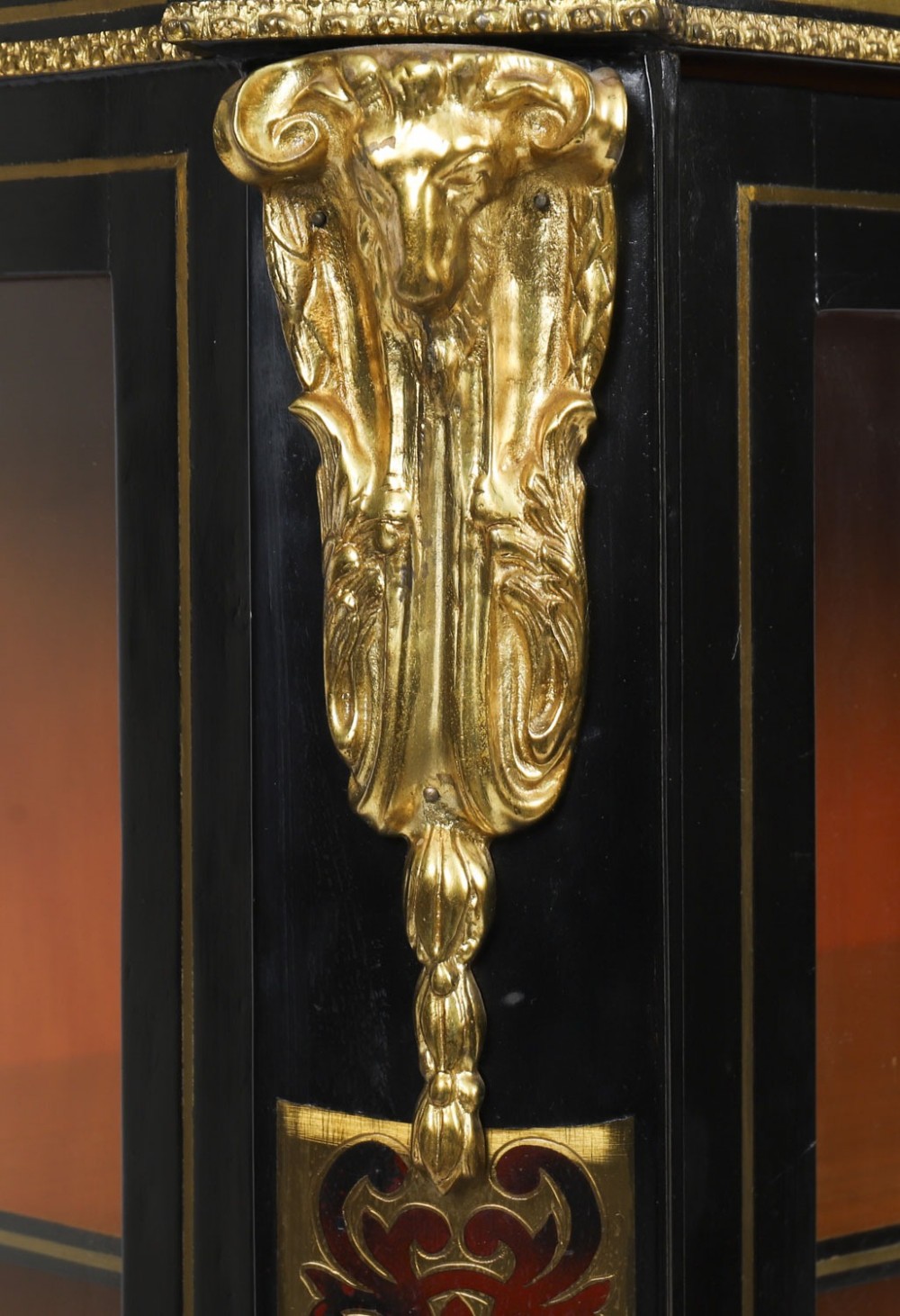
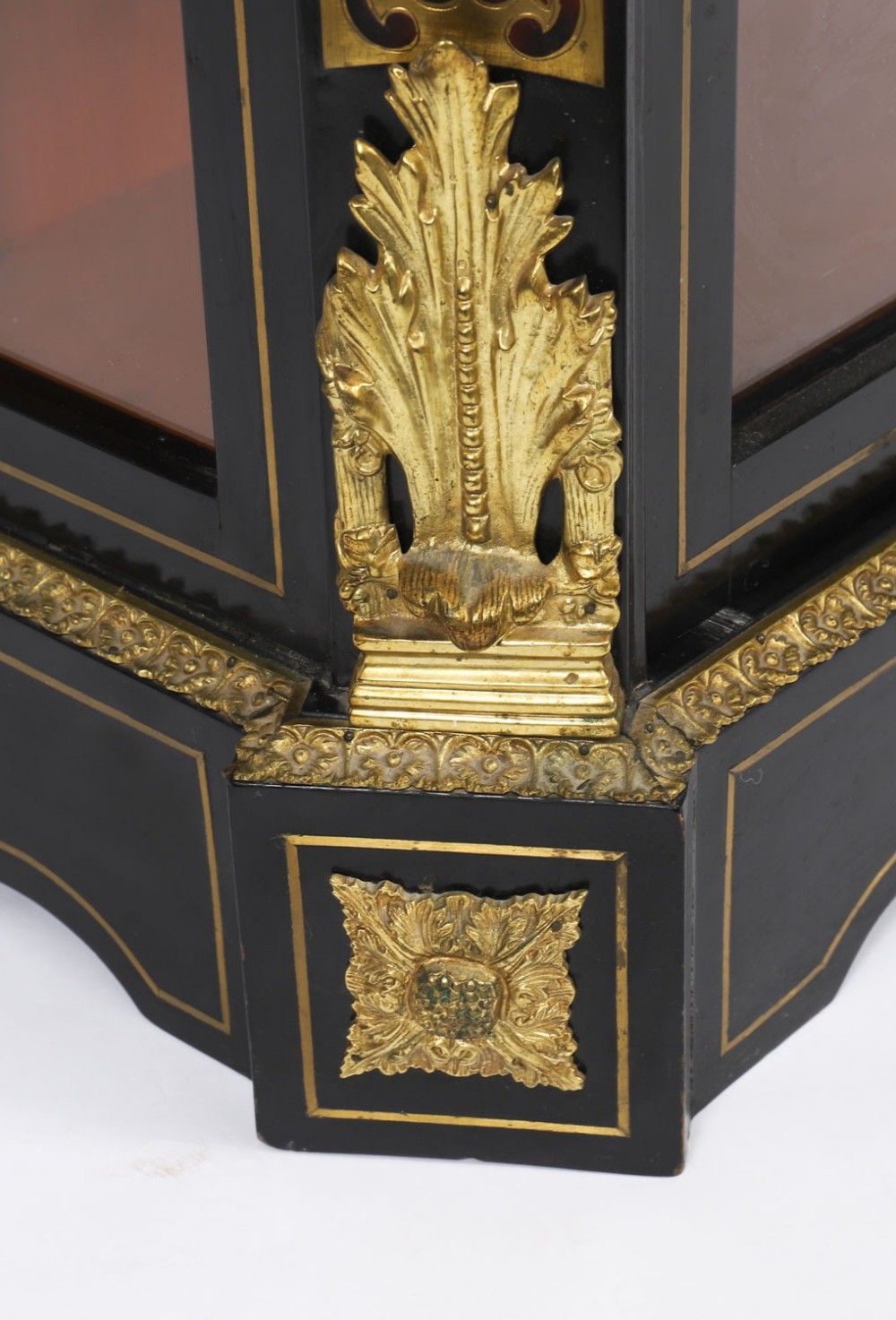
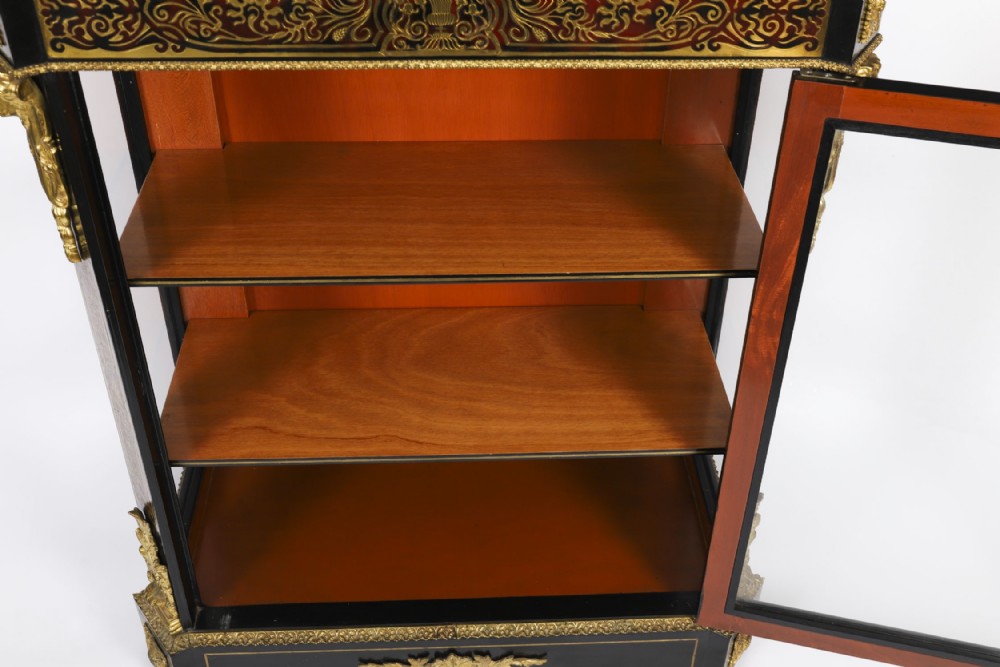
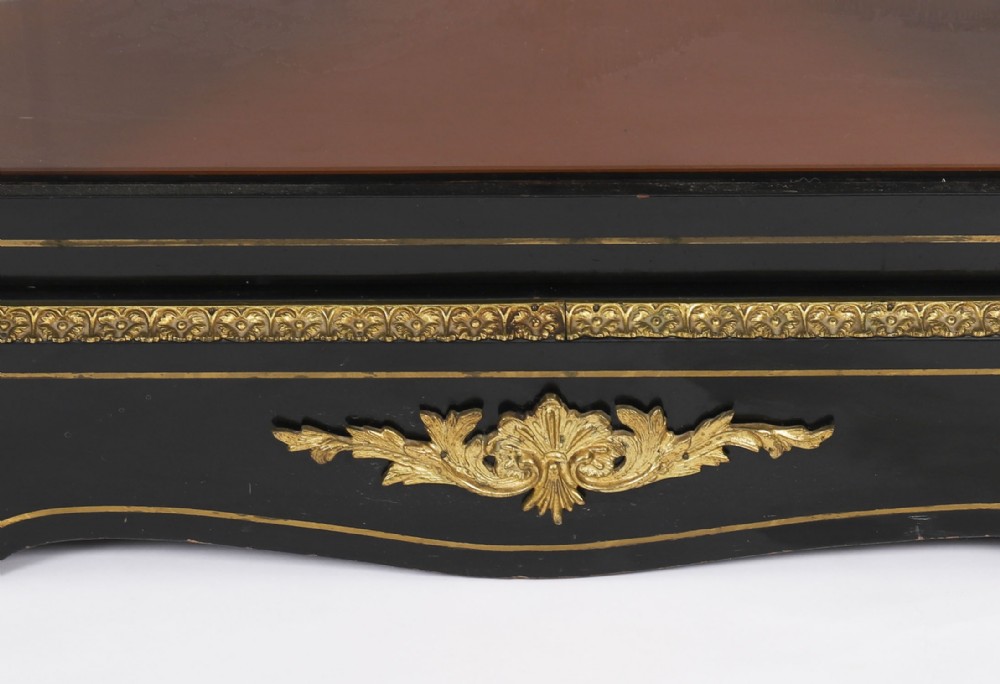
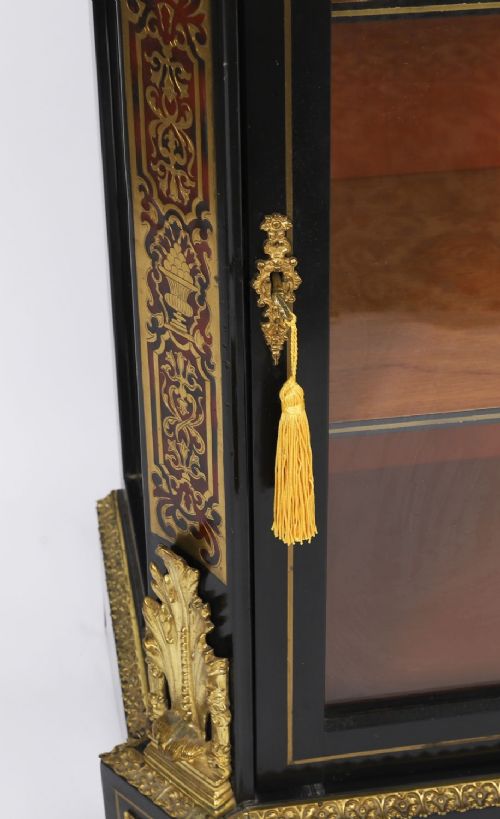
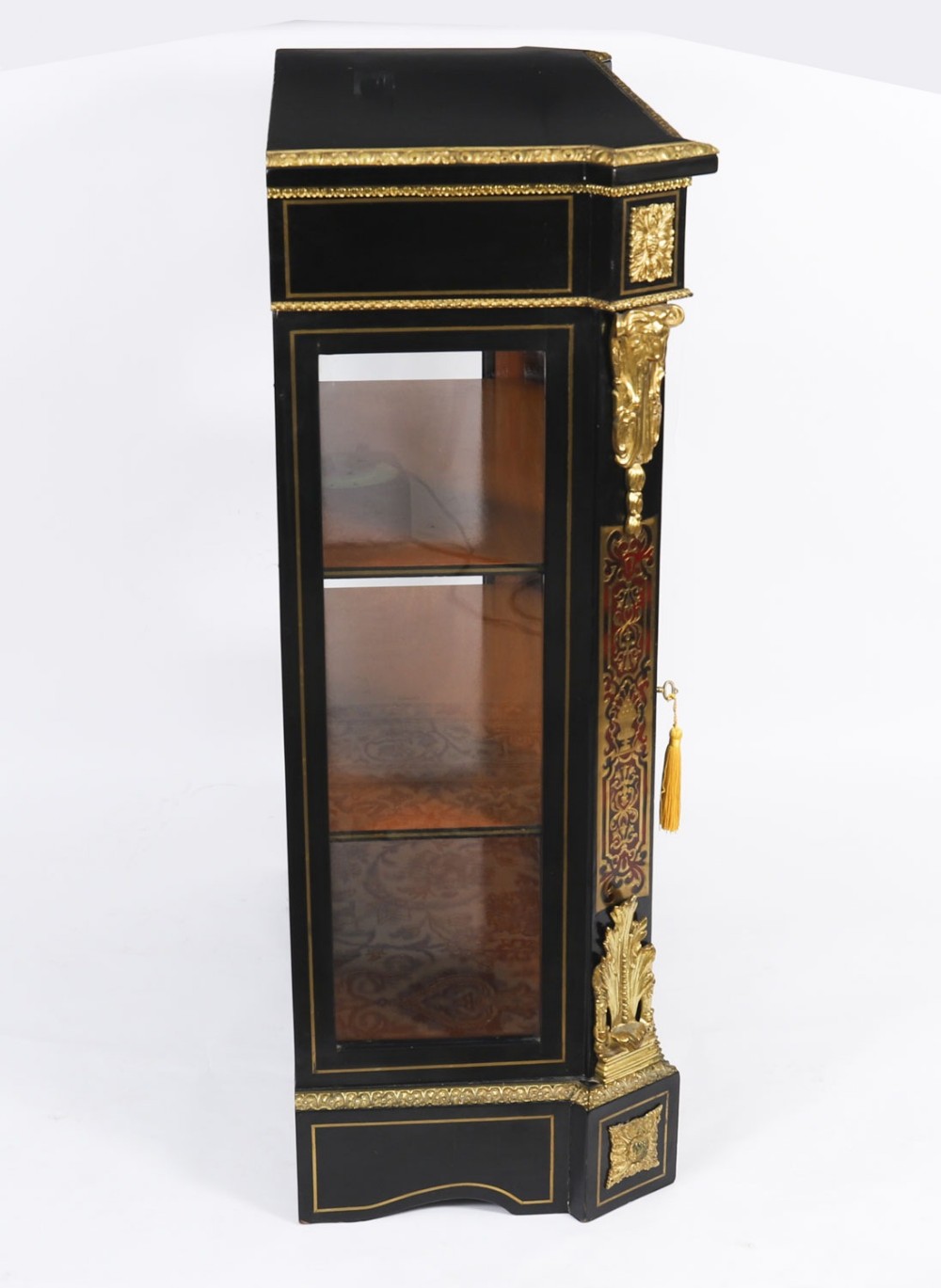
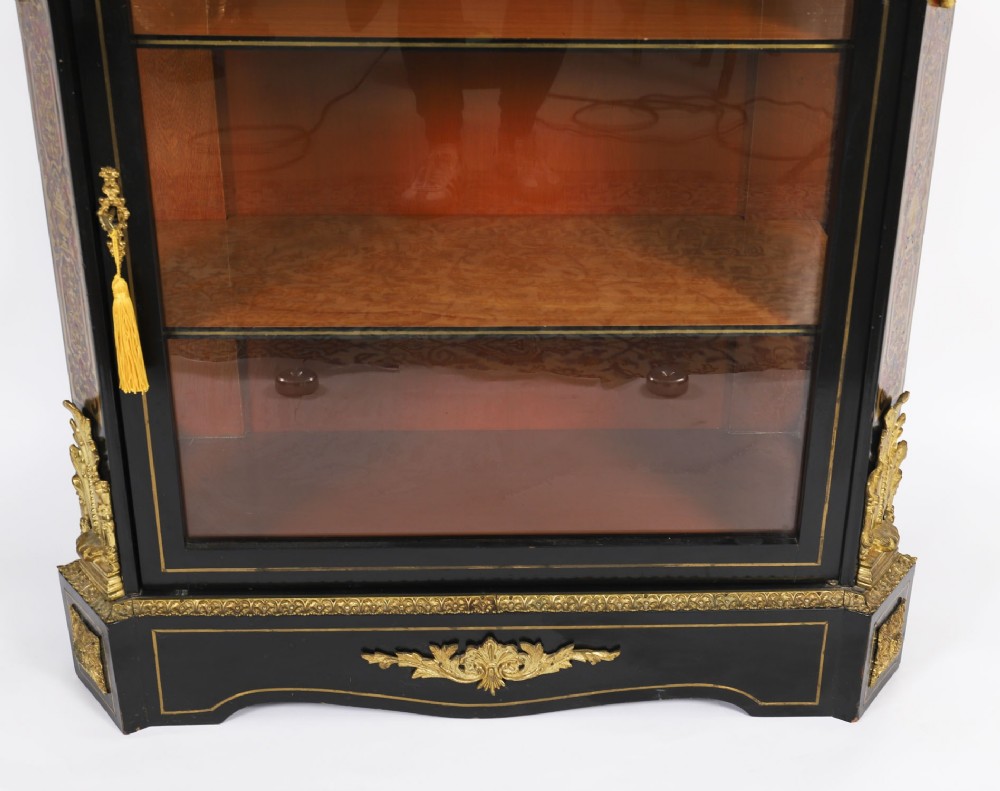
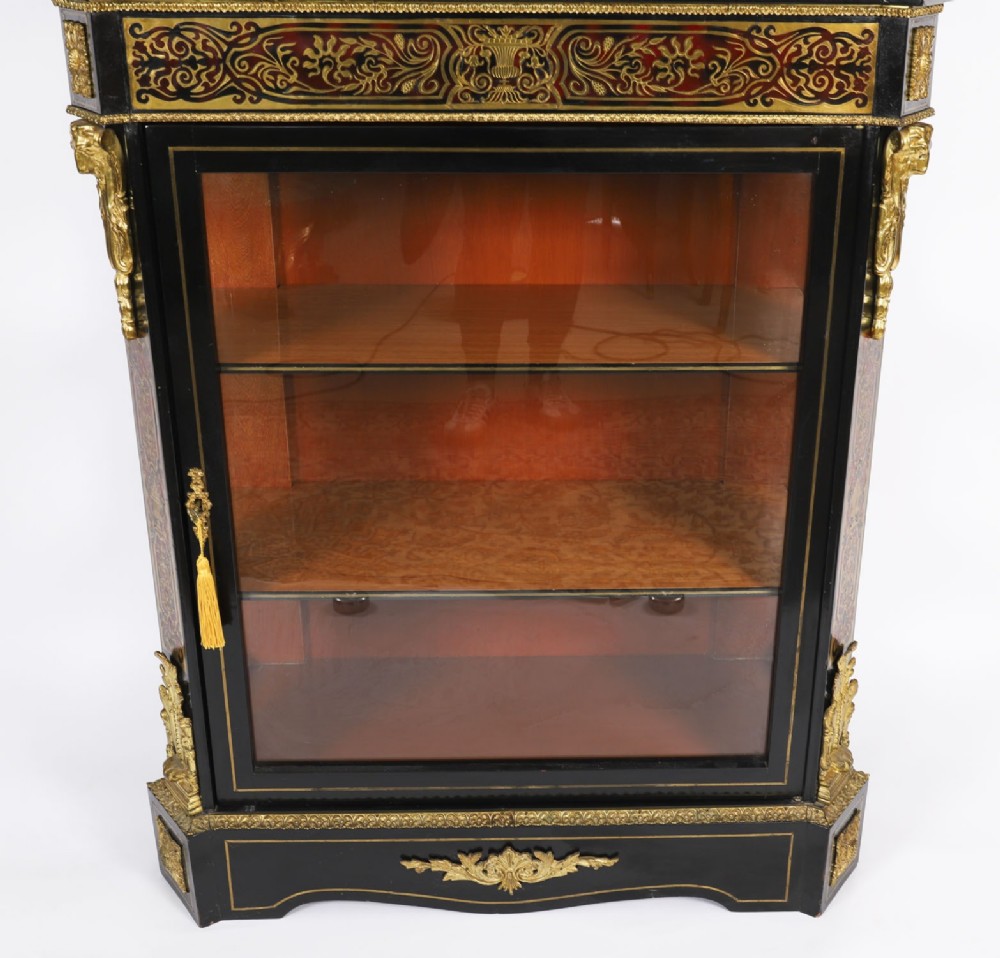
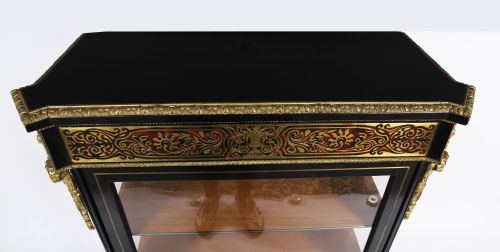
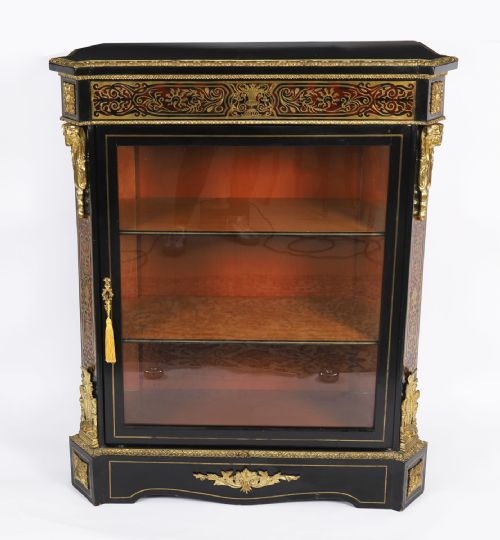
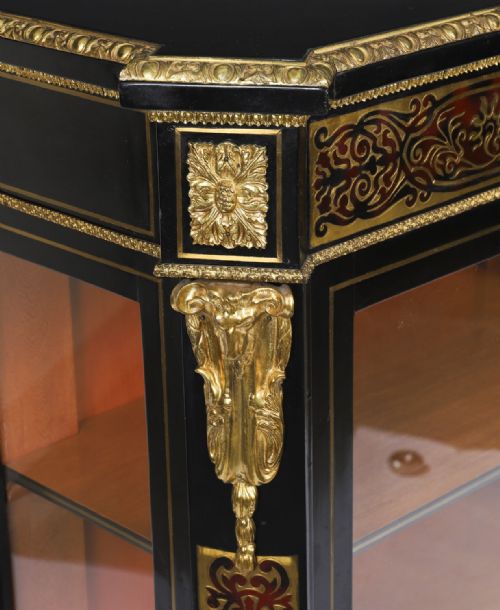
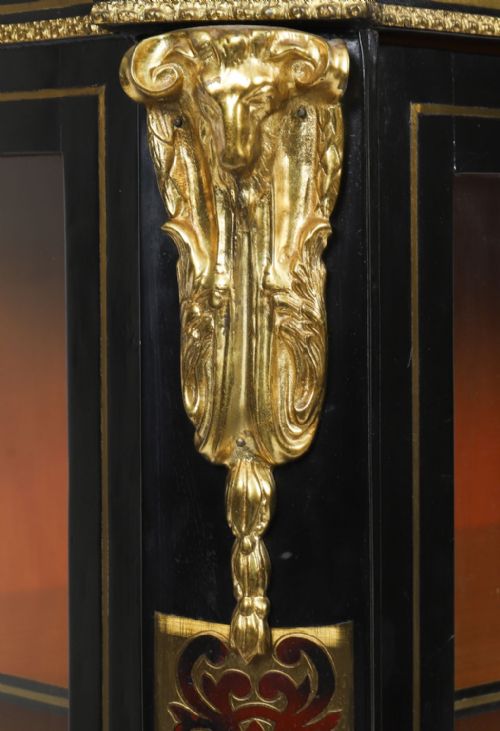
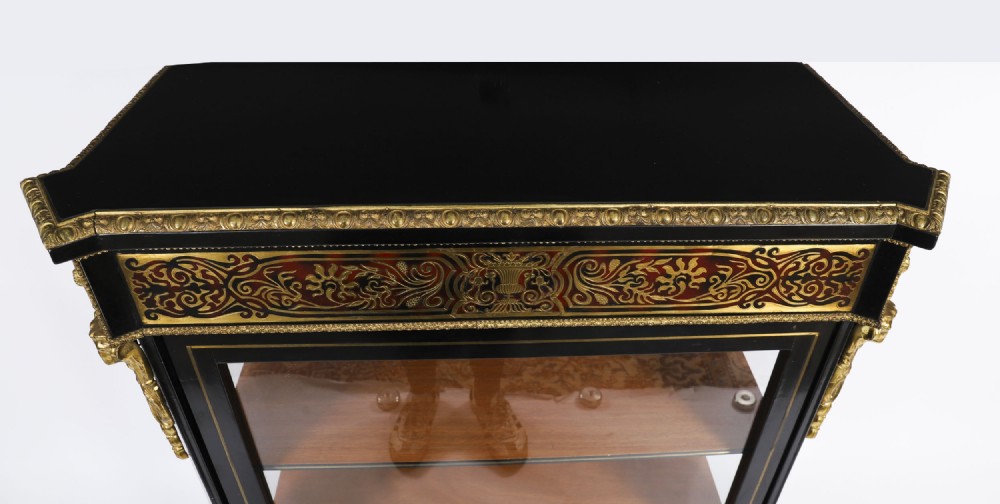
This cabinet is ebonised and decorated with exquisite ormolu mounts.  It has a glazed door and a profusely decorated frieze. The door is flanked by pristine ormolu caryatids and the red velvet lined interior has two shelves. It has been beautifully french polished and stands on an elegant plinth base.
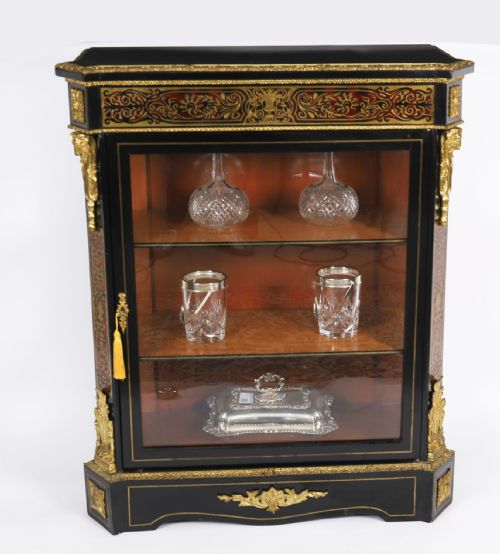
There is no mistaking the unique quality and design, which is certain to make it a talking point in your home.

Condition:

In really excellent condition havingonly been beautifully cleaned, polished and waxed in our workshops, please see photos for confirmation.

Dimensions in cm:

Height 107 cm x Width 90 cm x Depth 40 cm
Dimensions in inches:

Height 3 foot, 6 inches x Width 2 foot, 11 inches x Depth 1 foot, 4 inches

André-Charles Boulle (1642 – 1732), was the French cabinetmaker who is generally considered to be the preeminent artist in the field of marquetry. His fame in marquetry led to his name being given to a fashion of inlaying known as Boulle (or in 19th-century Britain, Buhl work).
Boulle appears to have been originally a painter, since the first payment to him by the crown of which there is any record (1669) specifies ouvrages de peinture. He was employed for many years at Versailles, where the mirrored walls, the floors of wood mosaic, the inlaid paneling and the marquetery furniture in the Cabinet du Dauphin were regarded as his most remarkable work. These rooms were long since dismantled and their contents dispersed, but Boulle's drawings for the work are in the Musée des Arts Décoratifs, Paris.
His royal commissions were numerous, as we learn both from the Comptes des B timents du Roi and from the correspondence of Louvois. Not only the most magnificent of French monarchs, but foreign princes and the great nobles and financiers of his own country crowded to him with commissions, and the mot of the abbé de Marolles, Boulle y lourne en ovale, has become a stock quotation in the literature of French cabinetmaking.
Ormolu (from French 'or moulu', signifying ground or pounded gold) is an 18th-century English term for applying finely ground, high-carat gold in a mercury amalgam to an object of bronze.The mercury is driven off in a kiln leaving behind a gold-coloured veneer known as 'gilt bronze'.
The manufacture of true ormolu employs a process known as mercury-gilding or fire-gilding, in which a solution of nitrate of mercury is applied to a piece of copper, brass, or bronze, followed by the application of an amalgam of gold and mercury. The item was then exposed to extreme heat until the mercury burned off and the gold remained, adhered to the metal object.
No true ormolu was produced in France after around 1830 because legislation had outlawed the use of mercury. Therefore, other techniques were used instead but nothing surpasses the original mercury-firing ormolu method for sheer beauty and richness of colour. Electroplating is the most common modern technique. Ormolu techniques are essentially the same as those used on silver, to produce silver-gilt (also known as vermeil).
Marquetry

is decorative artistry where pieces of material of different colours are inserted into surface wood veneer to form intricate patterns such as scrolls or flowers.

The technique of veneered marquetry had its inspiration in 16th century Florence. Marquetry elaborated upon Florentine techniques of inlaying solid marble slabs with designs formed of fitted marbles, jaspers and semi-precious stones. This work, called opere di commessi, has medieval parallels in Central Italian "Cosmati"-work of inlaid marble floors, altars and columns. The technique is known in English as pietra dura, for the "hardstones" used: onyx, jasper, cornelian, lapis lazuli and colored marbles. In Flore

Physical Dimensions
Height
107cm (42.13")
Width
90cm (35.43")
Depth
40cm (15.75")
Declaration

Regent Antiques has dated this Ebonised Boulle Pier Cabinet to the 1860s.

Reference Numbers
Sellingantiques Reference
SA1197550
Dealers Internal Reference
A4900
Description
This is a beautiful antique French Napoleon III ebonized and cut brass marquetry red Boulle pier cabinet, circa 1860 in date.

This cabinet is ebonised and decorated with exquisite ormolu mounts.  It has a glazed door and a profusely decorated frieze. The door is flanked by pristine ormolu caryatids and the red velvet lined interior has two shelves. It has been beautifully french polished and stands on an elegant plinth base.

There is no mistaking the unique quality and design, which is certain to make it a talking point in your home.
Regent Antiques
fig 1. An ebonised French Napoleon III glazed pier cabinet decorated with brass and tortoiseshell Boulle marquetry and gilded ormolu mounts.
fig 1. Antique French Napoleon III Ebonized Boulle Pier Cabinet C.1860 19th C

Condition:

In really excellent condition havingonly been beautifully cleaned, polished and waxed in our workshops, please see photos for confirmation.

Dimensions in cm:

Height 107 cm x Width 90 cm x Depth 40 cm

fig 2. An ebonised French Napoleon III glazed pier cabinet decorated with brass and tortoiseshell Boulle marquetry and gilded ormolu mounts.
fig 2. Antique French Napoleon III Ebonized Boulle Pier Cabinet C.1860 19th C

Dimensions in inches:

Height 3 foot, 6 inches x Width 2 foot, 11 inches x Depth 1 foot, 4 inches

André-Charles Boulle (1642 – 1732), was the French cabinetmaker who is generally considered to be the preeminent artist in the field of marquetry. His fame in marquetry led to his name being given to a fashion of inlaying known as Boulle (or in 19th-century Britain, Buhl work).

fig 3. An ebonised French Napoleon III glazed pier cabinet decorated with brass and tortoiseshell Boulle marquetry and gilded ormolu mounts.
fig 3. Antique French Napoleon III Ebonized Boulle Pier Cabinet C.1860 19th C

Boulle appears to have been originally a painter, since the first payment to him by the crown of which there is any record (1669) specifies ouvrages de peinture. He was employed for many years at Versailles, where the mirrored walls, the floors of wood mosaic, the inlaid paneling and the marquetery furniture in the Cabinet du Dauphin were regarded as his most remarkable work. These rooms were long since dismantled and their contents dispersed, but Boulle's drawings for the work are in the Musée des Arts Décoratifs, Paris.

fig 4. An ebonised French Napoleon III glazed pier cabinet decorated with brass and tortoiseshell Boulle marquetry and gilded ormolu mounts.
fig 4. Antique French Napoleon III Ebonized Boulle Pier Cabinet C.1860 19th C

His royal commissions were numerous, as we learn both from the Comptes des B timents du Roi and from the correspondence of Louvois. Not only the most magnificent of French monarchs, but foreign princes and the great nobles and financiers of his own country crowded to him with commissions, and the mot of the abbé de Marolles, Boulle y lourne en ovale, has become a stock quotation in the literature of French cabinetmaking.

fig 5. An ebonised French Napoleon III glazed pier cabinet decorated with brass and tortoiseshell Boulle marquetry and gilded ormolu mounts.
fig 5. Antique French Napoleon III Ebonized Boulle Pier Cabinet C.1860 19th C

Ormolu (from French 'or moulu', signifying ground or pounded gold) is an 18th-century English term for applying finely ground, high-carat gold in a mercury amalgam to an object of bronze.The mercury is driven off in a kiln leaving behind a gold-coloured veneer known as 'gilt bronze'.

fig 6. An ebonised French Napoleon III glazed pier cabinet decorated with brass and tortoiseshell Boulle marquetry and gilded ormolu mounts.
fig 6. Antique French Napoleon III Ebonized Boulle Pier Cabinet C.1860 19th C

The manufacture of true ormolu employs a process known as mercury-gilding or fire-gilding, in which a solution of nitrate of mercury is applied to a piece of copper, brass, or bronze, followed by the application of an amalgam of gold and mercury. The item was then exposed to extreme heat until the mercury burned off and the gold remained, adhered to the metal object.

fig 7. An ebonised French Napoleon III glazed pier cabinet decorated with brass and tortoiseshell Boulle marquetry and gilded ormolu mounts.
fig 7. Antique French Napoleon III Ebonized Boulle Pier Cabinet C.1860 19th C

No true ormolu was produced in France after around 1830 because legislation had outlawed the use of mercury. Therefore, other techniques were used instead but nothing surpasses the original mercury-firing ormolu method for sheer beauty and richness of colour. Electroplating is the most common modern technique. Ormolu techniques are essentially the same as those used on silver, to produce silver-gilt (also known as vermeil).

fig 8. An ebonised French Napoleon III glazed pier cabinet decorated with brass and tortoiseshell Boulle marquetry and gilded ormolu mounts.
fig 8. Antique French Napoleon III Ebonized Boulle Pier Cabinet C.1860 19th C

Marquetry

is decorative artistry where pieces of material of different colours are inserted into surface wood veneer to form intricate patterns such as scrolls or flowers.

The technique of veneered marquetry had its inspiration in 16th century Florence. Marquetry elaborated upon Florentine techniques of inlaying solid marble slabs with designs formed of fitted marbles, jaspers and semi-precious stones. This work, called opere di commessi, has medieval parallels in Central Italian "Cosmati"-work of inlaid marble floors, altars and columns. The technique is known in English as pietra dura, for the "hardstones" used: onyx, jasper, cornelian, lapis lazuli and colored marbles. In Flore

Height
107cm (42.13")
Width
90cm (35.43")
Depth
40cm (15.75")
Date of Manufacture

Regent Antiques has dated this Ebonised Boulle Pier Cabinet to the 1860s.

Reference Numbers
Sellingantiques Ref
SA1197550
Dealers Internal Ref
A4900
Regent Antiques
Regent Antiques
Sellingantiques verified Since Sep 2016

We specialise in english and continental furniture, silver, porcelain and decorative items.

Dealer Profile

You can view the stock and full dealer information on the Regent Antiques Profile Page

Trade Associations

Regent Antiques is a registered member of LAPADA  CINOA
PDF SHARE
SAVE
An ebonised French Napoleon III glazed pier cabinet decorated with brass and tortoiseshell Boulle marquetry and gilded ormolu mounts.
1 / 20
Archive I An ebonised French Napoleon III glazed pier cabinet decorated with brass and tortoiseshell Boulle marquetry and gilded ormolu mounts.

Antique French Napoleon III Ebonized Boulle Pier Cabinet c.1860 19th C
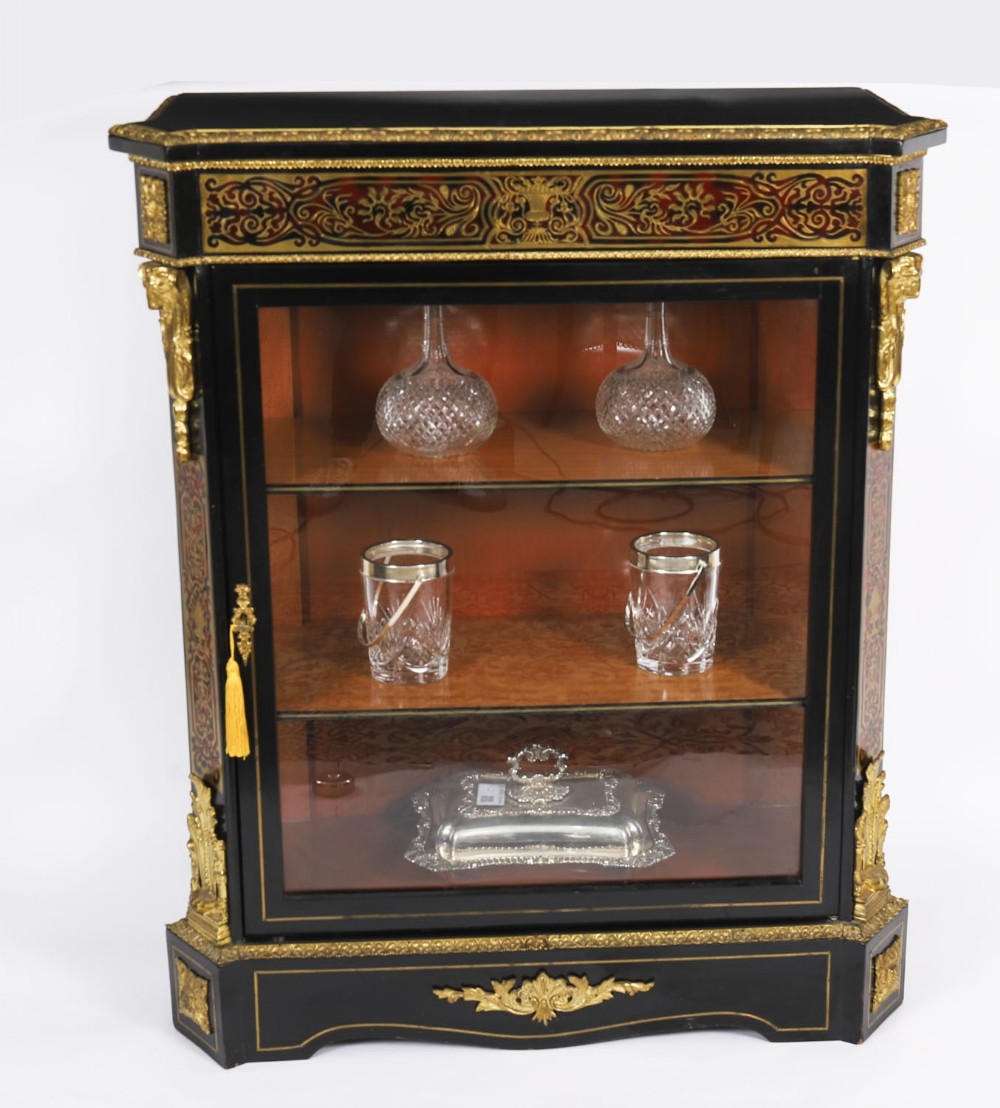
Archive II An ebonised French Napoleon III glazed pier cabinet decorated with brass and tortoiseshell Boulle marquetry and gilded ormolu mounts. View II
Archive III An ebonised French Napoleon III glazed pier cabinet decorated with brass and tortoiseshell Boulle marquetry and gilded ormolu mounts. View III
Archive IV An ebonised French Napoleon III glazed pier cabinet decorated with brass and tortoiseshell Boulle marquetry and gilded ormolu mounts. View IV
Archive V An ebonised French Napoleon III glazed pier cabinet decorated with brass and tortoiseshell Boulle marquetry and gilded ormolu mounts. View V
Archive VI An ebonised French Napoleon III glazed pier cabinet decorated with brass and tortoiseshell Boulle marquetry and gilded ormolu mounts. View VI
Archive VII An ebonised French Napoleon III glazed pier cabinet decorated with brass and tortoiseshell Boulle marquetry and gilded ormolu mounts. View VII
Archive VIII An ebonised French Napoleon III glazed pier cabinet decorated with brass and tortoiseshell Boulle marquetry and gilded ormolu mounts. View VIII
Archive IX An ebonised French Napoleon III glazed pier cabinet decorated with brass and tortoiseshell Boulle marquetry and gilded ormolu mounts. View IX
Archive X An ebonised French Napoleon III glazed pier cabinet decorated with brass and tortoiseshell Boulle marquetry and gilded ormolu mounts. View X
Archive XI An ebonised French Napoleon III glazed pier cabinet decorated with brass and tortoiseshell Boulle marquetry and gilded ormolu mounts. View XI
Archive XII An ebonised French Napoleon III glazed pier cabinet decorated with brass and tortoiseshell Boulle marquetry and gilded ormolu mounts. View XII
Archive XIII An ebonised French Napoleon III glazed pier cabinet decorated with brass and tortoiseshell Boulle marquetry and gilded ormolu mounts. View XIII
Archive XIV An ebonised French Napoleon III glazed pier cabinet decorated with brass and tortoiseshell Boulle marquetry and gilded ormolu mounts. View XIV
Archive XV An ebonised French Napoleon III glazed pier cabinet decorated with brass and tortoiseshell Boulle marquetry and gilded ormolu mounts. View XV
Archive XVI An ebonised French Napoleon III glazed pier cabinet decorated with brass and tortoiseshell Boulle marquetry and gilded ormolu mounts. View XVI
Archive XVII An ebonised French Napoleon III glazed pier cabinet decorated with brass and tortoiseshell Boulle marquetry and gilded ormolu mounts. View XVII
Archive XVIII An ebonised French Napoleon III glazed pier cabinet decorated with brass and tortoiseshell Boulle marquetry and gilded ormolu mounts. View XVIII
Archive XIX An ebonised French Napoleon III glazed pier cabinet decorated with brass and tortoiseshell Boulle marquetry and gilded ormolu mounts. View XIX
Archive XX An ebonised French Napoleon III glazed pier cabinet decorated with brass and tortoiseshell Boulle marquetry and gilded ormolu mounts. View XX
Enlarged Archival View
Location
Manor Warehouse
318 Green Lanes
London
N4 1BX
United Kingdom
Verified Since Sep 2016
Items For Sale 659
Items Sold 2,608
Regent Antiques
Regent Antiques
Verified Since Sep 2016
View Dealer Info
Location: Manor Warehouse, 318 Green Lanes, London, N4 1BX, United Kingdom
Verified
Sep 2016
For Sale
659
Sold
2,608
An ebonised French Napoleon III glazed pier cabinet decorated with brass and tortoiseshell Boulle marquetry and gilded ormolu mounts.
Antique French Napoleon III Ebonized Boulle Pier Cabinet c.1860 19th C
Ref: SA1197550
An ebonised French Napoleon III glazed pier cabinet decorated with brass and tortoiseshell Boulle marquetry and gilded ormolu mounts.
Detail View 1
Detail View 2
Detail View 3
Detail View 4
Detail View 5
Detail View 6
Detail View 7
Detail View 8
Detail View 9
Detail View 10
Detail View 11
Detail View 12
Detail View 13
Detail View 14
Detail View 15
Detail View 16
Detail View 17
Detail View 18
Detail View 19
Archival Detail
Every single antique dealer on our platform is individually approved by our internal team. We verify their professional trade history, ethical standards, and photographic quality to ensure a secure, high-standard buying environment. Upon joining, every dealer agrees to a strict 9-point code of conduct. While issues can occasionally arise, our dealers typically resolve them swiftly and directly with the buyer. In fact, since our founding in 2002, Sellingantiques has only had to step in to help resolve an issue on roughly five occasions—a true testament to the quality of our dealers and their dedication to your happiness.
Our dealers are highly experienced in packing and shipping fragile, high-value antiques. Because you are in direct contact with the dealer, you will be able to easily go through all available shipping and insurance options together to ensure your item arrives safely.
Antiques are the ultimate green purchase. By choosing historical pieces over newly manufactured goods, you completely eliminate the carbon footprint of modern mass production while preserving exceptional, timeless craftsmanship.

Originating in 19th-century France during the Second Empire, a Napoleon III Boulle pier cabinet is a low display cabinet traditionally intended for placement on a pier wall between windows. It features ornate Boulle marquetry composed of inlaid brass and tortoiseshell, decorated with gilt-bronze mounts and glass panels.

Boulle marquetry cabinets utilise an ebonised timber carcass layered with brass, brass foil, and polished natural tortoiseshell. Decorative accents feature cast ormolu mounts, clear glass door inserts, and internal hardwood or fabric-lined shelves.

Authentic 19th-century pieces feature hand-cut metal inlays, natural red or brown tortoiseshell underlays, heavy cast-brass mounts secured with slotted screws, and solid oak or pine backing timber displaying natural age-related shrinkage. Modern reproductions typically use synthetic tortoiseshell and machine-threaded modern screws.

A Boulle pier cabinet serves as a focal statement piece in a hallway, dining room, or drawing room. Placing it against neutral walls alongside modern lighting or clean-lined artwork balances the intricate metalwork and dark ebonised wood within contemporary schemes.

Maintain Boulle furniture by positioning it away from direct sunlight, radiators, and humidity fluctuations to prevent brass lift or tortoiseshell degradation. Dust gently with a dry microfibre cloth, avoid liquid solvents, and consult a specialist restorer to re-secure any loosened inlay using traditional animal glue.
items
Add keywords to the filter
Price
£100
£250000
Era
Movements
Material
Origin
Stock Location
Freshness
Online Payments
Categories