41,488  PAGES BROWSED TODAY PAGES TODAY 98  ANTIQUES UPLOADED TODAY NEW ARRIVALS
ID #SA1196068
FOR SALE
£495
Email
Save
Farmhouse Windsor Armchair in Beech & Elm, C1890
The Real Wood Furniture Company
for sale €579     $629
£495
The Real Wood Furniture Company

The Real Wood Furniture Company

Sellingantiques Verified Since Oct 2025
View Dealers Stock Page
  • About Us
    The real wood furniture company (chris baylis) sells windsor chairs, decorative furniture and objects from large showrooms in the cotswolds
Id #SA1196068
PDF SHARE
SAVE

Farmhouse Windsor Armchair in Beech & Elm, C1890

19th century
Description

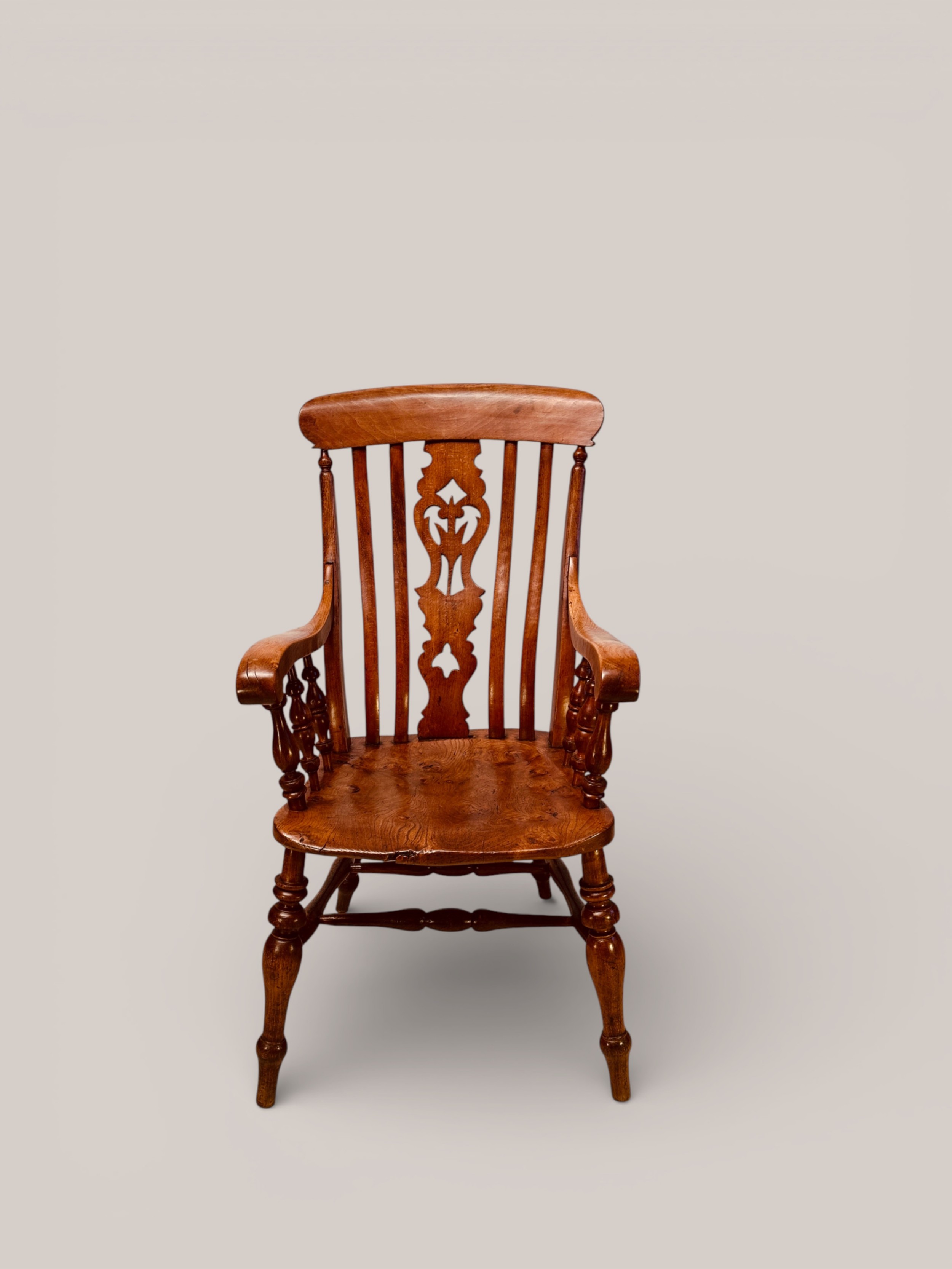
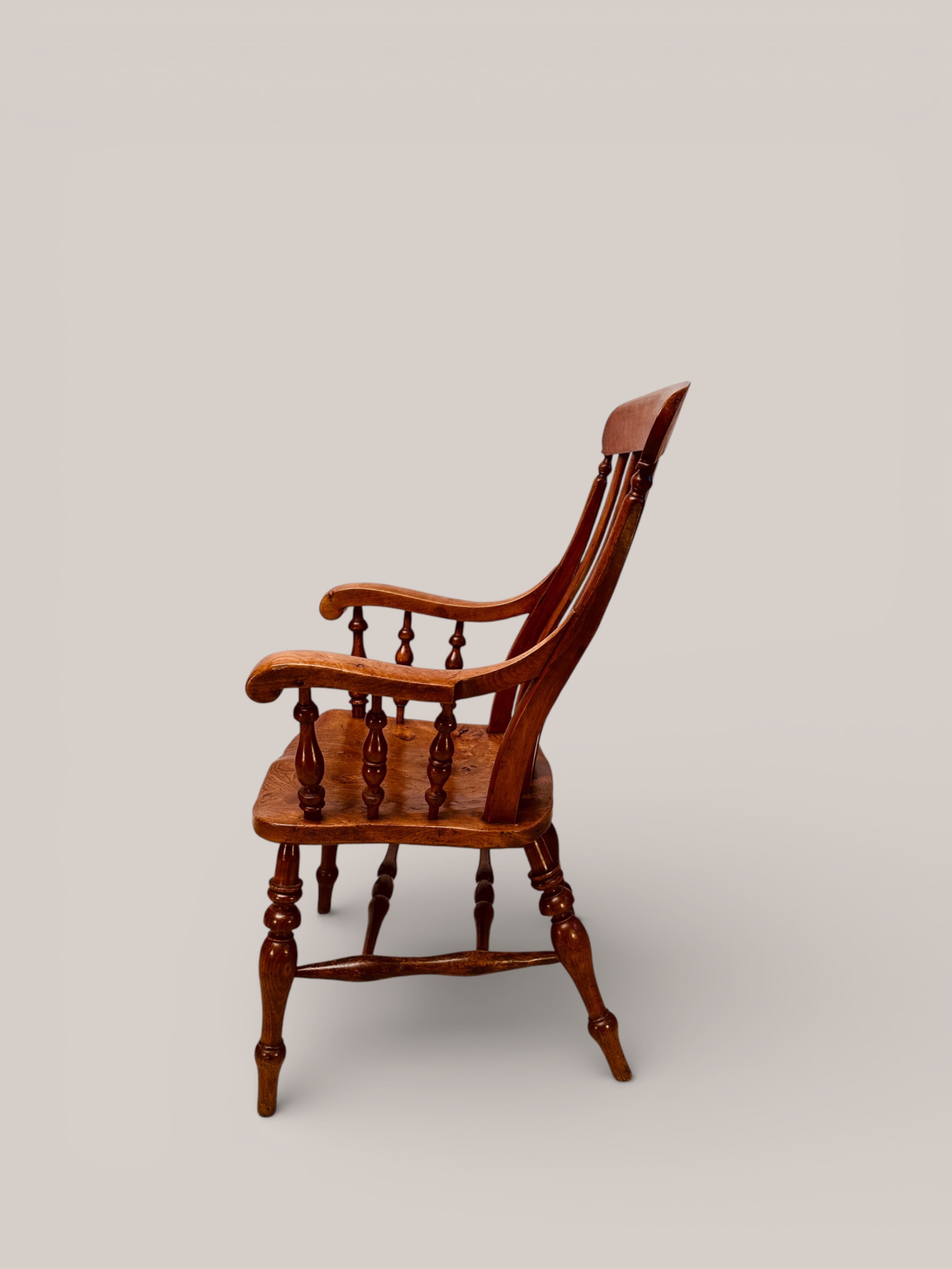
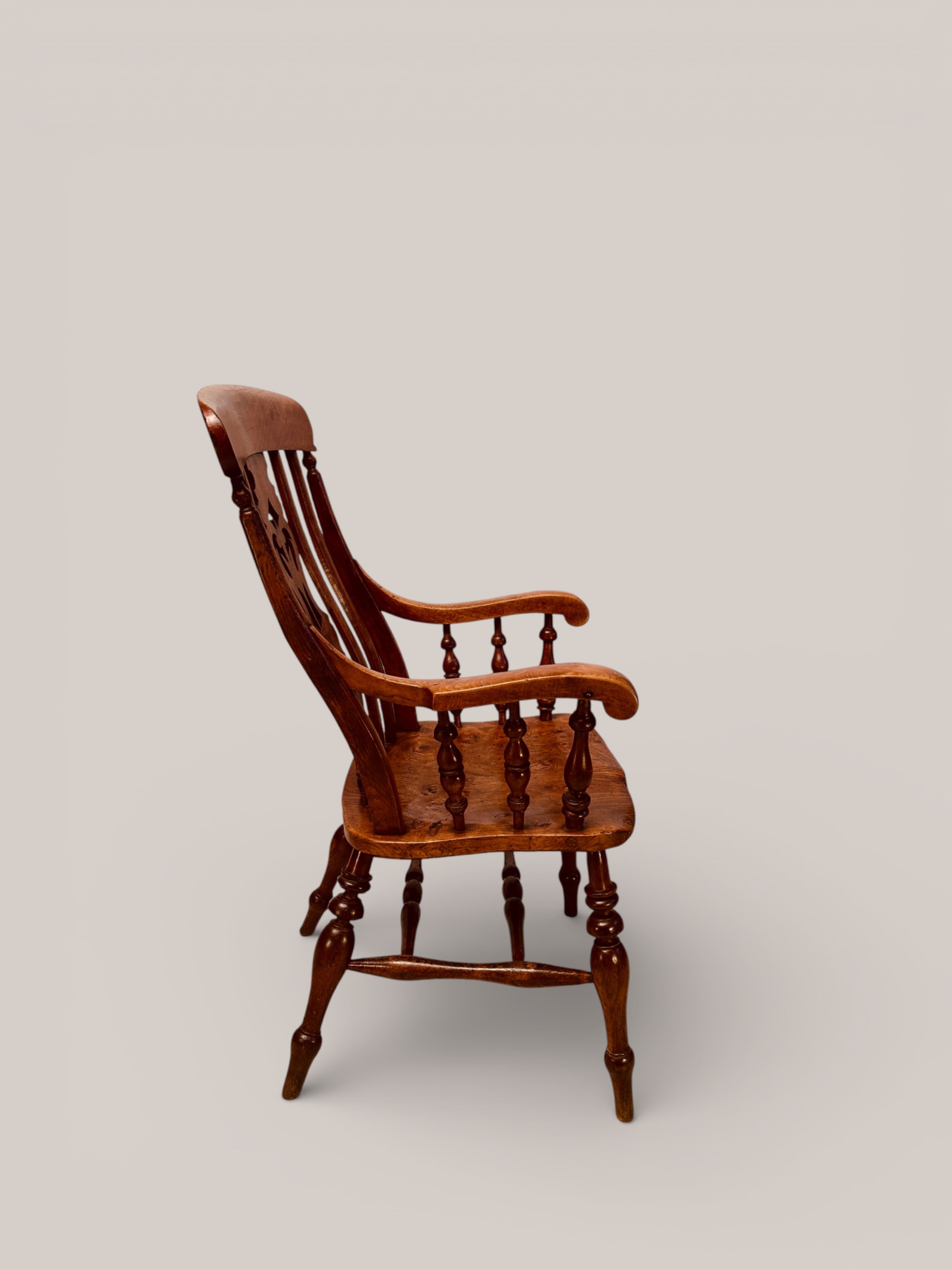
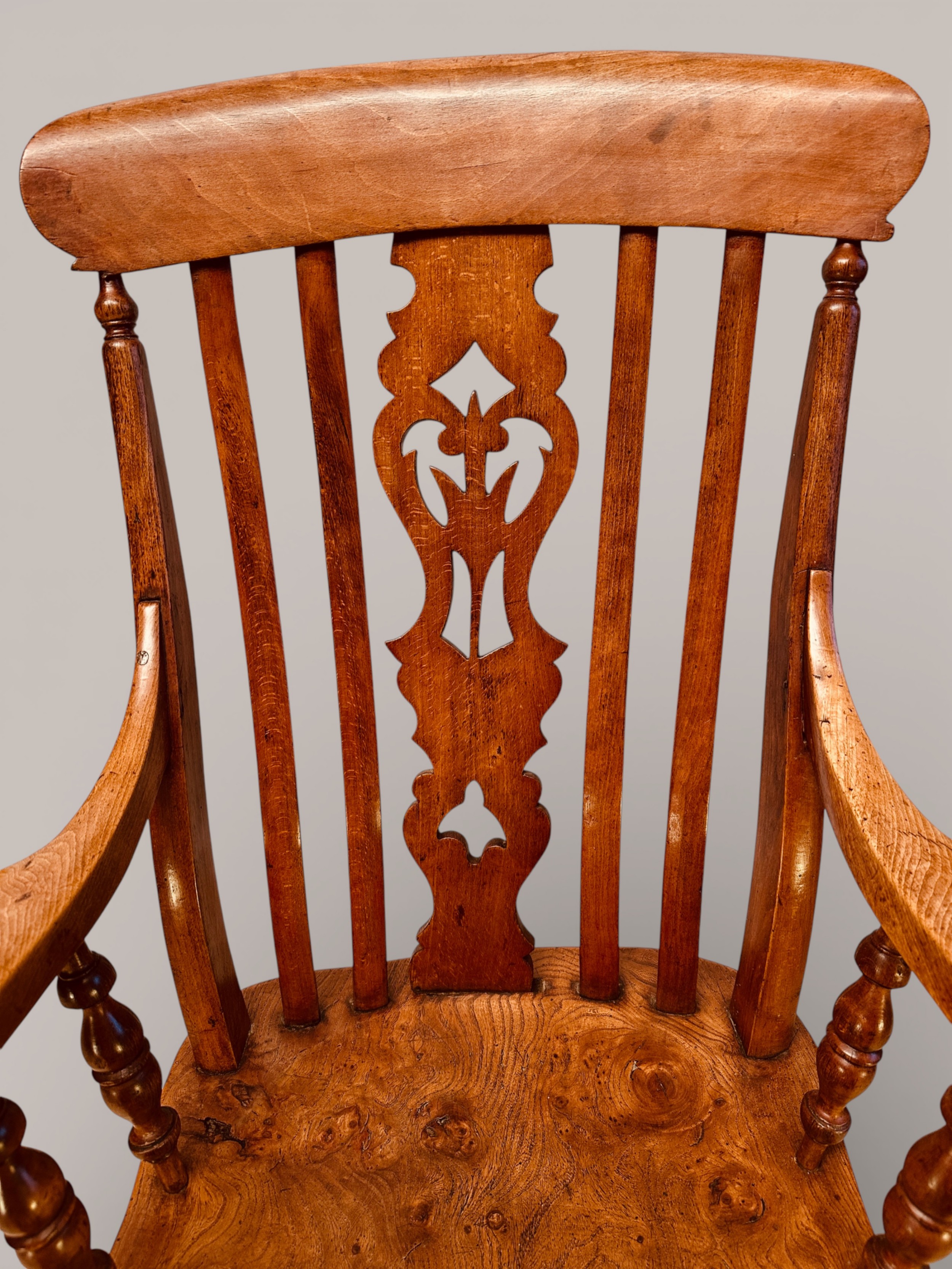
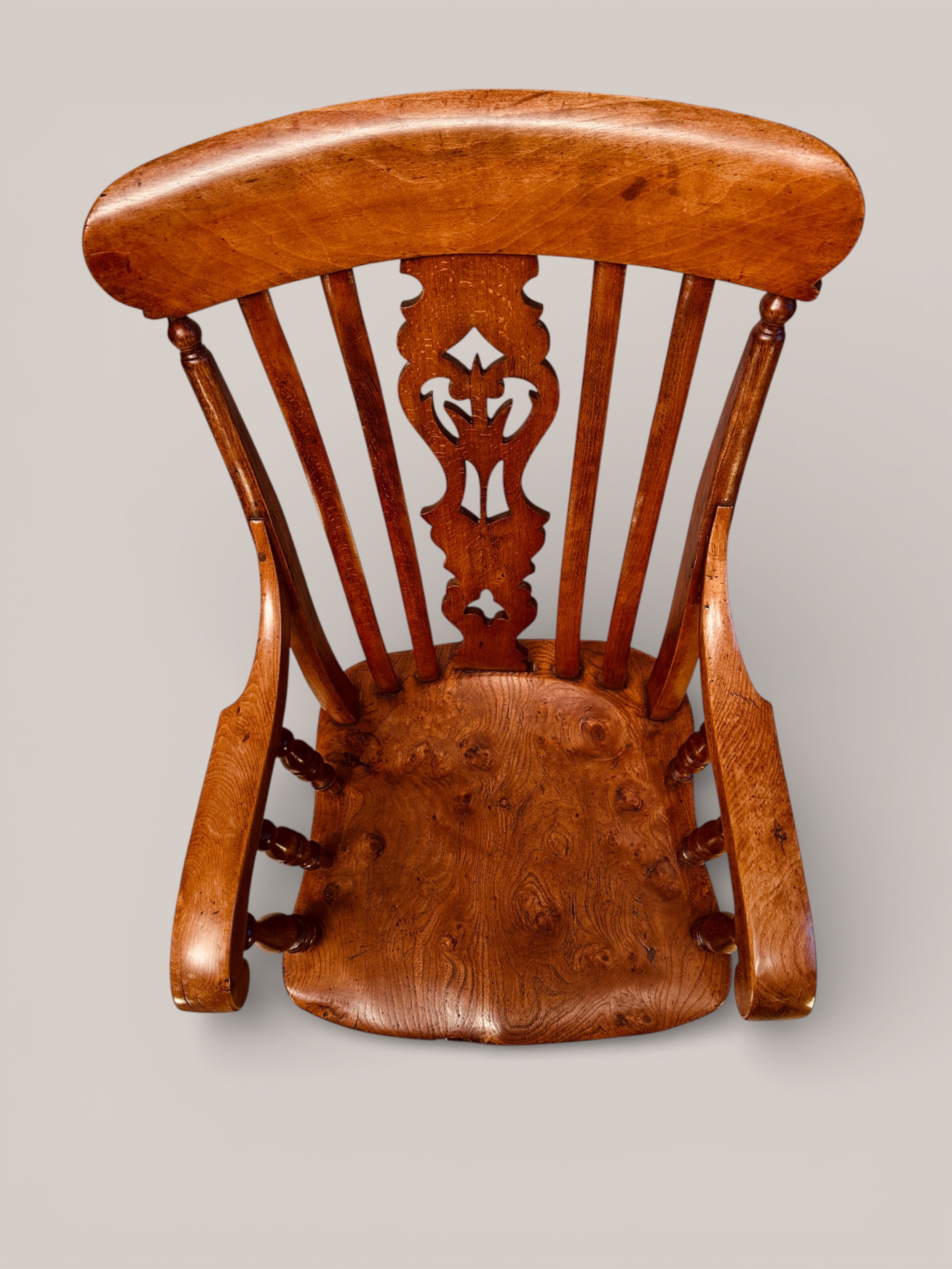
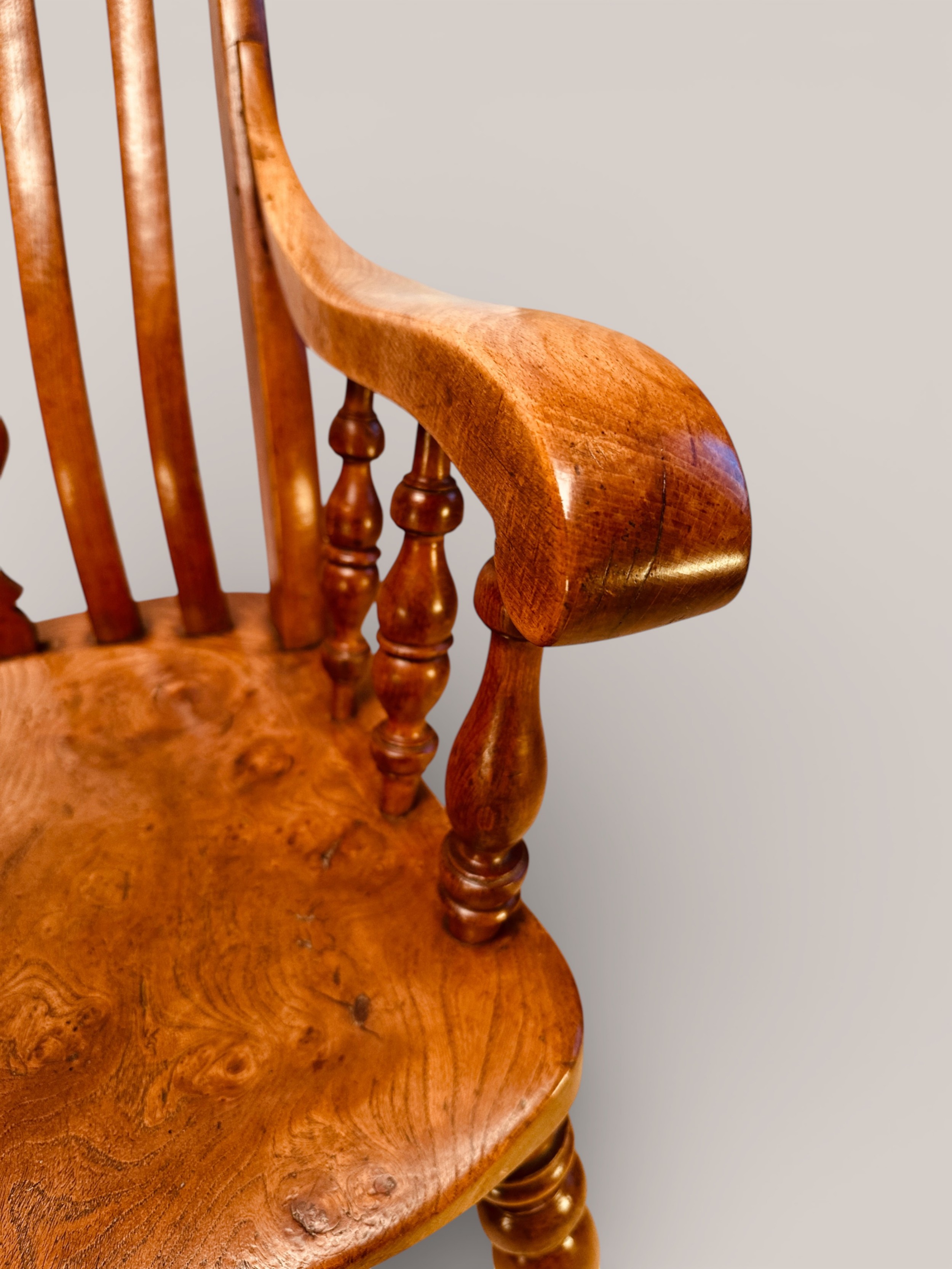
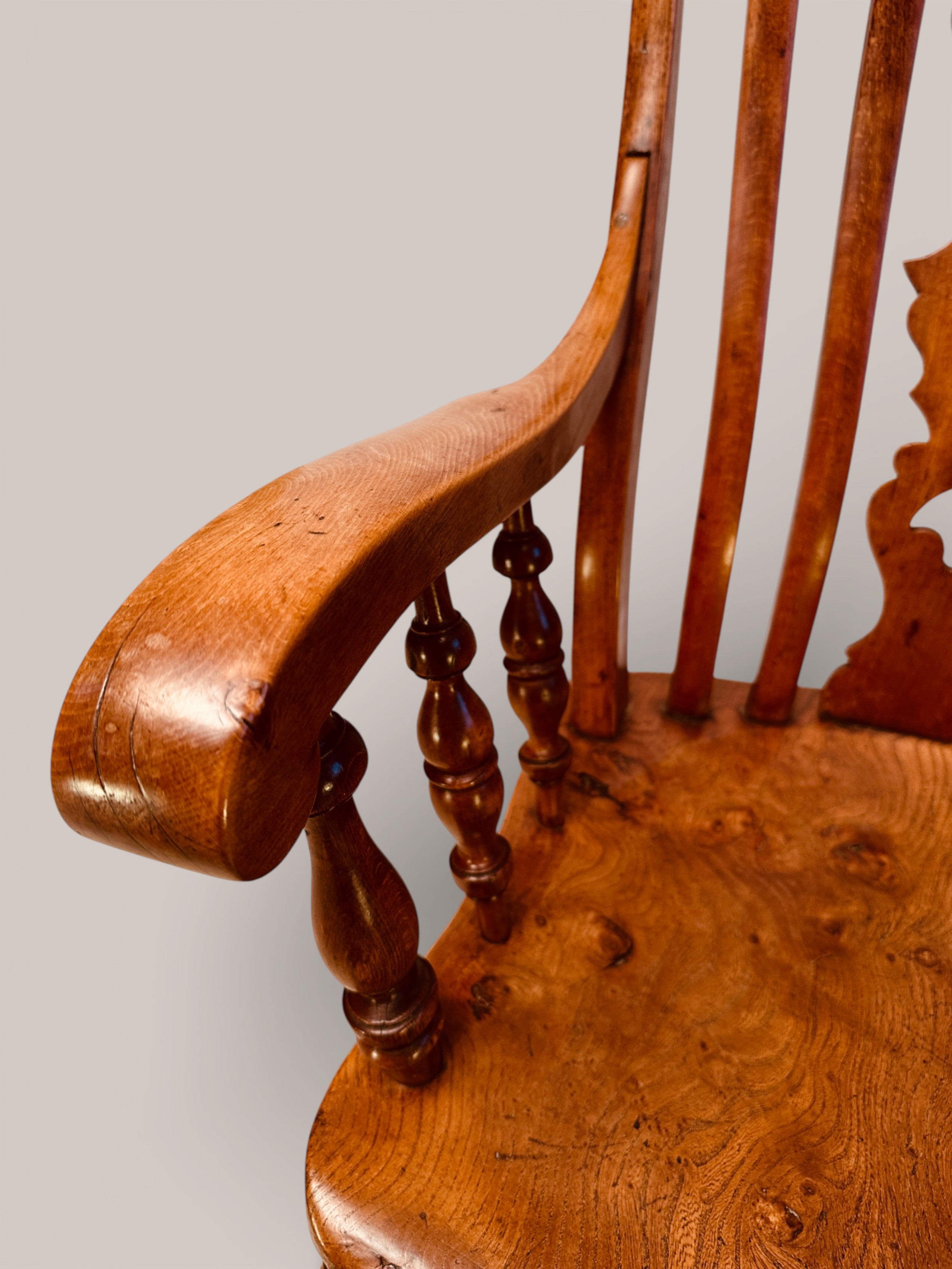
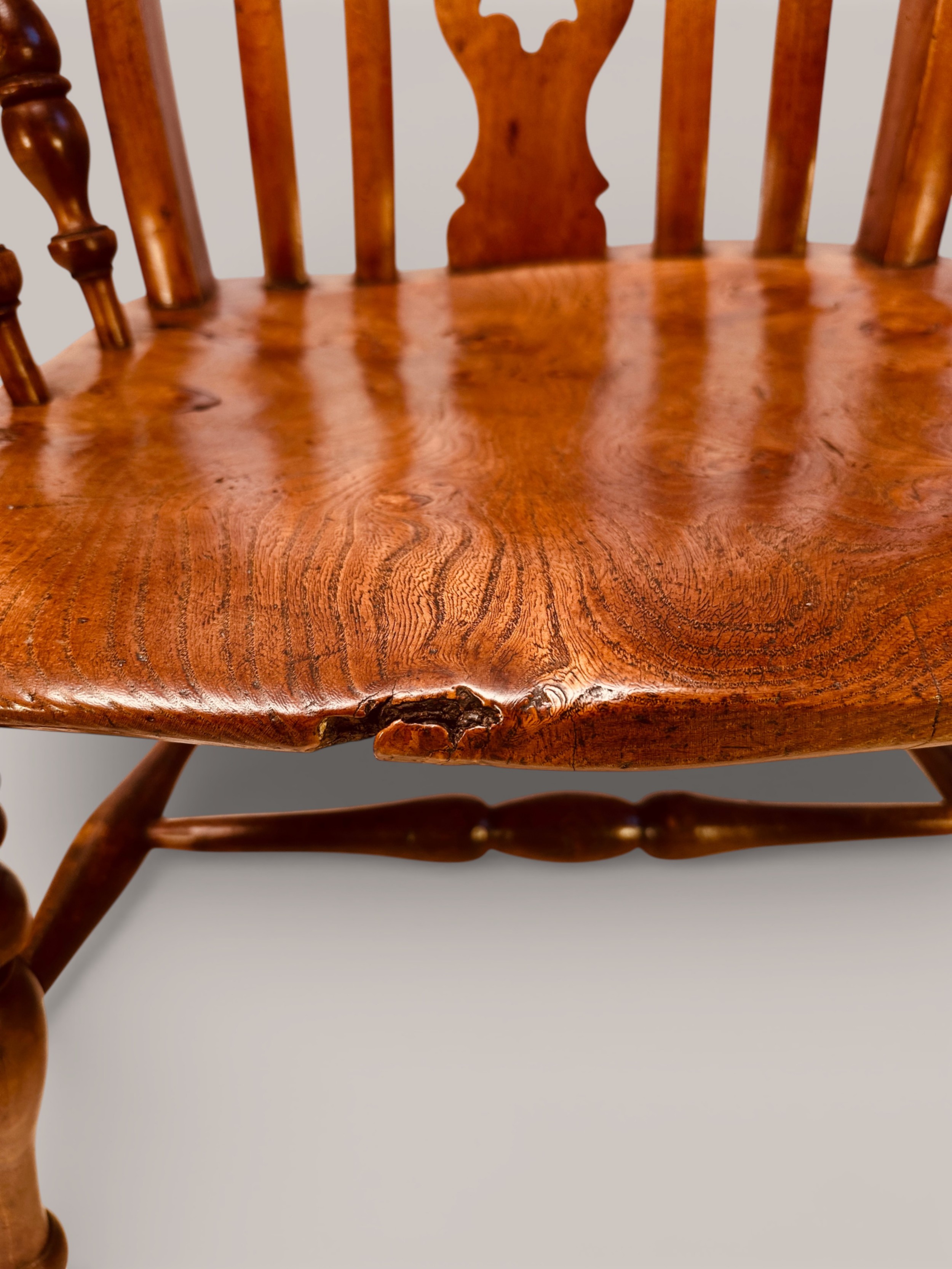
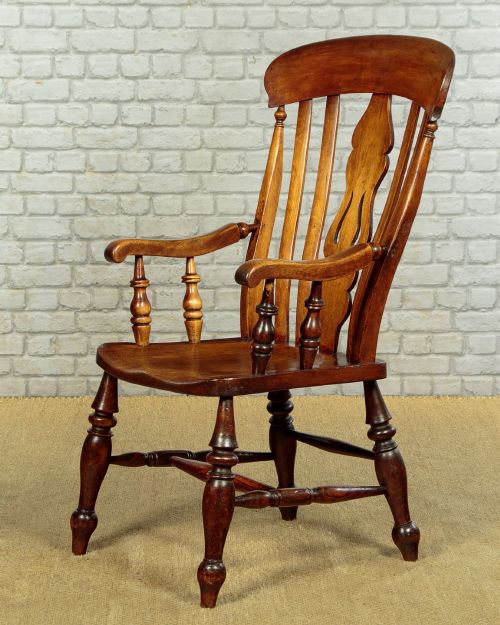
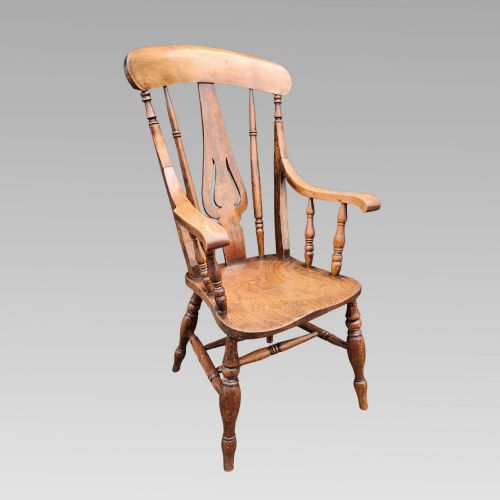
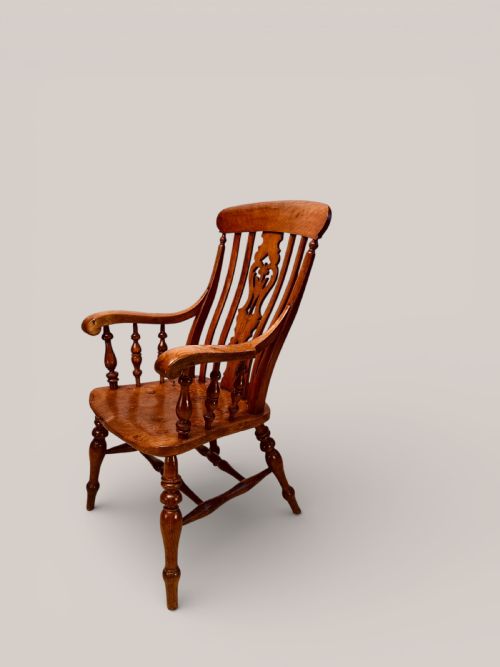
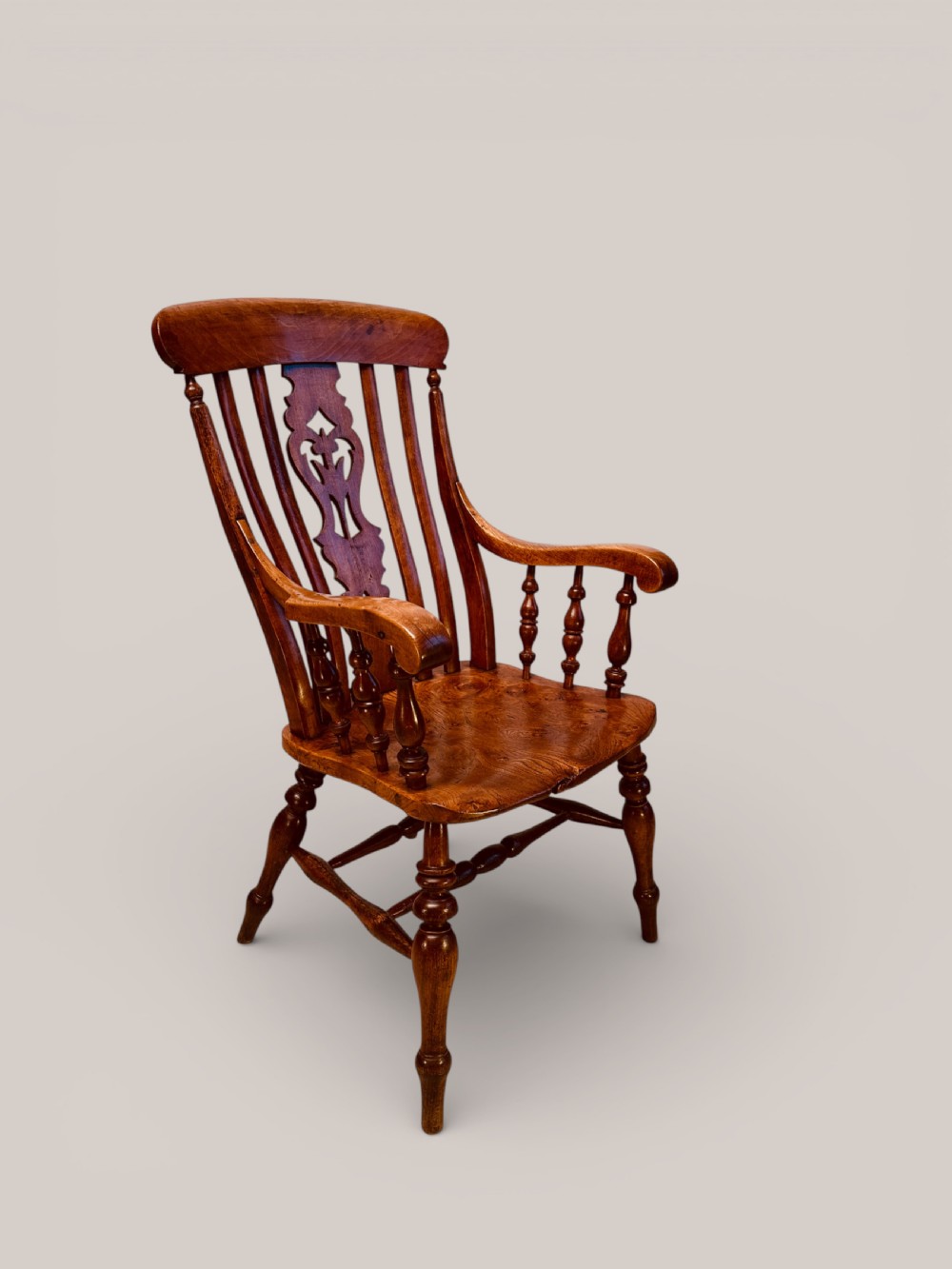
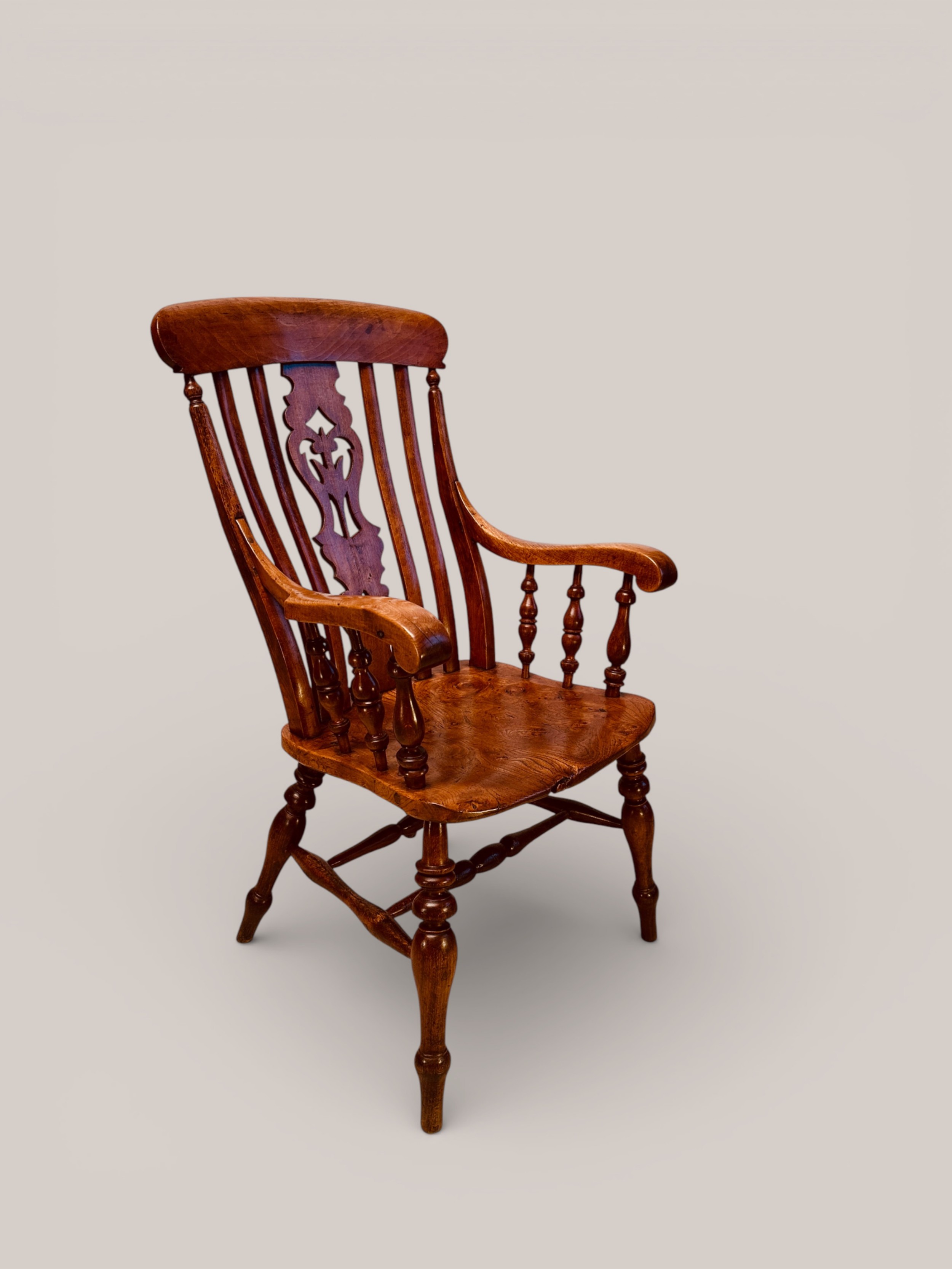
A Farmhouse Windsor armchair, with ‘tulip’ fretted splat in beech with elm seat and swept, scroll over arms. High Wycombe c1890

seat height 44 cms

Why do I call this style of chair a ‘Windsor chair’ ?  I wrote a paper in support of my exhibition of Thames Valley Windsor chairs in 1998 in which I identified that the term 'Windsor chair' had evolved in its use, to describe wooden chairs whose axis of construction is the seat, ie where the legs are jointed up into the underside of the seat board and the superstucture is jointed into the top surface of the seat board.  This description was endorsed in Mike Harding-Hill's excellent 2003 published book 'Windsor Chairs' (Antique Collectors' Club).

When I first started buying chairs in 1979, the term ‘Windsor chair’ was used within the antiques trade, to describe exclusively, hoop back and comb back armchairs and side chairs. 19th century chairs such as ‘Oxford’ style chairs and ‘slat and splat back chairs’ with a deep top comb rail at the top, with their sawn and shaped outer supports were typically described as ‘kitchen chairs’. As time passed by, these slightly more ‘humble’ chairs, made in greater quantities, became known as ‘Kitchen Windsor’ chairs and then eventually the ’Kitchen’ disappeared from common usage, possibly as ‘the trade’ tried to elevate their status.

Whatever the reasoning, an evolution in the accepted meaning / use of the term ‘Windsor chair’ had occurred, but not without reason, as the method of construction remains key, as above, in contrast to ‘frame chairs’ where the back upright extends from top to bottom, with seat rails / seat jointed into the back uprights and front legs.

Physical Dimensions
Height
104cm (40.94")
Width
57cm (22.44")
Depth
60cm (23.62")
Declaration

The Real Wood Furniture Company has dated this Victorian Elm Windsor Armchair to the 1890s.

Reference Numbers
Sellingantiques Reference
SA1196068
Dealers Internal Reference
10352
Dealers Notes

Large showrooms outside Chipping Norton. Please call for an appointment.

www.realwood.co.uk

Description
A Farmhouse Windsor armchair, with ‘tulip’ fretted splat in beech with elm seat and swept, scroll over arms. High Wycombe c1890

seat height 44 cms

Why do I call this style of chair a ‘Windsor chair’ ?  I wrote a paper in support of my exhibition of Thames Valley Windsor chairs in 1998 in which I identified that the term 'Windsor chair' had evolved in its use, to describe wooden chairs whose axis of construction is the seat, ie where the legs are jointed up into the underside of the seat board and the superstucture is jointed into the top surface of the seat board.
 This description was endorsed in Mike Harding-Hill's excellent 2003 published book 'Windsor Chairs' (Antique Collectors' Club).
The Real Wood Furniture Company
fig 1. A Victorian Windsor armchair crafted from beech and elm with a pierced back splat, turned legs, and curved armrests.
fig 1. Farmhouse Windsor Armchair in Beech & Elm, C1890

When I first started buying chairs in 1979, the term ‘Windsor chair’ was used within the antiques trade, to describe exclusively, hoop back and comb back armchairs and side chairs. 19th century chairs such as ‘Oxford’ style chairs and ‘slat and splat back chairs’ with a deep top comb rail at the top, with their sawn and shaped outer supports were typically described as ‘kitchen chairs’. As time passed by, these slightly more ‘humble’ chairs, made in greater quantities, became known as ‘Kitchen Windsor’ chairs and then eventually the ’Kitchen’ disappeared from common usage, possibly as ‘the trade’ tried to elevate their status.
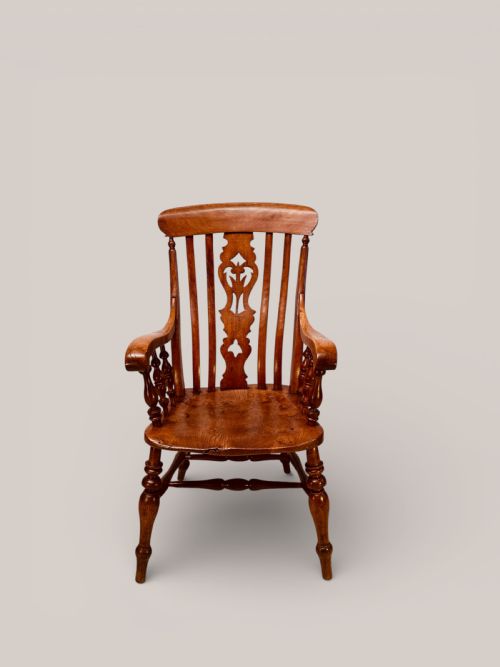
fig 2. A Victorian Windsor armchair crafted from beech and elm with a pierced back splat, turned legs, and curved armrests.
fig 2. Farmhouse Windsor Armchair in Beech & Elm, C1890

Whatever the reasoning, an evolution in the accepted meaning / use of the term ‘Windsor chair’ had occurred, but not without reason, as the method of construction remains key, as above, in contrast to ‘frame chairs’ where the back upright extends from top to bottom, with seat rails / seat jointed into the back uprights and front legs.

Height
104cm (40.94")
Width
57cm (22.44")
Depth
60cm (23.62")
Date of Manufacture

The Real Wood Furniture Company has dated this Victorian Elm Windsor Armchair to the 1890s.

Reference Numbers
Sellingantiques Ref
SA1196068
Dealers Internal Ref
10352
The Real Wood Furniture Company
Sellingantiques verified Since Oct 2025

The real wood furniture company (chris baylis) sells windsor chairs, decorative furniture and objects from large showrooms in the cotswolds

Dealer Profile

You can view the stock and full dealer information on the The Real Wood Furniture Company Profile Page
PDF SHARE
SAVE
A Victorian Windsor armchair crafted from beech and elm with a pierced back splat, turned legs, and curved armrests.
1 / 10
Archive I A Victorian Windsor armchair crafted from beech and elm with a pierced back splat, turned legs, and curved armrests.

Farmhouse Windsor Armchair in Beech & Elm, C1890
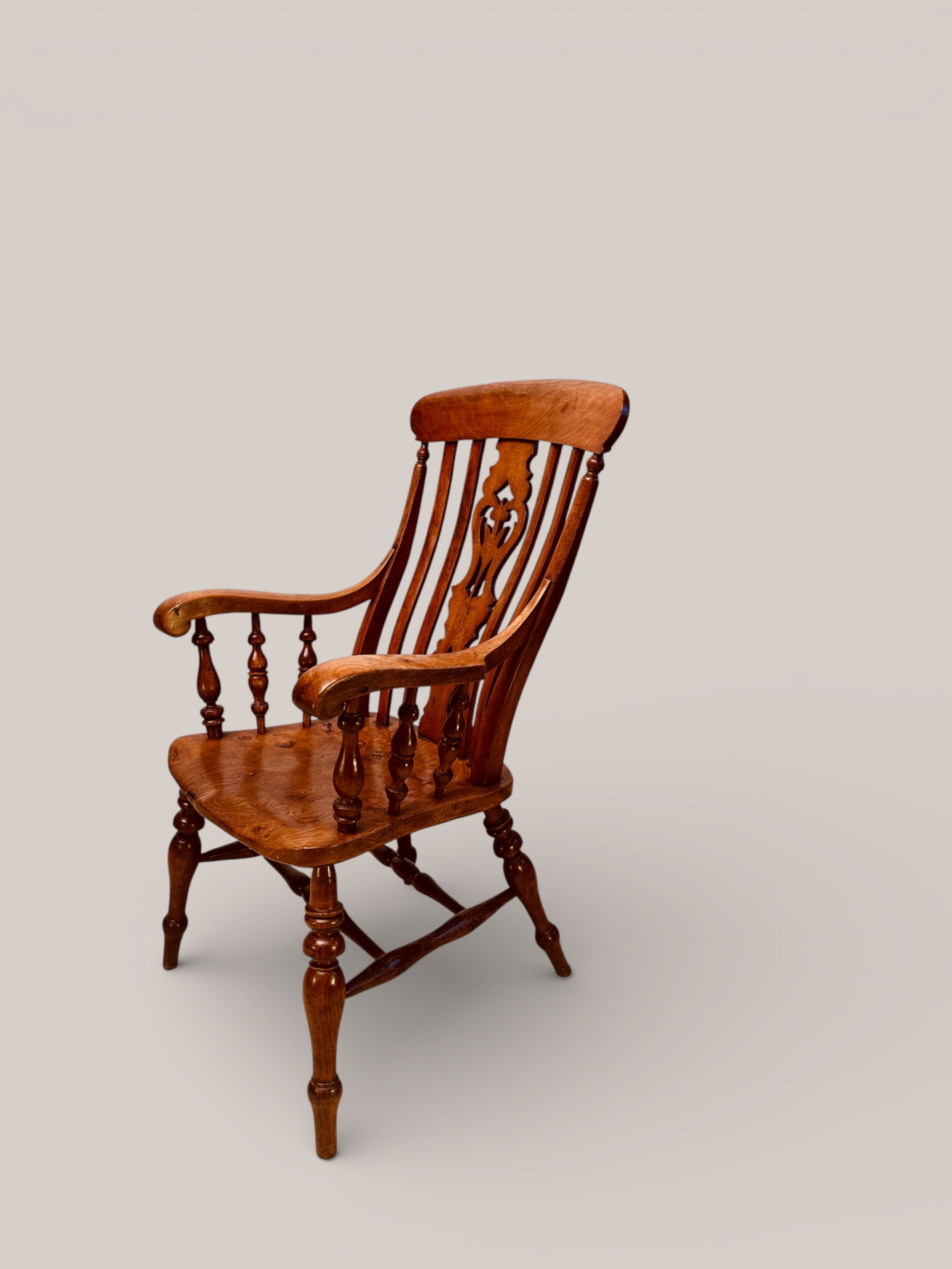
Archive II A Victorian Windsor armchair crafted from beech and elm with a pierced back splat, turned legs, and curved armrests. View II
Archive III A Victorian Windsor armchair crafted from beech and elm with a pierced back splat, turned legs, and curved armrests. View III
Archive IV A Victorian Windsor armchair crafted from beech and elm with a pierced back splat, turned legs, and curved armrests. View IV
Archive V A Victorian Windsor armchair crafted from beech and elm with a pierced back splat, turned legs, and curved armrests. View V
Archive VI A Victorian Windsor armchair crafted from beech and elm with a pierced back splat, turned legs, and curved armrests. View VI
Archive VII A Victorian Windsor armchair crafted from beech and elm with a pierced back splat, turned legs, and curved armrests. View VII
Archive VIII A Victorian Windsor armchair crafted from beech and elm with a pierced back splat, turned legs, and curved armrests. View VIII
Archive IX A Victorian Windsor armchair crafted from beech and elm with a pierced back splat, turned legs, and curved armrests. View IX
Archive X A Victorian Windsor armchair crafted from beech and elm with a pierced back splat, turned legs, and curved armrests. View X
FURTHER BROWSING

Visitors also looked at these ⇣

Enlarged Archival View
Location
At Mo Tighe
Chapel House Grounds
Chipping Norton
Oxfordshire
OX7 5SZ
United Kingdom
Verified Since Oct 2025
Items For Sale 92
The Real Wood Furniture Company
Verified Since Oct 2025
View Dealer Info
Location: At Mo Tighe, Chapel House Grounds, Chipping Norton, Oxfordshire, OX7 5SZ, United Kingdom
Verified
Oct 2025
For Sale
92
A Victorian Windsor armchair crafted from beech and elm with a pierced back splat, turned legs, and curved armrests.
FARMHOUSE WINDSOR ARMCHAIR IN BEECH & ELM, C1890
Ref: SA1196068
A Victorian Windsor armchair crafted from beech and elm with a pierced back splat, turned legs, and curved armrests.
Detail View 1
Detail View 2
Detail View 3
Detail View 4
Detail View 5
Detail View 6
Detail View 7
Detail View 8
Detail View 9
Archival Detail
Every single antique dealer on our platform is individually approved by our internal team. We verify their professional trade history, ethical standards, and photographic quality to ensure a secure, high-standard buying environment. Upon joining, every dealer agrees to a strict 9-point code of conduct. While issues can occasionally arise, our dealers typically resolve them swiftly and directly with the buyer. In fact, since our founding in 2002, Sellingantiques has only had to step in to help resolve an issue on roughly five occasions—a true testament to the quality of our dealers and their dedication to your happiness.
Our dealers are highly experienced in packing and shipping fragile, high-value antiques. Because you are in direct contact with the dealer, you will be able to easily go through all available shipping and insurance options together to ensure your item arrives safely.
Antiques are the ultimate green purchase. By choosing historical pieces over newly manufactured goods, you completely eliminate the carbon footprint of modern mass production while preserving exceptional, timeless craftsmanship.

A Windsor armchair features a solid wooden seat carved into a contoured saddle shape, into which the chair legs, back spindles, and arm supports are secured using wedged mortise and tenon joints.

English Windsor chairs frequently combined multiple native timber species, utilizing elm for the heavy contoured seat due to its split-resistant grain, alongside turned beech or ash for the legs, stretchers, and back spindles.

Authentic pieces from the late 19th century display hand-carved splat motifs, leg turnings characteristic of regional workshops, natural timber patination, and wedged joinery visible on the top of the seat or under structural joints.

A Windsor chair functions as a standalone accent piece in a modern hallway, paired with contemporary soft textiles, or integrated into an eclectic dining set to balance streamlined interior architecture.

Preserve the original finish by dusting regularly with a dry cloth and applying a natural beeswax polish annually, while keeping the item away from direct heat sources and high humidity to prevent timber movement.
items
Add keywords to the filter
Price
£100
£250000
Era
Movements
Material
Origin
Stock Location
Freshness
Online Payments
Categories