12,749  PAGES BROWSED TODAY PAGES TODAY 36  ANTIQUES UPLOADED TODAY NEW ARRIVALS
ID #SA1194923
FOR SALE
£24,500
Email
Save
An Important and Rare Early English, Small Marquetry Longcase Clock. Attributed to Nathaniel Pyne. (Long Case) circa 1685.
M. C. Taylor
for sale €28,665     $31,115
£24,500
M. C. Taylor

M. C. Taylor

Sellingantiques Verified Since Oct 2021
View Dealers Stock Page
  • About Us
    Clockmakers and restorers established 1987
Id #SA1194923
PDF SHARE
SAVE

An Important and Rare Early English, Small Marquetry Longcase Clock. Attributed to Nathaniel Pyne. (Long Case) circa 1685.

17th century
For Sale by M. C. Taylor
Description

An important and rare early English, small Marquetry Longcase Clock.

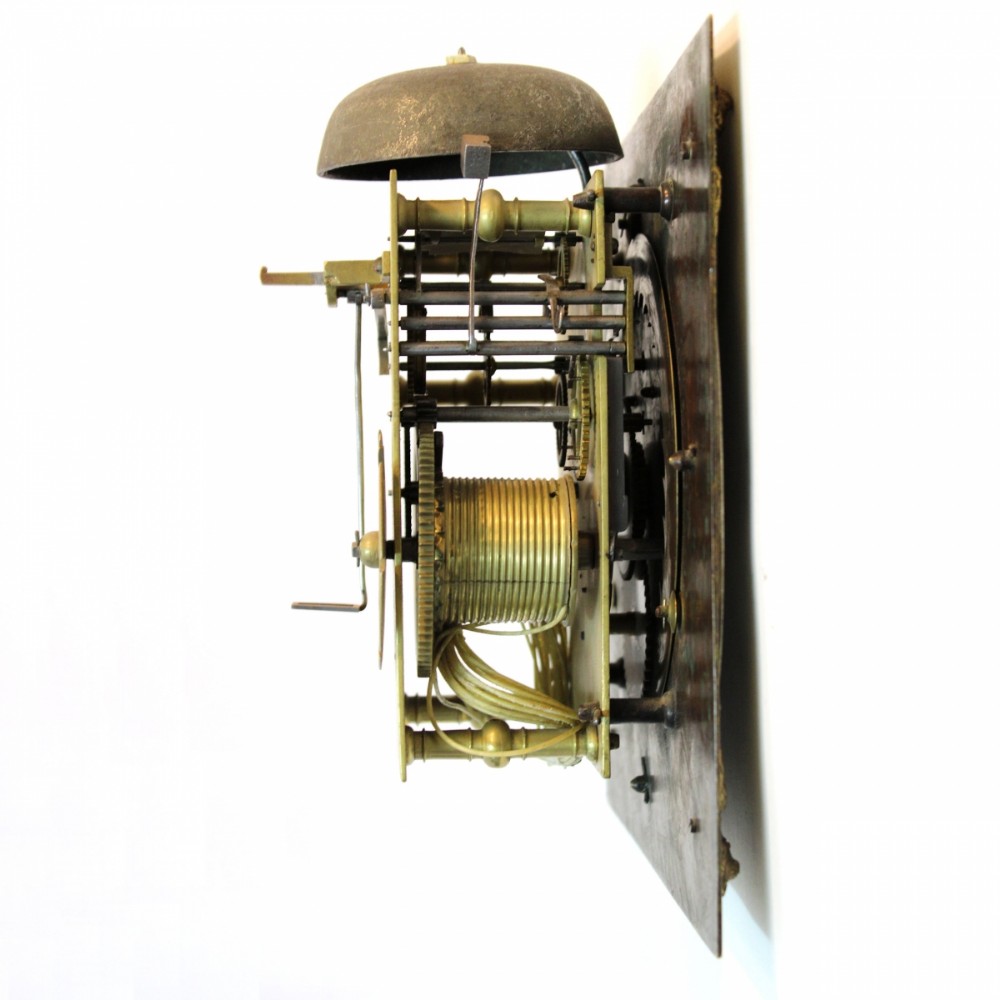
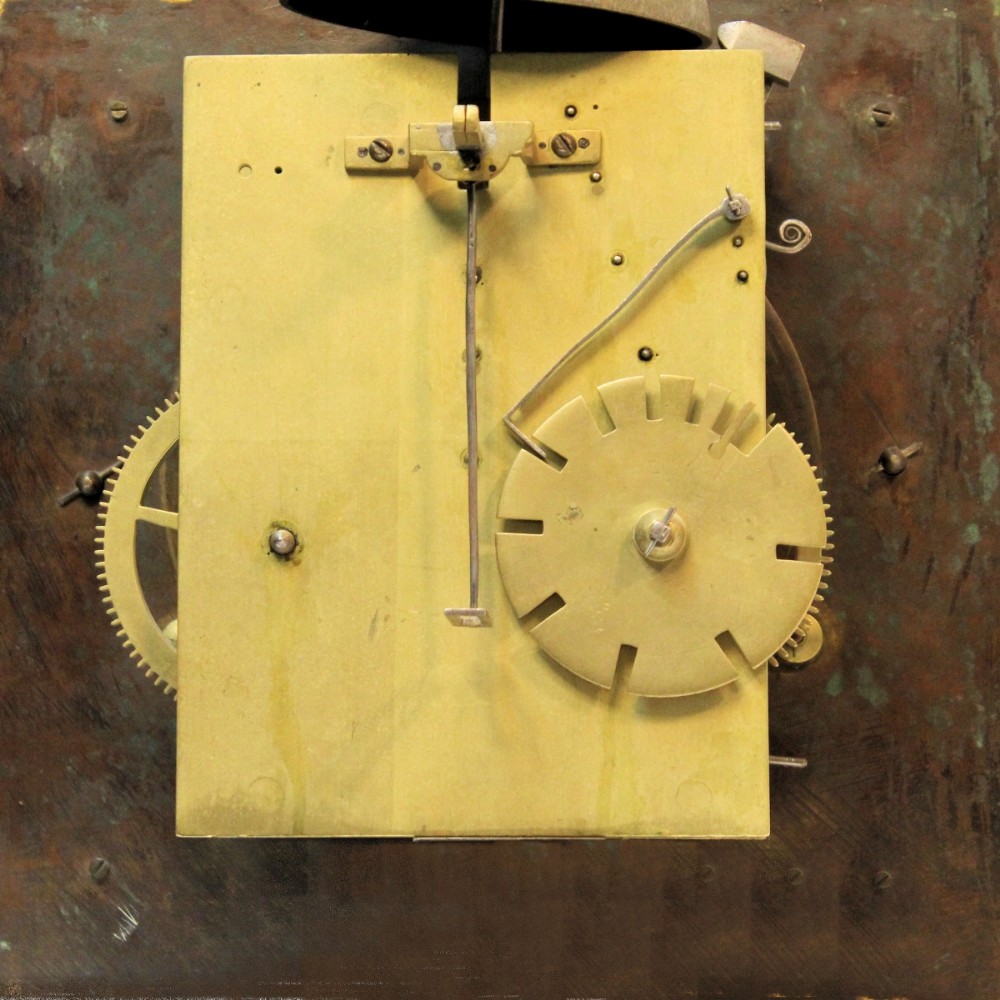
The eight day duration, 5 finned pillar movement with a small Anchor Recoil escapement and large, external countwheel striking on a top-mounted bell. Notably, the wheel and pinions are original and have rounded collets. The movement is driven by original brass-cased weights.
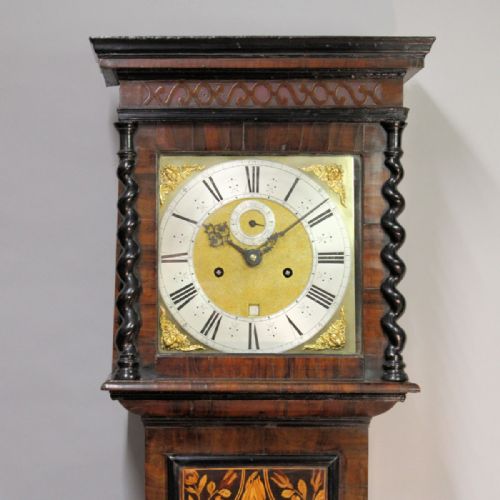
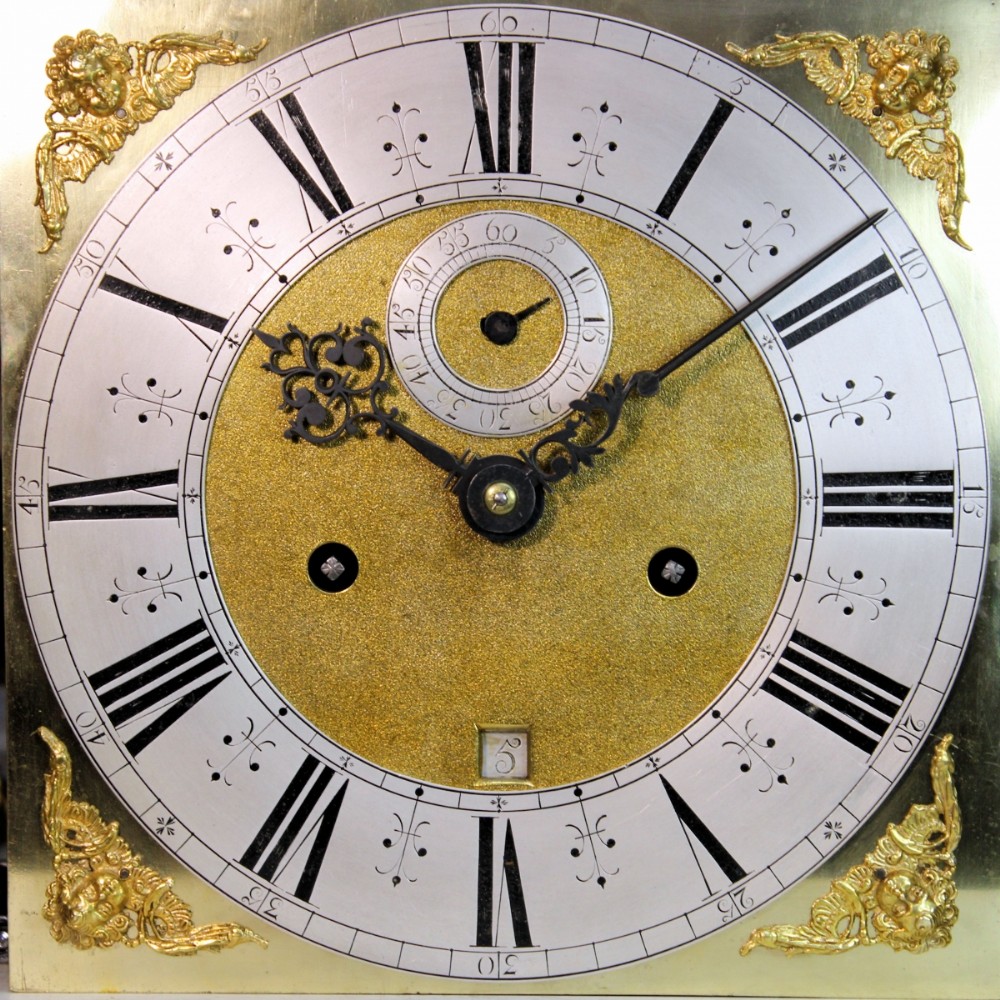
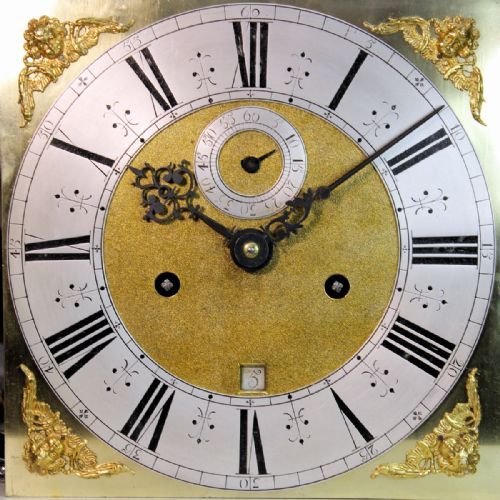
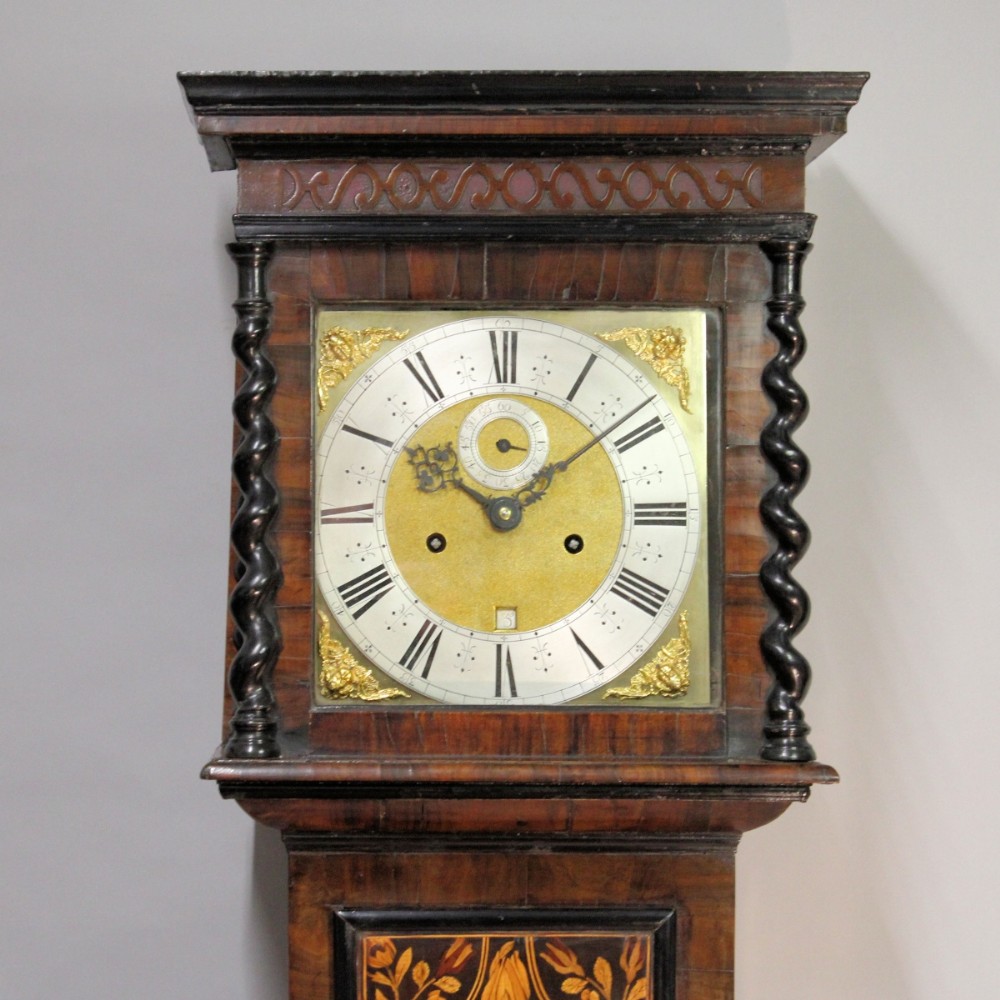
Behind a 10" square brass dial with small winged cherub spandrels to the corners. The silvered chapter ring has a narrow, outer minute track with Arabic 5's and cruciform markings to the dial corner points. The Roman hour numerals are separated with Fleur-de-lys and the inner, quarter track is dotted and Fleur-de-lys also. The finely matted centre has a silvered subsidiary seconds dial with Arabic 5's and inner, divided track. The bottom of the centre has a square, chamfered, calendar date aperture and the silvered date ring has early 'Lantern clock style' Arabic numerals. The blued steel hands are pierced and carved.
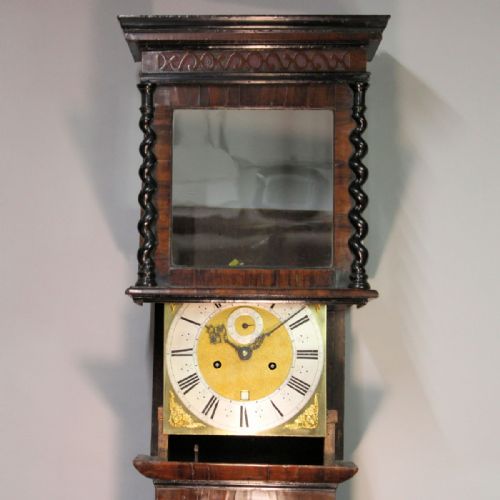
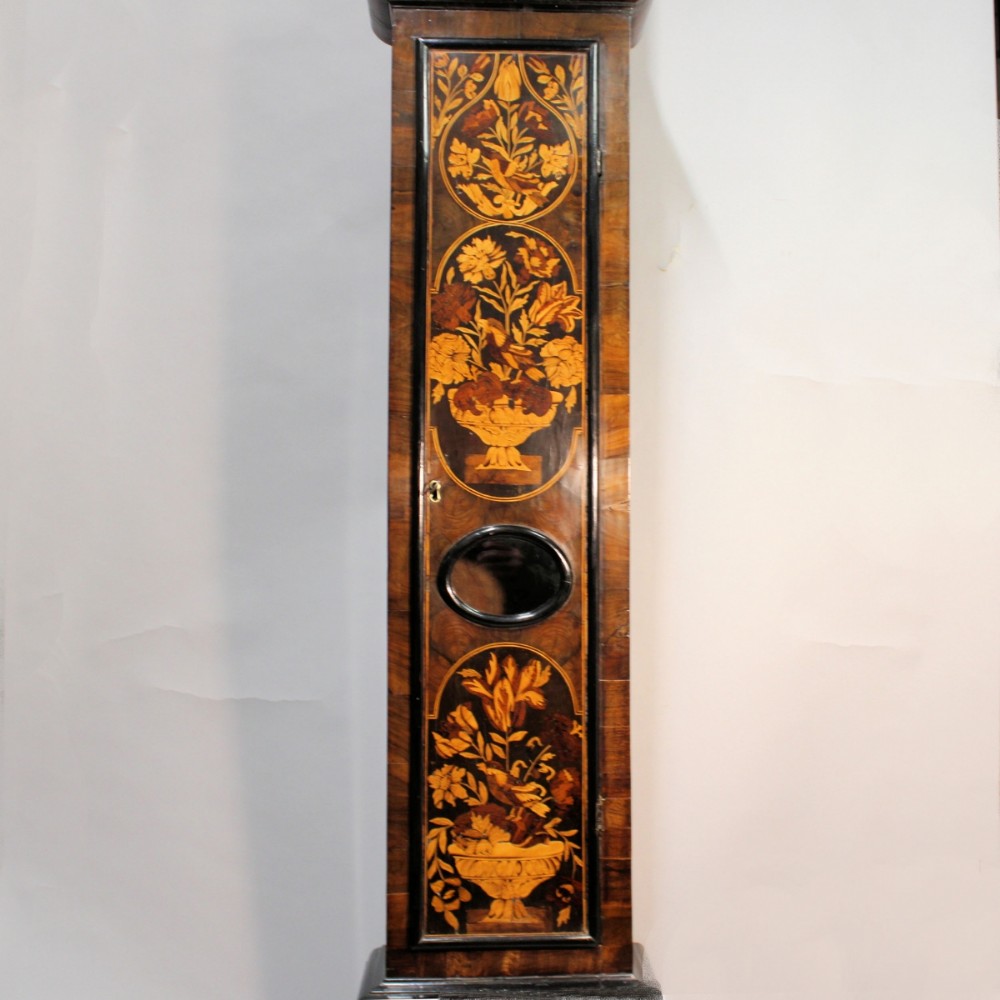
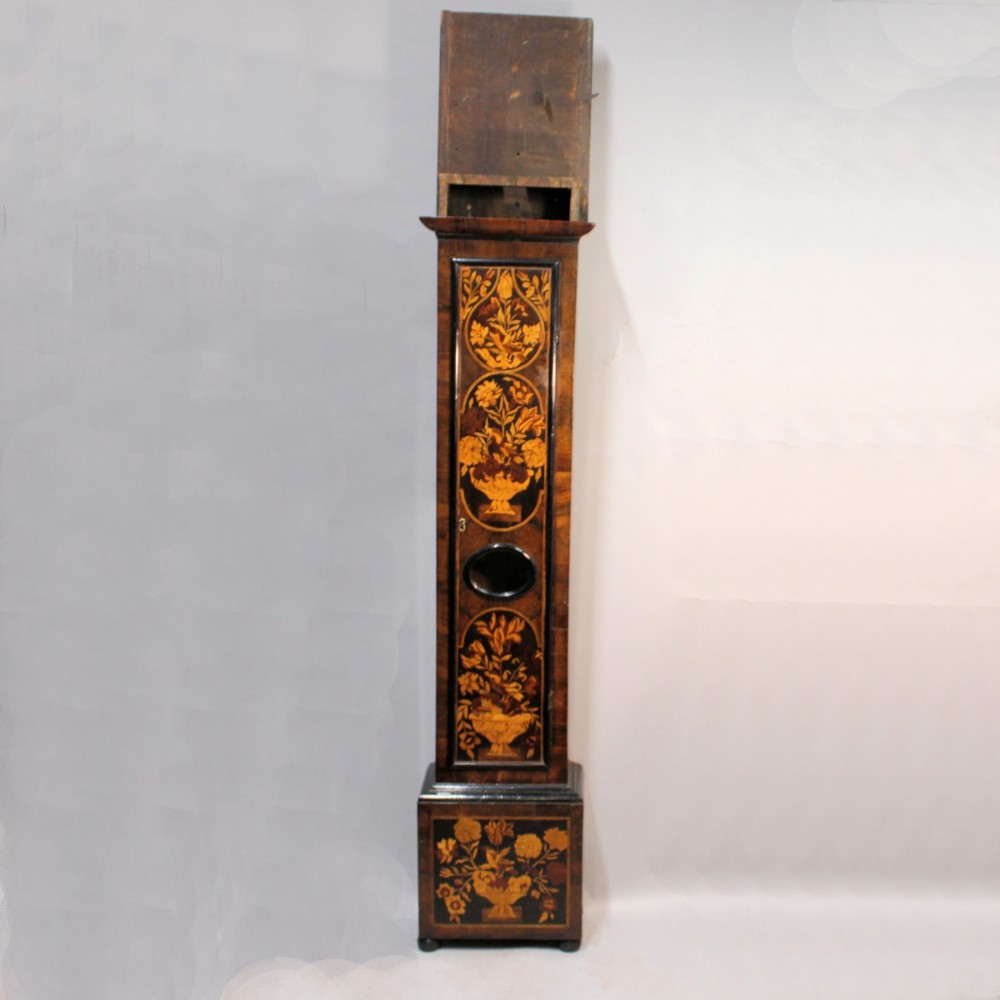
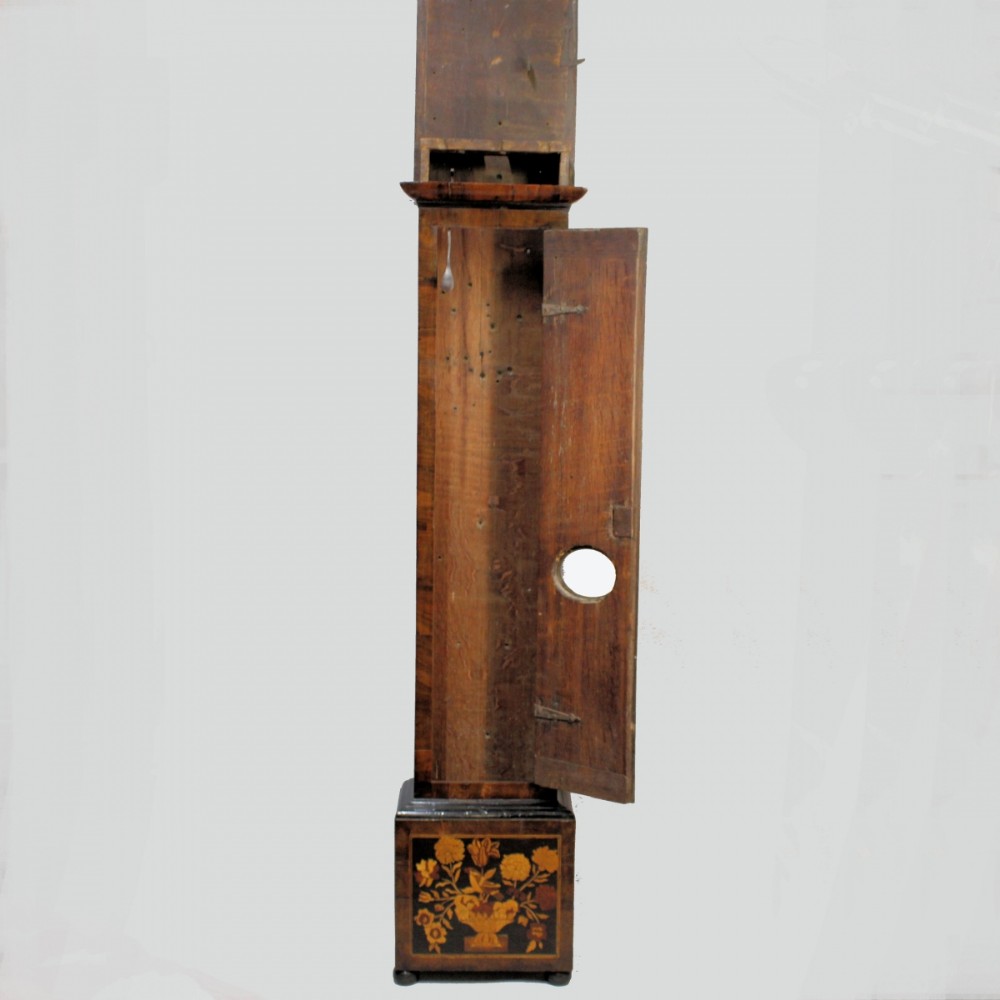
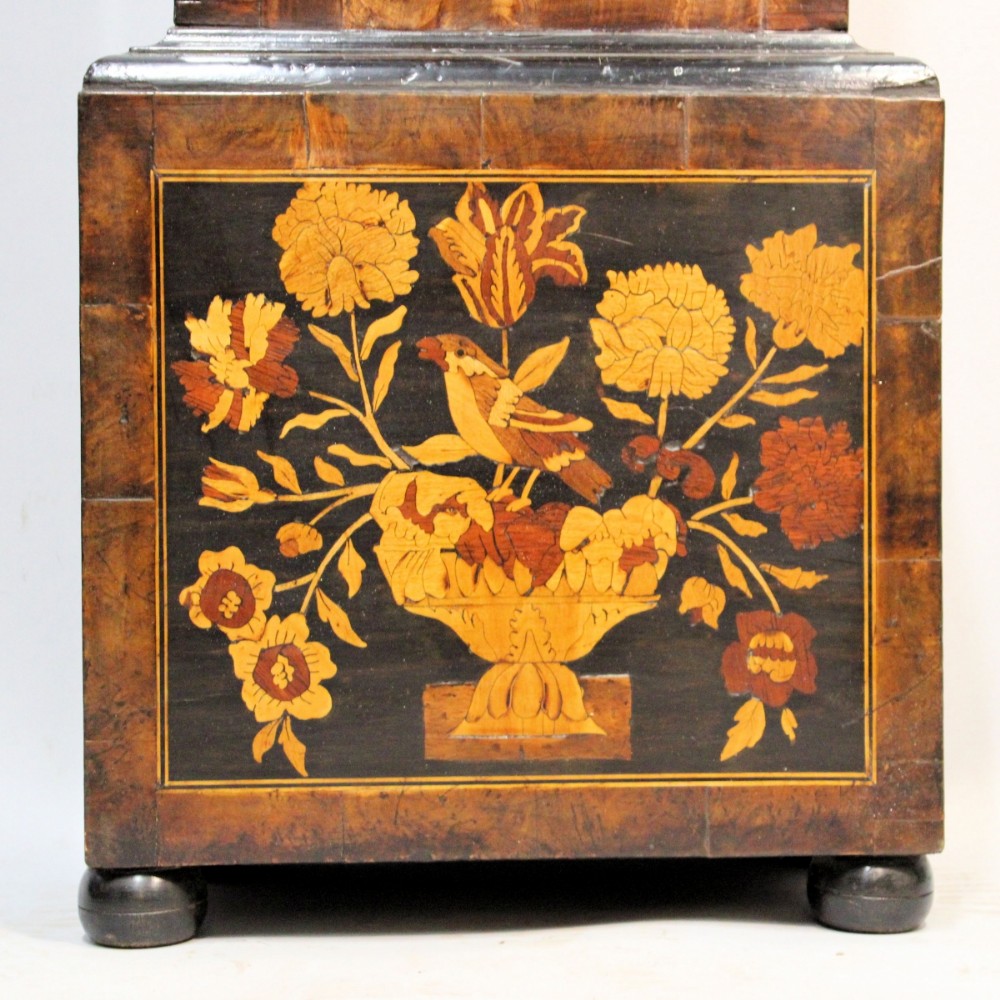
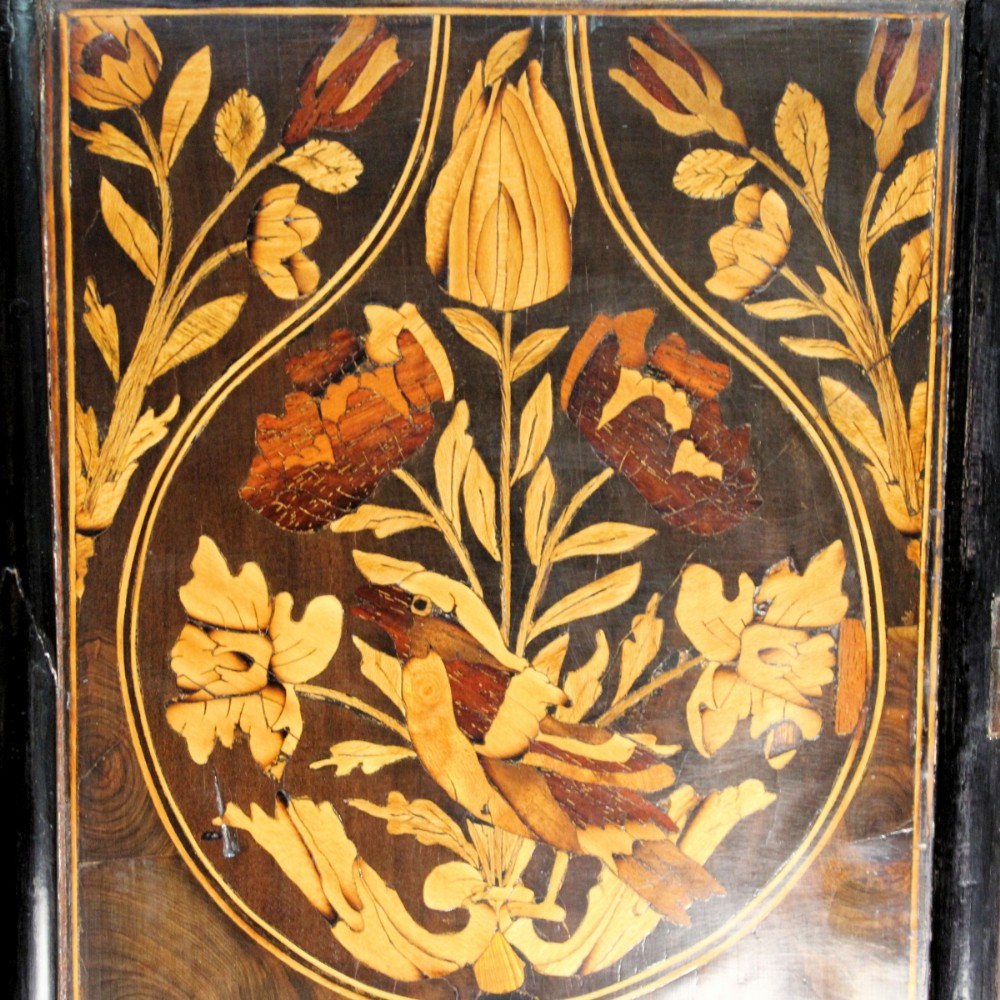
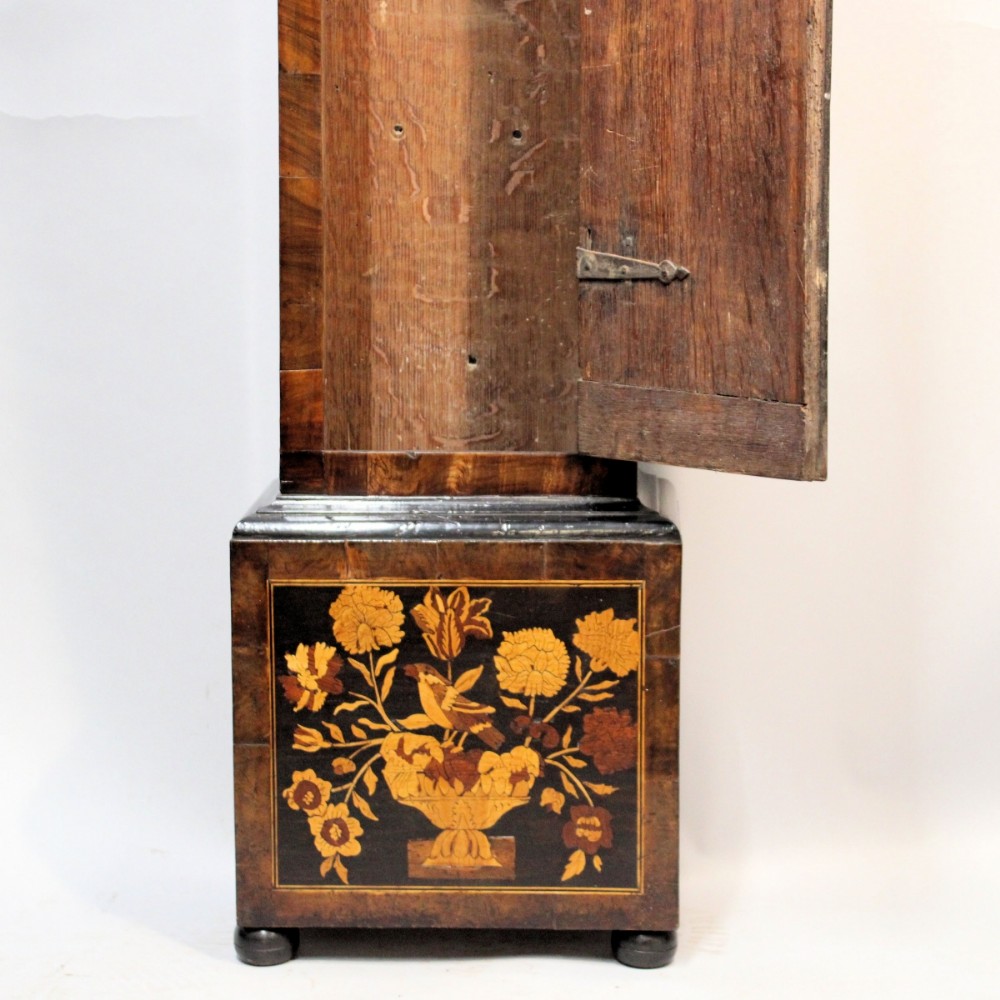
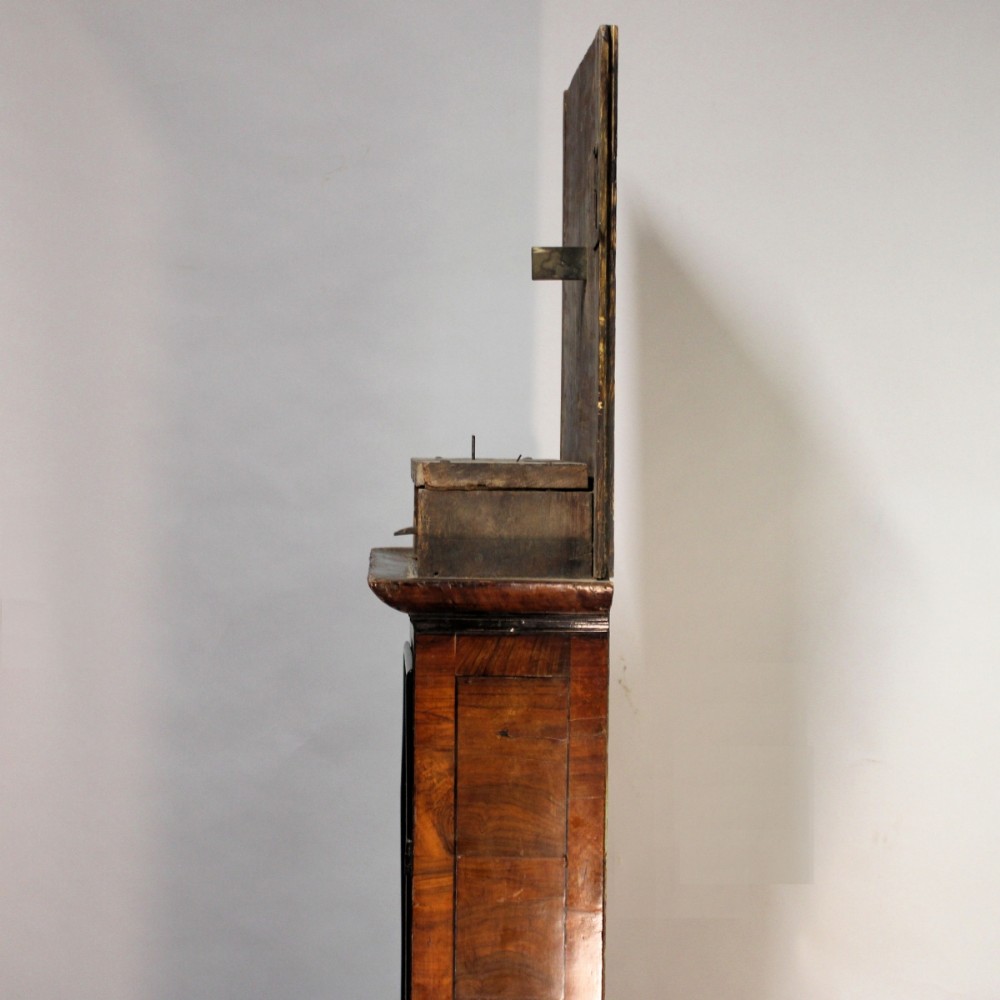
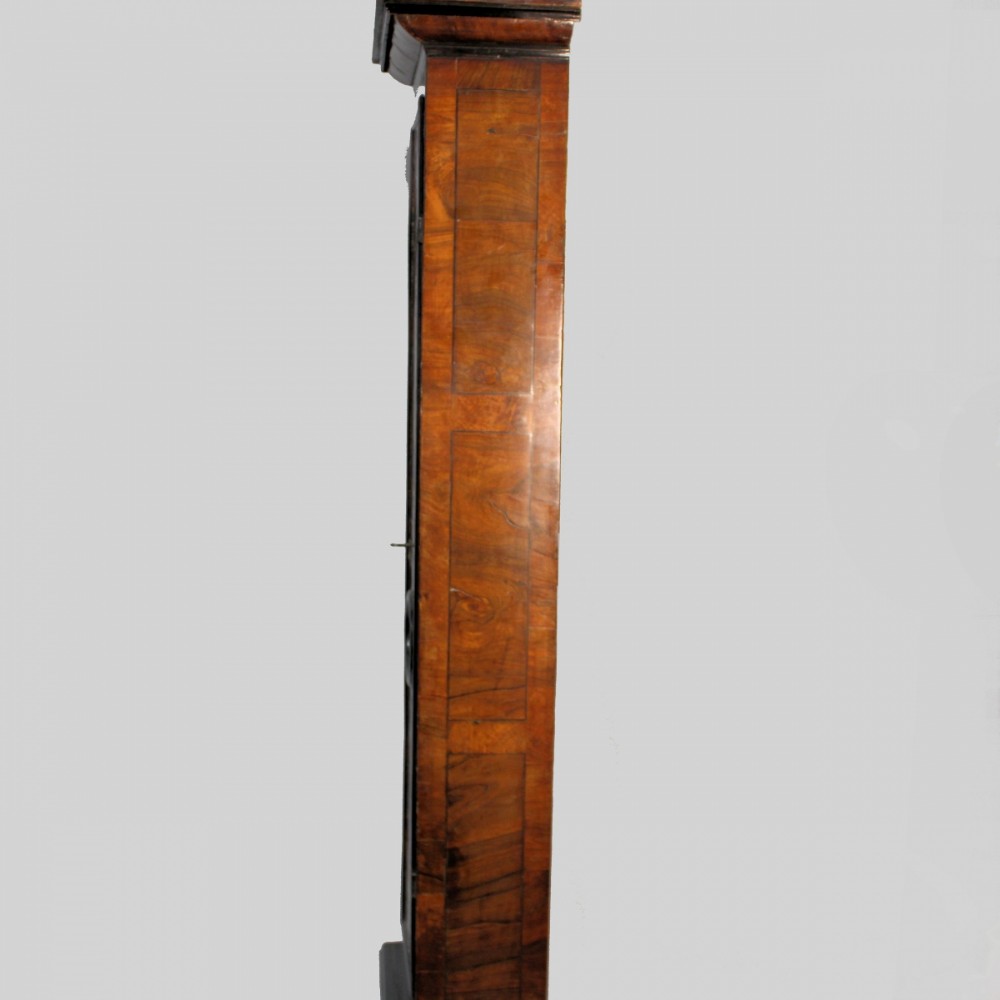
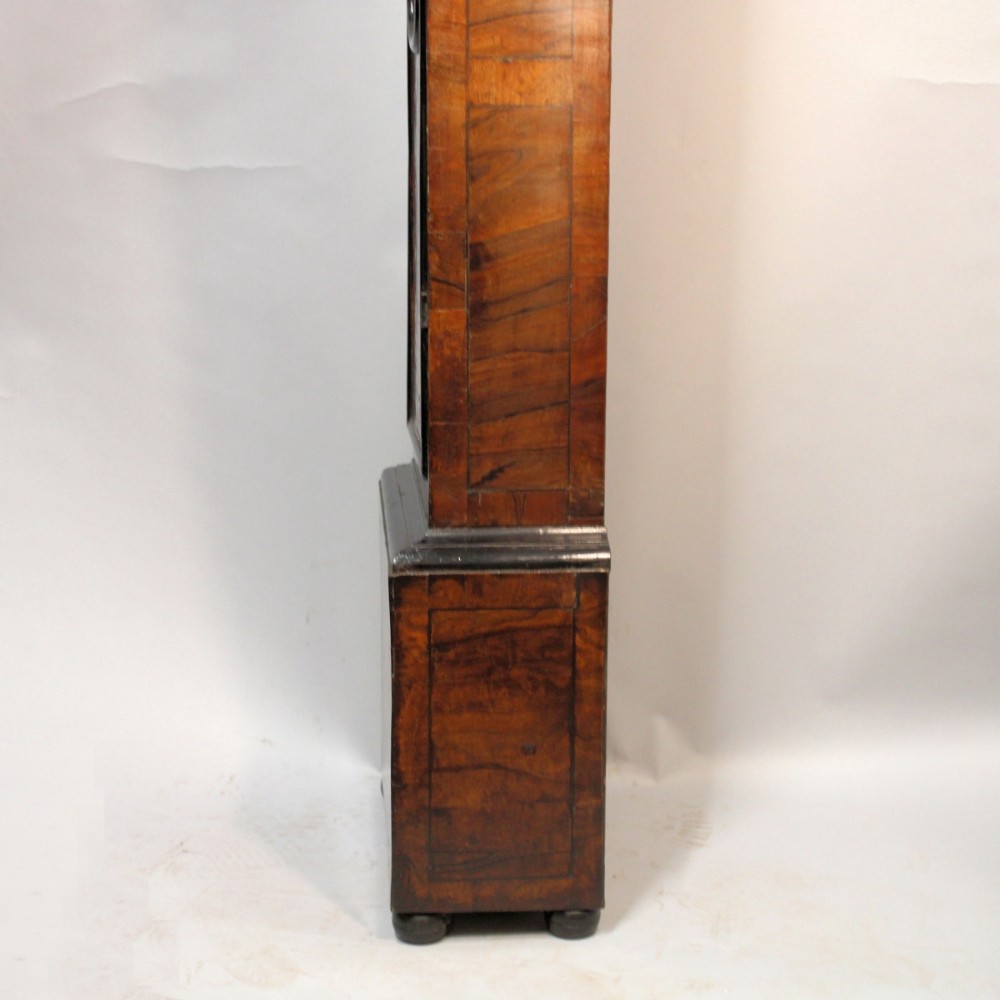
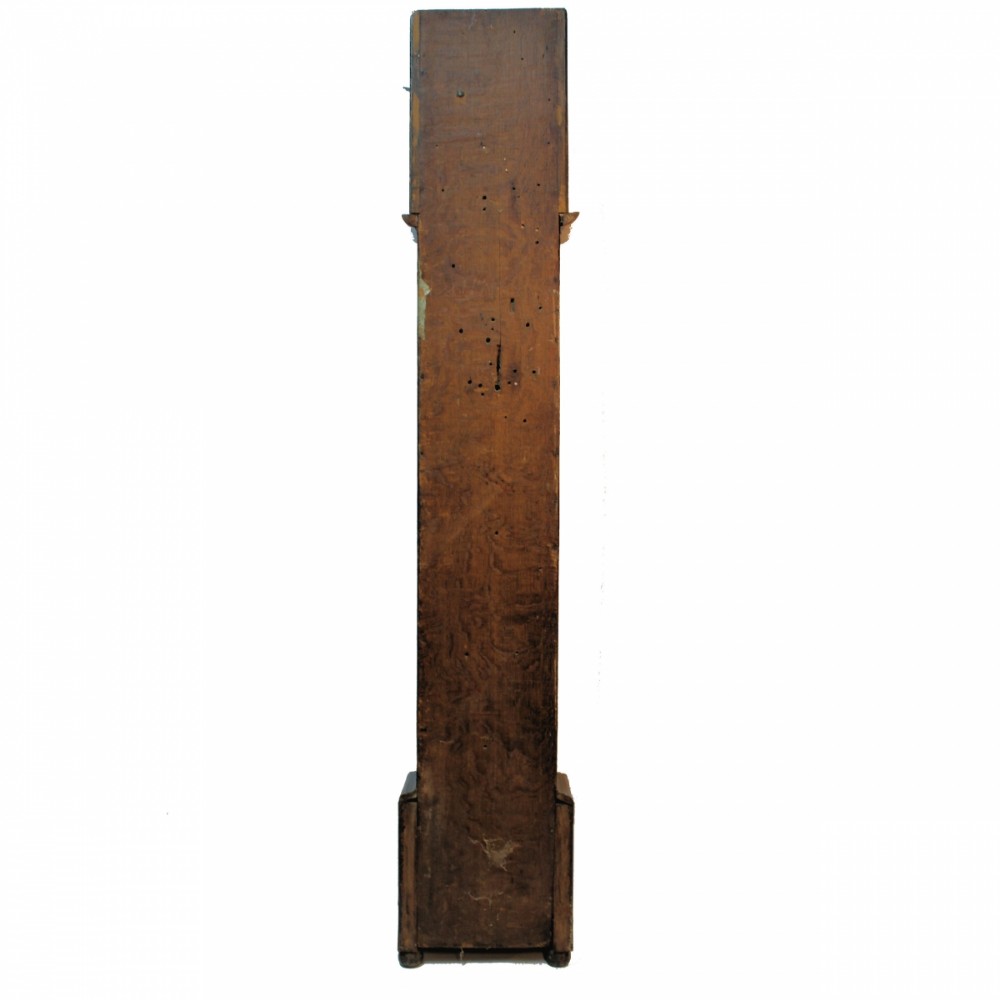
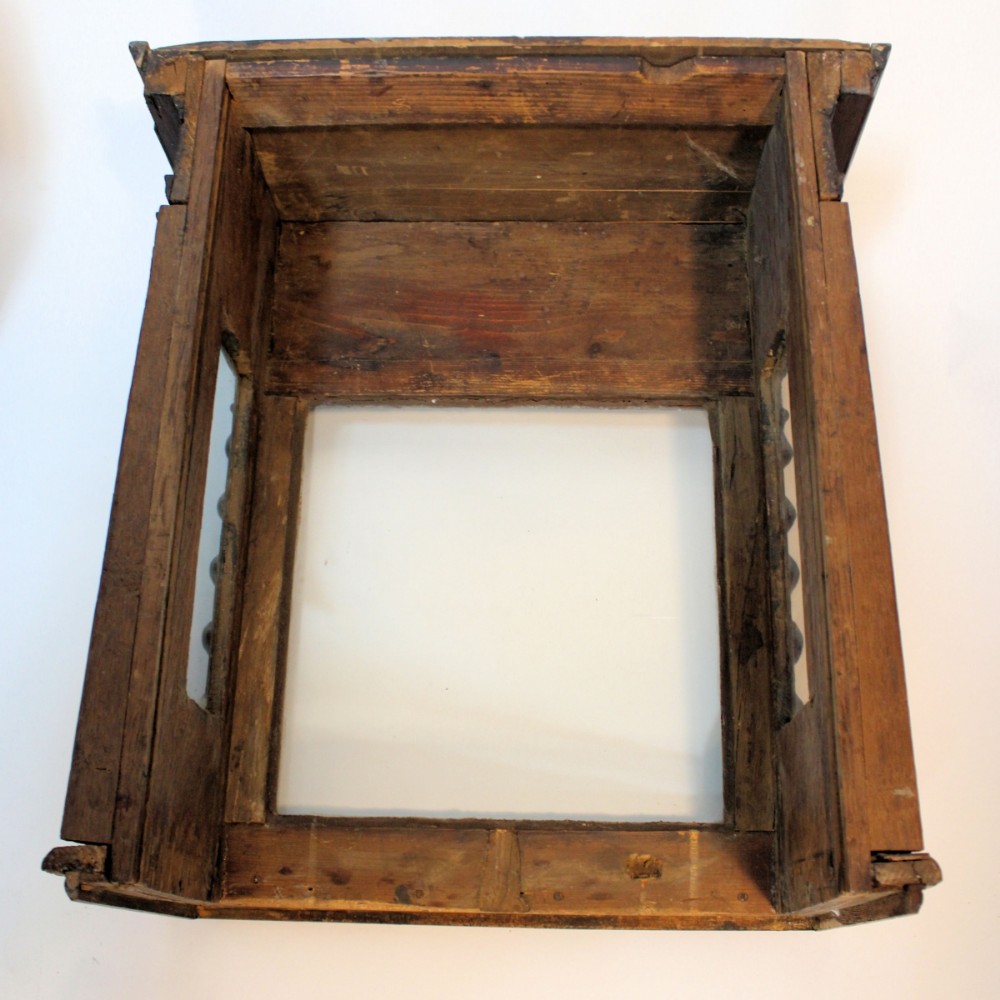
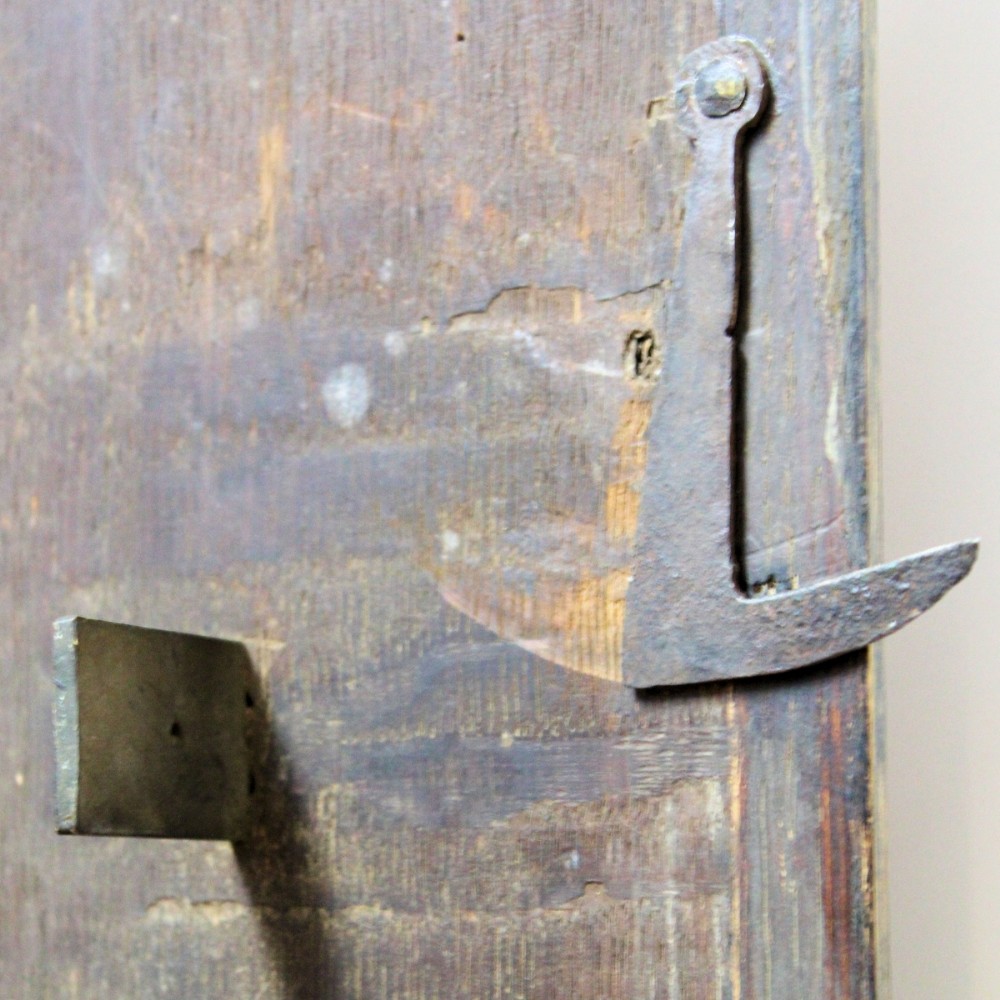
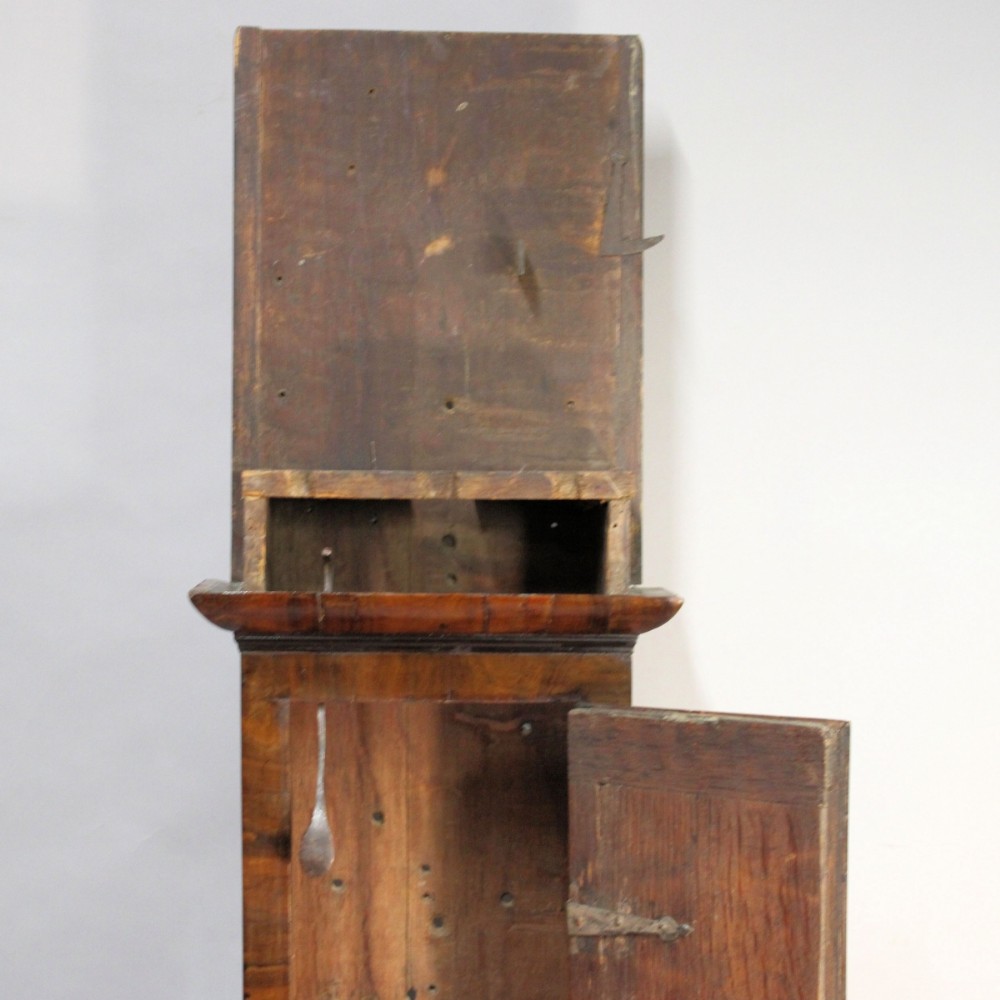
In a small, walnut marquetry-fronted case with a rising hood. The flat top overhangs a front frieze. This is the usual configuration with cross-grain framing to the glazed front and inset barley-twist pillars to the front and quartered pillars to the rear. The hood sides have glazed apertures. The hood is held in the up position with its original swinging hook and can only be opened once the trunk door is unlocked and opened because the case still has its original iron 'hooked spoon' lever that is also sprung. The trunk throat has a convex moulding that is cross-grain veneered and the trunk has a full-length marquetry door with outer half-round and ebonised moulding which is repeated around the oval, glazed lenticle. The marquetry consists of three separate 'bird and flower' panels that are separated with oysters but notably, the top panel depicting tulips has the upper flower closed. The middle panel shows a bird sat among an urn containing flowers and the lower panel is similar. This is repeated in the panel to the front of the base. The sides are plain, cross-grain panelled in walnut and the case sits upon four, bun feet. The rear has its original and still full-length backboard which still has its movement fixing bracket.
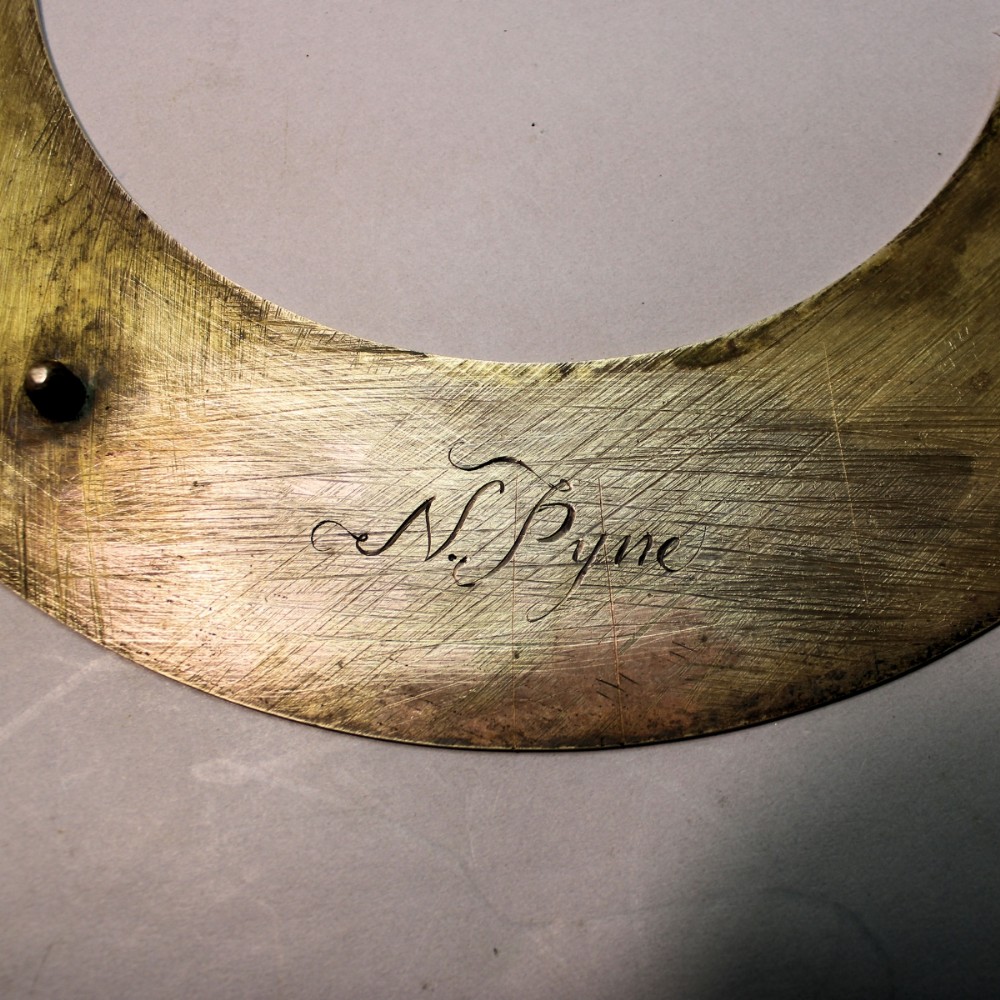
* This is an incredible find and a highly collectable clock. It was purchased privately and I have never come across such a complete and original example, it has never been restored yet only had some small areas of veneer loss which have now been attended to with genuine antique veneer. This is a puritan's clock! It is important and rare because of its originality that shows no doubt of its construction throughout the case. Although the chapter ring isn't signed as it usually would have been, I am attributing this clock to Nathaniel Pyne because the case shows a unique feature to him that I noticed many years ago, that being the closed tulip to the top of the marquetry (please click this link for an example) also, there is an engraved signature of "N. Pyne" on the rear of the chapter ring. He was not a maker of particular note however, he is recorded as being born about 1653. He was free of the Clockmaker's Company in 1677 and signed the Company's Oath of Allegiance in 1697. It is believed that he died shortly after 1715. I have seen at least 3 other clocks by him (all signed) that bear the closed tulip and none by other makers. Though dirty, the movement which is totally original, doesn't appear to have any wear that needs attending to and not a single part needs to be made for it - it has been extremely well maintained. This pretty little clock was made during the reign of King James II, is nearly 350 years old and almost 100% original!

Dimensions: 75 1/4" high x 16 1/2" wide x 8 3/4" deep.

Condition: In original condition but has had careful and minor repairs to the case carried out by us. We have also restored the dial.

Physical Dimensions
Height
191.1cm (75.24")
Width
41.9cm (16.50")
Depth
22.2cm (8.74")
Declaration

M. C. Taylor has dated this Floral Marquetry Longcase Clock to the 17th Century.

Reference Numbers
Sellingantiques Reference
SA1194923
Dealers Internal Reference
SA14388
Description
An important and rare early English, small Marquetry Longcase Clock.
The eight day duration, 5 finned pillar movement with a small Anchor Recoil escapement and large, external countwheel striking on a top-mounted bell.
M. C. Taylor

Notably, the wheel and pinions are original and have rounded collets. The movement is driven by original brass-cased weights.

fig 1. A late 17th-century longcase clock with floral marquetry panels, a square brass dial flanked by turned twist columns, and a central door lenticle.
fig 1. An Important and Rare Early English, Small Marquetry Longcase Clock. Attributed to Nathaniel Pyne. (Long Case) circa 1685.

Behind a 10" square brass dial with small winged cherub spandrels to the corners. The silvered chapter ring has a narrow, outer minute track with Arabic 5's and cruciform markings to the dial corner points. The Roman hour numerals are separated with Fleur-de-lys and the inner, quarter track is dotted and Fleur-de-lys also. The finely matted centre has a silvered subsidiary seconds dial with Arabic 5's and inner, divided track. The bottom of the centre has a square, chamfered, calendar date aperture and the silvered date ring has early 'Lantern clock style' Arabic numerals. The blued steel hands are pierced and carved.

fig 2. A late 17th-century longcase clock with floral marquetry panels, a square brass dial flanked by turned twist columns, and a central door lenticle.
fig 2. An Important and Rare Early English, Small Marquetry Longcase Clock. Attributed to Nathaniel Pyne. (Long Case) circa 1685.

In a small, walnut marquetry-fronted case with a rising hood. The flat top overhangs a front frieze. This is the usual configuration with cross-grain framing to the glazed front and inset barley-twist pillars to the front and quartered pillars to the rear. The hood sides have glazed apertures. The hood is held in the up position with its original swinging hook and can only be opened once the trunk door is unlocked and opened because the case still has its original iron 'hooked spoon' lever that is also sprung. The trunk throat has a convex moulding that is cross-grain veneered and the trunk has a full-length marquetry door with outer half-round and ebonised moulding which is repeated around the oval, glazed lenticle. The marquetry consists of three separate 'bird and flower' panels that are separated with oysters but notably, the top panel depicting tulips has the upper flower closed. The middle panel shows a bird sat among an urn containing flowers and the lower panel is similar. This is repeated in the panel to the front of the base. The sides are plain, cross-grain panelled in walnut and the case sits upon four, bun feet. The rear has its original and still full-length backboard which still has its movement fixing bracket.

fig 3. A late 17th-century longcase clock with floral marquetry panels, a square brass dial flanked by turned twist columns, and a central door lenticle.
fig 3. An Important and Rare Early English, Small Marquetry Longcase Clock. Attributed to Nathaniel Pyne. (Long Case) circa 1685.

This is an incredible find and a highly collectable clock. It was purchased privately and I have never come across such a complete and original example, it has never been restored yet only had some small areas of veneer loss which have now been attended to with genuine antique veneer. This is a puritan's clock! It is important and rare because of its originality that shows no doubt of its construction throughout the case. Although the chapter ring isn't signed as it usually would have been, I am attributing this clock to Nathaniel Pyne because the case shows a unique feature to him that I noticed many years ago, that being the closed tulip to the top of the marquetry (please click this link for an example) also, there is an engraved signature of "N. Pyne" on the rear of the chapter ring. He was not a maker of particular note however, he is recorded as being born about 1653. He was free of the Clockmaker's Company in 1677 and signed the Company's Oath of Allegiance in 1697. It is believed that he died shortly after 1715. I have seen at least 3 other clocks by him (all signed) that bear the closed tulip and none by other makers. Though dirty, the movement which is totally original, doesn't appear to have any wear that needs attending to and not a single part needs to be made for it - it has been extremely well maintained. This pretty little clock was made during the reign of King James II, is nearly 350 years old and almost 100% original!

Dimensions: 75 1/4" high x 16 1/2" wide x 8 3/4" deep.

Condition: In original condition but has had careful and minor repairs to the case carried out by us. We have also restored the dial.

Height
191.1cm (75.24")
Width
41.9cm (16.50")
Depth
22.2cm (8.74")
Date of Manufacture

M. C. Taylor has dated this Floral Marquetry Longcase Clock to the 17th Century.

Reference Numbers
Sellingantiques Ref
SA1194923
Dealers Internal Ref
SA14388
M. C. Taylor
M. C. Taylor
Sellingantiques verified Since Oct 2021

Clockmakers and restorers established 1987

Dealer Profile

You can view the stock and full dealer information on the M. C. Taylor Profile Page

PDF SHARE
SAVE
A late 17th-century longcase clock with floral marquetry panels, a square brass dial flanked by turned twist columns, and a central door lenticle.
1 / 20
Archive I A late 17th-century longcase clock with floral marquetry panels, a square brass dial flanked by turned twist columns, and a central door lenticle.

An Important and Rare Early English, Small Marquetry Longcase Clock. Attributed to Nathaniel Pyne. (Long Case) circa 1685.
Archive II A late 17th-century longcase clock with floral marquetry panels, a square brass dial flanked by turned twist columns, and a central door lenticle. View II
Archive III A late 17th-century longcase clock with floral marquetry panels, a square brass dial flanked by turned twist columns, and a central door lenticle. View III
Archive IV A late 17th-century longcase clock with floral marquetry panels, a square brass dial flanked by turned twist columns, and a central door lenticle. View IV
Archive V A late 17th-century longcase clock with floral marquetry panels, a square brass dial flanked by turned twist columns, and a central door lenticle. View V
Archive VI A late 17th-century longcase clock with floral marquetry panels, a square brass dial flanked by turned twist columns, and a central door lenticle. View VI
Archive VII A late 17th-century longcase clock with floral marquetry panels, a square brass dial flanked by turned twist columns, and a central door lenticle. View VII
Archive VIII A late 17th-century longcase clock with floral marquetry panels, a square brass dial flanked by turned twist columns, and a central door lenticle. View VIII
Archive IX A late 17th-century longcase clock with floral marquetry panels, a square brass dial flanked by turned twist columns, and a central door lenticle. View IX
Archive X A late 17th-century longcase clock with floral marquetry panels, a square brass dial flanked by turned twist columns, and a central door lenticle. View X
Archive XI A late 17th-century longcase clock with floral marquetry panels, a square brass dial flanked by turned twist columns, and a central door lenticle. View XI
Archive XII A late 17th-century longcase clock with floral marquetry panels, a square brass dial flanked by turned twist columns, and a central door lenticle. View XII
Archive XIII A late 17th-century longcase clock with floral marquetry panels, a square brass dial flanked by turned twist columns, and a central door lenticle. View XIII
Archive XIV A late 17th-century longcase clock with floral marquetry panels, a square brass dial flanked by turned twist columns, and a central door lenticle. View XIV
Archive XV A late 17th-century longcase clock with floral marquetry panels, a square brass dial flanked by turned twist columns, and a central door lenticle. View XV
Archive XVI A late 17th-century longcase clock with floral marquetry panels, a square brass dial flanked by turned twist columns, and a central door lenticle. View XVI
Archive XVII A late 17th-century longcase clock with floral marquetry panels, a square brass dial flanked by turned twist columns, and a central door lenticle. View XVII
Archive XVIII A late 17th-century longcase clock with floral marquetry panels, a square brass dial flanked by turned twist columns, and a central door lenticle. View XVIII
Archive XIX A late 17th-century longcase clock with floral marquetry panels, a square brass dial flanked by turned twist columns, and a central door lenticle. View XIX
Archive XX A late 17th-century longcase clock with floral marquetry panels, a square brass dial flanked by turned twist columns, and a central door lenticle. View XX
FURTHER BROWSING

Visitors also looked at these ⇣

Enlarged Archival View
Telephone 01202 429718
Location
995 Christchurch Road
Bournemouth
Dorset
BH7 6BB
United Kingdom
Verified Since Oct 2021
Items For Sale 68
Items Sold 139
M. C. Taylor
M. C. Taylor
Verified Since Oct 2021
View Dealer Info
Location: 995 Christchurch Road, Bournemouth, Dorset, BH7 6BB, United Kingdom
Verified
Oct 2021
For Sale
68
Sold
139
A late 17th-century longcase clock with floral marquetry panels, a square brass dial flanked by turned twist columns, and a central door lenticle.
AN IMPORTANT AND RARE EARLY ENGLISH, SMALL MARQUETRY LONGCASE CLOCK. ATTRIBUTED TO NATHANIEL PYNE. (LONG CASE) CIRCA 1685.
Ref: SA1194923
A late 17th-century longcase clock with floral marquetry panels, a square brass dial flanked by turned twist columns, and a central door lenticle.
Detail View 1
Detail View 2
Detail View 3
Detail View 4
Detail View 5
Detail View 6
Detail View 7
Detail View 8
Detail View 9
Detail View 10
Detail View 11
Detail View 12
Detail View 13
Detail View 14
Detail View 15
Detail View 16
Detail View 17
Detail View 18
Detail View 19
Archival Detail
Every single antique dealer on our platform is individually approved by our internal team. We verify their professional trade history, ethical standards, and photographic quality to ensure a secure, high-standard buying environment. Upon joining, every dealer agrees to a strict 9-point code of conduct. While issues can occasionally arise, our dealers typically resolve them swiftly and directly with the buyer. In fact, since our founding in 2002, Sellingantiques has only had to step in to help resolve an issue on roughly five occasions—a true testament to the quality of our dealers and their dedication to your happiness.
Our dealers are highly experienced in packing and shipping fragile, high-value antiques. Because you are in direct contact with the dealer, you will be able to easily go through all available shipping and insurance options together to ensure your item arrives safely.
Antiques are the ultimate green purchase. By choosing historical pieces over newly manufactured goods, you completely eliminate the carbon footprint of modern mass production while preserving exceptional, timeless craftsmanship.

Originating in late 17th-century England, these tall-case clocks feature weight-driven pendulum movements housed in timber cases decorated with intricate floral wood marquetry and brass dials.

Cases were typically constructed from oak or walnut carcasses, veneered with woods such as boxwood, holly, and sycamore for the marquetry, and fitted with brass dials and steel clock movements.

Authentic period examples generally display square dials, cast brass spandrels, barley twist hood columns, small dial dimensions, and a circular or oval glass lenticle in the trunk door.

Position the clock as a focal architectural feature in an entrance hall, gentlemans library, or formal drawing room alongside muted wall palettes and understated period furnishings.

Maintain a stable room humidity to prevent veneer lifting, keep the case clear of direct sunlight or heat sources, and have the mechanical movement serviced regularly by a professional horologist.
items
Add keywords to the filter
Price
£100
£250000
Era
Movements
Material
Origin
Stock Location
Freshness
Online Payments
Categories