Christopher Tombs Antiques Ltd has dated this piece to the 19th Century.
Oil on canvas.
Dimensions 70cm tall x 108cm wide and 4cm deep
Label verso for the Norcross Transfer and Storage company, Charlottesville, North Carolina, USA.
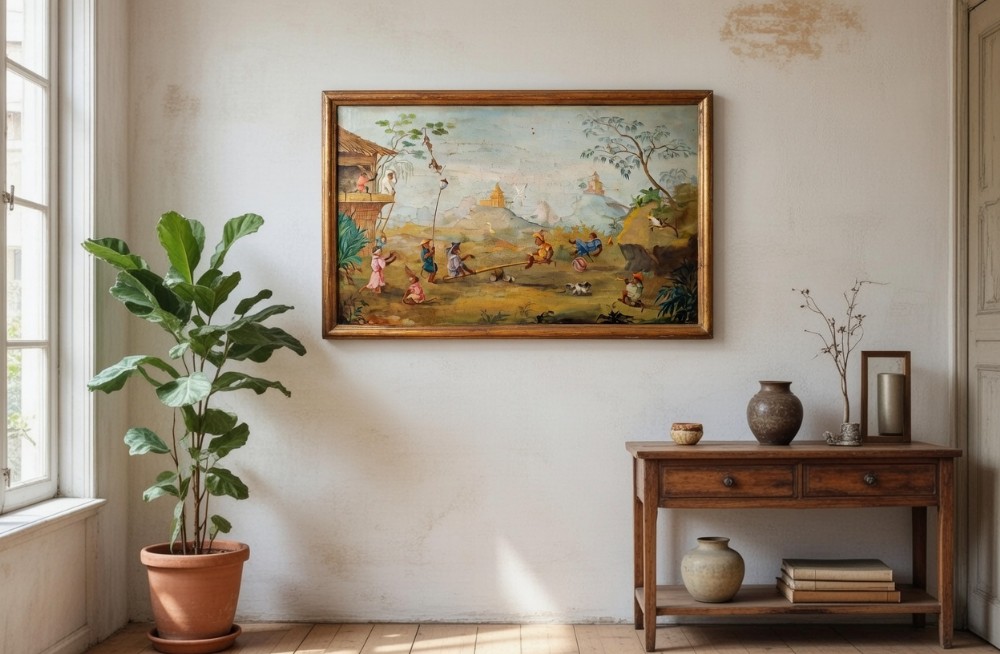
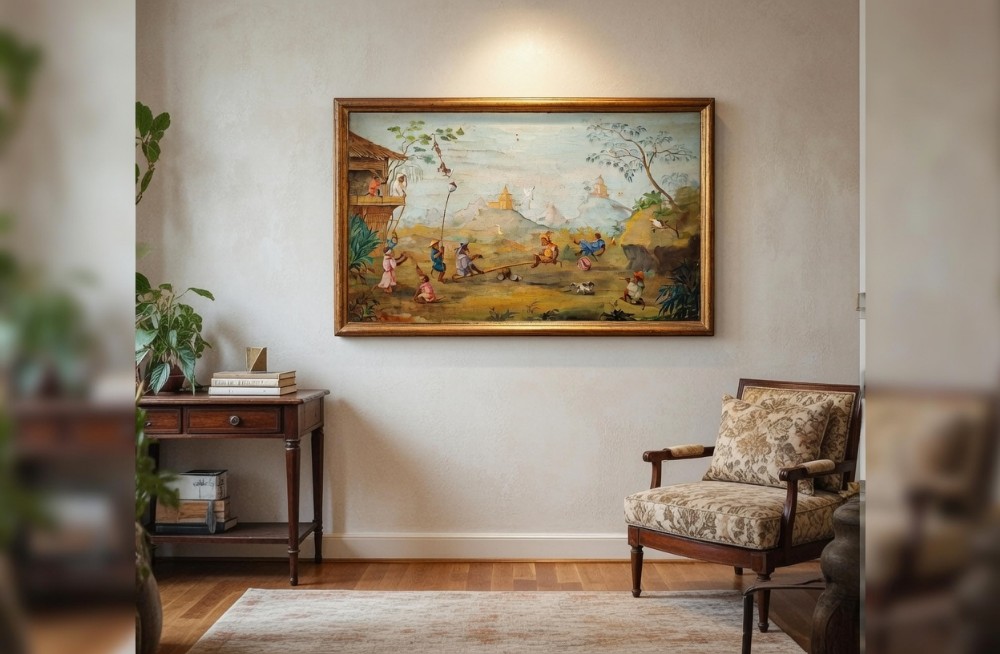
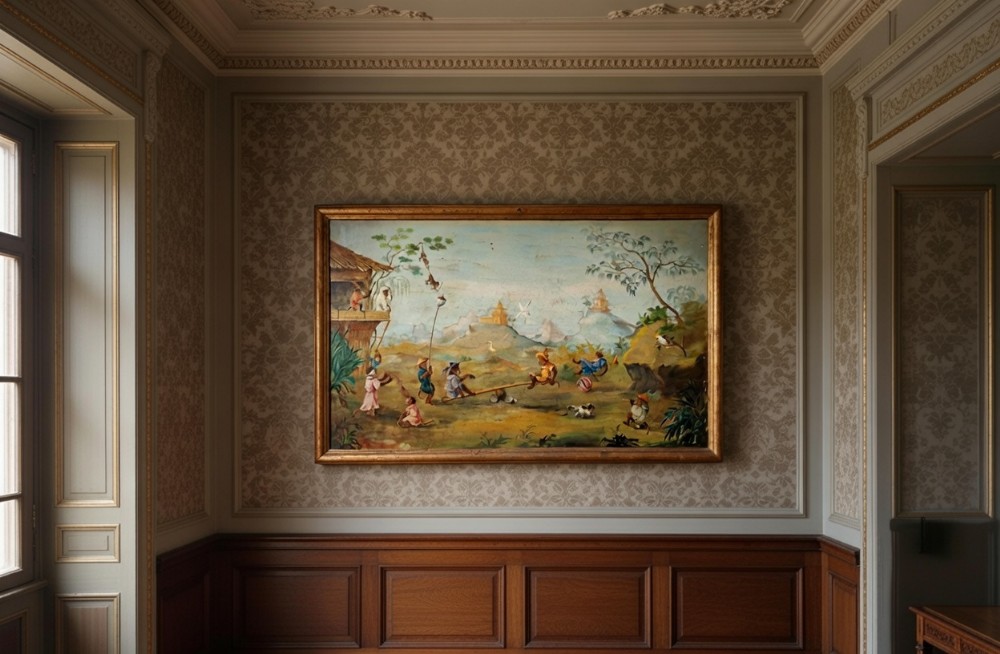
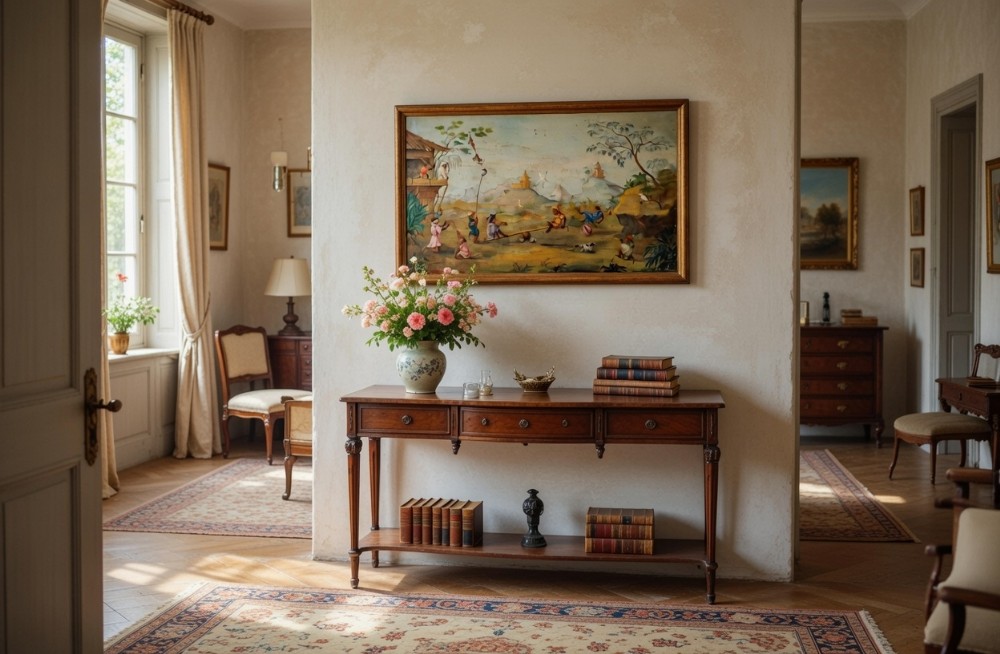
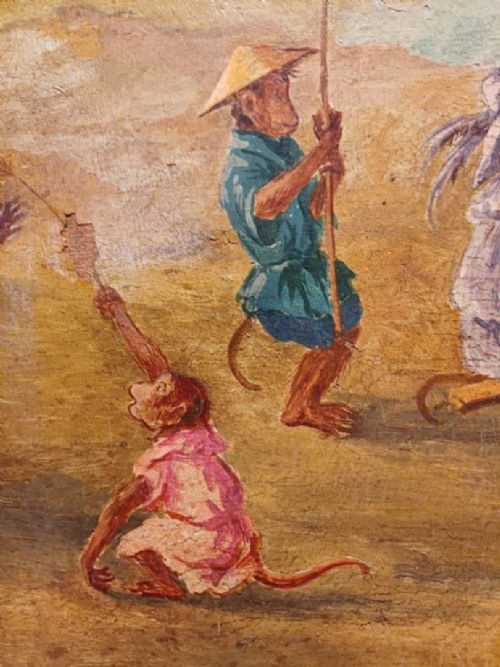
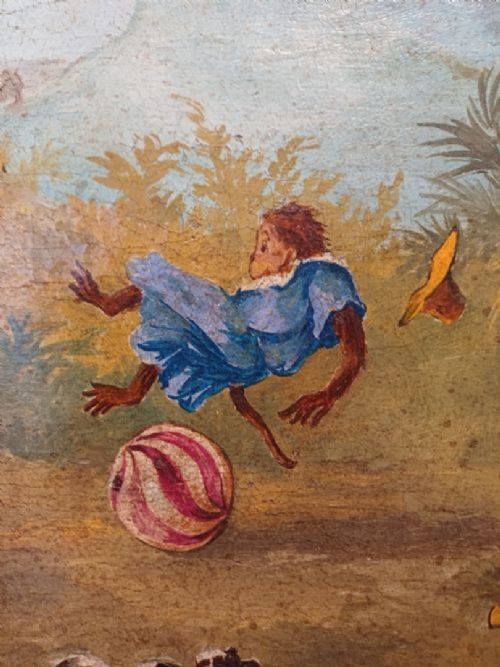
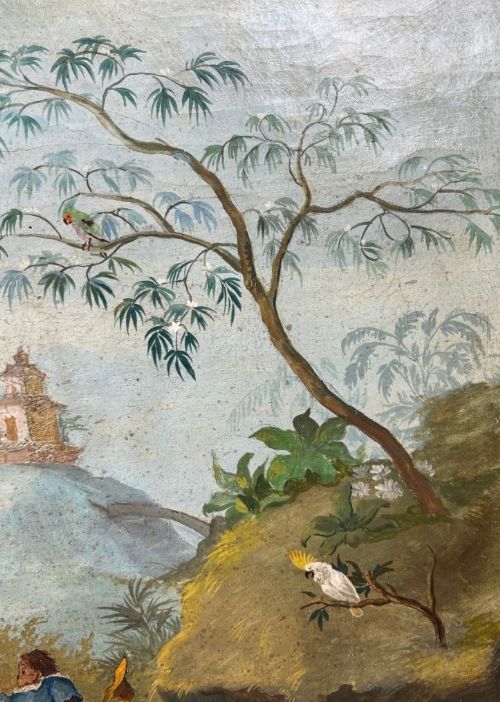
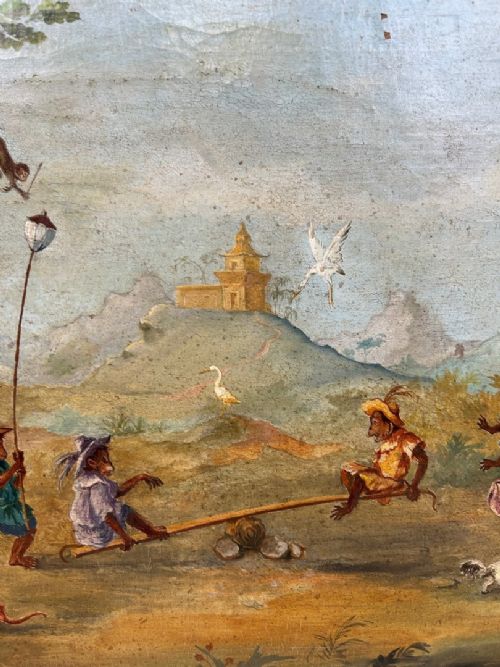
This humorous painting is a lively and ingeniously painted pastiche of formal Chinese landscapes.
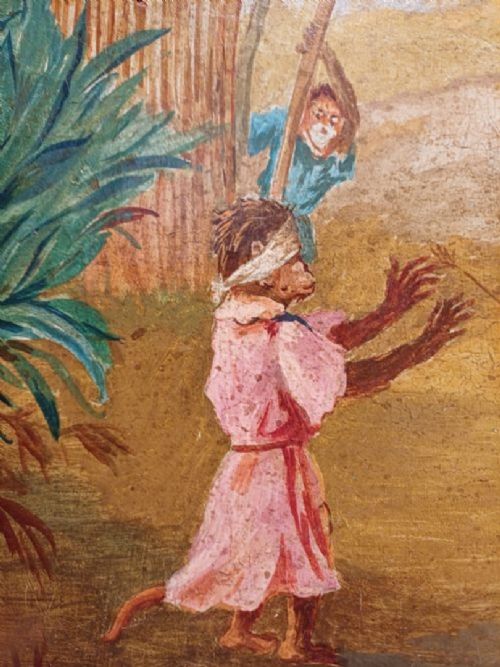
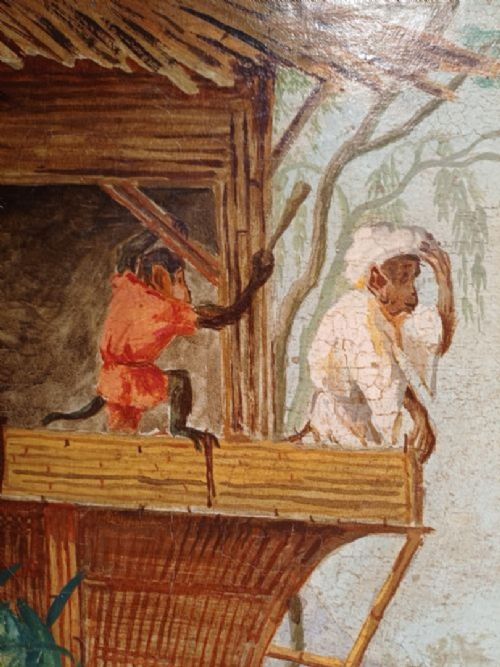
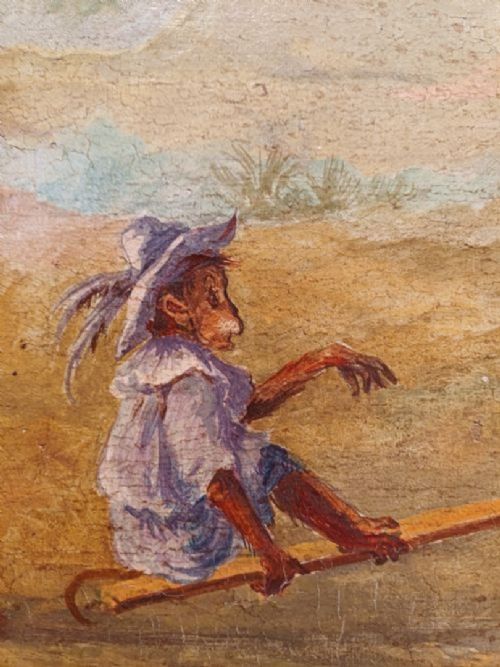
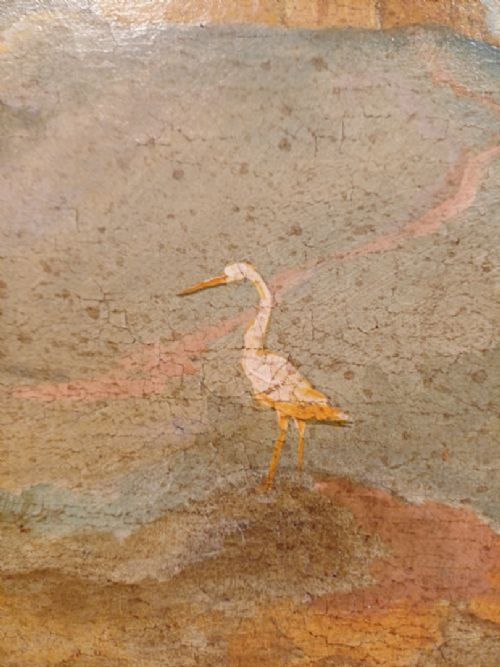
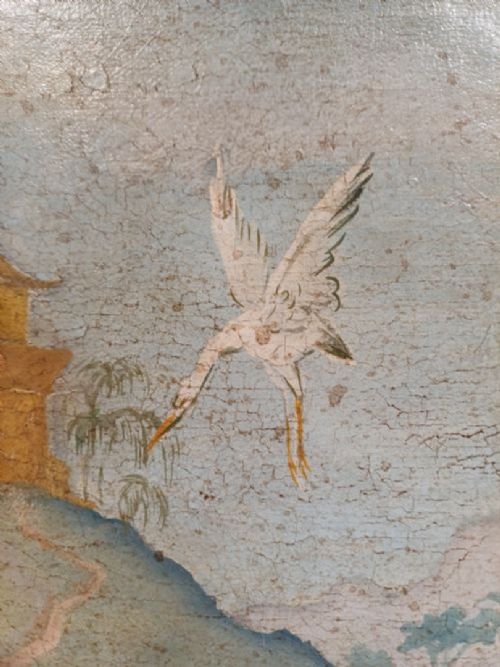
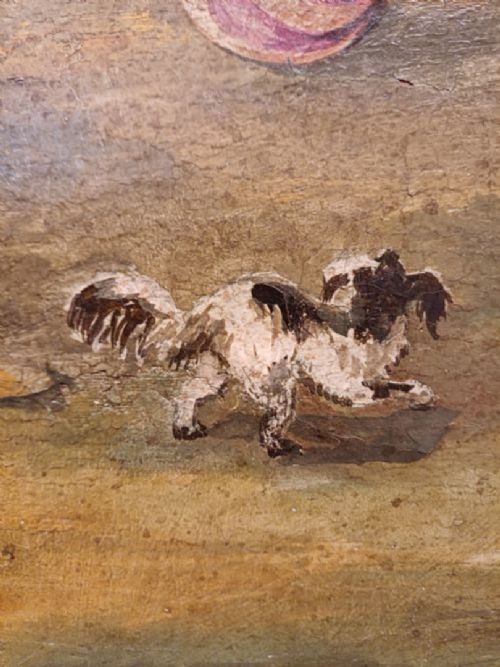
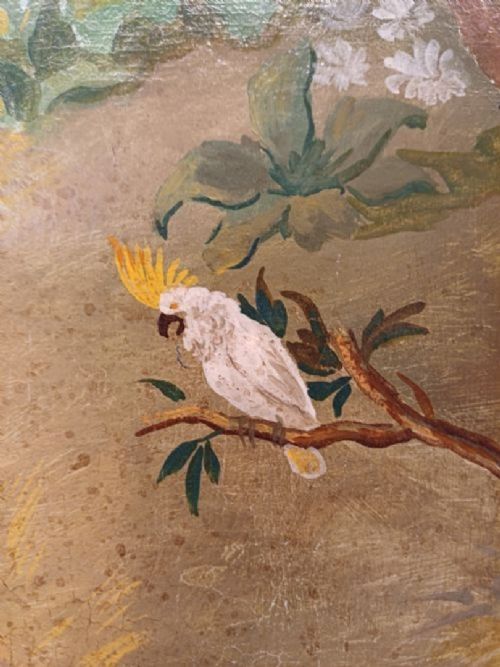
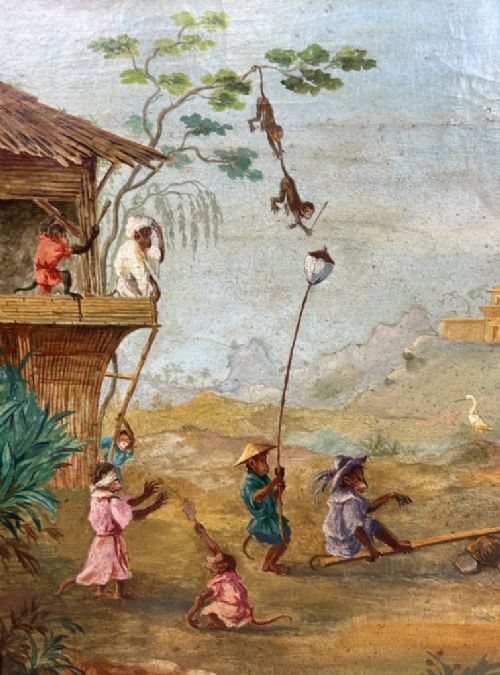
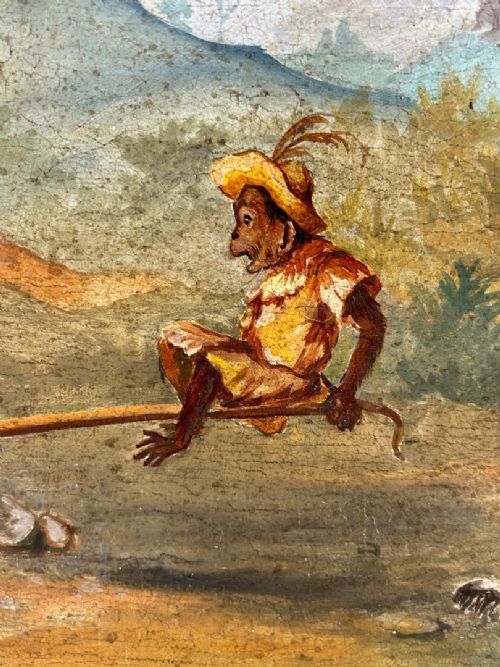
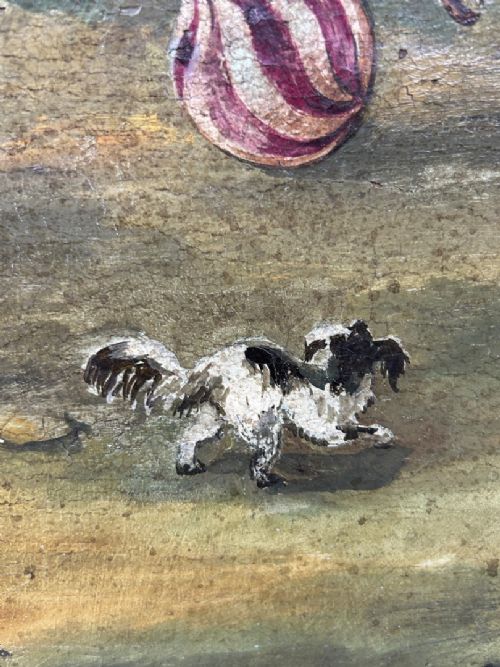
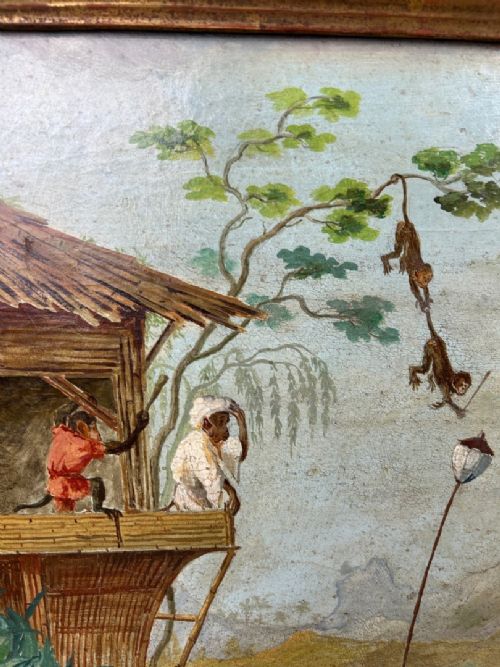
Storks complement the scene, and at the right there is a yellow-crested cockatoo resting on a branch. The cockatoo may be a hint that the painting was not produced in China, since the bird is native to East Timor and Indonesia. Yellow cockatoos are known in Hong Kong, however, since at least the middle of the Twentieth Century, where they are the descendants of escaped pets.1 The usual human staffage of Chinese landscapes has been replaced in this painting by monkeys dressed in human clothes. They are performing a range of humorous antics throughout the painting. Two are playing on a seesaw in the centre, while a third in a conical peasant’s hat holds a precarious lantern over them, oblivious to two further monkeys craning down from a treetop trying to grab it. Two more are playing blindman’s buff at the left, while above them all a monkey sage in a white turban watches from the balcony of a bamboo house, unaware that an attendant is about to hit him on the head with a fan. At the right there is boisterous noise and movement where a monkey has fallen off a ball she is trying to sit on, losing her hat in the process, while a black and white Pekinese barks excitedly at her and another monkey plays the flute. Despite the Asian setting our painting may equally have been painted in the West, and perhaps in North America. The earliest provenance is a label from the Norcross Transfer and Storage company, Charlottesville, North Carolina, who were trading from new premises in 1924.2 The graphic style of the monkey figures and their lively reactive quality has parallels with American comic illustration of the period. Humorous monkeys have a place in traditional Chinese art, but they are not usually shown as humanly as this or wearing clothes. A rare example of anthropomorphised animal art is Ink Play of Cat and Mice by Pu Hsin-yu (1896–1963) in which mice drink and carouse in front of a sleeping cat.3 The clothes worn by some of the monkeys – particularly the feathered straw hats and smocks worn by the four central figures ¬– suggest a Western painter interpreting the idiom. Monkey paintings, known as singeries, have a long-established tradition in Western European art, in which the dressed monkey is a satirical comment on human habits and customs. Using monkeys as a pictorial comment on manners first appears in the margins of medieval illuminated manuscripts. A monkey looked at themself in a mirror in a marginal illustration to the Isabella Breviary, late 1480s–before 1497 (British Library). But the genre reached its height in the Baroque and Rococo, with paintings such as A Monkey Barber Surgeon’s Establishment by David Teniers II (1610–1690) in the collection of the Welcome Foundation. In the Eighteenth Century monkey-themed paintings and decorative arts were so popular that in the 1750s Meissen produced an entire set of monkey orchestra figurines, an example of which was acquired by King Louis XV.4
Please do contact me for the Completed Research on this Painting?
Delivery within the UK is included in the asking Price.
Shipping is also a Pleasure so please do let us know as we are always happy to help.
Thanks for looking Chris 07778655965
Christopher Tombs Antiques Ltd has dated this piece to the 19th Century.
You can view the stock and full dealer information on the Christopher Tombs Antiques Ltd Profile Page
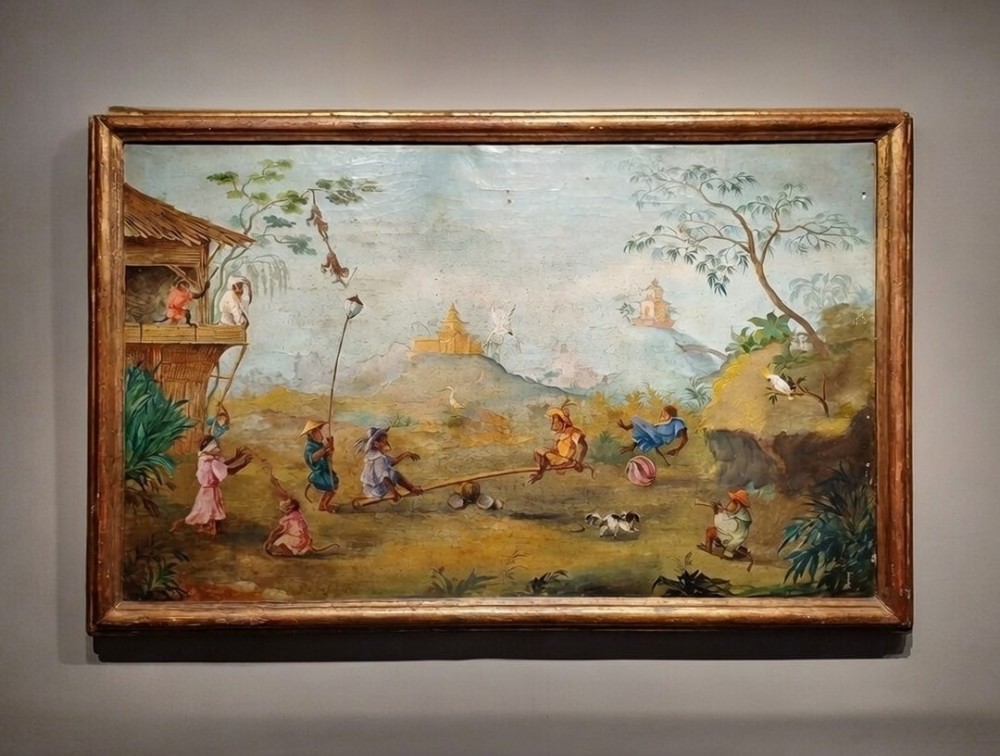
Anthropomorphic Monkeys oil on Canvas