It was listed by Exhibit Antiques. Sold pieces stay on Sellingantiques as a record of what has passed through, and the next one is rarely far away.
Exhibit Antiques has dated this Antique Songye Kifwebe Mask to the 1930s.
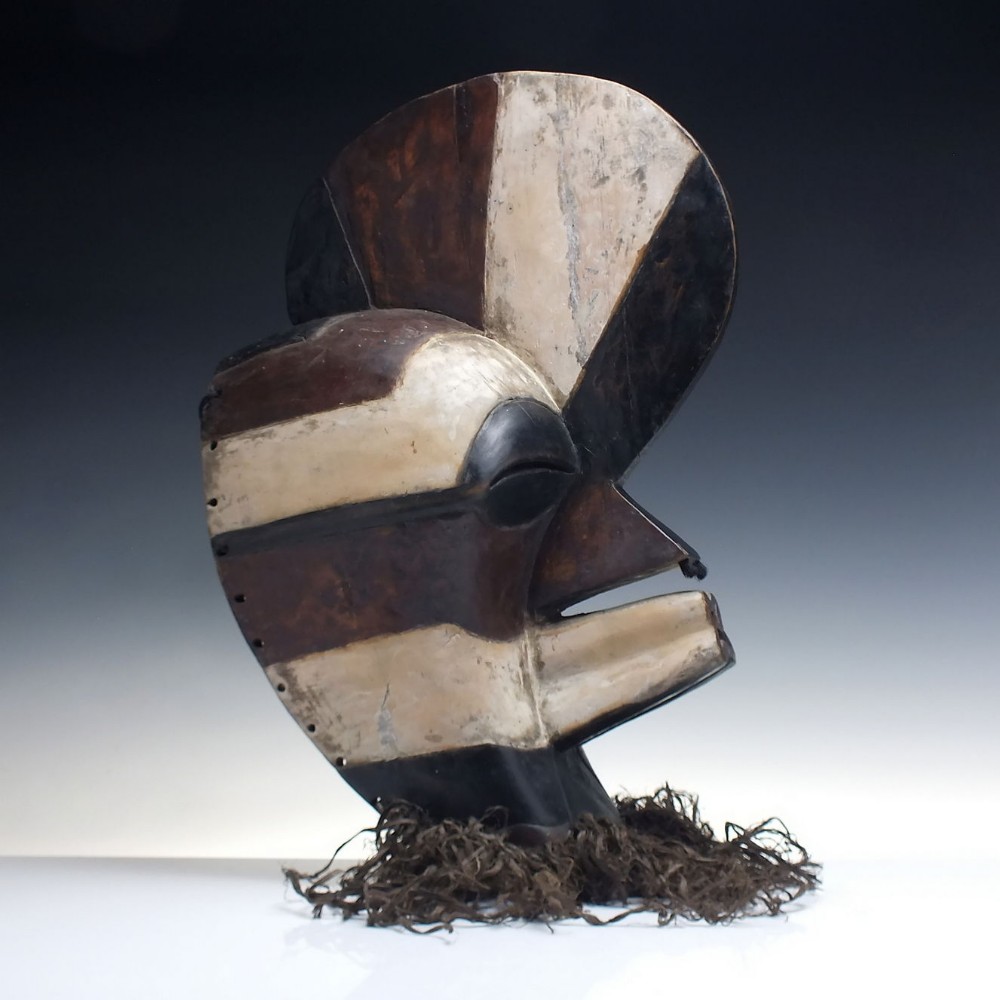
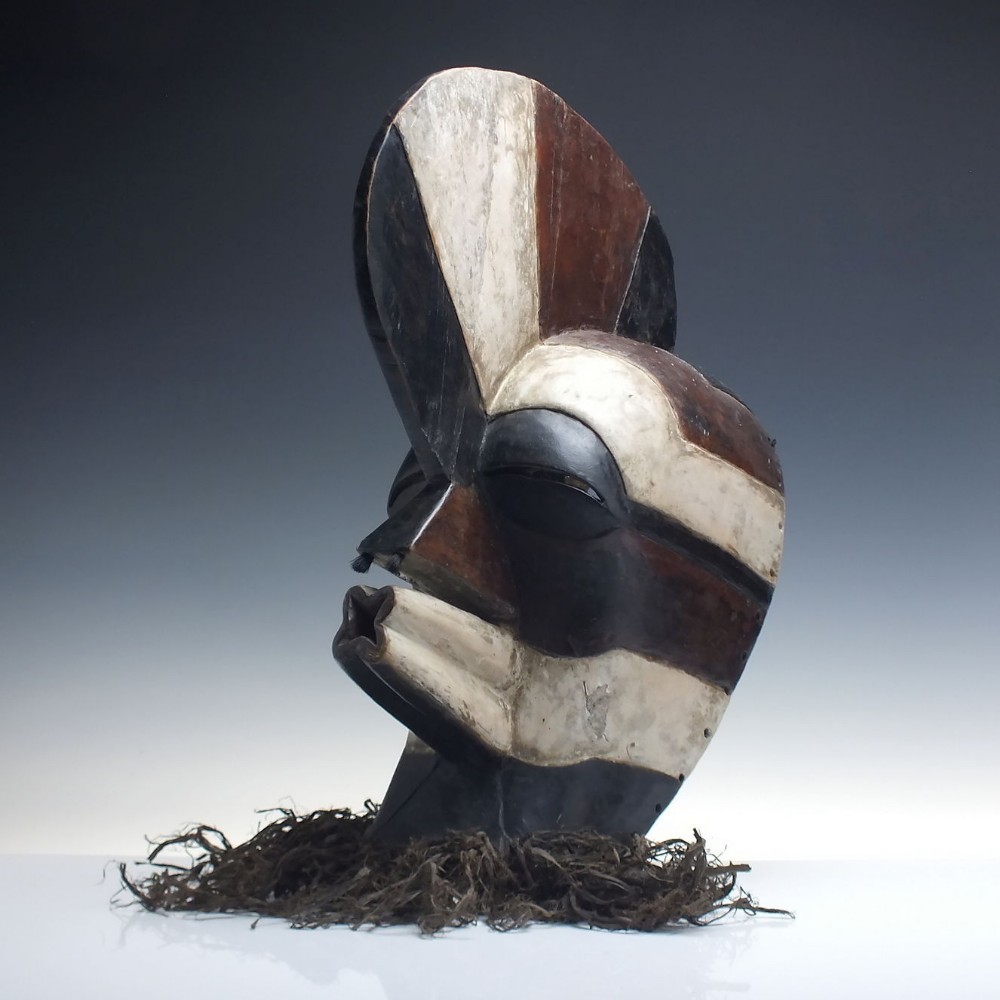
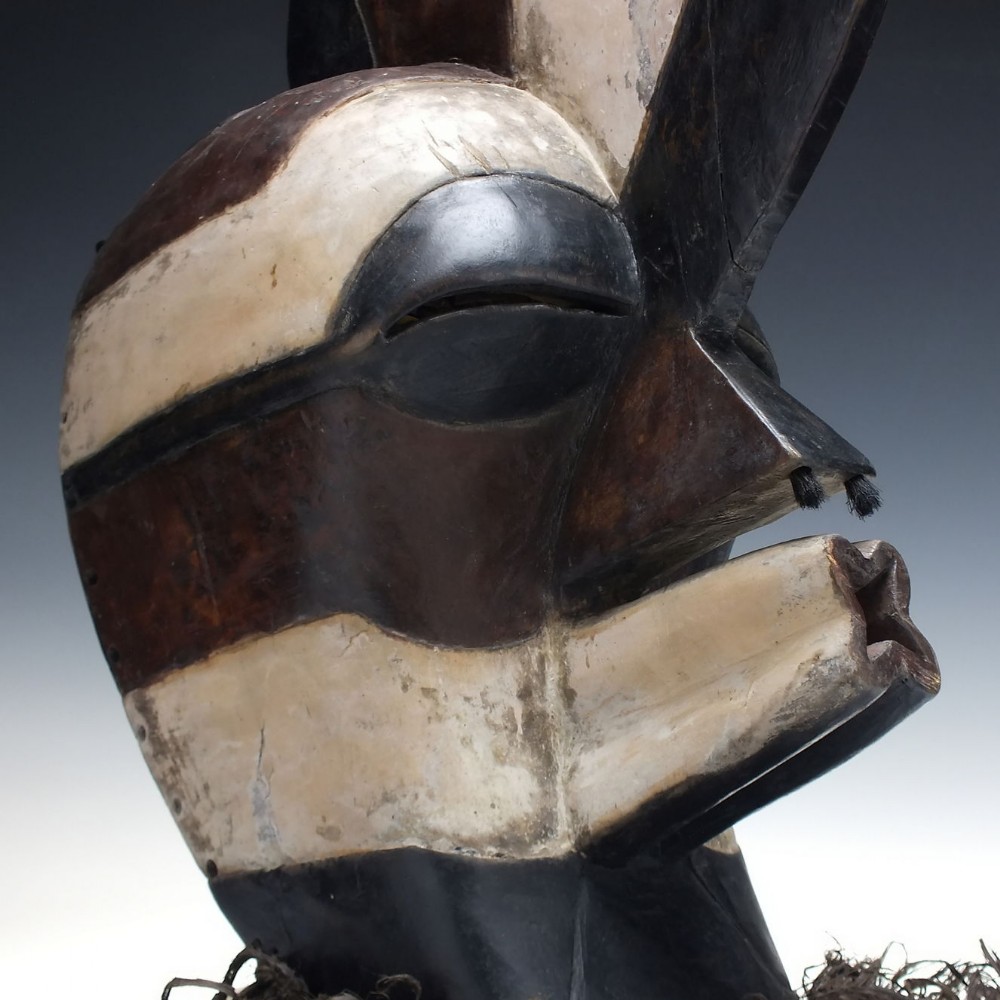
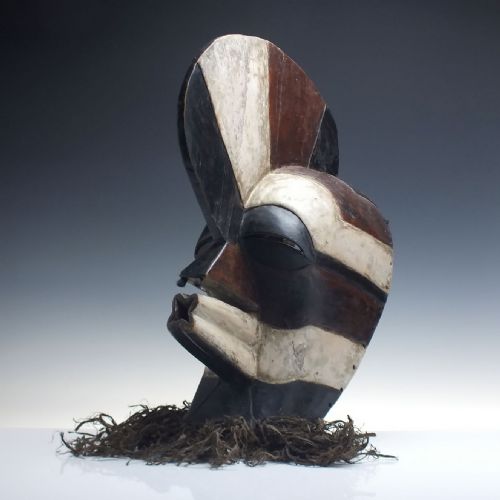
Striking and well-preserved Kifwebe mask created by the Songye peoples of the Congo in Africa.
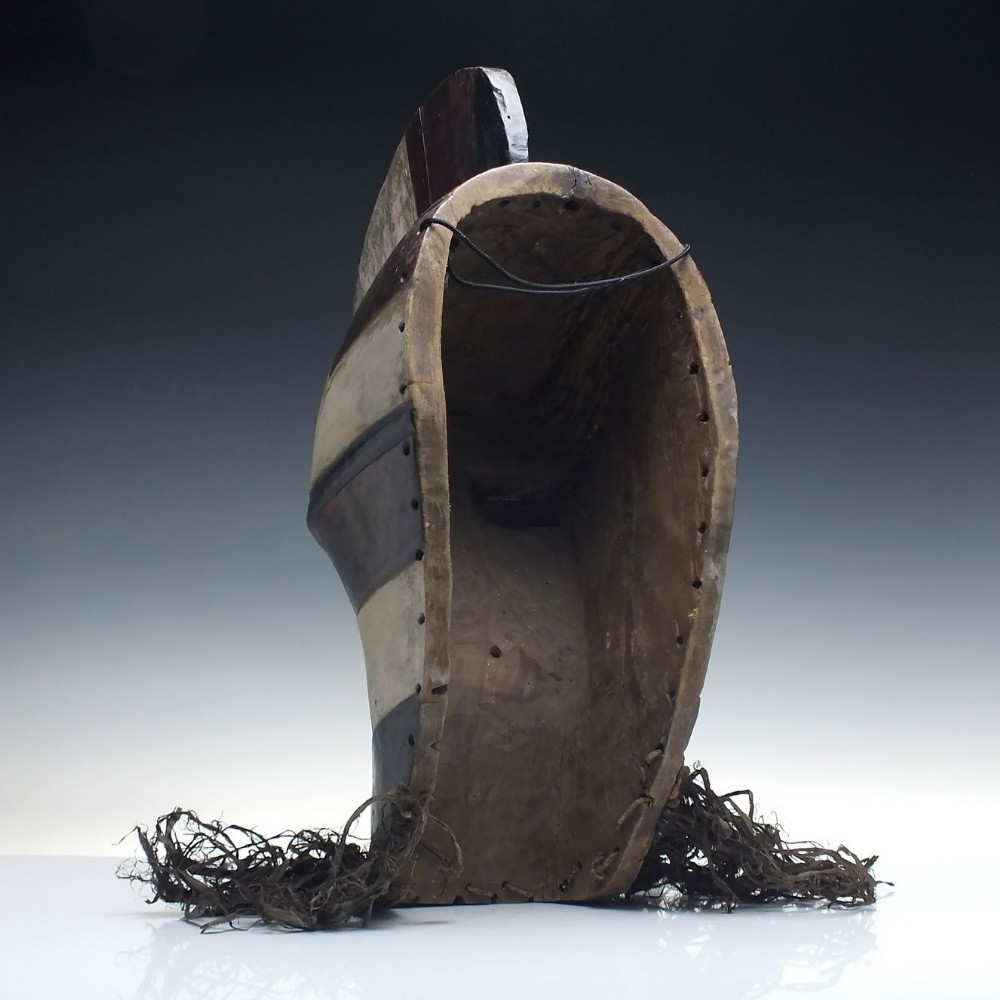
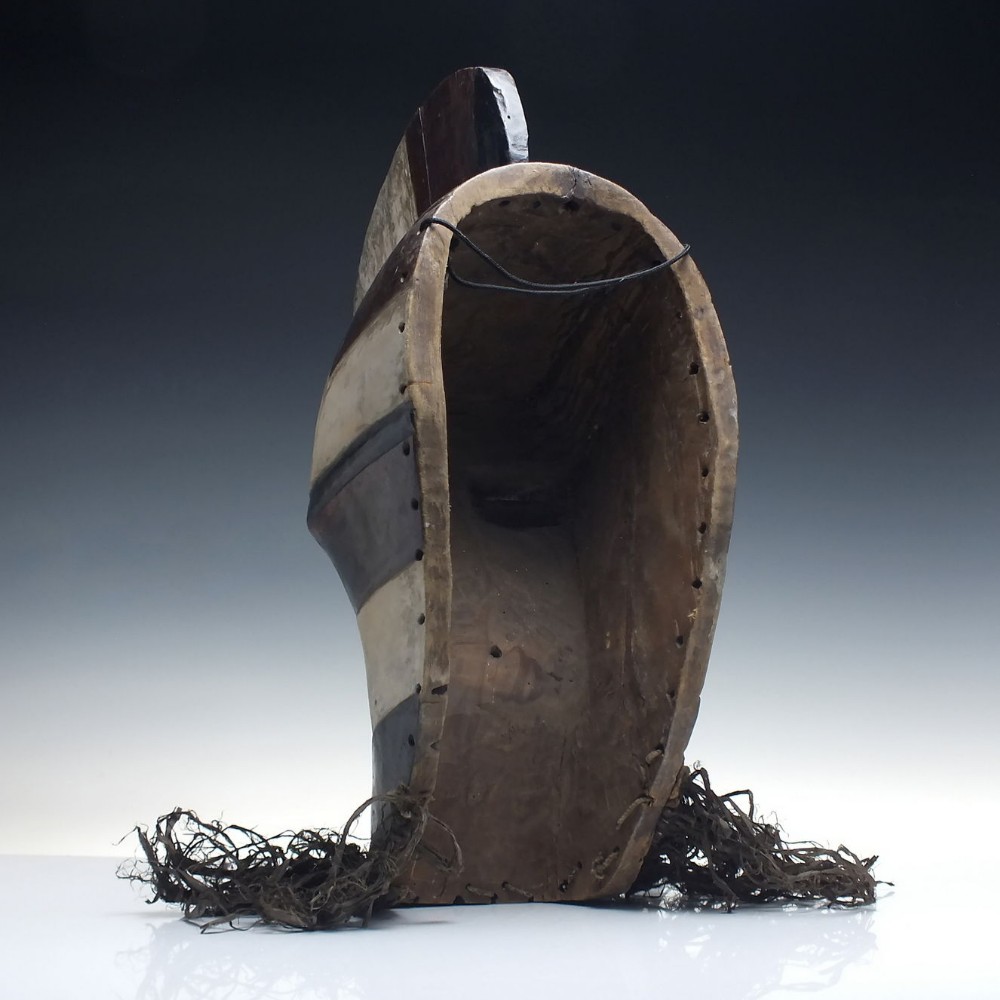
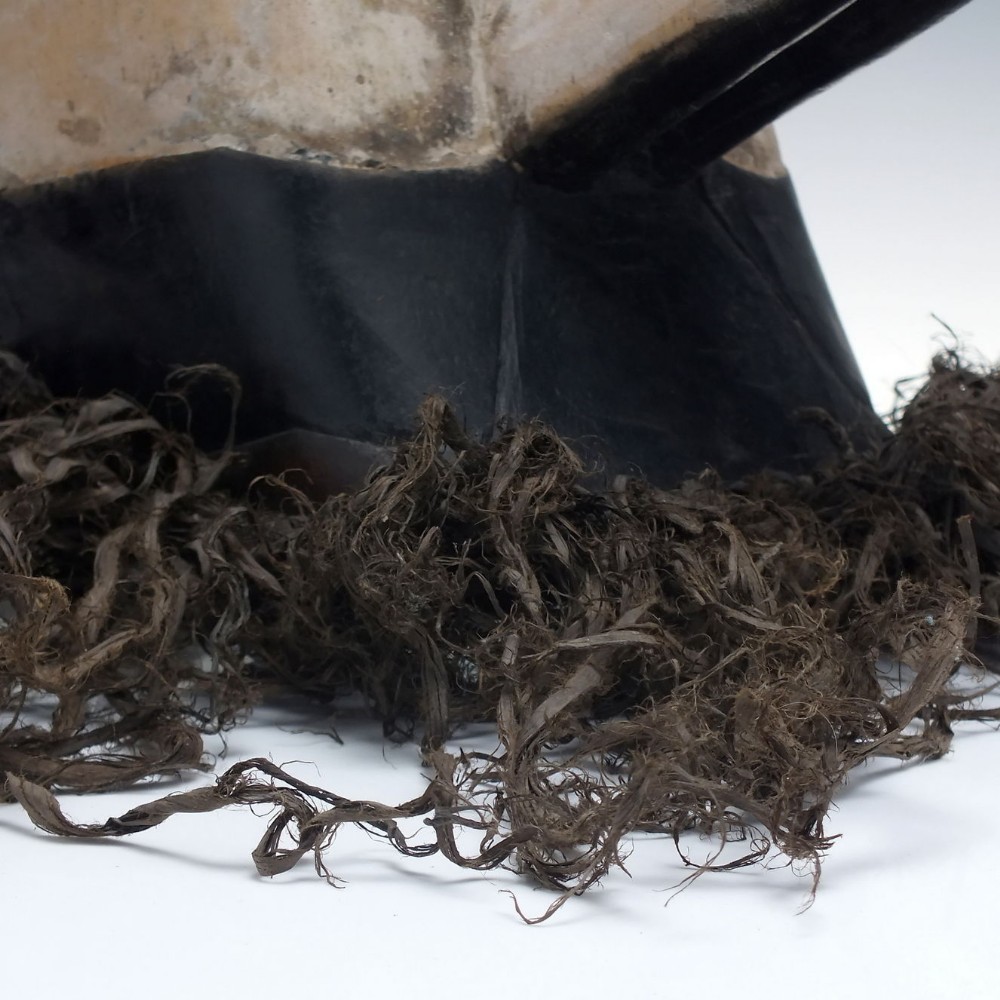
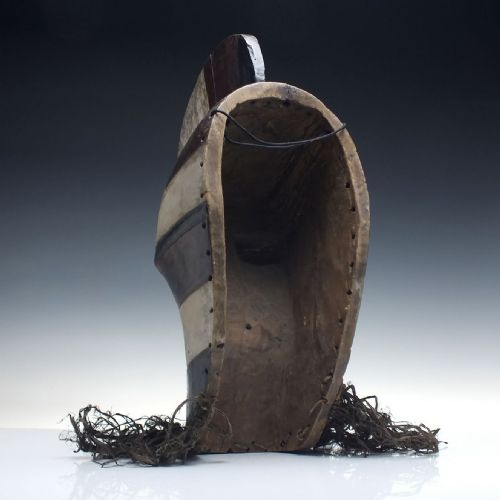
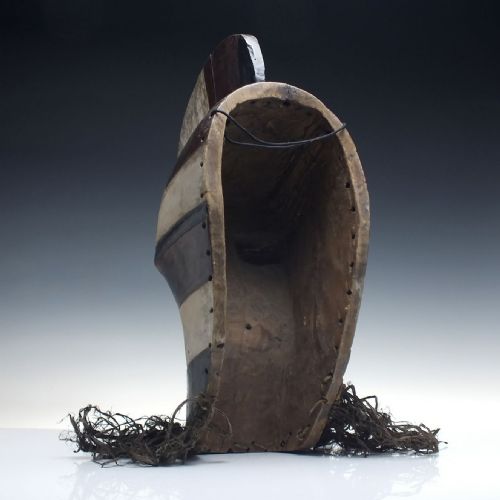
A rare feature to have the woven material preserved as is the case with this example. This example in particular was crafted for a young male, as female and elder masks differ.
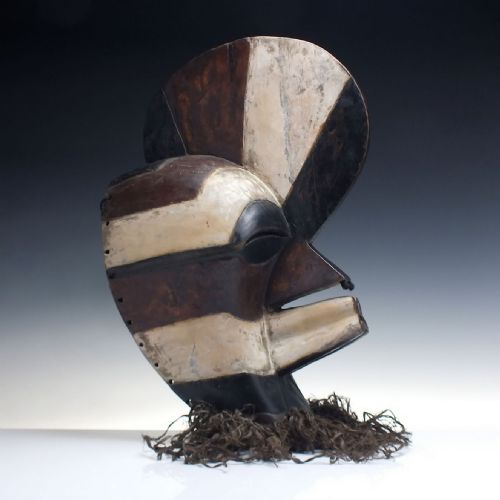
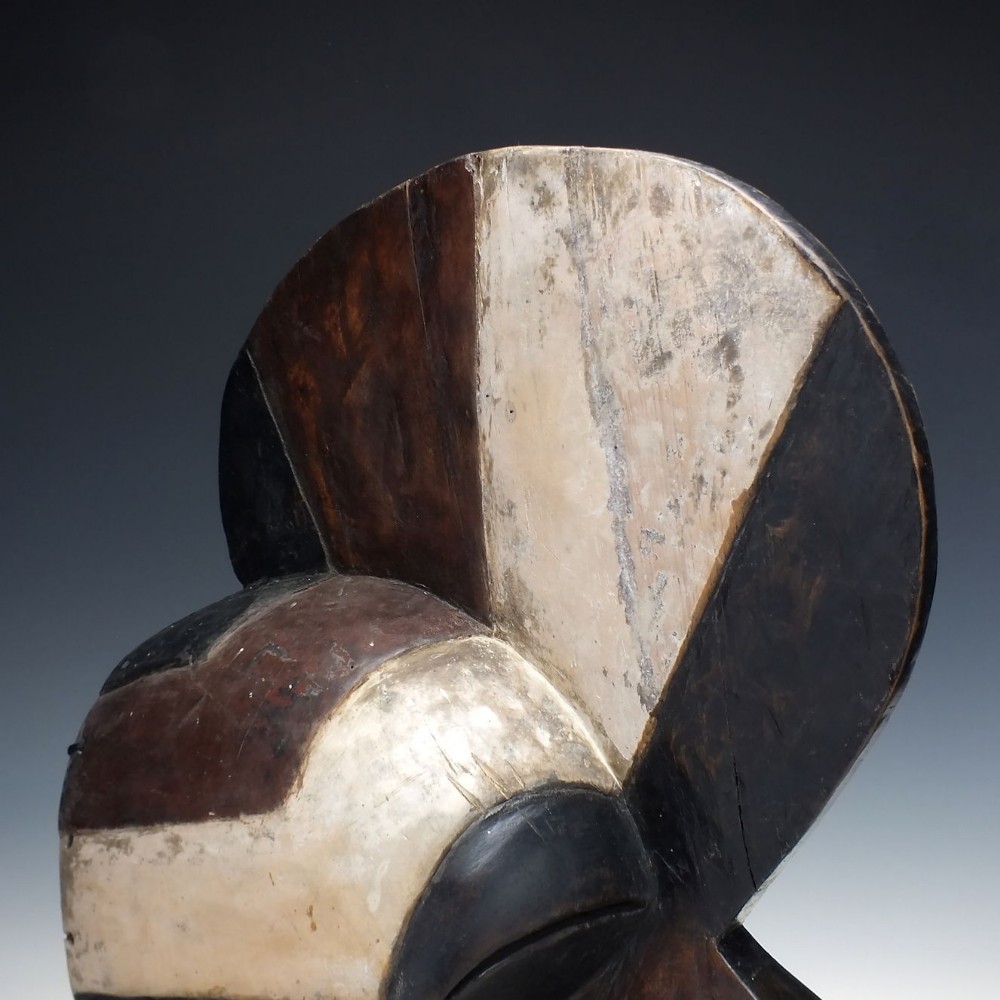
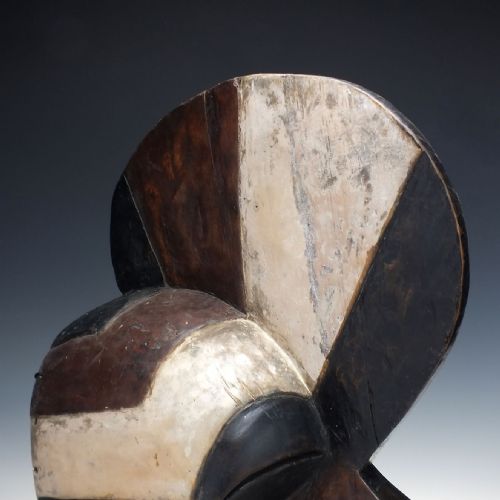
The white lines are created using kaolin, which is a fine, white clay used on many cultural African masks, symbolising ancestral spirits, purity, and spiritual power.
Kifwebe masks were made in the late 19th century, with the earliest evidence of their existence dating to the 1880s. The earliest recorded instance of a Kifwebe mask entering a European collection was in 1885.
Date & Origin
1910 - 1950. Songye people, Democratic Republic of Congo.
Condition
Excellent. Preserved woven material, some scratches and age commensurate wear, no chips to the wood.
Dimensions
Height: 73cm (including woven material)
Width: 23cm
Depth: 40cm
Documented Examples
Crocker Art Museum https://www.crockerart.org/press/penetrating-expressions-kifwebe-masks-of-the-songye-and-luba-people
Philadelphia Museum of Art
https://blog.philamuseum.org/kifwebe-provenance-puzzle/
Documented Examples
Kifwebe masks, also known as Bifwebe, are ritual artefacts created by the Songye and Luba peoples of the Democratic Republic of Congo. Traditionally, they were carved as either masculine or feminine forms - the most striking difference being the presence and size of the central crest.
These masks are instantly recognisable for their bold striated surface patterns, which are incised or painted to dramatic effect. They were central to the ceremonies of the Bwadi bwa Kifwebe secret societies, where dancers in full costume performed to maintain balance and order within the community.
Among the Songye, Luba, and Kalebwe peoples, Kifwebe masks held powerful social and spiritual authority. They appeared in initiation rites, community gatherings, and rituals designed to regulate harmony and enforce tradition. The mask was worn with an elaborate costume of woven bark cloth, often adorned with skins, furs, and feathers - transforming the wearer into a striking embodiment of ancestral and spiritual forces.
Exhibit Antiques has dated this Antique Songye Kifwebe Mask to the 1930s.
Specialists in 18th & 19th century antique glass
You can view the stock and full dealer information on the Exhibit Antiques Profile Page
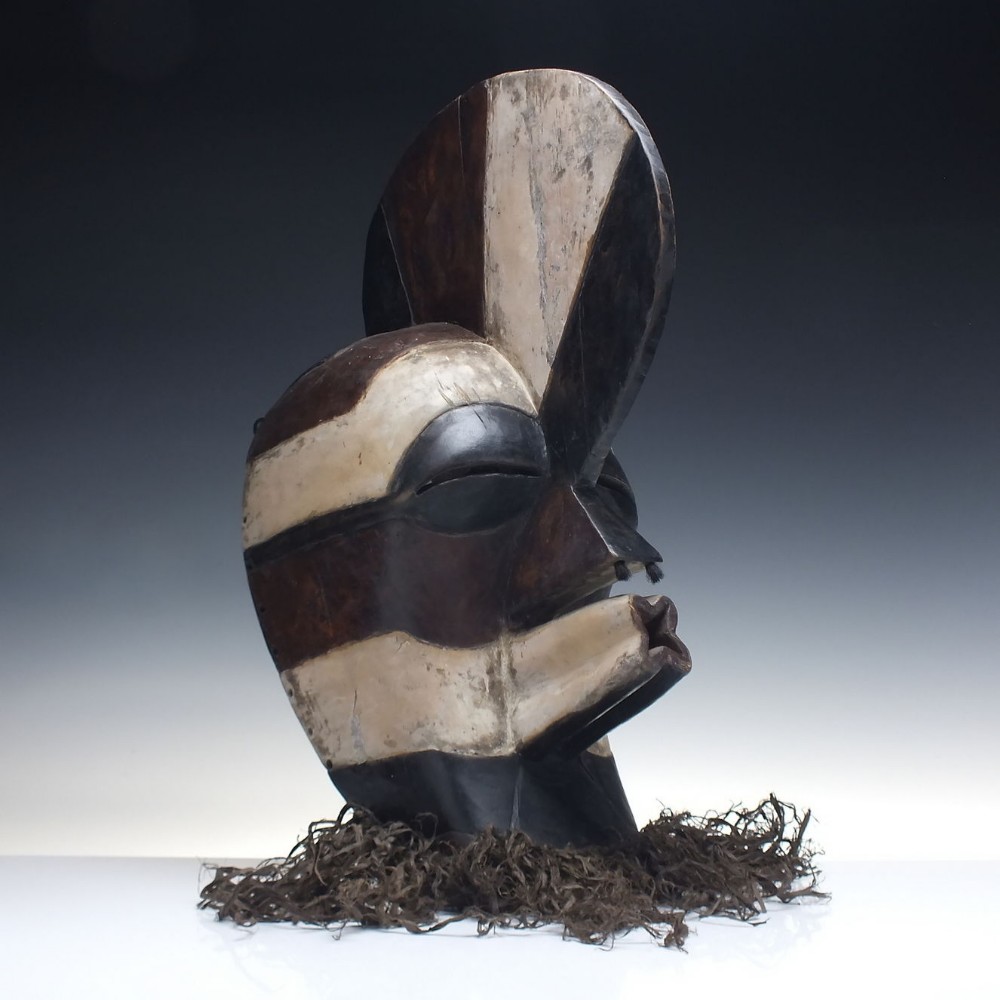
Antique African Songye Kifwebe Mask C1930