Regent Antiques has dated these French Mahogany Dining Chairs to the 1860s.
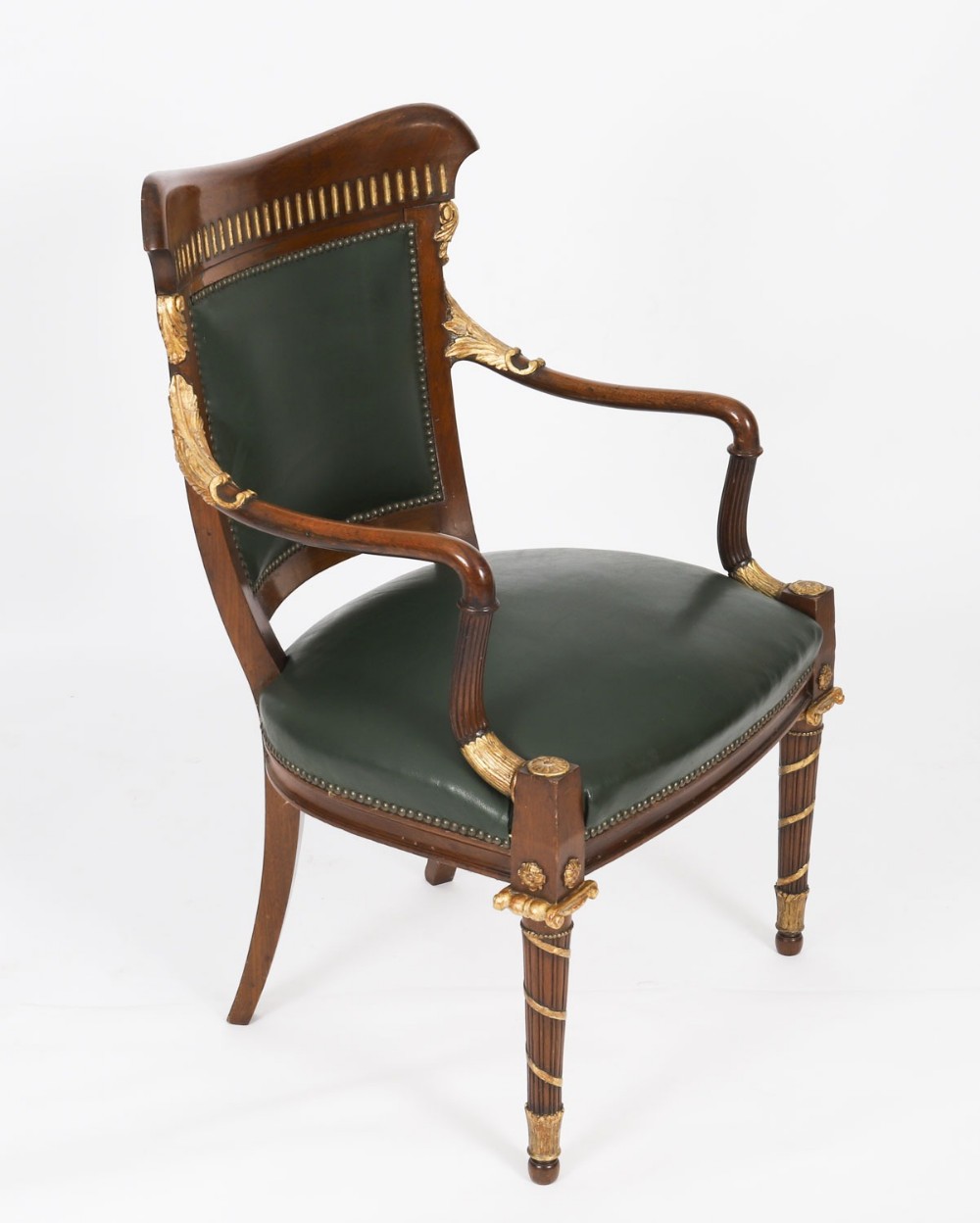
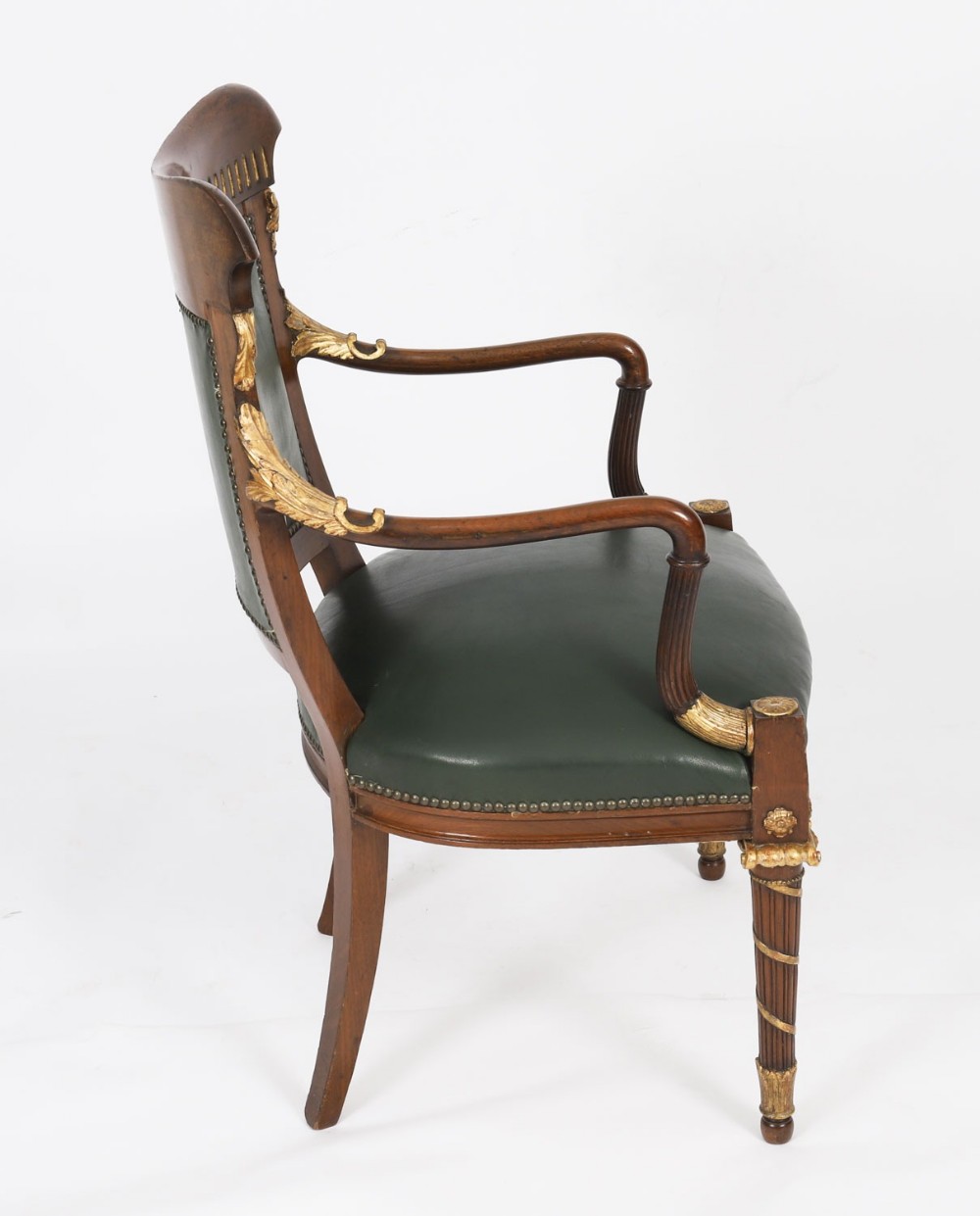
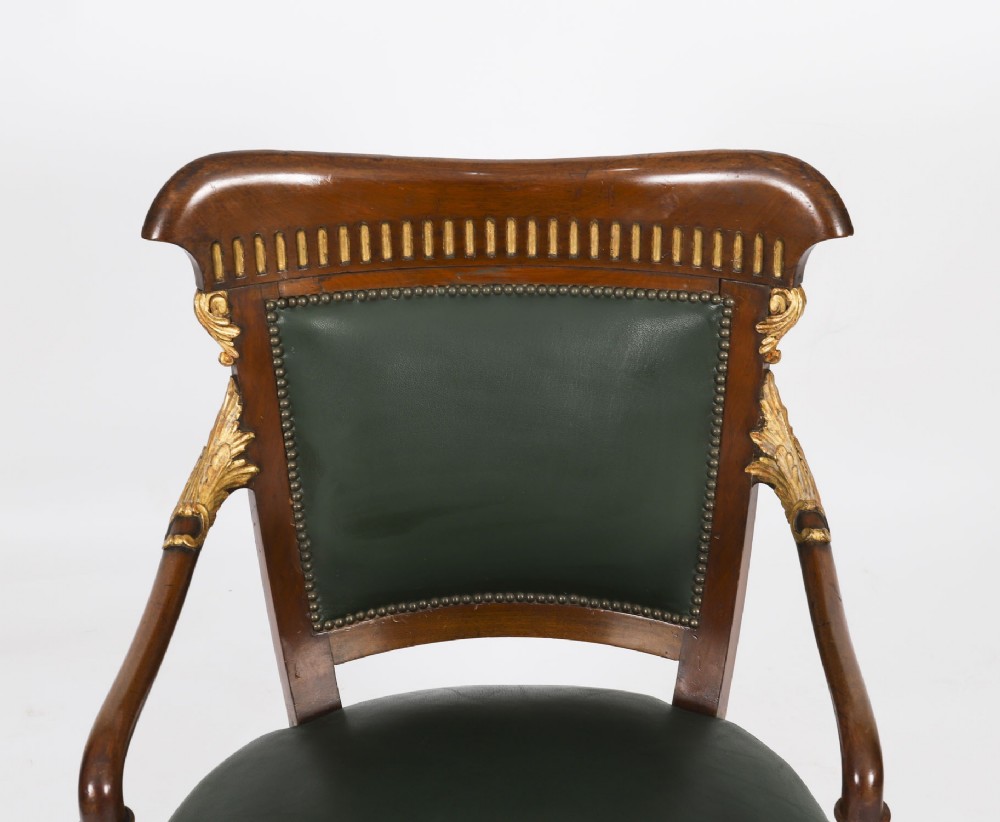
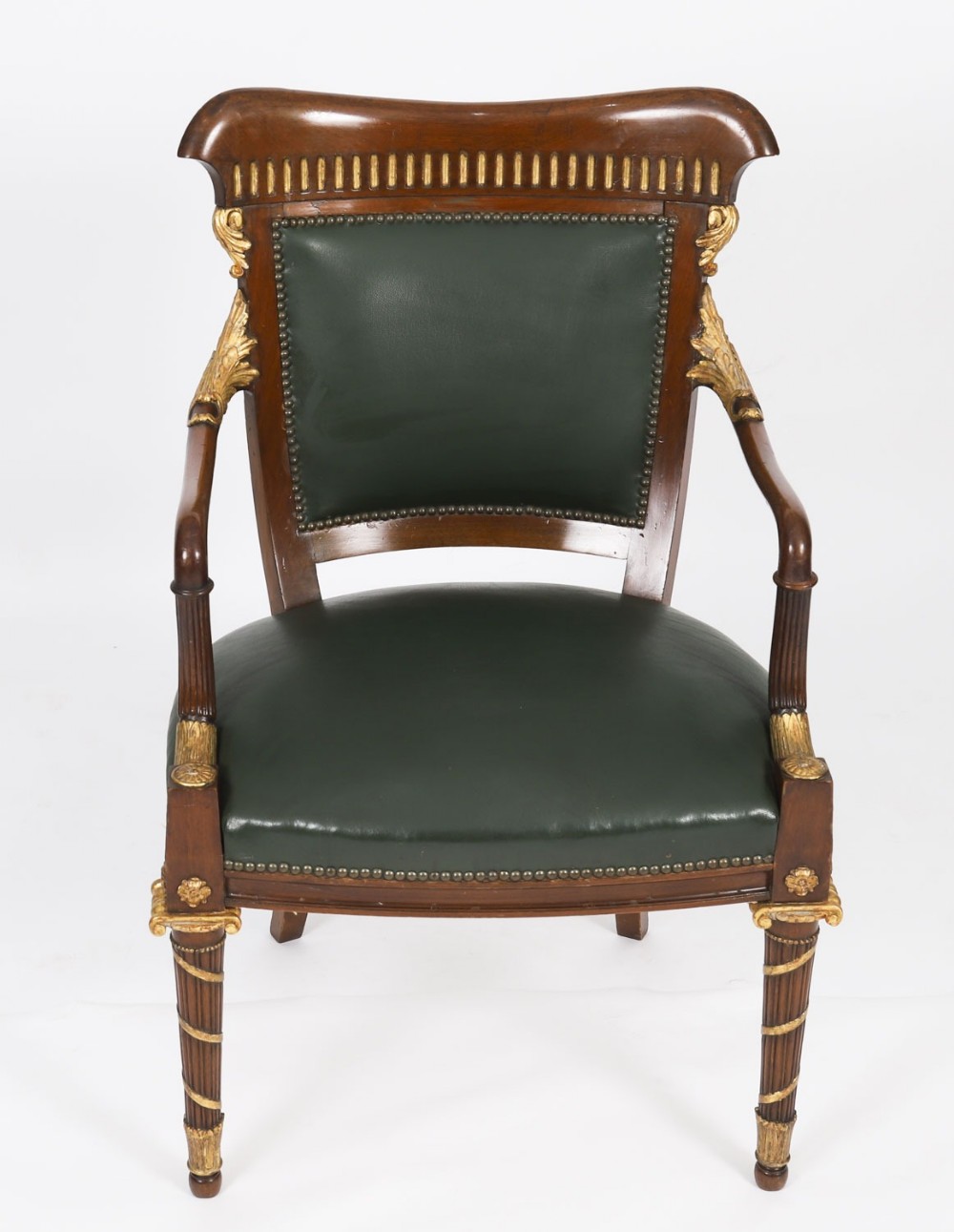
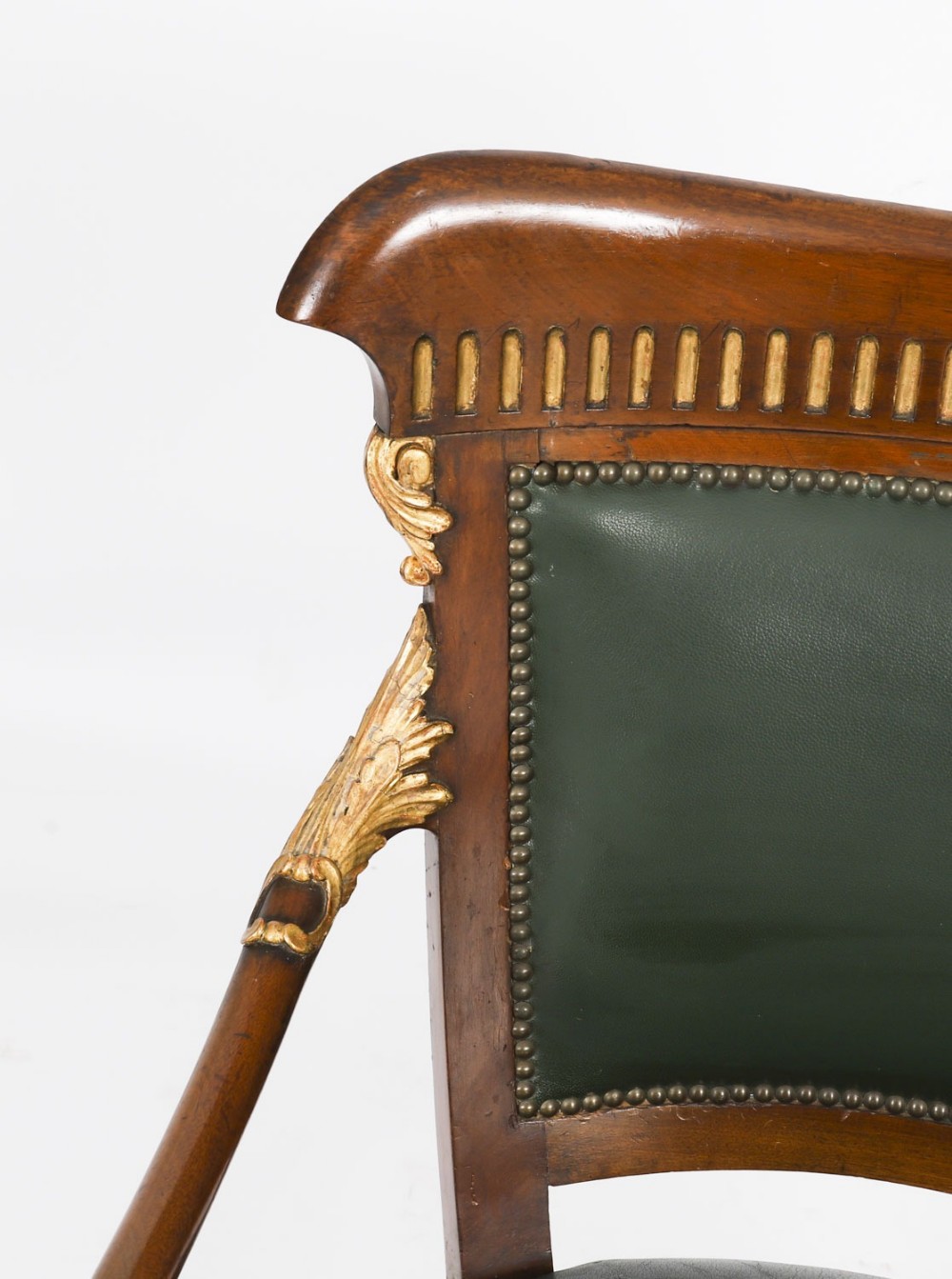
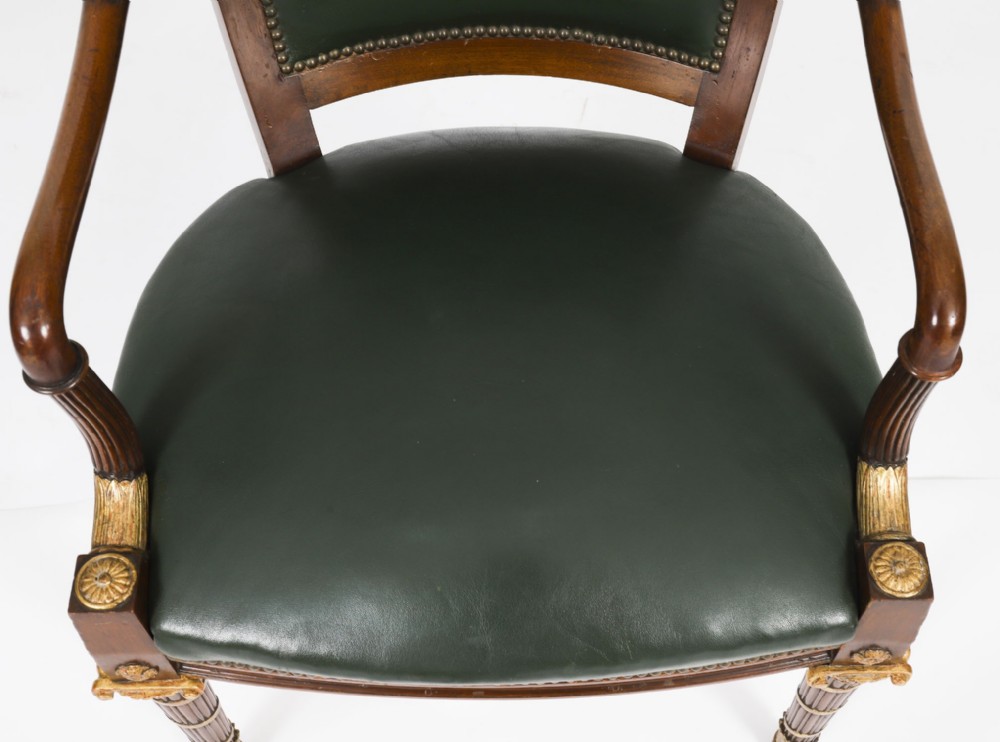
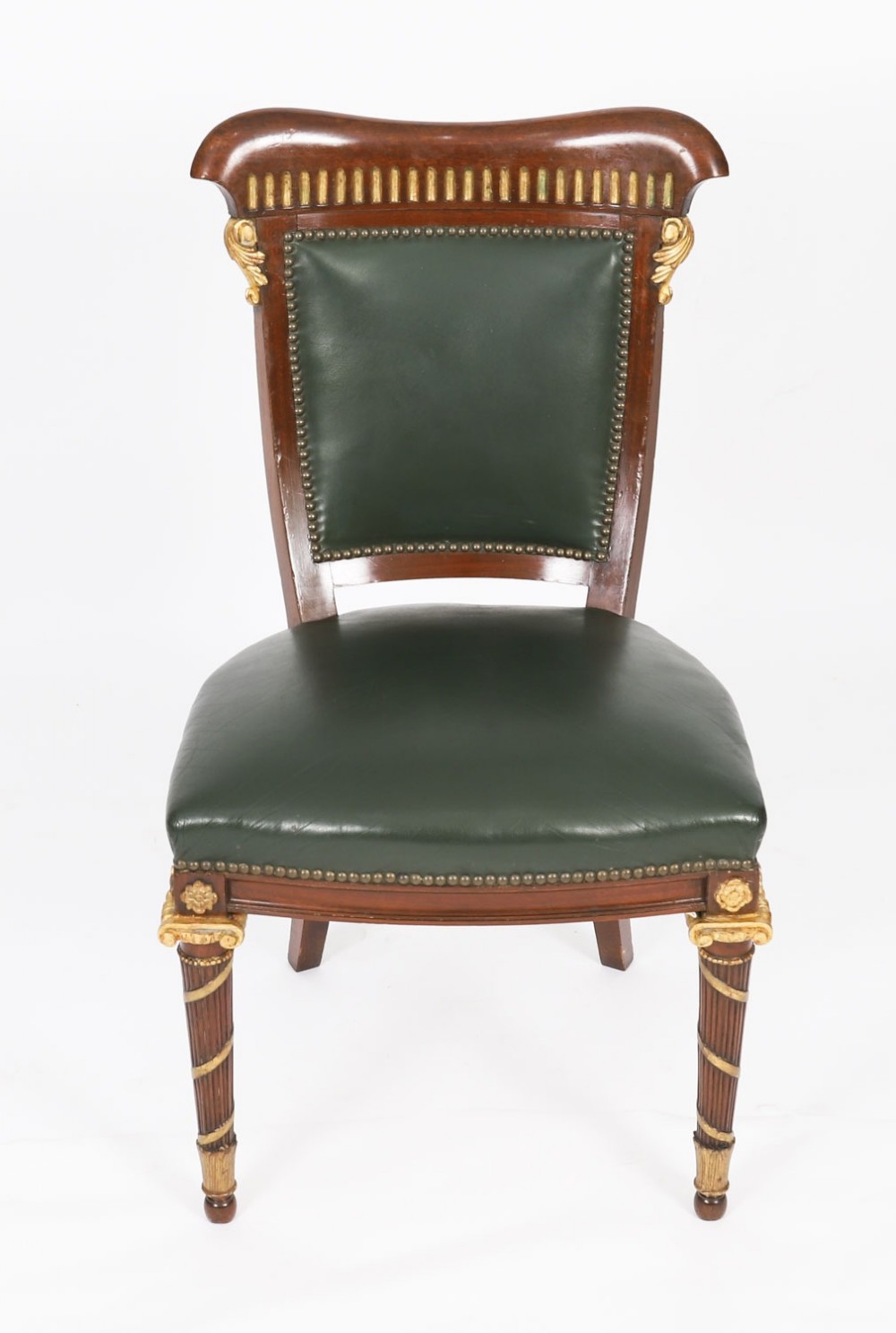
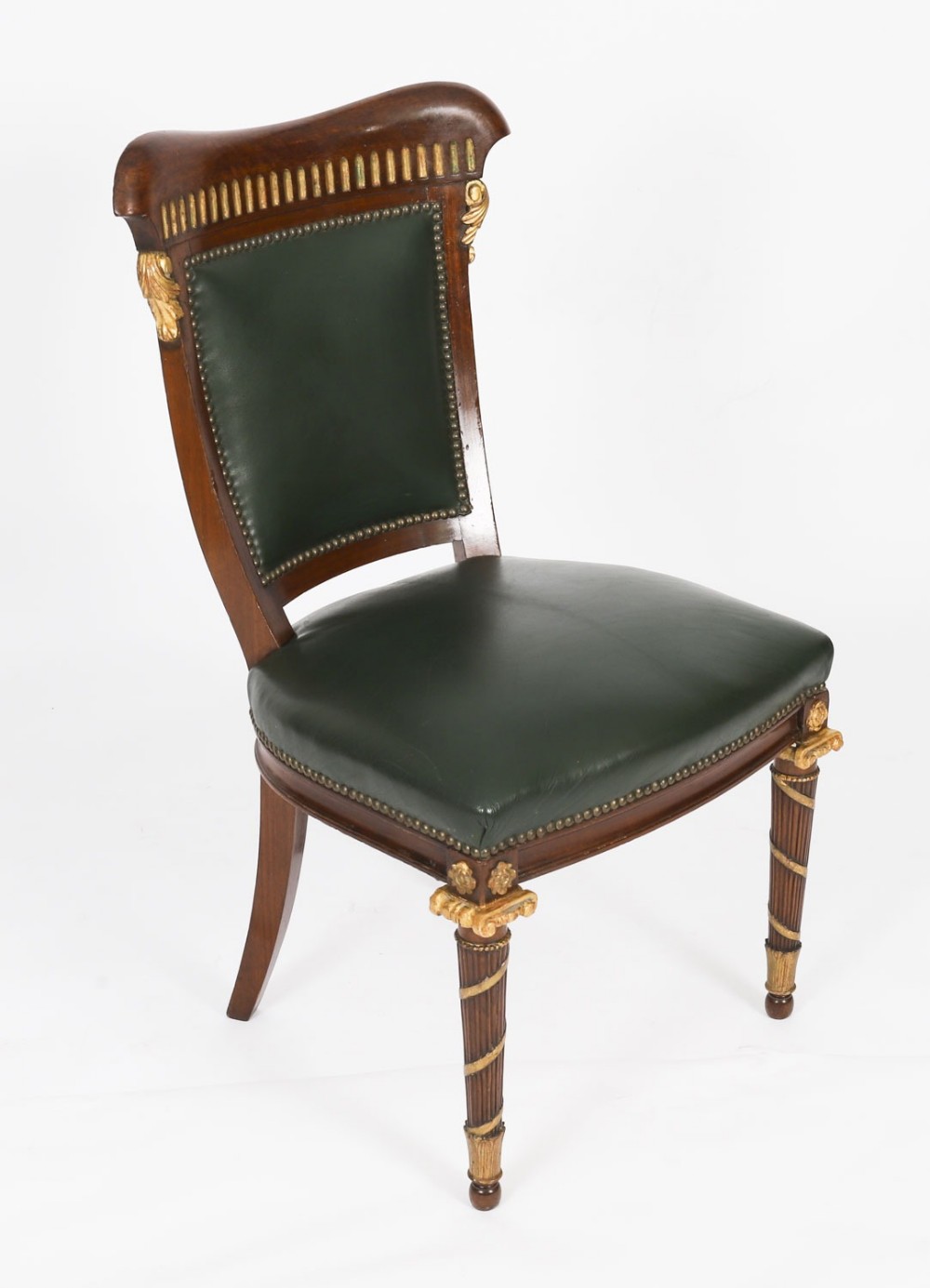
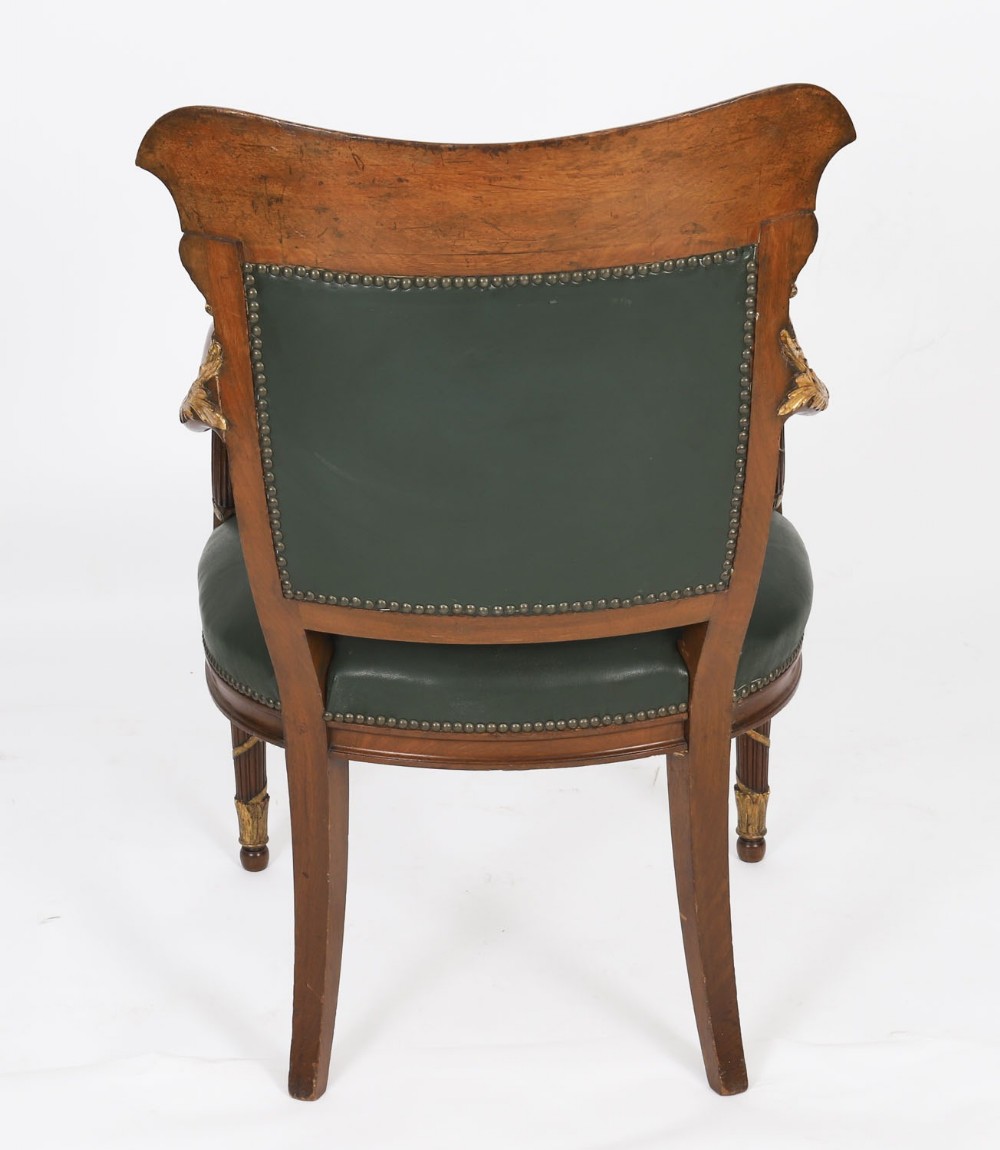
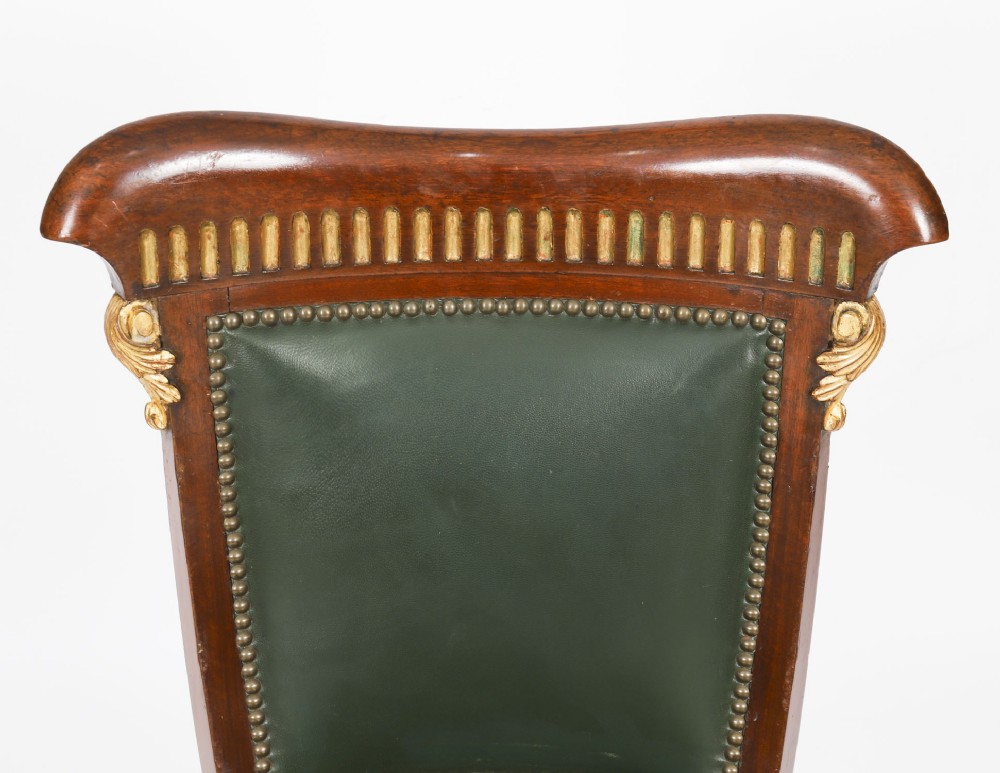
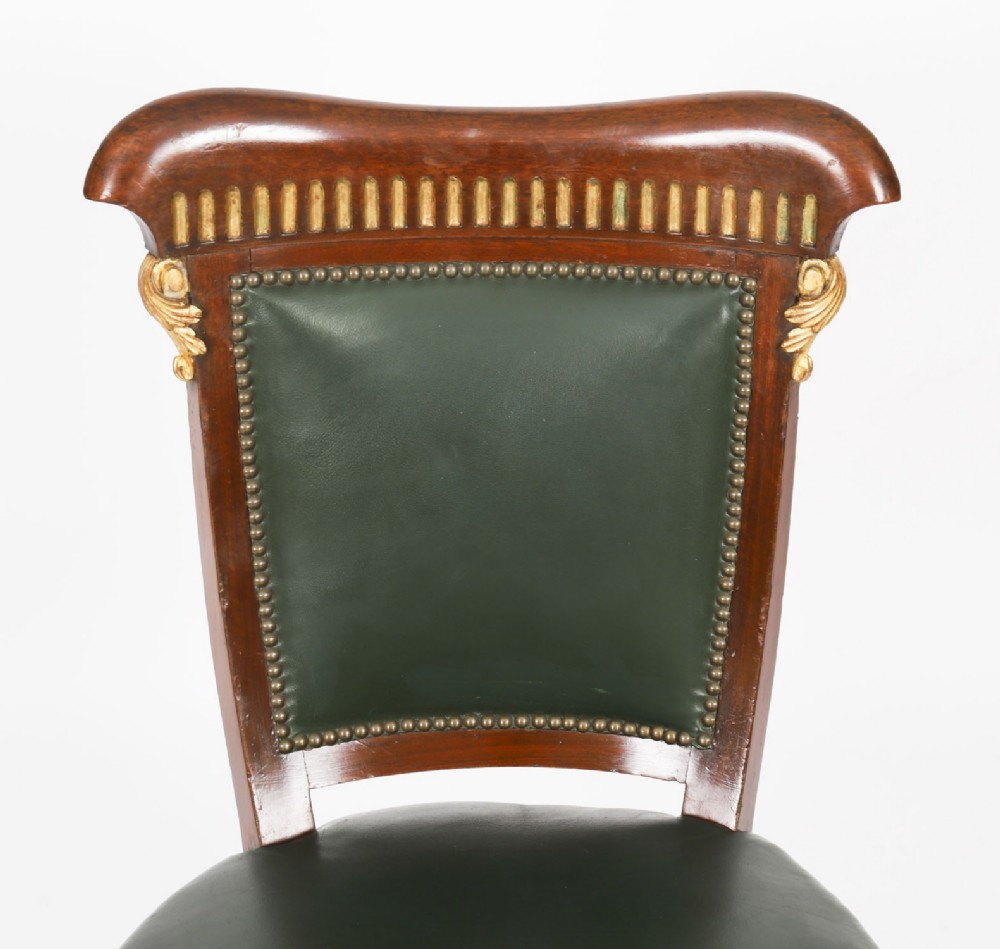
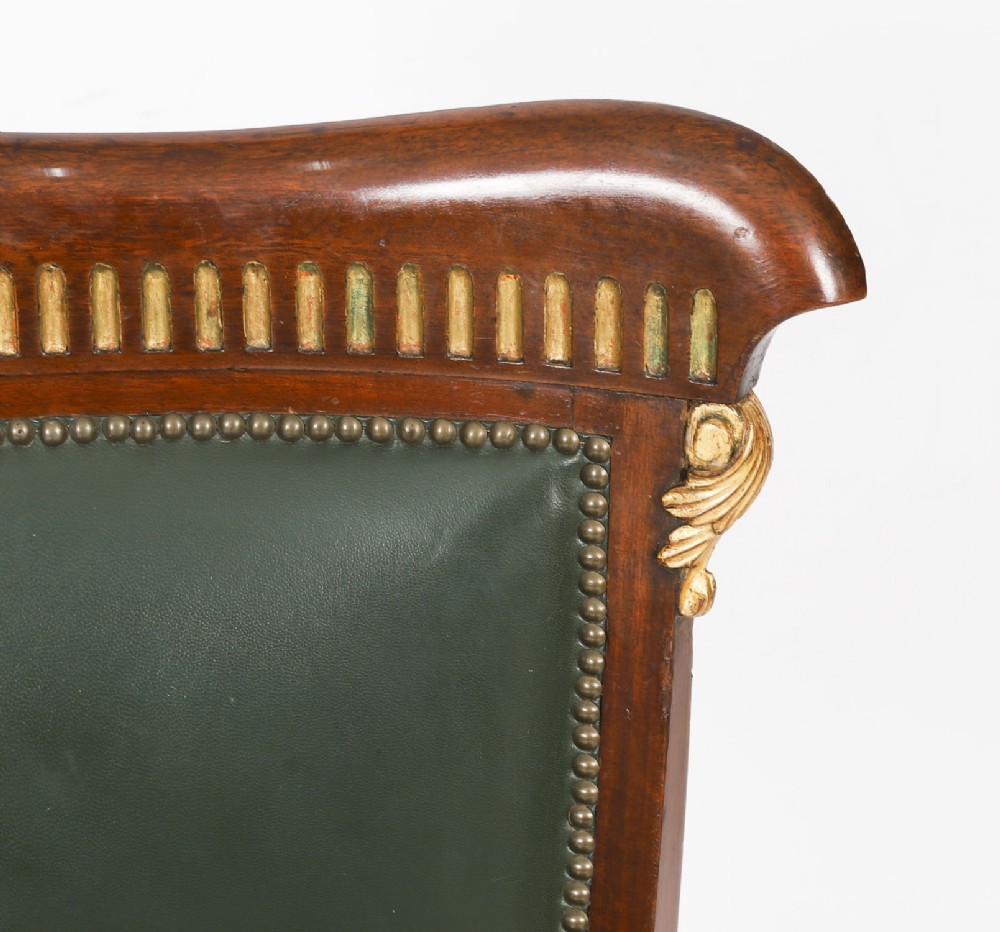
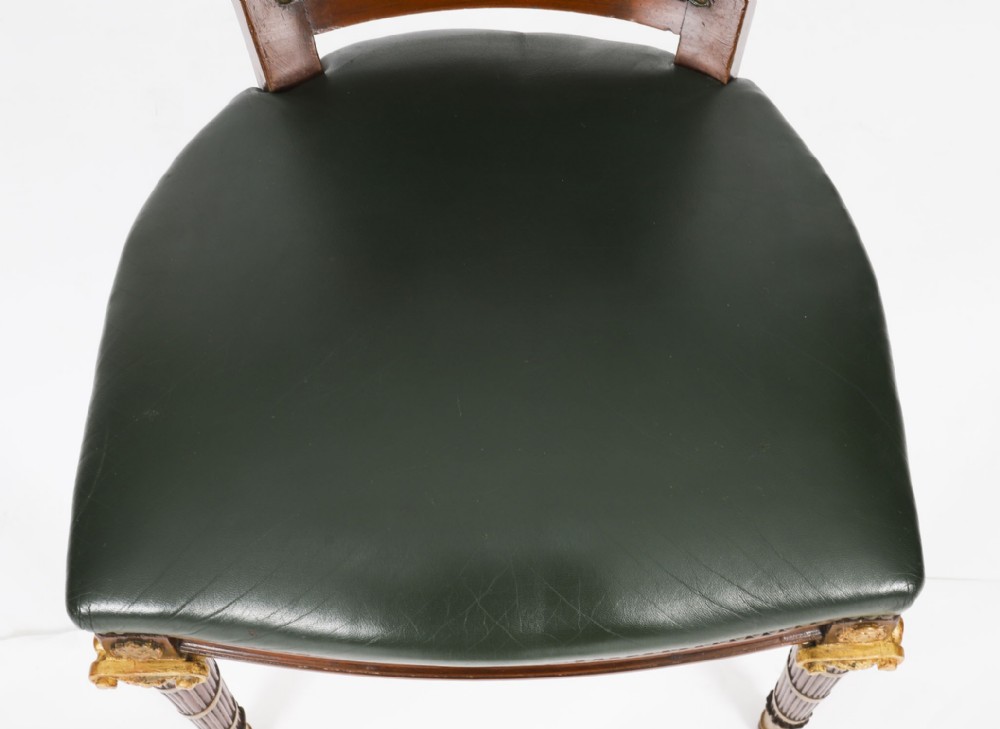
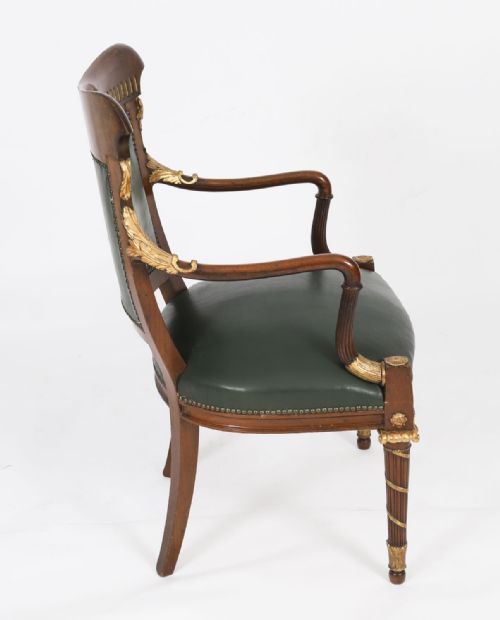
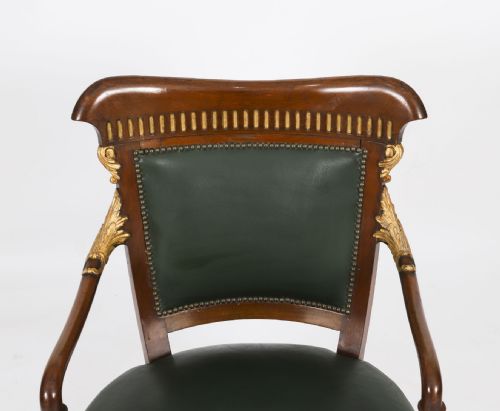
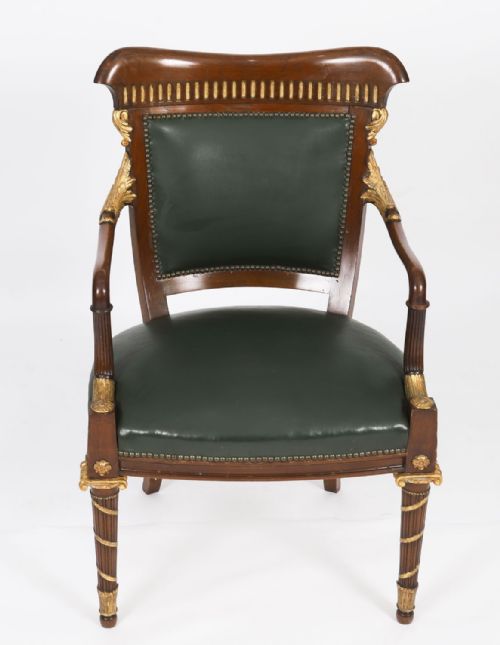
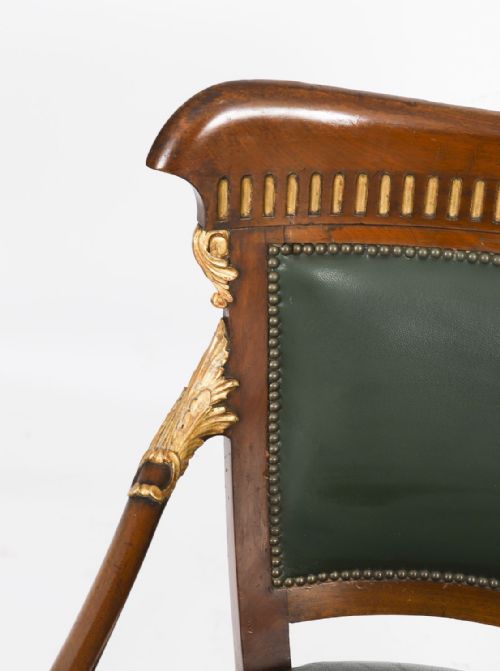
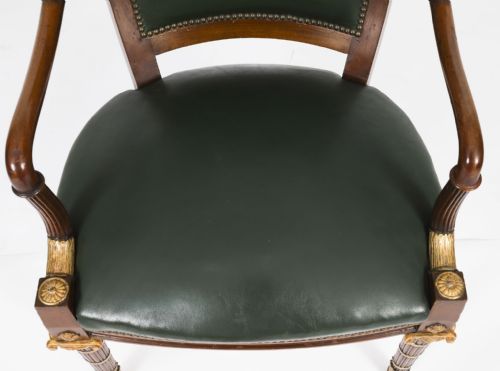
The set consists of twelve side chairs with two matching armchairs. They feature shaped cresting rails with fluting over curved uprights with padded backs.
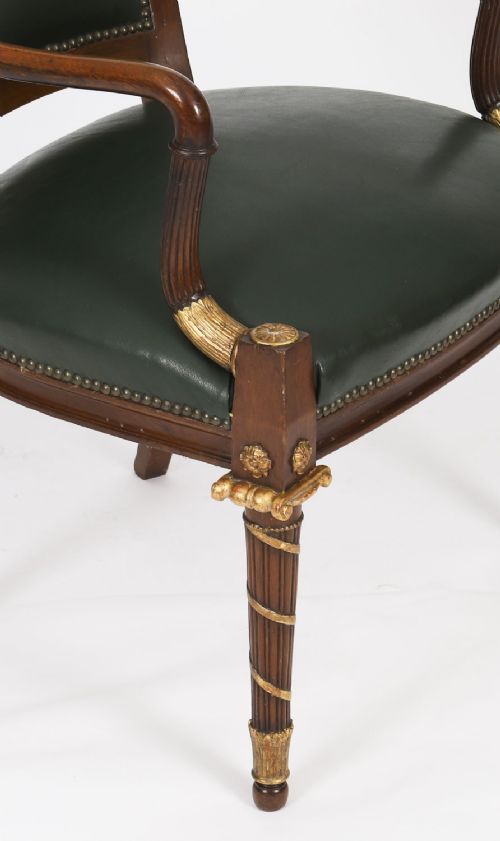
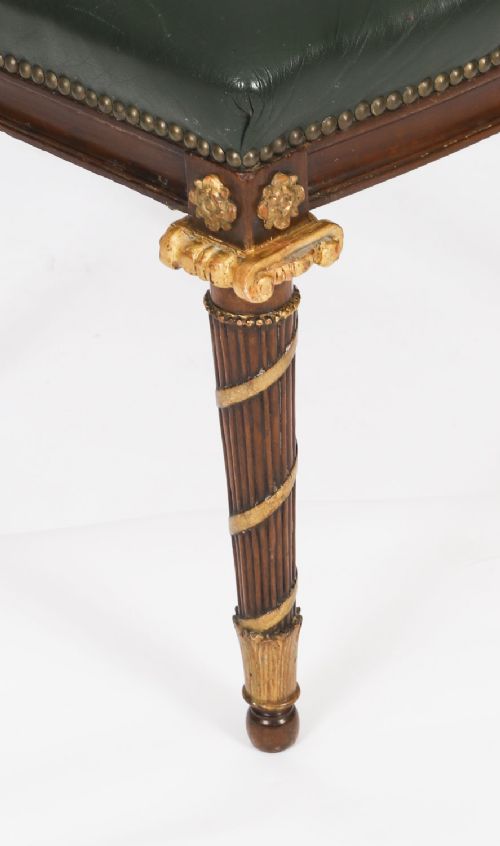
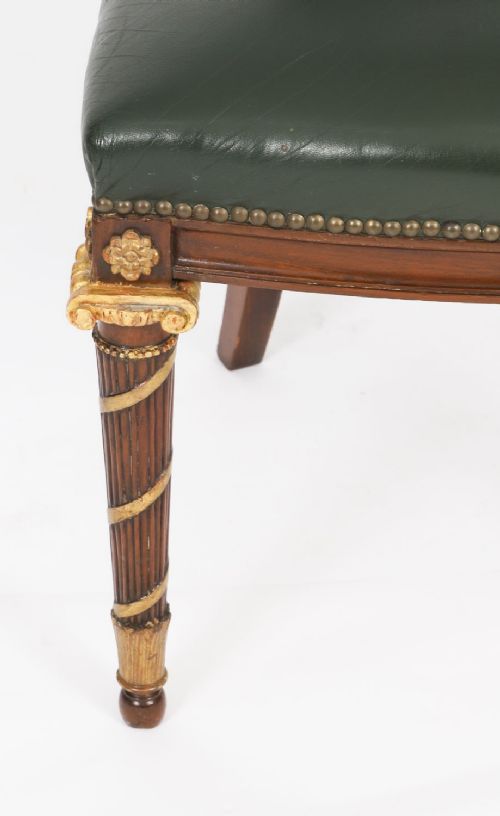
They are raised on tapering legs with giltwood Ionic order capitals and giltwood twisted fluting decoration to the front legs and sabre legs to the rear.
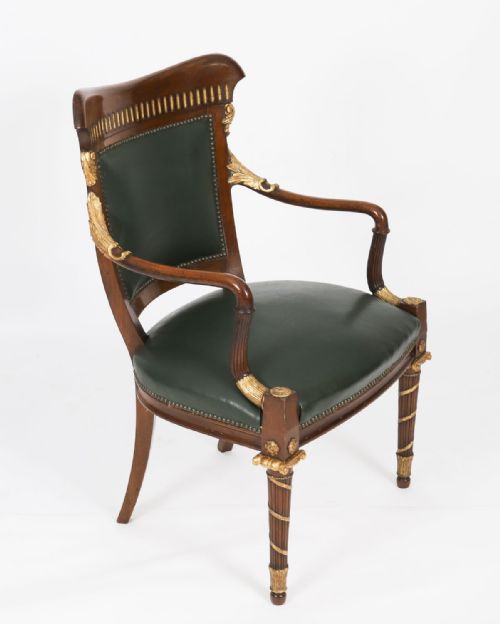
Transform the fine dining experience in your home with this absolutely fabulous long set of dining chairs fit for a King.
Condition:
In really excellent condition having been beautifully cleaned, polished and waxed in our workshops, please see photos for confirmation.
Dimensions in cm:
Height 95 cm x Width 62 cm x Depth 59 cm - Armchairs
Height 90 cm x Width 51.5 cm x Depth 52 cm - Side chairs
Height 48 cm - Seat height
Dimensions in inches:
Height 3 feet, 1 inch x Width 2 foot x Depth 1 foot, 11 inches - Armchairs
Height 2 foot, 11 inches x Width 1 foot, 8 inches x Depth 1 foot, 8 inches - Side chairs
Height 1 foot, 7 inches - Seat height
Flame Mahogany
Thomas Sheraton - 18th century furniture designer, once characterized mahogany as "best suited to furniture where strength is demanded as well as a wood that works up easily, has a beautiful figure and polishes so well that it is an ornament to any room in which it may be placed." Matching his words to his work, Sheraton designed much mahogany furniture. The qualities that impressed Sheraton are particularly evident in a distinctive pattern of wood called "flame mahogany."
The flame figure in the wood is revealed by slicing through the face of the branch at the point where it joins another element of the tree.
Giltwood
There is no doubt that giltwood furniture is an expression of grandeur and luxury. The golden hue of these pieces comes from the application of real gold leaf—a highly valued material both then and now. When it comes to buying antique giltwood furniture for your collection, there are many different considerations to keep in mind, many of which come down to personal preference.
Origins of Giltwood
The gilt gesso technique appeared in England at the end of the seventeenth century with the work of Jean Pelletier, a Huguenot craftsman who received royal patronage at Hampton Court and Kensington Palace. James Moore, a royal cabinetmaker working in the early eighteenth century, expanded on this technique with increased drama and exaggeration to the carving. Throughout the Georgian era in the eighteenth century, gilded furniture was highly prized as some of the finest furniture available as it emulated the ever popular taste for French style and décor.
The Technique
Gesso is a type of plaster that is prepared of finely ground chalk, applied onto the wooden surface in a series of layers—at least fifteen layers were needed to achieve the desired thickness. Once dried, the craftsmen could cut into the new surface to create different designs. When the designs were complete, the gilding could be applied. To gild the surface, a red clay ground, known as bole, would be spread onto the surface to prepare for the laying of the gold leaf.
Our reference: A4839
Regent Antiques has dated these French Mahogany Dining Chairs to the 1860s.
We specialise in english and continental furniture, silver, porcelain and decorative items.
You can view the stock and full dealer information on the Regent Antiques Profile Page
Regent Antiques is a registered member of LAPADA CINOA
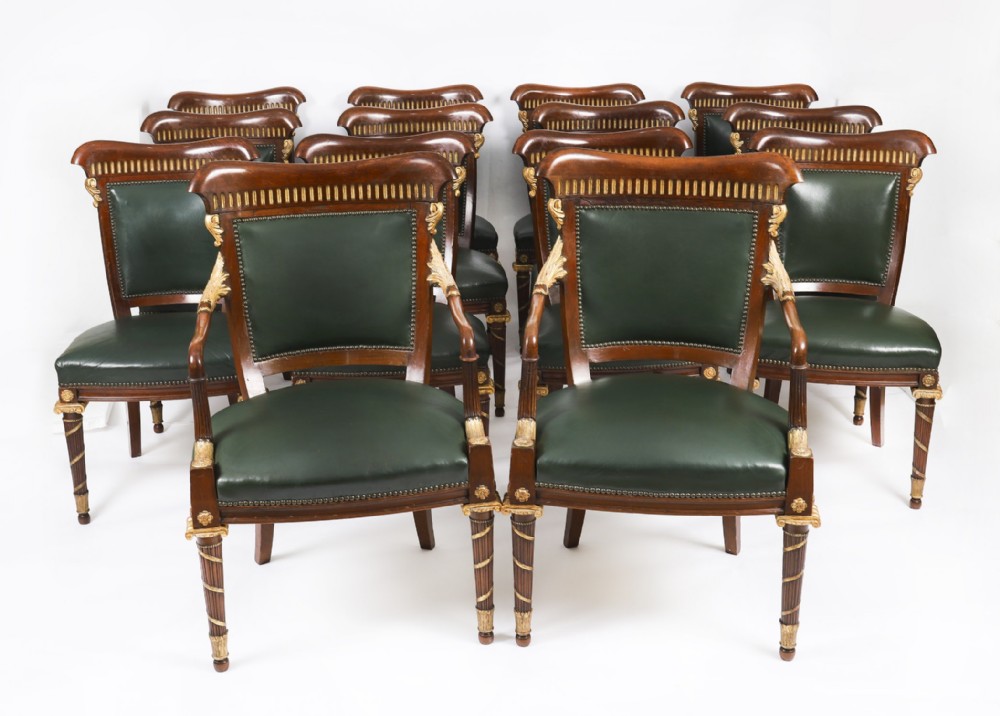
Antique Set of 14 French Mahogany & Giltwood Dining Chairs C 1860 19th Century