12,060  PAGES BROWSED TODAY PAGES TODAY 36  ANTIQUES UPLOADED TODAY NEW ARRIVALS
ID #SA1187433
FOR SALE
£1,600
Email
Save
Late Meiji Japanese Kutani Porcelain Buddhist Triad of Kannon, C. 1880–1900
Ritas Bazaar
for sale €1,872     $2,032
£1,600

Ritas Bazaar

Sellingantiques Verified Since Nov 2025
View Dealers Stock Page
Id #SA1187433
PDF SHARE
SAVE

Late Meiji Japanese Kutani Porcelain Buddhist Triad of Kannon, C. 1880–1900

19th century
For Sale by Ritas Bazaar
Description

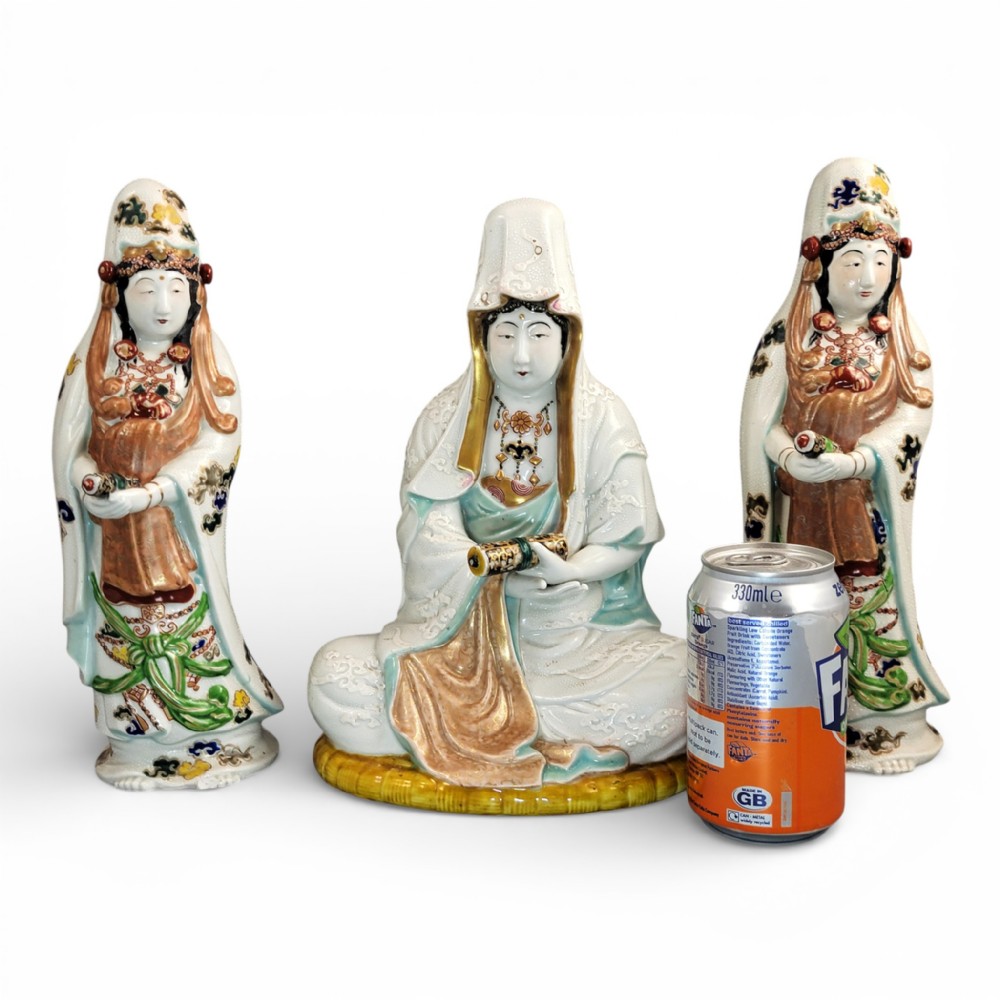
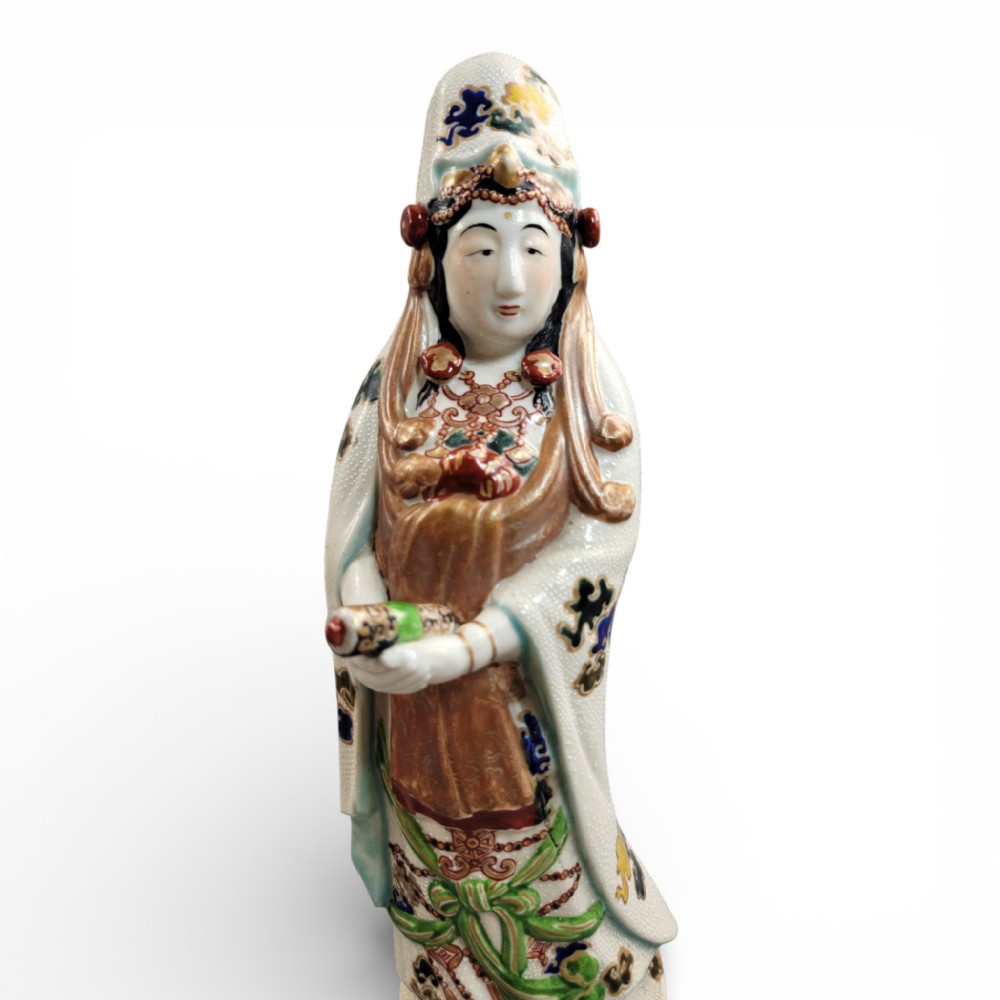
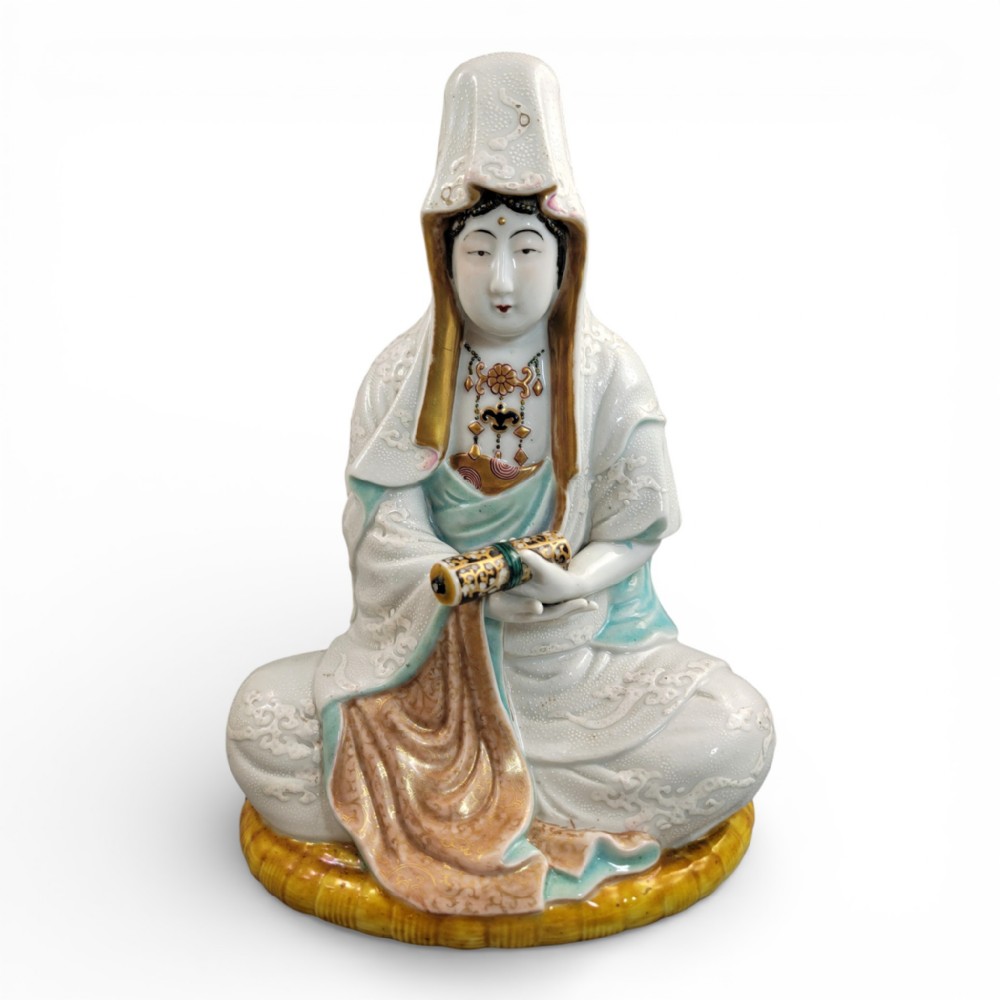
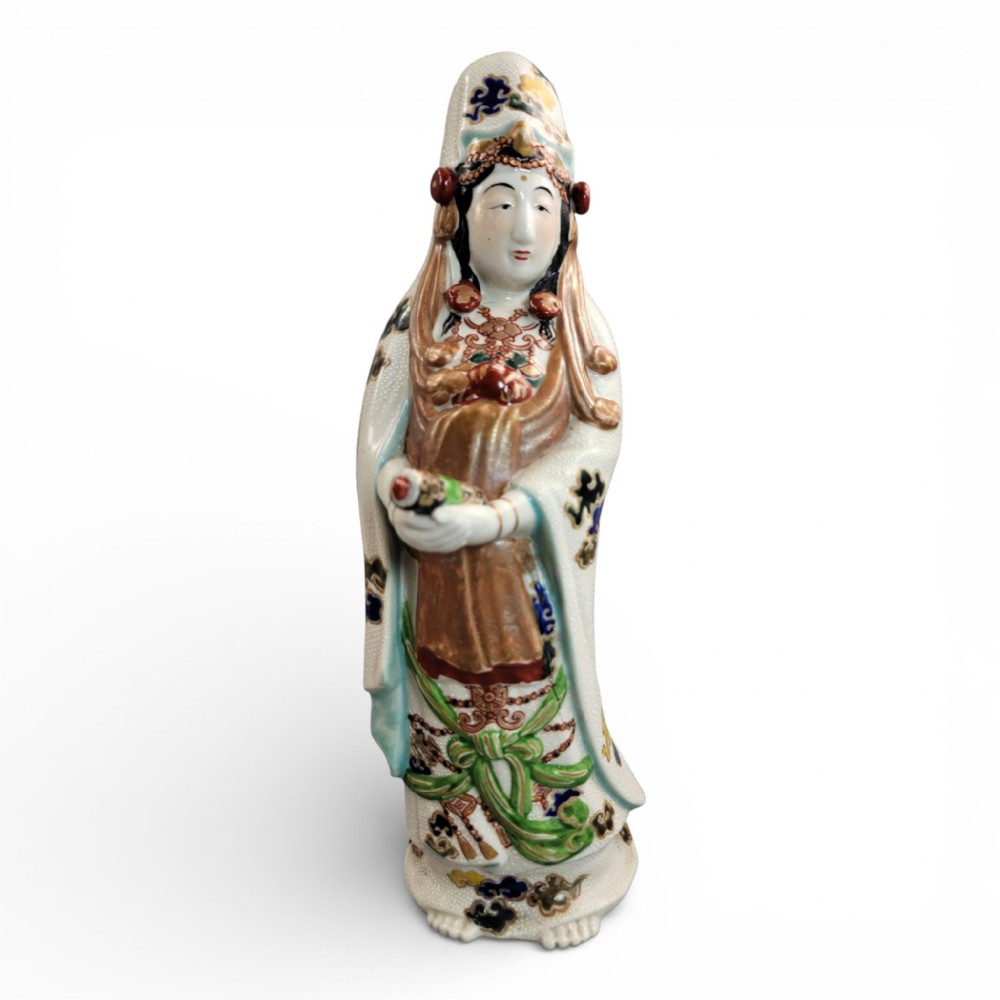
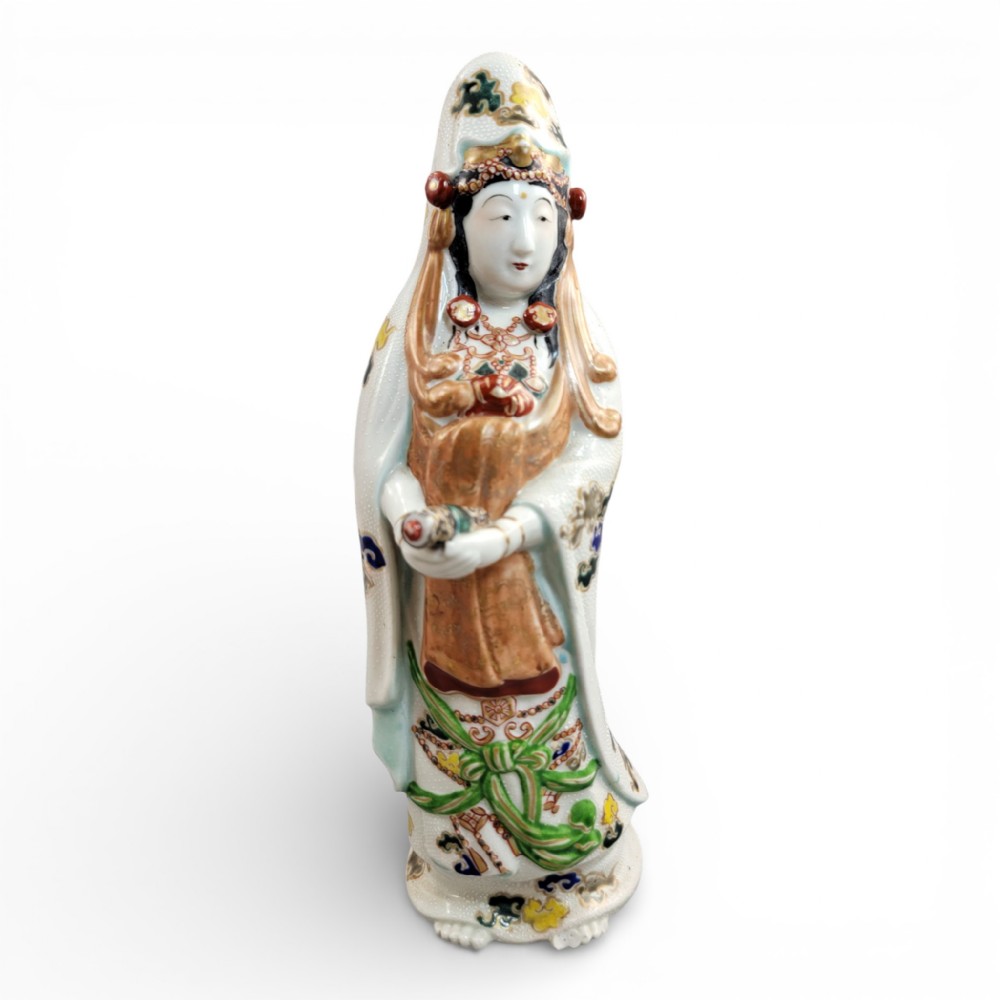
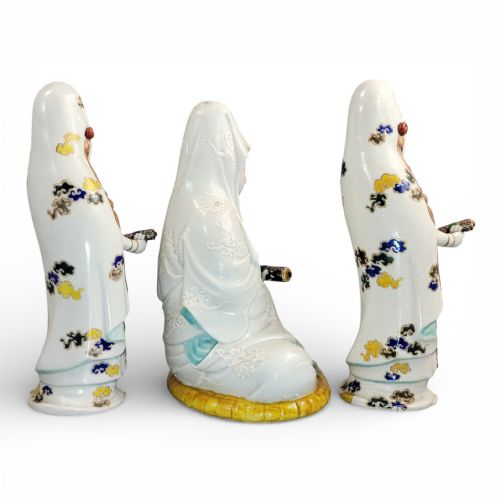
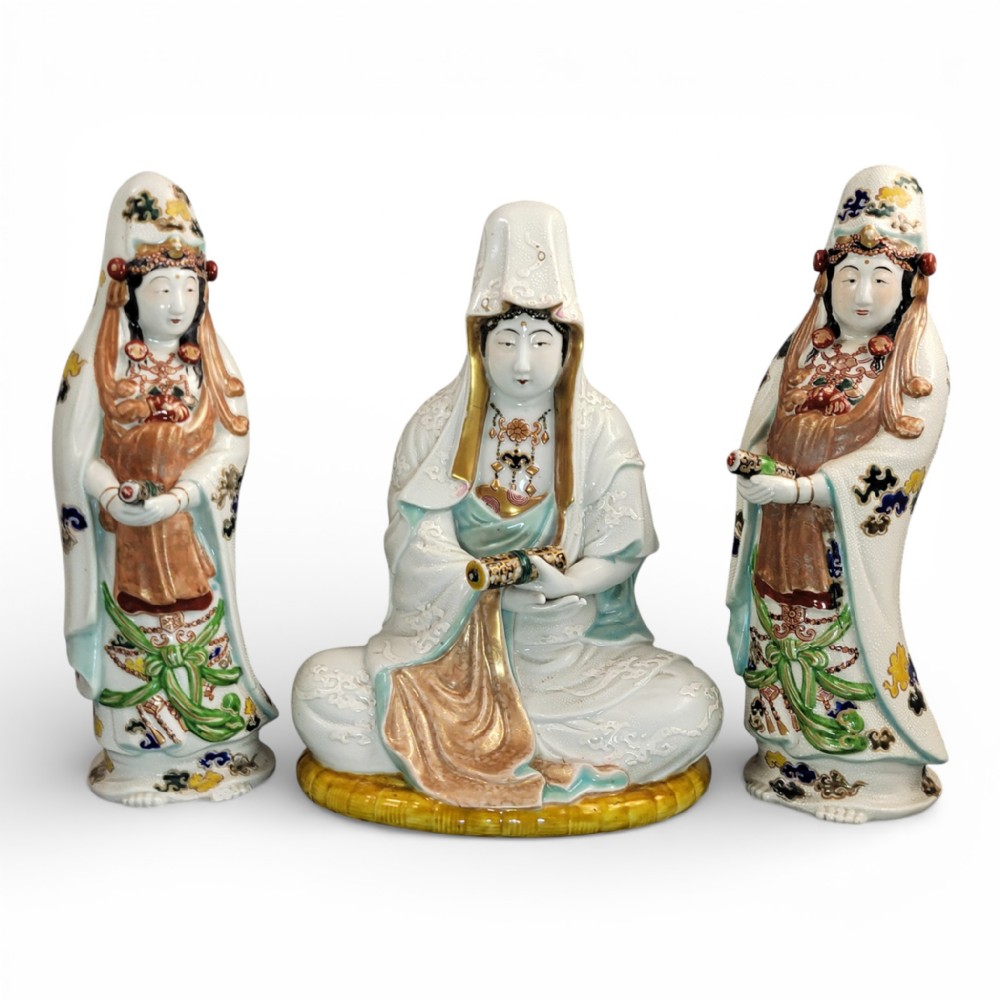
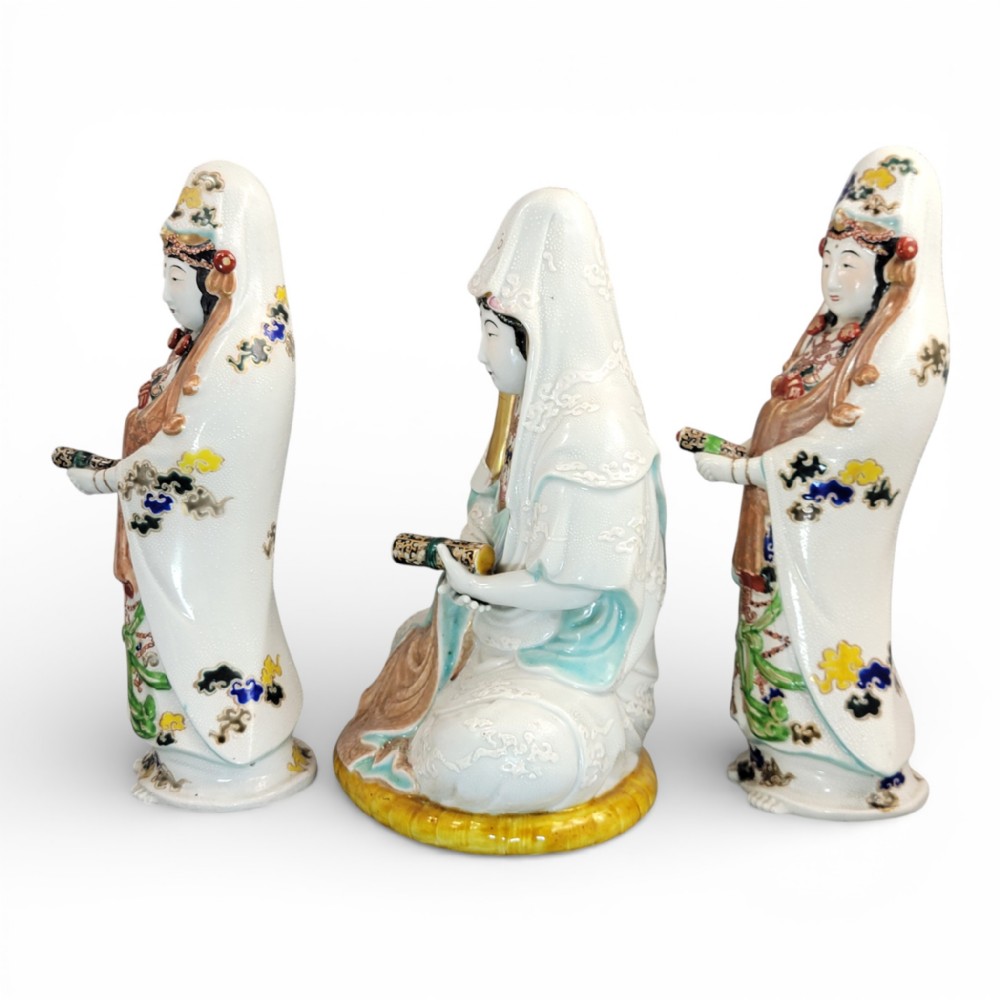
A finely modelled Japanese Kutani porcelain triad depicting Kannon (Kannon Bosatsu) with two standing attendant bodhisattvas, dating to the late Meiji period, circa 1880–1900. The ensemble was created as a complete religious and decorative composition and has survived intact.

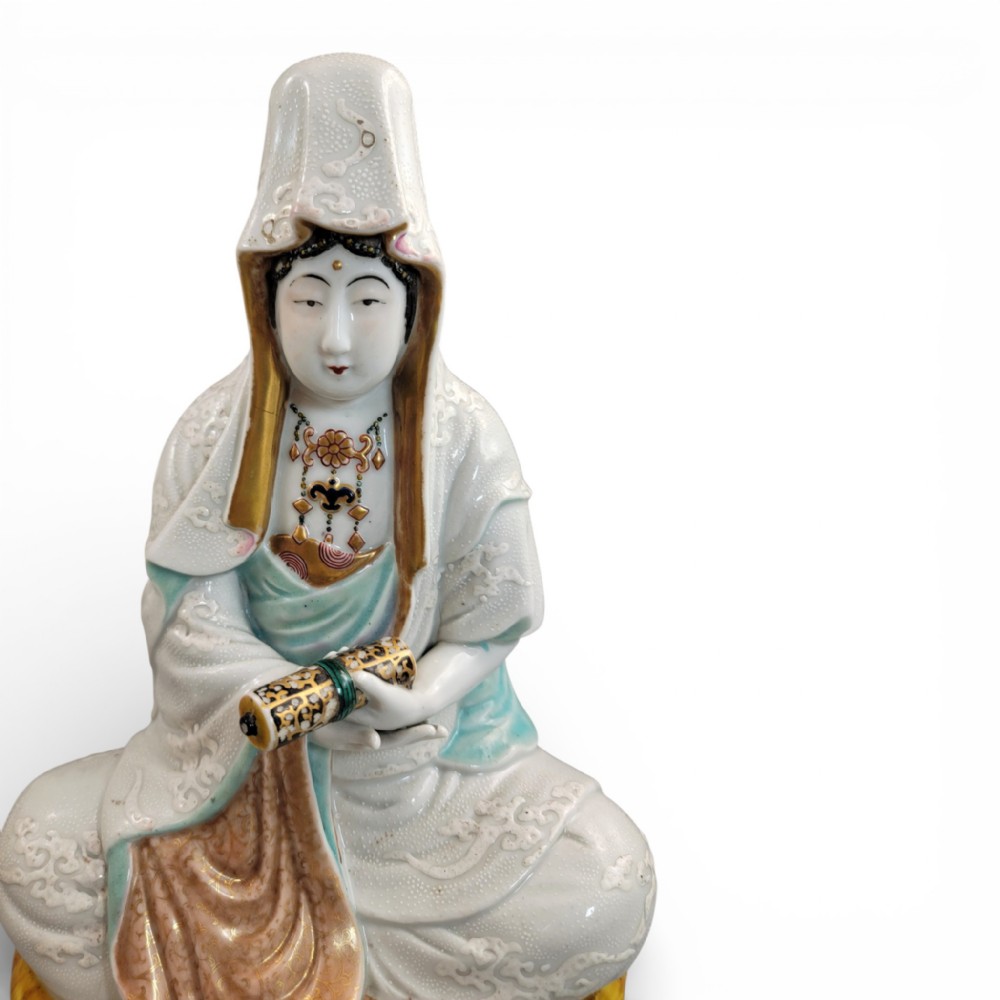
The seated figure of Kannon holds a sutra scroll, symbolising sacred wisdom and compassion. The attendant bodhisattvas display subtle variations in ornament and colour accents, emphasising the hand-crafted nature of the group and traditional Japanese production methods.
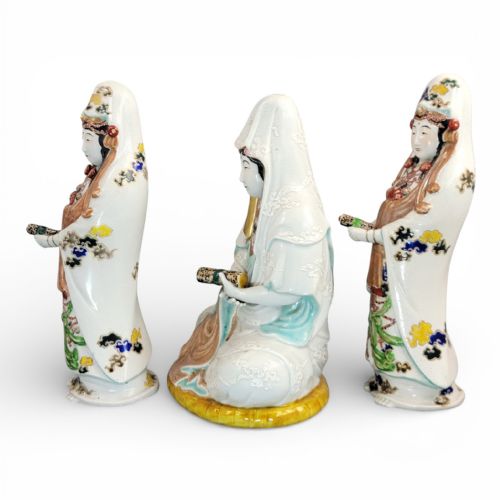
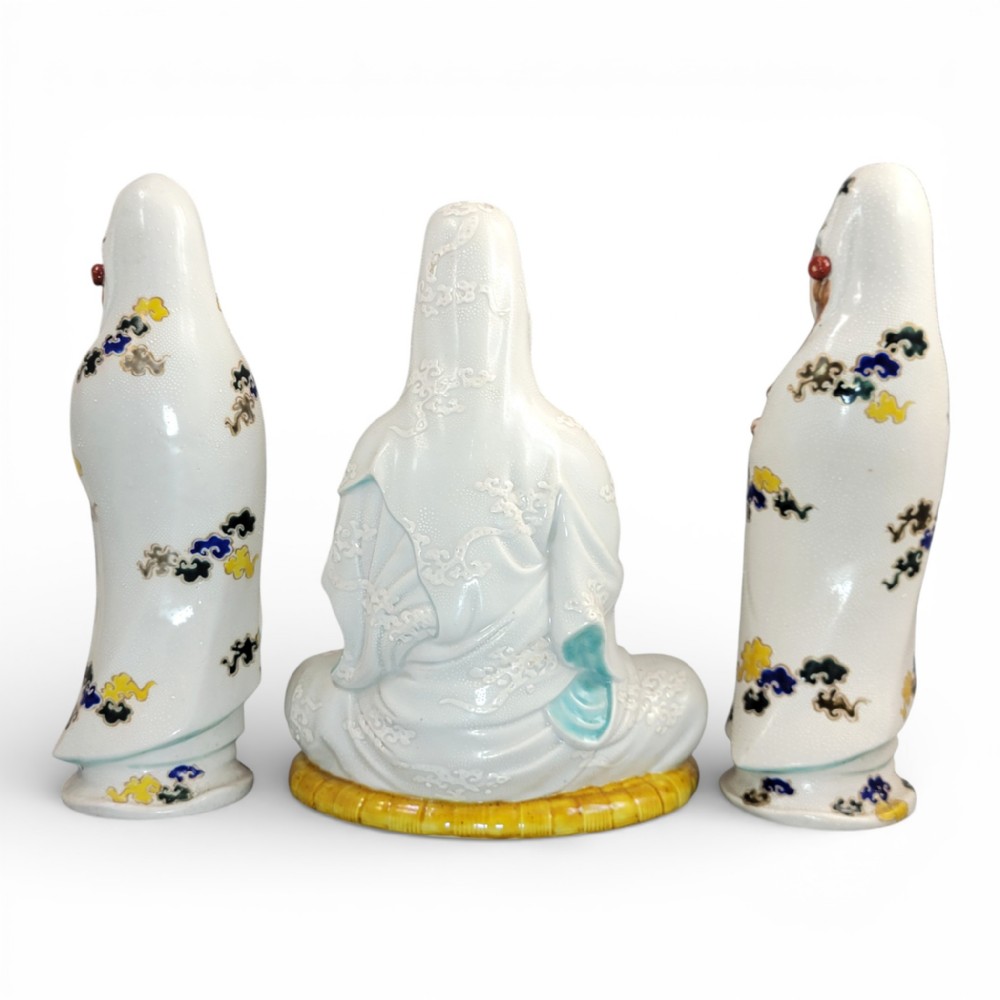
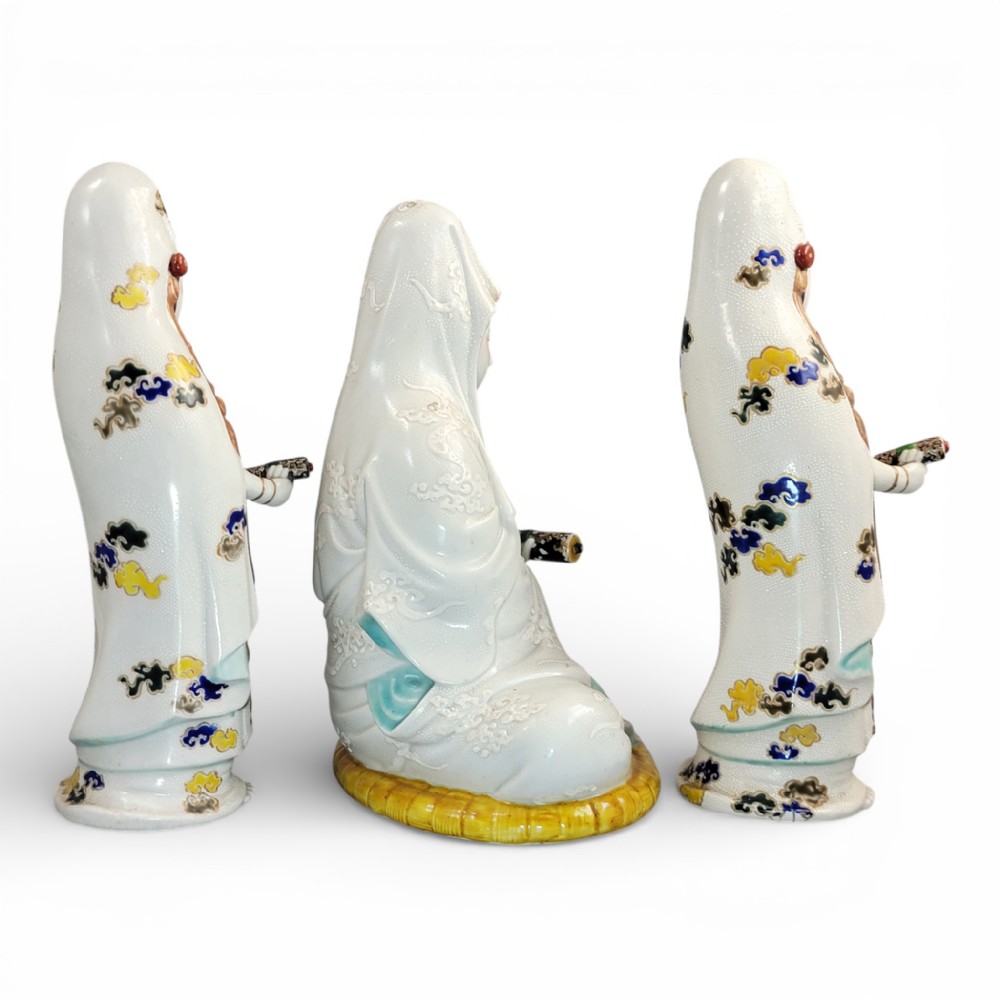
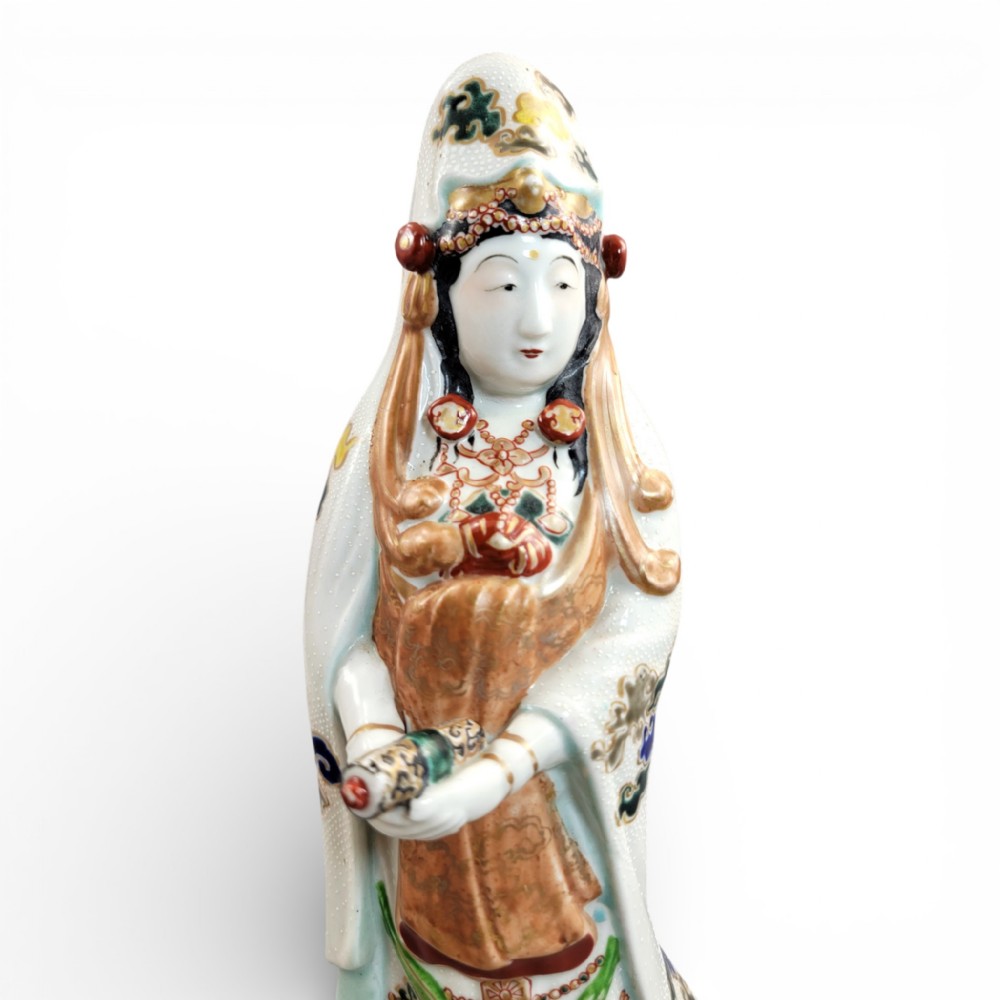
Decorated in a classic Kutani palette with extensive gilding, the cloaks of all three figures are finished with a finely textured nanako-ji surface. This granular relief technique was reserved for sacred and high-status figures and adds both visual depth and surface richness.
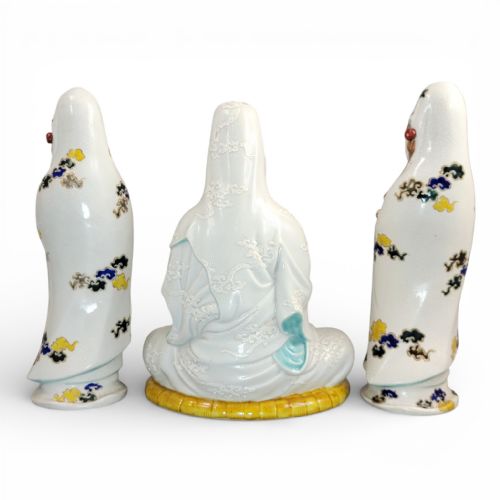
Complete Kutani Buddhist triads are rarely encountered, particularly in such well-preserved condition.

Measurements

Standing attendants: Height 28.5 cm (11.2?)

Seated Kannon: Height 28 cm (11.0?); Width 21 cm (8.3?)
Total combined weight: approx. 3.48 kg

Condition

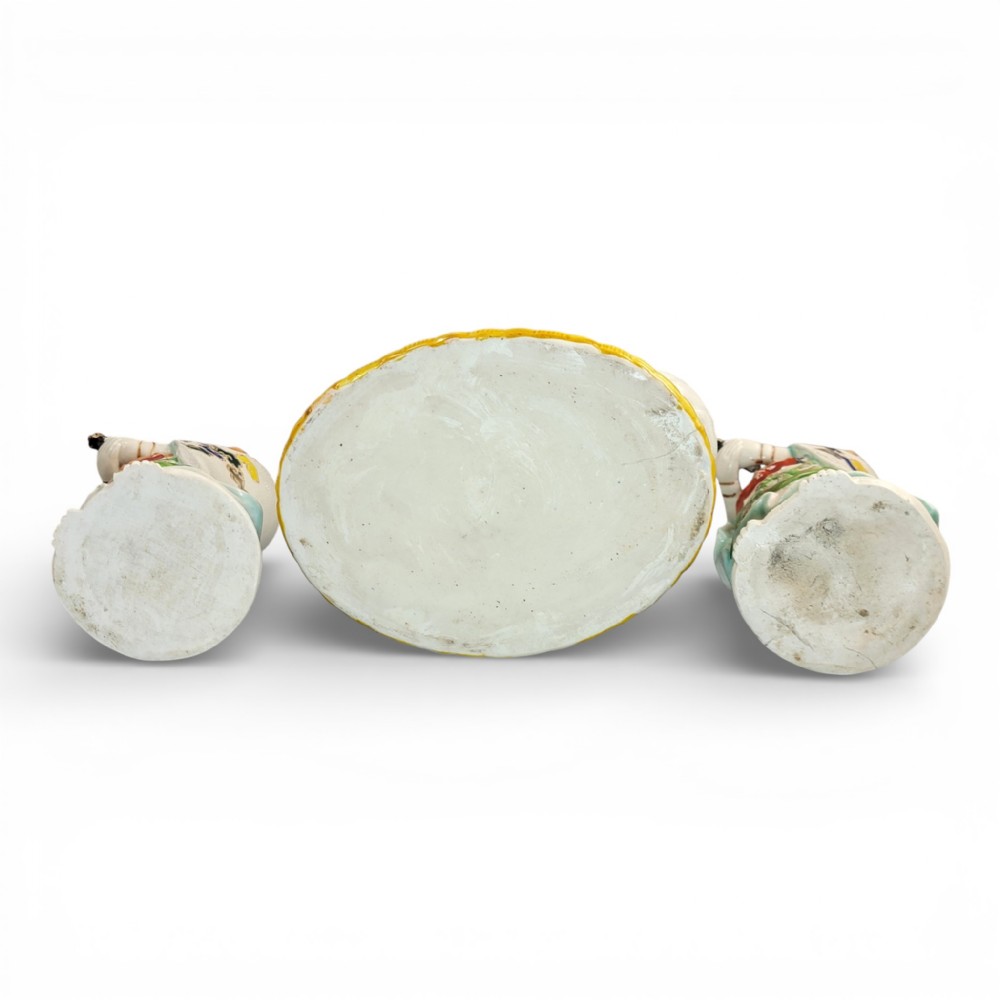
Excellent overall antique condition. Minor superficial shrinkage cracks to the base of one attendant and a fine hairline to the base of the seated figure, all stable and non-structural. Minimal wear to gilding consistent with age. UV examination confirms no restoration.

Physical Dimensions
Height
28.5cm (11.22")
Width
21cm (8.27")
Declaration

Ritas Bazaar has dated this Kutani Porcelain Kannon Triad to the 19th Century.

Reference Numbers
Sellingantiques Reference
SA1187433
Dealers Internal Reference
B1582
Description
A finely modelled Japanese Kutani porcelain triad depicting Kannon (Kannon Bosatsu) with two standing attendant bodhisattvas, dating to the late Meiji period, circa 1880–1900. The ensemble was created as a complete religious and decorative composition and has survived intact.

The seated figure of Kannon holds a sutra scroll, symbolising sacred wisdom and compassion.

The attendant bodhisattvas display subtle variations in ornament and colour accents, emphasising the hand-crafted nature of the group and traditional Japanese production methods.
Ritas Bazaar
fig 1. A set of three late nineteenth-century Japanese Kutani porcelain figures depicting Kannon flanked by two standing attendants, finished in white glaze with gilded and polychrome enamelled robes.
fig 1. Late Meiji Japanese Kutani Porcelain Buddhist Triad of Kannon, C. 1880–1900

Decorated in a classic Kutani palette with extensive gilding, the cloaks of all three figures are finished with a finely textured nanako-ji surface. This granular relief technique was reserved for sacred and high-status figures and adds both visual depth and surface richness.

fig 2. A set of three late nineteenth-century Japanese Kutani porcelain figures depicting Kannon flanked by two standing attendants, finished in white glaze with gilded and polychrome enamelled robes.
fig 2. Late Meiji Japanese Kutani Porcelain Buddhist Triad of Kannon, C. 1880–1900

Complete Kutani Buddhist triads are rarely encountered, particularly in such well-preserved condition.

Measurements

Standing attendants: Height 28.5 cm (11.2?)

Seated Kannon: Height 28 cm (11.0?); Width 21 cm (8.3?)

fig 3. A set of three late nineteenth-century Japanese Kutani porcelain figures depicting Kannon flanked by two standing attendants, finished in white glaze with gilded and polychrome enamelled robes.
fig 3. Late Meiji Japanese Kutani Porcelain Buddhist Triad of Kannon, C. 1880–1900

Total combined weight: approx. 3.48 kg

Condition

Excellent overall antique condition. Minor superficial shrinkage cracks to the base of one attendant and a fine hairline to the base of the seated figure, all stable and non-structural. Minimal wear to gilding consistent with age. UV examination confirms no restoration.

Height
28.5cm (11.22")
Width
21cm (8.27")
Date of Manufacture

Ritas Bazaar has dated this Kutani Porcelain Kannon Triad to the 19th Century.

Reference Numbers
Sellingantiques Ref
SA1187433
Dealers Internal Ref
B1582
Ritas Bazaar
Sellingantiques verified Since Nov 2025
Dealer Profile

You can view the stock and full dealer information on the Ritas Bazaar Profile Page
PDF SHARE
SAVE
A set of three late nineteenth-century Japanese Kutani porcelain figures depicting Kannon flanked by two standing attendants, finished in white glaze with gilded and polychrome enamelled robes.
1 / 12
Archive I A set of three late nineteenth-century Japanese Kutani porcelain figures depicting Kannon flanked by two standing attendants, finished in white glaze with gilded and polychrome enamelled robes.

Late Meiji Japanese Kutani Porcelain Buddhist Triad of Kannon, C. 1880–1900
Archive II A set of three late nineteenth-century Japanese Kutani porcelain figures depicting Kannon flanked by two standing attendants, finished in white glaze with gilded and polychrome enamelled robes. View II
Archive III A set of three late nineteenth-century Japanese Kutani porcelain figures depicting Kannon flanked by two standing attendants, finished in white glaze with gilded and polychrome enamelled robes. View III
Archive IV A set of three late nineteenth-century Japanese Kutani porcelain figures depicting Kannon flanked by two standing attendants, finished in white glaze with gilded and polychrome enamelled robes. View IV
Archive V A set of three late nineteenth-century Japanese Kutani porcelain figures depicting Kannon flanked by two standing attendants, finished in white glaze with gilded and polychrome enamelled robes. View V
Archive VI A set of three late nineteenth-century Japanese Kutani porcelain figures depicting Kannon flanked by two standing attendants, finished in white glaze with gilded and polychrome enamelled robes. View VI
Archive VII A set of three late nineteenth-century Japanese Kutani porcelain figures depicting Kannon flanked by two standing attendants, finished in white glaze with gilded and polychrome enamelled robes. View VII
Archive VIII A set of three late nineteenth-century Japanese Kutani porcelain figures depicting Kannon flanked by two standing attendants, finished in white glaze with gilded and polychrome enamelled robes. View VIII
Archive IX A set of three late nineteenth-century Japanese Kutani porcelain figures depicting Kannon flanked by two standing attendants, finished in white glaze with gilded and polychrome enamelled robes. View IX
Archive X A set of three late nineteenth-century Japanese Kutani porcelain figures depicting Kannon flanked by two standing attendants, finished in white glaze with gilded and polychrome enamelled robes. View X
Archive XI A set of three late nineteenth-century Japanese Kutani porcelain figures depicting Kannon flanked by two standing attendants, finished in white glaze with gilded and polychrome enamelled robes. View XI
Archive XII A set of three late nineteenth-century Japanese Kutani porcelain figures depicting Kannon flanked by two standing attendants, finished in white glaze with gilded and polychrome enamelled robes. View XII
Enlarged Archival View
Telephone 07434 626011
Location
Hertfordshire
United Kingdom
Verified Since Nov 2025
Items For Sale 223
Items Sold 37
Ritas Bazaar
Verified Since Nov 2025
View Dealer Info
Location: Hertfordshire, United Kingdom
Verified
Nov 2025
For Sale
223
Sold
37
A set of three late nineteenth-century Japanese Kutani porcelain figures depicting Kannon flanked by two standing attendants, finished in white glaze with gilded and polychrome enamelled robes.
Late Meiji Japanese Kutani porcelain Buddhist triad of Kannon, c. 1880–1900
Ref: SA1187433
A set of three late nineteenth-century Japanese Kutani porcelain figures depicting Kannon flanked by two standing attendants, finished in white glaze with gilded and polychrome enamelled robes.
Detail View 1
Detail View 2
Detail View 3
Detail View 4
Detail View 5
Detail View 6
Detail View 7
Detail View 8
Detail View 9
Detail View 10
Detail View 11
Archival Detail
Every single antique dealer on our platform is individually approved by our internal team. We verify their professional trade history, ethical standards, and photographic quality to ensure a secure, high-standard buying environment. Upon joining, every dealer agrees to a strict 9-point code of conduct. While issues can occasionally arise, our dealers typically resolve them swiftly and directly with the buyer. In fact, since our founding in 2002, Sellingantiques has only had to step in to help resolve an issue on roughly five occasions—a true testament to the quality of our dealers and their dedication to your happiness.
Our dealers are highly experienced in packing and shipping fragile, high-value antiques. Because you are in direct contact with the dealer, you will be able to easily go through all available shipping and insurance options together to ensure your item arrives safely.
Antiques are the ultimate green purchase. By choosing historical pieces over newly manufactured goods, you completely eliminate the carbon footprint of modern mass production while preserving exceptional, timeless craftsmanship.

Meiji period Kutani porcelain is recognised for its elaborate polychrome enamelling, intricate gilded detailing, and moulded forms. Frequently depicting mythological or religious subjects such as the Bodhisattva Kannon, these pieces were produced in Japan during the late nineteenth century for both domestic devotion and export markets.

These figures are crafted from hard-paste porcelain, decorated with polychrome overglaze enamels, and highlighted with gold accents. Relief details were frequently achieved through raised enamel application, known as moriage, before firing in high-temperature kilns.

Authentic pieces typically exhibit hand-painted details, natural wear to gilded edges, and unglazed foot rims showing smooth porcelain clay. Inspecting the base for iron-oxide red or gold maker marks can also assist in confirming provenance from the Meiji era.

Display the set together on a dark hardwood sideboard, mantelpiece, or inside a glass cabinet to highlight the contrast of the bright polychrome glazes. Positioning them against a neutral background allows the drapery and gilded details to serve as a focused decorative group.

Dust gently with a soft, dry microfibre brush or feather duster to prevent dislodging delicate raised enamels. Avoid water, liquid detergents, or abrasive cloths, as moisture can compromise delicate overglaze enamels and gilding over time.
items
Add keywords to the filter
Price
£100
£250000
Era
Movements
Material
Origin
Stock Location
Freshness
Online Payments
Categories