18,450  PAGES BROWSED TODAY PAGES TODAY 36  ANTIQUES UPLOADED TODAY NEW ARRIVALS
ID #SA1185989
SOLD
Email
Save
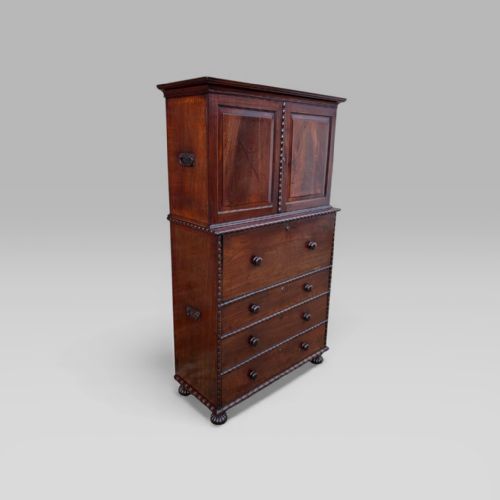
Antique 19th Century Padouk Anglo-indian Campaign Secretaire Chest & Cupboard
Knight Fine Antiques and Collectables
sold SA1185989
Sorry, but this item has been sold.
Knight Fine Antiques and Collectables

Knight Fine Antiques and Collectables

Sellingantiques Verified Since Aug 2024
View Dealers Stock Page
Id #SA1185989
PDF SHARE
SAVE

Antique 19th Century Padouk Anglo-indian Campaign Secretaire Chest & Cupboard

19th century
Description

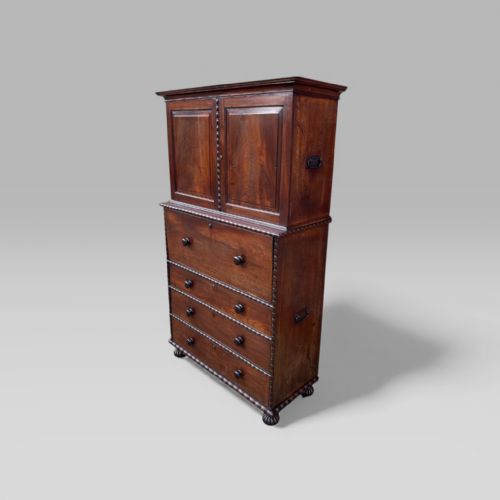
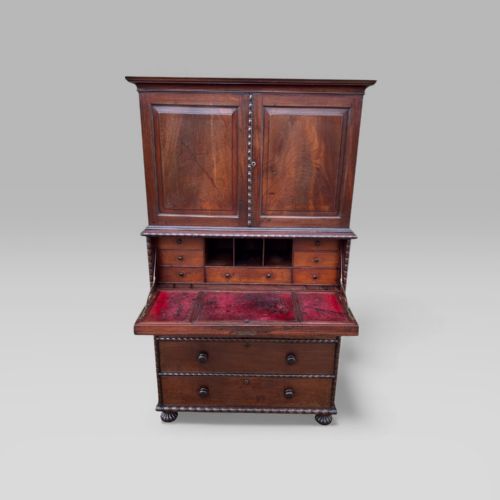
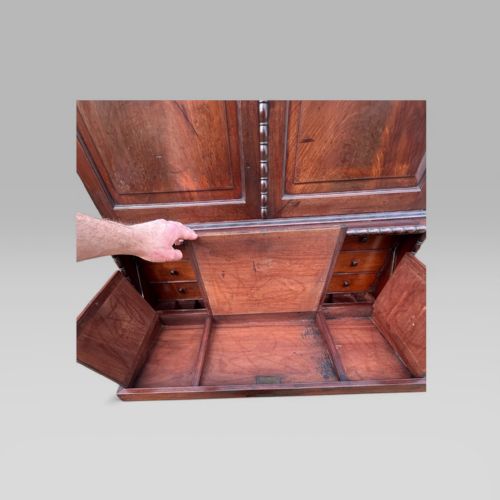
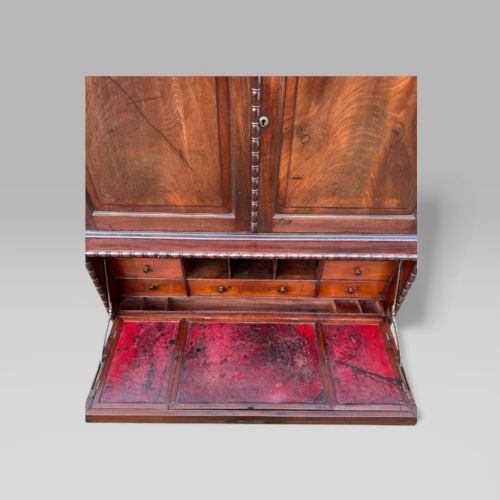
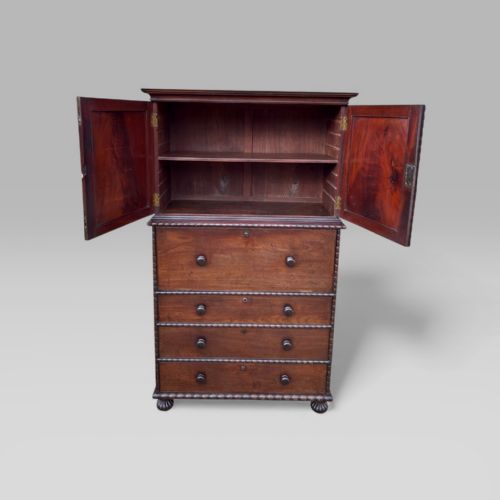
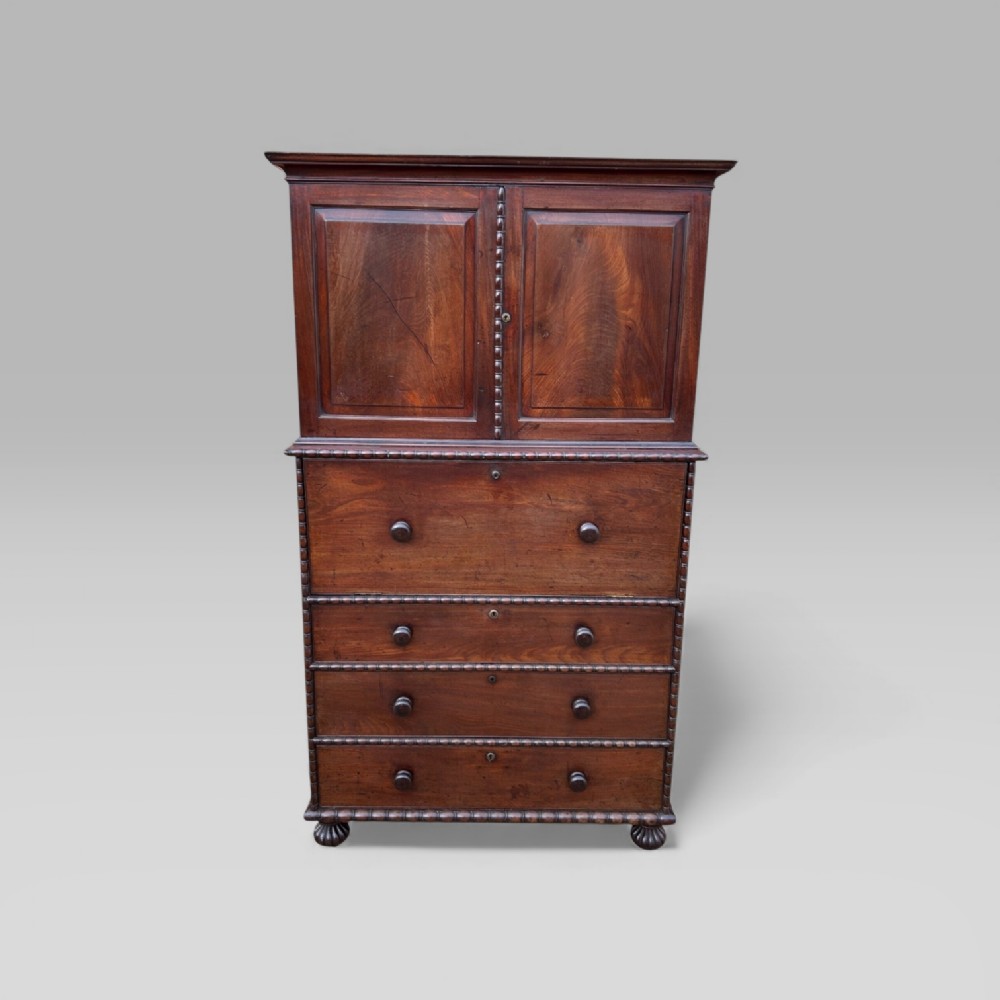
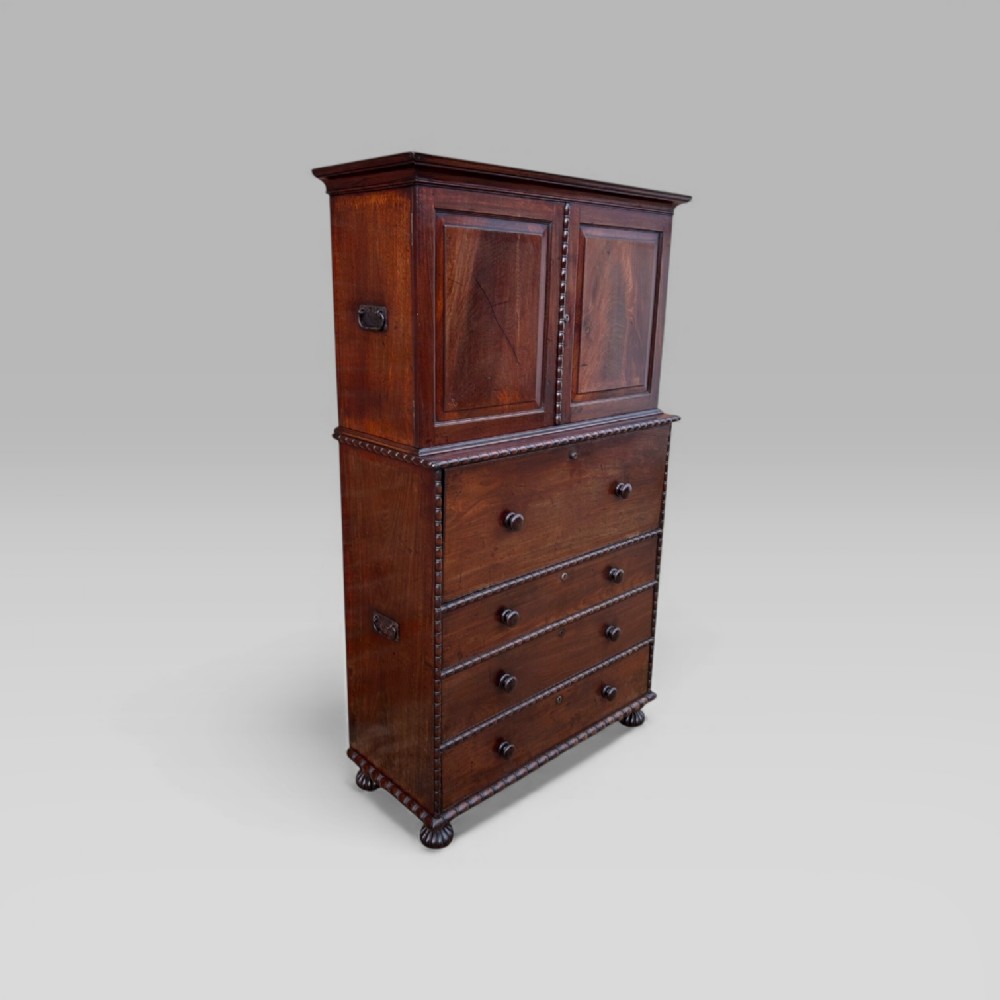
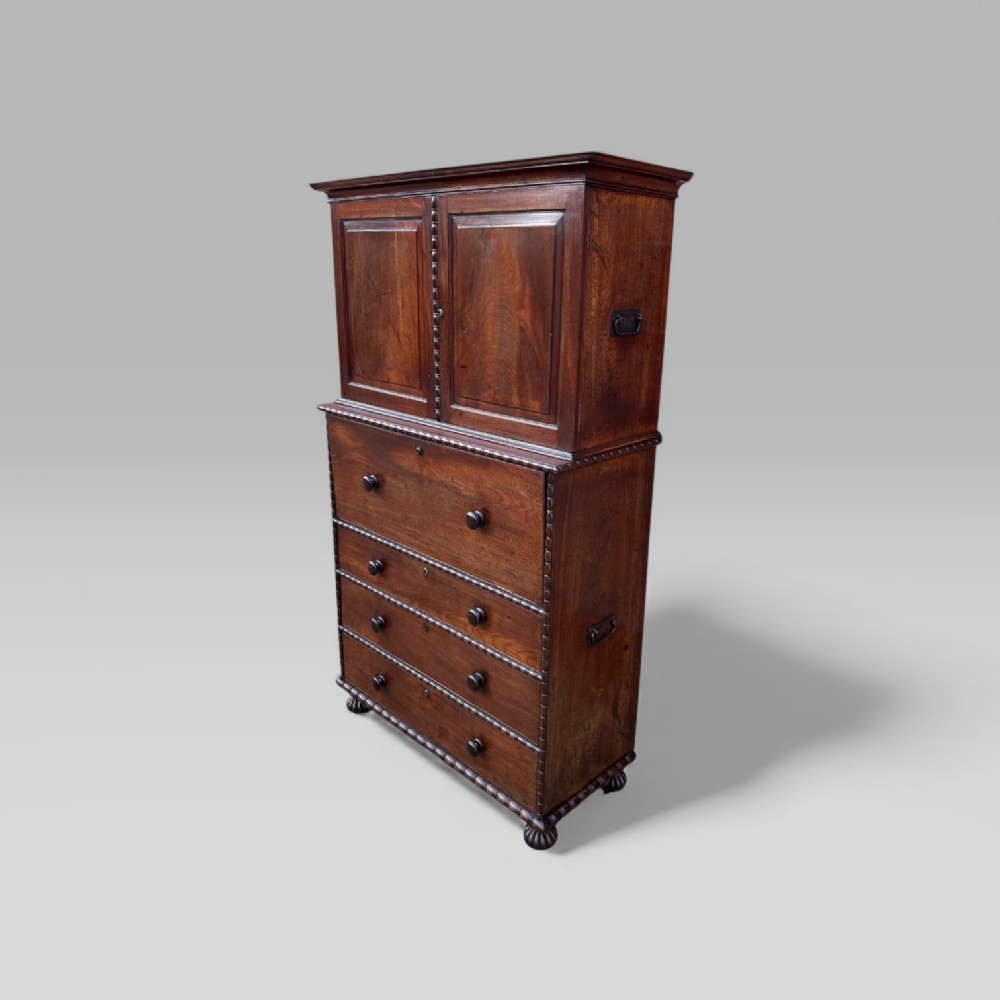
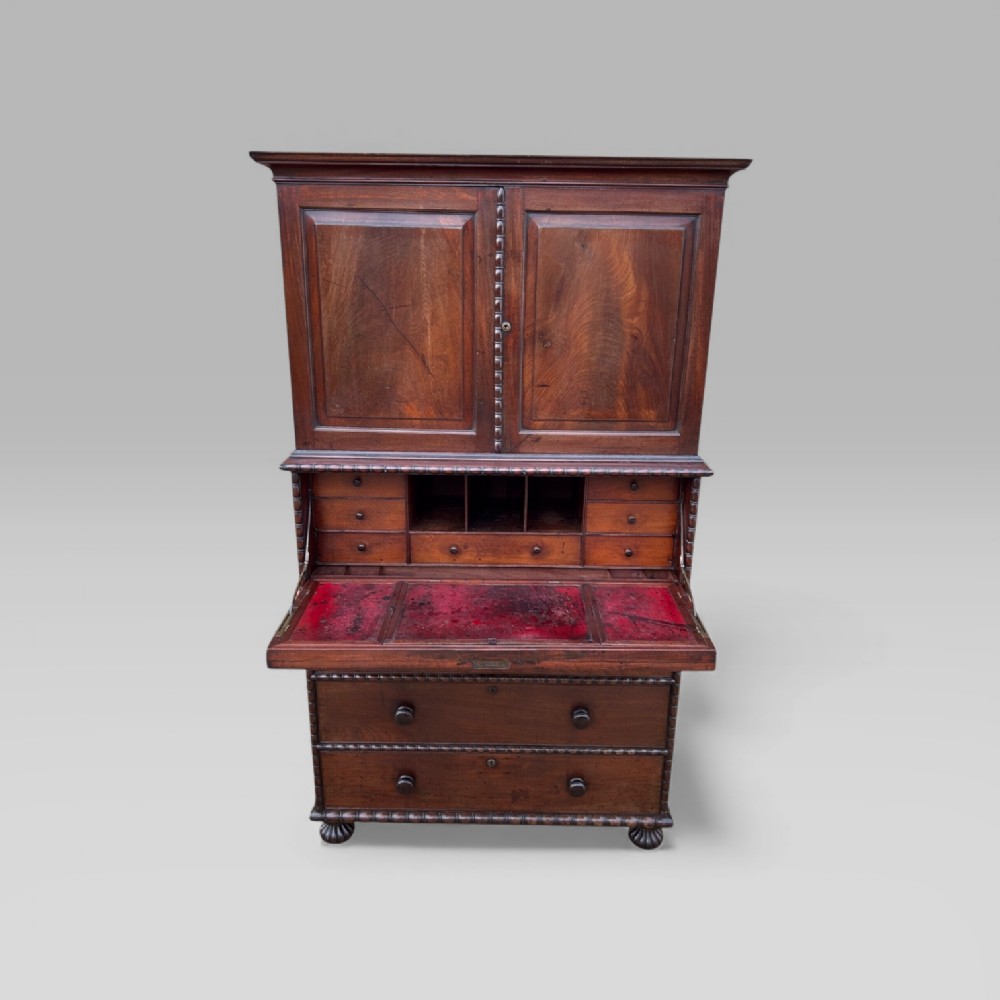
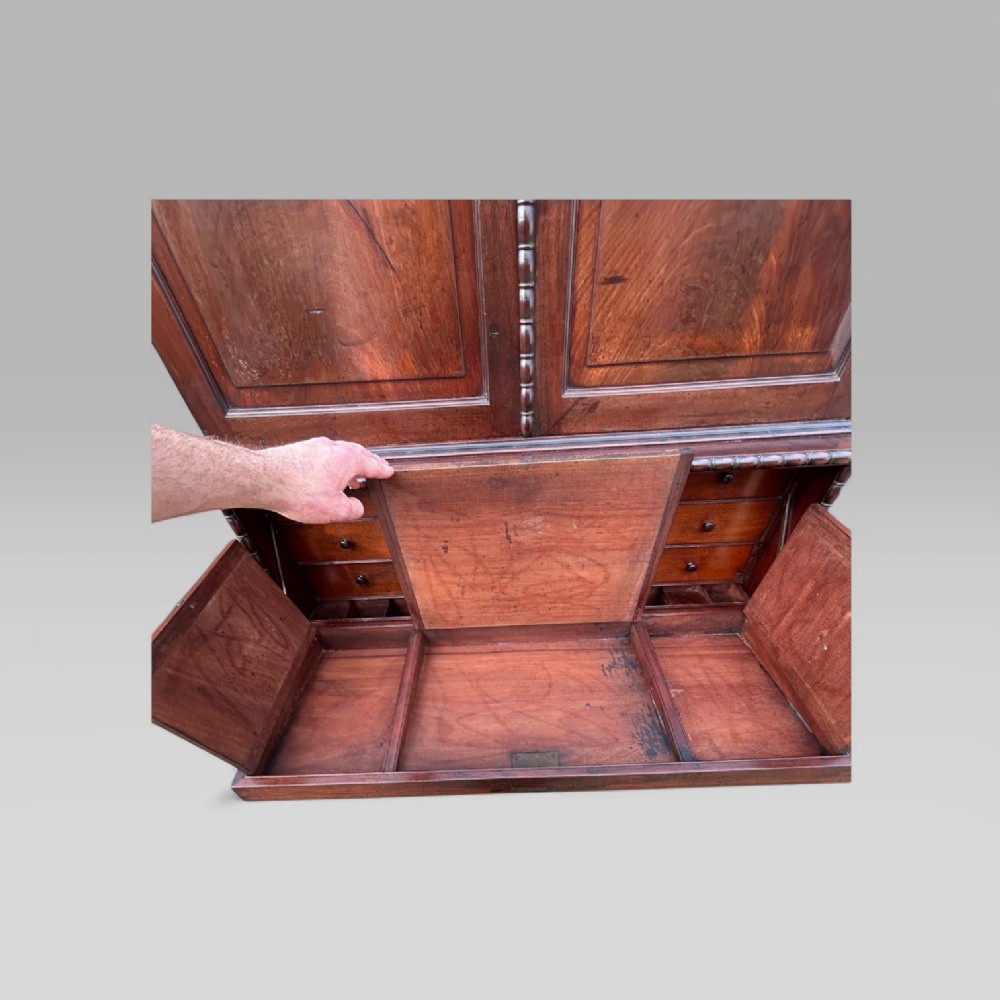
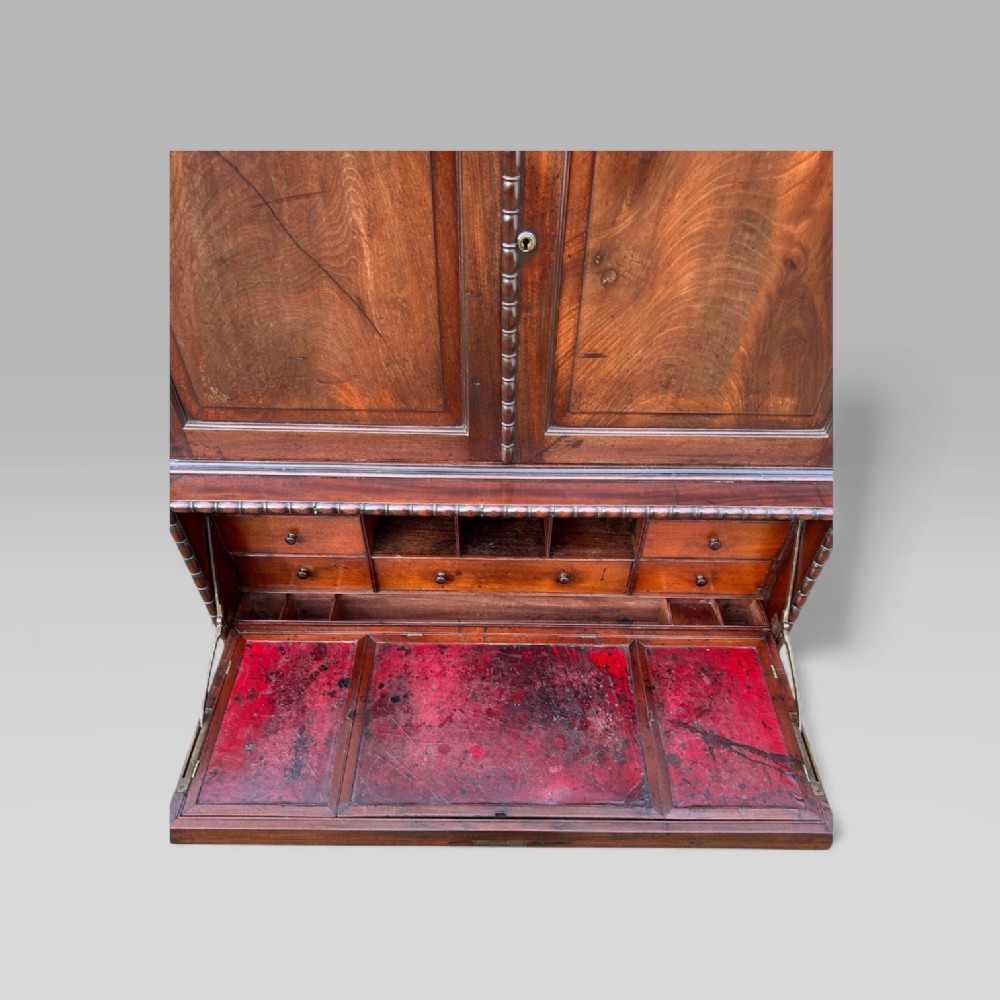
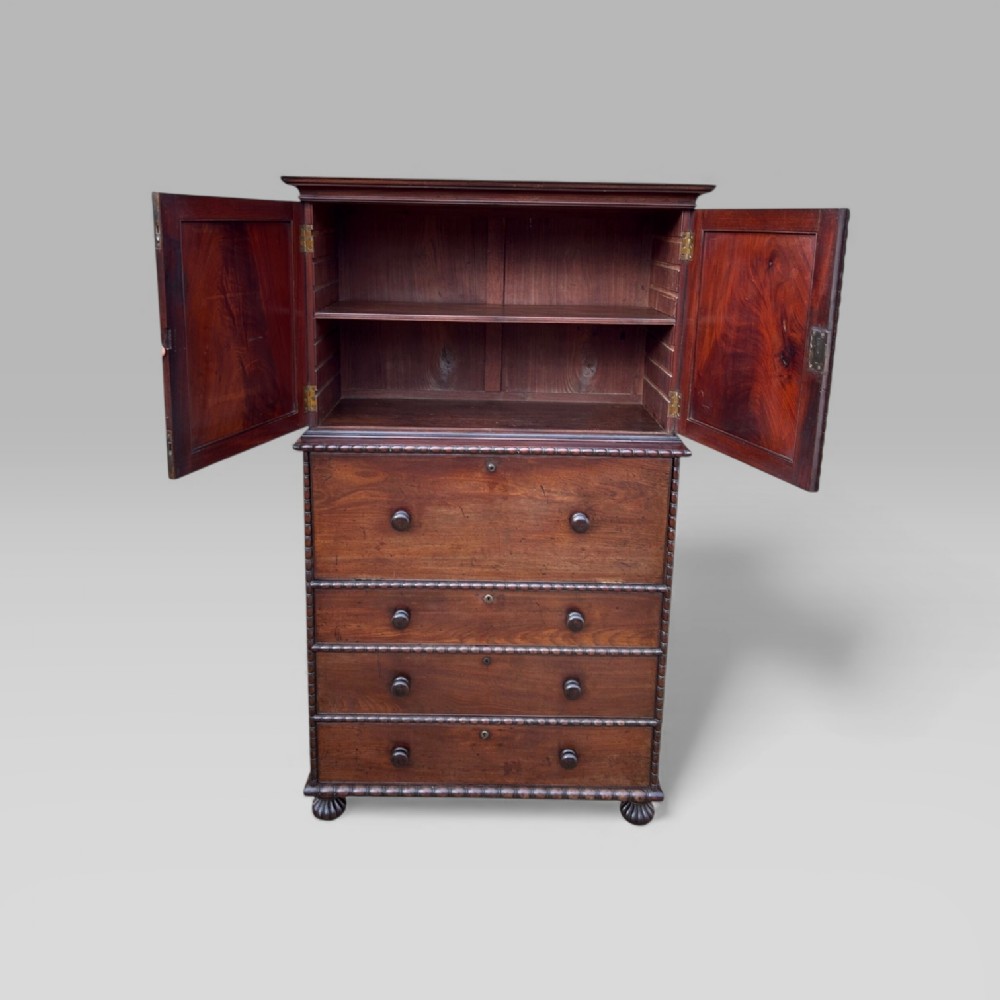
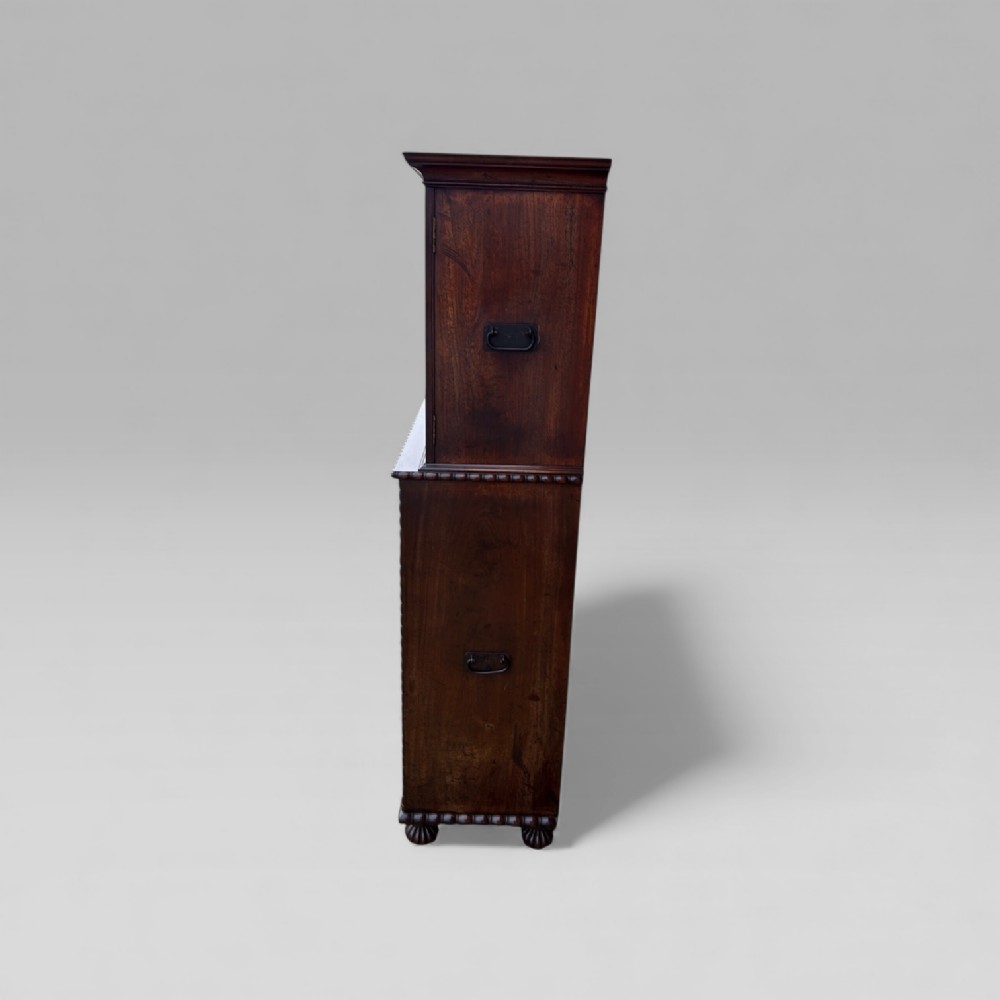
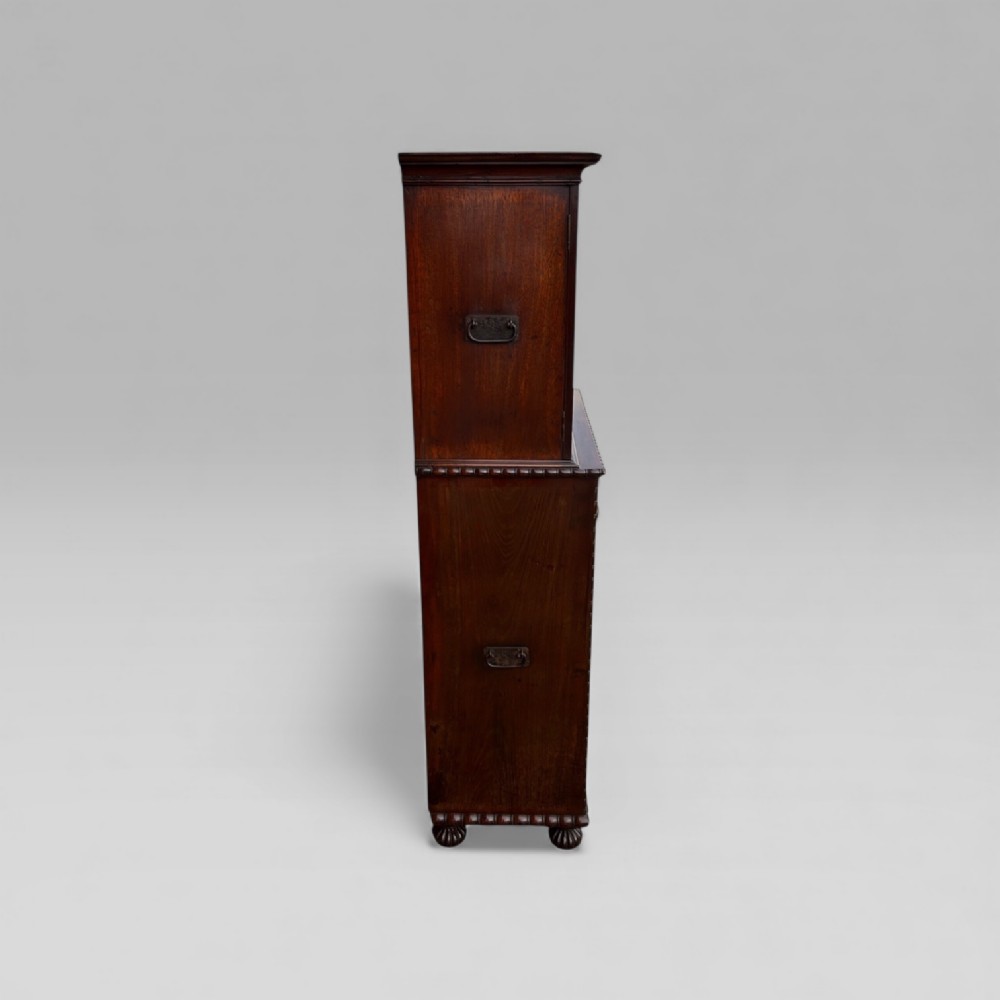
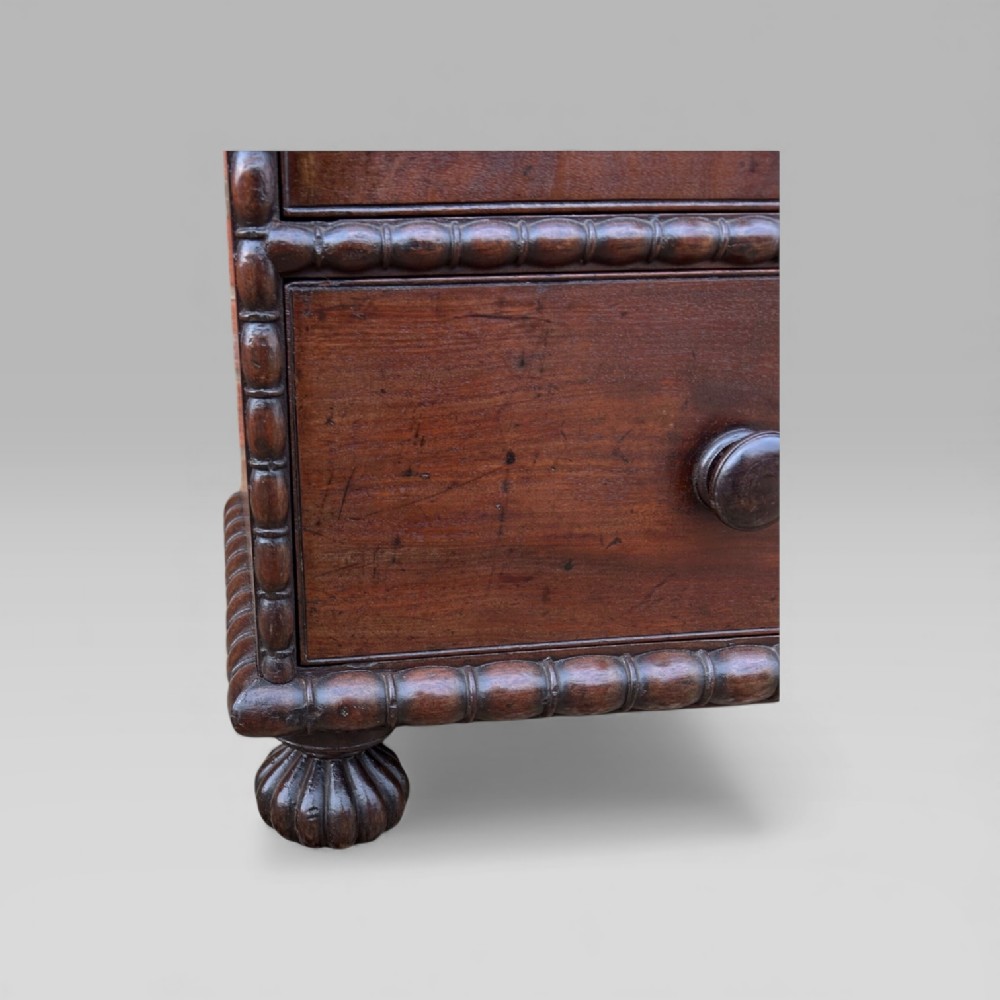
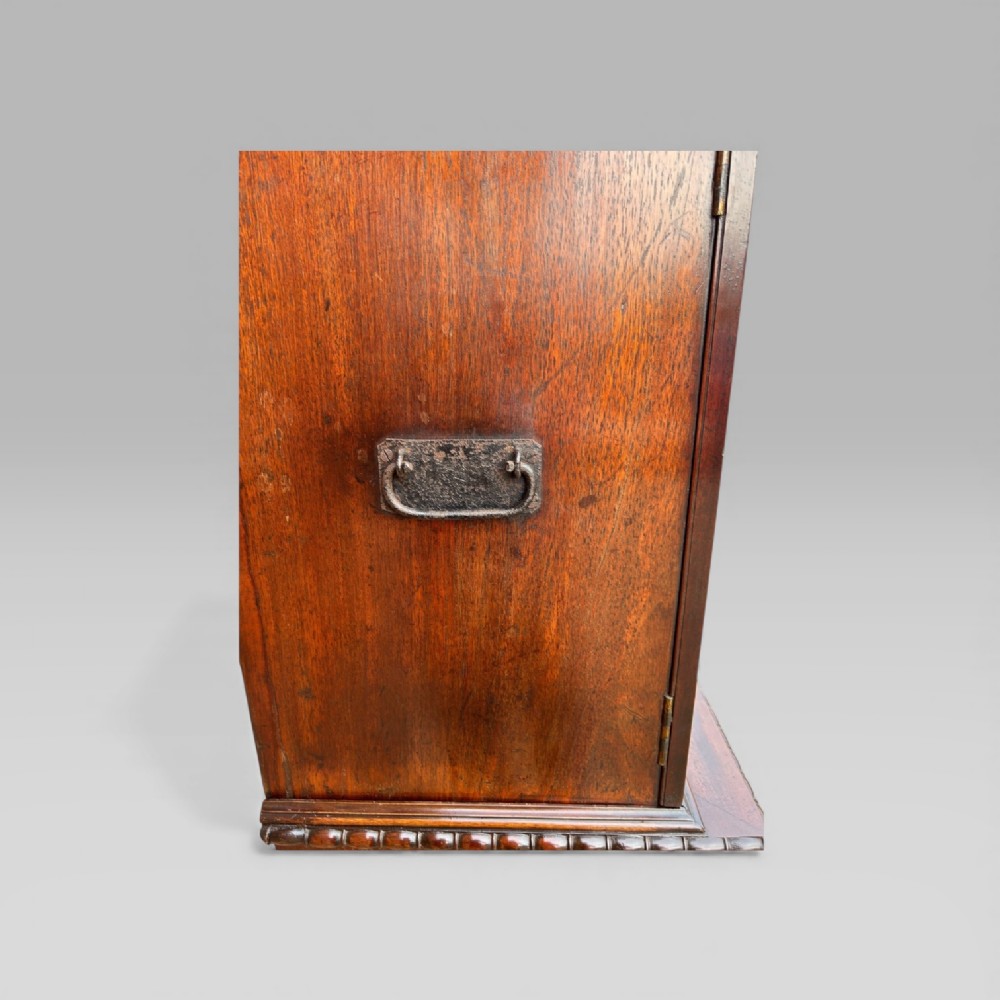
An early 19th century Padouk Anglo Indian Campaign Chest with a secretaire & cupboard. With gadrooned carved moulding detailing on all edges, gadrooned turned feet and round wooden handles. The top largest drawer, opens downwards to reveal a secretaire writing surface, pigeon holes, and drawers. The leather writing surfaces open upwards to reveal further storage space, and when the secretaire is opened a spring mechanism pushes forward a section of storage compartments. The cupboard on top opens to reveal two shelves. There are 4 handles on this piece, two on each side, this is traditional with most campaign pieces, to allow for the top cupboards and chest of drawers to be lifted and moved for ease of transportation.
Provenance:

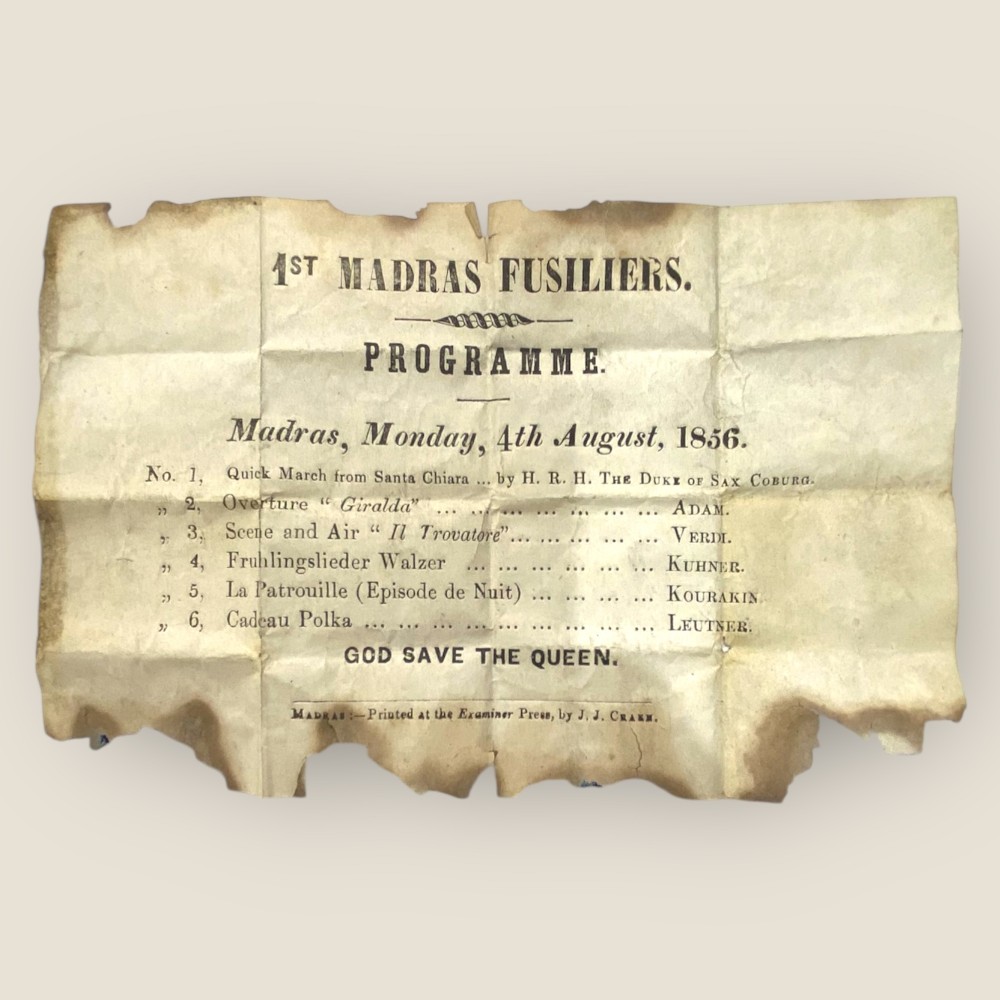
In the restoration process we discovered underneath the pigeon hole section a hollow space which had been unopened since this campaign piece was created. We opened this to find a few pieces of paper which must have slipped behind the back of the secretaire drawers and pigeon holes over its life, all pieces of paper fairly worn, aged, and some ripped. One of the pieces of paper was a a programme for a military march by 1st Madras Fusiliers in Madras on the 4th August 1856. Madras is the former name of the city of Chennai, which is the capital of the Indian state of Tamil Nadu, located on the Coromandel Coast in southern India.
1st Madras Fusiliers

The 1st Madras Fusiliers, originally the 102nd Regiment of Foot, was a regiment of the British Army raised by the East India Company in 1742, becoming the 1st Madras (European) Fusiliers in 1843.
The 102nd Regiment of Foot returned to India in 1816 and took part in the Battle of Mahidpur in December 1817 during the Third Anglo-Maratha War. It was deployed to Burma in 1824 for service in the First Anglo-Burmese War: it formed part of an army which advanced up the River Irrawaddy to the Kingdom of Ava. It returned to India arriving in Madras in 1826. It transferred to Malacca in 1835 and became the 1st Madras (European) Fusiliers in 1843. After returning to India in early 1852 it was deployed to the Province of Pegu in April 1852 during the Second Anglo-Burmese War.
The regiment fought at the siege and relief of Lucknow in November 1857 during the Indian Rebellion. Three members of the regiment were awarded the Victoria Cross for their actions during the siege. After the Crown took control of the Presidency armies in the aftermath of the Rebellion, the regiment became the 1st Madras Fusiliers in July 1858 and then the 1st Royal Madras Fusiliers in May 1861. It was then renumbered as the 102nd Regiment of Foot (Royal Madras Fusiliers) on transfer to the British Army in September 1862. The regiment embarked for England in 1870 and was then deployed to Gibraltar in April 1876 and to Ceylon in 1879.
As part of the Cardwell Reforms of the 1870s, where single-battalion regiments were linked together to share a single depot and recruiting district in the United Kingdom, the 102nd was linked with the 103rd Regiment of Foot (Royal Bombay Fusiliers), and assigned to district no. 66 at Naas Barracks in County Kildare. On 1 July 1881 the Childers Reforms came into effect and the regiment amalgamated with the 103rd Regiment of Foot (Royal Bombay Fusiliers) to form the Royal Dublin Fusiliers.
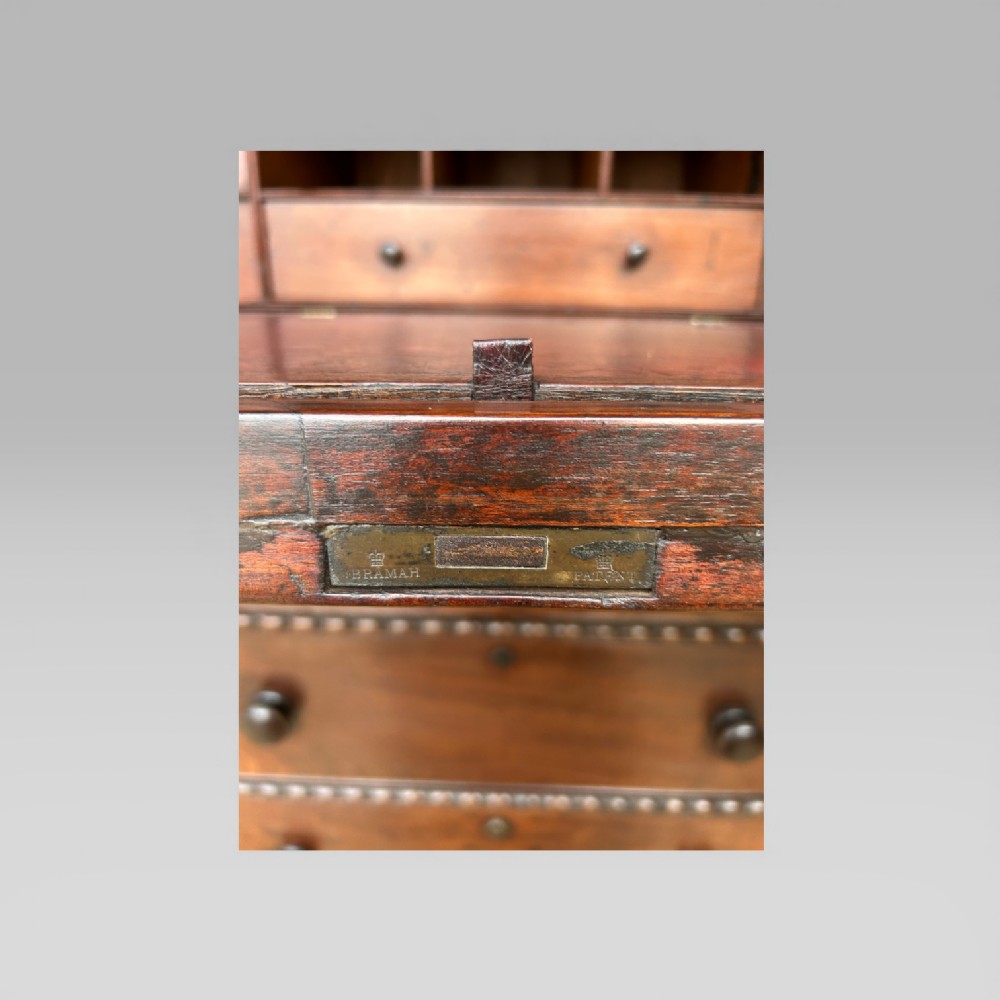
Charles Chubb (1779 – 1845) opened a hardware business in Winchester before moving, with his brother, Jeremiah, to Portsea, in 1804. He opened the company’s London Office at 57 St. Paul’s Churchyard in 1820 and by 1823 had been awarded a special licence by George IV and had become the sole supplier of locks to the General Post Office and to Her Majesty’s Prison Service. In 1851, he designed a special secure display case for the Koh-I-Noor diamond for its appearance at The Great Exhibition, London, 1851.

Dimensions

Height - 168.5 cm

Width - 96 cm

De

Physical Dimensions
Height
168.5cm (66.34")
Width
96cm (37.80")
Depth
43cm (16.93")
Declaration

Knight Fine Antiques and Collectables has dated this piece to the 19th Century.

Reference Numbers
Sellingantiques Reference
SA1185989
Dealers Notes

Delivery:

Free UK mainland delivery (excluding Scottish islands and other UK islands).

International delivery available — please contact us or request a quote.

Description
An early 19th century Padouk Anglo Indian Campaign Chest with a secretaire & cupboard.
With gadrooned carved moulding detailing on all edges, gadrooned turned feet and round wooden handles.
Knight Fine Antiques and Collectables

The top largest drawer, opens downwards to reveal a secretaire writing surface, pigeon holes, and drawers. The leather writing surfaces open upwards to reveal further storage space, and when the secretaire is opened a spring mechanism pushes forward a section of storage compartments. The cupboard on top opens to reveal two shelves. There are 4 handles on this piece, two on each side, this is traditional with most campaign pieces, to allow for the top cupboards and chest of drawers to be lifted and moved for ease of transportation.

fig 1. Antique 19th Century Padouk Anglo-Indian Campaign Secretaire Chest & Cupboard
fig 1. Antique 19th Century Padouk Anglo-indian Campaign Secretaire Chest & Cupboard

Provenance:

In the restoration process we discovered underneath the pigeon hole section a hollow space which had been unopened since this campaign piece was created. We opened this to find a few pieces of paper which must have slipped behind the back of the secretaire drawers and pigeon holes over its life, all pieces of paper fairly worn, aged, and some ripped. One of the pieces of paper was a a programme for a military march by 1st Madras Fusiliers in Madras on the 4th August 1856. Madras is the former name of the city of Chennai, which is the capital of the Indian state of Tamil Nadu, located on the Coromandel Coast in southern India.

fig 2. Antique 19th Century Padouk Anglo-Indian Campaign Secretaire Chest & Cupboard
fig 2. Antique 19th Century Padouk Anglo-indian Campaign Secretaire Chest & Cupboard

1st Madras Fusiliers

The 1st Madras Fusiliers, originally the 102nd Regiment of Foot, was a regiment of the British Army raised by the East India Company in 1742, becoming the 1st Madras (European) Fusiliers in 1843.

fig 3. Antique 19th Century Padouk Anglo-Indian Campaign Secretaire Chest & Cupboard
fig 3. Antique 19th Century Padouk Anglo-indian Campaign Secretaire Chest & Cupboard

The 102nd Regiment of Foot returned to India in 1816 and took part in the Battle of Mahidpur in December 1817 during the Third Anglo-Maratha War. It was deployed to Burma in 1824 for service in the First Anglo-Burmese War: it formed part of an army which advanced up the River Irrawaddy to the Kingdom of Ava. It returned to India arriving in Madras in 1826. It transferred to Malacca in 1835 and became the 1st Madras (European) Fusiliers in 1843. After returning to India in early 1852 it was deployed to the Province of Pegu in April 1852 during the Second Anglo-Burmese War.

fig 4. Antique 19th Century Padouk Anglo-Indian Campaign Secretaire Chest & Cupboard
fig 4. Antique 19th Century Padouk Anglo-indian Campaign Secretaire Chest & Cupboard

The regiment fought at the siege and relief of Lucknow in November 1857 during the Indian Rebellion. Three members of the regiment were awarded the Victoria Cross for their actions during the siege. After the Crown took control of the Presidency armies in the aftermath of the Rebellion, the regiment became the 1st Madras Fusiliers in July 1858 and then the 1st Royal Madras Fusiliers in May 1861. It was then renumbered as the 102nd Regiment of Foot (Royal Madras Fusiliers) on transfer to the British Army in September 1862. The regiment embarked for England in 1870 and was then deployed to Gibraltar in April 1876 and to Ceylon in 1879.

fig 5. Antique 19th Century Padouk Anglo-Indian Campaign Secretaire Chest & Cupboard
fig 5. Antique 19th Century Padouk Anglo-indian Campaign Secretaire Chest & Cupboard

As part of the Cardwell Reforms of the 1870s, where single-battalion regiments were linked together to share a single depot and recruiting district in the United Kingdom, the 102nd was linked with the 103rd Regiment of Foot (Royal Bombay Fusiliers), and assigned to district no. 66 at Naas Barracks in County Kildare. On 1 July 1881 the Childers Reforms came into effect and the regiment amalgamated with the 103rd Regiment of Foot (Royal Bombay Fusiliers) to form the Royal Dublin Fusiliers.

fig 6. Antique 19th Century Padouk Anglo-Indian Campaign Secretaire Chest & Cupboard
fig 6. Antique 19th Century Padouk Anglo-indian Campaign Secretaire Chest & Cupboard

Charles Chubb (1779 – 1845) opened a hardware business in Winchester before moving, with his brother, Jeremiah, to Portsea, in 1804. He opened the company’s London Office at 57 St. Paul’s Churchyard in 1820 and by 1823 had been awarded a special licence by George IV and had become the sole supplier of locks to the General Post Office and to Her Majesty’s Prison Service. In 1851, he designed a special secure display case for the Koh-I-Noor diamond for its appearance at The Great Exhibition, London, 1851.

Dimensions

Height - 168.5 cm

Width - 96 cm

De

Height
168.5cm (66.34")
Width
96cm (37.80")
Depth
43cm (16.93")
Date of Manufacture

Knight Fine Antiques and Collectables has dated this piece to the 19th Century.

Reference Numbers
Sellingantiques Ref
SA1185989
Knight Fine Antiques and Collectables
Sellingantiques verified Since Aug 2024
Dealer Profile

You can view the stock and full dealer information on the Knight Fine Antiques and Collectables Profile Page
PDF SHARE
SAVE
Antique 19th Century Padouk Anglo-Indian Campaign Secretaire Chest & Cupboard
1 / 13
Archive I Antique 19th Century Padouk Anglo-Indian Campaign Secretaire Chest & Cupboard
Antique 19th Century Padouk Anglo-indian Campaign Secretaire Chest & Cupboard
Archive II Antique 19th Century Padouk Anglo-Indian Campaign Secretaire Chest & Cupboard View II
Archive III Antique 19th Century Padouk Anglo-Indian Campaign Secretaire Chest & Cupboard View III
Archive IV Antique 19th Century Padouk Anglo-Indian Campaign Secretaire Chest & Cupboard View IV
Archive V Antique 19th Century Padouk Anglo-Indian Campaign Secretaire Chest & Cupboard View V
Archive VI Antique 19th Century Padouk Anglo-Indian Campaign Secretaire Chest & Cupboard View VI
Archive VII Antique 19th Century Padouk Anglo-Indian Campaign Secretaire Chest & Cupboard View VII
Archive VIII Antique 19th Century Padouk Anglo-Indian Campaign Secretaire Chest & Cupboard View VIII
Archive IX Antique 19th Century Padouk Anglo-Indian Campaign Secretaire Chest & Cupboard View IX
Archive X Antique 19th Century Padouk Anglo-Indian Campaign Secretaire Chest & Cupboard View X
Archive XI Antique 19th Century Padouk Anglo-Indian Campaign Secretaire Chest & Cupboard View XI
Archive XII Antique 19th Century Padouk Anglo-Indian Campaign Secretaire Chest & Cupboard View XII
Archive XIII Antique 19th Century Padouk Anglo-Indian Campaign Secretaire Chest & Cupboard View XIII
Enlarged Archival View
Telephone 01553 601578
Location
West Norfolk
United Kingdom
Verified Since Aug 2024
Items For Sale 61
Items Sold 187
Knight Fine Antiques and Collectables
Verified Since Aug 2024
View Dealer Info
Location: West Norfolk, United Kingdom
Verified
Aug 2024
For Sale
61
Sold
187
Antique 19th Century Padouk Anglo-Indian Campaign Secretaire Chest & Cupboard
Ref: SA1185989
Antique 19th Century Padouk Anglo-Indian Campaign Secretaire Chest & Cupboard
Detail View 1
Detail View 2
Detail View 3
Detail View 4
Detail View 5
Detail View 6
Detail View 7
Detail View 8
Detail View 9
Detail View 10
Detail View 11
Detail View 12
Archival Detail
Every single antique dealer on our platform is individually approved by our internal team. We verify their professional trade history, ethical standards, and photographic quality to ensure a secure, high-standard buying environment. Upon joining, every dealer agrees to a strict 9-point code of conduct. While issues can occasionally arise, our dealers typically resolve them swiftly and directly with the buyer. In fact, since our founding in 2002, Sellingantiques has only had to step in to help resolve an issue on roughly five occasions—a true testament to the quality of our dealers and their dedication to your happiness.
Our dealers are highly experienced in packing and shipping fragile, high-value antiques. Because you are in direct contact with the dealer, you will be able to easily go through all available shipping and insurance options together to ensure your item arrives safely.
Antiques are the ultimate green purchase. By choosing historical pieces over newly manufactured goods, you completely eliminate the carbon footprint of modern mass production while preserving exceptional, timeless craftsmanship.
items
Add keywords to the filter
Price
£100
£250000
Era
Movements
Material
Origin
Stock Location
Freshness
Online Payments
Categories