Brian MacDonald Antique Rugs & Carpets has dated this piece to the 1900s.
Most were made by the Afshars and Baluchis but another area where the most striking bread sofrehs were made was Kamo, a village in the rural district of Joshaqan and in the district of Meymeh in central Persia or Iran.
These fabulous flatweaves first appeared in the Tehran bazaar in the latter part of the 1980s and were only brought to the attention of collectors and dealers in the West in the early 1990s by the knowledgeable Iranian expert on tribal life, Parviz Tanavoli.
Kamo bread sofrehs are woven art and on a wall, they make a powerful and exciting statement. The earliest of these sofrehs appear to be from the second half nineteenth century through to the 1940s when this art form started to die out, due to machine-made being imported from the West.
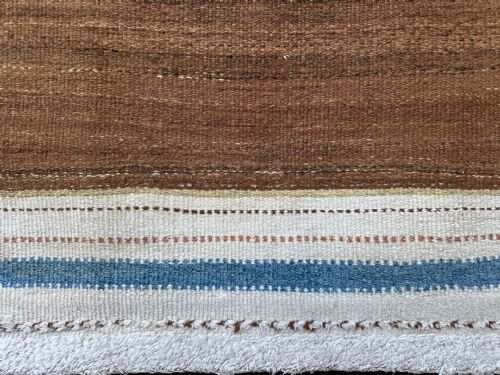
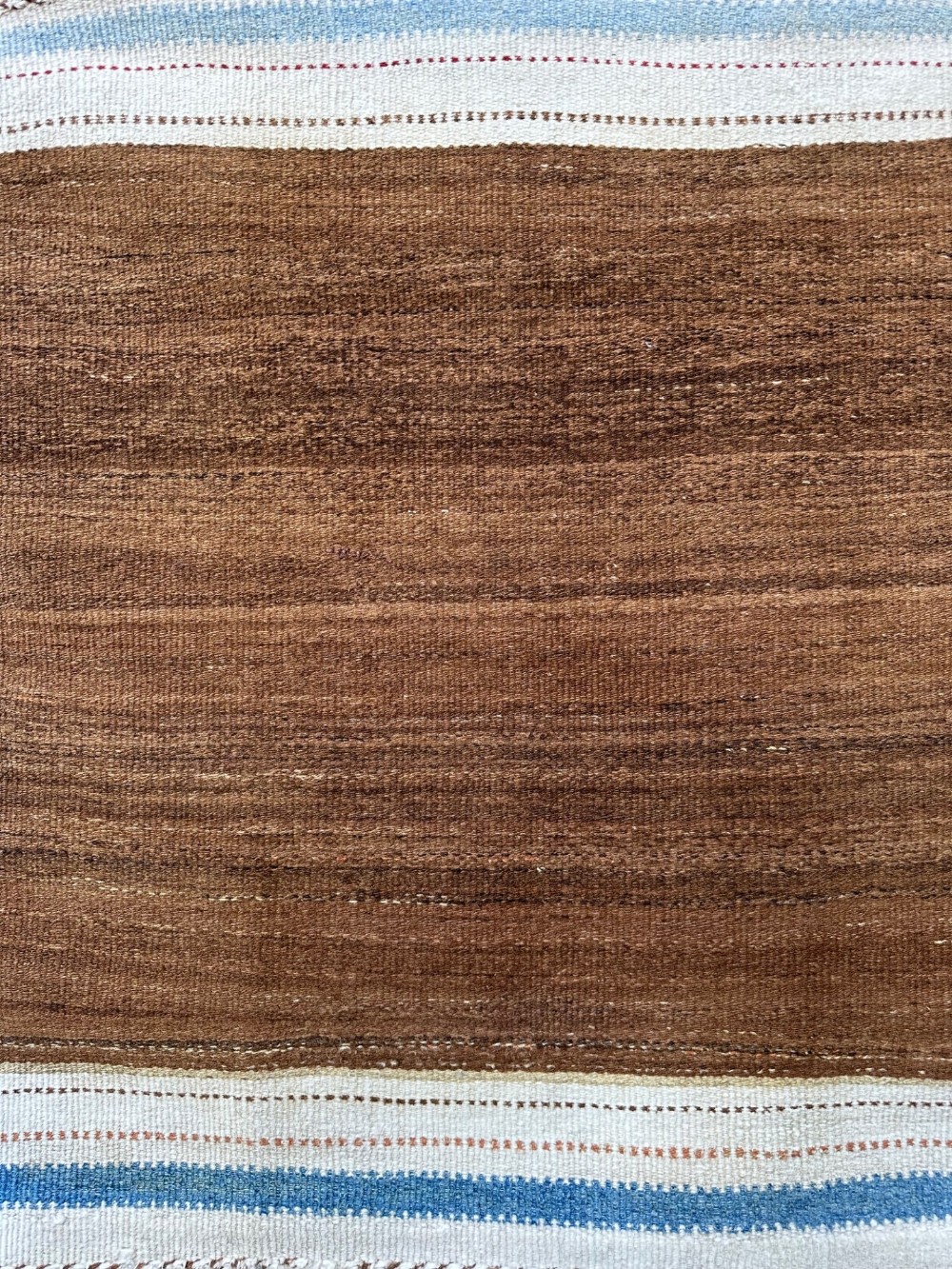
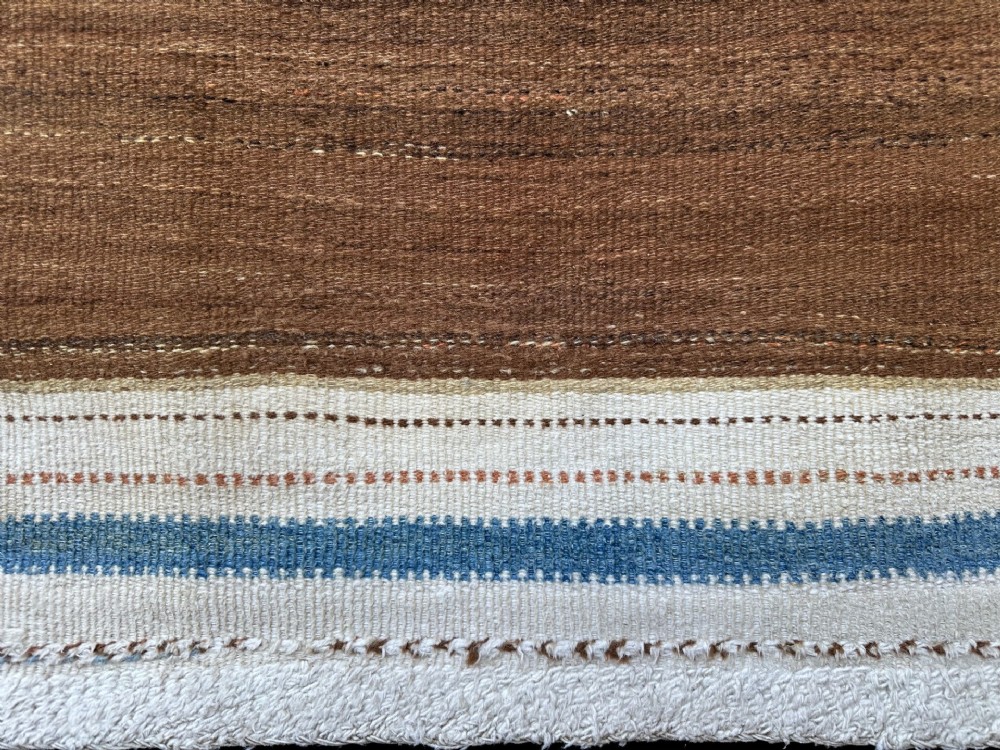
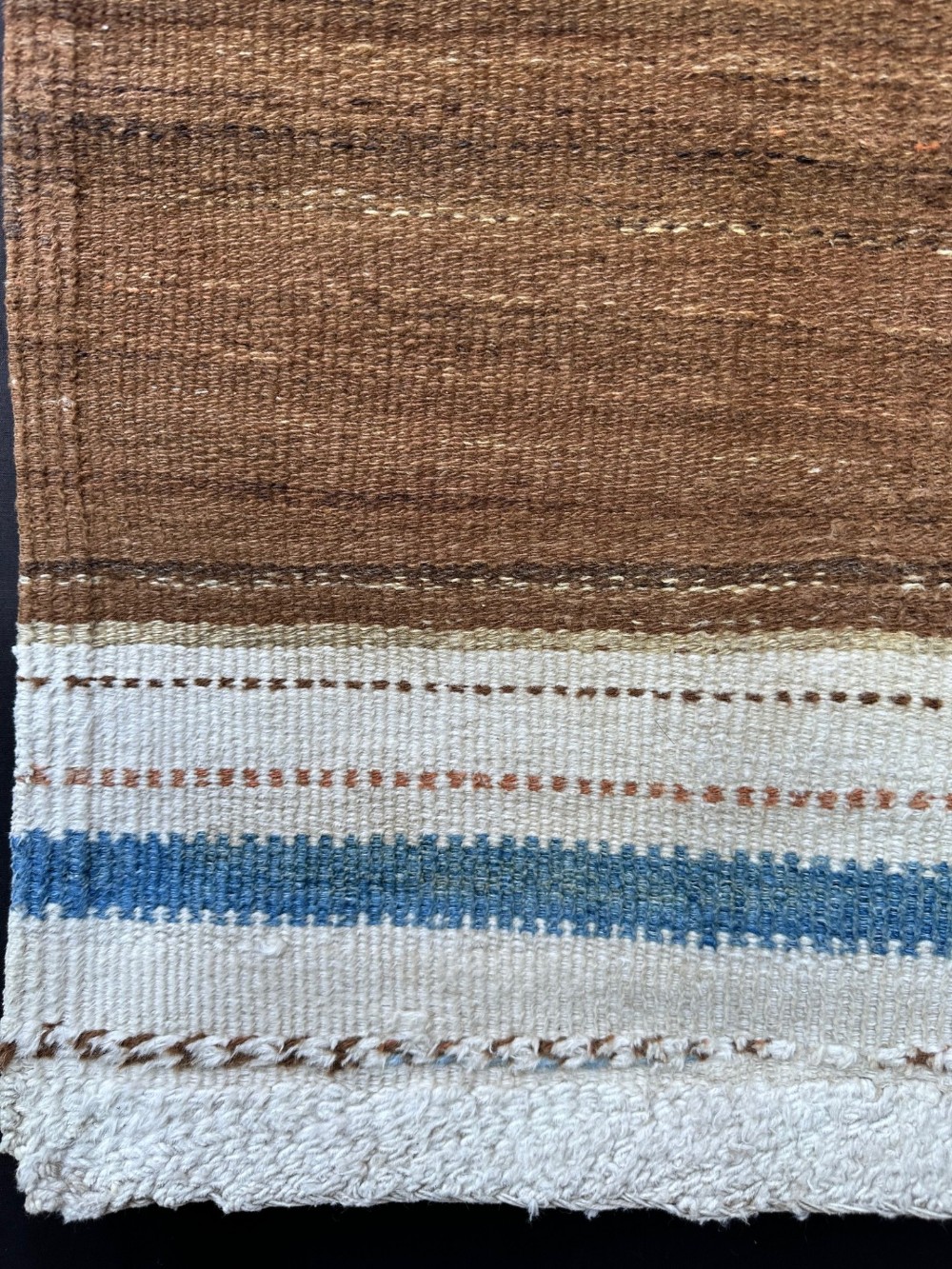
This stunning sofreh, from circa 1900, has a beautiful, striation of natural camel-hair in the central field with end panels in ivory cotton.
For further information on the sofreh of Kamo, see Parviz Tanavoli's book entitled 'The Sofreh of Kamo'.
Size: 1.00 x 0.88m (3' 3" x 2' 11")
Brian MacDonald Antique Rugs & Carpets has dated this piece to the 1900s.
Dealing in antique and old tribal rugs, dowry weavings and decorative carpets from the near east and central asia since 1979.
You can view the stock and full dealer information on the Brian MacDonald Antique Rugs & Carpets Profile Page
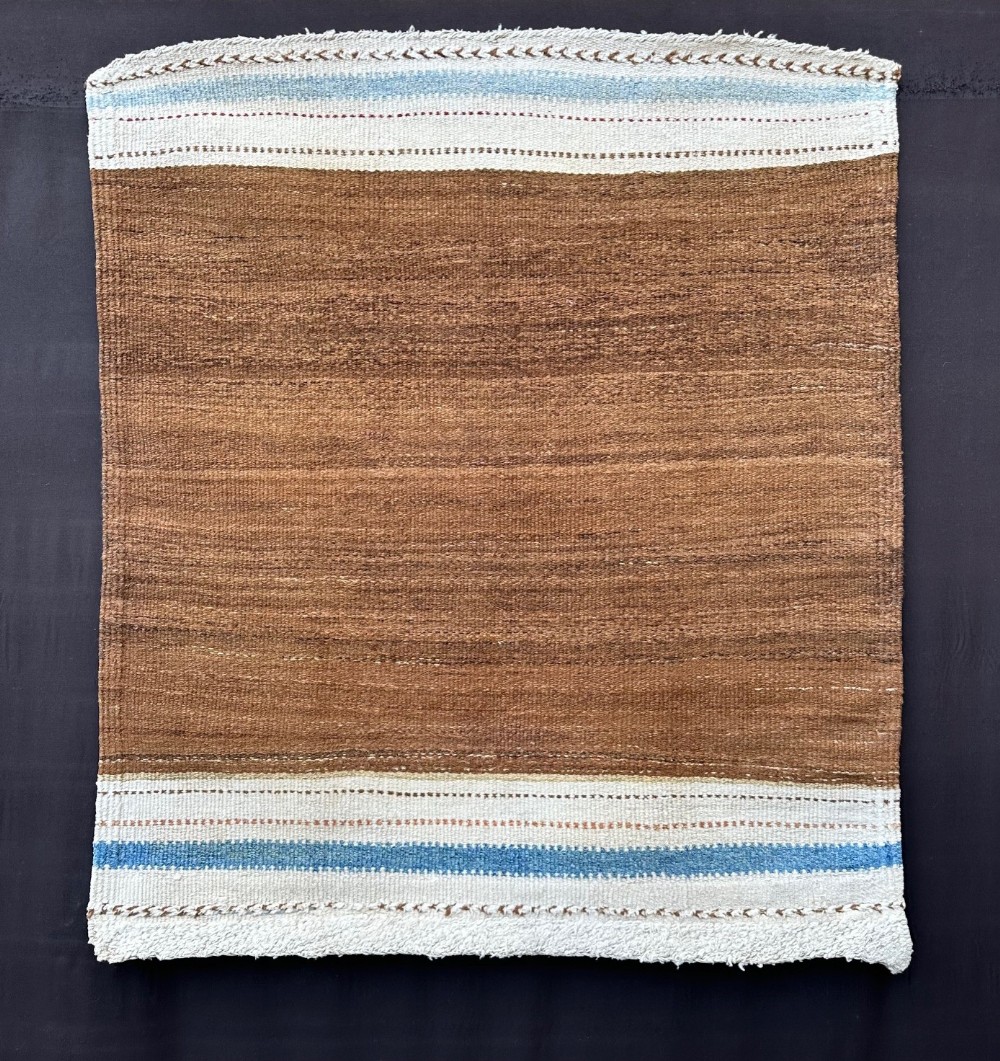
Antique Bread Sofreh, Kamo, Central Persia.