60,930  PAGES BROWSED TODAY PAGES TODAY 0  ANTIQUES UPLOADED TODAY NEW ARRIVALS
ID #SA1179487
FOR SALE
£18,000
Email
Save
Classical Grand Tour French Bronze Group – Call of the Triton Conch sea Putti, After Clodion (C.1820)
Cheshire Antiques Consultant Ltd
for sale €21,060     $22,860
£18,000
Cheshire Antiques Consultant Ltd

Cheshire Antiques Consultant Ltd

Sellingantiques Verified Since Jan 2021
View Dealers Stock Page
  • About Us
    Source the historic in 17th, 18th, 19th & 20th century fine arts, painting, sculptures & collectibles
Id #SA1179487
PDF SHARE
SAVE

Classical Grand Tour French Bronze Group – Call of the Triton Conch sea Putti, After Clodion (C.1820)

18th century
Description

Classical Grand Tour French Bronze Group – “Call of the Triton Conch”

Sea Putti, After Clodion (c.1820) – In the Manner of Gonon Frères, Paris

Description
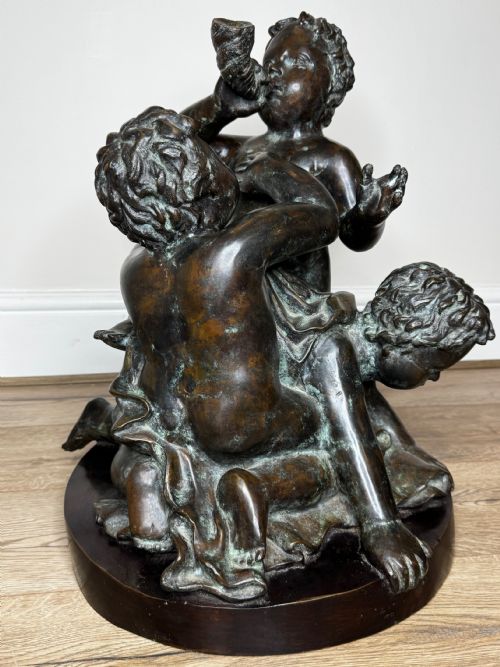
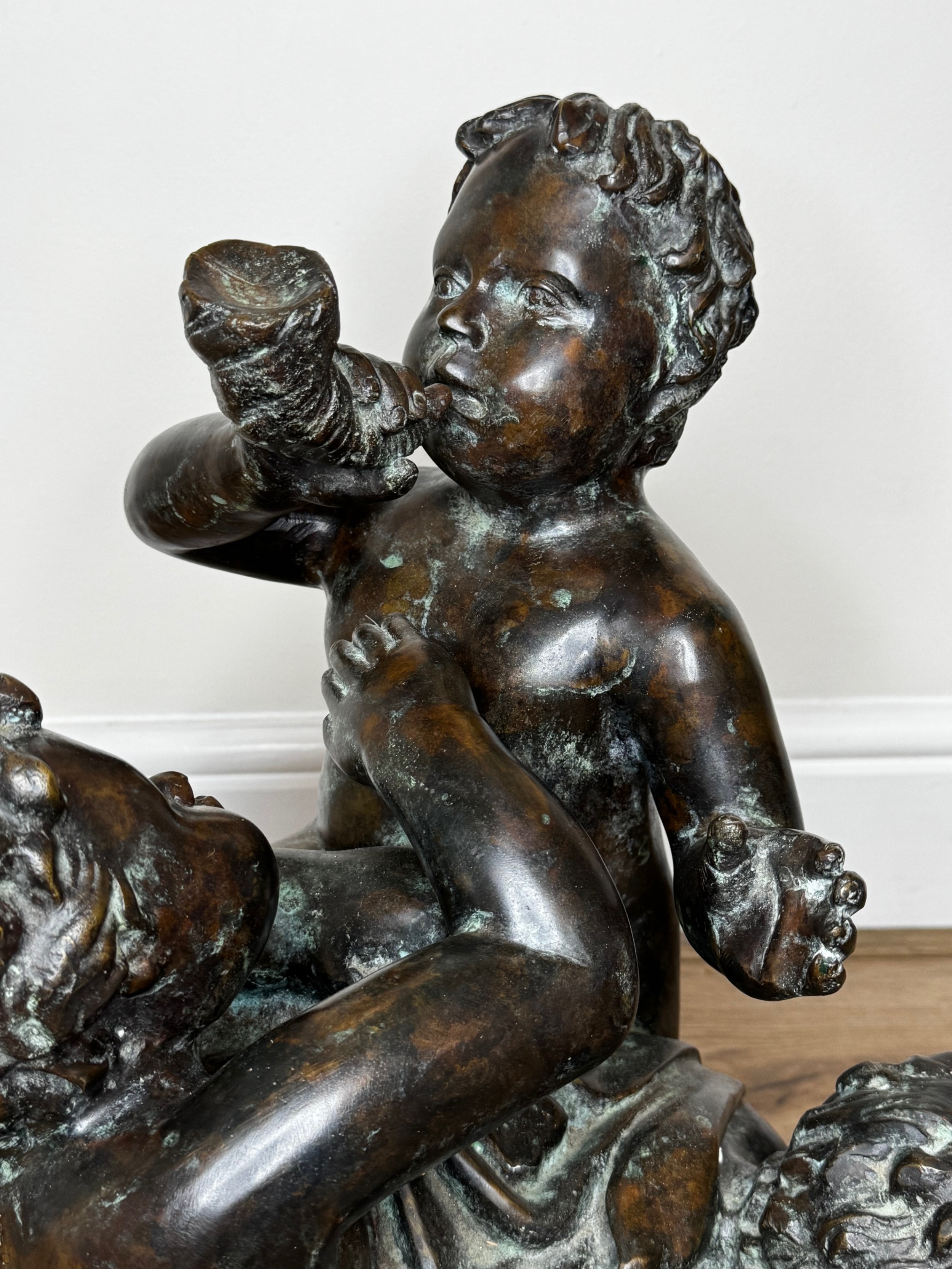
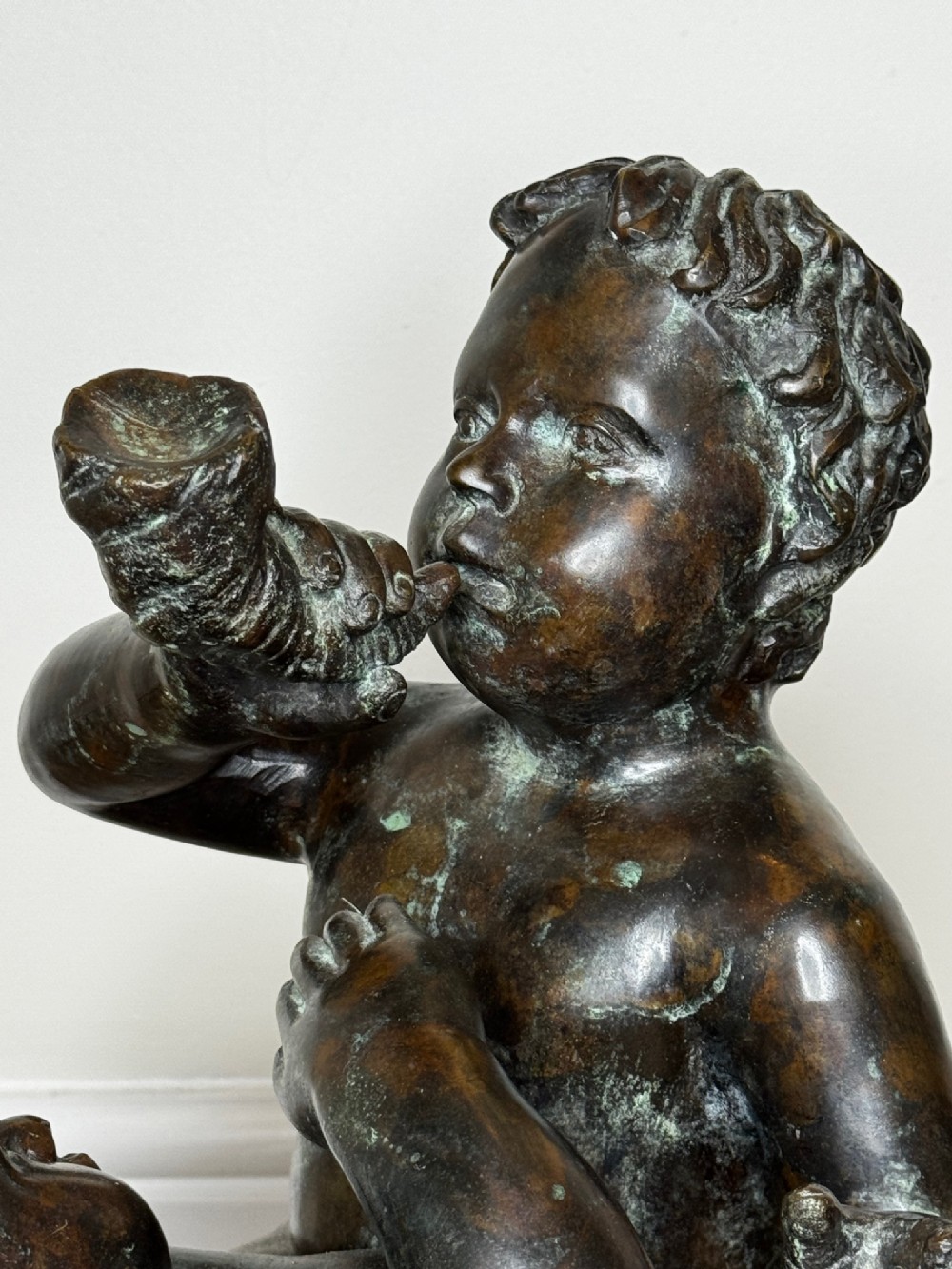
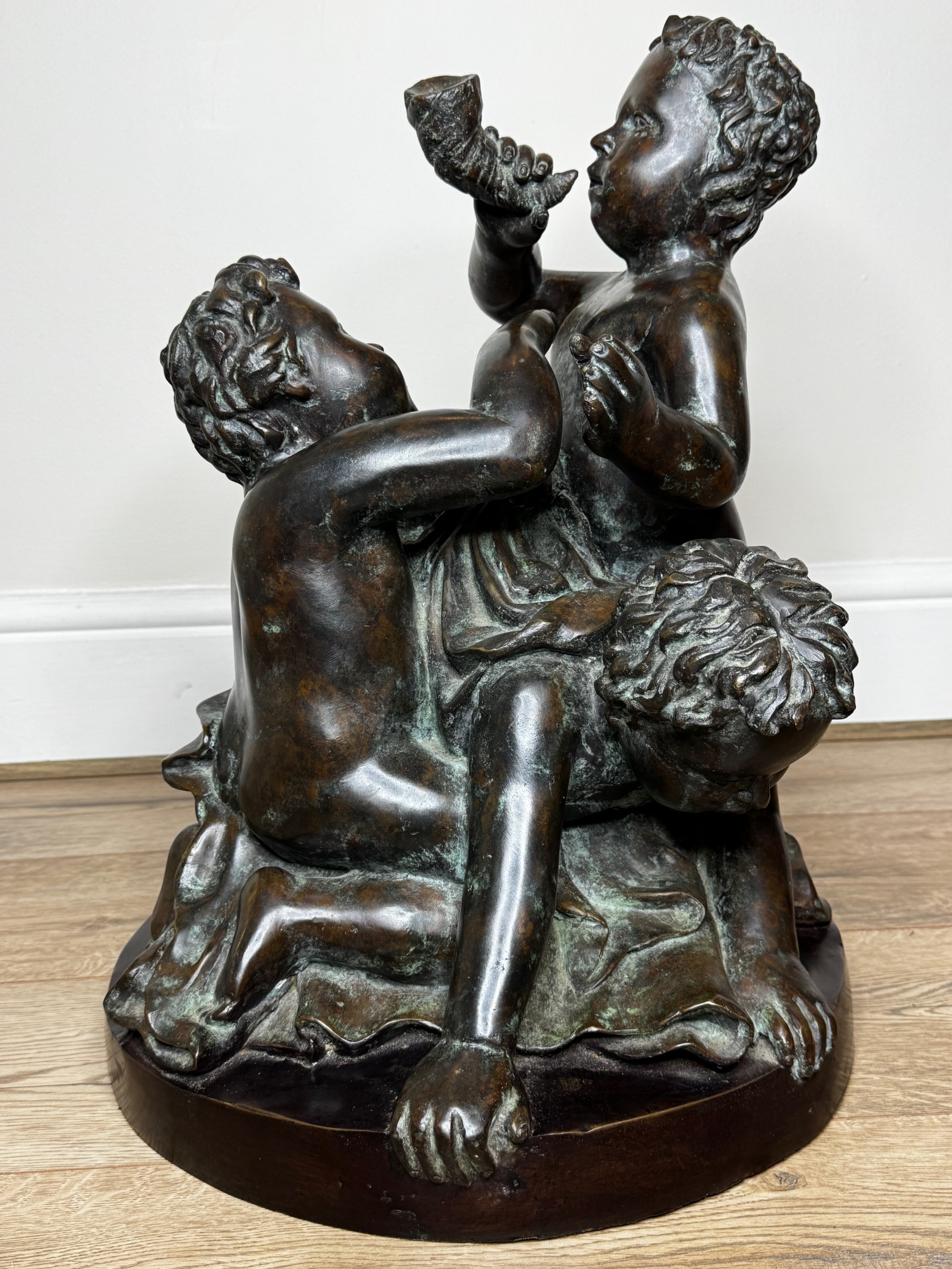
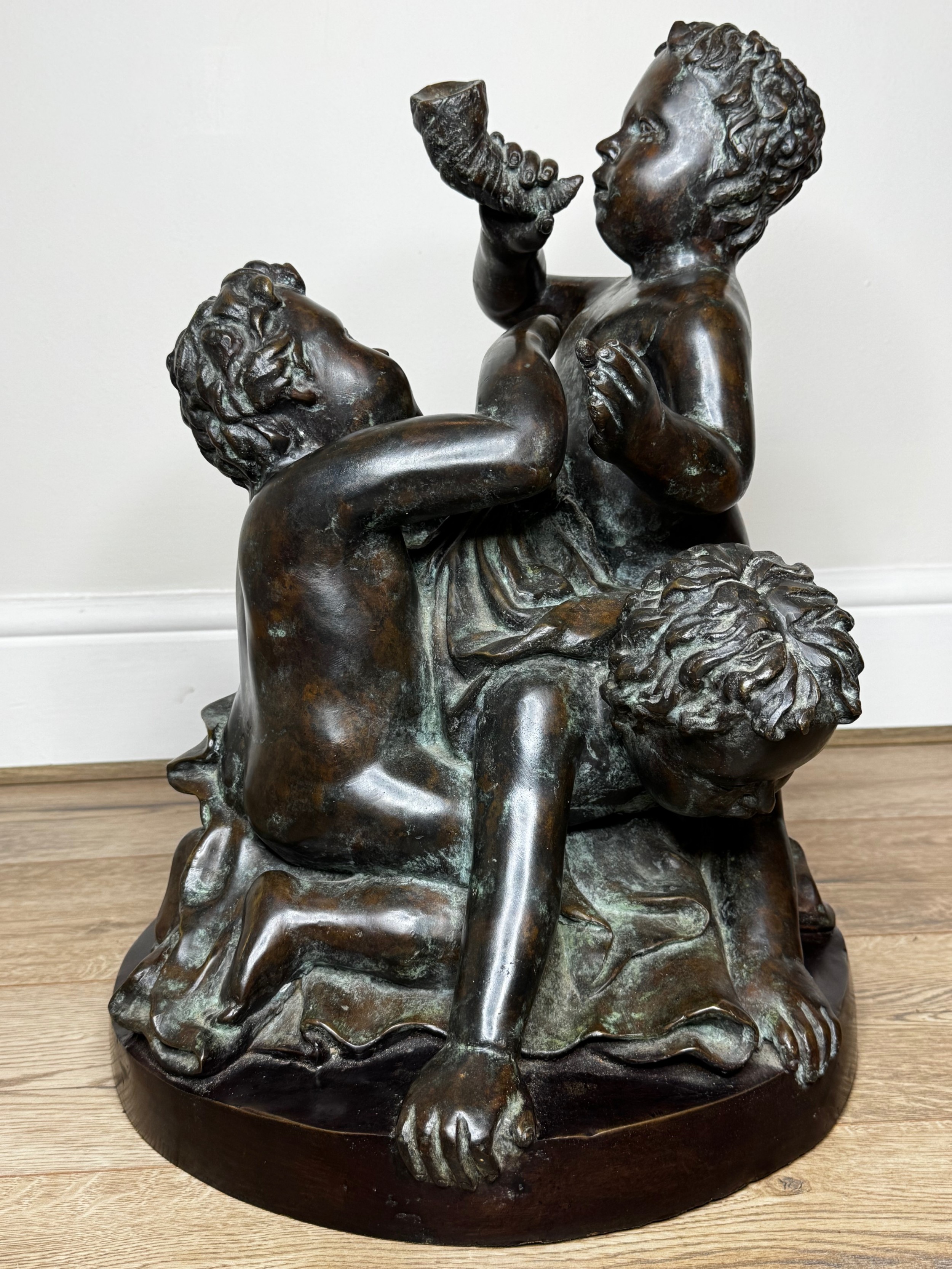
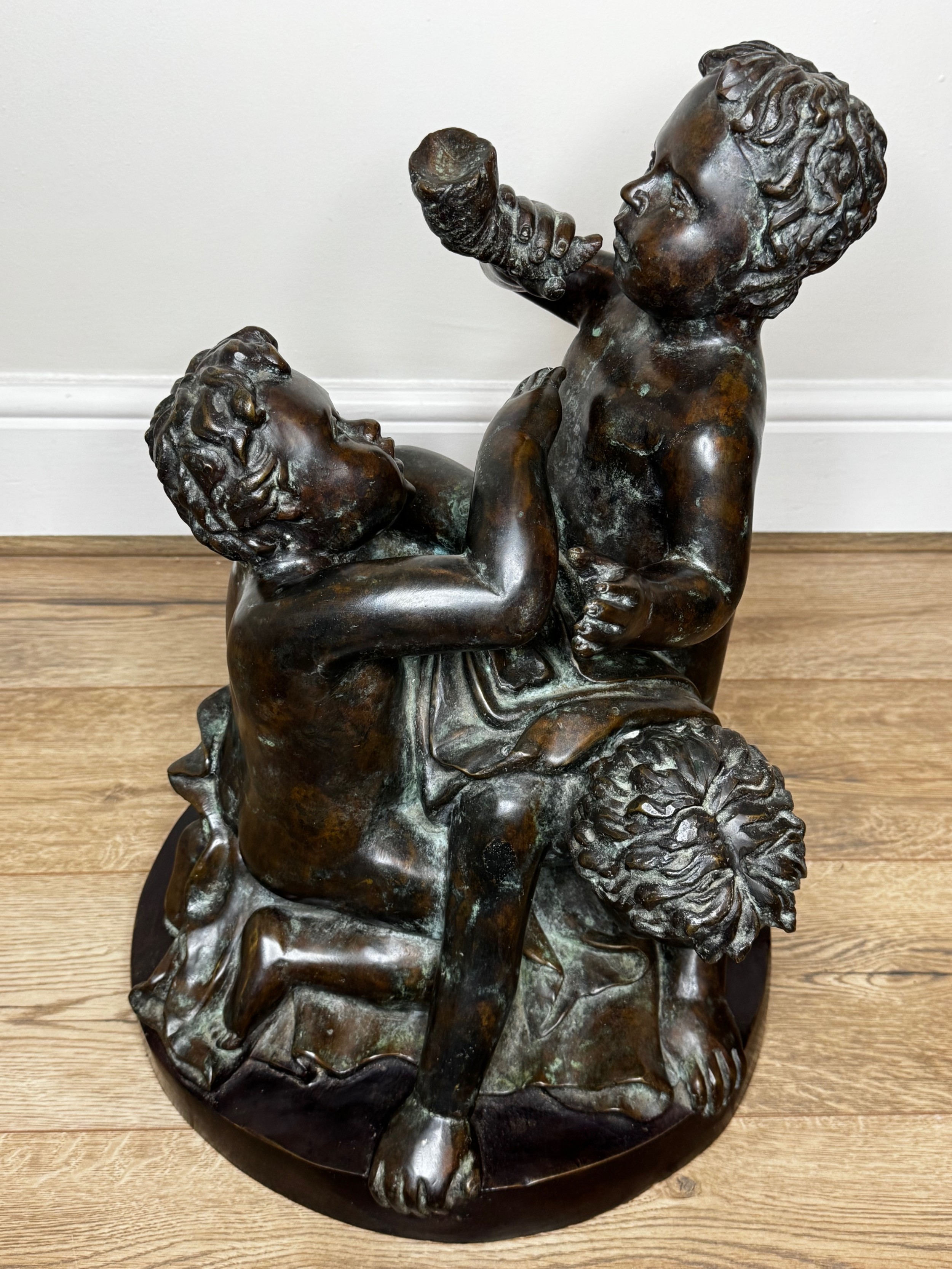
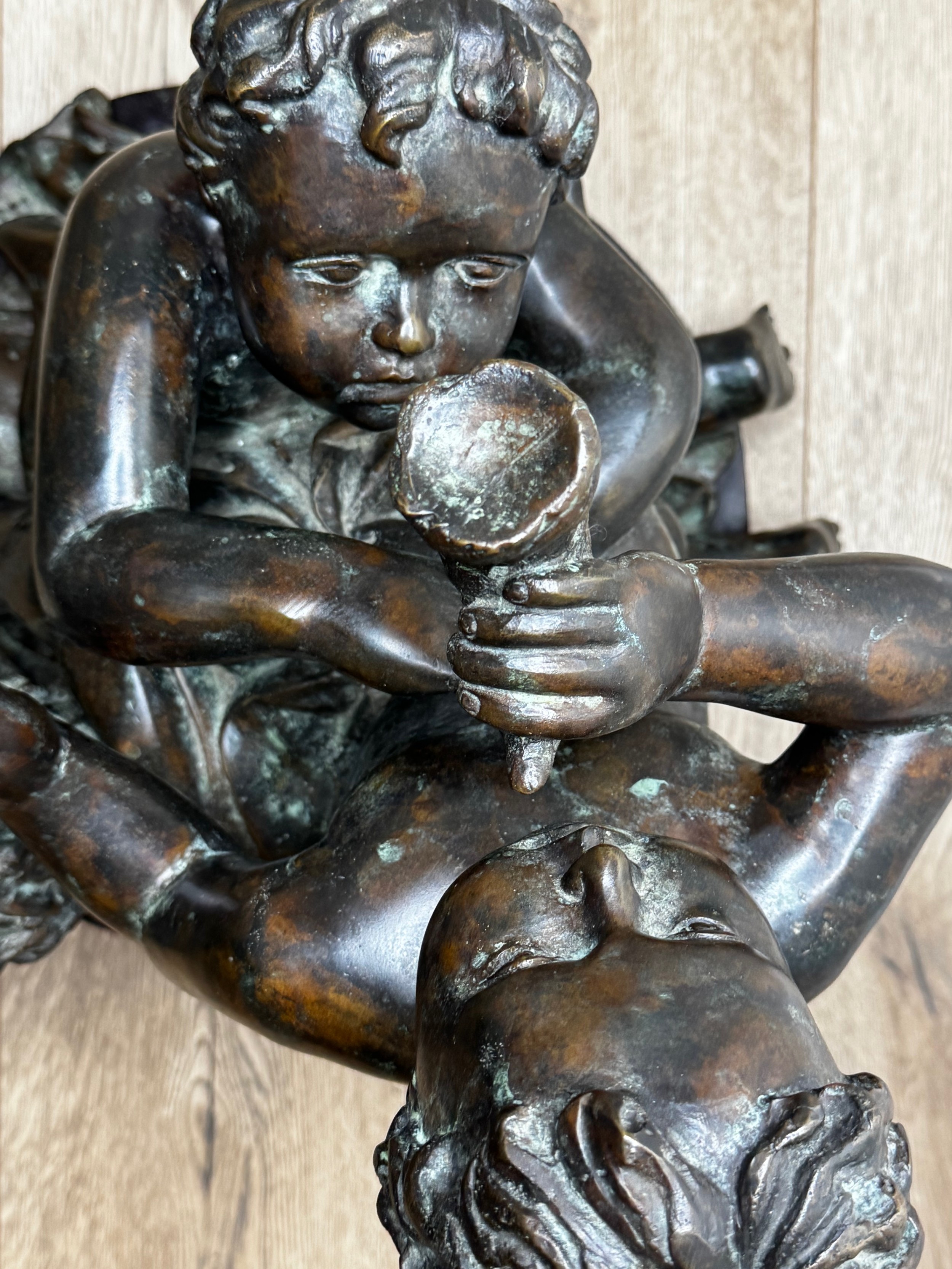
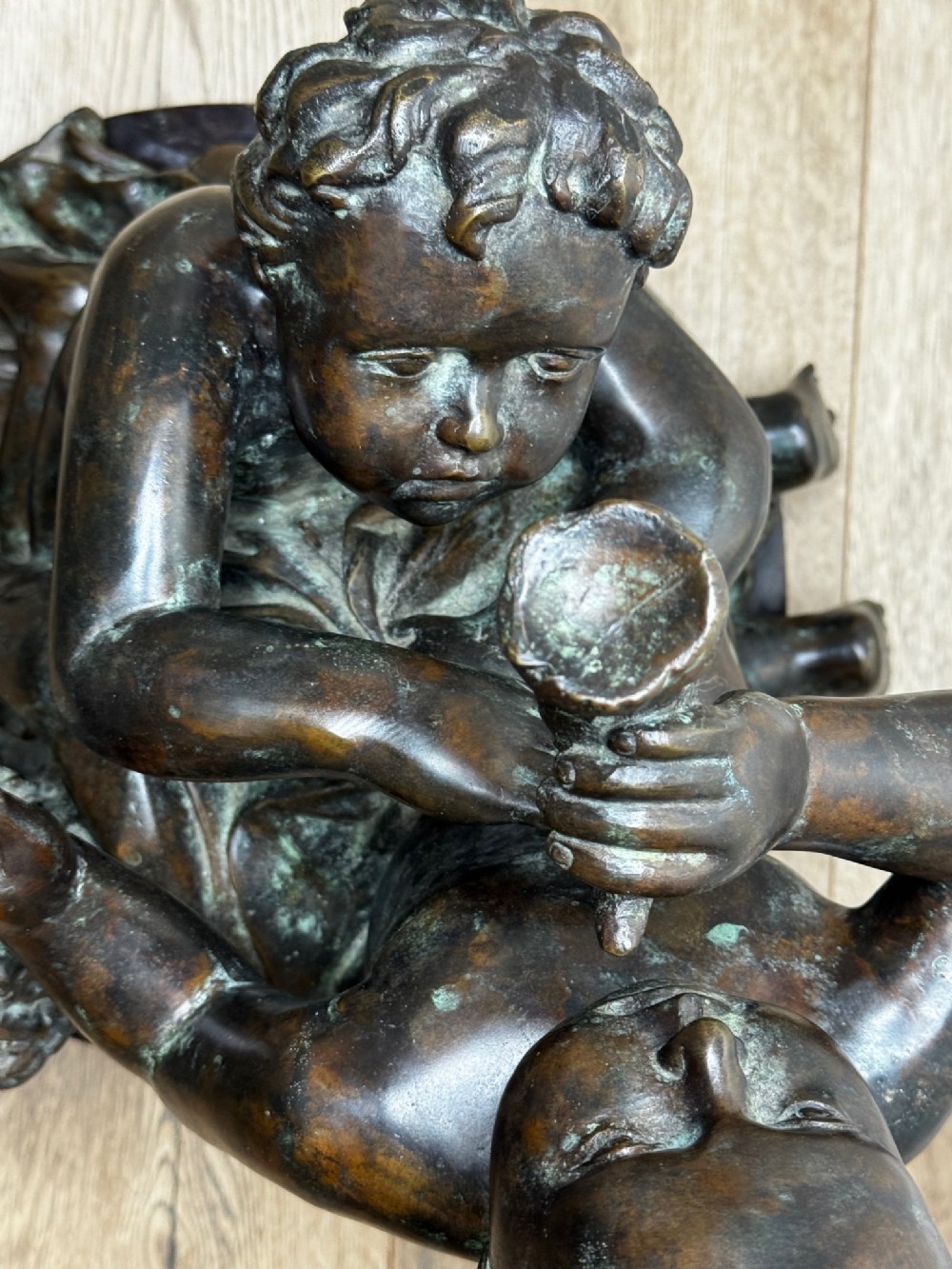
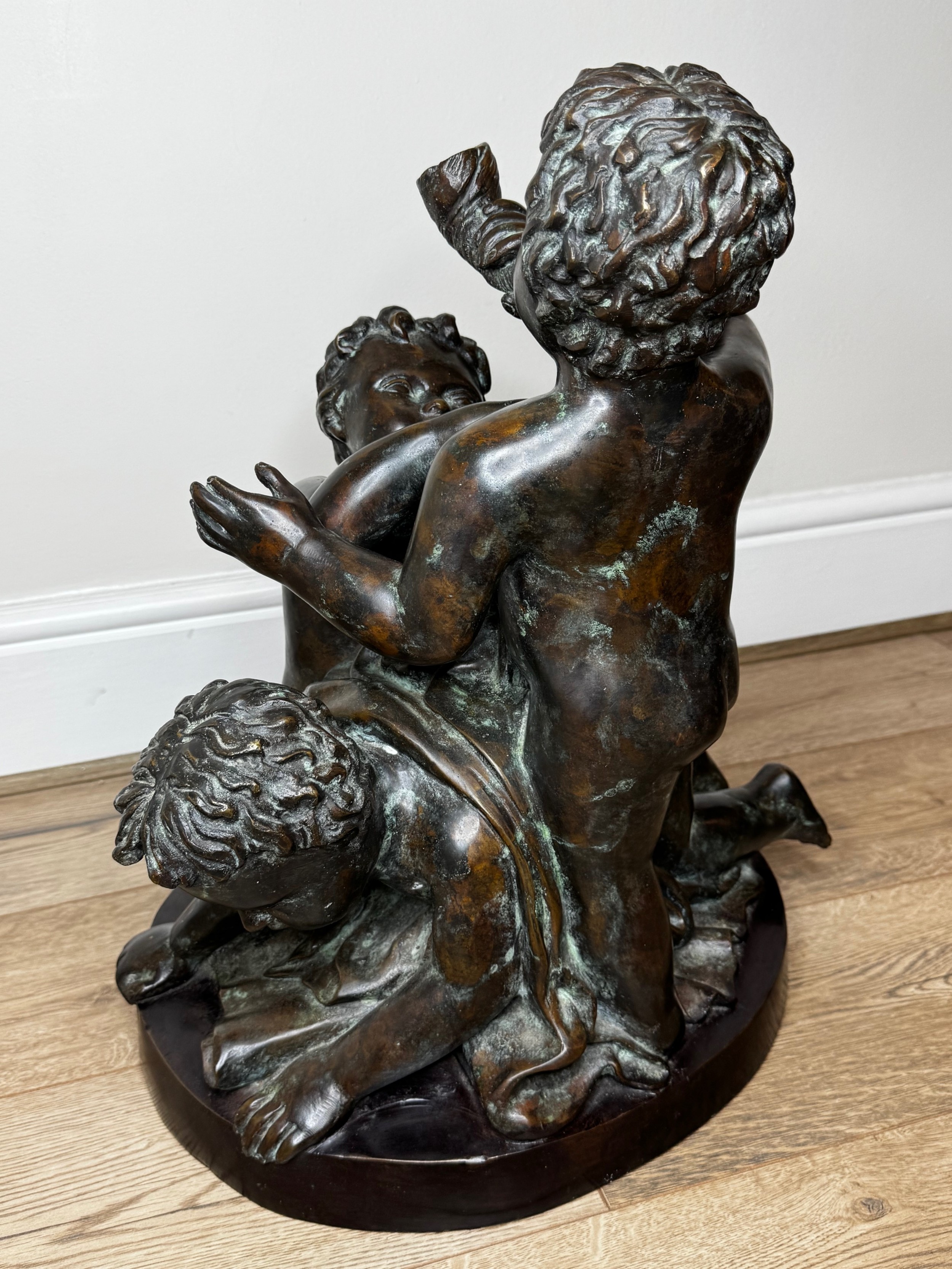
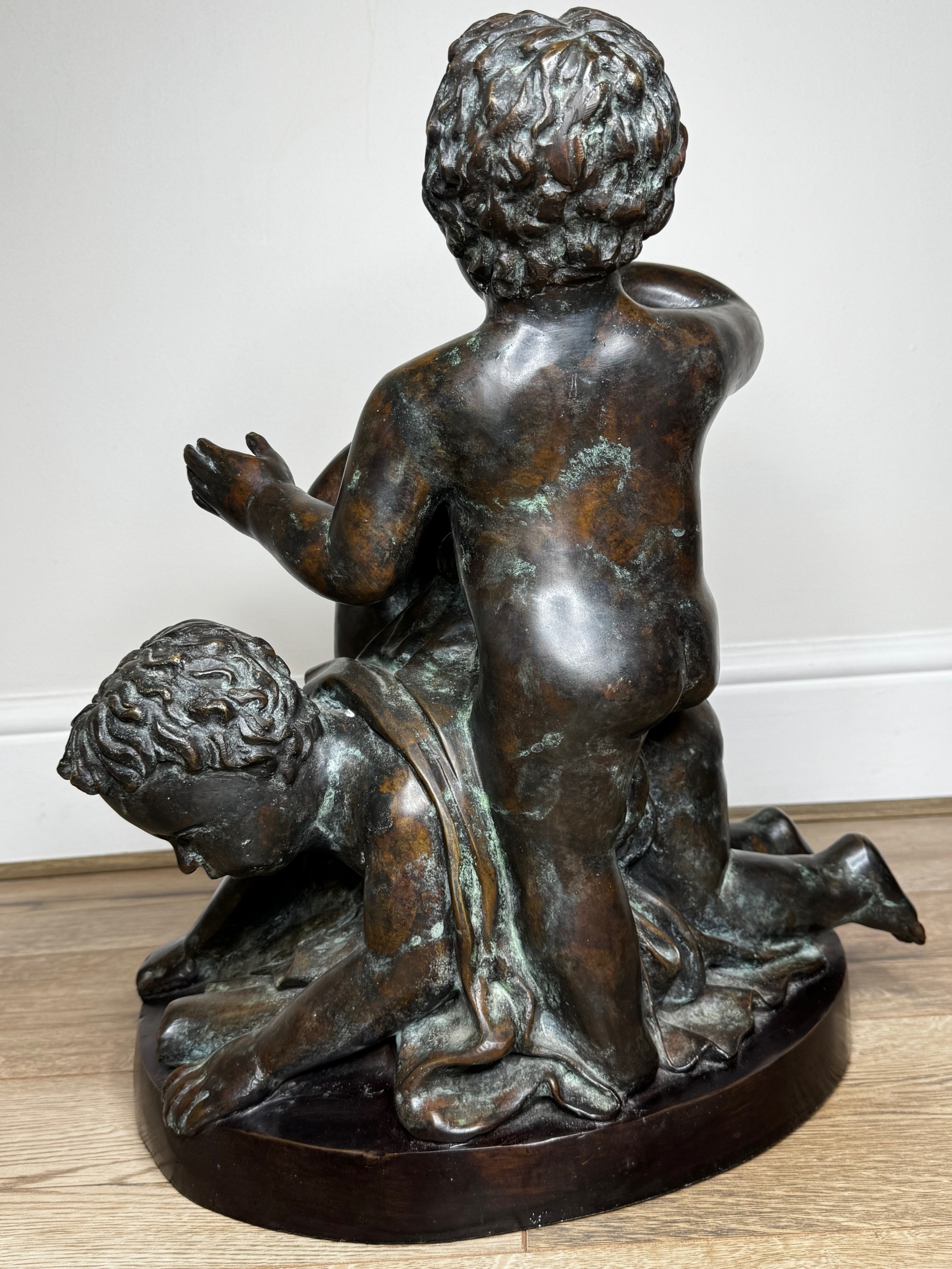
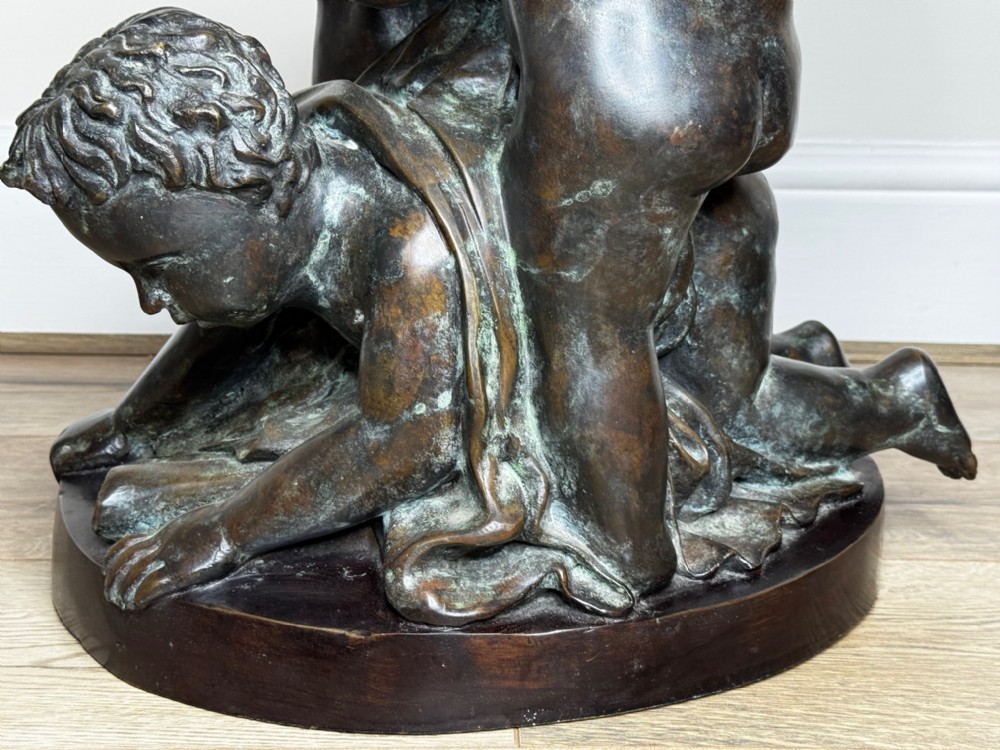
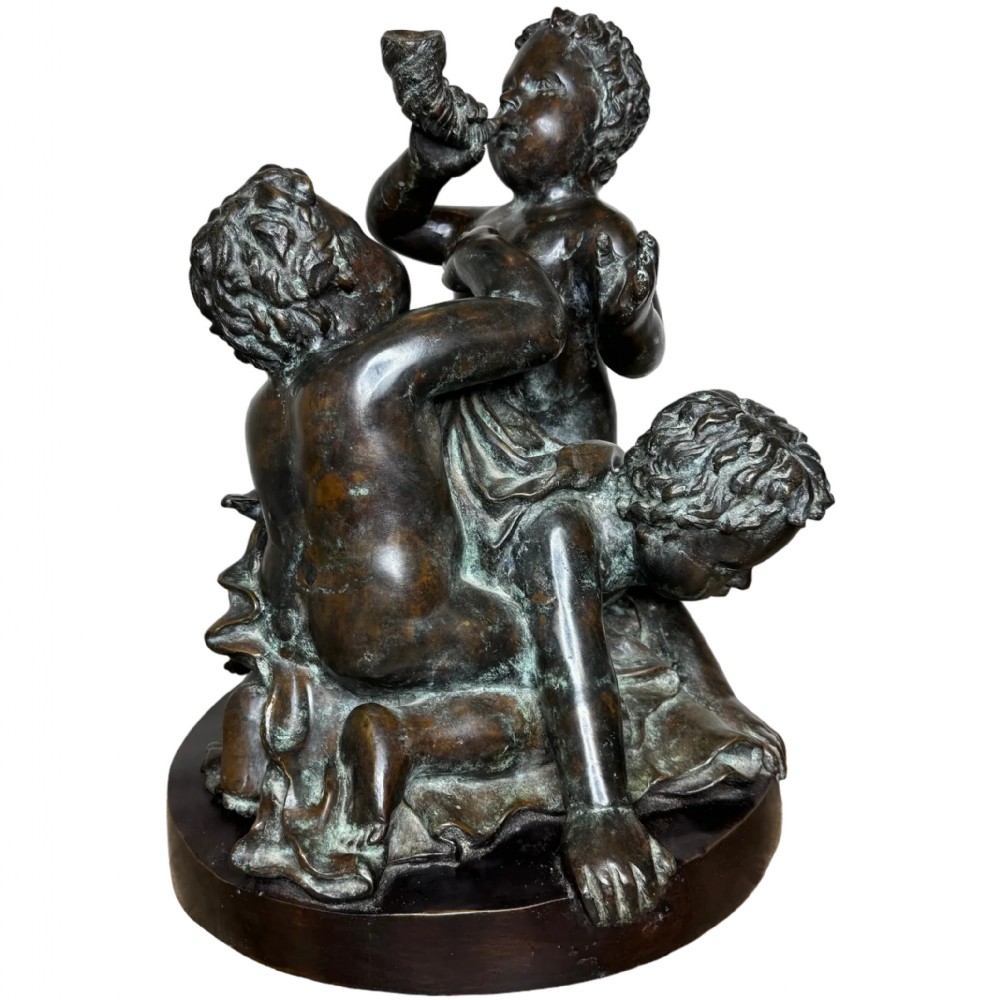
A magnificent early 19th-century French bronze depicting three sea putti—one representing a young Triton sounding a conch shell while the others move and play with lively energy.

Cast entirely in solid patinated bronze, including its rare fully integrated bronze base, this sculpture is a distinguished work of the Grand Tour era, created in the manner of the celebrated Parisian foundry Gonon Frères.
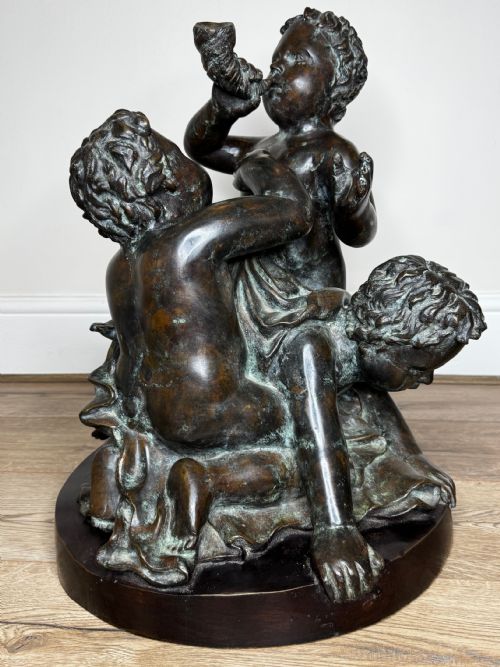
Modelled in the spirit of Clodion (Claude Michel), the group displays the fluid Rococo lines, expressive charm, and swirling movement that made his school renowned.

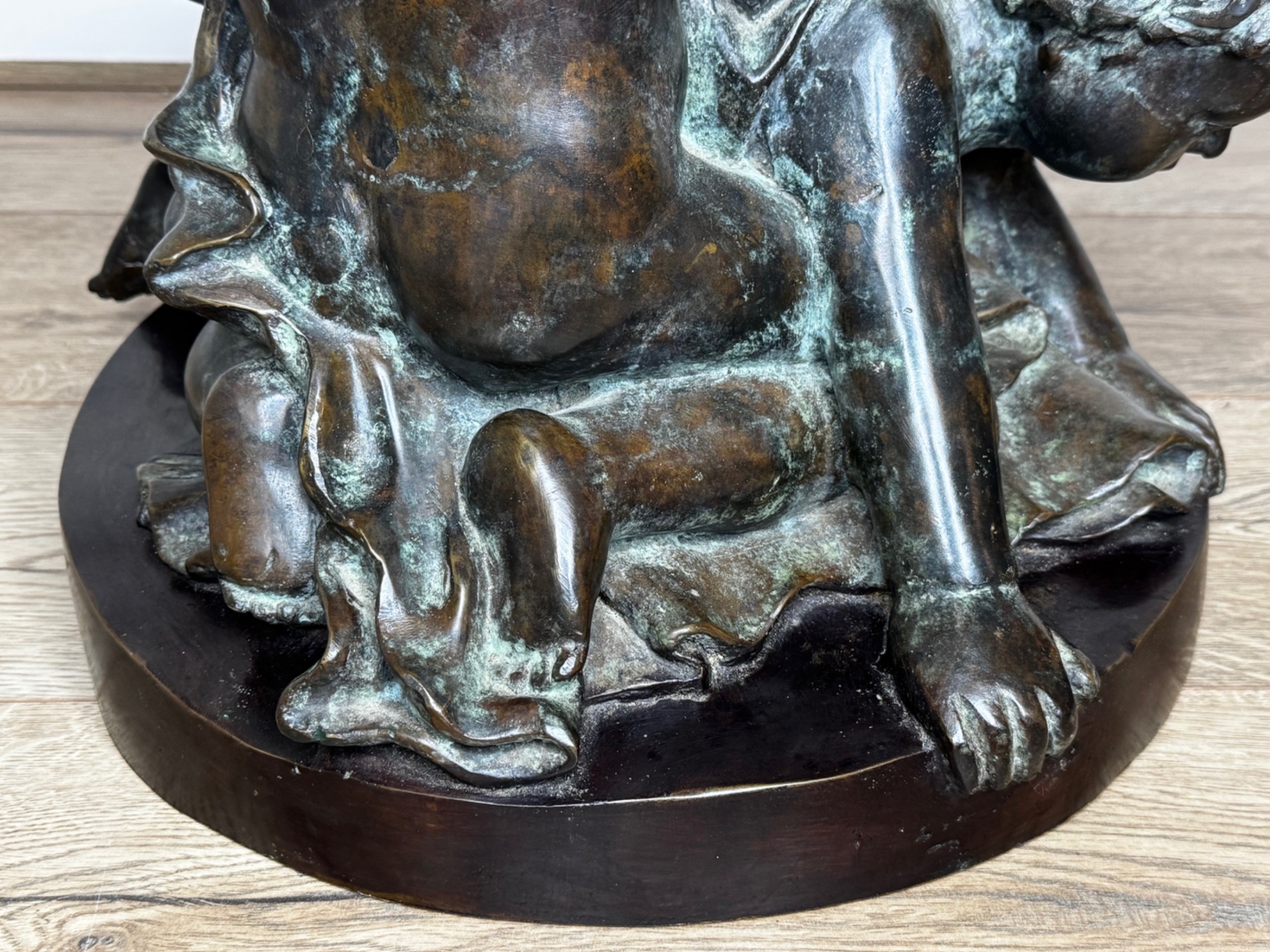
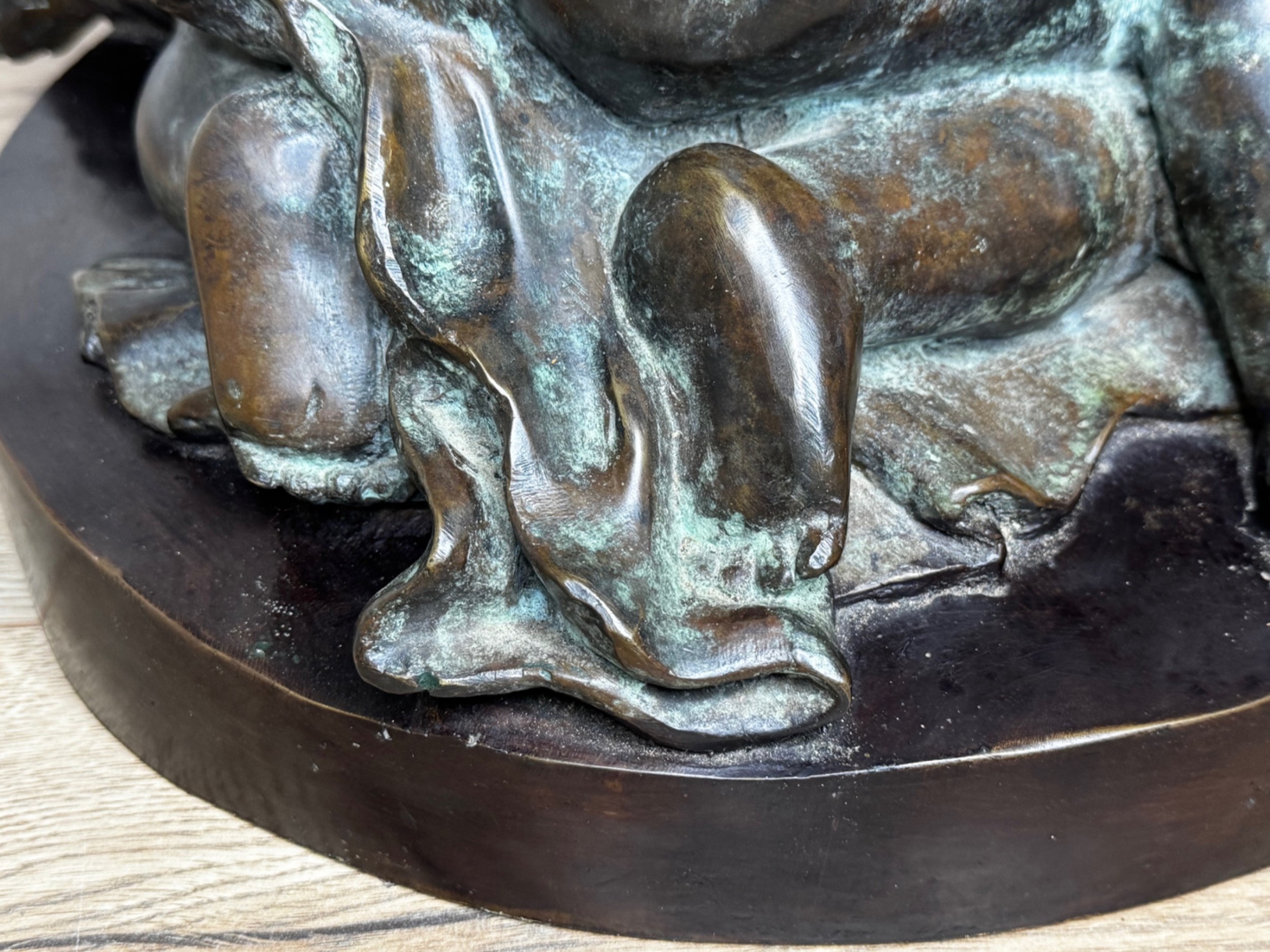
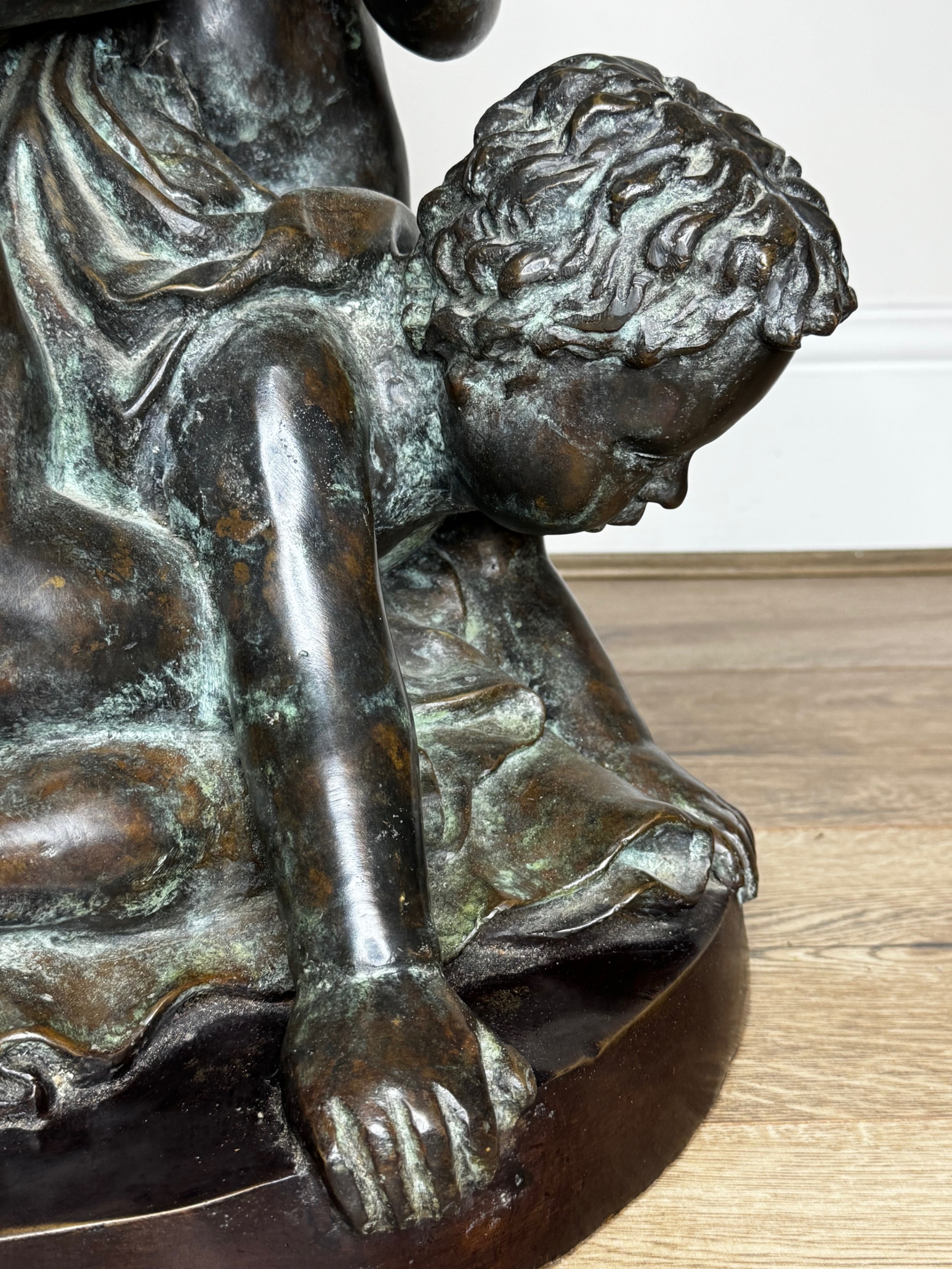
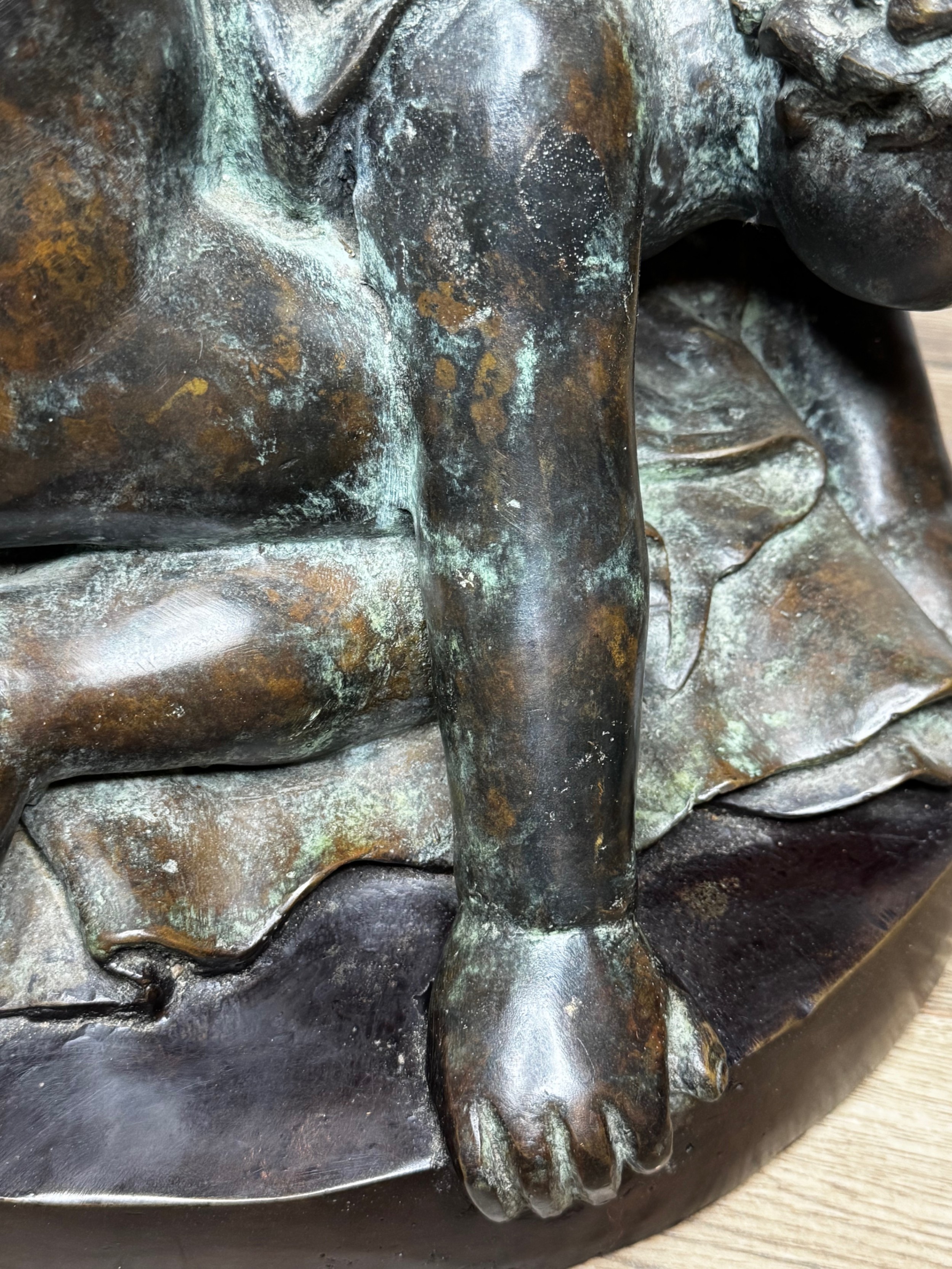
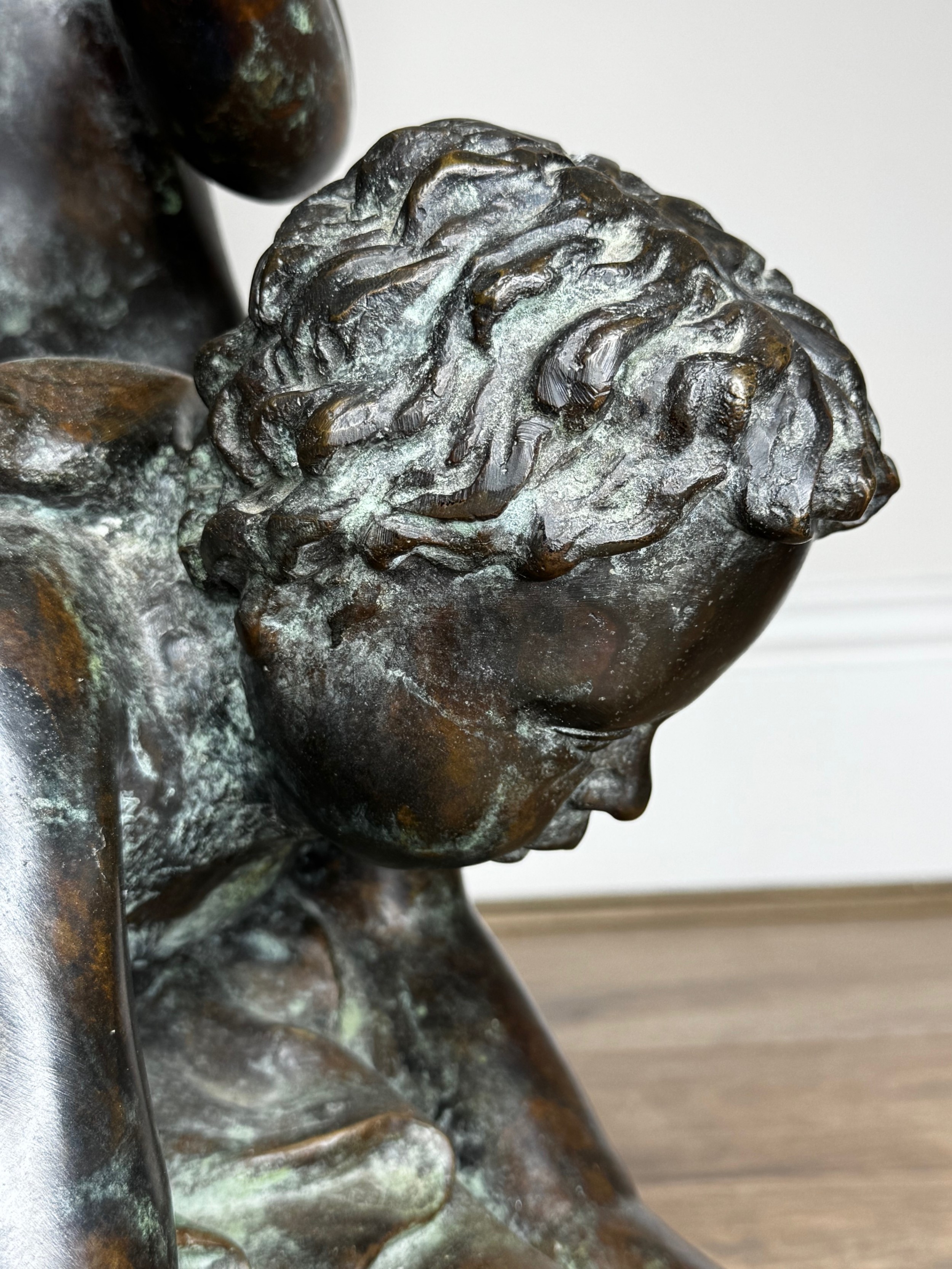
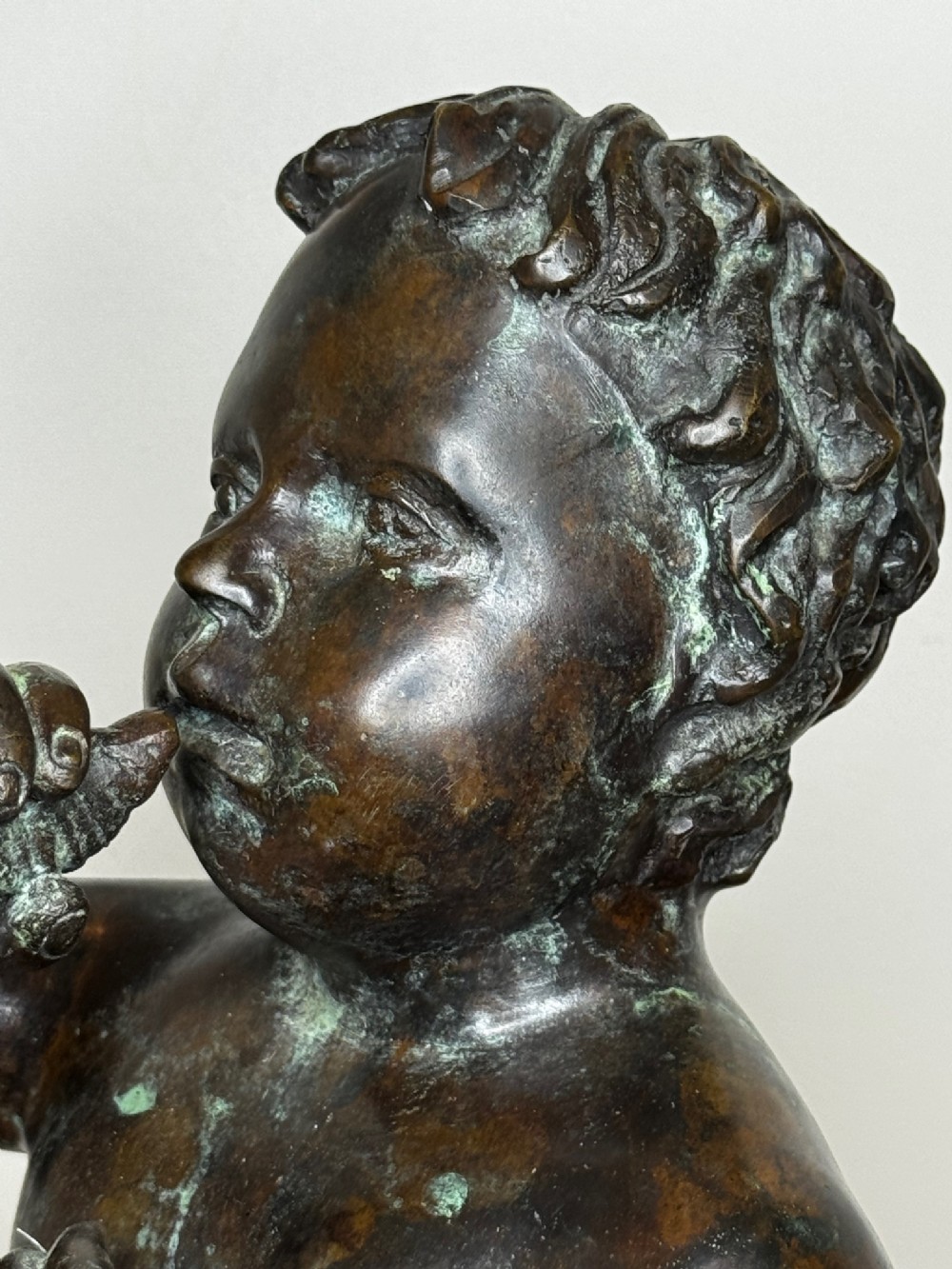
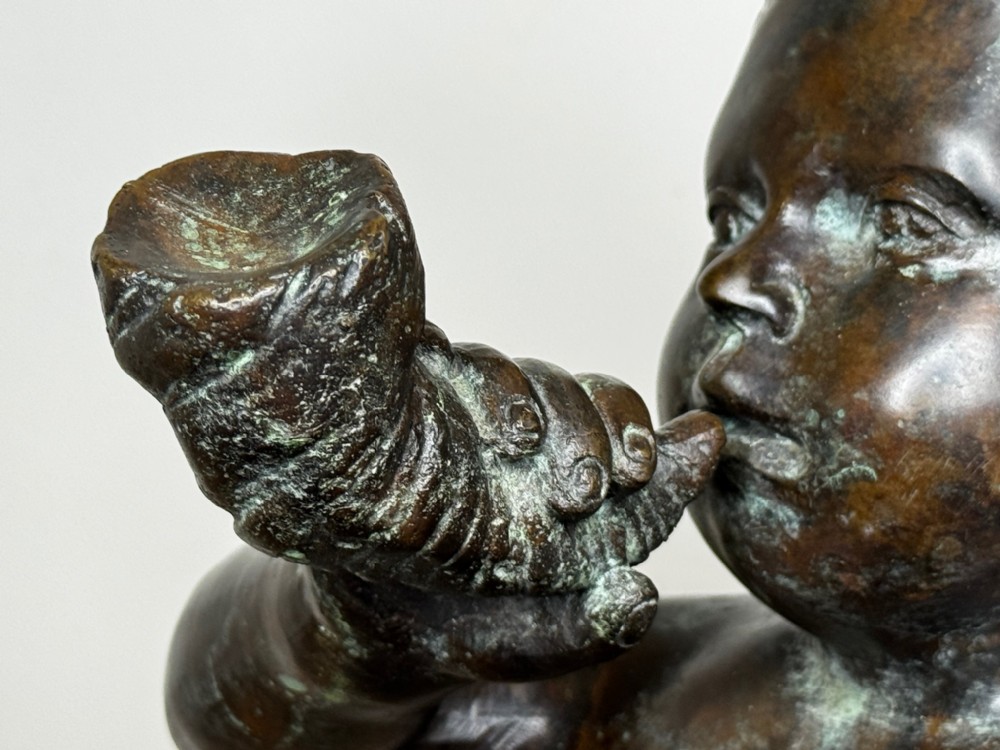
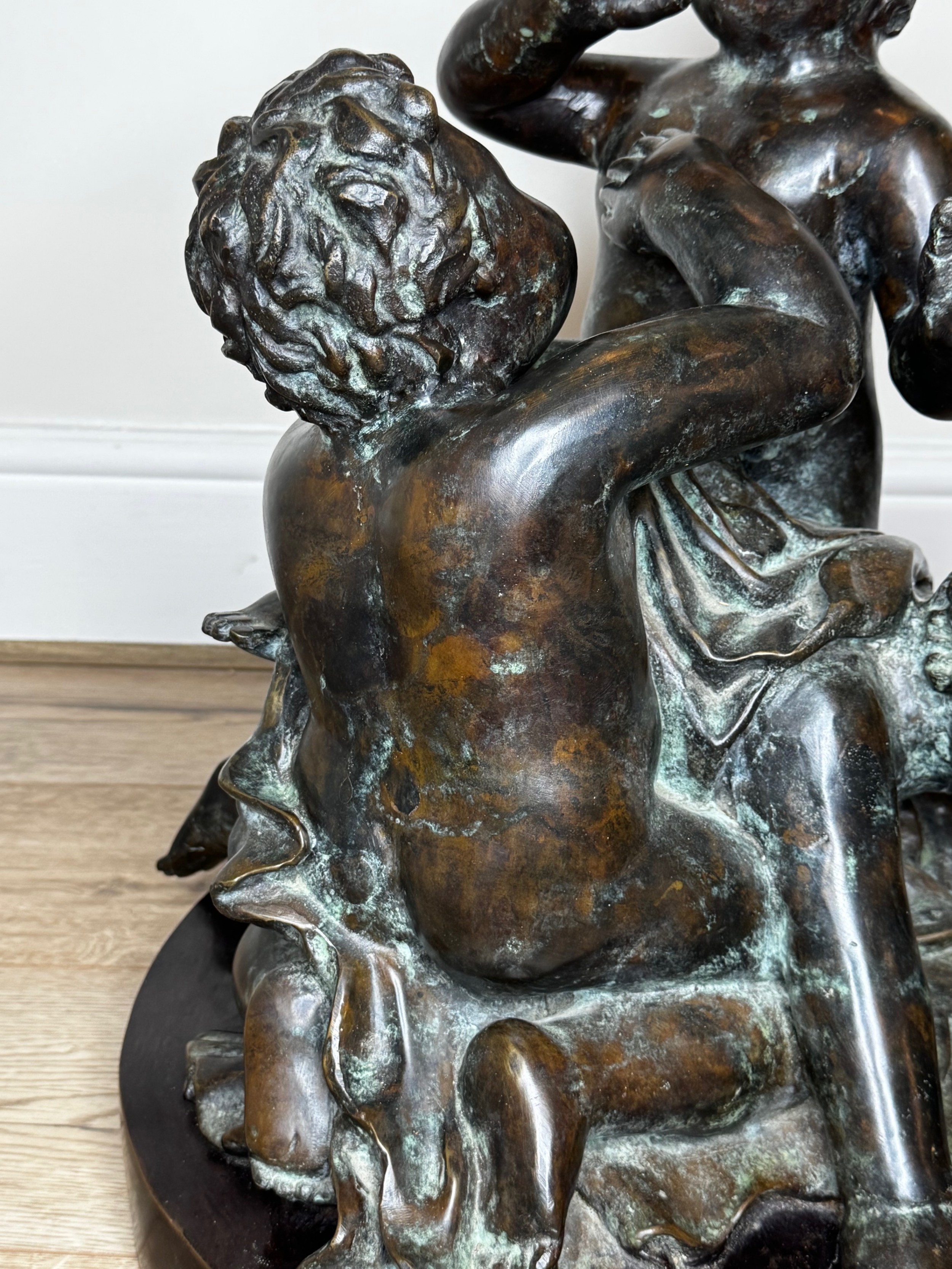
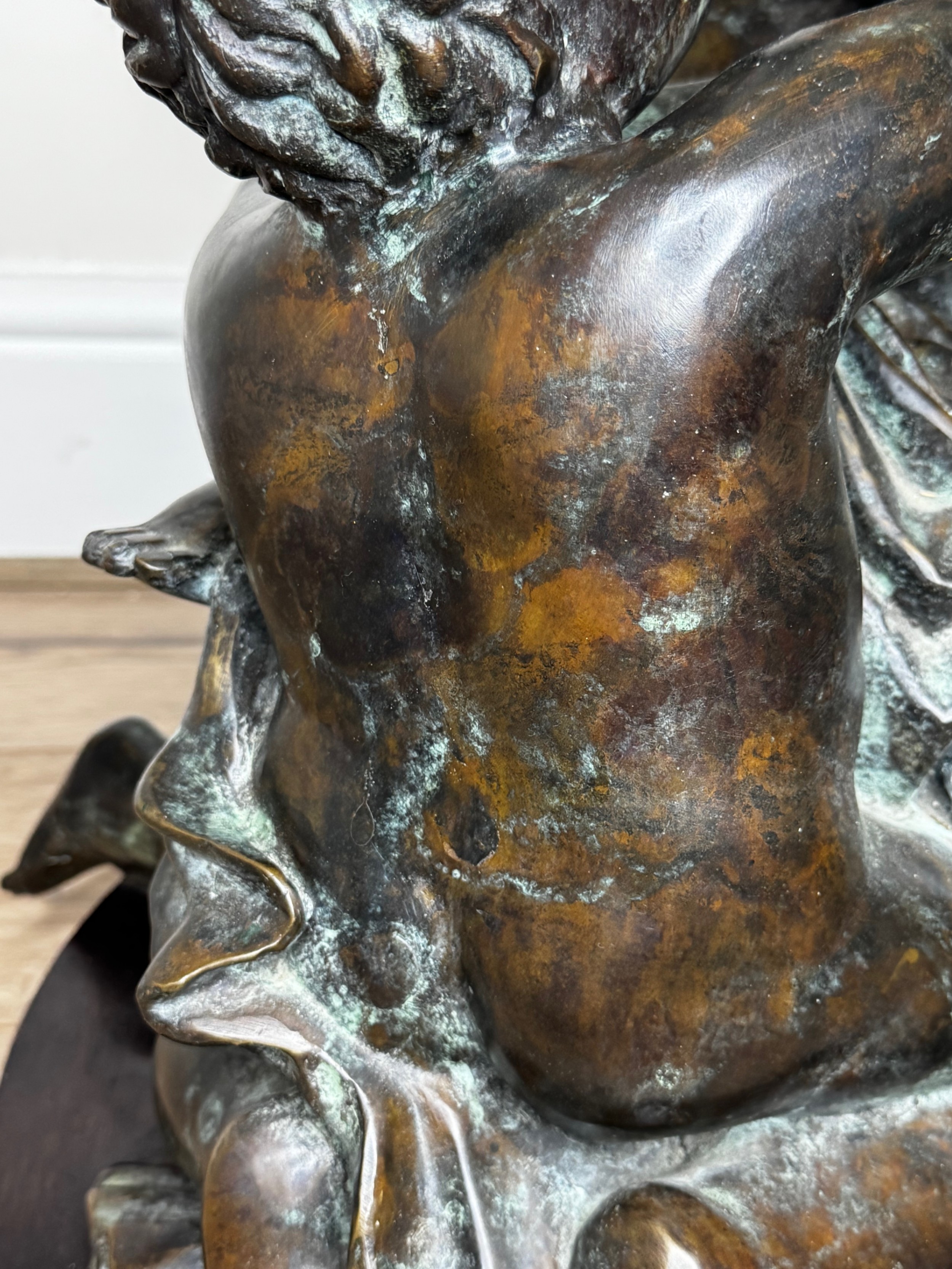
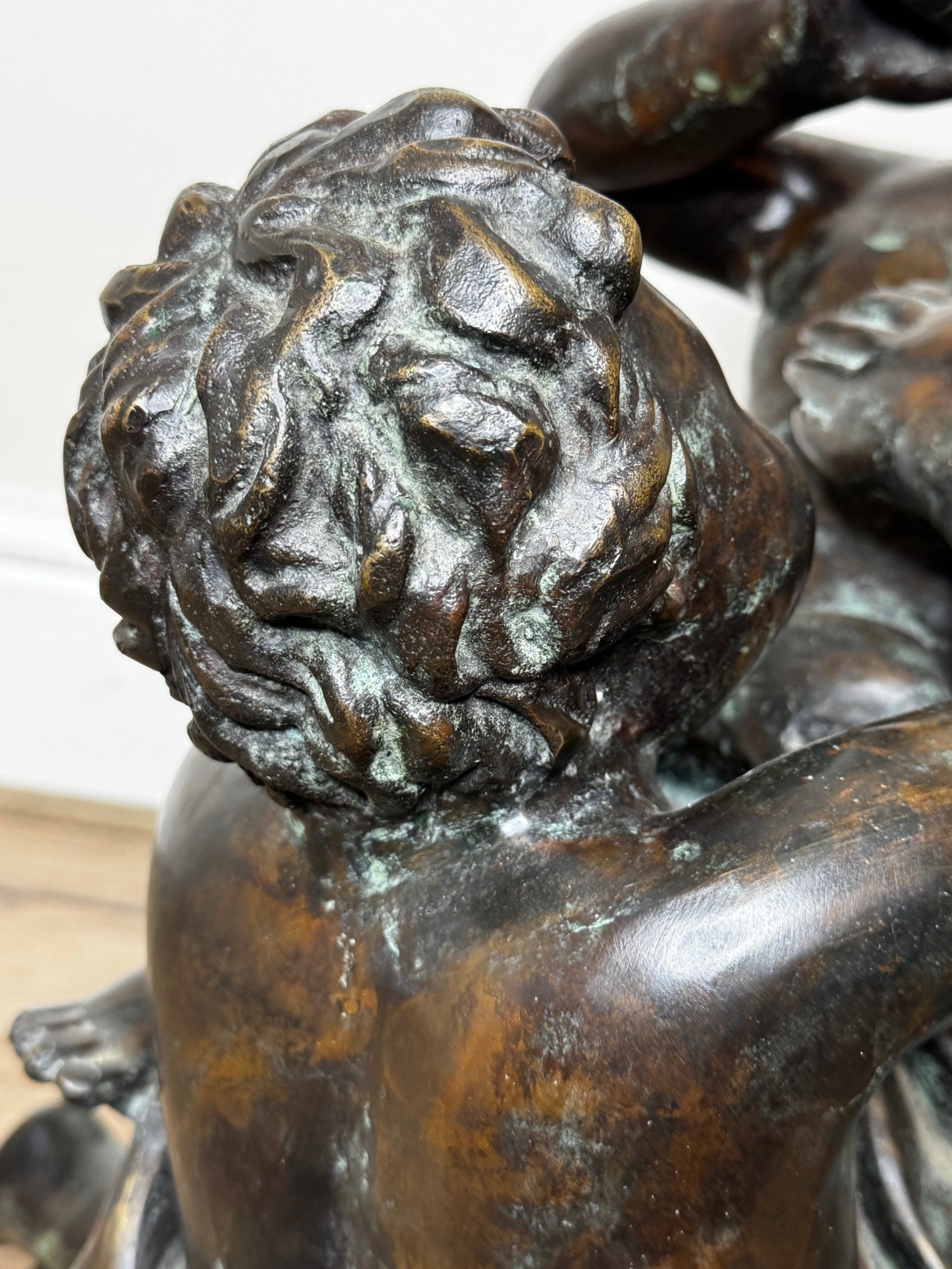
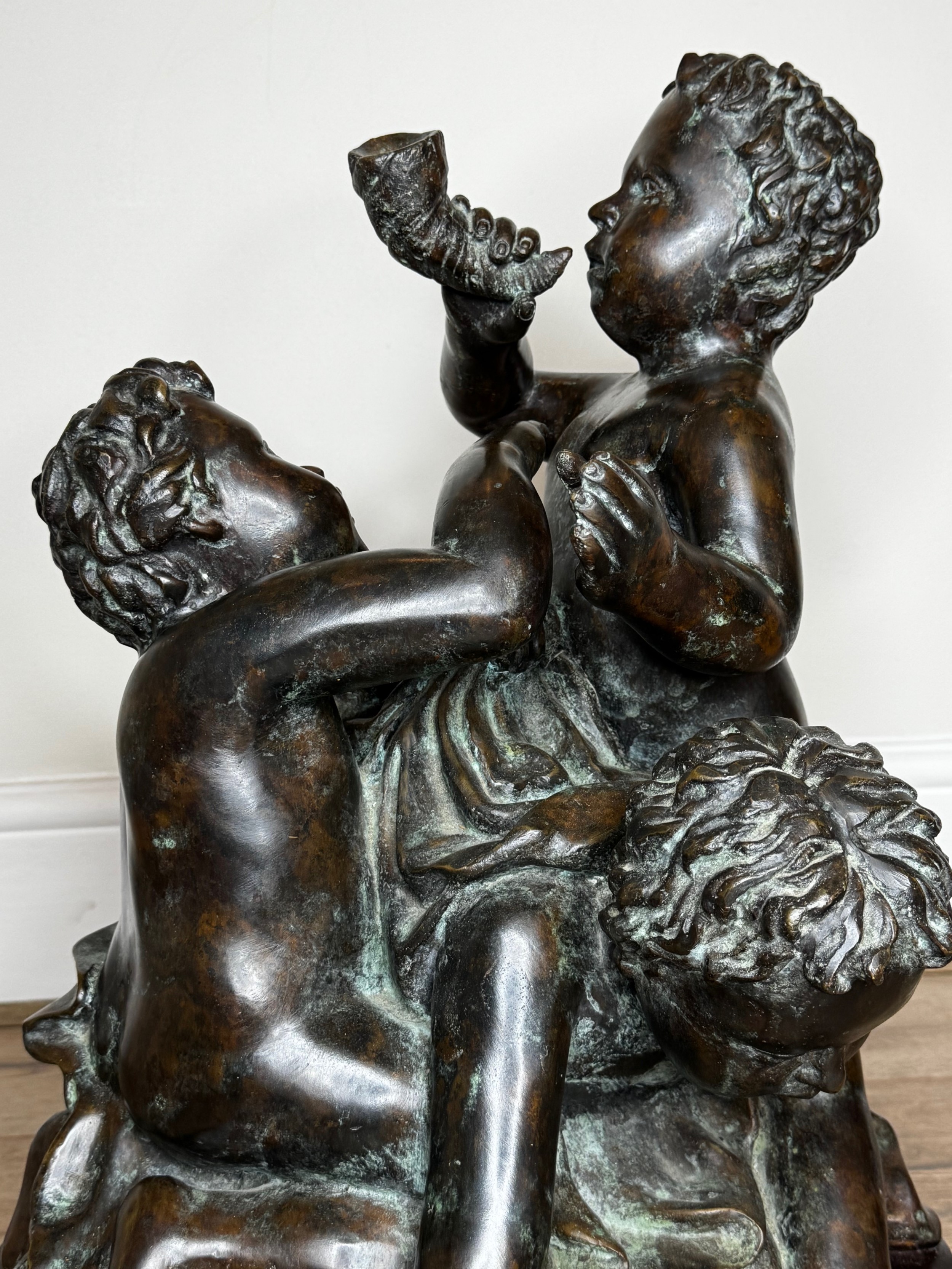
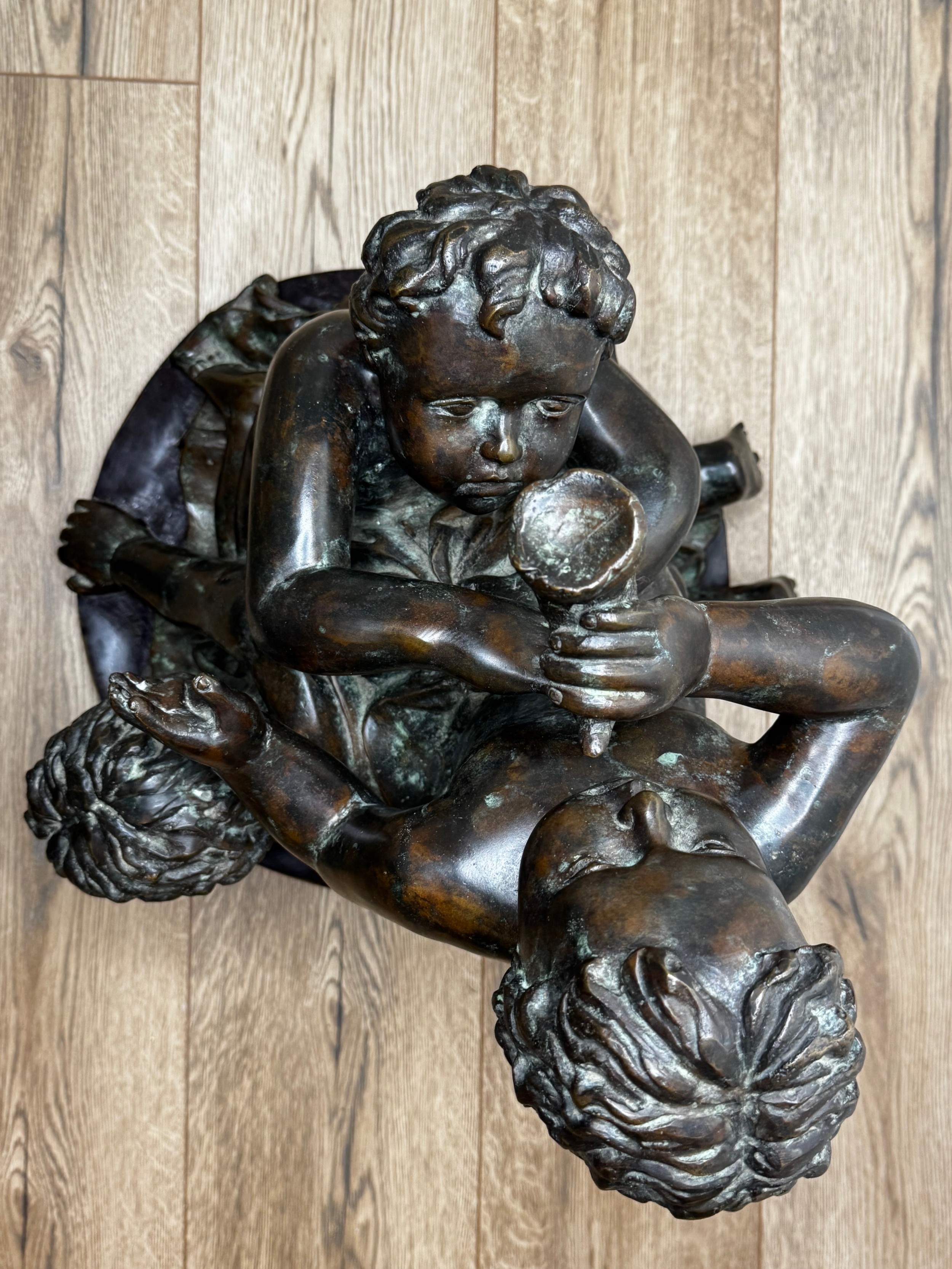
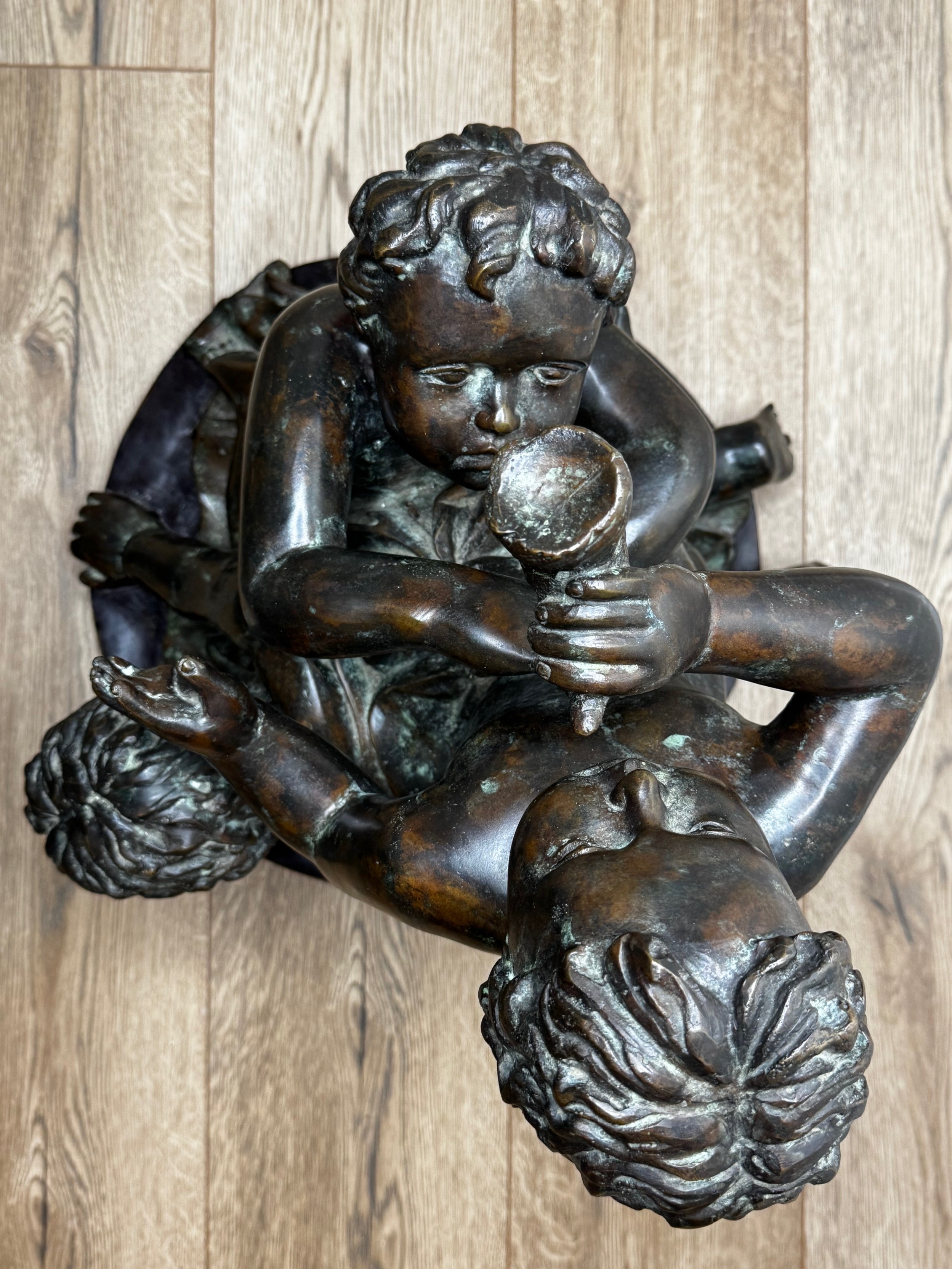
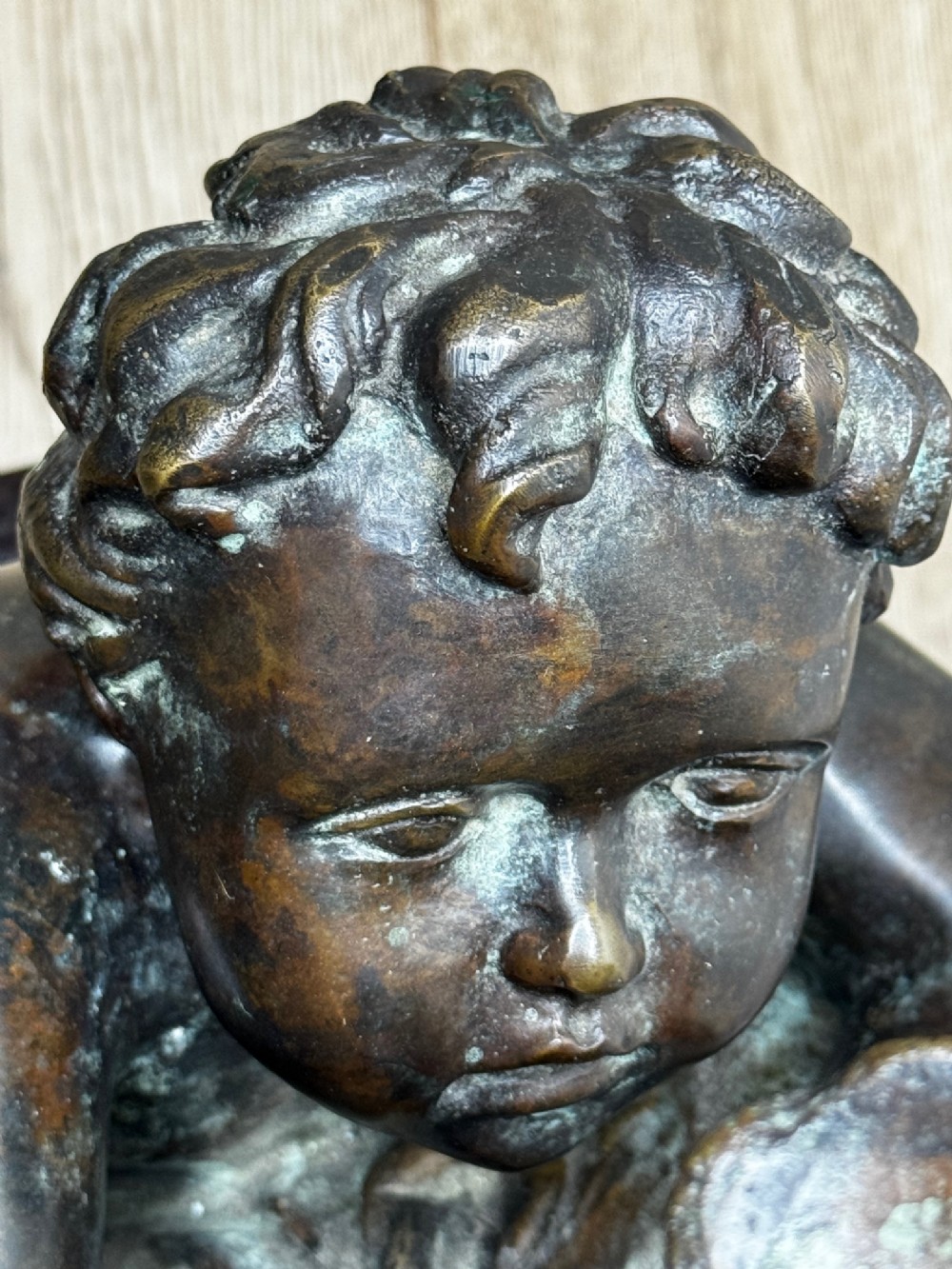
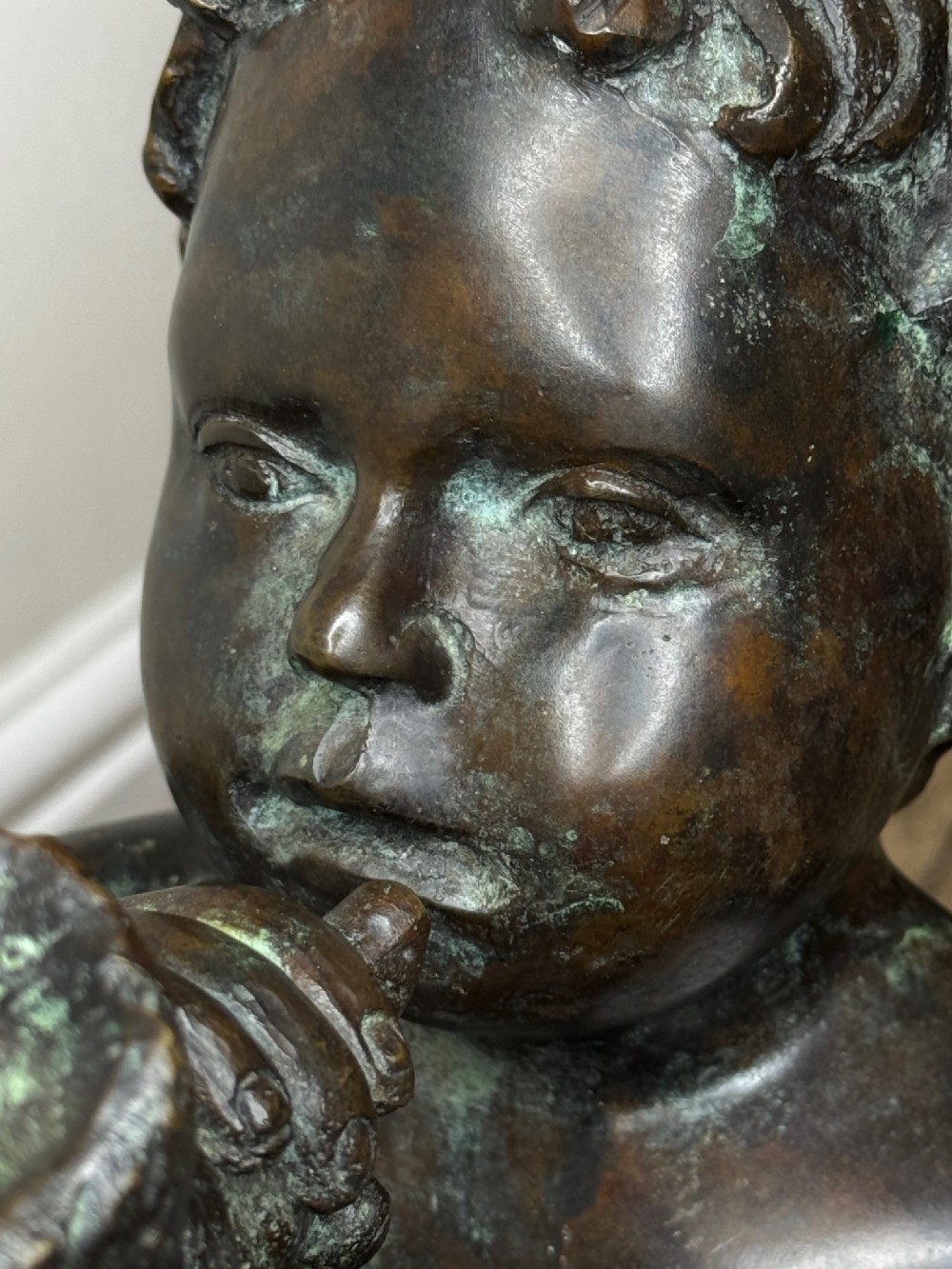
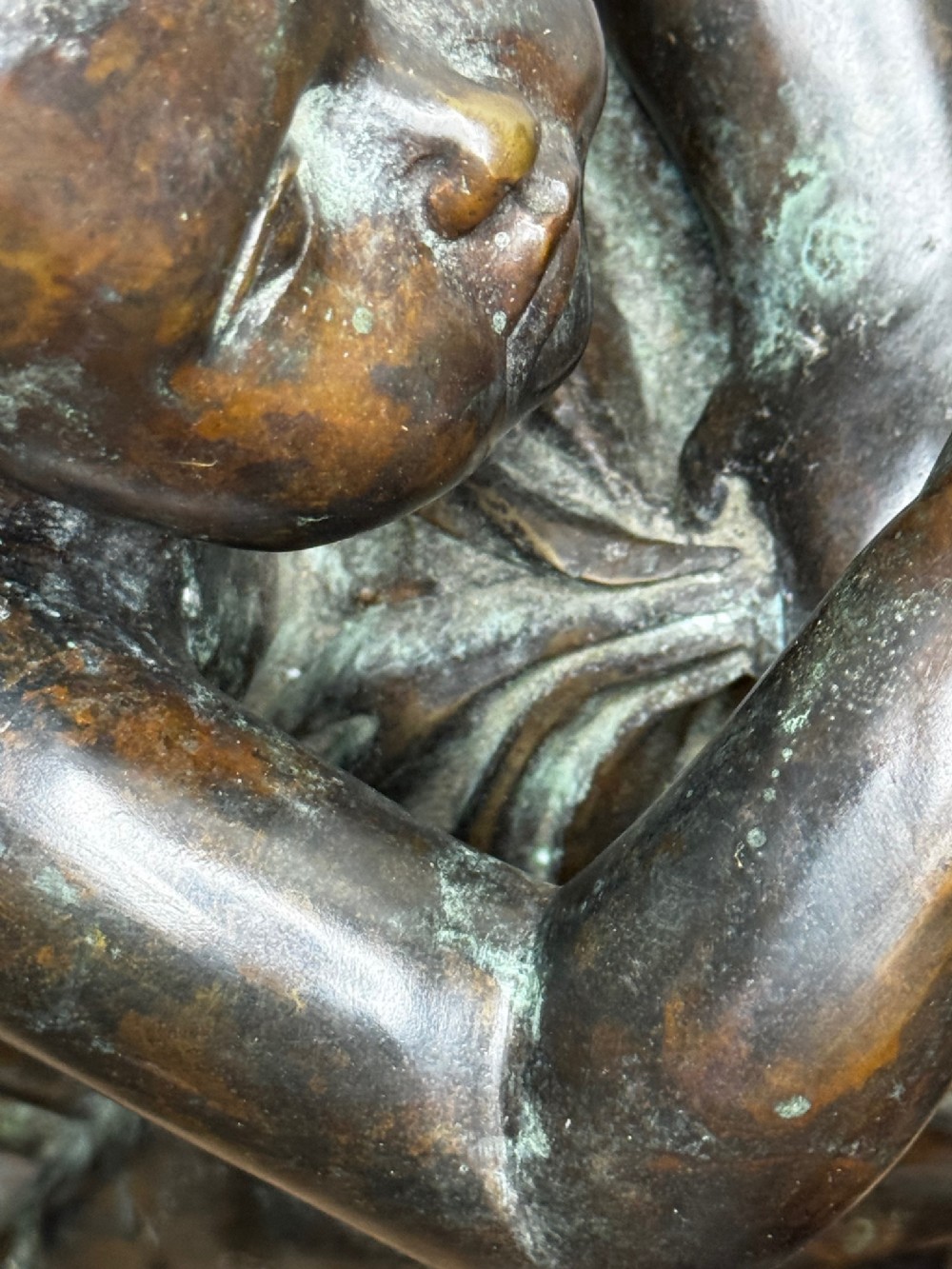
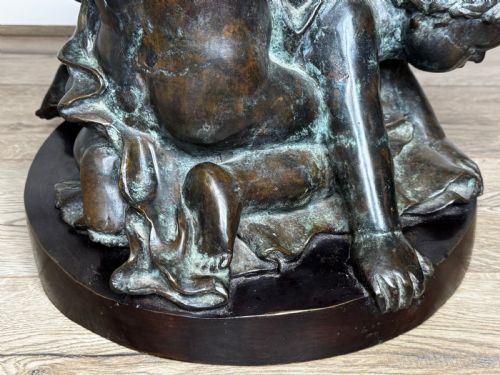
The Triton child lifts the conch to call the sea, while the two attendant putti twist and embrace with joyful animation. The bronze retains its original warm patina, with fine ciselure (hand-chasing) throughout the hair, anatomy, and drapery.
Dimensions

Height: 52.5 cm

Width: 41.5 cm

Depth: 39.5 cm

Widest span: 48 cm

Weight: approx. 35 kg

A substantial and beautifully balanced bronze with commanding presence.

Foundry Notes — In the Manner of Gonon Frères, Paris
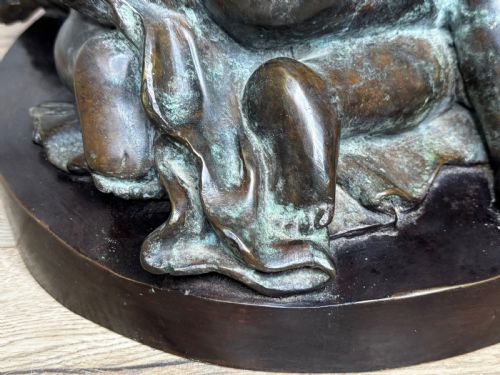
This sculpture exhibits casting characteristics, surface refinement, patina tone, and alloy density that align closely with works produced by the renowned atelier Gonon Frères, active c.1800–1830.

Their foundry was admired for its exceptionally heavy, thick-walled castings, meticulous surface finishing, and the rare practice of casting sculpture and base as a single unified bronze structure.
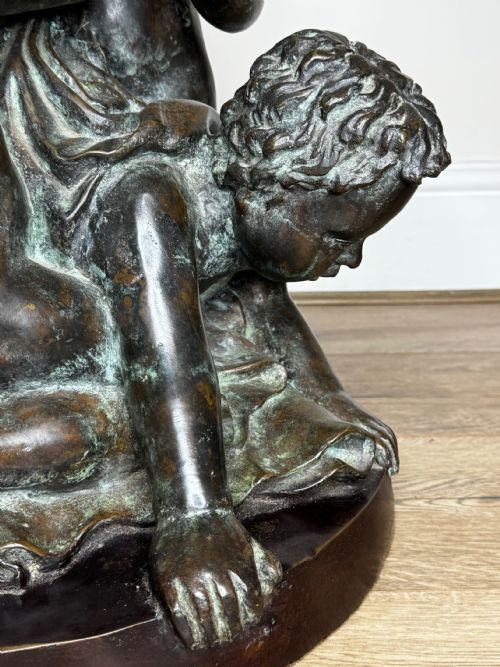
The piece is unsigned and bears no visible foundry stamp—entirely typical for early 19th-century French bronzes. Any original mark may have worn away over two centuries, or it may simply never have been applied, as many early Restoration works were released unmarked.
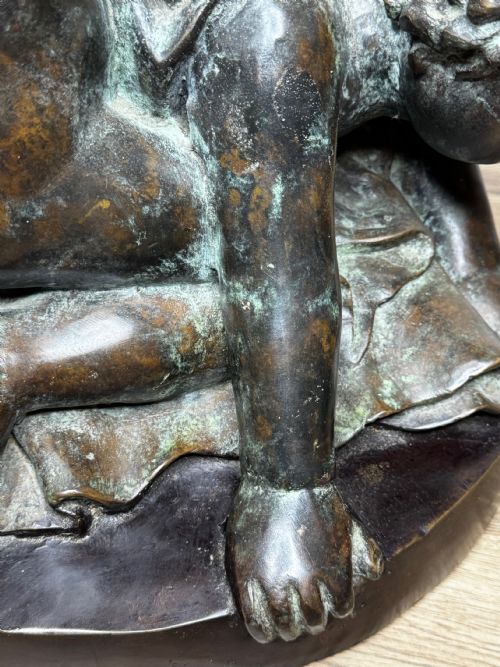
The overall craftsmanship strongly supports a stylistic and technical association with Gonon Frères.

Rare Early Casting Method

Produced using an advanced early 19th-century process, this sculpture features a thick-walled bronze casting with a single-piece integrated base, achieved through a hybrid of lost-wax casting (for the figures) and sand casting (for the heavy base).
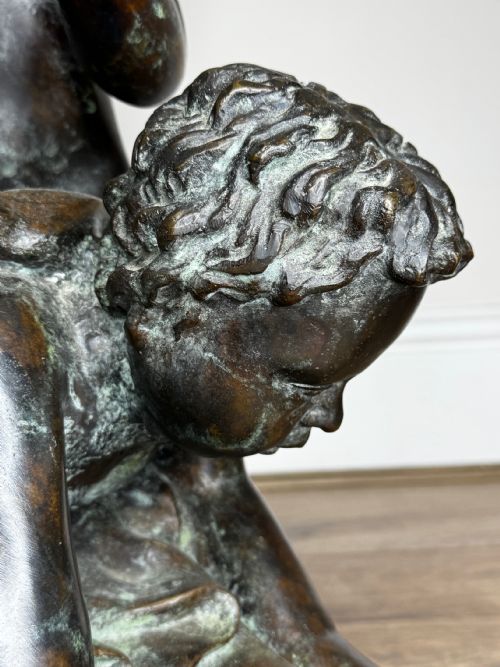
These elements were unified through expert hand-chasing, resulting in exceptional durability, weight, and sculptural depth.

Casting of this quality became increasingly rare after the 1830s.

About Clodion (Claude Michel, 1738–1814)
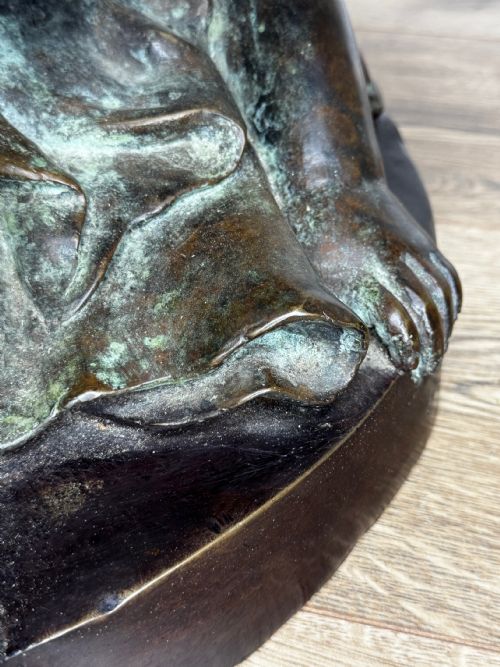
Clodion was one of France’s most celebrated sculptors, admired for his terracottas of putti, nymphs, satyrs, and Bacchic dancers.

Although this work dates from around 1820—slightly after his lifetime—it clearly belongs to the École de Clodion, continuing his legacy of elegance, fluidity, and joyful classical spirit.
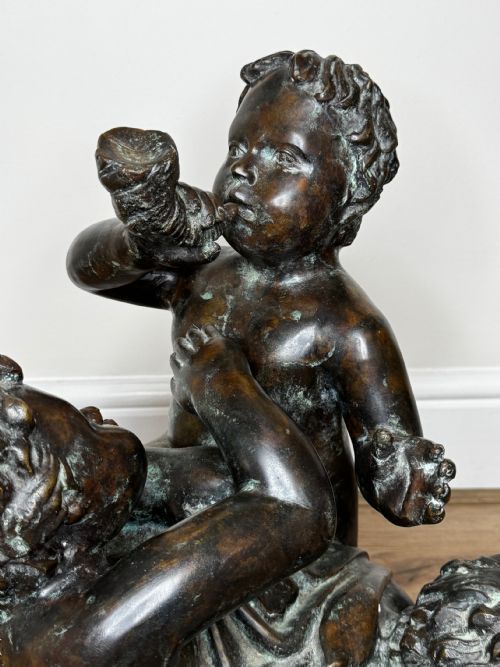
Parisian founders frequently created bronzes “After Clodion” to satisfy collectors’ admiration for his style.

Mythological Context

The subject depicts Triton, son of Poseidon, sounding his conch shell to command the waves.
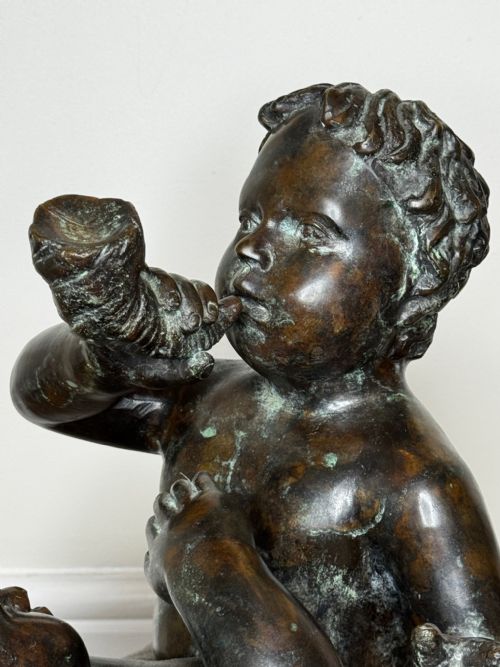
Rendered here as playful sea putti, the composition captures both poetry and vitality—a maritime theme much admired by early 19th-century collectors.

Date

France, circa 1820

Early Restoration period

Condition Report
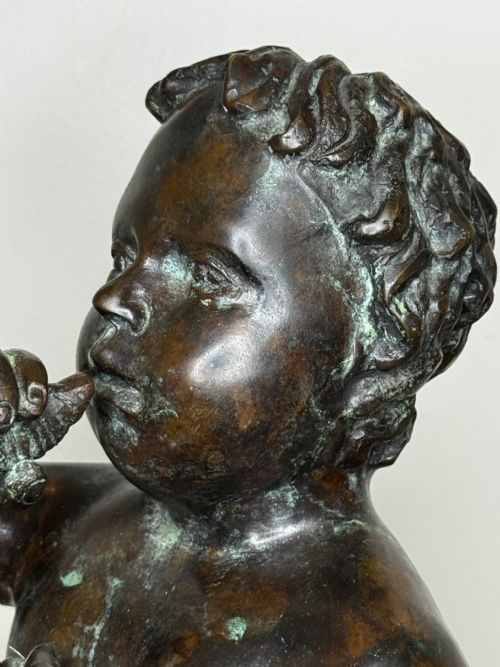
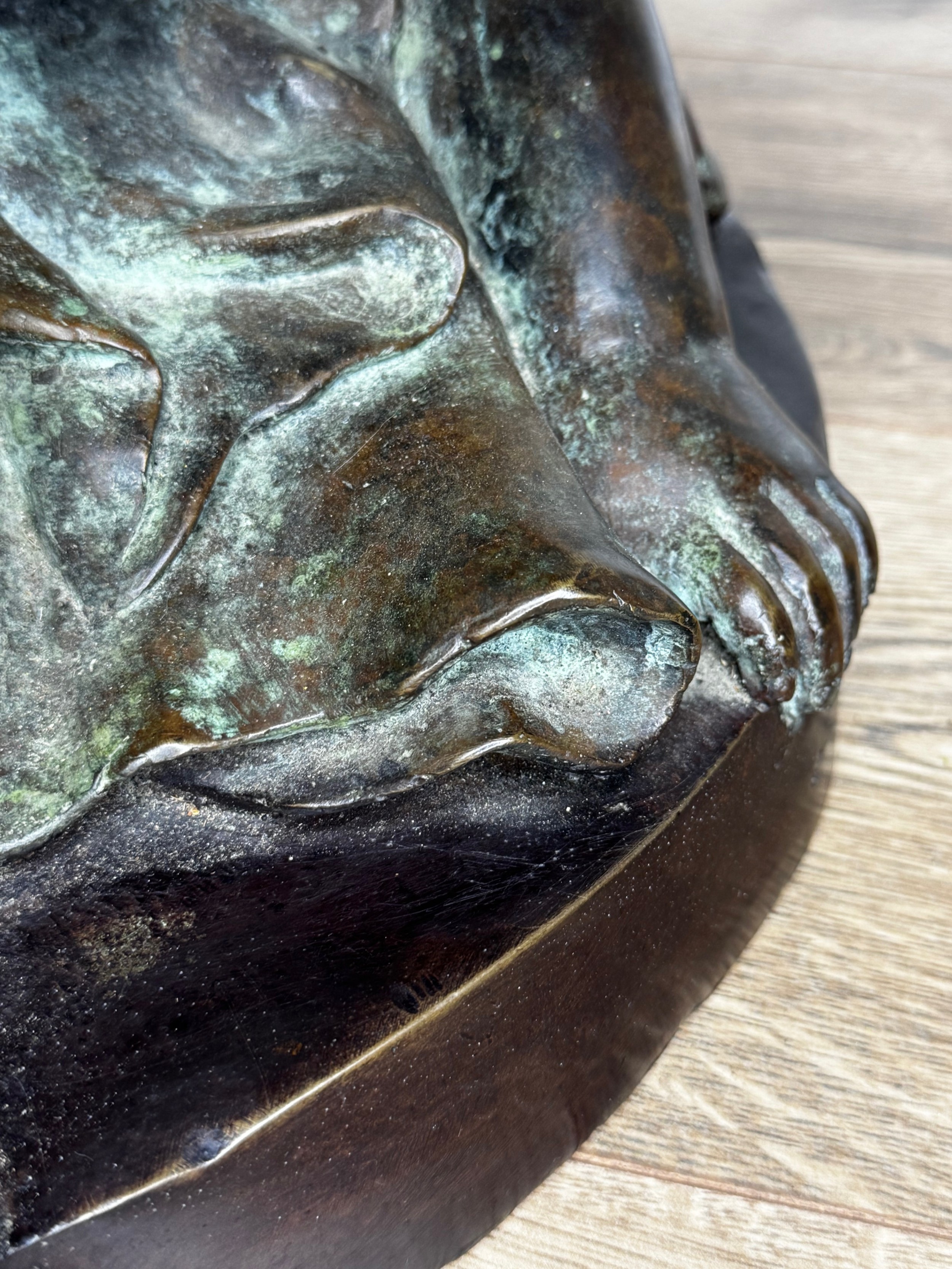
Good original condition with a rich, untouched antique patina and natural verdigris characteristic of age.

The sculpture is unsigned and bears no foundry stamp—typical of early Parisian bronzes in this period.
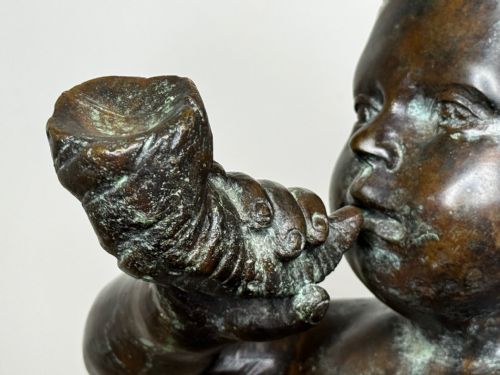
There are no structural issues, and the surface retains its authentic finish.

Some minor wear and small losses to the fabric lining beneath, consistent with age.

Why You’ll Love It

Authentic French bronze, circa 1820 — a true early 19th-century work

Dynamic mythological subject — Triton’s call captured with elegance and vitality

In the manner of Gonon Frères, a prestigious Parisian foundry

Influence of Clodion — Rococo grace tran

Physical Dimensions
Height
52.5cm (20.67")
Width
41.5cm (16.34")
Depth
39.5cm (15.55")
Declaration

Cheshire Antiques Consultant Ltd has dated this French Bronze Putti Sculpture to the Georgian era.

Reference Numbers
Sellingantiques Reference
SA1179487
Dealers Internal Reference
750
Dealers Notes

Delivery shipping information

Cheshire Antiques Consultant LTD ship worldwide, using fully insured and online tracked delivery services like DHL, DPD, Parcelforce or Fedex also the British Shop. We offer Free national Delivery to England mainland, Wales mainland & Scottish lowland mainland areas only.

We offer Free UK mainland delivery only, international shipping to USA, Canada, Europe. All other countries rest of the world please get in touch for a shipping quote.

Great care and much time are taken over the safe transportation of the Fine Art & Antique pieces which we sell.

We bespoke pack & wrap extremely carefully, so you can rest assured that your piece will arrive with you in great as described condition.

For larger paintings, antique furniture pieces, and fragile items which can not be sent via the normal postal services, we use professional door-to-door delivery providers, who will always strive to deliver your piece promptly, within approximate. 2-5 working days for the United Kingdom mainland & International delivery between 5-14 working days.

Returns Policy

We offer a 14-day money-back refund policy

(excluding the cost of Postage & Packaging costs & any duties, taxes customs charges paid on buyers behalf or buy the buyer direct ).

CONTACT US:

Please feel free to call us.

We have a friendly & professional team on hand who are here to help you with any queries you may have.

Tel: 07494763382

Outside the UK:

Phone or text: 0044 7494763382

PAYMENT:

Our primary payment method is by (BACS) & International bank wire transfer, we can email you an invoice with our banking details upon request. We no longer accept any Online Card or in person card payments due to payment providers charging us and not returning the processing transaction fee even if an order is fraudulent, cancelled or returned. All Item(s) will need to be settled by bank transfer only. We will email you a proforma invoice with our bank details.

Customs Payment & Brexit

Cheshire Antiques Consultant LTD operates on a Delivery Duty Unpaid (DDU) basis which means that the International buyer is responsible for any import duties, taxes & customs clearance charges and any other customs charges which may be necessary to release an order from international customs.

Following the UK leaving the EU on 1st January 2021 (BREXIT) there have been some changes to customs & duty charges for EU customers. Tax and import duty varies from country to country so we recommend you check with your local tax office to see if any fees will be payable.

If the customer refuses to pay any duty and customs charges and the parcel is returned to sender all shipping charges will be deducted from any refund.

Description
Classical Grand Tour French Bronze Group – “Call of the Triton Conch”

Sea Putti, After Clodion (c.1820) – In the Manner of Gonon Frères, Paris

Description

A magnificent early 19th-century French bronze depicting three sea putti—one representing a young Triton sounding a conch shell while the others move and play with lively energy.
Cheshire Antiques Consultant Ltd
fig 1. A dark patinated French bronze sculptural group depicting three putti playing, with one child blowing into a conch shell.
fig 1. Classical Grand Tour French Bronze Group – Call of the Triton Conch sea Putti, After Clodion (C.1820)

Cast entirely in solid patinated bronze, including its rare fully integrated bronze base, this sculpture is a distinguished work of the Grand Tour era, created in the manner of the celebrated Parisian foundry Gonon Frères.

fig 2. A dark patinated French bronze sculptural group depicting three putti playing, with one child blowing into a conch shell.
fig 2. Classical Grand Tour French Bronze Group – Call of the Triton Conch sea Putti, After Clodion (C.1820)

Modelled in the spirit of Clodion (Claude Michel), the group displays the fluid Rococo lines, expressive charm, and swirling movement that made his school renowned.

The Triton child lifts the conch to call the sea, while the two attendant putti twist and embrace with joyful animation. The bronze retains its original warm patina, with fine ciselure (hand-chasing) throughout the hair, anatomy, and drapery.

fig 3. A dark patinated French bronze sculptural group depicting three putti playing, with one child blowing into a conch shell.
fig 3. Classical Grand Tour French Bronze Group – Call of the Triton Conch sea Putti, After Clodion (C.1820)

Dimensions

Height: 52.5 cm

Width: 41.5 cm

Depth: 39.5 cm

Widest span: 48 cm

Weight: approx. 35 kg

A substantial and beautifully balanced bronze with commanding presence.

Foundry Notes — In the Manner of Gonon Frères, Paris

fig 4. A dark patinated French bronze sculptural group depicting three putti playing, with one child blowing into a conch shell.
fig 4. Classical Grand Tour French Bronze Group – Call of the Triton Conch sea Putti, After Clodion (C.1820)

This sculpture exhibits casting characteristics, surface refinement, patina tone, and alloy density that align closely with works produced by the renowned atelier Gonon Frères, active c.1800–1830.

Their foundry was admired for its exceptionally heavy, thick-walled castings, meticulous surface finishing, and the rare practice of casting sculpture and base as a single unified bronze structure.

fig 5. A dark patinated French bronze sculptural group depicting three putti playing, with one child blowing into a conch shell.
fig 5. Classical Grand Tour French Bronze Group – Call of the Triton Conch sea Putti, After Clodion (C.1820)

The piece is unsigned and bears no visible foundry stamp—entirely typical for early 19th-century French bronzes. Any original mark may have worn away over two centuries, or it may simply never have been applied, as many early Restoration works were released unmarked.

fig 6. A dark patinated French bronze sculptural group depicting three putti playing, with one child blowing into a conch shell.
fig 6. Classical Grand Tour French Bronze Group – Call of the Triton Conch sea Putti, After Clodion (C.1820)

The overall craftsmanship strongly supports a stylistic and technical association with Gonon Frères.

Rare Early Casting Method

Produced using an advanced early 19th-century process, this sculpture features a thick-walled bronze casting with a single-piece integrated base, achieved through a hybrid of lost-wax casting (for the figures) and sand casting (for the heavy base).

fig 7. A dark patinated French bronze sculptural group depicting three putti playing, with one child blowing into a conch shell.
fig 7. Classical Grand Tour French Bronze Group – Call of the Triton Conch sea Putti, After Clodion (C.1820)

These elements were unified through expert hand-chasing, resulting in exceptional durability, weight, and sculptural depth.

Casting of this quality became increasingly rare after the 1830s.

About Clodion (Claude Michel, 1738–1814)

fig 8. A dark patinated French bronze sculptural group depicting three putti playing, with one child blowing into a conch shell.
fig 8. Classical Grand Tour French Bronze Group – Call of the Triton Conch sea Putti, After Clodion (C.1820)

Clodion was one of France’s most celebrated sculptors, admired for his terracottas of putti, nymphs, satyrs, and Bacchic dancers.

Although this work dates from around 1820—slightly after his lifetime—it clearly belongs to the École de Clodion, continuing his legacy of elegance, fluidity, and joyful classical spirit.

fig 9. A dark patinated French bronze sculptural group depicting three putti playing, with one child blowing into a conch shell.
fig 9. Classical Grand Tour French Bronze Group – Call of the Triton Conch sea Putti, After Clodion (C.1820)

Parisian founders frequently created bronzes “After Clodion” to satisfy collectors’ admiration for his style.

Mythological Context

The subject depicts Triton, son of Poseidon, sounding his conch shell to command the waves.

fig 10. A dark patinated French bronze sculptural group depicting three putti playing, with one child blowing into a conch shell.
fig 10. Classical Grand Tour French Bronze Group – Call of the Triton Conch sea Putti, After Clodion (C.1820)

Rendered here as playful sea putti, the composition captures both poetry and vitality—a maritime theme much admired by early 19th-century collectors.

Date

France, circa 1820

Early Restoration period

Condition Report

fig 11. A dark patinated French bronze sculptural group depicting three putti playing, with one child blowing into a conch shell.
fig 11. Classical Grand Tour French Bronze Group – Call of the Triton Conch sea Putti, After Clodion (C.1820)

Good original condition with a rich, untouched antique patina and natural verdigris characteristic of age.

The sculpture is unsigned and bears no foundry stamp—typical of early Parisian bronzes in this period.

fig 12. A dark patinated French bronze sculptural group depicting three putti playing, with one child blowing into a conch shell.
fig 12. Classical Grand Tour French Bronze Group – Call of the Triton Conch sea Putti, After Clodion (C.1820)

There are no structural issues, and the surface retains its authentic finish.

Some minor wear and small losses to the fabric lining beneath, consistent with age.

Why You’ll Love It

Authentic French bronze, circa 1820 — a true early 19th-century work

Dynamic mythological subject — Triton’s call captured with elegance and vitality

In the manner of Gonon Frères, a prestigious Parisian foundry

Influence of Clodion — Rococo grace tran

Height
52.5cm (20.67")
Width
41.5cm (16.34")
Depth
39.5cm (15.55")
Date of Manufacture

Cheshire Antiques Consultant Ltd has dated this French Bronze Putti Sculpture to the Georgian era.

Reference Numbers
Sellingantiques Ref
SA1179487
Dealers Internal Ref
750
Cheshire Antiques Consultant Ltd
Sellingantiques verified Since Jan 2021

Source the historic in 17th, 18th, 19th & 20th century fine arts, painting, sculptures & collectibles

Dealer Profile

You can view the stock and full dealer information on the Cheshire Antiques Consultant Ltd Profile Page
PDF SHARE
SAVE
A dark patinated French bronze sculptural group depicting three putti playing, with one child blowing into a conch shell.
1 / 31
Archive I A dark patinated French bronze sculptural group depicting three putti playing, with one child blowing into a conch shell.

Classical Grand Tour French Bronze Group – Call of the Triton Conch sea Putti, After Clodion (C.1820)
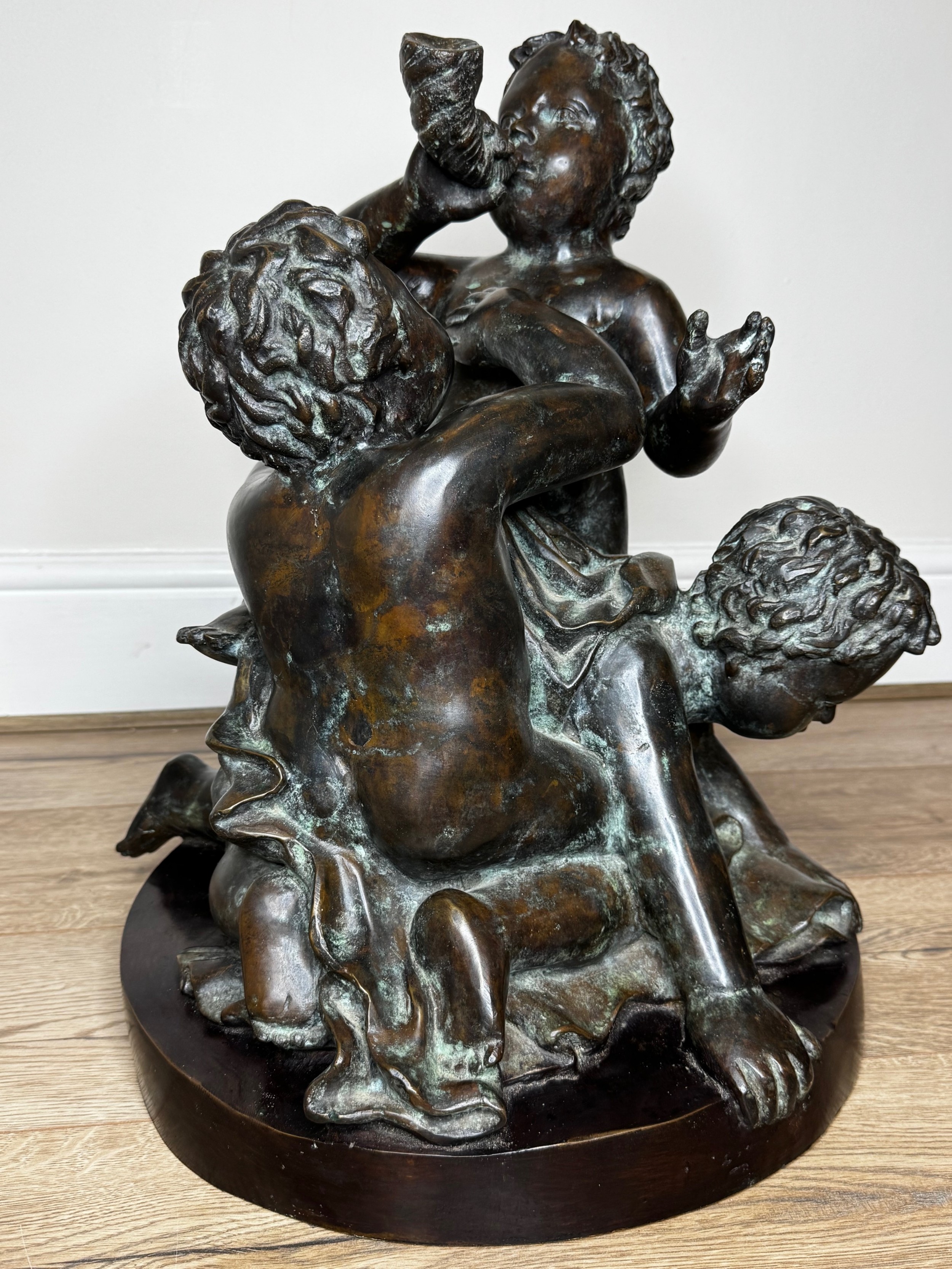
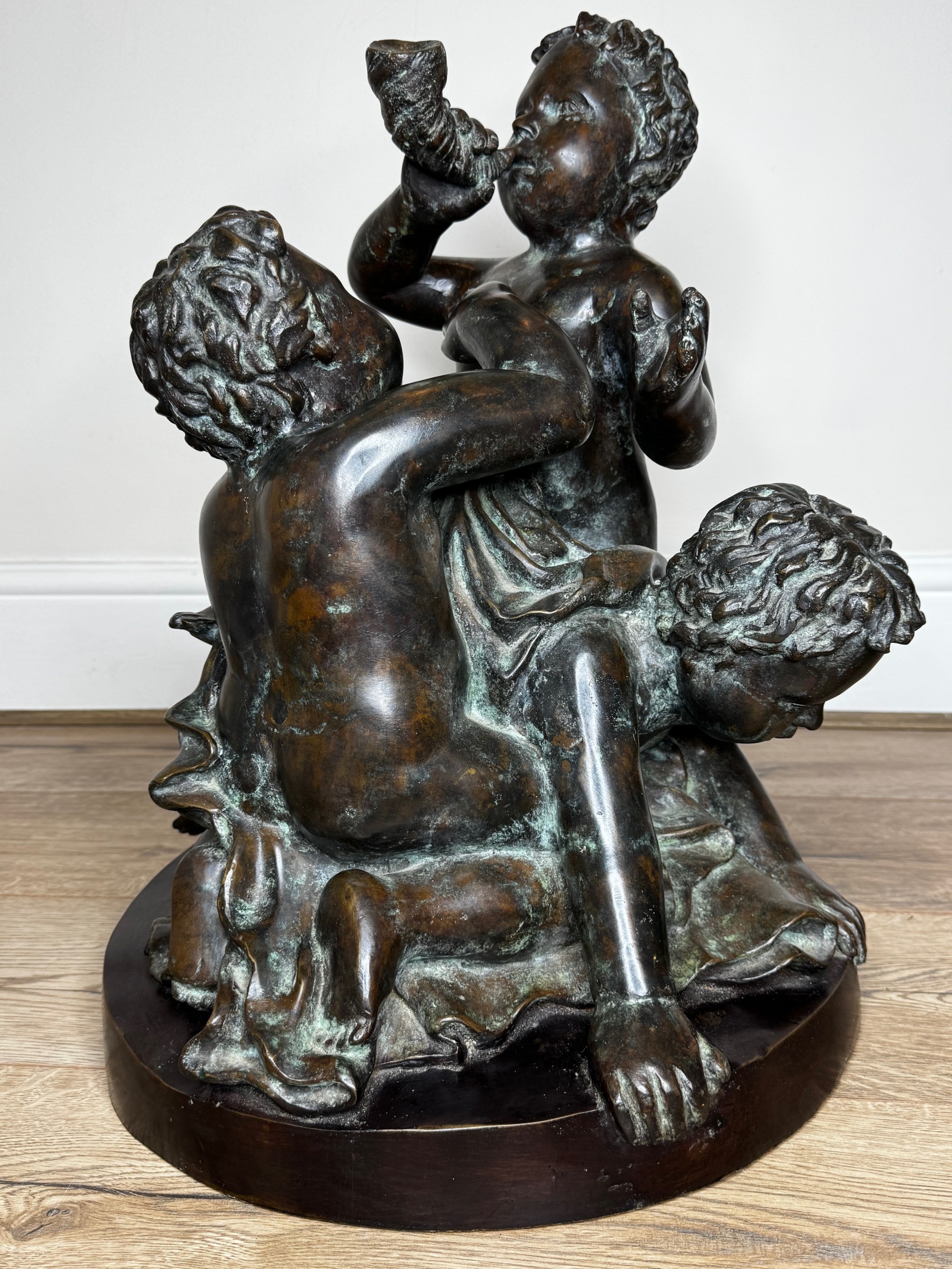
Archive II A dark patinated French bronze sculptural group depicting three putti playing, with one child blowing into a conch shell. View II
Archive III A dark patinated French bronze sculptural group depicting three putti playing, with one child blowing into a conch shell. View III
Archive IV Scale Reference for A dark patinated French bronze sculptural group depicting three putti playing, with one child blowing into a conch shell.
Archive V A dark patinated French bronze sculptural group depicting three putti playing, with one child blowing into a conch shell. View V
Archive VI A dark patinated French bronze sculptural group depicting three putti playing, with one child blowing into a conch shell. View VI
Archive VII A dark patinated French bronze sculptural group depicting three putti playing, with one child blowing into a conch shell. View VII
Archive VIII A dark patinated French bronze sculptural group depicting three putti playing, with one child blowing into a conch shell. View VIII
Archive IX A dark patinated French bronze sculptural group depicting three putti playing, with one child blowing into a conch shell. View IX
Archive X A dark patinated French bronze sculptural group depicting three putti playing, with one child blowing into a conch shell. View X
Archive XI A dark patinated French bronze sculptural group depicting three putti playing, with one child blowing into a conch shell. View XI
Archive XII A dark patinated French bronze sculptural group depicting three putti playing, with one child blowing into a conch shell. View XII
Archive XIII A dark patinated French bronze sculptural group depicting three putti playing, with one child blowing into a conch shell. View XIII
Archive XIV A dark patinated French bronze sculptural group depicting three putti playing, with one child blowing into a conch shell. View XIV
Archive XV A dark patinated French bronze sculptural group depicting three putti playing, with one child blowing into a conch shell. View XV
Archive XVI A dark patinated French bronze sculptural group depicting three putti playing, with one child blowing into a conch shell. View XVI
Archive XVII A dark patinated French bronze sculptural group depicting three putti playing, with one child blowing into a conch shell. View XVII
Archive XVIII A dark patinated French bronze sculptural group depicting three putti playing, with one child blowing into a conch shell. View XVIII
Archive XIX A dark patinated French bronze sculptural group depicting three putti playing, with one child blowing into a conch shell. View XIX
Archive XX A dark patinated French bronze sculptural group depicting three putti playing, with one child blowing into a conch shell. View XX
Archive XXI A dark patinated French bronze sculptural group depicting three putti playing, with one child blowing into a conch shell. View XXI
Archive XXII A dark patinated French bronze sculptural group depicting three putti playing, with one child blowing into a conch shell. View XXII
Archive XXIII A dark patinated French bronze sculptural group depicting three putti playing, with one child blowing into a conch shell. View XXIII
Archive XXIV A dark patinated French bronze sculptural group depicting three putti playing, with one child blowing into a conch shell. View XXIV
Archive XXV A dark patinated French bronze sculptural group depicting three putti playing, with one child blowing into a conch shell. View XXV
Archive XXVI A dark patinated French bronze sculptural group depicting three putti playing, with one child blowing into a conch shell. View XXVI
Archive XXVII A dark patinated French bronze sculptural group depicting three putti playing, with one child blowing into a conch shell. View XXVII
Archive XXVIII A dark patinated French bronze sculptural group depicting three putti playing, with one child blowing into a conch shell. View XXVIII
Archive XXIX A dark patinated French bronze sculptural group depicting three putti playing, with one child blowing into a conch shell. View XXIX
Archive XXX A dark patinated French bronze sculptural group depicting three putti playing, with one child blowing into a conch shell. View XXX
Archive XXXI A dark patinated French bronze sculptural group depicting three putti playing, with one child blowing into a conch shell. View XXXI
Enlarged Archival View
Telephone 07494 763 382
Location
71-75 Shelton Street
Covent Garden
London
WC2H 9JQ
United Kingdom

By appointment
Verified Since Jan 2021
Items For Sale 250
Items Sold 214
Cheshire Antiques Consultant Ltd
Verified Since Jan 2021
View Dealer Info
Location: 71-75 Shelton Street, Covent Garden, London, WC2H 9JQ, United Kingdom, , By appointment
Verified
Jan 2021
For Sale
250
Sold
214
A dark patinated French bronze sculptural group depicting three putti playing, with one child blowing into a conch shell.
Classical Grand Tour French Bronze Group – Call of the Triton Conch Sea Putti, After Clodion (c.1820)
Ref: SA1179487
A dark patinated French bronze sculptural group depicting three putti playing, with one child blowing into a conch shell.
Detail View 1
Detail View 2
Detail View 3
Detail View 4
Detail View 5
Detail View 6
Detail View 7
Detail View 8
Detail View 9
Detail View 10
Detail View 11
Detail View 12
Detail View 13
Detail View 14
Detail View 15
Detail View 16
Detail View 17
Detail View 18
Detail View 19
Detail View 20
Detail View 21
Detail View 22
Detail View 23
Detail View 24
Detail View 25
Detail View 26
Detail View 27
Detail View 28
Detail View 29
Scale Reference
Archival Detail
Every single antique dealer on our platform is individually approved by our internal team. We verify their professional trade history, ethical standards, and photographic quality to ensure a secure, high-standard buying environment. Upon joining, every dealer agrees to a strict 9-point code of conduct. While issues can occasionally arise, our dealers typically resolve them swiftly and directly with the buyer. In fact, since our founding in 2002, Sellingantiques has only had to step in to help resolve an issue on roughly five occasions—a true testament to the quality of our dealers and their dedication to your happiness.
Our dealers are highly experienced in packing and shipping fragile, high-value antiques. Because you are in direct contact with the dealer, you will be able to easily go through all available shipping and insurance options together to ensure your item arrives safely.
Antiques are the ultimate green purchase. By choosing historical pieces over newly manufactured goods, you completely eliminate the carbon footprint of modern mass production while preserving exceptional, timeless craftsmanship.

During the 18th and 19th centuries, travellers undertaking the Grand Tour across Europe collected bronze sculptures depicting classical and mythological themes. Works created after prominent French sculptors such as Clodion reflected Neoclassical and Rococo Revival tastes, capturing dynamic mythological scenes featuring putti, nymphs, and satyrs.

These sculptures were cast in bronze using either the lost-wax (cire perdue) or sand-casting method. After casting, artisans executed hand-chasing to refine fine details like hair and drapery, followed by the application of chemical patinas to produce dark brown, green, or multi-toned surface finishes.

Authentic pieces generally display precise hand-chasing, substantial weight appropriate to solid bronze casting, and natural surface wear on raised areas. Look for crisp anatomical detail, signatures such as After Clodion, and period-appropriate circular or oval bases.

Position the bronze group as a focal point on a mantelpiece, sideboard top, or marble console table. Pairing dark patinated bronzes with clean architectural lines and contemporary materials creates an engaging visual contrast between historical sculpture and modern decor.

Dust the bronze regularly with a soft, dry microfibre cloth or a soft bristle brush for recessed areas. Avoid water, liquid chemical polishes, or abrasive cleaners, which strip the original patina; a light coat of clear microcrystalline wax applied annually will protect the metal finish.
items
Add keywords to the filter
Price
£100
£250000
Era
Movements
Material
Origin
Stock Location
Freshness
Online Payments
Categories