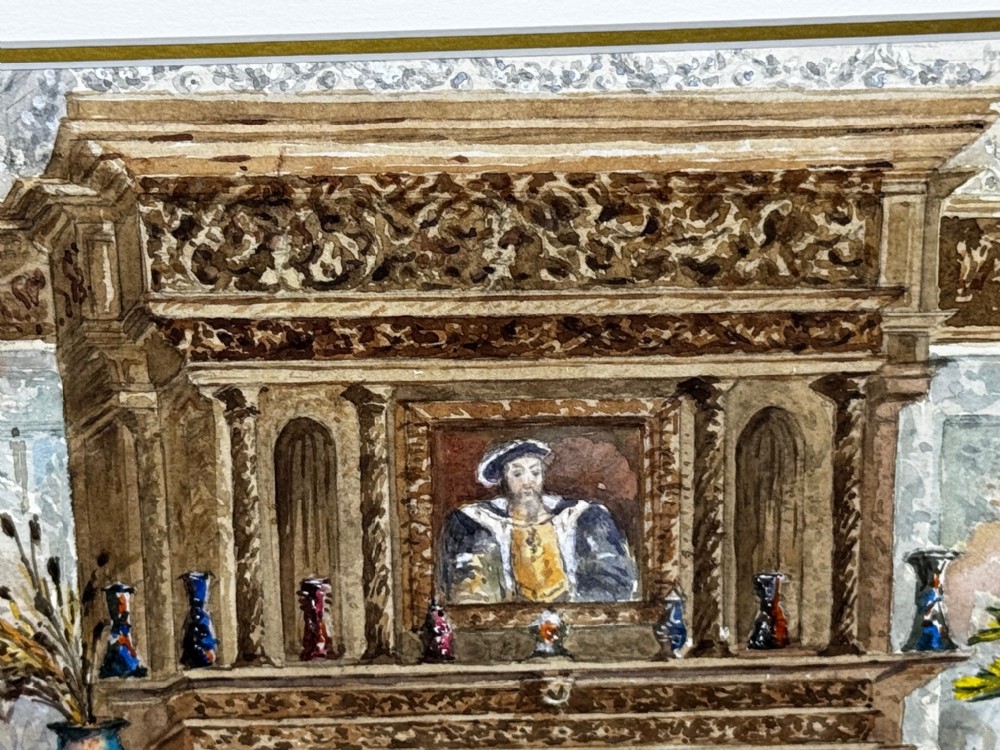
Cheshire Antiques Consultant Ltd has dated this Victorian Interior Watercolour Painting to the Victorian era.
Architectural Watercolour in the Manner of John Chessell Buckler (1793–1894)
Subject & Medium
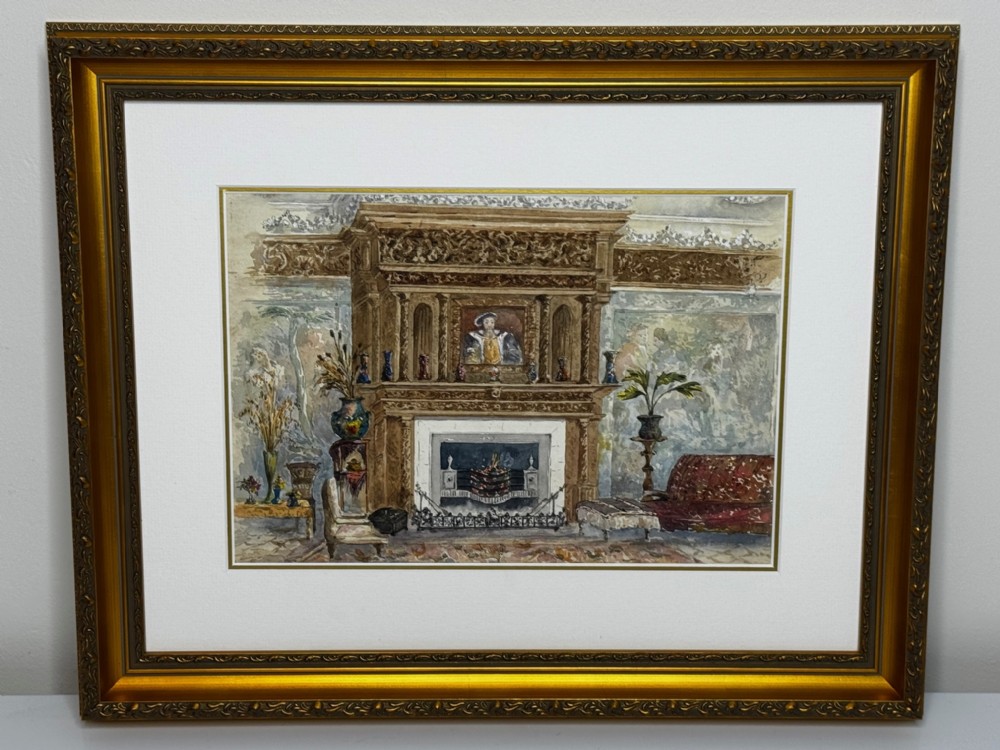
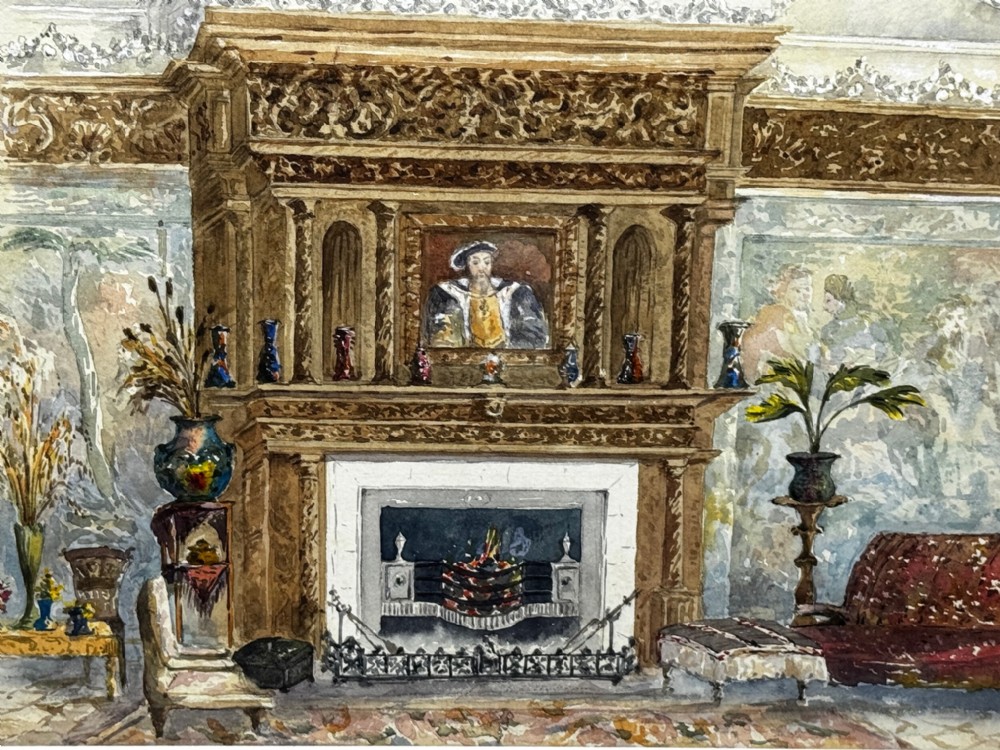
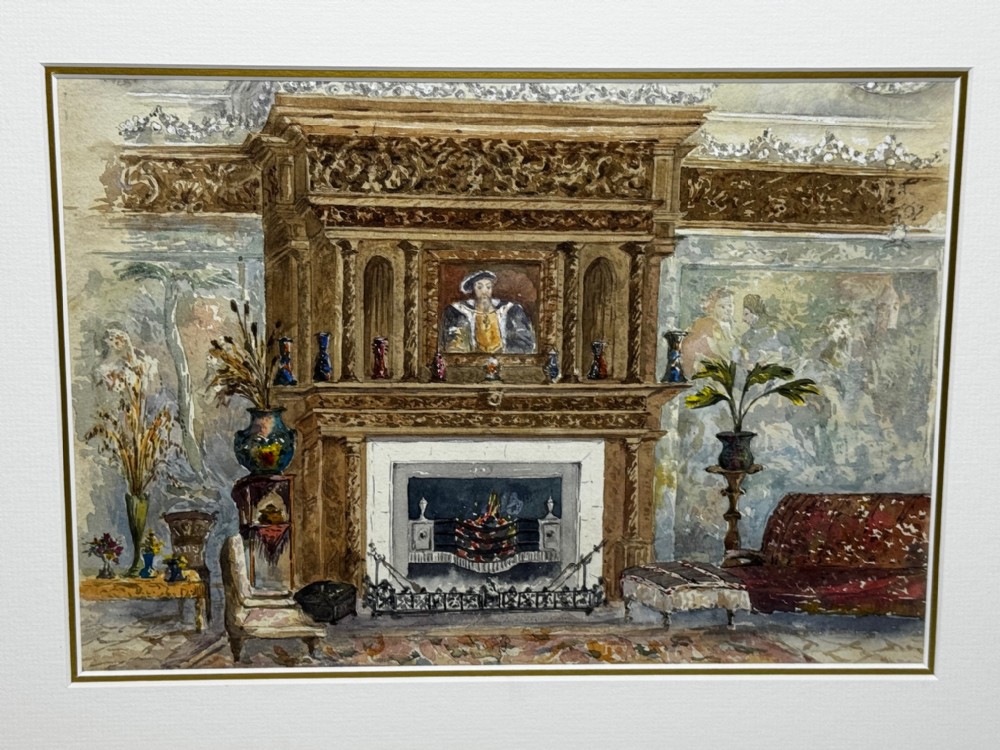
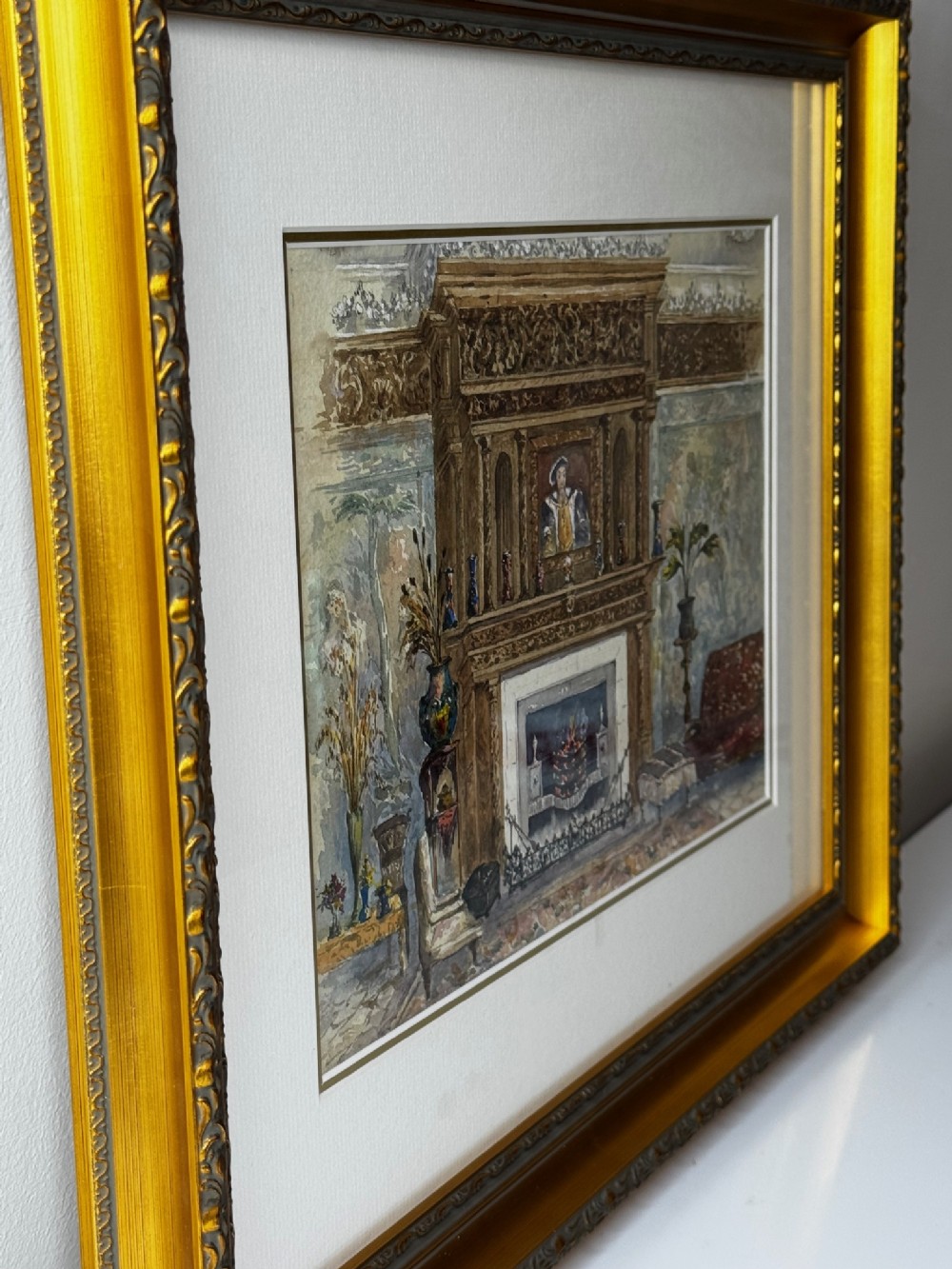
This exquisitely rendered watercolour on paper, painted in 1891 by E.
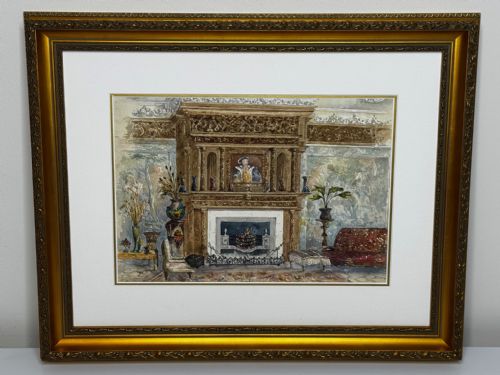
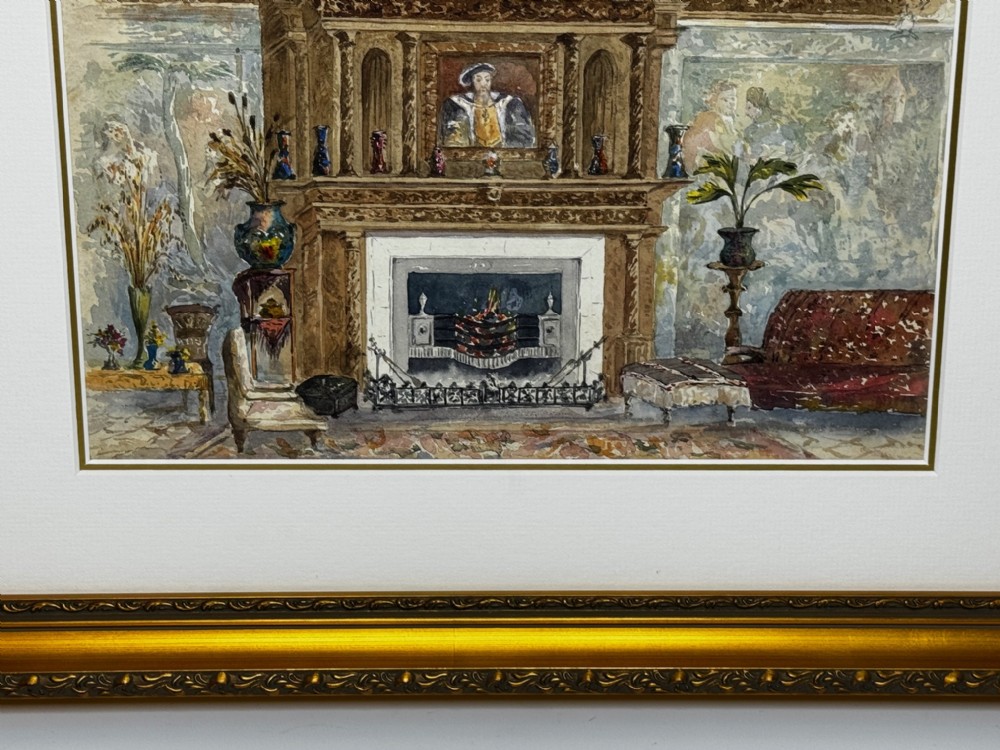
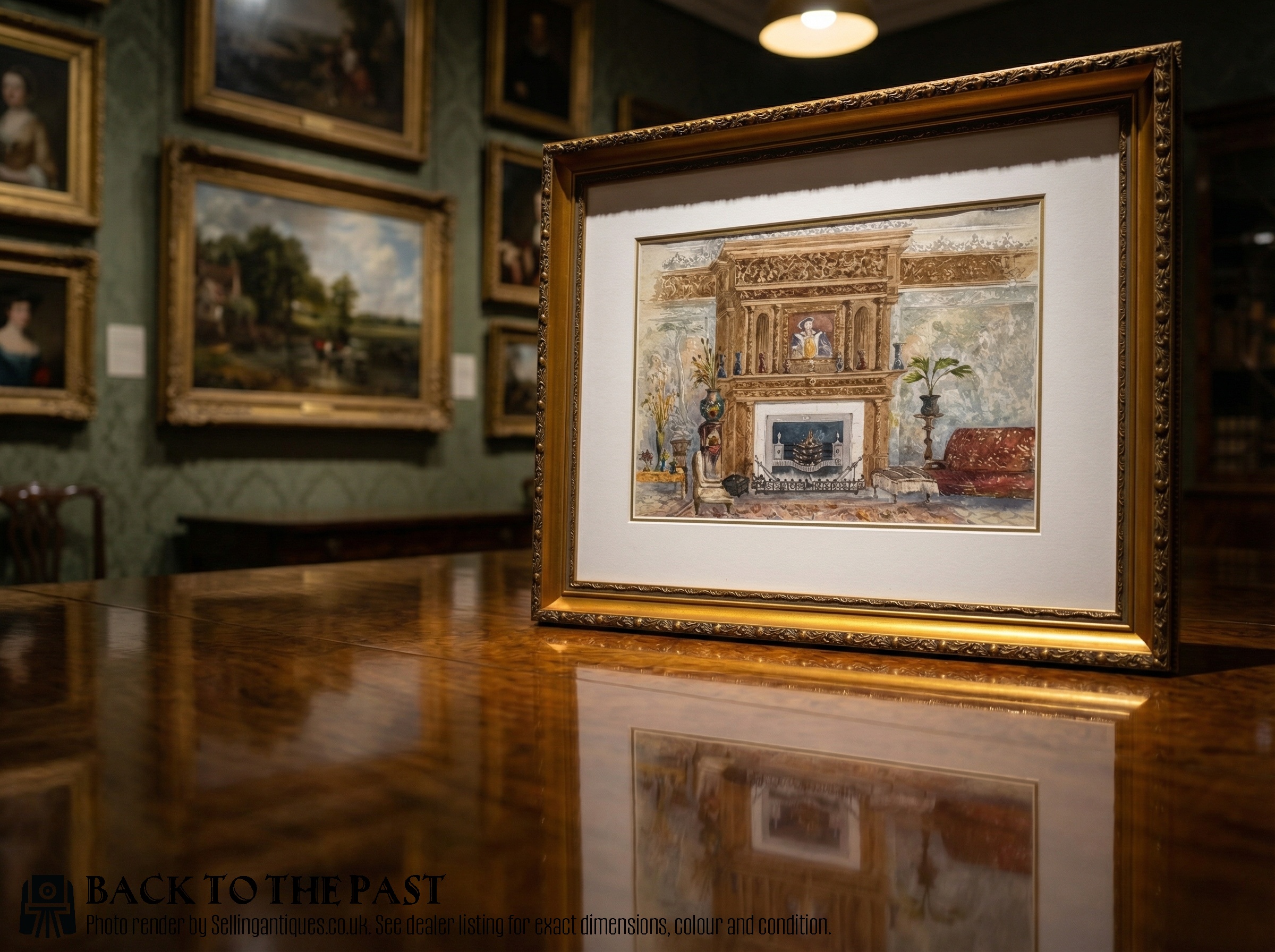
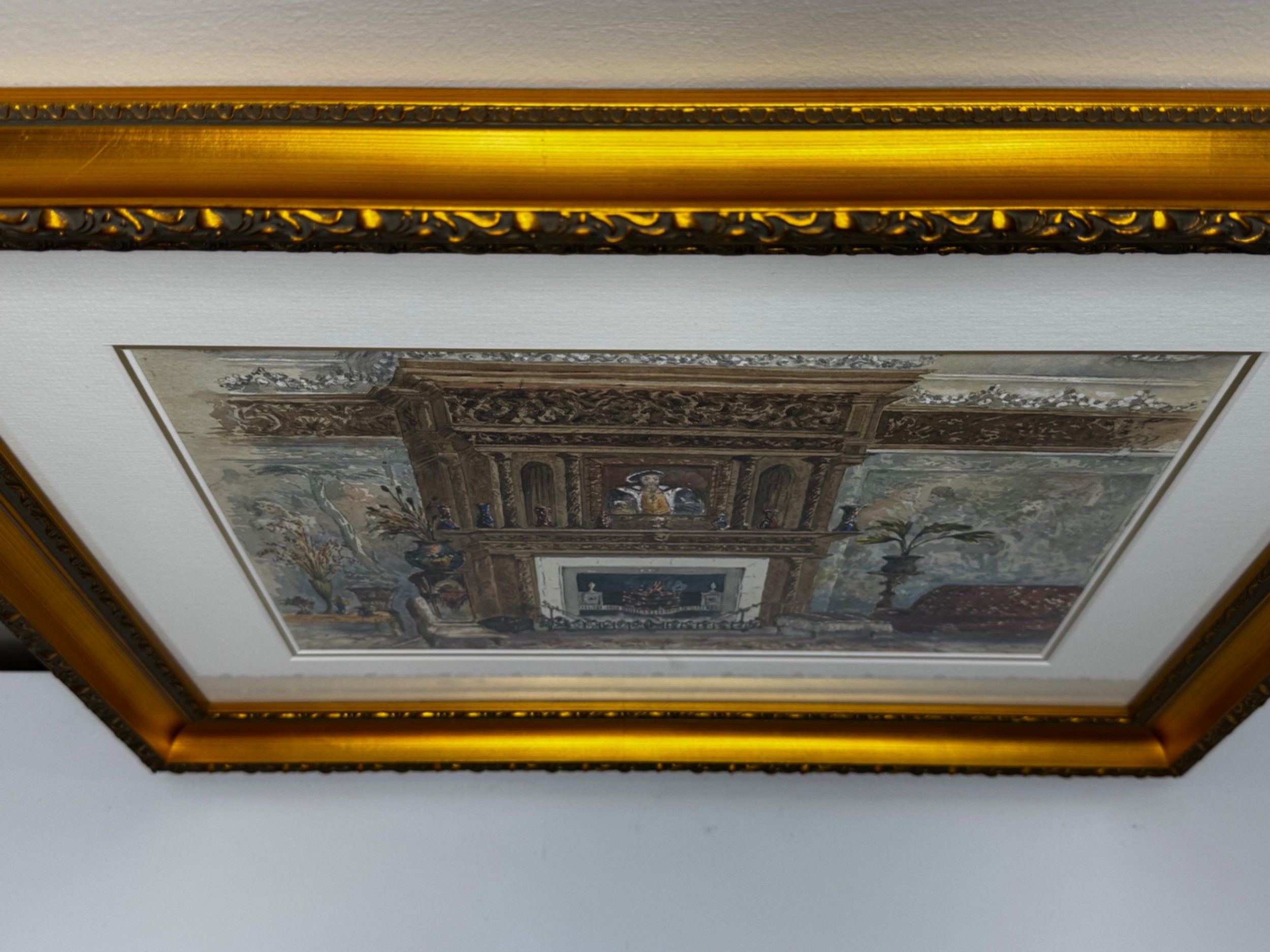
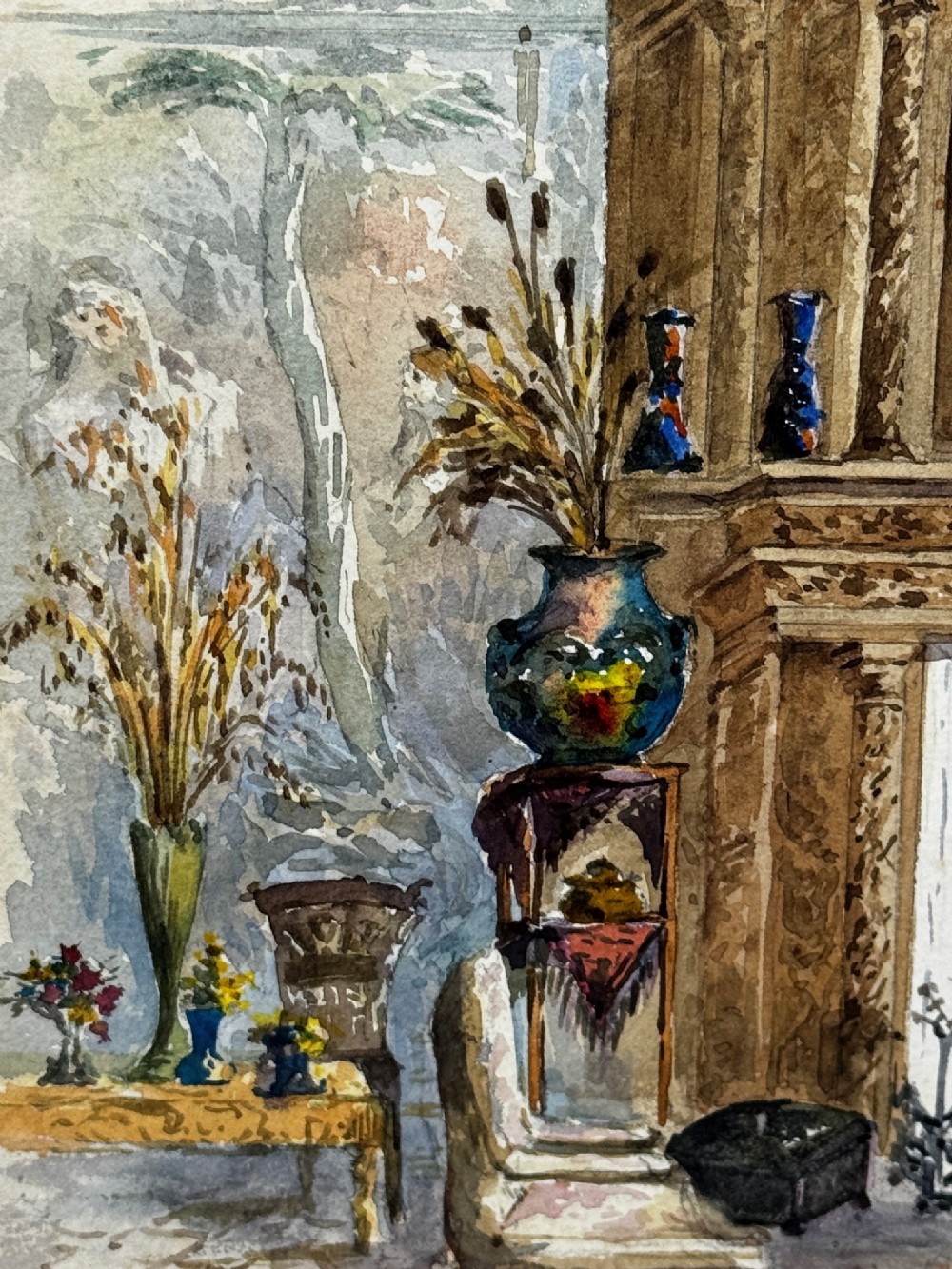
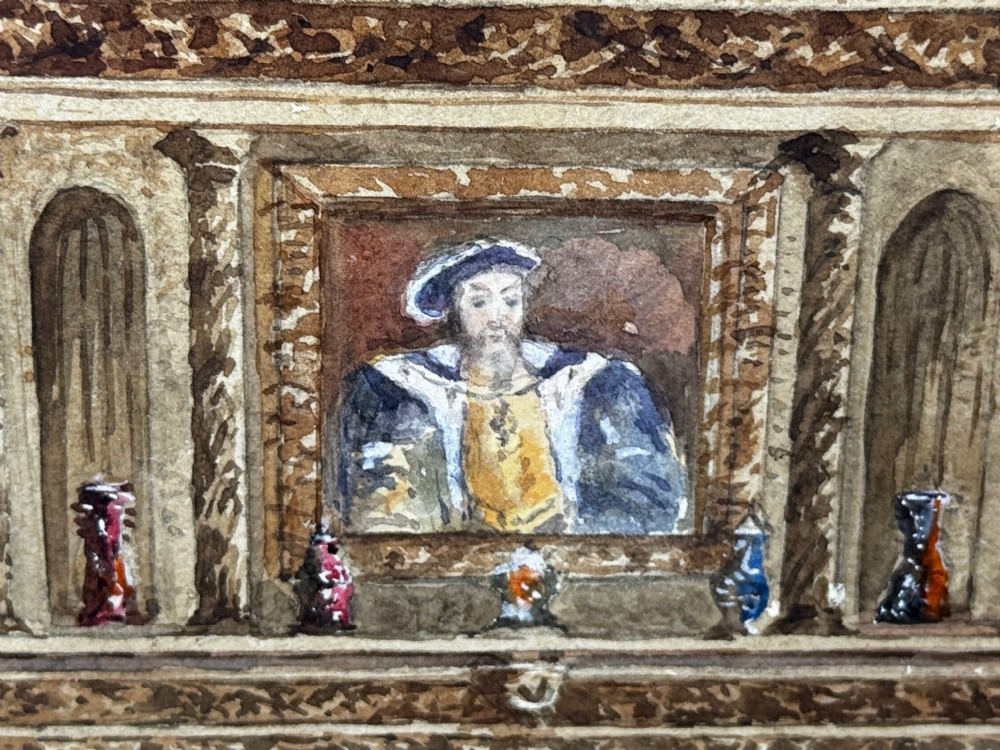
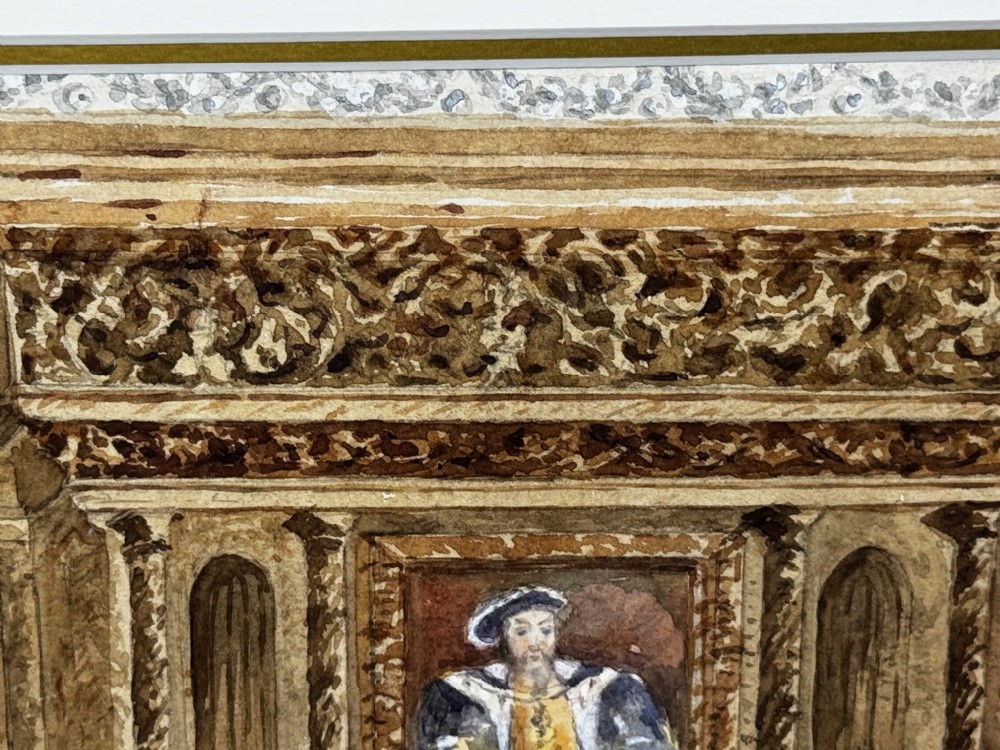
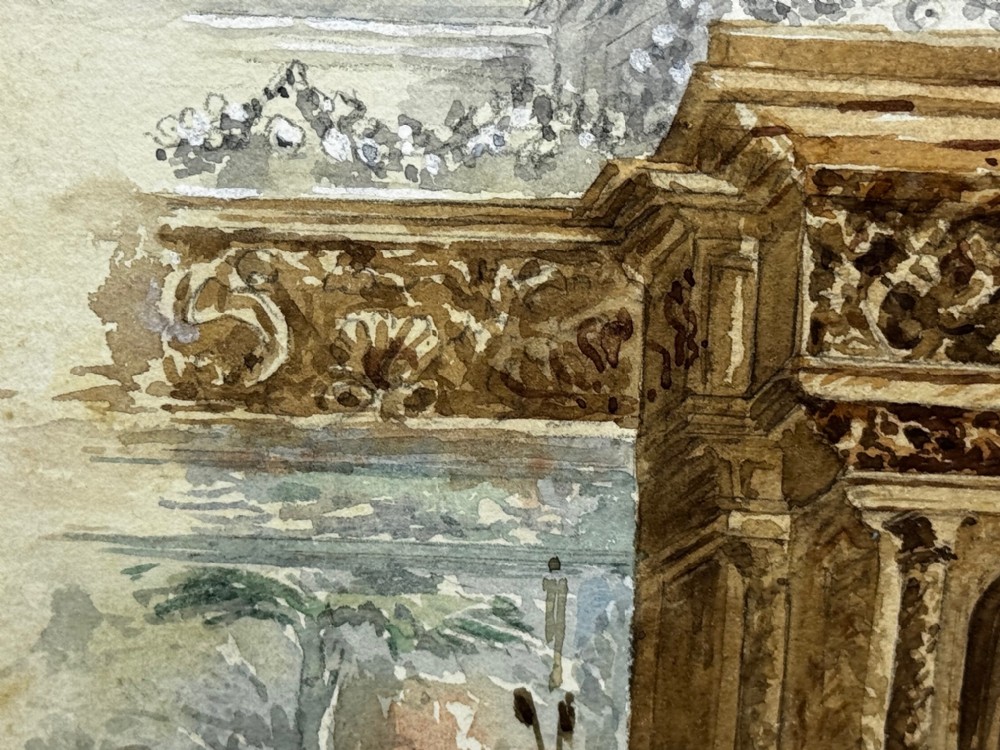
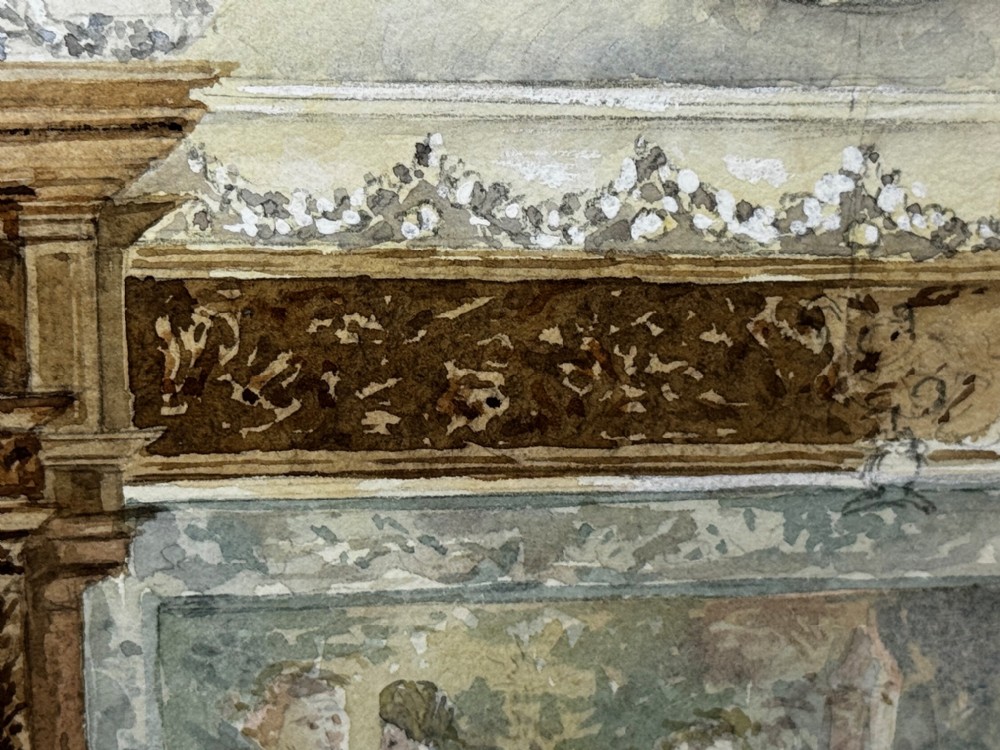
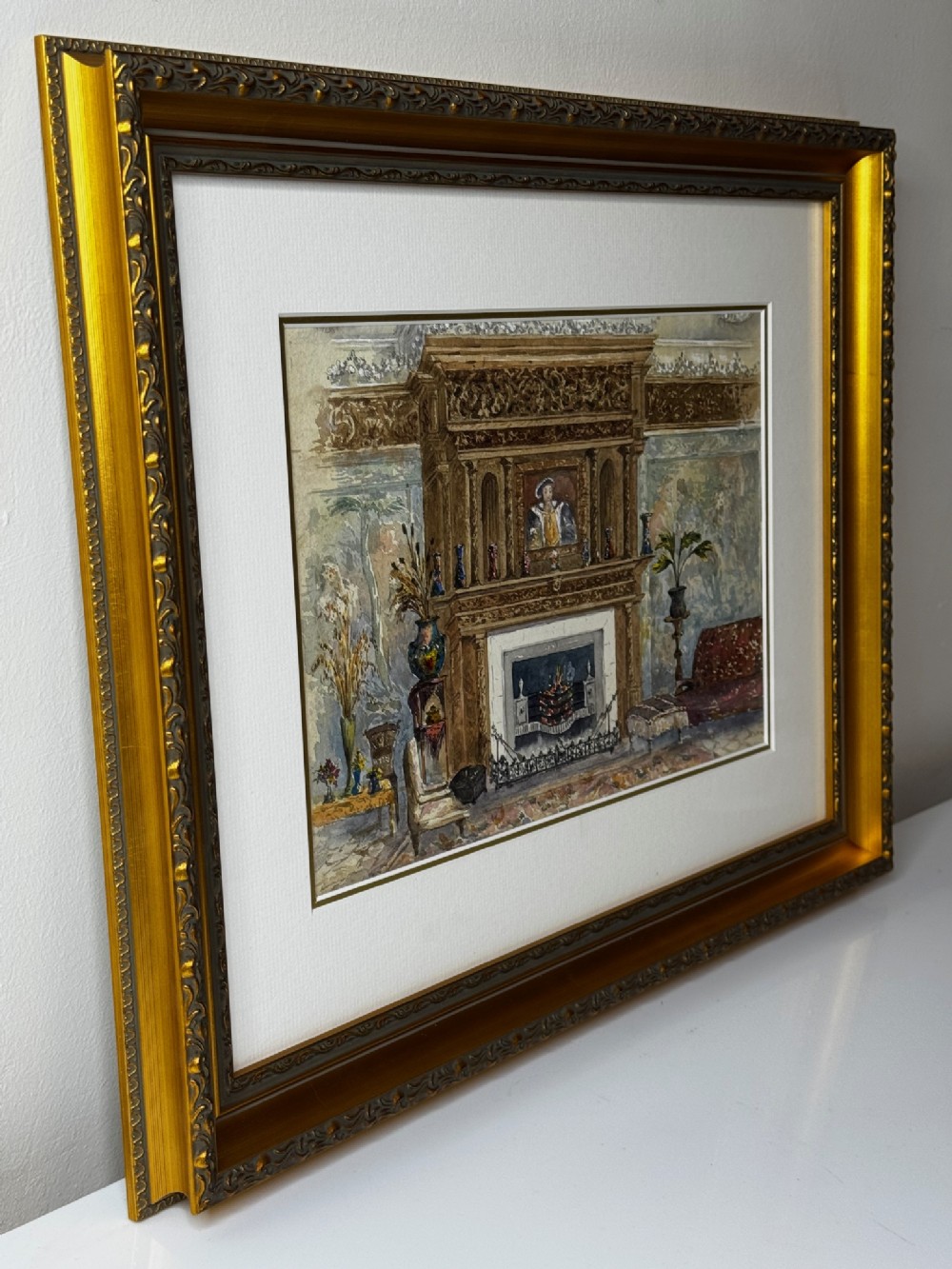
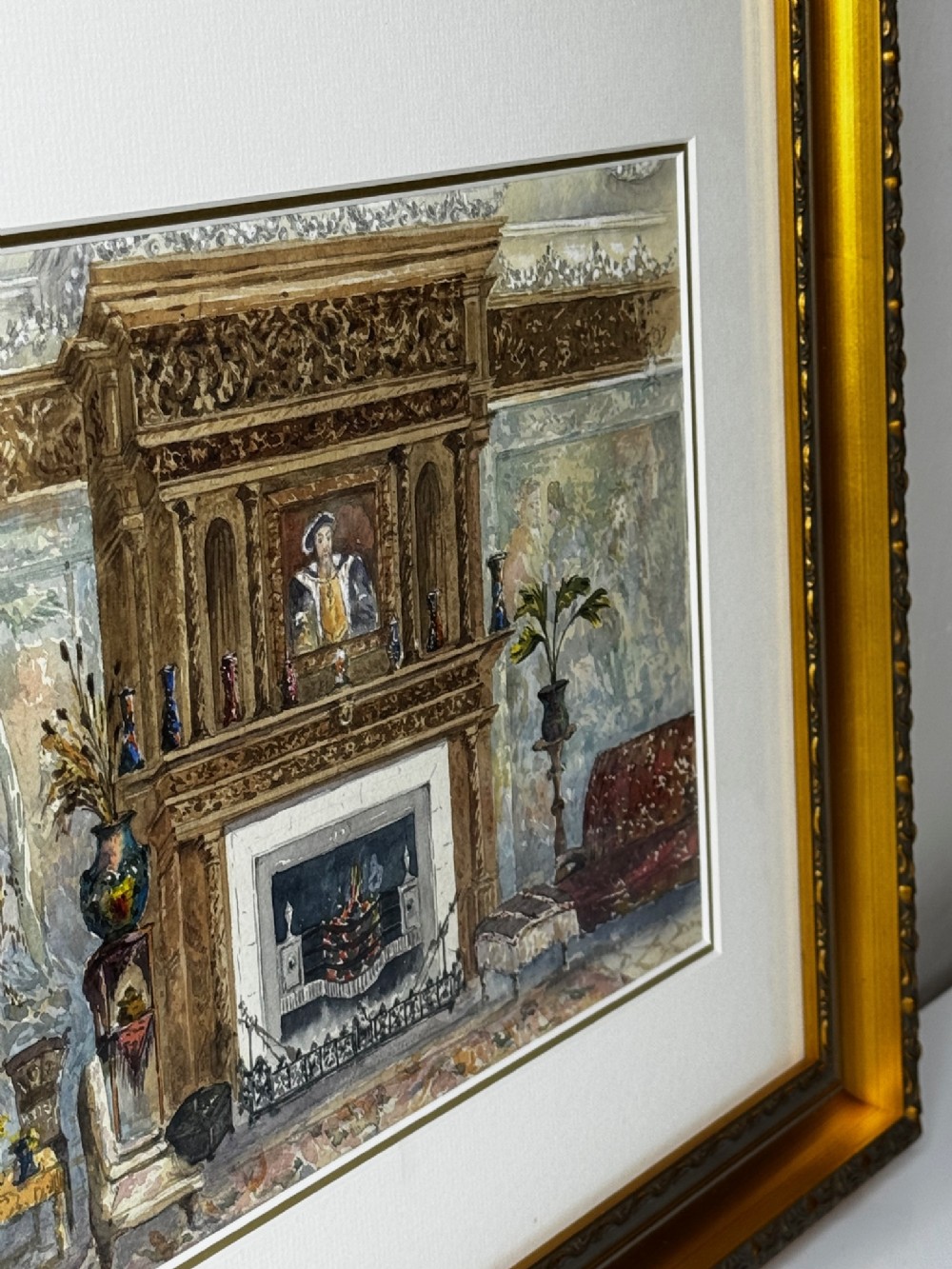
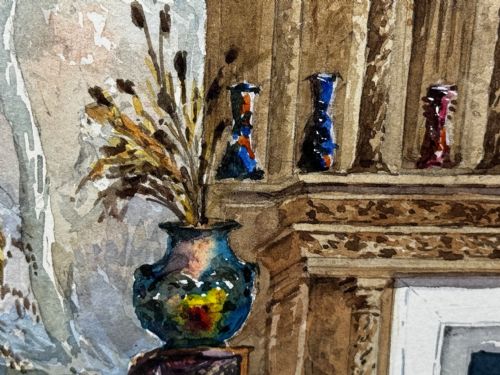
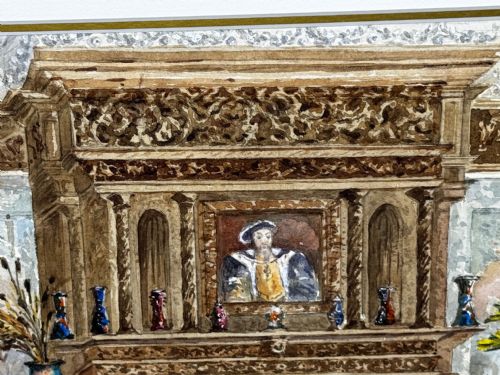
At its centre stands a majestic Jacobean oak chimneypiece, richly carved and crowned with an overmantel portrait of a Tudor or early-Stuart gentleman in ruff and doublet — a dignified symbol of lineage and refinement.
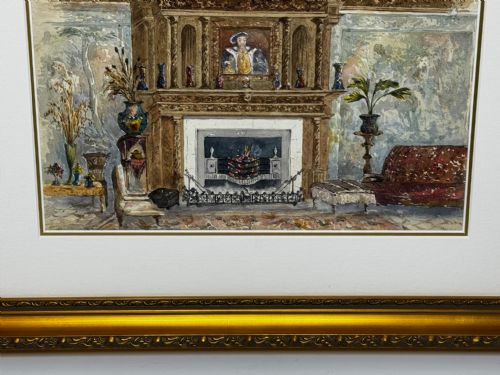
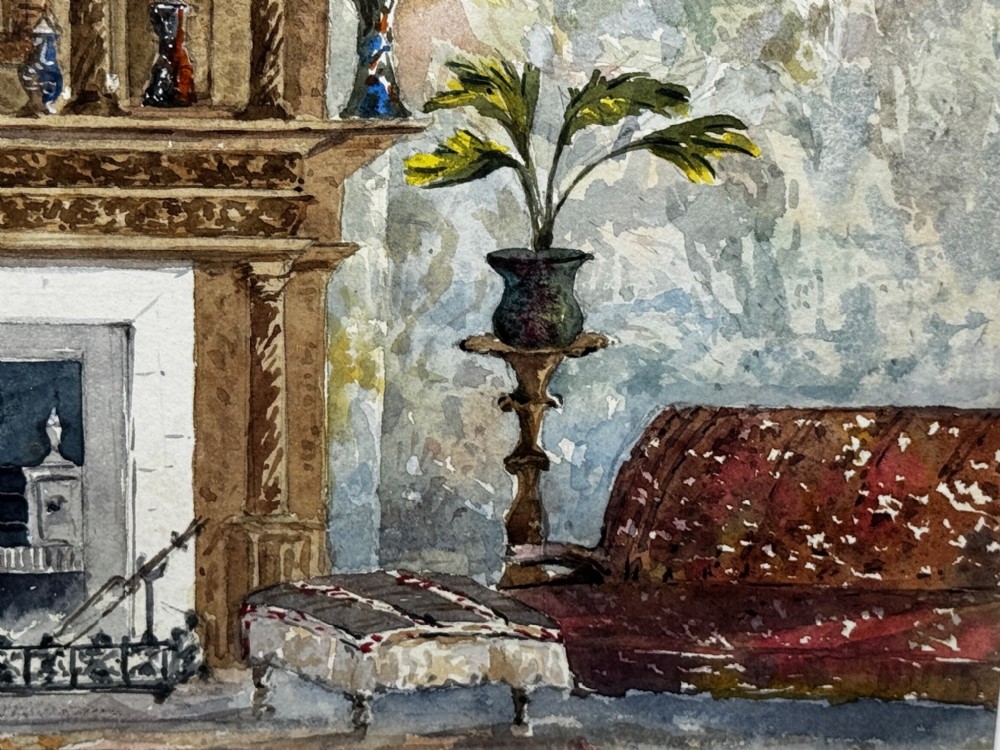
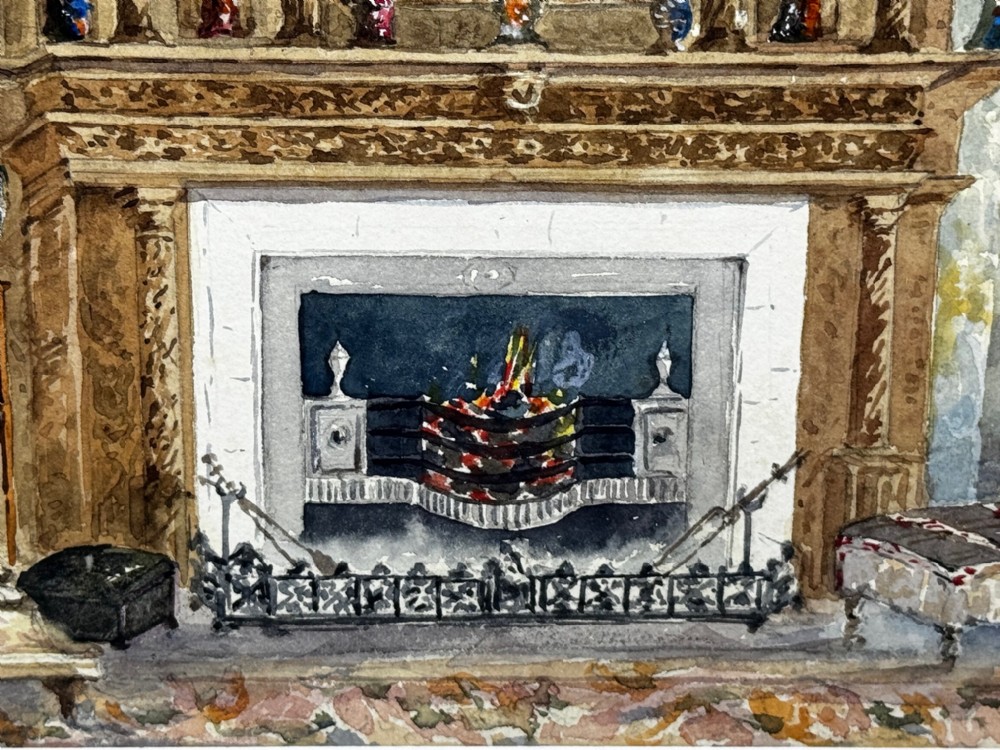
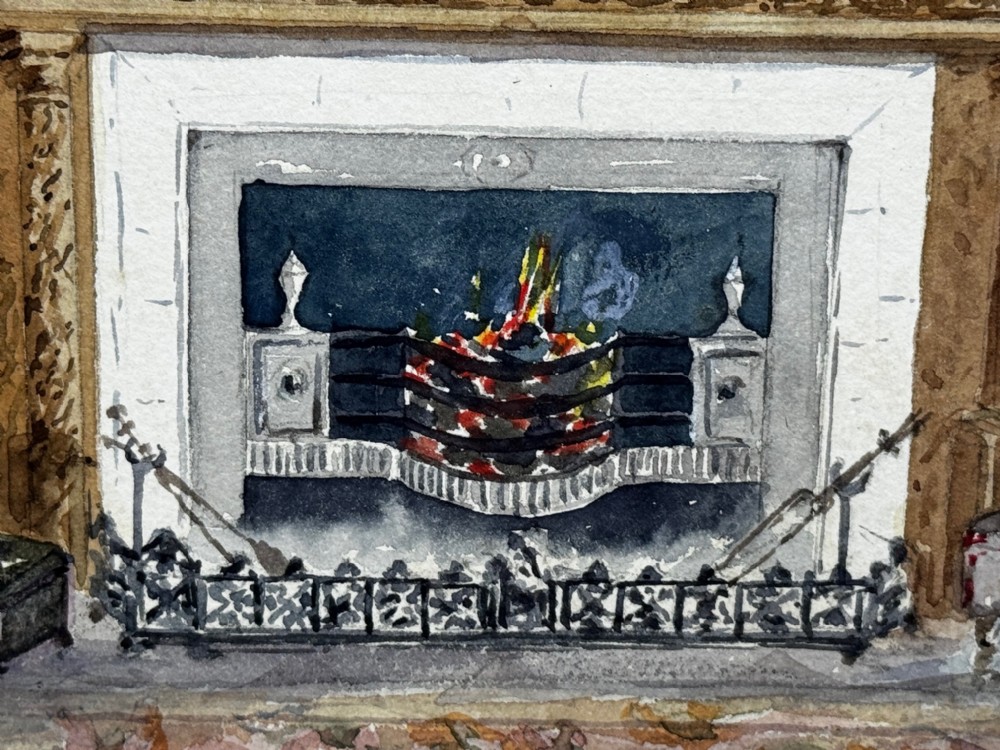
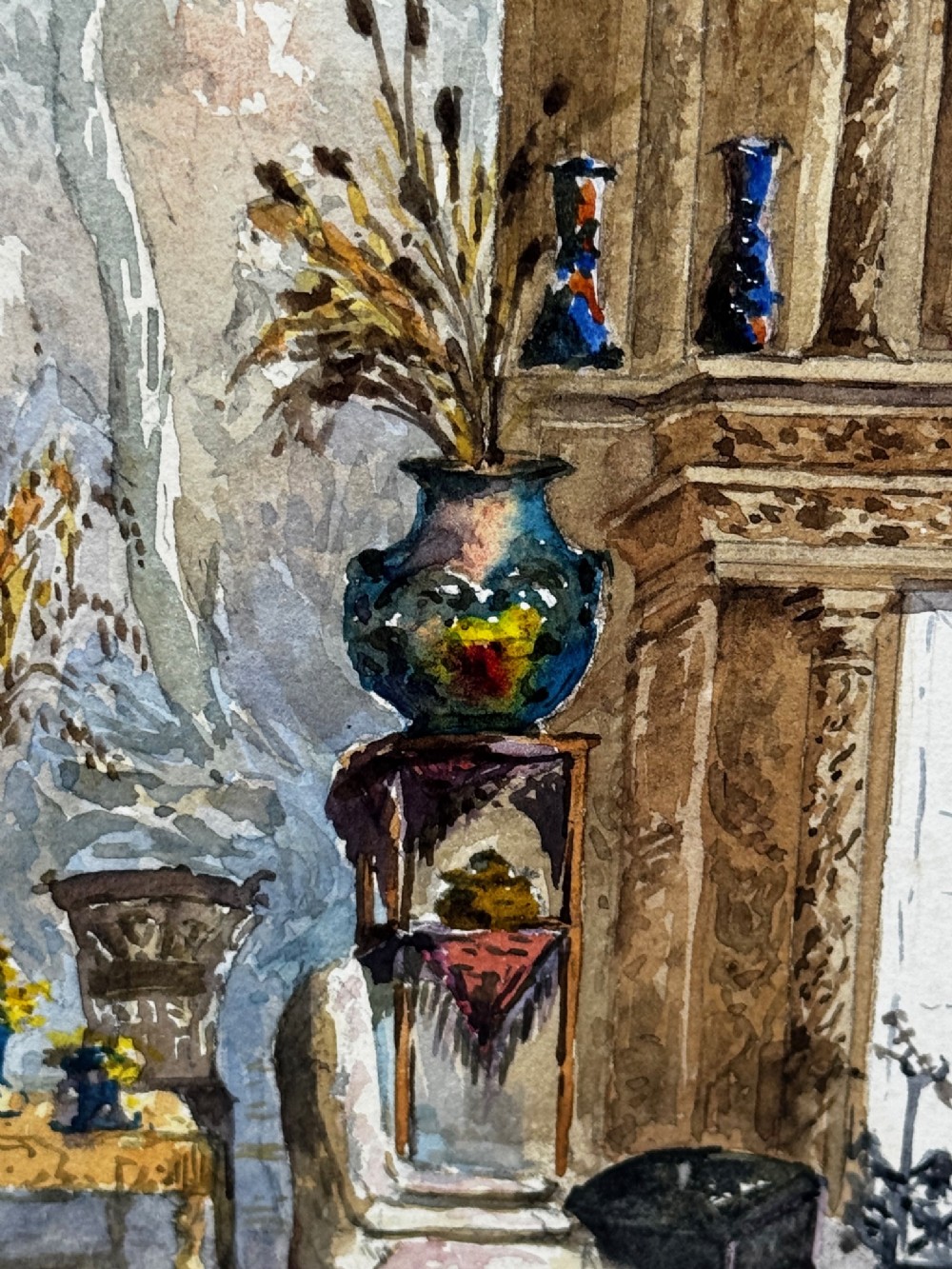
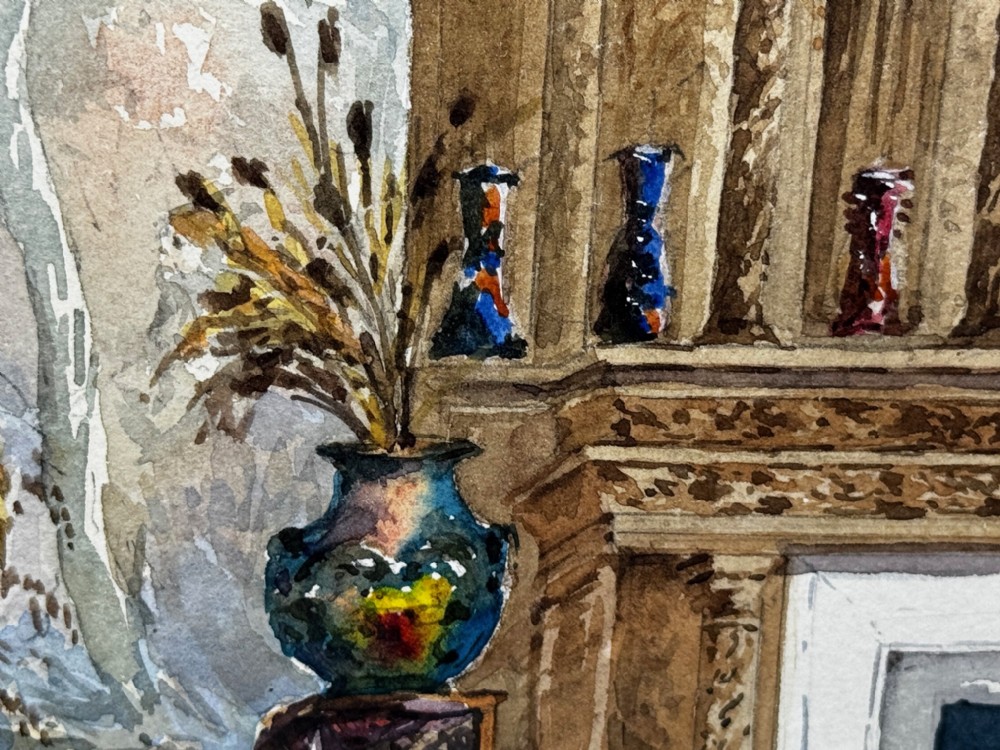
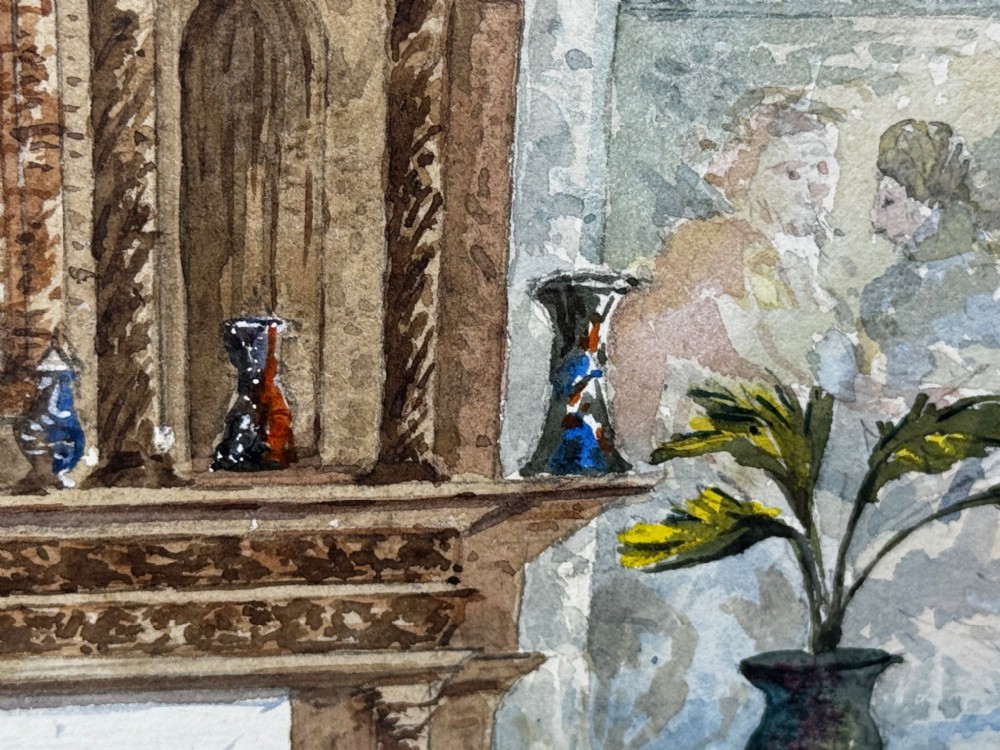
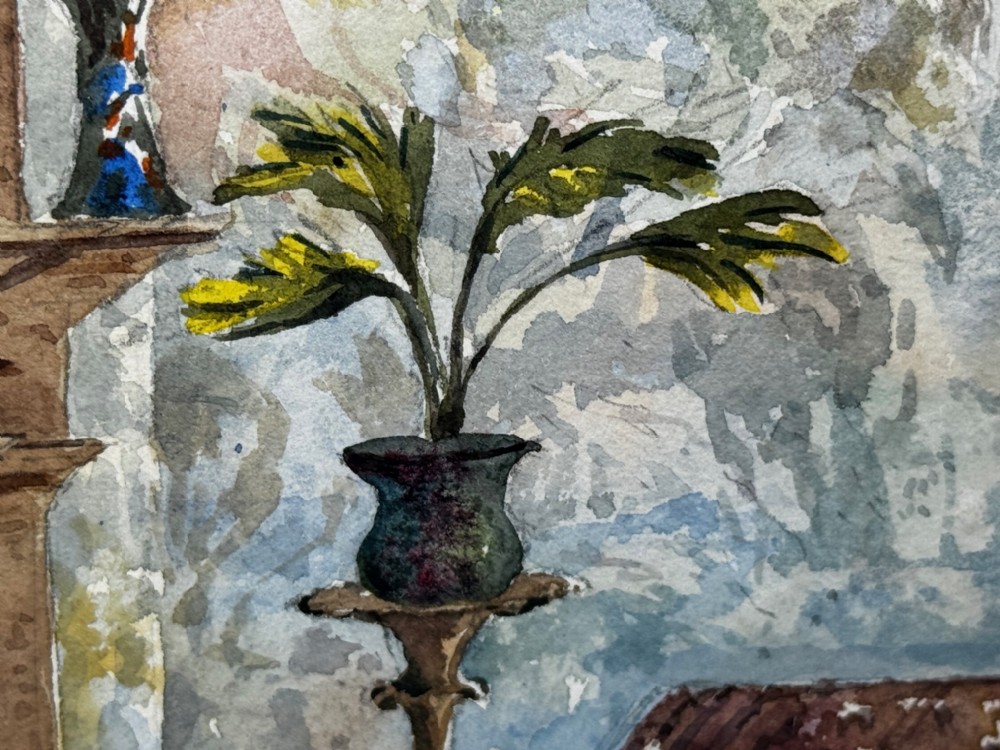
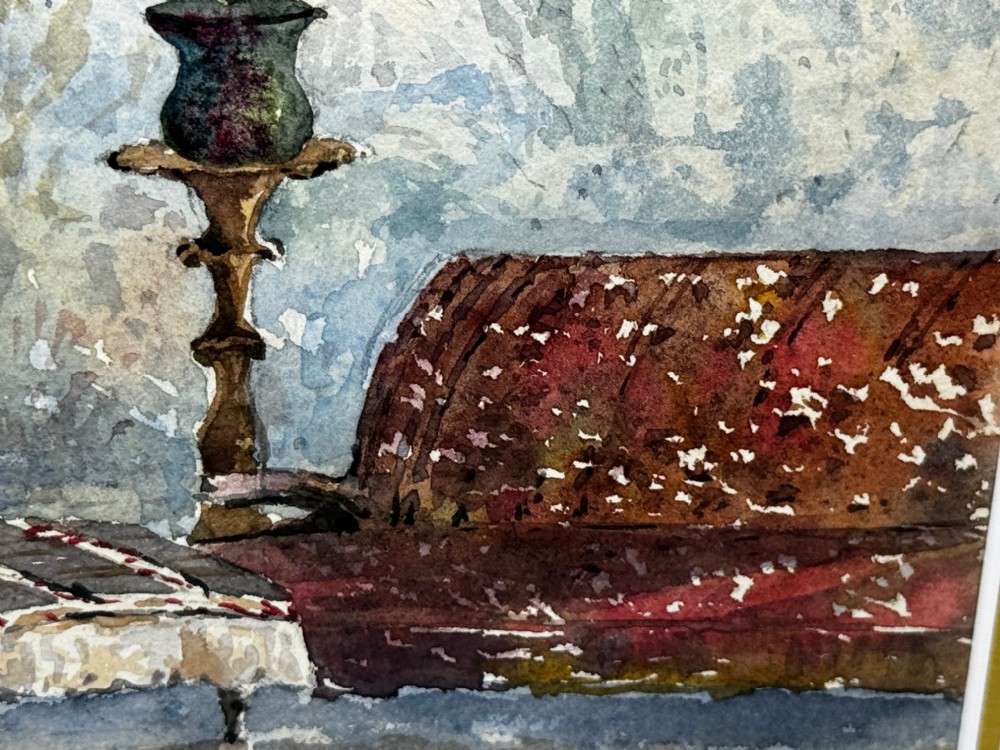
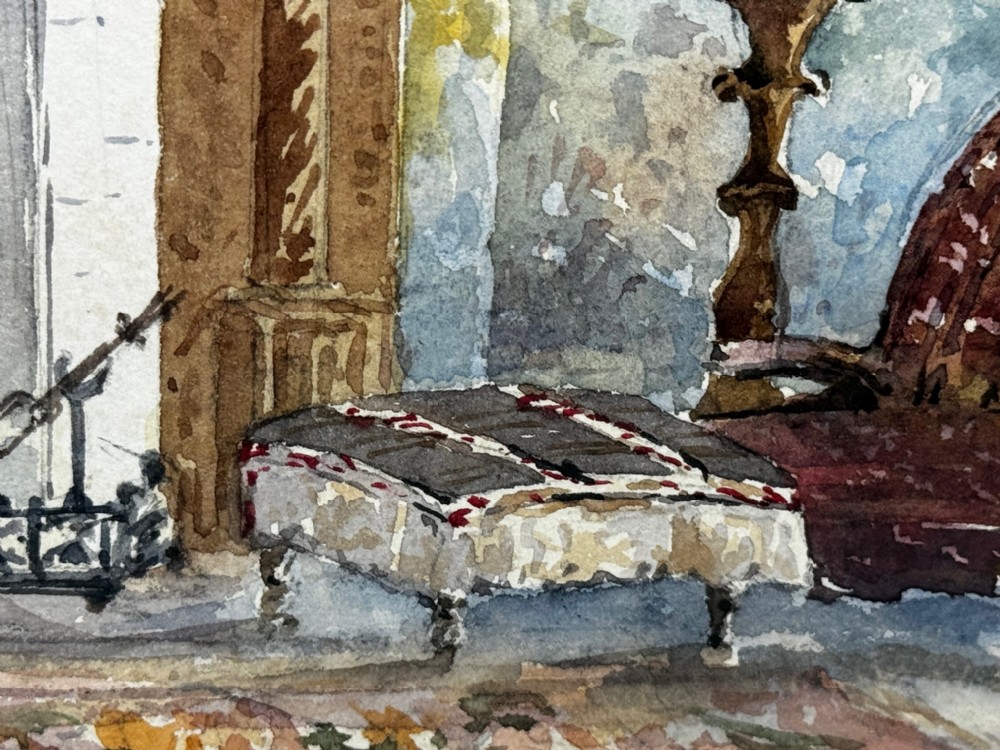
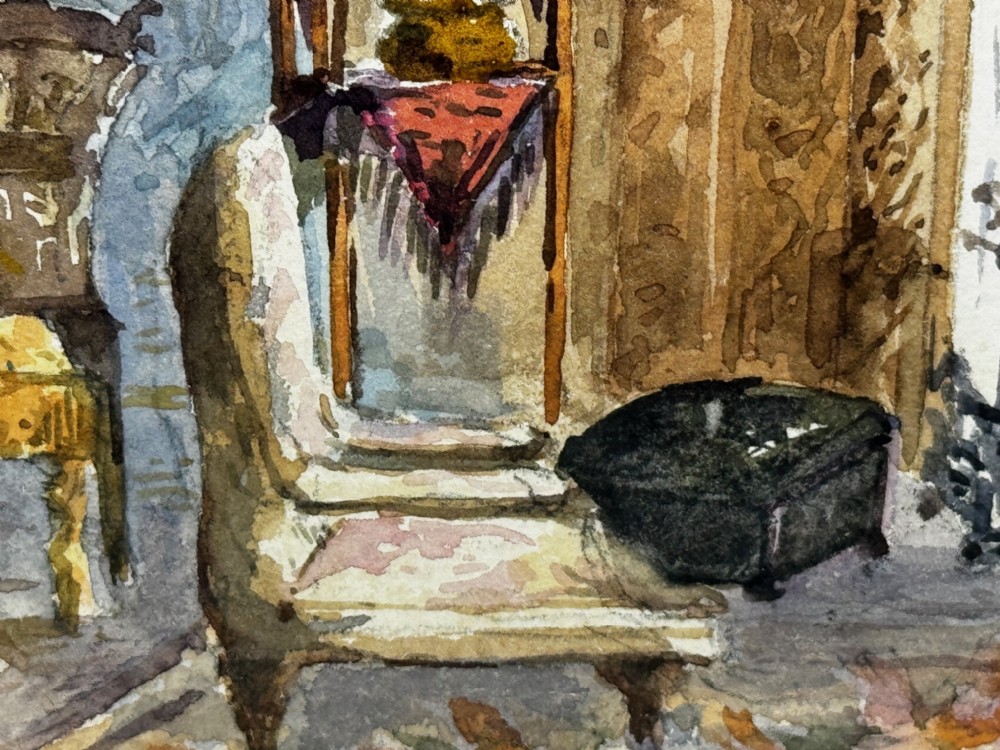
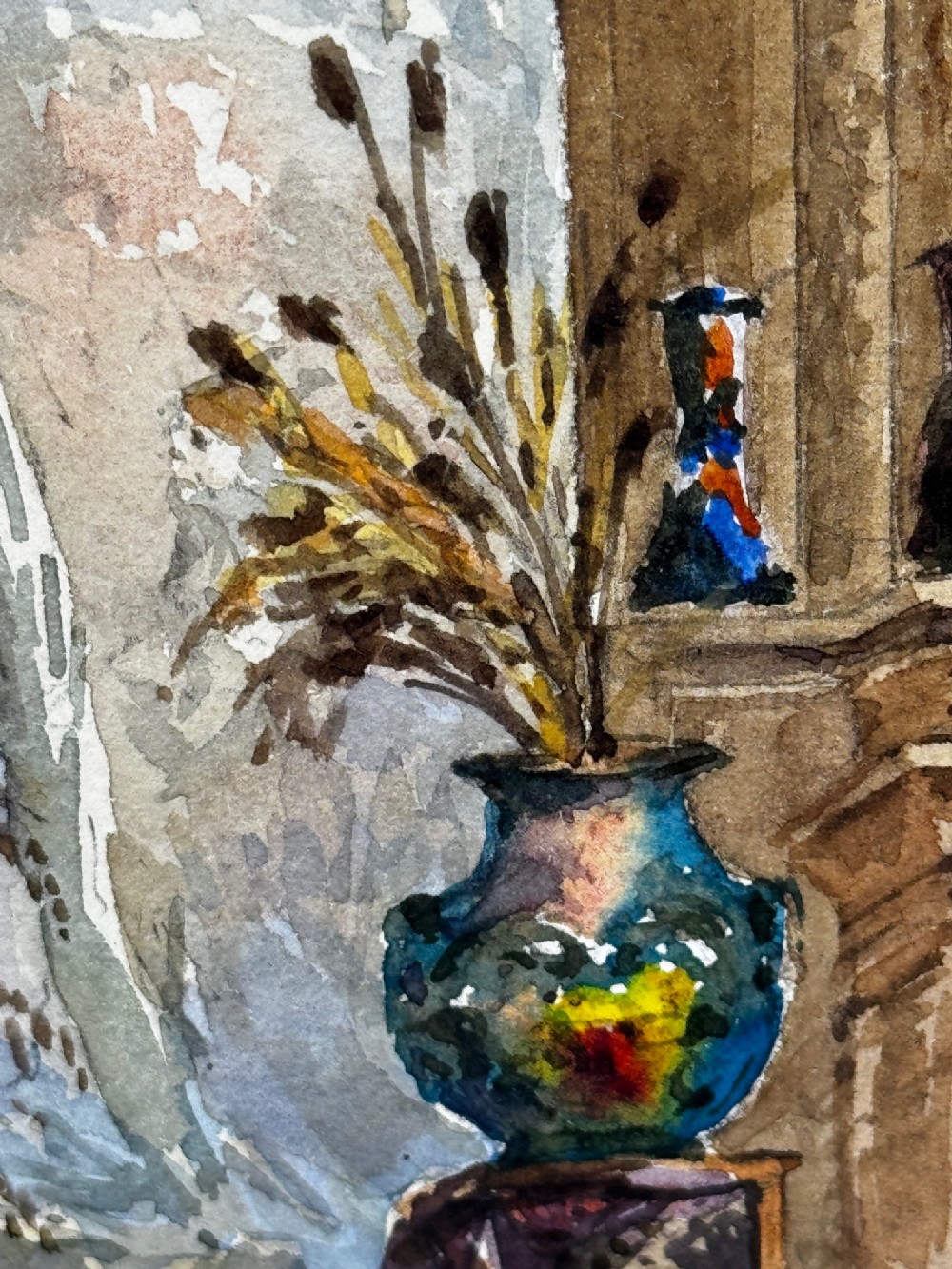
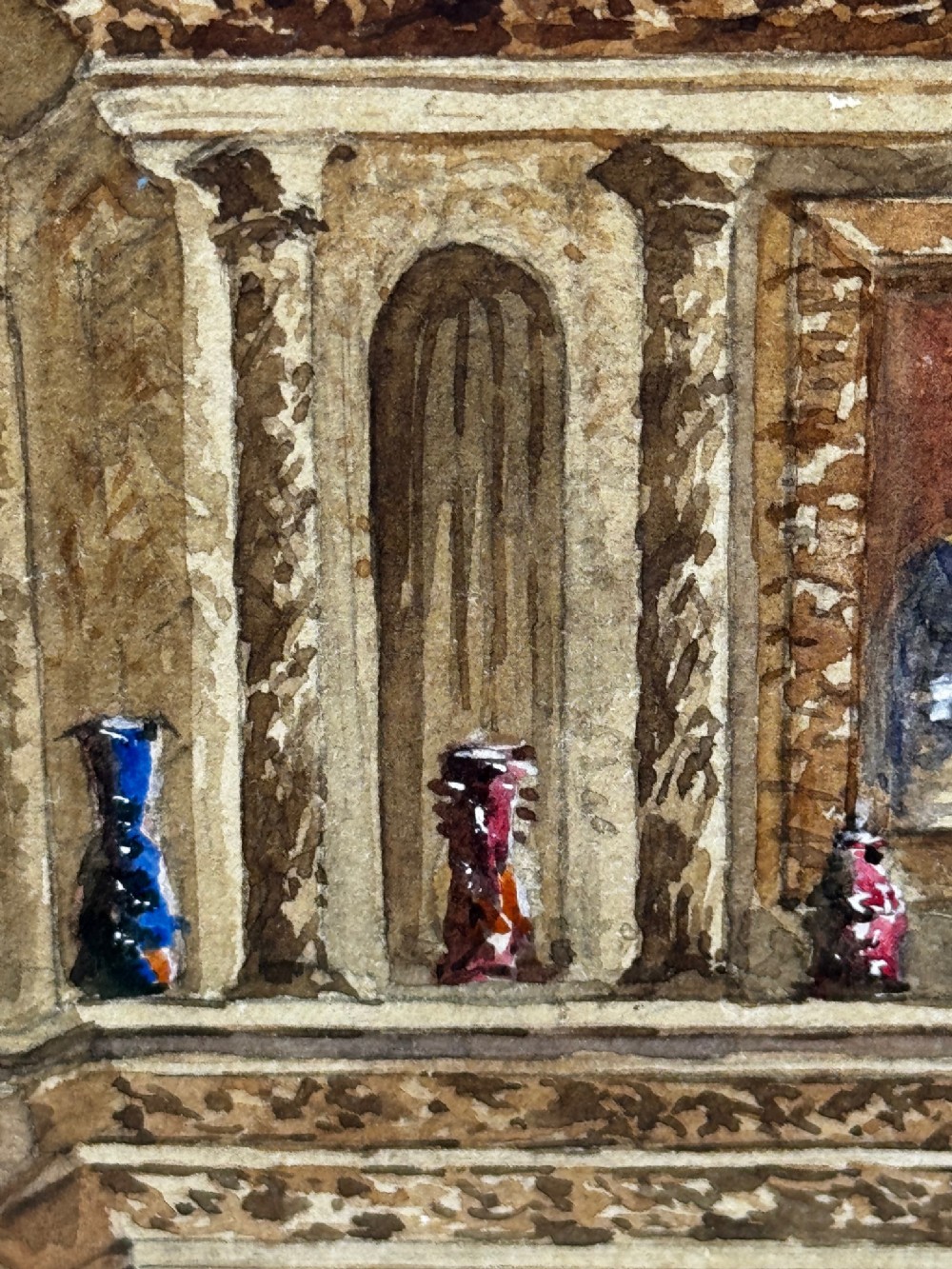
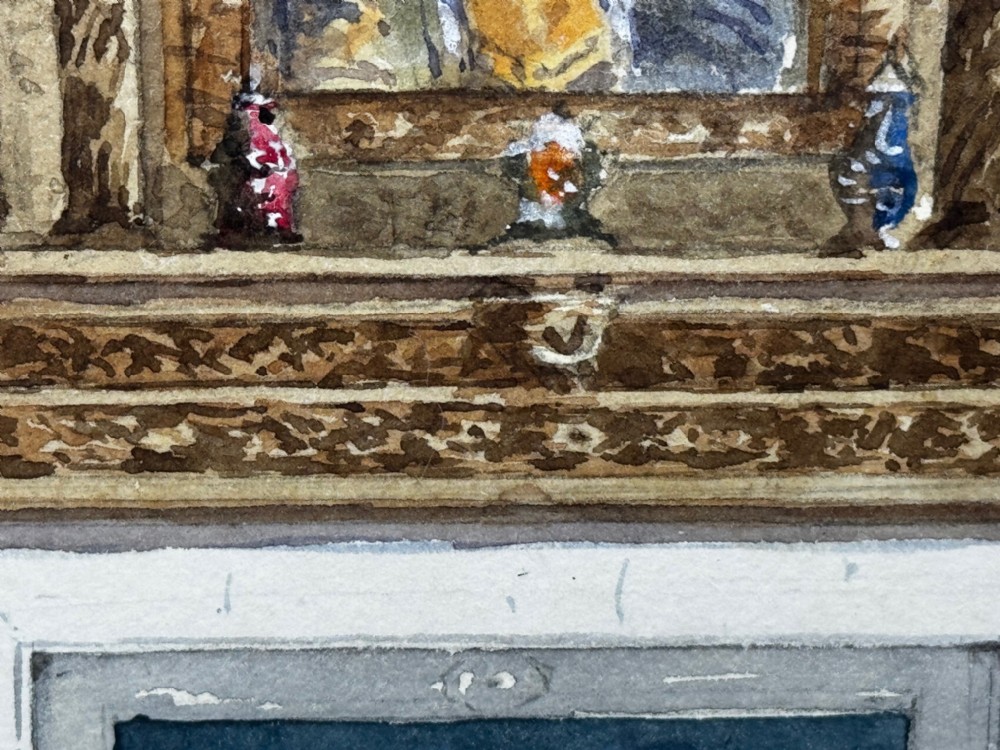
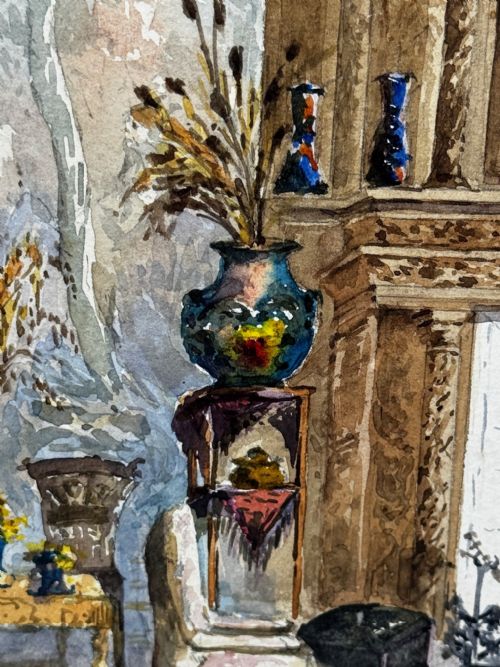
Across the mantelshelf rest ceramic vases in deep cobalt and ruby tones; nearby, a tall urn of dried flowers, a potted palm, and a crimson chaise longue soften the formal symmetry of the scene. Behind, delicate pastel murals of classical figures and trees evoke the fading elegance of an 18th-century fresco. Within the hearth, a subtle firelight glows, reflecting across polished oak panelling and floorboards, suffusing the composition with warmth and stillness.
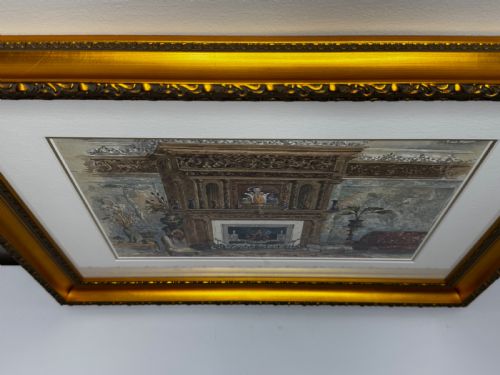
Through controlled washes of ochre, sienna, and umber, Leonard evokes the poetic dignity of an English country house interior — uniting architectural fidelity with the emotional sensibility of the late Victorian age.
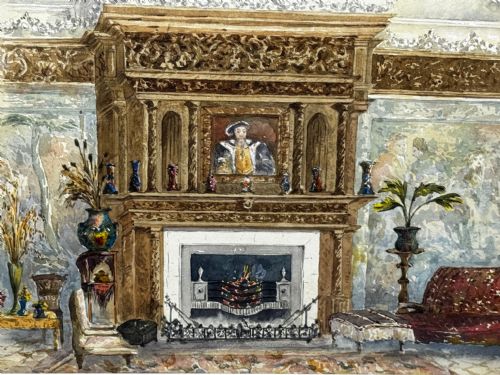
Composition & Technique
Executed in the manner of John Chessell Buckler, one of Britain’s foremost architectural draughtsmen, this painting demonstrates the precision, structure, and tonal restraint characteristic of the Buckler school.
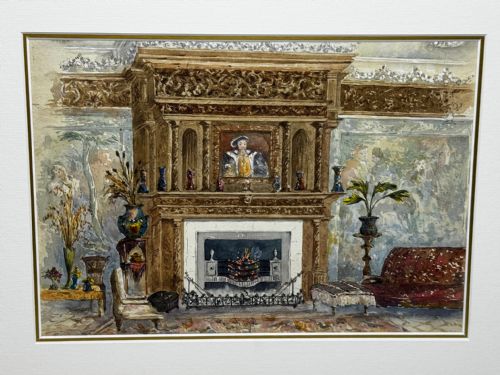
Leonard’s refined linear perspective, exact draughtsmanship, and delicate modulation of light reveal a devotion to truth in architecture — yet his treatment is notably more painterly and intimate, transforming a measured study into a lived, luminous space.
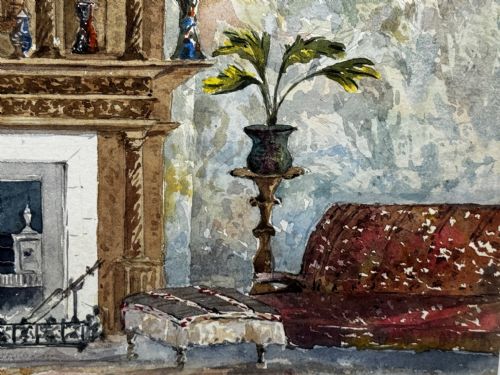
In the interplay between record and reverie, Leonard bridges architectural documentation and artistic impression, preserving both the physical detail and the spirit of the place.
Westwood House & the Long Gallery
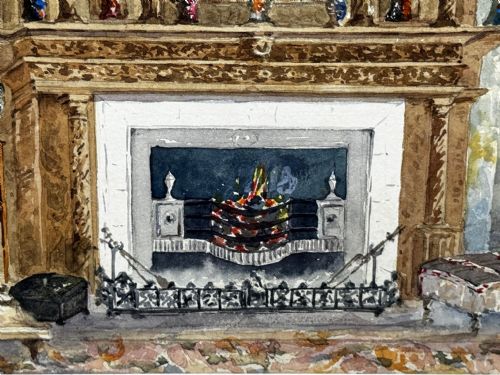
Westwood House, near Droitwich Spa, was built circa 1600–1612 for Sir John Pakington and remains a celebrated example of Jacobean domestic architecture. Its symmetrical “butterfly” plan, richly carved interiors, and heraldic ornamentation earned it Grade I listed status.
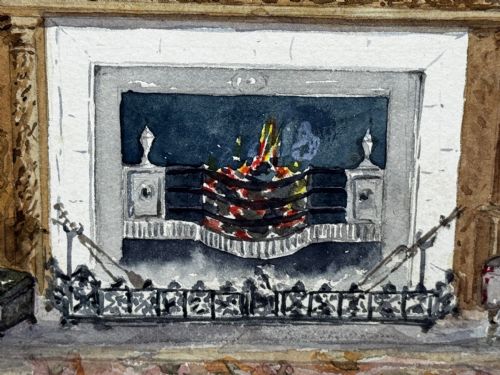
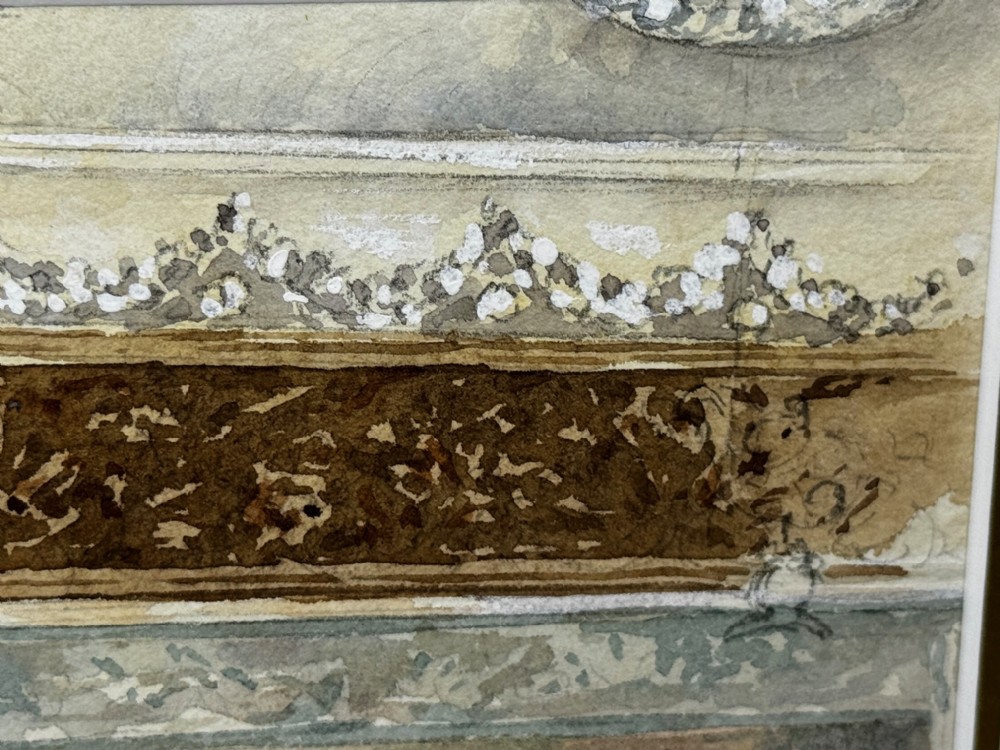
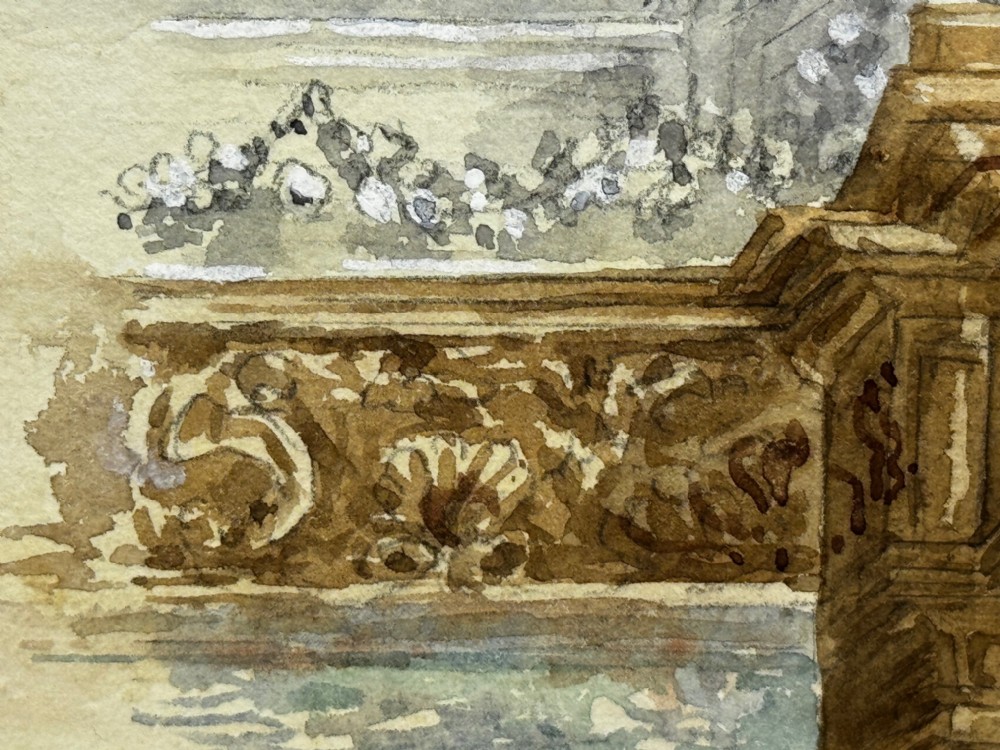
The Long Gallery, extending along the principal floor, served as a space for promenade, ceremony, and display — a true emblem of rank and cultivation. The chimneypiece, with its coupled columns, strapwork friezes, and family arms, epitomises early-Stuart craftsmanship.
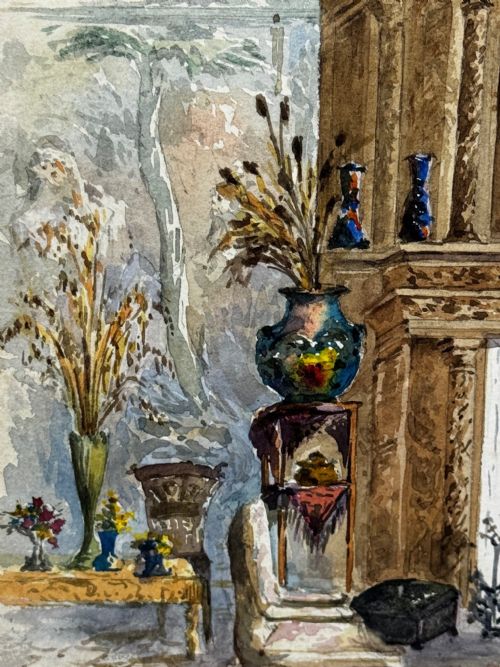
By the late 19th century, when Leonard painted it, Westwood House had already achieved recognition among antiquarians and appeared in early 20th-century works such as In English Homes (1904). Leonard’s 1891 watercolour thus stands as both artistic homage and historical preservation — a visual bridge across three centuries of English taste.
The Artist — E. Leonard
Little is recorded of E. Leonard, a late-Victorian watercolourist active within the antiquarian and architectural tradition. His meticulous draughtsmanship, tonal harmony, and historical insight align closely with artists influenced by John Chessell Buckler and his followers.
Leonard’s work exemplifies the 19th-century ideal of “truth to architecture” — the belief that historic buildings should be preserved not only in stone but also in art.
Signature
Unsigned, though a printed card verso bears the artist’s name E. Leonard, the date 1891, and the title Westwood Park, Worcestershire.
Framed Presentation
Mounted and presented in a Larson-Juhl gilt moulded frame, chosen to complement the warm tonal palette and historic character of the work.
Accompanied by a conservation-grade white mount with gilt fillet and glazed with AR70 low-reflection glass providing exceptional clarity and UV protection.
A museum-quality presentation ensuring both aesthetic harmony and long-term prese
Cheshire Antiques Consultant Ltd has dated this Victorian Interior Watercolour Painting to the Victorian era.
Source the historic in 17th, 18th, 19th & 20th century fine arts, painting, sculptures & collectibles
You can view the stock and full dealer information on the Cheshire Antiques Consultant Ltd Profile Page
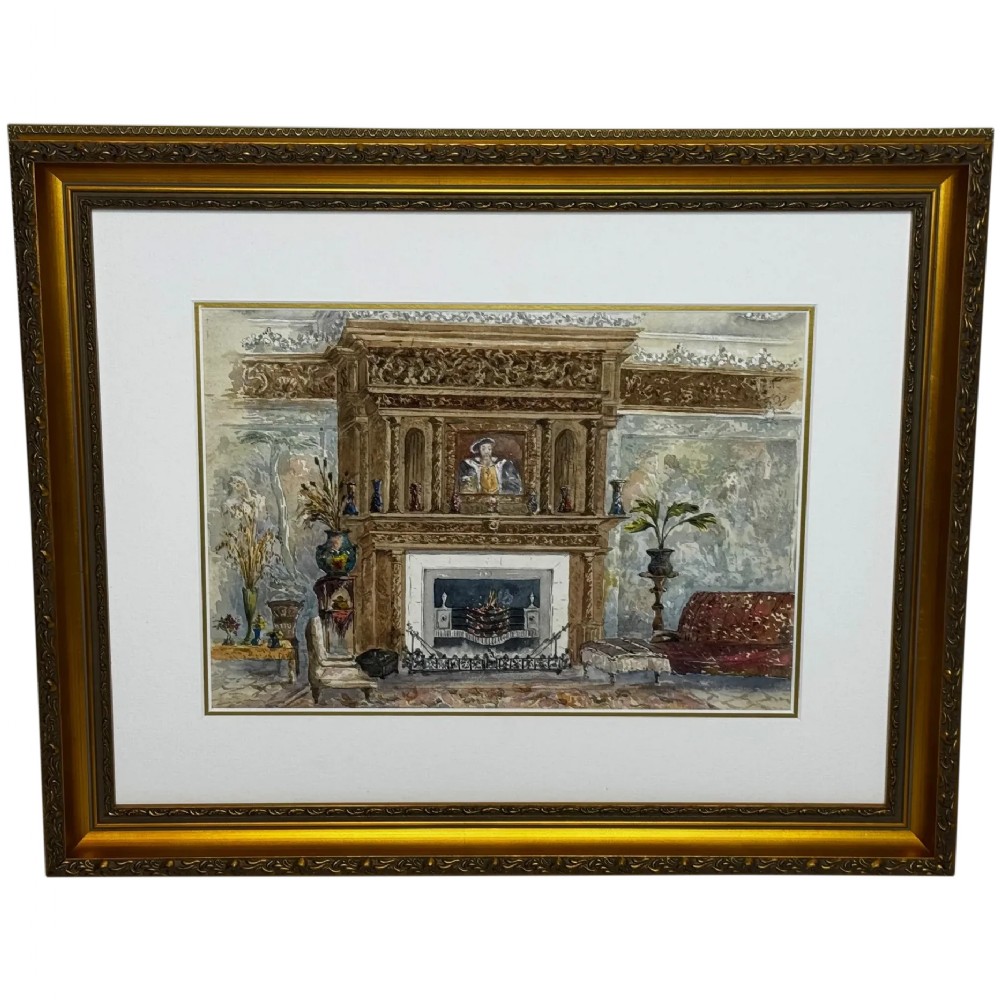
Painting the Chimneypiece Long Gallery, Westwood House C1891