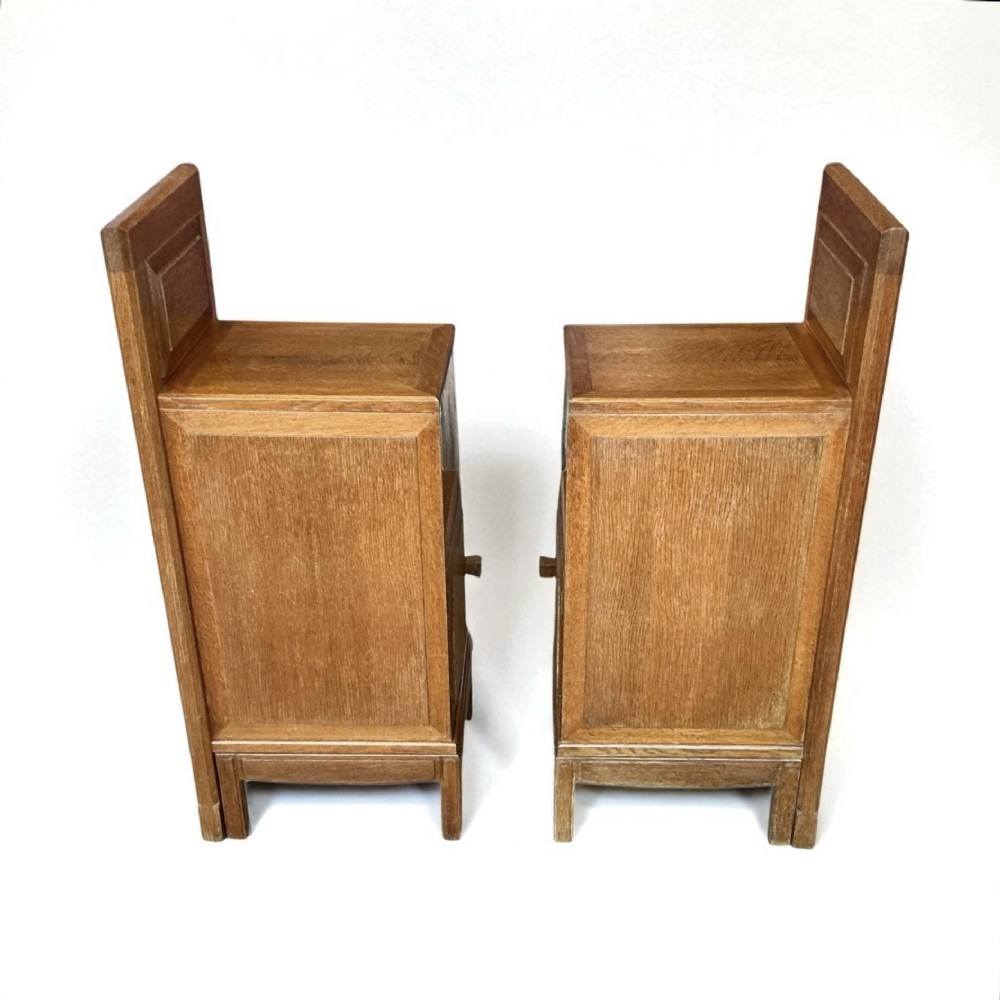
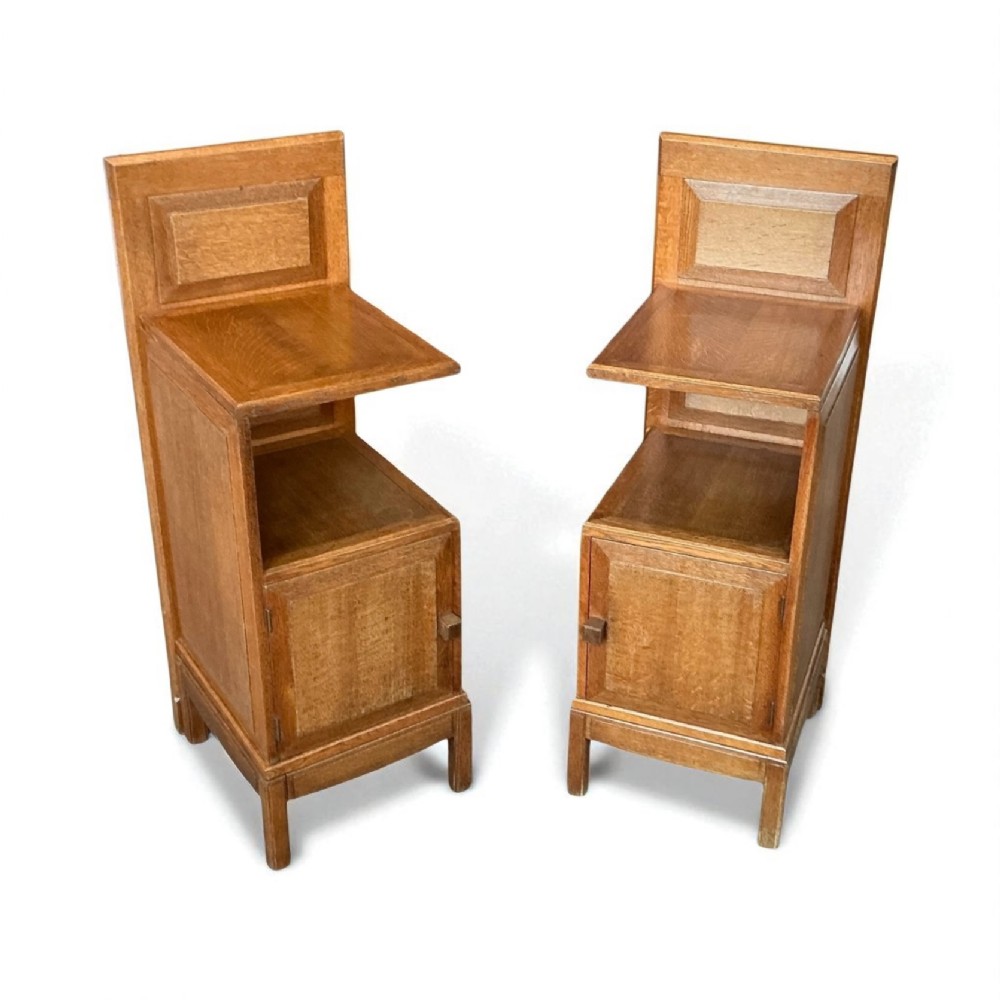
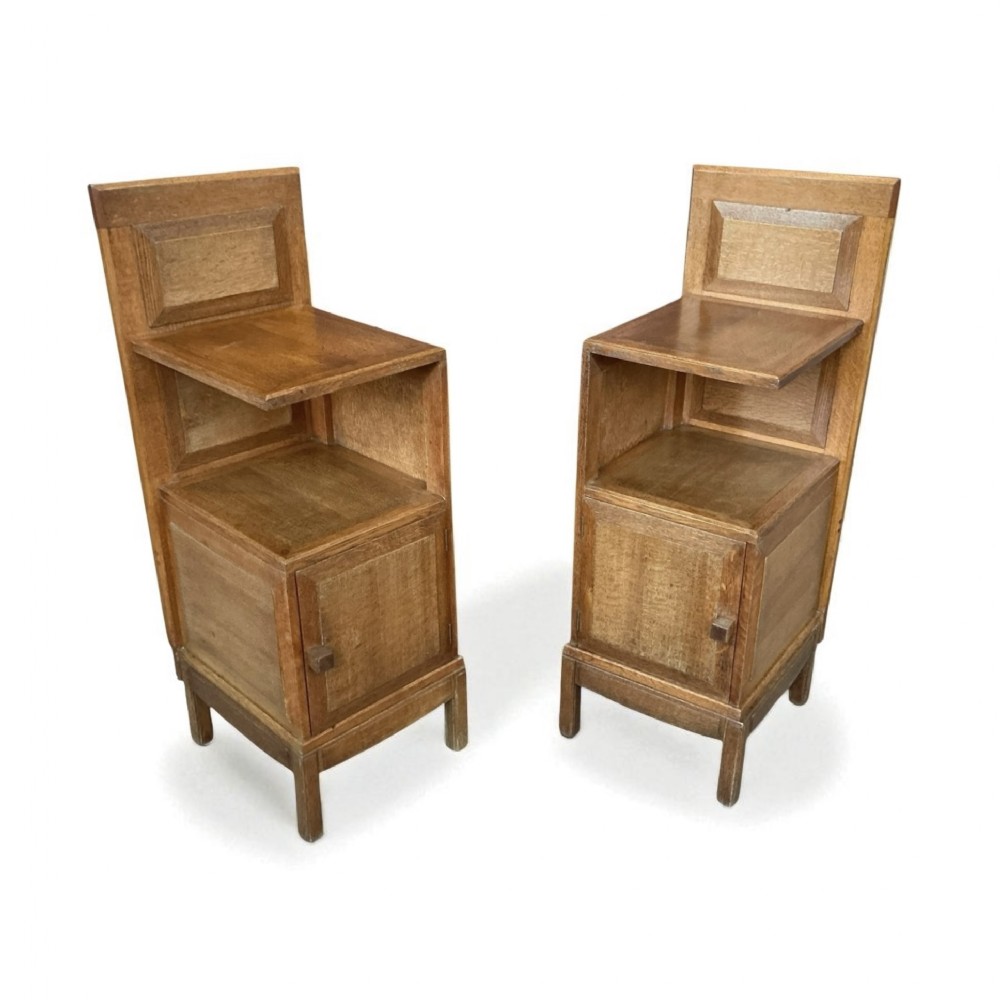
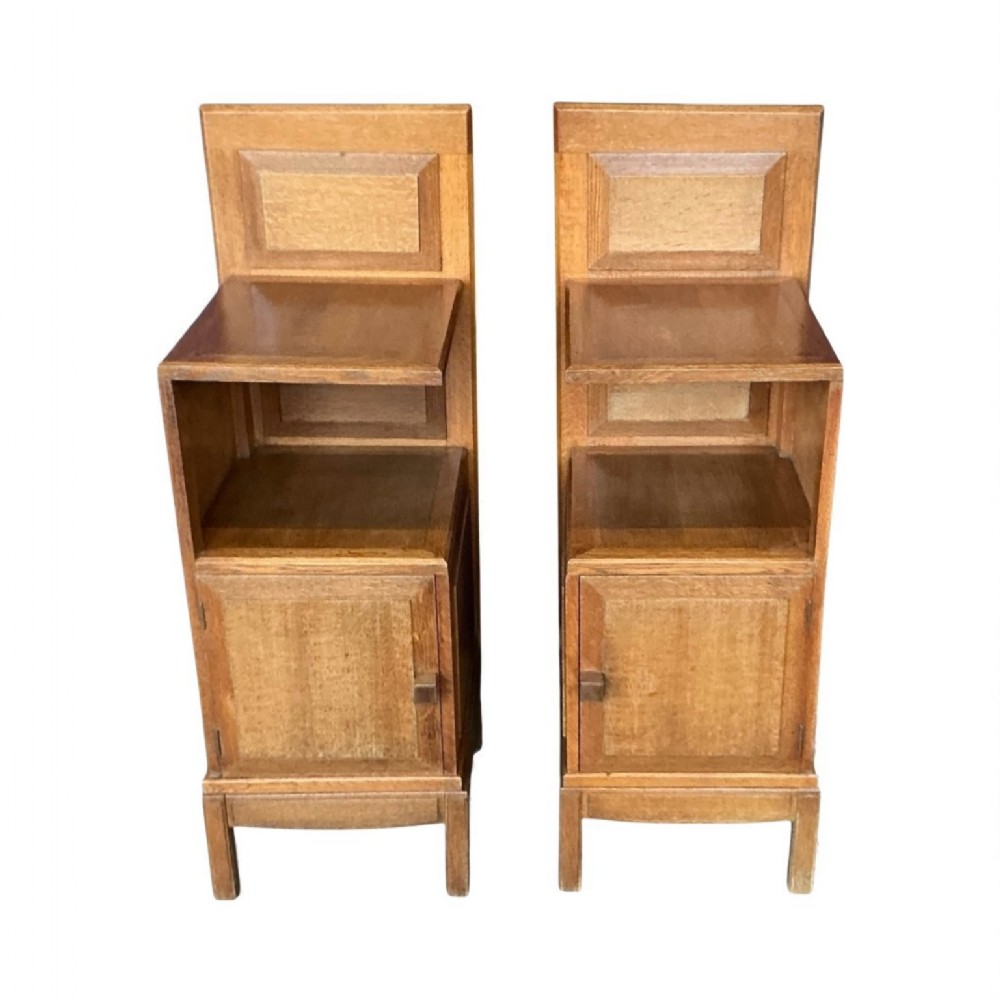
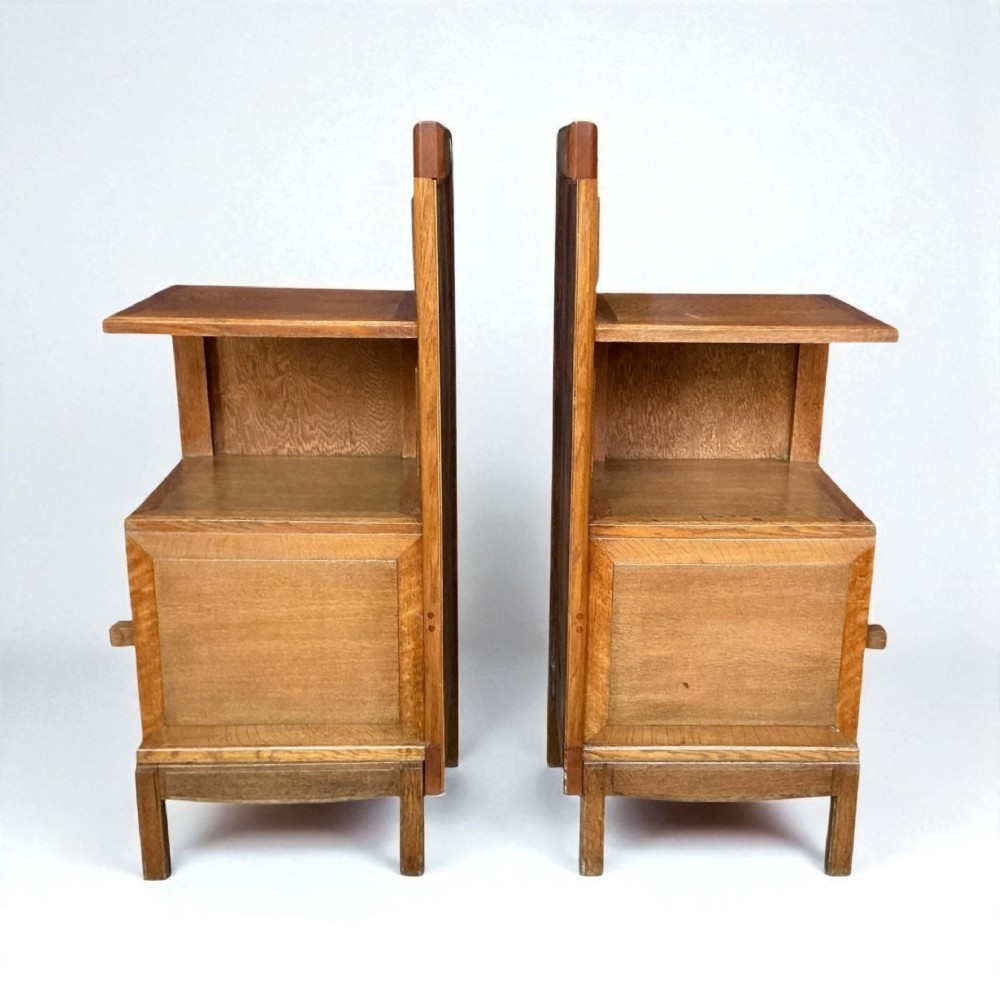
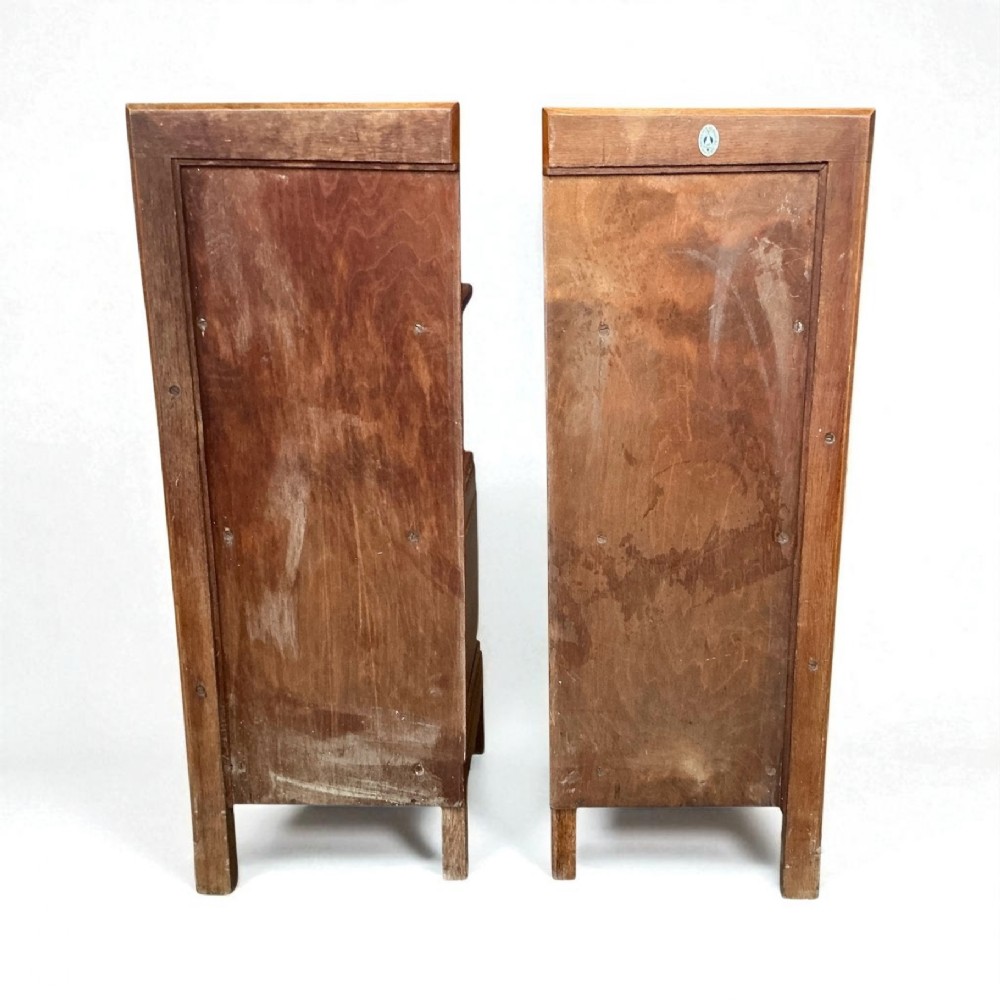
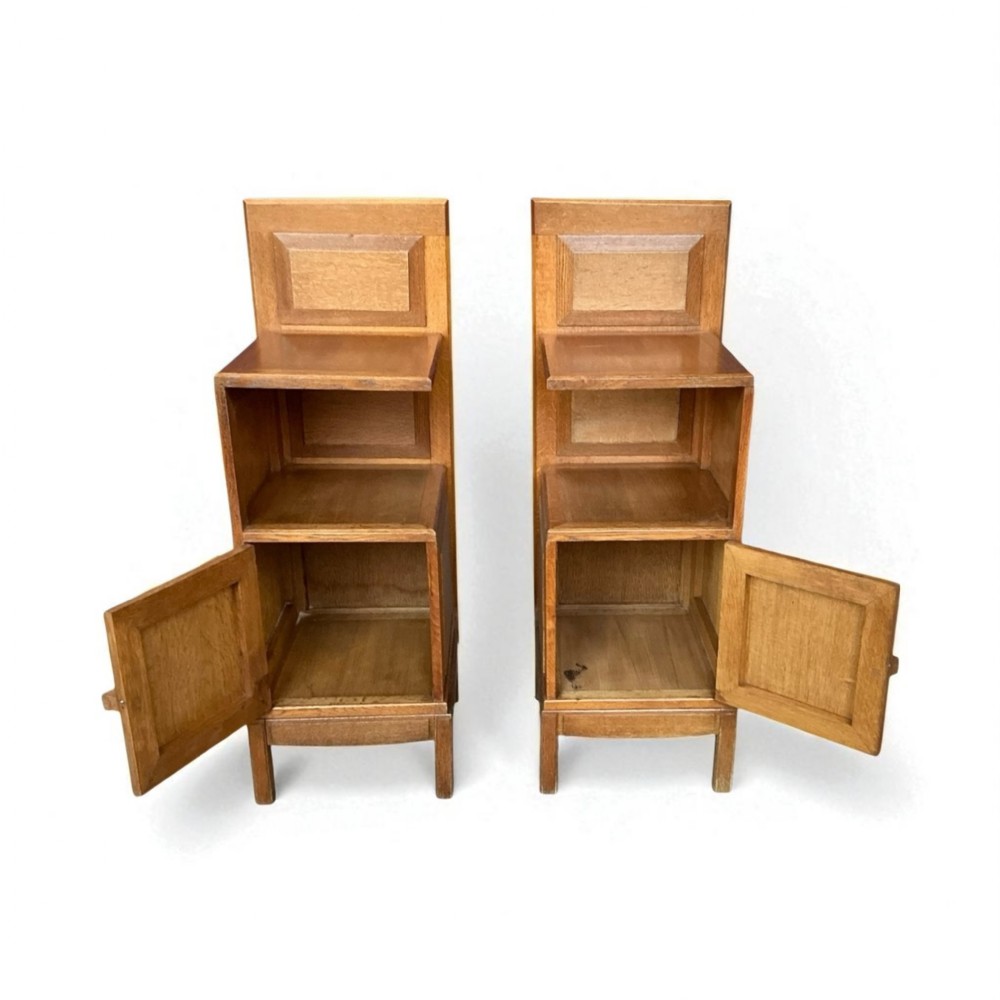
Poirot Art Deco has dated this piece to the 1930s.
History.
Brynmawr , South Wales was an unemployment blackspot in the late 1920s. The Quakers sought to bring aid to the area along with new skills and employment which became known as the ‘Brynmawr Experiment’ between 1929 to 1940.
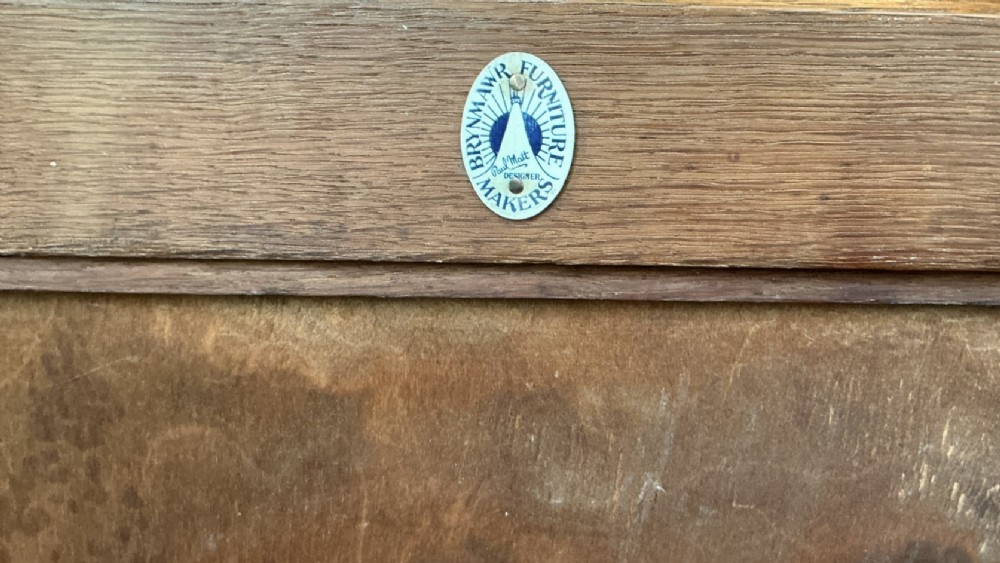
Paul Matt (1901 - 1987), a skilled designer and cabinet maker from London, was inspired by the experiment, which led to development of Brynmawr Furniture Maker Ltd in 1931.
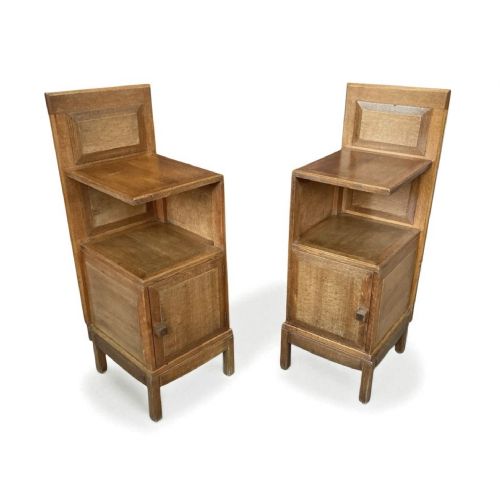
He was able to design furniture that was simple to construct (and was greatly inspired by the work of Gordon & Don Russell) using imported Northern European Oak and finished with a coat of clear wax giving the overall look of the furniture a simplicity and solidity in appearance in line with the Quaker philosophy.
Promotional literature emphasised the high quality of the design of products and affordability whilst providing employment for the local community. This appealed to the middle and professional classes of the 1930s. The furniture could be purchased from large department stores in Cardiff, Birmingham & Manchester as well as having its own shop in Cavendish Square, London.
Pieces of furniture were named after welsh place names eg Cwmbran chest.
The events of the second world war led to materials being difficult to import and the company ceased trading in 1940.
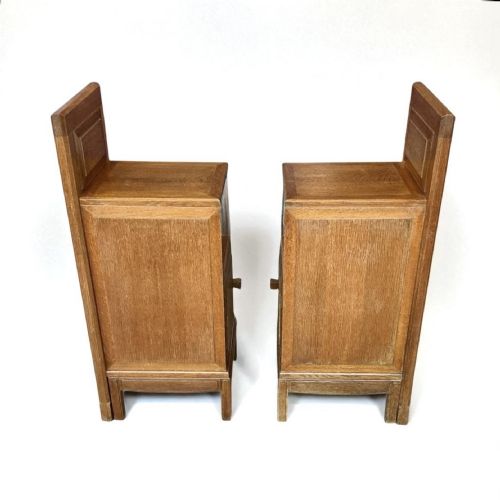
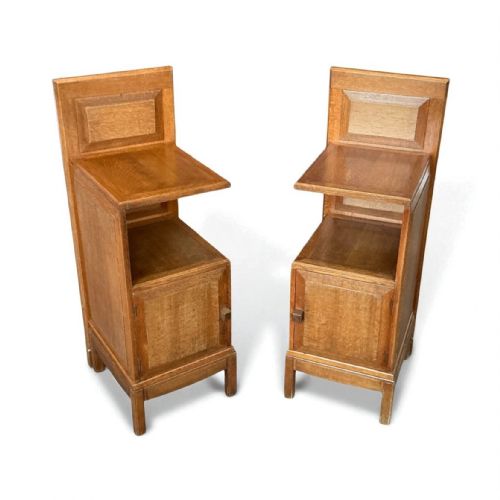
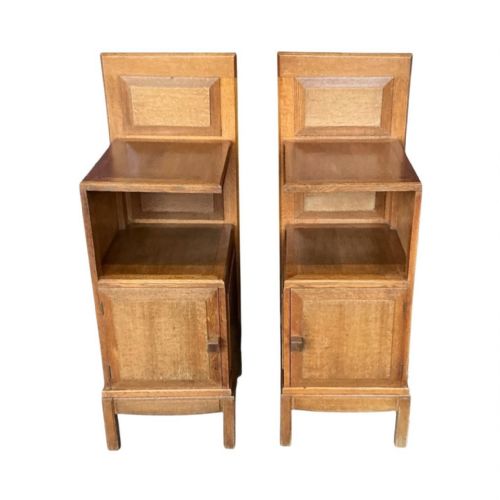
Height of back of bedside table: 101cm
Height of each bedside table: 78.5cm
Width of each bedside: 36cm
Depth of each bedside: 41.5cm
Poirot Art Deco has dated this piece to the 1930s.
Art deco items for sale
You can view the stock and full dealer information on the Poirot Art Deco Profile Page
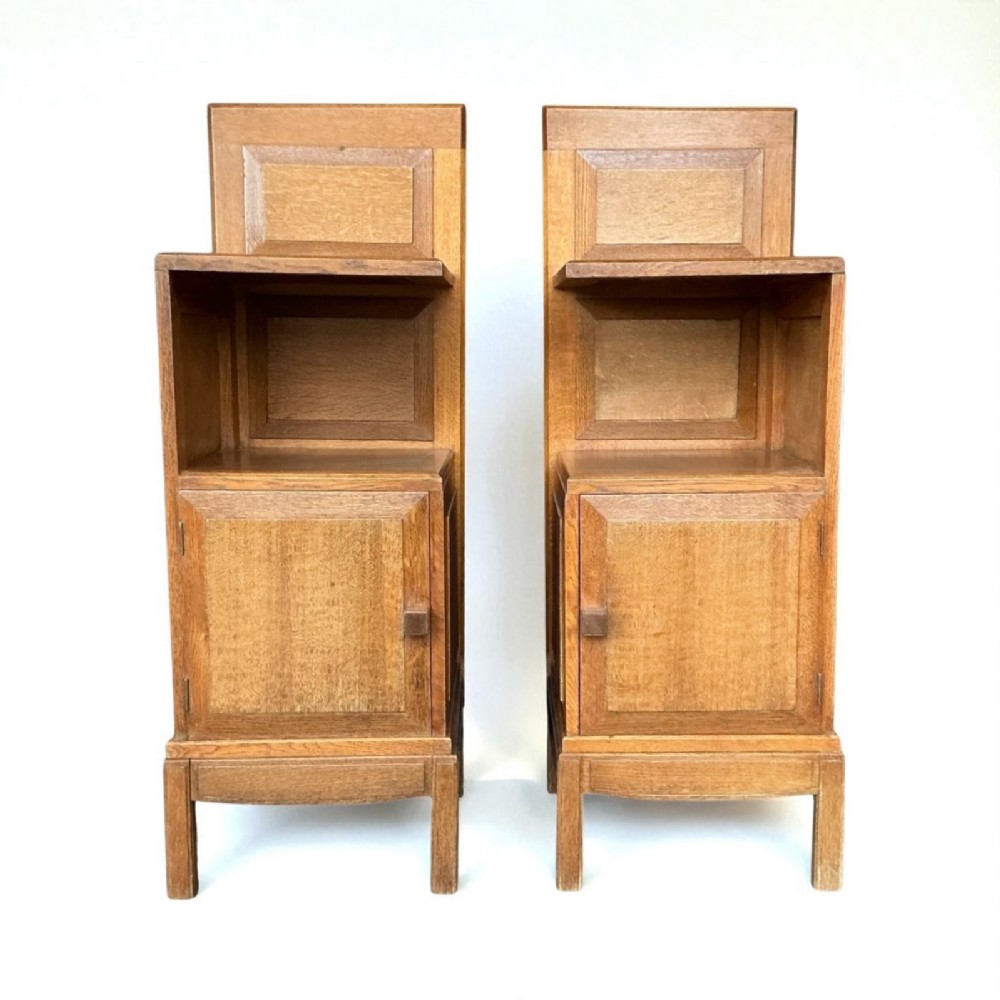
Pair of Art Deco Bedside Tables by Brynmawr Furniture