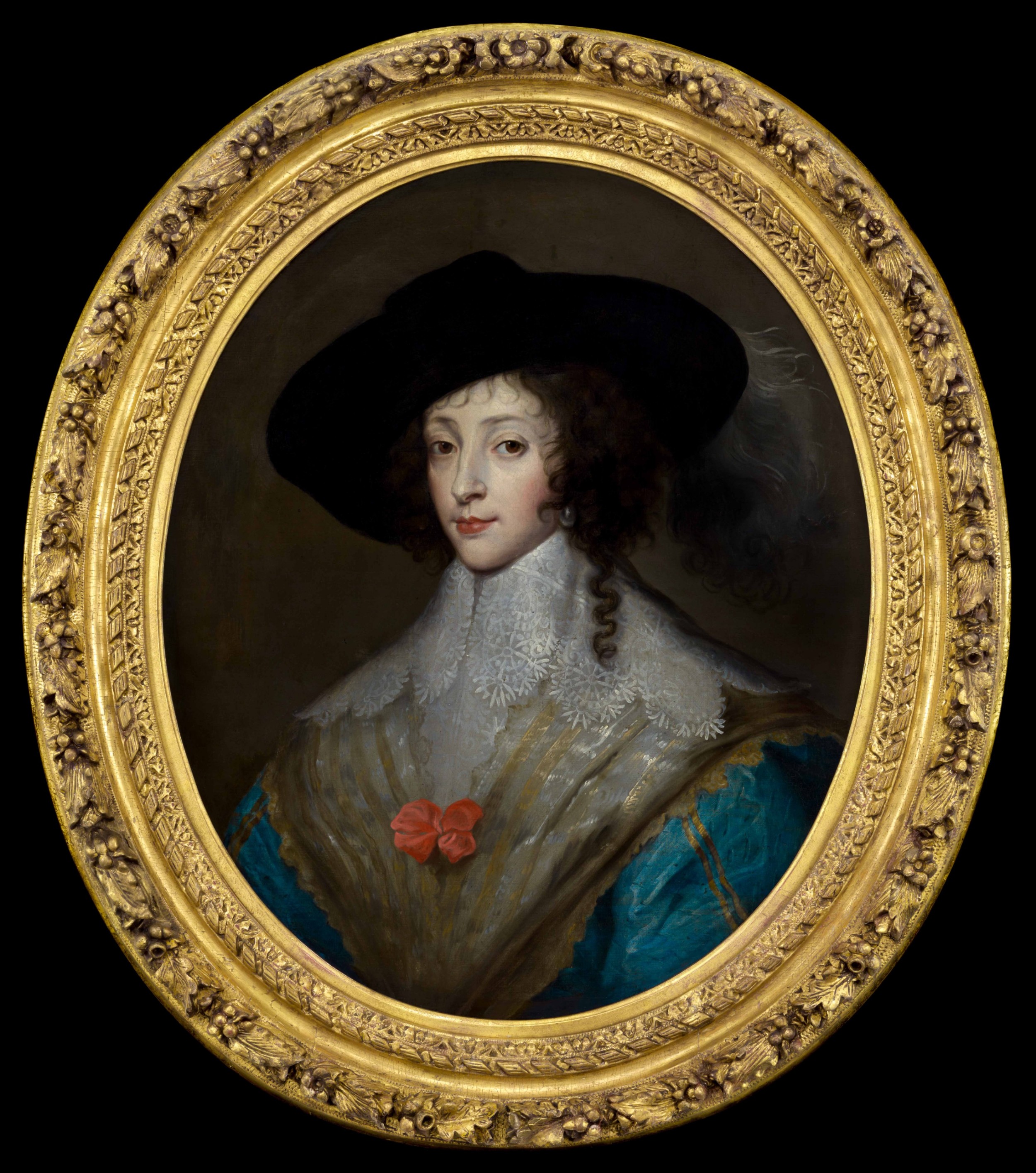
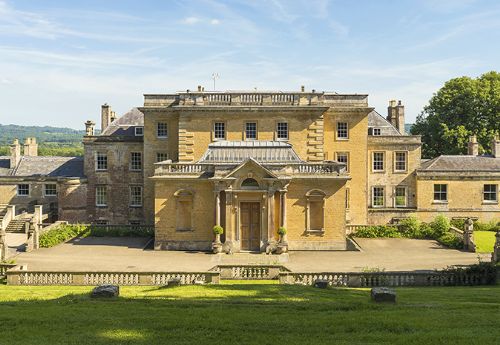
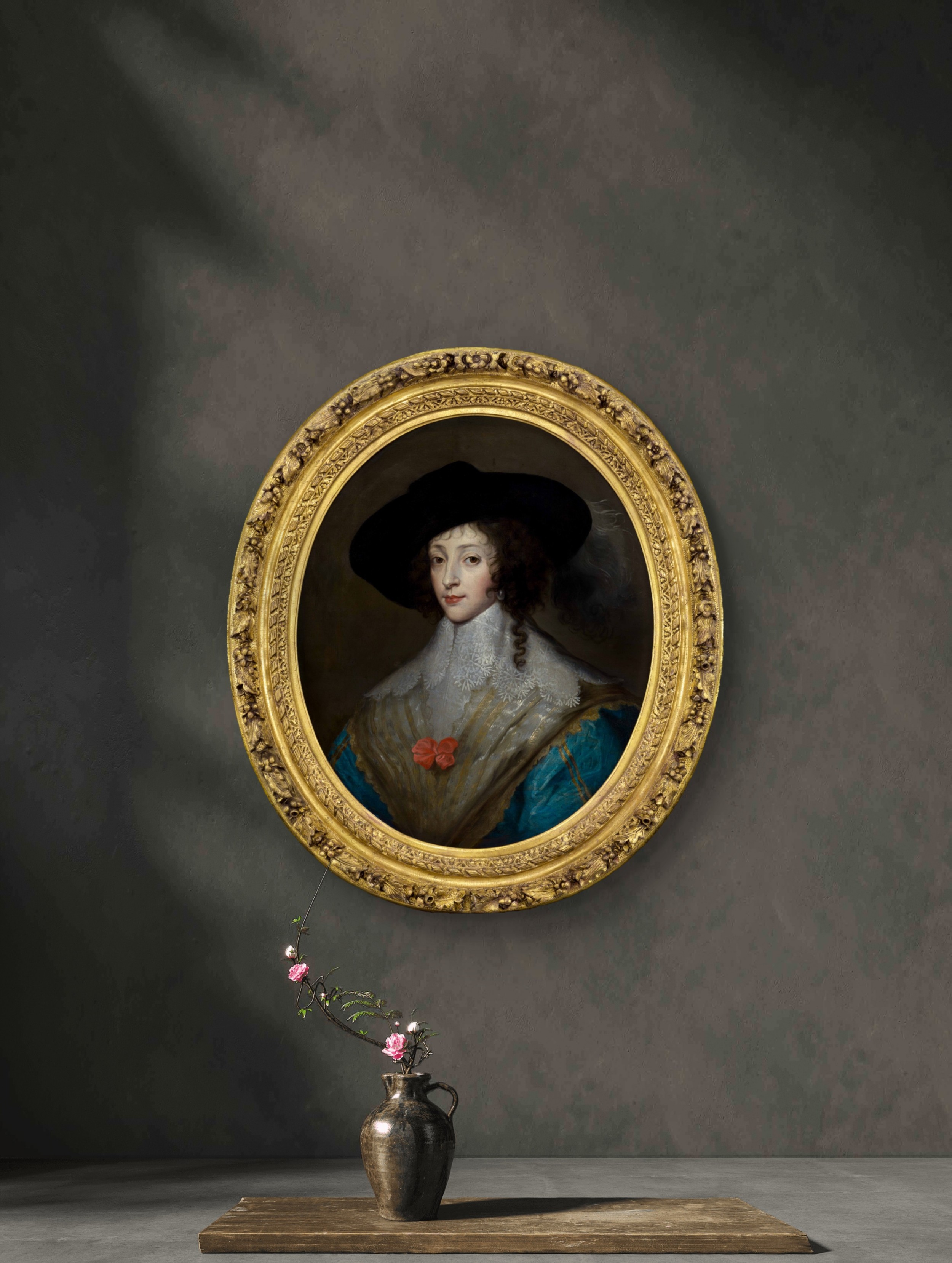
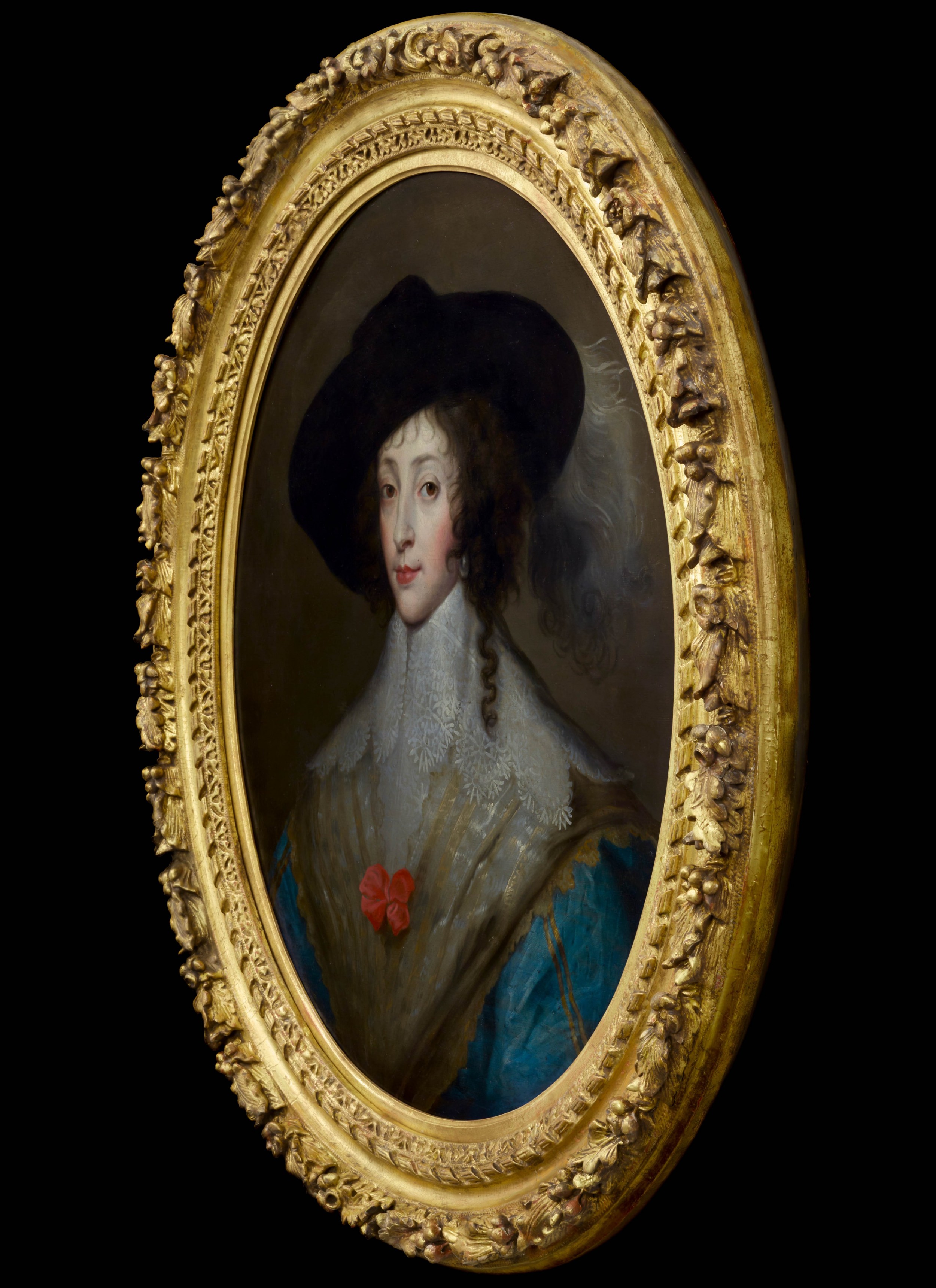
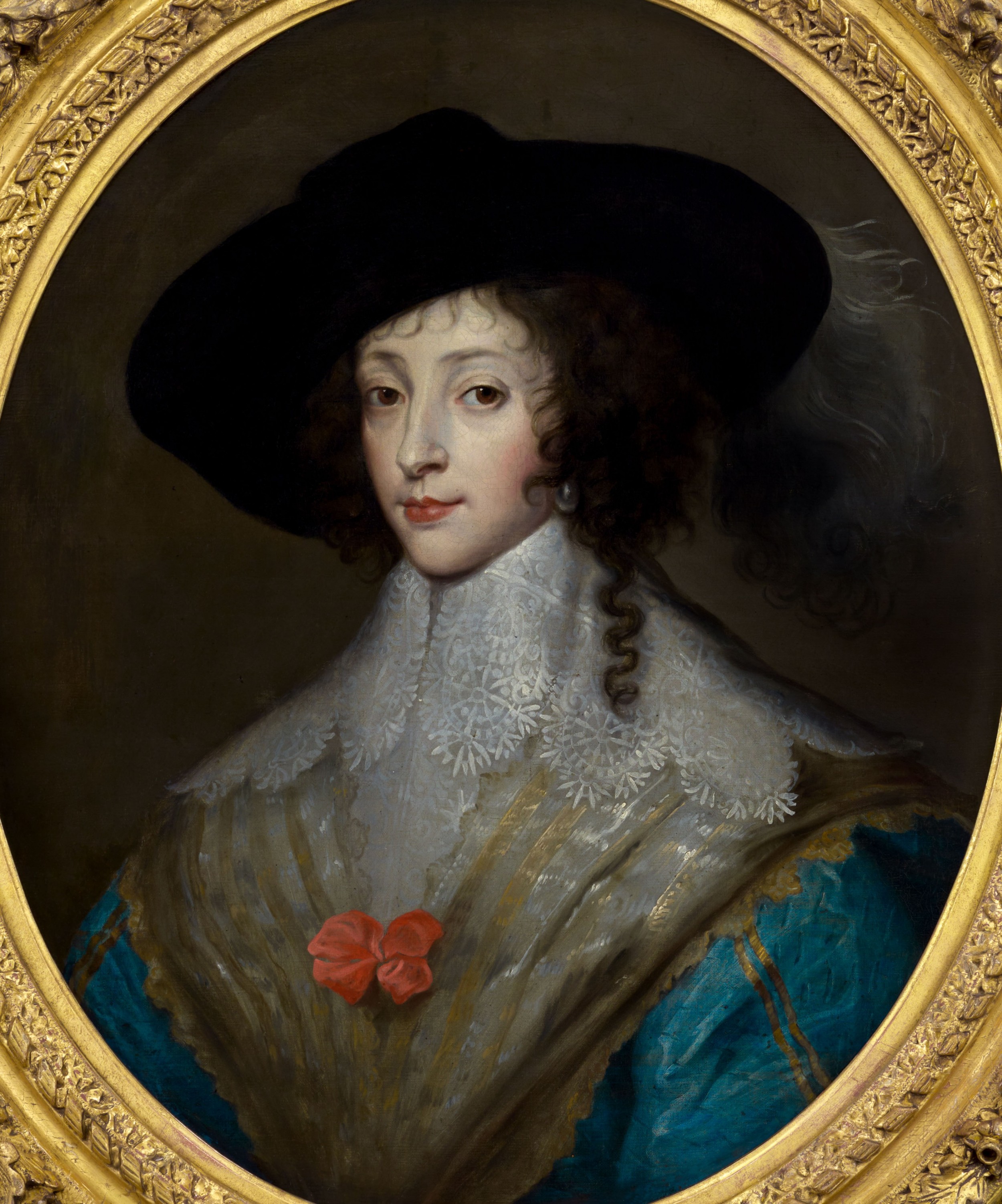
This charming portrait was in the collection of one of England’s ancient families, with a long and intriguing history, the Boyle family, Earls of Cork and Orrery. The portrait was at their principal English home, Marston House (also known as Marston Park or Marston Bigot Park) in Somerset, where they resided for nearly three centuries, before it was sold in 1905, after the death of the 9th Earl of Cork, whose funeral service was represented by both the King and Queen.
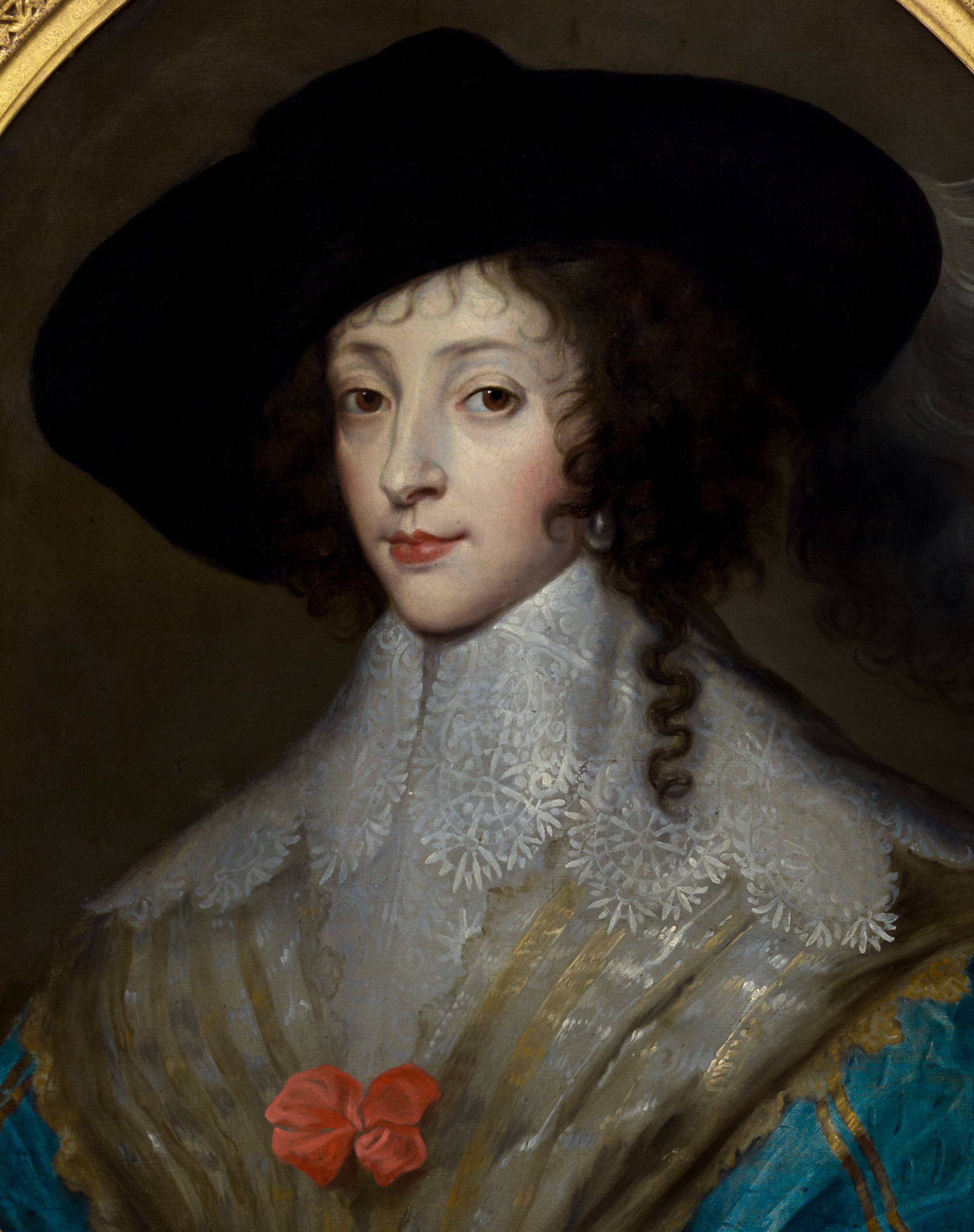
The composition derives from a full-length portrait, painted by van Dyke circa 1633, of the sitter with Sir Jeffrey Hudson; today it hangs in the National Gallery of Art, Washington, D.C. (inv. no. 1952.5.39). Many contemporary versions were painted and ours is one such version.
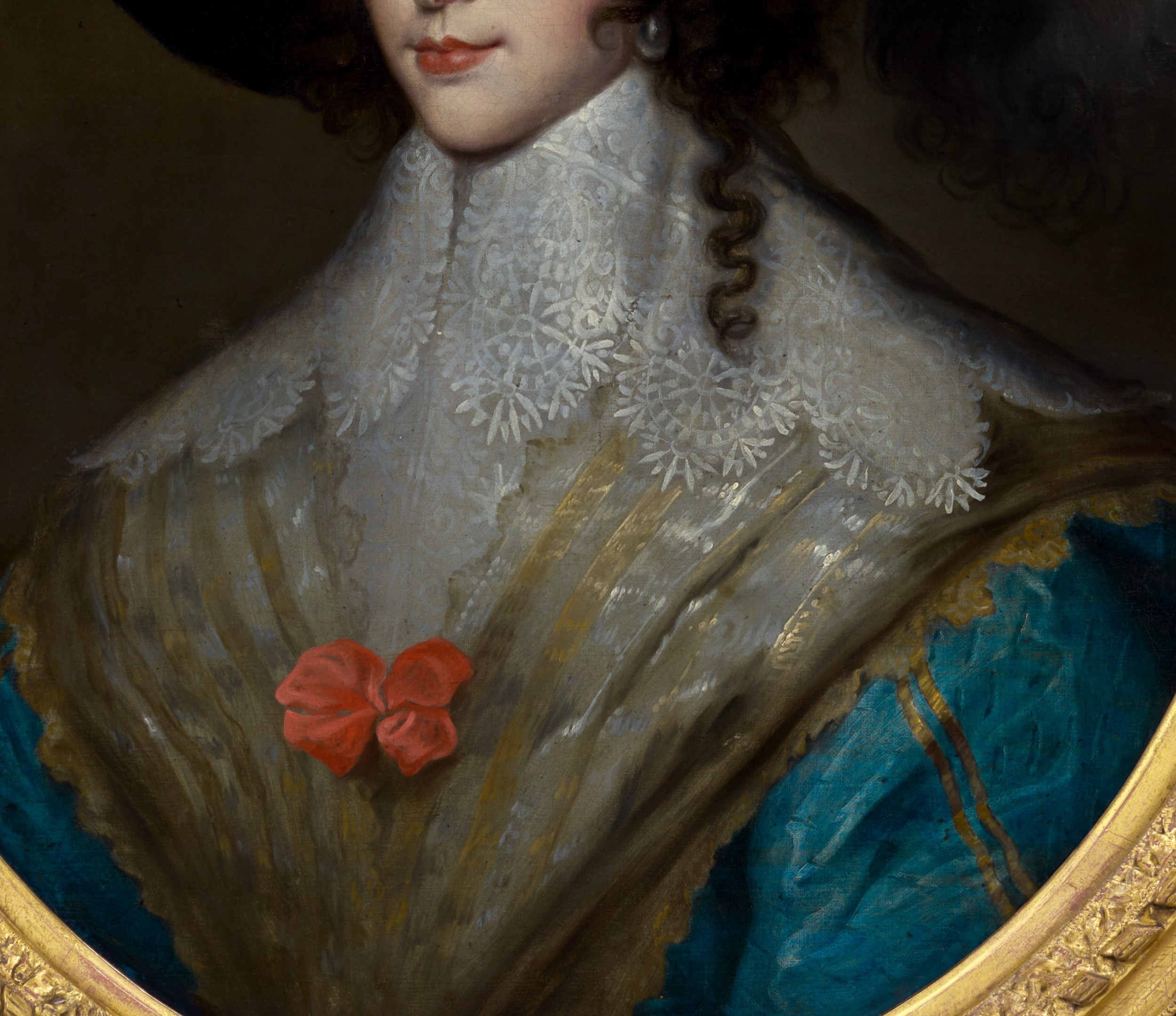
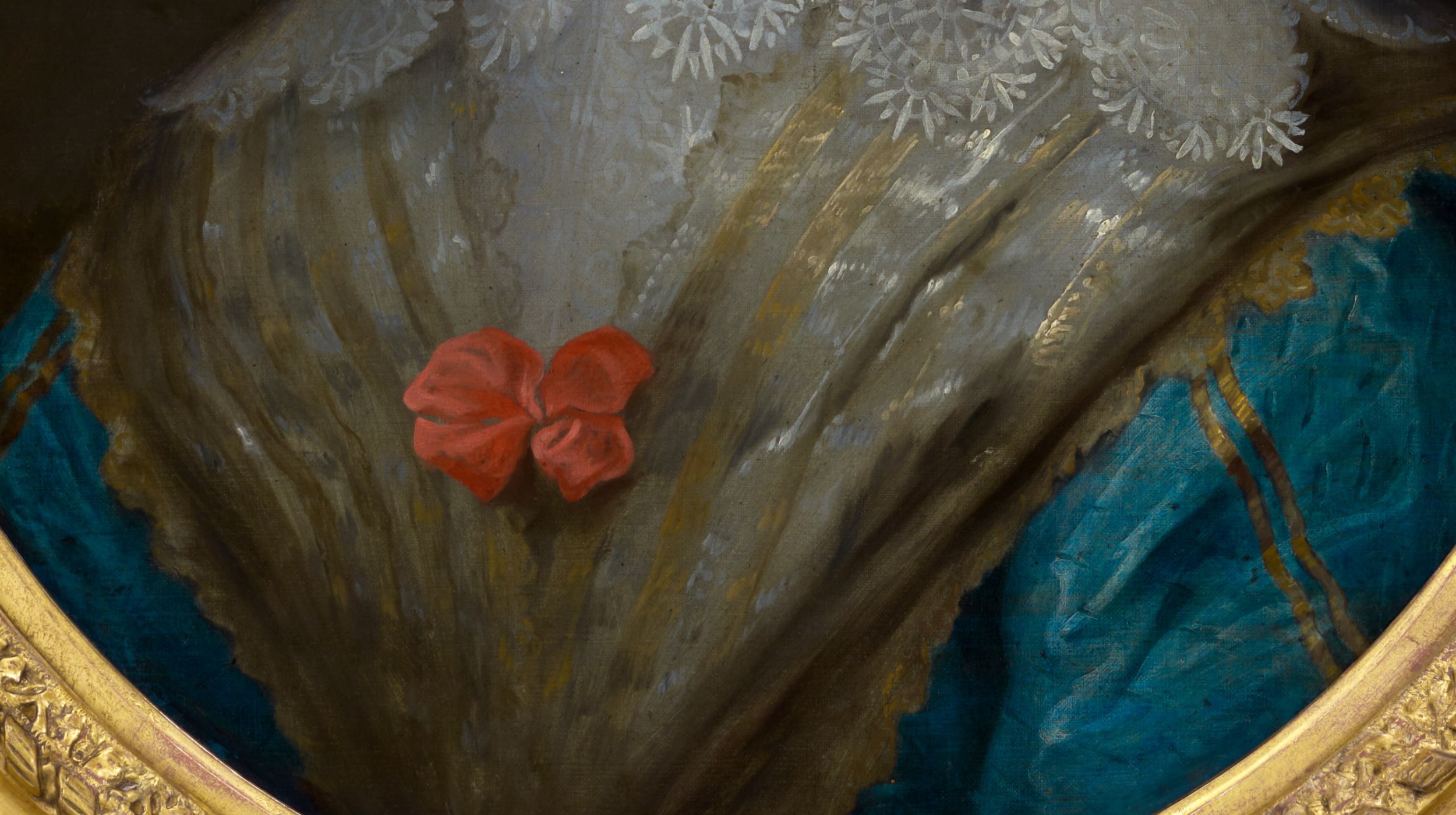
Queen Henrietta Maria, born in 1609, was the consort of King Charles I and an influential and fashionable figure at Court. In this charming full-length portrait, she is wearing a satin hunting dress and hat, with a white lace collar and r
...ed bow on the bodice.
Henrietta Maria, the youngest daughter of King Henri IV of France and Marie de Medici, represented an exemplary dynastic alliance for Charles. However, she was far from being a mere pawn; the vivacious and lively aspects of her personality are highlighted in the principal version (at the National Gallery of Art, Washington) through the inclusion of two royal favourites: the fourteen-year-old knight, Sir Jeffery Hudsun, and his monkey. Hudson was introduced to the queen at court by the Duke of Buckingham, making a surprising entrance from within a large pie. He proved to be a loyal companion, remaining by her side until her passing.
Due to Maria''s Catholic faith, she was met with suspicion by many in England. When the Civil War erupted, she departed England for the Netherlands, where she successfully raised funds to support the Royalist cause by selling or pawning her jewels, before ultimately returning to England in 1643 to reunite with the king. She never fully recovered from his execution in January 1649, and she wore mourning attire until the end of her life. Following the Restoration in 1660, she returned to England in a failed effort to thwart the Duke of York’s marriage to Anne Hyde. In 1665, she left England for France for the final time and died in 1669.
Van Dyke is considered one of the foremost masters of European baroque portraiture. Born in Antwerp, he was the son of a prosperous silk merchant, while his mother was renowned for her embroidery talents. He exhibited remarkable talent at an early age and spent several years as an apprentice to the artist Hendrik van Balen. By 1618, van Dyck had been registered as a Master in the Guild of St. Luke in Antwerp. He then dedicated the following two years to serving as the principal assistant to Peter Paul Rubens. In 1620, he went to England and is believed to have entered the service of King James I. He was later court painter to King Charles I and his wife. He is buried in St. Paul''s Cathedral in London.
Earl of Cork is a title in the Peerage of Ireland, held in conjunction with the Earldom of Orrery since 1753. It was created in 1620 for Richard Boyle, 1st Baron Boyle.
For 250 years, Marston was the principal English home of the Boyle family, Earls of Cork and Orrery. Although there was an earlier home on the estate, Marston’s modern history began only in 1641, when the ‘Great Earl’ of Cork bought the place for his younger son, Lord Broghill, created 1st Earl of Orrery in 1660.
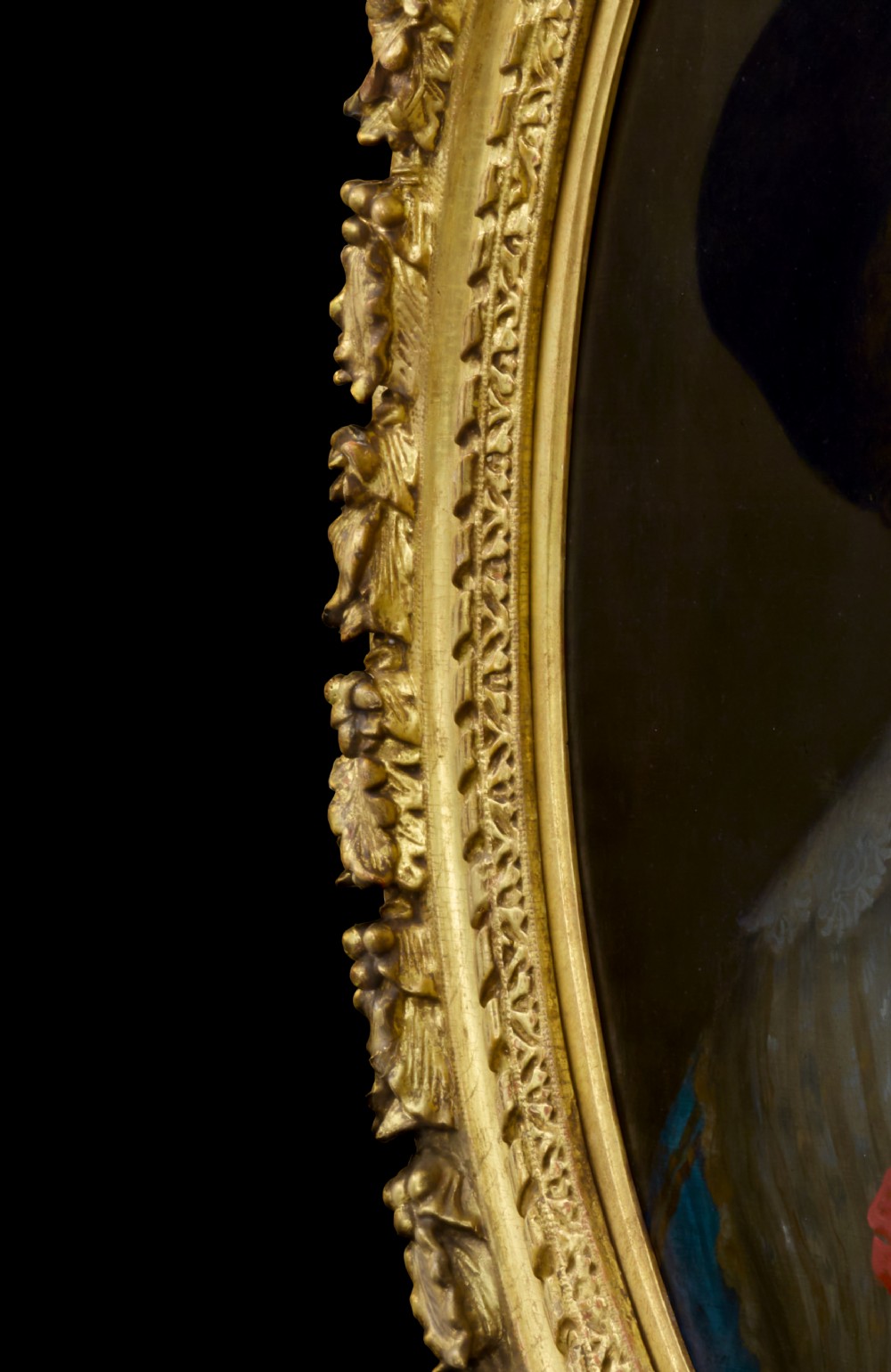
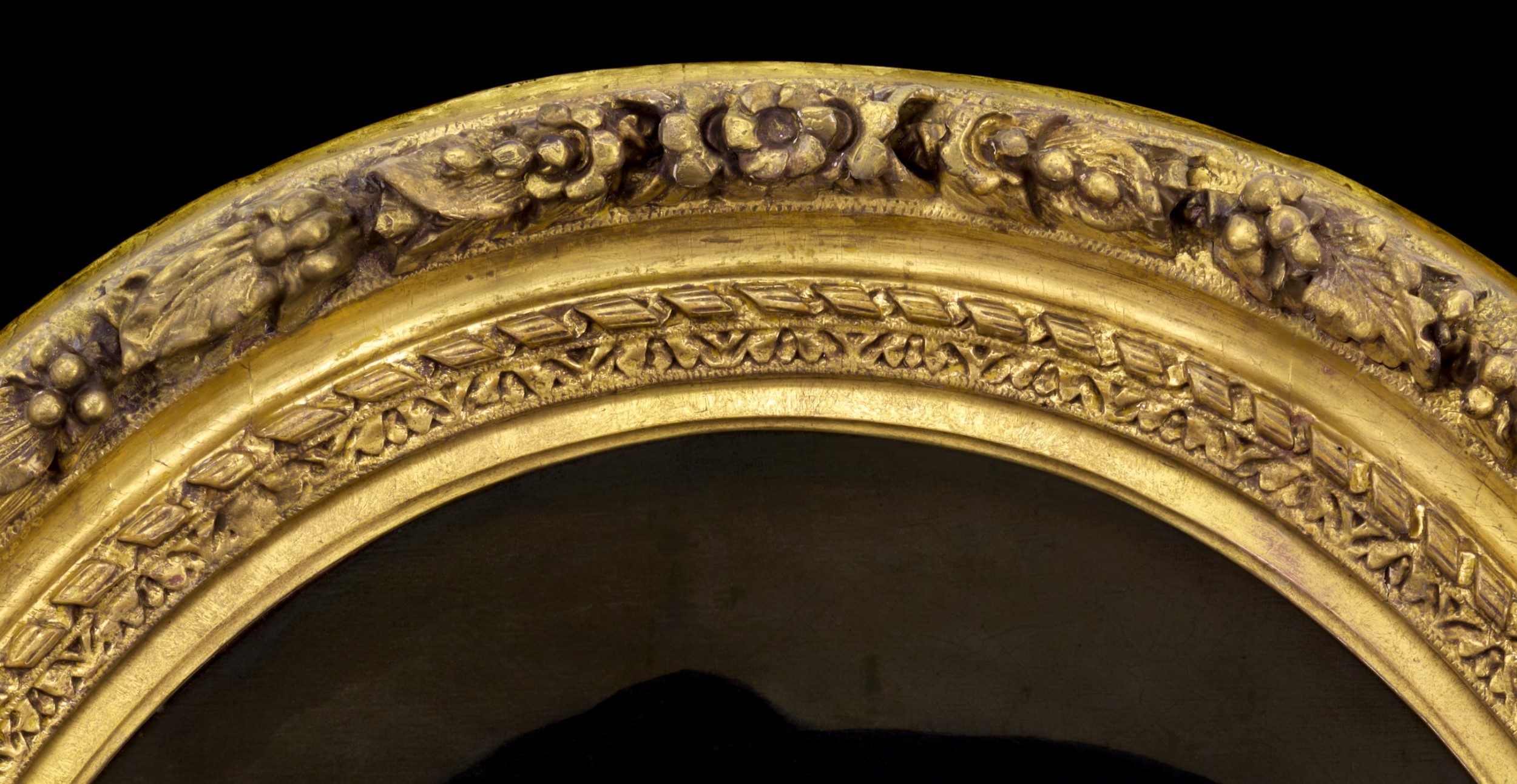
Held in a boldly carved and gilded frame with leaves and acorns.
Charles Boyle, 10th Earl of Cork and Orrery (1861–1925), at Marston House, Frome, Somerset;
His sale (''The Property of the Right Hon. The Earl of Cork and Orrery, removed from Marston, Frome''), London, Christie''s, Tuesday, November 25, 1905, lot 71;
Much more info about this item at: www.titanfineart.com
In a market saturated with available paintings, Titan Fine Art offers a distinct advantage: we sift through thousands of works to provide a specially curated selection. Each piece is meticulously chosen based on technical merit, provenance, and decorative appeal, ensuring our clients view only the finest examples of British and European art.
With over 20 years of expertise and 1,000+ works placed with collectors and institutions, we are one of the most prolific specialists in 17th and 18th-century portraiture. We combine a scholarly approach with museum-level rigor to replace the uncertainty of the open market with absolute confidence.
Why Buy From Titan Fine Art?
• Expertly Curated Selection
We act as your expert eye, selecting only high-quality works that offer genuine historical and artistic value.
• Museum-Level Research
Each portrait is supported by extensive academic research, often exceeding 40 hours, to establish attribution, sitter identity, and historical context.
• Professional Conservation
All paintings are carefully cleaned and stabilised by professional conservators, and are presented ready to hang.
• Transparent Pricing
No buyer’s premium or hidden fees—unlike auction houses, where additional costs can add 25–35%.
• Export Pricing Advantage
Reduced pricing is available for works exported outside the UK.
• Specialist Global Shipping
We manage the entire process, including custom crating, export documentation, and fully tracked delivery worldwide.
• Buy with Confidence
A 7-day return policy and the option to pay in GBP, USD, or EUR for convenience and transparency.
• Original Period Frames
Many works retain their original carved and gilded frames, which are works of art in their own right and enhance both historical authenticity and decorative impact.
• Personal Advisory Service
We work directly with collectors and interior designers, offering guidance on selection, scale, and placement—including bespoke room mock-ups on request.
Subscribe to our monthly 'new item alert' to be the first to hear about new worksAntique ID Number (AIDN): SA1170556
Dateline of this antique is 17th Century
Height is 91cm (35.8inches)Width is 80cm (31.5inches)Depth is 8cm (3.1inches)





Thank you.
Your comment has been sent to Sellingantiques.