53,152  PAGES BROWSED TODAY PAGES TODAY 103  ANTIQUES UPLOADED TODAY NEW ARRIVALS
ID #SA1169140
SOLD
Email
Save
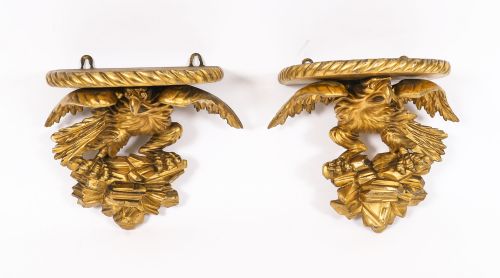
Antique Pair Regency Giltwood Eagle Wall Brackets 19th Century
Regent Antiques
sold SA1169140
Sorry, but this item has been sold.
Regent Antiques

Regent Antiques

Sellingantiques Verified Since Sep 2016
View Dealers Stock Page
  • About Us
    We specialise in english and continental furniture, silver, porcelain and decorative items.
  • Trade Associations
    Regent Antiques is a registered member of LAPADA  CINOA
Id #SA1169140
PDF SHARE
SAVE

Antique Pair Regency Giltwood Eagle Wall Brackets 19th Century

19th century
Description

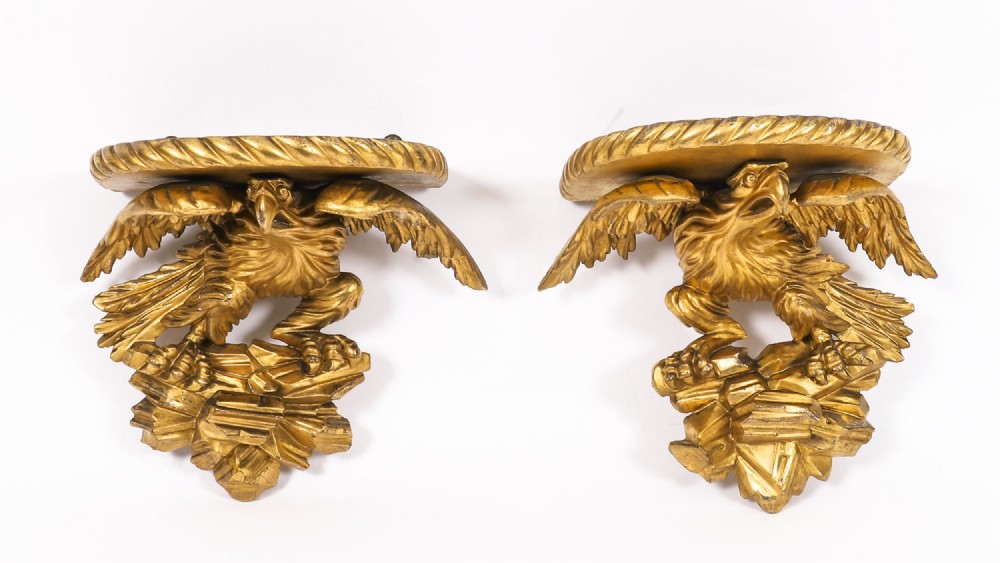
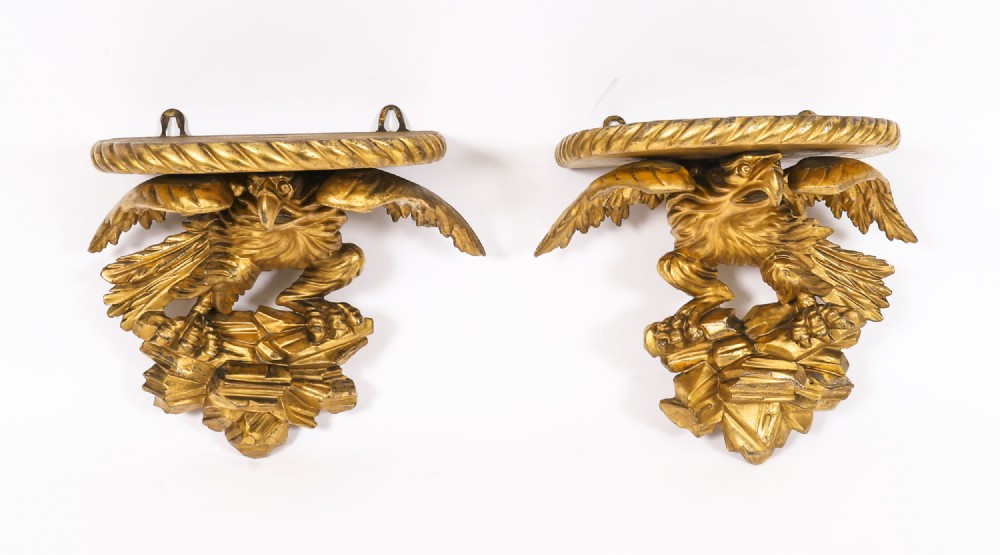
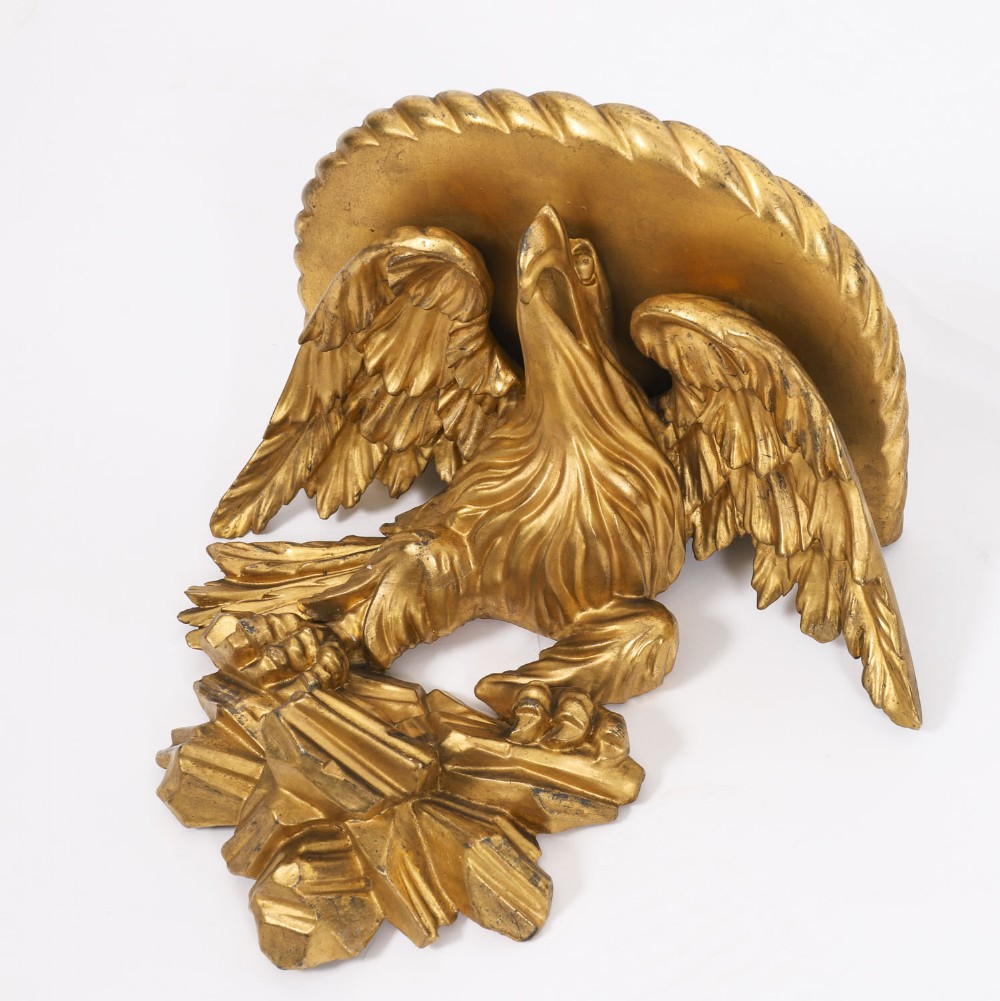
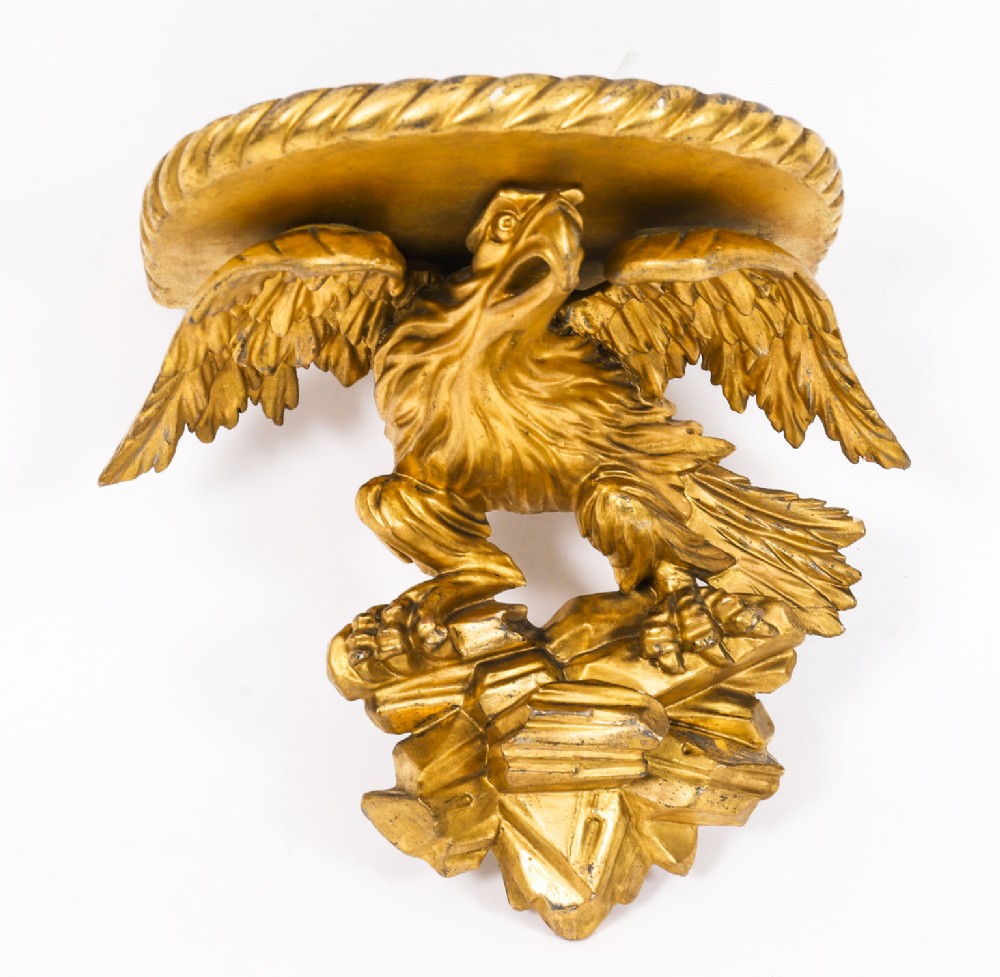
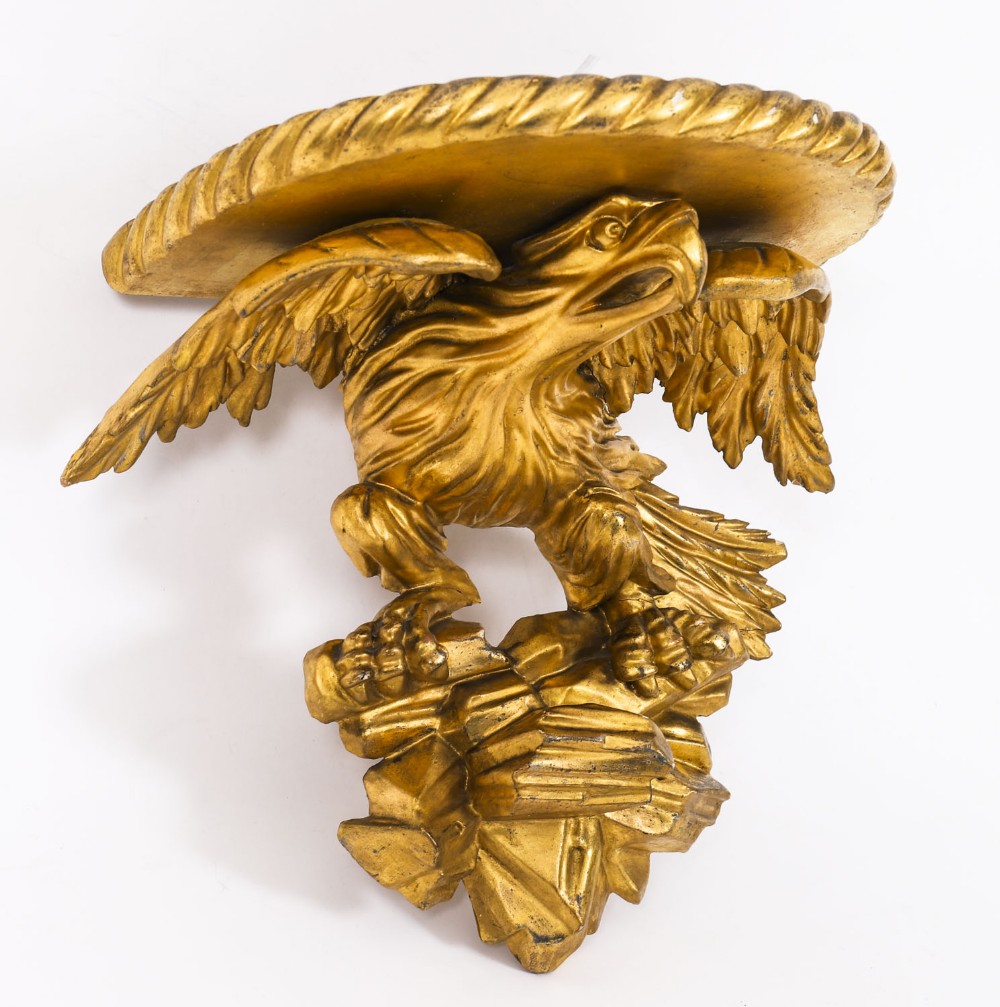
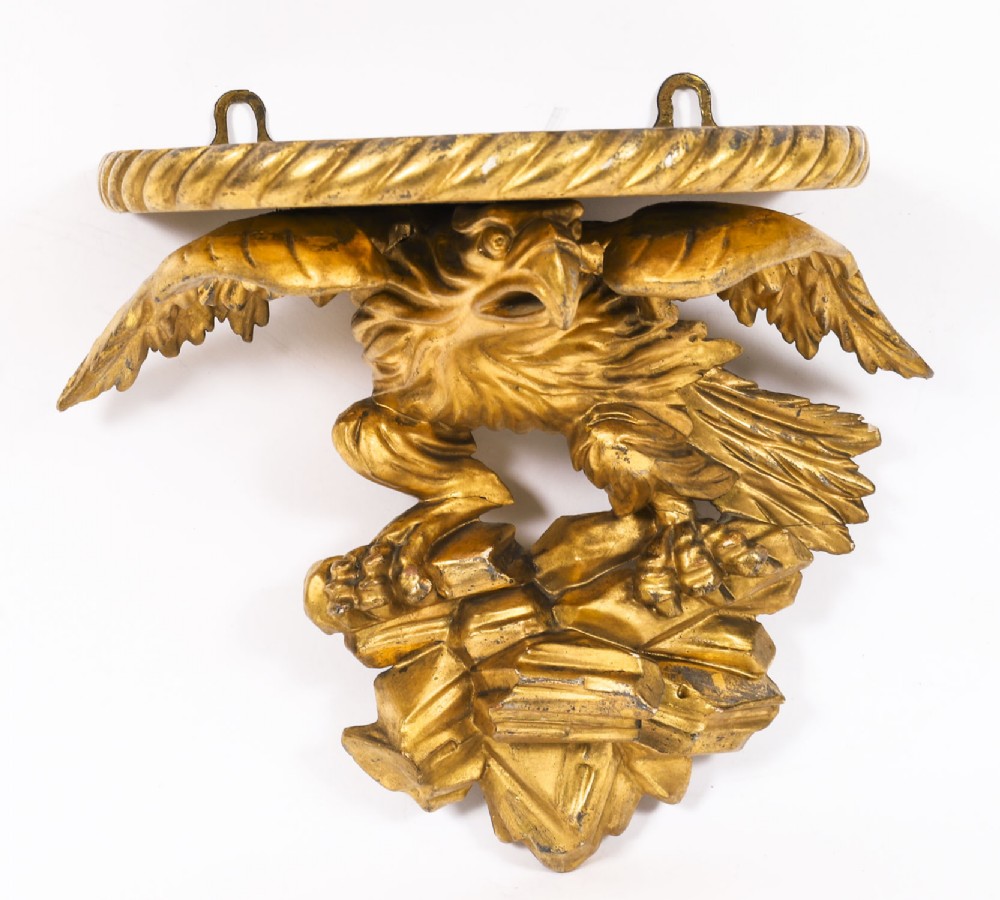
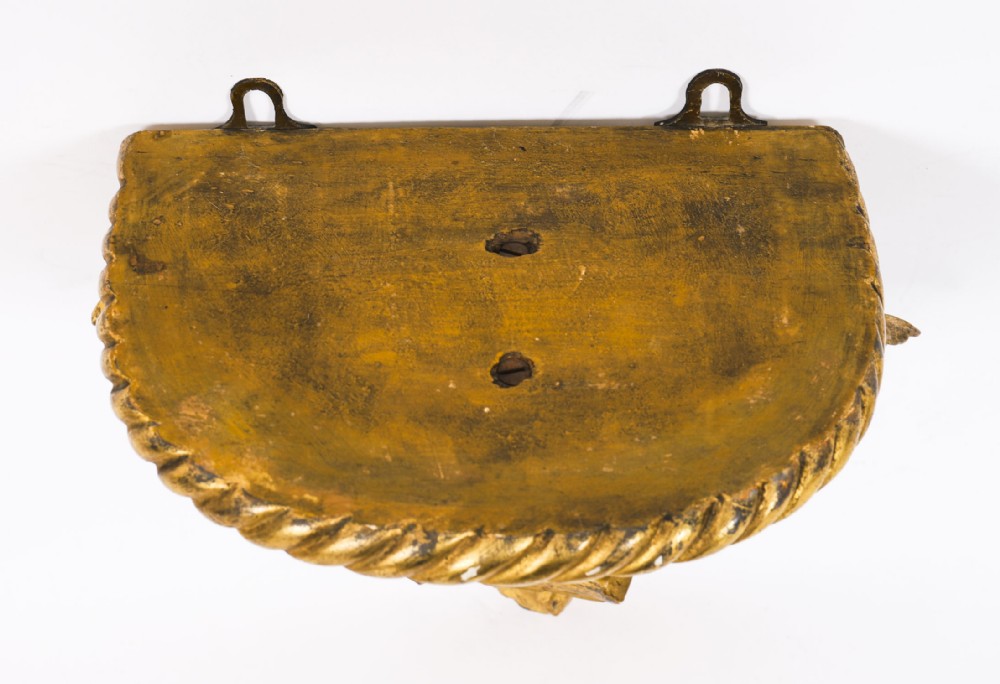
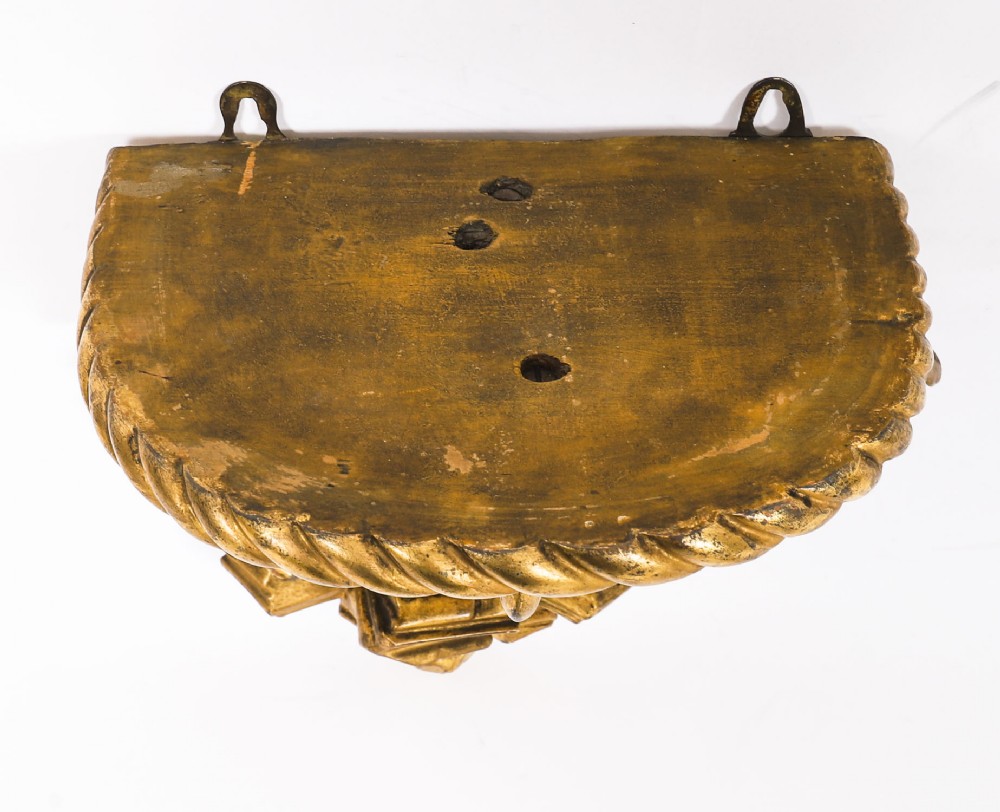
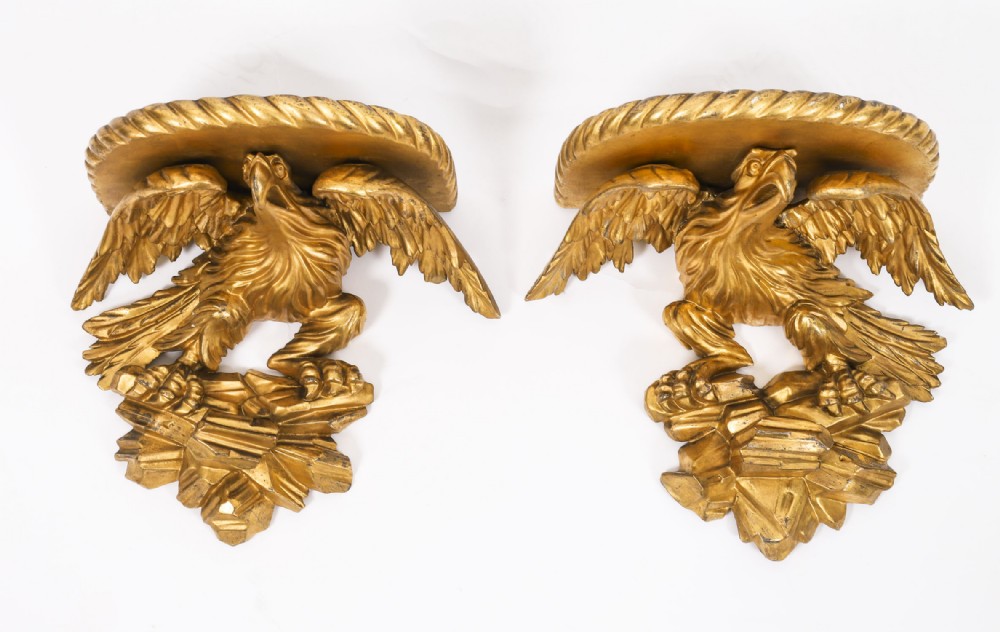
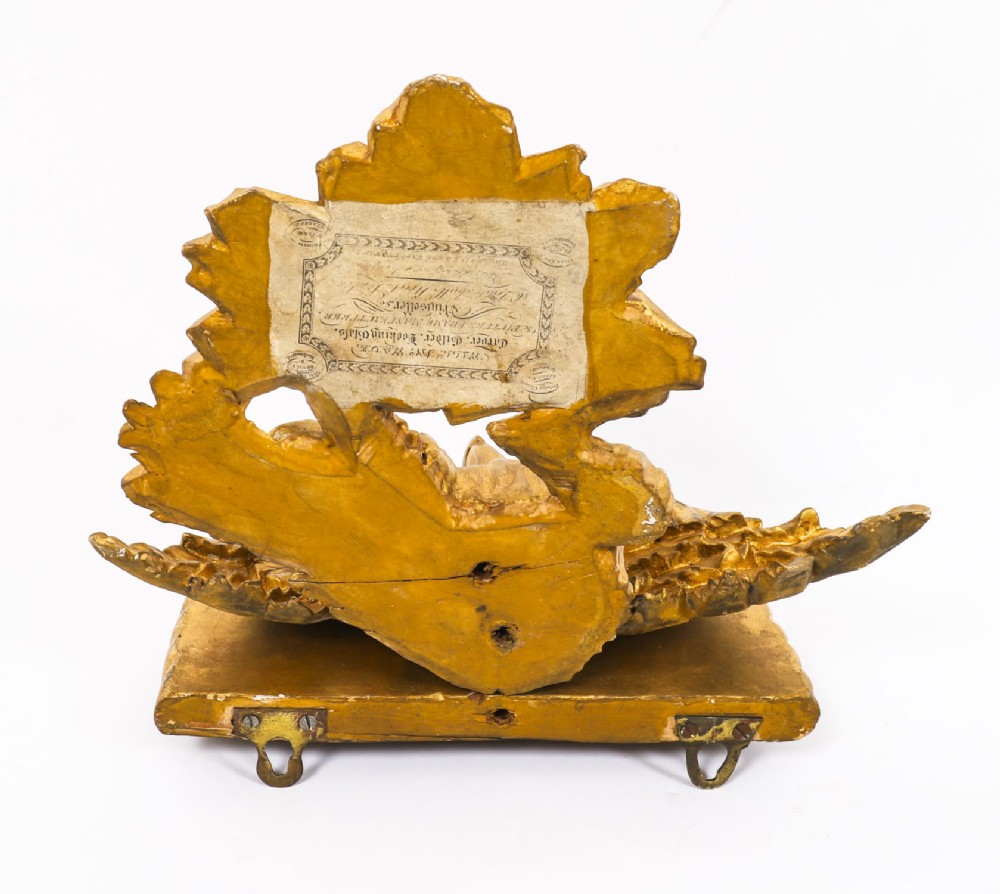
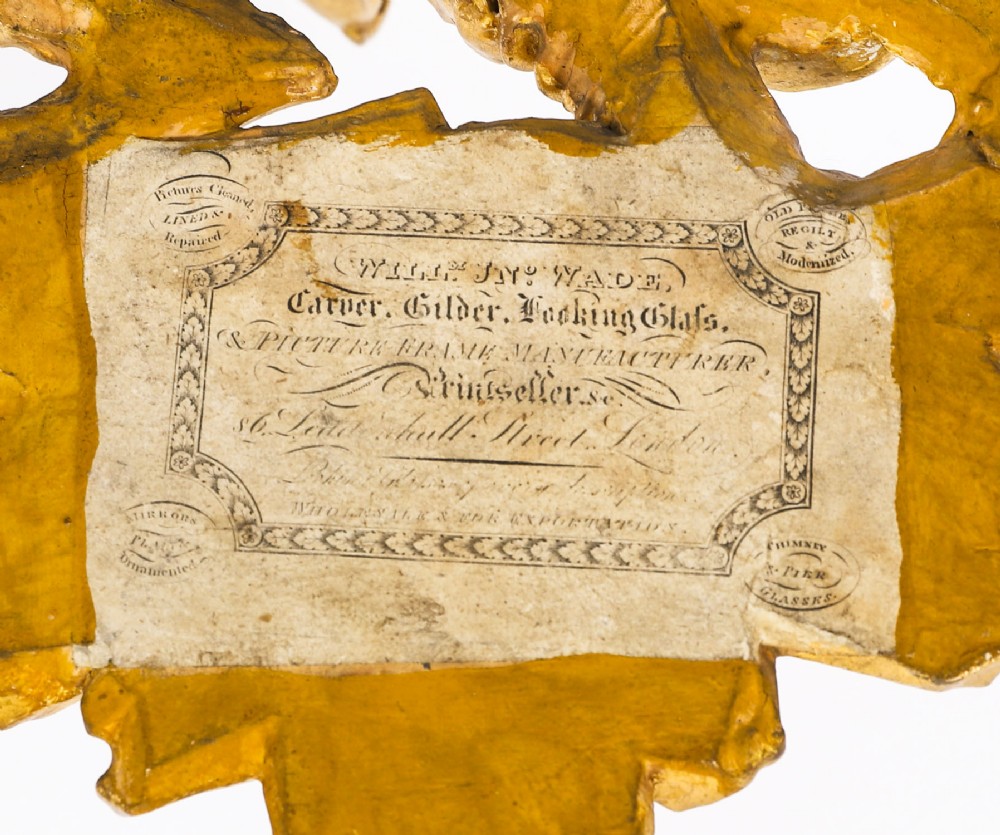
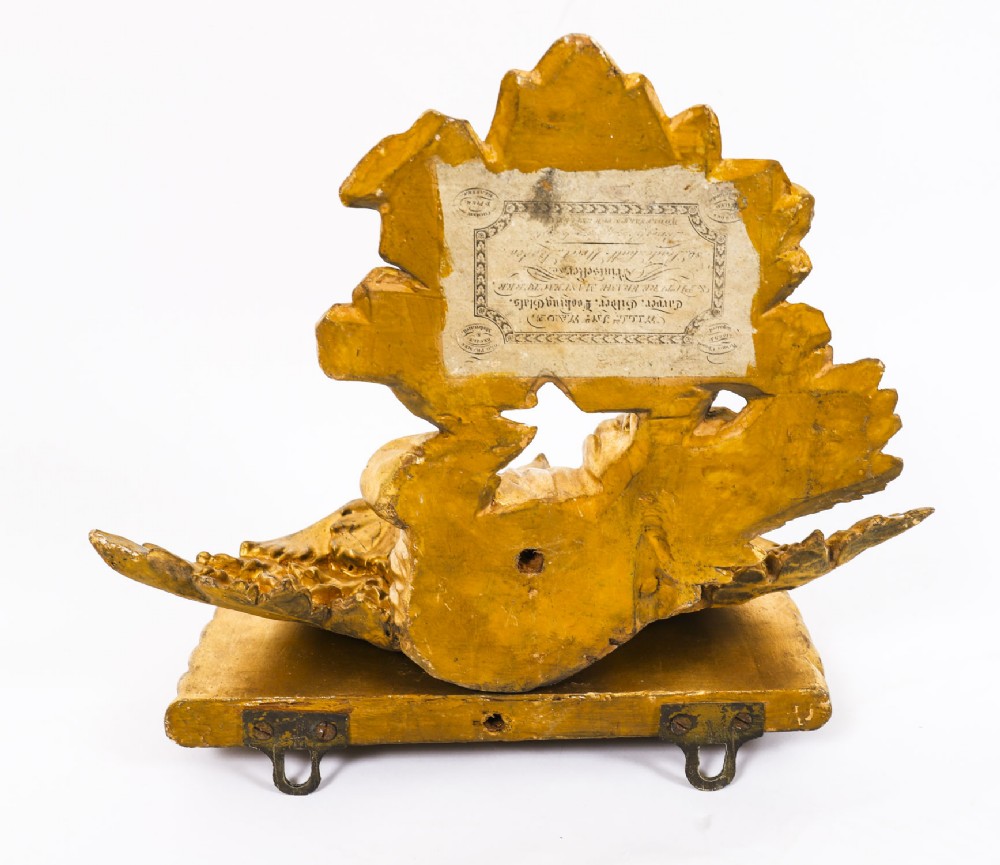
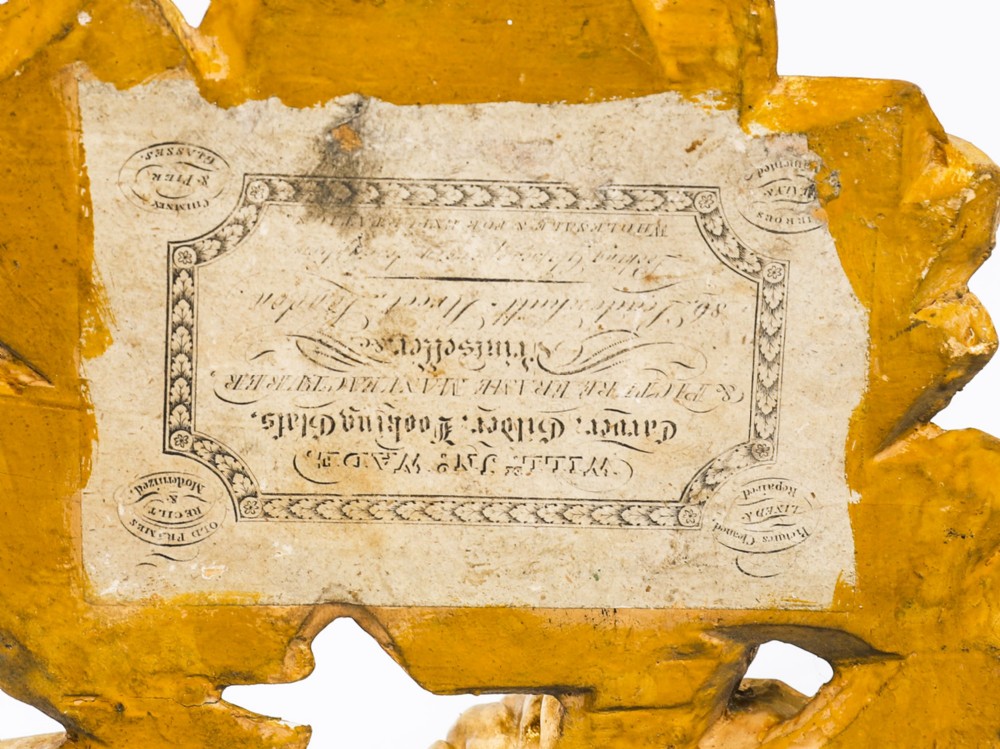
An elegant antique pair of giltwood Regency eagle wall brackets each bearing the label of the maker, Will J Wade, London, circa 1830 in date.

They each feature a winged eagle on a rocky out-crop each surmounted with a gadrooned shelf and featuring their original water gilding.


This impressive pair is certain to make a charming addition to that one special room in your home, and are ideal for displaying your precious objects d'art.

Condition:

In excellent condition having only been beautifully cleaned and waxed in our workshops, please see photos for confirmation.

Dimensions in cm:

Height 25 cm x Width 29 cm x Depth 18.5 cm  - Each

Dimensions in inches:

Height 10 inches x Width 11 inches x Depth 7 inches - Each

Rococo

Although Rococo is usually thought of as developing first in the decorative arts and interior design, its origins lie in the late Baroque architectural work of Borromini (1599–1667) mostly in Rome and Guarini (1624–1683) mostly in Northern Italy but also in Vienna, Prague, Lisbon, and Paris. Italian architects of the late Baroque/early Rococo were wooed to Catholic (Southern) Germany, Bohemia and Austria by local princes, bishops and prince-bishops. Inspired by their example, regional families of Central European builders went further, creating churches and palaces that took the local German Baroque style to the greatest heights of Rococo elaboration and sensation.

An exotic but in some ways more formal type of Rococo appeared in France where Louis XIV's succession brought a change in the court artists and general artistic fashion. By the end of the king's long reign, rich Baroque designs were giving way to lighter elements with more curves and natural patterns. These elements are obvious in the architectural designs of Nicolas Pineau. During the Régence, court life moved away from Versailles and this artistic change became well established, first in the royal palace and then throughout French high society.


An exotic but in some ways more formal type of Rococo appeared in France where Louis XIV's succession brought a change in the court artists and general artistic fashion. By the end of the king's long reign, rich Baroque designs were giving way to lighter elements with more curves and natural patterns. These elements are obvious in the architectural designs of Nicolas Pineau. During the Régence, court life moved away from Versailles and this artistic change became well established, first in the royal palace and then throughout French high society.

The delicacy and playfulness of Rococo designs is often seen as perfectly in tune with the excesses of Louis XV's reign.


The 1730s represented the height of Rococo development in France. The style had spread beyond architecture and furniture to painting and sculpture, exemplified by the works of Antoine Watteau and François Boucher. Rococo still maintained the Baroque taste for complex forms and intricate patterns, but by this point, it had begun to integrate a variety of diverse characteristics, including a taste for Oriental designs and asymmetric compositions. The Rococo style was spread by French artists and engraved publications.


In Great Britain, Rococo was always thought of as the "French taste" and was never widely adopted as an architectural style, although its influence was strongly felt in such areas as silverwork, porcelain, and silks, and Thomas Chippendale transformed British furniture design through his adaptation and refinement of the style. William Hogarth helped develop a theoretical foundation for Rococo beauty. Though not intentionally referencing the movement, he argued in his Analysis of Beauty (1753) that the undulating lines and S-curves prominent in Rococo were the basis for grace and beauty in art or nature (unlike the straight line or the circle in Classicism). The development of Rococo in Great Britai

Physical Dimensions
Height
25cm (9.84")
Width
29cm (11.42")
Depth
18.5cm (7.28")
Declaration

Regent Antiques has dated this piece to the 1800s.
Reference Numbers
Sellingantiques Reference
SA1169140
Dealers Internal Reference
A4685
Description
An elegant antique pair of giltwood Regency eagle wall brackets each bearing the label of the maker, Will J Wade, London, circa 1830 in date.
They each feature a winged eagle on a rocky out-crop each surmounted with a gadrooned shelf and featuring their original water gilding.
Regent Antiques
fig 1. Antique Pair Regency Giltwood Eagle Wall Brackets 19th Century


This impressive pair is certain to make a charming addition to that one special room in your home, and are ideal for displaying your precious objects d'art.

Condition:

In excellent condition having only been beautifully cleaned and waxed in our workshops, please see photos for confirmation.
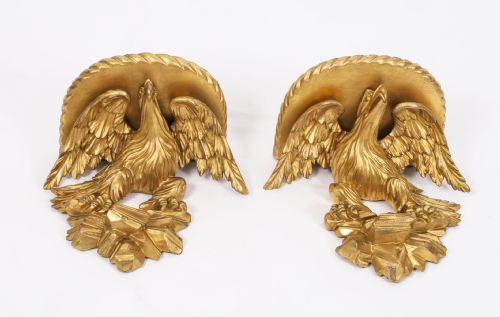
fig 2. Antique Pair Regency Giltwood Eagle Wall Brackets 19th Century

Dimensions in cm:

Height 25 cm x Width 29 cm x Depth 18.5 cm  - Each

Dimensions in inches:

Height 10 inches x Width 11 inches x Depth 7 inches - Each

Rococo

Although Rococo is usually thought of as developing first in the decorative arts and interior design, its origins lie in the late Baroque architectural work of Borromini (1599–1667) mostly in Rome and Guarini (1624–1683) mostly in Northern Italy but also in Vienna, Prague, Lisbon, and Paris. Italian architects of the late Baroque/early Rococo were wooed to Catholic (Southern) Germany, Bohemia and Austria by local princes, bishops and prince-bishops. Inspired by their example, regional families of Central European builders went further, creating churches and palaces that took the local German Baroque style to the greatest heights of Rococo elaboration and sensation.
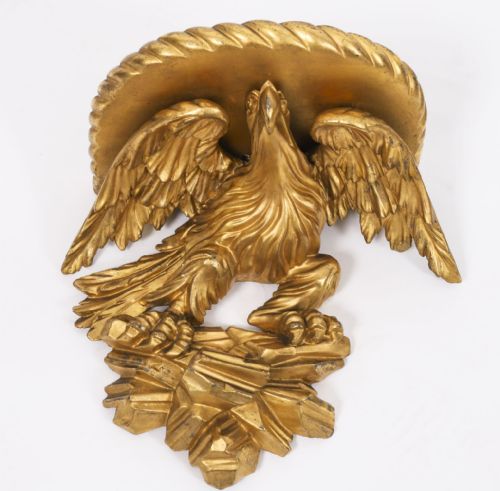
fig 3. Antique Pair Regency Giltwood Eagle Wall Brackets 19th Century

An exotic but in some ways more formal type of Rococo appeared in France where Louis XIV's succession brought a change in the court artists and general artistic fashion. By the end of the king's long reign, rich Baroque designs were giving way to lighter elements with more curves and natural patterns. These elements are obvious in the architectural designs of Nicolas Pineau. During the Régence, court life moved away from Versailles and this artistic change became well established, first in the royal palace and then throughout French high society.
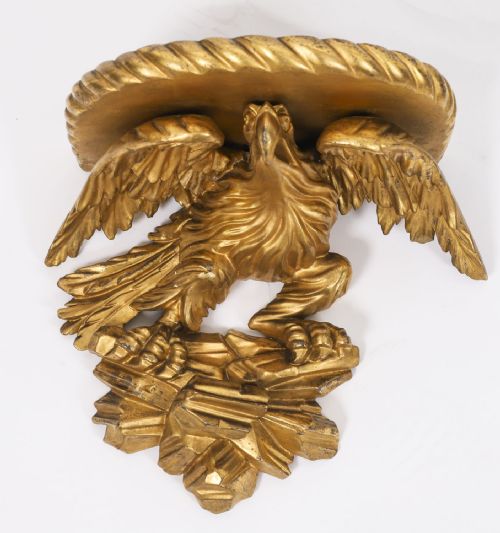
fig 4. Antique Pair Regency Giltwood Eagle Wall Brackets 19th Century


An exotic but in some ways more formal type of Rococo appeared in France where Louis XIV's succession brought a change in the court artists and general artistic fashion. By the end of the king's long reign, rich Baroque designs were giving way to lighter elements with more curves and natural patterns. These elements are obvious in the architectural designs of Nicolas Pineau. During the Régence, court life moved away from Versailles and this artistic change became well established, first in the royal palace and then throughout French high society.
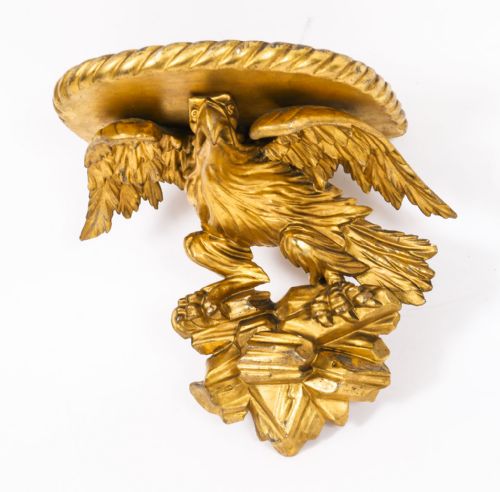
fig 5. Antique Pair Regency Giltwood Eagle Wall Brackets 19th Century

The delicacy and playfulness of Rococo designs is often seen as perfectly in tune with the excesses of Louis XV's reign.


The 1730s represented the height of Rococo development in France. The style had spread beyond architecture and furniture to painting and sculpture, exemplified by the works of Antoine Watteau and François Boucher. Rococo still maintained the Baroque taste for complex forms and intricate patterns, but by this point, it had begun to integrate a variety of diverse characteristics, including a taste for Oriental designs and asymmetric compositions. The Rococo style was spread by French artists and engraved publications.
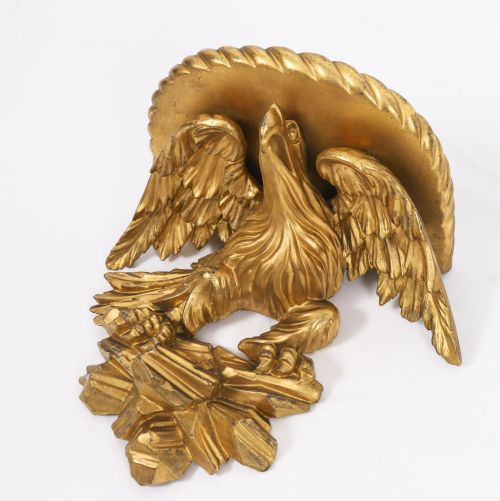
fig 6. Antique Pair Regency Giltwood Eagle Wall Brackets 19th Century


In Great Britain, Rococo was always thought of as the "French taste" and was never widely adopted as an architectural style, although its influence was strongly felt in such areas as silverwork, porcelain, and silks, and Thomas Chippendale transformed British furniture design through his adaptation and refinement of the style. William Hogarth helped develop a theoretical foundation for Rococo beauty. Though not intentionally referencing the movement, he argued in his Analysis of Beauty (1753) that the undulating lines and S-curves prominent in Rococo were the basis for grace and beauty in art or nature (unlike the straight line or the circle in Classicism). The development of Rococo in Great Britai

Height
25cm (9.84")
Width
29cm (11.42")
Depth
18.5cm (7.28")
Date of Manufacture

Regent Antiques has dated this piece to the 1800s.

Reference Numbers
Sellingantiques Ref
SA1169140
Dealers Internal Ref
A4685
Regent Antiques
Regent Antiques
Sellingantiques verified Since Sep 2016

We specialise in english and continental furniture, silver, porcelain and decorative items.

Dealer Profile

You can view the stock and full dealer information on the Regent Antiques Profile Page

Trade Associations

Regent Antiques is a registered member of LAPADA  CINOA
PDF SHARE
SAVE
Antique Pair Regency Giltwood Eagle Wall Brackets 19th Century
1 / 17
Archive I Antique Pair Regency Giltwood Eagle Wall Brackets 19th Century
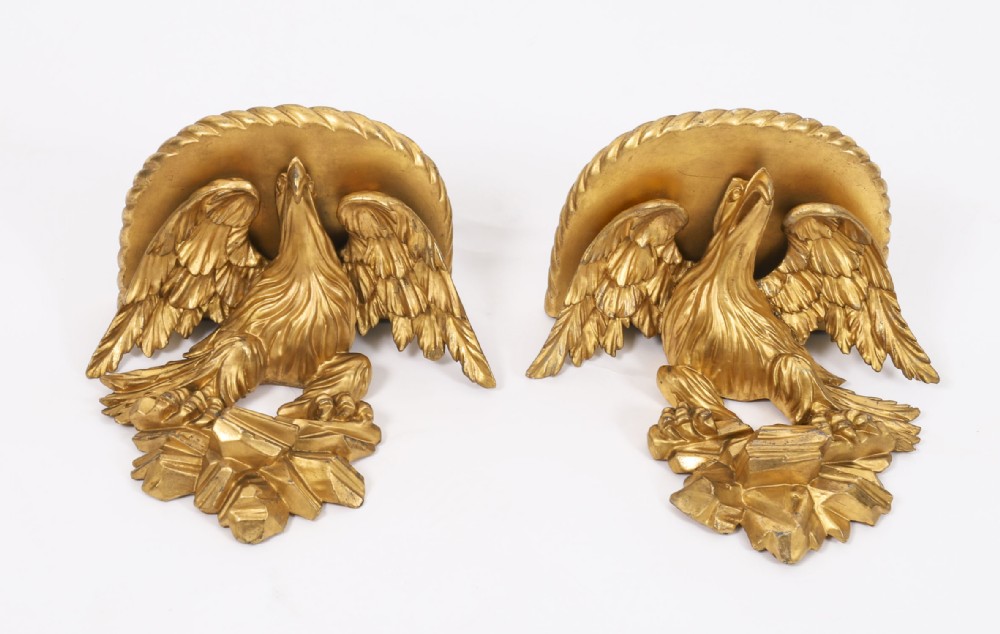
Antique Pair Regency Giltwood Eagle Wall Brackets 19th Century
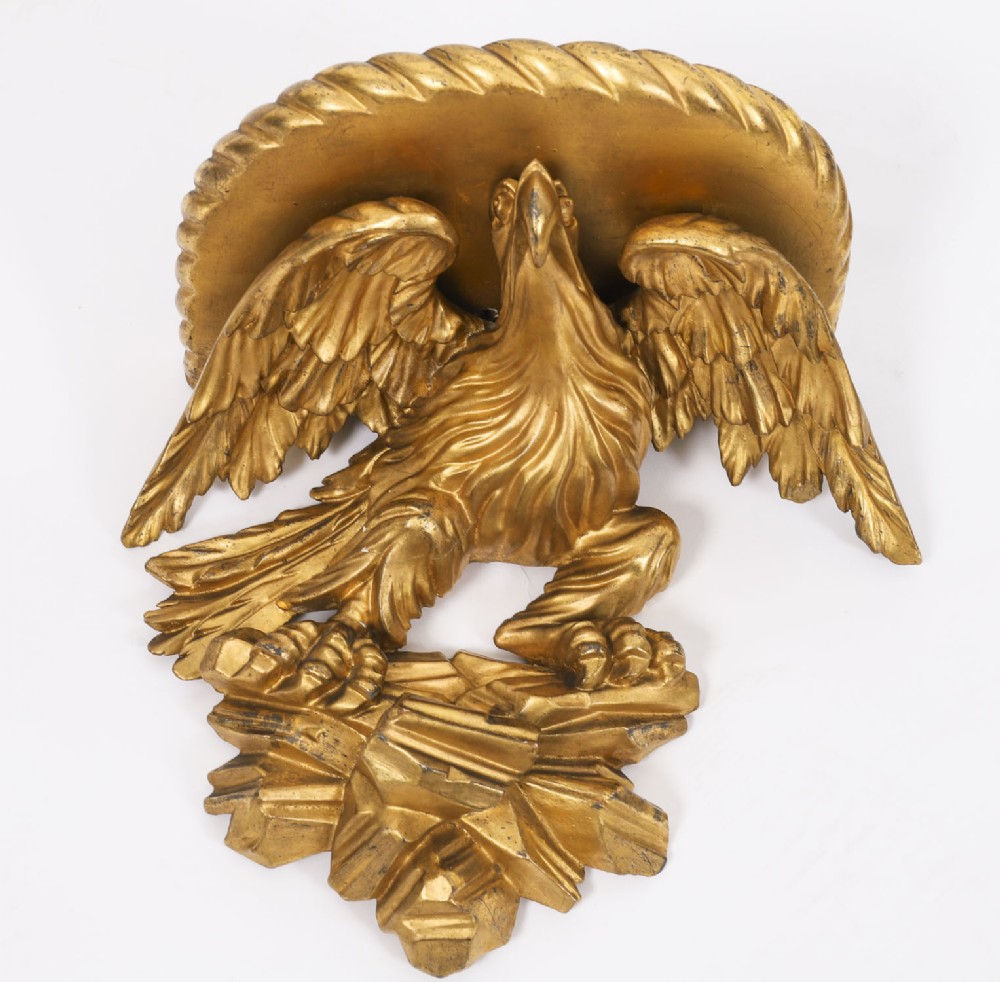
Archive II Antique Pair Regency Giltwood Eagle Wall Brackets 19th Century View II
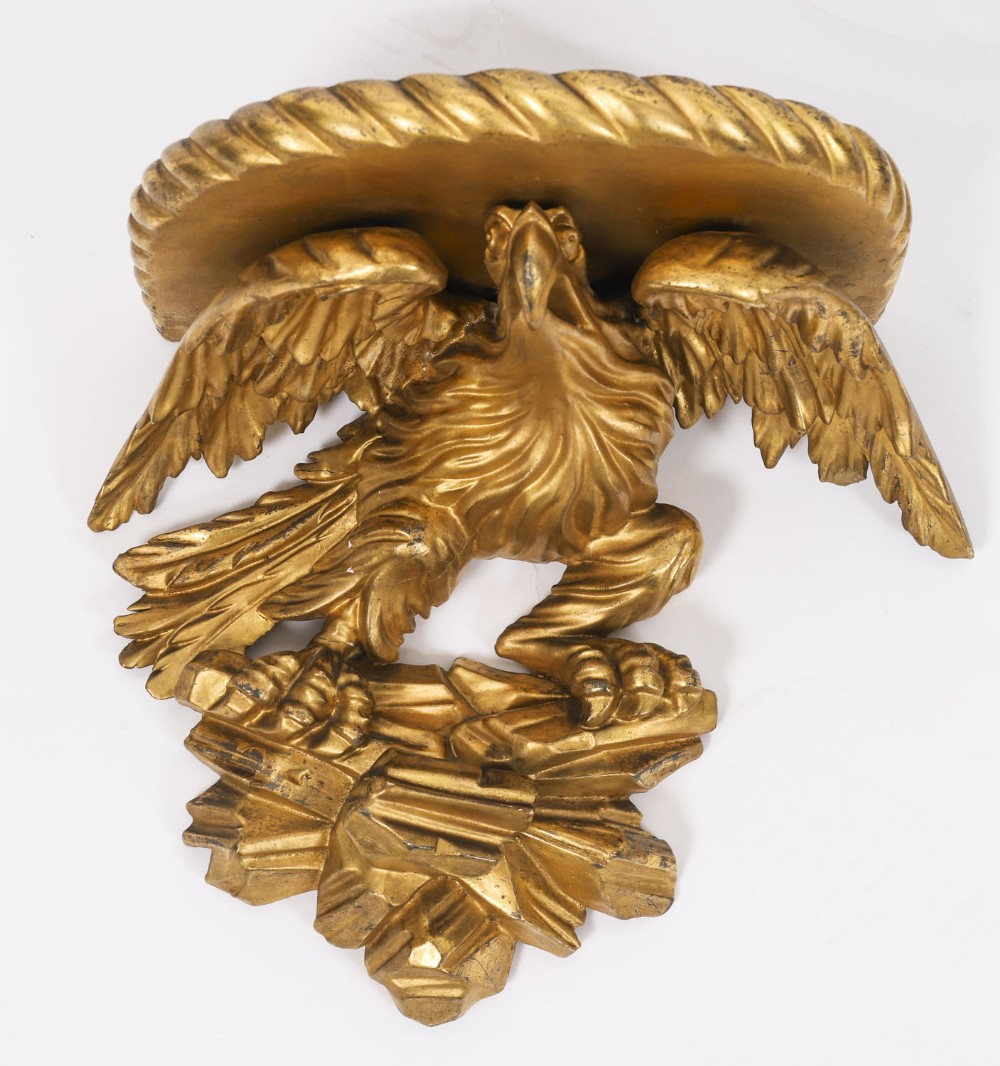
Archive III Antique Pair Regency Giltwood Eagle Wall Brackets 19th Century View III
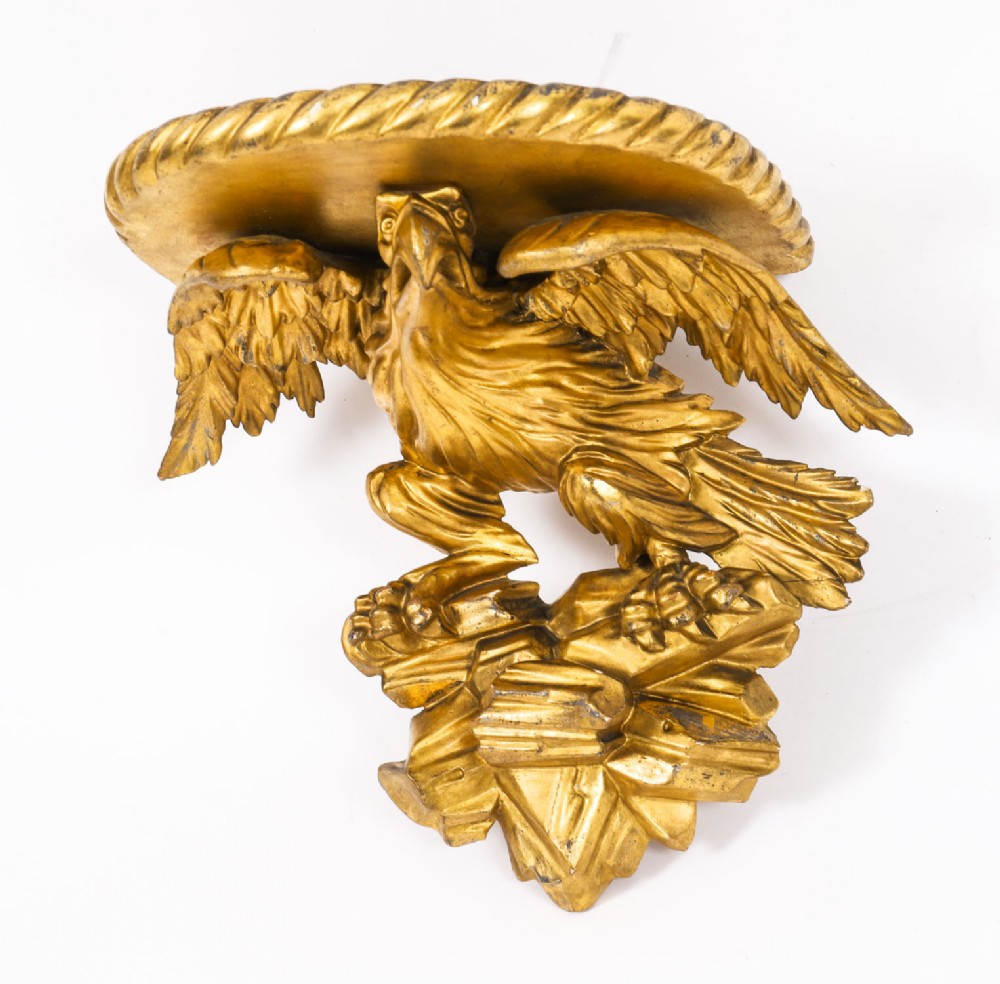
Archive IV Antique Pair Regency Giltwood Eagle Wall Brackets 19th Century View IV
Archive V Antique Pair Regency Giltwood Eagle Wall Brackets 19th Century View V
Archive VI Antique Pair Regency Giltwood Eagle Wall Brackets 19th Century View VI
Archive VII Antique Pair Regency Giltwood Eagle Wall Brackets 19th Century View VII
Archive VIII Antique Pair Regency Giltwood Eagle Wall Brackets 19th Century View VIII
Archive IX Antique Pair Regency Giltwood Eagle Wall Brackets 19th Century View IX
Archive X Antique Pair Regency Giltwood Eagle Wall Brackets 19th Century View X
Archive XI Antique Pair Regency Giltwood Eagle Wall Brackets 19th Century View XI
Archive XII Antique Pair Regency Giltwood Eagle Wall Brackets 19th Century View XII
Archive XIII Antique Pair Regency Giltwood Eagle Wall Brackets 19th Century View XIII
Archive XIV Antique Pair Regency Giltwood Eagle Wall Brackets 19th Century View XIV
Archive XV Antique Pair Regency Giltwood Eagle Wall Brackets 19th Century View XV
Archive XVI Antique Pair Regency Giltwood Eagle Wall Brackets 19th Century View XVI
Archive XVII Antique Pair Regency Giltwood Eagle Wall Brackets 19th Century View XVII
Enlarged Archival View
Location
Manor Warehouse
318 Green Lanes
London
N4 1BX
United Kingdom
Verified Since Sep 2016
Items For Sale 659
Items Sold 2,608
Regent Antiques
Regent Antiques
Verified Since Sep 2016
View Dealer Info
Location: Manor Warehouse, 318 Green Lanes, London, N4 1BX, United Kingdom
Verified
Sep 2016
For Sale
659
Sold
2,608
Antique Pair Regency Giltwood Eagle Wall Brackets 19th Century
Ref: SA1169140
Antique Pair Regency Giltwood Eagle Wall Brackets 19th Century
Detail View 1
Detail View 2
Detail View 3
Detail View 4
Detail View 5
Detail View 6
Detail View 7
Detail View 8
Detail View 9
Detail View 10
Detail View 11
Detail View 12
Detail View 13
Detail View 14
Detail View 15
Detail View 16
Archival Detail
Every single antique dealer on our platform is individually approved by our internal team. We verify their professional trade history, ethical standards, and photographic quality to ensure a secure, high-standard buying environment. Upon joining, every dealer agrees to a strict 9-point code of conduct. While issues can occasionally arise, our dealers typically resolve them swiftly and directly with the buyer. In fact, since our founding in 2002, Sellingantiques has only had to step in to help resolve an issue on roughly five occasions—a true testament to the quality of our dealers and their dedication to your happiness.
Our dealers are highly experienced in packing and shipping fragile, high-value antiques. Because you are in direct contact with the dealer, you will be able to easily go through all available shipping and insurance options together to ensure your item arrives safely.
Antiques are the ultimate green purchase. By choosing historical pieces over newly manufactured goods, you completely eliminate the carbon footprint of modern mass production while preserving exceptional, timeless craftsmanship.
items
Add keywords to the filter
Price
£100
£250000
Era
Movements
Material
Origin
Stock Location
Freshness
Online Payments
Categories