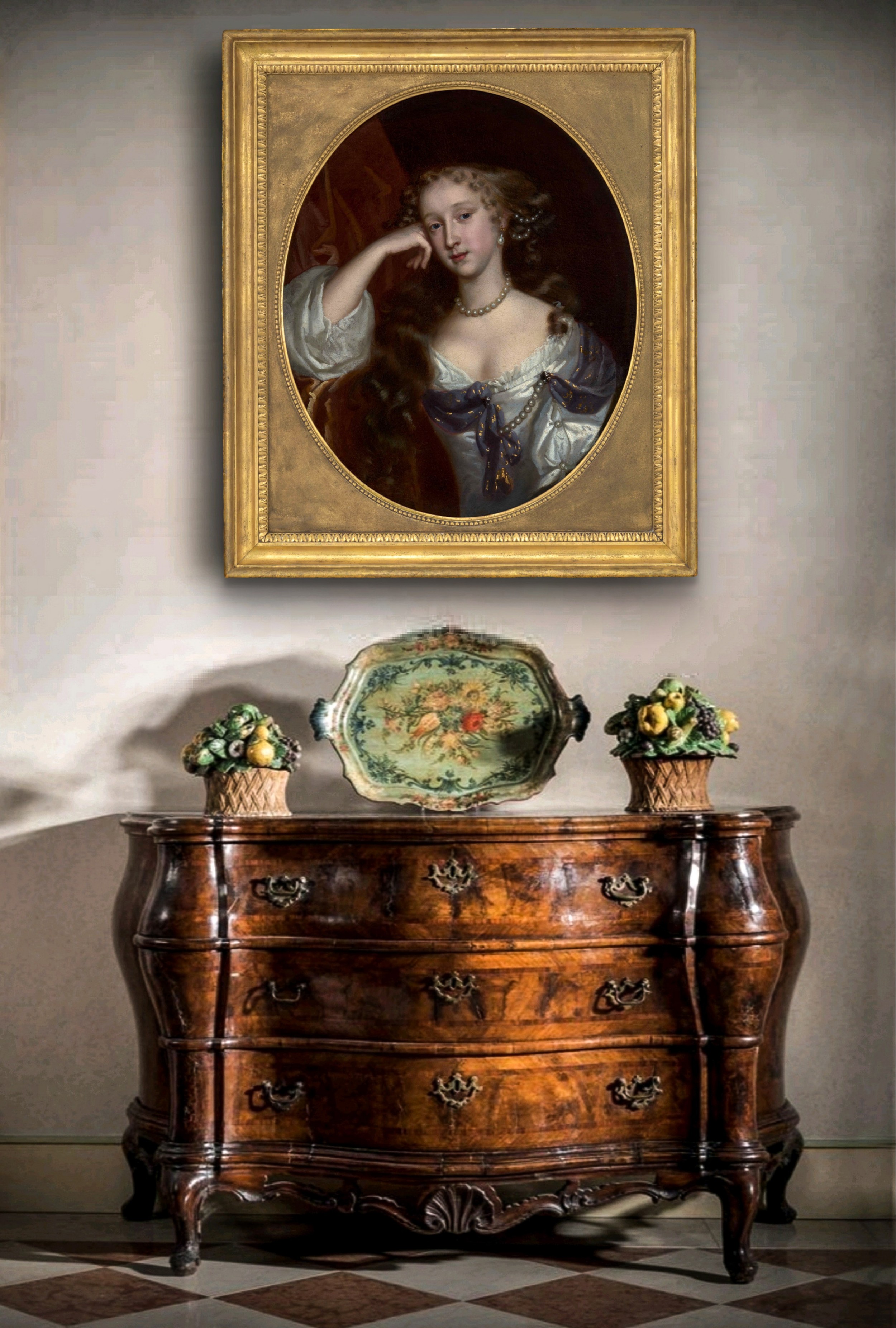
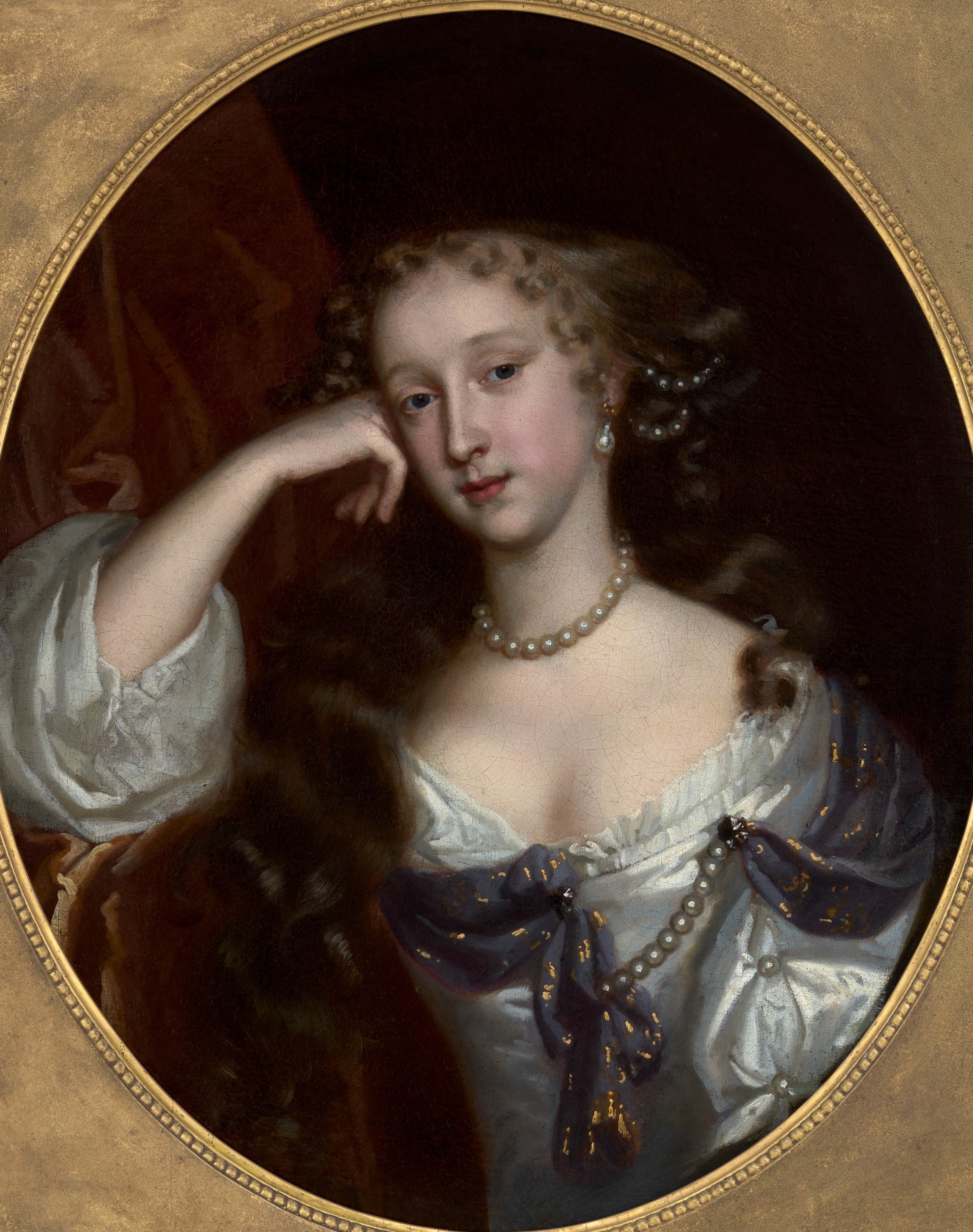
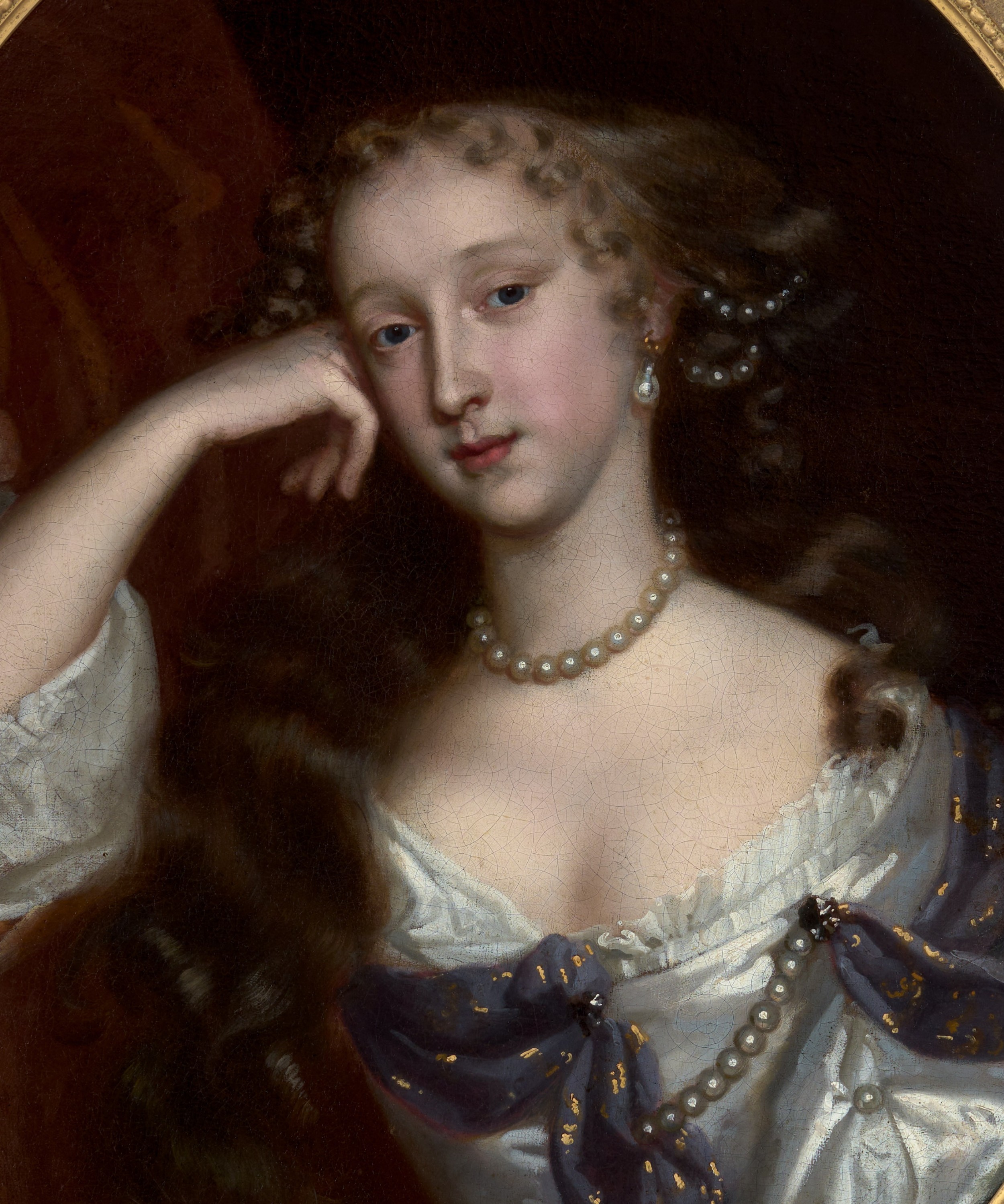
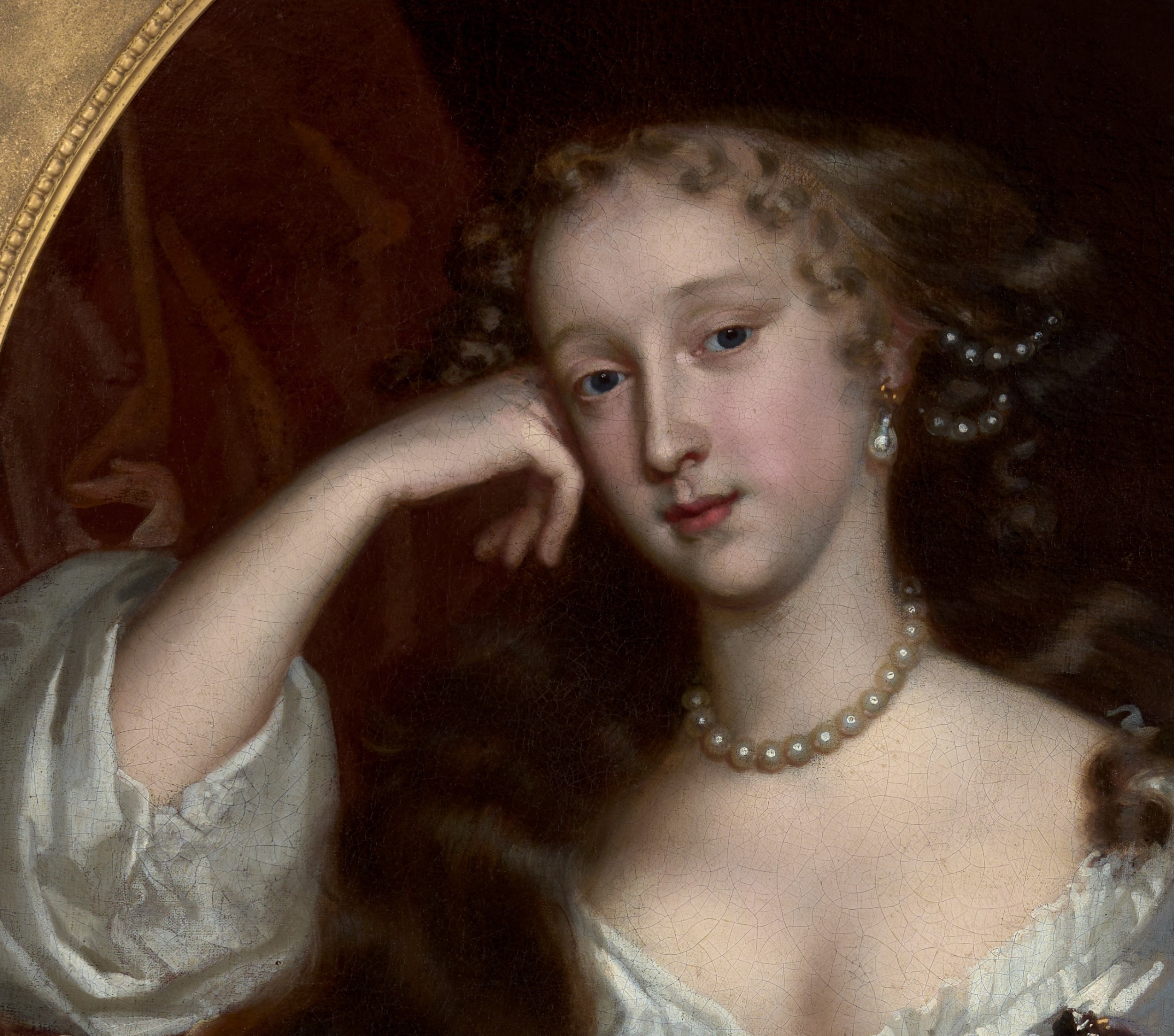
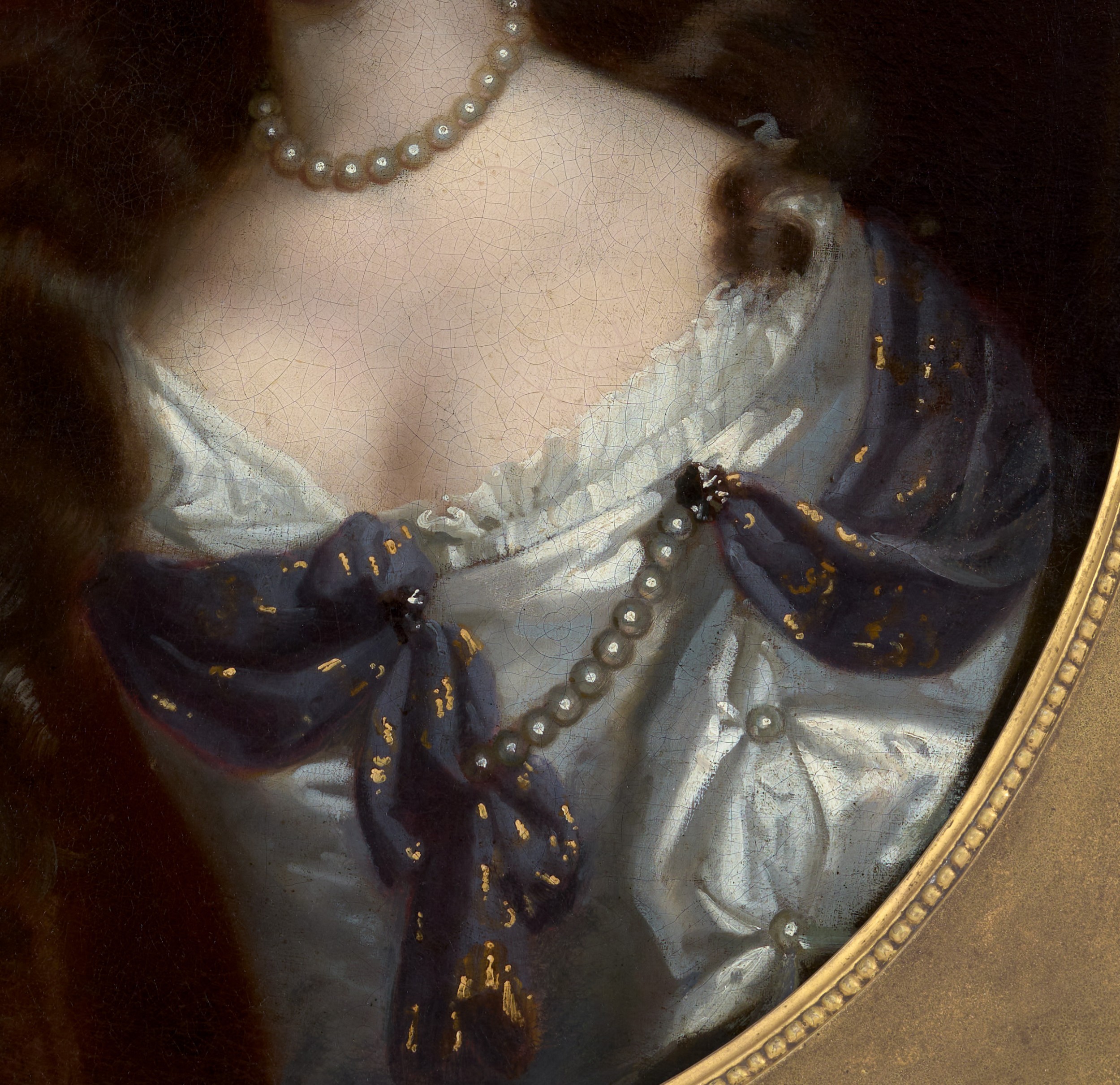
In this touching composition, painted around the time of London’s Great Fire in 1666, a young woman has been depicted wearing a silver dress and gauzy scarf held in a place by a rope of pearls and a large diamond brooch. At first, the image seems like a straightforward one, but it in fact it carries aesthetic and allegorical illusions, and their meaning would have been immediately recognised by a contemporary audience.
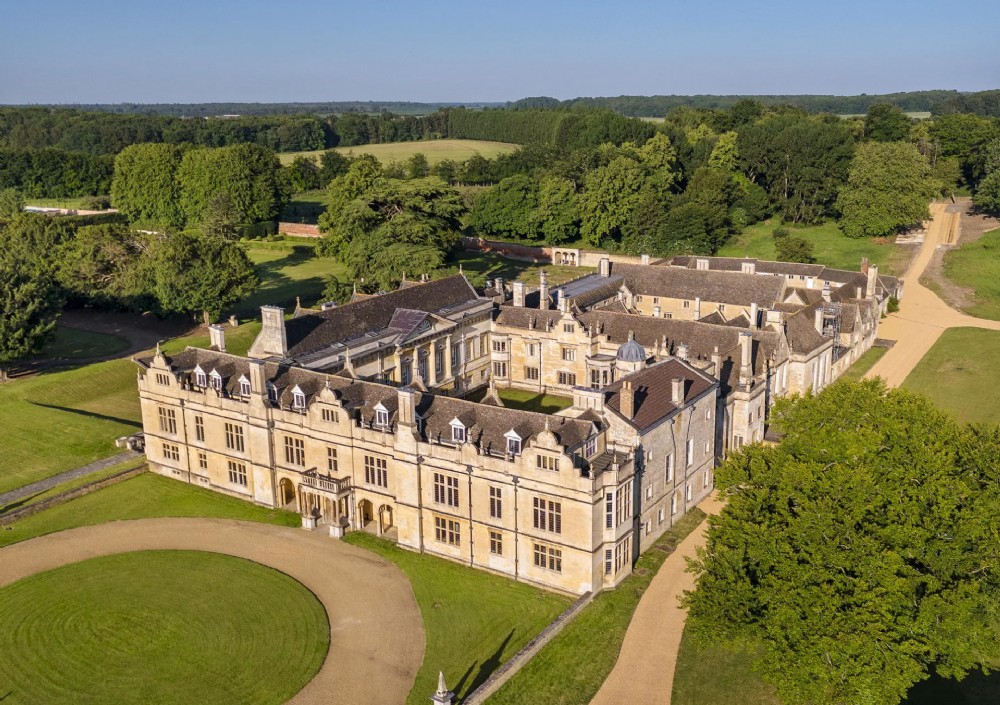
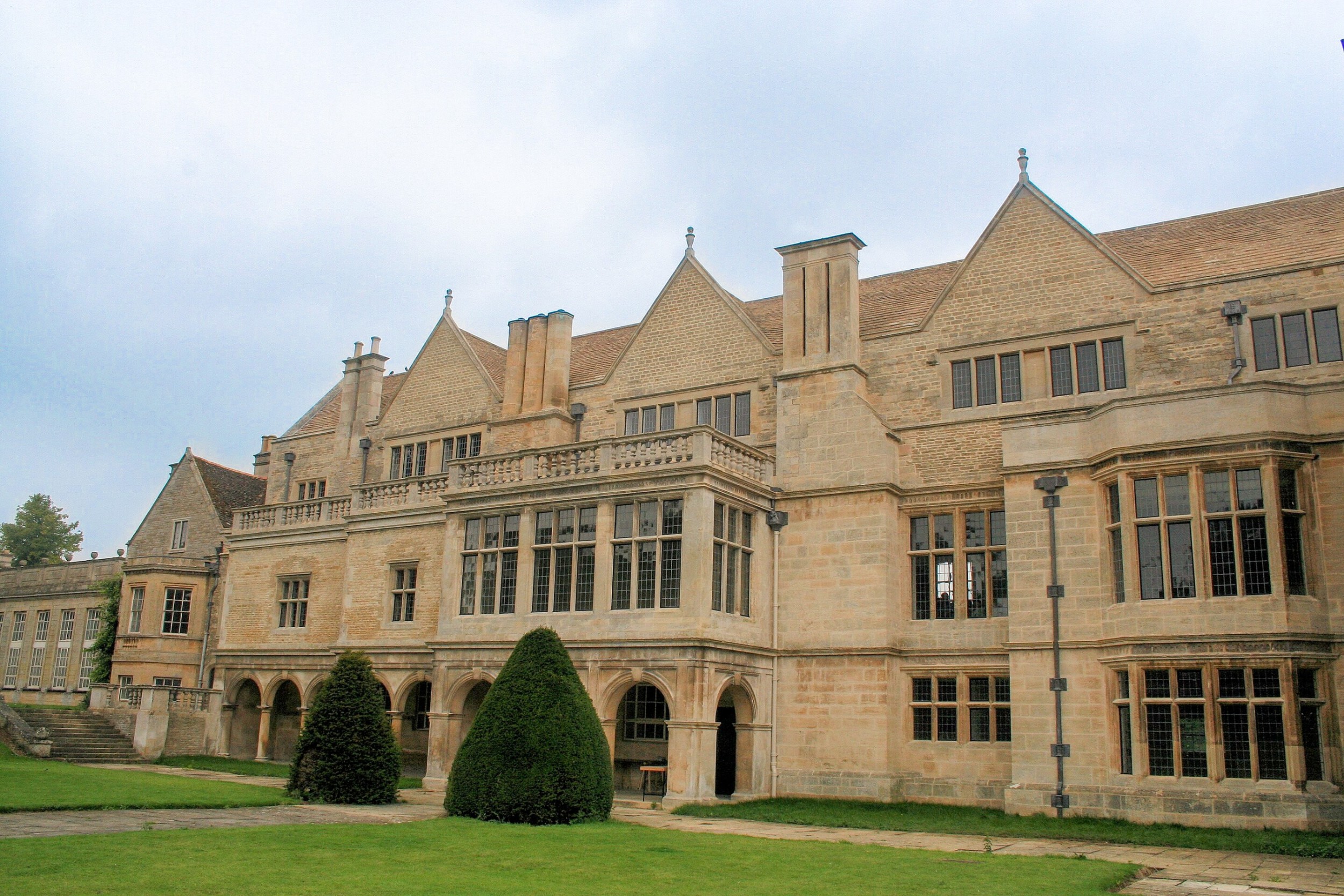
The subject is said to be Elizabeth, daughter and co-heir of Charles Nodes of Shephalbury, Hertfordshire. She was born on 1 August 1648. She married Charles Fane, 3rd Earl of Westmorland (1635-1691), in 1665, the year he succeeded to the Earldom; she then became styled as Countess of Westmorland. The family seat was Apethorpe Hall.
Charles was the eldest son of Mildmay Fane, 2nd Earl of Westmorland and his first wife Grace Thornhurst. He was an English peer and twice Member of Parliament for Peterborough. Though apparently an opponent of James II in 1684, he re
...fused to take up arms against the King the year after. He died at the age of 56 and was buried at Apethorpe Hall. Elizabeth died sometime after 1667.
The ‘head on hand’ pose was long depicted in art and has its origins in the Renaissance depictions of beautiful women, particularly those of Titian and his followers, and also the iconography associated with the depiction of Melancholia, the Penitent Magdalene. In England, however, the prolific painter Peter Lely, popularised this formula, due to his widely celebrated depiction of Barbara Villiers (circa 1662). The Restoration court was a reaction against the austere Puritanical period that preceded it. Lely''s paintings, with their relaxed and sensual poses and unbound hair, reflected this new, more indulgent atmosphere. Lely used it often and many other artists followed; it became a pose very much associated with a young beauty of the day.
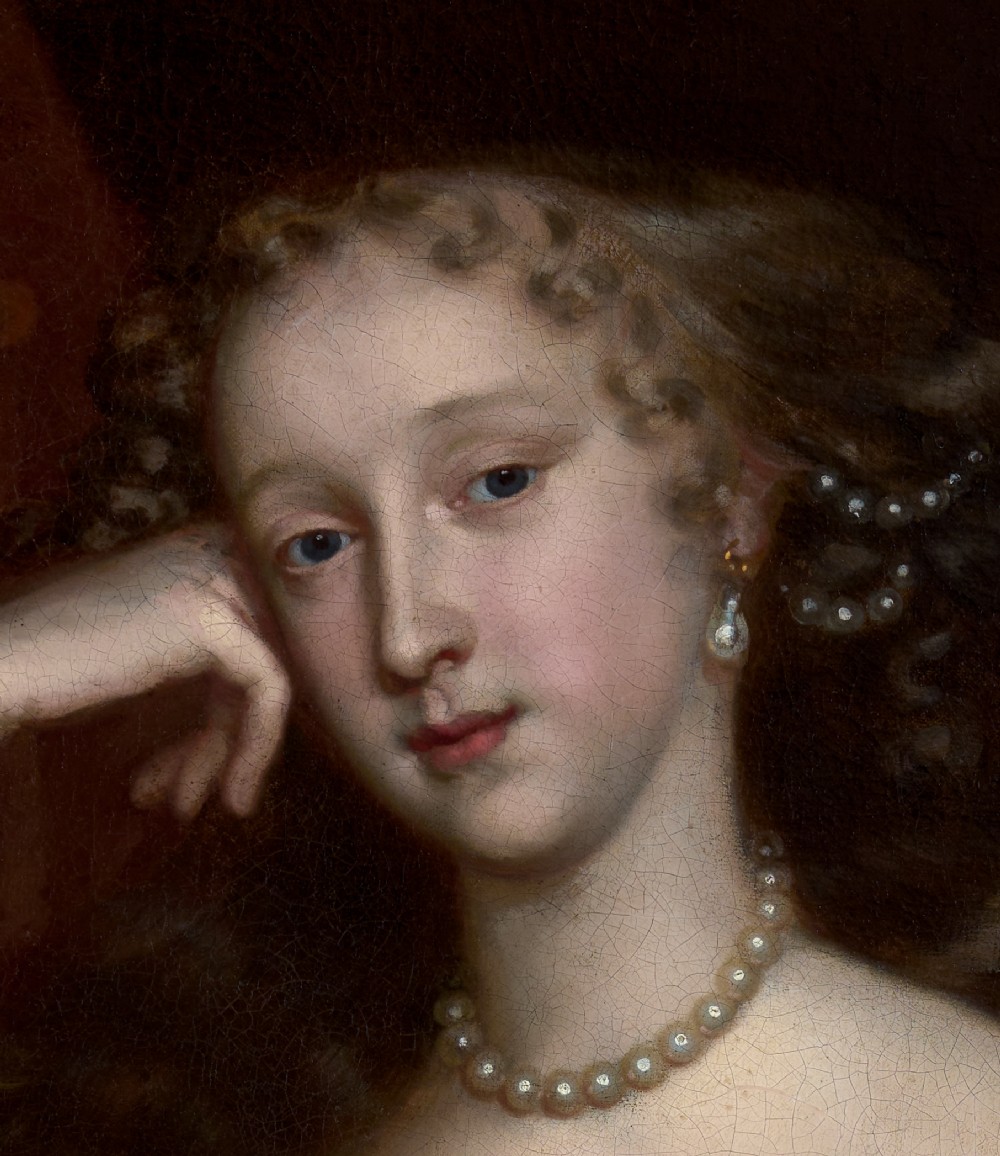
The flowing hair holds several meanings associated with the Restoration era: it was a symbol of uninhibited sexuality, unlike respectable married women of the time who kept their hair neatly pinned up. Having one''s hair loose and unbound was a highly intimate and provocative gesture as ''virtuous'' women only let their hair down in the privacy of their bedchambers. It was sometimes depicted in allegorical roles, such as the Roman goddess Minerva, placing her in the context of mythical figures who often had unbound, flowing locks. However, our portrait, considering the contemplative pose, and the fact that Wright is known to have painted a posthumous portrait of the sitter (*), can be considered as a memento mori, a reminder of mortality and the impermanence of beauty.
The work is a fine example of English Baroque portraiture and it illustrates exceptional skill, and an individualised face. Held in a period gilded antique frame with sanded spandrel.
John Michael Wright was one of only a handful of native-born painters to find favour amongst the top echelons of society. He introduced an Italian flavour into British painting, unlike all the other portrait painters in second half of the century. His realistic characterisations tend to reinforce Pepy’s critique that Lely’s portraits were ‘good but not like’ and, in 1662, when comparing the two artists “but Lord, the difference that is between their two works’.
He was born in London and initially trained in Edinburgh under the apprenticeship of George Jamesone. Wright''s distinctive individuality and success as an artist can be attributed, in part, to his varied artistic background and training.
*Christies London, 17 Dec 2020, lot 246, as “A posthumous portrait of Elizabeth, Countess of Westmorland (1648-?1667), full-length, seated in a white satin dress with gold and silver brocade, with a sprig of flowers in her left hand, JOHN MICHAEL WRIGHT (LONDON 1617-1694), inscribed ''Eliz. th Nodes 1st. Wife / to Chas E. of Weftmorland'' (lower left)
Full description at Titan Fine Art
Much more info about this item at: www.titanfineart.com
In a market saturated with available paintings, Titan Fine Art offers a distinct advantage: we sift through thousands of works to provide a specially curated selection. Each piece is meticulously chosen based on technical merit, provenance, and decorative appeal, ensuring our clients view only the finest examples of British and European art.
With over 20 years of expertise and 1,000+ works placed with collectors and institutions, we are one of the most prolific specialists in 17th and 18th-century portraiture. We combine a scholarly approach with museum-level rigor to replace the uncertainty of the open market with absolute confidence.
Why Buy From Titan Fine Art?
• Expertly Curated Selection
We act as your expert eye, selecting only high-quality works that offer genuine historical and artistic value.
• Museum-Level Research
Each portrait is supported by extensive academic research, often exceeding 40 hours, to establish attribution, sitter identity, and historical context.
• Professional Conservation
All paintings are carefully cleaned and stabilised by professional conservators, and are presented ready to hang.
• Transparent Pricing
No buyer’s premium or hidden fees—unlike auction houses, where additional costs can add 25–35%.
• Export Pricing Advantage
Reduced pricing is available for works exported outside the UK.
• Specialist Global Shipping
We manage the entire process, including custom crating, export documentation, and fully tracked delivery worldwide.
• Buy with Confidence
A 7-day return policy and the option to pay in GBP, USD, or EUR for convenience and transparency.
• Original Period Frames
Many works retain their original carved and gilded frames, which are works of art in their own right and enhance both historical authenticity and decorative impact.
• Personal Advisory Service
We work directly with collectors and interior designers, offering guidance on selection, scale, and placement—including bespoke room mock-ups on request.
Subscribe to our monthly 'new item alert' to be the first to hear about new worksAntique ID Number (AIDN): SA1168292
Dateline of this antique is 17th Century
Height is 92cm (36.2inches)Width is 79cm (31.1inches)Depth is 6cm (2.4inches)







Thank you.
Your comment has been sent to Sellingantiques.