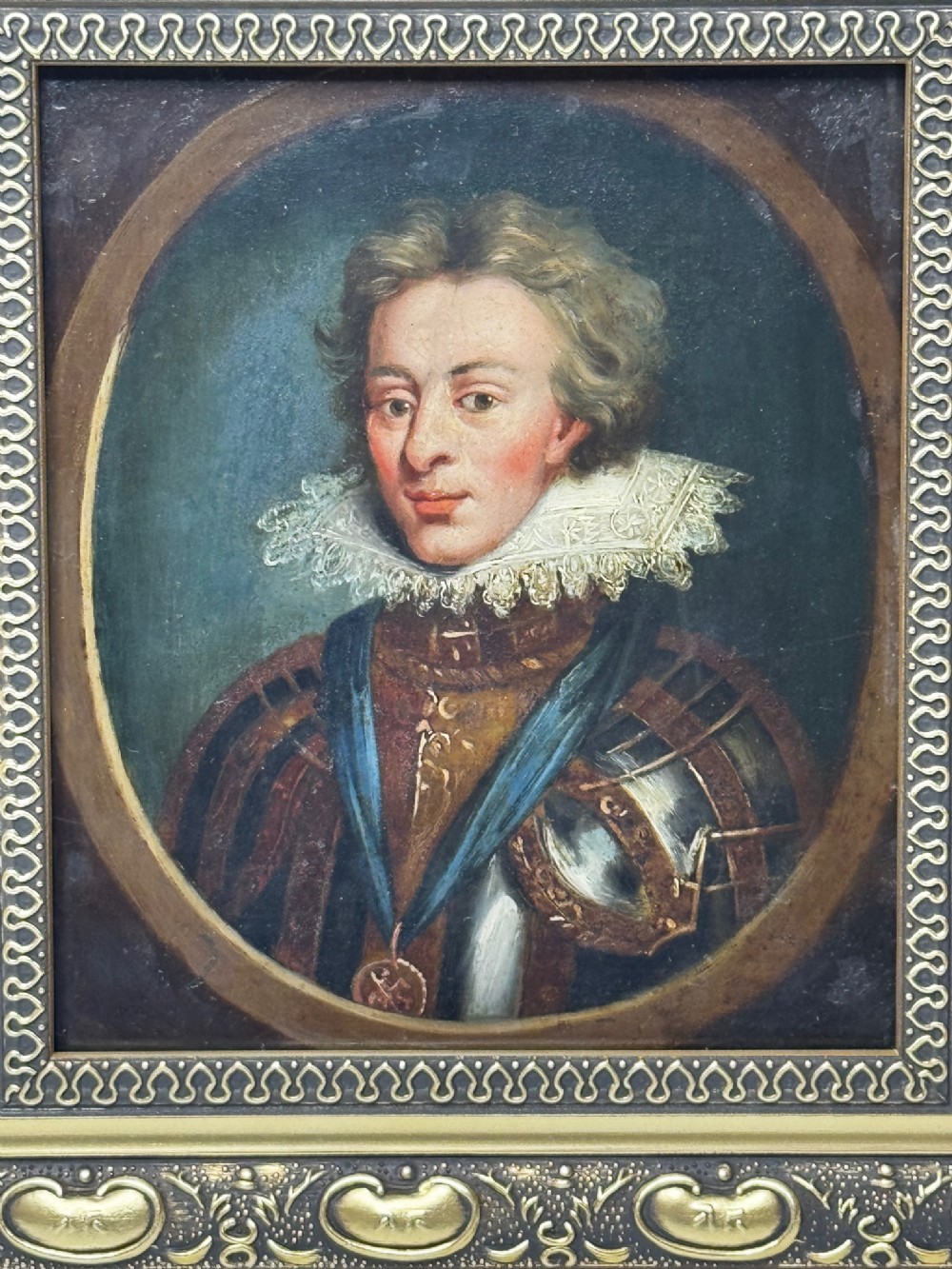
Cheshire Antiques Consultant Ltd has dated this Jacobean Royal Oil Portrait to the Victorian era.
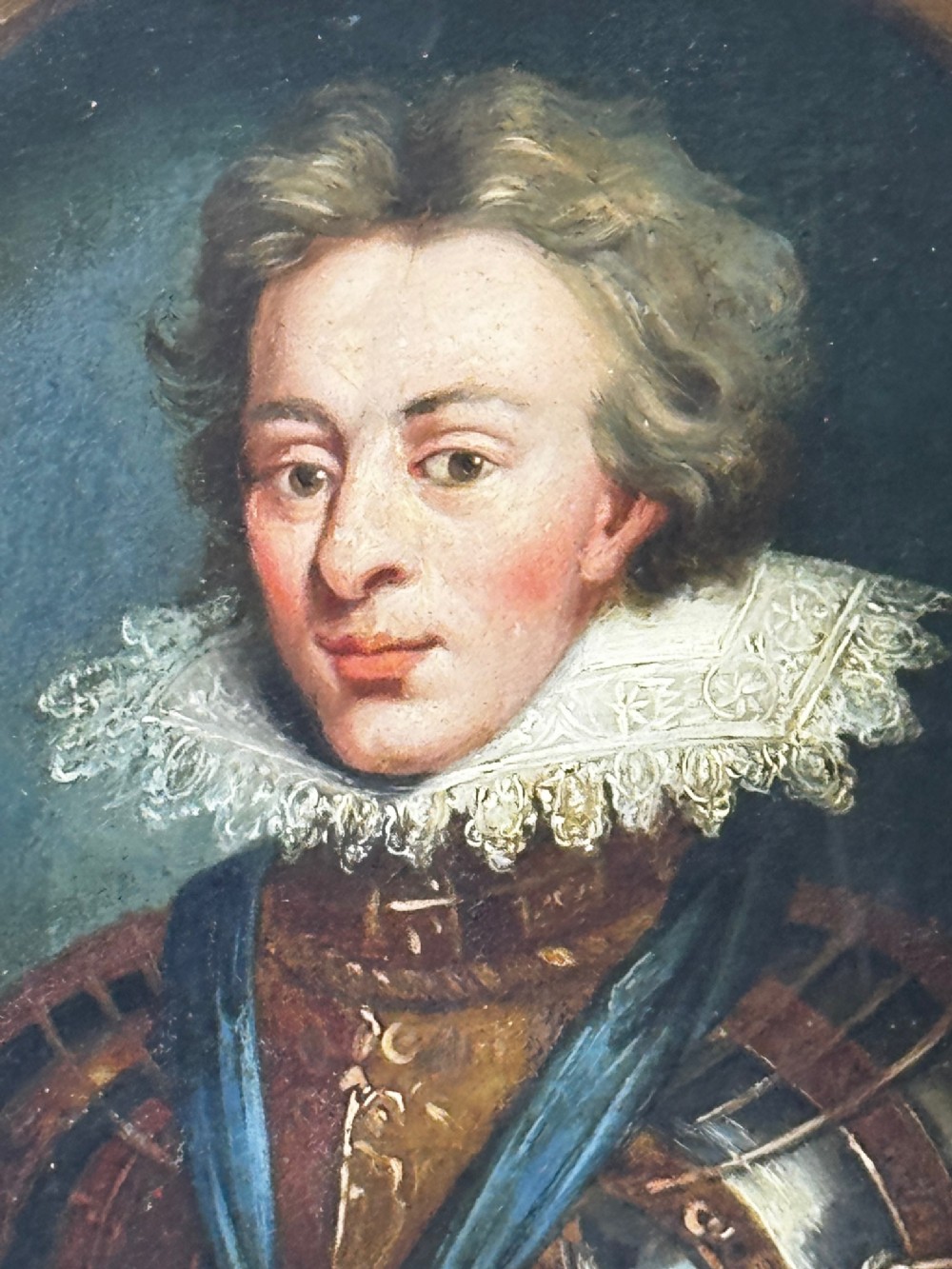
British School, After Isaac Oliver (c.1840), Oil on Metal Panel
Subject & Medium
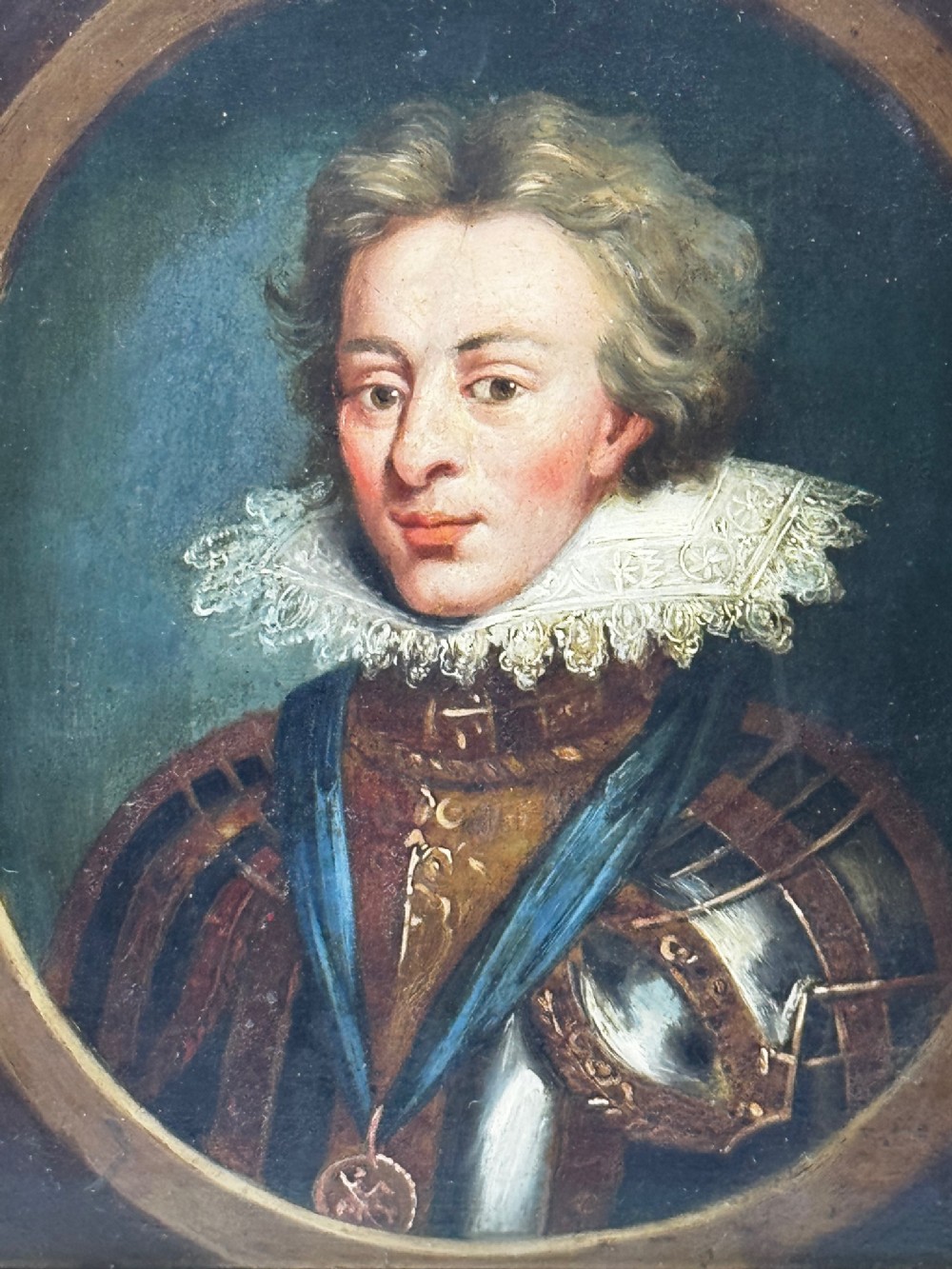
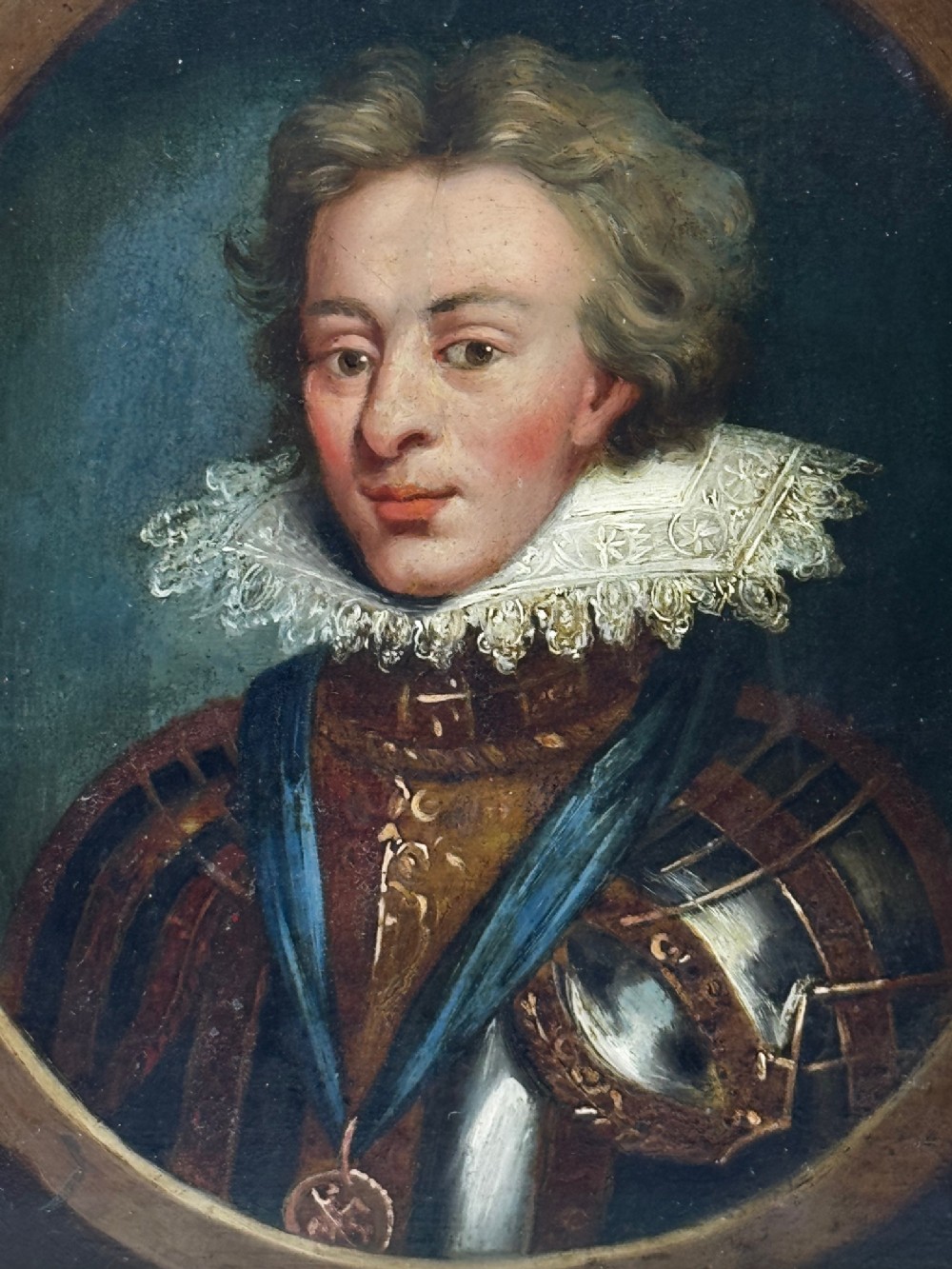
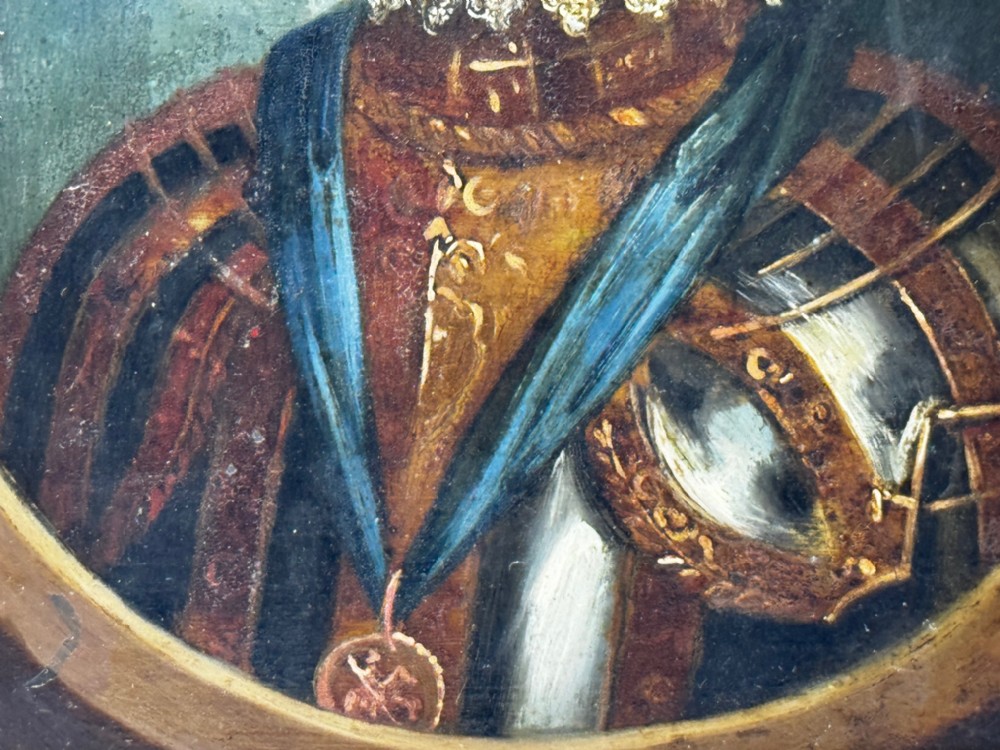
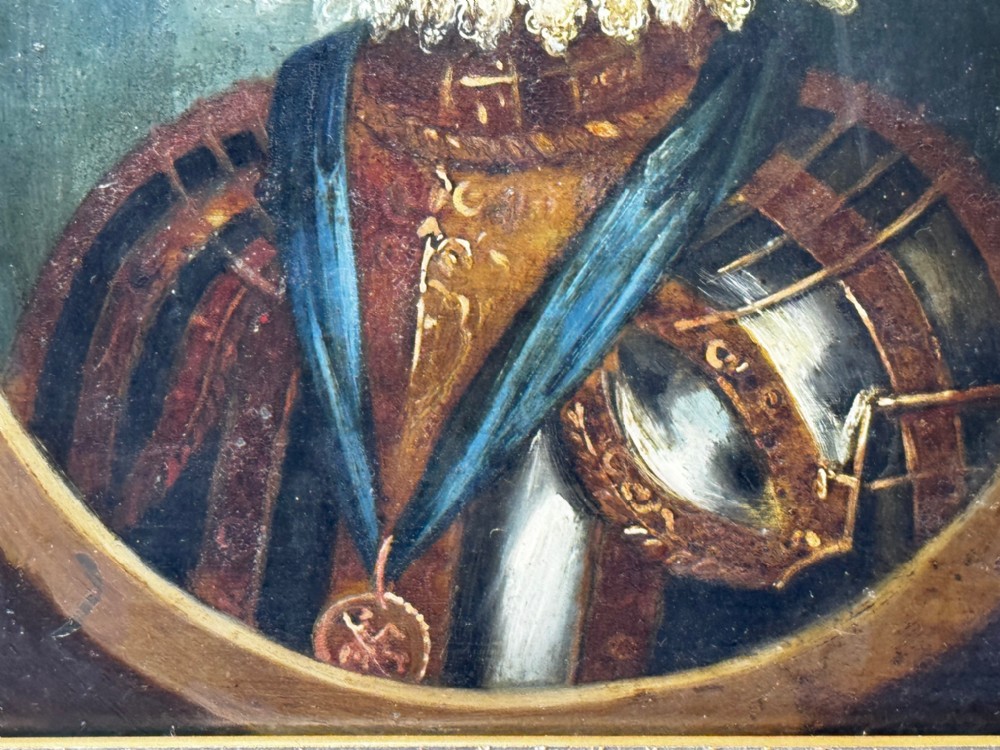
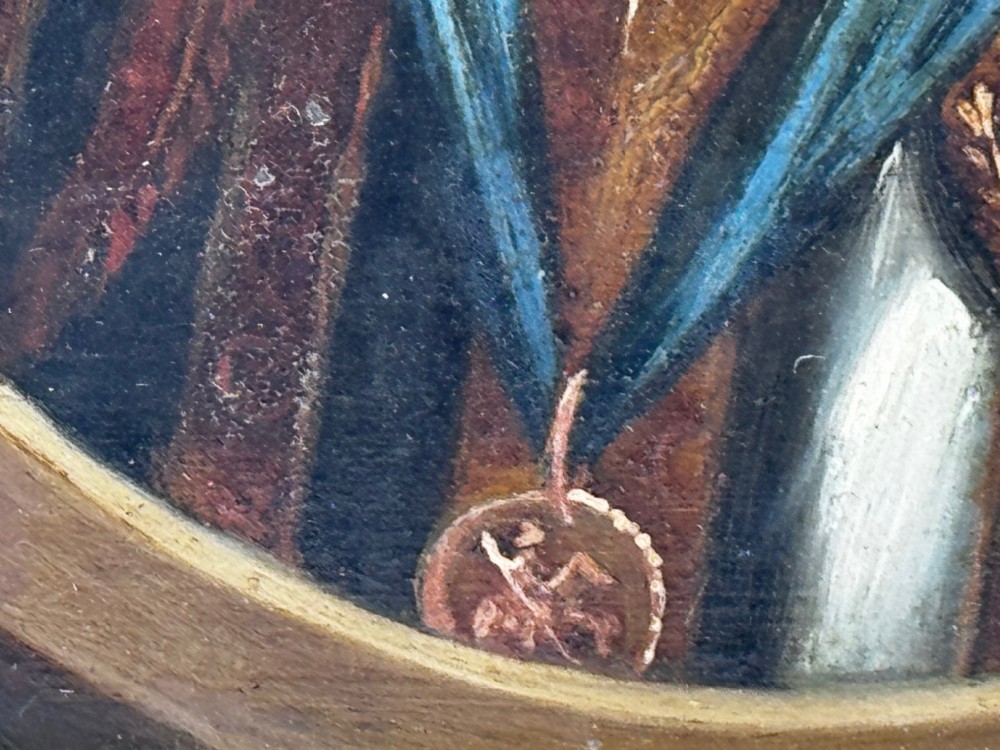
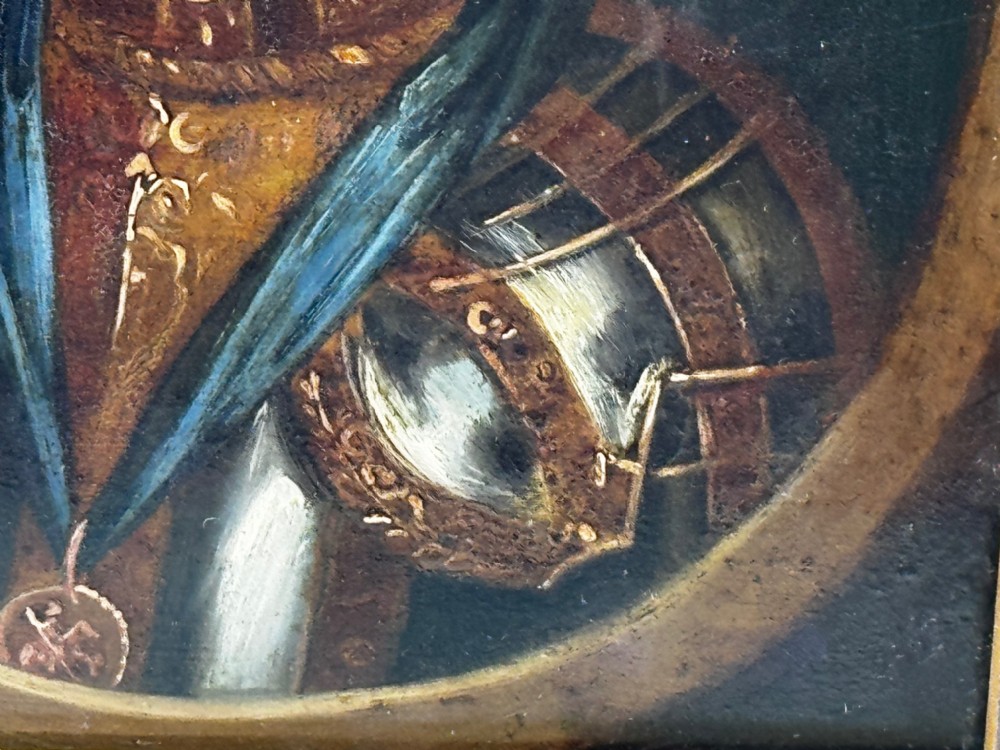
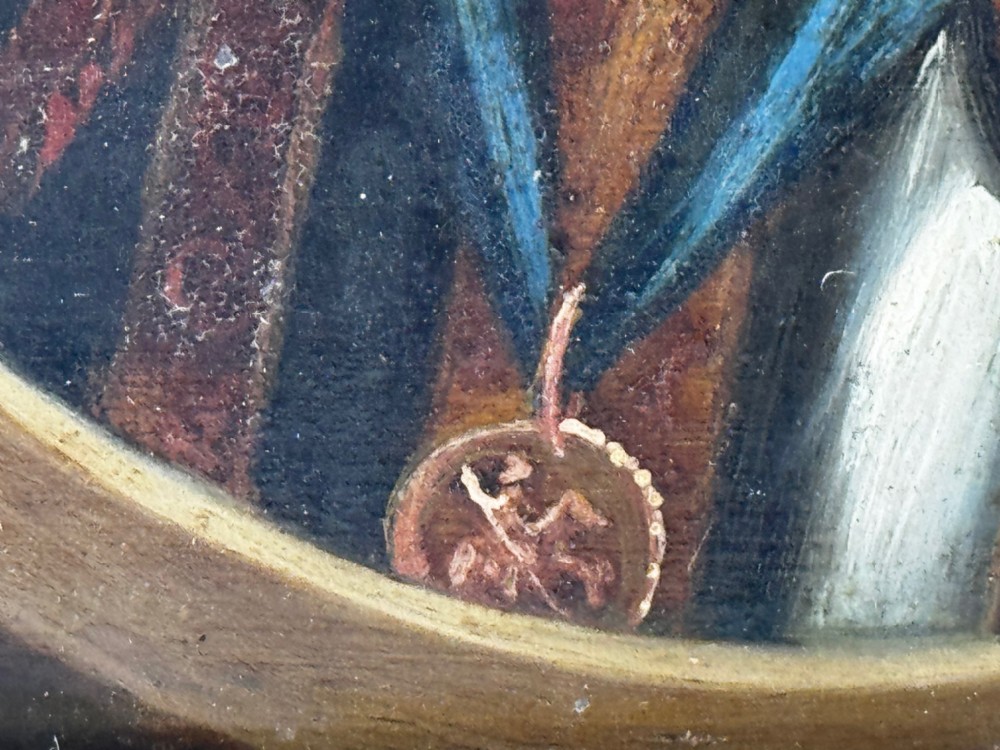
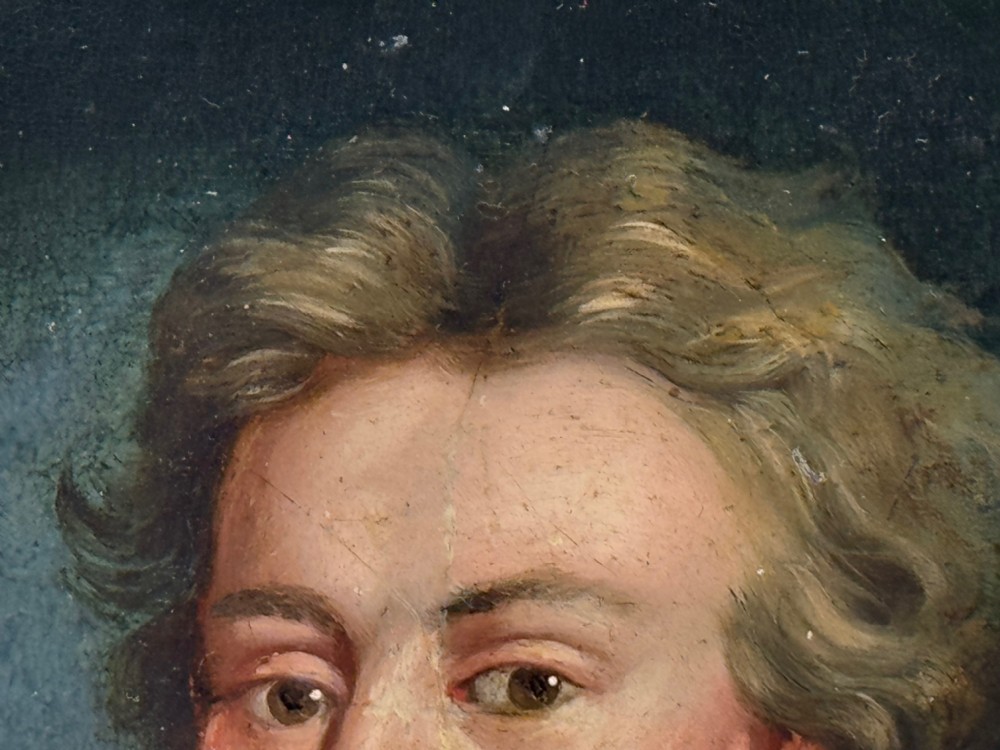
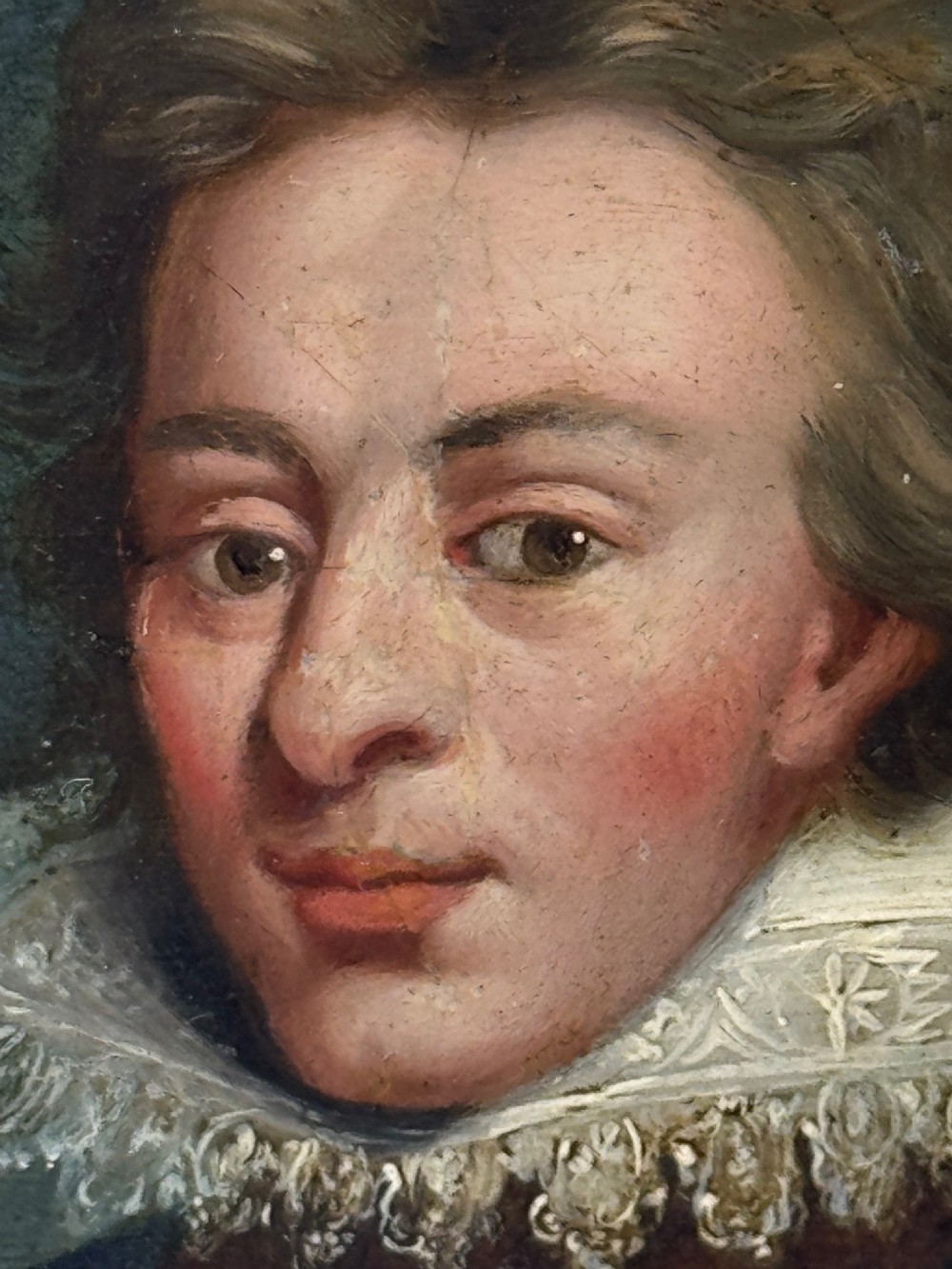
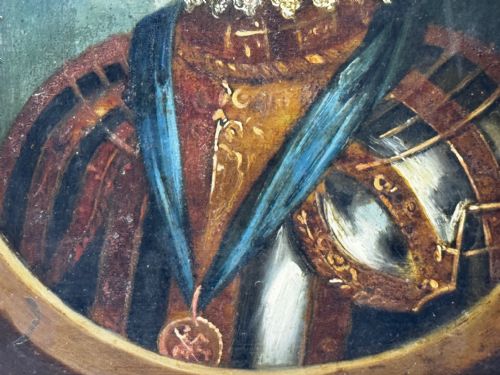
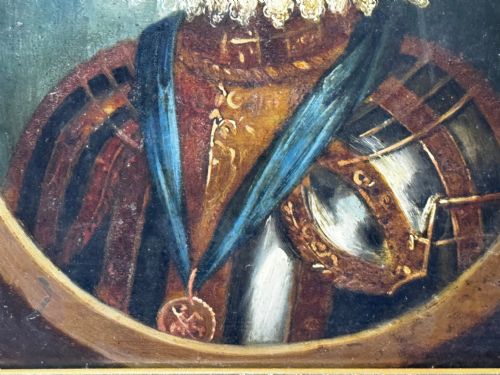
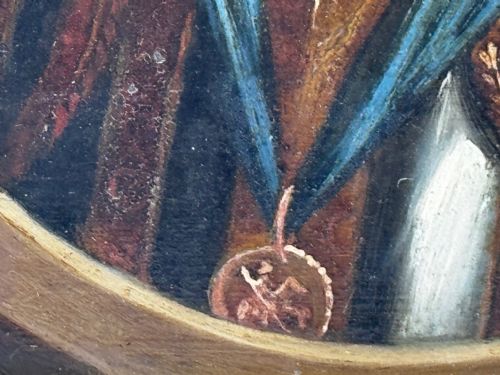
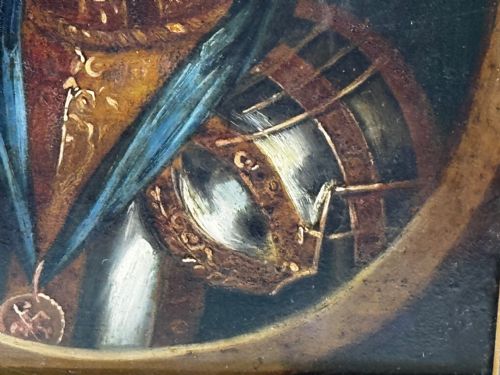
Wearing ceremonial armour adorned with gilt accents and the badge of the Order of the Garter, the work celebrates the promise of the brilliant heir whose untimely death changed the course of English history.
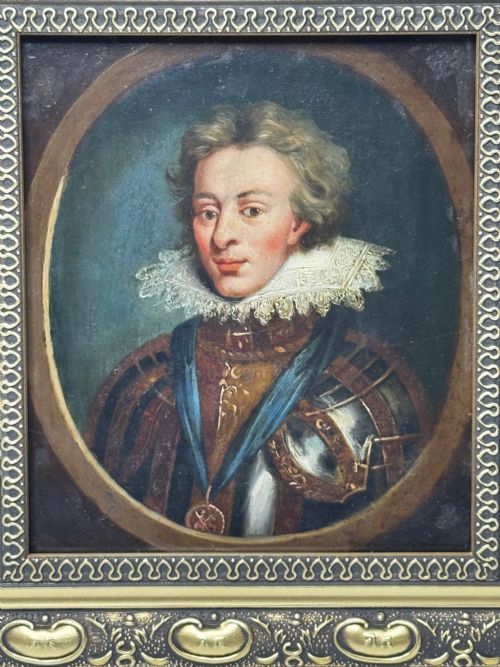
Painted in oil on metal panel—a favored medium in the 19th century for detailed historicist works—the portrait is now mounted in a museum-quality gilt frame designed to complement its regal subject.
Composition & Technique
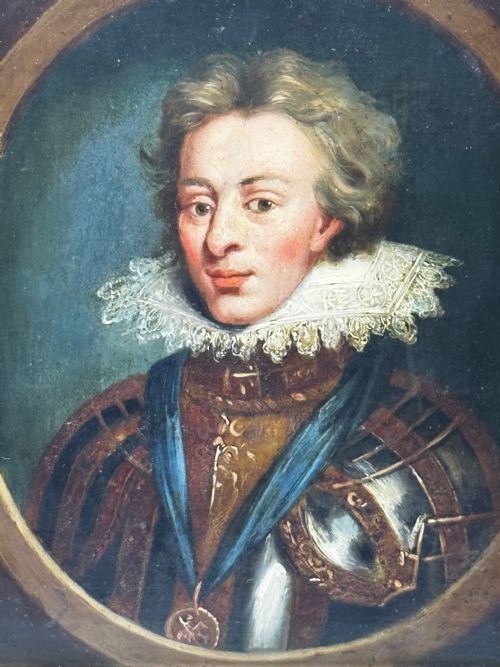
Inspired by Isaac Oliver’s celebrated likeness of the prince
Three-quarter bust format, the figure set against a darkened ground for dramatic emphasis
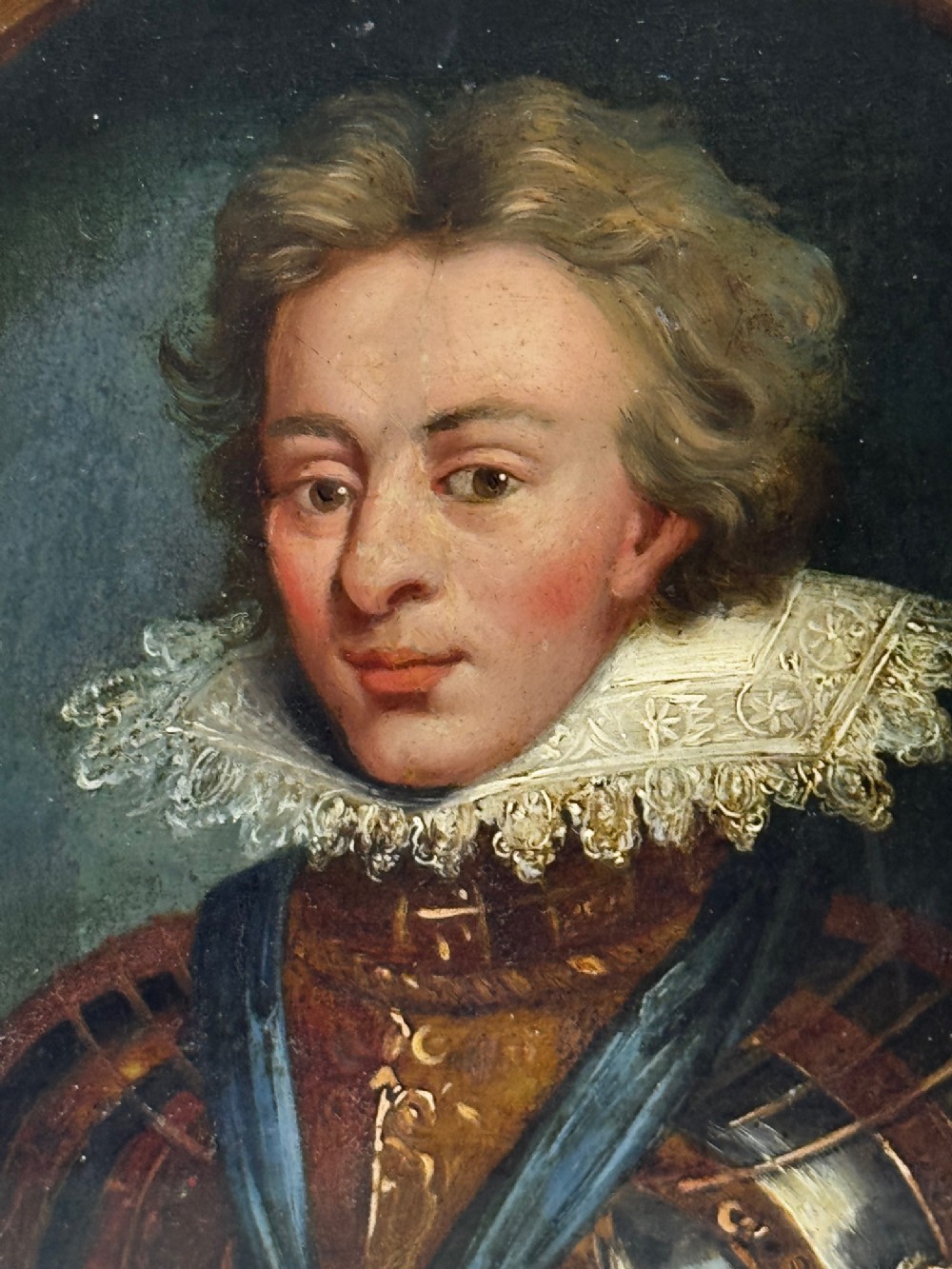
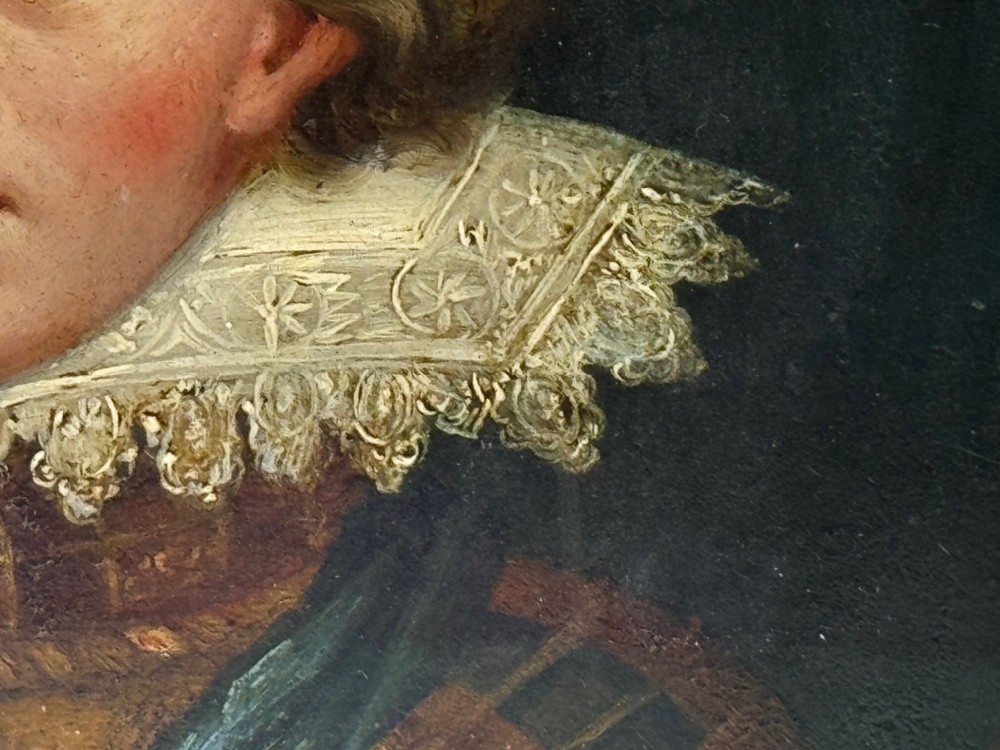
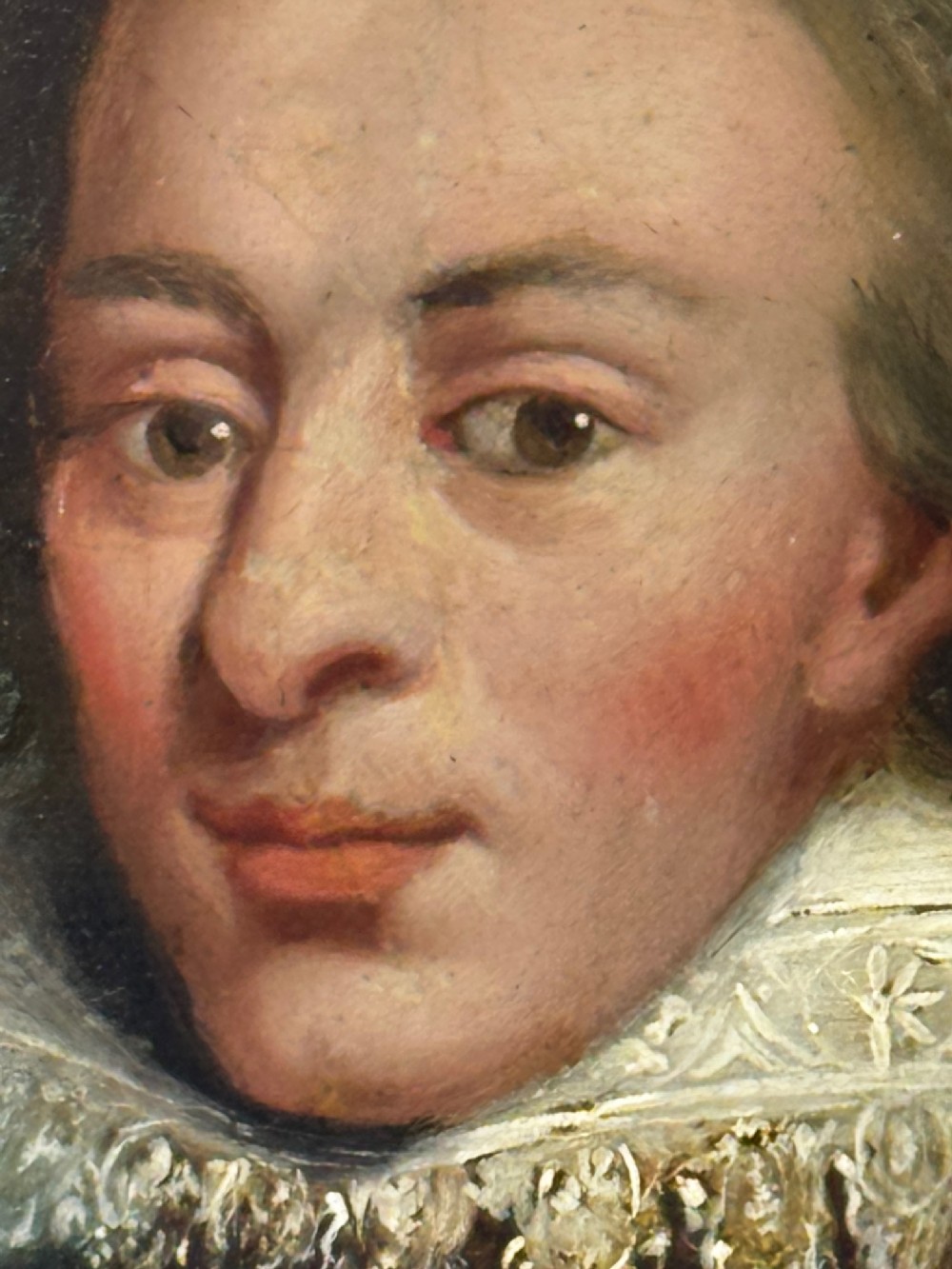
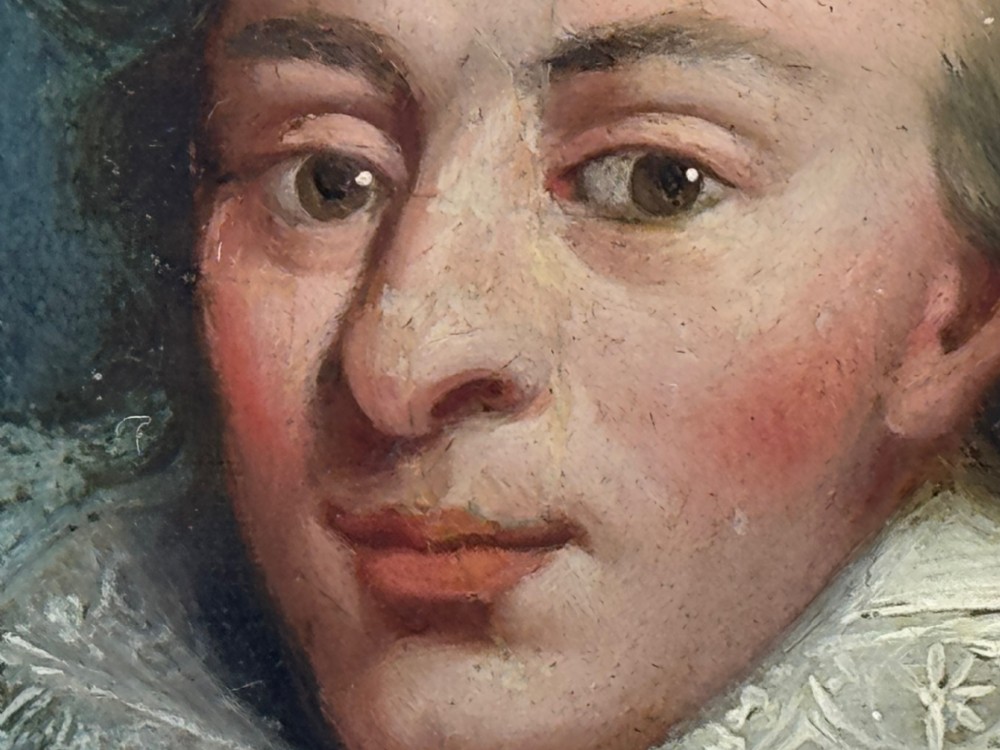
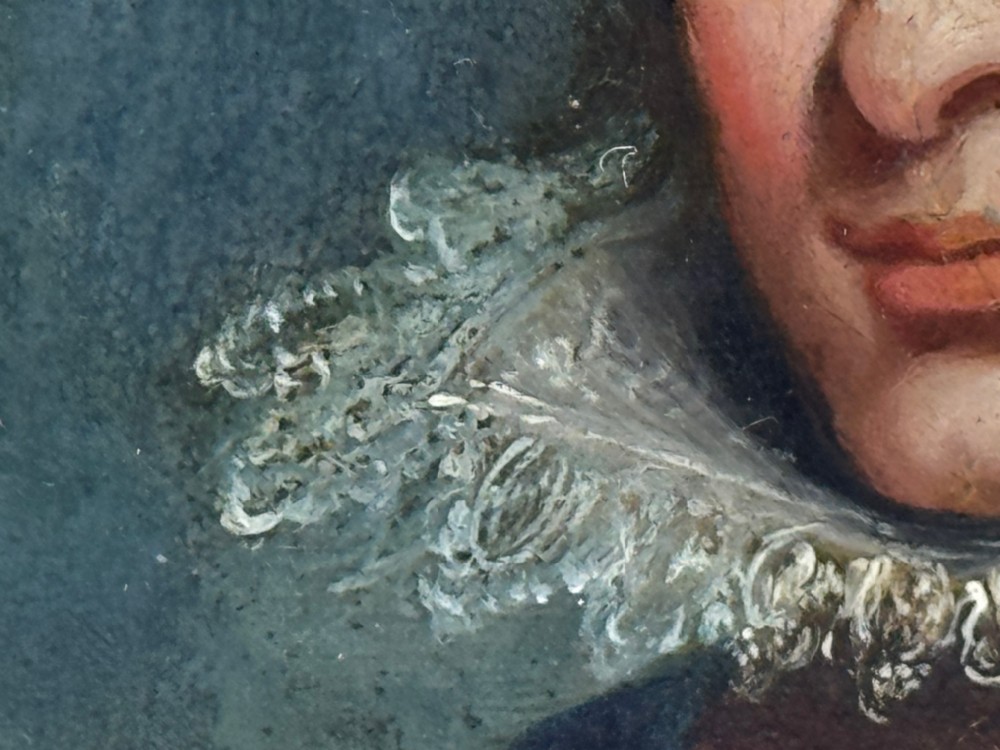
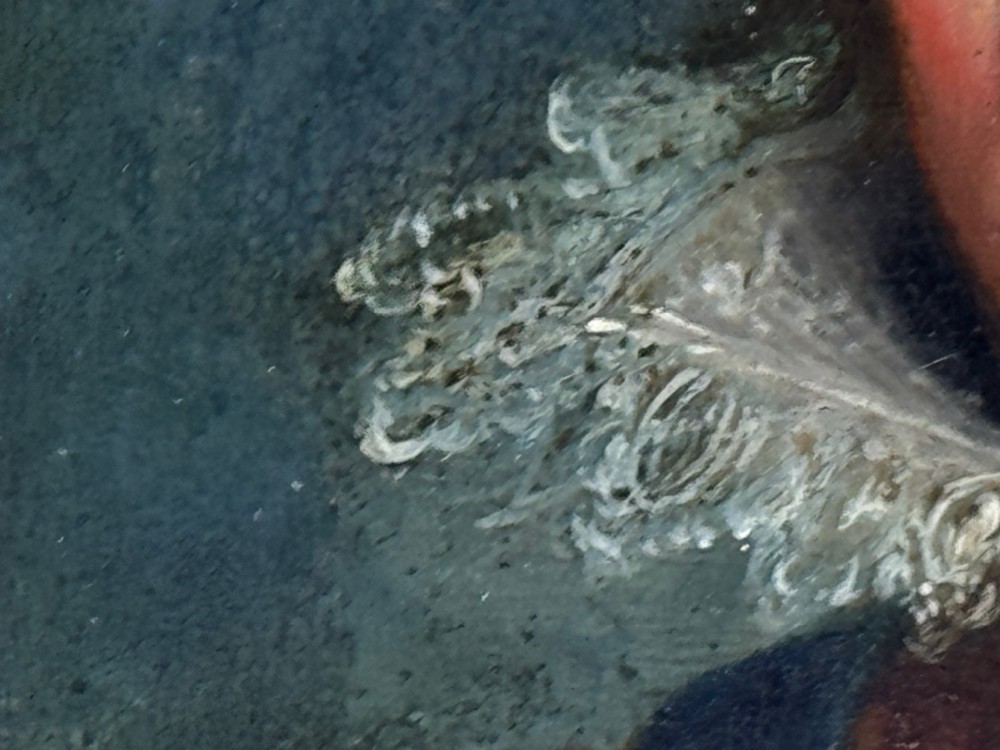
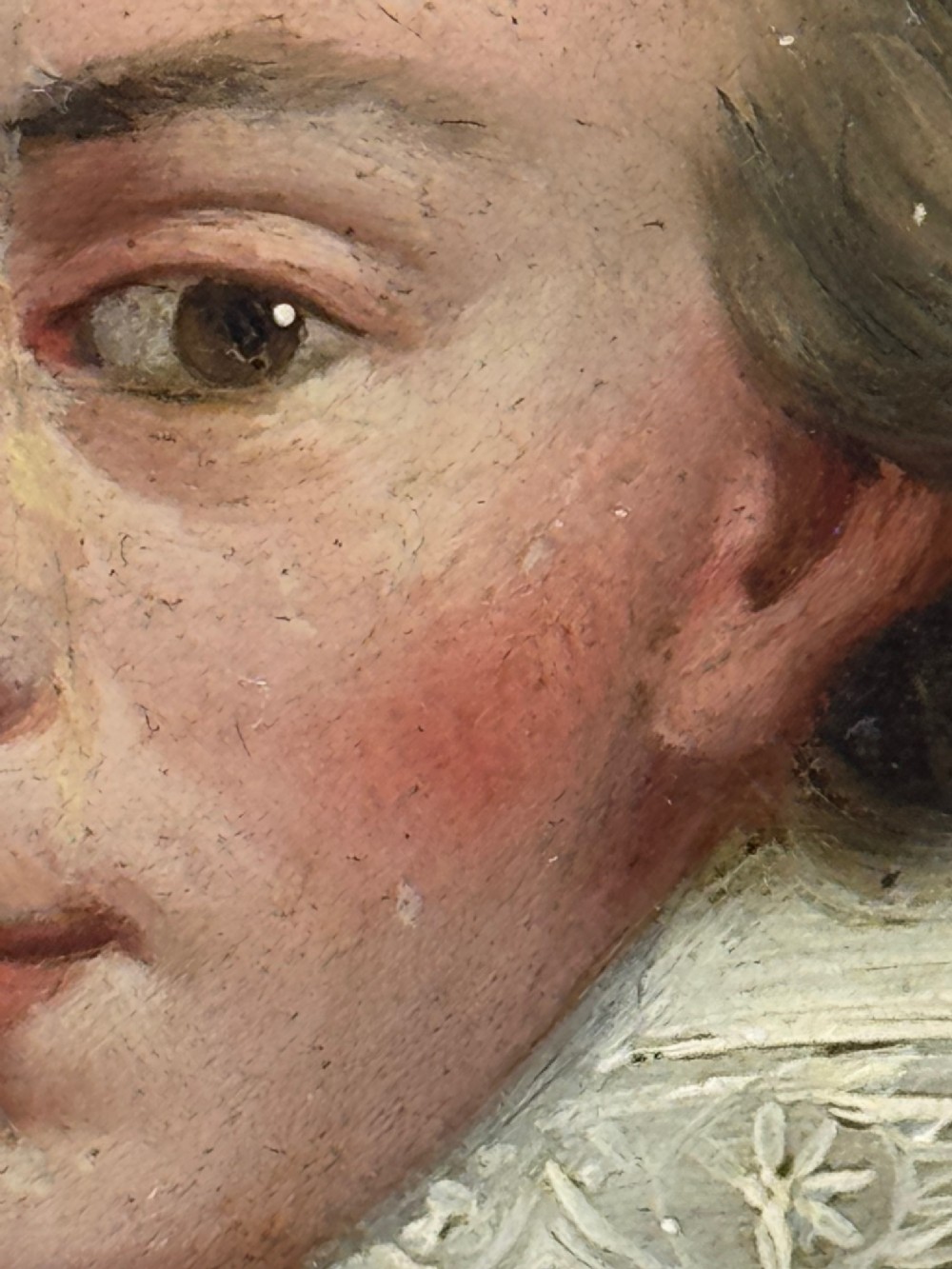
Miniaturist precision in lace and insignia details balanced with painterly modelling in armour and flesh
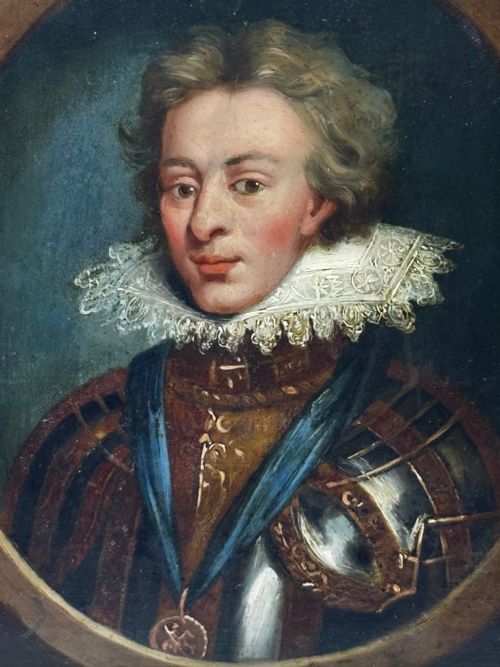
Palette highlights:
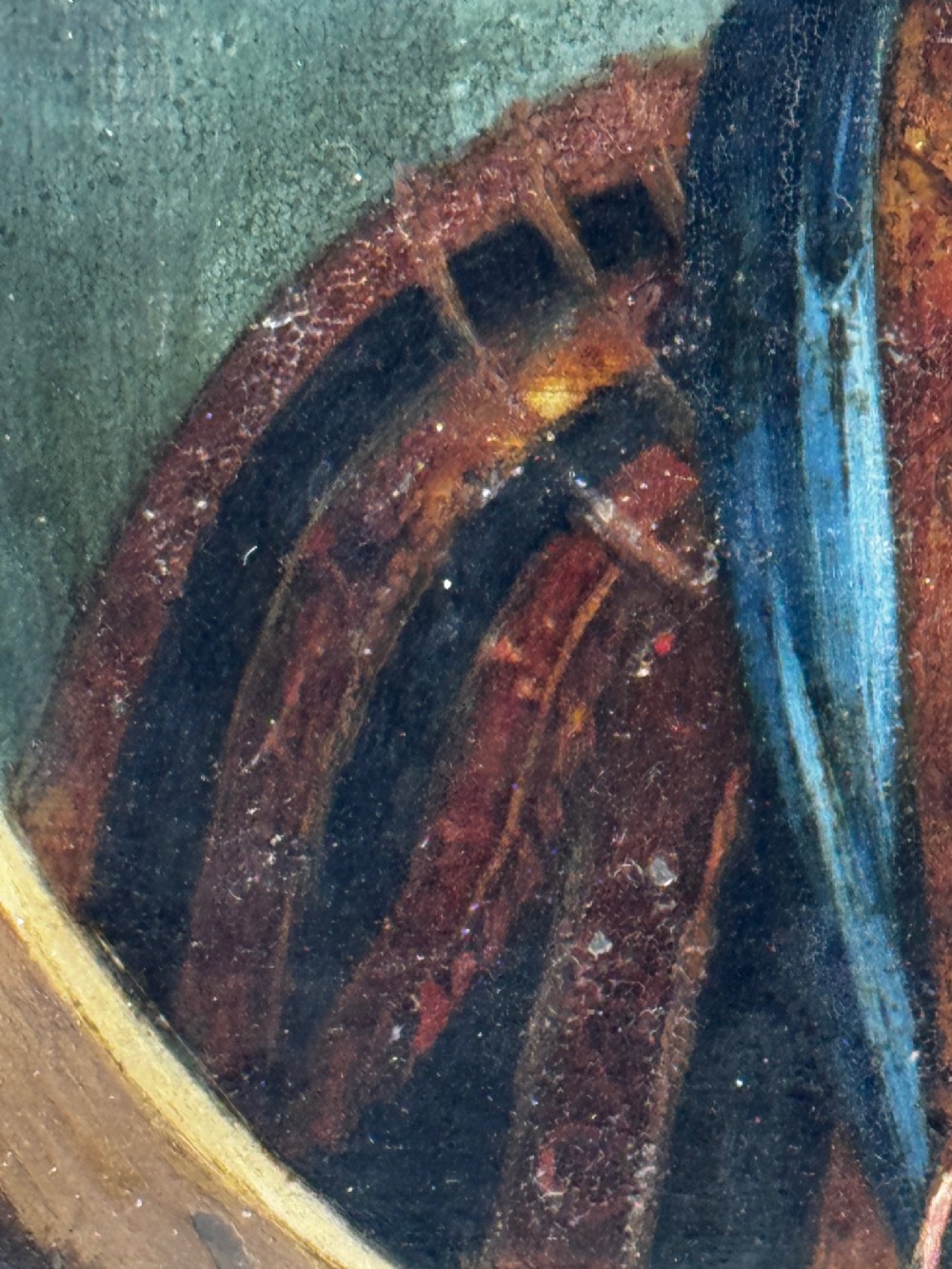
Deep blacks and browns in the background
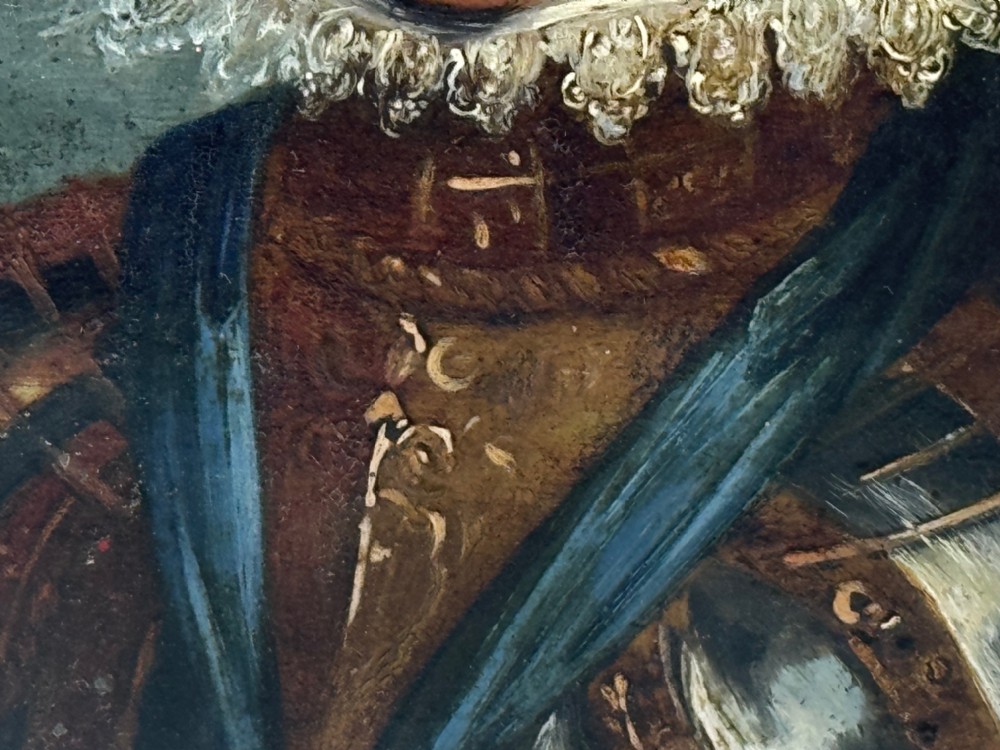
Silver-grey armour with shimmering gilt accents
Crisp whites of the lace ruff
Warm flesh tones with soft blush
Vivid blue riband and crimson-gold details of the Garter badge
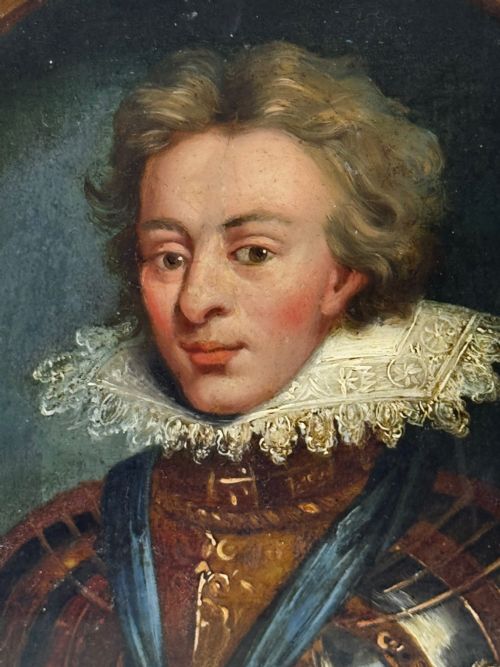
This interplay of shadow, metallic brilliance, and symbolic colour lends the portrait a solemn dignity befitting a royal heir.
A Poignant Commemoration
Henry Frederick was admired across Europe for his intellect, charisma, and martial promise. His sudden death from fever in 1612, aged just eighteen, shocked the nation and left the crown to his younger brother, Charles I, whose reign would end in civil war and execution.
This portrait—faithfully rendered after Oliver’s original—offers collectors and historians a moving reminder of the Stuart prince who never reigned.
About the Artist & Period
British School, c.1840, after Isaac Oliver (1565–1617)
Oliver, a French-born court miniaturist, trained under Nicholas Hilliard and became one of the foremost portraitists of the Elizabethan and Jacobean elite.
Victorian “after” works like this were prized by collectors of Tudor and Stuart history, reflecting the 19th-century fascination with dynastic memory.
Why Collect This Work
Captures a pivotal “what if” in English history
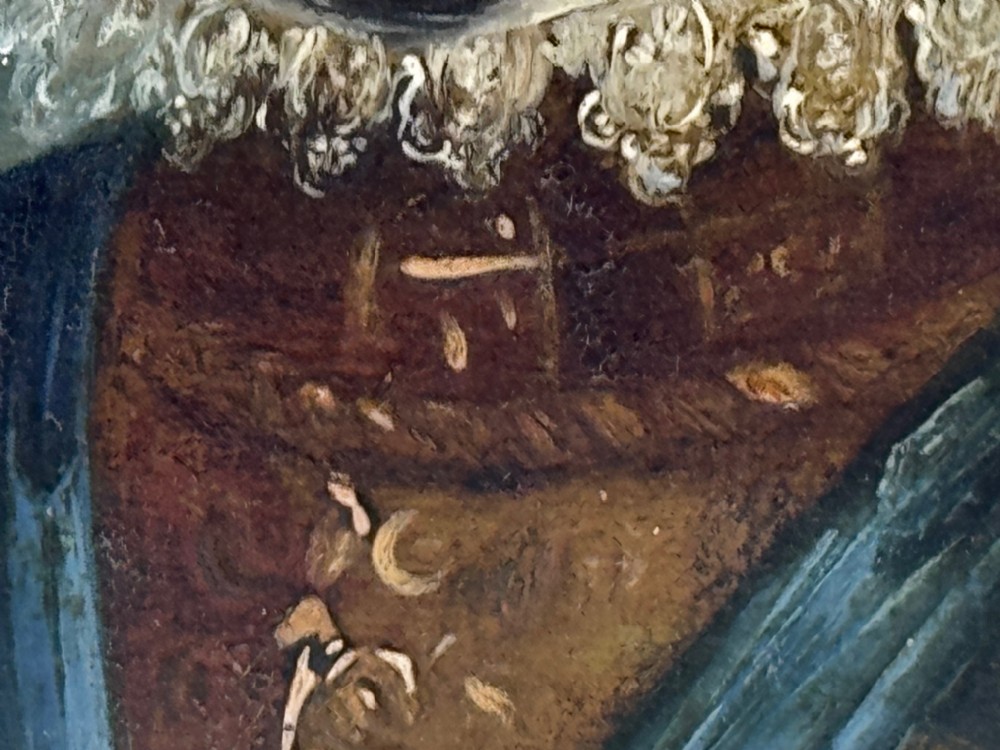
Rich detailing: Order of the Garter badge, gilt armour, lace ruff
Compact yet commanding presence (27 × 24.5 cm framed)
Presented in a premium Larson-Juhl gilt frame with AR70 museum glass
Dimensions
Framed: 27 cm × 24.5 cm × 2 cm
Frame
Larson-Juhl “Essentials” gilt moulding (Ref. 793246000)
Fitted with AR70 anti-reflective, UV-protective glass
Condition Report
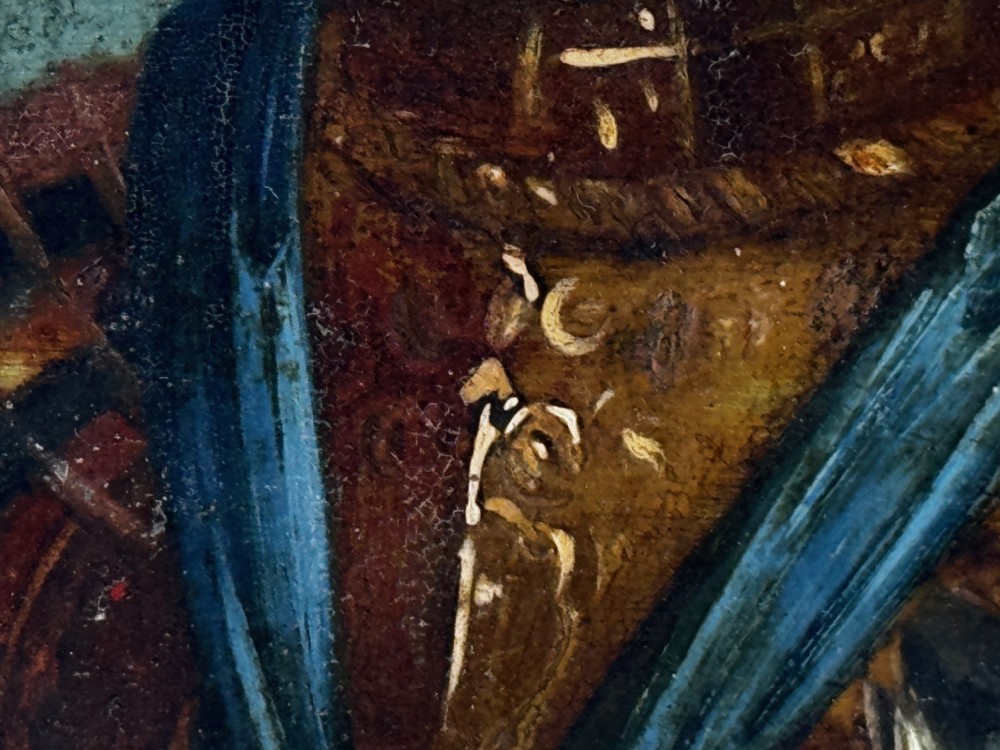
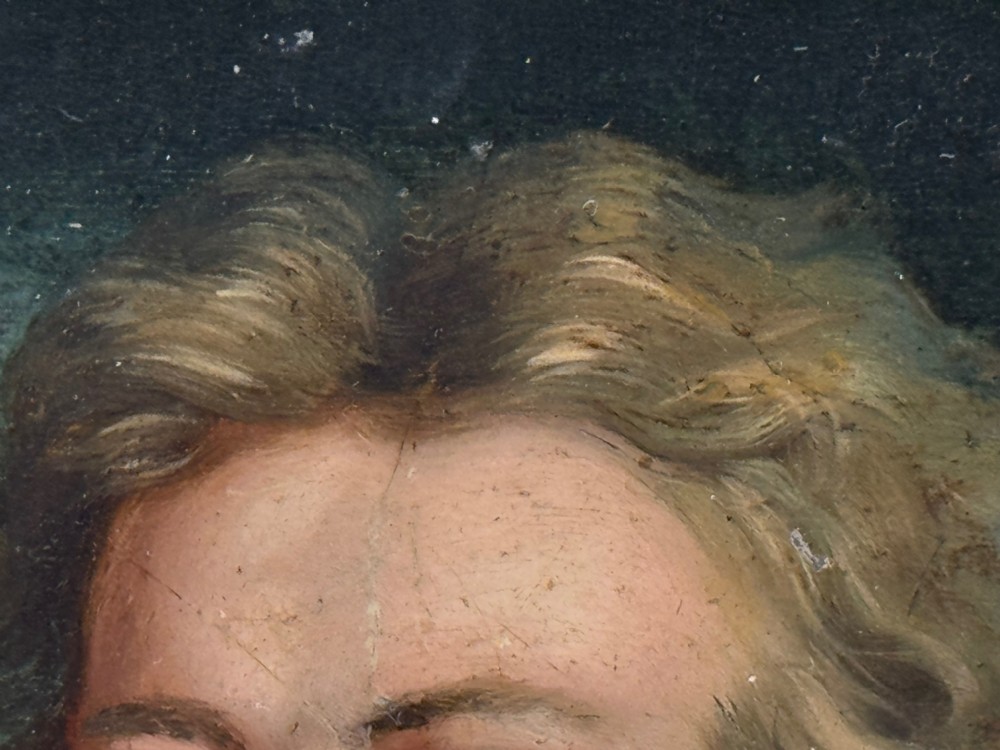
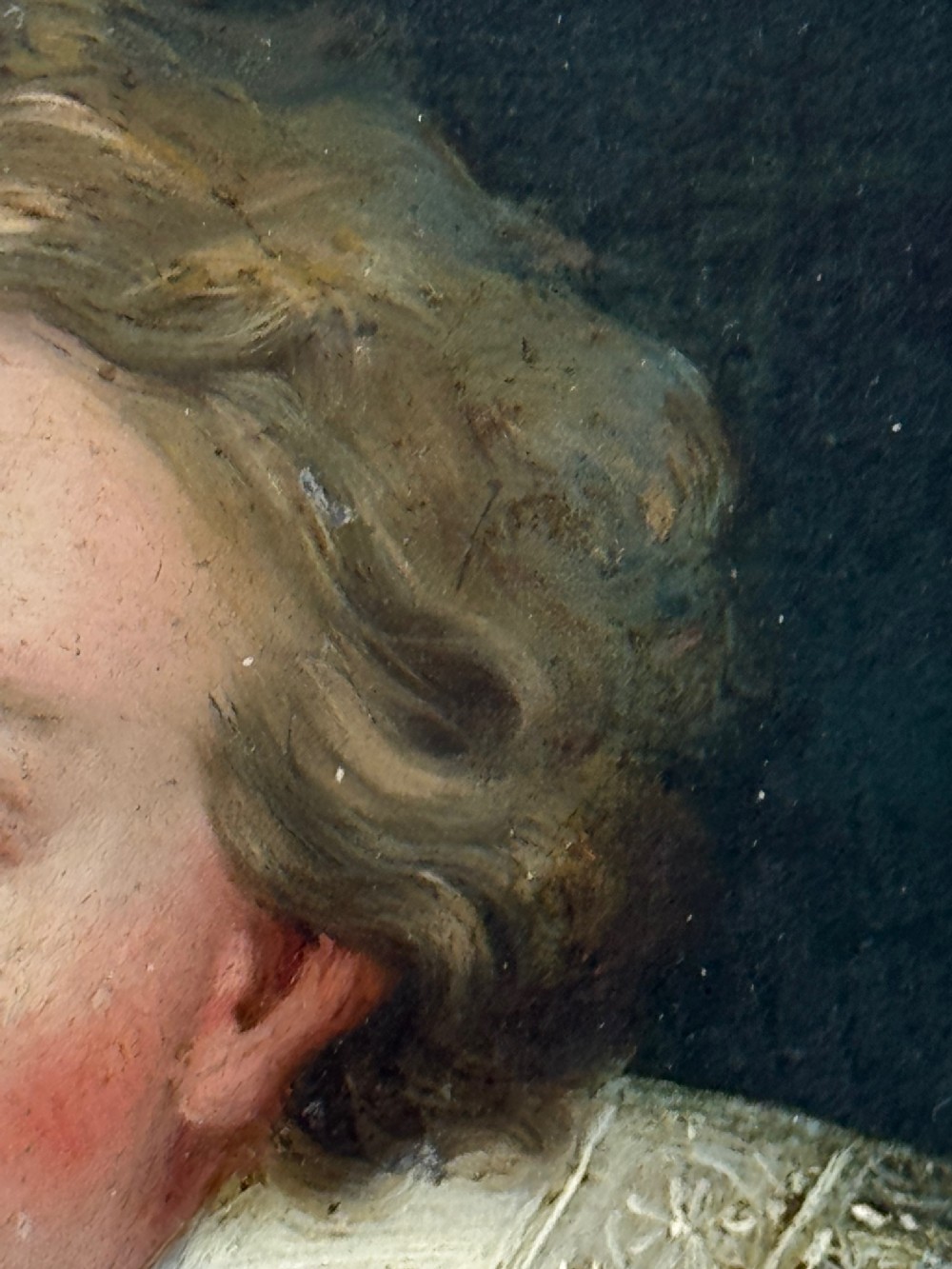
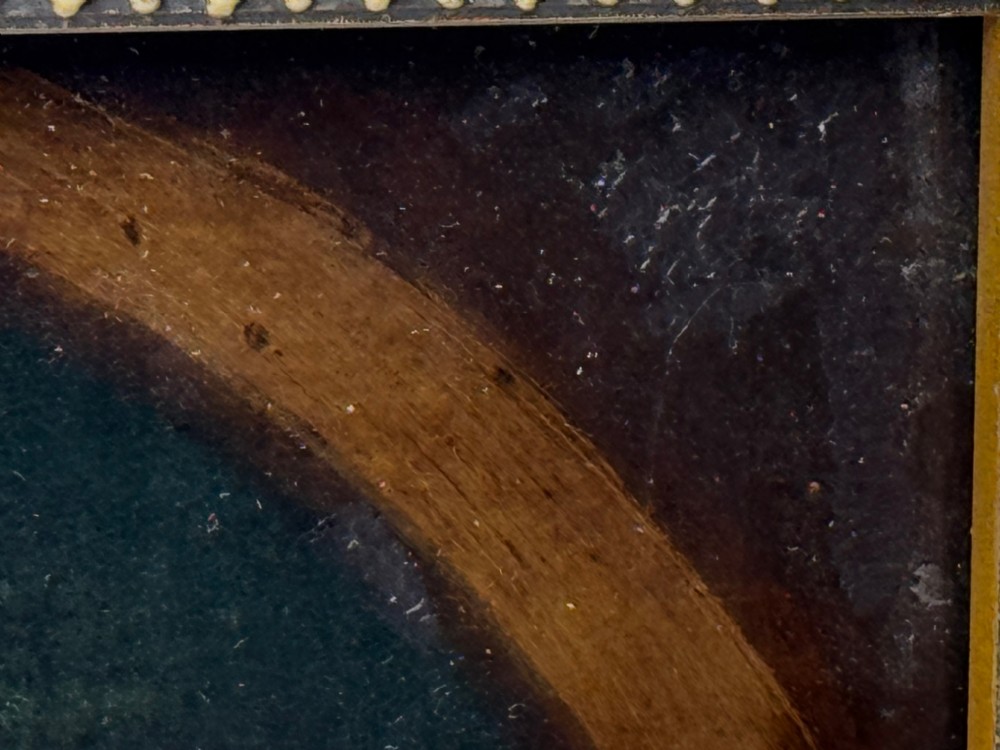
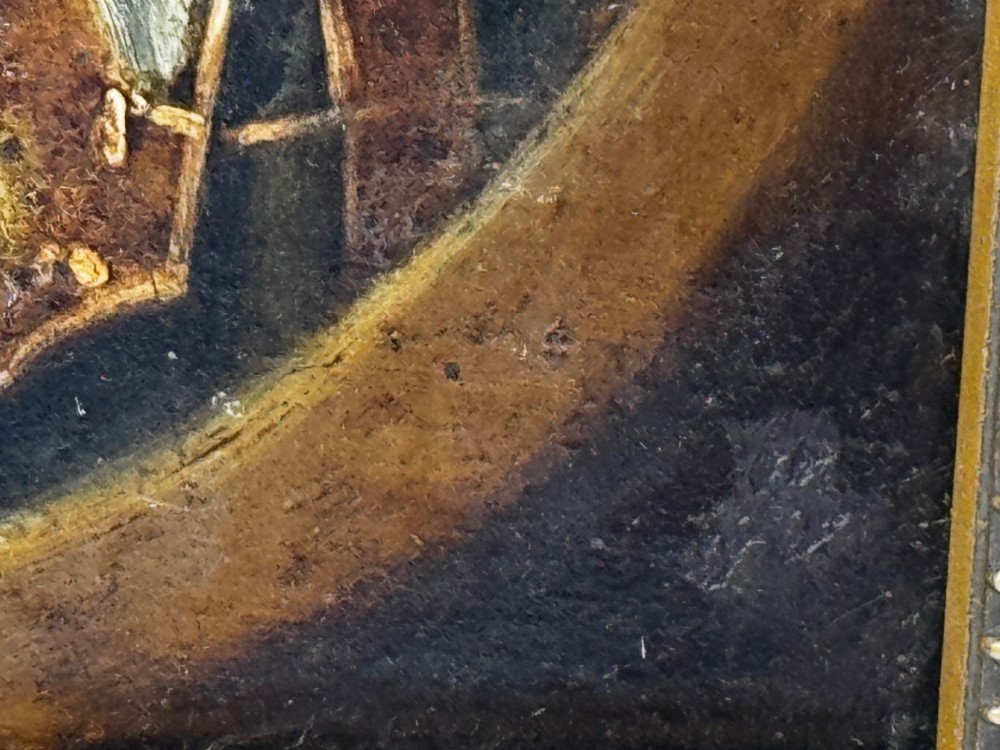
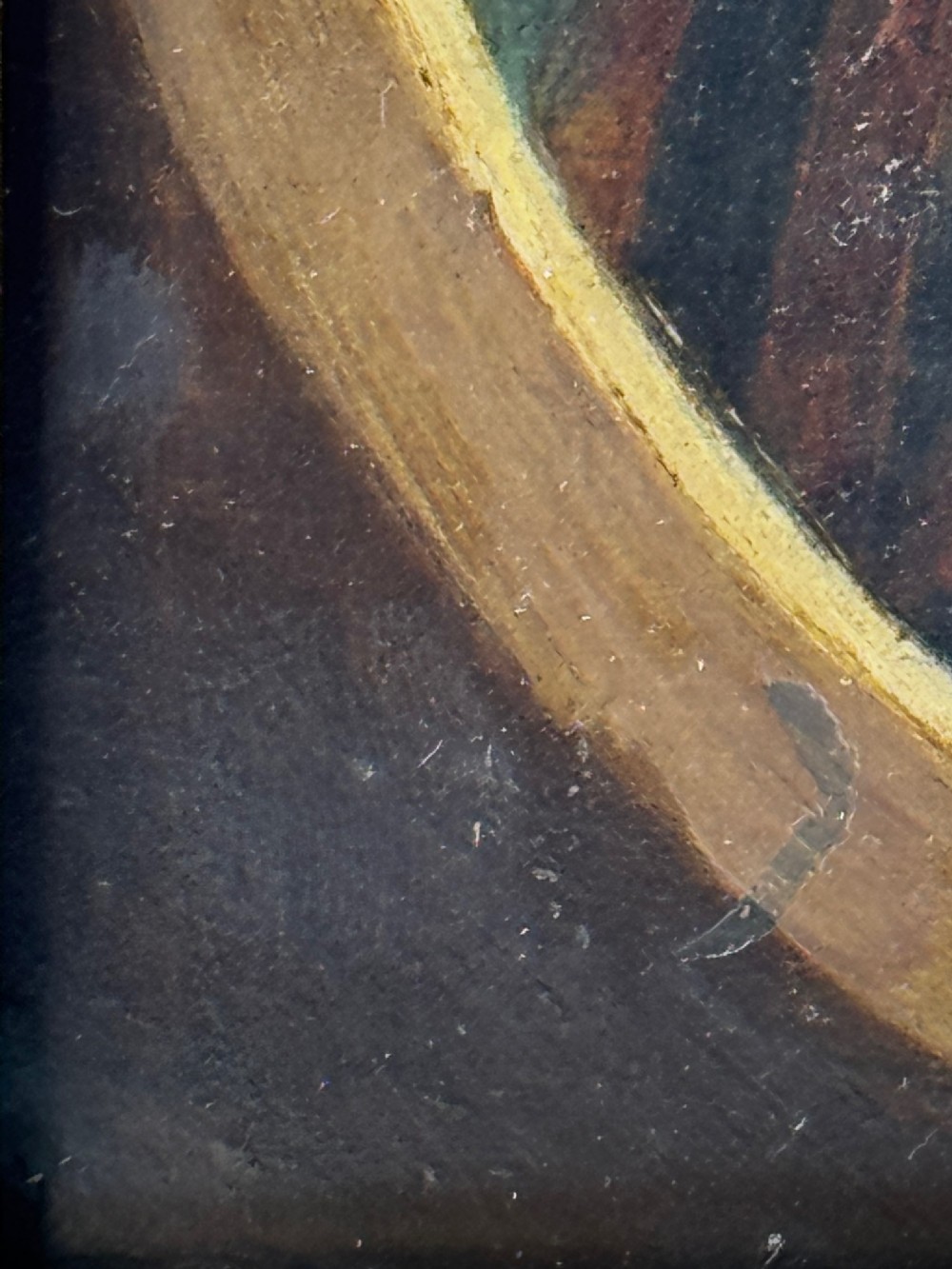
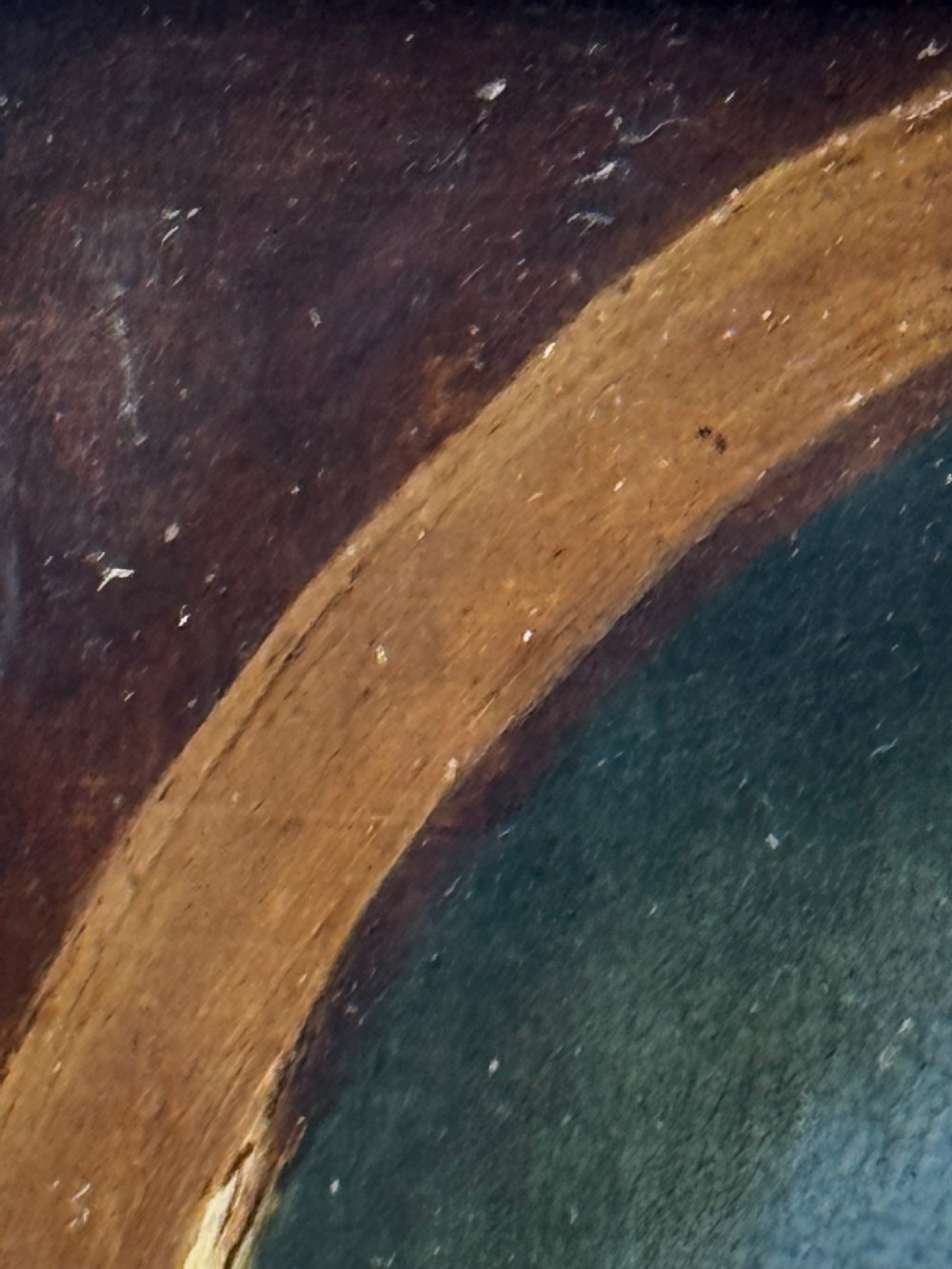
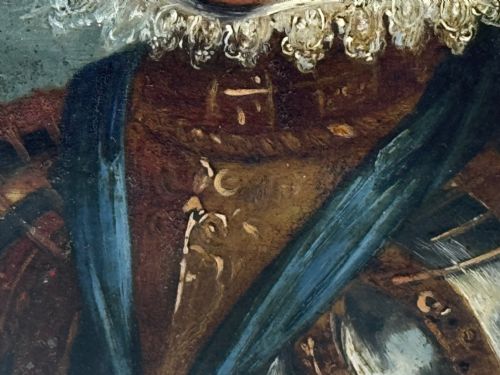
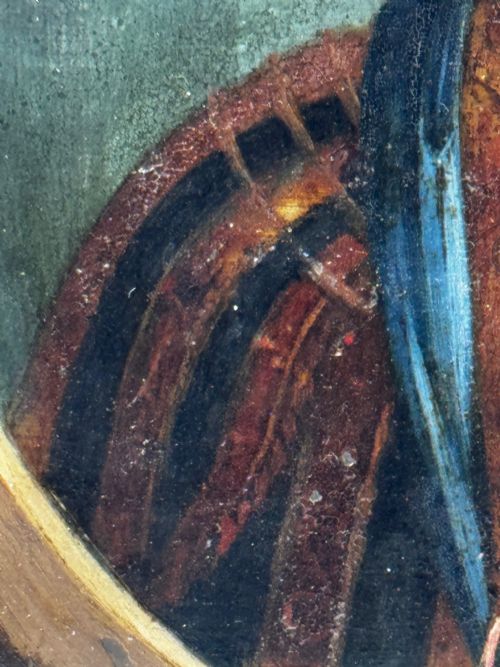
Surface: Even craquelure, minor edge losses and paint touch ups to background corners
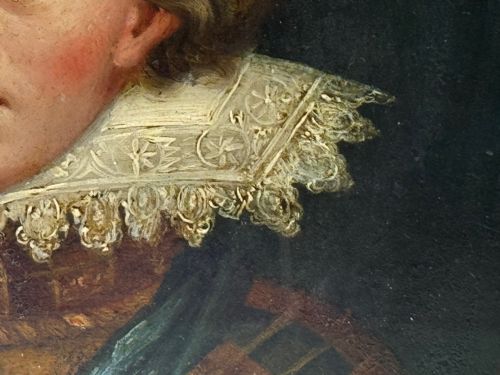
Varnish: Aged, yellowed, softening darker passages
Abrasion: Some wear in background, consistent with age
Frame: As above, museum-grade refit
Stable condition overall; cleaning and revarnishing could enhance vibrancy, but the work remains striking and display-ready.
Provenance
Private collection (vendor)
Previously sold via notable established northern auctioneers (since 1840s)
Curated by Cheshire Antiques Consultant LTD
Exhibited at the Famous Lord Hill Museum alongside notable historic portraits
Shipping
Worldwide delivery available
Professionally packaged, fully insured
Significance
This portrait is more than decorative art: it is a historic commemoration of England’s most poignant “what if.” A fine example of Victorian revivalist portraiture, it preserves the memory of a prince whose promise was never fulfilled.
Ideal for collectors of:
Royal portraiture
Stuart dynasty history
19th-century historicist art
Questions welcome—our team is here to help.
Cheshire Antiques Consultant Ltd has dated this Jacobean Royal Oil Portrait to the Victorian era.
Source the historic in 17th, 18th, 19th & 20th century fine arts, painting, sculptures & collectibles
You can view the stock and full dealer information on the Cheshire Antiques Consultant Ltd Profile Page
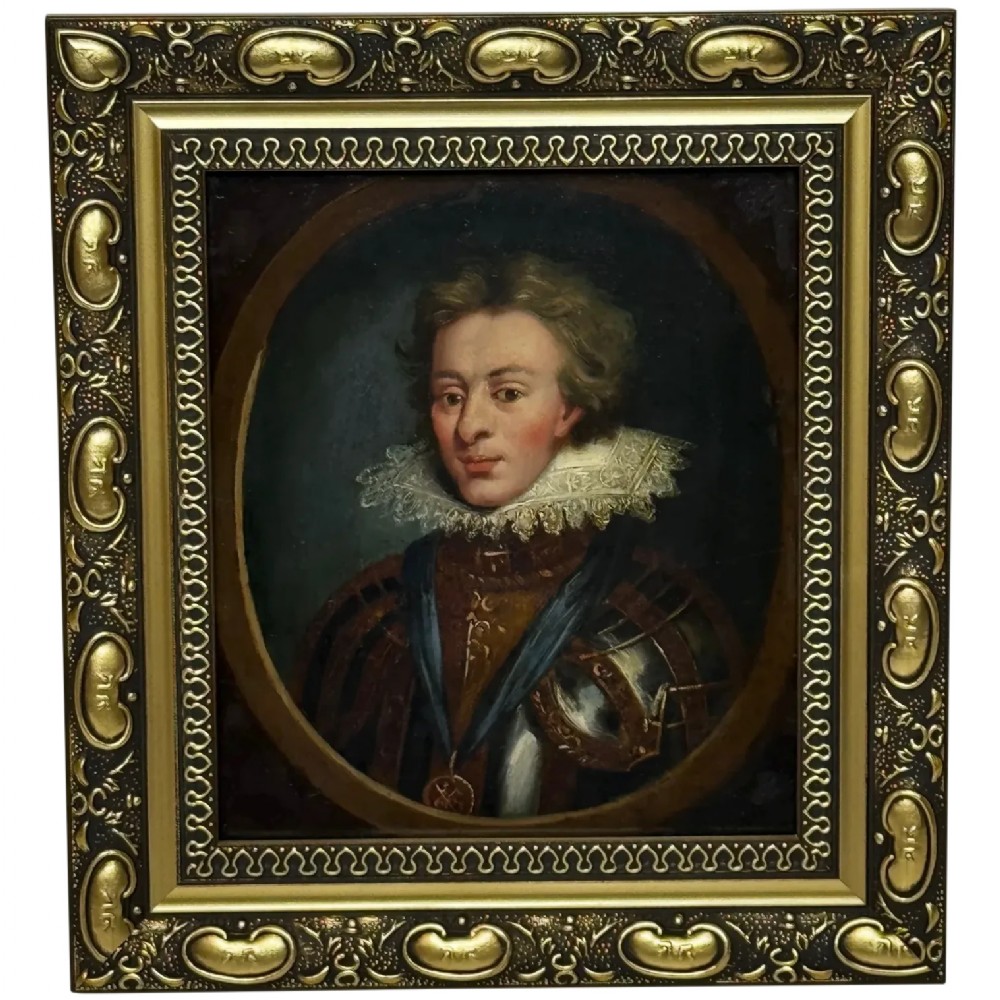
Oil Portrait Henry Frederick Prince of Wales Order of the Garter