41,419  PAGES BROWSED TODAY PAGES TODAY 98  ANTIQUES UPLOADED TODAY NEW ARRIVALS
ID #SA1166519
SOLD
Email
Save
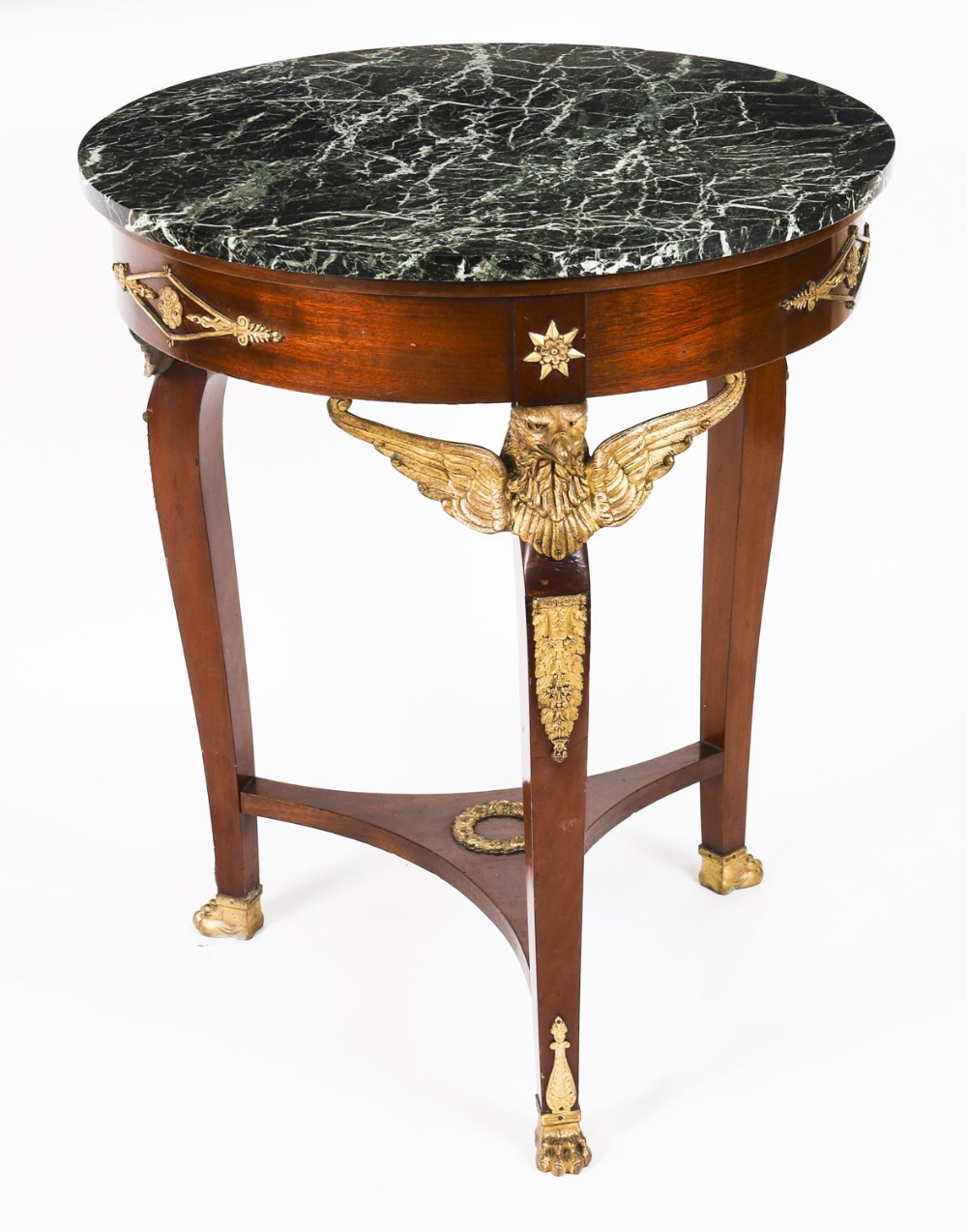
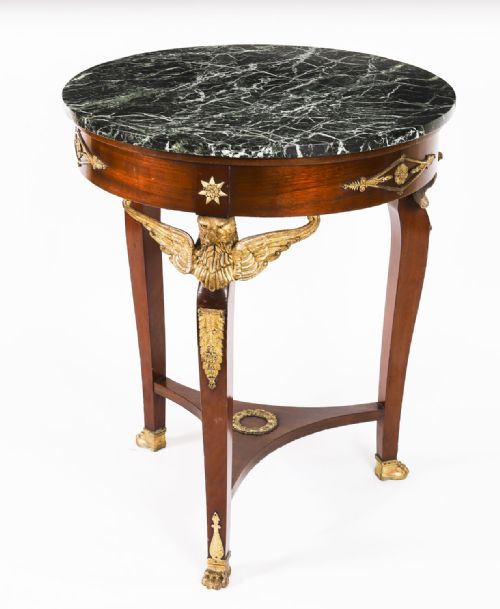
Antique French Empire Marble & Ormolu Occasional Table C.1830 19th C
Regent Antiques
sold SA1166519
Sorry, but this item has been sold.
Regent Antiques

Regent Antiques

Sellingantiques Verified Since Sep 2016
View Dealers Stock Page
  • About Us
    We specialise in english and continental furniture, silver, porcelain and decorative items.
  • Trade Associations
    Regent Antiques is a registered member of LAPADA  CINOA
Id #SA1166519
PDF SHARE
SAVE

Antique French Empire Marble & Ormolu Occasional Table C.1830 19th C

19th century
Description

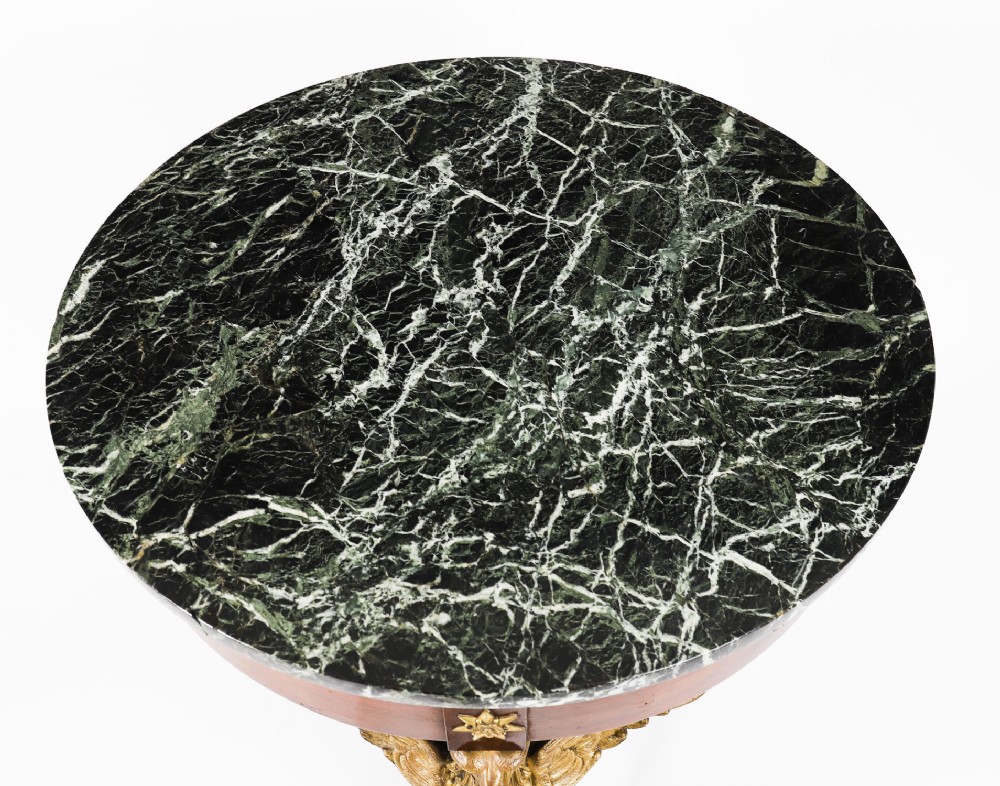
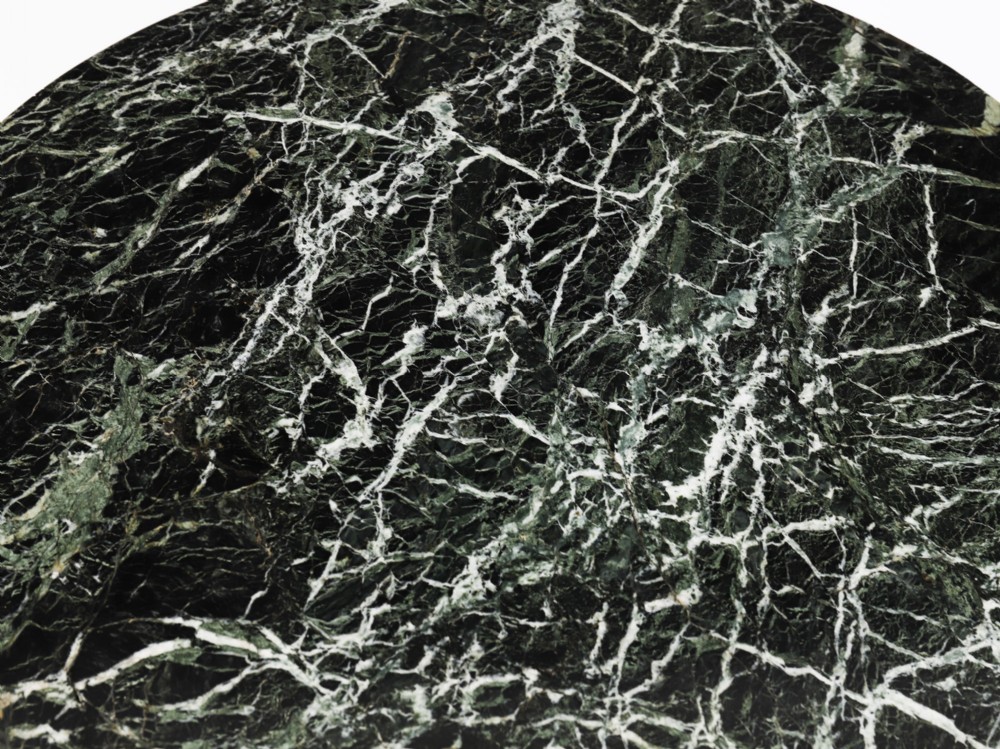
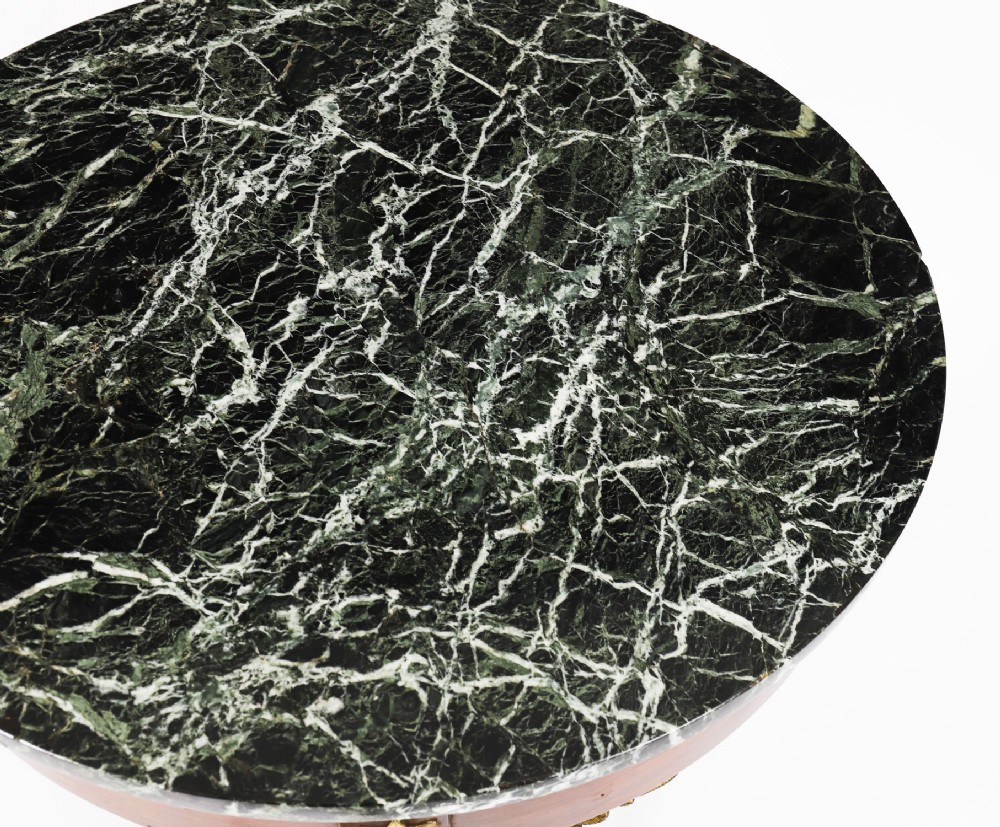
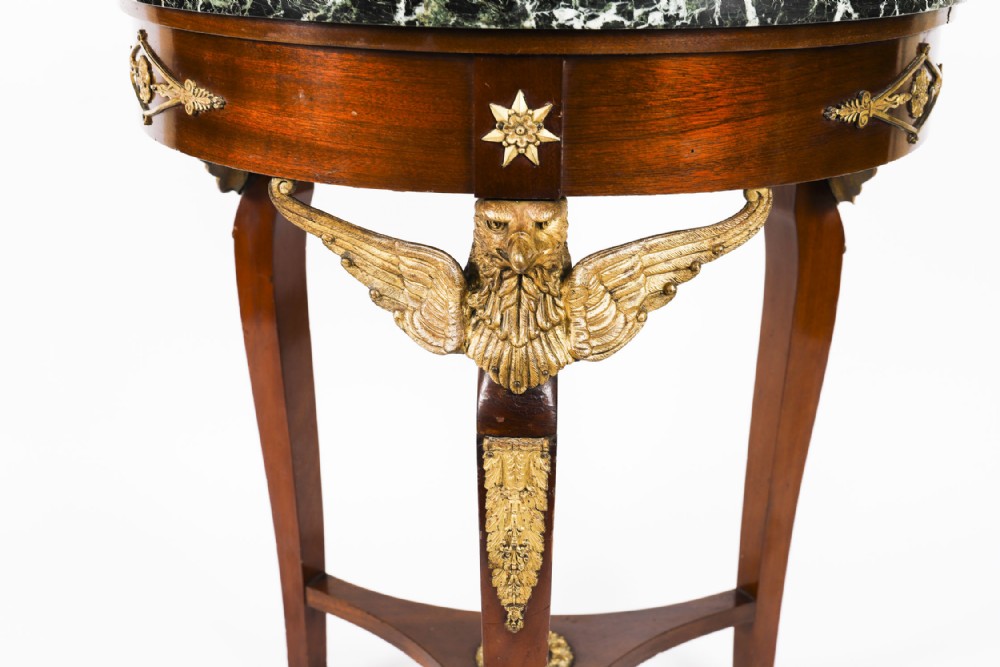
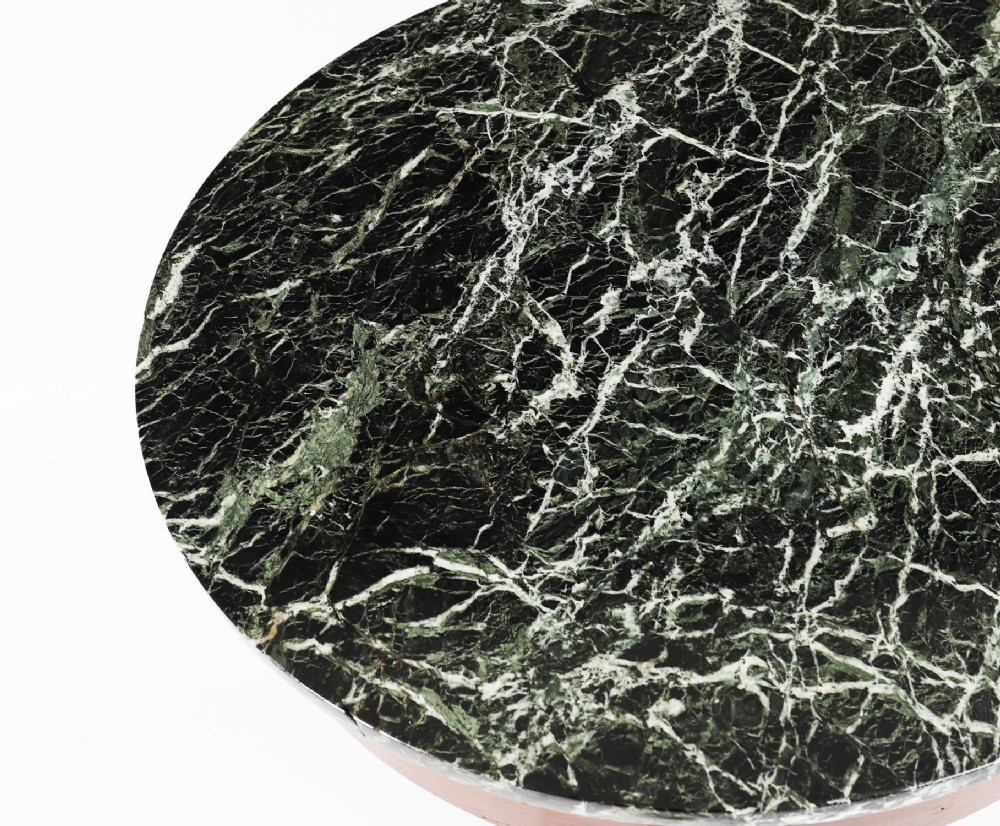
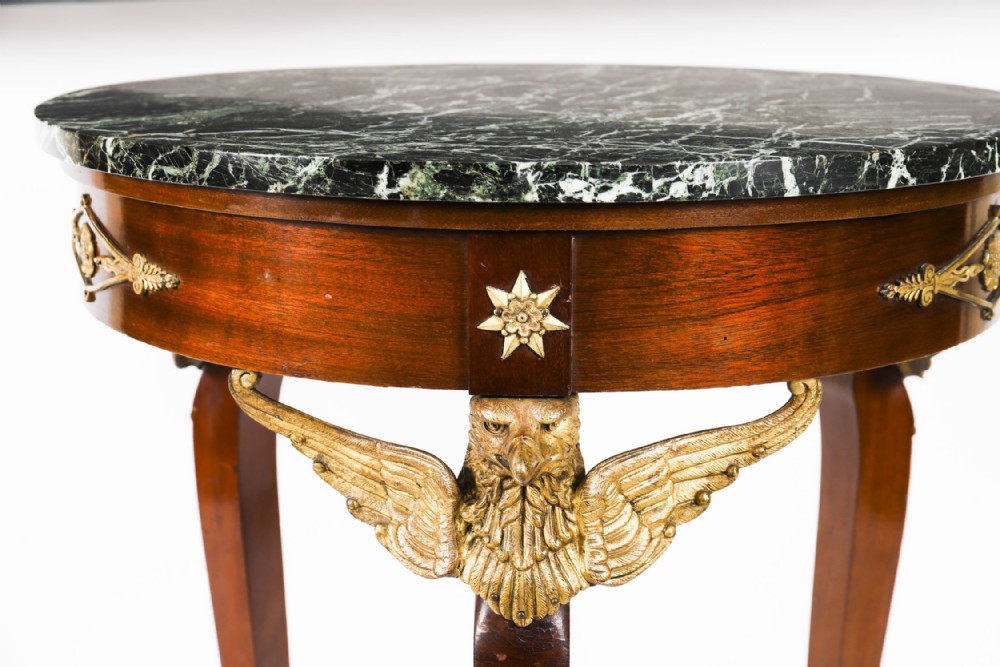
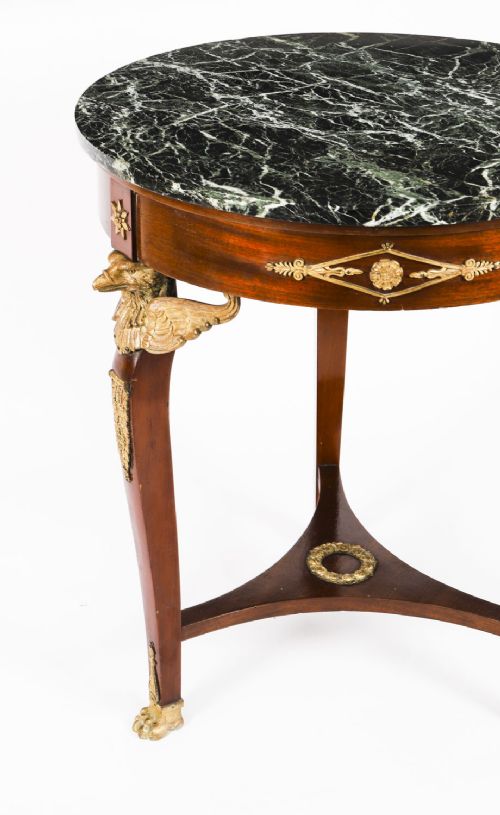
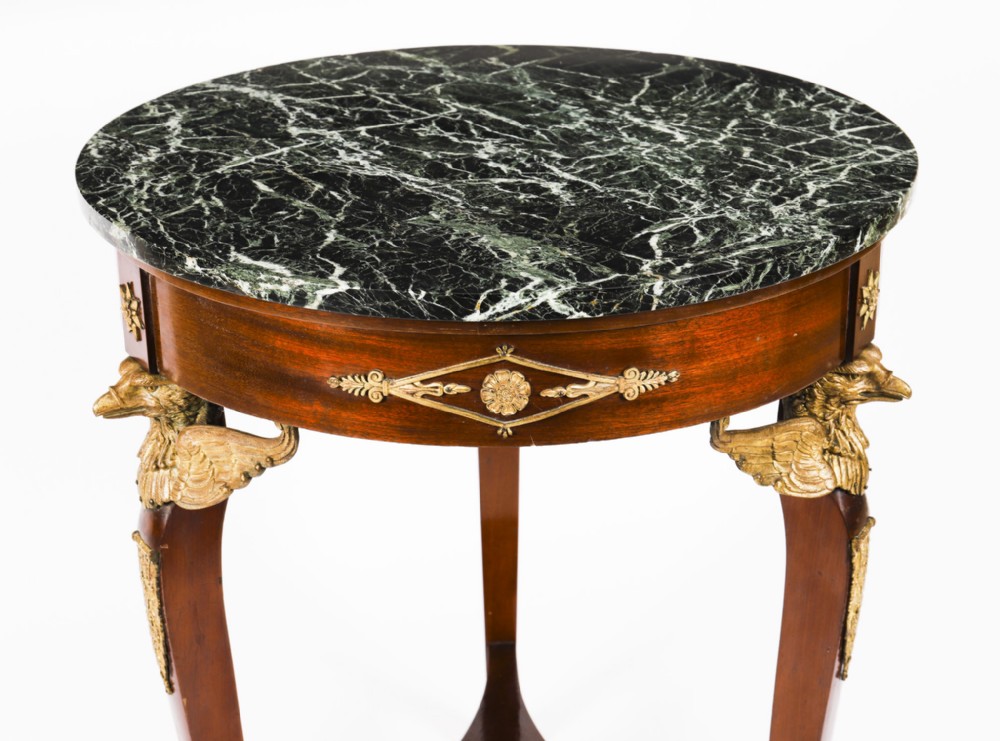
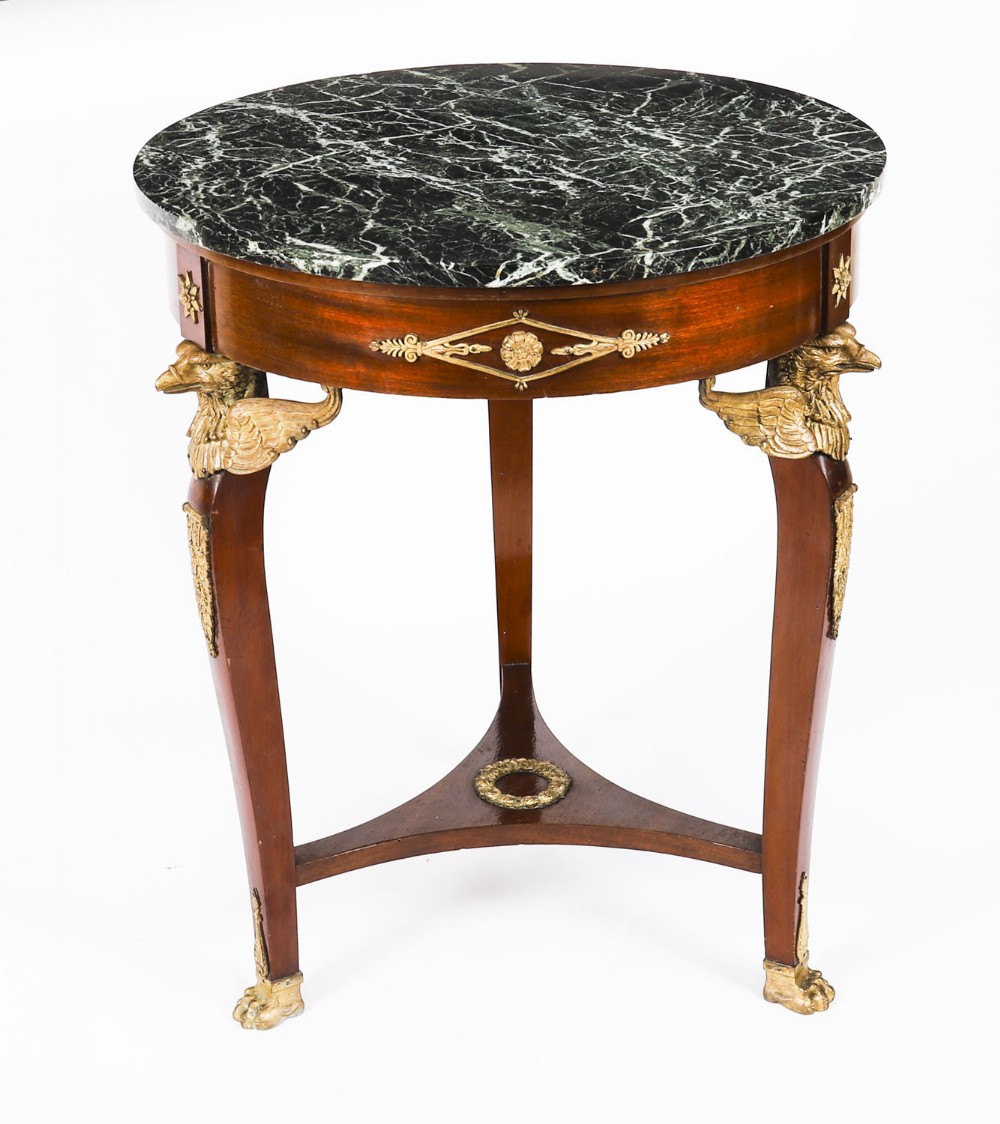
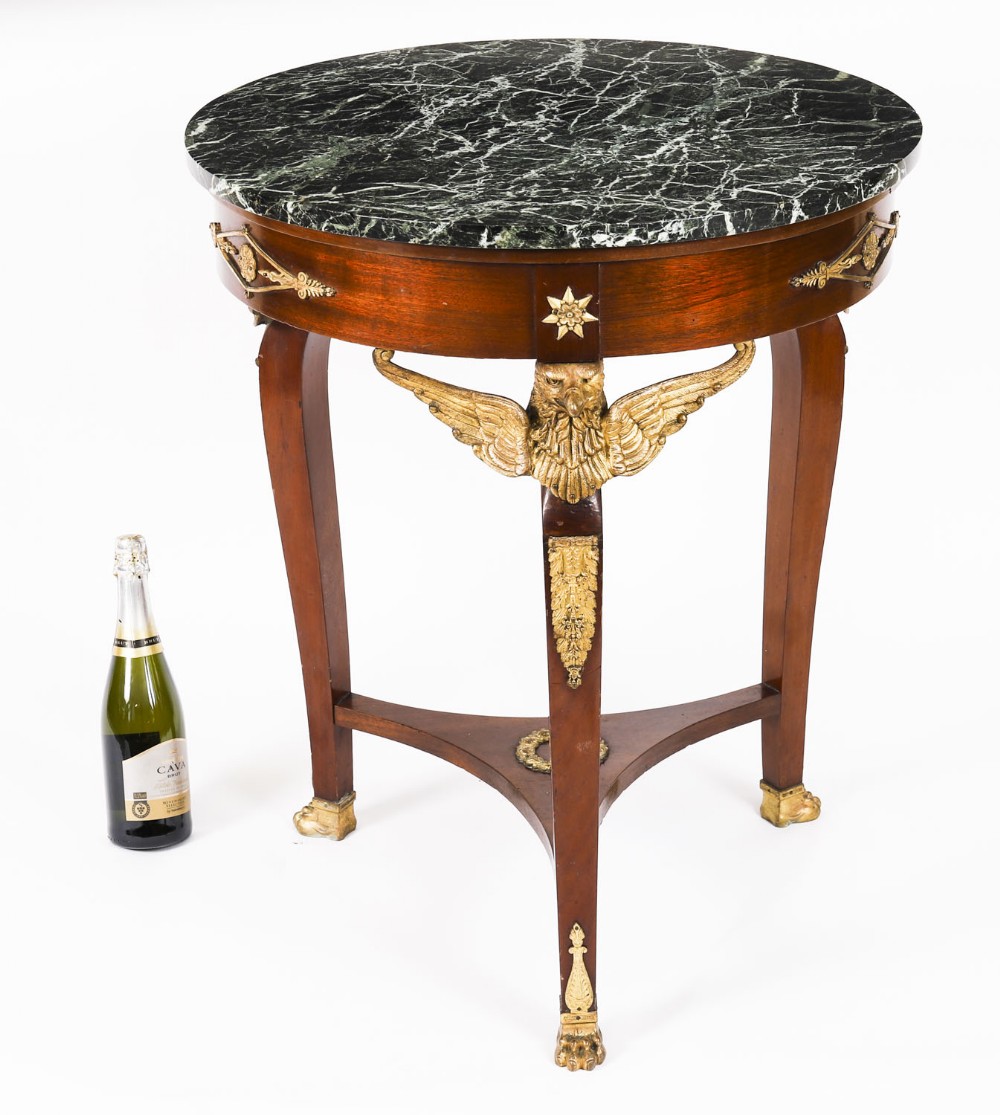
This is a beautiful antique French Empire circular occasional table with ornate ormolu decoration typical of the Empire period surmounted with a beautiful Verde Antico  marble top, circa 1830 in date.

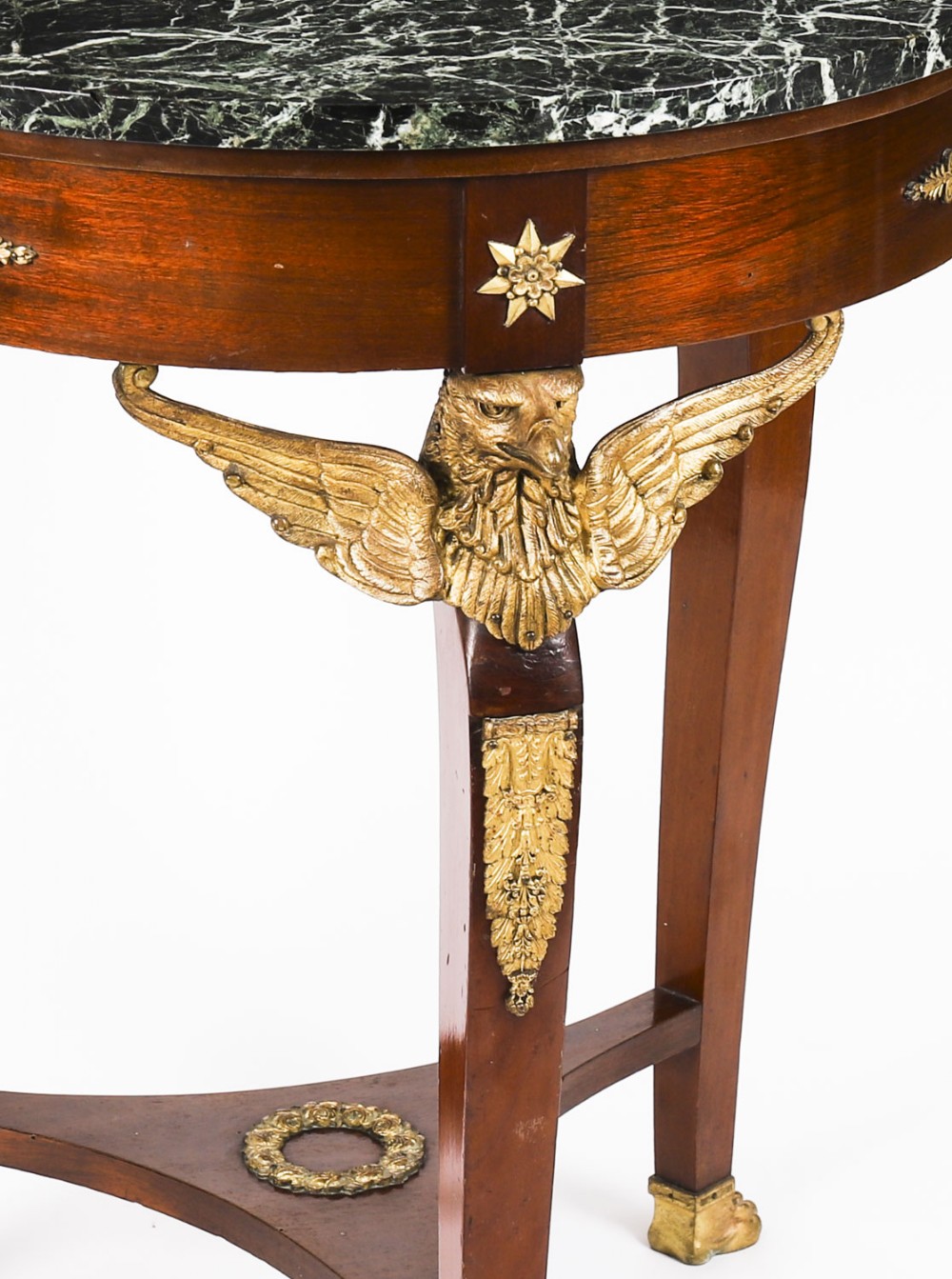
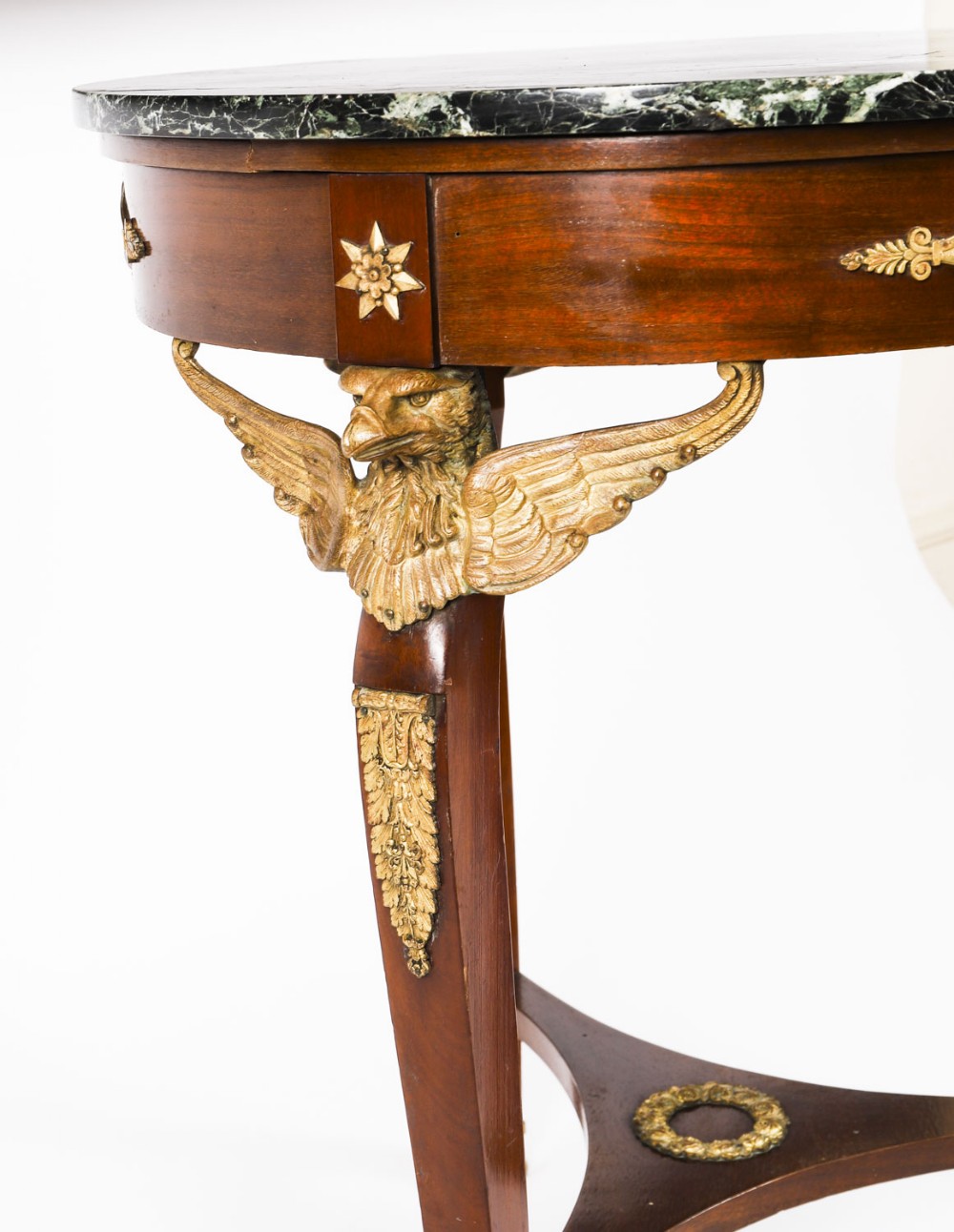
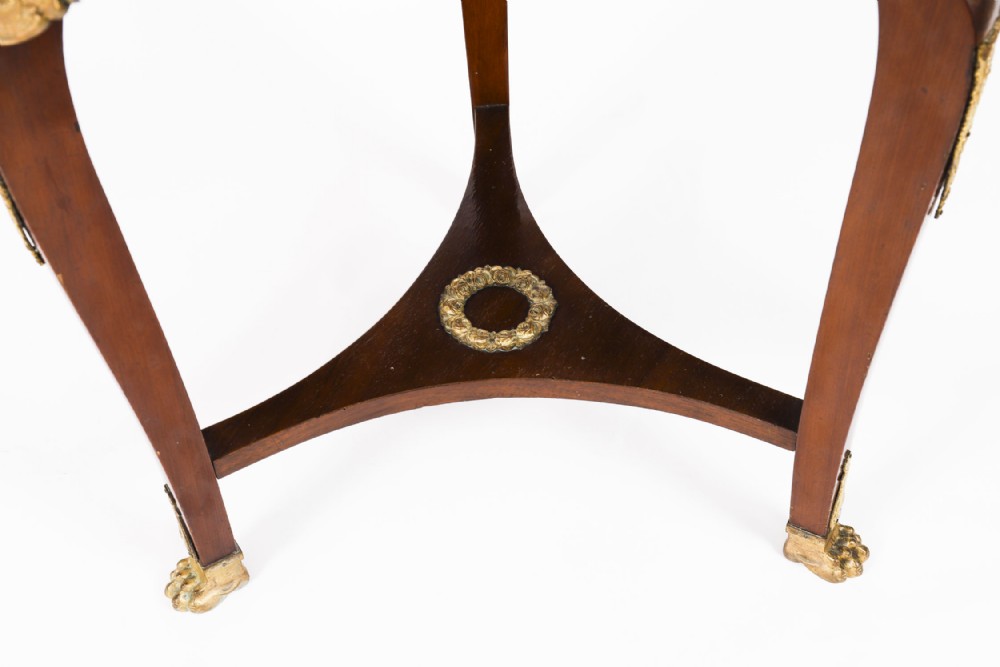
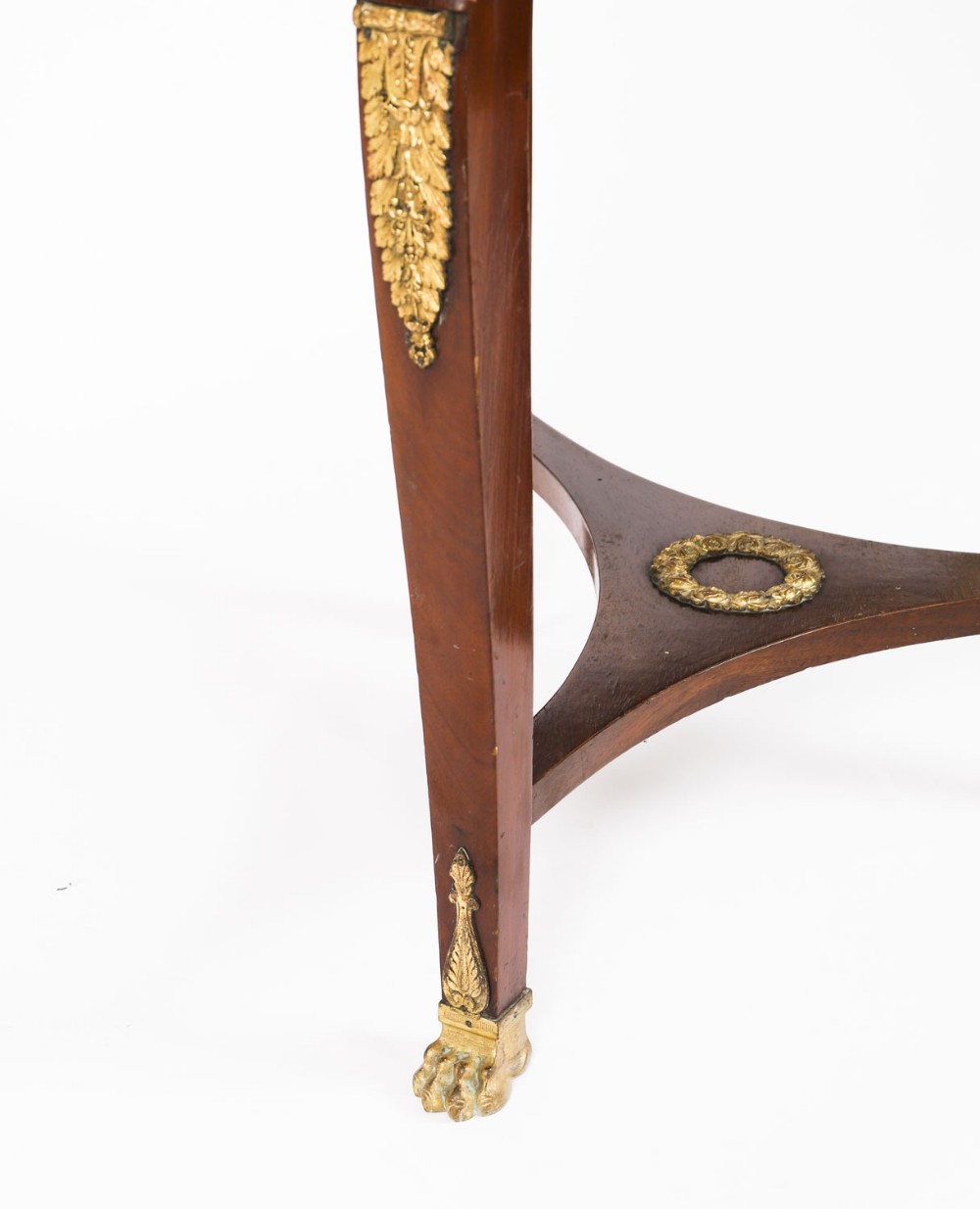
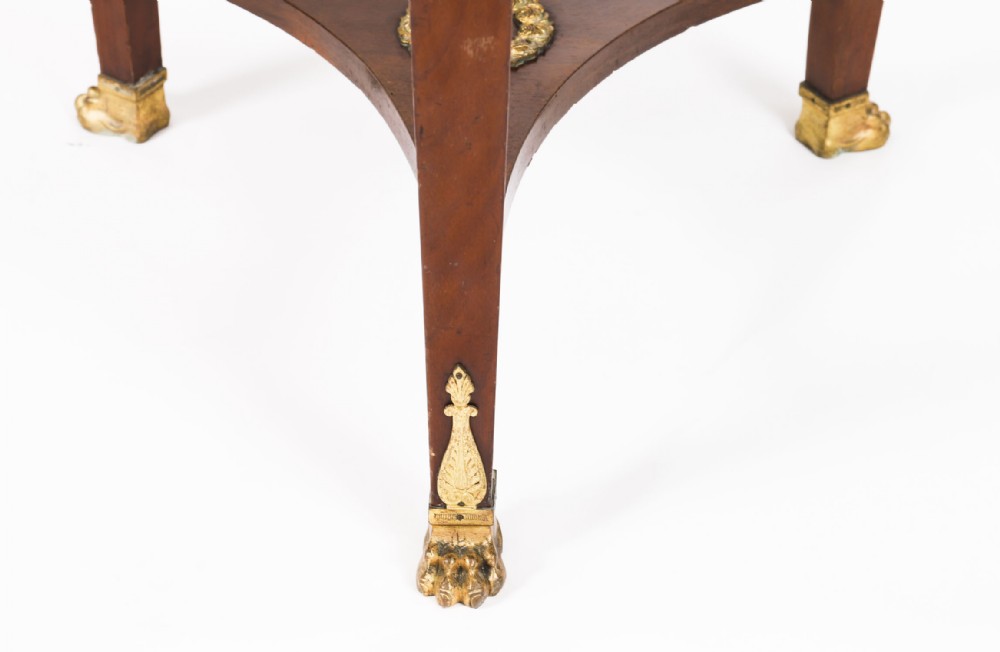
It is masterfully crafted in a deep rich mahogany with intricate ormolu decoration which includes eagles, laurel leaves , stars etc, and standing on lion's paw ormolu feet.

There is no mistaking the unique quality and elaborate design, which is certain to make it a talking point in your home and a fine embellishment to your reception room.

Condition:

In excellent condition having been beautifully restored in our workshops, please see photos for confirmation.


Dimensions in cm:

Height 78 cm x Width 67 cm x Depth 65 cm

Dimensions in inches:

Height 2 foot, 7 inches x Width 2 foot, 2 inches x Depth 2 foot, 2 inches

Empire style

is an early-19th-century design movement in architecture, furniture, other decorative arts, and the visual arts followed in Europe and America until around 1830.

The style originated in and takes its name from the rule of Napoleon I in the First French Empire, where it was intended to idealize Napoleon's leadership and the French state. The style corresponds to the Biedermeier style in the German-speaking lands, Federal style in the United States and to the Regency style in Britain. The previous style was called Louis XVI style, in France.

The Empire style was based on aspects of the Roman Empire. It is the second phase of neoclassicism which is also called "Directoire", after a goverment system.

Furniture typically had symbols and ornaments borrowed from the glorious ancient Greek and Roman empires.

The furniture was made from heavy woods such as mahogany and ebony, imported from the colonies, with dark finishes often with decorative bronze mounts. Marble tops were popular as were Egyptian motifs like sphinxes, griffins, urns and eagles and the Napoleonic symbols, the eagle, the bee, the initials "I" and a large "N." 

Gilded bronze (ormolu) details displayed a high level of craftsmanship.

Thomas Sheraton - 18th century furniture designer, once characterized mahogany as "best suited to furniture where strength is demanded as well as a wood that works up easily, has a beautiful figure and polishes so well that it is an ornament to any room in which it may be placed." Matching his words to his work, Sheraton designed much mahogany furniture.

Ormolu (from French 'or moulu', signifying ground or pounded gold) is an 18th-century English term for applying finely ground, high-carat gold in a mercury amalgam to an object of bronze.The mercury is driven off in a kiln leaving behind a gold-coloured veneer known as 'gilt bronze'.

The manufacture of true ormolu employs a process known as mercury-gilding or fire-gilding, in which a solution of nitrate of mercury is applied to a piece of copper, brass, or bronze, followed by the application of an amalgam of gold and mercury. The item was then exposed to extreme heat until the mercury burned off and the gold remained, adhered to the metal object.

Serpentine Marble / Verde Antico

Serpentine is a major rock forming mineral and is found as a constituent in many metamorphic and weathered igneous rocks. Serpentine’s structure is composed of layers of silicate tetrahedrons linked into sheets; this structure is what gives it its high flexural strength rating.

Verde Antico is the commercial name for the serpentine “marble” derived from highly sheared ultramafic rocks that have been rewelded and metasomatized by the process of serpentinization.  These ultramafic bodies are now recognized as segments of ancient oceanic crust that became part of the eastern North American continent during the Taconian orogeny. This is considered to be middle Ordovician in age, around 450 million years ago.

More deformation and metamorphism to

Physical Dimensions
Height
78cm (30.71")
Width
67cm (26.38")
Depth
65cm (25.59")
Declaration

Regent Antiques has dated this piece to the 1800s.
Reference Numbers
Sellingantiques Reference
SA1166519
Dealers Internal Reference
A4700
Description
This is a beautiful antique French Empire circular occasional table with ornate ormolu decoration typical of the Empire period surmounted with a beautiful Verde Antico  marble top, circa 1830 in date.
It is masterfully crafted in a deep rich mahogany with intricate ormolu decoration which includes eagles, laurel leaves , stars etc, and standing on lion's paw ormolu feet.
Regent Antiques
fig 1. Antique French Empire Marble & Ormolu Occasional Table c.1830 19th C
fig 1. Antique French Empire Marble & Ormolu Occasional Table C.1830 19th C

There is no mistaking the unique quality and elaborate design, which is certain to make it a talking point in your home and a fine embellishment to your reception room.

Condition:

In excellent condition having been beautifully restored in our workshops, please see photos for confirmation.
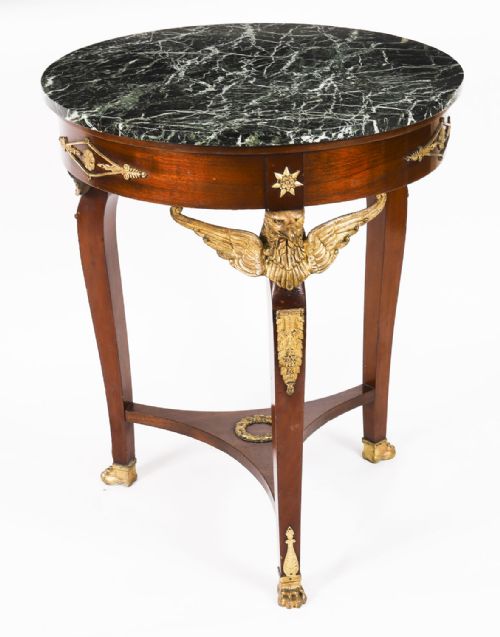
fig 2. Antique French Empire Marble & Ormolu Occasional Table c.1830 19th C
fig 2. Antique French Empire Marble & Ormolu Occasional Table C.1830 19th C


Dimensions in cm:

Height 78 cm x Width 67 cm x Depth 65 cm

Dimensions in inches:

Height 2 foot, 7 inches x Width 2 foot, 2 inches x Depth 2 foot, 2 inches

Empire style

is an early-19th-century design movement in architecture, furniture, other decorative arts, and the visual arts followed in Europe and America until around 1830.
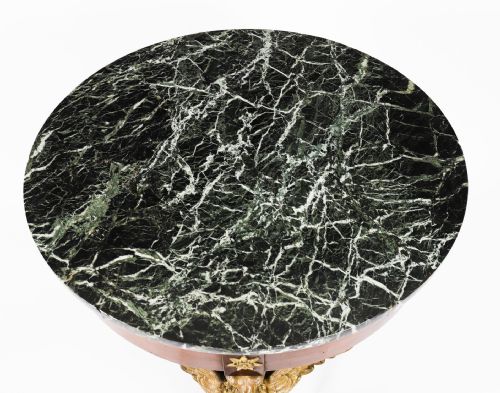
fig 3. Antique French Empire Marble & Ormolu Occasional Table c.1830 19th C
fig 3. Antique French Empire Marble & Ormolu Occasional Table C.1830 19th C

The style originated in and takes its name from the rule of Napoleon I in the First French Empire, where it was intended to idealize Napoleon's leadership and the French state. The style corresponds to the Biedermeier style in the German-speaking lands, Federal style in the United States and to the Regency style in Britain. The previous style was called Louis XVI style, in France.
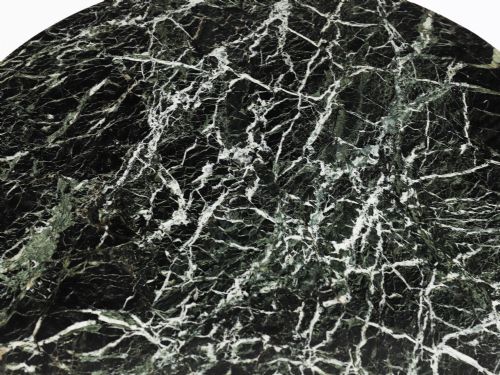
fig 4. Antique French Empire Marble & Ormolu Occasional Table c.1830 19th C
fig 4. Antique French Empire Marble & Ormolu Occasional Table C.1830 19th C

The Empire style was based on aspects of the Roman Empire. It is the second phase of neoclassicism which is also called "Directoire", after a goverment system.

Furniture typically had symbols and ornaments borrowed from the glorious ancient Greek and Roman empires.
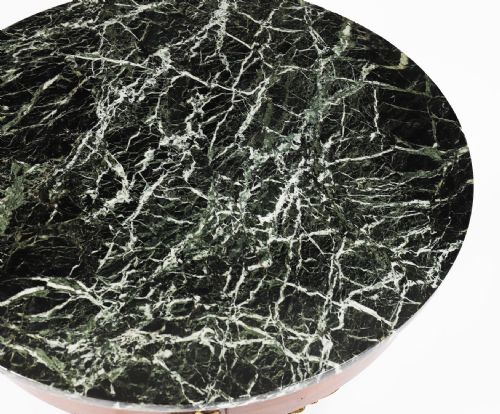
fig 5. Antique French Empire Marble & Ormolu Occasional Table c.1830 19th C
fig 5. Antique French Empire Marble & Ormolu Occasional Table C.1830 19th C

The furniture was made from heavy woods such as mahogany and ebony, imported from the colonies, with dark finishes often with decorative bronze mounts. Marble tops were popular as were Egyptian motifs like sphinxes, griffins, urns and eagles and the Napoleonic symbols, the eagle, the bee, the initials "I" and a large "N." 
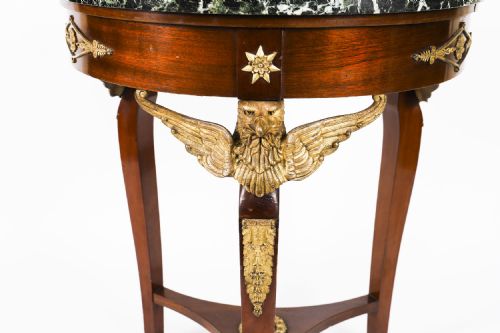
fig 6. Antique French Empire Marble & Ormolu Occasional Table c.1830 19th C
fig 6. Antique French Empire Marble & Ormolu Occasional Table C.1830 19th C

Gilded bronze (ormolu) details displayed a high level of craftsmanship.

Thomas Sheraton - 18th century furniture designer, once characterized mahogany as "best suited to furniture where strength is demanded as well as a wood that works up easily, has a beautiful figure and polishes so well that it is an ornament to any room in which it may be placed." Matching his words to his work, Sheraton designed much mahogany furniture.
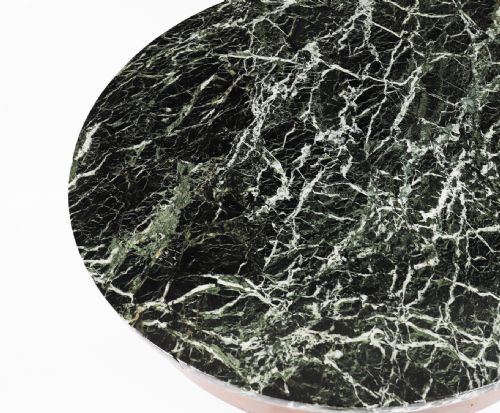
fig 7. Antique French Empire Marble & Ormolu Occasional Table c.1830 19th C
fig 7. Antique French Empire Marble & Ormolu Occasional Table C.1830 19th C

Ormolu (from French 'or moulu', signifying ground or pounded gold) is an 18th-century English term for applying finely ground, high-carat gold in a mercury amalgam to an object of bronze.The mercury is driven off in a kiln leaving behind a gold-coloured veneer known as 'gilt bronze'.
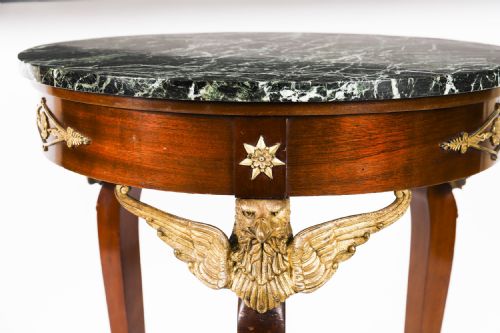
fig 8. Antique French Empire Marble & Ormolu Occasional Table c.1830 19th C
fig 8. Antique French Empire Marble & Ormolu Occasional Table C.1830 19th C

The manufacture of true ormolu employs a process known as mercury-gilding or fire-gilding, in which a solution of nitrate of mercury is applied to a piece of copper, brass, or bronze, followed by the application of an amalgam of gold and mercury. The item was then exposed to extreme heat until the mercury burned off and the gold remained, adhered to the metal object.
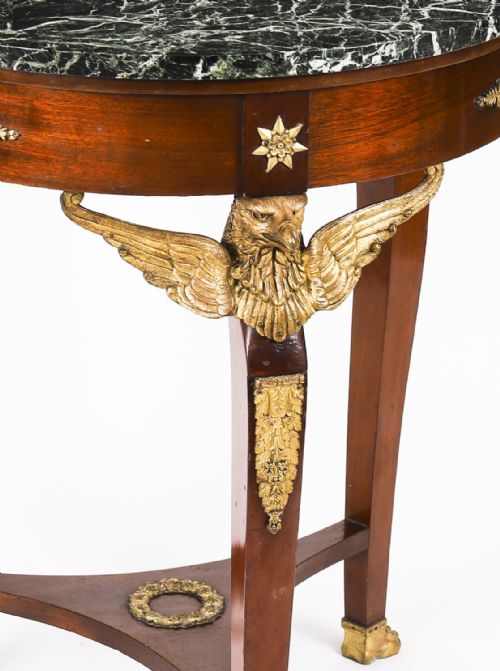
fig 9. Antique French Empire Marble & Ormolu Occasional Table c.1830 19th C
fig 9. Antique French Empire Marble & Ormolu Occasional Table C.1830 19th C

Serpentine Marble / Verde Antico

Serpentine is a major rock forming mineral and is found as a constituent in many metamorphic and weathered igneous rocks. Serpentine’s structure is composed of layers of silicate tetrahedrons linked into sheets; this structure is what gives it its high flexural strength rating.
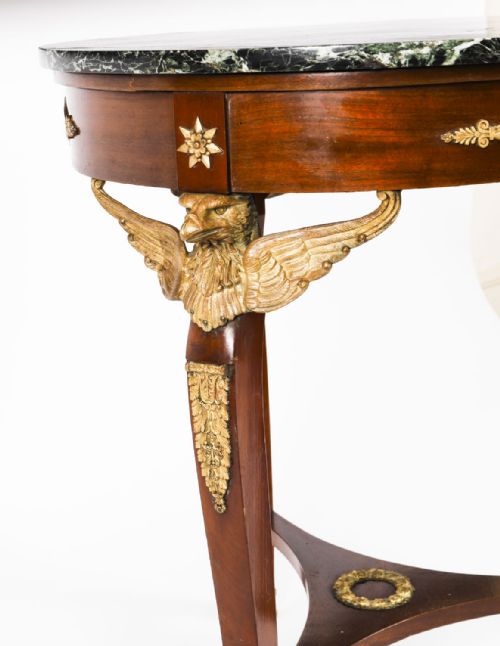
fig 10. Antique French Empire Marble & Ormolu Occasional Table c.1830 19th C
fig 10. Antique French Empire Marble & Ormolu Occasional Table C.1830 19th C

Verde Antico is the commercial name for the serpentine “marble” derived from highly sheared ultramafic rocks that have been rewelded and metasomatized by the process of serpentinization.  These ultramafic bodies are now recognized as segments of ancient oceanic crust that became part of the eastern North American continent during the Taconian orogeny. This is considered to be middle Ordovician in age, around 450 million years ago.

More deformation and metamorphism to

Height
78cm (30.71")
Width
67cm (26.38")
Depth
65cm (25.59")
Date of Manufacture

Regent Antiques has dated this piece to the 1800s.

Reference Numbers
Sellingantiques Ref
SA1166519
Dealers Internal Ref
A4700
Regent Antiques
Regent Antiques
Sellingantiques verified Since Sep 2016

We specialise in english and continental furniture, silver, porcelain and decorative items.

Dealer Profile

You can view the stock and full dealer information on the Regent Antiques Profile Page

Trade Associations

Regent Antiques is a registered member of LAPADA  CINOA
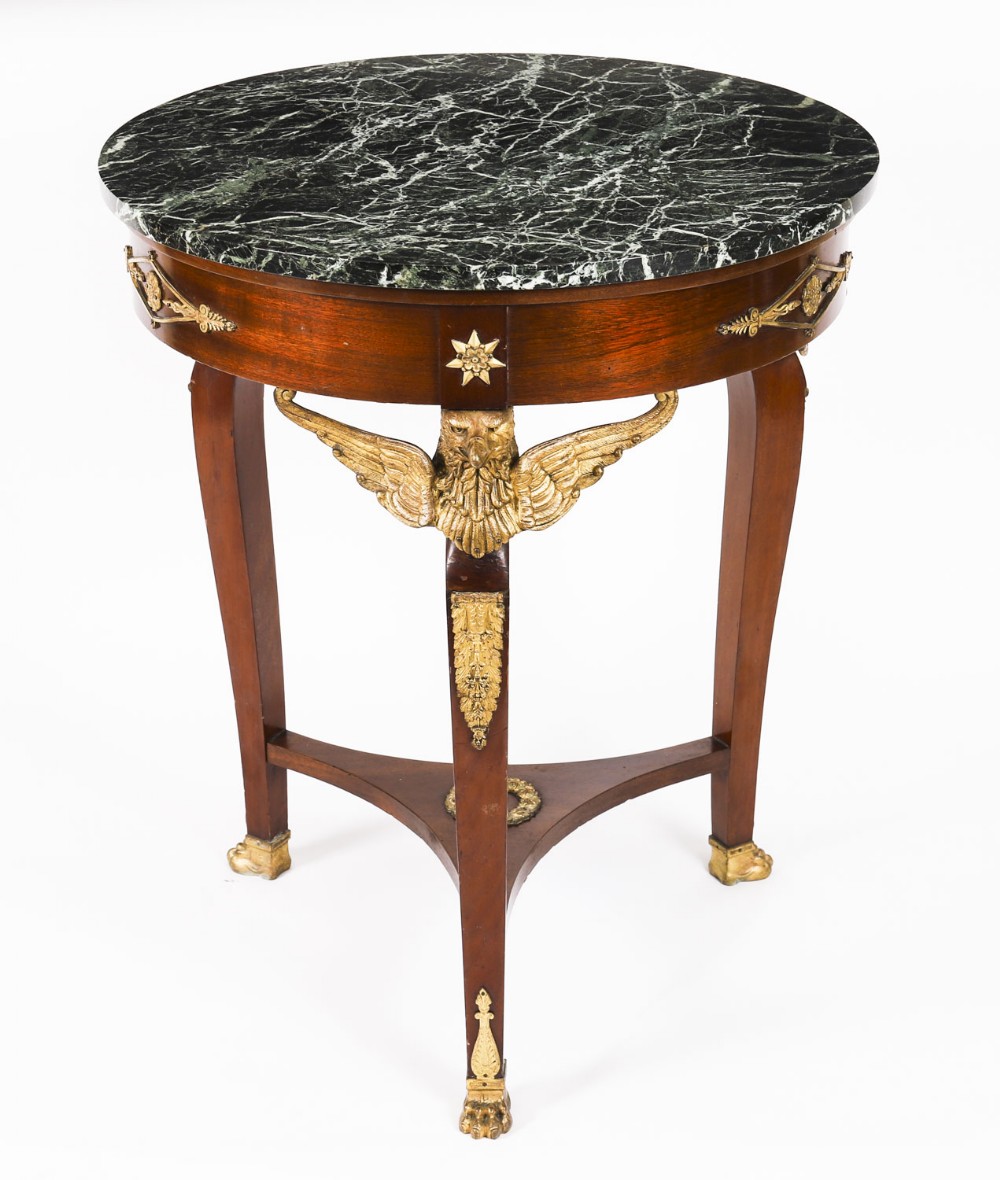
PDF SHARE
SAVE
Antique French Empire Marble & Ormolu Occasional Table c.1830 19th C
1 / 18
Archive I Antique French Empire Marble & Ormolu Occasional Table c.1830 19th C

Antique French Empire Marble & Ormolu Occasional Table C.1830 19th C
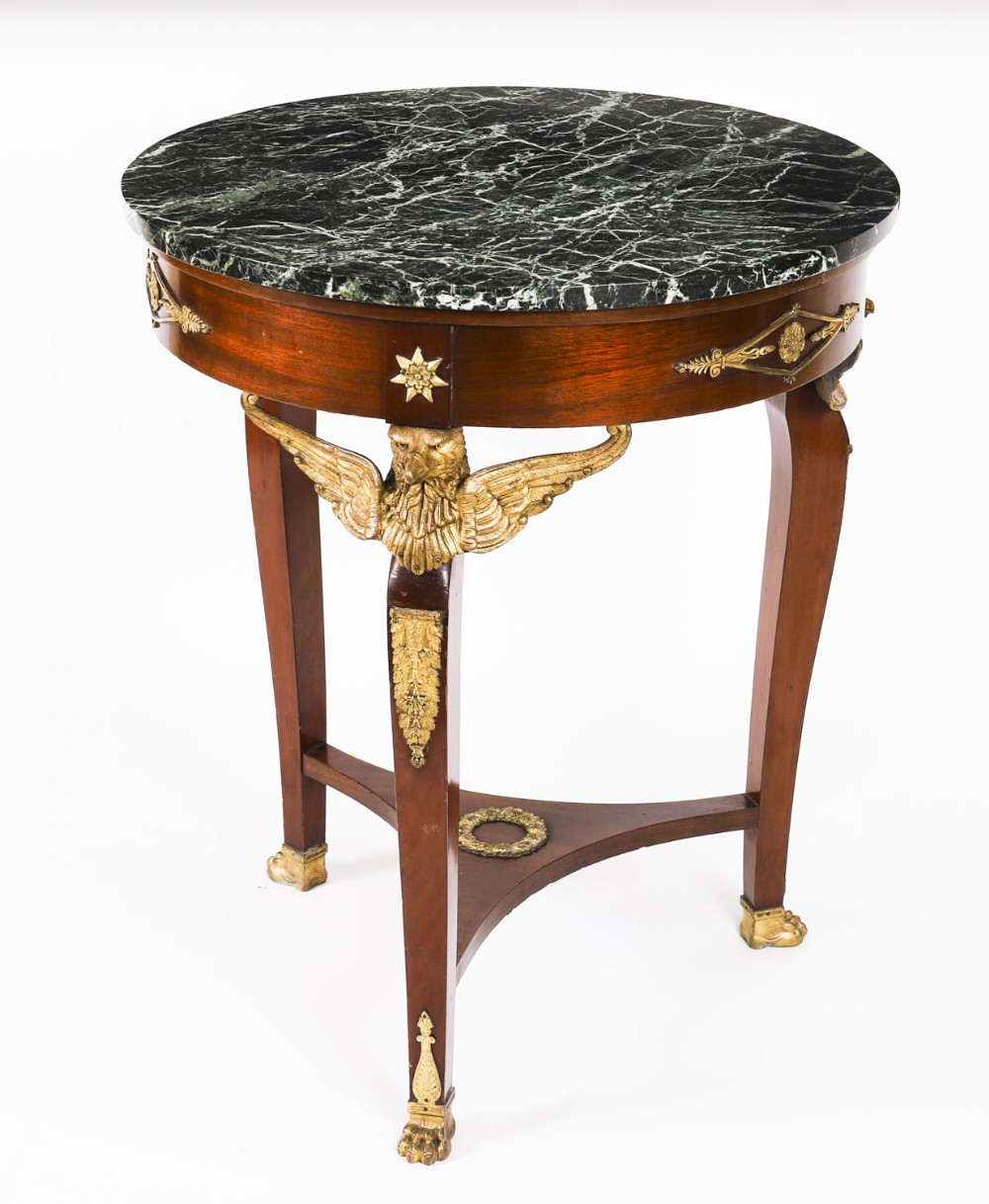
Archive II Antique French Empire Marble & Ormolu Occasional Table c.1830 19th C View II
Archive III Antique French Empire Marble & Ormolu Occasional Table c.1830 19th C View III
Archive IV Antique French Empire Marble & Ormolu Occasional Table c.1830 19th C View IV
Archive V Antique French Empire Marble & Ormolu Occasional Table c.1830 19th C View V
Archive VI Antique French Empire Marble & Ormolu Occasional Table c.1830 19th C View VI
Archive VII Antique French Empire Marble & Ormolu Occasional Table c.1830 19th C View VII
Archive VIII Antique French Empire Marble & Ormolu Occasional Table c.1830 19th C View VIII
Archive IX Antique French Empire Marble & Ormolu Occasional Table c.1830 19th C View IX
Archive X Antique French Empire Marble & Ormolu Occasional Table c.1830 19th C View X
Archive XI Antique French Empire Marble & Ormolu Occasional Table c.1830 19th C View XI
Archive XII Antique French Empire Marble & Ormolu Occasional Table c.1830 19th C View XII
Archive XIII Antique French Empire Marble & Ormolu Occasional Table c.1830 19th C View XIII
Archive XIV Antique French Empire Marble & Ormolu Occasional Table c.1830 19th C View XIV
Archive XV Antique French Empire Marble & Ormolu Occasional Table c.1830 19th C View XV
Archive XVI Antique French Empire Marble & Ormolu Occasional Table c.1830 19th C View XVI
Archive XVII Antique French Empire Marble & Ormolu Occasional Table c.1830 19th C View XVII
Archive XVIII Antique French Empire Marble & Ormolu Occasional Table c.1830 19th C View XVIII
Enlarged Archival View
Location
Manor Warehouse
318 Green Lanes
London
N4 1BX
United Kingdom
Verified Since Sep 2016
Items For Sale 659
Items Sold 2,608
Regent Antiques
Regent Antiques
Verified Since Sep 2016
View Dealer Info
Location: Manor Warehouse, 318 Green Lanes, London, N4 1BX, United Kingdom
Verified
Sep 2016
For Sale
659
Sold
2,608
Antique French Empire Marble & Ormolu Occasional Table c.1830 19th C
Ref: SA1166519
Antique French Empire Marble & Ormolu Occasional Table c.1830 19th C
Detail View 1
Detail View 2
Detail View 3
Detail View 4
Detail View 5
Detail View 6
Detail View 7
Detail View 8
Detail View 9
Detail View 10
Detail View 11
Detail View 12
Detail View 13
Detail View 14
Detail View 15
Detail View 16
Detail View 17
Archival Detail
Every single antique dealer on our platform is individually approved by our internal team. We verify their professional trade history, ethical standards, and photographic quality to ensure a secure, high-standard buying environment. Upon joining, every dealer agrees to a strict 9-point code of conduct. While issues can occasionally arise, our dealers typically resolve them swiftly and directly with the buyer. In fact, since our founding in 2002, Sellingantiques has only had to step in to help resolve an issue on roughly five occasions—a true testament to the quality of our dealers and their dedication to your happiness.
Our dealers are highly experienced in packing and shipping fragile, high-value antiques. Because you are in direct contact with the dealer, you will be able to easily go through all available shipping and insurance options together to ensure your item arrives safely.
Antiques are the ultimate green purchase. By choosing historical pieces over newly manufactured goods, you completely eliminate the carbon footprint of modern mass production while preserving exceptional, timeless craftsmanship.
items
Add keywords to the filter
Price
£100
£250000
Era
Movements
Material
Origin
Stock Location
Freshness
Online Payments
Categories