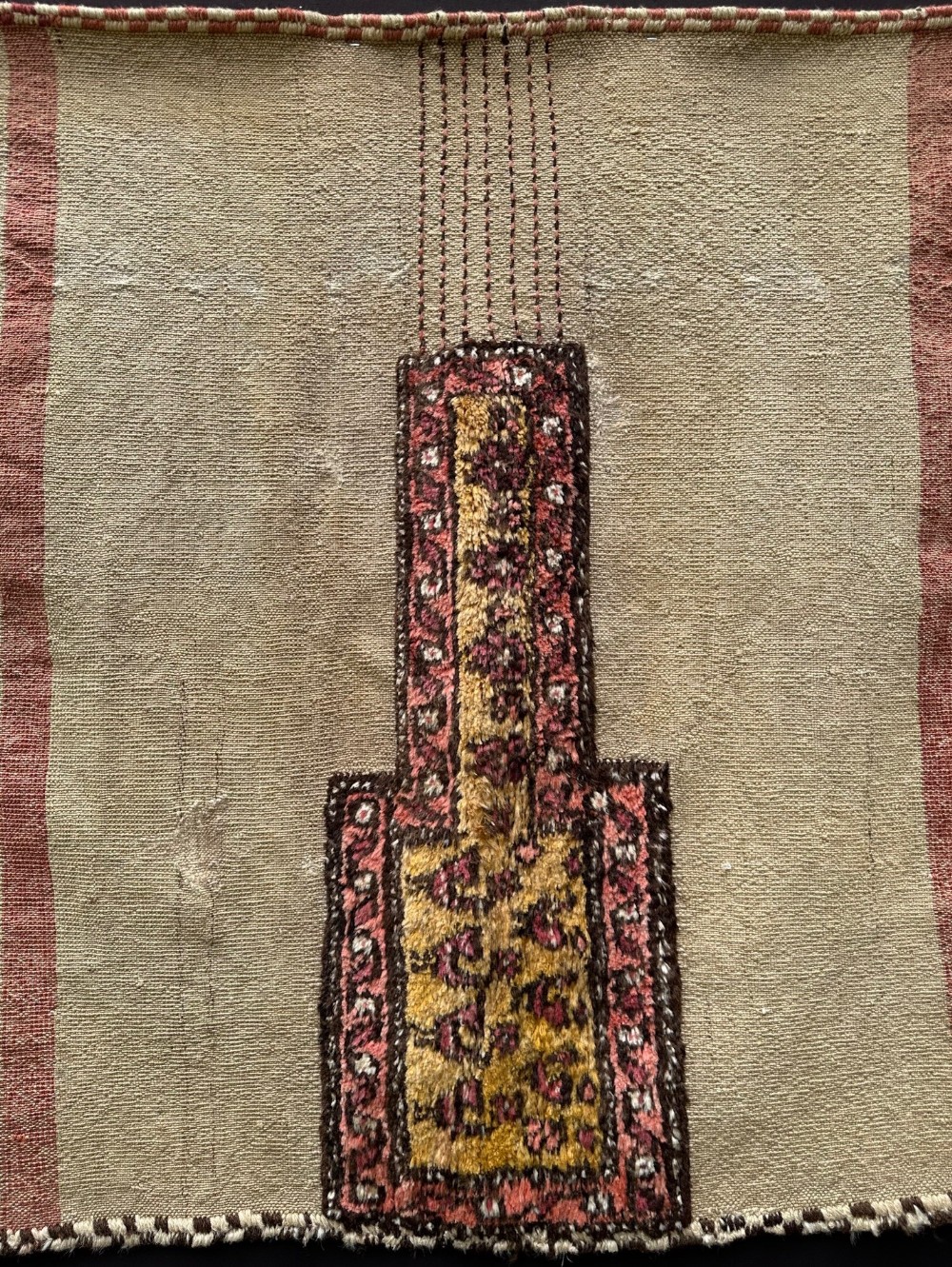
Brian MacDonald Antique Rugs & Carpets has dated this piece to the 1900s.
To make this tacheh into a sack, the sides and base were sewn together with goat-hair creating an opening at the top.
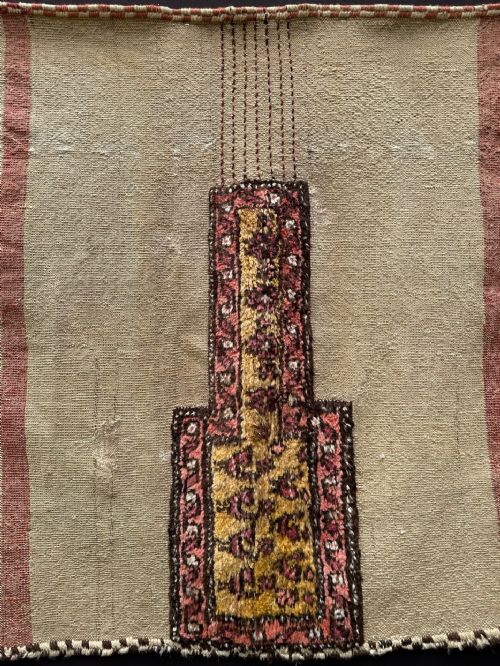
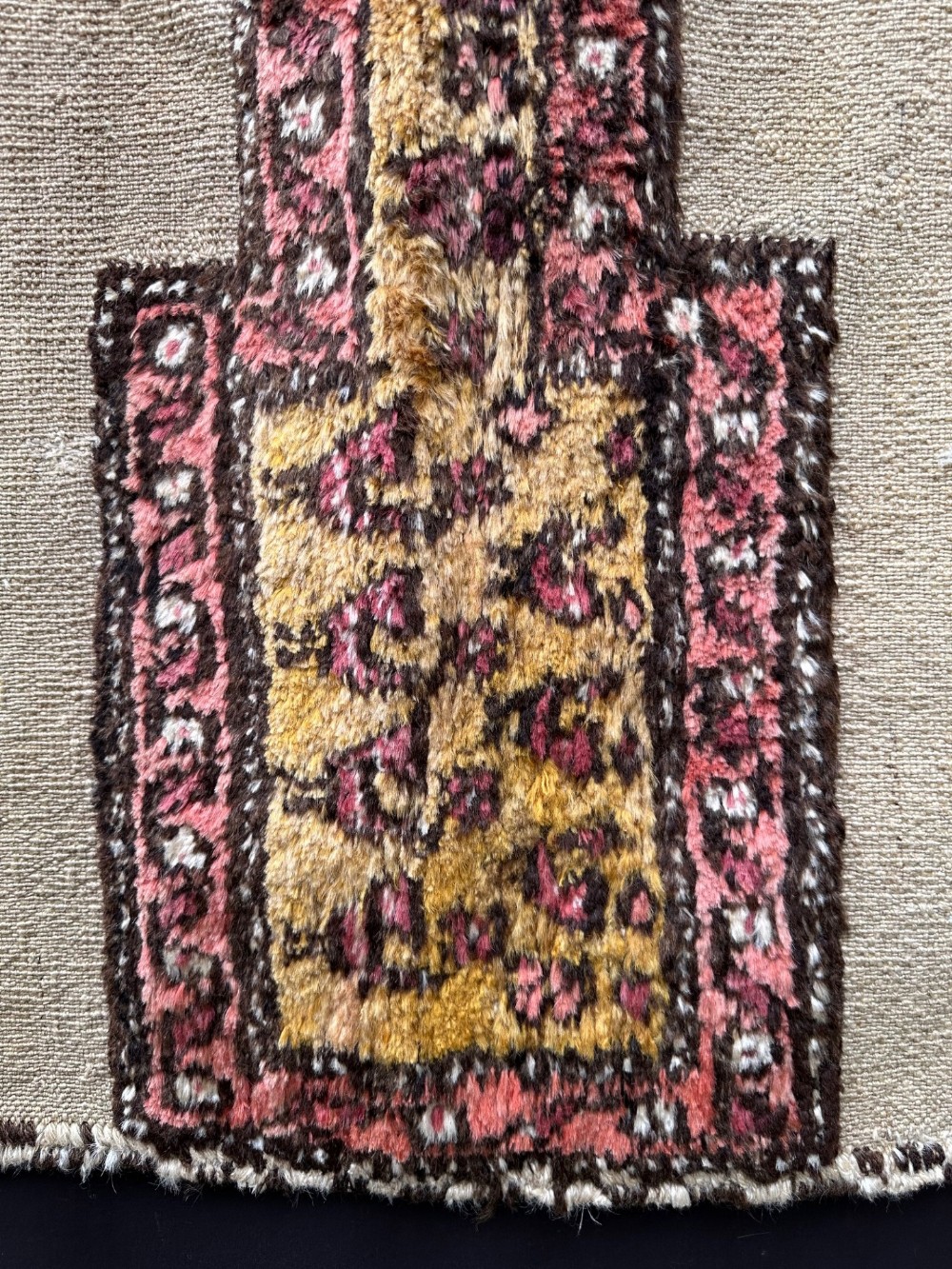
All the tachehs made by the Luri-Bakhtiari tribes were woven in plain-weave with a knotted-pile, symbolic bottle-shape in the centre. Note the dotted lines at the top of the knotted-pile bottle-shape which I believe represents the wheat being poured into the sack, thus symbolically representing the bounty of God.
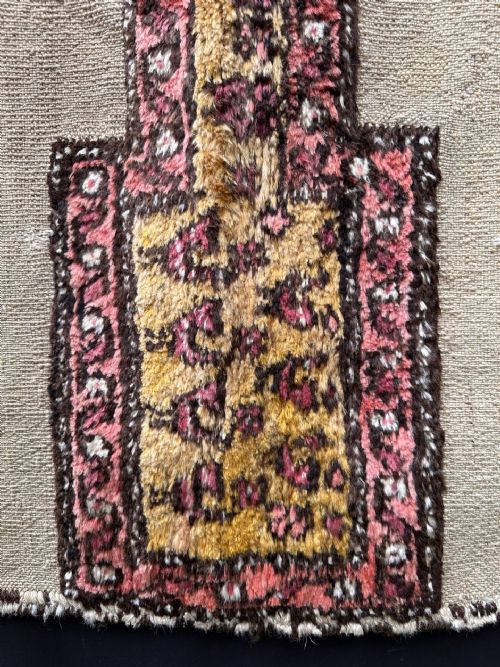
Tachehs like this one, from the 19th century through to the 1930s when they were no longer made, are now rare.
The central botttle-shape in this tacheh depicts stylised peacocks - symbols of wealth and divine imortality.
On the wall, these attractive tachehs provide a glimpse of a weaving which no longer exists in nomadic life.
For more information on tachehs, see chapter 12 of my book 'Tribal Rugs - Treasures of the Black Tent' as well as 'The Tacheh of Chahar Mahal' and 'Tasheh' both by Parviz Tanavoli.
Size: 1.11m x 1.07m (3' 8" x 3' 6").
Brian MacDonald Antique Rugs & Carpets has dated this piece to the 1900s.
Dealing in antique and old tribal rugs, dowry weavings and decorative carpets from the near east and central asia since 1979.
You can view the stock and full dealer information on the Brian MacDonald Antique Rugs & Carpets Profile Page
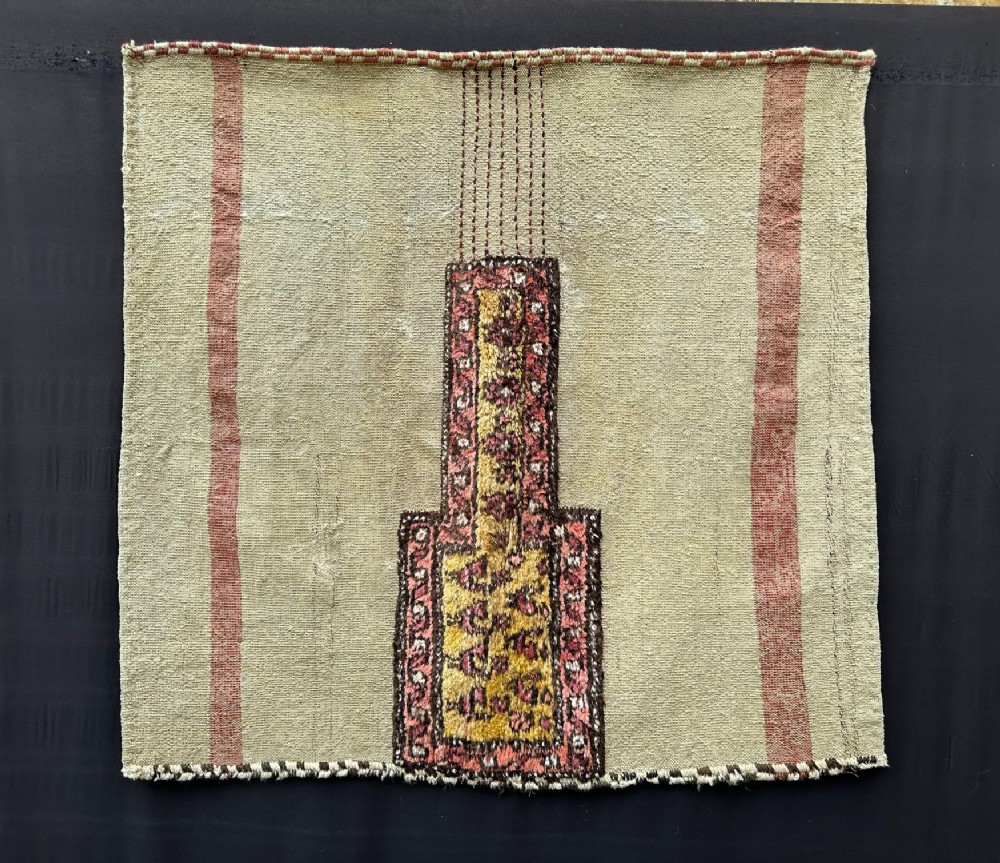
Antique Wheat-sack (Tacheh), Luri-bakhtiari Tribes, Western Persia.