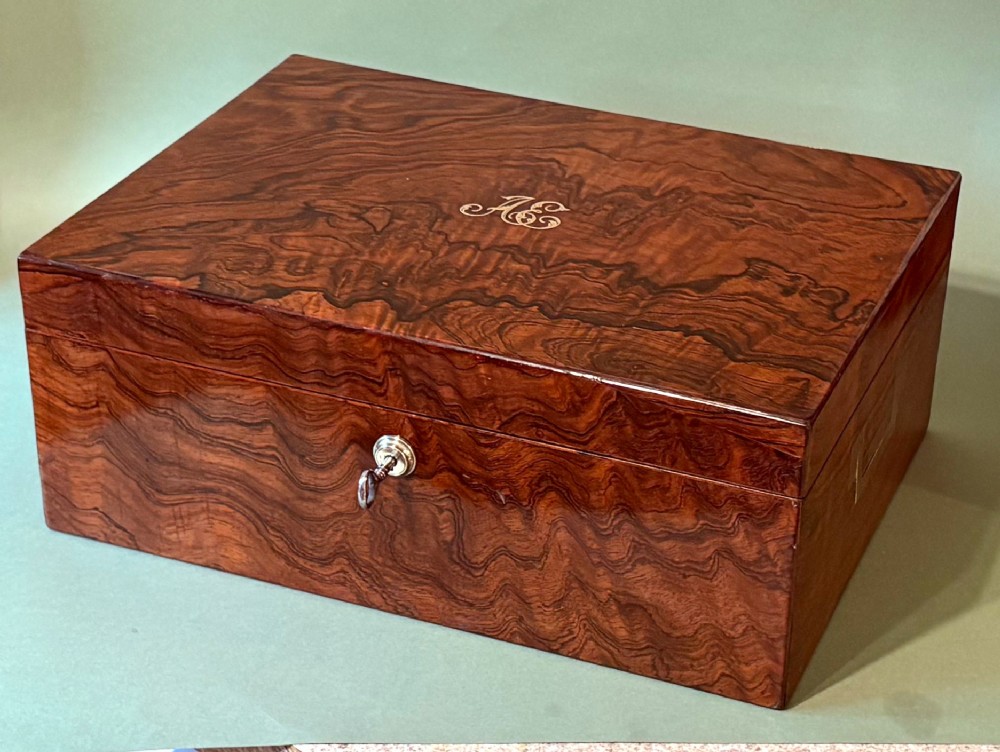
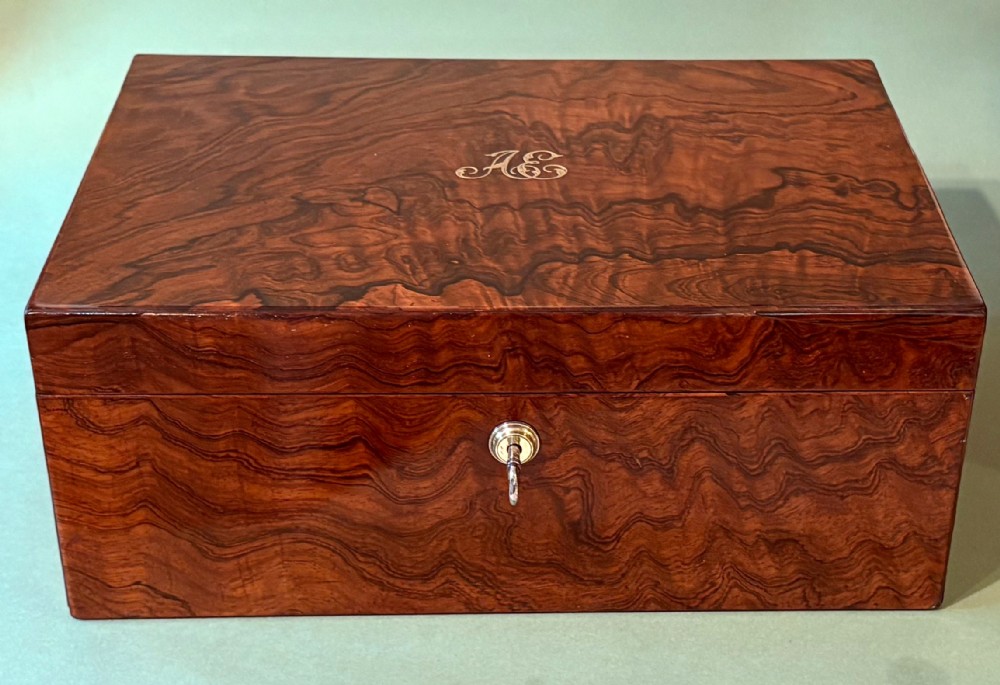
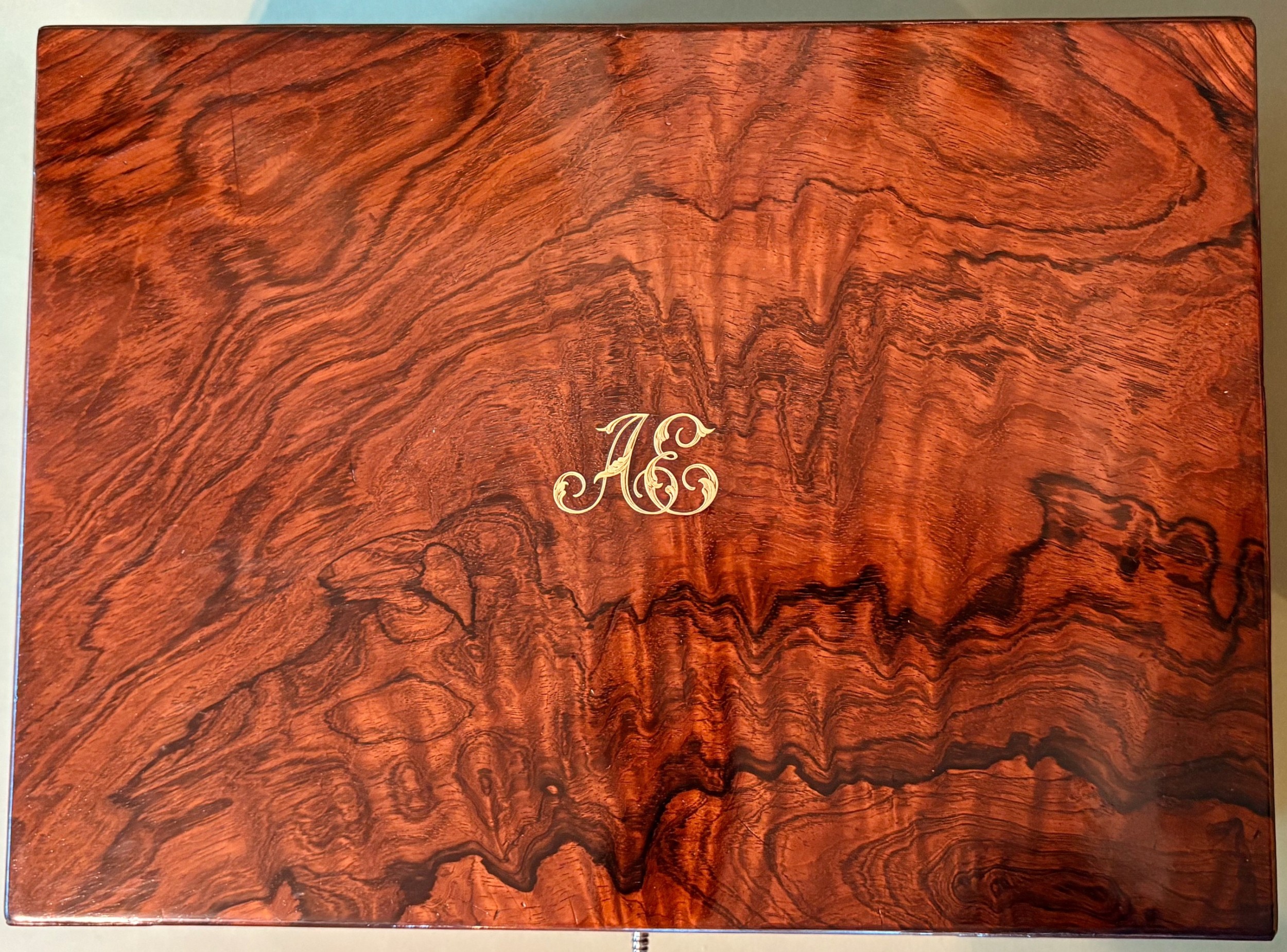
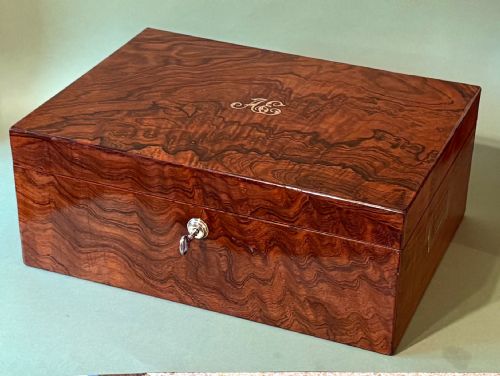
Quiet Street Antiques of Bath has dated this piece to the 1850s.
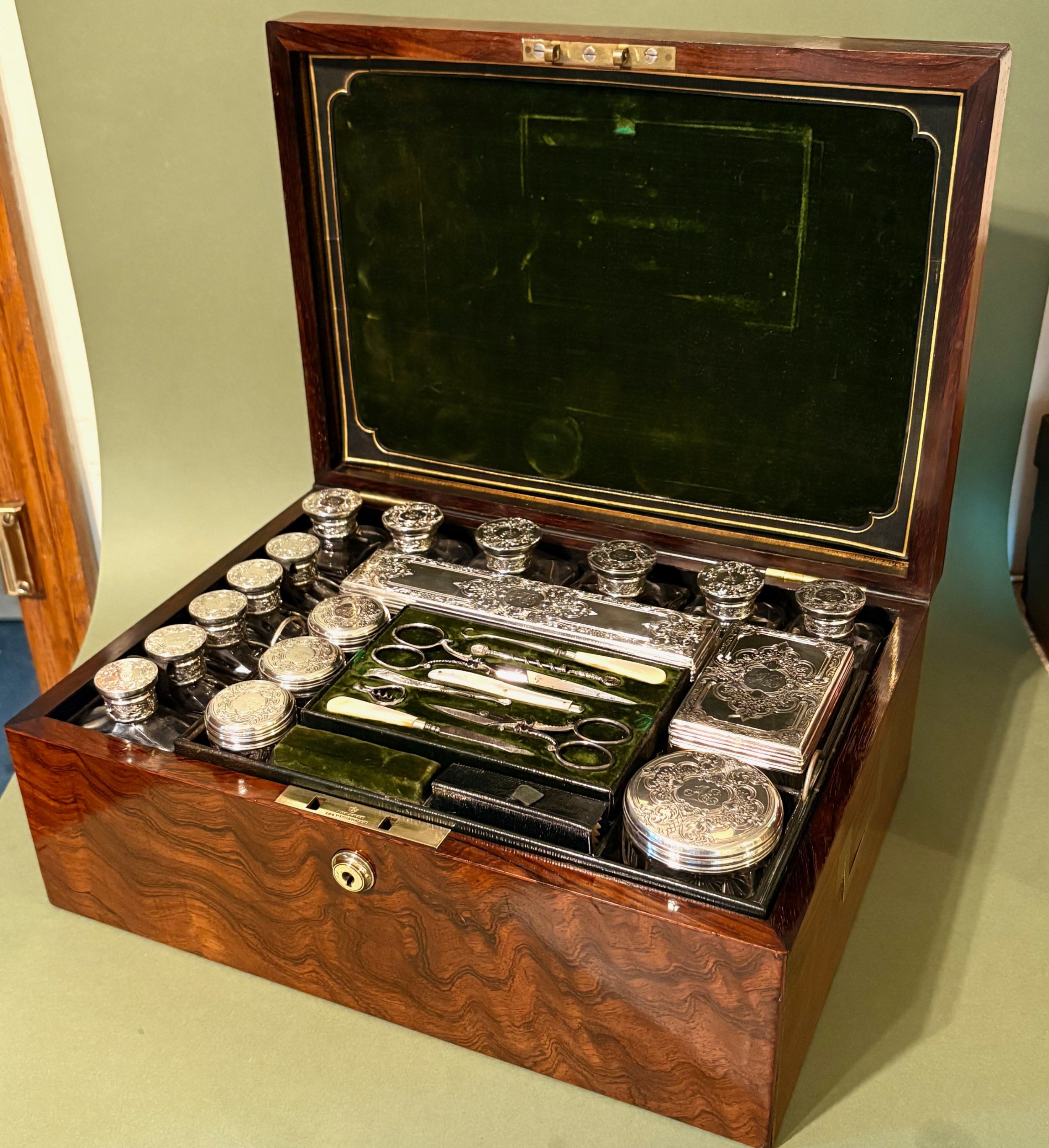
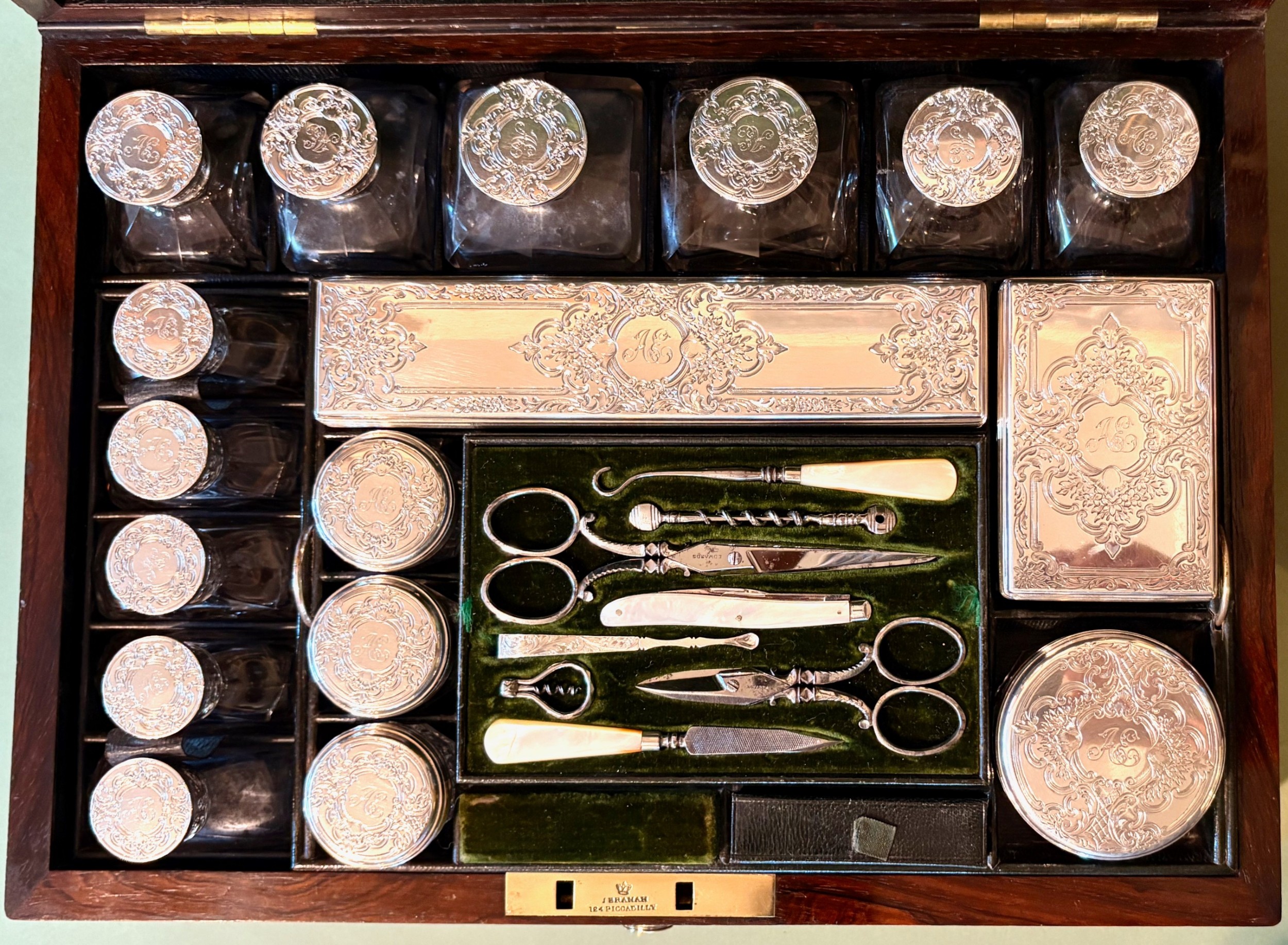
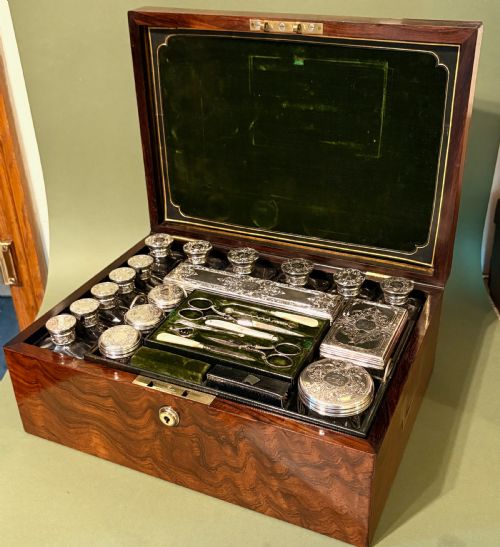
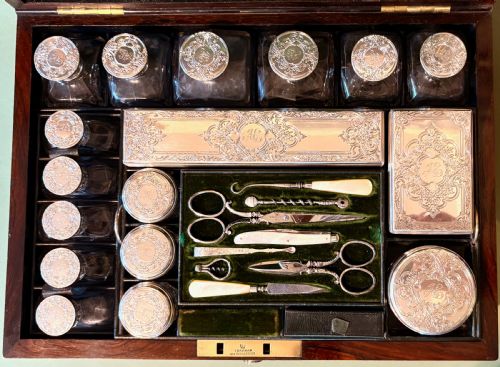
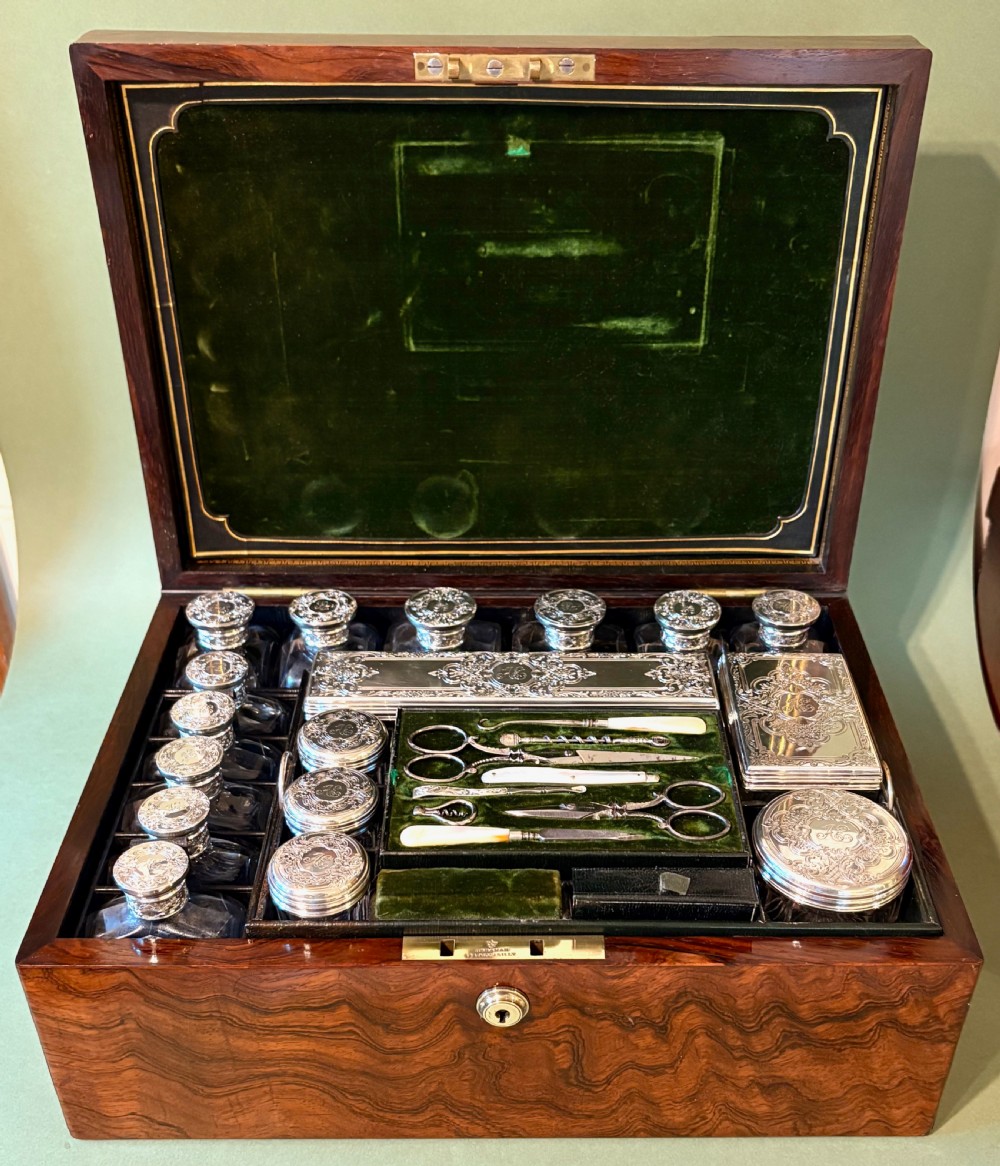
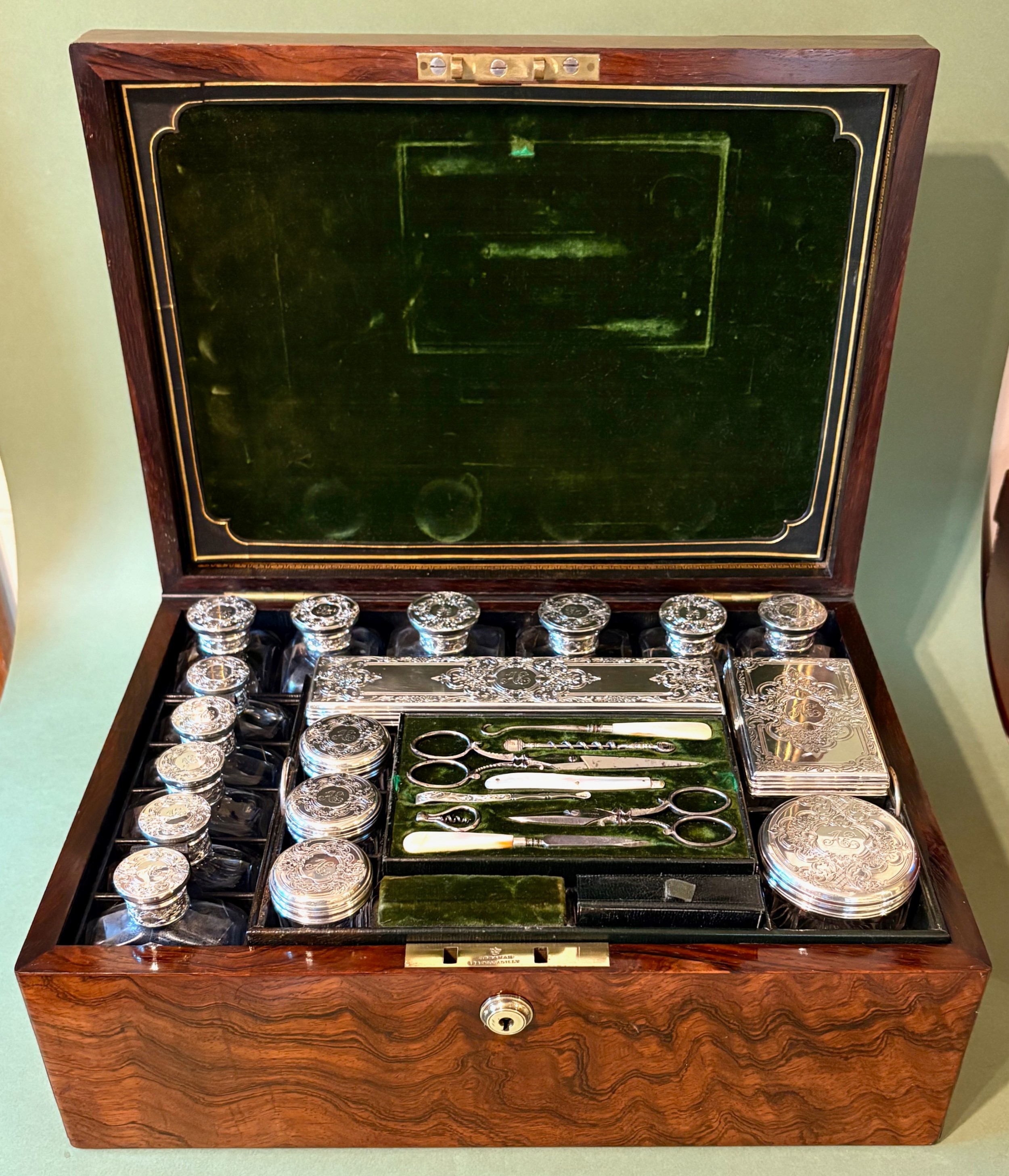
This lid opens to reveal the stunning interior, complete with 17 (yes ~ seventeen!) bottles and jars, all with silver lids which are finely bright-cut engraved and also engraved with the “AE” initials.
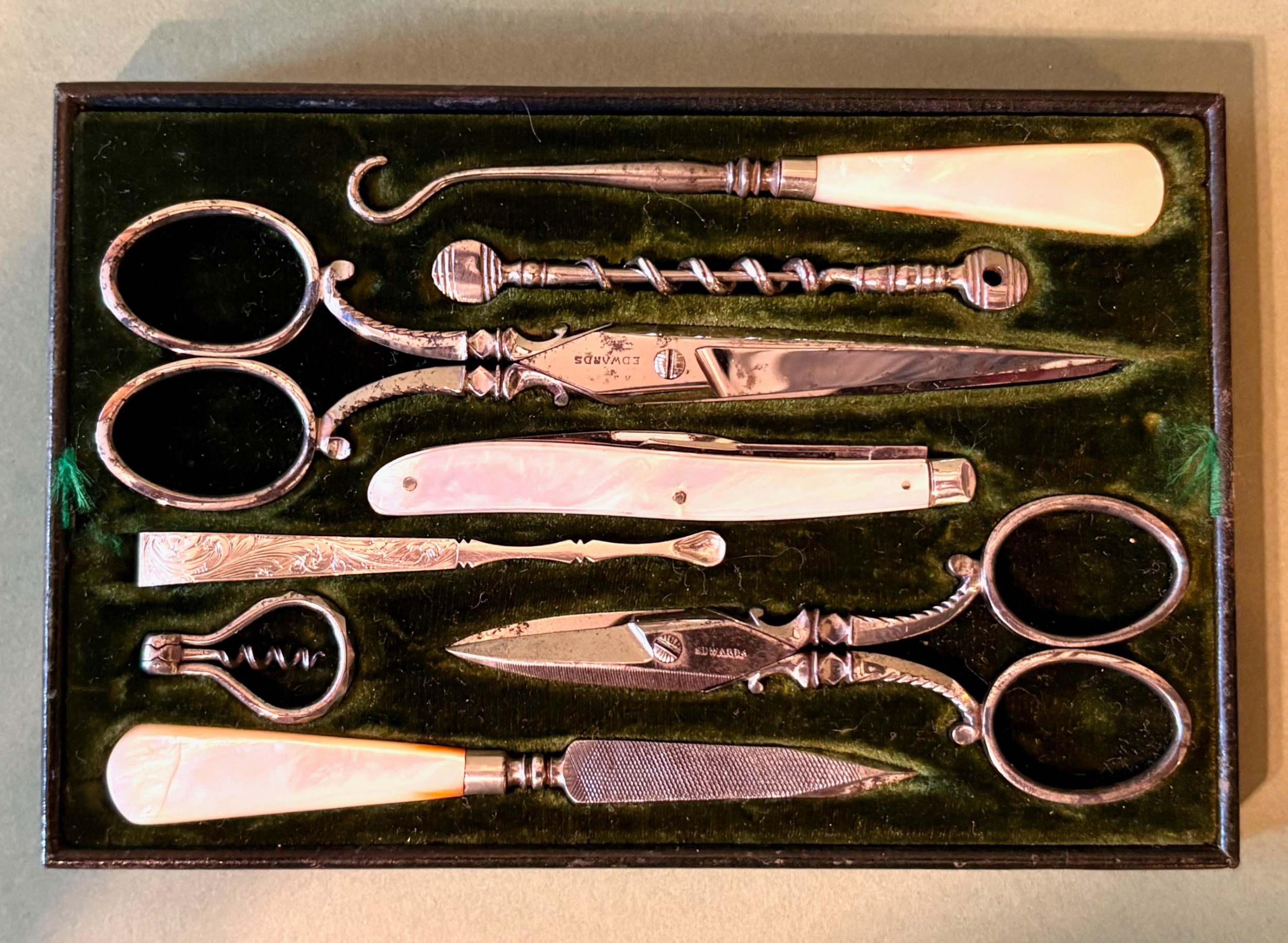
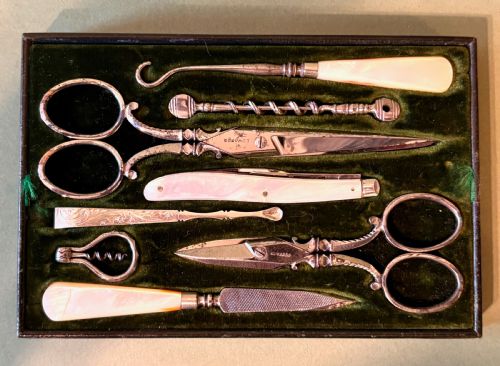
To the centre is the tool pad, complete with its eight original tools and implements which include two pairs of scissors (both stamped for ‘Edwards’); an engraved silver eyebrow tweezers/ear spoon; corkscrews (for removing corks from scent bottles) and various other items. This pad lifts out to reveal a small jewellery compartment below.
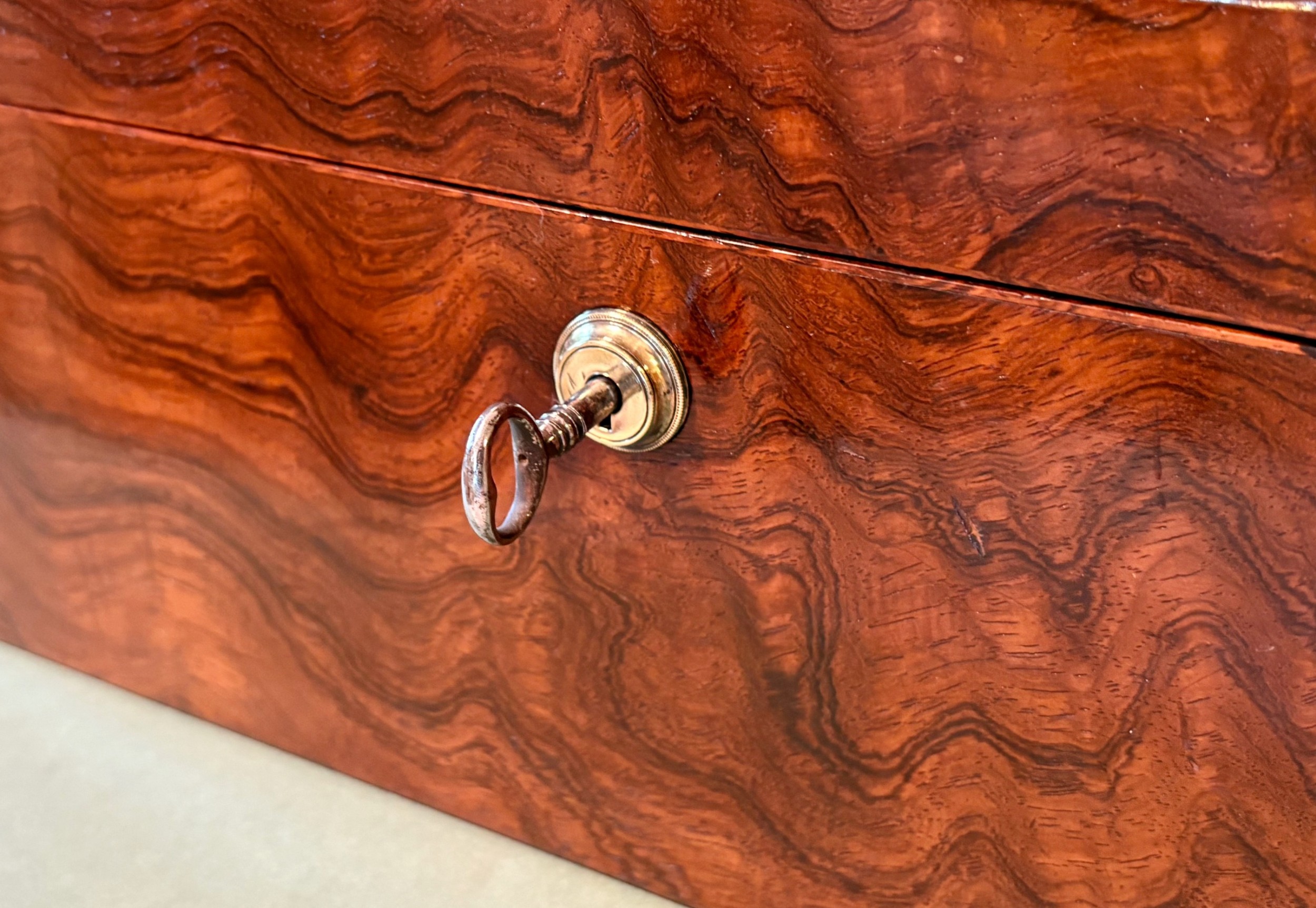
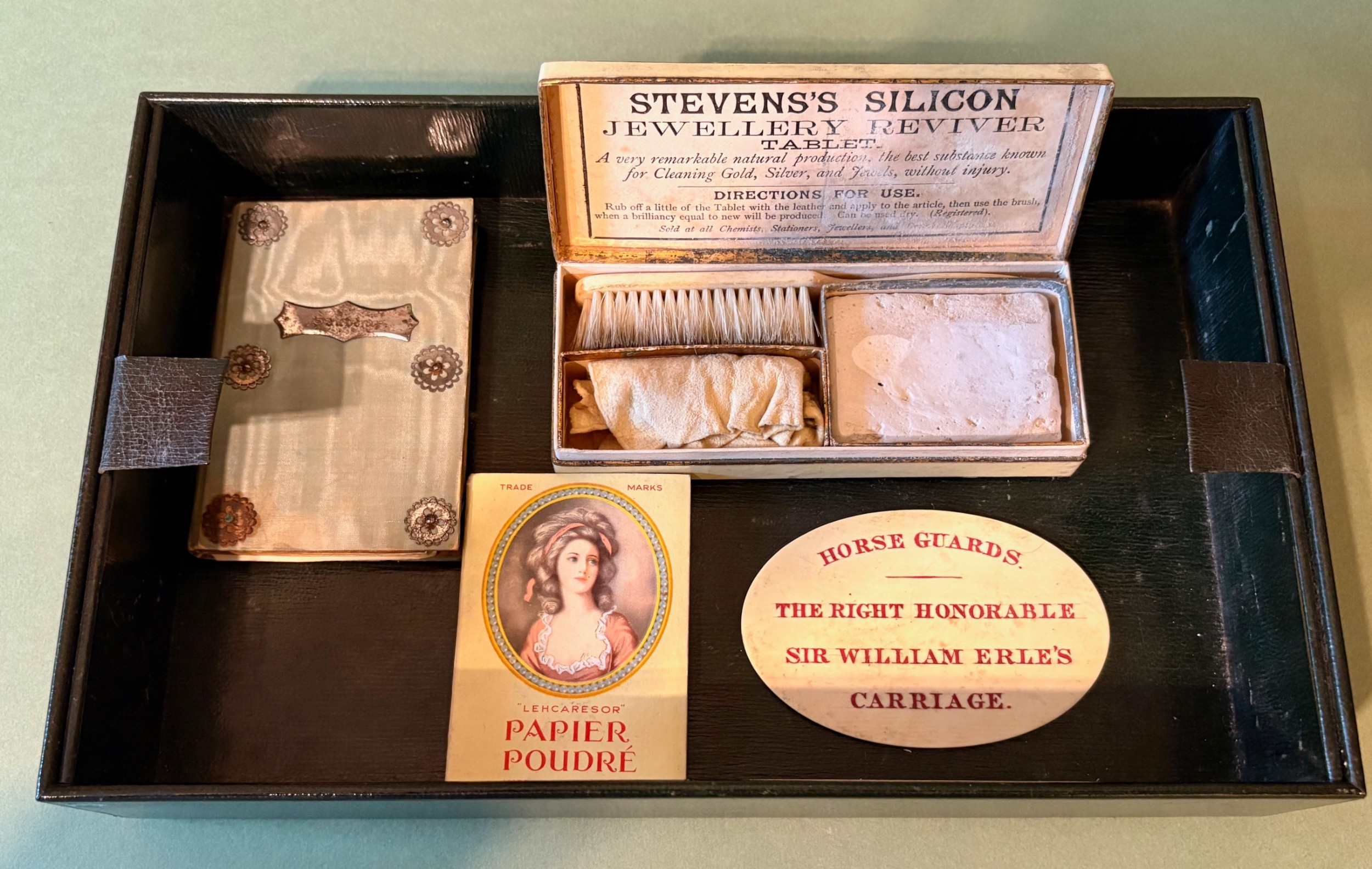
Further below are two removable trays, one. lined with velvet for additional jewellery and another which unusually contains some interesting contemporary items. These include a charming “Aide memoire” with silver pencil, dated 1832; an engraved oval plaque referring to “Sir William Erle’s Carriage” and a rare (and complete) jewellery cleaning box. Two secret drawers nestle within the base (very well hidden) whilst the whole box is lined with dark green Morocco leather and matching velvet. Complete with its original working Bramah lock and key.
A remarkable and particularly fine Dressing/Jewellery Case, which amazingly has survived in its complete condition. The silver lids are hallmarked for London 1848. Thoroughly recommended.
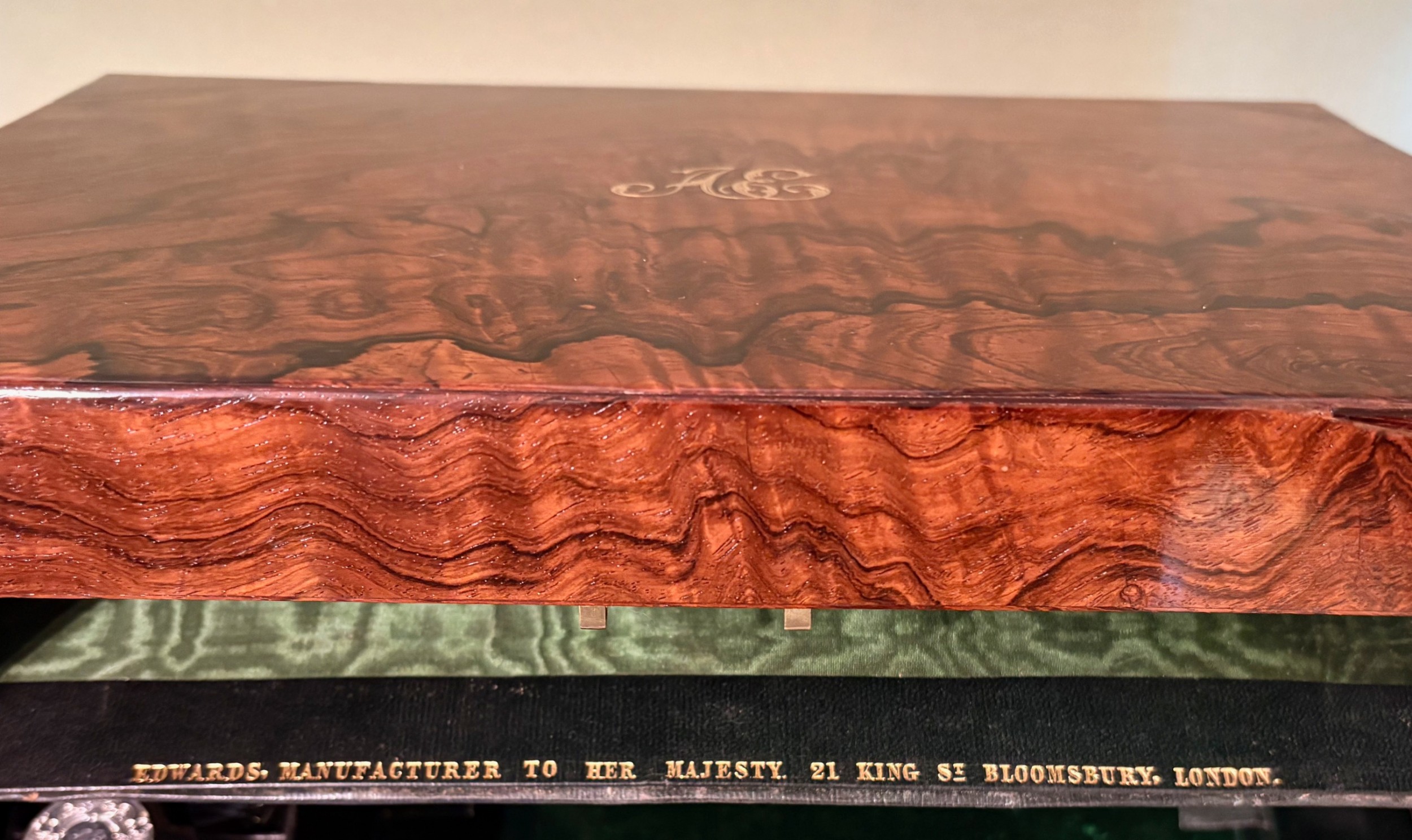
David Edwards established his business in London in 1813. He quickly gained a great reputation for his work, and shortly after 1830 he was appointed “Dressing and Writing Case manufacturer to the King (William IVth). His nephew, Thomas, joined the business in 1832 and continued to run it after the death of David in 1848.
The remarkable quality of the work emanating from this firm continued and subsequently it was awarded the Royal Warrant to Queen Victoria and the Royal family. Thomas’s son, also Thomas, succeeded his father in running the business, winning a prize medal for the ‘excellence workmanship’ of his Dressing Cases and Writing Boxes at the Great Exhibition of 1851. Thomas remained at the forefront until the firm was absorbed into Asprey’s in 1858. He continued to work for Asprey’s until his retirement in 1872.
Quiet Street Antiques of Bath has dated this piece to the 1850s.
Fine antiques at sensible prices
You can view the stock and full dealer information on the Quiet Street Antiques of Bath Profile Page
LADY'S FULLY-FITTED DRESSING & JEWELLERY CASE