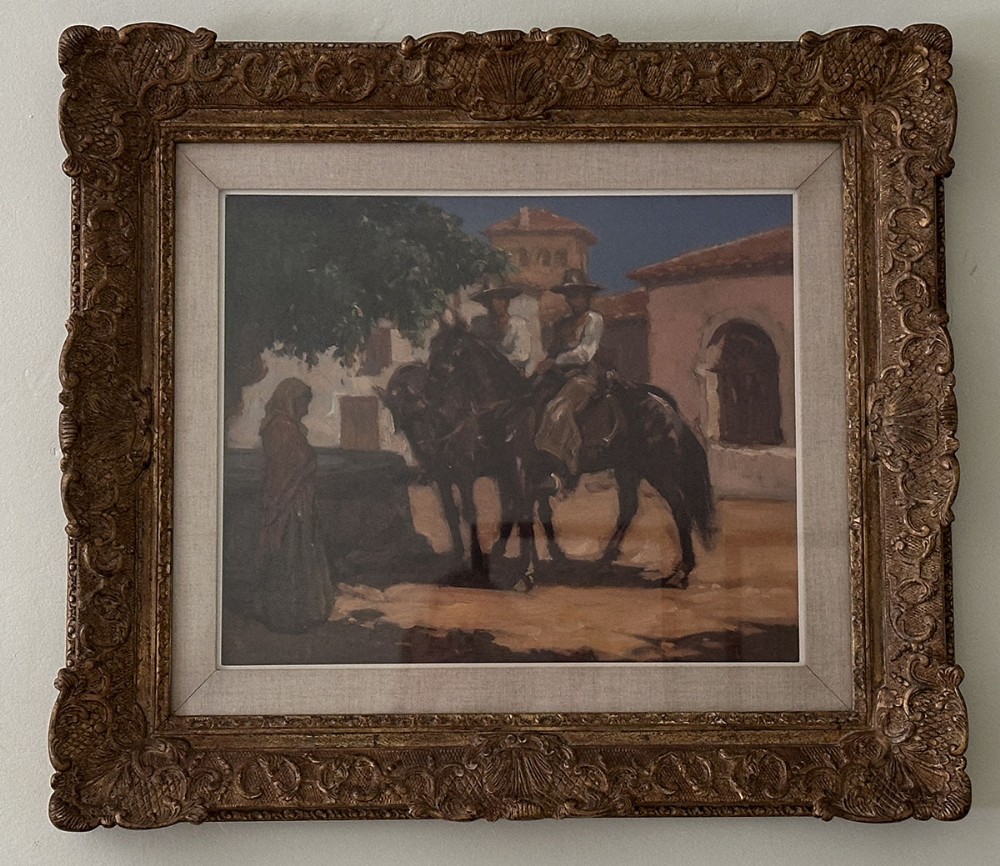
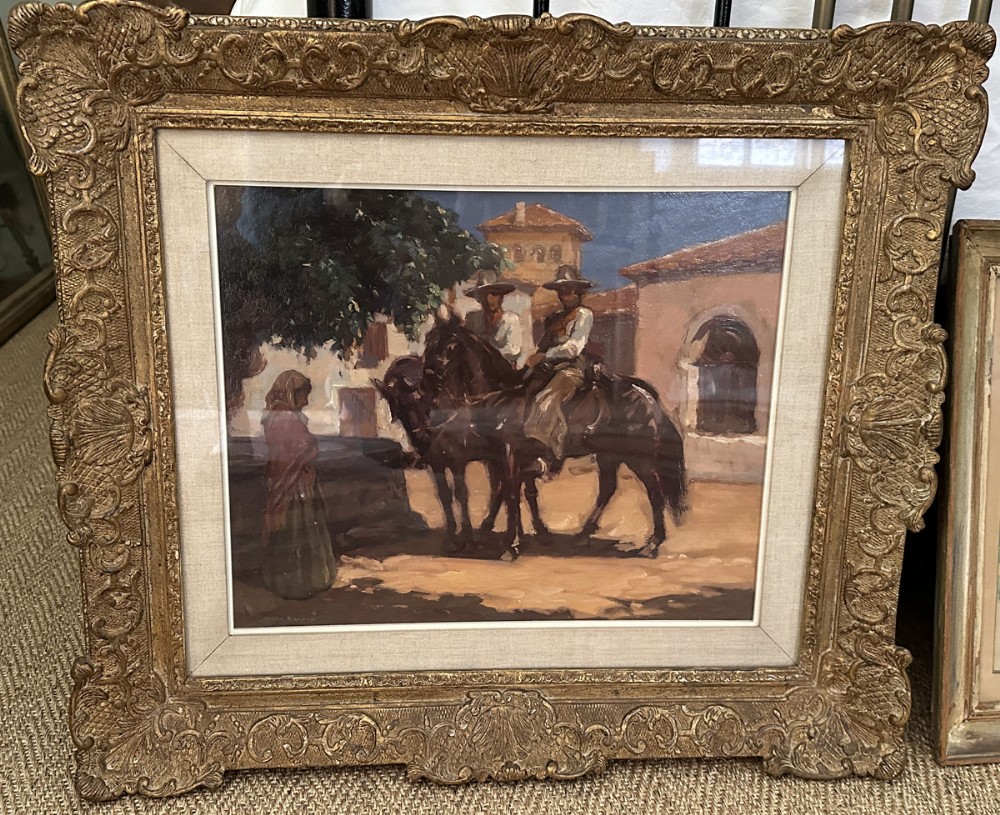
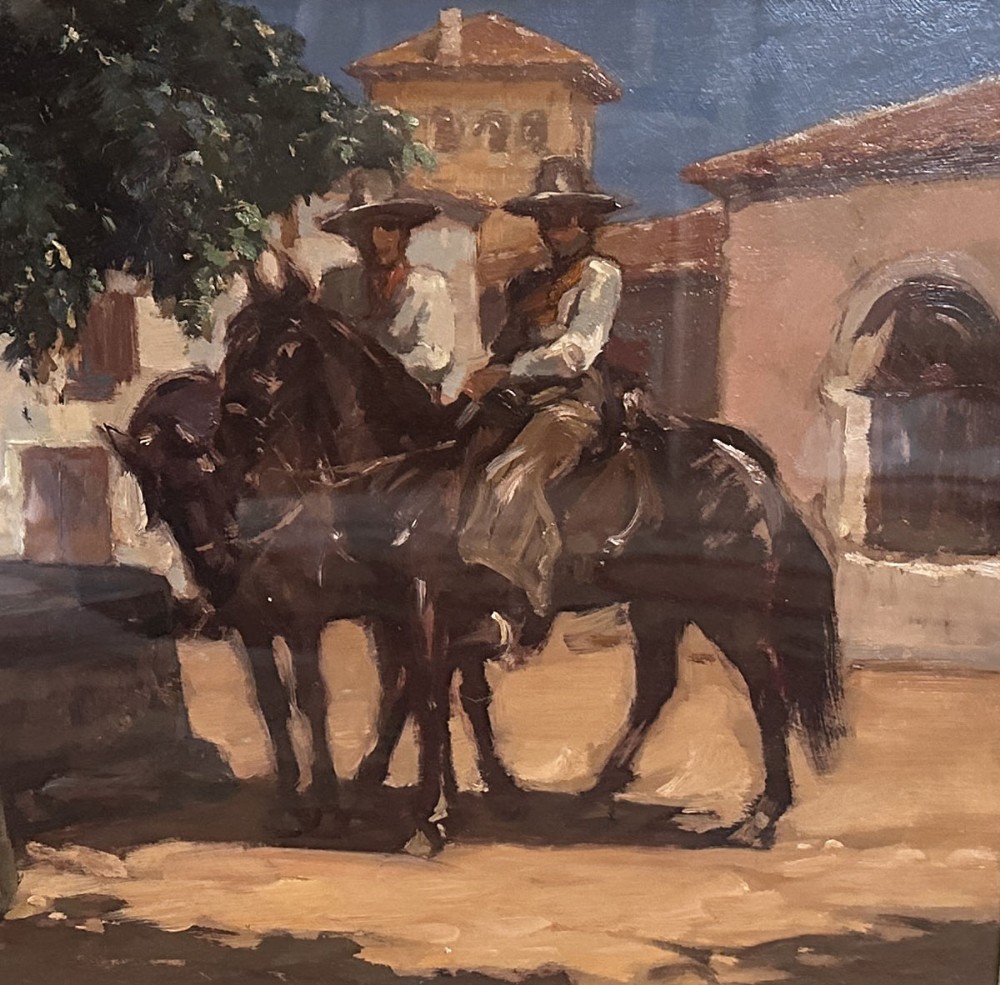
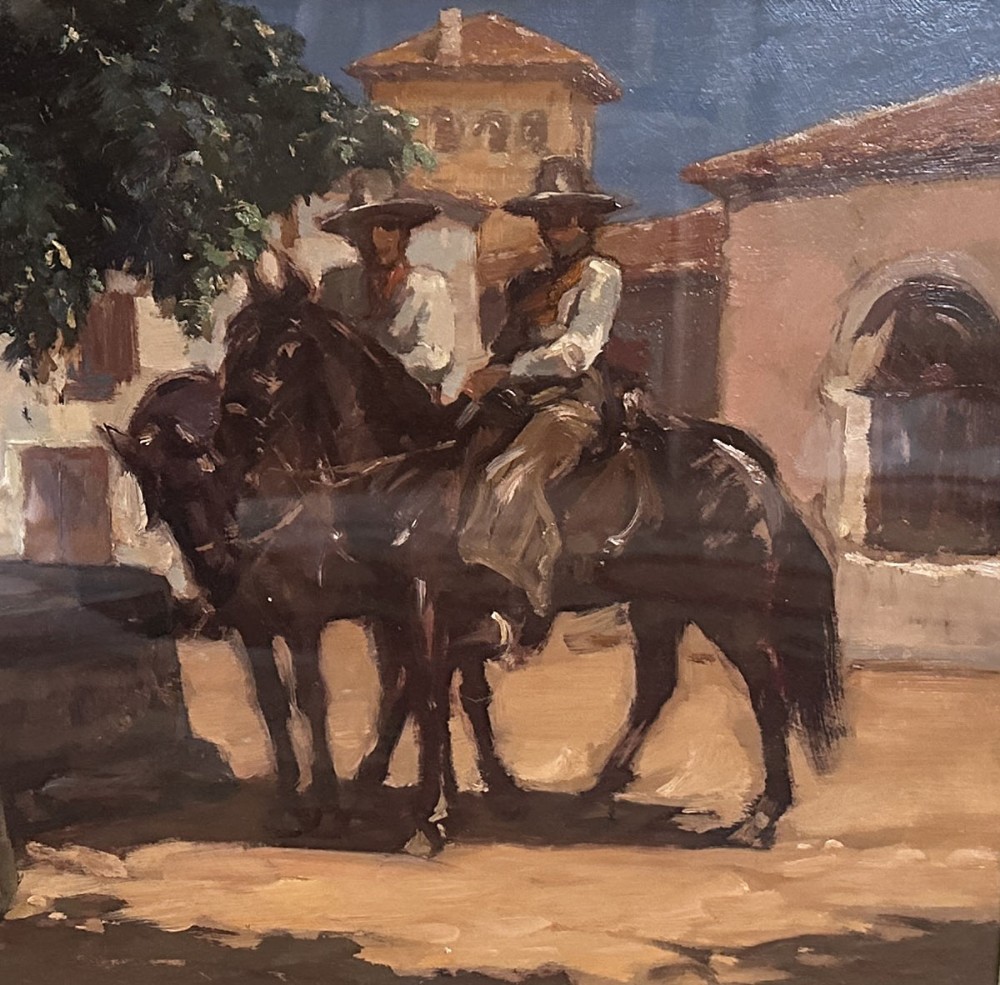
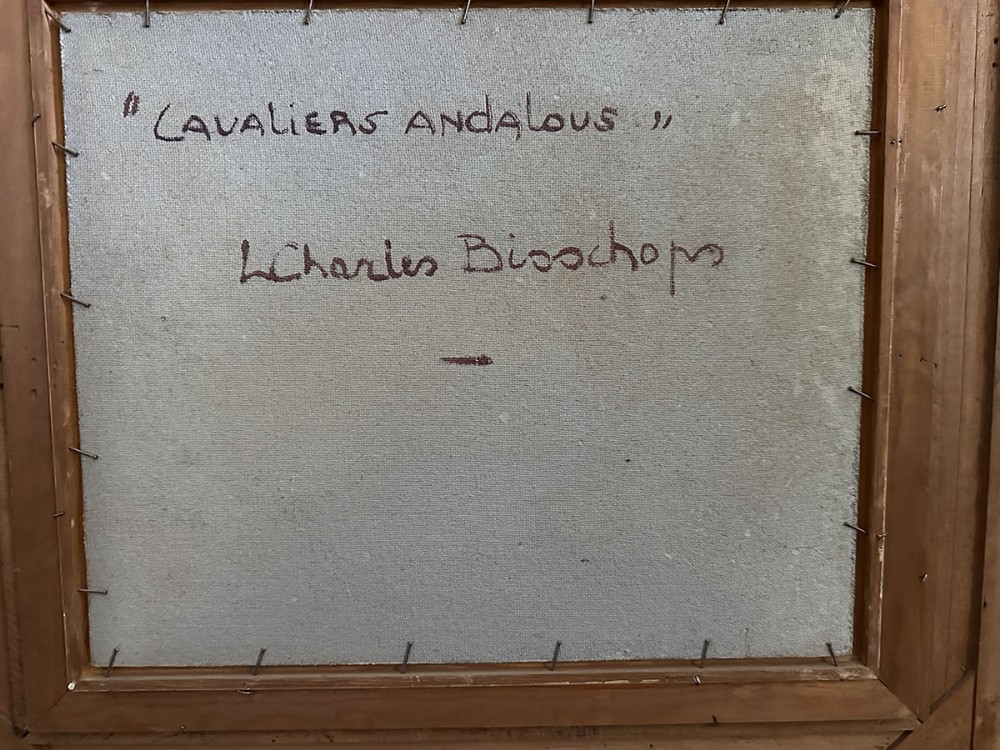
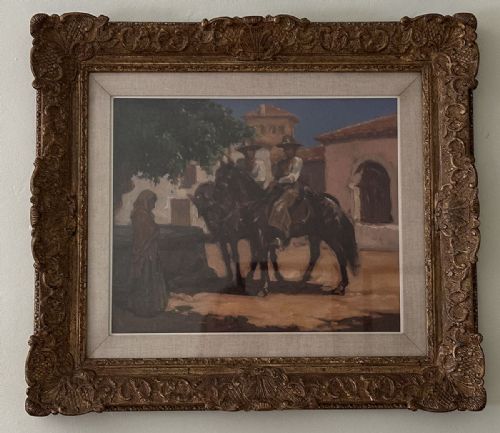
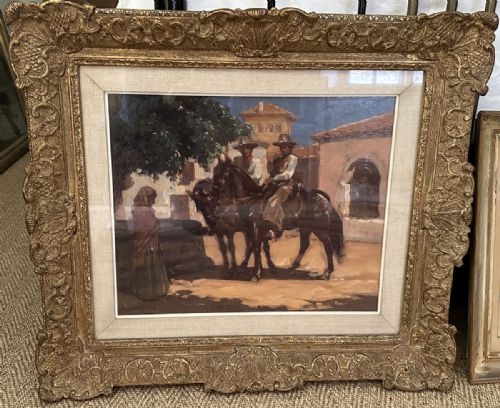
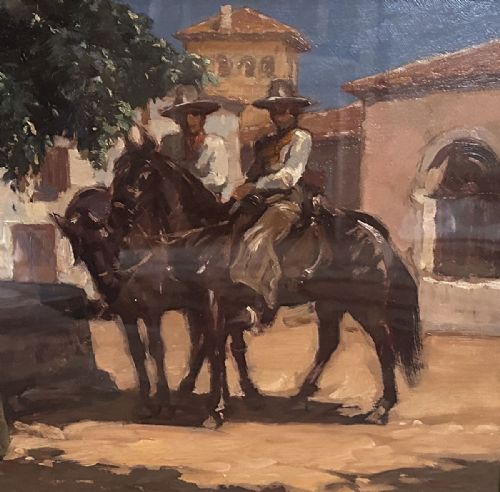
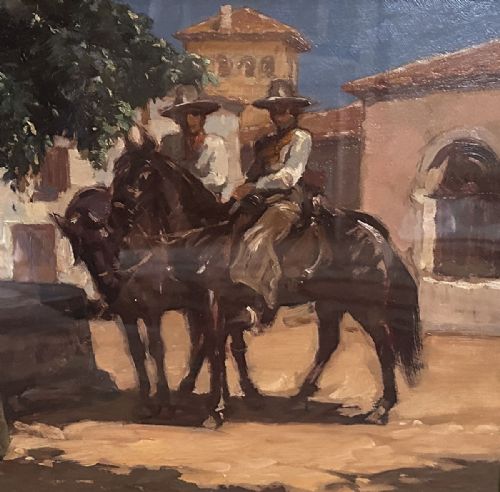
Rue des Fontenelles has dated this Andalucian Horsemen Oil Painting to the 1930s.
Bisschops was a Belgium painter and drawer of landscapes, portraits and compositions. He became a pupil of the Academy of Brussels from 1912.
In 1914 he volunteered to join the Belgian army at the outbreak of WWI and even though he was wounded on two separate occasions, he managed to remain on the line until the Armistice of 1918. After the war he returned for one year to the Academy of Brussels to complete his studies and it was here that he met his future wife Lucienne, the daughter of the sculptor Jules Coessens. They married in 1920 and the following year both traveled to Algeria, the start of a series of sojourns that would include trips to France, Italy and Spain over the next ten years. The light and the bright sun in these countries led him in paint in a bright colour palette.
By the late 1920’s his work was becoming increasingly popular through his frequent exhibitions at the principal Belgian art institutions where he was receiving high critical praise. Apart from his landscapes he also painted some figurative work, particularly of dancers, although these are somewhat rarer.
Later in life he turned his attention to painting in watercolors and gouache, mostly undertaken after he settled in the town of Rossignol, France in the mid-1960’s. It was at his villa in the town of Rossignol where Charles Louis Bisschops died in 1975.
His paintings can be seen today at a number of Belgian museums including those in the towns of Mons, Charleroi and Tournai and some museums abroad (Riga and Martinique).
?
He also worked with Alfred Bastien and Charles Swyncopat on the "Panorama de la bataille de Dinant".
Dimensions - 69 x 63 cm
Rue des Fontenelles has dated this Andalucian Horsemen Oil Painting to the 1930s.
Specialists in french antiiques, decorative objects and french and european paintings.
You can view the stock and full dealer information on the Rue des Fontenelles Profile Page
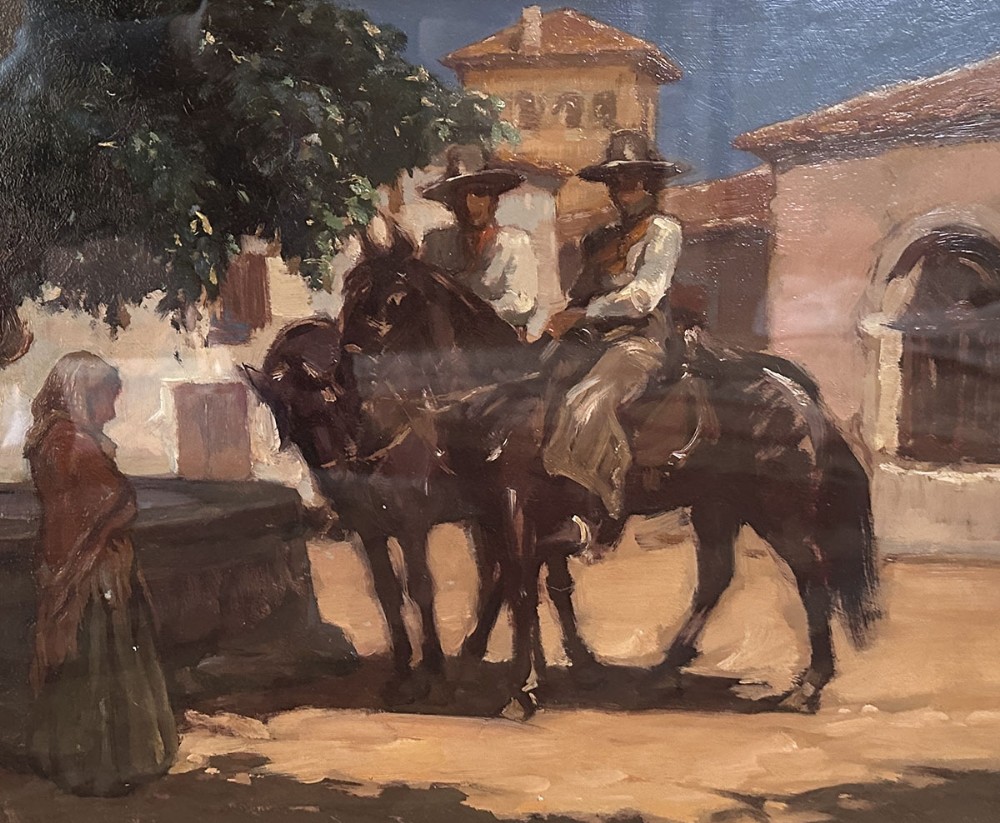
Andalucian Riders - Antique Oil Painting