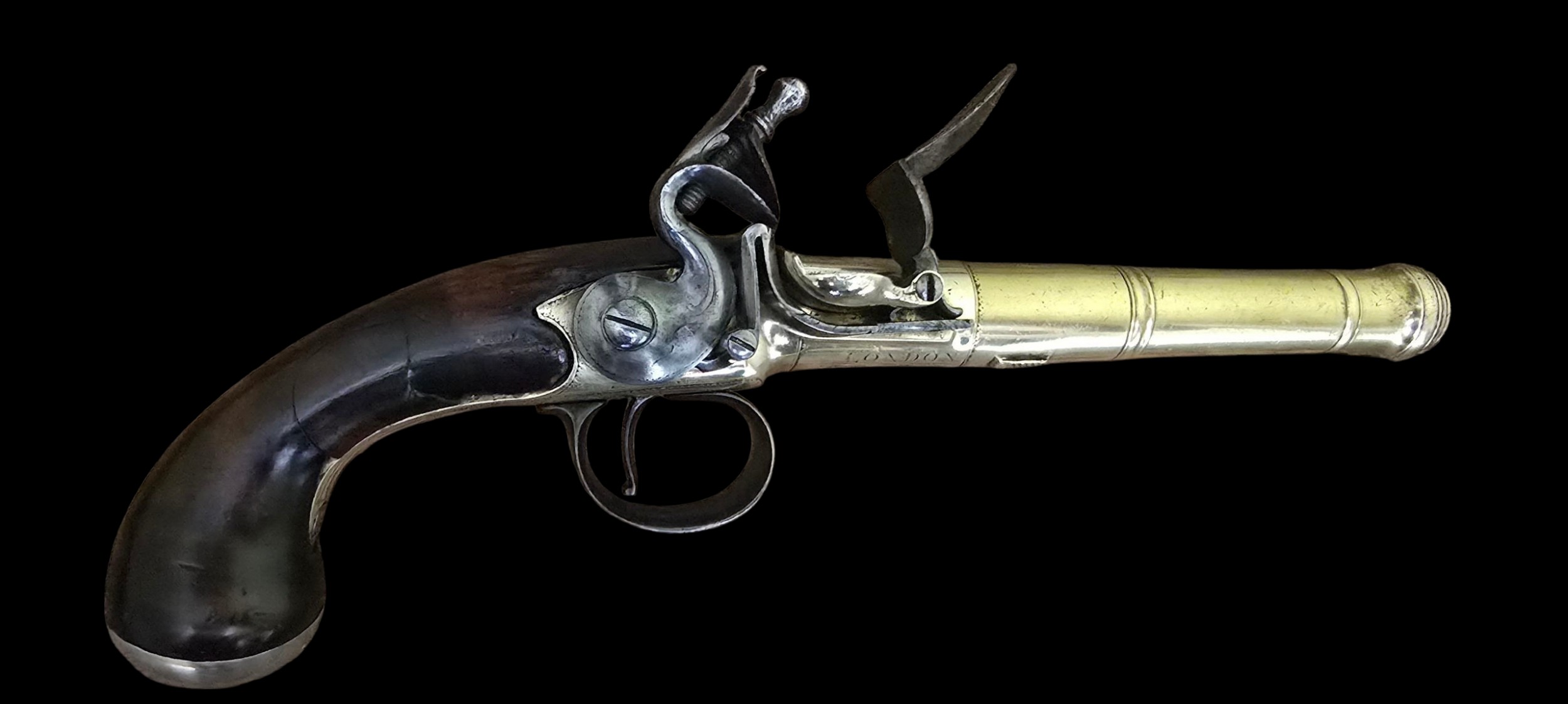
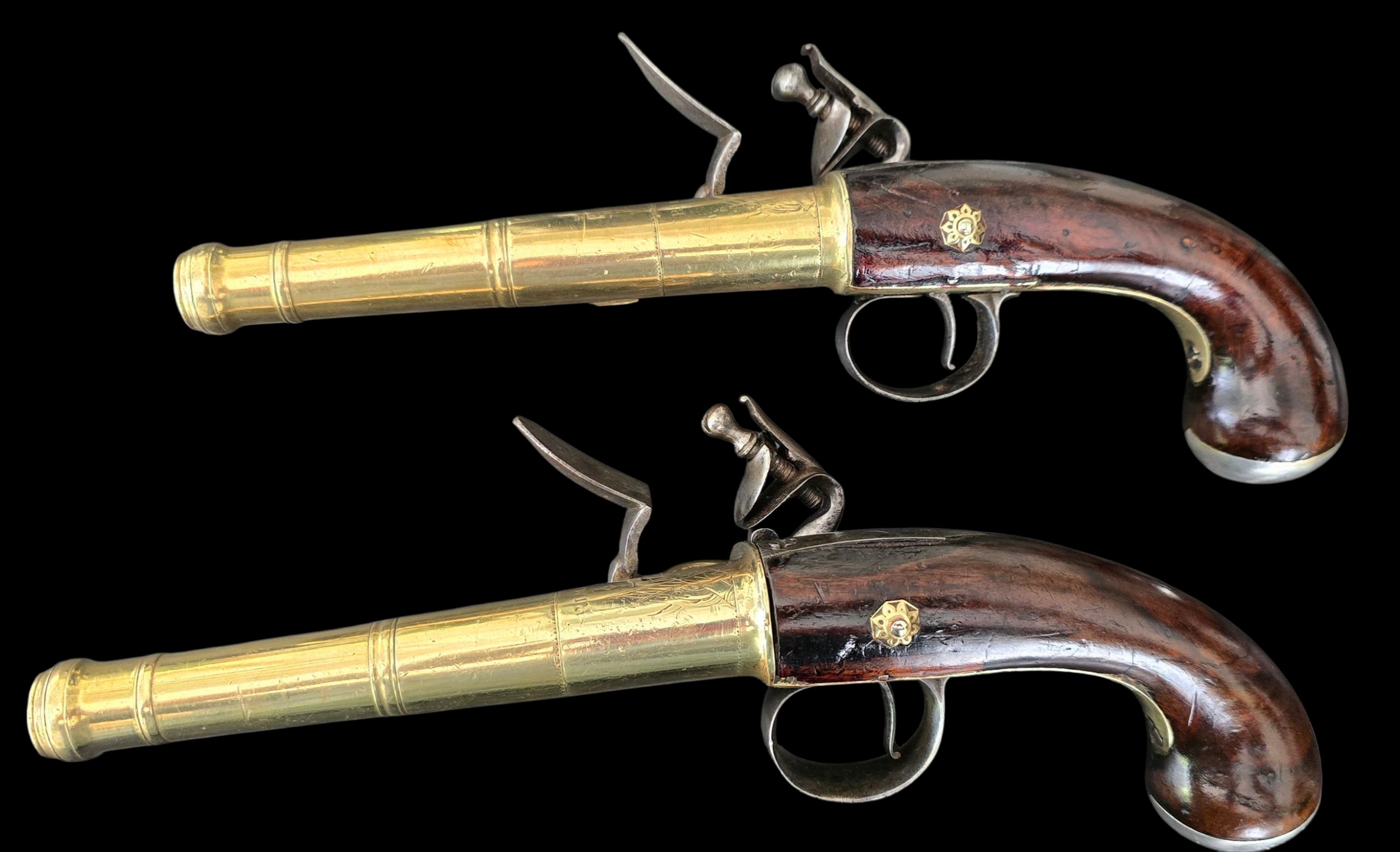
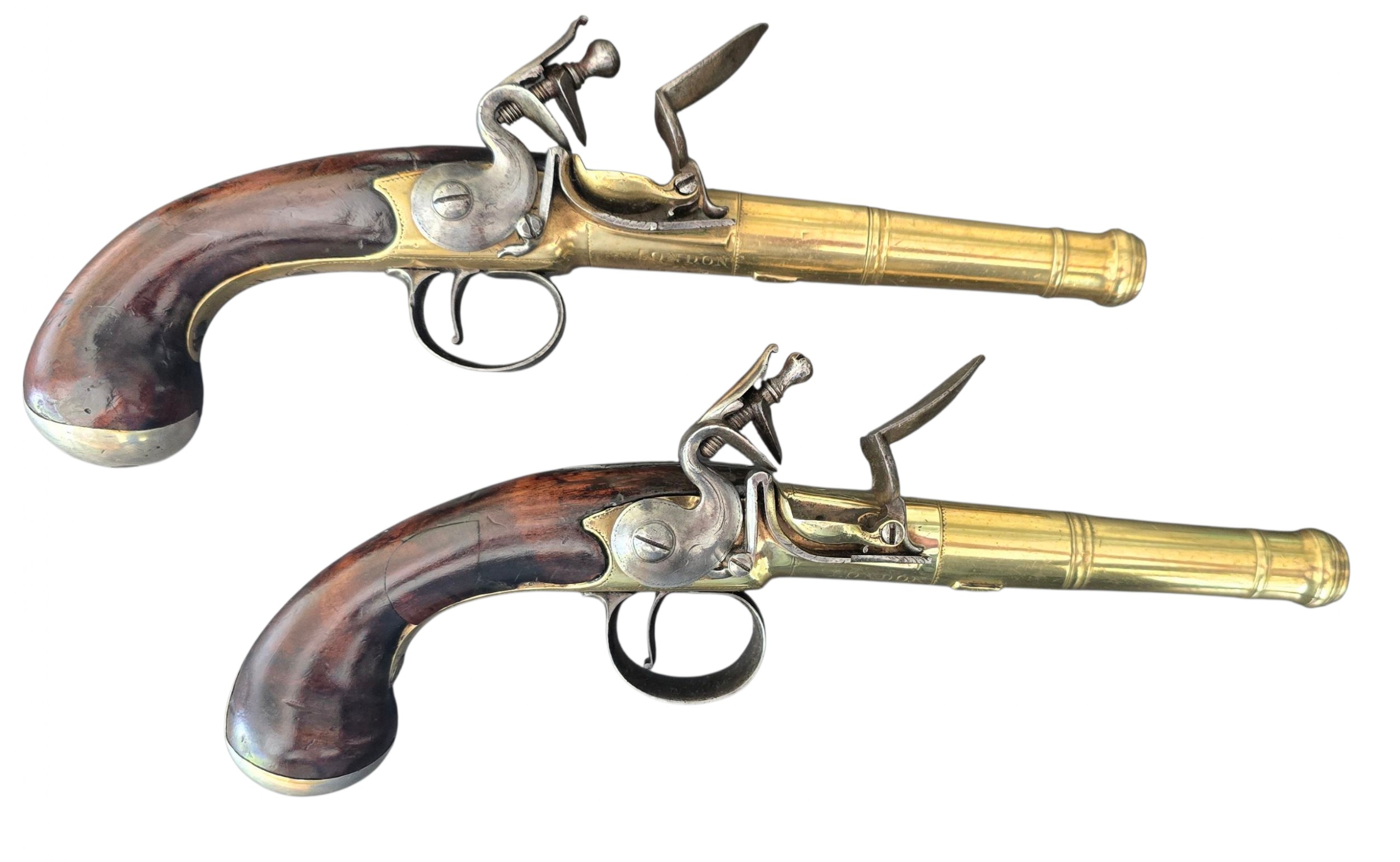
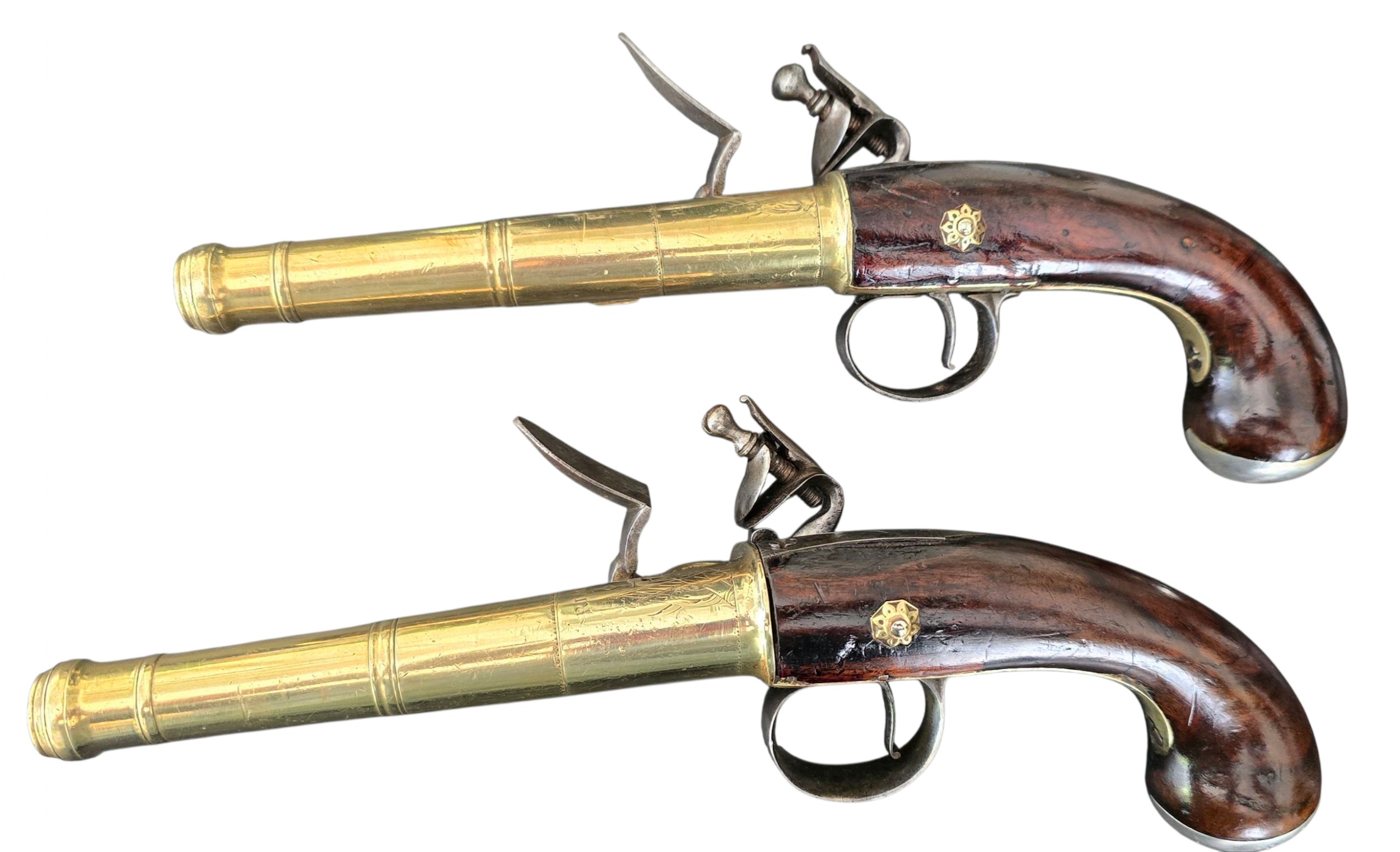
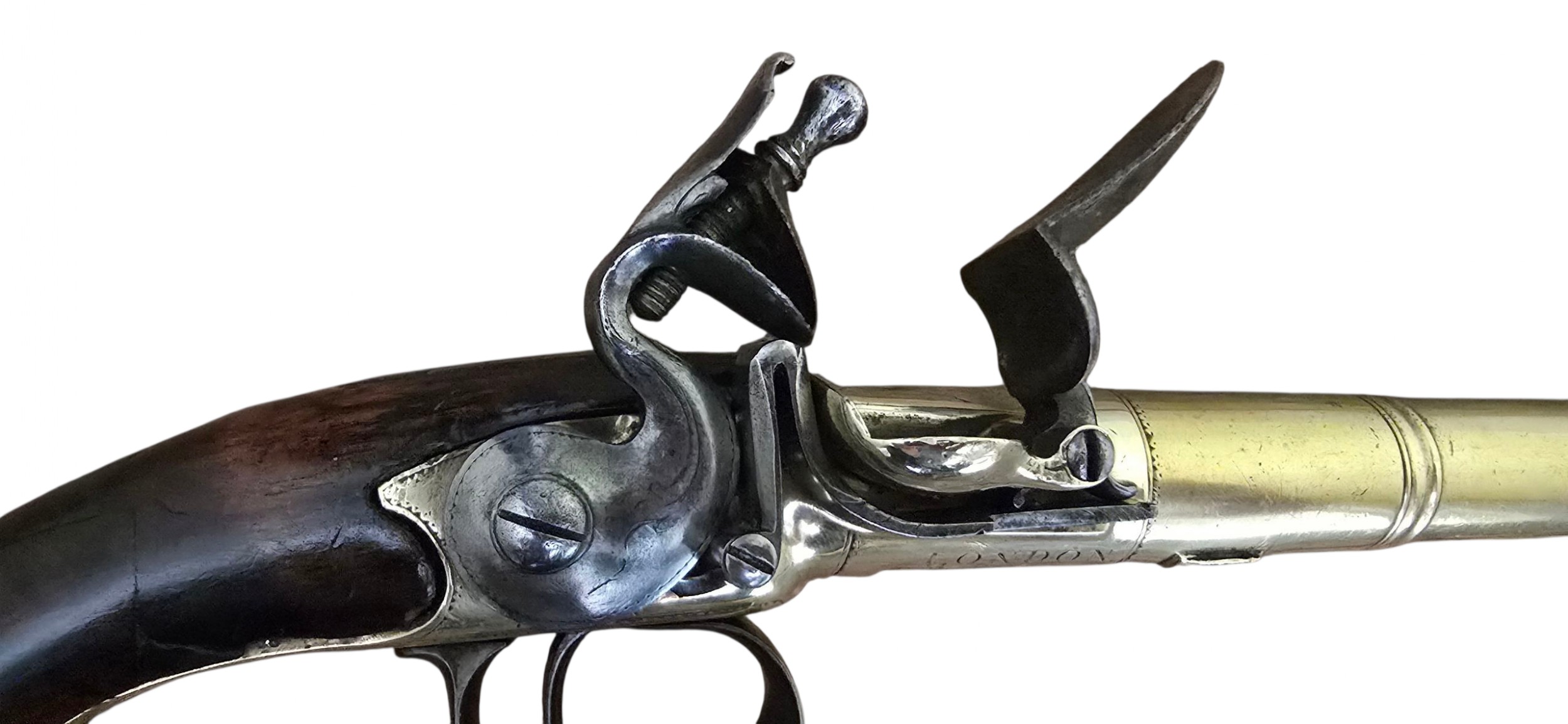
Peter Harris Clocks & Militaria has dated these Flintlock Turn-off Pistols to the 18th Century.
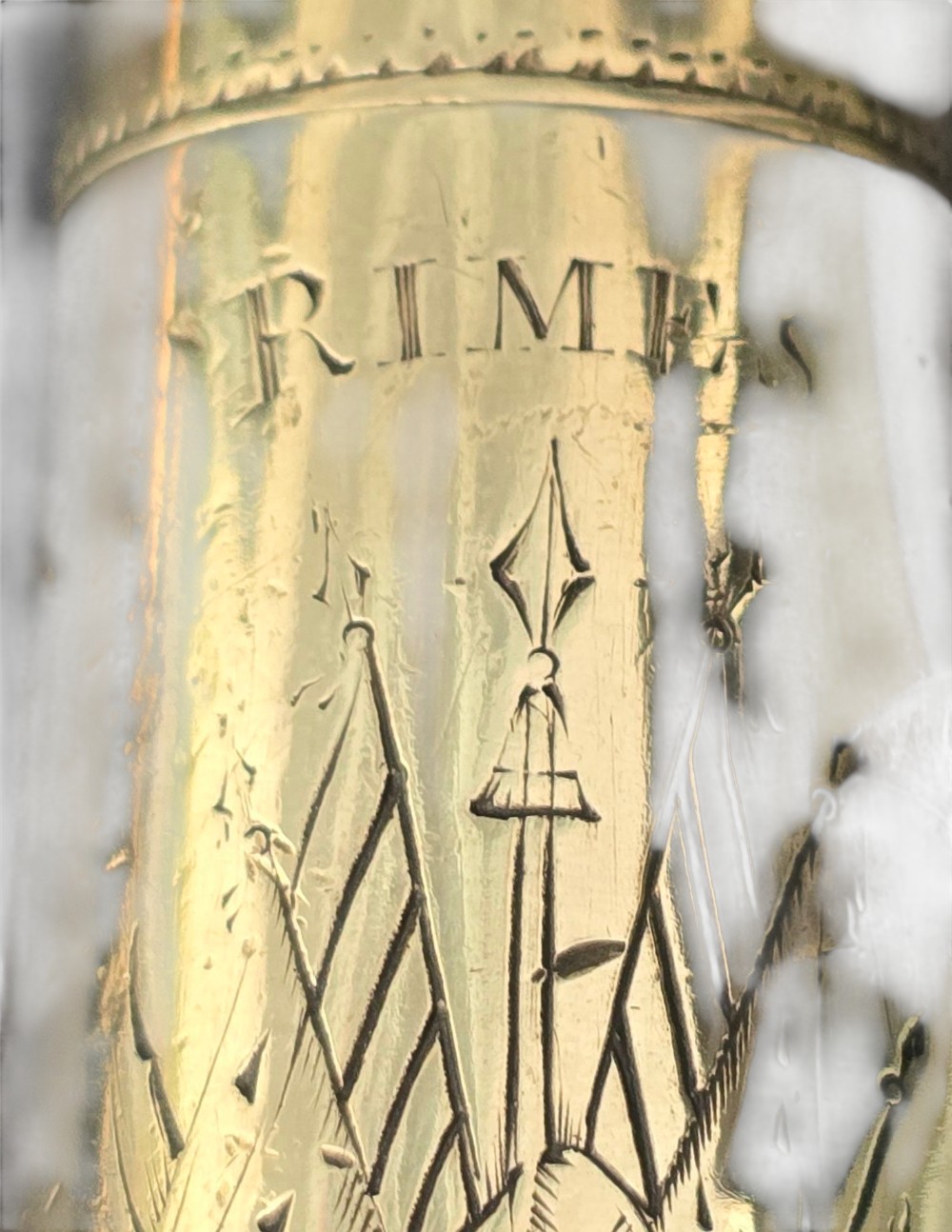
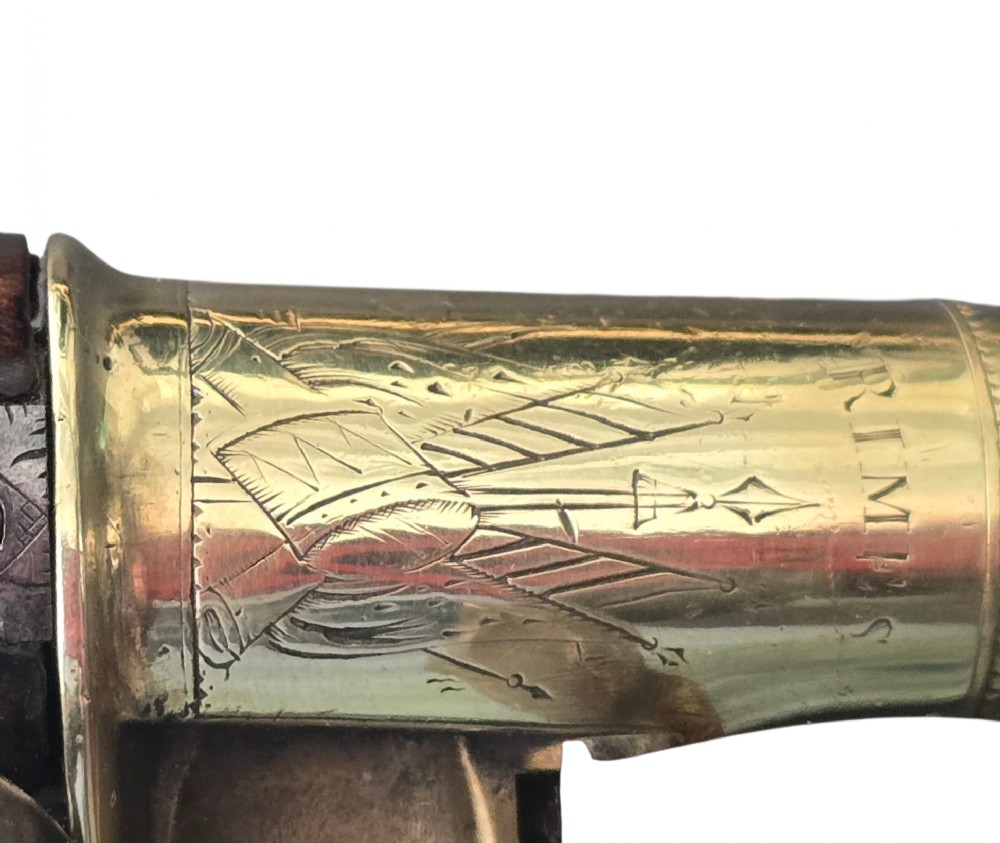
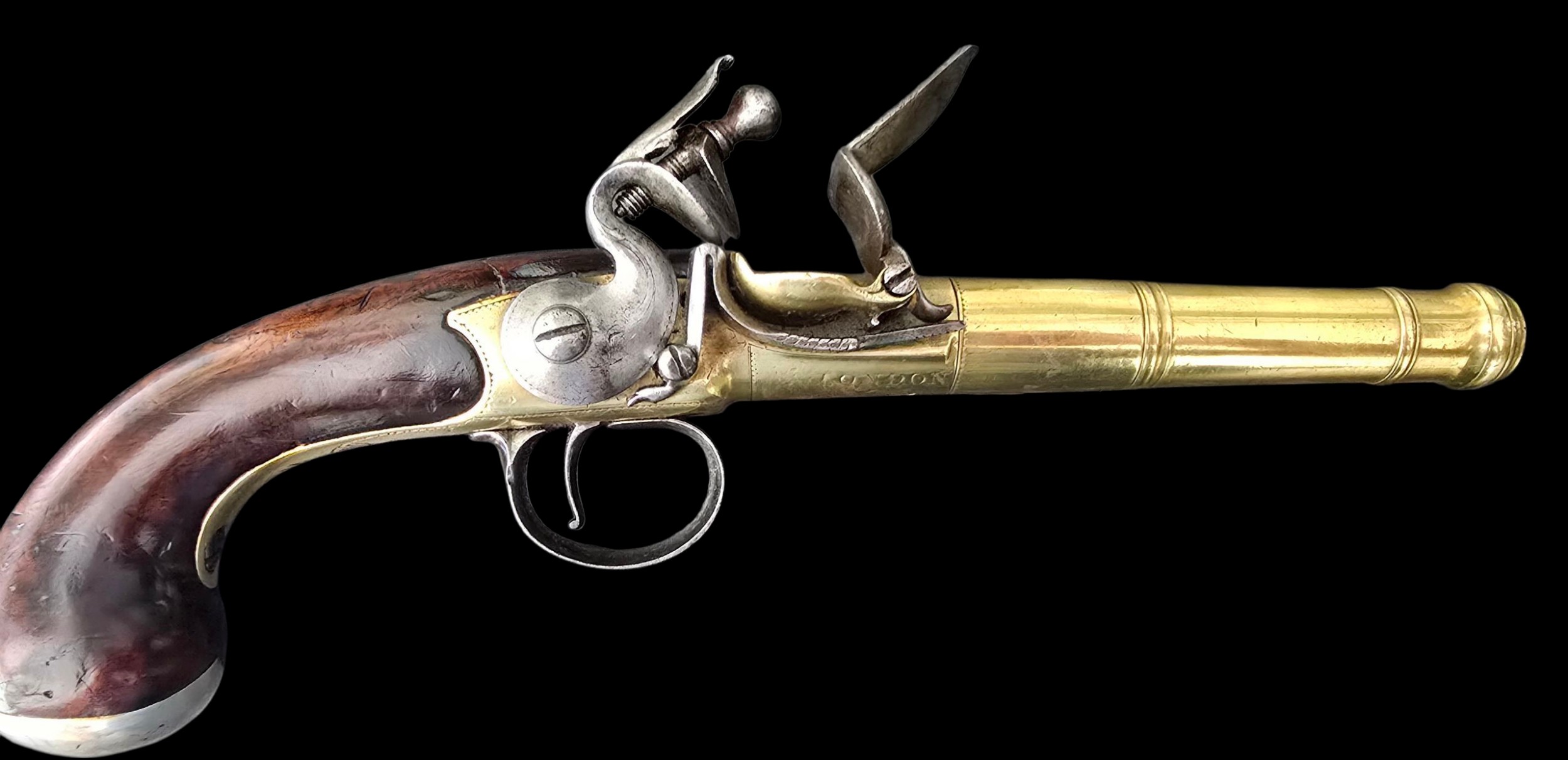
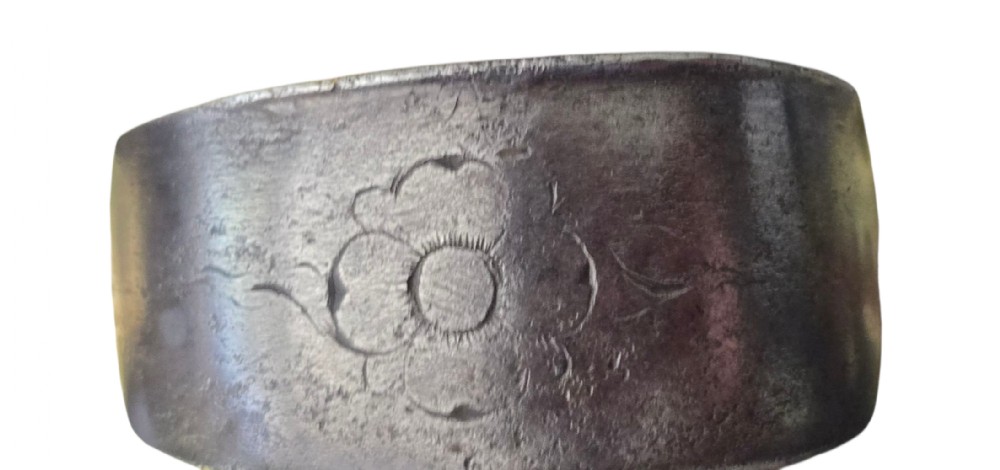
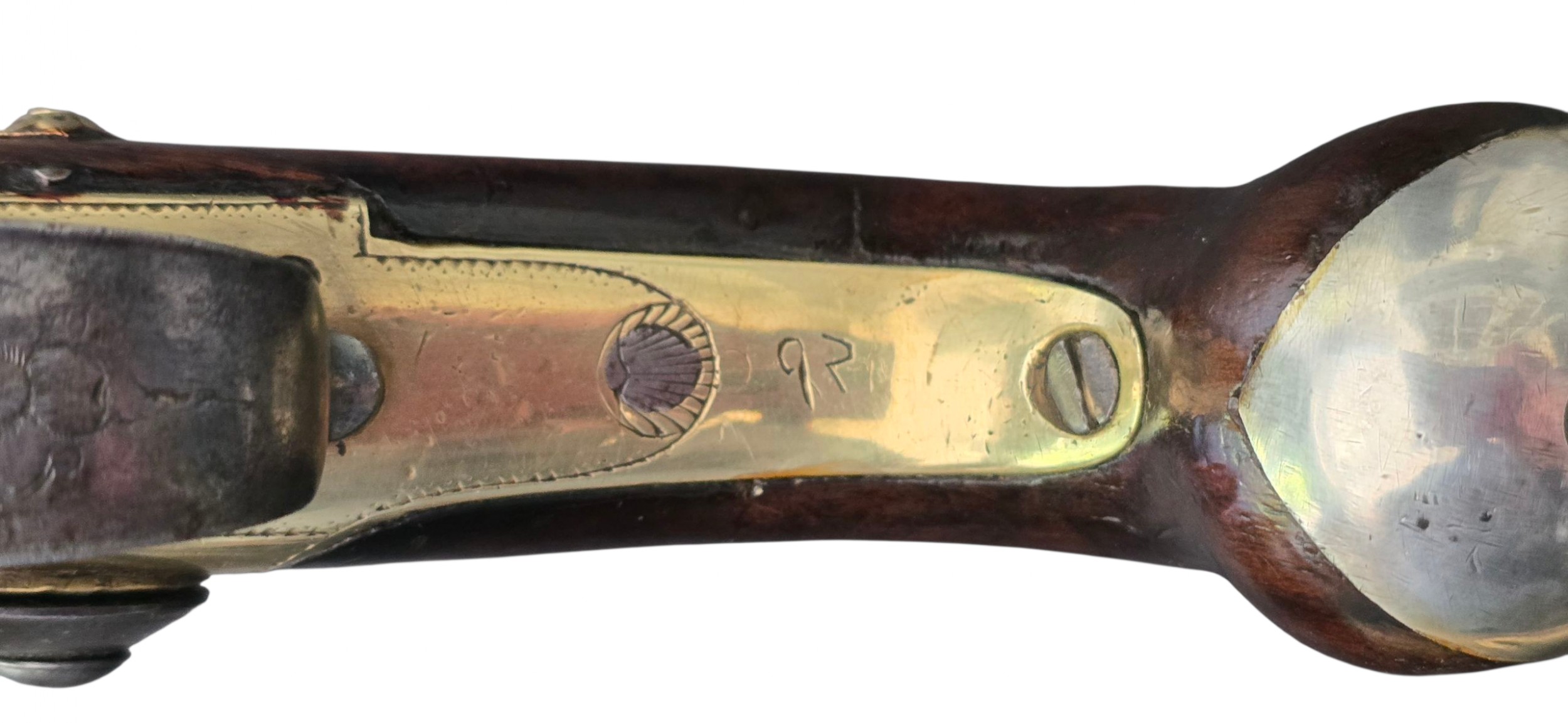
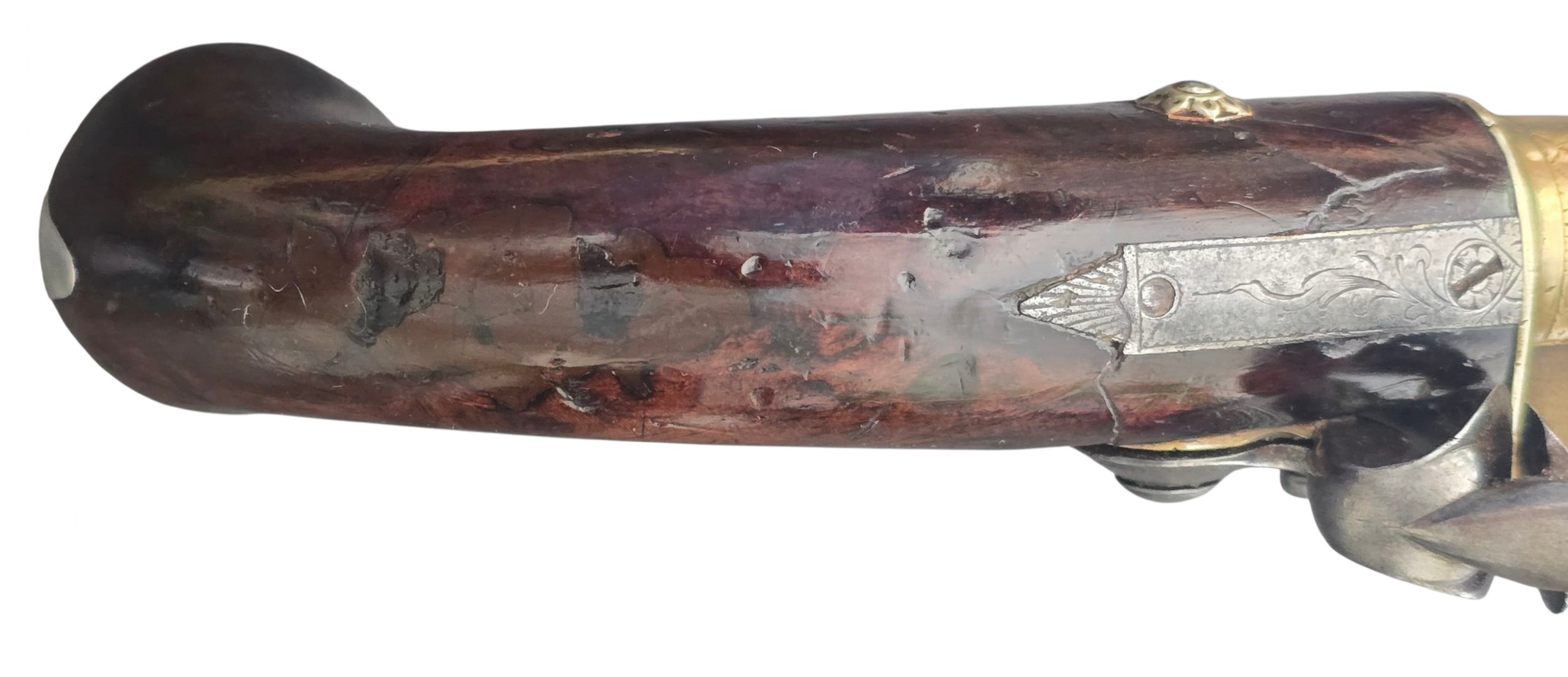
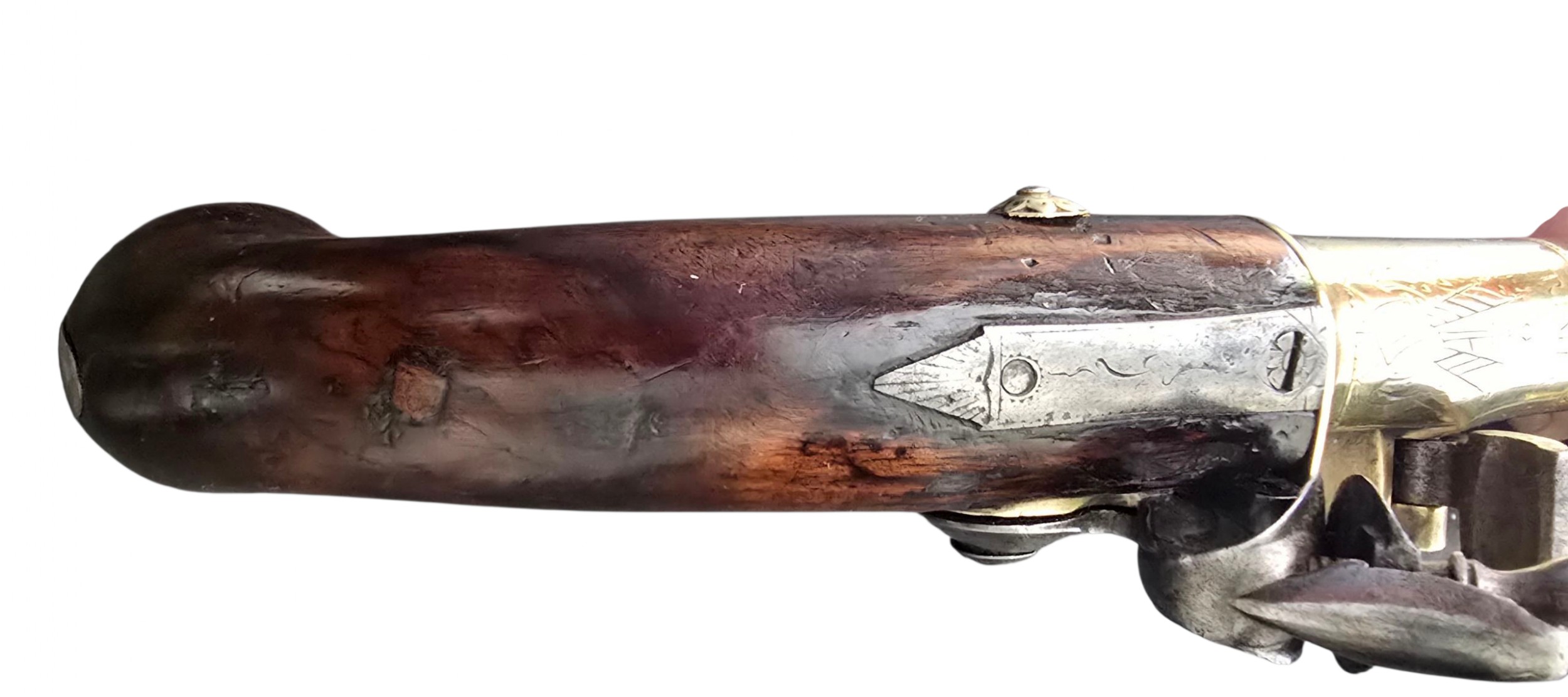
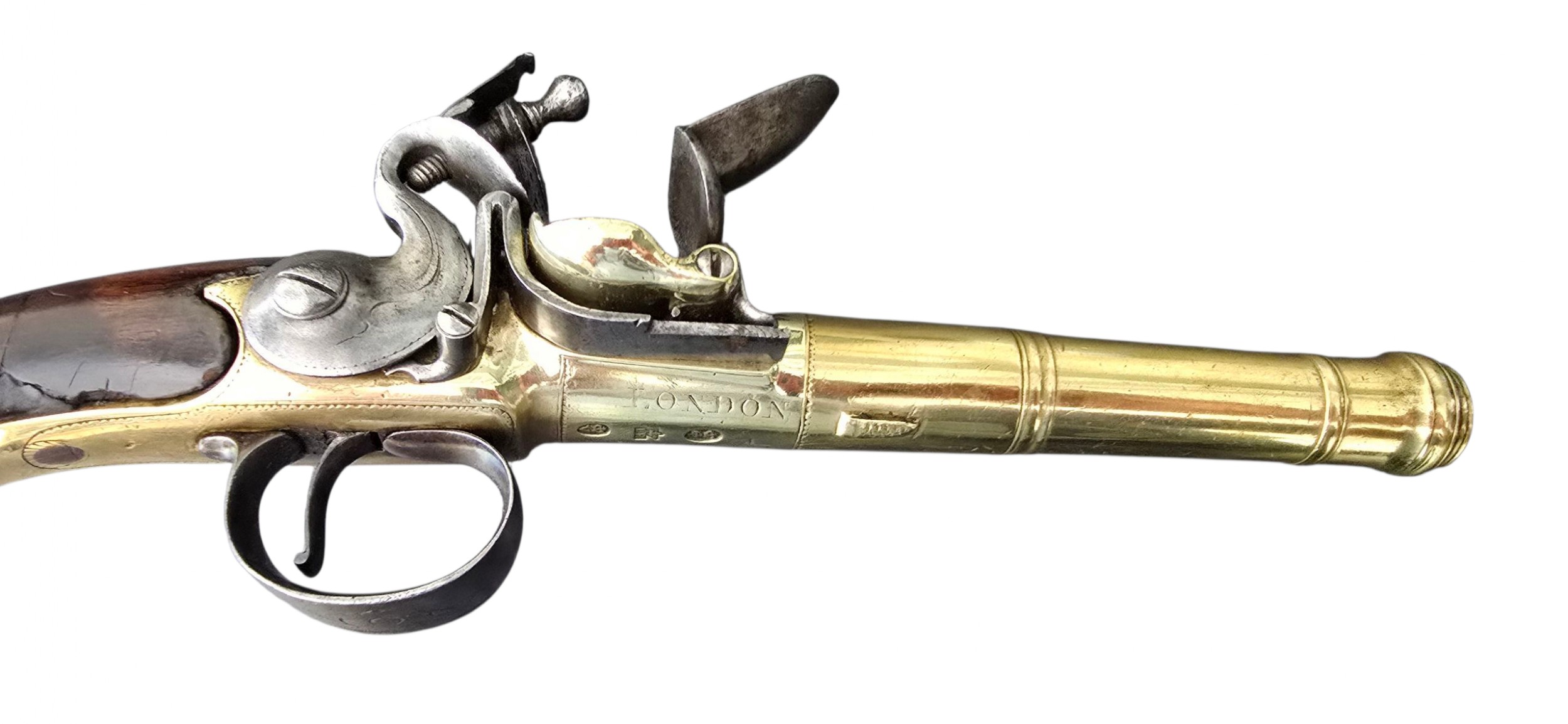
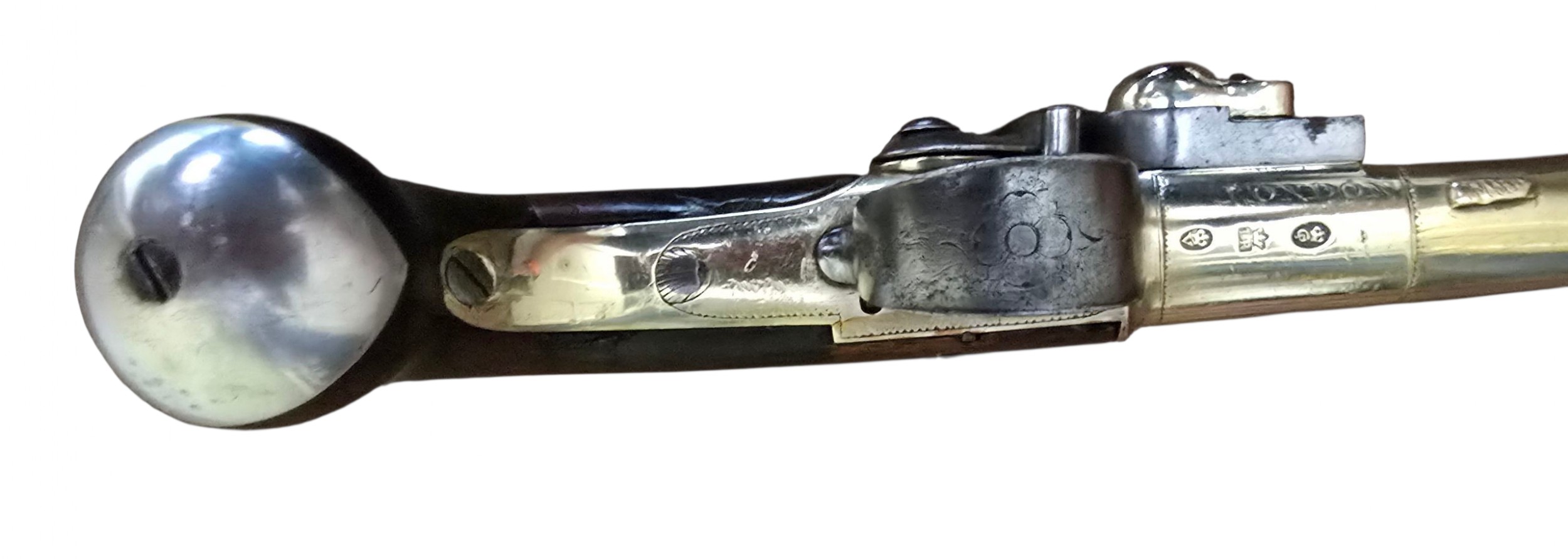
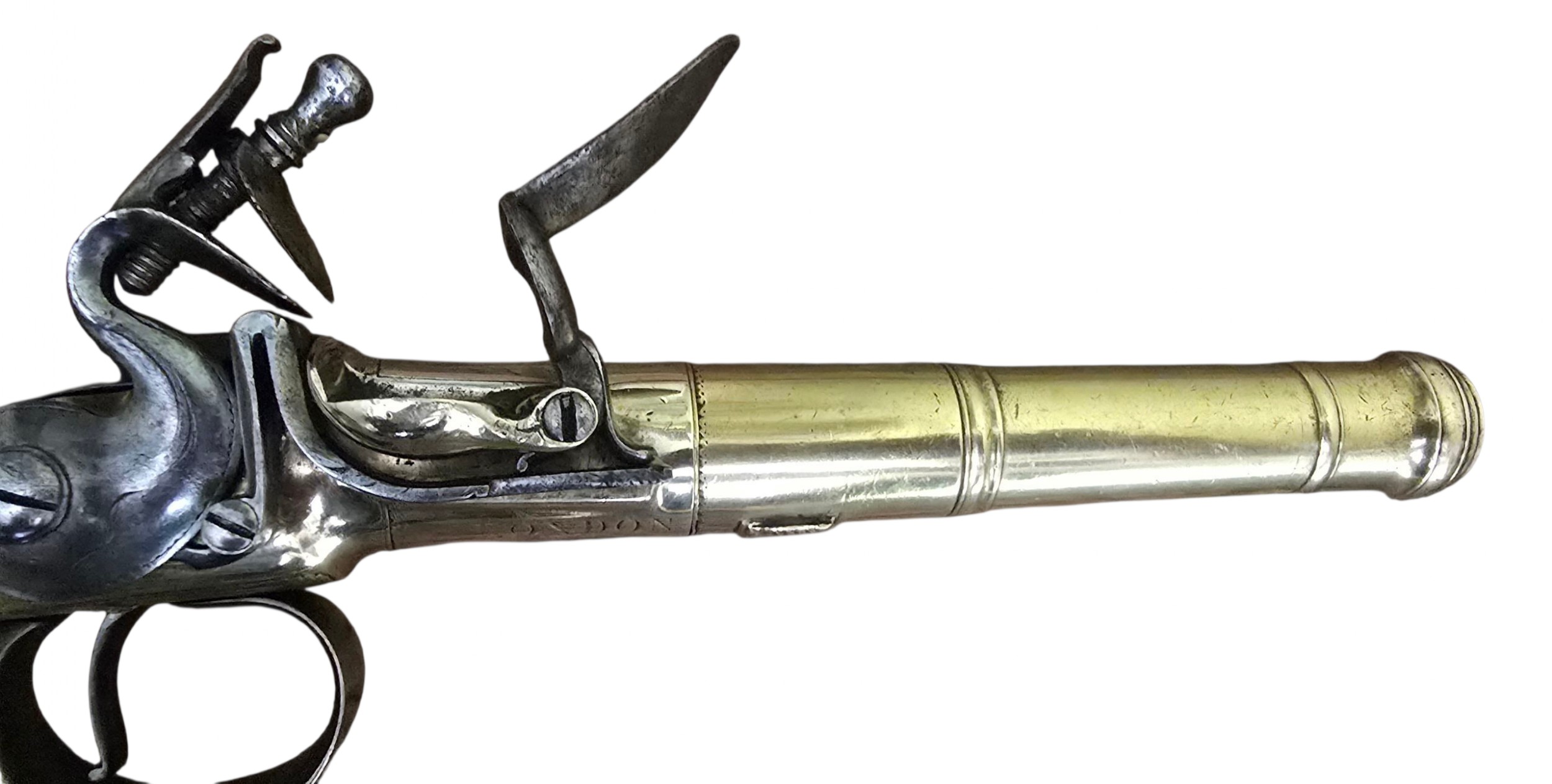
The tangs and cocks are finely engraved, and each pistol, engraved with a floral motif on the bow.
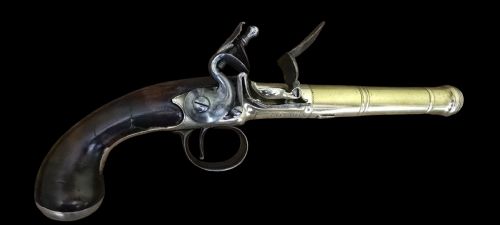
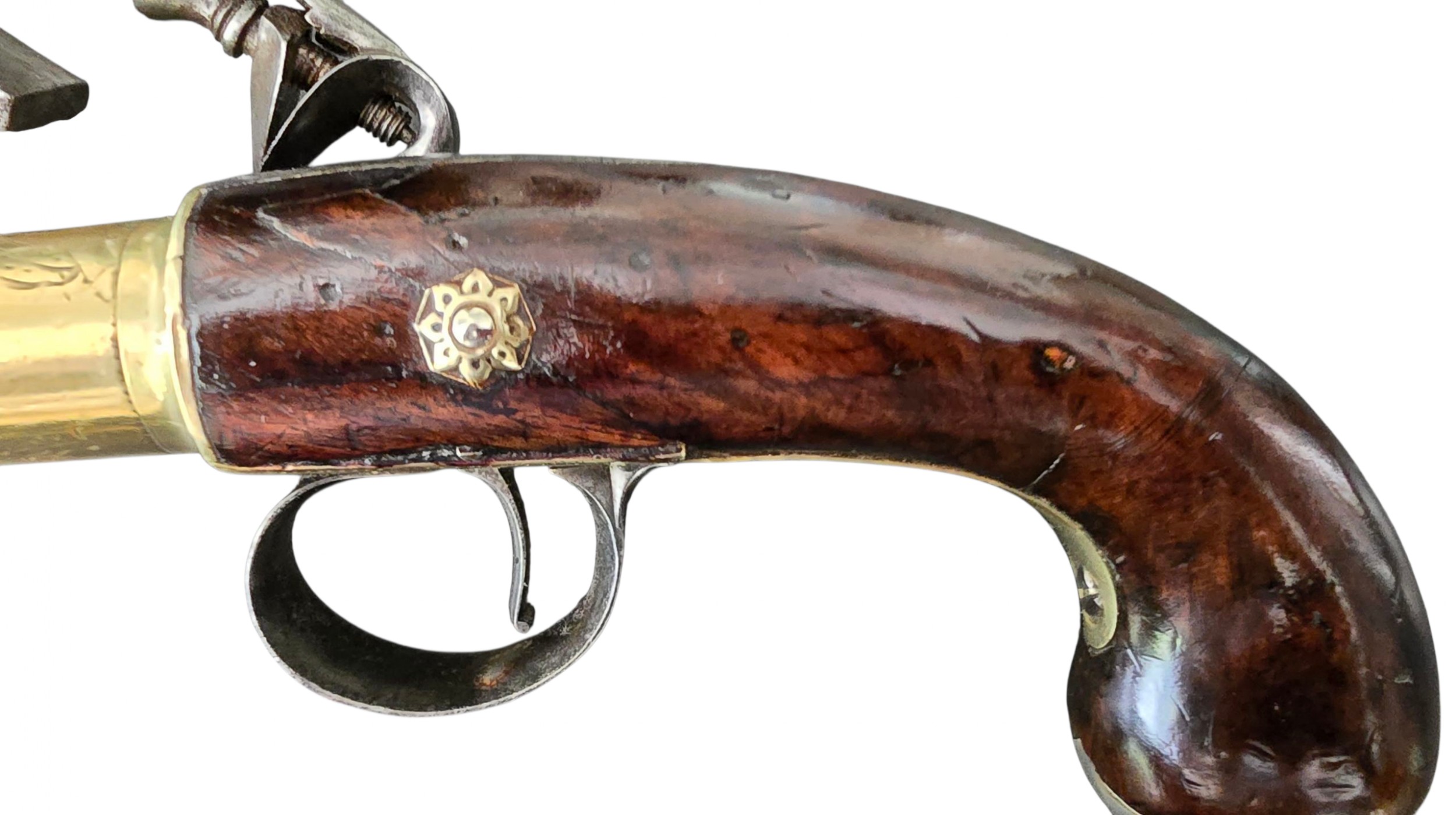
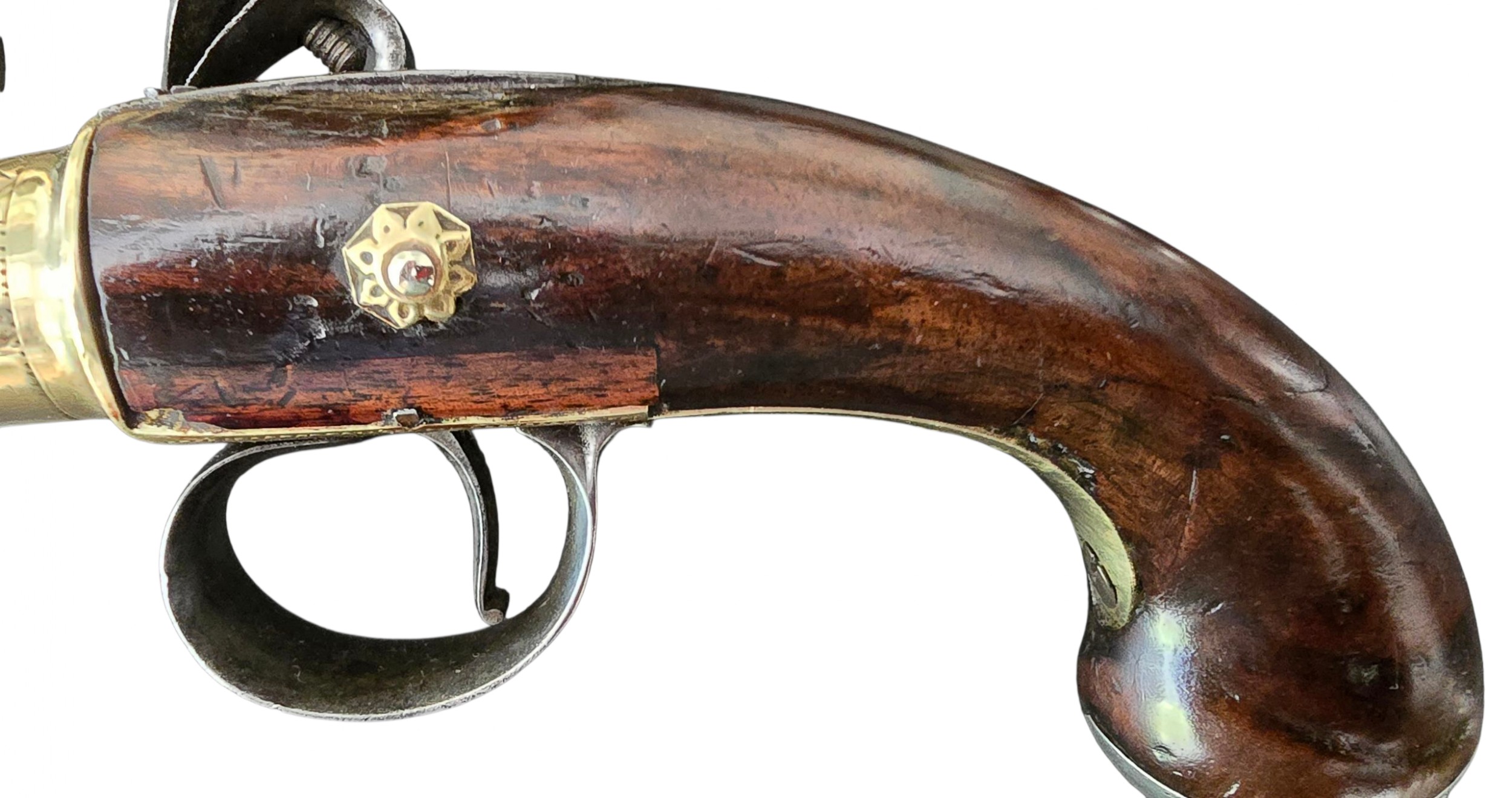
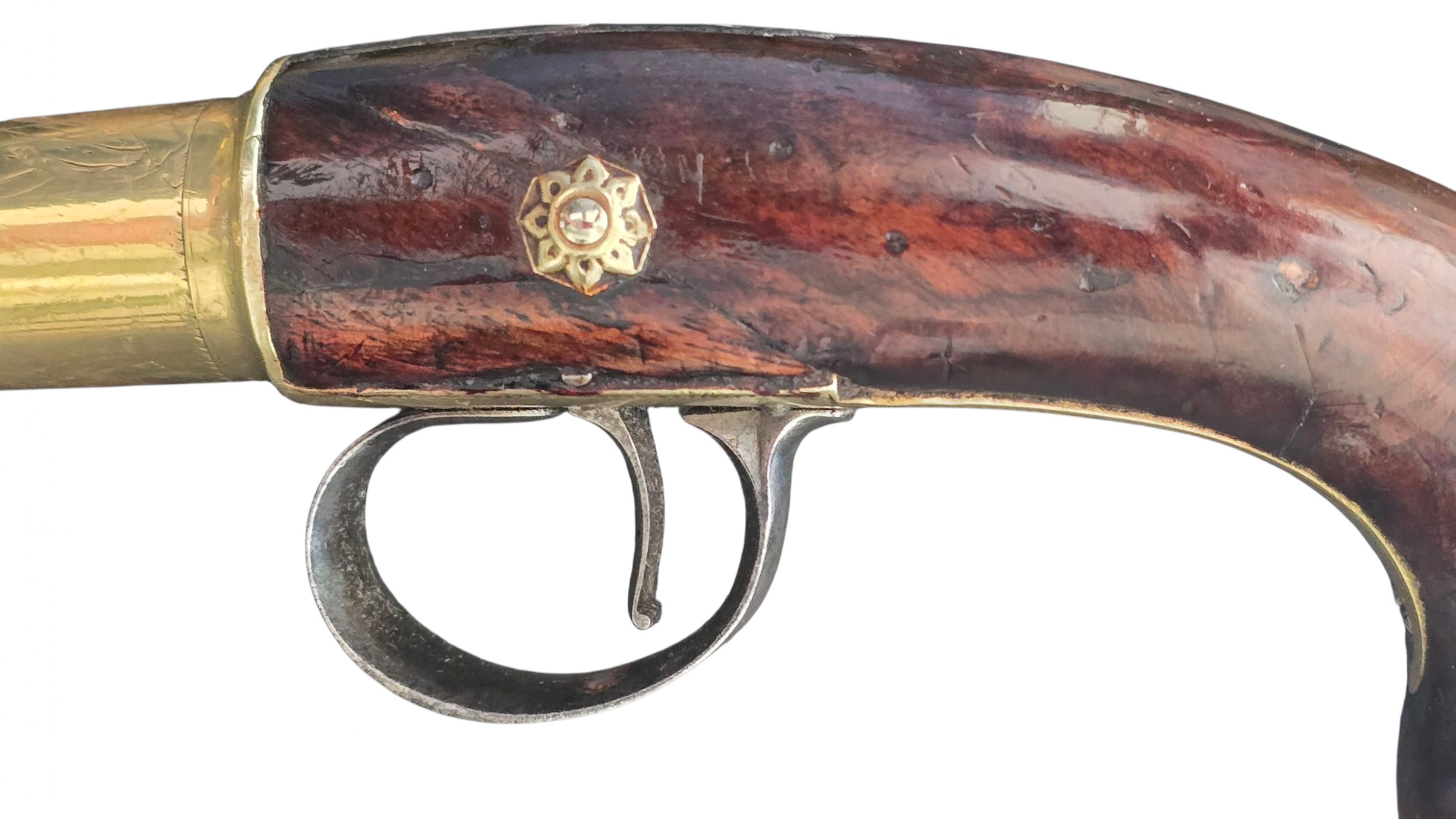
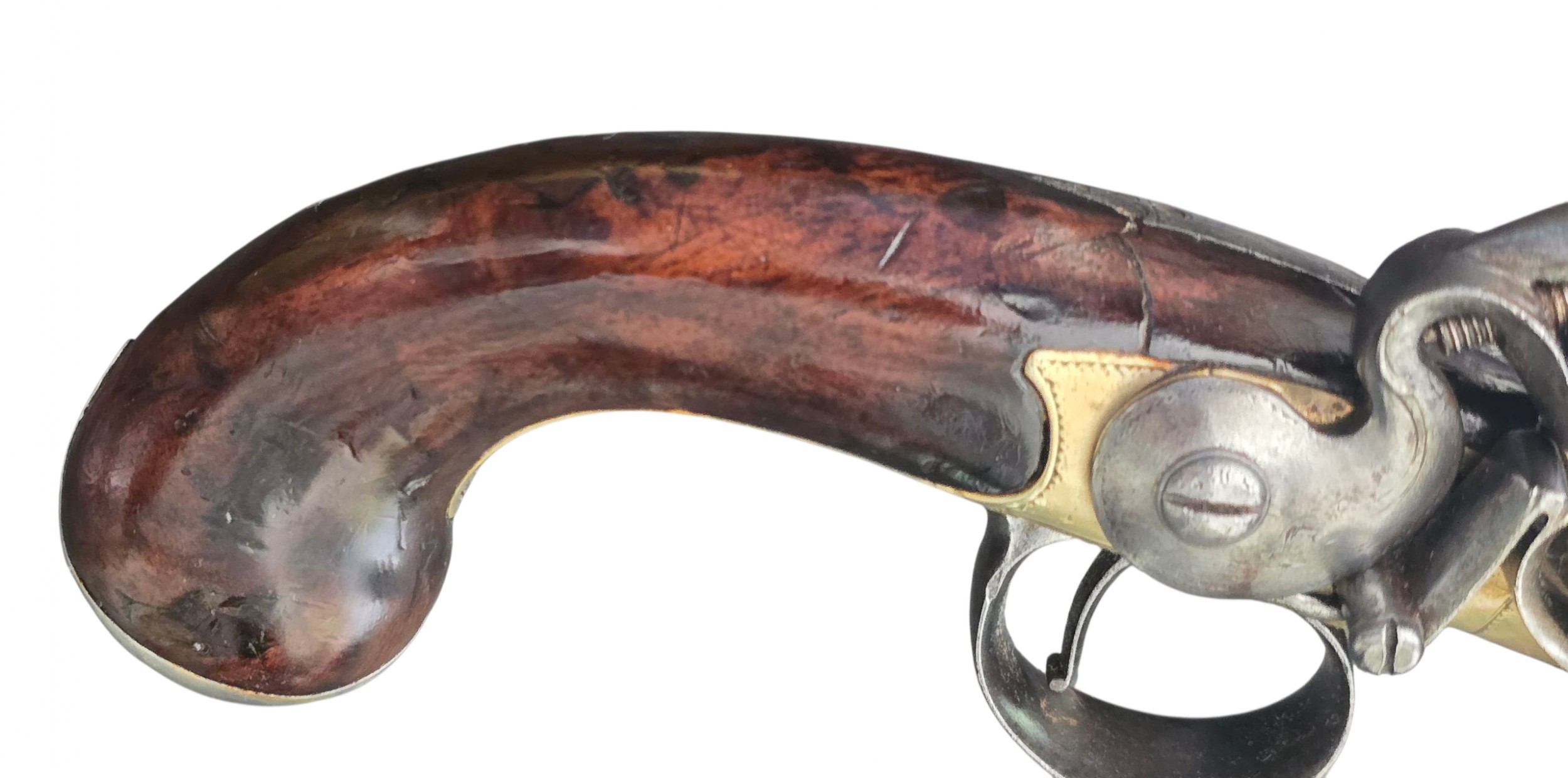
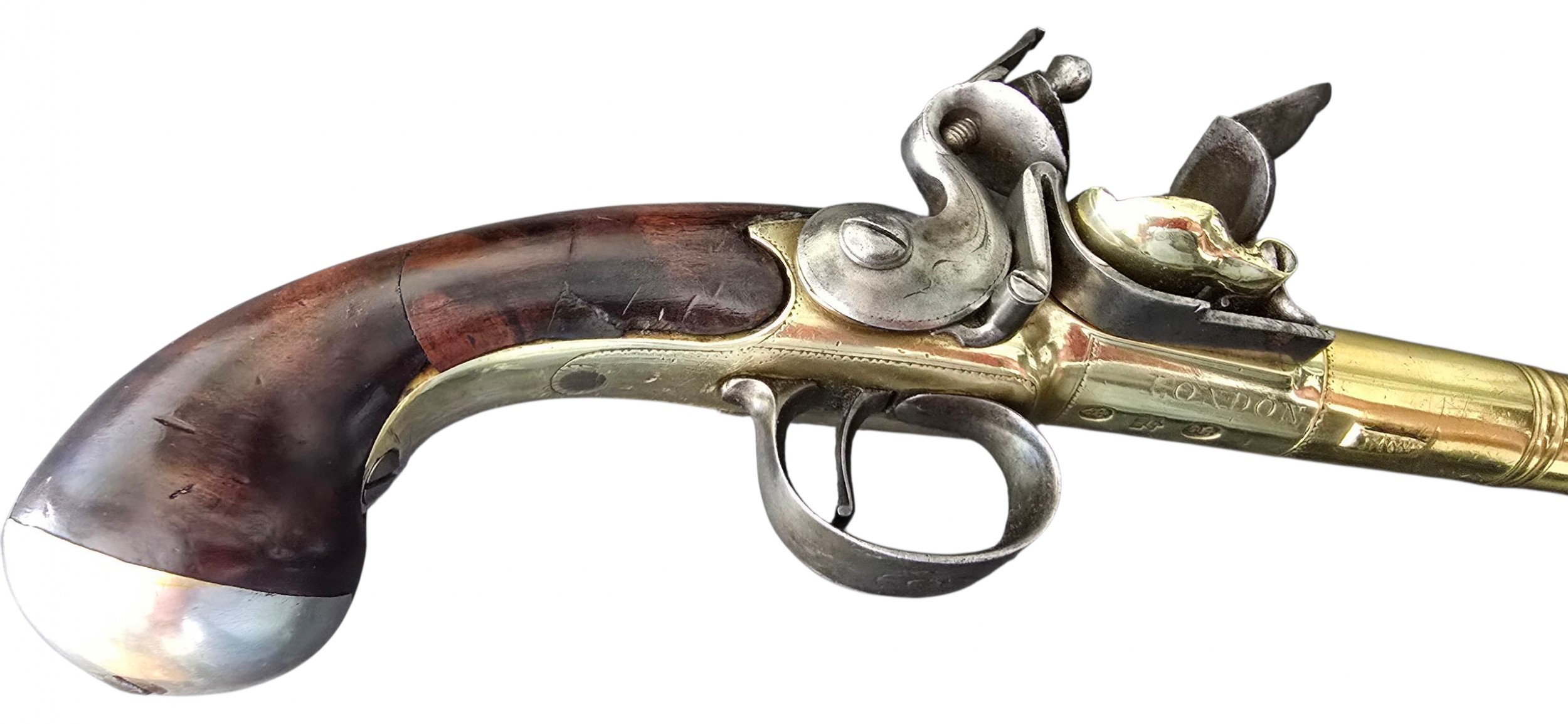
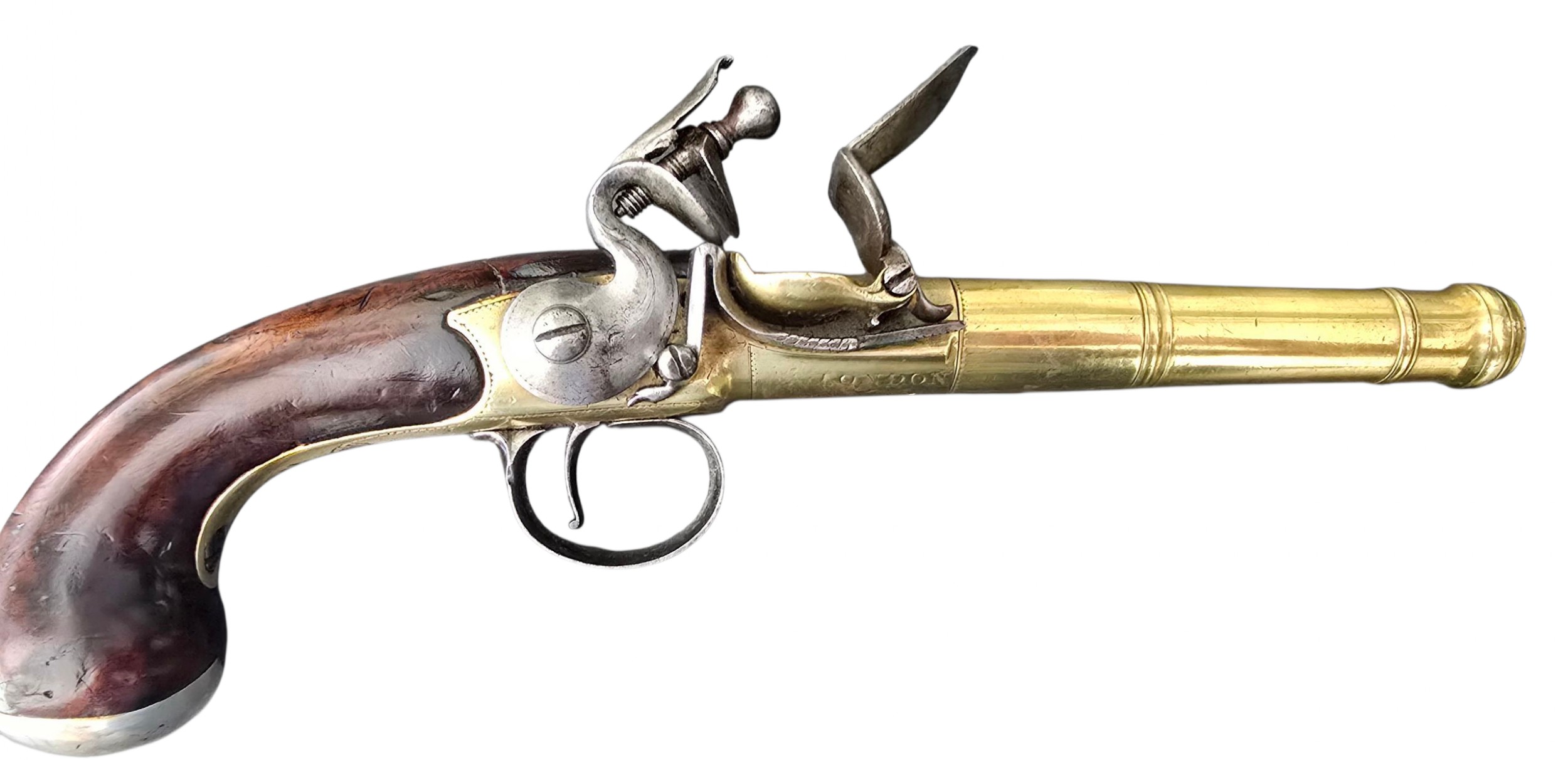
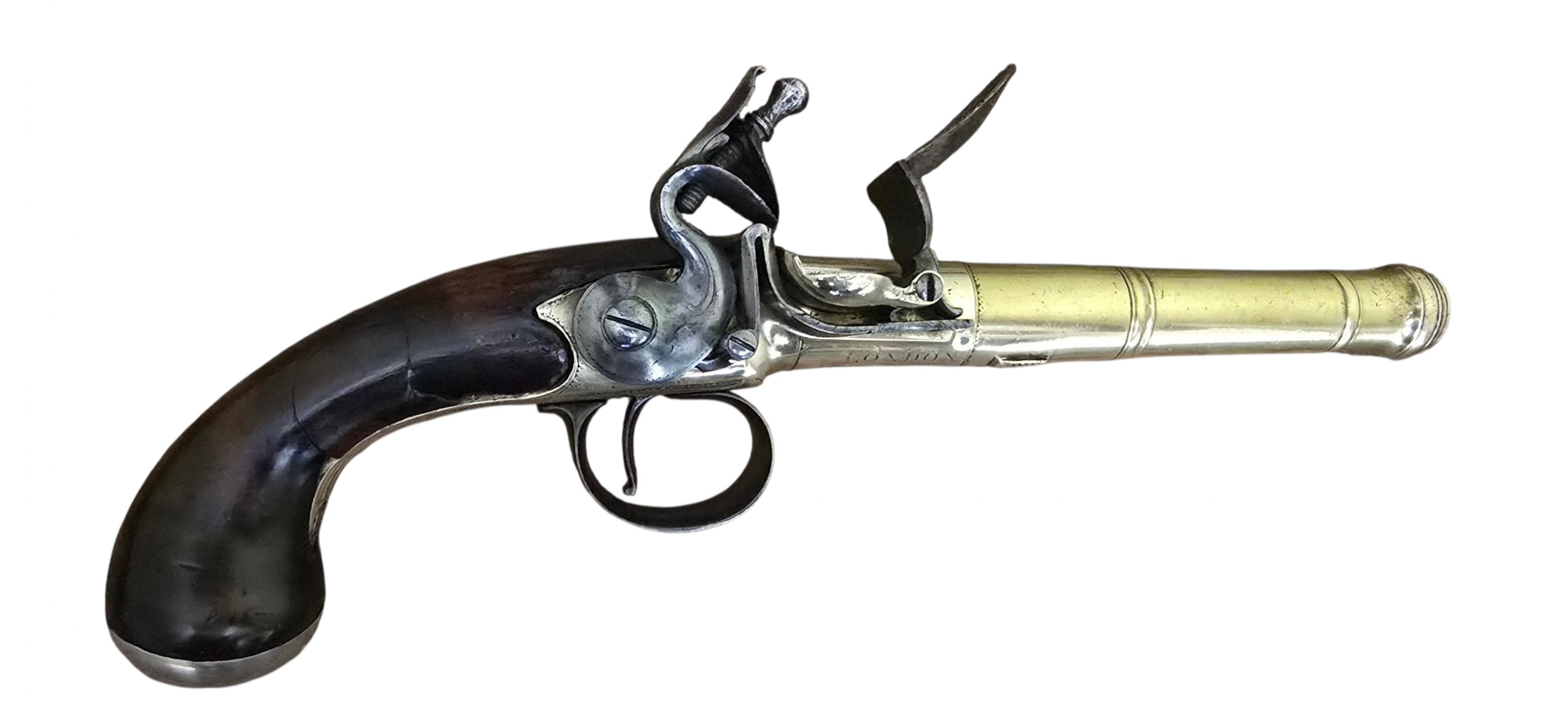
Each pistol retains its original sliding trigger-guard safety catch, a feature typically reserved for higher-grade Queen Anne style pistols. The trigger guard slides forward to block the trigger, preventing discharge, and can be returned to the rear firing position—a desirable element for collectors.
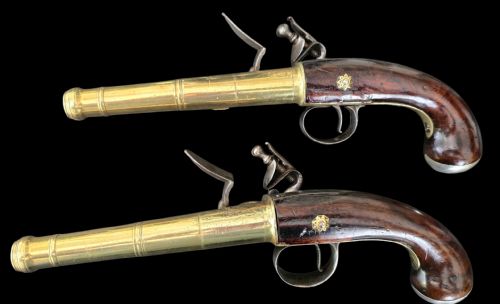
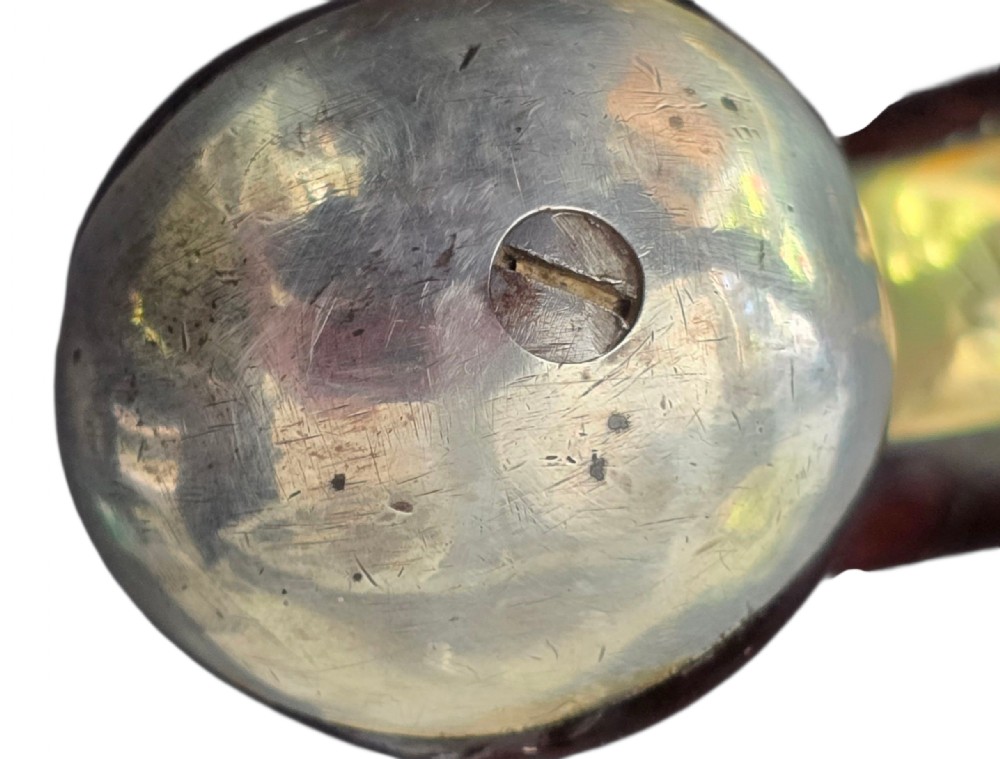
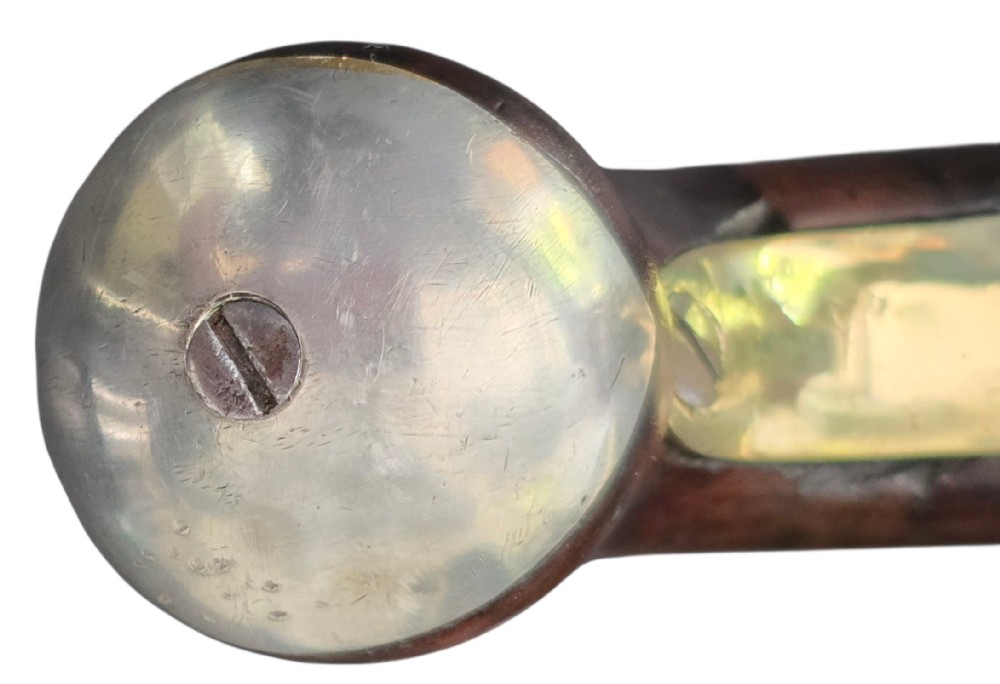
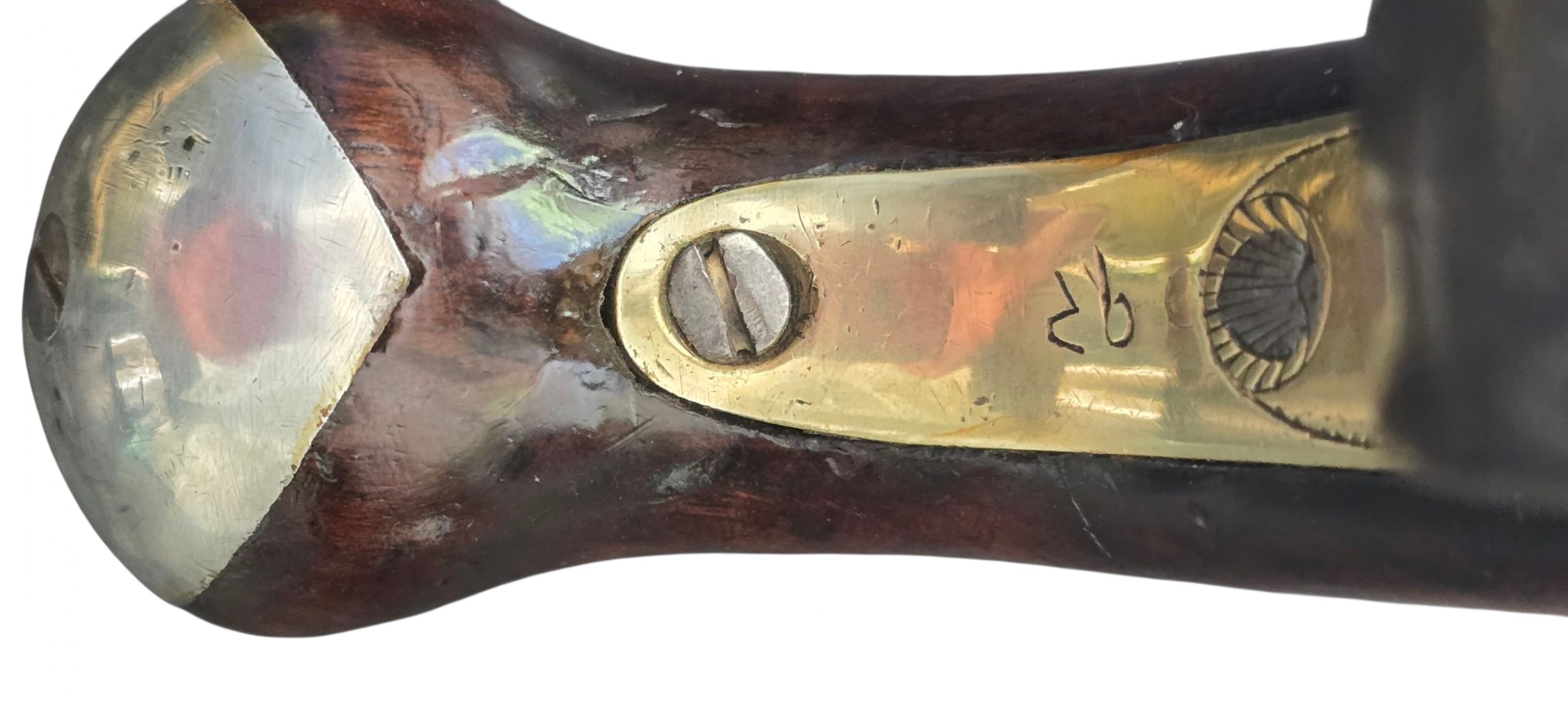
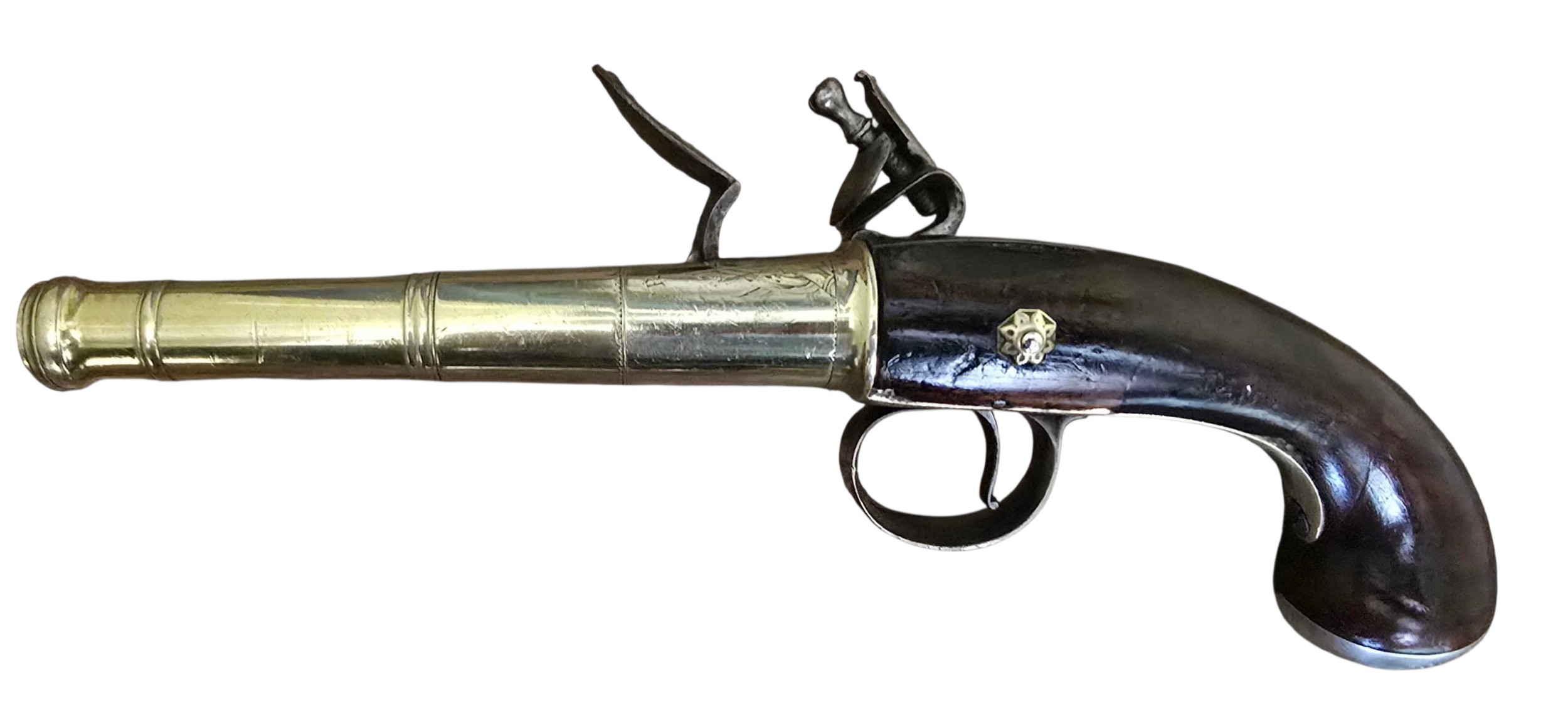
Mounted with rounded figured walnut butts, each with silver butt caps, engraved en suite (some wear consistent with age). The stocks have been repolished and both stocks show signs of old repairs, now stable. A well-presented and attractive pair for display or collection.
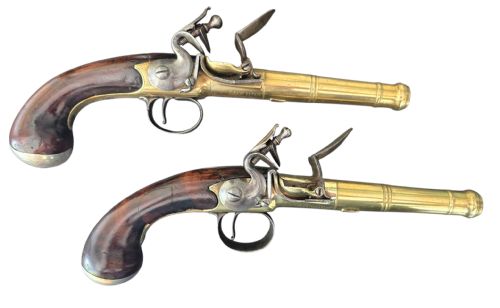
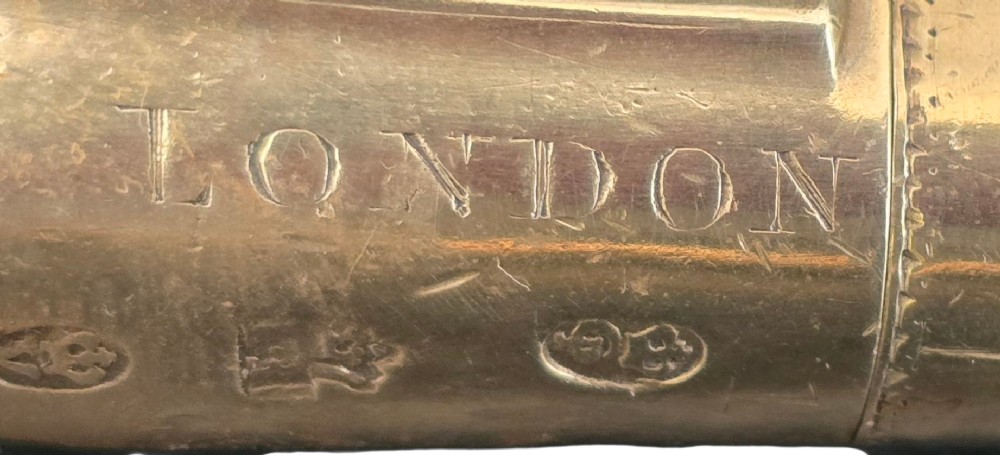
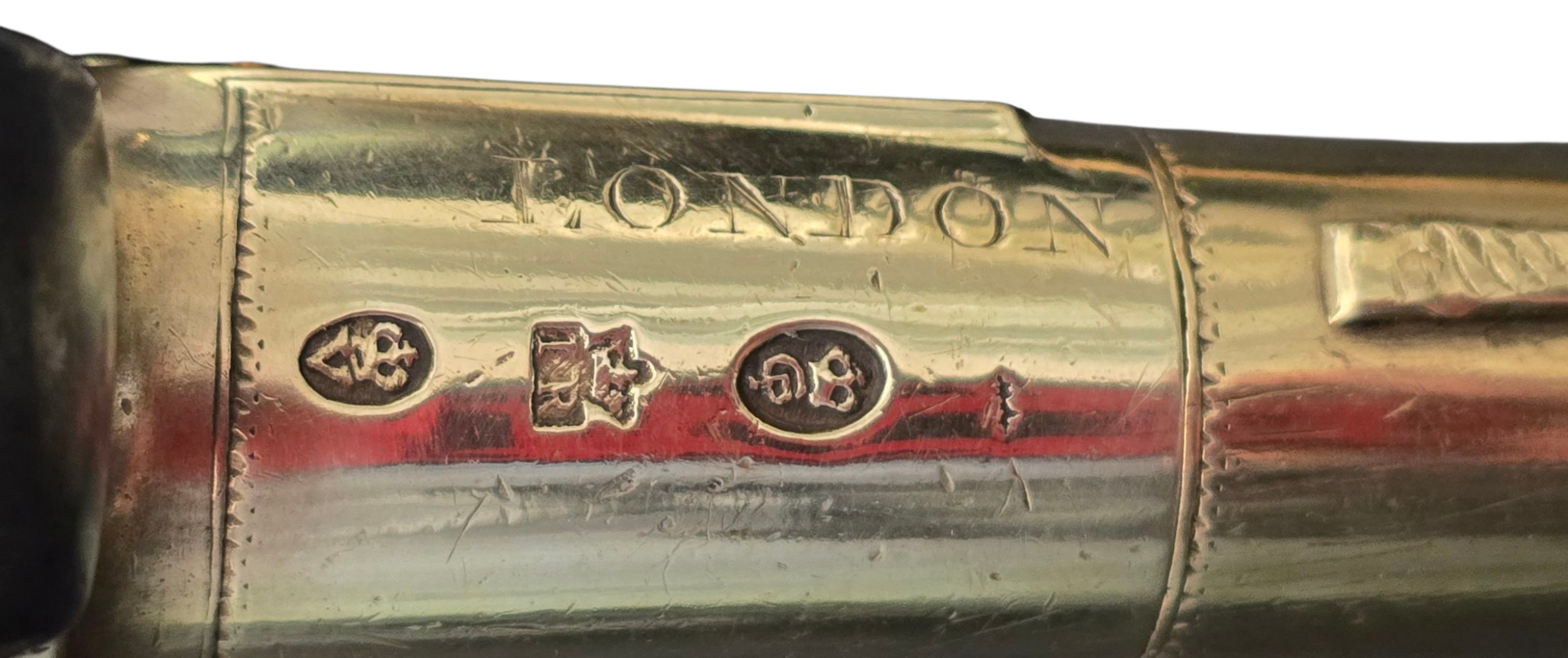
John Rimes was a respected gunmaker recorded at 66 Bell Dock, Wapping, London, and supplied firearms to the East India Company in 1772. His work is well-regarded for its elegant detailing and solid craftsmanship.
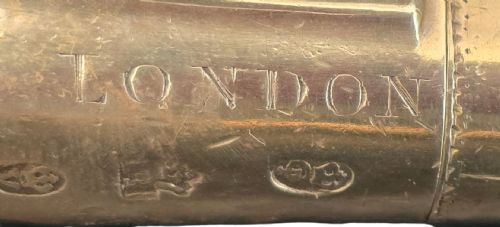
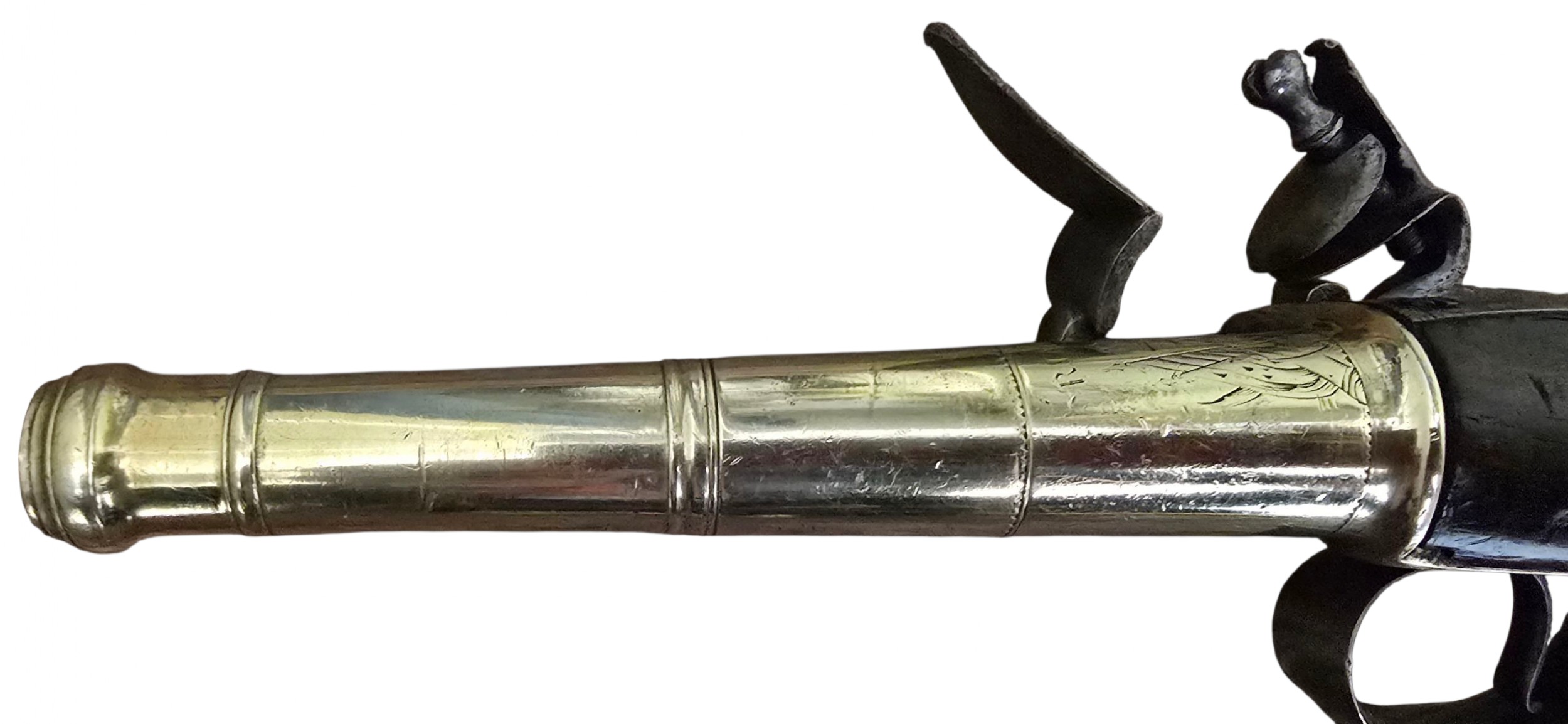
The use of brass (technically copper alloy) barrels in Rimes’s pistols reflects both practical utility and aesthetic appeal. Unlike steel, brass is non-ferrous—it does not rust—making it especially suited for weapons exposed to humid or maritime climates, such as those aboard ships or in tropical colonies.
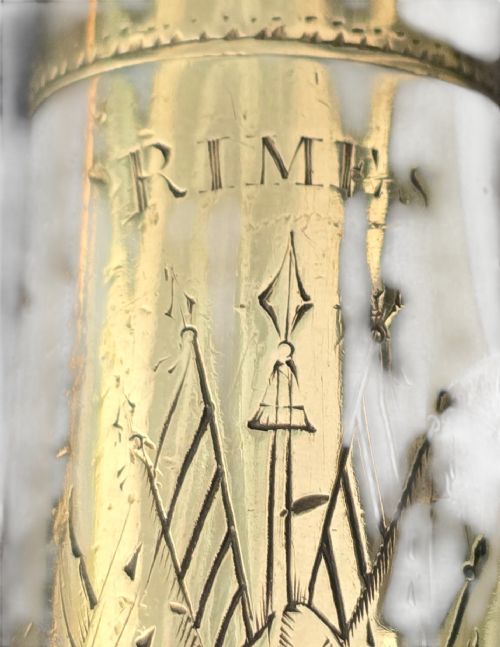
This pair of pistols by John Rimes, fitted with three-stage brass cannon barrels, engraved decoration, and sliding trigger-guard safety catches, represents a fine and functional example of Georgian gunmaking.
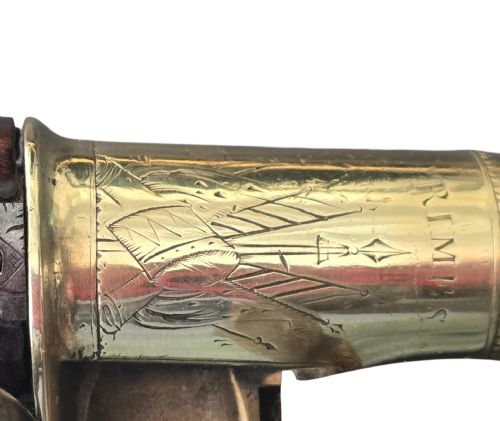
Condition: Good overall; structurally sound with old repairs to both stocks, wear and polishing to stocks; engraving remains clear.
Measurements
Barrel length: 15. 5cm (6 in.)
Overall length: 28.5 cm (11.25 in.)
Calibre: 25 bore
Weight each 667 grams
Weight both 1,334 grams
Peter Harris Clocks & Militaria has dated these Flintlock Turn-off Pistols to the 18th Century.
We specialise in flintlock pistols, muskets, clocks & watches
You can view the stock and full dealer information on the Peter Harris Clocks & Militaria Profile Page
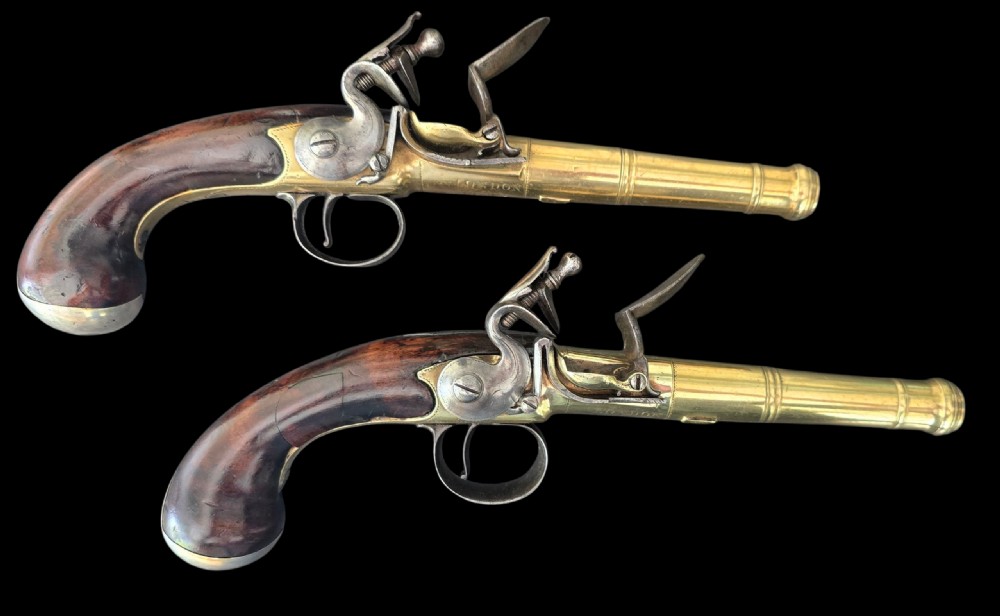
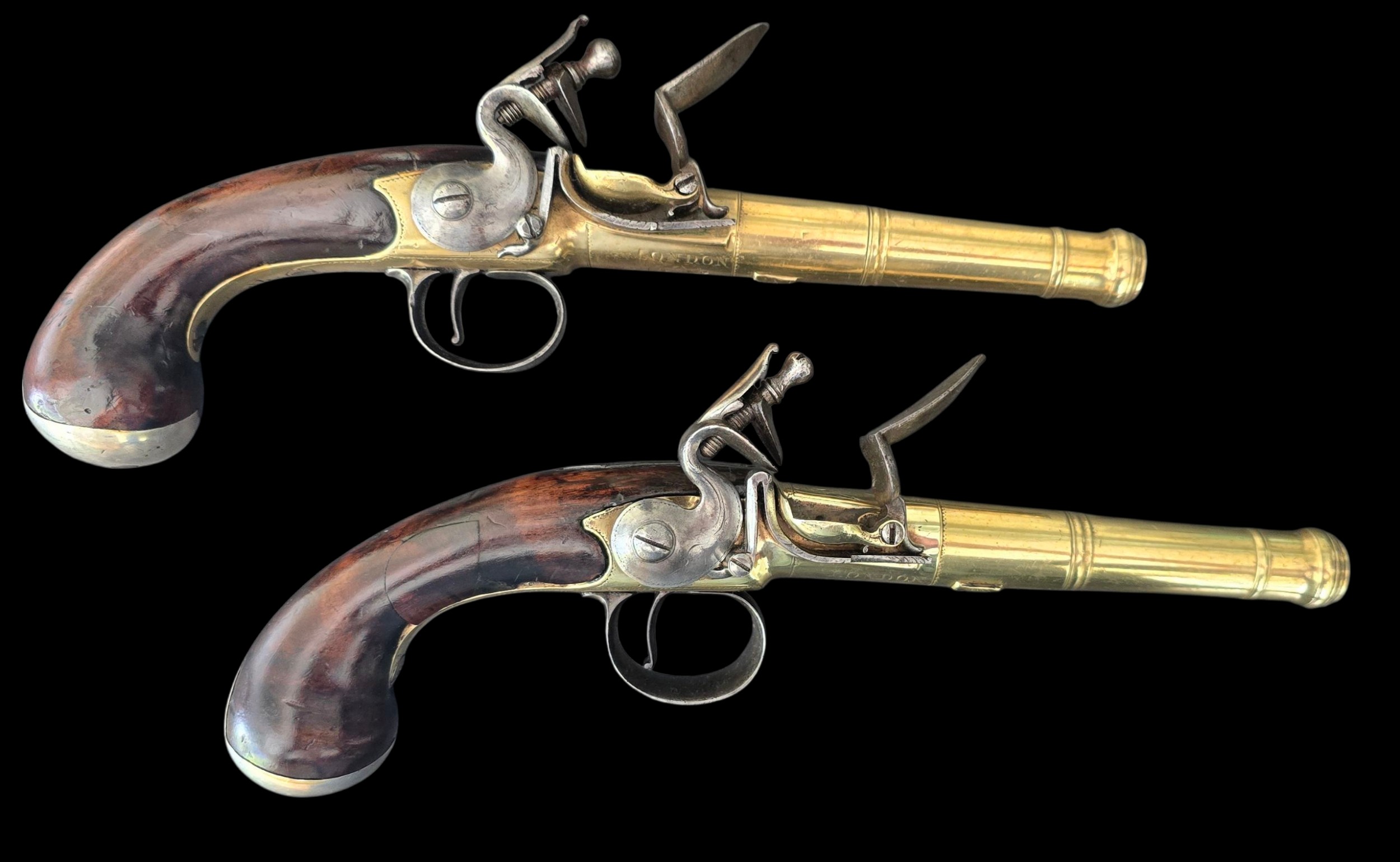
Pair of Rimes, C1760 English Flintlock Turn-off Pistols Signed by John Rimes, London.