37,006  PAGES BROWSED TODAY PAGES TODAY 90  ANTIQUES UPLOADED TODAY NEW ARRIVALS
ID #SA1142307
FOR SALE
£1,900
Email
Save
Early 18th-century Russian Icon, Volga Masters (Circle), the Crucifixion - Tempera on Wood with Silver and Gilt
Brave Fine Art
for sale €2,223     $2,413
£1,900
Brave Fine Art

Brave Fine Art

Sellingantiques Verified Since Nov 2018
View Dealers Stock Page
  • About Us
    Exquisite antique paintings that capture the imagination.
Relevant Links
Id #SA1142307
PDF SHARE
SAVE

Early 18th-century Russian Icon, Volga Masters (Circle), the Crucifixion - Tempera on Wood with Silver and Gilt

18th century
For Sale by Brave Fine Art
Description

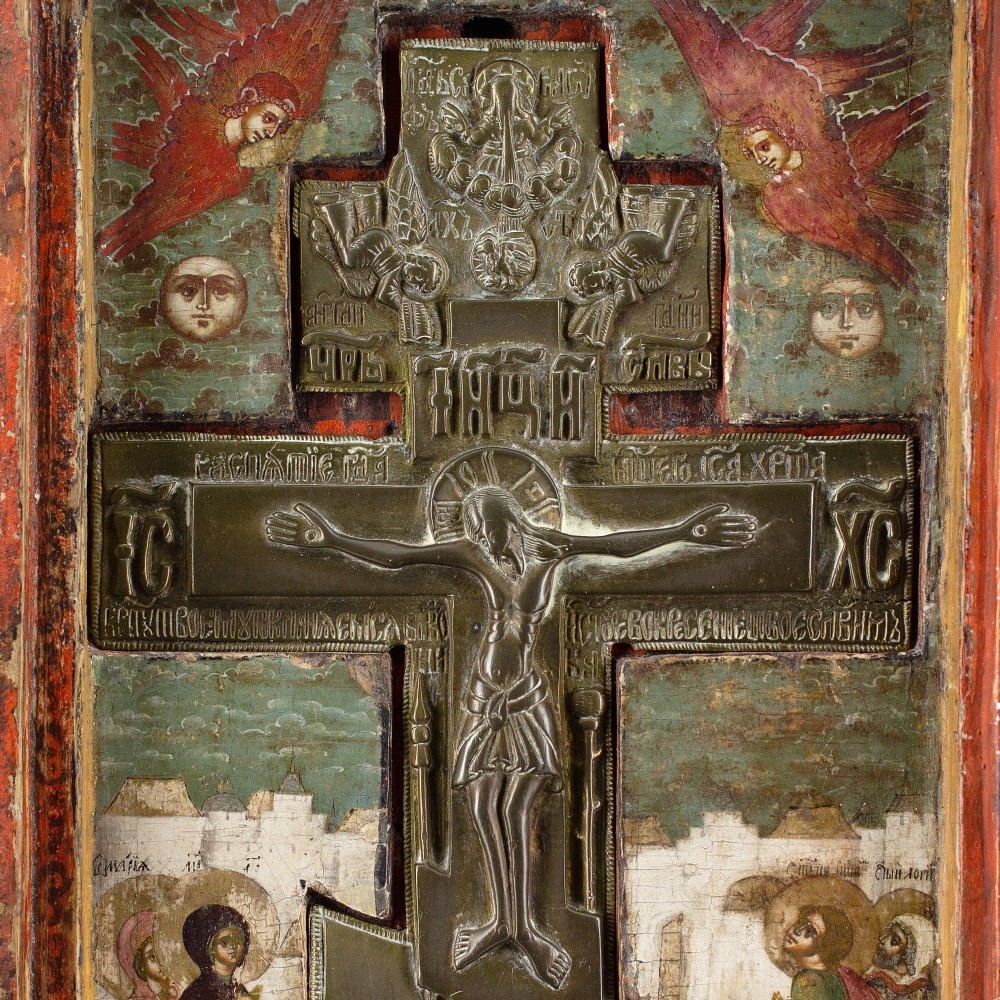
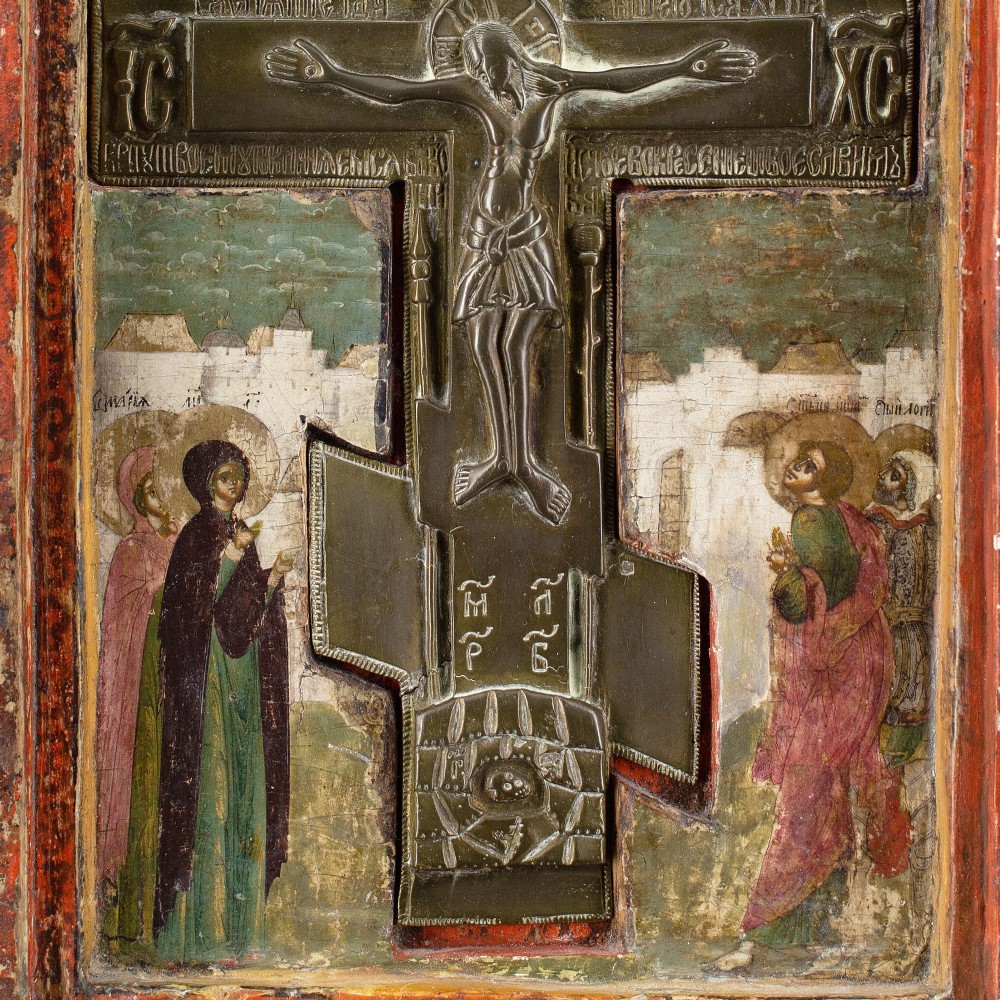
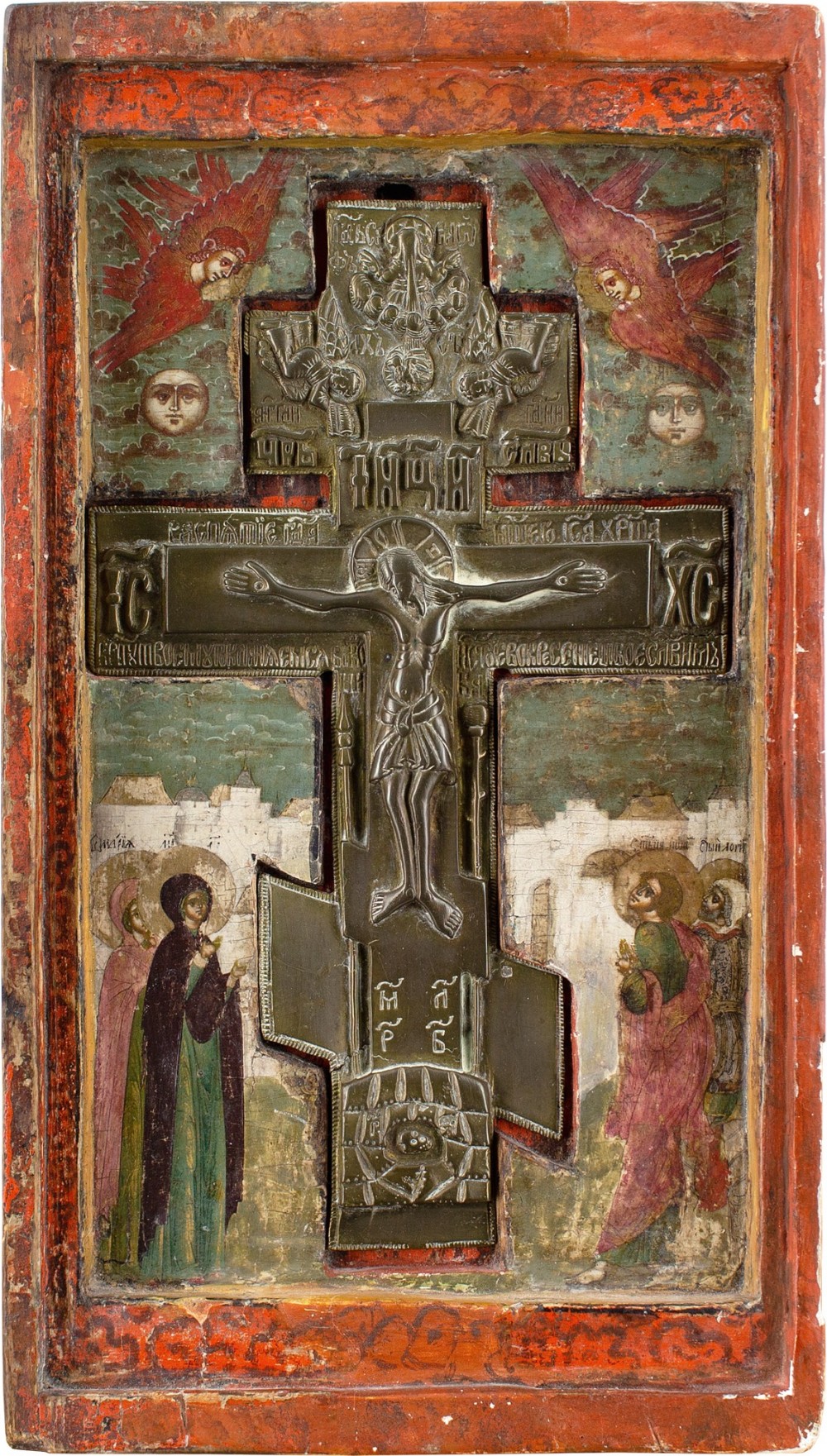
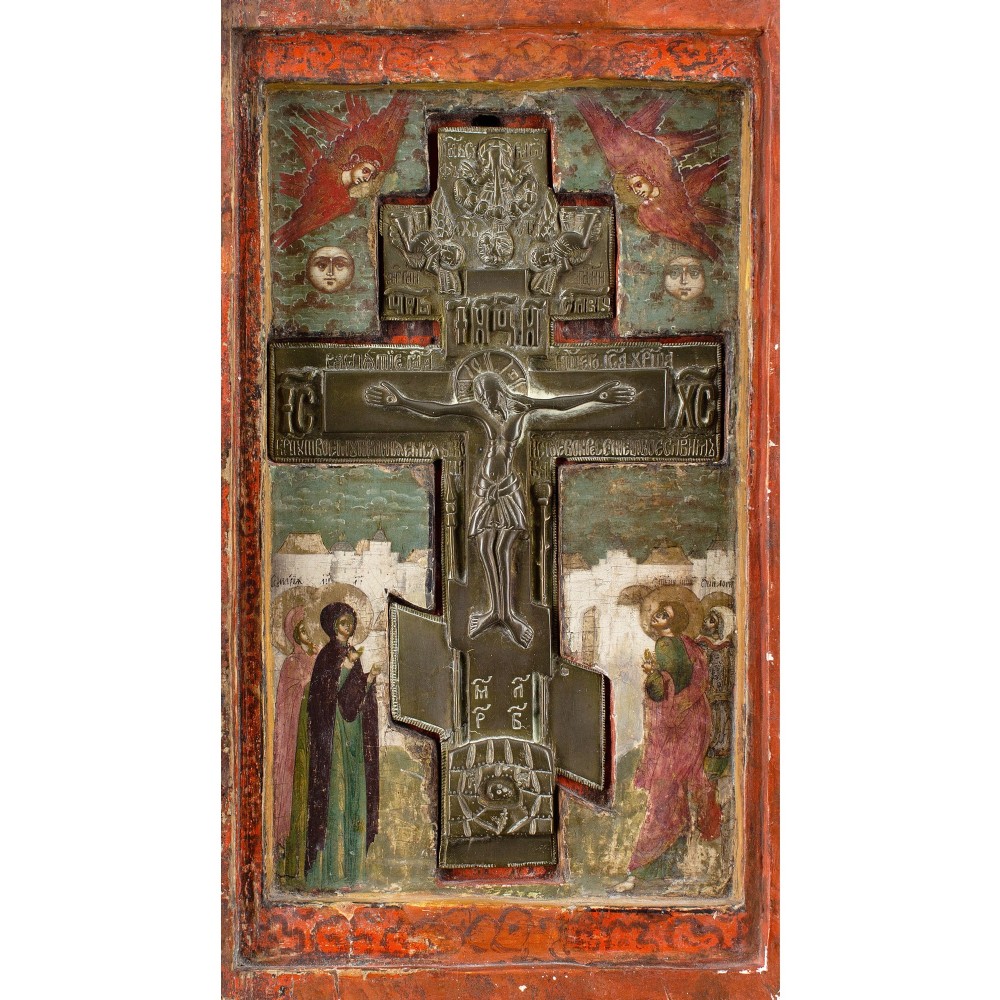
This exquisite and exceedingly rare early 18th-century Russian Staurotek icon depicts The Crucifixion of Christ with an assemblage of saints, together with a 19th-century copper-cast eight-pointed cross, inserted in the central recess.

Due to the exceptional nature of this piece, we consulted Ilya Kushnirskiy, the Director of the Russian Icon Collection, who in turn contacted Anastasia V. Likhenko, Curator at the State Tretyakov Gallery, Moscow. Ms Likhenko kindly provided a detailed essay, in which she concluded that “this Staurotek, with its copper-cast cross, possesses significant historical, artistic, and collector's value.” Her paper will be included with the sale.
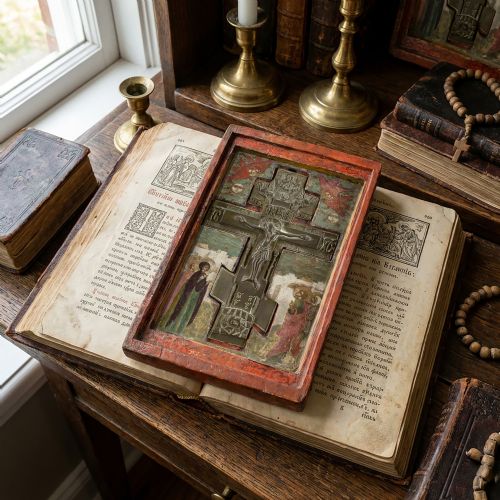
Staurotek icons, also known as Staurotheke, are specific to Eastern Orthodox Christianity and often depict a Crucifixion scene, with an elaborately decorated cross set within the image. Popular during the 18th and 19th centuries, metal icons offered both portability and durability, enabling the owner to carry a token of their faith at all times. They often survived continual use and, as such, were passed down through generations of the same family.
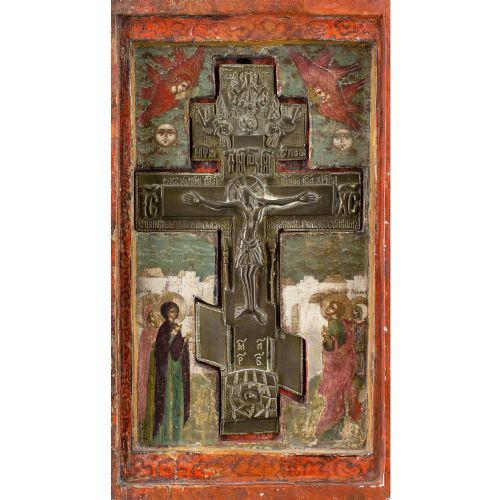
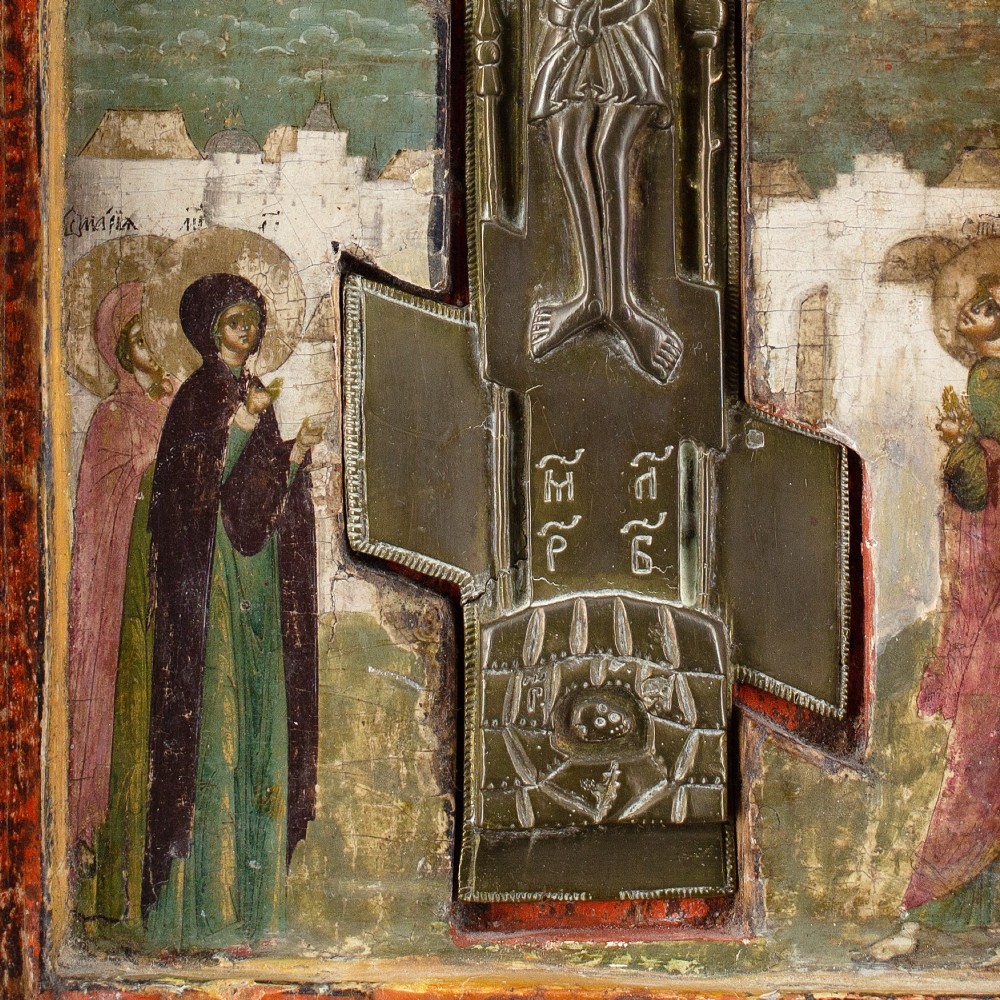
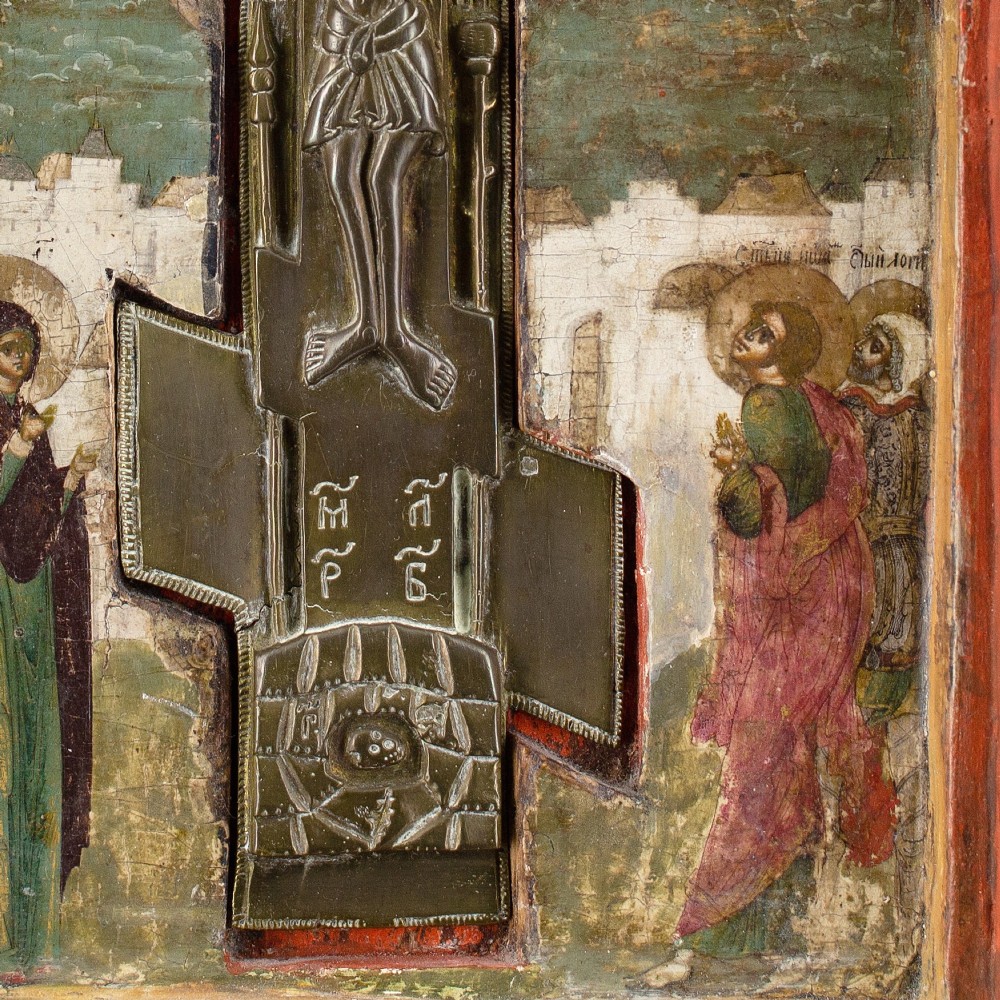
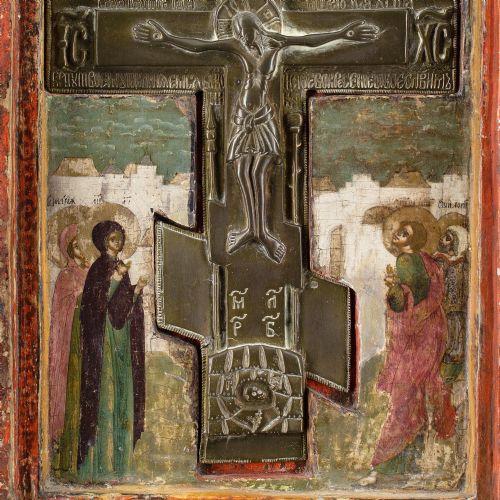
Here, in this early example, the figures are especially finely rendered and include, from left to right, a woman in a pink maphorion, the Mother of God, St. John the Theologian in a pink himation, and St. Longinus in a silver armour and a green tunic. They’re standing before a view of Jerusalem, and beneath a greenish sky with two seraphim and ‘luminaries’ (the sun and moon). It’s extraordinary that the original gilding is still present on the robes of the saints and the wings of the seraphim, while the armour of St. Longinus retains its original silver.
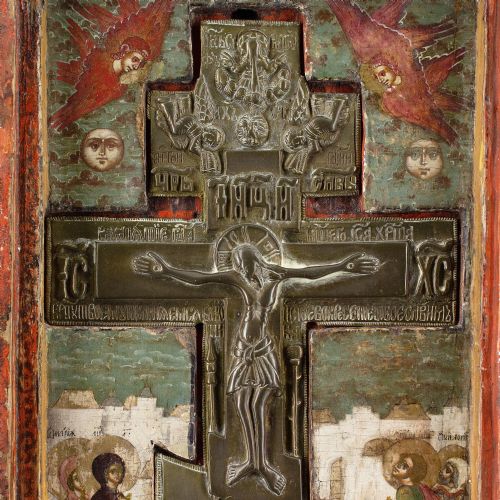
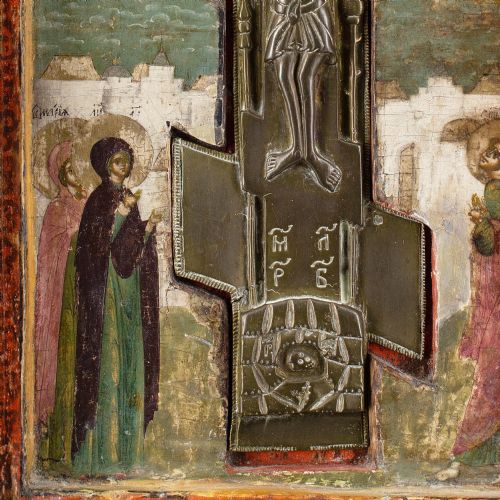
The cross itself is cast in copper and depicts Christ’s crucifixion with various associated symbolism. Above, is the image of God, together with a dove, to represent the Holy Spirit. At the foot lies the skull of Adam. The various inscriptions have been translated in Ms Likhenko’s paper, which also contains an attribution as follows:
“The elegance of proportions, the incredible subtlety of the painting, and the unique work with gold and silver indicate that the master who painted the scene of the Crucifixion from this Stavroteka was well acquainted with high-class examples of the Volga, and possibly Moscow art (for example, the Yaroslavl icon of the Crucifixion from the middle of the 17th century in the Andrei Rublev Museum, Moscow, or the Yaroslavl Crucifixion from the 1680s in a private collection, Moscow).”
Medium: Tempera on wood with silver and gilt

Overall size: 6” x 11” / 15cm x 28cm

Year of creation: c. 1720

Provenance: With Richardson & Kailas, Specialist in Icons (2001) / Private collection, UK.

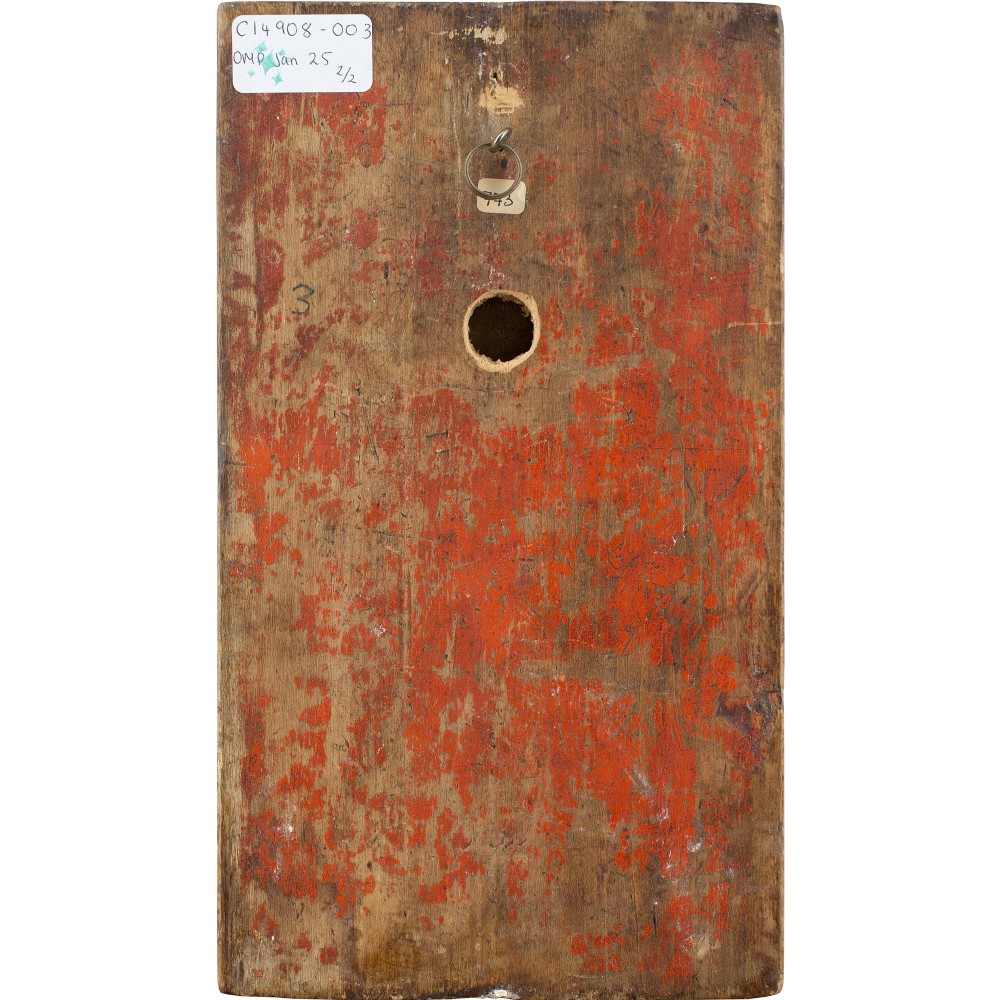
Condition: Cleaned. Areas of fine and settled craquelure. The paint layer is stable. Various scuffs, abrasions and losses as expected given its use.

Our reference: BRV2091

Physical Dimensions
Height
28cm (11.02")
Width
15cm (5.91")
Depth
4cm (1.57")
Declaration

Brave Fine Art has dated this Russian Orthodox Crucifixion Icon to the 18th Century.

Reference Numbers
Sellingantiques Reference
SA1142307
Description
This exquisite and exceedingly rare early 18th-century Russian Staurotek icon depicts The Crucifixion of Christ with an assemblage of saints, together with a 19th-century copper-cast eight-pointed cross, inserted in the central recess.
Due to the exceptional nature of this piece, we consulted Ilya Kushnirskiy, the Director of the Russian Icon Collection, who in turn contacted Anastasia V.
Brave Fine Art

Likhenko, Curator at the State Tretyakov Gallery, Moscow. Ms Likhenko kindly provided a detailed essay, in which she concluded that “this Staurotek, with its copper-cast cross, possesses significant historical, artistic, and collector's value.” Her paper will be included with the sale.

fig 1. An 18th-century Russian Orthodox wooden icon featuring a central inset cast metal crucifix flanked by tempera painted figures against a city skyline.
fig 1. Early 18th-century Russian Icon, Volga Masters (Circle), the Crucifixion - Tempera on Wood with Silver and Gilt

Staurotek icons, also known as Staurotheke, are specific to Eastern Orthodox Christianity and often depict a Crucifixion scene, with an elaborately decorated cross set within the image. Popular during the 18th and 19th centuries, metal icons offered both portability and durability, enabling the owner to carry a token of their faith at all times. They often survived continual use and, as such, were passed down through generations of the same family.

fig 2. An 18th-century Russian Orthodox wooden icon featuring a central inset cast metal crucifix flanked by tempera painted figures against a city skyline.
fig 2. Early 18th-century Russian Icon, Volga Masters (Circle), the Crucifixion - Tempera on Wood with Silver and Gilt

Here, in this early example, the figures are especially finely rendered and include, from left to right, a woman in a pink maphorion, the Mother of God, St. John the Theologian in a pink himation, and St. Longinus in a silver armour and a green tunic. They’re standing before a view of Jerusalem, and beneath a greenish sky with two seraphim and ‘luminaries’ (the sun and moon). It’s extraordinary that the original gilding is still present on the robes of the saints and the wings of the seraphim, while the armour of St. Longinus retains its original silver.

fig 3. An 18th-century Russian Orthodox wooden icon featuring a central inset cast metal crucifix flanked by tempera painted figures against a city skyline.
fig 3. Early 18th-century Russian Icon, Volga Masters (Circle), the Crucifixion - Tempera on Wood with Silver and Gilt

The cross itself is cast in copper and depicts Christ’s crucifixion with various associated symbolism. Above, is the image of God, together with a dove, to represent the Holy Spirit. At the foot lies the skull of Adam. The various inscriptions have been translated in Ms Likhenko’s paper, which also contains an attribution as follows:

fig 4. An 18th-century Russian Orthodox wooden icon featuring a central inset cast metal crucifix flanked by tempera painted figures against a city skyline.
fig 4. Early 18th-century Russian Icon, Volga Masters (Circle), the Crucifixion - Tempera on Wood with Silver and Gilt

“The elegance of proportions, the incredible subtlety of the painting, and the unique work with gold and silver indicate that the master who painted the scene of the Crucifixion from this Stavroteka was well acquainted with high-class examples of the Volga, and possibly Moscow art (for example, the Yaroslavl icon of the Crucifixion from the middle of the 17th century in the Andrei Rublev Museum, Moscow, or the Yaroslavl Crucifixion from the 1680s in a private collection, Moscow).”

fig 5. An 18th-century Russian Orthodox wooden icon featuring a central inset cast metal crucifix flanked by tempera painted figures against a city skyline.
fig 5. Early 18th-century Russian Icon, Volga Masters (Circle), the Crucifixion - Tempera on Wood with Silver and Gilt

Medium: Tempera on wood with silver and gilt

Overall size: 6” x 11” / 15cm x 28cm

Year of creation: c. 1720

Provenance: With Richardson & Kailas, Specialist in Icons (2001) / Private collection, UK.

Condition: Cleaned. Areas of fine and settled craquelure. The paint layer is stable. Various scuffs, abrasions and losses as expected given its use.

Our reference: BRV2091

Height
28cm (11.02")
Width
15cm (5.91")
Depth
4cm (1.57")
Date of Manufacture

Brave Fine Art has dated this Russian Orthodox Crucifixion Icon to the 18th Century.

Reference Numbers
Sellingantiques Ref
SA1142307
Brave Fine Art
Brave Fine Art
Sellingantiques verified Since Nov 2018

Exquisite antique paintings that capture the imagination.

Dealer Profile

You can view the stock and full dealer information on the Brave Fine Art Profile Page
Relevant Links
PDF SHARE
SAVE
An 18th-century Russian Orthodox wooden icon featuring a central inset cast metal crucifix flanked by tempera painted figures against a city skyline.
1 / 8
Archive I An 18th-century Russian Orthodox wooden icon featuring a central inset cast metal crucifix flanked by tempera painted figures against a city skyline.

Early 18th-century Russian Icon, Volga Masters (Circle), the Crucifixion - Tempera on Wood with Silver and Gilt
Archive II An 18th-century Russian Orthodox wooden icon featuring a central inset cast metal crucifix flanked by tempera painted figures against a city skyline. View II
Archive III An 18th-century Russian Orthodox wooden icon featuring a central inset cast metal crucifix flanked by tempera painted figures against a city skyline. View III
Archive IV An 18th-century Russian Orthodox wooden icon featuring a central inset cast metal crucifix flanked by tempera painted figures against a city skyline. View IV
Archive V An 18th-century Russian Orthodox wooden icon featuring a central inset cast metal crucifix flanked by tempera painted figures against a city skyline. View V
Archive VI An 18th-century Russian Orthodox wooden icon featuring a central inset cast metal crucifix flanked by tempera painted figures against a city skyline. View VI
Archive VII An 18th-century Russian Orthodox wooden icon featuring a central inset cast metal crucifix flanked by tempera painted figures against a city skyline. View VII
Archive VIII An 18th-century Russian Orthodox wooden icon featuring a central inset cast metal crucifix flanked by tempera painted figures against a city skyline. View VIII
Enlarged Archival View
Telephone 01684 215986
Location
21 Enterprise Way
Arle Road
Cheltenham
Cotswolds
GL51 8LZ
United Kingdom

Under appointment only.
Verified Since Nov 2018
Items For Sale 68
Items Sold 1,832
Brave Fine Art
Brave Fine Art
Verified Since Nov 2018
View Dealer Info
Location: 21 Enterprise Way, Arle Road, Cheltenham, Cotswolds, GL51 8LZ, United Kingdom, , Under appointment only.
Verified
Nov 2018
For Sale
68
Sold
1,832
An 18th-century Russian Orthodox wooden icon featuring a central inset cast metal crucifix flanked by tempera painted figures against a city skyline.
Early 18th-Century Russian Icon, Volga Masters (Circle), The Crucifixion - Tempera on wood with silver and gilt
Ref: SA1142307
An 18th-century Russian Orthodox wooden icon featuring a central inset cast metal crucifix flanked by tempera painted figures against a city skyline.
Detail View 1
Detail View 2
Detail View 4
Detail View 5
Detail View 6
Detail View 7
Detail View 8
Archival Detail
Every single antique dealer on our platform is individually approved by our internal team. We verify their professional trade history, ethical standards, and photographic quality to ensure a secure, high-standard buying environment. Upon joining, every dealer agrees to a strict 9-point code of conduct. While issues can occasionally arise, our dealers typically resolve them swiftly and directly with the buyer. In fact, since our founding in 2002, Sellingantiques has only had to step in to help resolve an issue on roughly five occasions—a true testament to the quality of our dealers and their dedication to your happiness.
Our dealers are highly experienced in packing and shipping fragile, high-value antiques. Because you are in direct contact with the dealer, you will be able to easily go through all available shipping and insurance options together to ensure your item arrives safely.
Antiques are the ultimate green purchase. By choosing historical pieces over newly manufactured goods, you completely eliminate the carbon footprint of modern mass production while preserving exceptional, timeless craftsmanship.

During the 18th century, Russian icon painting evolved as traditional Byzantine visual rules integrated subtle Western European stylistic influences. Regional schools, such as those along the Volga River, maintained traditional egg tempera techniques and inset metal crosses while introducing richer colour palettes and detailed architectural backdrops.

Icons were constructed on seasoned wooden panels, often carved with a recessed central field called a kovcheg. The wood was coated with gesso, painted using mineral pigments bound with egg yolk tempera, and sometimes fitted with cast bronze or silver inserts before being sealed with an oil varnish.

Authentic period icons feature natural wood shrinkage, hand-cut joinery, stepped back borders, and layered egg tempera painting displaying faint craquelure. Inset metal elements typically show uneven casting, manual chasing, and natural oxidisation consistent with age.

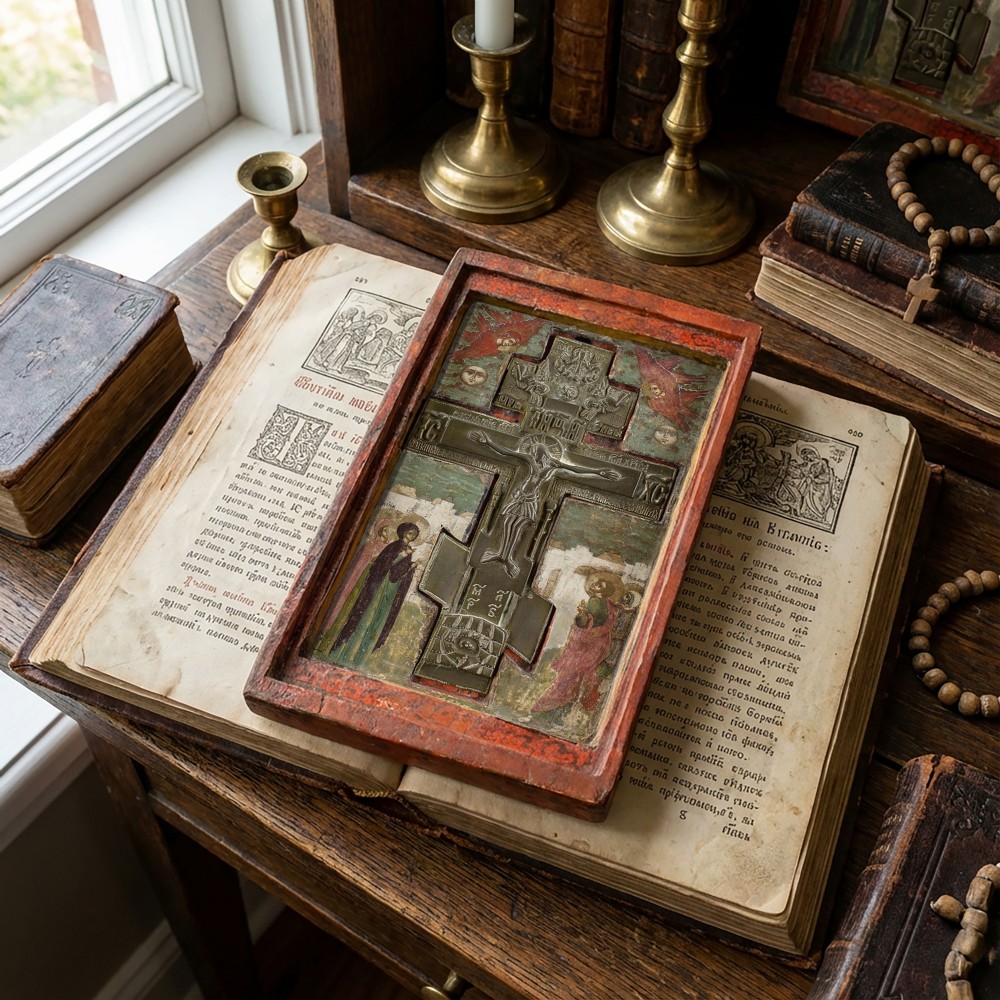
Religious icons serve as focal points when displayed against neutral backdrop walls, integrated into gallery wall arrangements, or positioned inside dark wood bookcases alongside classical literature and antique brass objects.

Keep wooden icons in stable environments with consistent humidity to prevent panel warping or paint flaking. Dust gently using a soft, dry camel-hair brush, avoiding chemical cleaners, water, or abrasive polishes.
items
Add keywords to the filter
Price
£100
£250000
Era
Movements
Material
Origin
Stock Location
Freshness
Online Payments
Categories