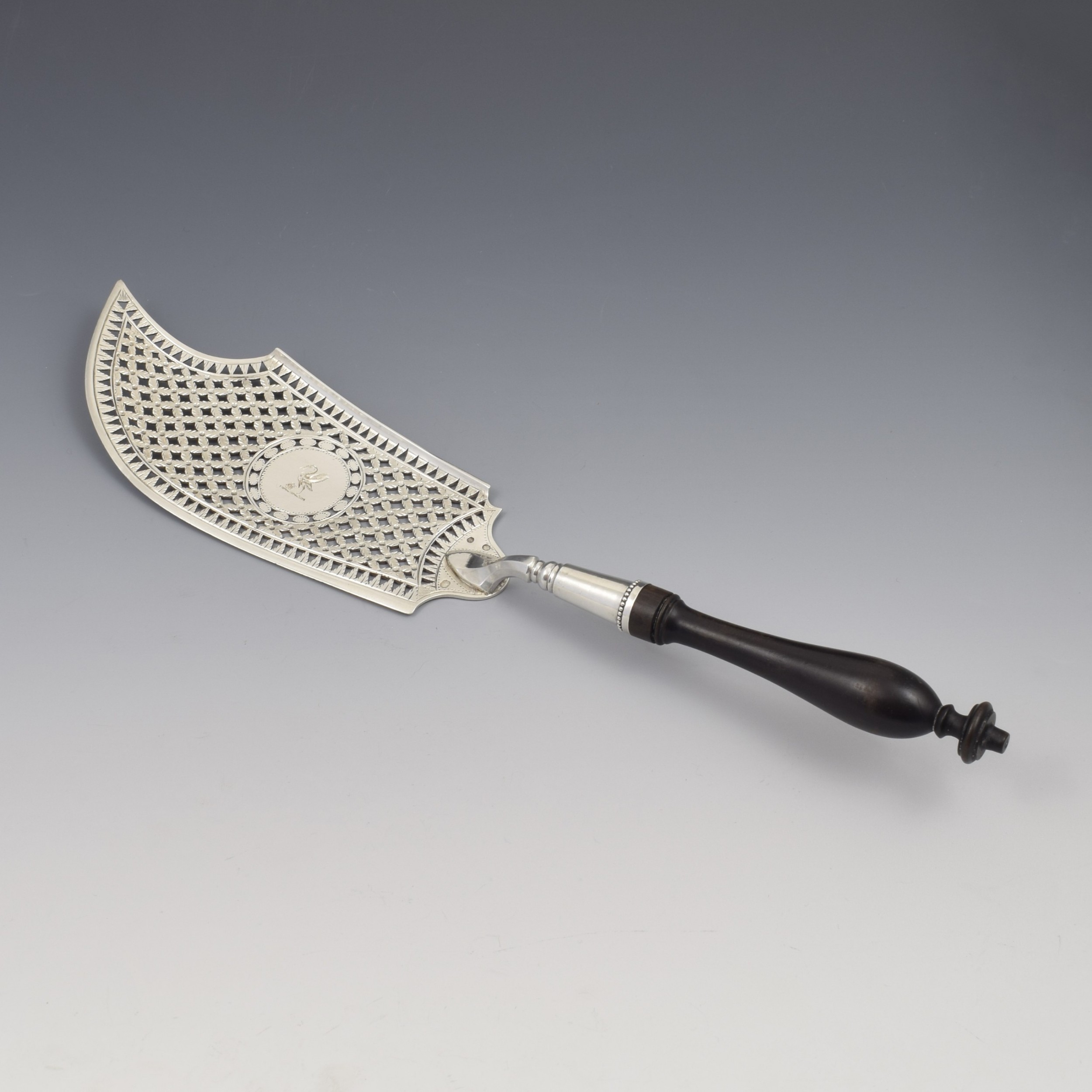
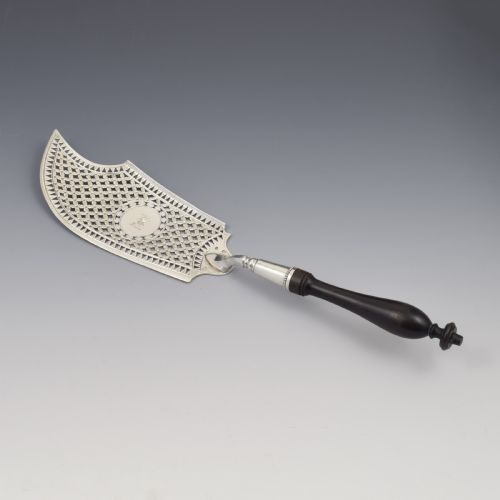
The Fancy Fox has dated this French Silver Fish Slice to the 18th Century.
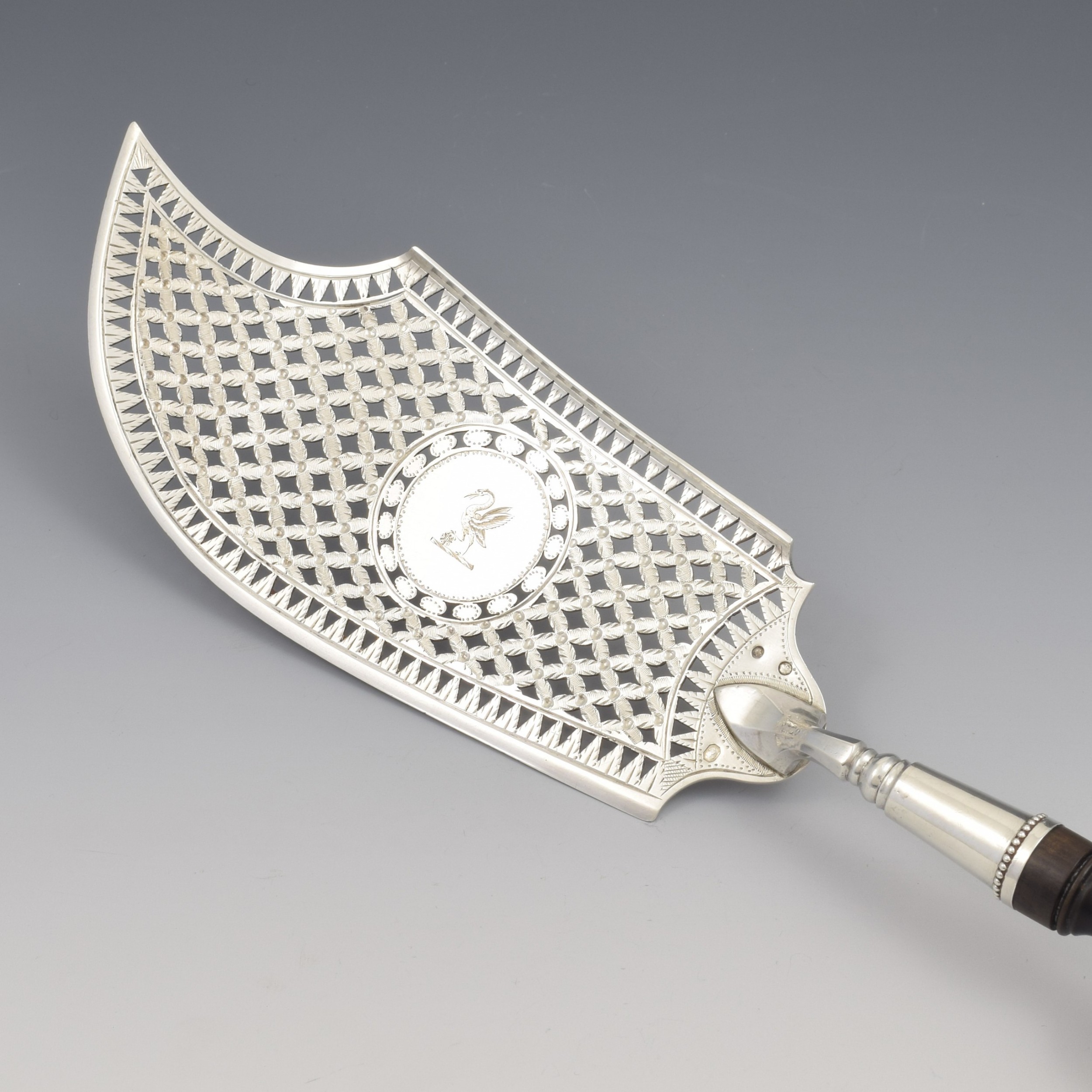
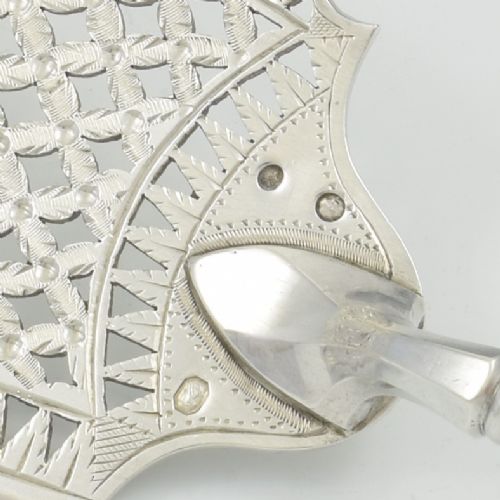
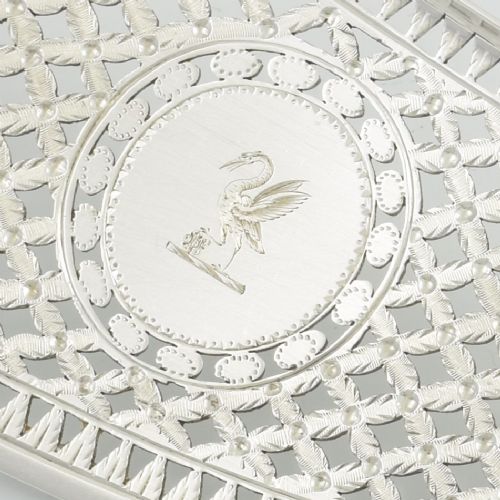
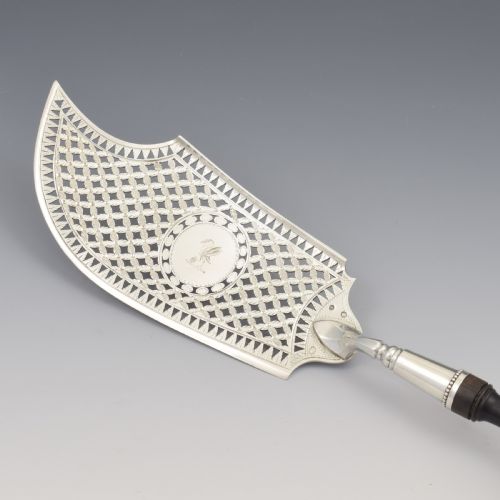
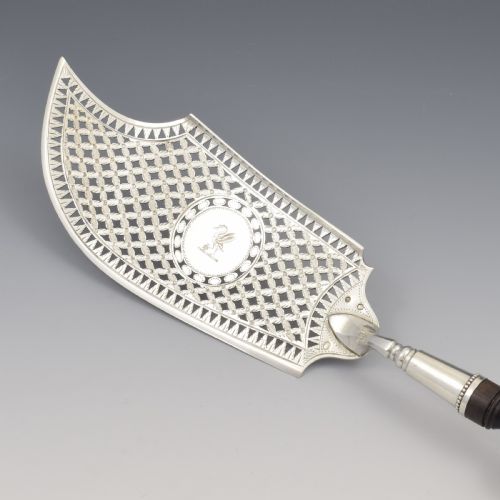
The blade has an intricate pierced pattern, the edge with a triangular frieze, engraved to represent stylised leaves. The main body, reserving a central circular cartouche with a pierced ring of engraved ovals, is created as a lozenge diaper pattern with an all over machine engraved background texture and hand finished with engraved edges and indented circles to the centre of each intersection. The circular cartouche has a hand engraved dotted edge and a very finely engraved family crest of a crane "in its vigilance" but with raised wings and holding a flower in its raised claw instead of a stone.
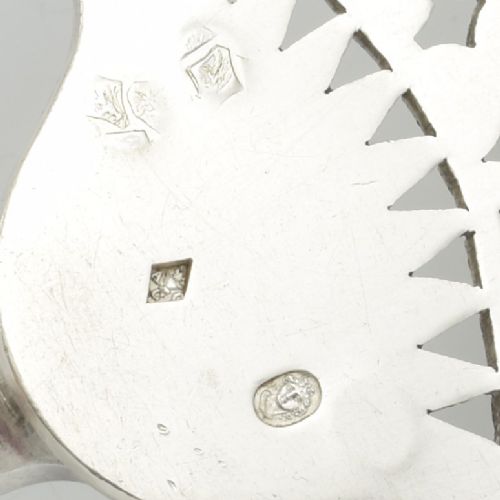
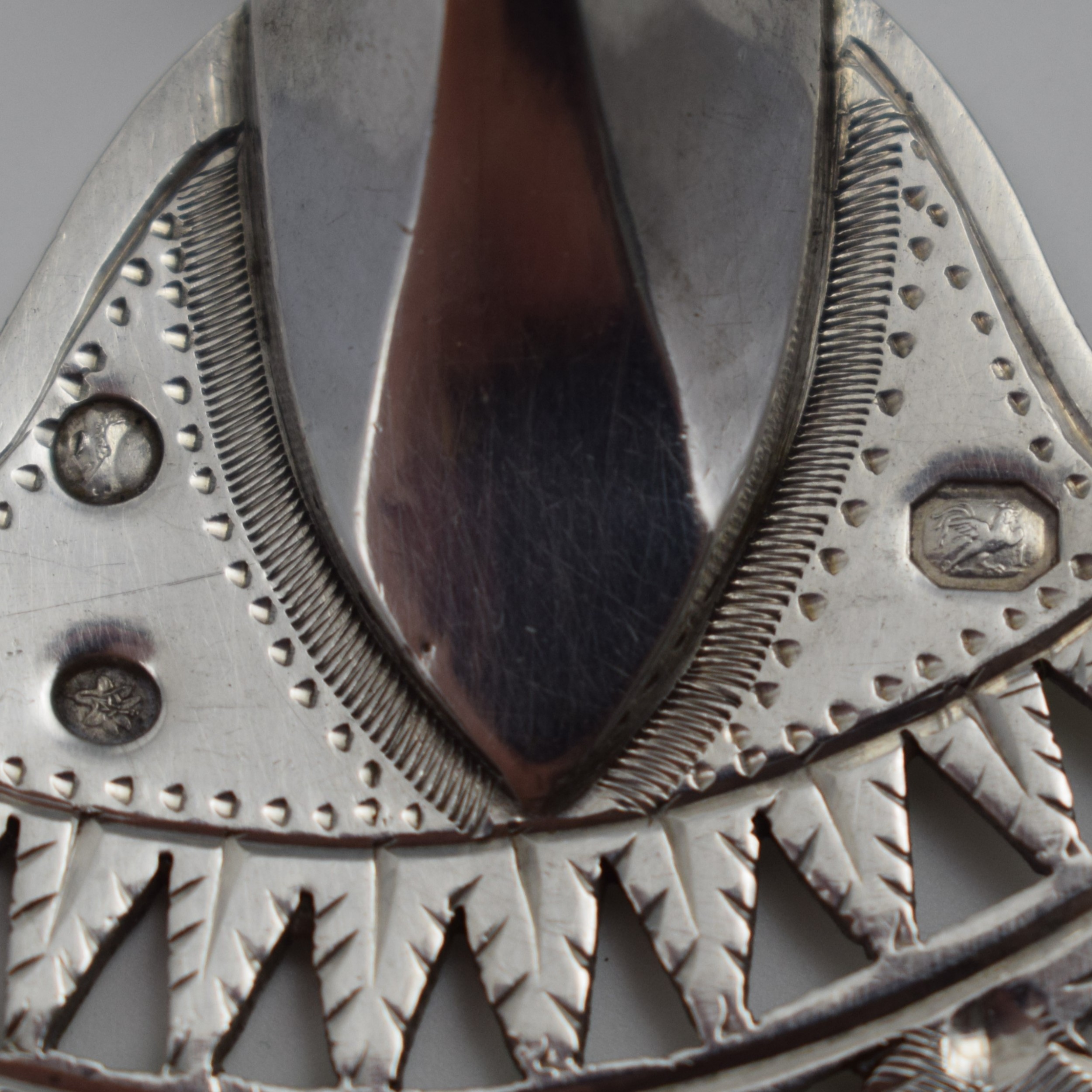
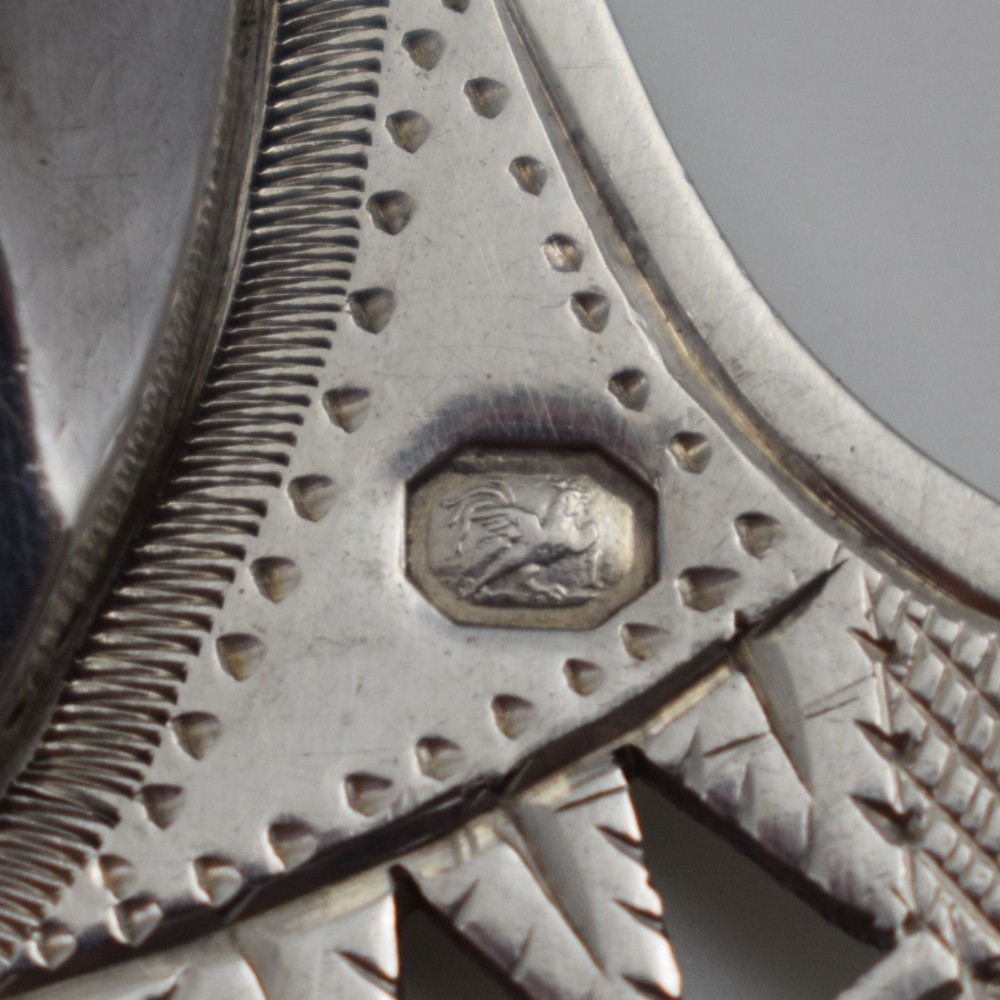
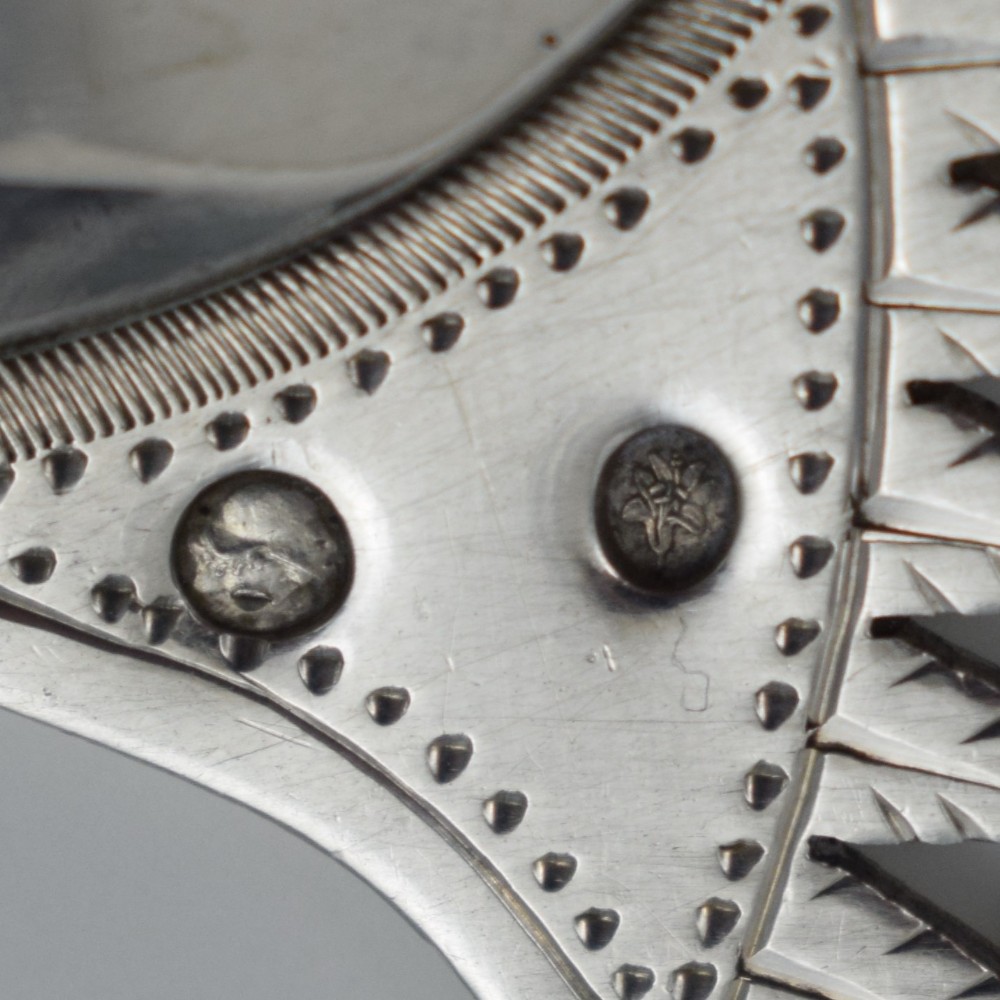
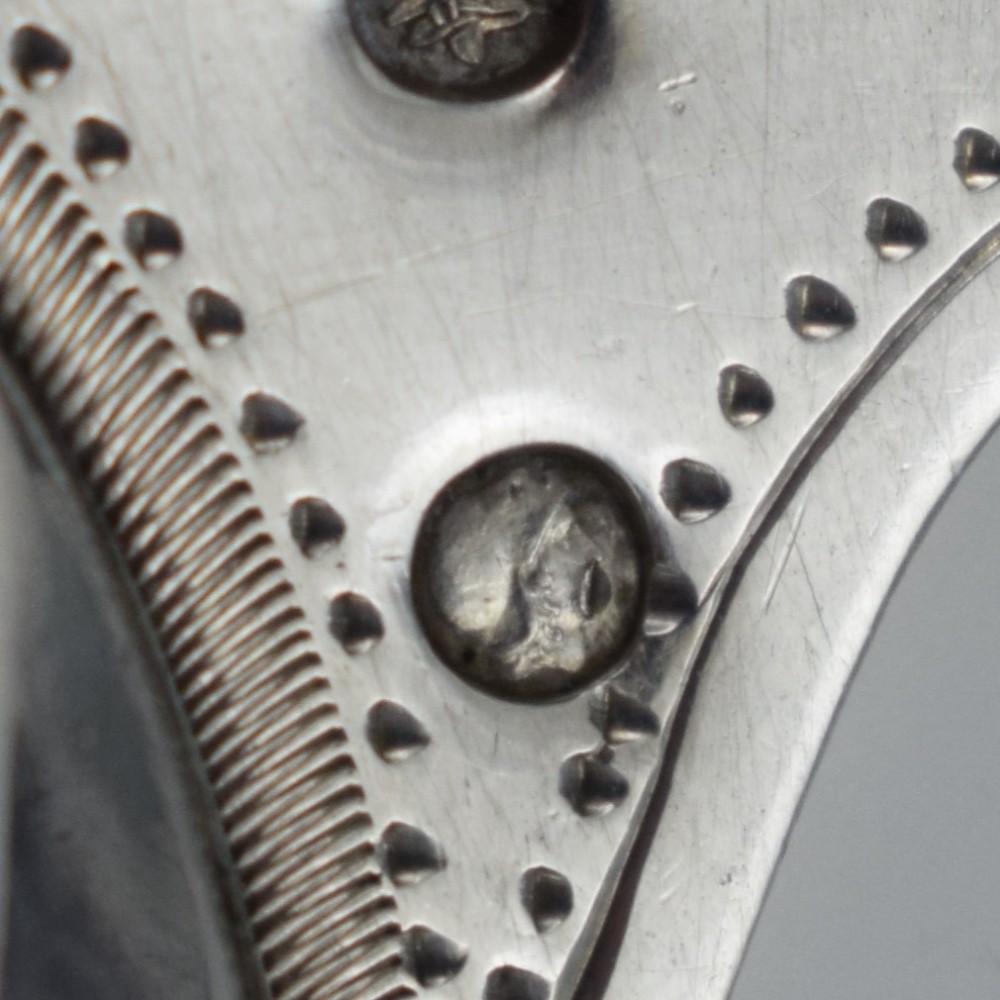
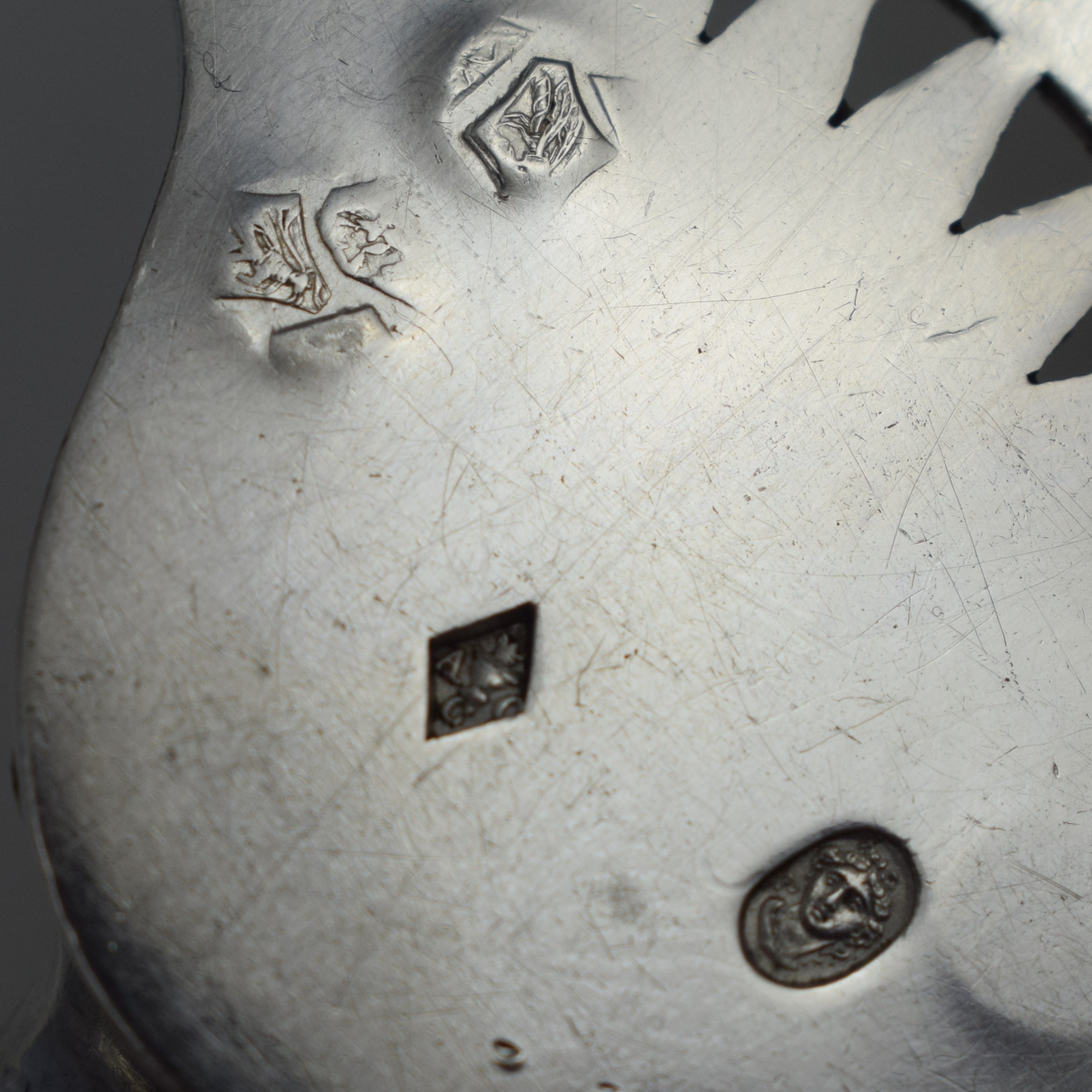
The underside of the slice is stamped with the makers mark and the Greek woman's head, an unofficial mark representing the Association of Gold & Silversmiths, dating for 1793. It also bears later marks for 1819 of the Paris cockerel (1809-1819) denoting a fineness of 0.950, the guarantee "moyenne" mark for Paris (1809-1819) and the inventory fleur de lys mark for Paris (August 1819-November 1819). It also bears a bigorne countermark to the reverse of a bibion (may fly) (August 1819-1838).*
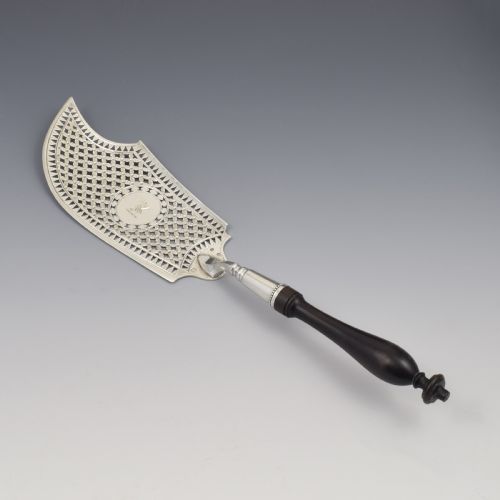
It measures 36cm (14 1/8") long and 7.7cm (3") wide.
In truly excellent condition with no damage or repair and very minor handling wear, the decoration and marks are all clear and crisp, a very fine example.
The array of stamps and hallmarks to the piece help to tell the story of the late 18th and early 19th century situation in France in respect of hallmarking. In 1791 a law was passed banning silversmith guild and associations and hallmarking and tax collection ceased. As a result quality standard of fineness started to be affected and so The Association of Gold & Silversmiths created two unofficial marks to denote quality, both as a Greek woman's head. The first was used in 1793 and is stamped to the underside of this fish slice alongside the maker's mark. Over the next few years, following the revolution, control was regained and various laws passed to ensure pieces were appropriately marked, with inventory marks, marks for fineness and the guarantee mark. Earlier pieces before being able to be offered for sale following these changes needed to be presented for recensing and new marks stamped accordingly. It is not unusual to find earlier 18th century silver pieces produced during the "Ancien Régime" with later marks to verify the new standards, and pieces such as this that did not have any official assessment clearly needed to pass through this process also. This item was presented to the guarantee office in 1819 and has a lovely set of marks to evidence this as described above.
I have tried to just simplify this story as relevant to this piece because there is a lot of it, fascinating as it sincerely is, but for a fuller explanation please see Tardy's International Hallmarks On Silver, France, of the periods described, and also the summary points of all the dates, laws, changes and marks related to inventory marks and countermarks is detailed excellently on this site https://www.silvercollection.it/ASCASRECENSEING.html
The Fancy Fox has dated this French Silver Fish Slice to the 18th Century.
Offering fine porcelain and pottery, 18th century and later, silver, glass and other small attractive pieces
You can view the stock and full dealer information on the The Fancy Fox Profile Page
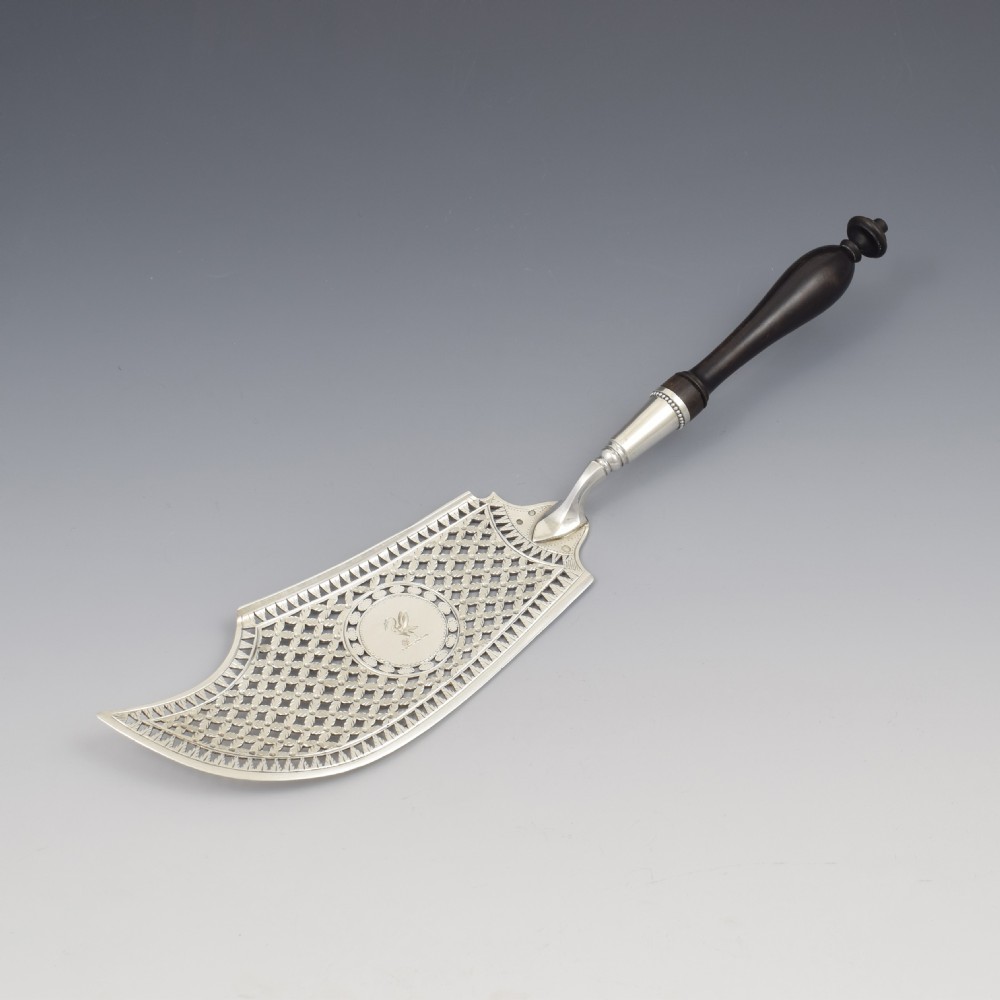

Fine 18th Century French Pierced 0.950 Silver Fish Slice Server Paris