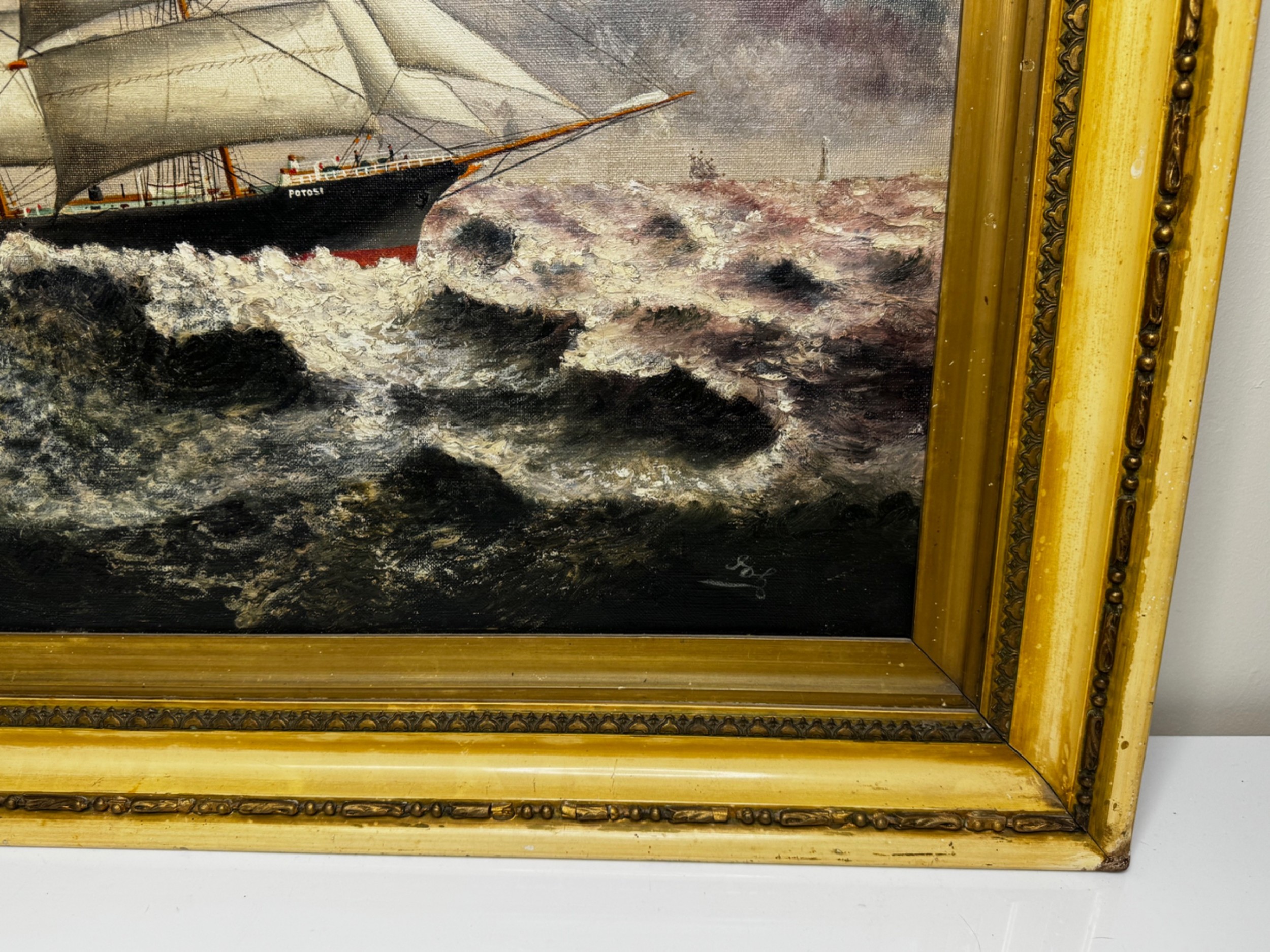
Cheshire Antiques Consultant Ltd has dated this Antique Maritime Oil Painting to the 1900s.
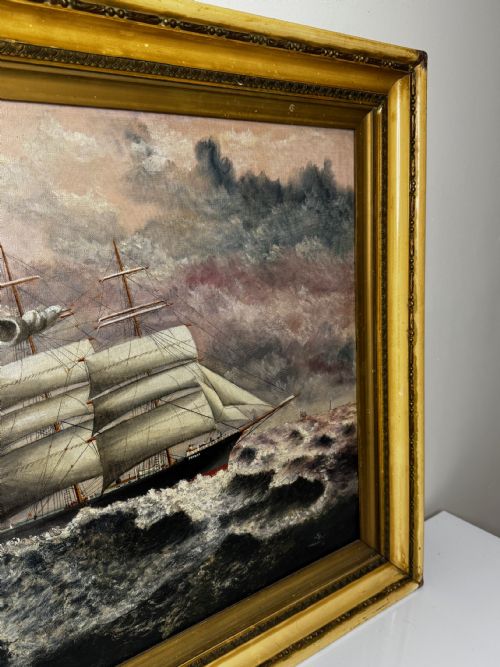
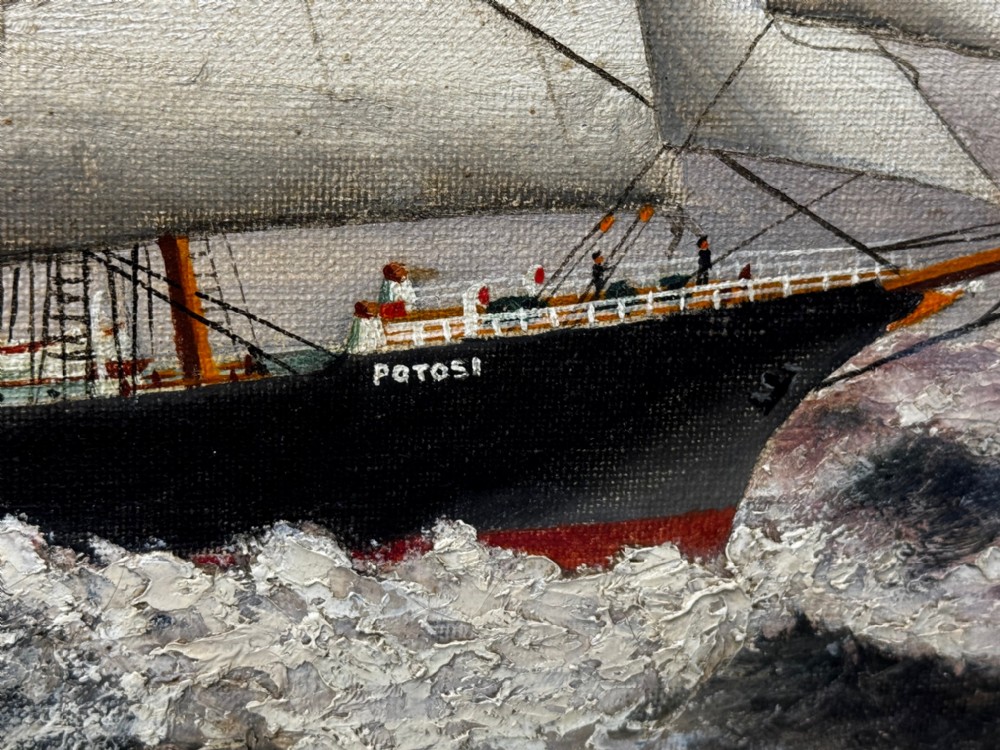
Inscribed verso Potosi Launched June 8th 1895.
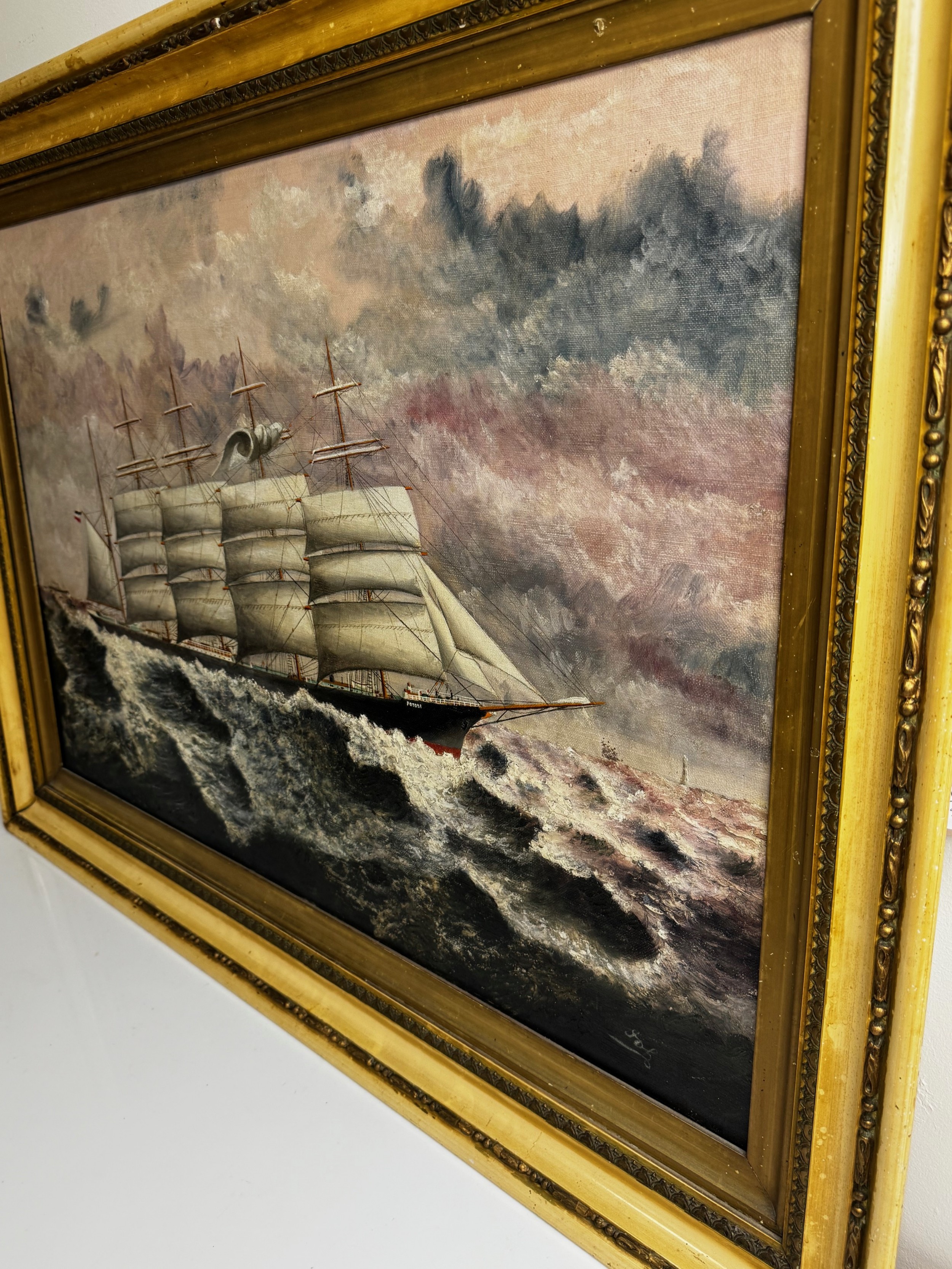
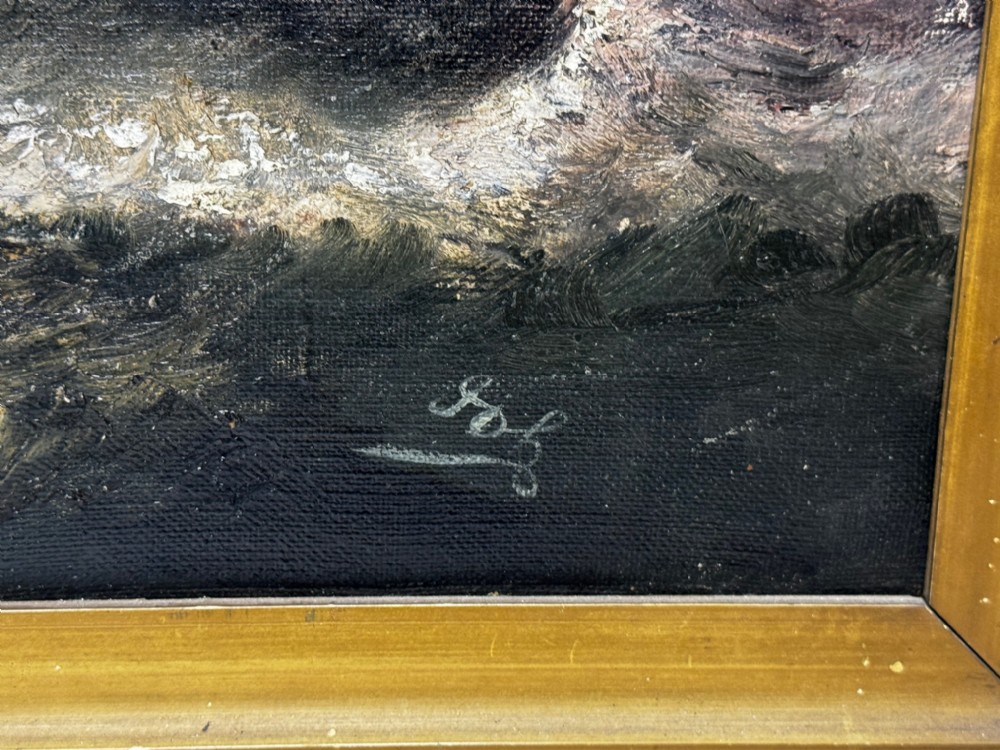
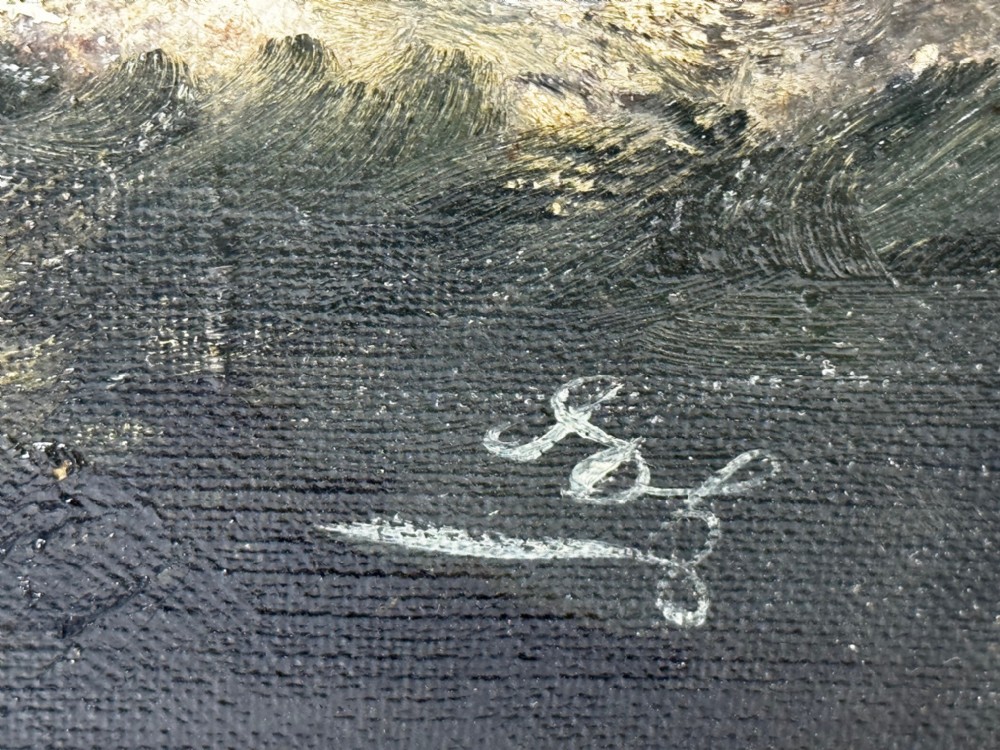
Signed in the bottom corner by the British artist Job.
C1900 beginning of the 20th century.
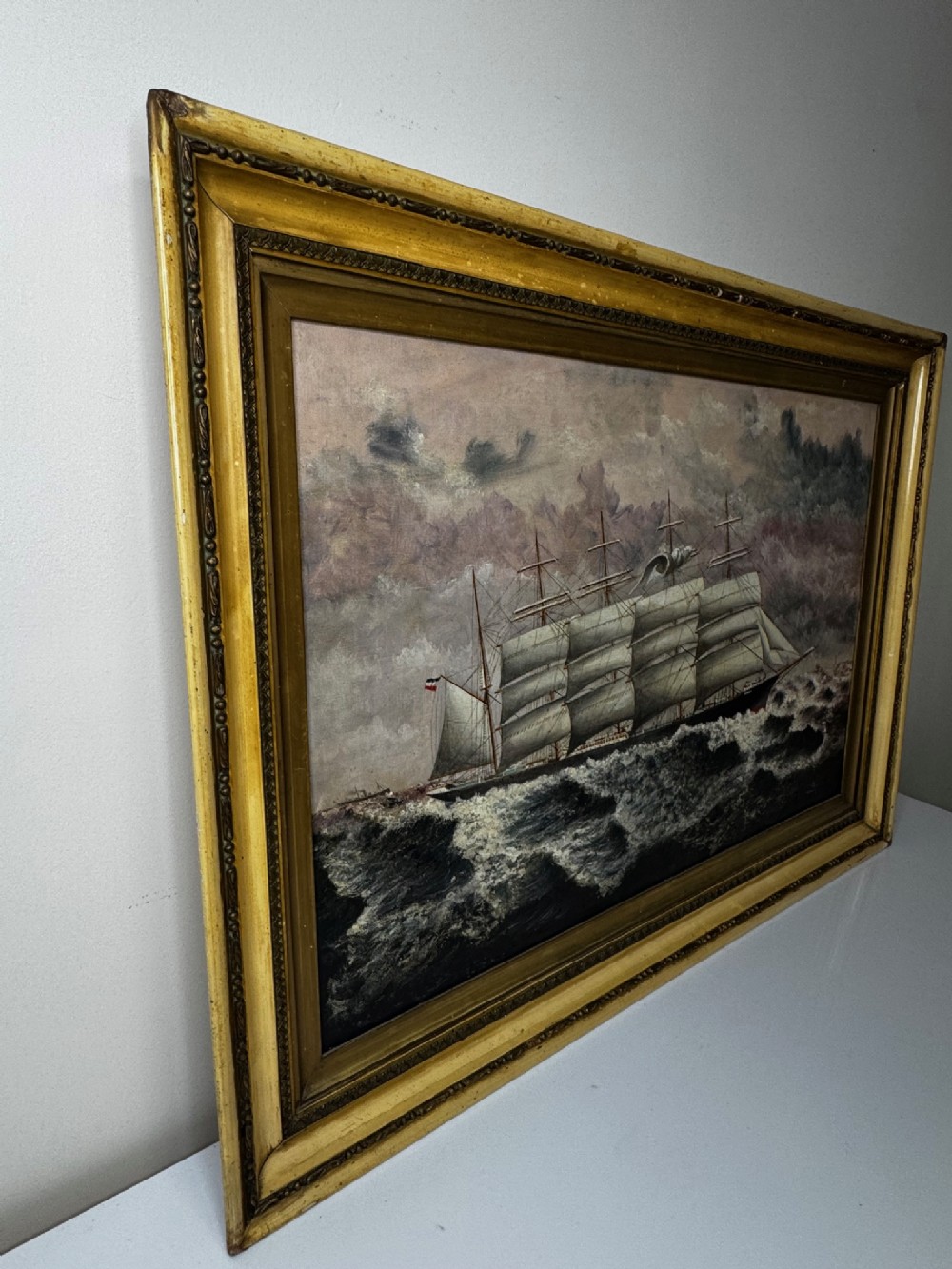
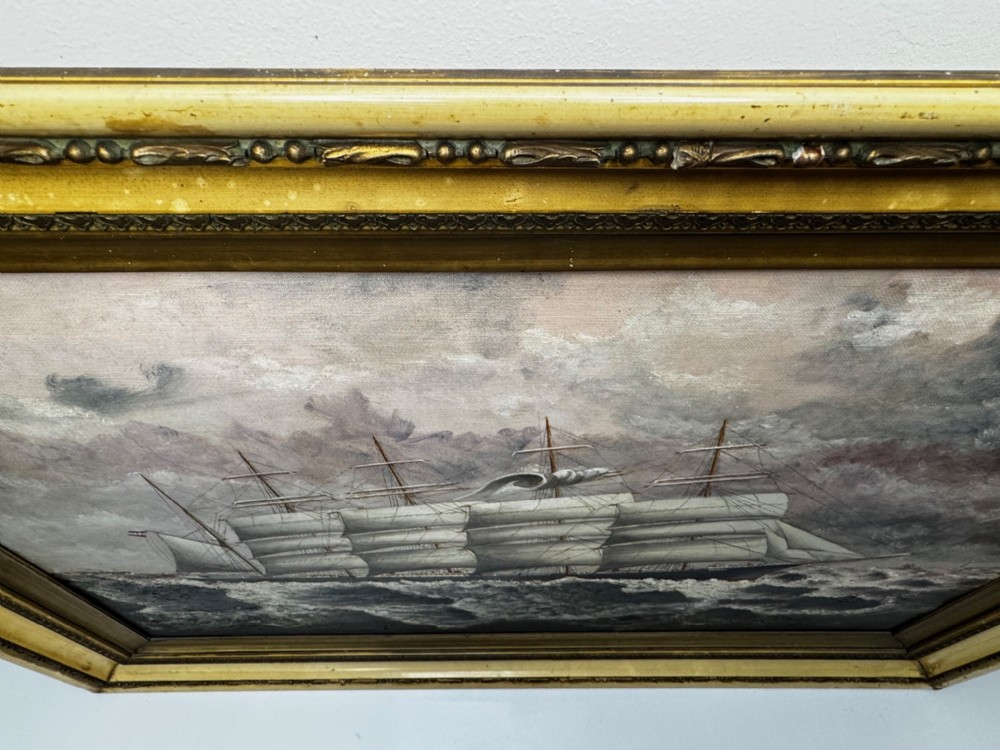
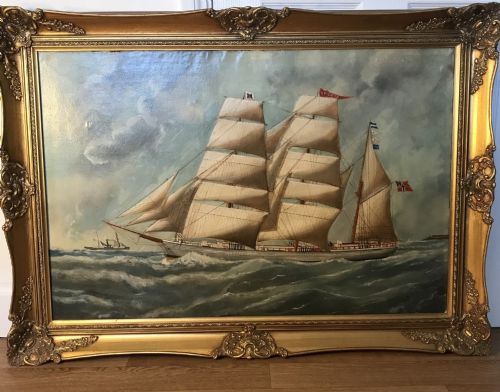
Oil on canvas set in original decorative gilt frame.
Large proportion sized frame being 110 cm wide and 79.5 cm high.
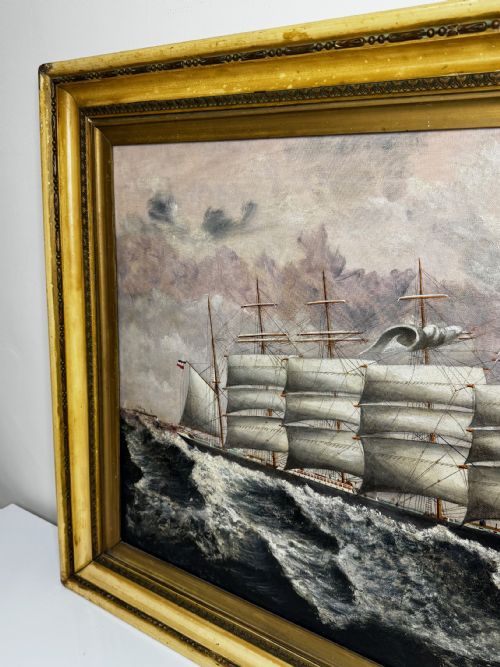
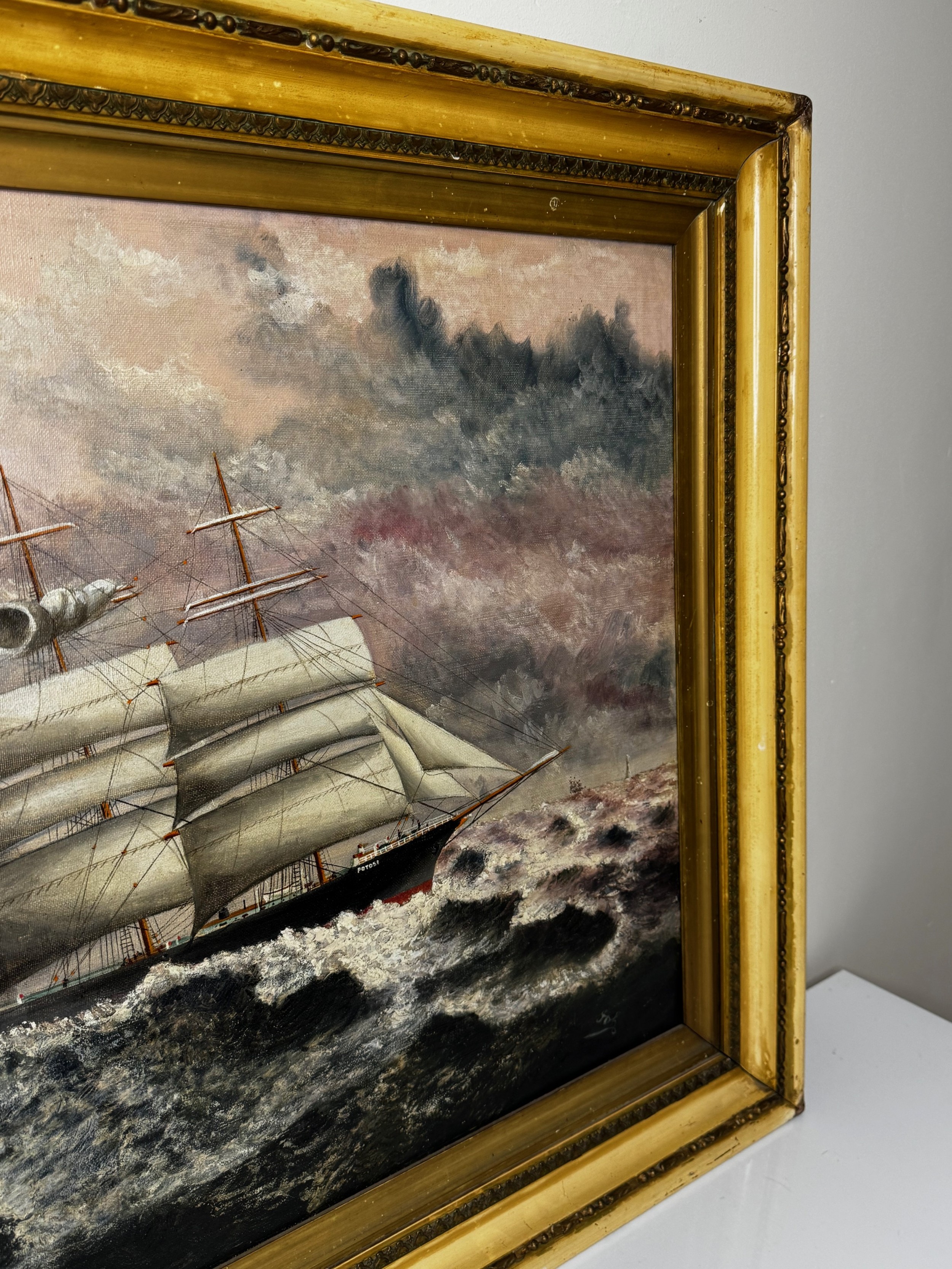
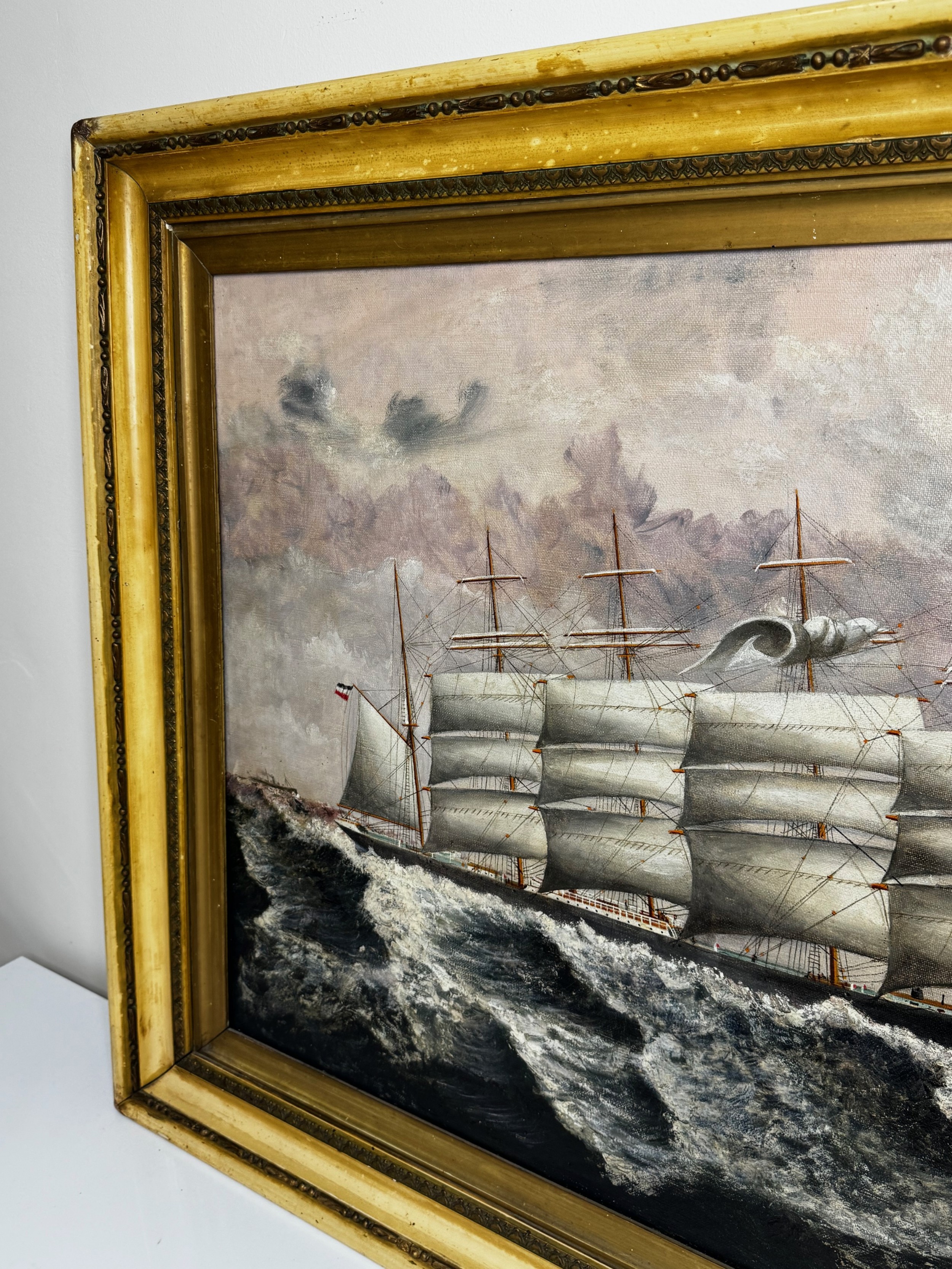
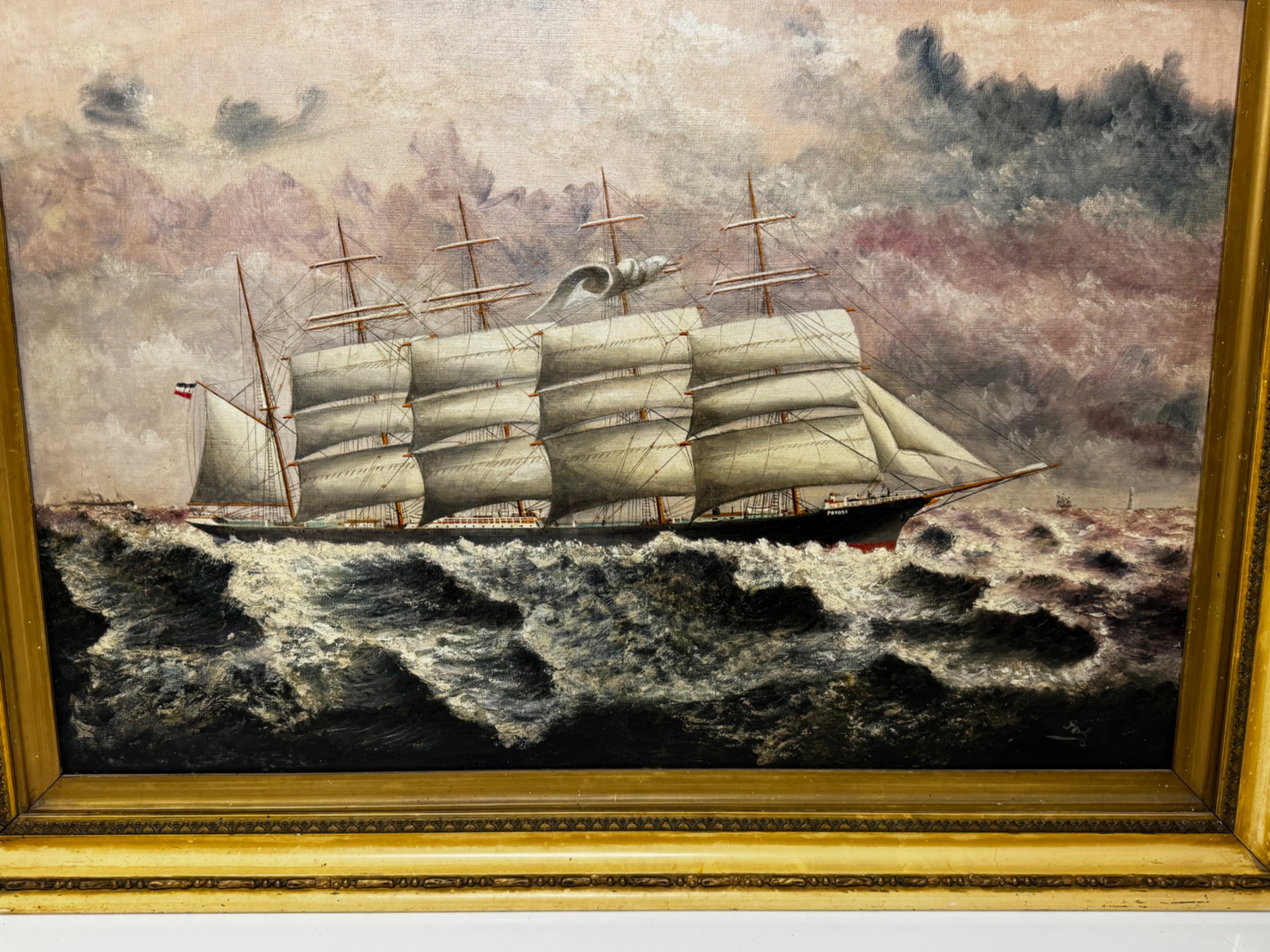
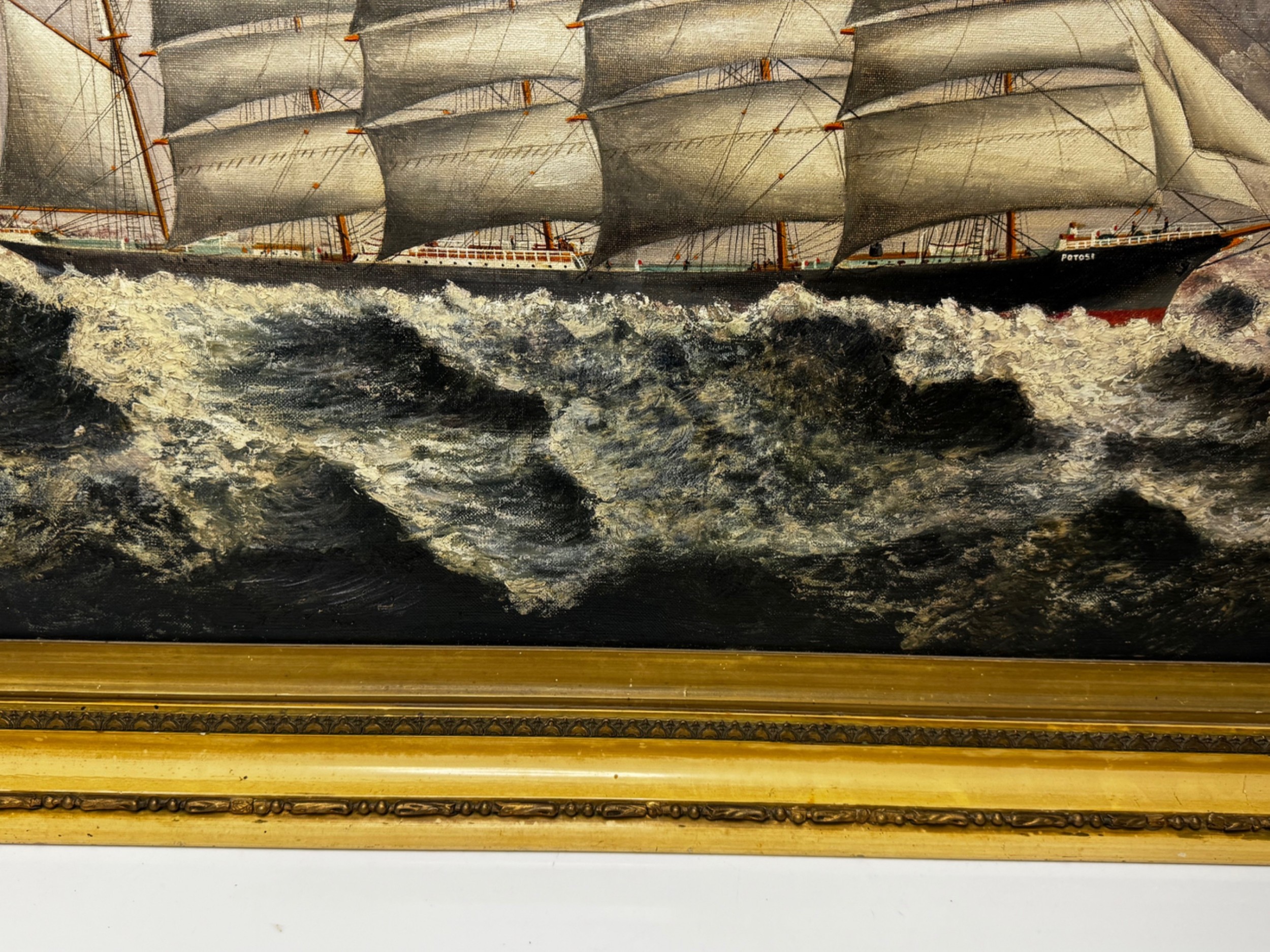
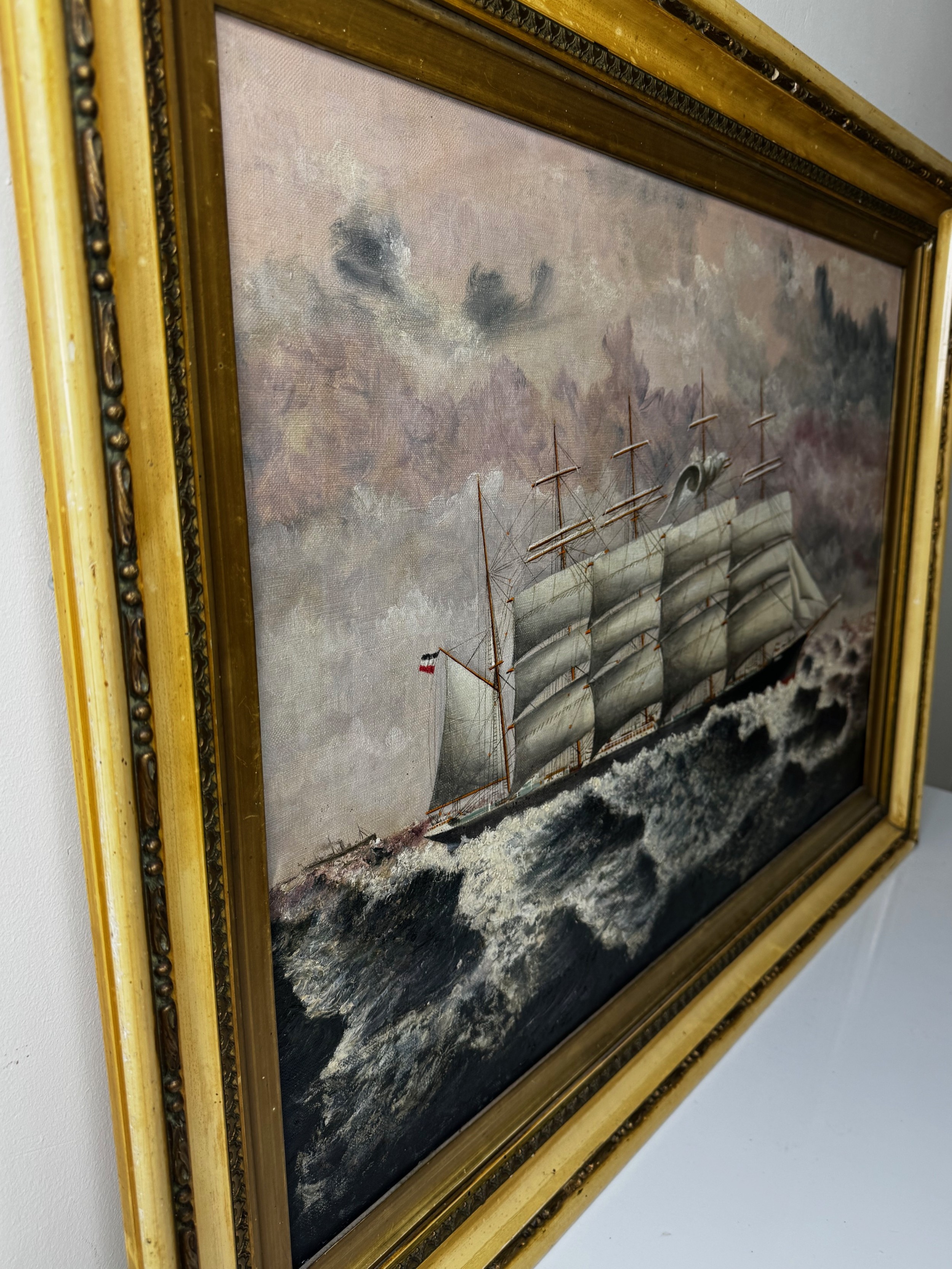
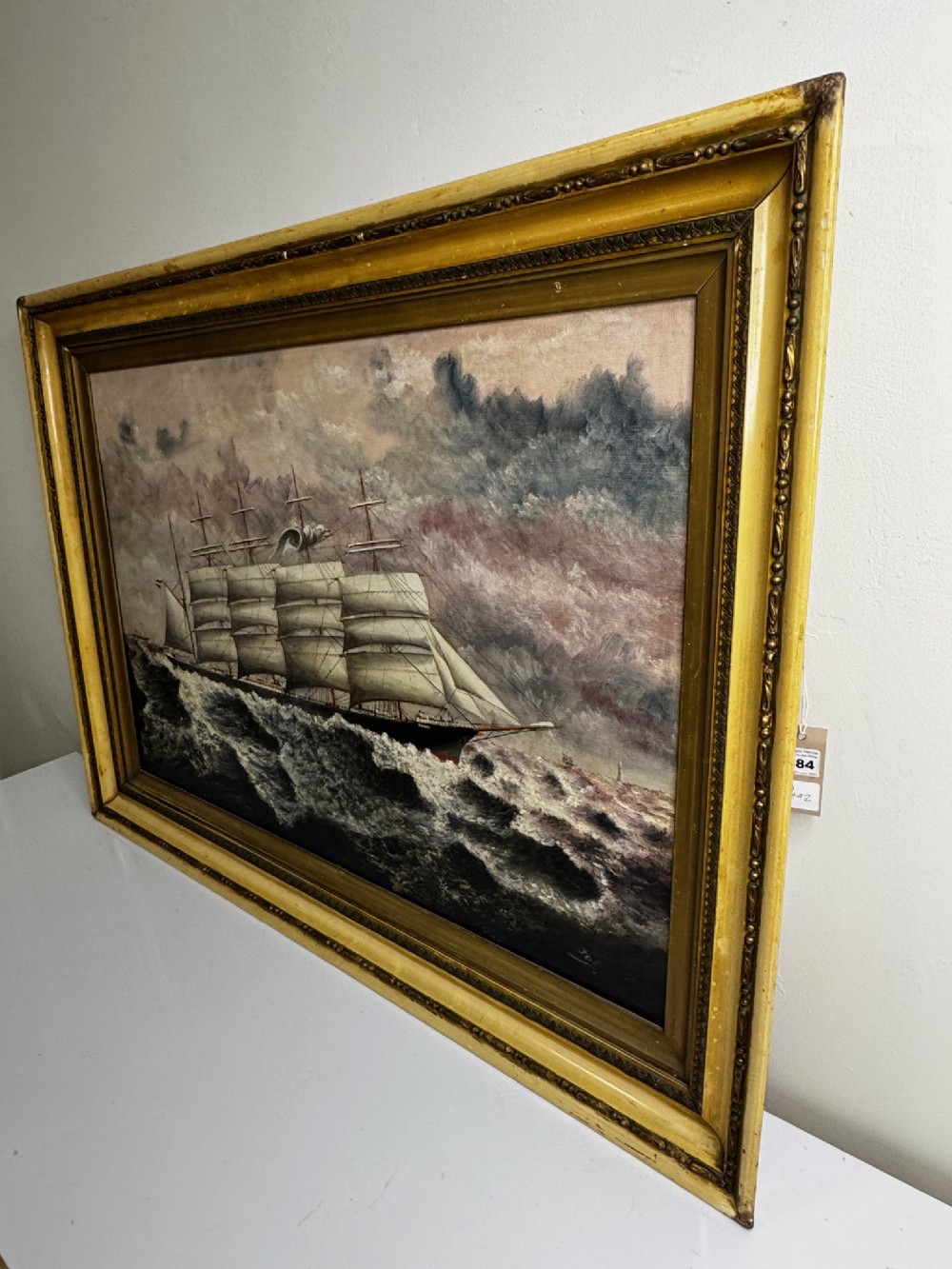
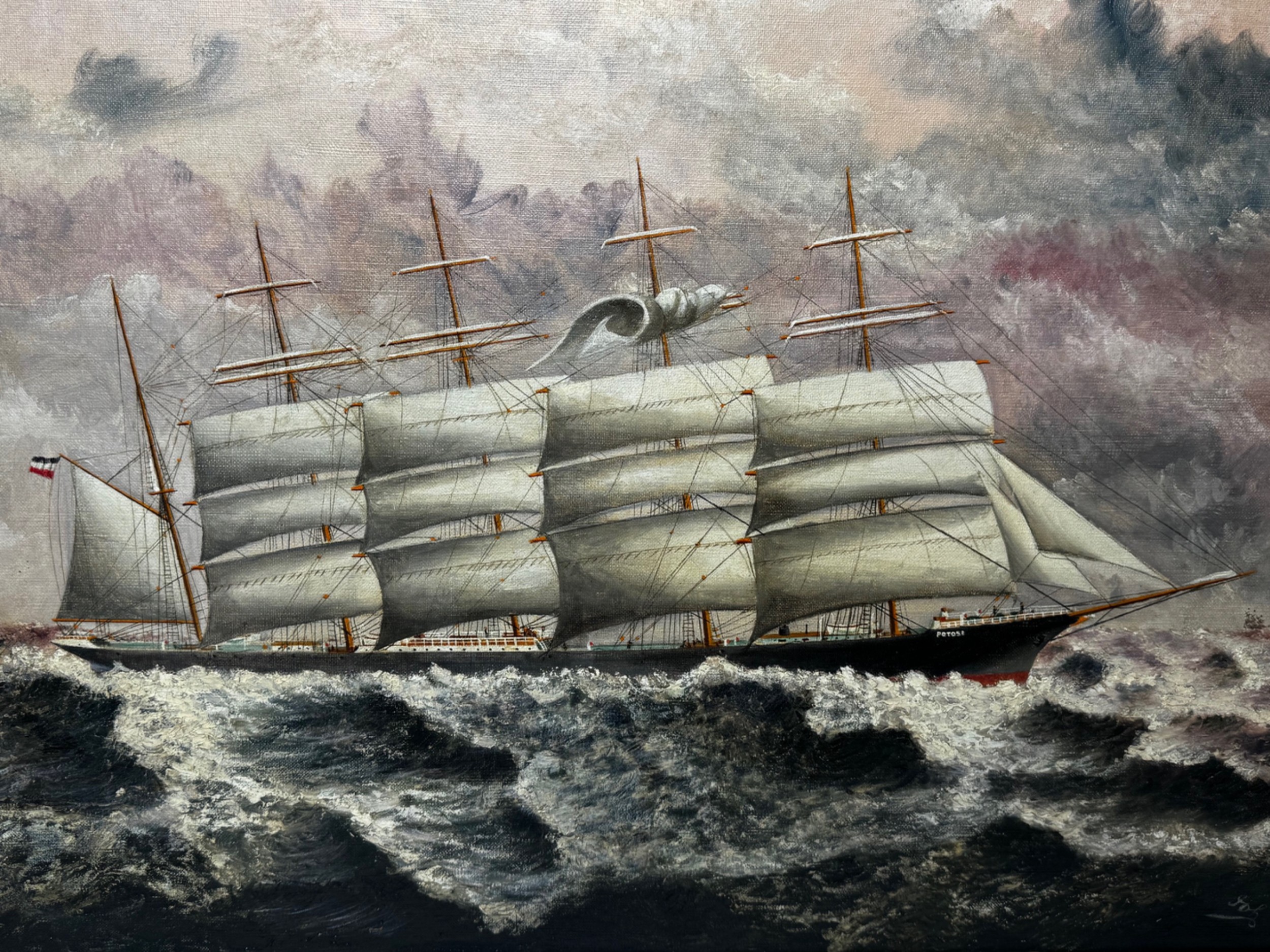
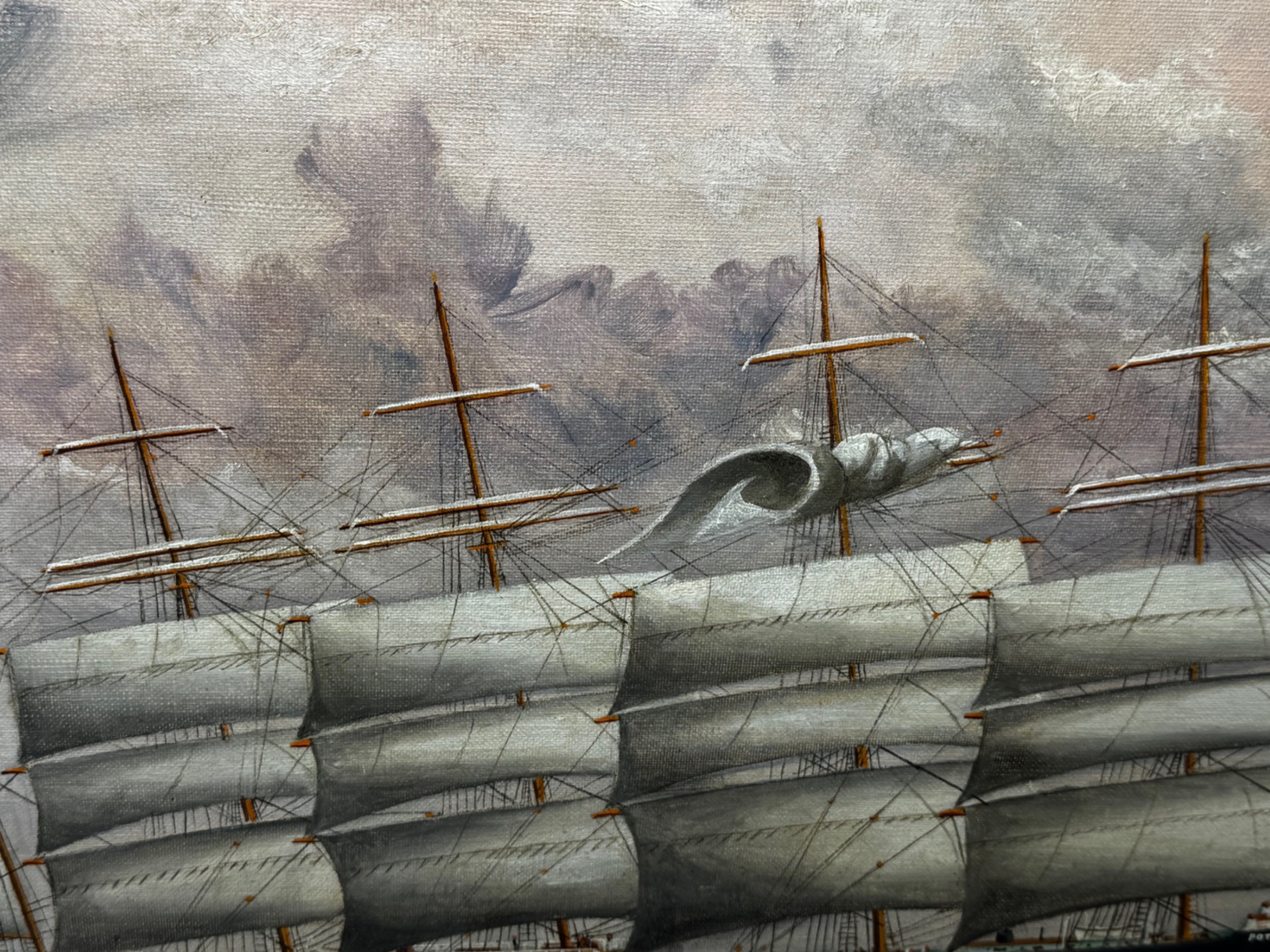
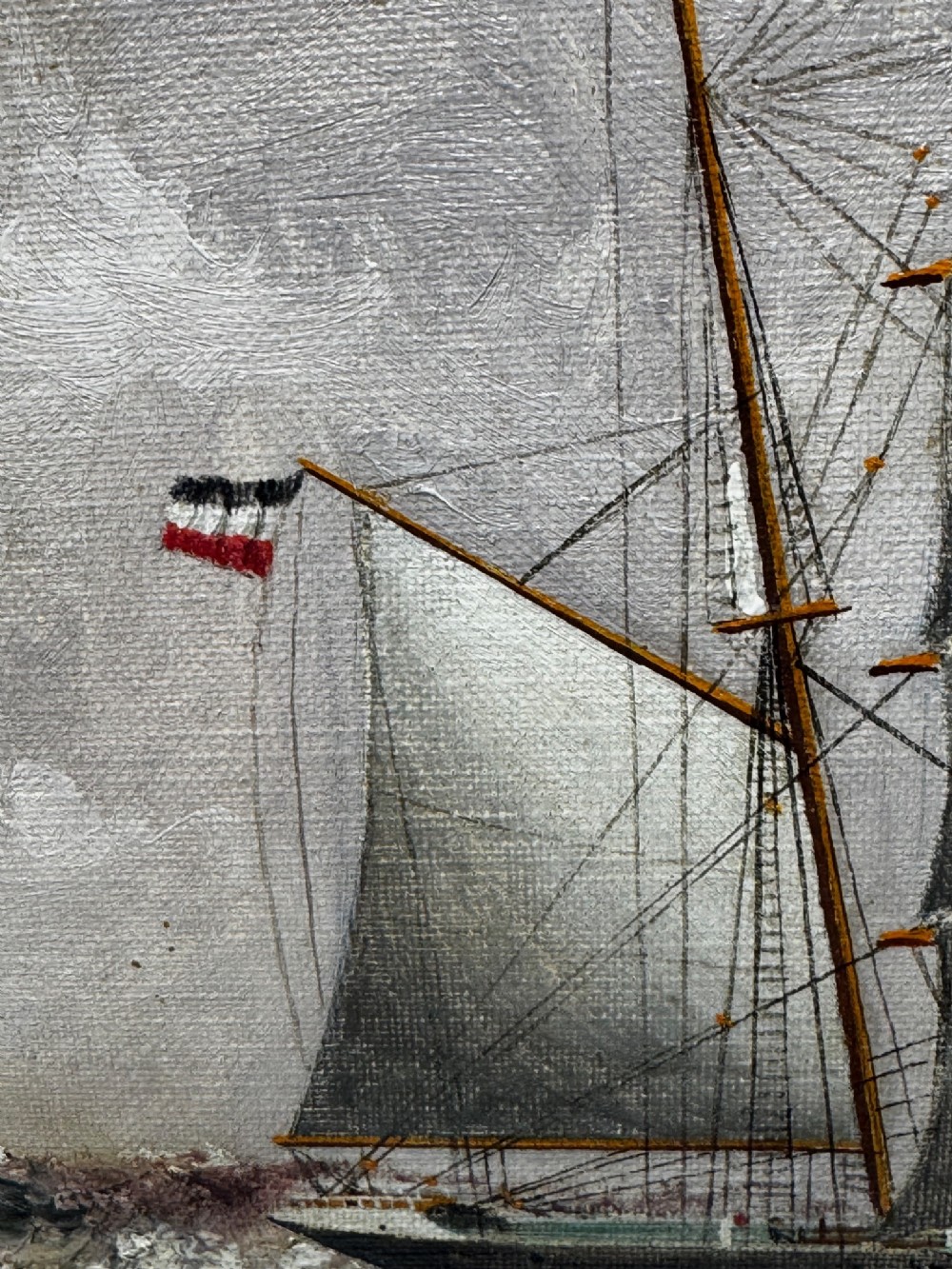
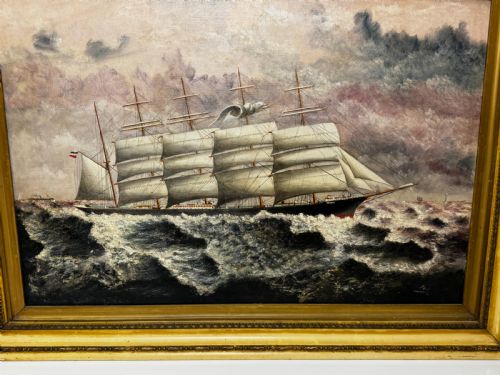
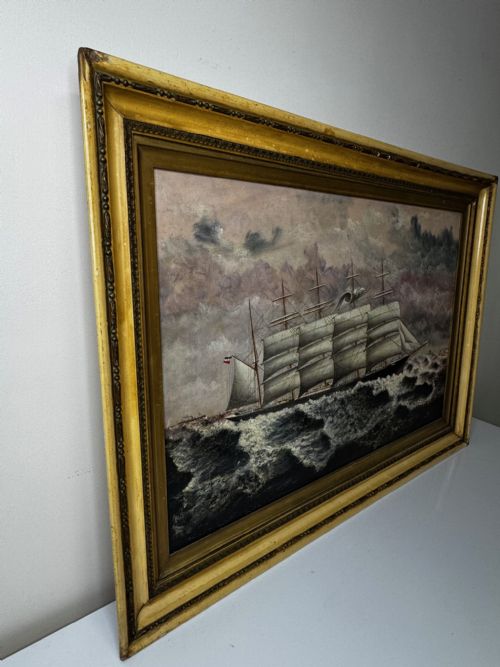
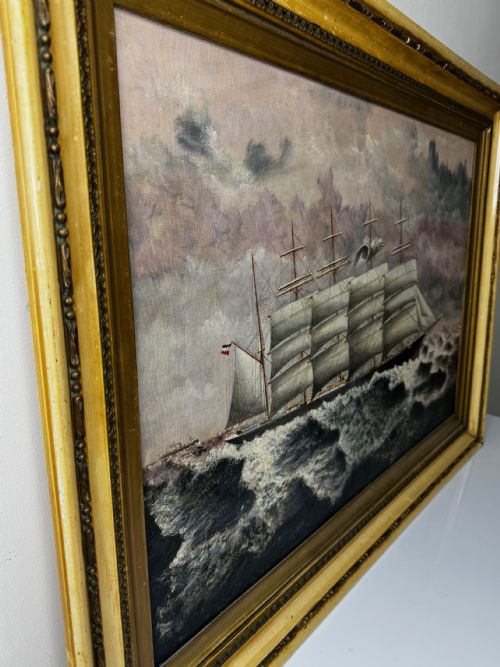
Title “Steel Hull Barque 5 Masted Ship Potosi Navigating Drakes Passage” C1900 by artist Job.
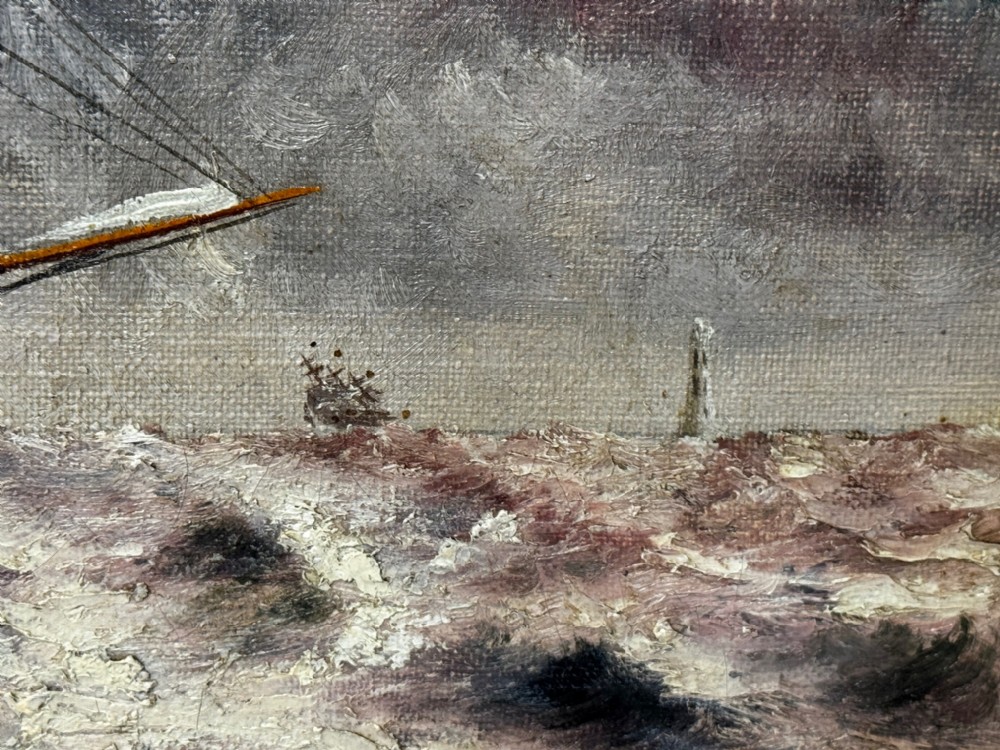
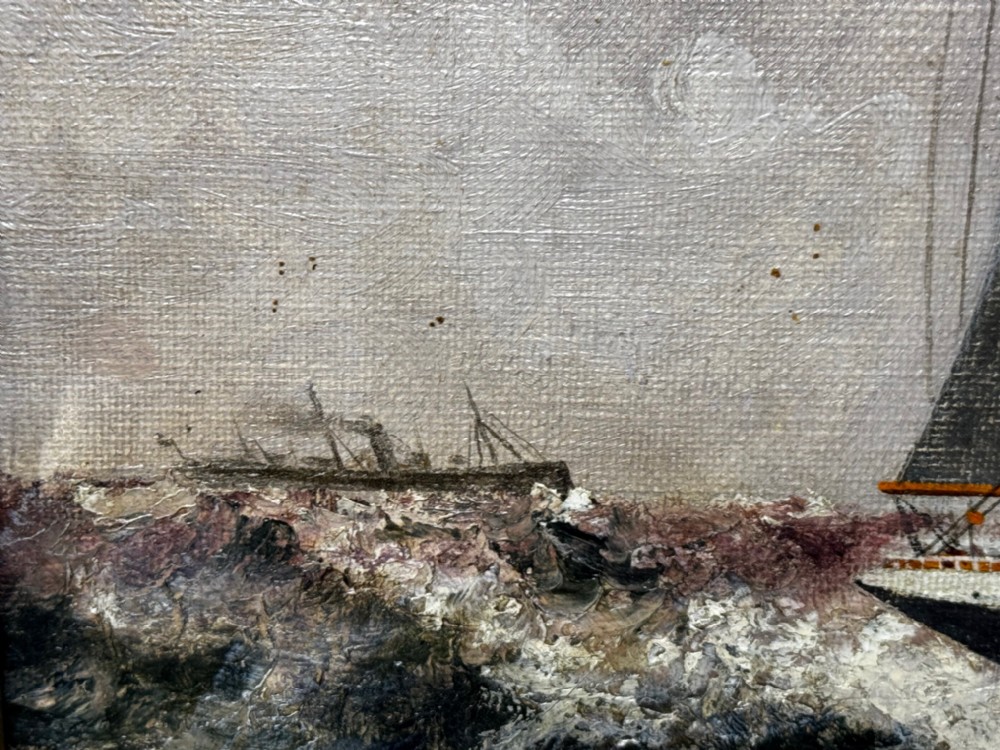
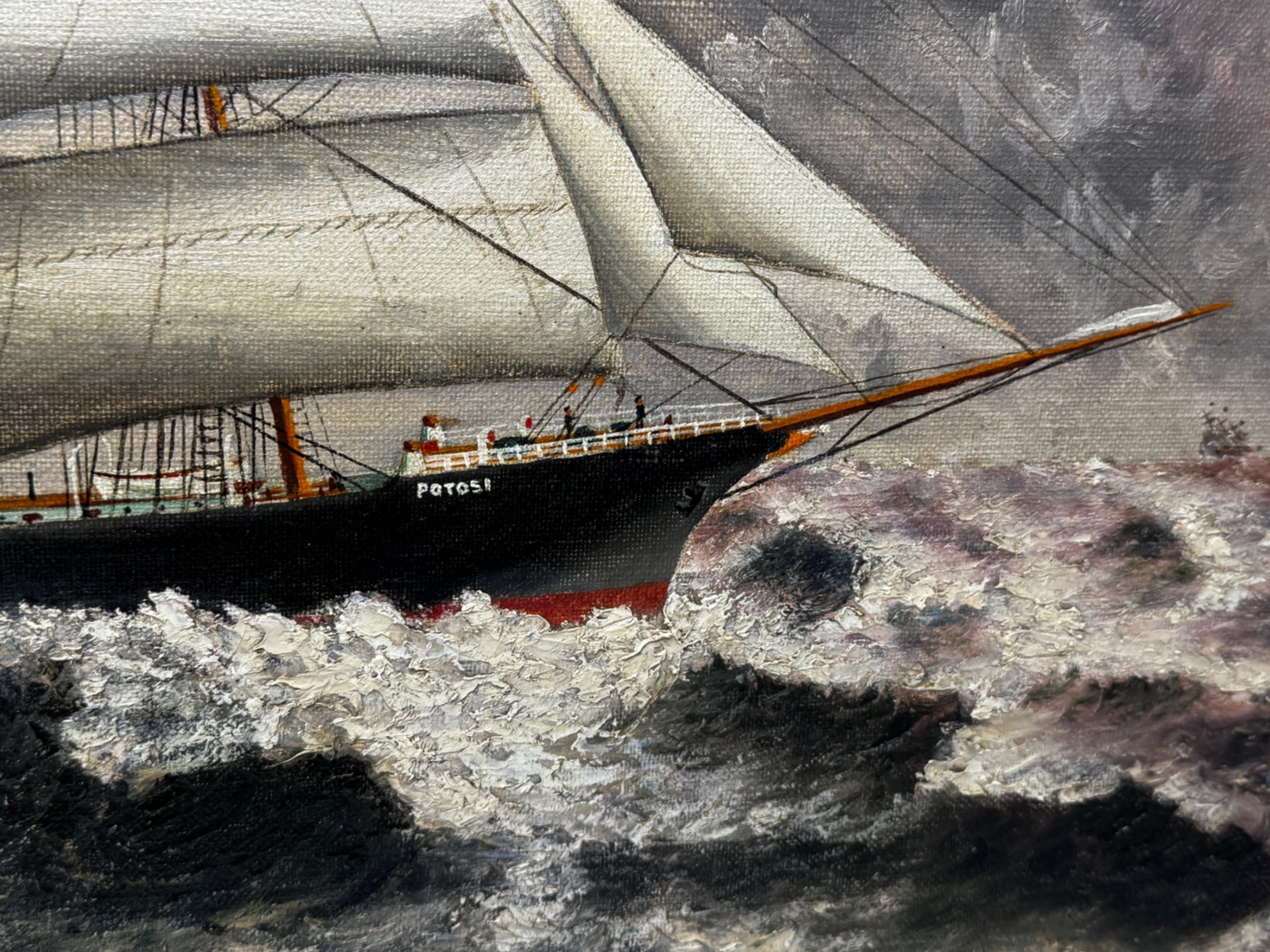
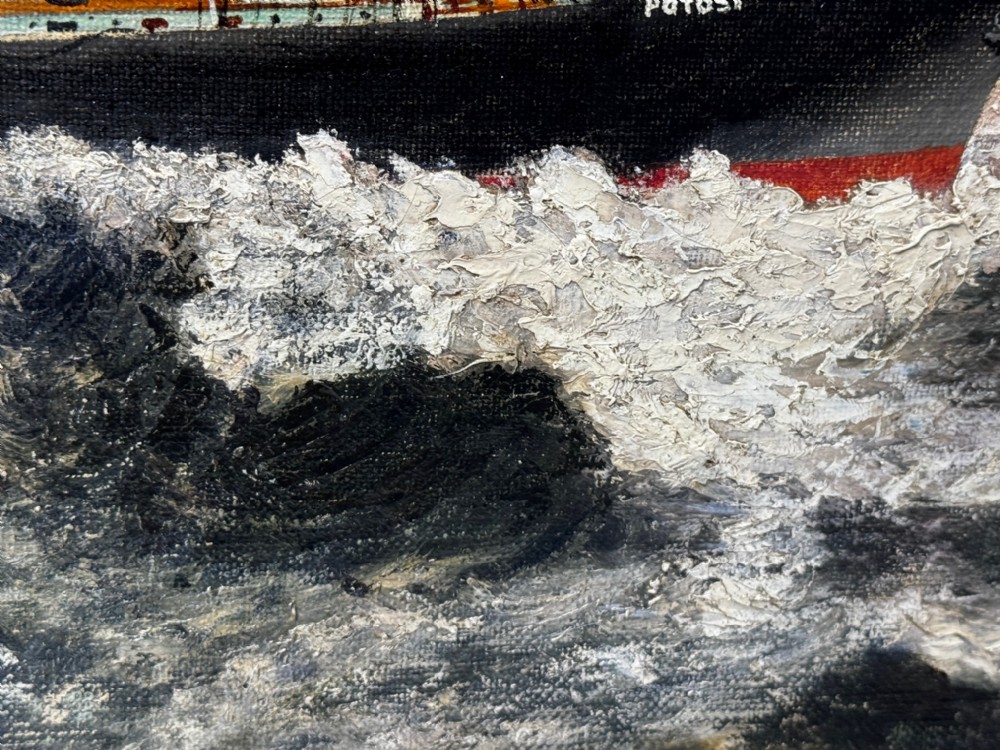
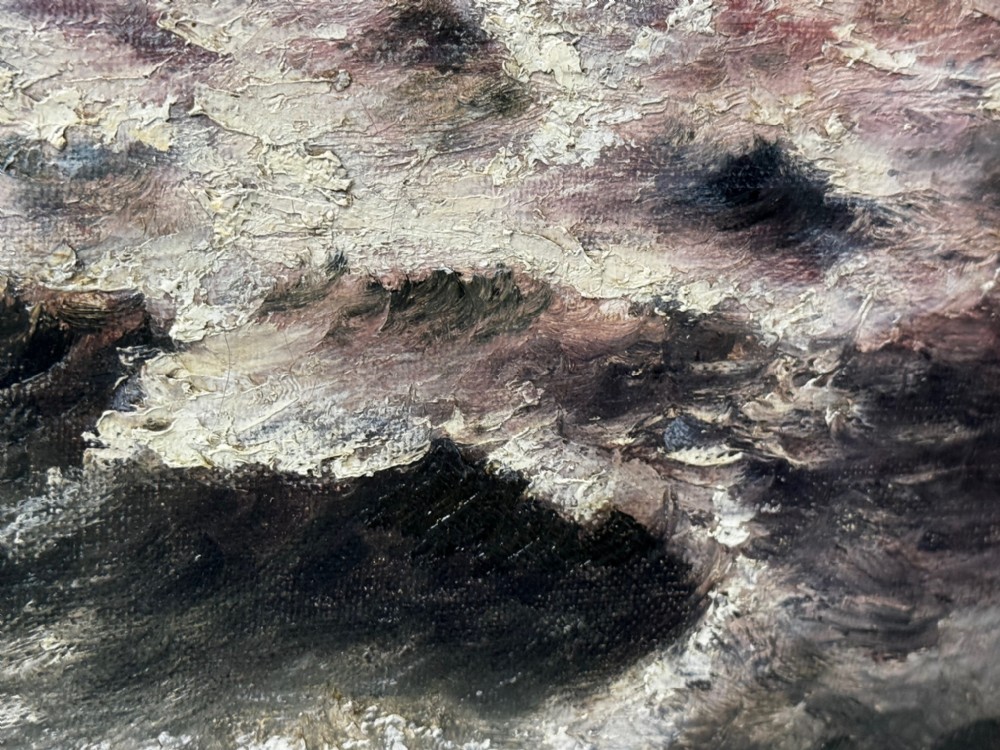
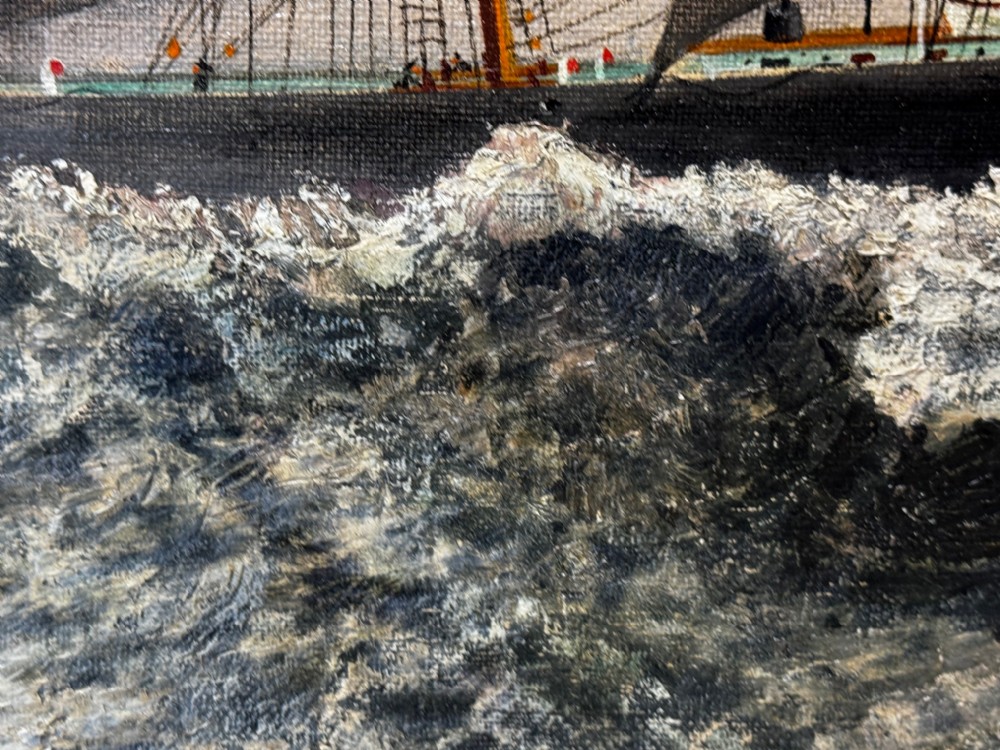
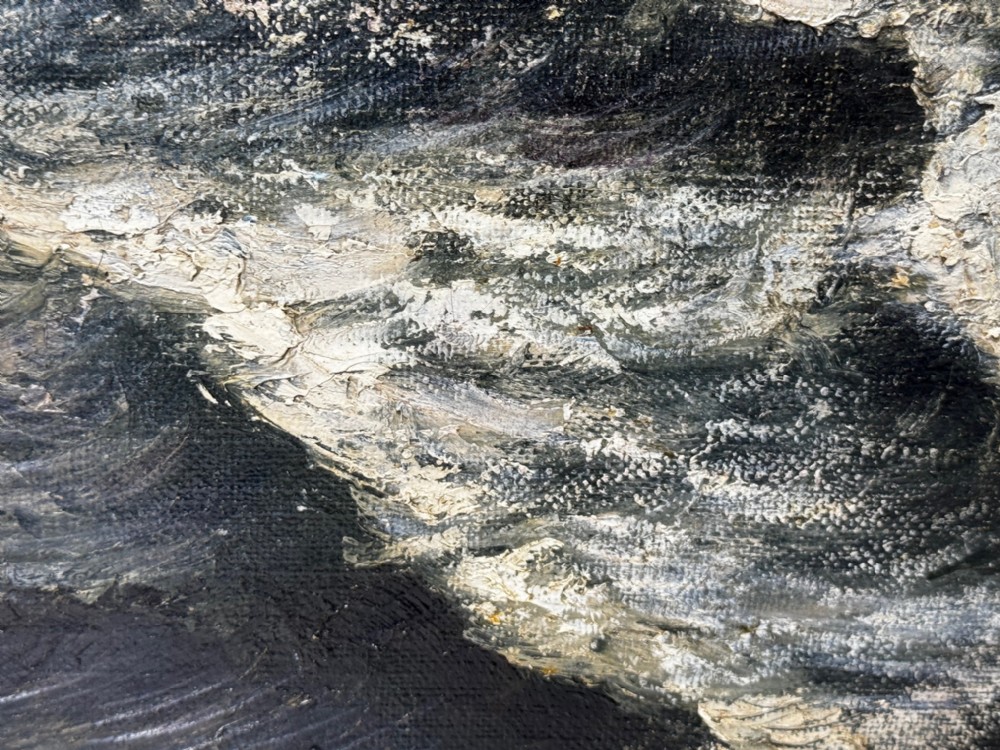
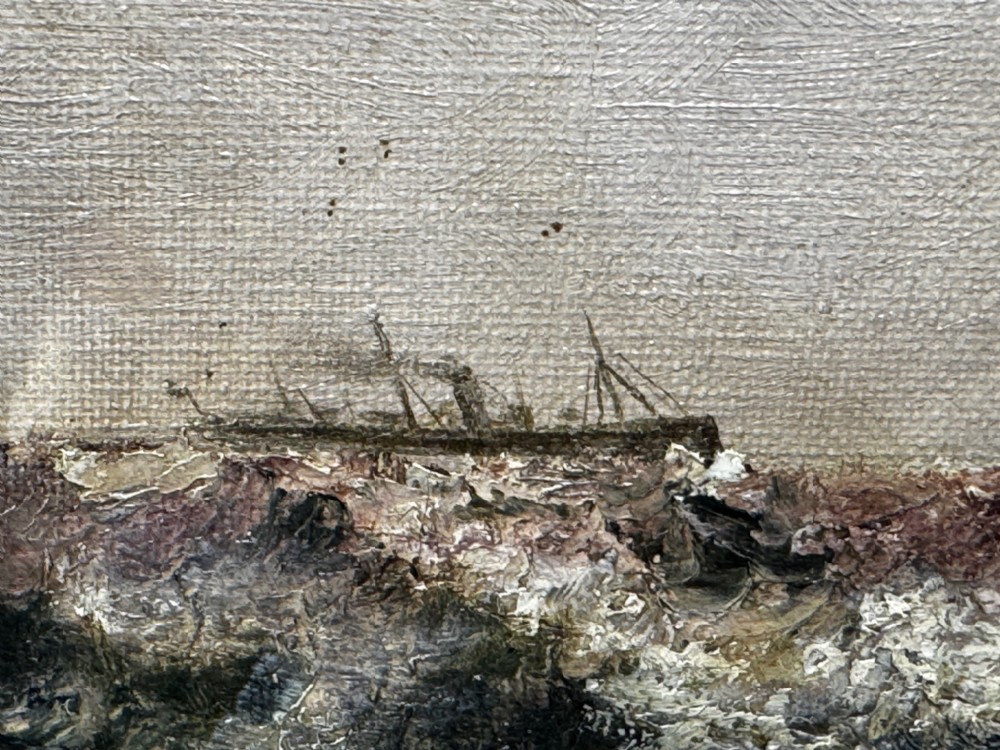
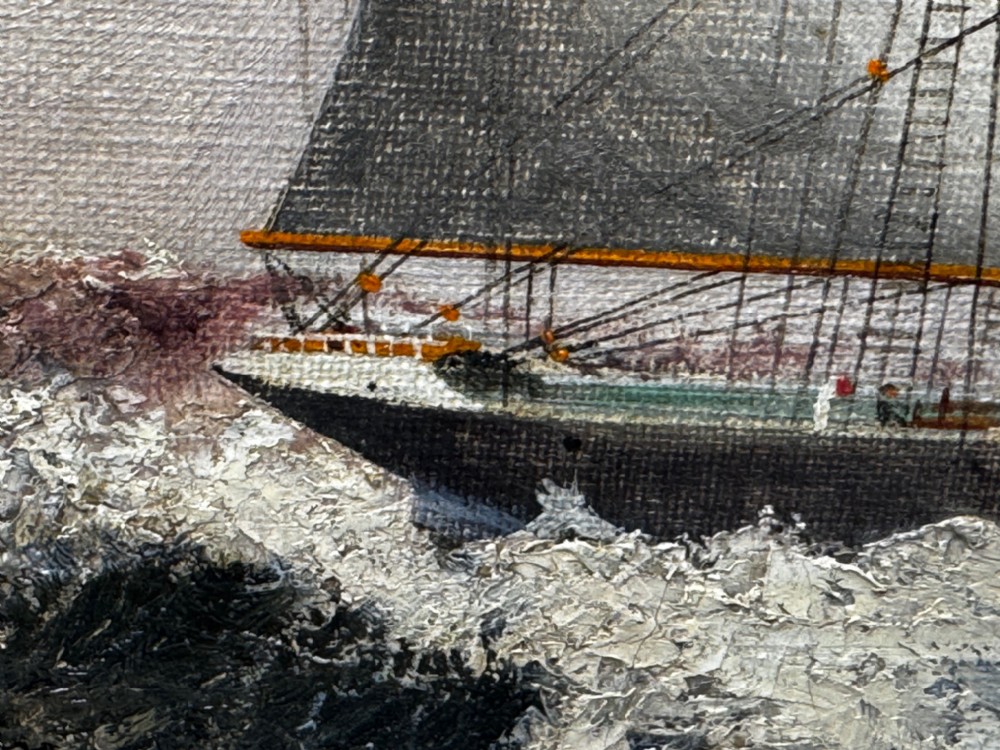
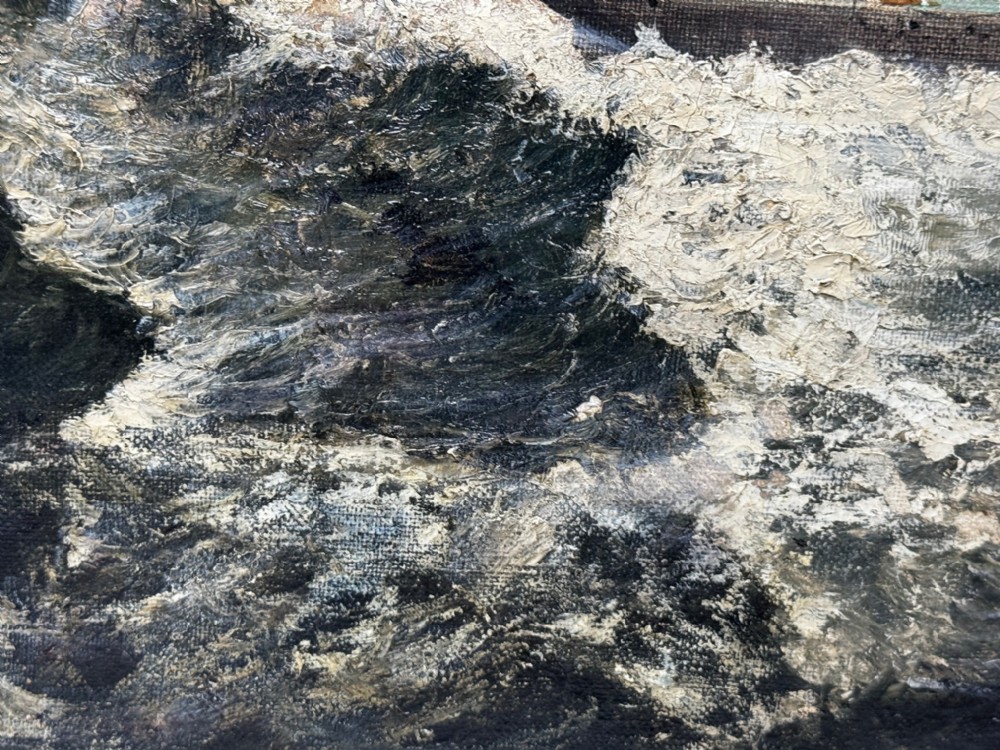
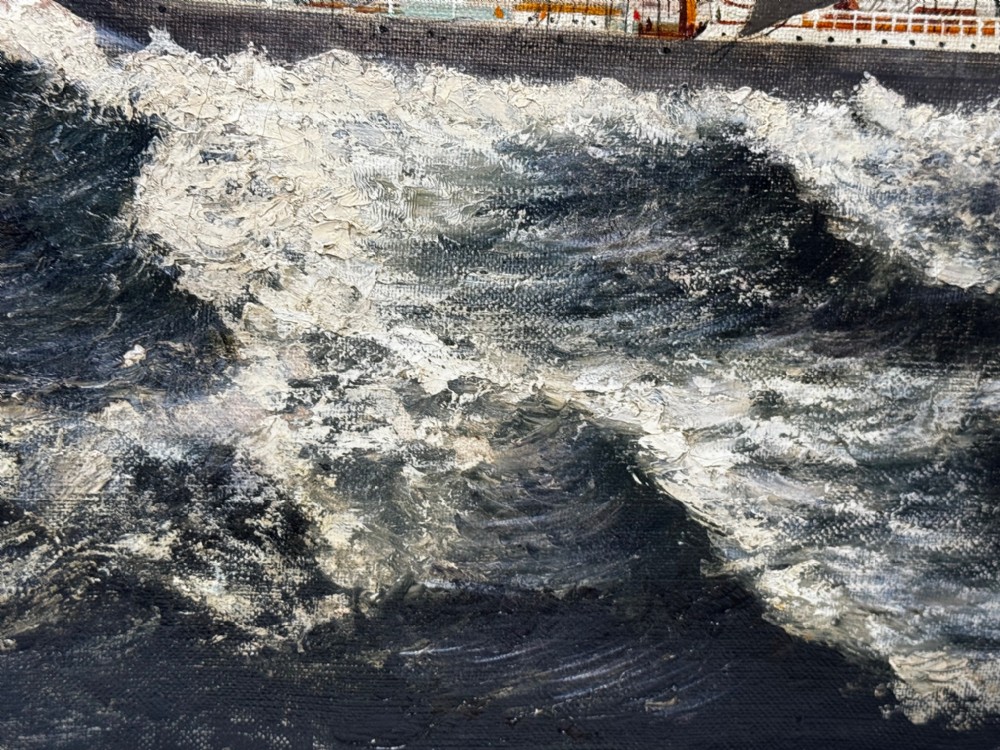
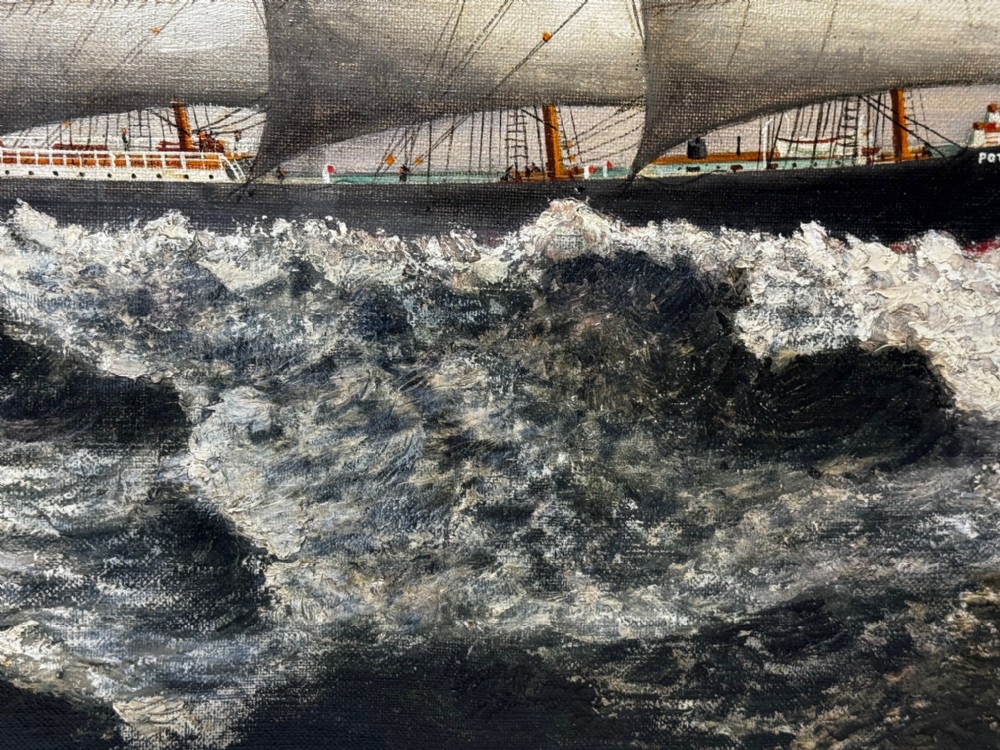
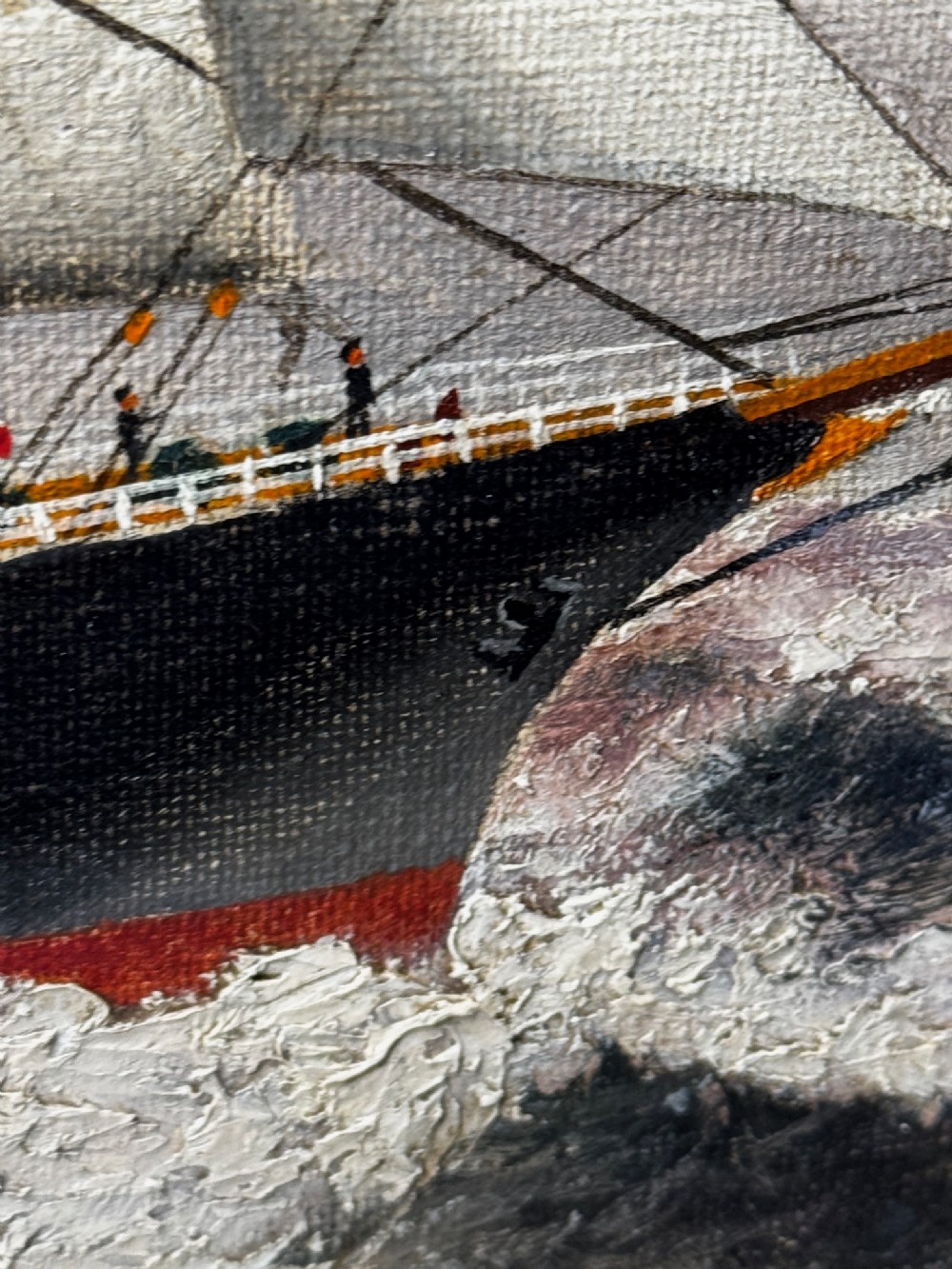
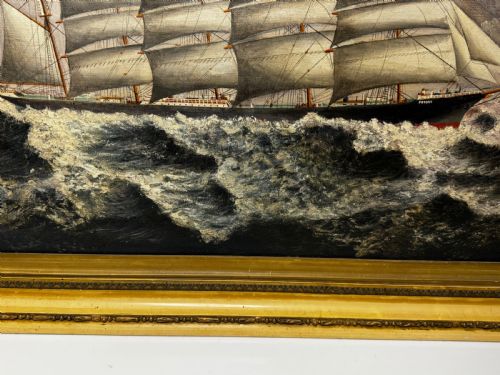
Your focus is first drawn to the large Potosi sailing ship in side profile heading to the right. In the notorious dangerous Drakes Passage. Bravely sailing along fierce large whitewater cap waves which are breathtaking. The ship is has 5 tall masts, the top section sails have been folded away. In the distance on the left flank is a steam ship and on the opposite flank a tall sail ship by Cape Horn Lighthouse.
Potosi was a five-masted steel hull barque bulk, nitrate carrier built in 1895 by Joh. C. Tecklenborg ship yard in Geestemünde, Germany, for the sailing ship company F. Laeisz as a trading vessel. The naval architect was Dr Georg Wilhelm Claussen. Built at yard number 133. Tonnage 4,027 GRT, displacement 8350 ts, length 436ft (133 m), beam 49.7 ft (15.1m) height 210.96 ft (64.30m) & draft 25.49 ft (7.77m/). 2 continuous decks, poop, midship & forecastle decks. Its primary purpose was as a "nitrate clipper" collecting guano in South America for use in chemical companies in Germany (mainly for making explosives and fertiliser). As its shipping route was between Germany, Bolivia until 1870 but, during the "pacific War" was transferred to Chile, it was designed to be capable of withstanding the rough weather encountered around Cape Horn.
Potosi was named after the Bolivian town of Potosí (the highest city in the world), its name beginning with "P" according to a Laeisz' tradition begun in the 1880s. The Potosi and sister ships became known as the Flying P Line and were described by Robert Carter as "without doubt, the most successful fleet of sail-driven ships ever assembled under one flag. Potosi had five masts and was rigged as a barque, meaning that the first four masts were square-rigged, each carrying six sails, and the fifth mast carried three fore-and-aft-sails. She was the third windjammer in the world merchant fleet with that kind of rigging, after the France I of the Antoine-Dominique Bordes line of Bordeaux, and the first German (auxiliary) steel barque Maria Rickmers of the Rickmers line.
In total, within the world merchant fleet, there were only six windjammers of this class of five-masted barque rigging, with four masts having carried five, six or partly seven sails on each mast: France I, Maria Rickmers(carried seven sails (skysails) on fore, main, mizzen masts, jigger mast with six sails), Potosi, R.C. Rickmers, France II (carried five sails as a bald header), and København The Potosi's shipping line sister ship, Preussen also had five masts, but was square rigged on each mast.
The idea of building such a ship for the Laeisz fleet came from the famous Laeisz-captain Robert Hilgendorf, who was to become the Potosi's first master. His considerations and ideas had a great influence on the ship's design and he was the supervising ship officer when the huge barque was under construction. She was assigned the call sign RKGB, and as with all P-liners her hull was black with a white waterline and a red underwater ship—the colours of the German flag at that time. Author Daniel S. Parrott describes the features of the "Flying P-Liners" and says "The effectiveness of the Flying P-Line lay not only in the construction of the vessel but also in their management." He also points out that "none of the fo
Cheshire Antiques Consultant Ltd has dated this Antique Maritime Oil Painting to the 1900s.
Source the historic in 17th, 18th, 19th & 20th century fine arts, painting, sculptures & collectibles
You can view the stock and full dealer information on the Cheshire Antiques Consultant Ltd Profile Page
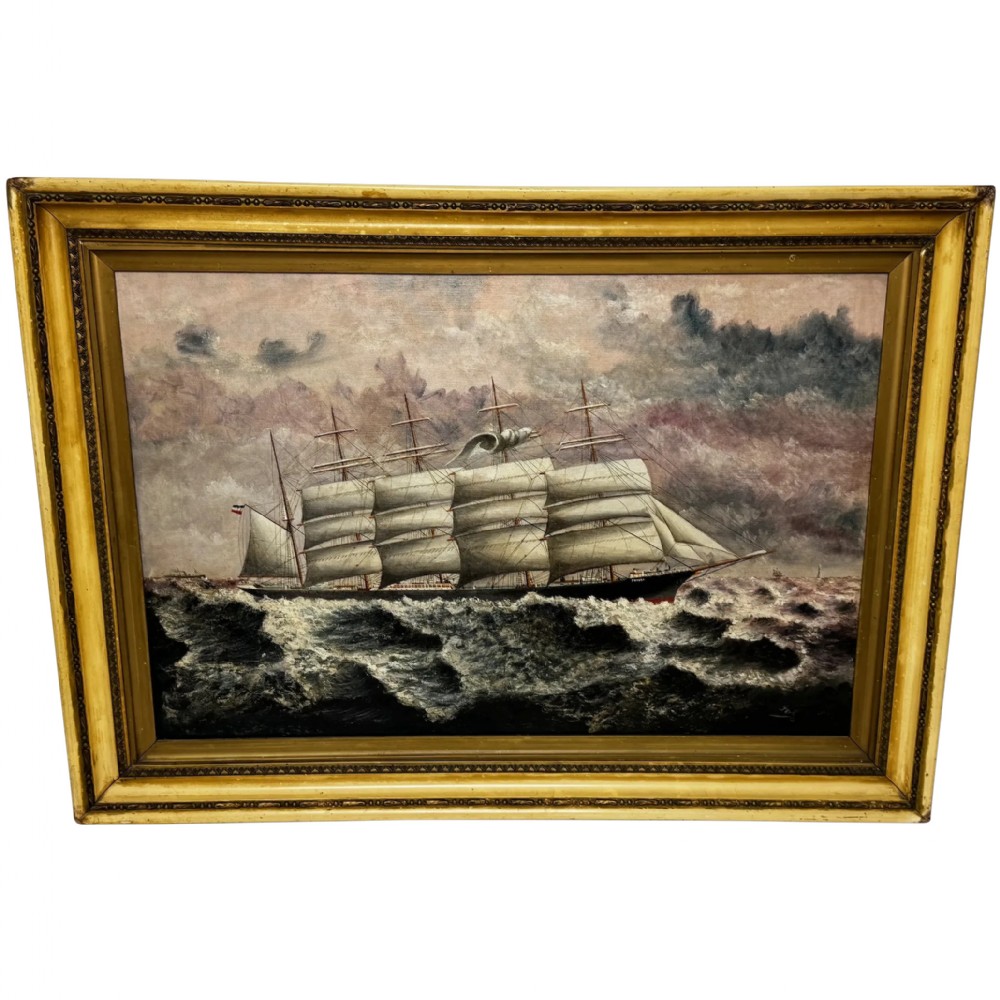
Large Oil Painting 5 Masted Ship Potosi Navigating Drakes Passage